Connect with us

Analysis

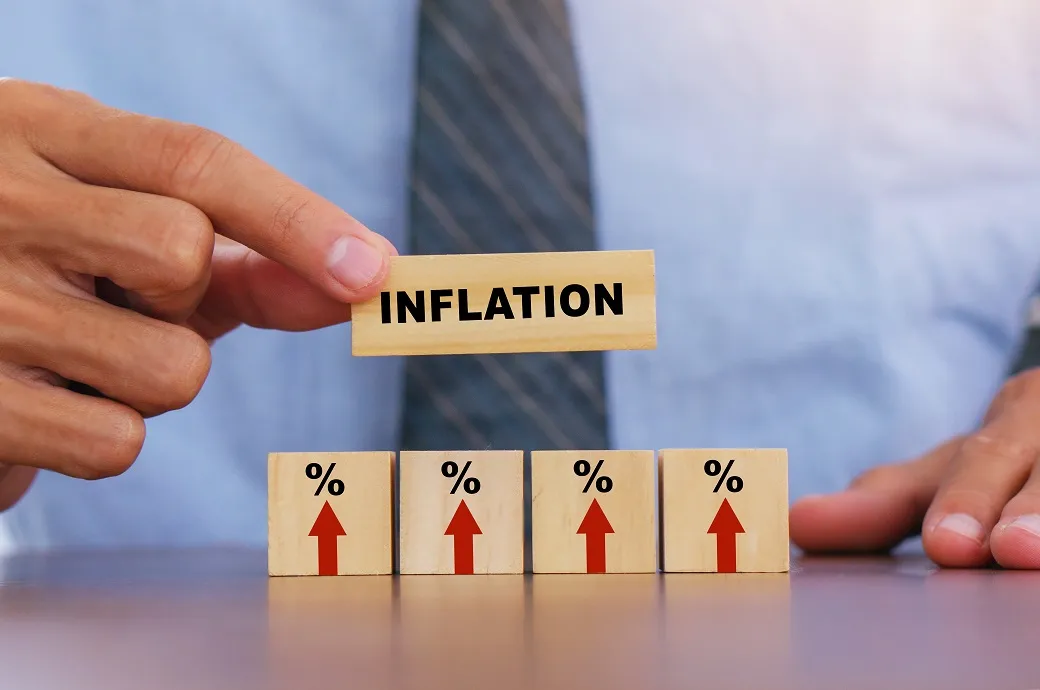
America’s Price Surge: OECD Warns US Inflation Hits 4.2%

Published

on

The Middle East war has detonated a second inflation shock. This time, the U.S. leads the G7 in price growth — and the Federal Reserve has nowhere comfortable to run.

The warning arrived with the quiet authority of a institution that rarely shouts. On March 26, 2026, the Organisation for Economic Co-operation and Development released its Interim Economic Outlook: Testing Resilience — and its message for American consumers, policymakers, and investors was unambiguous: the United States is heading for 4.2% headline inflation this year, the highest price growth in the G7, driven by an energy shock that has already sent Brent crude trading within reach of $120 a barrel.

The OECD’s US inflation 4.2% OECD forecast represents a seismic upward revision. As recently as late 2025, the Paris-based organization had projected U.S. price growth at a comparatively comfortable 2.8%. That number now belongs to a different world — one that existed before February 28, 2026, when U.S. and Israeli forces launched joint air strikes on Iran, effectively shutting down tanker traffic through the Strait of Hormuz and igniting the most acute energy crisis since Russia’s invasion of Ukraine four years earlier.

The Spark: A War That Repriced the World’s Energy

The arithmetic of the Strait of Hormuz is brutal in its simplicity. According to the IEA’s March 2026 Oil Market Report, roughly 20 million barrels per day of crude oil and petroleum products — nearly 20% of global supply — transits this narrow chokepoint between Oman and Iran. When the Strait effectively closed to shipping in late February, markets did what markets always do when a critical supply node seizes: they panicked, then they repriced.

Brent crude futures soared to within a whisker of $120 per barrel before partially retreating. By March 9, the U.S. Energy Information Administration recorded a Brent settlement price of $94 per barrel — up roughly 50% from the start of the year and the highest since September 2023. By late March, the benchmark was oscillating between $101 and $107 a barrel as markets parsed each new diplomatic signal and military development.

For context: every sustained $10 rise in global benchmark crude oil prices typically adds approximately 0.3 to 0.4 percentage points to U.S. headline CPI within six to twelve months, according to standard Fed and BLS transmission models. A $30-plus shock, arriving on top of an economy already contending with tariff-driven price pressures, produces an entirely different — and significantly more uncomfortable — inflationary arithmetic.

“The breadth and duration of the conflict are very uncertain, but a prolonged period of higher energy prices will add markedly to business costs and raise consumer price inflation, with adverse consequences for growth,” the OECD stated in its March report.


The OECD’s Verdict: America Leads the G7 in the Wrong Direction

The OECD US inflation outlook 2026 stands in sharp contrast to where the United States found itself just months ago. In January 2026, U.S. headline inflation had declined to a relatively tame 2.4%, placing it comfortably within G7 norms. The UK, with structural rigidities in its energy market, was then the outlier — the only G7 nation with inflation above 3%.

The March 2026 interim report dramatically reverses that picture. At 4.2%, the U.S. now tops the G7 inflation table by a material margin. The upward revision — 1.4 percentage points above the previous forecast — reflects two compounding forces: the energy shock from Middle East war oil prices affecting the US economy, and the ongoing, if diminished, upward pressure from U.S. tariffs that continue to inflate the cost of imported goods.

G7 Headline Inflation Forecasts, 2026 — OECD March Interim Report

Country2026 Headline CPI ForecastRevision vs. Prior
🇺🇸 United States4.2%+1.4 pp
🇬🇧 United Kingdom~3.5%++significant
🇨🇦 Canada~2.8%+moderate
🇩🇪 Germany~2.5%+moderate
🇯🇵 Japan~2.4%+modest
🇮🇹 Italy~2.2%+modest
🇫🇷 France~1.5%+modest

Source: OECD Economic Outlook Interim Report March 2026; individual country projections subject to OECD’s final published annex tables.

The headline figure for G20 advanced economies — 4.0% in 2026, some 1.2 percentage points above previous projections — underscores the global dimension of the shock. But the U.S. number commands particular attention. America imports less oil per capita than most other advanced economies and, crucially, is itself one of the world’s largest crude producers. That its energy crisis US inflation forecast has surged so dramatically reflects the double-barreled nature of the current shock: energy costs are rising simultaneously with tariff-driven goods-price inflation — a combination the Paris Accord’s chief economist, Mathias Cormann, described publicly as “testing the resilience of the global economy.”

A Haunting Parallel: 1973 and 1979 Revisited

History is a useful — and sobering — guide here. The 1973 Arab oil embargo, triggered by the Yom Kippur War, pushed U.S. CPI from roughly 4% in mid-1973 to above 12% by late 1974, according to BLS historical data. The 1979 Iranian Revolution and subsequent loss of Iranian oil supply sent prices on a second harrowing climb, peaking above 14% in 1980.

Today’s circumstances are both more and less dangerous than those episodes. On one hand, the U.S. economy is far better insulated from oil price movements than it was fifty years ago — domestic shale production has averaged approximately 13.6 million barrels per day in 2026, and the economy’s energy intensity (the amount of energy consumed per unit of GDP) has roughly halved since the 1970s. On the other hand, the compounding of tariff-driven inflation with an energy shock is a configuration that carries its own distinct risk: if supply-shock inflation becomes entrenched in wage-setting behaviour, the Fed’s challenge becomes significantly more difficult.

What the 1973 and 1979 episodes most clearly demonstrated is that energy-driven inflation can be deceptively self-reinforcing: higher fuel costs raise transport and logistics prices, which raise the prices of nearly everything else, which raises inflation expectations, which raises wage demands, which raises services inflation. Central banks that moved too slowly in those decades paid the price in a decade of stagflation.

The Federal Reserve’s Uncomfortable Position

The OECD’s forecast creates a genuinely difficult policy environment for Jerome Powell and his colleagues on the Federal Open Market Committee — and the OECD’s own projections suggest the Fed is likely to stay exactly where it is.

The Paris organization sees the Fed holding its policy rate flat through 2027, a decision described as “reflecting rising headline inflation in the near-term, core inflation projected to remain above target through 2027, and solid projected GDP growth.” Core inflation — which strips out food and energy, and is therefore more directly influenced by monetary policy — is forecast at a still-elevated 2.8% this year before easing to 2.4% in 2027.

The strategic calculus the Fed faces is textbook but no less treacherous for being familiar: should the central bank tighten policy to combat headline inflation driven by an energy shock that its own rate hikes cannot directly address? Or should it “look through” the supply-driven surge, as monetary orthodoxy suggests — and risk the inflation expectations becoming unmoored?

The OECD’s answer is a measured hedge: “The current supply-induced rise in global energy prices can be looked through provided inflation expectations remain well-anchored, but policy adjustment may be needed if there are signs of broader price pressures or weaker labour market conditions.” That conditionality — provided expectations remain anchored — is doing a great deal of work in that sentence. If the University of Michigan’s long-run inflation expectations gauge, or the Fed’s own market-based breakeven measures, begin moving materially higher, the calculus changes with considerable speed.

This scenario is further complicated by U.S. GDP growth, which the OECD projects at a solid 2.0% in 2026 before easing to 1.7% in 2027. The American economy is not, in the OECD’s baseline, suffering a recession. That removes one of the most common political and economic justifications for cutting rates into elevated inflation — and means the Fed remains, for now, on hold.

What the Energy Shock Means for Consumers and Markets

The transmission from oil market to kitchen table runs through several channels simultaneously, and all of them are currently active.

For households, the most immediate impact is at the gas pump. With Brent crude oscillating above $100 a barrel in late March 2026, national average gasoline prices have already climbed sharply from their pre-conflict levels — a real and highly visible tax on lower- and middle-income Americans, who spend a disproportionate share of their incomes on fuel.

Beyond transport, the energy price shock radiates outward:

  • Utilities — natural gas prices, also disrupted by Hormuz LNG flows, are feeding through into electricity and heating bills.
  • Food — agricultural production, transport, and fertiliser costs (the latter heavily exposed to Middle East petrochemical supply chains) are all under pressure.
  • Manufacturing and logistics — higher diesel and jet fuel costs are lifting the price of nearly every physical good that moves through the U.S. supply chain.

For investors, the picture is nuanced. Sovereign bond markets have already begun to reprice duration risk: if the Fed stays on hold longer than expected, term premiums should widen. Equity markets face a complex crosscurrent: energy sector earnings (a significant S&P 500 constituent) benefit directly from higher oil prices, while consumer discretionary, transport, and interest-rate-sensitive sectors face meaningful headwinds.

The IEA noted that sovereign bond yields surged after the onset of the Middle East conflict, a development consistent with markets pricing in both higher inflation and greater fiscal risk as governments contemplate energy support measures. OECD Secretary-General Cormann has warned that any such government measures must be “targeted towards those most in need, temporary, and ensure incentives to save energy are preserved” — a direct caution against the broad-based subsidies that several G7 governments deployed during the 2022 energy crisis and that proved both fiscally costly and economically distorting.

The Worst-Case Scenario: Hormuz Stays Closed

The OECD’s 4.2% baseline is not the worst imaginable outcome. The March interim report explicitly models a scenario in which oil and gas prices rise a further 25% above the current baseline and remain elevated — with tighter global financial conditions layered on top.

In that scenario, global GDP could be approximately 0.5% lower by the second year, with inflation 0.7 to 0.9 percentage points higher than the baseline. Applied to the U.S., that would push headline CPI above 4.9% — within range of the post-pandemic inflation peaks that required the most aggressive Federal Reserve tightening cycle in forty years.

The critical variable is the Strait of Hormuz. With IEA member countries having agreed on March 11 to release an unprecedented 400 million barrels from emergency reserves, the world’s strategic petroleum stockpiles are providing a meaningful buffer. But the IEA itself characterized this as a “stop-gap measure” — adequate for a short disruption, insufficient for a prolonged one.

The EIA’s own model, which assumes Hormuz disruptions gradually ease over the coming months, projects Brent falling below $80 per barrel by Q3 2026 and to roughly $70 by year-end. If that assumption proves wrong — if geopolitical escalation extends the closure — the entire inflation trajectory resets materially higher.

The View From 2027: A Sharp Reversal?

The OECD’s longer-term outlook offers a notable counterpoint to the current alarm. If energy markets stabilize as the baseline assumes, the organization projects U.S. headline inflation collapsing to 1.6% in 2027 — well below the Fed’s 2% target and below even the Fed’s own 2.2% forecast for that year. Core inflation is expected to ease to 2.4%.

This remarkable potential reversal — from 4.2% headline inflation in 2026 to 1.6% in 2027 — reflects the mathematical reality that base effects and normalizing energy prices can be just as powerful as supply shocks on the way up. But it also highlights a significant risk that elite investors and policymakers should hold in mind: the danger of policy overreaction.

If the Fed were to respond to a supply-driven, temporary inflation spike by tightening rates aggressively — and if energy prices normalized quickly anyway — the U.S. could find itself in 2027 facing growth below potential and inflation well below target. The 1980–1981 Volcker tightening ultimately worked, but it also produced the deepest recession since the 1930s. The 2022–2023 rate cycle achieved a soft landing partly because the supply-side shocks that drove inflation also resolved — and the Fed avoided the temptation to keep tightening past the point of necessity.

Analysis: The Tariff-Energy Double Helix

What distinguishes the 2026 U.S. inflation surge from a pure oil shock — and what should give the most sophisticated readers pause — is its compound structure. The United States is simultaneously experiencing two distinct inflationary supply shocks: a geopolitical energy shock from the Middle East, and a structural trade shock from the tariff architecture that has been progressively layered onto the American economy since 2025.

Each shock is independently manageable. Together, they interact in a way that is more dangerous than the sum of parts. Tariffs have already embedded a degree of price-level elevation into the U.S. economy. When energy costs rise sharply on top of that elevated base, the risk of second-round effects — of businesses raising prices not just to offset energy costs but to rebuild margins eroded by prior tariff costs — increases materially.

The OECD’s core inflation projection of 2.8% for 2026 is significant here. Core inflation is the measure that the Fed most closely tracks as a signal of underlying inflationary dynamics. At 2.8% — with a supply shock driving headline CPI 1.4 points above core — the Fed can, for now, credibly claim that second-round effects remain contained. But that gap between headline and core is precisely the watch-point: if it begins to narrow upward (i.e., core inflation re-accelerates toward headline), the calculus shifts from “looking through” to “acting decisively.”

In that scenario, the United States would not merely be the G7’s highest-inflation economy in 2026. It would also be the economy facing the most acute central bank dilemma of the post-pandemic era: how to contain an inflation surge rooted in wars and trade architecture that monetary policy, by itself, cannot fix.

That is not a comfortable place for a $30 trillion economy to find itself. The OECD has named it clearly. Whether policymakers — in Washington and in central banks around the world — possess the analytical clarity and political will to navigate it is the question that will define economic history in the years ahead.


Discover more from The Economy

Subscribe to get the latest posts sent to your email.

Analysis

Decoding the Relationship Between Gold and Bitcoin Will Be Vital for Institutional Portfolios in 2026

Published

on

As gold trades near record highs and Bitcoin consolidates after a brutal 50% drawdown, the Bitcoin-gold correlation has broken down. Here is why the barbell strategy—gold for left-tail protection, Bitcoin for right-tail growth—is the defining institutional allocation of 2026.

There is a temptation, in moments of market violence, to reach for simple narratives. Bitcoin fell by more than half from its all-time high. Gold surged to historic levels. Therefore, one is broken and the other is unassailable. It is a clean story. It is also wrong.

What has unfolded in the 2025–2026 cycle is not a verdict on the relative merits of these two assets. It is a stress test—and both have passed, in entirely different ways, which is precisely the point. The relationship between gold and Bitcoin in 2026 is no longer one of convergence or competition. It is a story of elegant divergence: two assets, shaped by different forces, doing different jobs in a portfolio. For pension funds, endowments, and family offices navigating a world of persistent inflation, geopolitical fracture, and compressed real yields, understanding this divergence is no longer optional. It is an institutional imperative.

Why the 50% Bitcoin Drawdown Was a Feature, Not a Bug

Let us begin with the uncomfortable facts. After peaking in late 2025—specifically October, when it hit an all-time high above US$126,000—Bitcoin, the world’s largest digital asset, slid sharply, briefly testing US$60,000 in February before clawing its way back to US$70,000 later that month. From peak to trough, the drawdown reached roughly 50 to 52 per cent at the lows.

The immediate temptation is to interpret any violent sell-off as an existential threat to institutional adoption of Bitcoin, and even to the prospect of a rally past all-time highs. Yet, history suggests otherwise. Mid-cycle retracements of this magnitude have been a recurring feature of Bitcoin’s bull markets rather than their obituary. In 2013, Bitcoin fell 83% during its bull cycle before resuming upward. In 2017, it shed over 40% mid-run before ultimately quintupling in value. The 2020–2021 cycle featured two separate corrections exceeding 50% before Bitcoin reached its then-record near US$69,000.

New entrants to the space will fixate on the speed of the fall, but having experienced multiple cycles, seasoned analysts are paying attention to the character of the rebound. The sharp bounce from near US$60,000 hints that long-term holders and institutions remain willing to absorb supply at stress levels. As of late March 2026, Bitcoin has stabilised in the US$66,000–US$71,000 range, trading around US$69,000—a consolidation zone that suggests the market is digesting, not disintegrating.

The supply dynamics are equally instructive. Miners exiting the space amid declining mining profitability created a persistent supply overhang as they liquidated Bitcoin holdings. Data from on-chain analytics shows that long-term holder net selling, which reached a 30-day rolling figure of nearly −243,737 BTC in early February 2026, collapsed to just −31,967 BTC by March—an 87% reduction in selling pressure. Weaker hands, particularly newer entrants, likely capitulated as prices fell below “Liberation Day” (April 2, 2025) levels. What remains, in institutional parlance, is a reset toward longer-term holders.

This is not a collapsing market. It is a market being repriced from retail to institutional ownership.

The Decoupling: Bitcoin–Gold Correlation Hits Multi-Year Lows in 2026

The most consequential structural shift of this cycle is one that headline writers have almost entirely ignored: the Bitcoin–gold correlation in 2026 has broken down.

From late 2022 through to mid-2024, the two assets moved in reasonably tight tandem. Both were perceived as hard-money alternatives, scarce assets beyond central bank control, natural beneficiaries of fiat debasement. CME Group analysis confirms that over this period, gold gained roughly 67% while Bitcoin surged nearly 400%, with analysts widely expecting continued co-movement.

That relationship has since fractured. The 90-day rolling correlation between Bitcoin and gold has declined to near zero or low-positive territory—approximately 0.29 or below—and has at times flipped negative. Meanwhile, the correlation between Bitcoin and the Nasdaq 100 has risen to a range of 0.75–0.85, according to market risk analysis published in early 2026. Bitcoin is increasingly being traded as a high-beta risk asset, not a monetary hedge. Gold, conversely, has absorbed the geopolitical shock premium almost entirely on its own.

This is not a flaw in Bitcoin’s investment thesis. It is a clarification of it—and a profound one for portfolio construction.

Gold climbed from roughly US$3,000 per ounce in early 2025 to a record high of approximately US$5,595 in January 2026, before correcting to the US$4,370–US$4,500 range by late March as a stronger US dollar exerted pressure. The metal has risen over 25% since the start of 2025, driven by a combustible mix of geopolitical uncertainty, central bank accumulation from non-Western nations, and persistent inflation expectations. As Fortune’s daily gold reporting notes, gold has surged to record levels, fuelled by conditions that gold has historically absorbed: war risk, monetary stress, and institutional flight to safety.

Bitcoin, meanwhile, has done something different. It has absorbed liquidity flows, ETF-driven demand, and the institutional product buildout—all of which are less correlated with geopolitical shocks and more correlated with risk appetite and technology sector sentiment. These are, in portfolio terms, entirely separate return streams.

The Great Decoupling: Two Assets, Two Mandates

The divergence can be understood through a simple framework: gold absorbs geopolitical shocks; Bitcoin captures liquidity and ETF flows.

When the Middle East escalation intensified in early 2026, gold initially rallied as expected. Bitcoin, weighed by its high Nasdaq correlation and macro headwinds from a strong US dollar, declined. This apparent contradiction is actually the barbell working as designed. An investor who held both assets in the same portfolio owned a geopolitical hedge and a liquidity and technology-beta instrument—two entirely different risk premia. The portfolio as a whole absorbed shock without abandoning upside optionality.

This structural duality defines the gold Bitcoin institutional portfolio thesis of 2026. It is not a question of which asset wins. Both are winning, just at different times and for different reasons. BlackRock has explored this diversification dynamic, examining how Bitcoin alongside gold and traditional alternatives can provide complementary exposures in multi-asset portfolios. The world’s largest asset manager treating the two assets as portfolio complements—not substitutes—is itself an endorsement of the barbell logic.

Institutional Evidence: ETFs, Sovereigns, and the Normalisation of Bitcoin Allocation

The institutional allocation gold Bitcoin story has moved from aspiration to architecture over the past eighteen months.

Fidelity’s Digital Assets research has documented that over 80% of institutional investors now see digital assets as portfolio-worthy, with most preferring ETF-style exposure. Grayscale’s 2026 Digital Asset Outlook continues to frame Bitcoin as a scarce monetary asset with asymmetric upside characteristics distinct from traditional risk assets. BlackRock’s iShares Bitcoin Trust (IBIT) attracted US$888 million in net inflows in January 2026 alone—before the drawdown accelerated—demonstrating that institutional demand is not simply a function of price momentum.

More revealing is what institutions did during the correction. According to blockchain analytics data reported by Yahoo Finance, BlackRock and Fidelity together purchased close to US$400 million of Bitcoin during the March selloff week, even as they simultaneously sold US$250 million—resulting in net purchases of approximately US$150 million. This is dip-buying of the highest conviction. When the world’s largest asset managers step in as buyers at stress levels, the signal is unambiguous: the drawdown was an entry opportunity, not an exit event.

The sovereign dimension is accelerating. Fidelity’s 2026 research identifies Brazil and Kyrgyzstan as having passed legislation enabling Bitcoin as part of national reserves, with Fidelity’s vice president of research noting that competitive pressure may compel additional nations to follow. VanEck’s head of digital assets research, Matthew Sigel, has argued that Bitcoin’s historical four-year cycle remains intact, and VanEck recommends 1–3% Bitcoin allocations for client portfolios. Morgan Stanley’s filing for a spot Bitcoin Trust in early 2026, alongside plans for crypto trading on E*Trade in the first half of the year, marks the moment when crypto exposure migrated from the specialist desk to the mainstream wealth management platform.

The Bitcoin ETF market, now exceeding US$123 billion in assets, represents a structural demand floor that did not exist in prior cycles. As 247 Wall Street analysis notes, ETF-era Bitcoin flows “reflect portfolio allocation decisions rather than speculative impulse.” Spot ETF volume records were broken multiple times in early 2026, with March 2 setting the single-largest day of ETF trading activity in the instrument’s history at US$31.6 billion. Institutions are not abandoning the asset class. They are calibrating their positions within it.

Historical Cycle Parallels: The Mid-Cycle Reset Playbook

For those with institutional memory extending beyond three years, the 2025–2026 drawdown follows a remarkably familiar script.

In every prior Bitcoin bull market, a mid-cycle correction of 40–55% has served as the reset that cleared leveraged and speculative positions before the final phase of appreciation. The 2013 cycle featured an intermediate 83% drawdown. The 2017 bull run included a sustained correction from US$3,000 to US$1,800—a 40% fall—before Bitcoin eventually reached its then-record near US$20,000. The 2020–2021 cycle included a 54% correction in May 2021 before the asset resumed its upward trajectory to near US$69,000.

The pattern is not coincidental. Each mid-cycle reset performs a structural function: it transfers supply from weak hands to strong hands, exhausts short-term speculative leverage, and resets funding rates in futures markets. On-chain data from March 2026 confirms this process is well advanced. Long-term holder selling has collapsed. Miner capitulation has eased substantially. The market is being rebuilt on a foundation of patient institutional capital rather than speculative retail momentum.

The question is not whether this cycle’s dynamics are similar to prior ones. They are. The question is whether the character of the rebound—driven by ETF infrastructure, sovereign adoption, and institutional product normalisation—provides a more durable foundation than prior cycles. The preponderance of evidence suggests it does.

Institutional Playbook: Barbell Allocations for 2026 Portfolios

The barbell strategy gold Bitcoin framework is the most intellectually coherent response to the current environment. The logic is straightforward: gold provides left-tail protection against geopolitical shocks, currency debasement, and inflation spikes; Bitcoin provides right-tail exposure to monetary system evolution, liquidity cycles, and the institutional adoption premium.

The following allocation frameworks represent a practical taxonomy for institutional investors, calibrated by risk tolerance:

Risk ProfileGold AllocationBitcoin AllocationRationale
Conservative (pension funds, endowments)7–10%0.5–1.5%Capital preservation priority; Bitcoin as satellite position
Balanced (family offices, diversified funds)4–8%1–3%Barbell construction; VanEck-endorsed range
Growth-oriented (hedge funds, SWFs)3–6%3–5%Maximum diversification across monetary regimes

Several institutional principles bear emphasis. First, size matters less than construction. A 1% Bitcoin allocation in a US$10 billion endowment represents a US$100 million commitment—sufficient to achieve meaningful portfolio impact without disproportionate risk concentration. Second, rebalancing frequency matters. Given Bitcoin’s volatility, quarterly rebalancing back to target weights is preferable to annual adjustment, as it systematically captures mean-reversion premia. Third, product choice matters. ETF exposure through vehicles such as BlackRock’s IBIT or Fidelity’s FBTC provides regulatory clarity, custodial assurance, and institutional governance compatibility that direct ownership does not.

The digital gold thesis of 2026 has evolved beyond the simple rhetorical comparison. Bitcoin is not digital gold in the sense of behavioural mimicry—it does not replicate gold’s geopolitical shock absorption. It is, rather, a distinct monetary primitive: the world’s first natively digital scarce asset, with asymmetric return characteristics, a structurally shrinking supply post-halving, and a growing institutional adoption premium baked into its risk profile. Gold provides the portfolio’s defensive ballast. Bitcoin provides its asymmetric accelerant.

Risks and Rewards: Gold as Anchor, Bitcoin as Accelerator

No institutional analysis is complete without an honest accounting of the risks on both sides of the barbell.

Gold’s immediate headwind is the US dollar. With the DXY index near 108 in late March 2026, a strong dollar constrains gold’s global demand by making it more expensive in non-dollar currencies. JPMorgan analysts have maintained a cautious near-term target of US$4,350 per ounce by end of April 2026, even as Goldman Sachs has set a more constructive target of US$4,600. Should the Federal Reserve signal a pivot to rate cuts in the second quarter—a scenario with meaningful probability given cooling growth and persistent tariff headwinds—gold would likely resume its uptrend as real yields compress.

Bitcoin’s principal risks are macroeconomic rather than structural. Its high correlation with Nasdaq means that a sustained equity bear market would exert significant downward pressure, irrespective of Bitcoin’s own fundamental developments. A DXY above 112—a scenario JPMorgan assigns roughly 15% probability—would represent an unusually powerful dollar headwind that could overwhelm ETF-related demand. Regulatory risk, while substantially reduced by the SEC’s approval of spot ETFs and the EU’s MiCA framework, remains a tail risk in less-developed jurisdictions.

Yet the Bitcoin safe haven 2026 argument does not require Bitcoin to behave identically to gold. It requires only that Bitcoin deliver uncorrelated, positive expected returns over a medium-to-long time horizon. Galaxy Digital’s research has estimated roughly equal market-implied probability of Bitcoin reaching US$130,000 or US$70,000 by mid-2026, with a year-end distribution spanning US$50,000 to US$250,000. The asymmetry of this distribution—where the upside is multiples of the downside from current levels—is precisely the characteristic that justifies inclusion in a diversified institutional portfolio. The expected value of a small Bitcoin allocation is positive even under conservative assumptions about adoption.

Forward 2026 Outlook: A Tale of Two Monetary Regimes

Looking ahead to the second and third quarters of 2026, the macro environment supports both legs of the barbell, albeit through different transmission mechanisms.

Gold benefits from continued central bank buying from non-Western sovereigns, from any Fed pivot that compresses real yields, and from persistent geopolitical risk premiums in energy and credit markets. The structural case for gold Bitcoin portfolio diversification has rarely been stronger: a world of fiscal dominance, multipolar currency competition, and deglobalisation rewards hard assets across the monetary spectrum.

Bitcoin benefits from the structural reduction in new supply post-halving, from continued ETF-driven demand accumulation, and from the still-early-stage sovereign adoption cycle. Fidelity Research forecasts that competitive pressure between nations to acquire Bitcoin reserves could accelerate in 2026 and beyond, compressing the available float further. If Bitcoin participates in even a fraction of the institutional re-allocation away from bonds—currently still the dominant defensive asset—the demand implications are substantial.

For the most sophisticated allocators, the question in 2026 is not whether to own gold or Bitcoin. It is how to size the barbell, when to rebalance it, and through which vehicles to express it. The answer will vary by mandate, liability structure, and governance framework. But the underlying logic is durable: in a world where no single monetary system commands uncontested authority, owning the hardest available assets on both the analogue and digital dimensions of the monetary spectrum is not speculation. It is prudence.

Conclusion: The Institutional Imperative of the Great Decoupling

The Bitcoin vs gold 2026 narrative has matured beyond a binary contest. Gold is not under threat from Bitcoin. Bitcoin is not a failed gold substitute. They are, in the current market structure, genuinely distinct instruments fulfilling complementary roles in a sophisticated multi-asset portfolio.

Gold, at US$4,400 per ounce in late March 2026, is performing exactly as designed: absorbing geopolitical shock, preserving purchasing power, and providing institutional ballast against a macro backdrop that remains deeply uncertain. Bitcoin, consolidating in the US$66,000–US$71,000 range after its mid-cycle reset, is also performing as its structure implies: transferring ownership from weak hands to long-term institutional holders, building a more durable demand foundation through ETF infrastructure, and preserving the asymmetric upside that justifies its inclusion in growth-oriented allocations.

The institutional portfolio managers who will navigate 2026 most effectively are those who resist the temptation to crowd into whichever asset has performed most recently, and instead embrace the structural logic of the barbell: gold as left-tail protection, Bitcoin as right-tail acceleration. The two assets are not converging. They are decoupling. And that decoupling, properly understood, is not a problem to be solved. It is an opportunity to be exploited.

For pension funds, endowments, and family offices managing long-duration liabilities in a world of structural monetary uncertainty, the message is clear: position the barbell now, rebalance it deliberately, and hold both legs with conviction. The great decoupling has only just begun.


Discover more from The Economy

Subscribe to get the latest posts sent to your email.

Continue Reading

Analysis

KPMG to Cut Almost 600 UK Jobs as Slowdown Persists: What the Big Four’s Latest Bloodletting Means for Audit, Consulting and the UK Economy

Published

on

The redundancy notice landing in nearly 600 KPMG auditors’ inboxes this week is not a one-off shock. It is the latest, most revealing chapter in a slow-burn reckoning that is quietly reshaping Britain’s most powerful professional services firms — and the economy they were built to serve.

The Letter Nobody Wanted

On the morning of Friday, March 27, 2026, staff inside KPMG UK’s audit division opened internal communications confirming what many had feared since rumours began circulating in the preceding weeks. The firm had told nearly 600 staffers in its audit business that their jobs are at risk, subject to a formal redundancy consultation, with KPMG ultimately expecting as many as 440 people to leave the business if the proposal goes ahead. Business Standard

The affected employees are not low-level administrators or back-office casuals. The proposed cuts primarily target assistant managers who are qualified accountants, representing roughly 6% of the division’s 7,100-strong workforce. Investing.com These are the people who do the granular, technical heavy-lifting of statutory audit: reconciling accounts, challenging management assumptions, testing controls. They spent years — and tens of thousands of pounds — qualifying. Many of them probably assumed their credentials were a form of economic armour. This week, they discovered otherwise.

KPMG’s official explanation was candid, if brisk. “Current market conditions mean our attrition rates are very low within certain parts of our audit population, which is why we are proposing to right size those areas,” a spokesperson for KPMG UK said. “This isn’t a decision we take lightly.” The Edge Malaysia The language of “right-sizing” is familiar corporate euphemism. But the underlying arithmetic is worth unpacking: when qualified staff stop leaving voluntarily, as they increasingly are in a cold labour market, the only mechanism left for recalibrating headcount is compulsory redundancy. And so here we are.

A Slow Bleed: The Big Four’s Years of Cuts

To understand this week’s announcement, it is necessary to revisit the trajectory of an industry still nursing the hangover from a post-pandemic feast.

The years 2020 to 2022 were, by almost every measure, a golden age for professional services. Businesses emerging from lockdown poured money into transformation programmes. Deal volumes surged. The Big Four — KPMG, Deloitte, EY and PwC — hired aggressively to meet demand, expanding headcount at rates that would have been considered reckless in any prior cycle. Major consulting firms had an annual churn rate of around 20–25% in pre-COVID times, and they had kept hiring according to this, even as the context changed fundamentally. Consultancy.uk

The reckoning began in earnest in 2023. Advisory budgets tightened. Inflation, rising interest rates, and geopolitical uncertainty made corporate clients reluctant to commit to large discretionary consulting engagements. The Big Four collectively eliminated 1,800 positions in 2023, as the consultancy market reportedly shrank by over 10%. Employmentlawreview Deloitte moved fastest and most aggressively, announcing around 800 redundancies in the UK in September 2023, with an extra 100 added to that figure in February. City AM

The cuts continued through 2024. Over 900 roles were made redundant at the UK Big Four firms in 2024, and some 1,800 jobs were cut in 2023. City AM EY began trimming legal services and partner ranks. PwC launched what the Financial Times characterised as “silent lay-offs” — a voluntary severance scheme conducted with an instruction that departing staff not inform colleagues of the reason they were leaving. KPMG UK cut some 200 back-office and client-facing roles in June 2024, a year after shedding roughly 110 positions from its deals business. Between them, Deloitte, EY, KPMG and PwC have made at least 2,800 people redundant at their UK offices, although the actual figure is likely higher given the “silent layoffs” that have also been taking place. Going Concern

By early 2026, according to Patrick Morgan, a specialist professional services recruiter, KPMG reduced its UK workforce by 7% in 2024, PwC by 5%, Deloitte by 5%, and EY by 3%. So far in 2025, KPMG and PwC have both seen a 4% further reduction in their total UK headcounts. Scottishfinancialnews This is not a blip. It is a structural contraction — and the audit division, which had appeared relatively sheltered compared to advisory, is now firmly in its path.

Why Audit? The Uncomfortable Intersection of AI and Attrition

The most analytically significant aspect of this week’s KPMG announcement is its precise target: the audit division. For years, the Big Four’s job-cutting narrative centred almost entirely on advisory and consulting — the parts of the business most exposed to fluctuating client demand for discretionary engagements. Statutory audit was widely assumed to be immune. Companies must have their accounts audited by law. The work is non-optional, regulated, and recurring.

That assumption deserves revision.

Two converging forces explain why audit has now become the target. The first is the collapse in voluntary attrition. In a buoyant labour market, junior and mid-level auditors leave at a steady clip — to industry, to smaller firms, to other opportunities. That natural churn allows the Big Four to right-size their workforces organically without touching redundancy processes. When strong economic headwinds reduce churn to as low as 3%, due to fewer opportunities available for professionals to leave their current firms, this, coupled with the over-hiring of 2021 and 2022, creates a structural surplus that cannot be absorbed naturally. Consultancy.uk

The second force is artificial intelligence — and it is accelerating faster than the industry publicly acknowledges.

In June 2025, KPMG launched Workbench, a multi-agent collaboration environment that mirrors human audit teams, Unity Connect developed in partnership with Microsoft. The platform, built on KPMG’s Clara audit infrastructure, uses AI and automation to drive a risk-based, data-driven audit, delivering increased visibility and efficiency while reducing disruption. KPMG Translation: it performs, at machine speed and at scale, much of the sampling, testing and documentation that junior and mid-level auditors previously handled manually.

KPMG is not alone. EY launched EY.ai, giving 80,000 tax professionals access to 150 AI agents, with over 1,000 agents in development and plans to scale to 100,000 by 2028. EY is investing more than $1 billion annually in AI platforms and products. HyperAI Deloitte has expanded generative AI in its Omnia audit platform and deployed Claude — developed by Anthropic — across its global workforce of 470,000. At PwC, new hires will be doing the roles that managers previously handled within three years, because they will be overseeing AI performing routine, repetitive audit tasks. DNYUZ

The candour from KPMG’s own global AI workforce lead is striking: “We want juniors to become managers of agents,” said Niale Cleobury in November 2025. “They’ll be managing teams of AI agents and play a greater role in strategy decisions.” DNYUZ

That vision has a human cost rendered visible this week: if AI agents perform the sampling, reconciliation and testing once assigned to assistant managers, then 440 of those managers become surplus. The logic is impeccable. The consequences, for the individuals involved, are devastating.

The Labour Market Context: Slowing, Saturated, and Deeply Uncertain

The redundancy announcement does not exist in a vacuum. It arrives at a moment of pronounced weakness in the UK professional labour market, which makes re-employment for those affected considerably harder than it would have been two years ago.

The KPMG and REC UK Report on Jobs — a monthly survey of some 400 UK recruiters compiled by S&P Global — has painted a consistently uncomfortable picture. The latest survey showed another reduction in permanent staff appointments, extending the current downturn to 39 months, with the rate of contraction one of the steepest in recent months. Fewer job opportunities and widespread reports of redundancies have driven a substantial rise in candidate availability. KPMG The March 2026 edition offered faint hope: permanent staff hiring decreased only marginally in February, marking the weakest decline since March 2023, with some recruiters noting a relative improvement in employers’ willingness to recruit. KPMG But candidate supply is still rising faster than demand.

The ONS data reinforces this picture. Professional services vacancies remain below their post-pandemic peak, while the number of qualified accountants and consultants actively seeking work has risen materially. For the 440 KPMG auditors expected to leave, the competition for comparable roles will be intense.

Internationally, the picture is no more encouraging. Rivals such as McKinsey & Co. have discussed cutting non-client-facing headcount by as much as 10% to preserve margins, suggesting the consulting and accounting industries are bracing for a period of sustained belt-tightening as corporate clients scrutinise discretionary spending. Investing.com The leaner-is-better philosophy has become orthodoxy across the sector.

Ripple Effects: Graduate Pipelines, City Competitiveness and Regulatory Risk

The implications of this latest round of Big Four contraction stretch well beyond the individuals directly affected. Three areas deserve particular scrutiny.

Graduate Recruitment and the Talent Pipeline

The Big Four function as a de facto graduate training ground for much of British business. Tens of thousands of young accountants, consultants and auditors receive their professional formation inside these firms before dispersing into industry, government, financial services and beyond. When the Big Four constrict their intake, the consequences ripple far downstream. Data from job board Indeed reveals a 44% decrease in UK accountancy graduate job adverts in 2024 compared to 2023, notably higher than the 33% decline for all graduate jobs. Scottishfinancialnews KPMG cut some graduate cohorts by nearly 30%. Substack

Industry thinkers are already debating the structural implications. Ian Pay at the ICAEW has described a coming “diamond model” — a thinner base, a wider middle of technical and managerial experts — because AI cannot yet make all the judgment calls. Substack If fewer people train as auditors, and AI takes an increasing share of junior-level work, the supply of experienced senior auditors a decade from now may be dangerously thin. The profession is making a bet on technology that may, in the medium term, hollow out its own succession pipeline.

City of London Competitiveness

London’s position as a global financial hub rests partly on the depth and quality of its professional services ecosystem. The Big Four are integral to that ecosystem — not merely as advisers but as validators: of accounts, of transactions, of regulatory compliance. A contraction in their UK capacity is not costless. EY reported that its UK net revenue grew by a single-digit percentage over 2024, while fee income remained flat due to a reduction in significant cross-border transactions. City AM Deloitte’s UK revenue increased slightly, but its profit stalled. KPMG managed double-digit profit growth — but only by cutting costs aggressively, including the workforce reductions now reaching their logical conclusion in the audit division.

The question is whether leaner operations translate into better audit quality or merely into cheaper audit delivery that masks growing risk. The Financial Reporting Council has repeatedly warned that audit quality at the major firms requires sustained investment, not simply technological substitution.

Regulatory Scrutiny

KPMG UK has faced significant regulatory scrutiny in recent years. The firm received material fines from the FRC for audit failings on several high-profile clients, adding reputational and financial pressure to an already strained cost base. Cutting qualified assistant managers — precisely the layer of staff who perform the detailed testing and challenge that prevents errors from reaching partners — carries an inherent risk that regulators will eventually have cause to examine closely.

There is a tension here that the firm has yet to resolve publicly: KPMG simultaneously markets its AI capabilities as tools that improve audit quality while cutting the human workforce that was previously the primary guarantor of that quality. These two propositions are not necessarily incompatible — but they are not yet proven to be compatible either. The Public Company Accounting Oversight Board (PCAOB) in the United States, and equivalent bodies in the UK, are watching with close interest.

The Profitability Paradox

Perhaps the most instructive subplot in this story is the profitability data. In January 2026, KPMG UK revealed it recorded double-digit growth in profit before tax over 2024, but its revenue only increased by one per cent. City AM The mathematics of that outcome are blunt: profit grew not through revenue expansion but through cost compression, and the primary cost in professional services is people.

James O’Dowd, managing partner at Patrick Morgan, has been characteristically direct about what is really happening: “After years of aggressive post-pandemic hiring, the Big Four are now cutting jobs to protect partner profits and rebalance bloated teams.” City AM The equity partners, who own and draw from the profit pool, have a direct financial incentive to ensure that headcount adjustments protect their income. The 440 auditors facing redundancy are, in the most clinical sense, a line item.

This creates a governance question that regulators and policymakers have been reluctant to address head-on: the Big Four are simultaneously the principal auditors of the UK corporate economy and businesses with a structural incentive to minimise the cost of audit delivery. When those two imperatives pull in opposite directions, which wins?

Looking Forward: A Profession at a Crossroads

The short-term trajectory is relatively clear: more AI deployment, continued pressure on headcount, and a labour market that will absorb the redundancies slowly. The Management Consultancies Association has forecast consulting revenue growth of 8.7% for 2026, which is encouraging — but that growth will accrue disproportionately to firms that have already invested in AI capabilities, not to the individuals being made redundant this week.

The medium-term picture is more genuinely uncertain. PwC’s Chief Technology and Innovation Officer Matt Wood noted that while 2025 was about integrating AI into existing workflows, 2026 will be about helping clients redesign processes with AI in mind from the outset. EY’s Raj Sharma suggests AI agents may prompt a shift to a “service-as-a-software” model, where clients pay based on outcomes rather than hours. HyperAI If that commercial model transition succeeds, it could ultimately restore demand and employment — but at higher skill levels than the assistant managers currently at risk can easily access without significant retraining.

For UK policymakers, several recommendations present themselves. The government should work with the FRC and professional bodies such as the ICAEW to establish clear standards for AI use in statutory audit — not to slow AI adoption, but to ensure that the efficiency gains do not erode audit quality in ways that only become apparent after the next corporate failure. Reskilling support, potentially through the apprenticeship levy and Lifelong Learning Entitlement, should be directed specifically at mid-career audit professionals displaced by AI, given that their qualifications are genuinely portable if supported by upskilling in data analytics and AI governance. And there is a broader question about whether the Big Four’s structure — which concentrates both market power and systemic importance in four firms with inherent profit incentives — remains the right model for an economy that depends on trusted assurance.

The firms themselves face a harder question about identity. For decades, the Big Four sold themselves on the quality of their human capital — the brightest graduates, the most rigorously trained auditors, the deepest partner expertise. That proposition is now in active tension with a strategy of replacing junior and mid-level human judgment with AI systems that, however sophisticated, have not yet been tested across a full corporate-failure cycle.

Conclusion

Nearly 600 letters. Up to 440 departures. Six per cent of an audit workforce that took years and significant personal investment to build. The human cost of Thursday’s KPMG announcement is not trivial, and it would be a mistake to process it solely as a story about corporate efficiency or technological progress.

It is also a story about what happens when an industry over-extends in good times and restructures aggressively in uncertain ones; about the labour market consequences of AI adoption moving faster than policy can absorb; and about the quiet erosion of a profession that sits at the foundation of public trust in corporate Britain.

KPMG is not, in the final analysis, doing anything that its peers have not done or are not contemplating. The language of right-sizing and market conditions is common currency across all four firms. But that universality is precisely what makes this moment significant. When all four of the firms that audit nearly every major company in the UK move simultaneously in the same direction — cutting the people who do the detailed work, investing in AI, protecting partner profits — the cumulative effect on audit quality, talent pipelines and market trust deserves a more serious public reckoning than it has so far received.

The slowdown persists. The cuts continue. And the question of what, exactly, replaces 440 qualified auditors in the long run remains conspicuously unanswered.


Discover more from The Economy

Subscribe to get the latest posts sent to your email.

Continue Reading

AI

The Efficiency Paradox: Why Google’s $5 Billion Data Center Deal Is a Death Knell for the AI Memory Trade

Published

on

Google’s pivot to financing a massive Texas data center for Anthropic, coupled with a breakthrough in memory efficiency, has wiped $100 billion from chip stocks.

In the arid expanse of the Permian Basin, where the hum of natural gas pipelines has long defined the local economy, a new kind of architecture is rising—and it is dismantling one of Wall Street’s most profitable trades.

Alphabet Inc. (Google) is nearing a landmark deal to provide over $5 billion in construction loans and financing for a 2,800-acre data center campus in Texas, developed by Nexus Data Centers and leased to AI powerhouse Anthropic. The project, which bypasses the fragile public grid by utilizing proprietary gas turbines, represents a tectonic shift in how AI infrastructure is funded and fueled.

Yet, as the physical foundations of this “gigawatt-scale” future are laid, the digital foundations of the AI hardware boom are trembling. Simultaneously with this deal, Google Research unveiled TurboQuant, a compression algorithm that reduces AI memory requirements by 6x without sacrificing accuracy. The result? A brutal $100 billion wipeout across memory-chip giants like Micron (MU), Samsung Electronics, and SK Hynix, as investors realize the “insatiable” demand for high-bandwidth memory (HBM) may have just found its ceiling.

1. The Texas Power Play: Google, Anthropic, and the $5 Billion “Behind-the-Meter” Bet

The Nexus Data Center project is not merely another server farm; it is a blueprint for the post-grid era of artificial intelligence. Strategically located near major gas arteries operated by Enterprise Products and Energy Transfer, the site will eventually scale to a staggering 7.7 gigawatts of capacity.

Why Google Is Playing Banker

By providing construction loans, Google is leveraging its AAA-rated balance sheet to lower the cost of capital for its primary AI partner, Anthropic. This move serves three strategic ends:

  1. Vertical Integration: It cements Anthropic’s reliance on Google’s TPU (Tensor Processing Unit) ecosystem.
  2. Risk Mitigation: By financing “behind-the-meter” gas power, Google avoids the multi-year delays and surge pricing of the ERCOT grid.
  3. Capex Efficiency: Financing a lease is more balance-sheet friendly than owning the depreciation of a $5 billion facility.

“The era of ‘plug-and-play’ data centers is over,” notes a senior infrastructure analyst at a top-tier investment bank. “If you don’t own the power source and the financing, you don’t own the future of AI.”


2. TurboQuant: The Software Breakthrough That Broke the Memory Market

While the Texas deal signaled a boom in infrastructure, the release of TurboQuant acted as a poison pill for memory stock valuations. For two years, the bull case for Micron and SK Hynix rested on a single premise: Large Language Models (LLMs) require exponentially more memory to handle longer conversations (the “KV-cache” bottleneck).

Google’s TurboQuant algorithm effectively “shrinks” these digital memories. By compressing the KV-cache by 6x, a single Nvidia H100 can now process workloads that previously required a cluster of accelerators.

The Math of the $100 Billion Meltdown

The market reaction was swift and merciless. As the realization dawned that hyperscalers could now do “more with less,” the scarcity narrative for HBM and DDR5 evaporated.

CompanyStock Decline (48hr)Estimated Market Cap Lost
Micron (MU)-10.2%~$15 Billion
SK Hynix-6.2%~$12 Billion
Samsung Electronics-4.7%~$18 Billion
Western Digital / SanDisk-14.1%~$8 Billion

3. The Unwinding of the “AI Shortage Trade”

For much of 2024 and 2025, investors crowded into the “Shortage Trade”—betting that hardware supply could never catch up with AI’s hunger. Google’s dual announcement of massive infrastructure financing and efficiency breakthroughs suggests a “peak hardware” moment.

Is the AI Capex Cycle Slowing?

Not necessarily. But it is changing. The capital is shifting from buying more chips to building more power.

  • Old Strategy: Buy 100,000 GPUs and the memory to support them.
  • New Strategy: Buy 20,000 GPUs, apply TurboQuant, and spend the savings on private natural gas turbines and liquid cooling.

This shift is a direct hit to the “commodity” side of AI—the memory chips—while insulating the “utility” side—the energy and specialized compute providers.

4. Geopolitics and the Texas Energy Fortress

The choice of Texas for the Anthropic facility is a calculated geopolitical move. As Anthropic navigates complex security relationships, building on American soil with independent power is a “Fortress USA” strategy.

By using natural gas, Google and Anthropic are also sidestepping the “renewables-only” trap that has slowed competitors. While Meta and Amazon have faced local backlash over grid strain, the Nexus project’s off-grid turbines position it as a “responsible neighbor” that doesn’t compete with Texas homeowners for electricity during a summer heatwave.

5. Can Memory Stocks Recover? The “Rebound” Argument

Contrarians, including analysts at JPMorgan and Morgan Stanley, argue the selloff is overdone. They point to Jevons Paradox: as a resource becomes more efficient to use, the total consumption of that resource often increases because it becomes cheaper to deploy at scale.

If TurboQuant makes AI inference 6x cheaper, then the number of AI applications (agents, real-time video, autonomous coding) will likely grow by 10x or 100x. “We aren’t seeing a reduction in demand,” says one KB Securities analyst, “we are seeing an expansion of the total addressable market (TAM) for AI deployment.”

6. Conclusion: The New Hierarchy of AI Value

The events of this week have rewritten the AI playbook. The winners are no longer the companies that simply produce the most silicon; they are the companies that control the three pillars of AI sovereignty:

  1. Financing: The ability to bankroll multibillion-dollar projects (Google).
  2. Energy: Independent, off-grid power generation (Nexus/Anthropic).
  3. Efficiency: Proprietary software that breaks hardware bottlenecks (TurboQuant).

As the $100 billion memory-chip correction proves, the “AI bubble” isn’t popping—it’s just getting smarter.


Discover more from The Economy

Subscribe to get the latest posts sent to your email.

Continue Reading

Trending

Copyright © 2025 The Economy, Inc . All rights reserved .

Discover more from The Economy

Subscribe now to keep reading and get access to the full archive.

Continue reading