
AI
Samsung’s AI Deals Target Apple’s Smartphone Lead


On a Tuesday evening in late February, a short post on Perplexity AI’s official changelog quietly announced the end of one era and the opening of another. The entry read: “Samsung’s Galaxy S26 is the first smartphone to integrate Perplexity’s APIs at the platform level. Bixby now uses Perplexity for real-time web search and advanced reasoning.” It ran to five bullet points. It was, by the understated conventions of developer documentation, one of the more consequential product announcements of 2026.
That integration — combined with the continued deep presence of Google Gemini across the Galaxy ecosystem and Samsung’s stated ambition to embed Galaxy AI into 800 million devices by December — crystallizes the strategic logic now driving the world’s largest smartphone maker. Samsung’s pursuit of Samsung AI deals is not a marketing exercise. It is a wholesale architectural bet: that the smartphone of the mid-2020s should function less like a single-vendor appliance and more like a fluid, open intelligence platform. The company that once trailed Apple on software coherence is now daring to redefine what smartphone software means.
“With 800 million Galaxy AI devices in its sights, a freshly inked partnership with Perplexity, and a multi-agent Galaxy S26 that hosts three AI engines simultaneously, Samsung is waging the most structurally ambitious challenge to Apple’s premium smartphone dominance in a decade — and betting that plurality, not purity, wins the intelligence era.“
The Scale Play: 800 Million and the Democratisation of AI
In January, Samsung’s new co-CEO T.M. Roh — who assumed the role in November 2025 — gave his first major press interview to Reuters, and he did not reach for nuance. “We will apply AI to all products, all functions, and all services as quickly as possible,” he said. The company had shipped Galaxy AI features to approximately 400 million mobile devices in 2025. The 2026 target is exactly double: 800 million smartphones, tablets, wearables, televisions and home appliances — a footprint that would, at a stroke, make Samsung the single largest distribution channel for consumer-facing generative AI anywhere on earth.
The internal evidence for this ambition is striking. Samsung’s own research shows that Galaxy AI brand awareness among its user base jumped from 30% to 80% in a single year — a pace of consumer adoption that, under normal conditions, takes half a decade. Among the features driving that recognition: real-time translation, generative image editing, voice transcription, and an overhauled search layer that surfaces results without requiring the user to open a browser. The raw numbers carry weight, but the direction matters more. AI is no longer a premium add-on on Samsung devices. It is being embedded as a default environmental layer, present in the background of everyday interactions whether the user invokes it explicitly or not.
Smartphone Market Snapshot — Q4 2025 / 2026 Forecast
| Metric | Figure | Source |
|---|---|---|
| Apple global market share, 2025 | 20% — #1 worldwide | Counterpoint Research |
| Apple iPhone units shipped, full-year 2025 | 247 million — a record | IDC |
| Expected global smartphone shipment change, 2026 | –12.9% | IDC, March 2026 revision |
| Projected 2026 smartphone market value | $579 billion — a record high | IDC |
| Samsung share of foldable market, Q3 2025 | ~66% | Counterpoint Research |
| Forecast average smartphone selling price, 2026 | $465 — up sharply on memory costs | IDC |
That context matters because 2026 is not a comfortable year in which to execute a volume ambition. IDC’s March 2026 market intelligence update revised the global shipment forecast to a decline of nearly 13% year-on-year — the steepest contraction in more than a decade, driven by what the firm’s vice president Francisco Jeronimo called “a tsunami-like shock originating in the memory supply chain.” The irony is acute: the same AI infrastructure buildout that Samsung is riding as a strategic tailwind is simultaneously squeezing memory supply, driving up component costs, and threatening to price mid-range Android devices out of reach for consumers in precisely the emerging markets where Samsung’s volume base is concentrated.
T.M. Roh acknowledged as much, telling Reuters that price increases were “inevitable” from the memory squeeze. Yet the long-term logic of the 800 million target may survive the short-term margin pain. Counterpoint Research’s Tarun Pathak noted that while the supply crunch would weigh on shipments, “Apple and Samsung are likely to remain resilient” given their supply-chain scale and premium-market exposure. In a contracting market, the strongest brands capture share. Samsung is making sure its brand is now, explicitly, an AI brand.
The Multi-Model Wager: Gemini, Perplexity, and the Open Ecosystem
The strategic heart of Samsung’s 2026 proposition arrived with the Galaxy S26, unveiled at Galaxy Unpacked on February 25. The device is the world’s first to run three independent, system-level AI agents simultaneously: Google Gemini, Samsung’s revamped Bixby, and now, via a partnership formally announced on February 21, Perplexity — accessible through the wake phrase “Hey Plex” or a long-press of the side button. Each agent has direct, OS-level permissions to interact with native Samsung applications including Notes, Calendar, Gallery, Clock and Reminders.
“Galaxy AI acts as an orchestrator, bringing together different forms of AI into a single, natural, cohesive experience.”
— Won-Joon Choi, President and COO, Samsung Mobile eXperience Business (Samsung Newsroom, February 2026)
The Perplexity integration is qualitatively different from a typical app pre-installation. As Dmitry Shevelenko, Perplexity’s Chief Business Officer, explained to Android Headlines, the Galaxy S26 marks the first time a non-Google entity has received OS-level access on a Samsung device — a structural concession Samsung would not have considered three years ago. Perplexity’s Sonar API now powers Bixby’s search backend; even users who never consciously interact with Perplexity are, in a sense, using it every time they ask Bixby a factual question that requires real-time web reasoning. Perplexity’s own changelog confirmed the integration shipped on February 27.
The philosophical departure from Silicon Valley orthodoxy is deliberate. Where Apple and Google construct closed, vertically integrated intelligence stacks — one vendor, one model, tightly controlled — Samsung is building what its COO describes as an “open and inclusive integrated AI ecosystem.” Its own internal research, cited at the Unpacked event, found that nearly eight in ten Galaxy users now rely on more than two types of AI agents. The multi-model strategy is, in this light, a direct reflection of observable consumer behaviour, not merely a technology preference. Whether it coheres as a seamless experience in practice remains the central execution question of 2026.
The technical foundation underpinning these ambitions is the Exynos 2600, built on Samsung’s 2nm gate-all-around process. Its neural processing unit reportedly runs on-device AI tasks more than twice as fast as its predecessor, enabling the “mixture of experts” model architecture that allows computationally heavy reasoning tasks to run locally without cloud latency. This matters for a specific class of user — in enterprise environments, in regions with unreliable connectivity, in cases where privacy-conscious consumers want their data to remain on-device. Samsung’s framing of its “Personal Data Engine” as a local, privacy-preserving learning layer is a direct response to Apple’s long-standing advantage on privacy messaging.
Apple’s Position: Market Leader, but AI Plays Catch-Up
Apple enters 2026 from a position of considerable market strength and uncomfortable strategic awkwardness. Counterpoint Research’s full-year 2025 data placed Apple as the world’s number-one smartphone vendor, with a 20% global share and the highest growth rate among the top five brands at 10% year-on-year. IDC similarly flagged a record 247 million units shipped, with Apple’s premium positioning insulating it from the mid-range pressures hammering Chinese Android manufacturers.
But in AI, the company that built its reputation on seamlessly integrated software finds itself, for the first time in a decade, in the awkward position of acknowledging that a partner can build better models than it can. On January 12, Apple and Google jointly announced a multi-year agreement worth a reported $1 billion annually, under which Google’s Gemini models and cloud infrastructure will power the next generation of Apple Foundation Models — the engine behind a long-delayed Siri overhaul. Apple had originally promised the revamped Siri for autumn 2024. Then spring 2025. Then late 2025. The partnership represents a candid, if corporate, admission that the internal timeline was broken.
As of early March, reports from Bloomberg and Mark Gurman suggest the Gemini-powered Siri features face further internal delays, with the most capable upgrade now expected in iOS 27 — potentially September 2026 at the earliest. Apple has told press the rollout remains on schedule for 2026, but the picture remains, as T3 described it, “slightly confusing.” In the meantime, Samsung has shipped three active AI agents on a flagship device and is expanding the feature set to older Galaxy models through software updates. The temporal gap between Samsung’s deployed capabilities and Apple’s promised ones is, at this moment, measurable in months at minimum.
There is also a notable structural paradox here. Samsung is both Apple’s fiercest smartphone competitor and, through its semiconductor division, one of Apple’s most critical supply-chain dependencies. Apple sources memory components — DRAM and NAND — from Samsung Semiconductor. The same global HBM shortage that is pressuring Samsung’s smartphone margins is simultaneously complicating Apple’s own component costs and forcing the company to delay the base iPhone model to early 2027, a scheduling shift IDC expects to pull iOS shipments down 4.2% next year. Both companies are, in this sense, victims of the same AI infrastructure gold rush — the insatiable demand for high-bandwidth memory from data centres crowding out the supply available for consumer devices.
The Korean Industrial Dimension
Analysts who track Samsung through a purely product-market lens often underestimate the degree to which its AI strategy is also a Korean industrial policy story. The shift toward on-device AI inference workloads — running models locally rather than routing queries to cloud servers — creates a “virtuous hardware loop,” as Samsung’s own briefing materials describe it: more on-device AI demands faster NPUs, which demands better memory, which directly benefits Samsung Semiconductor’s HBM4 ramp.
Samsung’s record profits of KRW 20.1 trillion (approximately $15 billion) in 2025 were powered as much by the chip division as by mobile, and the strategic logic connecting the two divisions is tightening. When Samsung ships an AI-intensive Galaxy S26 with Perplexity, Gemini and a local inference engine, it is simultaneously creating demand for the very memory products its semiconductor division makes. This vertical integration, rarely visible to the average consumer, is one of the more durable competitive advantages the company holds over Apple — which no longer manufactures memory — and over pure-play software companies entering the agentic AI era without a hardware base.
The Foldable Frontier and Wearables
Samsung’s AI ambitions extend beyond slab-form smartphones. The company controls roughly two-thirds of the global foldable market as of Q3 2025 and has three new foldable devices — including the Galaxy Z Fold 8, Galaxy Z Flip 8, and a reported third form factor — in carrier testing for a probable July or August 2026 launch. T.M. Roh told Reuters that while foldables have grown more slowly than anticipated, a “very high” repurchase rate within the category suggests deep user loyalty. He expects the segment to go mainstream within two to three years.
The integration of multi-agent Galaxy AI into foldables and wearables is where the platform logic becomes most compelling. A Galaxy Ring or Galaxy Watch user who already trusts Bixby for device control and Perplexity for research is a far stickier ecosystem participant than a consumer who merely uses a single AI feature on a flagship phone. IDC forecasts foldable market growth of 11% in 2027 even as the overall market contracts — the category’s resilience driven by exactly the AI-enhanced productivity use cases Samsung is now building.
Three Scenarios for the Smartphone AI Race
1. Samsung wins the volume war; Apple retains the value war
The most probable near-term outcome. Samsung’s 800 million AI device footprint makes it the dominant consumer AI distribution channel globally, while Apple’s delayed but eventually polished Gemini-Siri experience consolidates its premium lead. The smartphone market bifurcates into a Samsung-led mass-market AI layer and a smaller, higher-margin Apple intelligence tier.
2. The multi-model bet backfires
If the three-agent Galaxy S26 experience fails to cohere — if users find routing between “Hey Bixby,” “Hey Google,” and “Hey Plex” confusing rather than liberating — Samsung’s open-ecosystem pitch collapses into a cautionary tale about complexity. Apple’s eventual single, well-integrated Gemini-Siri upgrade becomes the benchmark against which Samsung’s plurality looks cluttered.
3. The memory crisis reshapes the competitive order
If the HBM shortage persists deep into 2027, smartphone ASPs rise sharply across the board. Chinese OEMs suffer most severely at the low end, Samsung loses volume in emerging markets, and Apple’s premium positioning and supply-chain relationships insulate it from the worst. The AI race becomes secondary to a supply-chain survival story.
The Deeper Competitive Question
There is a version of this story in which Samsung’s pursuit of AI partnerships is framed as a structural weakness — an acknowledgement that the company cannot build frontier models as effectively as Google, OpenAI or Anthropic, and must therefore license them. That framing misses the point. In the intelligence era, the scarcest resource is not the model — it is the hardware in hundreds of millions of consumers’ hands, the default integration that determines which AI a person uses without having to think about it.
Samsung has that hardware. What it has done in 2026, through the Gemini deepening, the Perplexity deal, and the Galaxy S26’s open multi-agent architecture, is monetise that hardware position by becoming indispensable to the AI companies that need consumer distribution. Perplexity, which launched only in 2022, has achieved through a single Samsung pre-install deal what would have required years of organic app-store growth. Google has secured default AI presence on Android devices at a scale that embarrasses any alternative model provider. Both companies are paying Samsung — in capability, in visibility, in strategic value — for access to the audience it has already built.
Apple, by contrast, is now in an unusual position: paying Google approximately $1 billion a year for AI capability on top of the billions it already pays Google for search placement, all while its own intelligence features run behind the delivery schedule its marketing department promised. The irony is not lost on analysts: the company most associated with vertical integration is now the one most exposed to a partner’s model development roadmap.
What the Samsung AI deals ultimately represent is a hypothesis about how the intelligence era will be won. Not through model supremacy alone, but through ecosystem breadth, hardware scale, and the willingness to let the best model for the moment — whatever it is, wherever it comes from — serve the user. Whether consumers validate that hypothesis, or whether they ultimately prefer the coherent simplicity of a single, trusted AI source, will determine the shape of the smartphone market for the remainder of this decade.
For now, Samsung has moved first, moved boldly, and moved at scale. The rest of the industry is watching the Galaxy S26 — three AIs, one device, an open ecosystem — to see if the future it promises is one consumers actually want.
Sources & References
- Reuters — “Samsung to Double AI Mobile Devices to 800 Million Units,” Jan. 5, 2026
- Samsung Newsroom — “Galaxy AI Expands Multi-Agent Ecosystem,” Feb. 20, 2026
- Perplexity AI Changelog — Galaxy S26 Integration, Feb. 27, 2026
- CNBC — “Apple Picks Google’s Gemini to Power AI-Powered Siri,” Jan. 12, 2026
- Google/Apple Joint Statement, Jan. 12, 2026
- IDC Worldwide Quarterly Mobile Phone Tracker — March 2026 Revision
- Counterpoint Research — Global Smartphone Market Share, Full-Year 2025
- Android Headlines — “Galaxy S26’s Perplexity AI Integration is Deeper Than You Think,” Feb. 2026
- TechCrunch — “Google’s Gemini to Power Apple’s AI Features Like Siri,” Jan. 12, 2026
- T3 — “Gemini-Powered Siri Still on Track for 2026,” Feb./Mar. 2026
Discover more from The Economy
Subscribe to get the latest posts sent to your email.



The ledger books of Silicon Valley have rarely seen such aggressive arithmetic. In the last quarter alone, venture capital flowing into generative AI firms shattered previous benchmarks, with total commitments eclipsing $25 billion. For the architects of Wall Street, this is not merely a surge in venture activity; it is a fundamental recalibration of asset allocation. Institutional investors, once wary of the opaque valuations surrounding unproven LLMs, are now viewing the compute-heavy nature of this transition as a defensible moat. The race has moved beyond the prototype phase and into an industrial-scale battle for infrastructure.
The macro environment remains taut. With central banks maintaining higher-for-longer interest rate stances, the cost of capital should theoretically stifle speculative exuberance. Yet, AI has proven to be a notable exception to traditional fiscal gravity. According to data from the International Monetary Fund, the productivity potential of artificial intelligence is decoupling from broader tech-sector stagnation, drawing capital into a singular, high-velocity vortex. This shift is not incidental; it is systemic. When the Bank for International Settlements released its latest quarterly review, the focus rested heavily on the concentration risk inherent in these massive, multi-billion-dollar funding rounds. The money isn’t just seeking innovation; it’s funding the construction of a new digital grid.
The mechanics of current AI fundraising trends
The primary driver behind these AI fundraising trends is the sheer physical cost of the transition. We aren’t just building software; we are building data centers, cooling systems, and specialized semiconductor foundries. Each round is a down payment on a proprietary pipeline of GPU access. As reported by Bloomberg, the scale of investment in infrastructure-layer startups now rivals the R&D budgets of the entire mid-cap tech sector combined.
This capital is coming from a coalition of traditional venture firms and balance-sheet-heavy tech incumbents. The distinction between “venture” and “corporate strategy” is blurring. When a major cloud provider anchors a $5 billion round for a foundation model startup, it isn’t just an investment; it’s a customer acquisition strategy. This creates a feedback loop: investors provide the capital, the startup buys the hardware, and the hardware provider books the revenue. This circular flow of liquidity is what allows valuations to reach dizzying heights despite a lack of clear, recurring enterprise revenue. Still, the participants are not blind. They are betting that the first-mover advantage in compute volume will dictate the winners of the next decade of digital commerce.
Analytical layer: The search for enterprise ROI
The market is currently wrestling with a simple, brutal question: When does the speculative phase end, and the utility phase begin? Investors are increasingly prioritizing companies that demonstrate tangible enterprise ROI rather than those that simply offer impressive model benchmarks.
How much is being invested in AI startups? Global investment in AI-focused startups surged to over $25 billion in the most recent quarter, representing a 30% increase year-over-year. This concentration of capital is directed primarily toward foundational model builders and specialized semiconductor design firms, as investors look to secure a stake in the core infrastructure powering the next generation of enterprise software applications.
What follows, however, is the structural reality of adoption. Many firms have moved past the “pilot” phase, yet the integration of these tools into core business processes remains fragmented. The secondary keyword, venture capital deployment, is now shifting toward “agents”—autonomous software that performs tasks rather than just generating text. Wall Street is watching closely. The valuation of a model startup is now tethered to its ability to integrate with legacy ERP systems. If a firm cannot demonstrate that its LLM reduces headcount costs or accelerates sales cycles, its ability to secure a Series D or E round is effectively neutralized. The era of “growth at any cost” has been replaced by a rigorous, metric-driven demand for operational efficiency.
Implications for capital markets
The downstream consequences of this capital concentration are profound. For traditional equity markets, the influx of liquidity into private AI firms creates a “talent and capital drain” from public markets. Why go public when private capital is available at such scale and with fewer reporting requirements? This trend risks hollowing out the public equity pipeline, leaving retail investors with limited exposure to the true growth engines of the AI economy.
Furthermore, policymakers are beginning to weigh in. The OECD has recently flagged the potential for market monopolization, noting that the sheer cost of AI infrastructure creates an almost insurmountable barrier to entry. If only four or five entities control the compute backbone of the global economy, the competitive landscape narrows significantly. We are seeing a move toward a high-fixed-cost environment where only the largest, best-capitalized firms can compete. This is a departure from the “garage startup” ethos of the early internet era. That said, the velocity of innovation remains high, as open-source competitors continue to chip away at the moat established by the proprietary titans. The market is betting on a winner-take-most outcome, but history suggests that technological shifts are rarely that clean.
The counter-argument: The bubble hypothesis
Critics of the current trajectory suggest we are in a classic capital-expenditure bubble. They point to the disconnect between the billions spent on training runs and the actual subscription revenue generated by generative tools. The skeptic’s view, often echoed by The Financial Times, is that many of these startups are “compute-traps”—entities that burn through endless cash to maintain their place in the GPU queue without a sustainable path to profitability.
These dissenters argue that when the interest rate cycle eventually turns or the enthusiasm for LLM output plateaus, the market will face a significant correction. They highlight the danger of “zombie” models—firms that survive only on the anticipation of an exit or a strategic acquisition, rather than genuine market demand. It is a cautionary tale that echoes the dot-com era, yet with one critical difference: the infrastructure being built today has immediate utility for high-end enterprise clients. The physical capacity for compute is a real, tangible asset, even if the current valuations assigned to software layers are arguably inflated.
The tension between speculative fervour and structural necessity will define the next eighteen months. Capital is not fleeing the sector, but it is becoming more discerning, more transactional, and significantly more demanding of proof. We are witnessing the maturation of a technological revolution, moving from the chaotic excitement of the inception phase to the cold, hard reality of industrial integration. The winners won’t just be those who raise the most capital; they will be those who survive the inevitable pruning of the current landscape. As the dust settles, the focus will shift from the sheer volume of funds raised to the cold calculation of the balance sheet.
Discover more from The Economy
Subscribe to get the latest posts sent to your email.
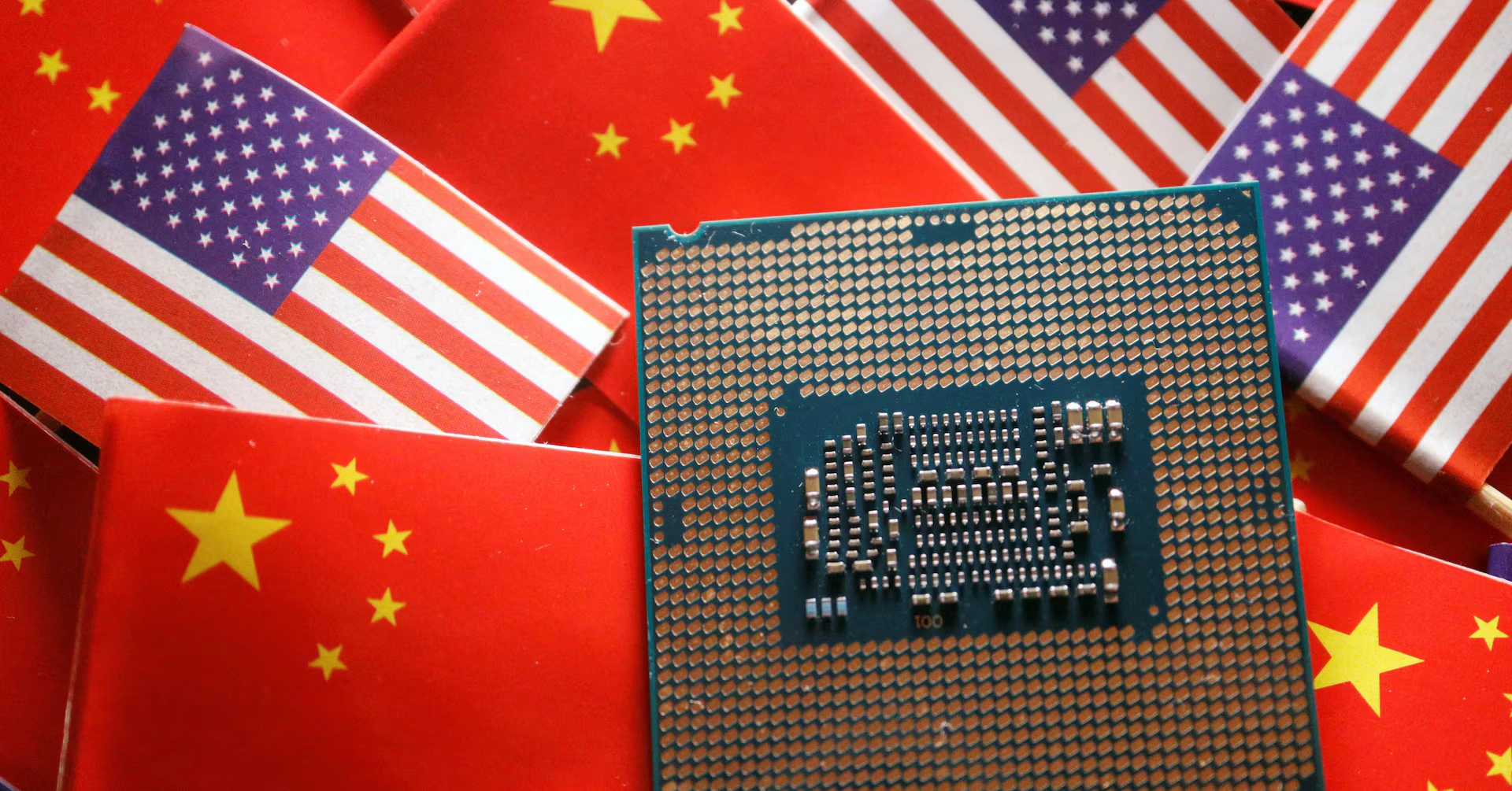
Deep inside a modern semiconductor fabrication plant, the difference between a functional artificial intelligence processor and a useless square of silicon often comes down to invisible pillars of metal. These microscopic vertical interconnects, known as vias, act as the electrical wiring between billions of transistors. To build them, foundries rely heavily on tungsten hexafluoride—a highly volatile, ultra-pure gas that deposits tungsten metal atom by atom.
For decades, the global supply chain for this esoteric process operated smoothly, largely out of public view. China mined the raw ore, Japan refined it into high-purity specialty chemicals, and foundries in Taiwan and South Korea baked it into the chips powering the digital economy. That quiet equilibrium is fracturing. With Beijing tightening its grip on critical minerals, the semiconductor industry faces a stark question: are China’s export curbs on tungsten the bottleneck that finally chokes the global AI hardware boom?
The Geopolitical Chessboard of Critical Minerals
The current anxiety pulsing through Tokyo and Silicon Valley did not emerge in a vacuum. It is the latest escalation in a tit-for-tat technology war that has steadily moved from final consumer products down into the foundational elements of the periodic table.
When Washington restricted Chinese access to extreme ultraviolet (EUV) lithography machines and advanced Nvidia accelerators, Beijing retaliated at the base of the supply chain. In late 2023, China imposed strict export licensing on gallium and germanium—two metals vital for advanced optoelectronics and military radars. A year later, antimony and graphite faced similar regulatory walls.
Now, tungsten sits squarely in the crosshairs. The arithmetic is unforgiving. China commands roughly 81% of global tungsten mine production, holding an effective monopoly on the intermediate chemical compounds, such as ammonium paratungstate (APT), required to feed overseas refineries.
Japan, despite its dominance in the semiconductor materials sector, is structurally exposed. The Japanese archipelago is functionally devoid of commercial tungsten deposits. Its chemical titans—companies like Resonac Holdings and Kanto Denka Kogyo—rely heavily on Chinese imports to synthesise the ultra-pure gases essential for global chipmakers. A disruption here doesn’t just threaten Japanese industrial margins; it jeopardises the fabrication of the advanced logic and memory chips necessary to train next-generation AI models.
The Core Development: Weaponising the Periodic Table
The mechanics of China tungsten export curbs are deliberately opaque, designed to inflict maximum anxiety while maintaining plausible deniability regarding trade warfare. Beijing hasn’t issued a blanket embargo. Instead, the Ministry of Commerce employs a complex system of dual-use export licences.
Under these regulations, Chinese exporters must detail the end-user and the exact purpose of the exported material before a shipment is cleared. This administrative friction acts as a silent quota system. Approval times stretch from weeks to months. In some cases, applications for shipments headed to countries closely aligned with US semiconductor sanctions languish indefinitely.
For Japanese chemical processors, this unpredictability is toxic. Semiconductor manufacturing operates on a ruthless just-in-time model. Fab managers cannot tolerate a disruption in specialty gas deliveries, because halting a modern 3-nanometre production line can cost tens of millions of dollars a day in ruined wafers and recalibration time.
Japan’s Ministry of Economy, Trade and Industry (METI) has been quietly sounding the alarm. In closed-door sessions throughout early 2026, METI officials and industry executives have war-gamed the cascading effects of a complete Chinese cutoff. The consensus is grim. While Japan maintains strategic stockpiles of raw tungsten, the specialised grades required for semiconductor-grade tungsten hexafluoride are notoriously difficult to store long-term due to degradation and strict purity requirements.
Furthermore, the surge in AI infrastructure has radically altered demand curves. High-bandwidth memory (HBM) modules—the critical companions to Nvidia and AMD logic chips—require complex vertical stacking. This process, known as Through-Silicon Via (TSV) technology, is highly dependent on precise metal deposition. The explosive growth in AI data centres has driven a corresponding spike in demand for advanced packaging materials, making the timing of Beijing’s regulatory tightening particularly painful for Tokyo’s materials sector.
The Structural Anatomy of a Bottleneck
To understand why this specific metal grants Beijing such disproportionate leverage, one must look at the physics of modern computing.
How does tungsten affect semiconductor manufacturing? Tungsten is vital in semiconductor manufacturing because it possesses an exceptionally low electrical resistance and the highest melting point of any pure metal. It is primarily used to fill “vias”—the microscopic vertical holes that connect different layers of circuitry within a silicon wafer. Without highly purified tungsten hexafluoride gas to deposit this metal, fabricating modern, high-density AI chips is physically impossible.
This physical reality creates a highly inelastic market. You cannot simply swap tungsten for aluminium or copper in these specific, microscopic applications without fundamentally redesigning the chip’s architecture—a process that takes years and billions of dollars in R&D.
When a foundry like TSMC or Samsung manufactures an AI accelerator, they utilise a process called Chemical Vapor Deposition (CVD). Inside a vacuum chamber, tungsten hexafluoride gas reacts with hydrogen, stripping away the fluorine to leave a perfectly uniform layer of solid tungsten inside trenches just a few nanometres wide.
Japan dominates the production of this CVD-grade gas, commanding over a 30% global market share. Yet, this dominance is an illusion of strength. The Japanese supply chain resembles an hourglass: wide at the top with numerous global semiconductor clients, and wide at the bottom with vast Chinese mining operations. The pinch point is the raw material flowing across the East China Sea.
If Beijing turns the tap, the global supply of AI chips doesn’t stop immediately. It slows down. Fab yields drop. Prices for advanced logic processors surge. The tech giants funding the AI revolution—Microsoft, Meta, Google—would find their data centre build-outs delayed not by a lack of capital, but by a lack of raw industrial chemistry. It is a brilliant, asymmetric pressure point. By controlling the raw dirt, Beijing exerts gravity over the most sophisticated technological ecosystem in human history.
Implications: The High Cost of Decoupling
The downstream consequences of this geopolitical squeeze are already rippling through global commodities and equity markets. The price of ammonium paratungstate (APT) has seen violent, anomalous spikes on the Rotterdam and Asian spot markets, reflecting the panic purchasing by Japanese and South Korean trading houses trying to front-run further export denials.
For policymakers in Tokyo, the curbs have triggered a frantic pivot toward supply chain diversification. The Japan Organization for Metals and Energy Security (JOGMEC) has accelerated its overseas investment mandate. We are seeing Japanese capital aggressively courting mining projects in geopolitically safer jurisdictions.
Consider the Sangdong mine in South Korea. Operated by Canada’s Almonty Industries, Sangdong was once one of the world’s largest tungsten mines before cheap Chinese exports forced its closure in the 1990s. Today, heavily backed by state-sponsored loans and long-term offtake agreements from Western and Japanese buyers, it is being resurrected. Similar capital flows are targeting high-grade deposits in Vietnam, Spain, and Australia.
Yet, throwing capital at the problem does not alter the temporal reality of mining. You can write a check in seconds; bringing a dormant deep-shaft mine into commercial production, securing environmental permits, and building an adjacent refinery takes anywhere from five to ten years. The AI boom cannot wait a decade.
For the businesses caught in the middle, the strategy has shifted from “just-in-time” to “just-in-case.” Semiconductor equipment manufacturers are actively researching ways to improve the efficiency of gas usage in CVD chambers, attempting to stretch existing stockpiles. Meanwhile, the legal and compliance teams at Japanese chemical firms are working overtime, trying to navigate the Byzantine requirements of China’s Ministry of Commerce to keep the shipments flowing, often at the cost of quietly sharing more supply chain data with Beijing than they would prefer.
The Counterargument: Why the AI Supply Chain Might Survive
It is crucial, however, to temper the panic with engineering reality. While China’s export curbs on tungsten pose a severe headache for Japan’s AI chip supply chain, they are unlikely to deal a fatal blow to global semiconductor manufacturing.
First, the semiconductor industry actually consumes a remarkably small fraction of the world’s total tungsten. The vast majority of the metal—roughly 60%—is used to make cemented carbide for heavy industrial cutting tools, drill bits, and armour-piercing munitions. Even a massive expansion in AI data centres requires only metric tonnes of ultra-pure tungsten, not the tens of thousands of tonnes consumed by heavy industry.
If push comes to shove, market economics dictate that raw tungsten will naturally flow away from lower-margin industrial applications and toward the hyper-lucrative semiconductor sector. Smelters outside of China can theoretically retool to upgrade scrap tungsten or lower-grade industrial ores into the precursors needed for chip manufacturing, provided buyers are willing to pay the massive premium.
Second, the semiconductor industry is arguably the most adaptable engineering ecosystem on the planet. Fabs are not standing still. Giants like Applied Materials and Tokyo Electron have been anticipating material choke points for years. There is aggressive, well-funded research into alternative interconnect materials. Molybdenum, ruthenium, and even cobalt are being actively tested as replacements for tungsten in certain via-fill applications.
While transitioning to a new metal introduces brutal engineering challenges—specifically regarding electromigration and thermal expansion—history shows that chipmakers will overcome the physics if the supply chain forces their hand. Industry analysts note that while substitution takes time, the sheer weight of capital flowing into AI ensures that alternative chemical pathways will be commercialised if Chinese supply becomes critically unreliable.
Finally, Beijing must weigh the macroeconomic blowback. Weaponising critical minerals is a one-way street. The moment China restricts supply, it permanently destroys demand by incentivising the rest of the world to fund alternative mines and recycling technologies. In the long run, Beijing risks accelerating the very decoupling it claims to oppose, losing its lucrative monopoly status in exchange for short-term political leverage.
The Friction of a Fracturing World
The conflict over tungsten is not simply a story about metallurgy. It is a leading indicator of how the global economy is restructuring itself for an era of persistent geopolitical conflict.
China’s export curbs on tungsten will not stop the development of artificial intelligence, nor will they completely sever Japan’s AI chip supply chain tomorrow. But they act as a heavy, unpredictable tax on innovation. They force billions of dollars to be diverted from research and development into supply chain redundancy, legal compliance, and the resurrection of uneconomical mines.
The seamless, hyper-optimised global supply chain that birthed the smartphone and the cloud is dead. In its place, a more resilient but vastly more expensive system is being forged. For the architects of the AI revolution, the greatest threat is no longer the limits of software engineering, but the hard, immutable physics of the earth.
Discover more from The Economy
Subscribe to get the latest posts sent to your email.
A decade ago, the streets surrounding the Pyeongtaek industrial zone were defined by silica dust, heavy machinery, and cheap pork belly diners catering to exhausted shift workers. Today, you are more likely to find a $200-a-head sushi omakase fully booked by twenty-something engineers before the first shift ends. The multi-story parking structures outside the world’s largest semiconductor fabrication plants look increasingly like European luxury car dealerships, lined with imported sedans and high-performance SUVs. This quiet agricultural hub located 40 miles south of Seoul has mutated. It is no longer just a manufacturing node. Awash in capital generated by the global scramble for artificial intelligence hardware, it has become a premier destination for high-end consumption.
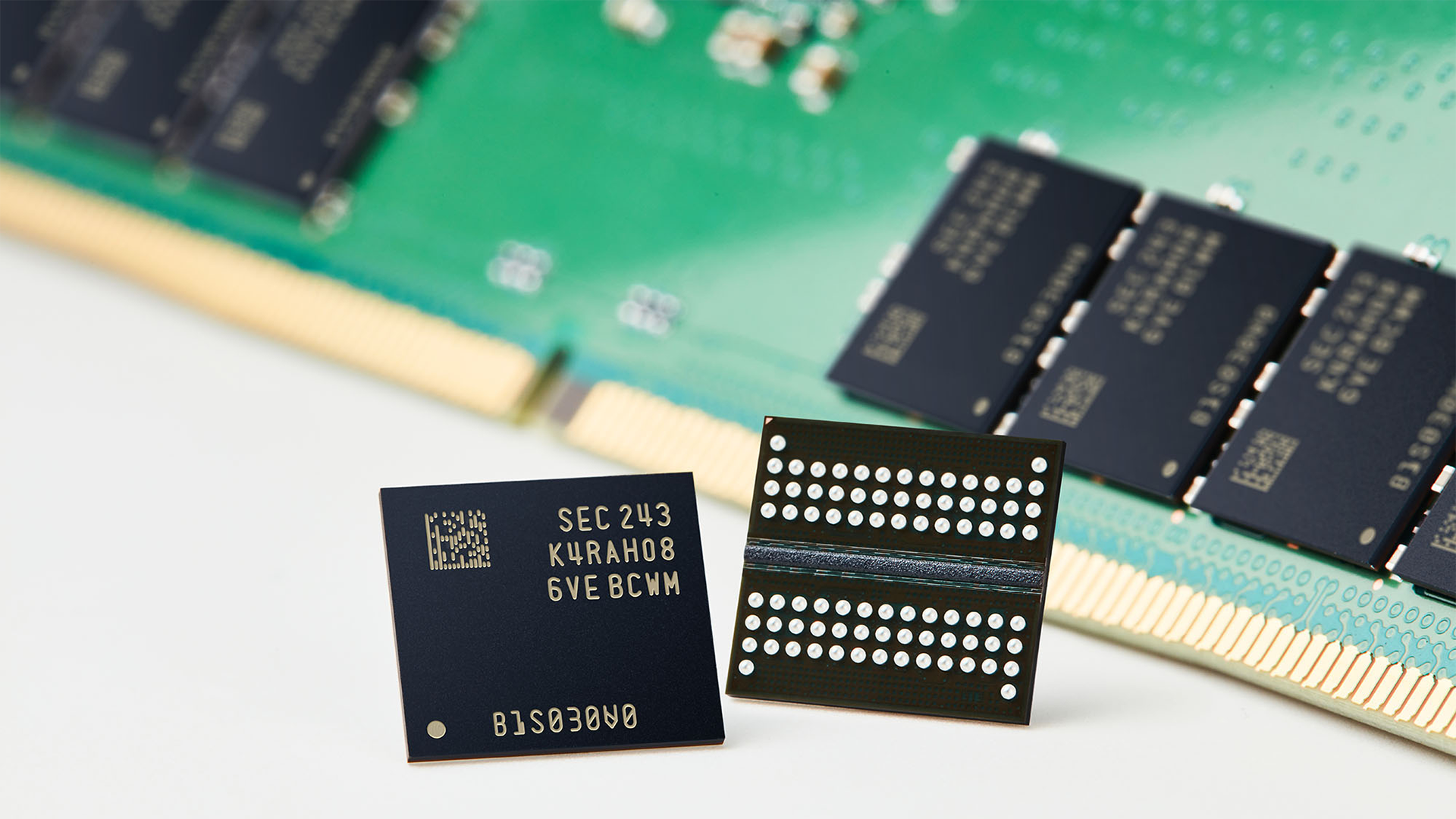
The global artificial intelligence boom is largely invisible, occurring in server farms and data centres thousands of miles away. Yet the physical infrastructure required to train these massive language models relies entirely on advanced silicon. High-Bandwidth Memory (HBM) chips are the critical bottleneck in AI computing, stacking memory directly on top of logic processors to feed data to Nvidia’s graphics processing units at blistering speeds. Only a handful of facilities on Earth can manufacture these components at scale. South Korea’s semiconductor giants dominate this fiercely protected market. As Silicon Valley pours hundreds of billions of dollars into AI infrastructure, a massive wealth transfer is occurring across the Pacific. This capital is landing directly in the corporate campuses of Gyeonggi Province, translating into unprecedented profit-sharing bonuses for the engineers and technicians who keep the fabrication lines running 24 hours a day.
The Core Development: Capital Concentration at the Factory Gates
The transformation of Pyeongtaek into a Samsung factory town luxury hotspot did not happen overnight, but the pace has violently accelerated over the past two years. As generative AI moved from a theoretical novelty to a boardroom obsession, demand for premium memory chips skyrocketed. South Korean chip exports surged by more than 50% year-on-year in early 2024, driving a massive influx of foreign capital into the domestic economy. This macroeconomic windfall is highly localised. Samsung Electronics operates its largest, most advanced foundry and memory lines here, a facility so vast it has its own internal bus network and electrical substations.
The financial impact on the local workforce has been staggering. In peak performance cycles, semiconductor engineers receive target achievement incentives that can exceed 50% of their base salaries. For a mid-level technician, this translates to tens of thousands of dollars paid out in a single lump sum. Retailers and real estate developers have followed the money. Luxury department stores, previously confined to the wealthy enclaves of Gangnam in southern Seoul, are rapidly securing anchor locations in these satellite cities. The Galleria department store in nearby Suwon recently reported that its VIP client base—shoppers spending upward of $20,000 annually—is now heavily skewed toward tech workers in their twenties and thirties.
High-end consumption outside the capital is rewriting South Korea’s retail dynamics. Historically, wealthy provincial residents would travel to Seoul for luxury purchases. Today, brands like Rolex, Chanel, and Porsche are opening showrooms within a 15-minute drive of the factory gates. On a rainy Tuesday in early June, 31-year-old lithography specialist Kim Min-su stood outside a newly opened high-end watch boutique during his lunch break, a scene that would have been unimaginable in this district just five years ago. Local property developers have responded by constructing premium residential towers complete with private wine cellars, indoor golf simulators, and concierge services, marketing them directly to young, cash-rich tech workers who prefer a five-minute commute over living in the capital.
The Analytical Layer: Reshaping South Korea Semiconductor Hubs
To understand this phenomenon, one must look beyond retail and examine the structural shifts in South Korean urban economics. The clustering of extreme wealth around manufacturing centres represents a stark departure from the country’s traditional development model. For decades, wealth generated by industrial exports flowed upward into the corporate headquarters and financial districts of Seoul, creating a highly centralised, geographically unequal economy. The AI chip boom is forcing a decentralisation of wealth, driven by the sheer physical footprint required for next-generation semiconductor fabrication. These mega-clusters simply cannot fit within Seoul’s city limits.
Why are luxury brands opening in South Korean factory towns? Luxury brands are opening in South Korean factory towns because the AI semiconductor boom has generated unprecedented corporate bonuses and highly paid engineering jobs. Towns like Pyeongtaek now boast disposable income levels that rival central Seoul, creating highly concentrated, lucrative markets for high-end retail.
This geographical shift is creating a two-tiered economy within Gyeonggi Province. The wealth is strictly ring-fenced around the semiconductor supply chain. Service industries, education providers, and commercial real estate developers are fiercely competing for access to this highly lucrative demographic. Yet, this influx of capital drastically alters the cost of living. Commercial rent for prime ground-floor retail space near the Pyeongtaek campus has nearly tripled since 2020. Independent businesses—the very establishments that originally serviced the town—are being priced out, replaced by franchise coffee shops, premium fitness centres, and imported car dealerships. The factory town is gentrifying itself out of its own history, trading blue-collar accessibility for a highly sterile, heavily curated luxury ecosystem designed explicitly to capture semiconductor bonuses.
Implications & Second-Order Effects: The Isolation of AI Wealth
The downstream consequences of this hyper-localised economic boom extend far beyond the availability of luxury leather goods. We are witnessing the emergence of corporate city-states, where the economic health of an entire municipality is decoupled from the national economy and hard-pegged to the capital expenditure cycles of American tech giants. While the broader South Korean economy grapples with sluggish growth, high household debt, and a rapidly aging population, these semiconductor hubs exist in a state of permanent, high-velocity expansion.
This creates severe friction in regional real estate markets. Housing prices in key semiconductor corridors have vastly outpaced the national average, driven largely by speculative investment and highly compensated tech workers seeking premium housing. For long-term residents entirely disconnected from the tech industry, this influx of wealth is economically hostile. Teachers, municipal workers, and service staff find themselves competing for housing in a market inflated by artificial intelligence money. The wealth generated by HBM chips does not trickle down; it remains trapped in a closed loop of luxury consumption and premium real estate investment.
What follows, however, is a profound demographic distortion. The allure of immense bonuses and affordable premium housing outside of Seoul is successfully reversing the traditional brain drain. Top-tier engineering graduates from prestigious Seoul universities are increasingly willing to relocate to Pyeongtaek and Hwaseong. This migration of highly educated, high-earning youth is a demographic anomaly in a country facing critical population decline. Local governments are capitalising on this influx, aggressively lobbying the central government for expanded infrastructure, high-speed rail links, and international schools to permanently anchor this wealthy demographic. The long-term implication is clear: geography in the 21st century is being dictated by supply chains. The places that physically build the architecture of artificial intelligence will accumulate wealth at a scale that rivals traditional financial capitals.
Competing Perspectives: The Cyclical Risk of Silicon Riches
The picture is more complicated than a straight line of infinite growth. Critics and macroeconomic analysts caution that building a municipal economy entirely around semiconductor bonuses is an act of extreme financial hubris. The memory chip market is notoriously cyclical, subject to vicious boom-and-bust cycles dictated by global macroeconomic conditions and corporate inventory gluts.
While the current demand for AI-related silicon seems insatiable, the underlying economics of the semiconductor industry remain volatile. Industry analysts warn that aggressive over-expansion by memory manufacturers could lead to a severe supply glut by 2026, crashing prices and wiping out the profit margins that fund these massive corporate payouts. If Nvidia’s growth slows, or if the hyperscale cloud providers reduce their capital expenditures on AI infrastructure, the financial shockwaves will hit towns like Pyeongtaek before they hit Wall Street.
Furthermore, relying on discretionary corporate bonuses to sustain a local luxury retail and premium real estate market is inherently fragile. Base salaries in the semiconductor industry, while high, cannot support the current levels of hyper-consumption without the semi-annual performance payouts. A single bad quarter, a minor disruption in global supply chains, or a geopolitical shock involving export controls could instantly evaporate the disposable income that currently sustains this local boom. The luxury boutiques and premium omakase restaurants operating on multi-year, high-rent commercial leases would face immediate, existential crises. Steel-manning the sceptical view requires acknowledging that Pyeongtaek is operating as a single-commodity town. Like the oil boomtowns of the 20th century, extreme concentration of wealth brings an equal and opposite concentration of risk.
Synthesis and Horizon
The evolution of South Korea’s semiconductor hubs from gritty industrial zones to enclaves of extreme luxury perfectly encapsulates the physical reality of the digital economy. The artificial intelligence boom is not merely a software revolution; it is a heavy industrial process that requires immense amounts of capital, land, and human engineering. The wealth generated by this transition is completely reshaping the geography of prosperity, moving economic gravity away from traditional capital cities and toward the specific geographic coordinates where raw silicon is transformed into memory.
This creates a spectacular, highly visible form of prosperity, but one built on the fragile foundations of a volatile tech cycle. For now, the champagne continues to flow in the shadow of the fabrication plants. But the true test of this new wealth will not be how fast it was accumulated, but whether these silicon factory towns can survive the inevitable moment the global supply chain catches its breath.
Discover more from The Economy
Subscribe to get the latest posts sent to your email.

UK Japan Investment Agreement: Inside the £18bn Deal

AI Fundraising Trends: Wall Street’s Record Capital Influx

China Tungsten Export Curbs: Is Japan’s AI Chip Supply at Risk?

Pakistan Textile Body Welcomes FY27 Budget, Seeks FTR

US Economic Resilience: Why the Economy Keeps Defying the Odds

Global Strategic Oil Reserves Depletion: The Empty Vaults

Dubai Consumer Protection: 155,000+ Inspections Secure Price Stability

18% Shipping Sales Tax Abolition Sparks Maritime Economy Growth

Bank Indonesia Rate Hike 2026: New Mandate’s First Market Test

The Silicon Silk Road: How Memory Chips Rewrote the Retail Map

France opposes ‘anglicisation’ of EU trade talks

Anthropic Suspends Latest AI Models After US Blocks Foreign Access

Goldman and JPMorgan Ease Office Working Rules to Counter World Cup Disruption

AI Is Revolutionising the Stock Market — But the Risks Are Scaling Too

China Overhauls the World’s Biggest Surveillance Network with Advanced AI

Kevin Warsh Takes the Fed’s Helm — and Walks Straight Into a Rate-Hike Storm

S&P 500 Slips Back to 7,408 as Oil Storms Past $109, Bond Yields Clock 19-Year Highs

SpaceX IPO: Inside the $2 Trillion Market Debut

SpaceX, OpenAI & Anthropic IPOs: Wall Street’s $200B AI Test

How AI Is Forcing McKinsey and Its Peers to Rethink Pricing

KPMG Australia CEO Resigns After Whistleblower Claims Exposed Investigation Failures

Pakistan Budget FY 2026-27: Relief, Prospects, and the Tightrope Walk

Broadcom Market Value Loss: Revenue Forecast Disappoints

The Guardrails Are Down: How Meta and Google’s AI Models Fold Under Pressure

Is AI Already Putting Graduates Out of Work? The Grim Reality Facing the Class of 2026

Stock Market Correction Risk Mounts as Bond Yields Defy the Bull Case

Five PSX Stocks Worth Owning Before the Second Quarter Ends

Benefitbay Raises $18M to Build the Plumbing for America’s ICHRA Shift
-

 Markets & Finance5 months ago
Top 15 Stocks for Investment in 2026 in PSX: Your Complete Guide to Pakistan’s Best Investment Opportunities
-

 Analysis4 months ago
Top 10 Stocks for Investment in PSX for Quick Returns in 2026
-

 Analysis4 months ago
Brazil’s Rare Earth Race: US, EU, and China Compete for Critical Minerals as Tensions Rise
-

 Banks5 months ago
Best Investments in Pakistan 2026: Top 10 Low-Price Shares and Long-Term Picks for the PSX
-

 Investment5 months ago
Top 10 Mutual Fund Managers in Pakistan for Investment in 2026: A Comprehensive Guide for Optimal Returns
-

 Analysis4 months ago
Johor’s Investment Boom: The Hidden Costs Behind Malaysia’s Most Ambitious Economic Surge
-

 Global Economy6 months ago
15 Most Lucrative Sectors for Investment in Pakistan: A 2025 Data-Driven Analysis
-

 Global Economy6 months ago
Pakistan’s Export Goldmine: 10 Game-Changing Markets Where Pakistani Businesses Are Winning Big in 2025