Connect with us

Analysis

Russia May Halt Gas Supplies to Europe: Putin’s Iran Gambit and the New Energy Order

Published

on

The Kremlin’s signal that it could voluntarily exit the European gas market is part bluff, part genuine pivot — and entirely consequential for global energy security in 2026 and beyond.

Russia may halt gas supplies to Europe as Putin exploits the Iran energy spike. Analysing the real stakes behind the Kremlin’s threat, TTF price surge, and Moscow’s Asian pivot.

Introduction: A Threat Dressed as a Business Decision

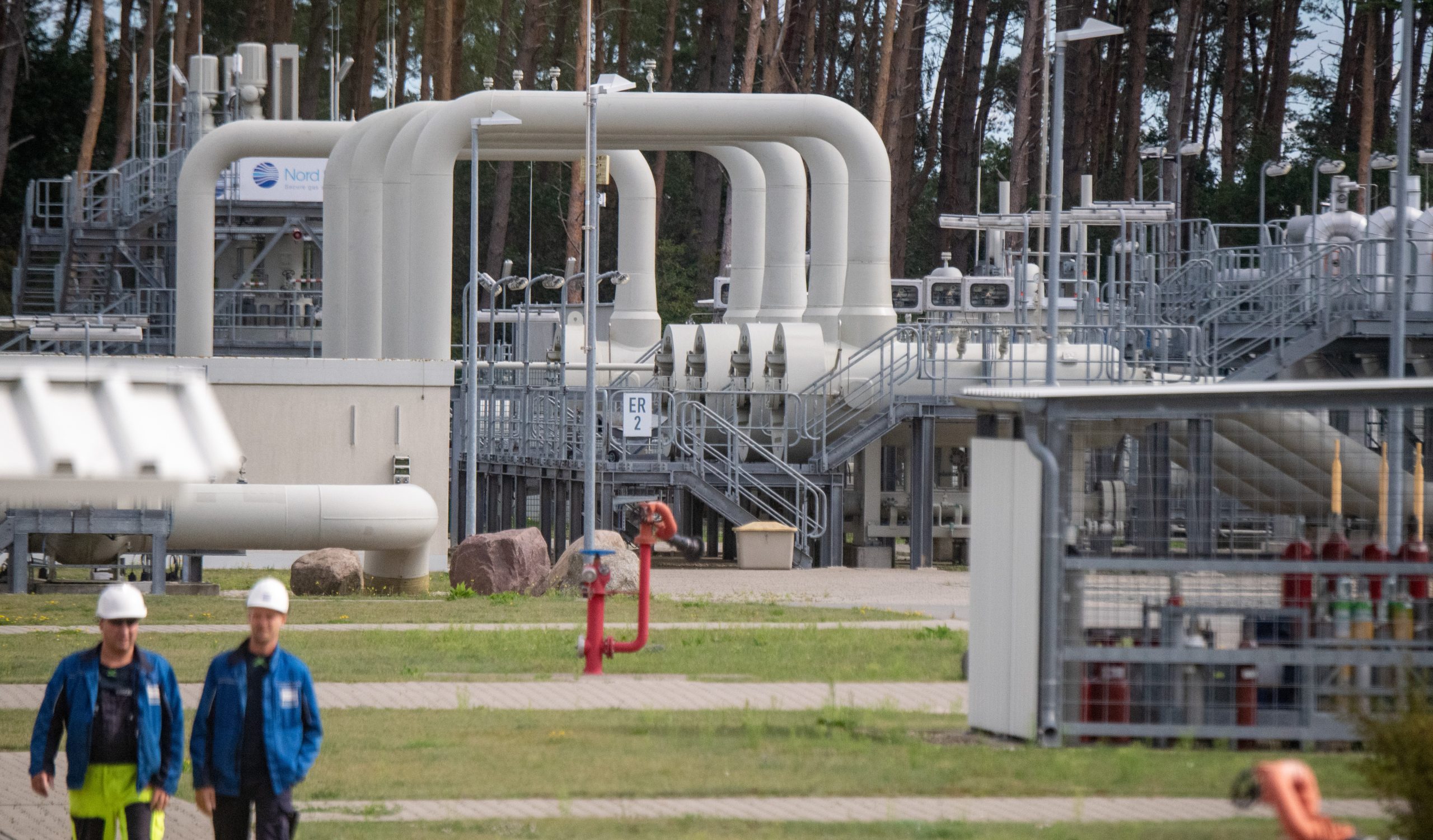
On the morning of March 4, 2026, Russian President Vladimir Putin sat down with Kremlin television correspondent Pavel Zarubin and appeared to do something unusual for a man whose public statements are rarely accidental: he thought out loud. Against the backdrop of global energy markets in full-blown crisis — triggered by the U.S.-Israeli military campaign against Iran and Tehran’s counter-strikes across the Gulf — Putin mused that Russia might halt gas supplies to Europe entirely, and do so immediately, rather than wait to be formally ejected under the European Union’s own phase-out timeline.

“Now other markets are opening up,” Putin said, according to the Kremlin transcript. “And perhaps it would be more profitable for us to stop supplying the European market right now. To move into those markets that are opening up and establish ourselves there.”

He was careful, almost lawyerly, in his framing. “This is not a decision,” he added. “It is, in this case, what is called thinking out loud. I will definitely instruct the government to work on this issue together with our companies.” But in the language of energy geopolitics, where a single presidential signal can move commodity markets by double digits, the distinction between thinking out loud and making policy is narrower than it appears. What Putin said on March 4 was not a bluff — or at least, not entirely one. It was a calculated reflection of a structural shift already underway, supercharged by a Middle East crisis that has remade the arithmetic of global gas markets in just seventy-two hours.

To understand what this means, you have to understand where Europe stands today — and where Russia has been heading for the past three years.

Background: A Market Already Departing Itself

The story of Russia’s decline as Europe’s dominant gas supplier is one of the most dramatic commercial collapses in modern energy history. Before February 2022, Russia supplied approximately 40% of the EU’s pipeline gas, making Gazprom — then valued at over $330 billion — the third-largest company in the world. By early 2026, that figure had fallen to just 6%, and Gazprom’s market capitalisation had cratered to roughly $40 billion, a destruction of value that no Western sanctions regime alone could have engineered without Moscow’s own strategic miscalculations.

Europe’s REPowerEU programme — launched in the immediate aftermath of the Ukraine invasion — has proven surprisingly effective. Norway, the United States, and Algeria have collectively absorbed most of what Russia once provided. LNG import terminals that did not exist three years ago now dot Europe’s Atlantic coastline. The continent’s dependence on pipeline gas from a single adversarial supplier has been structurally dismantled.

What remained of Russia’s European gas footprint was a dwindling rump of legacy contracts, principally serving Hungary and Slovakia — nations whose governments had maintained warmer diplomatic relationships with Moscow. It was a commercially marginal position, but one that gave the Kremlin a residual foothold in Europe’s energy map and, more importantly, a psychological card to play. That card is what Putin attempted to deploy on Wednesday.

The European Commission has approved a binding phase-out schedule that accelerates significantly this spring. The key EU ban milestones are: April 25, 2026, for short-term Russian LNG contracts; June 17, 2026, for short-term pipeline gas; January 1, 2027, for long-term LNG contracts; and September 30, 2027, for long-term pipeline contracts. Putin’s suggestion — that Russia should exit now rather than wait to be shown the door — is, on one level, a face-saving exercise. But on another, it is a genuine strategic calculation being shaped by events thousands of kilometres away, in the Persian Gulf.

The Iran Crisis: How a Middle East War Changed European Gas Arithmetic Overnight

The convergence of the Iran crisis with Putin’s remarks is not coincidental. In late February 2026, European gas markets had entered what traders described as a period of “prolonged dormancy.” The Dutch TTF benchmark — Europe’s primary gas pricing index — had drifted to roughly €32 per megawatt hour, the lower half of Goldman Sachs’s estimated coal-to-gas switching range. Norwegian output from the Troll field was at peak efficiency. The energy crisis of 2022 seemed a distant, if instructive, memory.

Then, over the weekend of February 28 to March 1, came the military escalation that markets had not priced in. Iranian strikes on Gulf Arab neighbors, the effective closure of the Strait of Hormuz, and — most critically for gas markets — QatarEnergy’s announcement that it was halting all LNG production after Iranian drone attacks targeted two of its facilities. QatarEnergy accounts for nearly one-fifth of global LNG exports. The impact was immediate and seismic.

By Tuesday, March 3, the TTF had surged more than 60% to a three-year high, peaking intraday at €65.79/MWh. Goldman Sachs — which had entered the week forecasting a €36/MWh April TTF price — raised its April forecast to €55/MWh and warned that a full one-month Strait of Hormuz closure could drive TTF toward €74/MWh, the level that triggered large-scale demand destruction during the 2022 crisis. Brent crude climbed to around $83 a barrel mid-week, some 25% above its pre-strike close.

Chart: European TTF Gas Price vs. Iran Crisis Timeline (February–March 2026) TTF at ~€32/MWh (Feb 28) → €46.41/MWh (Mar 2, Hormuz closure) → €65.79/MWh intraday peak (Mar 3, Qatar halt) → ~€60/MWh (Mar 4, Putin statement). Goldman Sachs scenario range: €74–€90/MWh if disruption extends beyond 30 days. 2022 crisis peak for reference: €345/MWh (August 2022). Source: ICE TTF, Goldman Sachs Commodity Research, ICIS.

The scale of Europe’s structural vulnerability was made even more vivid by the storage data. EU gas storage entered March 2026 at approximately 46 billion cubic metres — compared to 60 bcm in 2025 and 77 bcm in 2024. Facility fill rates were sitting at around 30% of capacity, with Germany at roughly 21.6% and France in the low-20s. Oxford Economics warned that European storage was now on track to fall below 20% by the end of the summer refill season, making the EU’s mandated 80% target for December virtually unreachable without a rapid restoration of Qatari output and Hormuz shipping lanes.

It was into this environment — with European buyers suddenly desperate for any available molecule and willing to pay premium prices — that Putin delivered his “thinking out loud” signal.

Deep Analysis: What Putin Actually Said, and What It Means

Strip away the diplomatic language and the Kremlin’s careful framing, and Putin’s message on March 4 had three distinct layers.

The first was commercial. With global spot LNG prices surging alongside TTF, the opportunity cost of continuing to sell residual pipeline volumes to a market that has legislated for your exit has genuinely shifted. “Customers have emerged who are willing to buy the same natural gas at higher prices, in this case due to events in the Middle East, the closure of the Strait of Hormuz, and so on,” Putin told Zarubin. “This is natural; there’s nothing here, there’s no political agenda — it is just business.” This is not entirely a confection. The disruption to Qatari and Gulf supply has created a genuine spot-market premium that makes diverting flexible LNG cargoes to Asian buyers financially attractive.

The second layer was geopolitical. Ukraine’s government immediately characterised Putin’s remarks as “Energy Blackmail 2.0”, arguing that Moscow is attempting to exploit the global energy shock to pressure Europe into softening its next round of gas sanctions — specifically the April 25 deadline for banning new short-term Russian LNG contracts. That reading is credible. Putin linked his remarks directly to the EU’s “misguided policies” and singled out Slovakia and Hungary as “reliable partners” who would continue to receive Russian gas — a studied wedge aimed at splitting the bloc along its most familiar fault lines.

The third layer is structural, and it is the one that matters most for the medium term. Russia is not simply threatening to leave Europe’s gas market. It is trying, under conditions of genuine commercial pressure, to accelerate a pivot that is already underway — but that faces serious bottlenecks. Russia’s pipeline gas exports to China via the Power of Siberia 1 line are expected to hit 38–39 bcm in 2025, up from 31 bcm the previous year. A legally binding memorandum to build the 50 bcm Power of Siberia 2 pipeline — running from the Yamal Peninsula through Mongolia to northern China — was signed in September 2025. But key commercial parameters, including price, financing, and construction timeline, remain unresolved. The pipeline could not realistically begin deliveries before 2030.

That gap — between the rhetoric of an Asian pivot and its physical reality — is the central vulnerability in Putin’s position. Russia can talk about redirecting gas to “more promising markets.” It cannot actually do so at scale, quickly, without the infrastructure that does not yet exist.

The Asymmetry of Pain: Who Needs This More?

The critical question any serious analyst must ask is: who is in the weaker negotiating position? And the honest answer is that both sides are weaker than they publicly admit.

Europe is, right now, more exposed than at any point since 2022. Low storage, a Qatari production halt, a constrained Hormuz corridor, and the structural dependency on spot LNG that replaced Russian pipeline gas — all of this has placed the EU in a position where any additional supply disruption narrows the margin between a price shock and a supply crisis. The European Commission told member states on March 4 that it saw no immediate threat to supplies and was not planning emergency measures — technically accurate, but dependent on the Hormuz situation resolving within weeks rather than months. A sustained shutdown beyond thirty days would likely trigger EU emergency coordination mechanisms and, potentially, renewed industrial demand rationing in Germany and Italy.

Russia, meanwhile, is not in a position of strength it can easily monetise. Gazprom’s finances have been devastated by the loss of the European market. The company that was worth $330 billion in 2007 is now a shadow institution, sustained by domestic subsidies and Chinese pipeline flows priced at significant discounts to European rates. Before the war, Russia earned $20–30 billion annually from 150 bcm of gas sales to Europe. Even the completion of Power of Siberia 2 would replace only a fraction of that revenue, at lower unit prices. Nature Communications’ modelling suggests that under even the most optimistic Asian pivot scenario, Russia’s gas exports in 2040 would remain 13–38% below pre-crisis levels.

The Iran crisis is, therefore, a short-term opportunity for Moscow — a window in which spot prices are high enough to make diverting LNG cargoes look commercially rational, and in which Europe’s anxiety is visible enough to potentially extract political concessions. The window may be narrow, but Putin, characteristically, is using it.

Europe’s Alternatives and the Long-Term Structural Outlook

For European policy desks, the Iran crisis and the Putin signal converge into a single, uncomfortable lesson: the substitution of Russian pipeline gas with global LNG has increased Europe’s resilience against one specific geopolitical actor, while simultaneously increasing its exposure to a different category of risk — global market volatility and shipping lane disruption.

The diversification has been real and substantial. Norway remains the most stable and geographically proximate anchor of European supply. U.S. LNG — whose export volumes have grown dramatically since 2022 — provides a flexible, if expensive, buffer. Algeria and Azerbaijan offer incremental pipeline capacity. The EU’s REPowerEU framework — which accelerated renewable deployment alongside supply diversification — has also reduced the bloc’s structural gas demand.

But Bruegel’s analysis is pointed: “Europe’s exposure to geopolitical shocks remains rooted in its continued reliance on imported fossil fuels traded on volatile global markets — even if it has shifted dependency from Russia to other suppliers.” A continent that spent 2022 learning that pipeline dependency is a strategic liability spent 2023–2025 building LNG infrastructure — only to discover in March 2026 that LNG, too, has a geopolitical chokepoint problem. The Strait of Hormuz handles roughly one-fifth of global LNG trade. That is a structural risk that no European Commission regulation can address directly.

The medium-term policy implications are significant. Europe must continue to accelerate domestic renewable capacity at a pace that reduces structural gas demand — not merely substitutes one supplier for another. The ambition to hit 80% renewable electricity by 2030 under the Green Deal framework looks, against this backdrop, less like an environmental aspiration and more like an energy security imperative.

The Russia-China Variable: Beijing Holds the Cards

Perhaps the most consequential long-term dynamic in this story is not Russia’s leverage over Europe, but China’s leverage over Russia. Beijing has watched Moscow’s European collapse with the cool patience of a buyer who knows the seller has nowhere else to go. China’s share of Russia’s gas imports rose from 10% in 2021 to over 25% by 2024, and Power of Siberia 1 is now delivering above its planned annual capacity. But the pricing dynamic tells the real story: China is reportedly seeking gas prices closer to domestic levels around $60 per thousand cubic metres, while Russia has historically priced European contracts at approximately $350. That gap is not merely a commercial negotiating point — it is a measure of Russia’s strategic desperation.

When Putin instructs his government to “work on this issue together with our companies,” the companies in question face a market reality that the Kremlin’s rhetorical confidence does not reflect. The molecules that currently flow to residual European buyers cannot, in the near term, be physically rerouted to Asia without the infrastructure that will not exist for years. In the meantime, Russia’s attempt to leverage the Iran crisis into a position of energy market strength is constrained by its own strategic isolation — and by Beijing’s entirely rational decision to extract maximum commercial advantage from a supplier with limited alternatives.

What This Means for Global Energy Markets in 2026–2027

The Putin signal and the Iran crisis, taken together, define the contours of a global gas market that has entered a structurally more volatile phase. Several dynamics deserve close attention over the next twelve to eighteen months.

The TTF price range is not reverting to pre-crisis levels quickly. Goldman Sachs’s revised Q2 2026 forecast of €45/MWh represents a structural step-up from pre-crisis pricing, even under a relatively benign resolution of the Hormuz situation. The combination of low European storage, disrupted Qatari supply, and elevated geopolitical risk premia will keep European gas prices meaningfully above their late-2025 baseline.

Russia’s European exit is happening on Europe’s terms, not Moscow’s. Putin’s attempt to frame a forced commercial retreat as a voluntary strategic pivot is partly theatre. The EU’s phase-out timeline is legally binding, broadly supported across member states, and operationally advanced. The April 25 ban on new short-term Russian LNG contracts will proceed regardless of Putin’s “thinking out loud.” Hungary and Slovakia may retain some residual pipeline flows under existing long-term contracts, but these are margin cases, not strategic leverage.

The Power of Siberia 2 is not yet a solution. The September 2025 memorandum between Gazprom and CNPC was significant — but it left pricing, financing, and construction timing unresolved. The pipeline cannot realistically deliver first gas before 2030. Russia’s “pivot to Asia,” for the medium term, remains a slogan with better infrastructure than revenues.

The global LNG market is entering a period of structural tightness. The convergence of Qatari disruption, the Hormuz closure, and strong Asian demand growth means that the spot-market flexibility that Europe has relied upon since 2022 will be more expensive and less reliable than buyers had assumed. The ICIS-modelled €90/MWh scenario is not a tail risk — it is a realistic outcome if Hormuz shipping remains constrained through April and May. European industrial competitiveness, already under severe pressure, faces another energy cost headwind.

The real winner may be Washington. Putin himself acknowledged that if premium buyers emerge elsewhere, American LNG exporters “will, of course, leave the European market for higher-paying markets.” This is accurate — but it also reflects a constraint on U.S. flexibility. American LNG export facilities are capacity-constrained and cannot rapidly increase volumes. In the short term, the Iran crisis helps the case for additional U.S. LNG export investment. It also strengthens the hand of American negotiators in any bilateral energy diplomacy with European allies.

The deeper lesson, one that transcends any single news cycle, is that the post-2022 European energy reordering has produced greater supply diversity but not necessarily greater supply security. Swapping a pipeline from Moscow for LNG from a global market that transits through contested choke points is a trade-off, not a solution. Putin’s remarks on March 4 are best read not as a threat, but as a symptom — of Russia’s commercial decline, of Europe’s structural exposure, and of a global gas market in which the old certainties have been permanently dissolved.

The age of cheap, abundant gas flowing reliably through predictable corridors is over. What comes next will be shaped not by any single leader’s calculations, but by the hard physics of where the molecules are, how they move, and who controls the routes between them.


Discover more from The Economy

Subscribe to get the latest posts sent to your email.

Analysis

ESG Loans in Southeast Asia Plunge 46% as Iran War Bites

Published

on

Southeast Asia’s ESG loan market collapsed 46% in Q1 2026 to $5.9bn as the Iran war triggered an energy shock, inflation surge, and a flight from sustainable finance.

From Singapore’s boardrooms to Jakarta’s treasury floors, the Iran war’s energy shock has done what regulators and critics could not: it has exposed the profound geopolitical fragility at the heart of Asia’s green lending ambitions.

At a Glance

MetricQ1 2026Change (YoY)
ESG Loan Proceeds, Southeast AsiaUS$5.9bn–46.3%
ESG Loan Proceeds, APAC ex-JapanUS$16.6bn–40.3%
ESG Bond Proceeds, Southeast AsiaUS$4.0bn–26.5%
Global ESG Loan ProceedsUS$148.5bn+11.5%
Brent Crude (peak, Q1 2026)~US$100–110/bblMorgan Stanley base
Asia LNG Spot Price Increase>140% surgePost Ras Laffan strike
ADB Regional Growth Forecast, 2026–275.1%Down from 5.4%

In the first week of March 2026, as American and Israeli aircraft struck Iranian energy infrastructure and the Strait of Hormuz began its chilling closure to commercial tanker traffic, the conversations that mattered most were not in the Pentagon or the Knesset. They were happening in the treasury departments of Singapore’s Raffles Place, Jakarta’s Sudirman district, and Bangkok’s Silom corridor. CFOs, sustainability officers, and deal bankers were picking up phones and, one by one, pulling the trigger on a single instruction: pause.

The results of those boardroom decisions are now quantified, and they are extraordinary. ESG loan proceeds across Southeast Asia collapsed to just US$5.9 billion in the first quarter of 2026 — a 46.3% plunge from US$11.1 billion in the same period a year earlier, according to data compiled by LSEG Deals Intelligence. ESG bond issuance across the region fell a further 26.5%, to US$4 billion. Broaden the lens to Asia-Pacific excluding Japan, and ESG lending contracted by 40.3% to US$16.6 billion — a figure that places the region in stark, damning contrast with the rest of the world.

The global ESG loan market, by comparison, grew 11.5% over the same period to US$148.5 billion. That divergence — between a globally resilient sustainable finance market and a Southeast Asia in freefall — is not simply a story about one quarter’s bad numbers. It is a structural confession about the vulnerability of green finance in geopolitically exposed emerging markets, and a warning that the net-zero architecture being built across ASEAN may be far more brittle than its architects have been willing to admit.

The Strait of Hormuz and the Price of Green Ambitions

To understand why ESG lending in Southeast Asia collapsed so rapidly, one must first understand what the Iran war did to the fundamental economics of the region. Asia bears the brunt of the Strait of Hormuz closure more than any other region: roughly 84% of the crude oil and 83% of the LNG that passed through the strait in 2024 was bound for Asian buyers. When Iran shut that corridor, it did not just spike Brent crude — it repriced the entire risk framework within which corporate borrowers in Southeast Asia operate.

Regional oil benchmarks surged well above US$150 per barrel while LNG spot prices in Asia rose by more than 140% following Iran’s strike on Qatar’s Ras Laffan complex in mid-March. The Asian Development Bank estimates that regional growth will slow from 5.4% to 5.1% in both 2026 and 2027, while inflation rises to 3.6%. For a corporate treasurer in Manila or Kuala Lumpur contemplating a five-year sustainability-linked loan with performance targets tied to energy consumption or carbon intensity, this is not merely turbulence. It is a fundamental invalidation of the model.

“Geopolitical volatility of this magnitude forces companies to prioritise liquidity and balance sheet resilience above everything else. ESG-linked structures, with their bespoke KPI frameworks and margin ratchets, become the first casualty of a crisis that demands simplicity and speed.”

Jeong Yoonmee, Head of Global Wholesale Banking Sustainability Office, OCBC

The mechanism is straightforward, even if its scale is startling. ESG-linked loans — those that tie borrowing costs to the achievement of environmental, social, or governance targets — are, by design, complex instruments. They require companies to commit to measurable sustainability KPIs, to engage third-party verifiers, to absorb margin adjustments, and to publish progress. In stable, low-volatility environments, the 10–25 basis point reduction in borrowing costs they offer is worth the administrative burden. In a crisis in which energy costs are spiking, currencies are under pressure, and central banks are rethinking rate paths, that calculus inverts instantaneously. The simpler the instrument, the faster it can be deployed. When survival instincts kick in, the sustainability premium is the first line item crossed off the deal sheet.

The Canary in the Coal Mine

ESG Loan Volume Change, Q1 2026 vs Q1 2025

MarketChange
Southeast Asia–46.3%
APAC ex-Japan–40.3%
Global+11.5%

The global resilience of ESG lending at +11.5% is real, and its architects in European capitals and North American boardrooms deserve credit. But it also masks a deeply uncomfortable truth: the markets that have grown fastest and made the boldest net-zero commitments in recent years — precisely the ASEAN economies of Indonesia, Thailand, Malaysia, the Philippines, Vietnam, and Singapore — are also those most exposed to geopolitical shocks of the kind now unfolding.

This is the canary-in-the-coal-mine dynamic that sustainable finance’s boosters have too long ignored. Emerging Asia’s ESG market was built on three assumptions: relatively stable energy prices, progressive central bank policies, and a geopolitical environment permissive of long-horizon corporate planning. The Iran war has demolished all three simultaneously. Asia imports more than 56% of its oil from the Middle East and more than 30% of its gas — a dependency that translates directly into sovereign and corporate vulnerability every time the Gulf ignites.

The region’s financial markets have reflected this with brutal clarity. Global stocks have fallen 5.5% since the conflict began, with Asian markets the worst hit. Emerging market currencies have come under sustained pressure as the dollar strengthened. The repricing of risk across credit markets has pushed up financing costs at precisely the moment when corporate borrowers most need predictability. In this environment, green lending — inherently forward-looking, structurally complex, and dependent on confidence in long-term regulatory frameworks — is fighting a rearguard action against crude, immediate financial survival instincts.

ESG vs. Survival: The Commitment Problem

There is a more uncomfortable dimension to this collapse that sustainability advocates must confront honestly: the data strongly suggests that many of the ESG commitments made by Southeast Asian corporates in 2023 and 2024 were, at least partly, cyclical rather than structural. Sustainability-linked loans were attractive when interest rates were falling, when capital was abundant, and when corporate reputations benefited from green credentials that cost relatively little to maintain. The first genuine macroeconomic shock has revealed the depth — or lack thereof — of those commitments.

This is not a new critique. Academic research has consistently shown that low-transparency sustainability-linked loan borrowers exhibit deteriorating ESG performance after issuance, a pattern consistent with greenwashing rather than genuine transformation. The Iran war has simply accelerated and amplified this dynamic, providing corporate boards with a geopolitically credible justification for deferring sustainability spending that was, in many cases, already under pressure from tightening margins.

What is striking, however, is the asymmetry. The 46.3% contraction in ESG loans is far steeper than the 26.5% decline in ESG bonds — and that gap is revealing. Bond markets, with their more diverse investor bases and standardised structures, have proven somewhat more resilient. Loan markets, by contrast, are bilateral and relationship-driven: when a corporate treasurer calls their relationship bank to pause a sustainability-linked facility, it happens quietly, quickly, and without the scrutiny of a public market. The opacity of the loan market is magnifying the withdrawal.

The Net-Zero Clock and a Fractured Pipeline

For Southeast Asia’s climate ambitions, the timing could hardly be worse. The ASEAN bloc has made increasingly bold net-zero pledges over the past three years, and green lending was central to the financing architecture designed to turn those pledges into capital expenditure. Indonesia has committed to peak emissions by 2030 and net-zero by 2060. Vietnam’s 2050 net-zero target requires an estimated US$368 billion in green investment. The Philippines, Malaysia, and Thailand have each committed to substantial renewable energy targets within this decade.

All of those commitments were calibrated to a financing environment that no longer exists. A US$5.2 billion contraction in a single quarter of ESG lending is not a rounding error — it represents delayed solar projects, deferred green building retrofits, and postponed transition finance for the region’s most carbon-intensive industries. The pipeline, once paused, does not restart overnight. ING’s Sustainable Finance Pulse had projected Asia-Pacific to lead global momentum in transition finance in 2026. That forecast now reads as optimistic archaeology from a pre-war strategic calculus.

Governments have attempted to cushion the macro shock — Thailand capped diesel prices, Vietnam weighed fuel tariff cuts, Indonesia expanded fuel subsidies — but these interventions are, by design, diametrically opposed to the price signals that incentivise the private sector to invest in clean energy and sustainable infrastructure. Every rupiah spent subsidising fossil fuels is a signal that the energy transition can wait. It cannot.

The Path Through Disruption: What Comes Next

Scenario A: Ceasefire Holds, Hormuz Normalises (Base Case)

If the current US-Iran ceasefire stabilises and tanker traffic through the Strait of Hormuz recovers to 80% or above by mid-year, Morgan Stanley expects oil to average US$80–90 per barrel across 2026. Under this scenario, ESG lending volumes in Southeast Asia could recover partially in Q3, with full-year 2026 ESG loan proceeds likely stabilising at around US$20–24 billion — still well below the US$33.9 billion implied by 2025’s run rate, but not catastrophic. The pipeline of deferred deals will not disappear; many will simply be repriced and re-launched with revised KPI structures that better reflect the new energy cost environment.

Scenario B: Prolonged Conflict, Persistent Volatility (Downside)

If oil remains above US$100 per barrel through H2 2026, central banks in the region delay rate cuts or signal hikes, and corporate balance sheets remain under sustained pressure, ESG lending could remain depressed well into 2027. The risk here is not just cyclical contraction but structural damage: if corporates and banks alike perceive green lending as incompatible with periods of high volatility, the market may never recapture its pre-war momentum without regulatory mandates forcing the issue.

The Structural Opportunity

Paradoxically, the energy shock has created a powerful argument for accelerating, not retreating from, the transition. The region’s extreme dependence on Middle Eastern hydrocarbons is precisely what makes domestic renewable energy capacity — solar, geothermal, wind, green hydrogen — a strategic priority of the first order. Vietnam, Indonesia, and Malaysia are already seeing renewed interest from development finance institutions willing to anchor long-tenor green loans that the commercial market has vacated. The ADB, IFC, and bilateral development agencies have balance sheets designed for exactly this moment.

What CFOs, Policymakers, and Investors Must Do Now

Three imperatives flow from this analysis, and they are not optional for anyone who takes the region’s net-zero trajectory seriously.

First, standardise and simplify ESG loan structures for high-volatility environments. The Asia Pacific Loan Market Association and regional banking associations should work urgently on streamlined, crisis-resilient ESG loan templates — structures that preserve the integrity of sustainability KPIs without the administrative complexity that makes them the first casualty of boardroom triage. If green instruments are to be durable, they must be designed for the world as it is, not as sustainable finance’s architects wished it to be.

Second, mobilise development finance as the anchor of last resort. Commercial banks have a fiduciary obligation to retrench when risk spikes — it is futile to moralize about it. The multilateral development banks and export credit agencies that have deeper mandates and longer horizons must step into the gap now, pricing and structuring green loans that keep the pipeline alive until commercial appetite returns. This is exactly what institutions like the ADB’s climate finance facility was built for.

Third, decarbonisation must be reframed as energy security. The political economy of this moment, if anything, strengthens the case for domestic clean energy investment across Southeast Asia. The governments and institutional investors capable of making that argument — and backing it with blended finance, green guarantees, and concessional capital — will determine whether Q1 2026 is remembered as a temporary setback or the beginning of a decade-long detour from the region’s net-zero path.

The Iran war has not killed sustainable finance in Southeast Asia. But it has done something almost as damaging: it has revealed that the market was never as deep, as committed, or as structurally robust as its cheerleaders claimed. The 46.3% collapse in ESG loans is a number that demands honesty, not spin. The conversation it forces — about geopolitical risk, about the true depth of corporate ESG commitment, about the architecture of green finance in emerging markets — is one the region could no longer afford to defer. It is, in the bleakest sense, the most useful crisis the sustainable finance community in Southeast Asia has yet faced.


Discover more from The Economy

Subscribe to get the latest posts sent to your email.

Continue Reading

Analysis

The Weird World of Work Perks: Companies Are Reining In Benefits — But Workers!

Published

on

In January 2026, a mid-level product manager at a San Francisco tech firm received a company-wide memo. The free artisan cold brew taps were being removed. The on-site acupuncture sessions, gone. The monthly “Wellness Wednesdays” — those mandatory mid-afternoon meditation circles that required cancelling actual work meetings — quietly discontinued. The memo was written in the careful, mournful language of a eulogy. But when she told me about it, she laughed. “Honestly?” she said. “Best news I’d heard in months.”

She is not alone. Across the United States, United Kingdom, Germany, Japan, and beyond, companies facing a brutally changed economic reality are doing what they swore they never would: cutting the perks. Healthcare costs are projected to rise 9.5% in 2026, according to Aon’s Global Medical Trend Rates Report, the steepest increase since the post-pandemic shock years. Mercer’s 2026 National Survey of Employer-Sponsored Health Plans projects a more conservative but still alarming 6.5% average spike. Add AI-driven efficiency mandates, cooling venture funding, and an increasingly skeptical CFO class, and the era of the corporate perk — that glittering monument to Silicon Valley’s self-mythology — is entering a long, overdue reckoning.

Here is the uncomfortable truth that most HR consultants won’t put in their PowerPoints: many of these perks were never really for workers at all.

The Great Perk Retreat: What’s Actually Happening

The data is unambiguous. WorldatWork’s 2026 Total Rewards Survey found that 47% of large employers (5,000+ employees) have eliminated or significantly scaled back at least three non-healthcare discretionary benefits since 2024. MetLife’s 2026 Employee Benefit Trends Study — one of the most comprehensive annual reads on workforce sentiment — reports that employers’ top cost-cutting targets include on-site amenities, lifestyle benefits, and supplemental wellness programmes.

Google, famously the architect of the modern perk arms race, has reportedly reduced its legendary free food budget by an estimated 20–25% across several campuses since 2023, quietly removing some specialty stations while expanding cafeteria-style options. Meta has similarly consolidated office perks as part of its broader “Year of Efficiency” philosophy — a phrase that has since calcified into corporate gospel. The Wall Street Journal reported that dozens of mid-cap US firms have dropped gym subsidies and mental-health app subscriptions they added during the pandemic, citing low utilisation rates that were embarrassingly obvious in the data all along.

But here’s where it gets interesting. Worker surveys tell a surprisingly counter-intuitive story.

Gallup’s 2026 State of the Global Workplace Report found that when employees ranked what most influenced their daily job satisfaction, non-cash perks — the foosball tables, the on-site massages, the company-branded merchandise — ranked near the bottom, behind schedule flexibility, manager quality, meaningful work, and fair pay. In fact, 68% of respondents said they would prefer a $3,000–$5,000 increase in their annual flexible spending allowance over any combination of lifestyle perks.

The Dark Side of “Benefits”: When Perks Were Really Control

I’ve spoken with C-suite leaders — a CHRO at a Fortune 200 consumer goods company, two HR directors at UK financial services firms — who admit, usually off the record, what strategists have long whispered: many perks were designed not to enrich employees’ lives but to keep them in the building longer.

The most obvious example is free food. The myth of the Google cafeteria — gourmet, free, available at every hour — sounds like generosity. But a 2024 Harvard Business Review analysis found that the strategic logic of on-site dining has always been retention through friction reduction: if employees never have to leave for lunch, they don’t leave. They stay. They work. The “perk” is, in the cold light of labour economics, a very elegant subsidy for unpaid overtime.

On-site laundry, dry cleaning, car detailing, concierge services — the same logic applies, scaled to absurdity. These aren’t benefits; they are life management services that exist so employees can delegate their personal responsibilities to the employer and, in exchange, surrender their time.

The late-2010s corporate wellness industrial complex deserves its own indictment. Mandatory yoga, step-count competitions, nutrition coaching, and sleep tracking programmes — all presented as caring for worker wellbeing — frequently became surveillance architectures. A 2025 McKinsey Health Institute report on workplace wellness found that nearly 40% of employees felt that corporate wellness programmes made them feel more monitored, not healthier. Several studies found that workers who used employer health apps showed higher rates of reported health anxiety, not lower. The tracking, it turns out, was often the problem.

Then there’s the performative quality of it all. Ping-pong tables became so culturally synonymous with hollow corporate culture that they now function almost as a satirical shorthand. The Instagram-worthy slides at the Googleplex, the fireman’s pole at LinkedIn’s San Francisco office — these weren’t employee benefits. They were recruitment theatre: visual signals to 22-year-old candidates that this was a fun place to work. The workers who lived inside those offices year after year often found them patronising at best, infantilising at worst.

A Global Picture: The Perk Divergence

The corporate perk retreat is not uniform. Its shape reflects deep structural differences in how nations have always thought about work.

In the United States, where employer-provided healthcare remains the dominant model, the benefits conversation is existential in a way it simply isn’t elsewhere. With healthcare costs consuming an estimated 8.9% of total compensation costs for private industry employers (Bureau of Labor Statistics, 2026), every discretionary perk cut is, in effect, a subsidy reallocation toward the healthcare premium that employees genuinely cannot do without. American workers may lose kombucha on tap; they cannot afford to lose dental.

In Europe, the dynamic is profoundly different. Because statutory social protections — parental leave, healthcare, redundancy pay — are enshrined in law rather than left to employer generosity, the perk conversation has always been more honest. German firms, for example, never needed to use healthcare as a retention lever; they competed on job security and works council influence. Today, as the Financial Times has reported, European firms are instead debating hybrid work entitlements and four-day week pilots as their differentiation tool — perks with genuine structural value.

In Asia, and particularly in Japan and South Korea, the corporate loyalty model built around company housing, communal meals, and paternalistic social provision is under different but equally significant pressure. Japan’s labour reform agenda — driven by the government’s stated goal of dismantling karoshi (death from overwork) culture — is actively pushing firms away from “total life provision” models that blur work and personal time into an undifferentiated grey zone. The perk, in this context, was always part of a totalising corporate identity. Loosening it is, paradoxically, a form of liberation.

In emerging markets — particularly India’s booming tech sector — the perk race has been imported wholesale from Silicon Valley, with predictably mixed results. Bangalore-based firms offering imported cold brew and on-site creches in a country where the median worker earns a fraction of their US counterpart create striking inequalities both inside and outside the office walls.

The Perks Workers Actually Won’t Miss: A Ranked Assessment

Let’s be direct. Not all perks are equal, and the discourse often fails to distinguish between genuine worker welfare and performative corporate largesse.

Perks workers are quietly relieved to lose:

  1. Mandatory “fun” activities — Compulsory escape rooms, team karaoke nights, and enforced happy hours. These consistently score as the most resented pseudo-benefit in workforce surveys. A 2026 SHRM report found 54% of employees described mandatory social events as a source of stress, not relief. Introverts, caregivers, and non-drinkers disproportionately bear the cost of “inclusive” events designed around a very specific personality type.
  2. On-site dry cleaning and concierge services — The sincerest expression of the “total life capture” model. When your employer does your laundry, you are not being pampered; you are being made incapable of leaving the office.
  3. Wellness app subscriptions with employer visibility — When companies can see whether you’ve completed your mindfulness session or hit your step count, the therapy becomes the surveillance. The American Psychological Association’s 2025 Work and Well-Being Survey found that employees who used employer-provided mental health apps were significantly less likely to disclose genuine psychological distress.
  4. Free gourmet food with implicit expectations — The cafeteria that closes at 9pm because you were expected to eat dinner there was never a perk. It was an unwritten contract.
  5. Branded company merchandise — The fleece vest. The tote bag. The motivational desk calendar. This benefits the company’s brand, not the employee’s life.
  6. Gaming and recreation rooms — Used by a tiny proportion of employees. Glassdoor data from 2025 shows that mentions of on-site recreational facilities in employee reviews correlate negatively with overall satisfaction scores, suggesting they signal cultural dysfunction more than genuine investment.
  7. Employee recognition platforms — The gamified peer-to-peer praise tools that turned professional respect into a points economy. Widely reported as performative and sometimes deeply uncomfortable for recipients.

Perks workers genuinely value and must not be cut:

  • Mental health days and genuine psychological support (access to real therapists, not apps)
  • Robust parental leave — particularly for non-birthing parents and adoptive families
  • Schedule flexibility and remote work autonomy
  • Professional development budgets that employees control
  • Caregiving support — elder care and childcare subsidies
  • Transparent, equitable pay

The distinction is not complicated once you see it: perks that expand an employee’s real autonomy and financial security are genuinely valuable; perks that entangle the employee more deeply in corporate life are not.

The Inequality Engine Hidden in the Perks Cabinet

Here is the critique that is rarely made: many corporate perks are inequality amplifiers dressed as equalising benefits.

Free food benefits employees who eat in the office — disproportionately those without caregiving responsibilities, those who live nearby, those who are already the most captured by corporate culture. Remote workers, parents who leave at 5pm to collect children, employees with dietary restrictions navigating a kitchen designed by a 28-year-old chef — they receive less, or nothing at all.

Gym subsidies that require using a specific on-site facility benefit employees near headquarters. Mental health apps offered in English in a multilingual workforce are, functionally, available only to some. The on-site childcare that sounds transformative serves a fraction of the workforce and creates resentment among those without children who receive no equivalent benefit.

A 2025 Deloitte Insights analysis on benefits equity found that the top 20% of earners — those with the most schedule flexibility and physical proximity to headquarters — captured an estimated 3.4 times more value from discretionary perks than the bottom 40%. The free coffee is not distributed equally. It never was.

What Should Replace the Ping-Pong Table in 2026–2027?

The answer is not complicated. It is merely expensive — and requires companies to trust their employees with money rather than manage them with experiences.

The new employee value proposition looks like this:

Flexible benefits budgets. Give employees an annual allowance — $2,000 to $5,000 — to spend on approved categories of their own choosing: gym membership, therapy, childcare, home office equipment, student loan contributions, travel. This is already operating successfully at companies including Salesforce, Spotify, and several major European insurers. It treats employees as adults.

True location and schedule autonomy. The data from Stanford economist Nicholas Bloom’s ongoing remote work research is consistent and decisive: hybrid work, properly designed, increases productivity, reduces turnover, and improves reported wellbeing. The perk of “being allowed to work from home” is not a perk at all — it is a baseline of civilised employment in 2026.

Genuine pay transparency and equity. No amount of cold brew compensates for discovering that a colleague doing the same work earns 18% more. PwC’s 2026 Workforce Pulse Survey found that pay transparency, when implemented thoughtfully, increases trust faster than any benefits programme.

Meaningful mental health infrastructure — not apps, but access to licensed therapists, generous sick leave policies that do not require performance of wellness, and management cultures that do not punish time off.

Investment in career development. The World Economic Forum’s 2025 Future of Jobs Report found that access to reskilling and career growth is the second most important factor in employee retention, behind pay. A LinkedIn Learning subscription that no one uses is not this. A real education budget that an employee can spend on an MBA course, a coding bootcamp, or an industry conference is.

The Bottom Line

The great perk retreat of 2026 is, at its core, a correction. It is the slow unwinding of a decades-long confusion between employee capture and employee care — a conflation that served companies far better than it ever served the people working in them.

The ping-pong table was always a mirror: it reflected back what the company wanted you to see, not what you actually needed. Losing it, for many workers, feels less like deprivation and more like clarity.

The companies that will win the talent wars of the next decade are not those who grieve the demise of the kombucha tap. They are those who replace it with something workers have always actually wanted: the money, the time, and the autonomy to build a life worth showing up for.

That is not a perk. It is, merely, a decent deal.

FAQ: Work Perks in 2026

Q: Are companies legally required to provide perks beyond statutory benefits? In most jurisdictions, no. Statutory requirements vary — the UK mandates 28 days of paid leave, the EU Working Time Directive sets minimum rest requirements, and US federal law requires relatively little beyond FLSA and FMLA provisions. Discretionary perks are voluntary, which is precisely why cutting them reveals their true nature.

Q: Which corporate perks have the highest utilisation rates? According to MetLife’s 2026 Employee Benefit Trends Study, the highest utilisation benefits are: dental and vision coverage, mental health services (when genuinely confidential), flexible spending accounts, and hybrid work arrangements. On-site amenities consistently show sub-30% utilisation.

Q: Are companies cutting benefits or just shifting the mix? Mostly shifting. The total compensation envelope is often holding steady while its composition changes — away from lifestyle perks and toward healthcare contributions and cash-equivalent benefits. This is, on balance, better for workers who were never using the foosball table.

Q: How do European benefit cuts compare to US ones? European cuts are more constrained by regulation and stronger works councils. The locus of European benefit debates in 2026 is around hybrid work entitlements and four-day week pilots — structural flexibility rather than office amenities.

Q: Why did the perk arms race start in the first place? It originated in 1990s Silicon Valley as a recruiting tool for scarce engineering talent — a genuine competitive necessity. It was then cargo-culted across industries and geographies by companies that adopted the aesthetics without understanding the economics. The result was a multi-billion-dollar industry of performative workplace hospitality.

Q: Do younger workers (Millennials, Gen Z) value perks differently? Yes, substantially. Deloitte’s 2026 Global Millennial and Gen Z Survey found that Gen Z in particular ranks work-life balance, mental health support, and flexible location arrangements far above lifestyle perks. They are, as a generation, more sceptical of corporate culture performance than any cohort before them.

Q: What’s the single most valuable thing a company can offer in 2026? The data and the workers largely agree: genuine schedule and location flexibility, combined with fair pay. Everything else is negotiable.


Discover more from The Economy

Subscribe to get the latest posts sent to your email.

Continue Reading

Analysis

France’s CB Is Leading Europe’s Quiet War on Visa and Mastercard — And This Time, It Might Actually Work

Published

on

The Last Mile of Economic Sovereignty

Picture the Carrousel du Louvre on a crisp March morning — not its usual crowd of tourists orbiting the glass pyramid, but 3,000 bankers, fintech executives, and policy architects filling its hall for the 2026 CB Summit. A video address from the Élysée palace fills the screen. Emmanuel Macron, never one to undersell a moment, declares that payment is “the last mile of economic sovereignty” — and that surrendering it would mean placing the beating heart of France’s economic transactions in the hands of players with different interests.

That’s not a throwaway line from a president looking for a headline. It’s a declaration of geopolitical intent.

For the first time since 2021, the market share of France’s Cartes Bancaires (GIE CB) ticked upward in the second half of 2025, reaching 63.6% compared to 61.4% six months earlier MoneyVox — a modest number, but one that breaks a four-year losing streak. Between 2021 and early 2025, CB’s market share had collapsed from 89.6% to just above 63% — a loss of 26 percentage points that reflected a growing structural dependence on international payment rails. BDOR

That slide is now in reverse. And France — backed by its banks, its president, and an increasingly coherent European coalition — intends to make sure it stays that way.

The Duopoly Nobody Wants to Talk About

Let’s be precise about the problem before we assess the solution, because the scale of American payment dominance over European daily life is genuinely stunning.

Visa and Mastercard together process approximately $24 trillion in transactions globally every year, including roughly $4.7 trillion in Europe, where card payments account for 56% of all cashless transactions. ITIF Transactions in 13 out of 21 eurozone member states still run exclusively on international card schemes, and US card brands handle 61% of euro-area card transactions. Euronews

Every time a French bakery taps “accept” on a contactless payment, a Dutch e-commerce store processes an order, or a German consumer splits a restaurant bill, the data — the metadata of economic life — flows through infrastructure owned by American corporations, governed by American law, subject to American geopolitical pressure. As the ECB has noted, virtually all European card and mobile payments currently run through non-European infrastructure controlled by Visa, Mastercard, PayPal or Alipay. European Business Magazine

This was once considered a reasonable trade-off for the efficiency it bought. Today, in an era of tariffs-as-weapons and financial sanctions-as-statecraft, the calculus has changed entirely.

In February 2026, the ECB warned of a “strong reliance” on international card schemes that is “problematic due to data protection, traceability, resilience and market power concerns.” Euronews The institution that prints the euro is now officially on record saying European economies cannot afford this dependency.

Lagarde herself framed the journey ahead as “a march towards independence,” Business Today linking payment sovereignty explicitly to the broader Capital Markets Union project — the EU’s still-unfulfilled ambition to build a unified financial supermarket capable of mobilizing private capital at the scale needed to compete with the United States.

What Co-Badging Actually Does — And Why It Matters

To understand CB’s play, you need to understand the plumbing.

Most cards in France are “co-badged” — they carry two logos, typically CB alongside Visa or Mastercard. When a payment is made, the terminal (or the bank’s routing engine) chooses which network processes the transaction. For years, the drift has been toward the international networks, especially for online and mobile payments. Some banks, notably BPCE — which encompasses Banque Populaire and Caisse d’Épargne — briefly issued cards exclusively on Visa’s rails, bypassing CB entirely. So did digital challengers like Revolut, N26, and Qonto.

This isn’t just market competition. It’s infrastructure erosion. Each Visa-only card issued by a French bank is a small act of surrender in a larger strategic contest.

In 2025, GIE CB asked its members to abandon their exclusive partnerships with American networks. Boursorama BPCE reversed course and returned to co-badged issuance. The market data responded: CB stopped bleeding share for the first time in four years.

The return of co-badged cards at BPCE, combined with CB’s integration into Apple Pay, is among the key drivers of the 2025 rebound, as mobile payment continues to embed itself more deeply into French consumer behavior — with 2.4 billion mobile payment operations recorded by the Banque de France in 2024, a 53.6% annual increase. MoneyVox

And CB isn’t stopping there. GIE CB president Gérald Grégoire confirmed in 2026 that the network’s momentum is continuing, with Samsung Pay and Google Pay now docking into the CB ecosystem — and Wero Pay integration coming soon. Boursorama

That last sentence matters enormously, and we’ll come back to it.

Why France Is Uniquely Positioned to Lead This Fight

A Rare Beast: The Cooperative Card Network

CB’s structure is its secret weapon. Created in 1984 as a groupement d’intérêt économique — a form of economic interest group without profit motive — it’s an industry cooperative rather than a publicly traded corporation with quarterly earnings pressure. Its governance body includes BNP Paribas, Société Générale, Crédit Agricole, and HSBC France among its 12 principal members. That cooperative alignment of incentives is what enabled the 2025 push on co-badging: CB could ask its members to act in collective interest, whereas Visa and Mastercard’s incentive is always to deepen their own market penetration.

The JPMorgan Signal

In March 2024, a striking thing happened: JPMorgan became the first American “principal member” of CB, joining the 12-member governance body that sets the terms of France’s domestic payment network. Finextra The world’s largest bank by market capitalization chose to route its French merchant clients through CB — not because it was forced to, but because it sought to “provide competitive transaction costs and leading local processing performance,” skirting the more expensive products of Visa and Mastercard. Finextra

Read that again. An American bank joined a French card network specifically to avoid paying Visa and Mastercard’s fees on behalf of its clients. If the commercial logic works for JPMorgan, it works for any institution with a cost-conscious merchant book in France.

This is the hidden economics of CB’s push. Interchange fees are real money. Every basis point that stays within the CB ecosystem is a basis point that doesn’t cross the Atlantic. For Europe’s retailers — already squeezed by inflation, logistics costs, and rising customer acquisition costs through digital advertising — this is not an abstract sovereignty argument. It’s a margin lever.

77 Million Cards, and Macron’s Political Cover

CB has 77 million cards in circulation and, as Macron noted at the CB Summit, represents 80% of domestic transactions in France MoneyVox — an extraordinary base from which to build. No other European country begins this fight with that scale of domestic infrastructure. Italy’s Bancomat, Spain’s Bizum, Portugal’s MB WAY — they all exist, but none commands the market density that CB does at home.

Macron’s direct involvement matters beyond optics. At the CB Summit 2026, his video address framed the conference around three themes: sovereignty, resilience, and innovation, with payment described as the central question of how to guarantee continuity and independence of transactions in a geopolitically fractured world. Nepting When a head of state addresses an industry conference with a video message — a format typically reserved for climate summits and NATO councils — it signals that this is now politique d’État, not just fintech strategy.

The Wero Alliance: When 130 Million Users Change the Equation

CB is not fighting this battle alone. And that might be what makes 2026 different from every previous failed attempt at European payment unity.

Wero, the mobile payment service built by the European Payments Initiative, already has over 47 million registered users across Belgium, France, and Germany, has processed more than €7.5 billion in transfers, and counts over 1,100 member institutions. Retail payments launched in Germany at the end of 2025, with Lidl, Decathlon, Rossmann and Air Europa among early adopters. France and Belgium follow in 2026. European Business Magazine

But the watershed moment came on February 2, 2026. EPI signed a memorandum of understanding with the EuroPA Alliance — a coalition of national payment systems including Italy’s Bancomat, Spain’s Bizum, Portugal’s MB WAY, and the Nordics’ Vipps MobilePay — instantly connecting approximately 130 million users across 13 countries, covering roughly 72% of the EU and Norway population. Cross-border peer-to-peer payments are set to launch in 2026, with e-commerce and point-of-sale payments following in 2027. European Business Magazine

This is the crucial architectural shift. Previous European payment initiatives — most notably Project Monnet, which launched in 2008 and collapsed by 2012 — tried to build a single pan-European network from scratch, and fell apart on the rocks of national pride, conflicting bank interests, and the sheer commercial difficulty of dislodging entrenched incumbents. The EPI-EuroPA approach is structurally different: it’s building a network of networks, federating existing schemes rather than replacing them.

Wero’s Integration with CB: The Technical Endgame

Here’s the piece that most English-language coverage has missed. The integration of Wero Pay into the CB network — confirmed by GIE CB’s president at the 2026 Summit — means that France’s domestic card infrastructure and Europe’s emerging pan-continental payment wallet are being stitched together into a single ecosystem.

EPI CEO Martina Weimert described the objective as covering “all customer use cases including invoice payments, at a European scale” — the goal being that Wero becomes indispensable rather than merely available. La Gazette France CB provides the physical card rails; Wero provides the cross-border digital layer. Together, they’re assembling something that begins to look like a full-stack European alternative to Visa and Mastercard.

Weimert’s urgency about the timeline is telling. At the CB Summit, she said plainly that Europe does not have the luxury of waiting for the ECB’s digital euro to strengthen its payment sovereignty — Wero has both the vocation and the capacity to reach 100% of the European population. Nepting The digital euro, a central bank-backed digital currency, is now projected for 2029 MoneyVox, and the European Parliament has not yet passed the required legislation. Wero is the near-term sovereign option. CB is its French anchor.

Why This Attempt Might Actually Succeed

The Geopolitical Accelerant

Past European payment initiatives failed primarily because geopolitical urgency was absent. Banks would talk about sovereignty at conferences and then sign Visa partnership deals before the coffee went cold. That calculus has shifted profoundly.

Increasing EU-US tensions have heightened fears of 450 million European citizens being potentially cut off from international financial infrastructure. Euronews Ukraine-related sanctions already showed how quickly payment networks can be weaponized — Visa and Mastercard suspended Russian operations within days of the 2022 invasion. European policymakers took note. The April 2025 Iberian Peninsula blackout, which briefly paralyzed payment systems across Spain and Portugal, demonstrated with devastating clarity what infrastructure failure means at the scale of an entire country. Nepting

These are no longer theoretical risks. They are operational case studies in what happens when payment infrastructure turns out to be fragile.

The Commercial Logic Is Now Genuine

For the first time, the commercial case for switching aligns with the political case for sovereignty. Merchants save on interchange. Banks reduce fee outflows to US networks. Consumers gain a redundant payment option that functions even under geopolitical stress. The digital euro — when it eventually arrives — will slot into the same architecture.

JPMorgan joining CB wasn’t charity. It was arbitrage. That signal will not be lost on other international acquirers eyeing Europe’s merchant base.

The Data Sovereignty Dividend

Card payments account for 56% of all cashless transactions in the EU, and the data on who bought what, where, when, and for how much has always remained outside of European jurisdiction. GIGAZINE For a continent that invented GDPR and is acutely aware of the commercial and political value of behavioral data, this is an argument that resonates well beyond the fintech community. When payment data stays inside European infrastructure, European law governs it. That is a materially different legal universe from having it processed under US jurisdiction.

The Real Risks: What Could Still Go Wrong

A balanced reading of this story requires acknowledging what might prevent this from working — and the risks are real.

Adoption fragmentation remains the structural enemy of pan-European payment ambitions. Wero works brilliantly in Germany. But French and Belgian retail adoption in 2026 is still being ramped. Consumer habits, once formed around Visa’s seamless contactless experience, are stubborn. The network effects that Visa and Mastercard have spent decades building will not evaporate within a four-year roadmap.

Bank commercial incentives are not fully aligned. Digital-native banks like Revolut and N26 continue to issue exclusively on international rails, and they serve precisely the young, high-frequency spenders who drive transaction volumes. CB may recover market share among traditional bank customers while losing the digital generation.

Mastercard’s strategic counter-moves are already underway. Mastercard’s $1.8 billion acquisition of stablecoin infrastructure provider BVNK signals that incumbents are not standing still — they’re buying the next generation of payment rails, including European fintech assets. European Business Magazine The race is not simply between European ambition and American incumbency. It is between competing visions of what payment infrastructure looks like in a world of digital currencies, AI-driven commerce, and geopolitical fragmentation.

What to Watch in 2026 and Beyond

For merchants: The CB co-badging push means you should be actively discussing with your acquirer whether CB routing is being preferred on domestic transactions. For a mid-sized French retailer processing €10 million a year in card payments, the difference in interchange can be meaningful. Ask the question.

For banks: The BPCE reversal on Visa-only issuance is a market signal, not just a regulatory response. Banks that hold out on co-badging face both regulatory scrutiny and political exposure in an environment where Macron is personally invoking sovereignty. The risk calculus on Visa-only issuance has changed.

For investors: EPI’s progress toward a 130-million-user network is not yet fully priced into European banking equities. If Wero executes its 2027 e-commerce and POS rollout, the interchange economics of European retail banking shift measurably. The knock-on effects on Visa and Mastercard’s European revenue — roughly a quarter of their global transaction volumes — deserve closer modeling than they currently receive.

For policymakers: The Capital Markets Union conversation and the payment sovereignty conversation need to be formally joined. Lagarde has already drawn the connection. The EU’s financial independence strategy is incomplete without sovereign payment rails, and sovereign payment rails are commercially unviable without deeper European capital markets integration.

The Fireside Verdict

Europe has tried this before and failed. But 2026 is not 2012. The geopolitical environment has turned hostile enough that political will is now genuine rather than performative. The technical architecture — CB for domestic card infrastructure, Wero for cross-border digital payments, EuroPA for continental scale — is the most coherent layered approach Europe has ever assembled. And the commercial incentives, for the first time, are pointing in the same direction as the political imperatives.

France’s CB is not going to dethrone Visa and Mastercard by 2027. No honest analyst would claim otherwise. But it is doing something more subtle and ultimately more durable: it is re-establishing the habit of European payment sovereignty at the point of sale, one co-badged card at a time, while the larger architecture is assembled around it.

Payment is, as Macron put it, the last mile of economic sovereignty. France just started repaving it.

FAQ (FREQUENTLY ASKED QUESTIONS)

Q1: What is France’s Cartes Bancaires (CB) and why is it challenging Visa and Mastercard?

Cartes Bancaires (CB) is France’s domestic payment network, established in 1984 as a cooperative of French banks. With 77 million cards in circulation, it processes around 80% of French domestic transactions. In 2025–2026, CB began pushing its member banks to prioritize co-badged card routing — directing transactions through the CB network rather than Visa or Mastercard — as part of a broader European effort to reclaim payment sovereignty from US-controlled infrastructure.

Q2: What is co-badging and how does it help reduce Europe’s dependence on Visa and Mastercard?

Co-badging means a bank card carries two network logos — for example, CB and Visa — and the merchant or cardholder can select which network processes the payment. When a French merchant routes a co-badged transaction through CB rather than Visa, the transaction stays within European infrastructure, fees go to CB rather than an American corporation, and the transaction data remains under European legal jurisdiction. CB’s push in 2025 to require member banks to restore co-badging (after some had issued Visa-only cards) is the central mechanism of its market share recovery.

Q3: What is Wero and how does it connect to CB’s European payment sovereignty strategy?

Wero is a mobile payment wallet developed by the European Payments Initiative (EPI), backed by 16 major European banks. It currently has over 48.5 million users in Belgium, France, and Germany. In February 2026, EPI signed a memorandum with the EuroPA Alliance — connecting Wero to Italy’s Bancomat, Spain’s Bizum, Portugal’s MB WAY, and Nordic system Vipps MobilePay — bringing its potential reach to 130 million users across 13 countries. GIE CB confirmed in 2026 that Wero Pay will integrate into the CB ecosystem, effectively combining France’s domestic card network with Europe’s emerging pan-continental payment wallet into a layered alternative to Visa and Mastercard.


Discover more from The Economy

Subscribe to get the latest posts sent to your email.

Continue Reading

Trending

Copyright © 2025 The Economy, Inc . All rights reserved .

Discover more from The Economy

Subscribe now to keep reading and get access to the full archive.

Continue reading