
Analysis
Russia May Halt Gas Supplies to Europe: Putin’s Iran Gambit and the New Energy Order

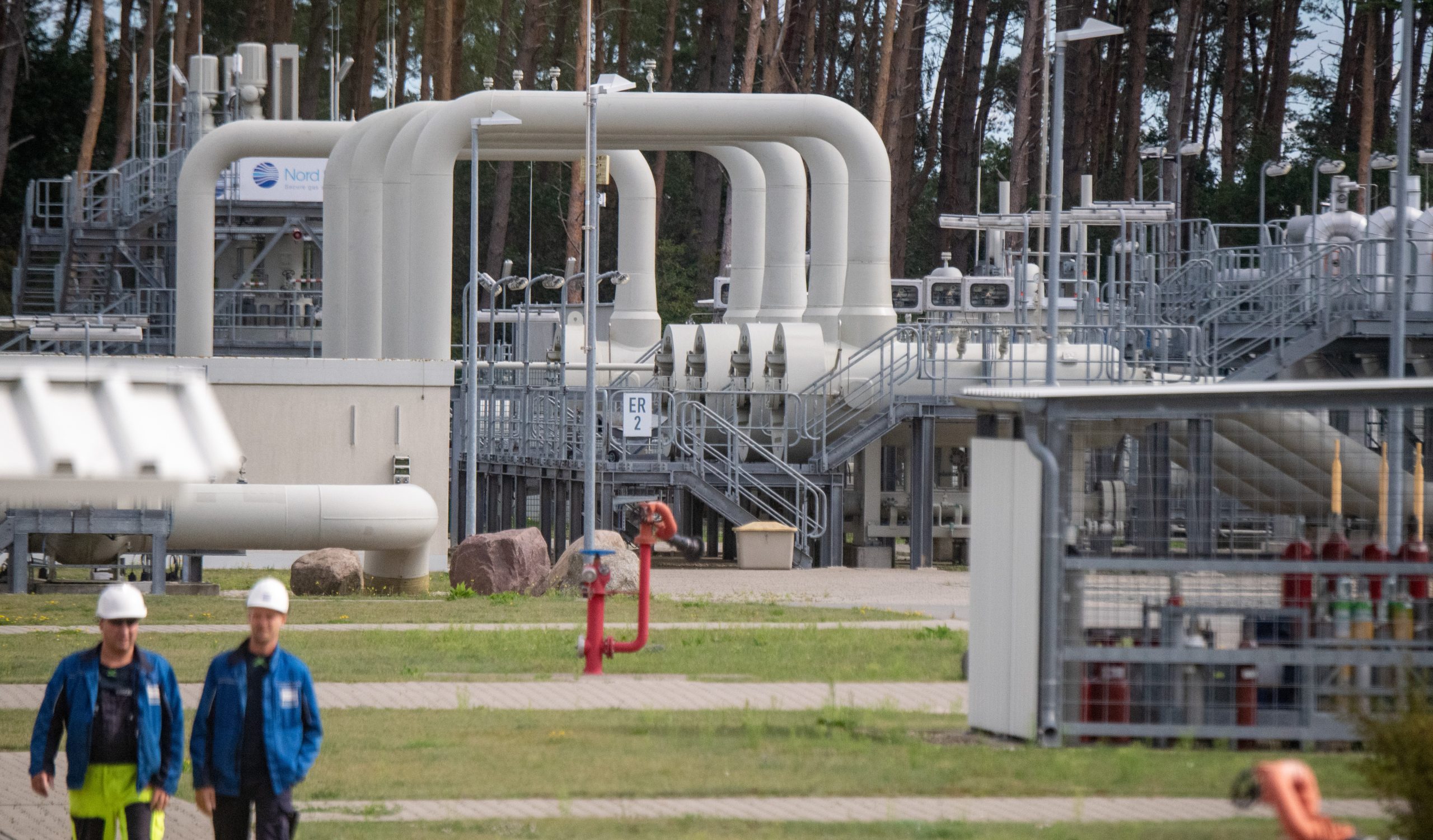
The Kremlin’s signal that it could voluntarily exit the European gas market is part bluff, part genuine pivot — and entirely consequential for global energy security in 2026 and beyond.
Russia may halt gas supplies to Europe as Putin exploits the Iran energy spike. Analysing the real stakes behind the Kremlin’s threat, TTF price surge, and Moscow’s Asian pivot.
Introduction: A Threat Dressed as a Business Decision
On the morning of March 4, 2026, Russian President Vladimir Putin sat down with Kremlin television correspondent Pavel Zarubin and appeared to do something unusual for a man whose public statements are rarely accidental: he thought out loud. Against the backdrop of global energy markets in full-blown crisis — triggered by the U.S.-Israeli military campaign against Iran and Tehran’s counter-strikes across the Gulf — Putin mused that Russia might halt gas supplies to Europe entirely, and do so immediately, rather than wait to be formally ejected under the European Union’s own phase-out timeline.
“Now other markets are opening up,” Putin said, according to the Kremlin transcript. “And perhaps it would be more profitable for us to stop supplying the European market right now. To move into those markets that are opening up and establish ourselves there.”
He was careful, almost lawyerly, in his framing. “This is not a decision,” he added. “It is, in this case, what is called thinking out loud. I will definitely instruct the government to work on this issue together with our companies.” But in the language of energy geopolitics, where a single presidential signal can move commodity markets by double digits, the distinction between thinking out loud and making policy is narrower than it appears. What Putin said on March 4 was not a bluff — or at least, not entirely one. It was a calculated reflection of a structural shift already underway, supercharged by a Middle East crisis that has remade the arithmetic of global gas markets in just seventy-two hours.
To understand what this means, you have to understand where Europe stands today — and where Russia has been heading for the past three years.
Background: A Market Already Departing Itself
The story of Russia’s decline as Europe’s dominant gas supplier is one of the most dramatic commercial collapses in modern energy history. Before February 2022, Russia supplied approximately 40% of the EU’s pipeline gas, making Gazprom — then valued at over $330 billion — the third-largest company in the world. By early 2026, that figure had fallen to just 6%, and Gazprom’s market capitalisation had cratered to roughly $40 billion, a destruction of value that no Western sanctions regime alone could have engineered without Moscow’s own strategic miscalculations.
Europe’s REPowerEU programme — launched in the immediate aftermath of the Ukraine invasion — has proven surprisingly effective. Norway, the United States, and Algeria have collectively absorbed most of what Russia once provided. LNG import terminals that did not exist three years ago now dot Europe’s Atlantic coastline. The continent’s dependence on pipeline gas from a single adversarial supplier has been structurally dismantled.
What remained of Russia’s European gas footprint was a dwindling rump of legacy contracts, principally serving Hungary and Slovakia — nations whose governments had maintained warmer diplomatic relationships with Moscow. It was a commercially marginal position, but one that gave the Kremlin a residual foothold in Europe’s energy map and, more importantly, a psychological card to play. That card is what Putin attempted to deploy on Wednesday.
The European Commission has approved a binding phase-out schedule that accelerates significantly this spring. The key EU ban milestones are: April 25, 2026, for short-term Russian LNG contracts; June 17, 2026, for short-term pipeline gas; January 1, 2027, for long-term LNG contracts; and September 30, 2027, for long-term pipeline contracts. Putin’s suggestion — that Russia should exit now rather than wait to be shown the door — is, on one level, a face-saving exercise. But on another, it is a genuine strategic calculation being shaped by events thousands of kilometres away, in the Persian Gulf.
The Iran Crisis: How a Middle East War Changed European Gas Arithmetic Overnight
The convergence of the Iran crisis with Putin’s remarks is not coincidental. In late February 2026, European gas markets had entered what traders described as a period of “prolonged dormancy.” The Dutch TTF benchmark — Europe’s primary gas pricing index — had drifted to roughly €32 per megawatt hour, the lower half of Goldman Sachs’s estimated coal-to-gas switching range. Norwegian output from the Troll field was at peak efficiency. The energy crisis of 2022 seemed a distant, if instructive, memory.
Then, over the weekend of February 28 to March 1, came the military escalation that markets had not priced in. Iranian strikes on Gulf Arab neighbors, the effective closure of the Strait of Hormuz, and — most critically for gas markets — QatarEnergy’s announcement that it was halting all LNG production after Iranian drone attacks targeted two of its facilities. QatarEnergy accounts for nearly one-fifth of global LNG exports. The impact was immediate and seismic.
By Tuesday, March 3, the TTF had surged more than 60% to a three-year high, peaking intraday at €65.79/MWh. Goldman Sachs — which had entered the week forecasting a €36/MWh April TTF price — raised its April forecast to €55/MWh and warned that a full one-month Strait of Hormuz closure could drive TTF toward €74/MWh, the level that triggered large-scale demand destruction during the 2022 crisis. Brent crude climbed to around $83 a barrel mid-week, some 25% above its pre-strike close.
Chart: European TTF Gas Price vs. Iran Crisis Timeline (February–March 2026) TTF at ~€32/MWh (Feb 28) → €46.41/MWh (Mar 2, Hormuz closure) → €65.79/MWh intraday peak (Mar 3, Qatar halt) → ~€60/MWh (Mar 4, Putin statement). Goldman Sachs scenario range: €74–€90/MWh if disruption extends beyond 30 days. 2022 crisis peak for reference: €345/MWh (August 2022). Source: ICE TTF, Goldman Sachs Commodity Research, ICIS.
The scale of Europe’s structural vulnerability was made even more vivid by the storage data. EU gas storage entered March 2026 at approximately 46 billion cubic metres — compared to 60 bcm in 2025 and 77 bcm in 2024. Facility fill rates were sitting at around 30% of capacity, with Germany at roughly 21.6% and France in the low-20s. Oxford Economics warned that European storage was now on track to fall below 20% by the end of the summer refill season, making the EU’s mandated 80% target for December virtually unreachable without a rapid restoration of Qatari output and Hormuz shipping lanes.
It was into this environment — with European buyers suddenly desperate for any available molecule and willing to pay premium prices — that Putin delivered his “thinking out loud” signal.
Deep Analysis: What Putin Actually Said, and What It Means
Strip away the diplomatic language and the Kremlin’s careful framing, and Putin’s message on March 4 had three distinct layers.
The first was commercial. With global spot LNG prices surging alongside TTF, the opportunity cost of continuing to sell residual pipeline volumes to a market that has legislated for your exit has genuinely shifted. “Customers have emerged who are willing to buy the same natural gas at higher prices, in this case due to events in the Middle East, the closure of the Strait of Hormuz, and so on,” Putin told Zarubin. “This is natural; there’s nothing here, there’s no political agenda — it is just business.” This is not entirely a confection. The disruption to Qatari and Gulf supply has created a genuine spot-market premium that makes diverting flexible LNG cargoes to Asian buyers financially attractive.
The second layer was geopolitical. Ukraine’s government immediately characterised Putin’s remarks as “Energy Blackmail 2.0”, arguing that Moscow is attempting to exploit the global energy shock to pressure Europe into softening its next round of gas sanctions — specifically the April 25 deadline for banning new short-term Russian LNG contracts. That reading is credible. Putin linked his remarks directly to the EU’s “misguided policies” and singled out Slovakia and Hungary as “reliable partners” who would continue to receive Russian gas — a studied wedge aimed at splitting the bloc along its most familiar fault lines.
The third layer is structural, and it is the one that matters most for the medium term. Russia is not simply threatening to leave Europe’s gas market. It is trying, under conditions of genuine commercial pressure, to accelerate a pivot that is already underway — but that faces serious bottlenecks. Russia’s pipeline gas exports to China via the Power of Siberia 1 line are expected to hit 38–39 bcm in 2025, up from 31 bcm the previous year. A legally binding memorandum to build the 50 bcm Power of Siberia 2 pipeline — running from the Yamal Peninsula through Mongolia to northern China — was signed in September 2025. But key commercial parameters, including price, financing, and construction timeline, remain unresolved. The pipeline could not realistically begin deliveries before 2030.
That gap — between the rhetoric of an Asian pivot and its physical reality — is the central vulnerability in Putin’s position. Russia can talk about redirecting gas to “more promising markets.” It cannot actually do so at scale, quickly, without the infrastructure that does not yet exist.
The Asymmetry of Pain: Who Needs This More?
The critical question any serious analyst must ask is: who is in the weaker negotiating position? And the honest answer is that both sides are weaker than they publicly admit.
Europe is, right now, more exposed than at any point since 2022. Low storage, a Qatari production halt, a constrained Hormuz corridor, and the structural dependency on spot LNG that replaced Russian pipeline gas — all of this has placed the EU in a position where any additional supply disruption narrows the margin between a price shock and a supply crisis. The European Commission told member states on March 4 that it saw no immediate threat to supplies and was not planning emergency measures — technically accurate, but dependent on the Hormuz situation resolving within weeks rather than months. A sustained shutdown beyond thirty days would likely trigger EU emergency coordination mechanisms and, potentially, renewed industrial demand rationing in Germany and Italy.
Russia, meanwhile, is not in a position of strength it can easily monetise. Gazprom’s finances have been devastated by the loss of the European market. The company that was worth $330 billion in 2007 is now a shadow institution, sustained by domestic subsidies and Chinese pipeline flows priced at significant discounts to European rates. Before the war, Russia earned $20–30 billion annually from 150 bcm of gas sales to Europe. Even the completion of Power of Siberia 2 would replace only a fraction of that revenue, at lower unit prices. Nature Communications’ modelling suggests that under even the most optimistic Asian pivot scenario, Russia’s gas exports in 2040 would remain 13–38% below pre-crisis levels.
The Iran crisis is, therefore, a short-term opportunity for Moscow — a window in which spot prices are high enough to make diverting LNG cargoes look commercially rational, and in which Europe’s anxiety is visible enough to potentially extract political concessions. The window may be narrow, but Putin, characteristically, is using it.
Europe’s Alternatives and the Long-Term Structural Outlook
For European policy desks, the Iran crisis and the Putin signal converge into a single, uncomfortable lesson: the substitution of Russian pipeline gas with global LNG has increased Europe’s resilience against one specific geopolitical actor, while simultaneously increasing its exposure to a different category of risk — global market volatility and shipping lane disruption.
The diversification has been real and substantial. Norway remains the most stable and geographically proximate anchor of European supply. U.S. LNG — whose export volumes have grown dramatically since 2022 — provides a flexible, if expensive, buffer. Algeria and Azerbaijan offer incremental pipeline capacity. The EU’s REPowerEU framework — which accelerated renewable deployment alongside supply diversification — has also reduced the bloc’s structural gas demand.
But Bruegel’s analysis is pointed: “Europe’s exposure to geopolitical shocks remains rooted in its continued reliance on imported fossil fuels traded on volatile global markets — even if it has shifted dependency from Russia to other suppliers.” A continent that spent 2022 learning that pipeline dependency is a strategic liability spent 2023–2025 building LNG infrastructure — only to discover in March 2026 that LNG, too, has a geopolitical chokepoint problem. The Strait of Hormuz handles roughly one-fifth of global LNG trade. That is a structural risk that no European Commission regulation can address directly.
The medium-term policy implications are significant. Europe must continue to accelerate domestic renewable capacity at a pace that reduces structural gas demand — not merely substitutes one supplier for another. The ambition to hit 80% renewable electricity by 2030 under the Green Deal framework looks, against this backdrop, less like an environmental aspiration and more like an energy security imperative.
The Russia-China Variable: Beijing Holds the Cards
Perhaps the most consequential long-term dynamic in this story is not Russia’s leverage over Europe, but China’s leverage over Russia. Beijing has watched Moscow’s European collapse with the cool patience of a buyer who knows the seller has nowhere else to go. China’s share of Russia’s gas imports rose from 10% in 2021 to over 25% by 2024, and Power of Siberia 1 is now delivering above its planned annual capacity. But the pricing dynamic tells the real story: China is reportedly seeking gas prices closer to domestic levels around $60 per thousand cubic metres, while Russia has historically priced European contracts at approximately $350. That gap is not merely a commercial negotiating point — it is a measure of Russia’s strategic desperation.
When Putin instructs his government to “work on this issue together with our companies,” the companies in question face a market reality that the Kremlin’s rhetorical confidence does not reflect. The molecules that currently flow to residual European buyers cannot, in the near term, be physically rerouted to Asia without the infrastructure that will not exist for years. In the meantime, Russia’s attempt to leverage the Iran crisis into a position of energy market strength is constrained by its own strategic isolation — and by Beijing’s entirely rational decision to extract maximum commercial advantage from a supplier with limited alternatives.
What This Means for Global Energy Markets in 2026–2027
The Putin signal and the Iran crisis, taken together, define the contours of a global gas market that has entered a structurally more volatile phase. Several dynamics deserve close attention over the next twelve to eighteen months.
The TTF price range is not reverting to pre-crisis levels quickly. Goldman Sachs’s revised Q2 2026 forecast of €45/MWh represents a structural step-up from pre-crisis pricing, even under a relatively benign resolution of the Hormuz situation. The combination of low European storage, disrupted Qatari supply, and elevated geopolitical risk premia will keep European gas prices meaningfully above their late-2025 baseline.
Russia’s European exit is happening on Europe’s terms, not Moscow’s. Putin’s attempt to frame a forced commercial retreat as a voluntary strategic pivot is partly theatre. The EU’s phase-out timeline is legally binding, broadly supported across member states, and operationally advanced. The April 25 ban on new short-term Russian LNG contracts will proceed regardless of Putin’s “thinking out loud.” Hungary and Slovakia may retain some residual pipeline flows under existing long-term contracts, but these are margin cases, not strategic leverage.
The Power of Siberia 2 is not yet a solution. The September 2025 memorandum between Gazprom and CNPC was significant — but it left pricing, financing, and construction timing unresolved. The pipeline cannot realistically deliver first gas before 2030. Russia’s “pivot to Asia,” for the medium term, remains a slogan with better infrastructure than revenues.
The global LNG market is entering a period of structural tightness. The convergence of Qatari disruption, the Hormuz closure, and strong Asian demand growth means that the spot-market flexibility that Europe has relied upon since 2022 will be more expensive and less reliable than buyers had assumed. The ICIS-modelled €90/MWh scenario is not a tail risk — it is a realistic outcome if Hormuz shipping remains constrained through April and May. European industrial competitiveness, already under severe pressure, faces another energy cost headwind.
The real winner may be Washington. Putin himself acknowledged that if premium buyers emerge elsewhere, American LNG exporters “will, of course, leave the European market for higher-paying markets.” This is accurate — but it also reflects a constraint on U.S. flexibility. American LNG export facilities are capacity-constrained and cannot rapidly increase volumes. In the short term, the Iran crisis helps the case for additional U.S. LNG export investment. It also strengthens the hand of American negotiators in any bilateral energy diplomacy with European allies.
The deeper lesson, one that transcends any single news cycle, is that the post-2022 European energy reordering has produced greater supply diversity but not necessarily greater supply security. Swapping a pipeline from Moscow for LNG from a global market that transits through contested choke points is a trade-off, not a solution. Putin’s remarks on March 4 are best read not as a threat, but as a symptom — of Russia’s commercial decline, of Europe’s structural exposure, and of a global gas market in which the old certainties have been permanently dissolved.
The age of cheap, abundant gas flowing reliably through predictable corridors is over. What comes next will be shaped not by any single leader’s calculations, but by the hard physics of where the molecules are, how they move, and who controls the routes between them.
Discover more from The Economy
Subscribe to get the latest posts sent to your email.



Key Takeaways
- Rolex’s secondary market rose approximately 7.9% year-over-year as of 2026 (per WatchCharts data) — trailing Patek Philippe (+16.2%) and Tudor (+11.4%) but still outperforming Audemars Piguet (+3.4%).
- Rolex raised U.S. retail prices 4–9% in January 2026 (steel models ~5.6%, gold models ~8.7%), narrowing the historical gap between retail and pre-owned pricing.
- Not every model appreciates: steel sports references (Submariner, GMT-Master II, Daytona) have held value far better than two-tone or widely available dress references like the standard Datejust.
- The Lady-Datejust posted the sharpest 2026 gain among tracked collections — up 22.73%, from roughly $9,269 to $11,376 — driven by demand for smaller, “everyday luxury” watches.
- Gold’s rise past $2,400/oz has directly lifted the investment case for Rolex’s precious-metal references (Day-Date, Sky-Dweller, Yacht-Master).
The Model-by-Model Picture
| Category | 2026 Trend |
|---|---|
| Lady-Datejust | +22.73% (strongest performer among tracked collections) |
| Steel sports models (Submariner, GMT-Master II) | Held value well; corrected from 2022 peak but stabilized above retail |
| Daytona | Corrected from highs above $50,000 to the mid-$30,000s; still among the most sought-after references |
| Two-tone/widely available Datejust | Flat to negative — “holds value” is an overstatement for this category |
| Gold references (Day-Date, Sky-Dweller) | Lifted by gold’s rise above $2,400/oz |
Why the “Rolex Always Appreciates” Myth Is Fading
The pandemic-era boom pushed some references — the Daytona above all — to speculative highs disconnected from historical norms. Since the March 2022 peak, steel sports models have compressed meaningfully, and dealers who bought inventory near the top have in some cases faced 20–40% markdowns on liquidation. The lesson for 2026 buyers: Rolex as a category is not a monolith. Value retention depends heavily on specific reference, condition, and whether the piece comes with box and papers (“full set”).
What’s Actually Driving 2026 Strength
- Retail price increases raise the floor. When a new Submariner retails at $10,050 (up from $9,500), a pre-owned example at $11,000–$12,000 suddenly represents a smaller premium — narrowing the gap without secondary prices actually moving.
- Supply discipline remains Rolex’s core lever. The brand has never confirmed production numbers, and secondary-market premiums remain entirely a function of Rolex’s own manufacturing decisions — a risk factor as much as a support.
- Certified Pre-Owned rollout. Rolex’s now fully rolled-out CPO program has changed how buyers transact in the used market, adding a layer of brand-verified legitimacy that supports pricing.
The Case for Rolex as a Portfolio Diversifier
Financial advisors increasingly frame luxury watches not as a replacement for equities or bonds, but as a tangible, historically low-correlation diversifier — one that carries its own risks (illiquidity, condition-dependent pricing, no yield) but has demonstrated multi-decade resilience for specific references.
Is Rolex a good investment in 2026?
It depends heavily on the specific reference. Steel sports models like the Submariner and Daytona have held or grown in value; two-tone and widely available dress models generally have not. Overall, Rolex’s secondary market rose about 7.9% year-over-year in 2026, trailing Patek Philippe but ahead of Audemars Piguet.
Discover more from The Economy
Subscribe to get the latest posts sent to your email.

Navigating Mortgage and Loan Refinancing in a High-Yield Environment
Global public debt crossing critical thresholds has kept central bank policies volatile, resulting in fluctuating US Treasury yields throughout 2026. For homeowners and commercial property holders burdened by previous high-interest borrowing cycles, finding optimal refinance windows has become a high-stakes financial puzzle. Stalled disinflation and stubborn employment numbers mean rate cuts are incremental, requiring borrowers to act with precision.
Timing your mortgage or commercial loan refinance in this environment requires a deep understanding of yield curve movements and lender risk appetites.
Decoding 2026 Refinance Dynamics
The 10-Year Treasury Yield Benchmark
Mortgage rates continue to track closely with the 10-year US Treasury yield. When macroeconomic anxiety spikes debt issuance, yields rise, tightening consumer borrowing capacity. Savvy borrowers monitor weekly Treasury auctions to lock in rates during brief dip windows.
Hybrid ARMs and Alternative Structures
With fixed rates remaining elevated, 7/1 and 10/1 adjustable-rate mortgages (ARMs) have surged in popularity. These products offer lower initial monthly payments, giving borrowers breathing room until central bank easing cycles fully materialize.
| Loan Product | Current Rate Range | Best For | Key Risk Factor |
| 30-Year Fixed Mortgage | 6.2% – 6.8% | Long-term predictability | Higher initial monthly outlay |
| 7/1 Hybrid ARM | 5.5% – 5.9% | Short-term ownership / flipping | Rate reset risk after year 7 |
| Commercial Refinance | 7.0% – 8.2% | Corporate asset restructuring | Strict DSCR lender covenants |
Actionable Steps for Successful Refinancing
To maximize your chances of securing favorable refinance terms in a volatile market, follow a disciplined preparation strategy.
Boost Your Credit Score Immediately: Lenders in 2026 are applying stringent credit tiering; a 20-point increase can drop your APR by a crucial quarter-point.
Shop Regional Credit Unions: Smaller financial institutions often offer portfolio loans with more flexible underwriting than major national banks.
Calculate the Break-Even Point: Ensure your total closing costs are recouped through monthly savings within 24 months of closing.
“Market Strategist View: Refinancing in 2026 is an exercise in opportunistic timing. Borrowers must maintain immaculate financial profiles ready to strike the moment Treasury yields dip.”
Mastering the complexities of today’s debt environment ensures you can successfully lower your debt service costs and protect your long-term financial stability.
Discover more from The Economy
Subscribe to get the latest posts sent to your email.

The days of pulling generic auto insurance quotes based purely on your zip code and age are officially over. In 2026, insurance comparison engines are powered entirely by generative AI and real-time telematics. These platforms digest thousands of live data points—ranging from your driving smoothness via connected vehicle sensors to real-time traffic congestion patterns—to generate hyper-personalized premiums instantly.
For consumers, this evolution represents both a massive opportunity for savings and a hidden trap for penalty pricing. Understanding how AI algorithms evaluate risk is essential for anyone looking to lower their monthly auto insurance premiums.
How AI Comparison Engines Evaluate Your Risk Profile
Behavioral Telematics and Connected Cars
Modern cars stream performance data directly to insurance aggregators. Generative AI models analyze braking sharpness, acceleration curves, cornering G-forces, and phone distraction metrics. Drivers who maintain smooth, defensive habits are rewarded with dynamic rate cuts of up to 40% compared to traditional rating tiers.
Predictive Traffic and Weather Modeling
AI tools now cross-reference your daily commute route with predictive weather and accident probability models. If your standard parking location or driving corridor has a statistically higher incidence of uninsured motorist claims, your quotes will reflect that hyper-local risk assessment.
| Comparison Factor | Traditional Rating Model | 2026 Generative AI Model | Impact on Premium |
| Mileage & Usage | Annual estimated odometer reading | GPS tracking & live trip duration | High (up to 35% savings) |
| Driving Behavior | MVR driving record & accidents | Real-time braking, speed, & G-force | Critical (determines tier) |
| Vehicle Tech | Make, model, and safety rating | ADAS calibration & repair cost data | Moderate |
Strategies to Lower Your AI-Driven Insurance Quote
To outsmart the algorithm and secure the lowest possible premium in 2026, drivers must proactively manage their digital footprint on insurance platforms.
Opt-In for Telematics Trial Periods: Many insurers offer immediate 15% discounts just for installing their driving app; let it track safe habits for 30 days to lock in permanent savings.
Scrub Unverified Public Records: Ensure your motor vehicle report is free of clerical errors that AI risk models misinterpret as reckless behavior.
Compare AI Aggregators: Use platforms that integrate multi-carrier API feeds rather than single-brand comparison sites to find the best risk-adjusted rate.
“Industry Note: AI-driven pricing rewards transparency and precision. Drivers who actively manage their telematics data consistently out-save those relying on legacy quote calculators.”
Embracing AI comparison tools allows savvy policyholders to customize coverage limits precisely to their driving habits, eliminating wasted premium spend while ensuring robust protection.
Discover more from The Economy
Subscribe to get the latest posts sent to your email.

VIX Index Explained: How to Trade Wall Street’s Fear Gauge Today

Commercial vs Residential Real Estate: Which Wins in 2026?

Presidential Stock Market Performance: How Trump’s Second Term Compares to History

2026 Real Estate Market News: Are We Heading for a Correction?

Bitcoin Price Forecast 2026–2027: Will the 4-Year Cycle Hold?

Fidelity Crypto vs. Traditional Brokerages: A Guide for Modern Investors

The 2026 Global Smartphone Market: AI Integration and Competitor Analysis

SpaceX IPO: How Aerospace Is Reshaping Tech Startup News

Fidelity Investments Review: Maximizing Returns in a Volatile Stock Market

How Crypto Transformed the Trump Fortune: A $1.4 Billion Financial Breakdown

Global Pension Systems Ranked: The World’s Best and Worst Retirement Frameworks

Global Supply Chain Vulnerabilities: From Eurasian Trade Corridors to Food Consumer Recalls

Why 5% U.S. Treasury Yields Signal a Global Market Regime Shift.

Federal Reserve Defies White House Pressure: Inside Trump’s Demand for Sub-1% Interest Rates After Historic 2026 Rate Hike

US-China Relations in Q3 2026: Trade Tariffs and Supply Chain Risks

Top 30 Stocks for Investment in PSX for Massive ROI in 2026

SpaceX Starship Flight 14: First Orbital Attempt & Starlink V3 Launch Explained

The 2026 Crypto Regulatory Shift: What It Means for Institutional Investors

AI Chip Stocks 2026: The Best Semiconductor Investments Beyond Marvell

Tween Back-to-School Trends 2026: What’s Driving the $85B Season

AI-Powered Training: The Next Multi-Billion Dollar Ecosystem in Fitness

Oil Prices Break $100 in 2026: Middle East Conflict & Energy Markets

10-Year Treasury Yield Hits 4.80%: What It Means for Rates & Portfolios

Fidelity Investments Review 2026: SPAXX Yields & Zero-Fee Funds

BRICS+ Cross-Border Payments 2026: Interoperability Explained

Shein Clothes Quality & Safety in 2026: What Lab Tests Show

MRVL Earnings 2026: Why Marvell Sank Despite Beating Estimates

China’s US$10.8 Billion Trade Shortcut: Why the Pinglu Canal Matters
-

 Markets & Finance9 months ago
Top 15 Stocks for Investment in 2026 in PSX: Your Complete Guide to Pakistan’s Best Investment Opportunities
-

 Analysis7 months ago
Johor’s Investment Boom: The Hidden Costs Behind Malaysia’s Most Ambitious Economic Surge
-

 Analysis7 months ago
Top 10 Stocks for Investment in PSX for Quick Returns in 2026
-

 Analysis8 months ago
Brazil’s Rare Earth Race: US, EU, and China Compete for Critical Minerals as Tensions Rise
-

 Banks8 months ago
Best Investments in Pakistan 2026: Top 10 Low-Price Shares and Long-Term Picks for the PSX
-

 Investment8 months ago
Top 10 Mutual Fund Managers in Pakistan for Investment in 2026: A Comprehensive Guide for Optimal Returns
-

 Global Economy9 months ago
15 Most Lucrative Sectors for Investment in Pakistan: A 2025 Data-Driven Analysis
-

 Global Economy9 months ago
Pakistan’s Export Goldmine: 10 Game-Changing Markets Where Pakistani Businesses Are Winning Big in 2025