Analysis
KOSPI Record Crash: South Korea’s Stock Market Suffers Its Worst Day in History as the US-Iran War Detonates a Global Sell-Off
At 9:03 a.m. Korean Standard Time, the screens inside the Korea Exchange trading hall in Yeouido, Seoul, turned a uniform, searing red. Within minutes, the sell orders were not arriving in waves — they were arriving like a flood breaking through a dam. Algorithms fired. Margin calls cascaded. Retail investors, who only weeks ago were borrowing money to buy Samsung Electronics at record highs, watched years of gains dissolve in real time. By 9:17 a.m., trading had been suspended for twenty minutes: the circuit breaker, a mechanism designed for exactly this kind of controlled catastrophe, had triggered for just the seventh time in the KOSPI’s 43-year history.
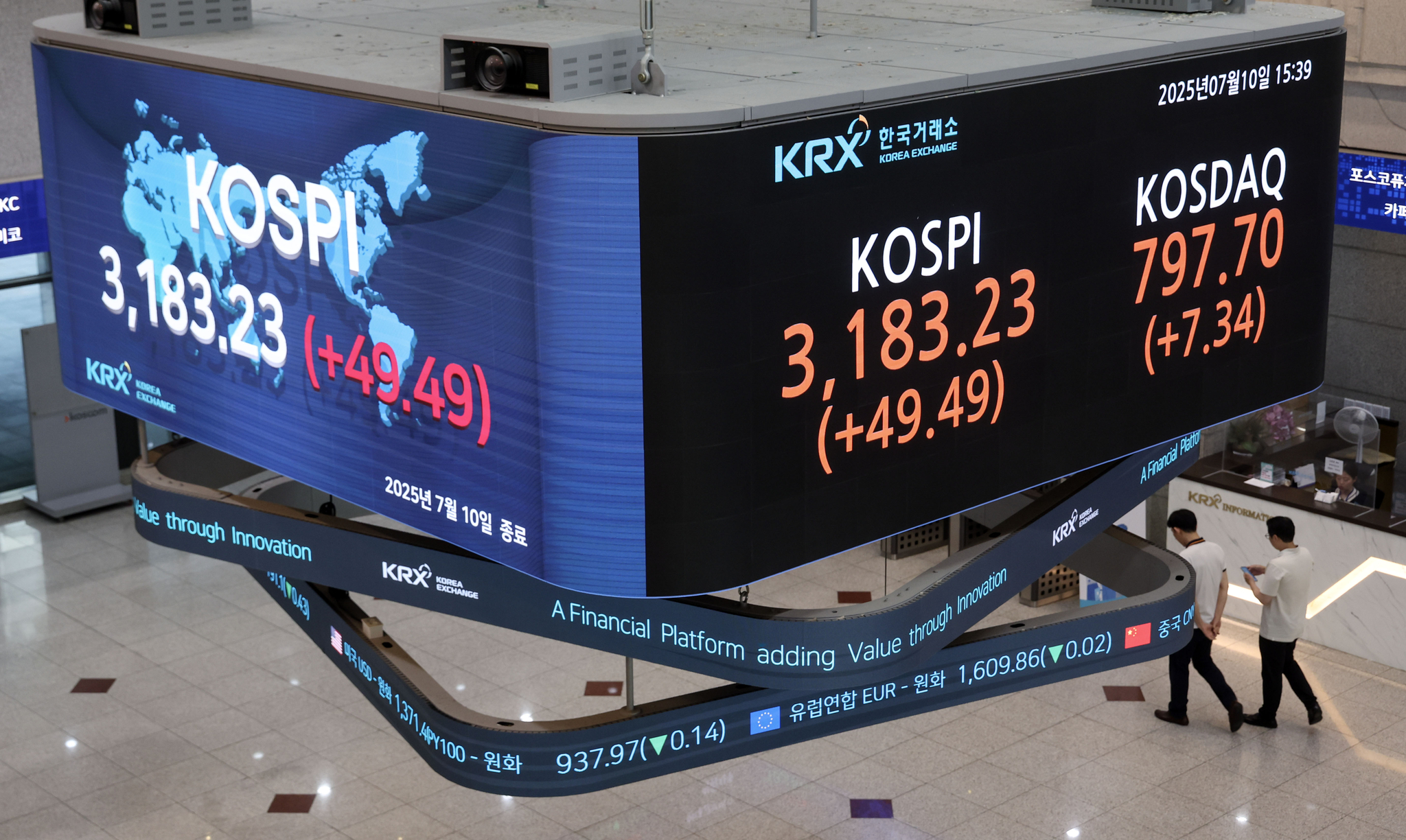
By the closing bell, South Korea’s benchmark index had shed 12.06 percent — 698.37 points — to close at 5,093.54. It was the worst single day in the KOSPI’s recorded history, surpassing even the paralysing shock of September 11, 2001. The world’s hottest major stock market, up more than 40 percent in just two months, had just been broken — not by a domestic crisis, not by a company scandal, but by missiles fired 6,000 kilometres away in the Persian Gulf.
What Happened: A Minute-by-Minute Collapse
The trigger was a week in the making. On the morning of February 28, 2026, US and Israeli forces launched a coordinated series of airstrikes against Iran, an operation that reportedly included the assassination of Supreme Leader Ali Khamenei. Iran’s response was swift and economically calculated: the Islamic Revolutionary Guard Corps announced a closure of the Strait of Hormuz, the narrow chokepoint through which roughly 20 million barrels of crude oil transit daily — accounting for approximately 20 percent of global supply.
South Korean markets were closed on Monday, March 2, for Independence Movement Day. When trading reopened Tuesday morning, the pent-up global selling pressure — two full days of deteriorating sentiment compressed into a single session — hit simultaneously. The KOSPI fell 7.24 percent on Tuesday, closing at 5,791.91, its largest single-session point drop on record at that time.
Wednesday brought something far worse.
The timeline:
- 09:00 KST — KOSPI opens at 5,592.29, already down sharply from Tuesday’s close.
- 09:08 KST — Circuit breaker triggered on the KOSDAQ after losses exceed 8 percent; trading suspended 20 minutes.
- 09:14 KST — KRX activates sidecar mechanism on the KOSPI as sell orders overwhelm buy-side liquidity.
- 09:17 KST — KOSPI circuit breaker fires. At the time of the halt, the index is down 469.75 points — 8.11 percent — to 5,322.16.
- 09:37 KST — Trading resumes. Selling immediately intensifies.
- 11:20 KST — KOSPI reaches intraday low of 5,059.45, down 12.65 percent — the worst intraday reading in 25 years and 11 months.
- 15:30 KST — Official close: 5,093.54, down 12.06 percent. Of the more than 800 stocks on the benchmark, just 10 finish in the green.
The KOSDAQ, South Korea’s technology-heavy secondary index, fared even worse, closing down 14 percent at 978.44 — its largest single-day decline since its founding in January 1997. The combined two-day equity wipeout erased an estimated $430 billion in market value.
Why South Korea Was Hit Hardest: The Anatomy of a Perfect Storm
Every major economy felt the tremor of the Iran conflict on March 4. But none — not Japan, not Taiwan, not China — fell anything close to what Seoul experienced. The gap is not coincidental. It is structural.
Energy dependence, extreme and existential. South Korea imports approximately 98 percent of its fossil fuels, with around 70 percent of its crude oil sourced from the Middle East, much of it transiting the Strait of Hormuz. According to the US Energy Information Administration, South Korea ranks among the top importers of Hormuz-transit crude globally. When Iran threatened to close — and partially did close — that chokepoint, the calculus for Korean manufacturers and energy utilities changed instantly. Higher oil does not merely raise input costs; it compresses margins across the entire export-driven economy, stokes inflation, and pressures the current account. Nomura estimates that South Korea’s net oil imports represent 2.7 percent of GDP — among the highest of any major economy and a stark vulnerability flag in any energy shock scenario.
Semiconductor concentration, a double-edged sword. The KOSPI’s extraordinary 2026 rally — up more than 40 percent in the first two months of the year, touching an all-time high above 6,347 in late February — was almost entirely the story of two companies: Samsung Electronics and SK Hynix. Together, the two memory chip giants account for close to 50 percent of the index by market capitalisation, according to Morningstar equity research. When sentiment turned, that concentration did not merely reflect the market’s decline — it amplified it. Samsung Electronics fell 11.74 percent to 172,200 won. SK Hynix dropped 9.58 percent to 849,000 won. Hyundai Motor collapsed 15.80 percent. Kia Corp shed 13.82 percent. Shipping stocks Pan Ocean, HMM, and KSS Line — directly exposed to Hormuz route disruption — plunged between 16 and 19 percent.
As Lorraine Tan, Asia director of equity research at Morningstar, noted, “The decline in the KOSPI can broadly be attributable to the single-name concentration that we see in Korean markets.” She added that the drop also implied growing concern that AI data-centre adoption could slow due to significantly higher energy costs — a double hit for chips stocks caught between geopolitical risk and demand uncertainty.
Margin debt: the accelerant. Before the conflict erupted, South Korean retail investors had borrowed heavily to ride the bull market. Margin debt and broker deposits had surged to record highs. When prices began to fall, those leveraged positions triggered forced liquidations, turning an orderly retreat into a rout. “There’s been a lot of buying on credit, especially in the heavyweight stocks,” Kim Dojoon, chief executive of Zian Investment Management, told Bloomberg. “If there’s another drop on Thursday, nobody will catch a falling knife.”
The holiday amplifier. Monday’s market closure meant that South Korean markets absorbed two full days of global deterioration in a single session on Tuesday — and then suffered a second cascading wave on Wednesday, with no circuit of relief between them.
Historical Benchmark: Into Uncharted Territory
To understand the magnitude of what happened in Seoul on March 4, 2026, consider the events it eclipses.
The KOSPI has recorded a decline of 10 percent or more in a single session on only four occasions in its 43-year history. According to the Korea Herald and historical KRX data, those occasions are:
| Date | Event | KOSPI Decline |
|---|---|---|
| April 17, 2000 | Dot-com bubble peak | -11.63% |
| September 12, 2001 | Post-9/11 shock | -12.02% |
| October 24, 2008 | Global Financial Crisis | -10.57% |
| March 4, 2026 | US-Iran War | -12.06% |
The September 12, 2001 session had stood for nearly 25 years as the single worst day in South Korean market history — a day when global commerce froze and the world reoriented around fear. Wednesday’s close eclipsed it by a margin of 0.04 percentage points. The intraday low — 12.65 percent — was the deepest since April 17, 2000.
The KOSDAQ’s 14 percent plunge, meanwhile, surpassed its previous worst session: the 11.71 percent rout of March 19, 2020, at the nadir of the COVID-19 pandemic panic. What happened this week in Seoul did not merely set a record. It rewrote the category entirely.
What makes the comparison to 2001 particularly sobering is context. On September 12, 2001, markets around the world fell together. In 2026, Wall Street is barely flinching: the S&P 500 fell approximately 1 percent overnight. The KOSPI’s collapse is not a global synchronised shock — it is something more targeted, and in some ways more alarming: a geopolitical vulnerability unique to South Korea’s economic structure being stress-tested in real time.
Global Contagion: Oil, Currencies, and the Hormuz Premium
Seoul was the epicentre, but the aftershocks radiated across the region and beyond.
Oil. Brent crude surged 10–13 percent in the days following the initial strikes, trading around $80–82 per barrel by March 2–4, according to energy analysts cited by Reuters. Analysts warned that if the Hormuz disruption proves sustained, prices could breach $100 per barrel — a level that would add an estimated 0.8 percentage points to global inflation, according to projections cited in the economic impact assessment published by Wikipedia. Natural gas prices in Europe surged 38 percent following reported attacks on Qatari LNG export facilities.
The Korean won. The currency markets told the same story in different decimal places. The won briefly pierced 1,500 per dollar on Wednesday — a level not seen since March 10, 2009, at the nadir of the global financial crisis. It was, psychologically, an enormous threshold. Yan Wang, chief of emerging markets at Alpine Macro, told the Korea Herald that the Korean won is historically “one of the most sensitive emerging market currencies to global risk sentiment,” while cautioning that fundamentals do not justify such weakness unless the conflict drags on significantly.
Asian markets. The contagion spread, though nowhere matched Seoul’s severity:
- Japan Nikkei 225: -3.61% to 54,245.54
- Taiwan TAIEX: -4.40% to 32,829
- Hong Kong Hang Seng: -2.00% to 25,249.48
- Shanghai Composite: -1.00% to 4,082.47
The asymmetry is instructive. China, a major oil importer, absorbed the shock with relative composure — partly due to its diversified energy sourcing and partially because domestic policy responses appeared pre-positioned. Japan and Taiwan, similarly dependent on Middle East energy, fell meaningfully but remained far above Korean levels, their indices lacking the same speculative leverage overhang.
Travel and supply chains. Iran’s airspace was closed to civilian aircraft following the initial strikes on February 28. Multiple carriers suspended Middle East routes, with knock-on effects for travel and tourism across the Gulf. Shipping insurance costs for Hormuz-transit tankers surged, with analysts suggesting the “war premium” could add $5–15 per barrel to delivered oil costs regardless of military escort arrangements — a persistent, structural cost increase for energy importers like South Korea.
Three Scenarios: What Comes Next
The trajectory of South Korea’s markets now depends almost entirely on one variable: how long the conflict lasts, and whether the Strait of Hormuz reopens to normal commercial traffic.
Scenario 1 — Rapid Resolution (probability: 30%) The US achieves its stated military objectives within four to five weeks, as President Trump publicly signalled. Iranian counter-retaliation is contained. Oil retreats to sub-$80. In this scenario, the structural case for Korean equities reasserts itself quickly — AI memory demand remains intact, Samsung and SK Hynix resume margin expansion, and the KOSPI, still up approximately 21 percent year-to-date even after the crash, stages a sharp technical rebound. Forced liquidations reverse. Analysts at Seoul-based brokerages place a 10 percent rebound in the first week post-ceasefire as the base case for this outcome.
Scenario 2 — Prolonged Stalemate (probability: 50%) The conflict extends beyond one month. The Strait of Hormuz remains partially disrupted. Oil stabilises in the $85–95 range. South Korea’s current account balance deteriorates. The Bank of Korea is forced to weigh currency intervention against inflation pressures — a familiar but painful dilemma for an open economy. The KOSPI finds a floor in the 4,800–5,000 range as earnings revisions bite. Recovery is slow, uneven, and dependent on semiconductor demand holding firm even as energy costs rise. Foreign investors remain cautious.
Scenario 3 — Full Energy Shock (probability: 20%) The conflict escalates into a sustained regional war. Hormuz closes effectively for multiple months. Crude reaches $100 or beyond. In this scenario, Hyundai Research Institute’s earlier estimate — that sustained $100 crude could shave 0.3 percentage points from South Korea’s 2026 GDP growth — becomes conservative. The KOSPI potentially tests 4,000. The Bank of Korea is forced into emergency rate decisions. The IMF revises Asian growth projections downward across the board. Global stagflation risks — higher energy prices coinciding with slower growth — re-enter the policy conversation for the first time since 2022.
Investor Playbook and Policy Response
What regulators and institutions are doing. The Bank of Korea issued a statement vowing to “respond to herd-like behaviour” in financial markets and pledged liquidity support measures if volatility persisted. The Korea Exchange activated circuit breakers and sidecar mechanisms as designed, but market participants noted that the tools slowed rather than stopped the cascade. Foreign investors, after dumping more than 12 trillion won in equities over the two-session period, ended Wednesday as modest net buyers — 231.2 billion won in net purchases — a tentative signal that some institutional money saw the dislocation as an entry point.
BofA’s take. “The sharp decline reflects the outsized leverage in long positions heading into February 28, 2026, when market sentiment was highly bullish on Korean tech due to the aggressive shortage of memory chips used in AI server production,” BofA strategist Chun Him Cheung told Investing.com. The implication: this was not a fundamental repricing of Korea’s economic future — it was a positioning purge, painful but potentially creating opportunity.
Where rational capital might look. For investors with a six-to-twelve-month horizon, the crash has produced a rare dislocation between price and fundamental value in high-quality names. Samsung Electronics and SK Hynix — despite their catastrophic session — retain structural leadership positions in AI-grade memory chips, a market with no near-term substitute suppliers. Analysts at IM Securities and Renaissance Asset Management both noted that if the conflict resolves within one month, a rebound toward 5,500–5,800 on the KOSPI is plausible. Defensive plays in South Korean energy utilities, domestic-demand retailers, and defence contractors — which have benefited from the same geopolitical tension that crushed the broader market — offer asymmetric positioning.
For retail investors caught in forced liquidations, the message is sobering but familiar: leverage borrowed at the peak of euphoria is the most reliable way to transform a geopolitical shock into a personal financial crisis.
Conclusion: The Price of Being the World’s Hottest Market
There is a painful irony at the heart of what happened to South Korea’s stock market this week. The KOSPI was, by virtually every measure, the world’s best-performing major equity index in early 2026. It rose on the back of genuine structural tailwinds — AI memory demand, corporate governance reforms, a re-rating of Korea’s innovation economy by global fund managers. The 40-percent rally in two months was not pure speculation; it was grounded in earnings.
But markets running that fast accumulate fragility. Leverage builds. Concentration intensifies. The margin for error narrows. When an external shock arrives — not a Korean shock, not a chip-sector shock, but a missile fired in the Persian Gulf — there is no buffer. The circuit breakers fired at 9:17 a.m. and could not stop what came afterward.
The KOSPI’s record-breaking crash is not, in isolation, a verdict on South Korea’s economic future. The structural case for its semiconductor giants remains intact. The reforms that re-rated the market over the past year have not been reversed. What has changed is the risk premium: an economy that earns its export surplus in silicon must pay for its energy in oil, and oil now carries a war premium that markets cannot price with confidence.
The Strait of Hormuz is 39 kilometres wide at its narrowest point. For South Korea, that passage has never felt smaller.
FAQs (FREQUENTLY ASKED QUESTIONS)
Q1: Why did South Korea’s stock market fall more than any other country’s during the US-Iran war? South Korea’s extreme vulnerability stems from three intersecting factors: it imports approximately 98 percent of its fossil fuels, with around 70 percent sourced from the Middle East via the Strait of Hormuz; its benchmark KOSPI index is heavily concentrated in semiconductor stocks (Samsung and SK Hynix account for close to half the index’s market cap) that had rallied more than 40 percent in early 2026 on margin debt; and a public holiday on Monday March 2 compressed two days of global selling into a single catastrophic Tuesday session.
Q2: How does the March 4, 2026 KOSPI crash compare to the September 11, 2001 drop? The KOSPI fell 12.06 percent on March 4, 2026, narrowly eclipsing the 12.02 percent decline recorded on September 12, 2001, the day after the 9/11 attacks. The intraday low of 12.65 percent was the deepest since April 17, 2000. It is now the worst single-day session in the KOSPI’s 43-year recorded history, surpassing four prior instances of 10-percent-plus declines including those during the dot-com bubble, 9/11, and the 2008 global financial crisis.
Q3: What happened to the Korean won during the KOSPI crash? The Korean won fell sharply during the two-day rout, briefly breaching 1,500 per dollar on Wednesday March 4 — a level not seen since March 2009 at the depth of the global financial crisis — before closing around 1,466 per dollar. The Bank of Korea vowed to respond to “herd-like behaviour” in currency markets and signalled readiness for intervention if volatility persisted.
Q4: Will South Korea’s stock market recover from the US-Iran war selloff? The outlook depends heavily on the duration of the conflict and whether the Strait of Hormuz reopens to normal commercial shipping. Most Seoul-based analysts see two primary scenarios: a quick resolution (within four to five weeks) that triggers a sharp technical rebound toward 5,500–5,800 on the KOSPI, or a prolonged stalemate that sees the index finding a floor near 4,800–5,000 as earnings are revised downward. The structural bull case — driven by AI memory chip demand and corporate governance improvements — has not been invalidated, but the energy-price risk premium has risen substantially.
Discover more from The Economy
Subscribe to get the latest posts sent to your email.
Analysis
The Weird World of Work Perks: Companies Are Reining In Benefits — But Workers!
In January 2026, a mid-level product manager at a San Francisco tech firm received a company-wide memo. The free artisan cold brew taps were being removed. The on-site acupuncture sessions, gone. The monthly “Wellness Wednesdays” — those mandatory mid-afternoon meditation circles that required cancelling actual work meetings — quietly discontinued. The memo was written in the careful, mournful language of a eulogy. But when she told me about it, she laughed. “Honestly?” she said. “Best news I’d heard in months.”
She is not alone. Across the United States, United Kingdom, Germany, Japan, and beyond, companies facing a brutally changed economic reality are doing what they swore they never would: cutting the perks. Healthcare costs are projected to rise 9.5% in 2026, according to Aon’s Global Medical Trend Rates Report, the steepest increase since the post-pandemic shock years. Mercer’s 2026 National Survey of Employer-Sponsored Health Plans projects a more conservative but still alarming 6.5% average spike. Add AI-driven efficiency mandates, cooling venture funding, and an increasingly skeptical CFO class, and the era of the corporate perk — that glittering monument to Silicon Valley’s self-mythology — is entering a long, overdue reckoning.
Here is the uncomfortable truth that most HR consultants won’t put in their PowerPoints: many of these perks were never really for workers at all.
The Great Perk Retreat: What’s Actually Happening
The data is unambiguous. WorldatWork’s 2026 Total Rewards Survey found that 47% of large employers (5,000+ employees) have eliminated or significantly scaled back at least three non-healthcare discretionary benefits since 2024. MetLife’s 2026 Employee Benefit Trends Study — one of the most comprehensive annual reads on workforce sentiment — reports that employers’ top cost-cutting targets include on-site amenities, lifestyle benefits, and supplemental wellness programmes.
Google, famously the architect of the modern perk arms race, has reportedly reduced its legendary free food budget by an estimated 20–25% across several campuses since 2023, quietly removing some specialty stations while expanding cafeteria-style options. Meta has similarly consolidated office perks as part of its broader “Year of Efficiency” philosophy — a phrase that has since calcified into corporate gospel. The Wall Street Journal reported that dozens of mid-cap US firms have dropped gym subsidies and mental-health app subscriptions they added during the pandemic, citing low utilisation rates that were embarrassingly obvious in the data all along.
But here’s where it gets interesting. Worker surveys tell a surprisingly counter-intuitive story.
Gallup’s 2026 State of the Global Workplace Report found that when employees ranked what most influenced their daily job satisfaction, non-cash perks — the foosball tables, the on-site massages, the company-branded merchandise — ranked near the bottom, behind schedule flexibility, manager quality, meaningful work, and fair pay. In fact, 68% of respondents said they would prefer a $3,000–$5,000 increase in their annual flexible spending allowance over any combination of lifestyle perks.
The Dark Side of “Benefits”: When Perks Were Really Control
I’ve spoken with C-suite leaders — a CHRO at a Fortune 200 consumer goods company, two HR directors at UK financial services firms — who admit, usually off the record, what strategists have long whispered: many perks were designed not to enrich employees’ lives but to keep them in the building longer.
The most obvious example is free food. The myth of the Google cafeteria — gourmet, free, available at every hour — sounds like generosity. But a 2024 Harvard Business Review analysis found that the strategic logic of on-site dining has always been retention through friction reduction: if employees never have to leave for lunch, they don’t leave. They stay. They work. The “perk” is, in the cold light of labour economics, a very elegant subsidy for unpaid overtime.
On-site laundry, dry cleaning, car detailing, concierge services — the same logic applies, scaled to absurdity. These aren’t benefits; they are life management services that exist so employees can delegate their personal responsibilities to the employer and, in exchange, surrender their time.
The late-2010s corporate wellness industrial complex deserves its own indictment. Mandatory yoga, step-count competitions, nutrition coaching, and sleep tracking programmes — all presented as caring for worker wellbeing — frequently became surveillance architectures. A 2025 McKinsey Health Institute report on workplace wellness found that nearly 40% of employees felt that corporate wellness programmes made them feel more monitored, not healthier. Several studies found that workers who used employer health apps showed higher rates of reported health anxiety, not lower. The tracking, it turns out, was often the problem.
Then there’s the performative quality of it all. Ping-pong tables became so culturally synonymous with hollow corporate culture that they now function almost as a satirical shorthand. The Instagram-worthy slides at the Googleplex, the fireman’s pole at LinkedIn’s San Francisco office — these weren’t employee benefits. They were recruitment theatre: visual signals to 22-year-old candidates that this was a fun place to work. The workers who lived inside those offices year after year often found them patronising at best, infantilising at worst.
A Global Picture: The Perk Divergence
The corporate perk retreat is not uniform. Its shape reflects deep structural differences in how nations have always thought about work.
In the United States, where employer-provided healthcare remains the dominant model, the benefits conversation is existential in a way it simply isn’t elsewhere. With healthcare costs consuming an estimated 8.9% of total compensation costs for private industry employers (Bureau of Labor Statistics, 2026), every discretionary perk cut is, in effect, a subsidy reallocation toward the healthcare premium that employees genuinely cannot do without. American workers may lose kombucha on tap; they cannot afford to lose dental.
In Europe, the dynamic is profoundly different. Because statutory social protections — parental leave, healthcare, redundancy pay — are enshrined in law rather than left to employer generosity, the perk conversation has always been more honest. German firms, for example, never needed to use healthcare as a retention lever; they competed on job security and works council influence. Today, as the Financial Times has reported, European firms are instead debating hybrid work entitlements and four-day week pilots as their differentiation tool — perks with genuine structural value.
In Asia, and particularly in Japan and South Korea, the corporate loyalty model built around company housing, communal meals, and paternalistic social provision is under different but equally significant pressure. Japan’s labour reform agenda — driven by the government’s stated goal of dismantling karoshi (death from overwork) culture — is actively pushing firms away from “total life provision” models that blur work and personal time into an undifferentiated grey zone. The perk, in this context, was always part of a totalising corporate identity. Loosening it is, paradoxically, a form of liberation.
In emerging markets — particularly India’s booming tech sector — the perk race has been imported wholesale from Silicon Valley, with predictably mixed results. Bangalore-based firms offering imported cold brew and on-site creches in a country where the median worker earns a fraction of their US counterpart create striking inequalities both inside and outside the office walls.
The Perks Workers Actually Won’t Miss: A Ranked Assessment
Let’s be direct. Not all perks are equal, and the discourse often fails to distinguish between genuine worker welfare and performative corporate largesse.
Perks workers are quietly relieved to lose:
- Mandatory “fun” activities — Compulsory escape rooms, team karaoke nights, and enforced happy hours. These consistently score as the most resented pseudo-benefit in workforce surveys. A 2026 SHRM report found 54% of employees described mandatory social events as a source of stress, not relief. Introverts, caregivers, and non-drinkers disproportionately bear the cost of “inclusive” events designed around a very specific personality type.
- On-site dry cleaning and concierge services — The sincerest expression of the “total life capture” model. When your employer does your laundry, you are not being pampered; you are being made incapable of leaving the office.
- Wellness app subscriptions with employer visibility — When companies can see whether you’ve completed your mindfulness session or hit your step count, the therapy becomes the surveillance. The American Psychological Association’s 2025 Work and Well-Being Survey found that employees who used employer-provided mental health apps were significantly less likely to disclose genuine psychological distress.
- Free gourmet food with implicit expectations — The cafeteria that closes at 9pm because you were expected to eat dinner there was never a perk. It was an unwritten contract.
- Branded company merchandise — The fleece vest. The tote bag. The motivational desk calendar. This benefits the company’s brand, not the employee’s life.
- Gaming and recreation rooms — Used by a tiny proportion of employees. Glassdoor data from 2025 shows that mentions of on-site recreational facilities in employee reviews correlate negatively with overall satisfaction scores, suggesting they signal cultural dysfunction more than genuine investment.
- Employee recognition platforms — The gamified peer-to-peer praise tools that turned professional respect into a points economy. Widely reported as performative and sometimes deeply uncomfortable for recipients.
Perks workers genuinely value and must not be cut:
- Mental health days and genuine psychological support (access to real therapists, not apps)
- Robust parental leave — particularly for non-birthing parents and adoptive families
- Schedule flexibility and remote work autonomy
- Professional development budgets that employees control
- Caregiving support — elder care and childcare subsidies
- Transparent, equitable pay
The distinction is not complicated once you see it: perks that expand an employee’s real autonomy and financial security are genuinely valuable; perks that entangle the employee more deeply in corporate life are not.
The Inequality Engine Hidden in the Perks Cabinet
Here is the critique that is rarely made: many corporate perks are inequality amplifiers dressed as equalising benefits.
Free food benefits employees who eat in the office — disproportionately those without caregiving responsibilities, those who live nearby, those who are already the most captured by corporate culture. Remote workers, parents who leave at 5pm to collect children, employees with dietary restrictions navigating a kitchen designed by a 28-year-old chef — they receive less, or nothing at all.
Gym subsidies that require using a specific on-site facility benefit employees near headquarters. Mental health apps offered in English in a multilingual workforce are, functionally, available only to some. The on-site childcare that sounds transformative serves a fraction of the workforce and creates resentment among those without children who receive no equivalent benefit.
A 2025 Deloitte Insights analysis on benefits equity found that the top 20% of earners — those with the most schedule flexibility and physical proximity to headquarters — captured an estimated 3.4 times more value from discretionary perks than the bottom 40%. The free coffee is not distributed equally. It never was.
What Should Replace the Ping-Pong Table in 2026–2027?
The answer is not complicated. It is merely expensive — and requires companies to trust their employees with money rather than manage them with experiences.
The new employee value proposition looks like this:
Flexible benefits budgets. Give employees an annual allowance — $2,000 to $5,000 — to spend on approved categories of their own choosing: gym membership, therapy, childcare, home office equipment, student loan contributions, travel. This is already operating successfully at companies including Salesforce, Spotify, and several major European insurers. It treats employees as adults.
True location and schedule autonomy. The data from Stanford economist Nicholas Bloom’s ongoing remote work research is consistent and decisive: hybrid work, properly designed, increases productivity, reduces turnover, and improves reported wellbeing. The perk of “being allowed to work from home” is not a perk at all — it is a baseline of civilised employment in 2026.
Genuine pay transparency and equity. No amount of cold brew compensates for discovering that a colleague doing the same work earns 18% more. PwC’s 2026 Workforce Pulse Survey found that pay transparency, when implemented thoughtfully, increases trust faster than any benefits programme.
Meaningful mental health infrastructure — not apps, but access to licensed therapists, generous sick leave policies that do not require performance of wellness, and management cultures that do not punish time off.
Investment in career development. The World Economic Forum’s 2025 Future of Jobs Report found that access to reskilling and career growth is the second most important factor in employee retention, behind pay. A LinkedIn Learning subscription that no one uses is not this. A real education budget that an employee can spend on an MBA course, a coding bootcamp, or an industry conference is.
The Bottom Line
The great perk retreat of 2026 is, at its core, a correction. It is the slow unwinding of a decades-long confusion between employee capture and employee care — a conflation that served companies far better than it ever served the people working in them.
The ping-pong table was always a mirror: it reflected back what the company wanted you to see, not what you actually needed. Losing it, for many workers, feels less like deprivation and more like clarity.
The companies that will win the talent wars of the next decade are not those who grieve the demise of the kombucha tap. They are those who replace it with something workers have always actually wanted: the money, the time, and the autonomy to build a life worth showing up for.
That is not a perk. It is, merely, a decent deal.
FAQ: Work Perks in 2026
Q: Are companies legally required to provide perks beyond statutory benefits? In most jurisdictions, no. Statutory requirements vary — the UK mandates 28 days of paid leave, the EU Working Time Directive sets minimum rest requirements, and US federal law requires relatively little beyond FLSA and FMLA provisions. Discretionary perks are voluntary, which is precisely why cutting them reveals their true nature.
Q: Which corporate perks have the highest utilisation rates? According to MetLife’s 2026 Employee Benefit Trends Study, the highest utilisation benefits are: dental and vision coverage, mental health services (when genuinely confidential), flexible spending accounts, and hybrid work arrangements. On-site amenities consistently show sub-30% utilisation.
Q: Are companies cutting benefits or just shifting the mix? Mostly shifting. The total compensation envelope is often holding steady while its composition changes — away from lifestyle perks and toward healthcare contributions and cash-equivalent benefits. This is, on balance, better for workers who were never using the foosball table.
Q: How do European benefit cuts compare to US ones? European cuts are more constrained by regulation and stronger works councils. The locus of European benefit debates in 2026 is around hybrid work entitlements and four-day week pilots — structural flexibility rather than office amenities.
Q: Why did the perk arms race start in the first place? It originated in 1990s Silicon Valley as a recruiting tool for scarce engineering talent — a genuine competitive necessity. It was then cargo-culted across industries and geographies by companies that adopted the aesthetics without understanding the economics. The result was a multi-billion-dollar industry of performative workplace hospitality.
Q: Do younger workers (Millennials, Gen Z) value perks differently? Yes, substantially. Deloitte’s 2026 Global Millennial and Gen Z Survey found that Gen Z in particular ranks work-life balance, mental health support, and flexible location arrangements far above lifestyle perks. They are, as a generation, more sceptical of corporate culture performance than any cohort before them.
Q: What’s the single most valuable thing a company can offer in 2026? The data and the workers largely agree: genuine schedule and location flexibility, combined with fair pay. Everything else is negotiable.
Discover more from The Economy
Subscribe to get the latest posts sent to your email.
Analysis
France’s CB Is Leading Europe’s Quiet War on Visa and Mastercard — And This Time, It Might Actually Work
The Last Mile of Economic Sovereignty
Picture the Carrousel du Louvre on a crisp March morning — not its usual crowd of tourists orbiting the glass pyramid, but 3,000 bankers, fintech executives, and policy architects filling its hall for the 2026 CB Summit. A video address from the Élysée palace fills the screen. Emmanuel Macron, never one to undersell a moment, declares that payment is “the last mile of economic sovereignty” — and that surrendering it would mean placing the beating heart of France’s economic transactions in the hands of players with different interests.
That’s not a throwaway line from a president looking for a headline. It’s a declaration of geopolitical intent.
For the first time since 2021, the market share of France’s Cartes Bancaires (GIE CB) ticked upward in the second half of 2025, reaching 63.6% compared to 61.4% six months earlier MoneyVox — a modest number, but one that breaks a four-year losing streak. Between 2021 and early 2025, CB’s market share had collapsed from 89.6% to just above 63% — a loss of 26 percentage points that reflected a growing structural dependence on international payment rails. BDOR
That slide is now in reverse. And France — backed by its banks, its president, and an increasingly coherent European coalition — intends to make sure it stays that way.
The Duopoly Nobody Wants to Talk About
Let’s be precise about the problem before we assess the solution, because the scale of American payment dominance over European daily life is genuinely stunning.
Visa and Mastercard together process approximately $24 trillion in transactions globally every year, including roughly $4.7 trillion in Europe, where card payments account for 56% of all cashless transactions. ITIF Transactions in 13 out of 21 eurozone member states still run exclusively on international card schemes, and US card brands handle 61% of euro-area card transactions. Euronews
Every time a French bakery taps “accept” on a contactless payment, a Dutch e-commerce store processes an order, or a German consumer splits a restaurant bill, the data — the metadata of economic life — flows through infrastructure owned by American corporations, governed by American law, subject to American geopolitical pressure. As the ECB has noted, virtually all European card and mobile payments currently run through non-European infrastructure controlled by Visa, Mastercard, PayPal or Alipay. European Business Magazine
This was once considered a reasonable trade-off for the efficiency it bought. Today, in an era of tariffs-as-weapons and financial sanctions-as-statecraft, the calculus has changed entirely.
In February 2026, the ECB warned of a “strong reliance” on international card schemes that is “problematic due to data protection, traceability, resilience and market power concerns.” Euronews The institution that prints the euro is now officially on record saying European economies cannot afford this dependency.
Lagarde herself framed the journey ahead as “a march towards independence,” Business Today linking payment sovereignty explicitly to the broader Capital Markets Union project — the EU’s still-unfulfilled ambition to build a unified financial supermarket capable of mobilizing private capital at the scale needed to compete with the United States.
What Co-Badging Actually Does — And Why It Matters
To understand CB’s play, you need to understand the plumbing.
Most cards in France are “co-badged” — they carry two logos, typically CB alongside Visa or Mastercard. When a payment is made, the terminal (or the bank’s routing engine) chooses which network processes the transaction. For years, the drift has been toward the international networks, especially for online and mobile payments. Some banks, notably BPCE — which encompasses Banque Populaire and Caisse d’Épargne — briefly issued cards exclusively on Visa’s rails, bypassing CB entirely. So did digital challengers like Revolut, N26, and Qonto.
This isn’t just market competition. It’s infrastructure erosion. Each Visa-only card issued by a French bank is a small act of surrender in a larger strategic contest.
In 2025, GIE CB asked its members to abandon their exclusive partnerships with American networks. Boursorama BPCE reversed course and returned to co-badged issuance. The market data responded: CB stopped bleeding share for the first time in four years.
The return of co-badged cards at BPCE, combined with CB’s integration into Apple Pay, is among the key drivers of the 2025 rebound, as mobile payment continues to embed itself more deeply into French consumer behavior — with 2.4 billion mobile payment operations recorded by the Banque de France in 2024, a 53.6% annual increase. MoneyVox
And CB isn’t stopping there. GIE CB president Gérald Grégoire confirmed in 2026 that the network’s momentum is continuing, with Samsung Pay and Google Pay now docking into the CB ecosystem — and Wero Pay integration coming soon. Boursorama
That last sentence matters enormously, and we’ll come back to it.
Why France Is Uniquely Positioned to Lead This Fight
A Rare Beast: The Cooperative Card Network
CB’s structure is its secret weapon. Created in 1984 as a groupement d’intérêt économique — a form of economic interest group without profit motive — it’s an industry cooperative rather than a publicly traded corporation with quarterly earnings pressure. Its governance body includes BNP Paribas, Société Générale, Crédit Agricole, and HSBC France among its 12 principal members. That cooperative alignment of incentives is what enabled the 2025 push on co-badging: CB could ask its members to act in collective interest, whereas Visa and Mastercard’s incentive is always to deepen their own market penetration.
The JPMorgan Signal
In March 2024, a striking thing happened: JPMorgan became the first American “principal member” of CB, joining the 12-member governance body that sets the terms of France’s domestic payment network. Finextra The world’s largest bank by market capitalization chose to route its French merchant clients through CB — not because it was forced to, but because it sought to “provide competitive transaction costs and leading local processing performance,” skirting the more expensive products of Visa and Mastercard. Finextra
Read that again. An American bank joined a French card network specifically to avoid paying Visa and Mastercard’s fees on behalf of its clients. If the commercial logic works for JPMorgan, it works for any institution with a cost-conscious merchant book in France.
This is the hidden economics of CB’s push. Interchange fees are real money. Every basis point that stays within the CB ecosystem is a basis point that doesn’t cross the Atlantic. For Europe’s retailers — already squeezed by inflation, logistics costs, and rising customer acquisition costs through digital advertising — this is not an abstract sovereignty argument. It’s a margin lever.
77 Million Cards, and Macron’s Political Cover
CB has 77 million cards in circulation and, as Macron noted at the CB Summit, represents 80% of domestic transactions in France MoneyVox — an extraordinary base from which to build. No other European country begins this fight with that scale of domestic infrastructure. Italy’s Bancomat, Spain’s Bizum, Portugal’s MB WAY — they all exist, but none commands the market density that CB does at home.
Macron’s direct involvement matters beyond optics. At the CB Summit 2026, his video address framed the conference around three themes: sovereignty, resilience, and innovation, with payment described as the central question of how to guarantee continuity and independence of transactions in a geopolitically fractured world. Nepting When a head of state addresses an industry conference with a video message — a format typically reserved for climate summits and NATO councils — it signals that this is now politique d’État, not just fintech strategy.
The Wero Alliance: When 130 Million Users Change the Equation
CB is not fighting this battle alone. And that might be what makes 2026 different from every previous failed attempt at European payment unity.
Wero, the mobile payment service built by the European Payments Initiative, already has over 47 million registered users across Belgium, France, and Germany, has processed more than €7.5 billion in transfers, and counts over 1,100 member institutions. Retail payments launched in Germany at the end of 2025, with Lidl, Decathlon, Rossmann and Air Europa among early adopters. France and Belgium follow in 2026. European Business Magazine
But the watershed moment came on February 2, 2026. EPI signed a memorandum of understanding with the EuroPA Alliance — a coalition of national payment systems including Italy’s Bancomat, Spain’s Bizum, Portugal’s MB WAY, and the Nordics’ Vipps MobilePay — instantly connecting approximately 130 million users across 13 countries, covering roughly 72% of the EU and Norway population. Cross-border peer-to-peer payments are set to launch in 2026, with e-commerce and point-of-sale payments following in 2027. European Business Magazine
This is the crucial architectural shift. Previous European payment initiatives — most notably Project Monnet, which launched in 2008 and collapsed by 2012 — tried to build a single pan-European network from scratch, and fell apart on the rocks of national pride, conflicting bank interests, and the sheer commercial difficulty of dislodging entrenched incumbents. The EPI-EuroPA approach is structurally different: it’s building a network of networks, federating existing schemes rather than replacing them.
Wero’s Integration with CB: The Technical Endgame
Here’s the piece that most English-language coverage has missed. The integration of Wero Pay into the CB network — confirmed by GIE CB’s president at the 2026 Summit — means that France’s domestic card infrastructure and Europe’s emerging pan-continental payment wallet are being stitched together into a single ecosystem.
EPI CEO Martina Weimert described the objective as covering “all customer use cases including invoice payments, at a European scale” — the goal being that Wero becomes indispensable rather than merely available. La Gazette France CB provides the physical card rails; Wero provides the cross-border digital layer. Together, they’re assembling something that begins to look like a full-stack European alternative to Visa and Mastercard.
Weimert’s urgency about the timeline is telling. At the CB Summit, she said plainly that Europe does not have the luxury of waiting for the ECB’s digital euro to strengthen its payment sovereignty — Wero has both the vocation and the capacity to reach 100% of the European population. Nepting The digital euro, a central bank-backed digital currency, is now projected for 2029 MoneyVox, and the European Parliament has not yet passed the required legislation. Wero is the near-term sovereign option. CB is its French anchor.
Why This Attempt Might Actually Succeed
The Geopolitical Accelerant
Past European payment initiatives failed primarily because geopolitical urgency was absent. Banks would talk about sovereignty at conferences and then sign Visa partnership deals before the coffee went cold. That calculus has shifted profoundly.
Increasing EU-US tensions have heightened fears of 450 million European citizens being potentially cut off from international financial infrastructure. Euronews Ukraine-related sanctions already showed how quickly payment networks can be weaponized — Visa and Mastercard suspended Russian operations within days of the 2022 invasion. European policymakers took note. The April 2025 Iberian Peninsula blackout, which briefly paralyzed payment systems across Spain and Portugal, demonstrated with devastating clarity what infrastructure failure means at the scale of an entire country. Nepting
These are no longer theoretical risks. They are operational case studies in what happens when payment infrastructure turns out to be fragile.
The Commercial Logic Is Now Genuine
For the first time, the commercial case for switching aligns with the political case for sovereignty. Merchants save on interchange. Banks reduce fee outflows to US networks. Consumers gain a redundant payment option that functions even under geopolitical stress. The digital euro — when it eventually arrives — will slot into the same architecture.
JPMorgan joining CB wasn’t charity. It was arbitrage. That signal will not be lost on other international acquirers eyeing Europe’s merchant base.
The Data Sovereignty Dividend
Card payments account for 56% of all cashless transactions in the EU, and the data on who bought what, where, when, and for how much has always remained outside of European jurisdiction. GIGAZINE For a continent that invented GDPR and is acutely aware of the commercial and political value of behavioral data, this is an argument that resonates well beyond the fintech community. When payment data stays inside European infrastructure, European law governs it. That is a materially different legal universe from having it processed under US jurisdiction.
The Real Risks: What Could Still Go Wrong
A balanced reading of this story requires acknowledging what might prevent this from working — and the risks are real.
Adoption fragmentation remains the structural enemy of pan-European payment ambitions. Wero works brilliantly in Germany. But French and Belgian retail adoption in 2026 is still being ramped. Consumer habits, once formed around Visa’s seamless contactless experience, are stubborn. The network effects that Visa and Mastercard have spent decades building will not evaporate within a four-year roadmap.
Bank commercial incentives are not fully aligned. Digital-native banks like Revolut and N26 continue to issue exclusively on international rails, and they serve precisely the young, high-frequency spenders who drive transaction volumes. CB may recover market share among traditional bank customers while losing the digital generation.
Mastercard’s strategic counter-moves are already underway. Mastercard’s $1.8 billion acquisition of stablecoin infrastructure provider BVNK signals that incumbents are not standing still — they’re buying the next generation of payment rails, including European fintech assets. European Business Magazine The race is not simply between European ambition and American incumbency. It is between competing visions of what payment infrastructure looks like in a world of digital currencies, AI-driven commerce, and geopolitical fragmentation.
What to Watch in 2026 and Beyond
For merchants: The CB co-badging push means you should be actively discussing with your acquirer whether CB routing is being preferred on domestic transactions. For a mid-sized French retailer processing €10 million a year in card payments, the difference in interchange can be meaningful. Ask the question.
For banks: The BPCE reversal on Visa-only issuance is a market signal, not just a regulatory response. Banks that hold out on co-badging face both regulatory scrutiny and political exposure in an environment where Macron is personally invoking sovereignty. The risk calculus on Visa-only issuance has changed.
For investors: EPI’s progress toward a 130-million-user network is not yet fully priced into European banking equities. If Wero executes its 2027 e-commerce and POS rollout, the interchange economics of European retail banking shift measurably. The knock-on effects on Visa and Mastercard’s European revenue — roughly a quarter of their global transaction volumes — deserve closer modeling than they currently receive.
For policymakers: The Capital Markets Union conversation and the payment sovereignty conversation need to be formally joined. Lagarde has already drawn the connection. The EU’s financial independence strategy is incomplete without sovereign payment rails, and sovereign payment rails are commercially unviable without deeper European capital markets integration.
The Fireside Verdict
Europe has tried this before and failed. But 2026 is not 2012. The geopolitical environment has turned hostile enough that political will is now genuine rather than performative. The technical architecture — CB for domestic card infrastructure, Wero for cross-border digital payments, EuroPA for continental scale — is the most coherent layered approach Europe has ever assembled. And the commercial incentives, for the first time, are pointing in the same direction as the political imperatives.
France’s CB is not going to dethrone Visa and Mastercard by 2027. No honest analyst would claim otherwise. But it is doing something more subtle and ultimately more durable: it is re-establishing the habit of European payment sovereignty at the point of sale, one co-badged card at a time, while the larger architecture is assembled around it.
Payment is, as Macron put it, the last mile of economic sovereignty. France just started repaving it.
FAQ (FREQUENTLY ASKED QUESTIONS)
Q1: What is France’s Cartes Bancaires (CB) and why is it challenging Visa and Mastercard?
Cartes Bancaires (CB) is France’s domestic payment network, established in 1984 as a cooperative of French banks. With 77 million cards in circulation, it processes around 80% of French domestic transactions. In 2025–2026, CB began pushing its member banks to prioritize co-badged card routing — directing transactions through the CB network rather than Visa or Mastercard — as part of a broader European effort to reclaim payment sovereignty from US-controlled infrastructure.
Q2: What is co-badging and how does it help reduce Europe’s dependence on Visa and Mastercard?
Co-badging means a bank card carries two network logos — for example, CB and Visa — and the merchant or cardholder can select which network processes the payment. When a French merchant routes a co-badged transaction through CB rather than Visa, the transaction stays within European infrastructure, fees go to CB rather than an American corporation, and the transaction data remains under European legal jurisdiction. CB’s push in 2025 to require member banks to restore co-badging (after some had issued Visa-only cards) is the central mechanism of its market share recovery.
Q3: What is Wero and how does it connect to CB’s European payment sovereignty strategy?
Wero is a mobile payment wallet developed by the European Payments Initiative (EPI), backed by 16 major European banks. It currently has over 48.5 million users in Belgium, France, and Germany. In February 2026, EPI signed a memorandum with the EuroPA Alliance — connecting Wero to Italy’s Bancomat, Spain’s Bizum, Portugal’s MB WAY, and Nordic system Vipps MobilePay — bringing its potential reach to 130 million users across 13 countries. GIE CB confirmed in 2026 that Wero Pay will integrate into the CB ecosystem, effectively combining France’s domestic card network with Europe’s emerging pan-continental payment wallet into a layered alternative to Visa and Mastercard.
Discover more from The Economy
Subscribe to get the latest posts sent to your email.
Analysis
America Will Come to Regret Its War on Taxes. Lately, Democrats Have Joined the Charge.
A shared political appetite for punishing fiscal policy is quietly eroding the foundations of American economic dynamism — and the bill is coming due.
The Bipartisan Consensus Nobody Wants to Admit
There is a peculiar silence at the center of American fiscal discourse. Politicians of every stripe have discovered that the most reliable applause line in any town hall, any fundraiser, any cable news segment, is some variation of the same promise: someone else will pay. Cut taxes on this constituency. Raise them on that one. The details change with the political season; the underlying logic — that prosperity can be legislated by picking the right winners and losers — never does.
For decades, the “war on taxes” was assumed to be a Republican pathology: supply-side zealotry dressed up in Laffer Curve charts, a theology descended from Reagan and codified in every subsequent GOP platform. But something significant has shifted. Democrats, long the party of public investment and progressive redistribution, have increasingly embraced a mirror-image version of the same fiscal populism — one that punishes capital, discourages corporate risk-taking, and promises to fund an ever-expanding social state on the backs of a narrowing sliver of the economy. The names change; the economic consequences do not.
America is conducting, in real time, a grand experiment in what happens when both parties stop believing in the unglamorous, politically unrewarding work of building a broad, competitive, internationally benchmarked tax base. The results, already visible in the data, are quietly alarming. The reckoning, when it arrives, will be loud.
A Brief History of the Thirty-Year Tax War
To understand where America is, it helps to understand where it has been. The modern war on taxes has two distinct fronts — and they have never been more active simultaneously.
The first front opened with Ronald Reagan’s Economic Recovery Tax Act of 1981, which slashed the top marginal income tax rate from 70 percent to 50 percent, and his subsequent 1986 reform that brought it further to 28 percent. The intellectual architecture — that lower rates would unleash private investment, broaden the tax base, and eventually pay for themselves — was elegant, seductive, and partially correct. Growth did accelerate in the mid-1980s; revenues did recover. But the full Laffer Curve promise, that tax cuts would be self-financing, proved durable as mythology and elusive as policy. The Congressional Budget Office has consistently found that major tax reductions generate significant revenue losses even after accounting for macroeconomic feedback effects, typically recovering no more than 20–25 cents on the dollar.
The second front, less examined, is the Democratic one. It did not begin with hostility to revenue — quite the opposite. The party of Franklin Roosevelt and Lyndon Johnson understood that ambitious government required ambitious financing. What shifted, gradually and then rapidly, was the political calculus. As inequality widened after 2000, and as the 2008 financial crisis delegitimized much of the financial establishment, progressive politics increasingly turned punitive. The goal shifted subtly from raising revenue to making the wealthy pay — and those are not always the same objective.
The Surprising Democratic Convergence
The turning point is easier to pinpoint in retrospect. Following the passage of the Tax Cuts and Jobs Act of 2017, Democrats rightly criticized the legislation’s regressive structure and its contribution to the federal deficit — which widened by approximately $1.9 trillion over ten years, according to the Tax Policy Center. But the party’s response was not to propose a more efficient, growth-compatible alternative. It was, increasingly, to simply invert the TCJA’s priorities: higher corporate rates, higher capital gains taxes, expanded wealth levies, and a proliferating series of targeted surcharges.
By 2024, the progressive policy agenda included proposals for a corporate minimum tax, a billionaire’s income tax on unrealized capital gains, expanded estate taxes, and a surtax on high earners that would push the effective federal rate on investment income in some brackets above 40 percent — before state taxes. Combined rates in California, New York, or New Jersey would, for some investors, approach or exceed 60 percent on long-term capital gains. The OECD’s 2024 Tax Policy Report notes that even the highest-taxing European economies — Denmark, Sweden, France — have carefully engineered lower capital gains rates to protect the investment engine, while taxing labor and consumption broadly.
The Democratic pivot is understandable politically. Polls consistently show that taxing the wealthy is popular. Wealth concentration in the United States is genuinely severe: the top 1 percent hold approximately 31 percent of all net wealth, according to Federal Reserve distributional accounts data. The moral case for asking more of those at the summit is real.
But moral appeal and economic efficacy are distinct questions — and conflating them has been the defining intellectual failure of the current progressive tax debate.
What the Data Actually Shows
Let us be specific, because specificity is where ideology goes to die.
The United States currently raises federal tax revenue equivalent to approximately 17–18 percent of GDP — below the OECD average of roughly 25 percent. The shortfall is not, as is often assumed, primarily a product of insufficiently taxed wealthy individuals. It is a product of structural choices: the U.S. relies far less on value-added taxes, payroll taxes, and broad consumption levies than any comparable advanced economy. The revenue base is narrow, politically constrained, and increasingly volatile.
Meanwhile, the federal debt-to-GDP ratio has surpassed 120 percent, a threshold that IMF research consistently links to measurable drag on long-term growth — on the order of 0.1 to 0.2 percentage points of annual GDP per 10-percentage-point increase in the debt ratio. That is not dramatic in any given year; compounded over decades, it is civilization-scale arithmetic.
What neither party’s tax agenda directly addresses is this structural misalignment. Republican supply-siders promise growth through rate cuts while refusing to touch the expenditure base that drives borrowing. Progressive Democrats promise justice through higher rates on capital while refusing to broaden the base through more efficient instruments. Both sides are, in the language of corporate finance, optimizing for the wrong metric.
The consequences are measurable. Corporate investment as a share of GDP has remained stubbornly below pre-2000 peaks despite repeated cycles of tax reduction. Business formation rates, despite a pandemic-era surge in sole proprietorships, remain below their 1980s levels when adjusted for population. And the metric that should most alarm policymakers: research and development intensity, where the United States once led the world, has been gradually overtaken by South Korea, Israel, and several Northern European economies, according to OECD research and development statistics.
Punitive taxation of capital gains and corporate profits does not, by itself, explain these trends. But it is an accelerant — particularly when combined with regulatory uncertainty, political instability, and the growing attractiveness of alternative jurisdictions.
The Coming Regrets: Five Vectors of Consequence
Innovation flight and brain drain. The United States has historically compensated for its fiscal imprecision with an unmatched capacity to attract global talent and capital. That advantage is eroding. Canada’s Express Entry program, the UK’s Global Talent visa, Portugal’s NHR regime, and Singapore’s sophisticated incentive architecture are explicitly designed to intercept the mobile, high-value individuals and firms that once defaulted to American addresses. A 2024 study from the National Bureau of Economic Research found that inventor mobility increased meaningfully in response to state-level tax changes — evidence that the creative class is more price-sensitive to fiscal environments than policymakers assume.
The inequality paradox. Progressive tax increases that reduce after-tax returns to capital sound redistributive. In practice, they often aren’t. When high capital gains rates reduce the frequency of asset sales, they lock in gains among the wealthy (the “lock-in effect”), reduce tax revenue below projections, and simultaneously reduce the liquidity and price discovery in markets that smaller investors rely on. The Tax Foundation’s modeling of the Biden-era capital gains proposals suggested that the revenue-maximizing rate for long-term capital gains is somewhere between 20 and 28 percent — meaning rate increases above that threshold are simultaneously less progressive and less fiscally productive. This is the Laffer Curve in its most defensible form: not as a justification for fiscal irresponsibility, but as a constraint on policy design.
Fiscal illusion and compounding debt. Perhaps the most insidious consequence of the current bipartisan war on taxes is the fiscal illusion it sustains. Republicans use low-rate orthodoxy to pretend that expenditure commitments are affordable; Democrats use high-rate symbolism to pretend that a narrow base can finance an expansive state. Both are practicing a form of collective self-deception that the Congressional Budget Office’s 2025 Long-Term Budget Outlook makes starkly visible: under current law, federal debt held by the public is projected to reach 156 percent of GDP by 2055 — with interest payments alone consuming roughly 6 percent of GDP annually, crowding out every priority both parties claim to champion.
Global competitiveness erosion. The 2017 TCJA reduced the statutory corporate tax rate to 21 percent, bringing it closer to — though still above — the OECD average of approximately 23 percent (weighted by GDP). But subsequent proposals to raise it to 28 percent would push the combined federal-and-state effective rate above 30 percent for many corporations, and above the G7 average. The OECD/G20 Global Minimum Tax framework of 15 percent has, paradoxically, weakened the case for aggressive U.S. corporate rate increases: if a global floor exists at 15 percent, the incremental deterrence of raising the U.S. rate from 21 to 28 does not prevent profit-shifting — it merely changes where profits shift, and on whose books they settle.
Growth stagnation. At a deeper level, the cumulative uncertainty created by perpetual tax warfare — the TCJA expires at end-of-2025, extensions are contested, each election cycle brings threats of reversal — imposes a “policy uncertainty premium” on long-duration investment. Research by Scott Baker, Nicholas Bloom, and Steven Davis at NBER has quantified this effect: elevated economic policy uncertainty is associated with reduced investment, hiring, and output, with effects that compound over multi-year horizons. America’s tax code has become a source of chronic uncertainty that no individual rate level can fully offset.
The Counter-Arguments, Considered Honestly
The counter-argument most worth engaging is the Nordic one: Denmark, Sweden, and Finland maintain high tax burdens, robust welfare states, and strong productivity growth simultaneously. If Europe can have both high taxes and competitive economies, why can’t America?
The answer lies in composition, not level. Nordic countries achieve their fiscal capacity through broad-based consumption taxes (value-added taxes averaging 22–25 percent) and highly efficient, simple labor taxes — not through punitive capital gains or corporate rate structures that deter investment. Their top marginal income tax rates are high, but they kick in at relatively modest incomes, meaning the burden is genuinely shared rather than concentrated on a narrow slice of filers. The lesson from Scandinavia is not “raise rates on the wealthy” — it is “build a broad, efficient, transparent fiscal compact.” That is a lesson both American parties currently refuse to learn, because neither constituency wants to be the one that pays more.
The second counter-argument is that inequality itself is the growth constraint — that concentrated wealth reduces aggregate demand, under-finances public goods, and ultimately depresses productivity. This is a serious argument with genuine empirical support, particularly at the research level from economists like Joseph Stiglitz and Daron Acemoglu. But the corrective for inequality is not simply higher top rates; it is smarter expenditure on early childhood education, infrastructure, R&D, and portable worker benefits — investments that widen participation in the productive economy. Revenue-raising in service of those goals is entirely defensible. Revenue-raising as political theater, while the underlying investment architecture remains broken, is not.
Toward a Fiscal Compact Worth Having
America does not have a tax problem; it has a fiscal design problem. The country neither raises revenue efficiently nor spends it strategically — and both parties have made peace with a status quo that serves their rhetorical needs while quietly bankrupting the national balance sheet.
What a genuinely reform-minded fiscal agenda would require is uncomfortable for everyone. It would raise revenue through a federal value-added tax, modest initially, which would broaden the base while reducing the economy’s sensitivity to any single rate change. It would lower and stabilize the corporate rate — at or below the current 21 percent — while closing the most egregious profit-shifting opportunities. It would tax capital gains more consistently at death to address the step-up basis loophole, rather than raising rates that trigger lock-in effects during life. It would index tax brackets to productivity growth, not merely inflation, preventing bracket creep from doing the work of deliberate policy.
None of this is politically possible in the current moment. That is precisely the point. The “war on taxes” — conducted by both parties, against different targets, for different rhetorical purposes — has made it impossible to have a serious conversation about what a fiscally sustainable, economically competitive America actually looks like.
The regret is not coming. It is already accumulating — in the debt clock, in the innovation statistics, in the migration patterns of the globally mobile, in the quiet recalculation happening in boardrooms from Austin to Singapore. When it finally becomes undeniable, the political system will search, as it always does, for someone to blame. The answer, unfashionable as it is, will be everyone.
America’s great fiscal tragedy is not that it taxed too much or too little. It is that it never stopped fighting long enough to tax well.
Discover more from The Economy
Subscribe to get the latest posts sent to your email.
-
Markets & Finance3 months agoTop 15 Stocks for Investment in 2026 in PSX: Your Complete Guide to Pakistan’s Best Investment Opportunities
-
Analysis2 months agoBrazil’s Rare Earth Race: US, EU, and China Compete for Critical Minerals as Tensions Rise
-
Analysis2 months agoTop 10 Stocks for Investment in PSX for Quick Returns in 2026
-
Banks3 months agoBest Investments in Pakistan 2026: Top 10 Low-Price Shares and Long-Term Picks for the PSX
-
Investment3 months agoTop 10 Mutual Fund Managers in Pakistan for Investment in 2026: A Comprehensive Guide for Optimal Returns
-
Global Economy4 months agoPakistan’s Export Goldmine: 10 Game-Changing Markets Where Pakistani Businesses Are Winning Big in 2025
-
Global Economy4 months ago15 Most Lucrative Sectors for Investment in Pakistan: A 2025 Data-Driven Analysis
-
Asia4 months agoChina’s 50% Domestic Equipment Rule: The Semiconductor Mandate Reshaping Global Tech