
Analysis
Corporate America Demands Billions in Trump Tariff Refunds After Supreme Court Strikes Down Levies

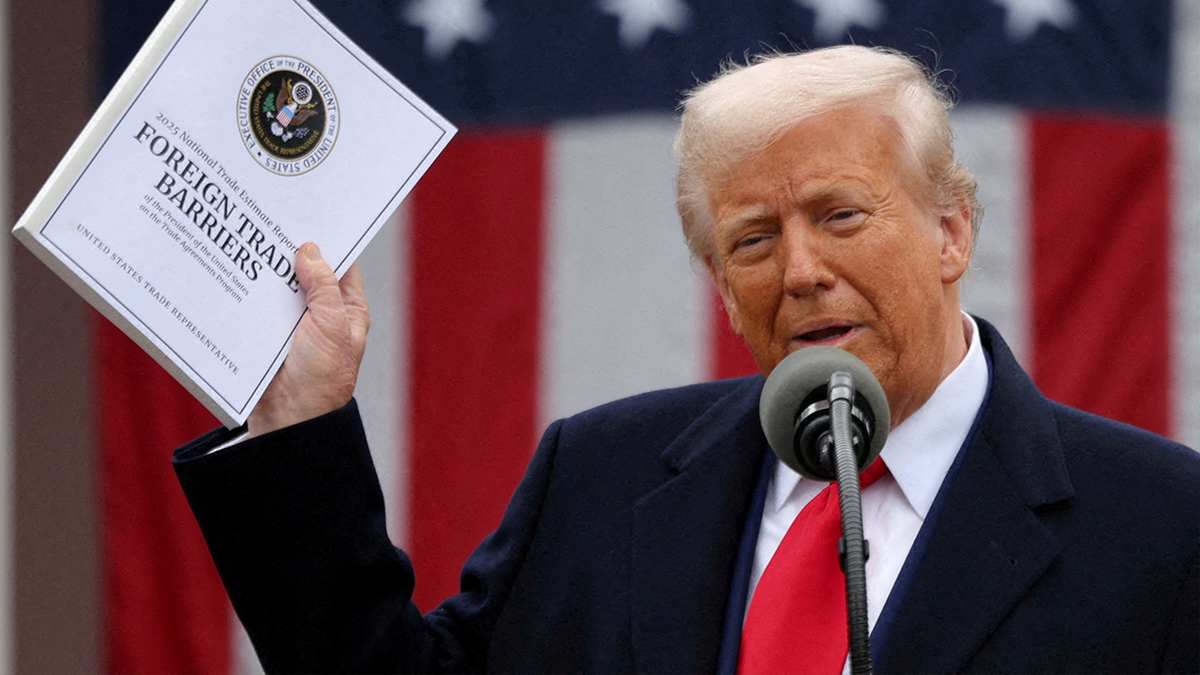
The Supreme Court’s 6-3 ruling invalidating Trump’s IEEPA tariffs sets off a potentially chaotic $160B+ refund battle — even as the president vows new 10% global duties to replace them.
The phone call came before dawn. A purchasing director at a mid-sized electronics importer in New Jersey had been refreshing the Supreme Court’s website since 5 a.m., armed with a spreadsheet totaling the $4.7 million his company had paid in IEEPA-based tariffs since April 2025. By mid-morning on February 20, 2026, he had his answer — and his lawyers had their instructions: file for a refund immediately.
Scenes like this played out across American boardrooms on Friday as the U.S. Supreme Court delivered a landmark 6-3 ruling that President Donald Trump’s sweeping import tariffs, imposed under the International Emergency Economic Powers Act of 1977, exceeded his constitutional authority. The decision in Learning Resources Inc. v. Trump and V.O.S. Selections v. United States — authored by Chief Justice John Roberts and joined by an unusual cross-ideological coalition — is the most consequential check on executive trade power in a generation. It immediately triggers what experts are already calling the messiest federal refund process since the New Deal.
The Supreme Court Ruling: Why Trump’s Tariffs Were Struck Down
To understand what happened on February 20, 2026, you have to understand what Trump tried to do — and how far he pushed the boundaries of a 47-year-old statute that was never designed to carry that weight.
Starting in April 2025, the Trump administration invoked IEEPA to impose tariffs of 10% to 145% on goods from nearly every U.S. trading partner. These were not narrow, targeted measures. They covered virtually the entire American import base — from Chinese electronics to French wine, from Canadian lumber to Vietnamese sneakers. The legal theory rested on two words buried in IEEPA: “regulate” and “importation.” The administration argued that those words granted the president virtually unlimited authority to tax imports at any rate, for any duration, against any country, as long as a national emergency had been declared.
Chief Justice Roberts rejected that argument with rare bluntness. <span style=”font-style: italic;”>”Those words cannot bear such weight,”</span> he wrote, in a passage that legal scholars are already comparing to the Court’s landmark limits on the administrative state. Roberts invoked the “major questions doctrine” — the principle that Congress must speak clearly when it intends to delegate powers of enormous economic significance to the executive branch. In 2025, IEEPA tariffs generated between $130 billion and $160 billion in federal revenue, according to Tax Foundation estimates, with the Penn-Wharton Budget Model placing the figure closer to $175 billion. The idea that Congress quietly delegated authority over sums of that magnitude through two ambiguous words, the majority held, defied common sense.
The ruling was not unanimous in its reasoning. Justices Sotomayor, Kagan, Gorsuch, Barrett, and Jackson joined Roberts, though Gorsuch and Barrett signed only parts of the majority opinion. Justices Thomas, Kavanaugh, and Alito dissented. Notably, Kavanaugh’s dissent focused less on defending Trump’s tariff authority and more on warning about the practical chaos ahead — predicting that the refund process would be, in his own word, a “mess.”
The ruling does not affect all Trump-era tariffs. Section 232 tariffs on steel and aluminum, which predate IEEPA and rest on separate statutory grounds, remain in place. According to Reuters, those account for roughly one-third of Trump’s total new tariff revenue — meaning the struck-down duties represent the lion’s share of his trade policy’s fiscal footprint.
Corporate Push for Tariff Refunds: Who’s Demanding What?
Within hours of the ruling, the corporate response was swift and coordinated. The U.S. Chamber of Commerce, the National Retail Federation, and the American Association of Importers and Exporters issued joint statements demanding “full, fast, and automatic” refunds. The We Pay the Tariffs coalition — a group representing over 800 small businesses — went further, calling on Congress to legislate a streamlined refund mechanism that bypasses the courts entirely. “Small businesses cannot afford to wait months or years while bureaucratic delays play out,” said Dan Anthony, the group’s executive director.
The Financial Times reported a surge in legal filings from major importers including retailers, automotive suppliers, and consumer goods companies who had pre-filed protective claims in the Court of International Trade anticipating this moment. Lawsuits from companies spanning sectors as varied as footwear, spirits, and industrial components had been queuing in the federal trade courts since mid-2025. Some of the country’s largest importers — firms with sophisticated customs compliance teams who had been tracking the litigation closely — are positioned to move fastest.
The equity implications are significant, and troubling to some economists. As Senator Elizabeth Warren noted bluntly in a Friday statement, large corporations with armies of lawyers are far better positioned to navigate a complex refund process than the small businesses and individual consumers who ultimately bore the cost of higher prices. Consumer pass-through of tariff costs is well-documented: a Kiel Institute study estimated that 96% of tariff costs imposed on U.S. imports were ultimately borne by American buyers. Getting that money back to households — rather than to corporate balance sheets — presents a structural challenge that no court ruling can easily resolve.
Trump’s Defiant Response: New 10% Global Tariff and Section 301 Investigations
The president did not go quietly. Speaking to reporters within hours of the ruling’s release, Trump called the six majority justices a “disgrace to our nation” and said he was “absolutely ashamed” of the decision. Within the same press appearance, however, he outlined a rapid-response trade strategy.
First, Trump announced he would sign an executive order imposing a new 10% global tariff on all countries under Section 122 of the Trade Act of 1974. The BBC reported that this authority allows the president to impose duties of up to 15% for up to 150 days to address balance-of-payments concerns, with any extension requiring congressional approval — which Trump said he would not seek. Second, Trump directed the administration to initiate broad Section 301 investigations into unfair trade practices, a tool previously used to impose and maintain tariffs on China during his first term.
Neither alternative fully replicates the scope or longevity of IEEPA’s reach. Forbes noted that Section 122 is by design a temporary, capped measure — a blunt instrument for balance-of-payments crises, not a framework for permanent restructuring of global trade relationships. Section 301 investigations, meanwhile, take months or years to produce enforceable results. Oxford Economics’ chief U.S. economist Michael Pearce warned that while the administration will likely “rebuild tariffs through other, more durable means,” the by-country and by-sector implications could look dramatically different — “which will create another bout of trade policy uncertainty for business, investors, and households.”
Economic Impacts: What Tariffs Cost America — and What Lifting Them Might Restore
The macroeconomic ledger on Trump’s IEEPA tariffs is complex, but the broad strokes are clear. Tax Foundation economists estimated that the struck-down duties, had they remained in place from 2026 through 2035, would have generated $1.4 trillion in federal revenue — while shrinking long-run U.S. GDP by 0.3%. Consumer prices rose across goods categories heavily weighted toward imports: electronics, clothing, footwear, and household goods. The tariffs acted, in economic terms, as a regressive consumption tax, falling hardest on lower- and middle-income families who spend a larger share of their income on goods.
There is a credible case on the other side. Some domestic industries — segments of steel, aluminum, and semiconductor manufacturing — received genuine protection from foreign competition during the tariff period. Proponents argue that tariff-induced supply chain reshoring, however disruptive in the short term, builds long-term economic resilience. The trade deals that Trump’s team negotiated using IEEPA tariffs as leverage — most notably a recently signed U.S.-India pact — are now in legal limbo as the underlying authority has been invalidated.
Globally, the ruling reverberated through trading capitals from Ottawa to Beijing. Canada’s trade minister Dominic LeBlanc welcomed the decision as confirmation that the IEEPA tariffs were “unjustified.” Port authorities in Los Angeles and Long Beach, who had tracked significant cargo volume declines tied to import uncertainty, signaled cautious optimism. Axios reported that logistics and freight companies were rapidly reassessing shipping contracts and inventory forecasts.
The Refund Process: Slow, Complex, and Unlikely to Reach Consumers
Here is where American importers, large and small, need to manage their expectations. The Supreme Court explicitly declined to address refunds — punting the question back to the Court of International Trade. Justice Kavanaugh’s dissent noted the court’s silence on “whether, and if so how, the Government should go about returning the billions of dollars that it has collected from importers.”
What happens next, in practical terms:
- No automatic refunds. Businesses must actively file claims. U.S. Customs and Border Protection has an existing duty refund mechanism, but it was not designed for an operation of this scale.
- Timelines are long. TD Securities estimates refunds could take 12 to 18 months to begin flowing, with complex cases taking years through the Court of International Trade.
- Consumers are almost certainly excluded. Because tariffs are legally paid by importers, not end consumers, households who absorbed higher prices through retail markups have no direct legal avenue for compensation — regardless of the political optics.
- Interest may apply. Trade lawyers note that some refund claims carry statutory interest, potentially adding billions to the government’s ultimate liability.
Democratic governors including Gavin Newsom of California and J.B. Pritzker of Illinois have called for household-level refunds of approximately $1,700 per family with interest — a politically resonant but legally speculative demand that would require an act of Congress. The New York Times described the coming process as likely to be “chaotic” — a word that appears with striking frequency from both supporters and critics of the ruling.
What Comes Next: Trade Policy, Midterms, and the Call for Congressional Reform
The February 20 ruling does not end the American tariff debate. It relocates it — from executive orders to congressional chambers, from emergency declarations to the harder work of democratic deliberation. The Constitution’s text on this point is unambiguous: Article I, Section 8 assigns the power to set tariffs to Congress, not the president. For decades, Congress delegated that authority broadly, trading legislative prerogative for administrative flexibility. The Supreme Court’s ruling is, in part, a demand that Congress reclaim its constitutional role.
Whether that happens is a political question as much as a legal one. Broad tariffs on China retain bipartisan support. Tariffs on traditional allies like Canada and the European Union do not. A Congress willing to codify selective tariff authority while constraining presidential emergency workarounds would reflect the kind of nuanced trade policy the U.S. has not managed to produce in decades.
The midterm elections — now less than two years away — will be shaped partly by this ruling’s economic aftermath. If the refund process flows smoothly and trade policy stabilizes, the political damage to Trump may be contained. If the administration’s Section 122 gambit expires without renewal, and if the Section 301 investigations take years to bear fruit, the tariff-induced economic disruption could deepen precisely when it matters most politically.
For now, the importing community is filing claims, lawyers are billing by the hour, and a question worth $160 billion or more hangs unanswered over the federal court system. The Supreme Court delivered its verdict on executive overreach. The verdict on what happens next belongs to Congress, the courts, and ultimately, the American electorate.
Discover more from The Economy
Subscribe to get the latest posts sent to your email.


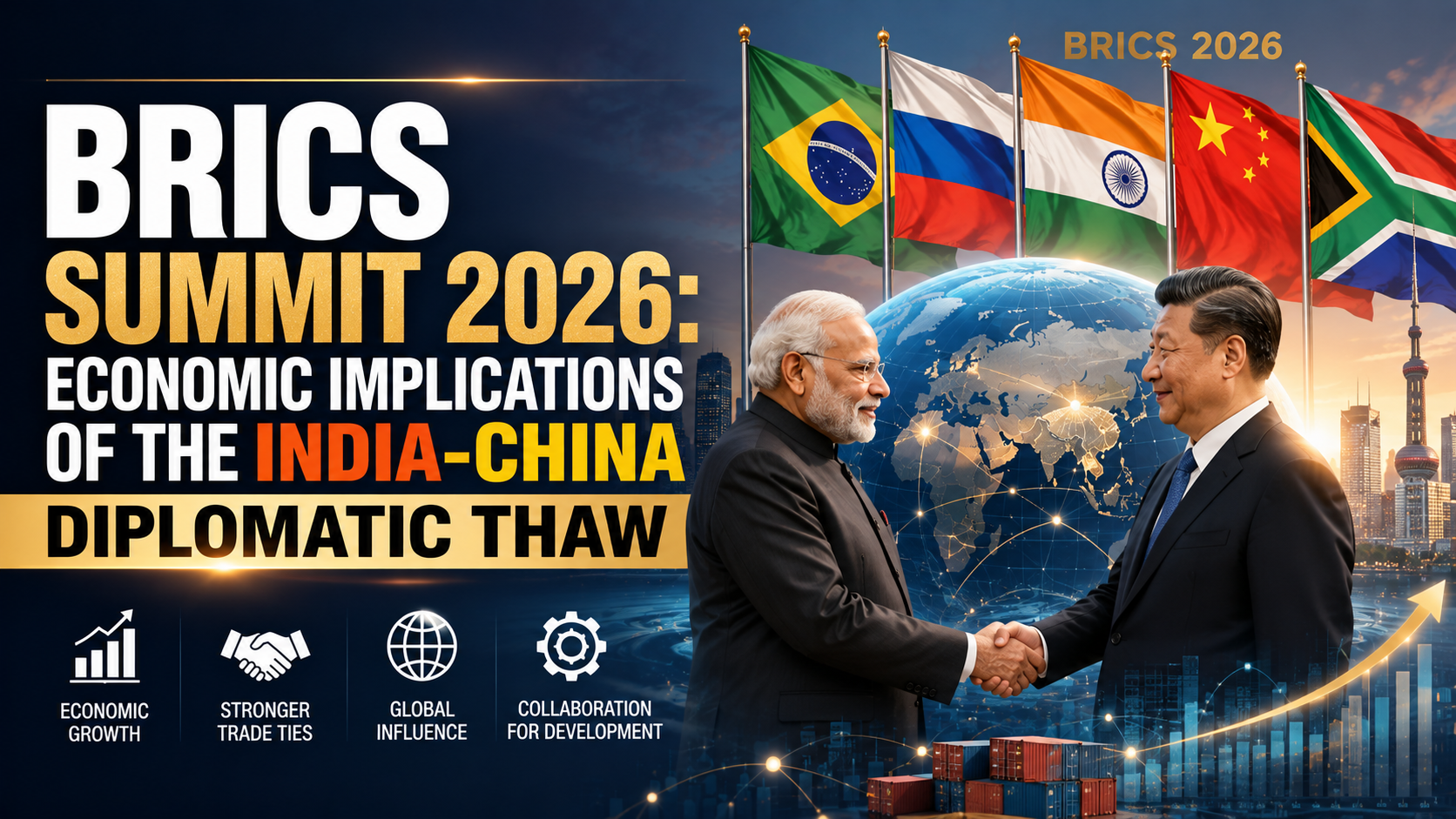
Chinese President Xi Jinping is expected to travel to New Delhi on September 12–13, 2026, for the 18th BRICS Summit — his first visit to India in six years, and the clearest signal yet that Beijing and New Delhi are prepared to move past the 2020 Galwan Valley border clash, according to Indian Defence News. For enterprise strategists and investors positioned across South Asian and Chinese supply chains, this is not a symbolic handshake — it is a signal event with direct implications for trade flows, tariff exposure, and capital competition across the Global South.
From Galwan to Kazan to New Delhi: The Timeline
The normalization process has moved in deliberate stages, not a single reset:
- October 2024 — Kazan, Russia: Modi and Xi meet on the sidelines of the BRICS summit, the first formal meeting since 2019, following a border disengagement agreement, according to The Diplomat.
- 2025 — Resumption of high-level visits: India’s defense and external affairs ministers visited Beijing; China’s Foreign Minister Wang Yi visited New Delhi, producing several bilateral agreements, per The Diplomat.
- August 2025 — Tianjin SCO Summit: Modi and Xi met again, described as the culmination of the resumed high-level engagement.
- May 2025 — India-Pakistan conflict stress test: The thaw survived Beijing providing military and political support to Islamabad against India during a brief conflict — evidence the normalization is now resilient to shocks, per The Diplomat.
- September 12–13, 2026 — New Delhi BRICS Summit: India chairs BRICS for a fourth time, hosting Xi for the first time since 2019, per Indian Defence News.
Why Now: The Strategic Logic on Both Sides
For Beijing, sustaining a frozen conflict with a rising economic power while simultaneously managing friction with Washington over the South China Sea and Taiwan Strait has become strategically costly, per Indian Defence News. For New Delhi, hosting Xi under the multilateral BRICS umbrella allows Modi to project global statesmanship while engaging Beijing without appearing to unilaterally concede on unresolved border issues.
Crucially, analysts at the China-Global South Project note the 2026 dynamic is being shaped primarily by regional realities and a deliberate decoupling of economic cooperation from security disputes — not by U.S. trade pressure, even though Trump-era tariff policy has often been cited as a contributing factor.
Where the Economic Exposure Sits
Import Dependency: India’s Structural Vulnerability
India’s supply chains remain heavily dependent on Chinese intermediate goods, particularly in pharmaceuticals and electronics, according to Indian Defence News. Any further normalization of technology-investment restrictions — India banned a range of Chinese tech applications and tightened border-nation investment rules after Galwan — would be the single highest-impact policy shift for enterprise B2B supply chain planners in the region.
The BRICS Bloc Itself: Expanded and More Consequential
The 2026 summit occurs against a materially expanded BRICS bloc. Since the original five-member group, Egypt, Ethiopia, Iran, Saudi Arabia, and the UAE joined in 2024, and Indonesia joined in 2025, per the official BRICS 2026 site — with ten additional partner countries (Belarus, Bolivia, Cuba, Kazakhstan, Malaysia, Nigeria, Thailand, Uganda, Uzbekistan, Vietnam) joining in 2025. The bloc’s prior Rio summit produced a Leaders’ Framework Declaration proposing to mobilize $300 billion annually by 2035 for climate finance, according to Business Standard.
Trade & Investment Exposure Matrix
| Sector | Pre-Thaw Position (2020–2024) | Post-Thaw Trajectory (2025–2026) | Enterprise Risk/Opportunity |
|---|---|---|---|
| Pharmaceuticals (API imports) | Heavy Indian dependency on Chinese active pharmaceutical ingredients | Potential easing of investment friction | Opportunity: supply diversification talks; Risk: continued single-source dependency |
| Electronics/consumer tech | Chinese app bans, investment screening for border-sharing nations | Selective, cautious relaxation possible | Watch for FDI rule changes ahead of/after the summit |
| Border trade | Suspended since 2020 | Partial resumption of trade at three border outposts | Direct logistics opportunity for regional trade B2B services |
| Africa infrastructure/capital | Parallel, competing Chinese BRI and Indian maritime/digital investment | Continued competition, not cooperation | Africa remains contested capital-deployment theatre, per Indian Defence News |
| AI governance | No joint framework | BRICS Leaders’ Statement on Global AI Governance (Rio) | Multilateral framework emphasizing Global South inclusion, UN-led process |
Sources: Indian Defence News, The Diplomat, Business Standard — see citations above.
What to Watch at the September Summit
- Border trade mechanics: Whether the Working Mechanism for Consultation and Coordination produces concrete friction-point resolutions in eastern Ladakh ahead of the summit, per Indian Defence News.
- Investment-screening rule changes: Any signal India will ease its border-nation FDI restrictions would be the most direct enterprise-relevant outcome.
- Africa positioning: Whether joint statements address, rather than paper over, competing Chinese BRI and Indian maritime-security/digital-investment strategies across the continent.
- AI governance follow-through: Concrete mechanisms building on the Rio AI governance statement, relevant to any enterprise operating AI infrastructure across BRICS-aligned markets.
The Caveat: This Is a Thaw, Not a Resolution
Independent policy analysis from the ISAS Brief is explicit that the Kazan-era thaw has not resolved bilateral mistrust or delivered progress on sensitive issues — it has stabilized the border and eased some economic restrictions without addressing the underlying territorial dispute. The China-Global South Project similarly notes India continues to treat Beijing with caution in the security domain even as it normalizes economic engagement. Investors should read the September summit as confirmation of a durable, deliberate de-escalation track — not as a signal that structural India-China rivalry has been resolved.
The Bottom Line
The India-China thaw formalized at the New Delhi BRICS Summit represents a genuine, multi-year, deliberately sequenced de-politicization of economic relations between two of the world’s largest economies — but one that leaves core security and territorial disputes unresolved. For enterprise and investment strategists, the actionable signal is narrower than “US-China rapprochement” headlines suggest: watch FDI screening rules, pharmaceutical/electronics supply-chain diversification announcements, and border-trade resumption specifics, not broad geopolitical sentiment.
Discover more from The Economy
Subscribe to get the latest posts sent to your email.
Emerging and developing economies face refinancing needs of more than $9 trillion in 2026, according to the Institute of International Finance’s Global Debt Monitor — the largest wall of maturing sovereign and corporate debt these markets have ever faced simultaneously. At the center of that system sits China, now the single largest issuer of emerging-market sovereign debt and, increasingly, the largest bilateral lender of last resort when smaller economies can’t refinance on their own. For institutional investors and foreign-policy-adjacent business strategists, understanding China’s dual role — dominant issuer and dominant creditor — is now a prerequisite for pricing emerging-market risk correctly.
Editorial note on sourcing: a specific figure describing a discrete “$1.3 billion” China sovereign refinancing transaction could not be independently verified against primary reporting at the time of writing. This article instead builds its analysis on verified, dated figures from the OECD, IIF, Moody’s, and peer-reviewed research, and any deal-level claim should be confirmed against primary sources (finance ministry statements, rating-agency releases) before publication or citation.
China’s Dual Role: Issuer and Creditor of Last Resort
China accounted for 45% of total EMDE sovereign bond issuance in 2024, up sharply from just 17% in the 2007–2014 period, according to the OECD’s Global Debt Report 2025. By 2025, China remained the top borrower among a concentrated group — China, India, Brazil, Egypt, and Argentina together represented 78% of EMDE central-government borrowing, per the OECD’s Global Debt Report 2026.
Domestically, Beijing has simultaneously executed one of the largest local-government debt refinancing programs in history: a 6 trillion yuan (roughly $839 billion) swap of “hidden” local-government debt into standardized bonds, approved in late 2024 and implemented through 2026, according to VOA News. By mid-2026, Chinese provinces had used nearly 94% of that swap allowance, according to Bloomberg.
Internationally, China has also re-entered dollar sovereign bond markets at scale — its 2026 international offering was reported as its largest ever, oversubscribed well beyond target, according to Business Standard/Reuters reporting on the prior comparable issuance. This dual positioning — massive domestic refinancing plus expanding international issuance — gives China outsized influence over EM bond-market liquidity and pricing benchmarks that smaller sovereigns then reference for their own issuance.
The $9 Trillion Wall: Why 2026 Is Different
The scale of what’s coming due matters more than any single deal. Key figures from the IIF’s Global Debt Monitor and OECD’s 2026 report:
- Gross EMDE central-government borrowing crossed $4 trillion in 2025, up from roughly $3 trillion in 2024.
- Around 36% of outstanding EMDE bond stock matures within three years.
- Low-income countries face the sharpest cliff: 52% of their outstanding bonds mature by 2028, with 29% due by the end of 2026 alone.
- Secondary-market yields on maturing debt now exceed 10% for non-investment-grade sovereigns, meaning refinancing at current rates locks in materially higher debt-service costs than the original issuance.
Refinancing Cost Comparison: Then vs. Now
| Issuer Tier | Original Issuance Yield (illustrative range) | 2026 Refinancing Yield | Refinancing Risk |
|---|---|---|---|
| Investment-grade EMDEs (e.g., select Gulf, Southeast Asia sovereigns) | 3–5% | 5–7% | Moderate — absorbable within fiscal space |
| Non-investment-grade EMDEs | 6–8% | 10%+ | High — debt-service costs rising faster than revenue growth |
| Low-income issuers (heavy China bilateral exposure) | Concessional/below-market | Market-rate or restructured terms | Severe — 29% of debt stock matures by end of 2026 |
Source: OECD Global Debt Report 2025/2026 (see citations above); ranges are illustrative of documented tier-level trends, not specific bond issues.
The Restructuring Precedent: What Happens When Refinancing Fails
China’s response to sovereign distress has evolved into a distinct pattern that investors increasingly price into risk premiums. Research published via the National Bureau of Economic Research documents a rising trend of “re-structurings” — repeated restructurings of the same debt with the same creditor — echoing the drawn-out resolution patterns of prior global debt crises. Angola, Ecuador, Seychelles, Sri Lanka, and Venezuela have each undergone two or more restructurings with Chinese state creditors.
Sri Lanka’s case is illustrative of the mechanics: China Development Bank extended a $500 million financing facility in 2020, and a subsequent equity-linked arrangement brought in $1.12 billion in cash that Colombo used to repay non-Chinese creditors, according to Oxford Academic’s International Affairs journal. These bilateral bridge arrangements illustrate how China’s rescue lending functions as a parallel track to traditional Paris Club-style restructuring — often faster to arrange, but less transparent to third-party bondholders pricing the same sovereign’s risk.
Regional Ripple Effects: Where Investors Should Watch Closely
Direct Exposure Zones
- Sub-Saharan Africa: Heaviest concentration of low-income issuers facing near-term maturity walls and prior China restructuring history (Angola, Zambia).
- South Asia: Sri Lanka’s precedent shapes how markets price Pakistan and Bangladesh refinancing risk.
- Latin America: Ecuador and Venezuela carry documented repeat-restructuring histories; Argentina remains among the top-five EMDE borrowers by volume.
Indirect / Second-Order Exposure
- Gulf and Southeast Asian investment-grade sovereigns face rising benchmark yields even without direct restructuring risk, simply because China’s issuance volume moves the EM bond-pricing benchmark broadly.
- Enterprise B2B lenders and trade-finance providers operating in these corridors should treat sovereign-refinancing stress as a leading indicator of counterparty and currency risk, not a lagging one.
An Investor Risk-Monitoring Framework
- Track maturity-wall concentration, not headline debt-to-GDP. A country with moderate debt-to-GDP but a heavy 2026–2028 maturity cliff carries more near-term risk than a higher-leverage country with a smoothed maturity profile.
- Distinguish China’s domestic refinancing (yuan-denominated, largely contained) from its role as an external EM creditor (dollar/foreign-currency exposure, higher spillover risk).
- Watch for repeat-restructuring signals. Countries with a prior China restructuring are statistically more likely to require another, per the NBER research above — treat this as a standing risk flag, not a one-time resolved event.
- Monitor secondary-market yield spreads on maturing debt versus issuance-year yields as the clearest real-time signal of refinancing stress building in a specific sovereign.
The Bottom Line
China’s simultaneous role as the largest domestic debt-refinancer in EM history and the most influential external creditor to distressed sovereigns makes it the single most important variable in the 2026 emerging-market debt outlook. The $9 trillion refinancing wall isn’t a uniform risk — it’s concentrated in low-income issuers with the heaviest prior China bilateral exposure, and that concentration is exactly where enterprise investors, trade-finance providers, and sovereign-risk analysts should be focusing due diligence through the remainder of 2026.
Discover more from The Economy
Subscribe to get the latest posts sent to your email.

Key Takeaways
- Major US banks generated $47 billion in profits in early 2026 while cutting roughly 15,000 positions tied to AI-driven restructuring — a genuine profit-and-disruption paradox playing out simultaneously.
- Academic research finds AI-adopting banks experience measurably lower default risk, credit risk, and systematic risk versus non-adopters — a causal, not merely correlational, risk-reduction effect.
- Generative AI could contribute $200-340 billion annually to global bank profits through productivity gains and automation, with Morgan Stanley citing a $740 billion 2026 AI capex wave as a direct tailwind for bank financing revenue.
- AI incidents carry a measurable market cost: a study of five US banks found an average short-term cumulative abnormal stock return loss of -21% following AI incidents, with negative spillover to the broader financial sector.
- Real-time credit exposure monitoring is emerging as AI’s most consequential risk-management application — recalculating counterparty exposure continuously as transactions execute, rather than discovering limit breaches the next morning.
A Genuine Paradox: Record Profits, Real Disruption
The defining tension in banking’s 2026 AI story is that efficiency gains and workforce disruption are happening at the same institutions, in the same reporting period, without contradiction. The 21,490 AI-related layoffs recorded in April 2026 and the $47 billion in profits generated by major banks while cutting 15,000 positions represent just the opening chapter of a restructuring that will reshape the industry over the coming decade — a transformation creating both risks and opportunities for investors simultaneously. JPMorgan Chase has emerged as the clearest example of how major financial institutions are restructuring entire organisations around AI capabilities rather than simply layering AI tools onto existing operations.
That reskilling gap is real and measurable at the industry level. The World Economic Forum reports that 77% of employers plan to reskill workers in response to AI disruption, yet only 57% report having created genuine reskilling pathways in practice — a gap between stated intention and operational execution that creates both human and financial-stability risk.
The Evidence: AI Adoption Causally Reduces Bank Risk
Beyond the headline profit and disruption figures sits a more academically rigorous finding that deserves more attention than it typically receives: AI adoption appears to make banks genuinely safer, not just more efficient. Research strongly supports this: AI-adopting banks experience lower default risk, measured by lower probability of default; lower credit risk, with smaller non-performing loan ratios and loan-loss provisions; and lower systematic risk, indicating that AI-adopting banks’ equity values are less exposed to economy-wide shocks and cyclical downturns. These effects remain robust after controlling for bank size, profitability, leverage, governance, and ESG performance, with consistent evidence that AI adoption causally reduces risk rather than simply reflecting already-safer institutions.
Two mechanisms explain this effect: enhanced risk management, where AI enables real-time credit monitoring, early detection of loan deterioration, and automated compliance screening, improving portfolio quality and lowering default probabilities. This is the strongest empirical grounding available for the “AI as risk-management upgrade” thesis, as distinct from the more commonly cited “AI as cost-cutting tool” narrative.
Real-Time Risk: The Practical Application
The operational shift this enables is significant. AI enables risk assessment at the speed of the business: as transactions execute, credit exposure to counterparties is recalculated continuously, and limit breaches are detected in real time rather than discovered the next morning. For risk managers, that shift from batch-processed, next-day exposure reporting to continuous real-time monitoring represents a genuine structural upgrade in how counterparty risk is managed — not merely a faster version of the same process.
The Capital and Profit Case
The scale of capital flowing into this transition is substantial, and banks sit at the centre of financing it. With an expected $740 billion in AI capex in 2026, banks stand to benefit from rising financing demand, resilient M&A activity, and long-term efficiency gains — AI is poised to be a net positive for banks, with disruption risks considered manageable even as investors worry about job losses and macro impacts. AI is driving major efficiency gains for banks, potentially boosting productivity by 20% to 50% over the next five to ten years.
The productivity dividend estimate at the global level is similarly large: generative AI could contribute between $200 billion and $340 billion a year to global bank profits through productivity advances and automation, with banks introducing knowledge agents powered by large language models in 2026 that can extract rich insights from loan applications, financial statements, and customer communications at scale.
Comparative Table: AI’s Dual Effect on Bank Risk Profile
| Dimension | Risk-Reducing Effect | Risk-Increasing Effect |
|---|---|---|
| Credit risk | Lower non-performing loan ratios, better early detection | New model/hallucination risk in credit decisioning |
| Operational risk | Real-time exposure monitoring, automated compliance | Cascading agentic-AI errors across chained workflows |
| Market/systematic risk | Lower exposure to economy-wide shocks (per LSE research) | AI-incident-driven stock price shocks (-21% average CAR) |
| Fraud risk | AI-powered fraud detection catches anomalies faster | AI-enabled deepfake fraud up over 2,000% in three years |
| Capital allocation | $740bn AI capex driving bank financing revenue | Chicago Fed-flagged tail risk from AI-adjacent loan exposure |
Why It Matters: The New Tail Risks Nobody Priced In
The efficiency and risk-reduction case is genuine, but it is only half the picture — AI introduces categorically new failure modes that traditional bank risk frameworks were not built to handle. Because AI agents chain tools and call other agents, a single error can propagate quickly through banking workflows, with resulting failures cascading into transaction and payment errors, data privacy breaches, and technical failures that become operational disruptions — a mispriced trade, a duplicated payment, or a misrouted customer instruction can multiply across systems before a human reviewer sees the first alert. Generative models still produce confident but incorrect outputs, and in agentic systems, those outputs become instructions: a model that hallucinates a policy, a customer entitlement, or a calculation rule can trigger actions the bank never approved.
The market has already begun pricing this risk directly. Analysis of five US banks and financial services firms found the average short-term cumulative abnormal stock return loss following an AI incident was -21.04%, with the negative impact spreading to the broader financial industry within a three-day window — a measurable, quantified market penalty for AI-related operational failures.
A Systemic-Level Concern
Regulators are increasingly framing this as a financial-stability issue, not just an institution-level risk. IMF analysis suggests that extreme cyber-incident losses could trigger funding strains, raise solvency concerns, and disrupt broader markets, with advanced AI models dramatically reducing the time and cost needed to identify and exploit vulnerabilities — raising the likelihood of simultaneously discovering and targeting weaknesses in widely used systems, meaning cyber risk is increasingly about correlated failures that could disrupt financial intermediation, payments, and confidence at the systemic level.
Separately, the Federal Reserve Bank of Chicago has explicitly flagged banks’ exposure to the AI investment boom itself as a distinct tail risk: commercial loans underwritten by banking institutions have been one of the mechanisms fuelling the capital expenditure increase across the AI value chain, creating a possible AI-bubble tail risk — the risk of losses due to extremely rare events — through banks’ direct lending exposure to AI-adjacent borrowers.
The Governance Gap: Adoption Outpacing Control Frameworks
Nearly 80% of large financial institutions now use some form of AI in core decision-making processes, according to the Bank for International Settlements, yet deploying AI at scale using control frameworks designed for a pre-AI world introduces structural vulnerabilities that can translate into earnings volatility, regulatory exposure, and reputational damage, at times within a single business cycle. For financial analysts, the maturity of a bank’s AI control environment — revealed through disclosures, regulatory interactions, and operational outcomes — is becoming as telling a signal as capital discipline or risk culture.
Profitability outcomes from AI adoption also remain more mixed than the headline productivity estimates suggest: only 40% of respondents report increased profitability from AI, while 43% report no change — a reminder that the $200-340 billion global profit-uplift estimate represents a potential ceiling, not a guaranteed outcome, and depends heavily on execution quality.
What to Do Next
- Distinguish AI-driven risk reduction from AI-driven risk creation when assessing a bank’s AI strategy — both are simultaneously real, and the net effect depends on control-framework maturity, not adoption speed alone.
- Treat a bank’s AI governance disclosures as a genuine credit-quality signal, following the CFA Institute’s framing that AI control-environment maturity is becoming as informative as traditional capital and risk-culture metrics.
- Watch for AI-incident-driven equity volatility as a distinct, quantifiable risk category — the documented -21% average abnormal return following AI incidents is a material, not theoretical, market risk.
- Monitor bank lending exposure to AI-value-chain borrowers as a systemic tail-risk indicator, per the Chicago Fed’s direct warning about commercial loan exposure to AI capital expenditure.
- Prioritise real-time exposure monitoring adoption as the highest-value, most empirically supported AI risk-management application, given its direct link to measurably lower default and credit risk in academic research.
FAQ
Does AI actually make banks safer, or does it just make them more efficient?
Rigorous academic research finds both are true simultaneously: AI-adopting banks experience causally lower default risk, credit risk, and systematic risk, driven primarily by enhanced real-time risk management and early deterioration detection — this is a genuine risk-reduction effect, not just an efficiency gain.
What is the biggest new risk that AI introduces to bank risk management?
Agentic AI systems that chain tools and call other agents can propagate a single error rapidly through banking workflows, with hallucinated policies or entitlements becoming executed instructions — and the market has already priced this risk, with AI incidents at banks associated with an average -21% short-term stock return loss.
How much could AI add to global bank profits?
Generative AI could contribute between $200 billion and $340 billion a year to global bank profits through productivity advances and automation, though only about 40% of institutions currently report actually realising increased profitability from their AI investments.
Discover more from The Economy
Subscribe to get the latest posts sent to your email.

The Medicaid Churn: Front-End Revenue Cycle Risks for Enterprise Hospitals

The 2026 Crypto Regulatory Shift: What It Means for Institutional Investors

AI-Powered Training: The Next Multi-Billion Dollar Ecosystem in Fitness

BRICS Summit 2026: Economic Implications of the India-China Diplomatic Thaw

Emerging Market Debt: The Ripple Effect of China’s Sovereign Refinancing Role

Dropping Oil & Surging Gold: Navigating Safe-Haven Investments in Q3

2026 AI Stock Frenzy: How to Position Your Portfolio

The AI Disruption in Financial Risk Management: Moving Beyond Record Banking Profits

The Rise of Green Aviation: Balancing High Fuel Prices with Sustainable Infrastructure

US-China Relations in Q3 2026: Trade Tariffs and Supply Chain Risks

Emerging Markets Rebound: Top Stock Strategies for the Gulf and South Asia

Tackling the 2026 Global Food Crisis: Policy Shifts and Market Speculation

Post-Quantum Encryption in Banking: The Next Frontier in Cybersecurity Investments

The Financial Cost of Sanctions: Afghanistan’s Economy 5 Years Under the Taliban

China Politburo July 2026: Stimulus Signals Explained

Russia Fuel Shortages 2026: Inside a Cracking War Economy

Top 15 Financial Stocks for Investment in PSX

State Farm’s $5B Dividend 2026: Who Qualifies & Payout Dates

Pakistan Passed Its Third IMF Review

SpaceX Stock Lockup Expiration Explained: Why $123B in Shares Could Hit the Market

Pakistan IMF Program 2026: Inside the Push Toward an Interest-Free Economy

Andy Burnham, UK Gilts and Mortgages: July 2026 Explainer

Russia Oil Revenue 2026: How Sanctions on Rosneft and Lukoil Are Draining the War Chest

Pakistan’s 2026 Monsoon Floods Threaten Fragile Economic Recovery as Inflation Nears 9%

Gold Price 2026: Why Bullion Has Fallen 25% From Its January Record High

Russia Oil Revenue 2026: The Iran War Windfall and What a Hormuz Deal Means for Moscow

Canada US Trade War 2026: Inside Carney’s Push to Cut Ties With Trump’s Tariffs

Russia’s Budget Deficit Blew Past Its Full-Year Target in Three Months
-

 Markets & Finance8 months ago
Top 15 Stocks for Investment in 2026 in PSX: Your Complete Guide to Pakistan’s Best Investment Opportunities
-

 Analysis6 months ago
Johor’s Investment Boom: The Hidden Costs Behind Malaysia’s Most Ambitious Economic Surge
-

 Analysis6 months ago
Top 10 Stocks for Investment in PSX for Quick Returns in 2026
-

 Analysis7 months ago
Brazil’s Rare Earth Race: US, EU, and China Compete for Critical Minerals as Tensions Rise
-

 Banks7 months ago
Best Investments in Pakistan 2026: Top 10 Low-Price Shares and Long-Term Picks for the PSX
-

 Investment8 months ago
Top 10 Mutual Fund Managers in Pakistan for Investment in 2026: A Comprehensive Guide for Optimal Returns
-

 Global Economy8 months ago
15 Most Lucrative Sectors for Investment in Pakistan: A 2025 Data-Driven Analysis
-

 Global Economy8 months ago
Pakistan’s Export Goldmine: 10 Game-Changing Markets Where Pakistani Businesses Are Winning Big in 2025