
Analysis
Wellness Tourism’s $1 Trillion Rise Is Rewriting Travel Rules


From $438 billion in 2012 to a projected $1.4 trillion by 2029, wellness tourism has moved from a niche indulgence to the fastest-growing structural force in the $1.6 trillion global travel economy
When Hilton Hotels asked travellers what was driving their 2026 leisure decisions, 56% named a single motivation: to rest and recharge. Not to see a landmark. Not to tick off a bucket list. Not to attend an event. To rest. That answer — drawn from Hilton’s 2026 Trends Report, The Whycation: Travel’s New Starting Point — encapsulates a structural transformation underway in the $1.6 trillion global travel economy, one that has already produced a market now valued at close to $1 trillion and forecast to reach $1.4 trillion by the end of the decade.
Wellness tourism is no longer a niche amenity marketed to the affluent. It is the fastest-growing segment of the global travel industry by both absolute value and growth rate — and the operators, platforms, and destinations that treat it as a premium add-on rather than a core structural trend are misreading what is happening beneath the surface.
The Numbers That Define the Shift
The Global Wellness Institute places the wellness tourism market at $894 billion in 2024, more than double the $438 billion recorded in 2012 — a figure that surpasses pre-pandemic levels by 36%. Phocuswright and WiT’s Online Travel Tracker: The Wellness Stack projects the market will reach $1.4 trillion by 2029, growing at a compound annual rate of 9.1%.
Grand View Research places the 2025 market valuation at $990.4 billion, projecting growth to $1.085 trillion in 2026 and $2.4 trillion by 2035, at a CAGR of 9.3%. The variance across forecasting houses reflects different methodology and scope, but the directional consensus is unambiguous: wellness tourism is expanding faster than any other major travel segment, and its growth is accelerating as it moves from a secondary travel purpose to a primary one.
North America holds the largest regional share at approximately 35%, driven by high consumer spending on preventive health and premium spa retreats. Asia-Pacific is the fastest-growing region, with countries including Thailand, India, Indonesia, and Japan emerging as globally competitive wellness destinations through traditional healing practices — Ayurveda, yoga, onsens, forest bathing — that cannot be replicated at scale elsewhere. Europe maintains a 30% share, anchored by established spa cultures in Central and Eastern Europe and rapidly expanding luxury wellness infrastructure in Southern Europe.
Search Data Reveals Demand Beneath the Headlines
The consumer demand underpinning these projections is not abstract. Trip.com and Google’s 2025 “Why Travel?” report tracked year-on-year search growth across wellness categories in H1 2025 that signal a mainstream, not specialist, market:
- “Golf and spa resorts” searches grew 300% year-on-year
- “All inclusive spa” searches grew 250% year-on-year
- “Ski and spa” searches grew 250% year-on-year
- “Spa destination experiences” grew 140% year-on-year
- “Japanese tea ceremonies” grew 53% year-on-year
- “Onsens” grew 20% year-on-year
These are not searches by a niche demographic of yoga practitioners and meditation enthusiasts. Golf and spa resort searches growing at 300% represent an affluent, mainstream consumer base integrating wellness into existing travel patterns. That integration — wellness as a design element within conventional travel, rather than wellness as the sole purpose of a dedicated trip — is the most important structural feature of the current growth cycle.
The Whycation: How Traveller Motivation Is Changing
Phocuswright defines wellness tourism as “travel associated with the pursuit of maintaining or enhancing one’s personal wellbeing” — a proactive effort to maintain health and augment wellbeing, distinct from reactive medical tourism. What the 2026 data adds to this definition is urgency. Travellers are not booking wellness trips when it fits. They are budgeting for wellness experiences even when they cut back elsewhere.
Hilton’s 2026 Trends Report found that 67% of American travellers reported a stronger interest in nature immersion retreats, 60% in spiritual retreats, and 56% in meditation or silent retreats — figures that would have been implausible in any pre-pandemic survey of mainstream travel intent. The same report identified “the Whycation” as travel’s new starting point: trips defined not by destination but by outcome. The destination is incidental. The restorative function is the product.
McKinsey’s 2025 Future of Wellness report added demographic texture: millennials and Gen Z are spending more on wellness than on any other category, while Boomers are driving demand for longevity travel and preventive health experiences. The market has no dominant age cohort. It is growing across generations with different motivations and different price sensitivities, producing a product spectrum from accessible domestic wellness getaways to ultra-premium longevity resorts charging thousands per night.
Capital Is Following the Consumer
The investment response to wellness tourism’s growth trajectory is becoming visible in several simultaneous trends.
Hotel majors are incorporating wellness as a core product line rather than a spa add-on. Hyatt acquired miraval and Exhale to establish direct wellness brand positioning. Marriott has expanded its W Hotels wellness programming and integrated longevity-focused amenities across multiple tiers. The Oberoi Group launched Asmi by Oberoi in October 2025, a structured wellness programme built around five pillars — movement, nutrition, bodywork, breathwork, and mindfulness — delivered across its resort portfolio.
Cruise lines are incorporating floating wellness clinics into itineraries, responding to demand from professionals who cannot commit to destination stays. Canyon Ranch — the Arizona-founded wellness brand that helped define the category — now operates collaborations with Celebrity and Regent cruise lines, and opened a new wellness club in Austin’s Texas Hill Country in 2025, bringing premium wellness closer to urban markets without requiring multi-day commitment.
Incentive travel is undergoing a parallel structural shift. Australia has seen wellness move from a retreat option to a strategic design element in corporate incentive programmes, linked explicitly to productivity, engagement, and retention. This positioning — wellness as a measurable performance investment rather than a perk — significantly expands the addressable corporate travel budget.
Sleep Tourism: The Fastest-Growing Sub-Segment
Within wellness tourism’s already rapid expansion, sleep tourism is growing faster still. The global sleep tourism market was valued at $72.6 billion in 2024 and is projected to reach $237.9 billion by 2034 — a CAGR that substantially exceeds the broader wellness travel market.
The demand is documented in consumer behaviour data: 70% of luxury travellers choose hotels with sleep-centric amenities, and more than half of global respondents report sleeping better in hotels than at home. Miraval Arizona has made sleep optimisation a centrepiece of its 2026 strategy, integrating AI beds, sound therapy, and personalised sleep coaching — commodities that resonate precisely because the same traveller who cannot sleep in their own home is willing to travel to access therapeutic infrastructure they cannot build themselves.
RESET Hotel near Joshua Tree, which opened in mid-2025, exemplifies the new property model: hypnotherapy, yoga nidra, sound baths, and breathwork in a silence-optimised desert setting. Off-grid analogue lodges in the US — including LeConte Lodge, Hike Inn, and Muir Trail Ranch — are reporting unprecedented demand from families and professionals specifically seeking to disconnect from screens. The paradox is that the most expensive amenity some properties can now offer is the absence of connectivity.
What the $1.4 Trillion Forecast Means for OTAs and Distribution
The booking infrastructure question is wellness tourism’s most consequential commercial gap. Phocuswright and WiT’s Wellness Stack report identifies meaningful gaps in online booking infrastructure for wellness travel: the product is complex, frequently composed of bundled services with variable availability, and poorly served by the standardised booking interfaces designed for commodity accommodation transactions.
This creates a structural opportunity — and a structural risk. The opportunity: operators that invest in bookable wellness inventory across OTA and direct channels capture demand that is currently lost because the friction of booking is too high. The risk: OTAs that move faster than hotels and wellness operators to build structured wellness product pages will replicate the same intermediary dynamic that defines the accommodation market.
Klook, one of the leading online travel agencies focused on experiences, filed for a US IPO in late 2025. Expedia is expanding its experiences offering through the acquisition of Tiqets. Tripadvisor has confirmed its intention to merge its core brand with Viator, the experiences booking platform. The consolidation of the experiences booking infrastructure is happening now, in real time, and wellness experiences — spa bookings, retreat packages, longevity programmes — are directly in its path.
The Regenerative Turn
Wellness tourism is increasingly promoted alongside regenerative and sustainable tourism, positioning wellness for the traveller alongside wellness for the destination itself. This framing matters commercially because it shifts the competitive differentiation from price and amenity to mission and values — categories in which independent wellness destinations have structural advantages over major chains.
The Global Wellness Institute estimated the total wellness economy at $6.8 trillion in 2024, growing 7.9% year-on-year, with a forecast of $9.8 trillion by 2029. Wellness tourism, at $894 billion, represents approximately 13% of that total — a share that is growing as the wellness economy’s fastest-expanding vertical. The destinations and operators that understand they are competing not just against other travel products but against the entire wellness economy — gyms, supplements, apps, wearables — will price, package, and distribute their product accordingly.
The traveller seeking a nature immersion retreat in 2026 has a Whoop subscription, a Headspace account, and a Peloton in their home gym. The proposition travel must beat is not a cheap flight and a hotel room. It is transformation that requires physical presence in a place capable of delivering it.
FAQs
- Q: How big is the wellness tourism market in 2026? A: The wellness tourism market is estimated at approximately $1 trillion in 2026, having grown from $438 billion in 2012 to $894 billion in 2024, with projections to reach $1.4 trillion by 2029.
- Q: What is the fastest-growing wellness travel segment? A: Sleep tourism is the fastest-growing sub-segment, with the market projected to grow from $72.6 billion in 2024 to $237.9 billion by 2034.
- Q: What is regenerative tourism? A: Regenerative tourism is travel designed to improve the destination and local community, not just the traveller — pairing personal wellness with environmental and cultural restoration.
Discover more from The Economy
Subscribe to get the latest posts sent to your email.



When the Trump administration’s tariff regime rattled export-dependent Asian economies in 2025, Malaysia’s finance ministry response stood out for its composure. “We didn’t panic,” the finance minister told reporters, describing a deliberate strategy of diversification and negotiation rather than reactive concessions (Fortune).
From crisis response to execution agenda
That composure has carried into 2026. Malaysia’s economy minister has described this year explicitly as one of “execution,” as the Anwar Ibrahim administration works to lock in the policy gains built through 2025’s trade turbulence (Fortune). The framing matters: it signals Putrajaya sees 2026 less as a year of new initiatives and more as a year of delivering on commitments already made — the Johor-Singapore Special Economic Zone chief among them.
The semiconductor exposure that both helps and constrains
Malaysia’s electrical and electronics sector accounts for roughly 40% of total exports, with semiconductors alone comprising about 65% of E&E exports (J.P. Morgan Private Bank). That concentration is precisely why Malaysia benefited from 2025’s tariff exemptions on semiconductors, electronics and pharmaceuticals, and precisely why any future change to those exemptions carries outsized risk for Malaysian growth relative to more diversified regional peers (J.P. Morgan Private Bank).
The Johor-Singapore SEZ as the structural bet
Johor’s 7,300-acre innovation sandbox, part of the new special economic zone with Singapore, is Malaysia’s clearest attempt to convert its manufacturing base into a higher-value regional hub rather than remain a low-cost assembly point (Fortune). The zone’s stated ambition — combining Johor’s “land and scale” with Singapore’s “capital and speed” — positions the region to capture AI-linked infrastructure and hardware investment that would otherwise bypass both countries individually (Fortune).
Corporate consolidation follows the growth signal
Confidence in Malaysia’s execution story is visible in corporate activity too: two Southeast Asia 500 companies are reportedly exploring a merger that would form Malaysia’s largest construction conglomerate, a scale bet that typically follows — rather than precedes — genuine confidence in a multi-year infrastructure pipeline (Fortune).
The regulatory friction points
Not every 2026 storyline is frictionless. Malaysia has moved to temporarily block the Grok AI platform alongside Indonesia following a sexual-deepfake scandal, illustrating that Malaysia’s AI-forward economic strategy is running in parallel with an increasingly assertive AI-governance posture — a tension regional investors should track as a signal of how Malaysia intends to regulate the same technology sector it is courting for investment (Fortune).
What “execution” needs to mean by year-end
For Malaysia’s 2026 narrative to hold, three things need to materialise beyond announcements: measurable Johor SEZ tenant commitments, continued semiconductor export resilience against any tariff-exemption rollback, and a construction-sector consolidation that actually delivers infrastructure rather than simply consolidating market share.
Discover more from The Economy
Subscribe to get the latest posts sent to your email.
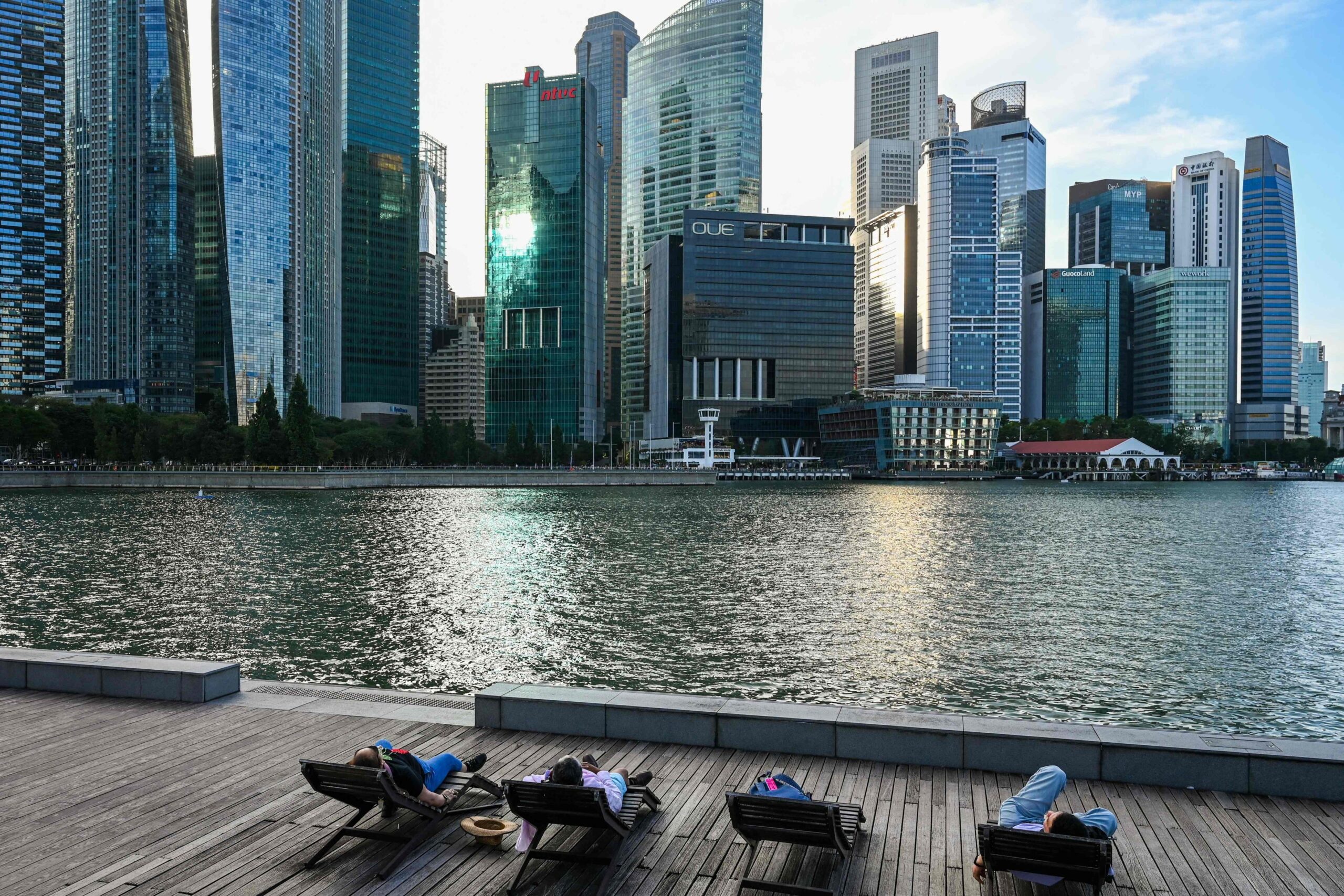
Singapore has spent the past two years becoming one of the primary beneficiaries of the global AI infrastructure buildout, alongside Taiwan’s semiconductor sector. The city-state’s role as a data-center hub allowed it to capture significant capital inflows even as the broader labour-market impact of that investment stayed limited, given how capital-intensive AI infrastructure spending tends to be (J.P. Morgan Private Bank).
Why the AI cycle didn’t stay contained to Singapore
What is changing in 2026 is the geography of that investment. J.P. Morgan’s Asia outlook notes Southeast Asian economies — traditionally anchored in commodities and export manufacturing — are now aligning more closely with the global AI investment cycle by deepening involvement in higher-value areas: infrastructure, hardware and complementary supply chains (J.P. Morgan Private Bank).
Land constraints in Singapore make expansion difficult, which is precisely where the Johor-Singapore Special Economic Zone becomes central to the region’s AI investment thesis rather than a side story.
The Johor SEZ as capacity release valve
Johor has launched a 7,300-acre innovation sandbox as part of the new special economic zone bordering Singapore, explicitly designed to combine Johor’s land and scale with Singapore’s capital and speed, according to the state investment committee’s chair (Fortune). One local official described the ambition bluntly: the zone is meant to be more than “an industrial park with a nicer brochure” (Fortune).
Malaysia’s structural beneficiary position
Malaysia’s electrical and electronics sector already accounts for roughly 40% of the country’s total exports, with semiconductors comprising about 65% of E&E exports — positioning Malaysia as a structural beneficiary of the AI-linked shift in regional trade, according to J.P. Morgan’s Asia analysis (J.P. Morgan Private Bank). Malaysia’s economy minister has framed 2026 explicitly as a year of “execution” for the Anwar administration as it tries to lock in these policy gains (Fortune).
Monetary policy backdrop supports the buildout
Asian central banks spent much of 2025 easing policy and are entering the final stages of that cycle in 2026, shifting more of the growth-support burden to fiscal policy — a backdrop J.P. Morgan expects to support stronger domestic credit growth and consumer demand across the region, reinforcing rather than competing with the AI capital cycle (J.P. Morgan Private Bank).
The regional risk to watch
Most of the region avoided the brunt of 2025’s tariff shock thanks to exemptions on semiconductors, electronics and pharmaceuticals, but that exemption structure remains a policy choice in Washington rather than a permanent feature — meaning the Singapore-Johor AI corridor’s growth case still carries meaningful US trade-policy risk that investors should not discount simply because 2025’s tariffs were absorbed relatively smoothly (J.P. Morgan Private Bank).
Discover more from The Economy
Subscribe to get the latest posts sent to your email.
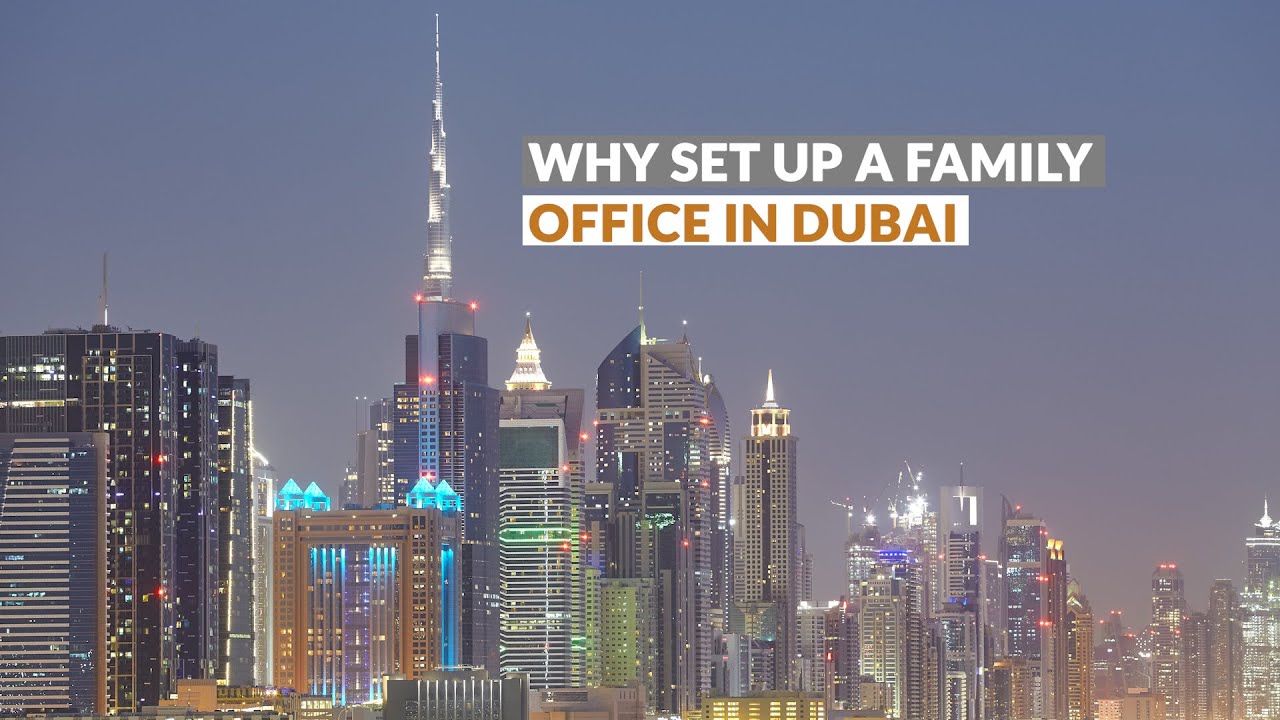
Dubai’s transformation from oil-adjacent trading post to global capital hub is no longer a talking point — it is a measurable trend. The emirate’s newly launched Economic Survey 2026 shows GDP climbing to $265 billion alongside rising employment, while international family offices are gathering for the Family Office Summit Dubai 2026 as the city cements its position as a family-wealth hub (Gateway Group; Arabian Business).
The non-oil growth engine
The UAE enters 2026 with the World Bank projecting national growth of roughly 5%, well above the global average, driven substantially by 5.3% expansion in the non-oil sector (Barchart). Technology, green energy and healthcare are the top-performing sectors, and 64% of UAE executives expect trade volumes to exceed 2025 levels — confidence underpinned by the country’s expanding network of Comprehensive Economic Partnership Agreements (Barchart). Historically, oil production accounted for half of Dubai’s GDP; today it contributes less than 1% (Wikipedia/Economy of Dubai).
Why family offices specifically are relocating
The Family Office Summit Dubai 2026 is drawing international participants precisely because the emirate has built regulatory infrastructure — inside jurisdictions like the DIFC — designed to attract exactly this category of capital. As one DIFC executive noted, incentives alone are no longer enough to win global finance; institutional credibility and regulatory clarity now matter more, which explains why firms such as Sixth Street have opened Abu Dhabi offices as global investment houses deepen their Middle East presence (Gateway Group).
Infrastructure is compounding the pull
Beyond finance, the UAE’s infrastructure build-out is reinforcing the wealth-hub thesis. Etihad Rail’s Abu Dhabi–Fujairah passenger service and the Madinat Zayed and Liwa station openings, arriving ahead of schedule, signal a state execution model that investors increasingly cite as a differentiator versus regional peers (GCC Business Watch). Dubai has also rolled out a AED 1 billion economic support package aimed at business liquidity and resilience amid regional geopolitical headwinds (GCC Business Watch).
The regional competition for capital
Dubai’s rise is happening alongside — not in isolation from — a broader Gulf capital race. Saudi Arabia’s economy is set for stronger growth per IMF assessments, and Gulf sovereign and corporate capital is increasingly being deployed across sectors from AI infrastructure to green growth commitments, meaning Dubai’s wealth-hub status will need continual reinforcement rather than passive maintenance (GCC Business Watch).
The bottom line for investors
For family offices weighing jurisdiction, Dubai’s pitch in 2026 combines three elements rarely available together: near-zero effective taxation, a non-oil economy growing faster than most G20 peers, and physical and financial infrastructure being built ahead of demand rather than in reaction to it. That combination — not simply low tax rates — is what is now pulling global family wealth toward the emirate.
Discover more from The Economy
Subscribe to get the latest posts sent to your email.

Russia’s War Economy Got a Reprieve From Iran

China’s Economy Has a Structural Problem: Factories Are Winning, Households Are Losing

How Malaysia “Shrugged Off” Trump’s Tariffs — and What Comes Next

Singapore’s AI Boom Is Now a Two-Country Story

Why Global Family Offices Are Converging on Dubai in 2026

A Weak Jobs Report Just Rewired the Fed’s Autumn — And Wall Street Cheered

Britain’s Fragile Rebound Meets a Budget Deadline and a Trump Ultimatum

Pakistan’s Economy Grew 3.7% — So Why Doesn’t It Feel Like a Recovery?

Top 15 Financial Stocks for Investment in PSX

Pakistan Exports 2026: Record $35.6B Forecast Masks Trade Deficit Risk

UK’s Jobs Downturn Now Matches the 2008 Financial Crisis — And AI Is Accelerating It

Fed Rate Cut Bets Surge After Shock US Jobs Report Exposes Labor Market Cracks

Pakistan’s Trade Gap Widens to $3.95bn Despite Meeting FY26 Current Account Target

Why Ottawa Is Betting on Dubai: Inside Canada’s Gulf Trade Pivot

Gold Price Forecast 2026: Fed’s July 29 Decision and Record Central Bank Buying Explained

China Politburo July 2026: Stimulus Signals Explained

Pakistan Economy 2026: GDP Grows 3.7% as IMF Completes EFF Review Amid Middle East Risk

Strait of Hormuz Blockade 2026: Oil Prices Surge 9% as US-Iran Conflict Reignites

Down But Not Out: Inside the Slow Sinking of Russia’s War Economy

Gulf Capital Retreat From Pakistan 2026: UAE Loan Freeze & What It Means

Global Stock Market Selloff 2026: Stagflation Fears Return as Iran Conflict Reignites

Pakistan’s Economic Survey FY26: Inflation Spike Insights

Russia Fuel Shortages 2026: Inside a Cracking War Economy

Strait of Hormuz Crisis 2026: How Trump’s Toll U-Turn Exposes Global Economic Risk

Bank of England Rate Decision Amid Energy Crisis

Russia’s War Economy Model Is Starting to Crack, Think Tank Warns

Pakistan’s Economic Growth: Resilience Amid Challenges

Andy Burnham, UK Gilts and Mortgages: July 2026 Explainer
-

 Markets & Finance7 months ago
Top 15 Stocks for Investment in 2026 in PSX: Your Complete Guide to Pakistan’s Best Investment Opportunities
-

 Analysis6 months ago
Johor’s Investment Boom: The Hidden Costs Behind Malaysia’s Most Ambitious Economic Surge
-

 Analysis6 months ago
Top 10 Stocks for Investment in PSX for Quick Returns in 2026
-

 Analysis6 months ago
Brazil’s Rare Earth Race: US, EU, and China Compete for Critical Minerals as Tensions Rise
-

 Banks7 months ago
Best Investments in Pakistan 2026: Top 10 Low-Price Shares and Long-Term Picks for the PSX
-

 Investment7 months ago
Top 10 Mutual Fund Managers in Pakistan for Investment in 2026: A Comprehensive Guide for Optimal Returns
-

 Global Economy8 months ago
15 Most Lucrative Sectors for Investment in Pakistan: A 2025 Data-Driven Analysis
-

 Global Economy8 months ago
Pakistan’s Export Goldmine: 10 Game-Changing Markets Where Pakistani Businesses Are Winning Big in 2025