
Analysis
Iran Ceasefire Opens Strait of Hormuz: What Trump’s Deal Means

The Ceasefire That Nearly Didn’t Happen — and Why It Changes Everything
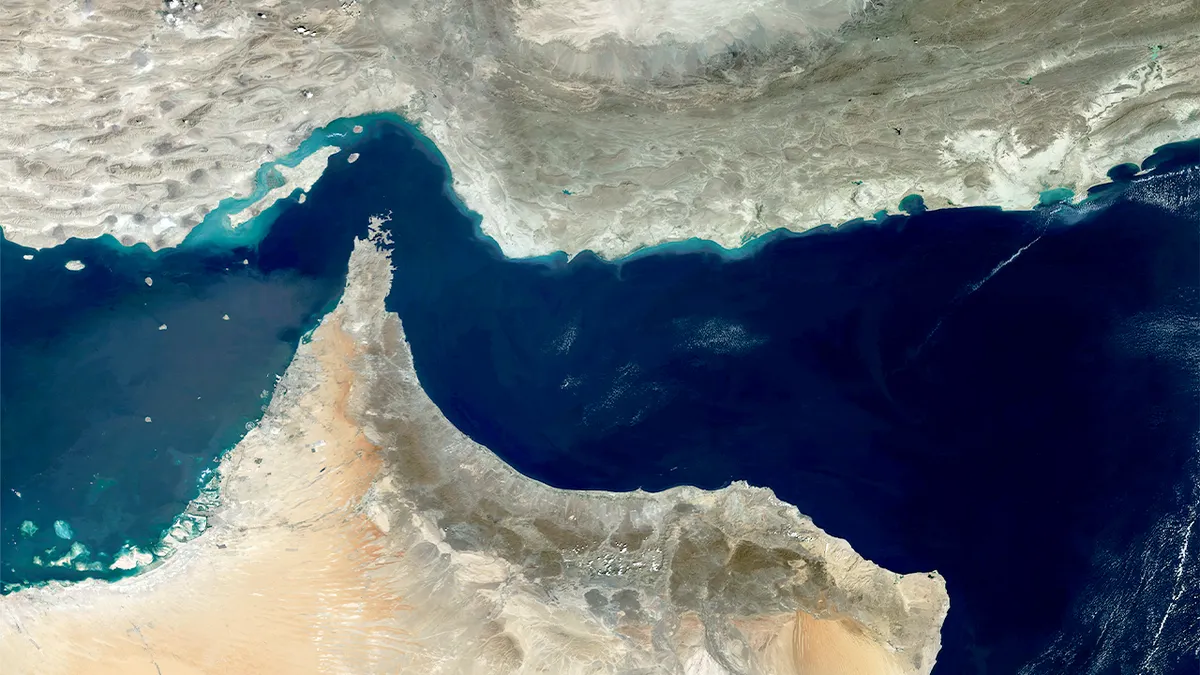
It was, in the bluntest possible terms, a civilization held to ransom. For forty days, the United States and Israel had struck Iran with a ferocity not seen since the Second World War — bridges, power plants, universities, military installations reduced to rubble. Iran had responded by sealing the Strait of Hormuz, the 21-mile chokepoint through which roughly a fifth of the world’s daily oil supply once flowed freely, triggering what the International Energy Agency has characterized as the single largest disruption to global oil markets in recorded history. Then, with less than two hours before Donald Trump’s deadline to rain “obliteration” on what remained of Iranian civilian infrastructure, Islamabad performed a diplomatic miracle.
Pakistan Prime Minister Shehbaz Sharif asked Trump to extend his deadline by two weeks and simultaneously urged Tehran to reopen the strait as a goodwill gesture, framing the appeal in terms of giving diplomacy time to run its course. CNBC It worked. Trump announced a two-week, double-sided ceasefire on the condition that Iran agree to the “complete, immediate, and safe opening of the Strait of Hormuz,” citing a 10-point Iranian peace proposal as “a workable basis on which to negotiate.” Axios
The phrase “workable basis” — anodyne to the casual reader — is, in the diplomatic lexicon of great-power competition, nothing short of seismic.
What Iran’s 10-Point Plan Actually Contains — and What It Reveals
Strip away the triumphalist messaging from both Tehran and Washington, and Iran’s 10-point proposal reads less like a peace plan and more like a maximalist opening bid from a government that has been bombed back to the pre-digital age and knows it. The plan, as spelled out by Iran’s Supreme National Security Council, includes controlled passage through the Strait of Hormuz coordinated with Iranian armed forces, the necessity of ending the war against all components of the “resistance axis,” and the withdrawal of U.S. combat forces from all regional bases and positions. NBC News It also calls for lifting all sanctions, releasing Iranian assets frozen abroad, and full payment of Iran’s war-related damages. CNBC
This is not, on any plain reading, a document the Trump administration will sign in its current form. But it is a document designed to do something far more subtle: establish Iran as a state with agency, leverage, and a coherent strategic vision — even in defeat. The Supreme National Security Council’s accompanying claim that “nearly all war objectives have been achieved” NBC News is partly face-saving theater, but it also carries a kernel of uncomfortable truth. Iran has demonstrated, unambiguously, that it holds a hand no adversary can entirely trump: physical control over the jugular vein of global energy.
The ten points, read against the backdrop of six weeks of unprecedented aerial bombardment, constitute a negotiating position, not a capitulation. Tehran knows this. Washington, if it is honest with itself, knows it too.
Pakistan’s Quiet Triumph — and the New Architecture of Mediation
Before this week, Pakistan’s role in the great-power theatre of the Middle East was largely peripheral. Islamabad was a regional pivot — important to Washington for counterterrorism cooperation, to Beijing for the China-Pakistan Economic Corridor — but not a player in the first rank of Middle East diplomacy. That calculus has been permanently revised. The truce, brokered by Pakistan, follows fierce exchanges of airstrikes, missile attacks, and threats that saw unprecedented strikes on Gulf nations, disrupted global shipping routes, and heightened fears of a prolonged confrontation. Al Jazeera
Sharif’s intervention succeeded precisely because it offered both parties something neither could offer themselves: a procedural exit. Trump needed a formula that did not look like backing down; Iran needed survival with the rhetorical scaffolding of victory. Pakistan provided the ladder for both men to descend. Peace talks are expected to begin in Islamabad on Friday, with Vice President JD Vance likely to lead the American delegation. Axios
This is diplomatically significant beyond the immediate crisis. It signals that the post-American-unipolar world is not simply a world dominated by Chinese or Russian mediation — as Riyadh’s 2023 rapprochement with Tehran, brokered by Beijing, suggested. Pakistan’s success here introduces a new variable: middle powers, credibly positioned as neither adversaries nor puppets of Washington, may now carry decisive diplomatic weight in conflicts where the principal parties have exhausted their bilateral channels.
Beijing, ever quick to register shifts in multilateral architecture, moved with characteristic swiftness. China’s Foreign Ministry spokesperson said Beijing “welcomes the ceasefire agreement” and will “support the mediation efforts” by Pakistan and other parties, noting that Chinese Foreign Minister Wang Yi had held 26 phone calls with counterparts from relevant countries. ABC News That is not the statement of a bystander — it is the statement of a great power carefully positioning itself as indispensable to whatever comes next.
The Oil Market Shock: Anatomy of a Historic Selloff
The market reaction was, in a word, violent — and that violence was entirely rational.
WTI, the U.S. crude benchmark, tumbled almost 16% to $95 a barrel — still well above the $67 level it settled at on February 27, before the war began. Brent crude futures, the global oil benchmark, dropped 14% to $93.8 a barrel. CNN For context: Dated Brent — the global benchmark for physical barrels — had reached its highest recorded price of $144.42, according to S&P Global Platts, surpassing even the 2008 financial crisis peak. Axios And the selloff itself made history: analysts described it as the biggest one-day free fall in oil prices since the 1991 Gulf War. Axios
The arithmetic of the disruption explains the arithmetic of the relief. The war in the Middle East — and the effective closure of the crucial Strait of Hormuz — has caused the biggest oil supply shock on record, choking off roughly 12 million to 15 million barrels of crude oil a day. CNN As of Tuesday, 187 tankers laden with 172 million barrels of seaborne crude and refined oil products remained inside the Gulf, according to Kpler, a global trade intelligence firm. CNN
That backlog does not clear overnight. Ports are congested, tanker routing is scrambled, and insurance premiums — which had rendered the Strait commercially prohibitive — will not normalize until underwriters are satisfied that the ceasefire is durable. Tehran has in recent weeks reportedly charged some shipping companies a $2 million fee to guarantee safe passage through the strait. CNN Iranian foreign minister Araghchi’s confirmation that safe transit would be possible “via coordination with Iran’s Armed Forces” Axios is careful language — it preserves Iranian control as a structural fact, regardless of the ceasefire’s duration. As one economist noted, that amounts to a de facto partial nationalization of the world’s most important shipping corridor.
For investors navigating the aftermath: the relief rally is real, but it is pricing in a best-case scenario that two weeks of fragile diplomacy has not yet warranted. Energy sector equities that surged 40-100% year-to-date will face significant profit-taking. Airlines, petrochemical manufacturers, and consumer-facing retailers stand to benefit materially from every dollar of sustained oil price decline. But position sizing in either direction should be calibrated to the probability of the Islamabad talks collapsing — which, given the chasm between Washington’s core demands on Iran’s nuclear program and Tehran’s insistence on full sanctions relief, remains non-trivial.
The Stock Market Surge: Reading the Signal Correctly
Stocks surged across regions: South Korea’s Kospi jumped over 5%, Japan’s Nikkei rose 4%, Hong Kong’s Hang Seng gained more than 2%, and the pan-European Stoxx 600 climbed 3.6%. Futures tied to the Dow Jones Industrial Average rose by 967 points, S&P 500 futures added 2.1%, and Nasdaq 100 futures climbed 2.3%. CNBC
The equity market’s interpretation is straightforward: lower energy costs are a global stimulus. But sophisticated investors should separate the signal from the noise here. The stock market is not pricing a peace deal — it is pricing the possibility of a peace deal, which is a materially different thing. As one market analyst from eToro observed, “TACO is becoming less of a joke and more of a trading strategy across markets. Investors have seen enough last-minute pivots to know that a two-week deadline isn’t necessarily what it seems.” CNBC
The persistence of gold’s bid — spot gold rose 2.2% to $4,803.83 per ounce even as risk assets rallied CNBC — tells the more cautious half of the story. Institutional money is hedging. The relief rally and the haven bid are running simultaneously, which is the market’s elegant way of saying: we want to believe this, but we’ve been burned before.
The Quiet Winners — and the One Uncomfortable Loser Nobody Is Naming
History’s great turning points always redistribute power in ways that the initial headlines obscure. This ceasefire is no exception.
Pakistan emerges with diplomatic capital it will spend for years. Islamabad is now, demonstrably, a credible interlocutor between Washington and Tehran — a status no amount of lobbying or bilateral summitry could have purchased.
China emerges with its multilateral positioning validated. Beijing’s five-point Chinese-Pakistani peace framework, its 26 diplomatic phone calls, its quiet shuttle diplomacy in the Gulf — all of it contributed to the architecture that made the Pakistani intervention possible. The belt-and-road world, Beijing will quietly argue, is a more stable world.
Tehran — counterintuitively — emerges with its deterrence posture partially rehabilitated. The clerical establishment that many analysts, not least in Tel Aviv and Washington, expected to collapse under military pressure has survived. Its control over the Strait of Hormuz has been demonstrated as real, not rhetorical. Whatever the outcome of the Islamabad talks, that leverage does not disappear when the ceasefire expires.
The uncomfortable loser — the entity most conspicuously absent from the diplomatic success narrative — is Israel. The office of Israeli Prime Minister Benjamin Netanyahu announced that while Israel supports the United States’ two-week ceasefire with Iran, the deal does not include the fighting between Israel’s military and Iranian-backed groups in Lebanon. CBS News Netanyahu’s carve-out on Lebanon reveals a government that found itself outmaneuvered by a diplomatic process it could not control — partners in the military campaign, bystanders in its resolution.
The Road to Islamabad: What a Durable Deal Would Actually Require
The next two weeks are not, as Trump’s Truth Social effusions might suggest, a straightforward path to the “Golden Age of the Middle East.” They are a negotiation of extraordinary complexity, with parties whose core demands are structurally incompatible at the outset.
Washington’s irreducible minimum — shared explicitly by Netanyahu, who said the U.S. “is committed to achieving” the goal of ensuring Iran “no longer poses a nuclear, missile and terror threat” ABC News — is a verifiable end to Iran’s nuclear program. Tehran’s irreducible minimum, embedded in its 10-point plan, is the lifting of all sanctions and the normalization of its economy. Bridging those positions in fourteen days is not diplomacy; it is alchemy.
What Islamabad can realistically deliver is a framework agreement — a set of principles broad enough for both sides to claim success, specific enough to extend the ceasefire and return tanker traffic to the Strait, and ambiguous enough to defer the hard questions about nuclear verification, sanctions architecture, and Iran’s regional proxy network. That is not nothing. In the history of this particular conflict, it would be a great deal.
Vice President Vance, addressing critics within the Iranian system who are “lying about the nature of the ceasefire,” said: “If the Iranians are willing, in good faith, to work with us, I think we can make an agreement.” Axios That conditional is doing a lot of work. It is also, for now, the most honest assessment available of where things actually stand.
What This Means for Global Energy Security — the Structural Question That Survives Any Deal
Even if the Islamabad talks succeed beyond all reasonable expectation, this crisis has exposed a structural vulnerability in the architecture of global energy security that no ceasefire can paper over.
A single nation — Iran — demonstrated that it could, with conventional military and asymmetric naval tools, effectively halt nearly a quarter of the world’s seaborne oil trade and push global benchmark prices to record highs within weeks. The response from OPEC, from Washington, from the IEA’s emergency reserves mechanism, from alternative routing through the Cape of Good Hope — none of it came close to compensating for what the Strait’s closure removed.
The strategic conclusion is unavoidable: the concentration of global energy transit through the Strait of Hormuz is an unacceptable systemic risk, and the post-ceasefire world — whatever shape it takes — will accelerate investments in alternative infrastructure, strategic reserve capacity, and the long-term energy transition away from Persian Gulf dependence. For sovereign wealth funds, infrastructure investors, and the energy majors themselves, the crisis of 2026 has clarified the investment case for resilience in ways that no analyst report could have achieved.
The Hormuz gambit may be over. The lesson it taught the world is just beginning to sink in.
Discover more from The Economy
Subscribe to get the latest posts sent to your email.


Perplexity’s ARR surged past $450M in March 2026 after a 50% monthly jump, driven by its AI agent “Computer.” Here’s what this pivot means for Google, OpenAI, and the future of the internet.
How a search upstart quietly rewired the economics of AI — and why the rest of Silicon Valley should be paying very close attention
There is a phrase that haunts every incumbent technology company: silent pivot. Not the public declaration of reinvention, draped in keynote slides and press releases, but the quiet moment when a company stops doing the thing you thought it did — and starts doing the thing that will eventually eat you alive.
Perplexity AI has just executed one of those pivots. And the numbers suggest it is working with a speed that should alarm everyone from Mountain View to Redmond.
Perplexity’s estimated annual recurring revenue rose to more than $450 million in March, after the launch of a new agent tool and a shift to usage-based pricing. Investing.com That figure represents a 50% jump in a single month — a rate of acceleration that, even in an industry accustomed to hyperbolic growth curves, demands serious analytical attention. This is not a company finding its feet in a niche. This is a company stepping onto a stage it intends to own.
From Answers to Actions: What “Computer” Actually Changes
To understand why this revenue surge matters, you need to understand what Perplexity has actually built — and why it is architecturally different from everything that came before it.
On February 25, 2026, Perplexity launched “Computer,” a multi-model AI agent that coordinates 19 different AI models to complete complex, multi-step workflows entirely in the background. This is not another chat tool that produces quick answers — it is a full-blown agentic AI system, a digital worker that takes a user’s goal, breaks it into steps, spins up specialized sub-agents, and keeps running until the job is done. Build Fast with AIMedium
The strategic architecture here is genuinely novel. Computer functions as what Perplexity describes as “a general-purpose digital worker” — a system that accepts a high-level objective, decomposes it into subtasks, and delegates those subtasks to whichever AI model is best suited for each one. VentureBeat Anthropic’s Claude Opus 4.6 serves as the core reasoning engine. Google’s Gemini handles deep research. OpenAI’s GPT-5.2 manages long-context recall. Each sub-task routes to the best available model, automatically.
This is not a feature. It is a philosophy — and the philosophy has a name: model-agnostic orchestration. Perplexity is betting that no single AI provider will dominate every cognitive capability, and that the company best positioned to win the next decade is the one that can route across all of them intelligently.
The bet appears to be paying off. Perplexity’s own internal data supports this thesis: the company’s enterprise usage shifted dramatically over the past year, from 90% of queries routing to just two models in January 2025, to no single model commanding more than 25% of usage by December 2025. VentureBeat
The Pricing Revolution Hidden Inside the Revenue Story
It would be tempting to read the $450 million ARR headline as a simple user-growth story. It is not. The more consequential development is what Perplexity has done to its pricing architecture — and the implications that has for the entire AI industry’s business model.
The $200 monthly Max tier includes the Computer agent itself, 10,000 monthly credits, unlimited Pro searches, access to advanced models including GPT-5.2 and Claude Opus 4.6, Sora 2 Pro video generation, the Comet AI browser, and unlimited Labs usage. SentiSight.ai At the enterprise tier, the price rises to $325 per seat per month.
This is usage-based pricing in its most sophisticated form — not a flat subscription for access, but a credit system that scales revenue with the actual work performed. The economic logic is powerful: the more value an agent delivers, the more credits it consumes, and the more the customer pays. Revenue becomes proportional to outcomes, not to logins.
This represents a fundamental rupture with the advertising model that has funded the internet for three decades. Google monetizes attention. Perplexity is building a business that monetizes completion — the successful execution of a task. These are not subtle variants of the same model. They are philosophically opposed.
Perplexity has significantly expanded its pricing structure in 2026, with the platform now spanning five subscription tiers — Free, Pro, Max, Enterprise Pro, and Enterprise Max — alongside a developer API ecosystem that includes the Sonar API, Search API, and the newer Agentic Research API. Finout The Agentic Research API, in particular, positions Perplexity not just as a consumer product but as foundational AI infrastructure for any developer who wants to build on top of agent-grade search.
The Google Problem, Sharpened
Search incumbency has always been more durable than technologists predicted, for a simple reason: the switching cost for a behavior performed forty times a day is enormous. Perplexity, in its original form as an “answer engine,” was trying to change a habit. Now it is trying to eliminate a category.
When a Perplexity agent builds you a Bloomberg Terminal-style financial dashboard from scratch, or automates a full content production workflow over three days without requiring a single manual search query, the question of whether it is “better than Google” becomes irrelevant. The agent is doing something Google was never designed to do. It is not competing for your search box. It is competing for your workday.
Perplexity now has more than 100 million monthly active users from its search and agent tools, including tens of thousands of enterprise clients. Investing.com That enterprise penetration is the telling number. Consumer search habits die slowly; enterprise procurement cycles move when ROI is demonstrable. The fact that enterprise customers are already embedding Perplexity’s agents into production workflows suggests the value proposition has moved well beyond novelty.
More than 100 enterprise customers contacted Perplexity over a single weekend demanding access after seeing early user demonstrations on social media — users on social media demonstrated the agent building Bloomberg Terminal-style financial dashboards, replacing six-figure marketing tool stacks in a single weekend, and automating workflows that previously required dedicated teams. VentureBeat
That is not a product demo going viral. That is product-market fit, documented in real time.
Competitive Positioning: Where Perplexity Sits in the New AI Stack
The $450 million ARR figure needs to be read against the broader competitive landscape — and here, the picture becomes more interesting, and more dangerous for Perplexity’s rivals.
OpenAI’s Operator and Anthropic’s Claude Cowork both represent agent-layer ambitions from the model providers themselves. Microsoft Copilot brings enterprise distribution at a scale Perplexity cannot match organically. Google’s own agentic ambitions are embedded across its entire product surface. Against this array of well-resourced competitors, Perplexity’s advantages are specific and worth understanding precisely.
First: model neutrality. Neither OpenAI nor Google will ever build a genuine orchestration layer that routes work to a competitor’s model. Perplexity has no such constraint. Its Computer agent already orchestrates Claude, GPT, Gemini, Grok, and others simultaneously. For enterprises that want best-of-breed reasoning rather than vendor lock-in, that neutrality is structurally valuable.
Second: search heritage. Perplexity now serves about 30 million monthly users and processed 780 million queries in May 2025 — more than 20% month-over-month growth — feeding a data flywheel that sharpens search relevance and agent targeting. Sacra Every query is a training signal. An agent that understands how real professionals actually search has a compounding advantage over agents that are parachuted in from a model laboratory.
Third: distribution velocity. Sacra projected Perplexity would reach $656 million in ARR by the end of 2026 Sacra — a target that now looks not just achievable but potentially conservative, given the March surge to $450 million. The question is no longer whether Perplexity can scale. It is whether it can maintain pricing power as competitors intensify.
The Publisher Dimension: A Redistribution of Value Worth Watching
One underreported dimension of the Perplexity story is its relationship with the media and publishing ecosystem — a relationship that has been contentious, but is evolving in ways that may prove prescient.
Publishers have, with some justification, worried that AI search engines extract the value of their journalism without adequately compensating them. Perplexity has responded with a revenue-sharing program and formal content partnerships, signaling an intent to build an ecosystem rather than simply scrape one.
Perplexity announced a $42.5 million fund to share AI search revenue with publishers, reflecting an investment in ecosystem partnerships. Blogs If agentic AI becomes the dominant interface through which people consume information and execute tasks, the entity that controls the citation layer — the sourcing infrastructure of AI outputs — will hold extraordinary leverage. Perplexity is positioning itself as that entity’s steward.
This is an audacious bet. It may also be a necessary one. A sustainable AI search economy requires content creators to keep creating. A company that figures out how to share value equitably with its content suppliers will have a structural advantage over one that treats the web as a free resource.
The Risks That the Revenue Surge Cannot Hide
Intellectual honesty demands acknowledging what the $450 million figure does not tell us.
The credit-based pricing model, while economically elegant, introduces revenue variability that flat subscriptions do not. Perplexity has not published a per-task credit conversion table — there is no page that says a research task costs X credits, making budgeting difficult for heavy users. Trysliq At the enterprise level, opacity in pricing is a trust problem. CFOs who cannot model their AI spend will negotiate hard caps or find vendors who offer predictability.
There is also the trust question that underlies Perplexity’s entire enterprise push. The company is three years old and asking chief information security officers to route sensitive Snowflake data, legal contracts, and proprietary business intelligence through its platform. VentureBeat In highly regulated industries — finance, healthcare, law — that ask may be a bridge too far in 2026, regardless of the technology’s capability.
And then there is the litigation risk. Amazon filed suit against Perplexity on November 4, 2025, over the startup’s agentic shopping features in the Comet browser, arguing that automated agents must identify themselves and comply with site rules. Sacra As agents begin operating across the open web at scale, the legal frameworks governing their behaviour are still being written. The company moving fastest is also the one most exposed to adverse precedent.
The Bigger Question: Is This the Moment AI Agents Become the New Interface?
Strip away the funding rounds, the valuation multiples, and the competitive posturing, and the Perplexity story is really about a single hypothesis: that the next dominant interface for human-computer interaction will not be a search box, a browser, or a chat window. It will be a goal.
You describe an outcome. The agent handles everything else.
A February 2026 survey by CrewAI found that 100% of surveyed enterprises plan to expand their use of agentic AI this year, with 65% already using AI agents in production and organizations reporting they have automated an average of 31% of their workflows. Fortune Business Insights projects the global agentic AI market will grow from $9.14 billion in 2026 to $139 billion by 2034. VentureBeat
Those numbers should not be taken as gospel — market projection firms have a well-documented tendency to extrapolate peak enthusiasm into perpendicular lines on a chart. But the directional signal is clear. Enterprises are not experimenting with agents. They are deploying them.
Perplexity’s 50% monthly revenue jump is, on one reading, a company hitting a product-market fit inflection point. On a larger reading, it is a leading indicator of an industry-wide shift in how organizations will structure cognitive work. When knowledge workers stop searching and start delegating, the companies that built the infrastructure for that delegation will be worth considerably more than their current valuations suggest.
A Quotable Close
The history of technology is punctuated by moments when a product category collapses into a feature — and a feature expands into a platform. The search box was a feature of the browser. The browser became a platform for the web. The web became the substrate for the cloud.
Aravind Srinivas is betting that the agent layer will perform the same architectural alchemy: absorbing search, absorbing browsers, absorbing the application stack above them, and emerging as the new interface through which people and organizations interact with information, services, and each other.
A 50% monthly revenue jump to $450 million is not proof that he is right. But it is the most compelling evidence yet that the bet is live — and that the clock, for every company that still depends on attention as its primary product, has started.
The next billion-dollar question in technology is not “who builds the best AI model?” It is “who builds the best layer between the human and all the models?” Perplexity, right now, has the most credible answer.
Discover more from The Economy
Subscribe to get the latest posts sent to your email.
Analysis
Top Record Labels and Start-up Suno Hit Impasse in AI-Generated Music Talks — Who Blinks First?

The future of a $28 billion industry hangs on a negotiation neither side seems able to finish. And that, more than any algorithm, is the real threat.
Something remarkable happened in November 2025, and the music industry has been parsing its implications ever since. Warner Music Group — which had, only sixteen months prior, joined Universal Music and Sony Music in filing sweeping copyright infringement lawsuits against Suno AI — abruptly changed its posture. It dropped the case, signed a licensing partnership, and, in what reads almost as a corporate trophy acquisition, sold Suno the concert-discovery platform Songkick. Warner’s CEO Robert Kyncl called it “a victory for the creative community that benefits everyone.” Rolling Stone The cynics rolled their eyes. The optimists saw a template.
They were both wrong, or at least premature. Because as of April 2026 — with Suno sitting on a post-Series C valuation of $2.45 billion and 100 million users — Universal Music and Sony Music remain in active litigation against Suno, with no settlement in sight. Digital Music News The Suno AI impasse 2026 is not merely a legal dispute. It is the music industry’s most consequential standoff since the labels sued Napster in 1999. Then, they were right to fight. Now, the question is whether their resolve reflects strategic wisdom or organizational paralysis — and whether Suno, drunk on venture capital and its own mythology, has dangerously miscalculated how much runway it actually has.
The Road to Impasse
To understand the AI-generated music record labels talks breakdown, you need a timeline — not just a set of headlines, but a map of competing interests that hardened, over twenty-four months, into something resembling a war of attrition.
It began in June 2024, when the Recording Industry Association of America coordinated a pair of landmark lawsuits on behalf of all three major labels. The complaints, filed in federal courts in Boston and New York, accused both Suno and Udio of training their AI models on “unimaginable” quantities of copyrighted music without permission or compensation — “trampling the rights of copyright owners” at scale. Billboard The damages sought ran to hundreds of millions of dollars per company.
Both startups pushed back with a fair-use defense — the same legal shield that has sheltered every disruptive tech company since Google indexed the internet. Suno and Udio argued that their models transformed copyrighted inputs into entirely new outputs, and that the music industry was using intellectual property law not to protect artists, but to crush competitors it saw as threats to its market share. Billboard
By June 2025, Bloomberg reported that all three majors were in licensing talks with both platforms, seeking not just fees but “a small amount” of equity in each company — echoing the Spotify playbook from the late 2000s, when streaming’s survival required giving the labels a seat at the table. Music Business Worldwide The talks, sources warned at the time, could fall apart. They did. Partially.
Udio, the smaller, more pliable of the two AI music startups, moved first toward accommodation. It signed a deal with Universal in October 2025, followed quickly by Warner. The price of peace was steep: Udio pivoted from a platform that generated songs at the click of a button to something closer to a fan-engagement tool, operating as a “walled garden” where nothing created can leave the platform. Billboard For Udio’s investors, the terms stung. For the music industry, they were a proof of concept.
Then came Warner’s November settlement with Suno — the one Kyncl celebrated as a “paradigm shift.” But here is what the press releases obscured: Universal and Sony have not followed Warner’s lead. Their cases against Suno remain active, and sources close to the negotiations describe both companies as significantly closer to “we’ll see you in court” than to any equity handshake. Music Business Worldwide The Suno Universal Sony licensing deadlock is not merely unresolved — it is hardening.
More damning still: Suno’s CEO Mikey Shulman pledged publicly in November 2025 that licensed models trained on WMG content would debut in 2026, with the current, allegedly infringing V5 retired. It is now April 2026. No such model has appeared. Suno V5, unlicensed, continues to power the platform. Music Business Worldwide The absence of that promised upgrade tells you something important about how difficult it actually is to build a competitive generative music system within licensed constraints.
What the Impasse Really Means for Creators, Labels, and Tech
Strip away the litigation and the valuations, and what you have is a civilizational argument about the nature of creativity — and who gets paid for it.
Suno’s pitch to its users is seductive: anyone can be a songwriter now. Type a prompt, receive a song. The company claims 100 million users Rolling Stone, a figure that would have seemed fantastical five years ago. Its CEO has spoken of “a world where people don’t just press play — they play with their music.” There is something genuinely democratizing about that vision. Music production has always been gated by access to capital, instruments, studios, and a particular form of trained intuition. Suno smashes every one of those gates.
And yet — and this is the argument that Universal and Sony are making, even if they articulate it poorly in legal briefs — democratizing production is not the same as democratizing artistry. There is a difference between removing barriers to creation and removing the value of creation. The music industry’s fear is not that Suno will produce the next Beyoncé. It is that Suno will produce ten million competent-sounding tracks that crowd out every emerging human artist from playlists, sync licenses, and streaming revenue — not because those tracks are better, but because they are cheaper and infinitely reproducible.
This is what critics in the industry have taken to calling “AI slop” — a term borrowed from the visual arts world, where image generators flooded stock libraries with technically proficient but culturally hollow imagery. UMG head Lucian Grainge, opening 2026, acknowledged that “trying to smother emerging technology is futile,” but maintained an uncompromising focus on advantageous licensing terms Digital Music News — an implicit concession that the issue is not AI itself, but AI without rules.
The economic stakes are not hypothetical. Recorded music generated more than $28 billion in global revenues in 2024, according to IFPI data, with streaming accounting for the vast majority of that. Streaming’s royalty structure is already precarious — a fraction of a cent per stream, divided among rights holders through a system that has been criticized for systematically underpaying artists. Now layer onto that a potential tsunami of AI-generated content. Even if each Suno track generates a tiny fraction of streams per unit time, the sheer volume — millions of songs, uploaded by millions of users — compresses the royalty pool for every human artist. The math is not reassuring.
A further complication: under the deals being structured, Suno and Udio have vowed to retire their current models and launch new ones trained exclusively on licensed works — but clearing the most popular songs is fiendishly complex. Many modern pop and hip-hop hits have ten or more songwriters attached, signed to different publishers, requiring individual clearances. A single refusal from one songwriter can disqualify an entire song from use. Billboard The licensed ecosystem, in other words, risks being a Potemkin village — legally credentialed but musically barren.
Lessons from Warner’s Deal vs. the Holdouts
The Suno Warner settlement impact on industry offers a Rorschach test. Read it optimistically, and you see proof that the two sides can find common ground: licensed training data, opt-in frameworks for artists, equitable revenue-sharing, and a model that respects both innovation and IP. Warner’s Kyncl articulated the principle clearly: “AI becomes pro-artist when it adheres to our principles — committing to licensed models, reflecting the value of music on and off platform, and providing artists and songwriters with an opt-in for the use of their name, image, likeness, voice, and compositions in new AI songs.” Rolling Stone
Read it pessimistically — or more precisely, read it through the lens of what happened in the months since — and a different story emerges. Sources suggest that for Suno, the Warner deal was never primarily about building a better model. It was about buying time — and buying a more sympathetic posture in court. Music Business Worldwide A signed deal with one of three majors does not settle the other two lawsuits. It does, however, allow Suno’s CEO to sit before cameras and imply that the industry has broadly moved on. It has not.
Irving Azoff, the legendary manager who founded the Music Artists Coalition, offered what might be the most clear-eyed read of the situation. “We’ve seen this before — everyone talks about ‘partnership,’ but artists end up on the sidelines with scraps,” Rolling Stone he said following the Udio-Universal settlement. The warning echoes every previous moment at which the music industry was promised that technology would expand the pie — and found, a decade later, that most of the slice had gone to the platform.
Universal and Sony’s harder line, then, is not simply intransigence. It is strategy informed by institutional memory. They watched their predecessors negotiate Spotify from a position of weakness, granting licensing terms in the early 2010s that felt reasonable then and look disastrous now. They are unwilling to repeat that error with a technology that is, potentially, far more disruptive. As one analysis noted, the major labels are effectively becoming “AI landlords” — positioning themselves as gatekeepers of the training data every AI music company will ultimately need. VoteMyAI That is a strong negotiating position, and they know it.
Global Ramifications
The Suno AI impasse 2026 is not merely an American story. Its reverberations are already being felt across three continents.
In Europe, the legal pressure on generative AI music has intensified. GEMA, the German collection society and licensing body, filed a copyright infringement action against Suno in January 2025 Music Business Worldwide — the first major European enforcement action against an AI music generator and a signal that the transatlantic regulatory consensus is moving toward stricter accountability for training data practices. Denmark’s Koda has taken similar preliminary positions. The EU AI Act, which entered force in stages through 2025 and 2026, imposes transparency requirements on AI systems — requirements that generative music platforms are only beginning to grapple with. A system that cannot fully account for what it was trained on is a system that cannot easily comply.
On streaming platforms, the pressure is also building. Spotify and Apple Music have begun enforcing the DDEX industry standard for AI disclosure, requiring creators who distribute AI-generated music to flag it as such during the upload process. Mystats This matters more than it might initially appear. If AI-generated tracks must be labeled, they can be sorted, analyzed, and ultimately segregated — giving streaming platforms, labels, and listeners the data they need to make informed choices. It also opens the door to preferential algorithmic treatment: a world in which human-made music receives a discovery advantage simply by virtue of its provenance is not a world Suno’s investors have priced into that $2.45 billion valuation.
For independent artists, the situation is uniquely precarious. They receive none of the direct licensing income that might flow to a major label from a deal with Suno, and they face the full competitive pressure of AI-generated content flooding the same discovery channels they depend on. As licensing frameworks formalize, independent creators may face opt-in systems that require them to actively engage with complex, legally novel agreements simply to protect music they made themselves. Jack Righteous The administrative burden could be crushing for artists without legal counsel.
The Path Forward — My Prescription
I have spent considerable time in the past week reviewing the legal filings, the balance sheets, the settlement terms, and the public statements of everyone involved in the future of AI music after Suno impasse. Here is what I believe must happen — and what likely will, whether either side admits it or not.
First, Universal and Sony should settle — but only from a position of strength, and only with structural guarantees. The Spotify precedent is instructive, but the lesson is not that the labels were wrong to cut deals; it is that they were wrong to cut deals without sufficient equity upside and without enforceable quality controls. A settlement with Suno that includes an equity stake at a $2.45 billion valuation, mandatory licensed-only model deployment with auditable compliance, a robust opt-in framework for artists, and direct royalty flows to songwriters — not just labels — would represent genuine progress. Such a deal would establish an influential precedent for how AI companies pay artists and music companies going forward. Billboard Without that precedent, every subsequent negotiation will be conducted in a legal vacuum.
Second, Suno must deliver on its promises. The company pledged in November 2025 that licensed models would launch in 2026 and that V5 would be deprecated. It is April 2026. Neither has happened. Music Business Worldwide This is not a minor operational delay. It is a credibility crisis. If Suno cannot build a competitive model within licensed constraints, it should say so — because the alternative, continuing to power a $2.45 billion business on models two major labels consider infringing, is not a sustainable strategy. It is a bet that the courts will move slowly enough to let the company escape. That is not a business plan. It is a gamble.
Third, the industry needs a collective licensing framework — an AI equivalent of ASCAP or BMI — that can efficiently clear training data at scale. The current model, in which every AI company must negotiate individual deals with every major (and every independent, and every songwriter), is impossibly friction-heavy. A statutory or voluntary collective license for AI training data — with compulsory reporting, transparent royalty distribution, and mandatory artist opt-in — would resolve the clearance bottleneck that currently threatens to make licensed AI music practically unworkable. Several European collecting societies are already experimenting with frameworks of this kind. The American industry should accelerate its own version.
Fourth, artists themselves need direct representation in these negotiations. Azoff’s warning that artists end up “on the sidelines with scraps” Rolling Stone is historically well-grounded. The deals being struck today involve label executives and AI executives negotiating over creative content that neither group actually makes. Songwriters and performers need seats at the table, not press releases about “opt-in frameworks” crafted after the fact.
Conclusion
There is a version of this story that ends well. It looks something like this: Universal and Sony, having extracted maximum leverage from their litigation, reach structured licensing deals with Suno in late 2026 or early 2027. Suno deploys its licensed models, sacrificing some capability for legal clarity. A collective licensing framework emerges to handle clearances at scale. Artists receive both opt-in protections and a direct share of the royalty streams AI generates. The technology and the tradition find a way to coexist — each making the other more interesting.
There is also a version that ends badly. Suno, denied deals with two of three major labels, continues operating on its unlicensed models and bets on a favorable court ruling. The ruling goes against it. The company restructures, its $2.45 billion valuation evaporates, and the market concludes that AI music is legally untouchable — scaring off investment and leaving the space to less scrupulous operators in jurisdictions with weaker IP enforcement. Meanwhile, hundreds of millions of AI-generated tracks flood streaming platforms, suppressing royalties for human artists who never had anything to do with Suno in the first place.
The labels’ hard line is, on balance, the correct posture. Not because AI music is inherently bad — it is not — but because technology without accountability is a race to the bottom, and in creative industries, the bottom is a very ugly place. The question is whether Universal and Sony can hold that line long enough to extract terms that actually protect artists, or whether they hold it so long that the market moves around them entirely.
As Music Business Worldwide has observed, one licensing deal does not launder a training dataset. Music Business Worldwide That is true in law. Whether it holds true in the court of commercial reality — where 100 million users, a $250 million war chest, and the frictionless appeal of a song-in-seconds keep accruing — is the more urgent question.
The music industry has survived the piano roll, the radio, the cassette tape, the MP3, and the stream. It will survive AI. The only thing it cannot survive is negotiating away its future in a moment of exhaustion. Universal and Sony appear to understand that. Suno, with its runway of capital and its unapologetic CEO, seems to be betting they will eventually forget it.
Someone is about to be proven very wrong.
Discover more from The Economy
Subscribe to get the latest posts sent to your email.
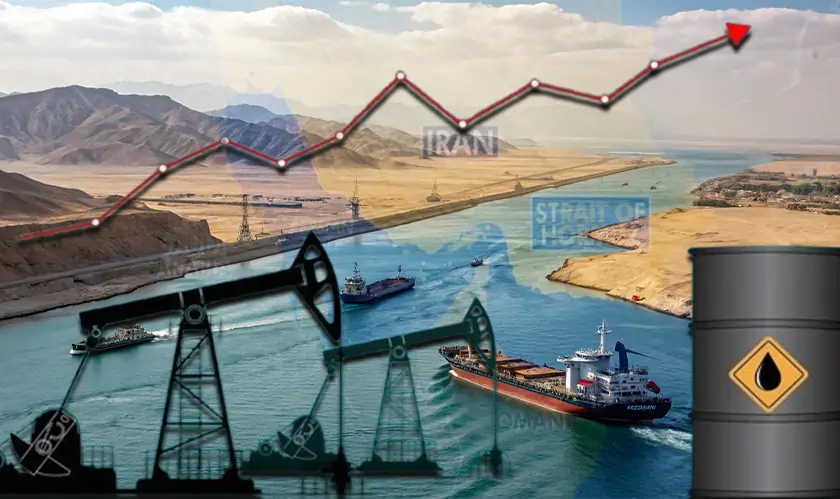
There is a peculiar irony embedded in the current catastrophe. The Strait of Hormuz, that 34-kilometre sliver of contested water between Iran and Oman, is right now the most consequential geography on earth. Brent crude briefly touched $126 a barrel in March 2026 — its highest level in four years — as tanker traffic through the strait collapsed toward zero, Iranian drones struck Fujairah’s storage tanks, and Washington threatened to “obliterate” Iranian power plants unless shipping resumed within 48 hours. The head of the International Energy Agency, Fatih Birol, called it the largest supply disruption in the history of the global oil market. He is probably right.
And yet, the thesis this crisis appears to confirm — that the Strait of Hormuz is an eternal, irreplaceable artery of civilisation — is precisely the thesis that the crisis itself is demolishing. Pain concentrates the mind. When 150 tankers anchored off Fujairah and the world scrambled for alternatives, it exposed not just the Strait’s centrality but the desperate fragility of any system built around a single chokepoint. The question that matters is not “how do we get oil through Hormuz today?” It is the one no panicked government in a war room is asking: “Will we still need to?”
The answer, over the arc of the next two decades, is increasingly no. And understanding why requires looking not at what is flowing through the Strait right now, but at what is flowing around it — in pipelines, rail corridors, liquefied natural gas tankers from Louisiana and Alberta, and electrons streaming through intercontinental fibre cables.
The Chokepoint That Could Never Be Replaced — Until It Suddenly Must Be
The numbers are genuinely staggering. According to the IEA, an average of 20 million barrels per day of crude and petroleum products transited the Strait in 2025 — representing roughly 25% of all seaborne oil trade and about 20% of global petroleum liquids consumption. Five countries — Iraq, Kuwait, Qatar, Bahrain, and Iran — have no meaningful pipeline bypass infrastructure whatsoever. The EIA estimates that roughly 14 million barrels per day are structurally locked to the maritime passage with no alternative route to global markets. Qatar and the UAE together account for nearly 20% of global LNG exports, almost all of it transiting Hormuz. Even fertiliser — that unglamorous linchpin of food security — flows through in quantity, representing up to 30% of internationally traded supply.
This dependency did not arise from carelessness. It arose from geology, economics, and decades of compounding infrastructure decisions. The Persian Gulf states sit atop the world’s most concentrated reserves, and the Strait is simply the only door out of the room. You cannot argue yourself out of geography.
But geography is only the stage. What plays out on it is a function of technology, capital, political will, and time. On all four dimensions, the structural case for Hormuz’s long-term indispensability is weakening — faster than most analysts, trapped in the urgent present, are willing to acknowledge.
The Energy Transition Is Not a Political Slogan. It Is a Supply Curve.
Start with demand. The IEA’s Oil 2025 report projects that demand for oil from combustible fossil fuels — the stuff that actually moves through tankers and pipelines — may peak as early as 2027. Global oil demand overall is forecast to reach a plateau around 105.5 million barrels per day by 2030, with annual growth already slowing from roughly 700,000 barrels per day in 2025–26 to a near-trickle thereafter. China — which absorbed more than two-thirds of global oil demand growth over the past decade and whose appetite once seemed boundless — is on track to see its oil demand peak before 2030, driven by an extraordinary surge in electric vehicle adoption, high-speed rail expansion, and structural economic rebalancing.
The numbers on clean energy investment are equally telling. In 2025, clean energy investment — renewables, nuclear, grids, storage, and electrification — reached roughly $2.2 trillion, twice the $1.1 trillion flowing to oil, natural gas, and coal combined. Global investment in data centres alone is expected to hit $580 billion in 2025, surpassing the entire annual budget for global oil supply. The energy system that those data centres will eventually run on is solar, wind, and nuclear — not crude from Kharg Island.
None of this means oil demand collapses overnight. The IEA’s Current Policies Scenario, restored in the 2025 World Energy Outlook, projects that global oil could continue growing until 2050 under today’s policy settings — a sobering reminder that transition is a trajectory, not a switch. But “trajectory” is the operative word. The direction is unambiguous. Every electric vehicle on the road — and the global EV fleet is projected to grow sixfold by 2035 in the IEA’s Stated Policies Scenario — is a barrel of oil that will never load onto a tanker and never transit the Strait of Hormuz. At scale, those barrels accumulate into a structural reduction in the Strait’s gravitational pull on global commerce.
The Corridors Rising in the Strait’s Shadow
Even before a single barrel of oil demand falls permanently, the physical architecture of global trade is being redrawn by corridors that deliberately circumvent Hormuz and its neighbourhood.
The most ambitious is the India-Middle East-Europe Economic Corridor (IMEC), which received a significant boost when President Trump and Prime Minister Modi jointly declared it “one of the greatest trade routes in all of history” in February 2025. A landmark EU-India trade deal signed in January 2026 further accelerated IMEC’s momentum, with construction on key rail, port, and highway segments having commenced in April 2025. IMEC is not just an oil bypass. It is a multimodal corridor linking Indian Ocean shipping to Gulf rail networks to Mediterranean ports — carrying container cargo, digital infrastructure (fibre cables), and clean energy flows. For the Gulf states, it represents something strategically profound: a pathway to becoming trade and green energy hubs rather than merely hydrocarbon exporters.
Turkey, meanwhile, is positioning itself as the indispensable energy corridor for a post-Hormuz world. Turkish Energy Minister Alparslan Bayraktar cited the Kirkuk-Ceyhan pipeline’s 1.5 million barrel-per-day capacity as a viable alternative, while flagging longer-term concepts including Qatari gas reaching Europe via Turkish pipeline infrastructure. TurkStream gas flows to Europe rose 22% year-on-year in March 2026, even as Hormuz choked. The current crisis is not disrupting Turkey’s corridor ambitions. It is turbocharging them.
Then there is LNG — the great wildcard in global energy trade. The very nature of liquefied natural gas makes it geographically flexible in a way that crude oil pipelines never can be. A cargo of LNG can load in Sabine Pass, Louisiana, and deliver to Tokyo, Marseille, or Mumbai, entirely indifferent to what happens in any given strait. New LNG projects surged in 2025, with approximately 300 billion cubic metres of new annual export capacity expected to come online by 2030 — a 50% increase — with roughly half being built in the United States. American LNG, arriving in Asia and Europe via the Atlantic and Pacific rather than the Persian Gulf, is quietly restructuring the energy map. When Qatari LNG is stranded behind a closed Hormuz, a cargo from Corpus Christi feels not like a supplement but like a successor.
What the Crisis Is Actually Teaching Us
Here is what the 2026 crisis reveals in sharp relief: the system’s Achilles heel is not the Strait itself, but the failure to invest seriously in alternatives before the emergency.
Saudi Arabia’s East-West pipeline (Petroline) reportedly has design capacity of up to 7 million barrels per day, yet was running at only 2 million barrels per day as of early 2026 — meaning five million barrels of daily bypass capacity sat idle for years due to infrastructure bottlenecks and the absence of political urgency. The UAE’s ADCOP pipeline to Fujairah, capable of 1.8 million barrels per day, is similarly underutilised — and its terminal has now been struck by drones. Iraq’s southern fields, which produce the bulk of its exportable crude, have no meaningful inland pipeline connection to the northern Kirkuk-Ceyhan route. Roughly 14 million barrels per day remain structurally dependent on a waterway that Iran can threaten to close — and periodically does.
The lesson is not that alternatives are impossible. It is that alternatives require decades of sustained political commitment to mature. The countries now scrambling are paying the compound interest on decisions deferred since 2019, when Houthi drones struck Aramco’s facilities and the world briefly panicked before moving on. The world should not move on this time.
The Digital Trade Revolution: Routes Without Geography
There is a third dimension to this shift that rarely appears in energy columns, because it is invisible, weightless, and does not require a tanker: the explosive growth of digital trade and the services economy.
Digital commerce — software, financial services, intellectual property, telemedicine, AI-enabled business services — now accounts for a substantial and rapidly growing share of global economic value. It flows through submarine cables and spectrum, not through straits. IMEC’s digital pillar — a network of new intercontinental fibre-optic cables — is explicitly designed to create an alternative data corridor that bypasses choke geographies entirely. As the share of economic activity that is digital continues to expand — accelerated by AI, remote work, and platform economies — the share of global GDP that depends on physical chokepoints like the Strait of Hormuz will shrink, structurally and inexorably.
This is not a utopian projection. It is already happening. India’s digital services exports exceeded $200 billion in 2025. Southeast Asian e-commerce platforms transact trillions annually. None of it cares whether tankers can get through 34 kilometres of contested Gulf waters.
Recommendations for Policymakers: The Strategic Imperatives
The 2026 crisis is a forcing function. The question is whether governments will use it. Here is what they should do:
Accelerate pipeline bypass capacity in the Gulf. Saudi Arabia should fast-track the Petroline to its announced 7 million barrel-per-day capacity and actively negotiate with Iraq and Kuwait to begin engineering — not just discussing — northern corridor alternatives. The infrastructure gap between design capacity and utilised capacity is, at this moment, unconscionable.
Fund IMEC, not just endorse it. India has yet to establish a dedicated implementing body or commit specific funds to IMEC. That must change. The corridor needs a multilateral financing mechanism — modelled on the Bretton Woods institutions but purpose-built for twenty-first-century connectivity — not merely high-level communiqués.
Accelerate the LNG diversification that already works. The U.S., Canada, Australia, and Qatar (where pipeline exports to Turkey could reduce Hormuz dependency) should be treated as a strategic consortium for global energy security. New LNG infrastructure approvals should be fast-tracked under energy security frameworks.
Price the risk of Hormuz dependency into investment decisions. Insurers and sovereign wealth funds should be required to model Hormuz-closure scenarios in energy asset valuations. The underpricing of chokepoint risk — as this crisis has devastatingly illustrated — is a market failure with systemic consequences.
Invest in demand-side transition with strategic urgency. Every percentage-point reduction in global oil demand reduces Hormuz’s leverage over the world economy. EV incentives, renewable energy deployment in emerging economies, and energy efficiency standards are not merely climate policies. They are geopolitical risk management.
The Arc of the Argument
Crises have a way of feeling permanent in their midst. The 1973 oil embargo reshaped energy policy for a generation. The 1979 Iranian revolution convinced analysts that Persian Gulf dependency was an eternal condition of industrial civilisation. Neither prognosis proved correct. Alternatives emerged. Technologies shifted. Demand patterns evolved.
The 2026 Hormuz crisis is the most serious test of the global energy system since the 1970s. The World Economic Forum’s Global Risks Report 2026 already identifies geoeconomic confrontation as a key driver reshaping global supply chains, noting that “securing access to critical inputs is increasingly being treated as a matter of economic and national security.” Governments and industries are hearing that message with a clarity that previous near-misses never produced.
The Strait of Hormuz will matter enormously for years — perhaps decades — to come. To claim otherwise would be to misread the current data. But its structural importance to the global economy is on a long, slow, inexorable decline, driven by the energy transition, the rise of alternative corridors, the geography-defying nature of digital commerce, and the hardwired human instinct to find another road when the old one is blocked.
The future of global trade will not be decided in the narrow waters between Oman and Iran. It will be decided in solar farms in Rajasthan, LNG terminals in Louisiana, fibre cable landing stations in Haifa and Marseille, and EV factories in Hefei. The chokepoint is a reminder of where we came from. What we build next determines where we go.
Discover more from The Economy
Subscribe to get the latest posts sent to your email.
-

 Markets & Finance3 months ago
Top 15 Stocks for Investment in 2026 in PSX: Your Complete Guide to Pakistan’s Best Investment Opportunities
-

 Analysis2 months ago
Brazil’s Rare Earth Race: US, EU, and China Compete for Critical Minerals as Tensions Rise
-

 Banks3 months ago
Best Investments in Pakistan 2026: Top 10 Low-Price Shares and Long-Term Picks for the PSX
-

 Investment3 months ago
Top 10 Mutual Fund Managers in Pakistan for Investment in 2026: A Comprehensive Guide for Optimal Returns
-

 Analysis2 months ago
Top 10 Stocks for Investment in PSX for Quick Returns in 2026
-

 Asia3 months ago
China’s 50% Domestic Equipment Rule: The Semiconductor Mandate Reshaping Global Tech
-

 Global Economy3 months ago
Pakistan’s Export Goldmine: 10 Game-Changing Markets Where Pakistani Businesses Are Winning Big in 2025
-

 Global Economy3 months ago
15 Most Lucrative Sectors for Investment in Pakistan: A 2025 Data-Driven Analysis