
Banks
Trump’s Fed Pick Signals Institutional Reckoning


Kevin Warsh’s nomination as chair could spark sweeping changes to the central bank—if he can navigate the political gauntlet ahead
President Donald Trump nominated Kevin Warsh as the next Federal Reserve chair on January 30, ending months of speculation and launching what promises to be one of the most consequential leadership transitions in the central bank’s modern history. The choice of Warsh, a former Fed governor who has publicly called for “regime change” at the institution, signals an impending reconsideration of the Fed’s expanded mandate and operational independence—even as markets rallied on relief that Trump selected a relatively orthodox candidate over potentially more pliable alternatives.
The announcement, delivered via Truth Social with characteristic Trumpian superlatives, positions Warsh to succeed Jerome Powell when his term expires in May. Yet beneath the market’s initial sigh of relief—the dollar surged nearly one percent while gold plummeted almost five percent—lies a more complex and potentially destabilizing dynamic. Warsh arrives at the Fed not as a continuity candidate but as an avowed critic who has spent years arguing that the institution has strayed dangerously from its core mission, expanded its balance sheet recklessly, and lost the credibility necessary to anchor inflation expectations.
“The credibility deficit lies with the incumbents that are at the Fed, in my view,” Warsh declared during a CNBC interview last July, using language rarely directed at the central bank by prospective chairs. This forthright assessment of the institution he now seeks to lead encapsulates the tension at the heart of his nomination: Warsh brings impeccable credentials and crisis-tested experience from his 2006-2011 tenure as a Fed governor during the global financial meltdown, yet he returns as something closer to a reformer than a steward.
The case for overhaul
Warsh’s critique of the Federal Reserve extends well beyond the tactical disagreements over interest rate policy that typically animate debates about monetary management. Instead, he has articulated a fundamental challenge to what he characterizes as “mission creep”—the Fed’s gradual expansion into climate risk assessment, diversity initiatives, and an arsenal of unconventional policy tools that, in his view, have politicized the institution and undermined its independence.
During an April lecture hosted by the Group of Thirty, Warsh argued that “the Fed’s current wounds are largely self-inflicted.” His prescription involves what he has termed a new “Treasury-Fed accord,” invoking the 1951 agreement that liberated the central bank from its obligation to support government bond prices. Such an accord, Warsh contends, would establish clearer boundaries around the Fed’s balance sheet management and restore a division of labor between monetary and fiscal authorities that has eroded over successive crises.
The intellectual coherence of Warsh’s position stands in stark contrast to the political pressures that brought him to this juncture. Trump has berated Powell relentlessly for maintaining rates he considers excessively restrictive, demanded cuts to levels historically associated with economic distress, and even launched a Justice Department criminal investigation into the Fed chair over renovation cost overruns—an episode that shocked senators from both parties and raised profound questions about central bank independence. Trump praised Warsh effusively, predicting he would “go down as one of the GREAT Fed Chairmen, maybe the best,” yet this endorsement comes freighted with expectations that may prove incompatible with the institutional reforms Warsh has long advocated.
The paradox of the hawk turned dove
Warsh built his reputation during his first Fed stint as an inflation hawk who frequently warned of price pressures that never materialized. During the recovery from the 2008 crisis, when unemployment hovered near ten percent, he persistently cautioned about upside inflation risks—a position that, in retrospect, appears to have unnecessarily constrained the Fed’s support for a struggling economy. This history makes his recent evolution toward endorsing rate cuts all the more noteworthy, and potentially suspect.
The transformation appears rooted in Warsh’s conviction that artificial intelligence and deregulation are ushering in a productivity renaissance that will allow faster growth without inflation—a thesis he outlined in a January 2025 Wall Street Journal column arguing that “the Trump administration’s strong deregulatory policies, if implemented, would be disinflationary” and that cuts in government spending would further reduce price pressures. This theoretical framework conveniently aligns with Trump’s political imperatives, raising questions about whether Warsh’s intellectual journey reflects genuine economic analysis or strategic positioning for the role he now seeks.
Markets appear uncertain how to reconcile these competing signals. As reported by Bloomberg, the dollar and short-dated Treasuries rallied on relief that Trump selected Warsh “rather than someone seen as more willing to ignore inflation and slash interest rates,” yet analysts remain skeptical about his newfound accommodation. Deutsche Bank analysts suggested they “do not view him as structurally dovish” despite his recent rhetoric, while University of Michigan economist Justin Wolfers noted that Warsh’s hawkish record represents “exactly not who the president wants,” raising concerns that “deals were made.”
The confirmation crucible
Even assuming Warsh’s nomination survives the Senate Banking Committee—itself far from assured—he faces structural constraints that may frustrate both his reformist ambitions and Trump’s demand for aggressive rate cuts. Interest rate decisions are made not by the chair alone but by the twelve-member Federal Open Market Committee, which includes seven governors and five rotating regional bank presidents. As the Council on Foreign Relations observed, “while the chair presides over the committee, he cannot dictate policy without securing the support of a majority of its members.”
Current committee members have shown little appetite for the dramatic easing Trump envisions. The Fed’s December projections indicated just one quarter-point cut expected in 2026, with policymakers citing inflation that remains stubbornly above the two percent target at 2.7 percent. Warsh would need to build consensus among colleagues, some of whom may view his appointment as a politicization of the central bank, at precisely the moment when his patron demands results that economic conditions may not justify.
The confirmation process itself has become unexpectedly treacherous. Senator Thom Tillis of North Carolina, a crucial Republican vote on the narrowly divided Banking Committee, has vowed to oppose any Fed nominee until the Justice Department probe of Powell is resolved—a probe widely viewed as political retaliation. As NBC News reported, Senate Majority Leader John Thune acknowledged that without Tillis’s support, Warsh could “probably not” win confirmation. Democratic senators, meanwhile, have denounced the nomination as fundamentally compromised, with Senator Elizabeth Warren calling on Republicans to block the pick unless Trump ends his “witch hunts” against Powell and Governor Lisa Cook.
Global reverberations
The implications extend well beyond domestic monetary policy. Warsh’s potential chairmanship arrives at a moment of extraordinary fragility in the international financial architecture. Trump’s erratic foreign policy—including threats against Greenland and sweeping tariff proposals—has already undermined confidence in American institutions. The spectacle of a president openly attempting to bend the Fed to his will, backed by criminal investigations and threats to fire sitting governors, has sent a chilling message to central bankers and finance ministers worldwide about the durability of American commitment to rules-based governance.
Atlantic Council experts noted that “if Warsh wants to cement the Fed’s standing, he will need to act—and be seen to act—as an independent guardian of price stability and full employment.” Yet achieving this will require navigating between Trump’s demands for accommodation and the Fed’s institutional imperative to maintain credibility. The risk is that Warsh becomes neither effective reformer nor trusted independent actor, but rather a chair whose every decision is scrutinized for evidence of political influence—a dynamic that could prove far more corrosive to Fed independence than any specific policy choice.
Markets have begun pricing in these uncertainties. The initial relief that greeted Warsh’s selection has given way to more sober assessments as investors contemplate the path ahead. According to CNBC, precious metals experienced historic volatility, with silver plunging thirty percent in its worst day since 1980—a dramatic unwinding of positions that had accumulated amid fears of Fed politicization and dollar debasement. This suggests markets are betting that Warsh will prove more institutionally conservative than feared, yet they remain vigilant for signs that political pressures will overwhelm technocratic judgment.
The productivity wager
At the core of Warsh’s intellectual framework lies a bet on supply-side transformation. He contends that artificial intelligence, deregulation, and efficiency gains can deliver the holy grail of economic policy: robust growth with subdued inflation. If correct, this would allow the Fed to cut rates while maintaining price stability, satisfying Trump’s political demands without sacrificing the institution’s credibility.
Yet this argument confronts considerable skepticism. The promised productivity boom from previous technological revolutions—personal computers, the internet, mobile computing—took years to materialize in aggregate statistics, and often arrived alongside disruptive transitions that central banks struggled to navigate. Warsh has criticized the Fed’s “bloated balance sheet” and called for significant reductions as reported by Yahoo Finance, but shrinking the balance sheet while simultaneously cutting rates presents technical and communications challenges that could roil markets accustomed to the Powell Fed’s cautious incrementalism.
Moreover, the productivity thesis serves conveniently to reconcile Warsh’s hawkish past with his dovish present, raising questions about whether it represents rigorous analysis or motivated reasoning. If inflation proves more persistent than his framework suggests—whether due to Trump’s tariffs, immigration restrictions, or other supply constraints—Warsh will face an excruciating choice between vindicating his intellectual evolution by staying accommodative or reverting to his inflation-fighting instincts and incurring presidential wrath.
Powell’s shadow
One factor that may complicate Warsh’s transition has received insufficient attention: Jerome Powell could choose to remain on the Board of Governors even after his chairmanship expires. While most chairs have resigned entirely upon losing their leadership role, Powell’s term as a governor extends until early 2028, and there are indications he may stay to serve as a counterweight to political pressure.
Such a scenario would present Warsh with a formidable challenge. Powell commands enormous respect within the institution and global financial community, having navigated the pandemic recession, the subsequent inflation surge, and now Trump’s unprecedented assault on Fed independence with a calm determination that has largely maintained market confidence. His presence on the board as a voting member would serve as a constant reminder of alternative approaches and potentially rally committee members resistant to Warsh’s reforms or susceptible to presidential pressure.
The way forward
Kevin Warsh’s nomination represents a pivotal moment for American economic governance. His potential chairmanship could catalyze an overdue reckoning with the Fed’s expanded mandate, bloated balance sheet, and tendency toward what he views as technocratic overreach. Alternatively, it could mark the beginning of a more politically pliable central bank that subordinates rigorous economic analysis to executive branch preferences—precisely the outcome that central bank independence was designed to prevent.
The most likely path lies somewhere between these extremes. Warsh possesses the credentials and crisis experience to command respect, the intellectual framework to justify policy choices that may diverge from both Trump’s demands and the Powell Fed’s approach, and sufficient political acumen to navigate the treacherous confirmation process ahead. Yet he assumes office at a moment when the Fed’s independence has never been more contested, when inflation remains above target despite three rate cuts, when fiscal deficits are expanding rapidly, and when global economic conditions remain volatile and uncertain.
The ultimate test will be whether Warsh can execute his vision of Fed reform while maintaining the institution’s credibility and independence—or whether the political circumstances of his appointment will overwhelm his reformist intentions, leaving the Federal Reserve neither fish nor fowl but rather an institution fundamentally changed in ways that undermine its effectiveness. For investors, policymakers, and citizens navigating an increasingly uncertain economic landscape, the answer to this question will shape not just interest rates and inflation outcomes, but the very architecture of American economic governance for decades to come.
As markets digest the Warsh nomination and prepare for his confirmation hearings in the spring, one reality has become clear: the Powell era’s studied pragmatism and consensus-driven incrementalism is ending. What replaces it—whether constructive reform or corrosive politicization—remains the most consequential economic policy question of 2026.
Discover more from The Economy
Subscribe to get the latest posts sent to your email.


Acquisitions
Pakistan’s Quiet Capital Market Revolution: How a Rs3 Million Sahulat Account Limit Is Reshaping Retail Investing
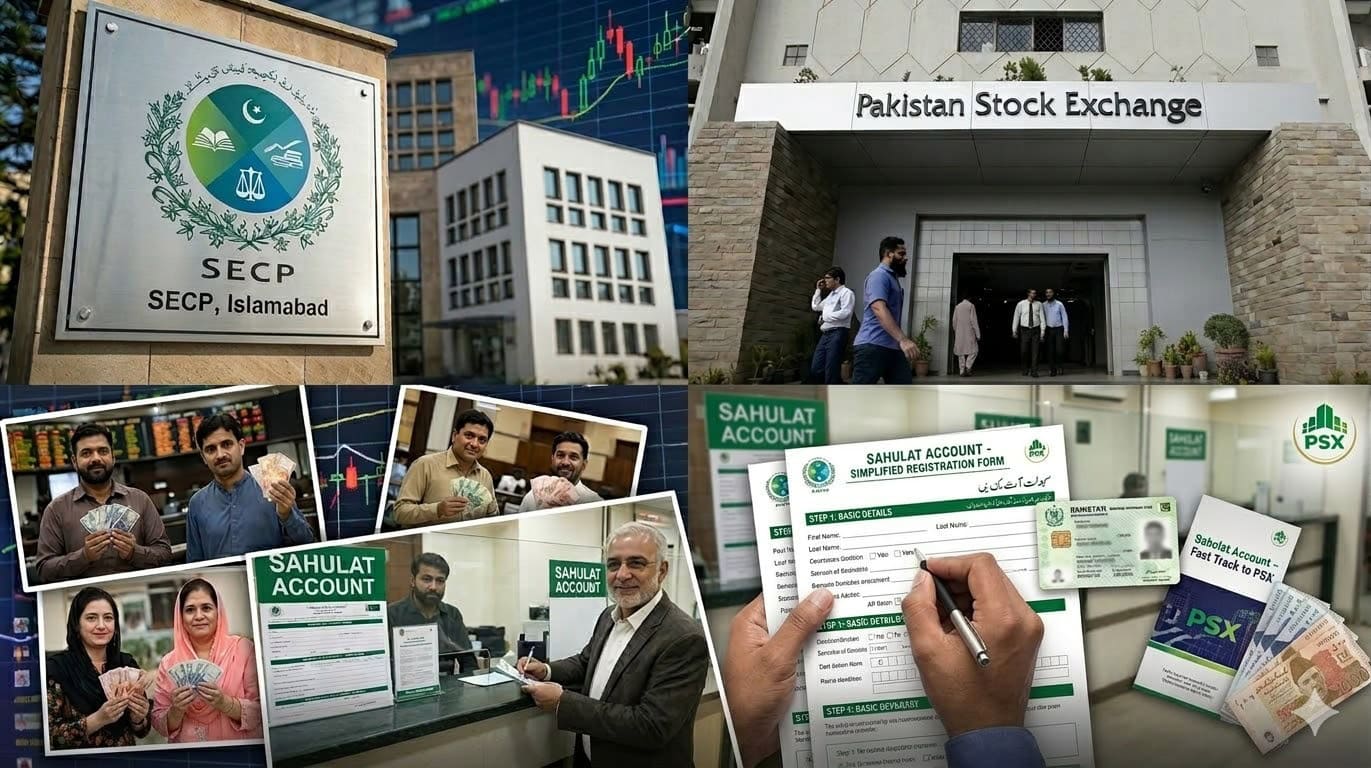
SECP triples Sahulat Account limit to Rs3 million, opening Pakistan’s stock market to a new generation of retail investors. Analysis of the reform’s impact on financial inclusion, regional comparisons with India’s BSDA model, and what it means for PSX liquidity.
There is a quiet revolution underway in Pakistan’s capital markets, and it begins with something deceptively simple: the ability to open a brokerage account using nothing more than your national identity card.
When the Securities and Exchange Commission of Pakistan (SECP) quietly tripled the investment limit for Sahulat Accounts from Rs1 million to Rs3 million on March 14, 2026, it did more than just update a regulatory threshold . It signaled a fundamental shift in how Pakistan’s financial guardians view the retail investor—not as a marginal participant to be tolerated, but as the bedrock upon which deeper, more resilient capital markets are built.
The timing is telling. With 542,748 individual sub-accounts already in the system—including 144,634 classified as Investor Accounts and a growing contingent from the Roshan Digital Account (RDA) framework—the SECP is betting that simplicity can achieve what decades of market development could not: the democratization of equity investing in a country where stock market participation has historically been the preserve of the urban elite .
As an emerging markets analyst who has watched Pakistan’s economy navigate everything from sovereign defaults to IMF bailouts, I can say this with confidence: this reform matters more than most observers realize. It is not just about raising a number from Rs1 million to Rs3 million. It is about whether Pakistan can finally build a domestic investor base deep enough to withstand the capital flight that has long plagued its markets.
The Architecture of Inclusion
The Sahulat Account framework, introduced to lower barriers for first-time and low-risk retail investors, has always been elegantly simple. An individual walks in—or logs on—with only their Computerised National Identity Card (CNIC). No utility bills. No income tax returns. No bank statements stretching back six months. Just a plastic card and a signature .
What the SECP has now done is expand the ceiling on that simplicity. The new Rs3 million limit brings the Sahulat Account into direct competition with conventional banking products and mutual fund thresholds. More importantly, it allows investors to open these accounts with multiple licensed brokers—though only one per broker—creating genuine choice in a brokerage industry long criticized for captive relationships .
“We are seeing interest from demographics that never engaged with the stock market before,” a Karachi-based broker told me last week. “Housewives, students, retirees—people who found the account-opening process for regular trading accounts intimidating. The Sahulat Account is their on-ramp.”
The numbers bear this out. While the SECP has not yet released updated sub-account figures specifically for the post-reform period, the trajectory is clear. The 542,748 figure represents a steady climb from previous years, and brokers report a noticeable uptick in inquiries since the limit increase was announced .
A Regional Perspective: Learning from India’s Playbook
What makes the SECP’s move particularly shrewd is how closely it mirrors successful experiments elsewhere in the region. The comparison with India’s Basic Services Demat Account (BSDA) framework is instructive and, I suspect, entirely intentional.
India’s Securities and Exchange Board (SEBI) introduced the BSDA to achieve exactly what Pakistan now seeks: wider retail participation through reduced costs and simplified procedures. Under the Indian model, investors can maintain securities holdings with reduced annual maintenance charges, provided the total value does not exceed ₹10 lakh (approximately Rs3.2 million at current exchange rates)—a threshold strikingly similar to Pakistan’s new Rs3 million cap .
Both frameworks share DNA:
| Feature | Pakistan – Sahulat Account | India – Basic Services Demat Account |
|---|---|---|
| Regulator | SECP | SEBI |
| Target | Small and first-time investors | Small retail investors |
| Limit | Rs3 million | Up to ₹10 lakh |
| Onboarding | CNIC-based simplified KYC | Aadhaar/e-KYC digital onboarding |
| Purpose | Increase retail participation | Encourage small investor holdings |
The results in India have been impressive. Since the BSDA framework was expanded in 2024, retail demat accounts have surged, with young investors from tier-2 and tier-3 cities entering the market in unprecedented numbers. Pakistan’s securities regulator is clearly hoping for a similar outcome.
But the comparison also highlights where Pakistan still lags. India’s BSDA operates within an ecosystem of deep corporate bond markets, sophisticated derivatives trading, and a startup culture that has produced dozens of fintech unicorns. Pakistan’s capital markets remain thinner, more volatile, and heavily dependent on institutional investors. The Sahulat Account reform is necessary, but it is not sufficient.
Beyond Banking: The China and Bangladesh Context
Expand the regional lens further, and the picture becomes more complex. China, for all its economic challenges, boasts a retail investor base so massive that it often drives market sentiment more than institutional flows. The threshold for entry is minimal—a government ID and a bank account—but the ecosystem includes mandatory investor education and increasingly sophisticated risk disclosures that Pakistan has yet to replicate.
Bangladesh offers a cautionary tale. The Dhaka Stock Exchange has experimented with various retail inclusion measures over the years, but regulatory arbitrage and weak enforcement have sometimes left small investors exposed to market manipulation. The SECP’s emphasis on “low-risk” classification and broker-conducted due diligence suggests an awareness of these pitfalls .
What Pakistan gets right in this reform is the balance between access and guardrails. The Rs3 million limit is generous enough to matter but not so high as to expose unsophisticated investors to catastrophic losses. The prohibition on leverage within Sahulat Accounts—trading is limited to actual funds deposited—creates a natural circuit breaker against the kind of margin-call massacres that have scarred retail investors in more developed markets .
The Youth Dividend and the Crypto Challenge
Perhaps the most intriguing aspect of the SECP’s announcement is its explicit targeting of young investors. The regulator’s statement notes that reforms aim to enable “young investors to confidently participate in Pakistan’s formal capital market rather than experimenting with unregulated and unauthorised foreign investment platforms” .
This is code, and everyone in Pakistan’s financial community understands it. The country’s youth—digitally native, risk-tolerant, and increasingly skeptical of traditional finance—have been flocking to cryptocurrency platforms, forex trading apps, and other unregulated vehicles. Some have made fortunes; many have lost them. The SECP’s message is clear: we offer a regulated alternative, and we’re making it easy to access.
The strategy is sound. Pakistan has one of the world’s youngest populations, with a median age of just 22.8 years. If even a fraction of that demographic can be channeled into formal capital market participation, the long-term implications for PSX liquidity, corporate fundraising, and even fiscal stability are profound.
But the competition is fierce. Crypto platforms offer 24/7 trading, gamified interfaces, and the allure of decentralized finance. The Sahulat Account, by contrast, operates within the confines of traditional market hours and regulatory oversight. To win the youth vote, Pakistan’s brokerages will need to invest heavily in user experience, mobile trading apps, and financial literacy content—areas where they have historically lagged.
The Roshan Digital Overlap
Another dimension worth watching is the intersection with Roshan Digital Accounts (RDAs). The 144,634 Investor Accounts cited by the SECP include RDA investors—primarily overseas Pakistanis who have channeled billions of dollars into Naya Pakistan Certificates and, increasingly, equities .
The Sahulat Account expansion effectively extends simplified market access to this constituency as well. An overseas Pakistani with an RDA can now open a Sahulat Account remotely, using their CNIC and RDA credentials, and invest up to Rs3 million in PSX-listed companies. For a diaspora that has shown strong appetite for Pakistani assets but often found the mechanics of investing frustrating, this is a meaningful improvement.
What Comes Next: The Shariah-Compliant Frontier
The Sahulat Account reform does not exist in isolation. It is part of a broader regulatory agenda that includes ambitious plans to transform Pakistan’s non-banking finance and capital markets into a Riba-free system by 2027 .
The SECP has already tightened Shariah screening criteria for the PSX-KMI All Share Index, lowering the threshold for non-Shariah-compliant debt from 37% to 33% and introducing star ratings for compliant companies . These moves align Pakistan’s Islamic finance framework with international standards and create a foundation for Shariah-compliant Sahulat Accounts—a logical next step given the country’s religious demographics.
Imagine a version of the Sahulat Account that not only simplifies access but also guarantees Shariah compliance, with automatic screening of investments and transparent reporting. That is where this is heading, and it could unlock even deeper retail participation, particularly in smaller cities and rural areas where Islamic sensibilities often deter engagement with conventional finance.
The Verdict: A Necessary Step on a Long Journey
Let me be direct: tripling the Sahulat Account limit to Rs3 million will not, by itself, transform Pakistan’s capital markets. The structural challenges—macroeconomic volatility, corporate governance concerns, limited product diversity, and a savings rate that remains stubbornly low—are too deep for any single reform to overcome.
But this move matters because it signals direction. It tells the market that the SECP understands the psychology of the retail investor: the fear of paperwork, the intimidation of dealing with brokers, the desire for simplicity in a world of complexity. It also tells international observers that Pakistan is serious about benchmarking its regulations against regional best practices—a message that resonates with foreign portfolio investors who have largely sat out the PSX’s recent rally.
The coming months will reveal whether the 542,748 sub-accounts can grow to a million, and whether those accounts translate into sustained trading volume and liquidity. Early indicators are positive. Brokers report that the multiple-account provision is already driving competition on fees and service quality. Online account openings are up. And for the first time in years, young Pakistanis are asking not just about crypto prices, but about P/E ratios and dividend yields.
That is progress. Slow, incomplete, but unmistakable progress. In emerging markets, that is often the best you can hope for.
Discover more from The Economy
Subscribe to get the latest posts sent to your email.
Banks
Deutsche Bank Seeks to Expand Private Credit Offerings Amid $30 Billion Exposure and Mounting Industry Risks
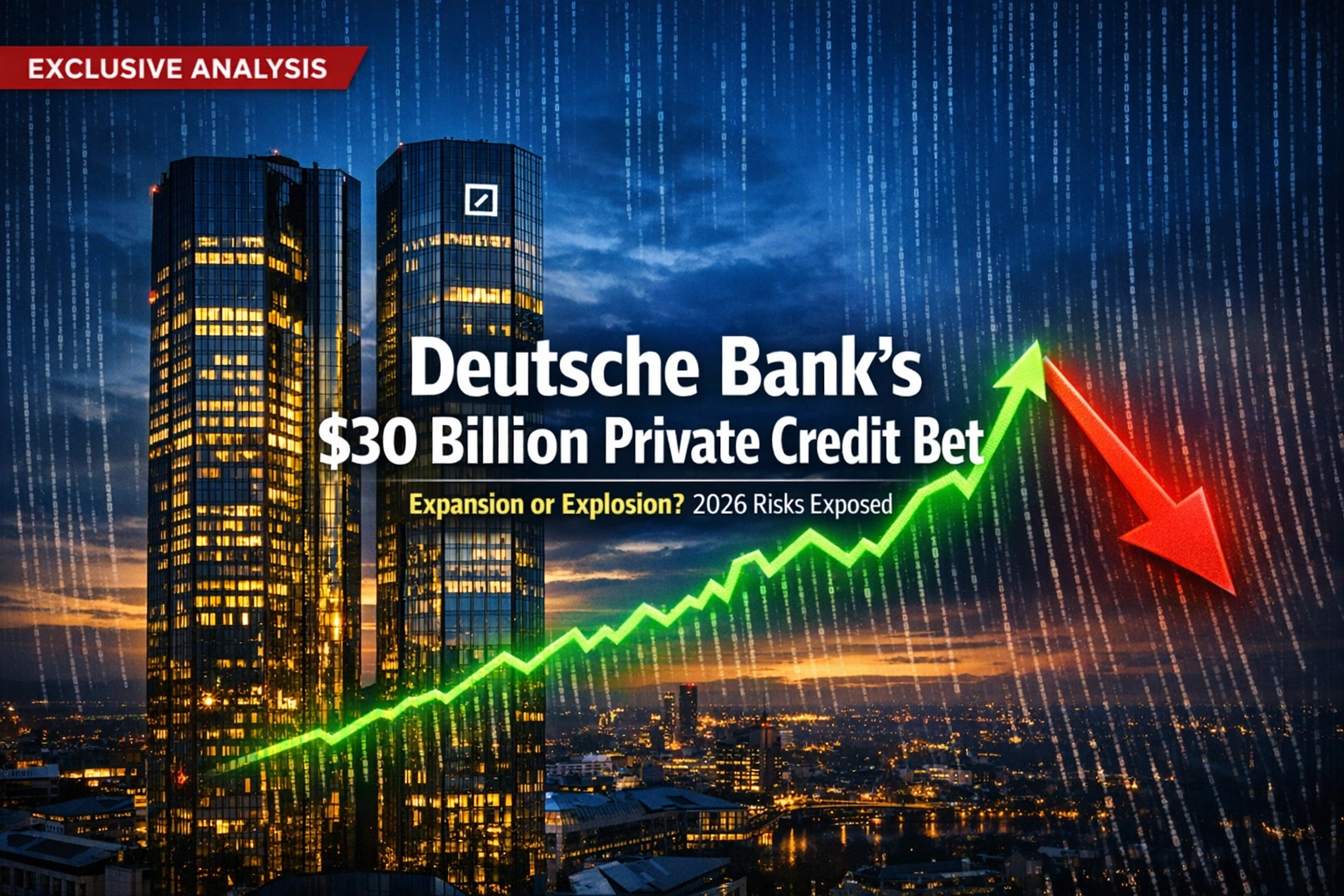
There is a peculiar kind of institutional courage — or, depending on your disposition, institutional hubris — in publishing a document that simultaneously discloses a €25.9 billion risk and announces your intention to take on more of it. Deutsche Bank did precisely that on Thursday morning when its 2025 Annual Report and Pillar 3 disclosures landed on investor terminals across three continents.
The numbers were striking enough on their own: the Frankfurt-headquartered lender’s private credit portfolio had grown roughly 6% year on year, rising from €24.5 billion in 2024 to nearly €26 billion — just over $30 billion at current exchange rates — making it one of the most substantial disclosed private-credit exposures on any European bank’s balance sheet. But it was the three words buried deeper in the filing that stopped seasoned credit analysts mid-scroll. Deutsche Bank, the report stated plainly, “seeks to expand private credit offerings.”
That phrase landed in a market already skittish about the asset class. Shares in Deutsche Bank fell in early Frankfurt trading, joining a broader rotation away from names perceived to carry outsized private-credit risk. The decline echoed a pattern seen six weeks earlier when a separate Deutsche Bank research note warned that software and technology companies — the sector most loved by private credit lenders — posed what its analysts called one of the “all-time great concentration risks” to speculative-grade credit markets. The analysts were speaking about an industry-wide problem. Today, their own institution disclosed that its technology-sector loan exposure had jumped to €15.8 billion, up sharply from €11.7 billion the prior year — an increase of 35% in a single twelve-month period.
To its critics, Thursday’s disclosure is evidence of a systemic contradiction at the heart of modern banking: institutions that identify a risk in public research simultaneously deepen their exposure to it in private transactions. To its defenders — and Deutsche Bank has articulate ones — the expansion is a deliberate, conservatively underwritten bet on a structural shift in how the world’s capital flows. Both positions deserve a serious hearing, because the stakes extend well beyond any single bank’s quarterly earnings.
1: The Numbers Behind Deutsche Bank’s Private Credit Bet
A Portfolio That Represents 5% of the Entire Loan Book
Deutsche Bank’s 2025 Annual Report is a document with the heft of a minor encyclopedia, but the private credit section rewards close reading. The €25.9 billion exposure — roughly 5% of the bank’s total loan book — did not arrive overnight. It has been built methodically, brick by brick, across the Corporate & Investment Bank, the Private Bank, and through the bank’s asset management arm, DWS.
That tripartite structure is deliberate. DWS, Germany’s largest asset manager, has been quietly building a private markets capability for institutional and increasingly retail clients, offering access through vehicles including a European Long-Term Investment Fund launched in partnership with Deutsche Bank and Partners Group. The Private Bank, meanwhile, has been developing digital investment solutions to bring private credit products to high-net-worth individuals who previously had no practical route into the asset class. The CIB provides origination firepower — deal flow, syndication, and leveraged finance relationships that few European peers can match.
The Technology Sector Concentration
The most acute number in Thursday’s filing, however, is the technology figure. At €15.8 billion, loans to the technology sector — including software companies — now account for approximately 61% of the bank’s total private credit book. This is not incidental. Software businesses became the flagship borrowers of the private credit boom for a set of well-understood reasons: predictable subscription revenues, high gross margins, low capital intensity, and sticky customer bases that offered lenders reliable cash flow visibility.
What changed — abruptly, and with world-historical speed — was the artificial intelligence revolution. As Bloomberg reported in February, Deutsche Bank’s own research analysts, led by Steve Caprio, warned that software companies account for roughly 14% of the speculative-grade credit universe, representing approximately $597 billion in debt outstanding. The AI disruption risk is not theoretical: it is already repricing loans. Payment-in-kind usage — where borrowers pay interest in additional debt rather than cash — has climbed to 11.3% in business development company portfolios, more than 2.5 percentage points above the already-elevated market average of 8.7%. These are the early signatures of distress.
Growth Ambitions Across Three Vectors
Deutsche Bank’s expansion strategy, as stated in its annual report, runs through three coordinated channels:
Selective regional expansion — deepening penetration in markets where private credit infrastructure remains underdeveloped, particularly continental Europe and selective Asia-Pacific corridors, where regulatory capital requirements have pushed traditional bank lending back and created origination vacuums that non-bank lenders, and bank-affiliated funds, are rushing to fill.
CIB integration — leveraging the Investment Bank’s leveraged finance, debt capital markets, and structured finance relationships to originate transactions that DWS-managed funds then hold.
Digital private banking solutions — using technology to distribute private credit products to a broader base of Private Bank clients, addressing the longstanding illiquidity premium that has historically confined the asset class to the largest institutional investors.
2: Conservative Underwriting vs. Industry Red Flags
Deutsche Bank’s Stated Defensive Architecture
In a period of mounting industry-wide scrutiny, Deutsche Bank has been emphatic — perhaps strategically so — about the conservative character of its underwriting. The annual report states that the bank applies “conservative underwriting standards” to its private credit portfolio, and that it is not exposed to “significant risks” through its relationships with non-bank financial institutions. It does, however, acknowledge that “the bank could face potential indirect credit risks through interconnected portfolios and counterparties.”
This language matters. The distinction between direct and indirect risk is not merely semantic — it is the central architectural question in private credit today. A bank that originates loans and holds them on balance sheet faces direct mark-to-market and default risk. A bank that originates, then distributes to third-party funds — while maintaining warehouse lines, revolving credit facilities, and fund-level leverage — faces indirect risk that is harder to quantify, harder to stress-test, and potentially far more systemic in a scenario of simultaneous redemptions.
Advance rates of approximately 65% — meaning Deutsche Bank typically lends against 65 cents of every dollar of collateral value — place it meaningfully below the leverage levels typical of the most aggressive direct lenders in the market. The portfolio is also weighted toward investment-grade or near-investment-grade borrowers rather than the deep-sub-investment-grade exposures that characterise some U.S.-based business development companies.
The Industry’s Red Flags in 2026
That conservatism, however, exists within an ecosystem that is developing structural fault lines. Reuters reporting on Thursday noted that “failures of a select number of sub-prime lenders in the U.S. increased investor focus on risks associated with private credit and raised wider concerns around underwriting standards and fraud risk.” The phrase in quotation marks came directly from Deutsche Bank’s own annual report — a remarkable degree of institutional candour.
Several interconnected pressures are now converging on the $2 trillion global private credit market simultaneously:
Redemption pressure — As CNBC documented in February, publicly traded business development companies with heavy software exposure experienced dramatic sell-offs, with Ares Management falling over 12%, Blue Owl Capital losing more than 8%, and KKR declining close to 10% in a single week. These are liquid proxies for an illiquid market, and their moves signal what institutional redemption pressure, if sustained, could do to private fund valuations.
AI-driven obsolescence risk — UBS Group has modelled a scenario in which, under aggressive AI adoption assumptions, default rates in U.S. private credit climb to 13% — substantially above the stress projections for leveraged loans (approximately 8%) and high-yield bonds (around 4%). Software payment-in-kind loans now represent a growing share of BDC portfolios precisely because many software borrowers are already struggling to service debt in cash.
Opacity and interconnection — JPMorgan’s Jamie Dimon warned in late 2025 about private credit’s “cockroaches” — the concern that stress in one borrower signals more hidden trouble elsewhere. The ECB and the Bank of England have both flagged concentration risk in their recent financial stability reviews, noting that banks’ indirect exposures through fund-level financing may be materially understated in regulatory disclosures.
3: Global Implications — European Banks, AI, and the $1.8 Trillion Private-Credit Shift
Europe’s Structural Opportunity
To understand why Deutsche Bank seeks to expand private credit offerings despite these headwinds, it is necessary to understand the structural logic that makes European banks’ private credit ambitions almost inevitable.
Following the Global Financial Crisis and successive rounds of Basel regulatory tightening, European banks sharply curtailed their lending to mid-market corporates, leveraged buyouts, and growth-stage technology companies. Non-bank lenders — Blackstone, Apollo, Ares, Blue Owl, and their peers — filled that vacuum with extraordinary efficiency. By most estimates, the global private credit market has grown from under $500 billion a decade ago to somewhere between $1.8 trillion and $2 trillion today, depending on definitional boundaries, with some forecasters projecting it reaching $3.5 trillion by the end of the decade.
European banks have watched this transfer of margin and relationship capital to predominantly U.S.-headquartered asset managers with the quiet fury of entities losing market share in their home territory. Deutsche Bank’s expansion strategy is, in part, a reclamation effort — an attempt to intermediate capital flows that would otherwise bypass Frankfurt entirely and flow directly from pension funds and sovereign wealth vehicles in Oslo, Abu Dhabi, and Seoul to private equity-owned software companies in San Francisco and London, with U.S. managers collecting the management fees.
The AI Dimension
The artificial intelligence disruption to software borrowers is not a risk that Deutsche Bank — or any lender — can underwrite away entirely. According to analysis published by S&P Global, software and technology companies account for approximately 25% of the private credit market through year-end 2025. Deutsche Bank’s own analysts have noted that the software sector’s exposure to AI-driven disruption “would rival that of the Energy sector in 2016” — a period that produced widespread credit losses and a restructuring cycle that took years to resolve.
What makes the current situation structurally different from the 2016 energy analogy is the speed of the disruption vector and the opacity of the affected portfolios. When oil prices collapsed, the mechanism of loss was transparent: commodity prices are public, reserves are reported, and the chain of causation from price to default was legible. AI disruption to software revenue is subtler, faster, and far harder to detect in quarterly borrower updates until it crystallises into a covenant breach or, worse, a payment default.
Macro Implications for Policymakers
The ECB’s most recent Financial Stability Review identified the nexus of banks and non-bank financial institutions as a primary risk amplification channel. What Deutsche Bank’s disclosure crystallises — in unusually stark terms for an institution not known for gratuitous transparency — is that European banks’ exposure to private credit is not merely an investment banking line item. It is a macro-financial variable.
If private credit suffers a disorderly repricing — triggered by AI-driven software defaults, a redemption cascade, or a combination of both — European banks with direct lending exposure face mark-to-market losses. Those with indirect exposure, through warehouse lines and fund-level leverage, face contingent liabilities that may not appear on regulatory balance sheets until stress has already propagated. The IMF’s Global Financial Stability Report has warned repeatedly that the non-bank sector’s interconnection with regulated banking creates channels of contagion that supervisors lack adequate tools to monitor in real time.
4: Peer Comparison — Deutsche Bank vs. Private Credit Titans
How Deutsche Bank’s Exposure Stacks Up
The following table provides a structured comparison of Deutsche Bank’s private credit approach against key peers and specialist alternative asset managers operating in the same market:
| Institution | Estimated Private Credit AUM / Exposure | Technology Sector Weight | Underwriting Approach | Key Risk Flag |
|---|---|---|---|---|
| Deutsche Bank | €25.9bn ($30bn) direct exposure | ~61% (€15.8bn tech) | Conservative; ~65% advance rates; investment-grade bias | Indirect NBFI contagion; tech concentration |
| Blackstone | ~$300bn credit & insurance AUM | Diversified; <20% software | Institutional, collateralised | Redemption queues in flagship vehicles |
| Apollo Global | ~$500bn total AUM; large private credit sleeve | Moderate software exposure | Originate-to-distribute; balance sheet light | NAV lending; leverage at fund level |
| Blue Owl Capital | ~$200bn AUM; pure-play direct lending | High; software-heavy BDCs | Senior secured, covenant-lite | AI disruption; stock -8% in Feb 2026 |
| Goldman Sachs Asset Mgmt | ~$130bn private credit | Diversified, IG bias | Hybrid bank/asset manager model | Regulatory capital consumption |
| Ares Management | ~$450bn AUM; ~$300bn+ credit | ~6% software of total assets | Conservative; low software weight | AUM growth costs; manager fee compression |
Sources: Company reports, Bloomberg, Reuters, Pitchbook, as of March 2026. AUM figures approximate and include broader credit franchises where private credit is not separately disclosed.
What the Comparison Reveals
Several conclusions emerge from even a cursory reading of this landscape. First, Deutsche Bank is not a private credit manager in the Blackstone or Apollo sense — it is a bank with lending relationships that overlap substantially with the same universe of borrowers those managers are financing. This creates both complementarity (the bank originates deals that asset managers hold) and potential competition (as asset managers build their own origination infrastructure).
Second, Deutsche Bank’s technology concentration — at roughly 61% of its disclosed private credit book — is high relative to conservative peers like Ares, which has deliberately capped software exposure at around 6% of total assets. This is the number most likely to attract regulatory attention.
Third, the bank’s disclosed exposure at €25.9 billion is, by global standards, a mid-tier position. It is dwarfed by the dedicated private credit franchises of Blackstone, Apollo, and Ares. But it is substantial enough — and sufficiently concentrated in a single stressed sector — to represent a material tail risk on Deutsche Bank’s balance sheet in an adverse scenario.
5: What This Means for Investors and Policymakers
The Investment Calculus
For institutional investors holding Deutsche Bank equity, Thursday’s disclosure contains both reassurance and residual unease. The reassurance: management has been transparent, the underwriting is described as conservative, there are no loss provisions against the private credit book, and the bank’s overall financial performance in 2025 was materially strong — revenues reached €32.1 billion, up 7% year on year, with net profits and capital distributions significantly improved from prior years. The bank’s CET1 ratio remains robust, and cumulative shareholder distributions for 2021–2025 have reached €8.5 billion, above the original €8 billion target.
The residual unease: the technology exposure has grown by 35% in a single year, from €11.7 billion to €15.8 billion, precisely as the AI disruption thesis has become more acute and more credible. If UBS’s stress scenario — 13% default rates in U.S. private credit — were to materialise, even a portfolio that is 65% loan-to-value and investment-grade-biased would generate meaningful losses at these concentrations.
For sovereign wealth funds and central bank reserve managers — who are both increasingly active as direct investors in private credit funds and as counterparties to the banks that finance those funds — the systemic question is more pressing than the idiosyncratic one. A banking system that is simultaneously the lender of last resort for private credit funds (through warehouse facilities and NAV loans) and an originator competing with those same funds is not a system whose risk exposures can be easily ring-fenced. The 2008 crisis demonstrated, with brutal efficiency, that what cannot be ring-fenced tends not to be.
The Regulatory Horizon
European banking supervisors at the ECB have signalled increasing discomfort with banks’ private-credit-adjacent activities since at least 2024. The ECB’s Single Supervisory Mechanism has sought more granular reporting on banks’ exposures to leveraged finance and non-bank financial institutions, and Deutsche Bank’s disclosure — voluntary, detailed, and self-critical — may be read partly as a pre-emptive act of regulatory diplomacy.
In Washington, the Federal Reserve has similarly flagged interconnection between banks and the private credit ecosystem as an emerging macro-prudential concern. The next round of stress tests, scheduled for mid-2026, is expected to include private credit scenarios that were not present in previous years.
Conclusion: The Inflection Point
There is a phrase used by geologists to describe the moment before a faultline slips: they call it “stress loading.” For years, pressure builds invisibly, tectonic plates locked against each other, until some marginal additional force triggers a release that had been inevitable for decades. Private credit in 2026 has the texture of a market under stress loading.
Deutsche Bank’s disclosure is important not because it reveals a crisis — it does not — but because it reveals, with unusual precision, the scale and composition of one institution’s position ahead of what could be a significant realignment. The bank’s €25.9 billion portfolio is conservatively underwritten relative to many peers. Its ambitions to expand are strategically coherent. Its transparency, in an asset class not known for it, is genuinely welcome.
And yet: a 35% increase in technology-sector loans in a single year, at precisely the moment when AI is rewriting software’s competitive dynamics, is not a trivial coincidence. Nor is the simultaneous reality that the private credit market’s fastest-growing risks — payment-in-kind escalation, redemption pressure, opacity, interconnection — are also the hardest to observe until they crystallise.
For international investors, the Deutsche Bank private credit expansion story is neither a disaster nor a triumph in waiting. It is something more uncomfortable: a test of whether European banking’s late arrival to the private credit party is disciplined reclamation or expensive imitation. The answer will likely arrive between 2026 and 2028 — precisely the window Deutsche Bank has identified as its “Scaling the Global Hausbank” strategic horizon.
Sophisticated readers will note the symmetry. So, presumably, will the ECB.
FAQ: Deutsche Bank Private Credit — Your Questions Answered
Q1: How large is Deutsche Bank’s private credit portfolio as of 2025?
Deutsche Bank’s private credit portfolio stood at approximately €25.9 billion ($30 billion) at year-end 2025, representing around 5% of the bank’s total loan book and a 6% increase from €24.5 billion at year-end 2024, according to the bank’s 2025 Annual Report published on 12 March 2026.
Q2: Why is Deutsche Bank expanding private credit despite rising risks?
Deutsche Bank seeks to expand private credit offerings through three strategic vectors: selective regional expansion into underserved markets, integration with its Corporate & Investment Bank for deal origination, and digital product development through its Private Bank for high-net-worth distribution. The rationale is structural — European banks lost significant mid-market lending share to U.S. non-bank managers over the past decade, and expanding private credit is partly an attempt to recapture that margin and relationship capital.
Q3: What is the biggest risk in Deutsche Bank’s private credit portfolio?
The single greatest concentration risk is technology-sector exposure, which reached €15.8 billion in 2025 — a 35% increase from €11.7 billion in 2024. This concentration is particularly sensitive to AI-driven disruption of software company business models, which has already caused payment-in-kind loan usage to rise and prompted analysts, including Deutsche Bank’s own research team, to warn of potential industry-wide default rates rivalling the energy sector crisis of 2016.
Q4: How does Deutsche Bank’s underwriting compare to industry peers?
Deutsche Bank applies conservative underwriting standards, including advance rates of approximately 65% and a bias toward investment-grade or near-investment-grade borrowers. This compares favourably to some U.S. business development companies that operate with higher leverage and deeper-sub-investment-grade exposure. However, the technology sector concentration remains high relative to conservative peers like Ares Management, which has capped its software exposure at around 6% of total assets.
Q5: What is the total size of the global private credit market?
Estimates vary by methodology, but the global private credit market is broadly estimated at $2–$3 trillion as of early 2026, depending on whether indirect structures such as NAV lending and warehouse facilities are included. Industry forecasters project growth to $3.5 trillion or beyond by 2030, driven by continued bank disintermediation, demand from institutional investors for yield premium, and expansion into new geographies and borrower segments.
Q6: Has Deutsche Bank reported any losses on its private credit portfolio?
As of the 2025 Annual Report, Deutsche Bank has not reported any losses or provisions directly tied to its private credit exposure. The bank has, however, flagged private credit as a “key risk” and acknowledged the potential for indirect credit risks through interconnected counterparties, representing an honest — and notable — departure from the more sanguine disclosures common in the sector.
Q7: How does AI specifically threaten private credit markets?
AI threatens private credit primarily through its disruption of software company revenue models. Software-as-a-service businesses — the largest single borrower segment in private credit, accounting for roughly 25% of the market — derive value from subscription revenue, sticky customer bases, and high gross margins. Generative AI and agentic coding tools risk eroding those moats by automating functions that enterprise software previously monopolised, compressing multiples and, in severe cases, triggering revenue declines that cannot be serviced from existing debt loads. UBS has modelled an aggressive-disruption scenario in which U.S. private credit default rates reach 13%, compared to 8% for leveraged loans and 4% for high-yield bonds.
Discover more from The Economy
Subscribe to get the latest posts sent to your email.
The room at the State Bank of Pakistan’s Karachi headquarters may have been airconditioned on a warm Monday morning, but the temperature in global energy markets was anything but. As Governor Jameel Ahmad chaired the second Monetary Policy Committee meeting of 2026, Brent crude was careening past $103 a barrel — its highest since 2022 — while tanker traffic through the Strait of Hormuz had ground to a near-halt under the shadow of the US-Israeli war on Iran. The MPC’s decision, telegraphed by virtually every analyst in the market, arrived with unusual unanimity: the benchmark policy rate would stay unchanged at 10.5%.
It was a pause born not of confidence, but of calibrated caution — and perhaps the most consequential hold in Pakistan’s two-year monetary easing cycle.
SBP MPC Decision March 2026: What the Statement Actually Says
The official Monetary Policy Statement was diplomatically precise in framing the dilemma. “While the incoming data was largely consistent with the macroeconomic projections shared after the January meeting,” the MPC noted, “the Committee observed that the macroeconomic outlook has become quite uncertain following outbreak of the war in the Middle East.”
That single sentence encapsulates the entire complexity facing Pakistan’s central bank in March 2026: the domestic data looks broadly fine; the external world does not.
The MPC went further, identifying three concrete transmission channels through which the conflict is striking the Pakistani economy: a sharp rise in global fuel prices, elevated freight and insurance costs, and disruptions to cross-border trade and travel. “Given the evolving nature of events,” it added, “the intensity and duration of the conflict will both be important determinants of the impact on the domestic economy.”
In other words, the SBP is watching, not acting — and deliberately so.
Pakistan Interest Rate Hold: The Numbers Behind the Decision
To understand why the MPC held, it helps to survey the macroeconomic landscape that informed the room.
Inflation rebounding, but manageable — for now. After dipping as low as 3% mid-2025, Pakistani consumer price inflation climbed to 5.8% year-on-year in January 2026 and further to 7% in February — the upper edge of the SBP’s 5–7% medium-term target range. Core inflation has remained persistently sticky, hovering around 7.4% in recent months. The MPC had flagged at the January meeting that some months in the second half of FY26 could breach 7%; February’s print validated that warning precisely. With petrol prices raised by Rs55 per litre to Rs321.17 in the days before the meeting — a direct pass-through of the global energy shock — the domestic inflation trajectory has become materially more uncertain.
The external account: resilience with caveats. The current account posted a surplus of $121 million in January 2026, compressing the cumulative July–January FY26 deficit to just $1.1 billion. Workers’ remittances — a structural pillar of Pakistan’s external financing — continued to absorb a significant share of the trade deficit, while the SBP’s ongoing interbank foreign exchange purchases helped drive liquid FX reserves to $16.3 billion as of February 27, up from $16.1 billion in mid-January. The committee set a firm target of reaching $18 billion by June 2026 — a milestone that now depends critically on the timely realisation of planned official inflows, including disbursements under Pakistan’s $7 billion IMF Extended Fund Facility.
GDP momentum intact but under threat. Large-scale manufacturing growth has surprised to the upside this fiscal year, and the SBP maintained its GDP growth projection at 3.75–4.75% for FY26. Private sector credit expanded by Rs187 billion between July and November FY25, led by textiles, wholesale & retail, and chemicals. Consumer financing — particularly auto loans — has strengthened as financial conditions eased. But the current oil shock introduces a significant headwind: higher input costs, squeezed margins, and the prospect of renewed monetary tightening if inflation reaccelerates.
Pakistan Economy Risks: The Gulf Conflict Inflation Channel
The geopolitical backdrop informing this decision is arguably the most volatile since Russia’s invasion of Ukraine in February 2022, and the MPC explicitly drew that parallel. “The macroeconomic fundamentals, especially in terms of inflation and the country’s FX and fiscal buffers, are better compared to the time of the start of the Russia-Ukraine war in early 2022,” the statement noted — a reassuring comparison, but one that implicitly acknowledges the severity of the threat.
Here is what has unfolded in the space of roughly ten days:
| Event | Market Impact |
|---|---|
| US-Israeli strikes on Iran begin (Feb 28) | Brent crude +25% in two weeks |
| Strait of Hormuz shipping near-halted | Freight & war-risk insurance surges |
| Iraq output collapses 60–70% | Global supply shortfall ~20 mb/d |
| Brent crude surpasses $103/bbl (Mar 9) | Highest since Russia-Ukraine shock |
| Qatar warns of $150/bbl risk | G7 emergency reserve discussions begin |
For Pakistan specifically, the pass-through arithmetic is sobering. The country imports virtually all of its crude oil requirements; historically, a $10 rise in Brent crude adds approximately 0.5–0.6 percentage points to Pakistan’s CPI within two to three quarters. With Brent having surged nearly $30 above its pre-conflict baseline, the potential inflation add-on over the coming two quarters — absent countervailing fiscal measures — could be 1.5–1.8 percentage points. That alone would push headline inflation toward 8.5–9%, well outside the target range and into territory that could force the SBP’s hand toward a rate increase.
The freight and insurance channel matters too. Pakistan’s exports — textiles, leather goods, surgical instruments — predominantly move by sea. War-risk insurance premiums for vessels transiting the Gulf region have spiked dramatically since late February, compressing export margins and threatening the competitiveness that the country has painstakingly rebuilt over the past eighteen months. Importers face mirror-image pressures: higher landed costs for energy, industrial inputs, and food commodities.
SBP Rate Decision Analysis: Why the Easing Cycle Has Effectively Paused
This is the SBP’s second consecutive hold — a sharp turn from the aggressive easing trajectory of the previous eighteen months. Between June 2024 and December 2025, the Monetary Policy Committee delivered a cumulative 1,150 basis points of rate cuts, bringing the policy rate down from a record 22% to 10.5%. That was one of the most dramatic easing cycles in any major emerging market during that period, and it was earned: inflation collapsed from multi-decade highs above 38% to the lower single digits, the rupee stabilised, and FX reserves rebuilt from critical lows.
The January 2026 hold surprised many analysts — Arif Habib Limited had pencilled in a 75bps cut to 9.75%, and a Reuters poll had pointed to a 50bps reduction — but it now reads as prescient caution. Governor Ahmad flagged at that press conference that inflation could breach 7% in some second-half months. It did, in February. The Middle East crisis then eliminated whatever residual space for cuts remained.
A Reuters poll conducted ahead of Monday’s meeting found near-unanimous consensus for a hold, with Topline Securities reporting that 96% of survey respondents expected no rate cut — a remarkable about-face from the 80% who had anticipated a cut ahead of January’s meeting. The shift in market expectations speaks to how quickly the geopolitical risk premium has repriced Pakistan’s monetary outlook.
The IMF’s own guidance reinforces the SBP’s caution. During its second programme review, the Fund urged that monetary policy remain “appropriately tight and data-dependent” to keep inflation expectations anchored and external buffers intact — language that sits uncomfortably with near-term rate cuts.
SBP FX Reserves and the External Account: A Fragile Resilience
Perhaps the most reassuring aspect of Monday’s statement was its treatment of the external account. The current account surplus in January, continued SBP interbank purchases, and the gradual rebuild of FX reserves to $16.3 billion all suggest that Pakistan enters this shock with considerably better buffers than it possessed in 2022 — when reserves plunged below $4 billion and the country teetered on the edge of sovereign default.
That buffer is real, but it is not inexhaustible. Three risks loom:
Oil import bill expansion. Pakistan’s monthly crude import bill will rise sharply if prices sustain above $100/bbl. The SBP’s current account deficit projection of 0–1% of GDP for FY26 was modelled on oil in the $70–80 range. A prolonged Hormuz closure tilts that range meaningfully toward the upper bound — or beyond it.
Remittance disruptions. A significant portion of Pakistani workers are employed in Gulf states — Saudi Arabia, the UAE, Qatar, and Kuwait collectively host over 4 million Pakistani expatriates. Gulf economic disruption, energy revenue compression, and potential labour-market contraction in those countries could dampen remittance flows, removing a critical current account stabiliser.
Official inflow timing. The SBP’s $18 billion FX reserve target for June 2026 hinges on planned official inflows materialising on schedule. Geopolitical turbulence has historically caused IMF disbursement delays and bilateral lending hesitancy. Any slippage here would tighten the external constraint and, with it, the SBP’s room for manoeuvre.
Pakistan Economy Risks and Scenarios: Three Paths From Here
Scenario 1 — Rapid de-escalation (probability: low-medium). A swift US-Iran deal and Hormuz reopening within two to four weeks would allow oil prices to retreat toward $70–80/bbl, stabilise Pakistan’s import bill, and potentially reopen the door to a 25–50bps cut at the May 2026 MPC meeting. This is the base case for FY26 projections remaining intact.
Scenario 2 — Prolonged but contained conflict (probability: high). A six-to-eight week Hormuz disruption, with Brent stabilising in the $90–110 range, would push Pakistan’s CPI toward 8–9% in Q4 FY26 and FY27 Q1. The SBP holds through May and likely through July, pausing the easing cycle for two to three meetings. GDP growth dips toward the lower end of the 3.75–4.75% range.
Scenario 3 — Escalation and infrastructure damage (probability: low but non-trivial). Qatar’s energy minister has warned publicly that sustained Hormuz closure could drive Brent to $150/barrel — a scenario that Goldman Sachs estimates could add 0.7 percentage points to Asian inflation for every $15 oil price increase under a six-week closure. For Pakistan, that arithmetic implies a potential CPI overshoot to 10–12%. The SBP would be forced to consider a rate increase — a reversal that would set back the economic recovery significantly, pressure fiscal consolidation, and complicate the IMF programme.
Implications for Pakistani Borrowers, Investors, and Exporters
Corporate borrowers and SMEs: The 10.5% policy rate, while materially lower than the 22% peak, still represents a significant real financing cost for businesses. The hold — and the likelihood of an extended pause — delays the relief that industry bodies had anticipated from a return to single-digit rates. The Pakistan Business Council and various textile associations had lobbied for further cuts to restore export competitiveness.
Fixed-income investors: Government securities yields, which had been compressing in anticipation of further rate cuts, will likely stabilise or widen slightly at the short end as the hold extends. T-bill yields in the 10.5–11% range remain attractive in real terms relative to expected near-term inflation, but the duration risk on longer-tenor PIBs rises in a scenario where rate hikes become plausible.
Equity markets: The KSE-100 index, which had benefited significantly from falling rates and improving macro fundamentals, faces a more challenging environment. Energy sector stocks — particularly downstream oil marketing companies — face margin compression as import costs rise. However, the broader index may find some support from the fact that the SBP is holding rather than hiking, signalling that it views FY26 macroeconomic projections as still broadly achievable.
Exporters and remittance recipients: The PKR/USD exchange rate — which had stabilised in the 278–285 range — faces upward pressure from the widening trade balance. Topline Securities’ pre-MPC survey projected PKR stability in the 280–285 range through June 2026, a projection that assumes oil prices partially retrace from current peaks. Any significant rupee depreciation would create an imported inflation feedback loop that complicates the SBP’s task further.
Structural Reforms: The SBP’s Unanswered Question
Monday’s statement, like its January predecessor, reiterated the need for a “coordinated and prudent monetary and fiscal policy mix — as well as productivity-enhancing structural reforms — to increase exports and achieve high growth on a sustainable basis.” That language has appeared in virtually every MPC statement for years. It points to a fundamental vulnerability that no interest rate decision can resolve.
Pakistan’s export base, dominated by low-value-added textiles, has shown structural stagnation relative to regional peers. Its tax-to-GDP ratio — with FBR revenue growth decelerating to 7.3% in December 2025, well short of budgeted targets — remains among the lowest in Asia. Its energy import dependency leaves the current account structurally exposed to precisely the kind of shock that has arrived this week.
The SBP can hold rates, build reserves, and manage the short-term pass-through of oil prices. What it cannot do is substitute for the fiscal discipline, industrial policy, and governance improvements that would reduce Pakistan’s structural vulnerability to external shocks. The Gulf war has exposed that vulnerability with stark clarity.
Outlook: Cautious Resilience, Rising Risks
The SBP’s decision to hold at 10.5% was the right call for a central bank navigating a crisis of uncertain magnitude and duration. Pakistan enters this shock with better buffers than it possessed in 2022 — higher reserves, lower inflation, a stabilised currency, and an active IMF backstop. Those are not trivial advantages.
But the window for complacency is narrow. Brent crude at $103 and rising, a Hormuz chokepoint under active military threat, and a domestic inflation trajectory already touching the upper edge of the target range leave the SBP with limited runway. Governor Ahmad and his committee have effectively entered a watchful holding pattern: data-dependent, geopolitics-sensitive, and acutely aware that the next move could be a hike rather than a cut.
For global investors watching Pakistan’s emerging-market trajectory, the message is nuanced: the macro stabilisation story remains intact, but the risk premium has risen meaningfully. Sovereign spreads, equity valuations, and the rupee will all need to reprice for a world where $100+ oil is not a tail risk but a baseline.
The easing cycle that began in June 2024 is, for now, on hold. Whether it resumes — or reverses — depends on decisions being made not in Karachi, but in Washington, Tel Aviv, and Tehran.
Discover more from The Economy
Subscribe to get the latest posts sent to your email.
-

 Markets & Finance3 months ago
Top 15 Stocks for Investment in 2026 in PSX: Your Complete Guide to Pakistan’s Best Investment Opportunities
-

 Analysis2 months ago
Brazil’s Rare Earth Race: US, EU, and China Compete for Critical Minerals as Tensions Rise
-

 Banks2 months ago
Best Investments in Pakistan 2026: Top 10 Low-Price Shares and Long-Term Picks for the PSX
-

 Investment2 months ago
Top 10 Mutual Fund Managers in Pakistan for Investment in 2026: A Comprehensive Guide for Optimal Returns
-

 Asia3 months ago
China’s 50% Domestic Equipment Rule: The Semiconductor Mandate Reshaping Global Tech
-

 Analysis1 month ago
Top 10 Stocks for Investment in PSX for Quick Returns in 2026
-

 Global Economy3 months ago
Pakistan’s Export Goldmine: 10 Game-Changing Markets Where Pakistani Businesses Are Winning Big in 2025
-

 Global Economy3 months ago
15 Most Lucrative Sectors for Investment in Pakistan: A 2025 Data-Driven Analysis