
Analysis
2026 US Government Shutdown: Trump’s Funding Deal Awaits House Vote Amid Limited Disruptions

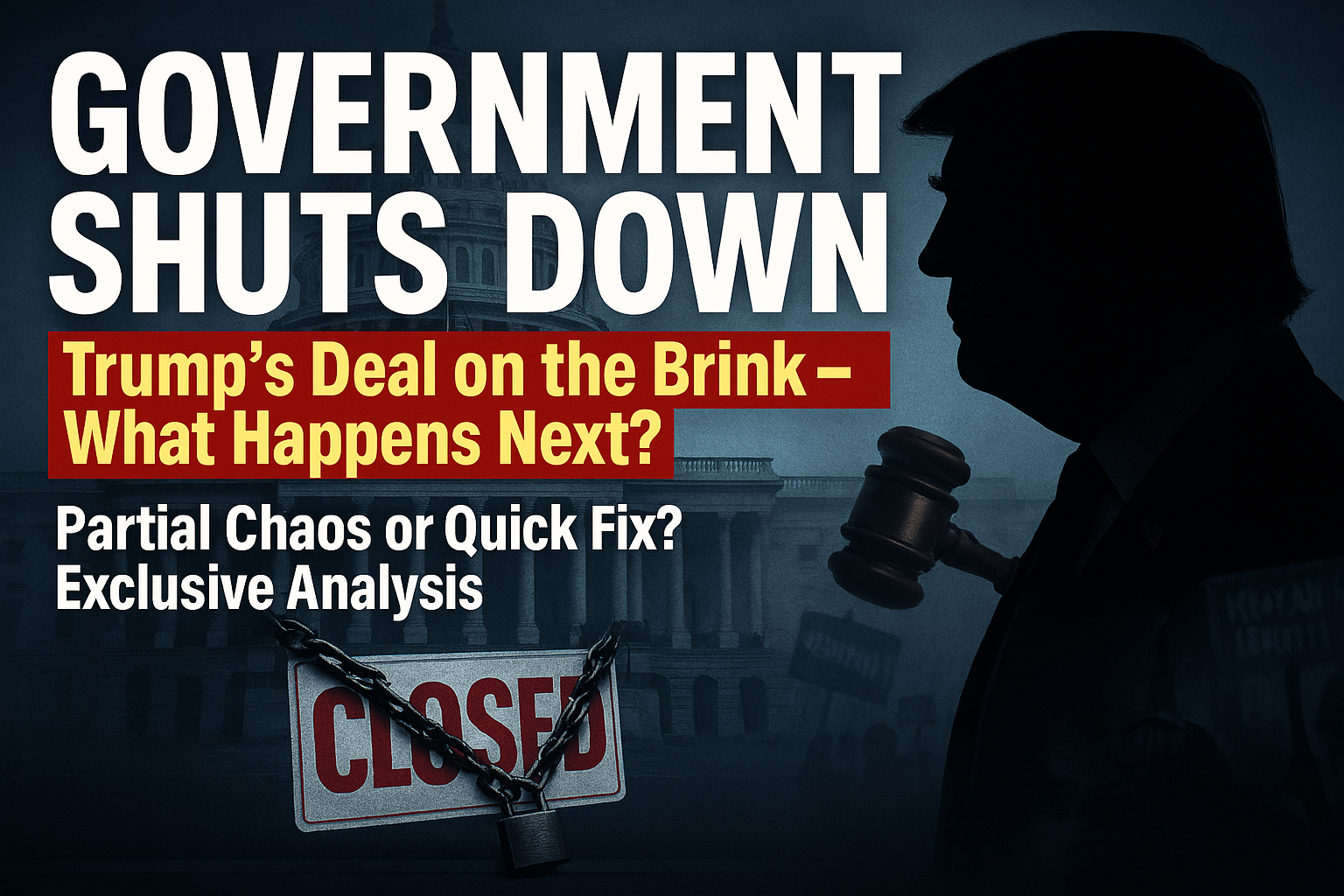
The United States government entered a partial shutdown early Saturday morning as Congress awaits House approval of a Trump-brokered funding deal—the second shutdown since the president returned to office in 2025. Unlike the devastating 43-day crisis last fall, this funding lapse appears headed for swift resolution, affecting a more limited scope of federal operations.
The Senate approved a bipartisan spending package 71-29 late Friday, but with the House in recess until Monday, six major departments entered technical shutdown at 12:01 a.m. Eastern time Saturday. Most Americans won’t notice immediate impacts, as essential workers continue operations and critical services remain funded.
Minneapolis Tragedy Sparks Shutdown Crisis
This wasn’t your typical budget battle. The shutdown emerged from national outrage over federal immigration enforcement tactics—specifically, the fatal shootings of two American citizens by federal agents in Minneapolis within three weeks.
Border Patrol agents killed Alex Jeffrey Pretti, a 37-year-old ICU nurse at Minneapolis VA Medical Center, on January 24 while he filmed officers with his phone and helped a pushed protester. Seventeen days earlier, Immigration and Customs Enforcement officer Jonathan Ross had fatally shot Renée Good, also 37, igniting widespread protests.
Bystander videos contradicted the administration’s claim that Pretti “brandished” a weapon. Forensic analysis showed 10 shots fired in under five seconds after agents pepper-sprayed and wrestled Pretti down—with video evidence revealing an agent removed Pretti’s legally holstered firearm before the shooting.
The killings sparked Democratic demands for accountability. Senate Minority Leader Chuck Schumer declared Democrats wouldn’t fund the Department of Homeland Security without immigration enforcement reforms including body cameras, warrant requirements, and investigative oversight.
Trump’s Bipartisan Compromise
Facing bipartisan criticism—even Republican Senators Ted Cruz and John Curtis condemned Homeland Security Secretary Kristi Noem’s premature “domestic terrorist” label for Pretti—Trump negotiated directly with Schumer, crafting an unusual compromise.
The deal separated DHS funding from five other spending bills, providing a two-week Homeland Security extension while fully funding Defense, Labor, Health and Human Services, Education, Transportation, Housing and Urban Development, State, and Financial Services through September 30, 2026’s fiscal year end.
“I don’t want a shutdown,” Trump posted on Truth Social, urging a bipartisan “YES” vote. His support proved crucial for Senate passage, with only five Republicans opposing: Senators Rand Paul, Ted Cruz, Mike Lee, Ron Johnson, and Rick Scott.
Senator Lindsey Graham lifted his procedural hold Friday after securing future votes on sanctuary city legislation.
Limited Scope: What’s Affected vs. Protected
This partial government shutdown differs dramatically from October’s 43-day crisis. Six of twelve annual appropriations bills were already signed, protecting substantial federal operations.
Affected agencies: Defense (essential military continues), Homeland Security (immigration enforcement separately funded), Health and Human Services, Labor, Transportation, Treasury/IRS, Education, Housing and Urban Development, State (embassies open), federal courts, SEC.
Fully funded through September: Agriculture (no SNAP interruption), Veterans Affairs, National Parks, Justice Department, Commerce, Energy, EPA, NASA.
The Congressional Budget Office estimates this targeted approach dramatically reduces economic fallout versus last year’s shutdown.
Economic Impact: Minimal If Brief
A weekend shutdown will barely register economically if the House acts Monday. CBO analysis shows each shutdown week reduces annualized GDP growth by roughly 0.25 percentage points in the affected quarter—negligible over two days when federal offices are already closed.
Context matters: last fall’s 43-day shutdown slashed fourth-quarter 2025 GDP growth by 1.5 percentage points, costing $11-14 billion in permanently lost economic output. Goldman Sachs estimated that crisis reduced Q4 growth by 1.15 percentage points, with a compensating 1.3-point Q1 2026 boost as delayed federal spending shifted forward.
This time’s different. Essential workers—military, air traffic control, TSA, Border Patrol—continue operations. Crucially, 42 million Americans receiving SNAP food assistance face no interruption, unlike devastating gaps during fall’s Agriculture Department funding lapse.
“The macroeconomic impact of a shutdown is limited in the near term,” Fitch Ratings noted, though warning “protracted disruption” could “slightly slow U.S. economic growth.”
Historical Context: Second Shutdown in Three Months
The October-November 2025 shutdown lasted 43 days—America’s longest—inflicting widespread disruption on 1.4 million federal employees furloughed or working without pay. Tourism Economics estimated $63 million daily travel industry losses. SNAP benefits were delayed for millions.
That crisis resolved when both parties acknowledged mounting costs. Congress then funded half the government through September 2026. The remaining six bills—now caught in the DHS controversy—were extended through January 30.
This impasse represents unfinished business, but with different dynamics. Rather than spending disputes, this stems from trust breakdown in federal law enforcement following DHS’s “Operation Metro Surge”—the “largest immigration enforcement operation ever” in Minneapolis, producing 3,000+ arrests since December but also the Good and Pretti killings plus 11 other federal immigration officer shootings since September, per NBC News.
Monday’s Crucial House Vote
Speaker Mike Johnson expects Monday evening passage, but obstacles remain. The House Freedom Caucus opposes separating DHS funding. Johnson’s razor-thin majority means Republican defections could doom the bill without Democratic support.
House Minority Leader Hakeem Jeffries complicated matters Saturday, announcing Democrats won’t expedite passage. “Any change in the homeland bill needs to be meaningful and transformative,” Jeffries warned. “Absent dramatic change, Republicans will get another shutdown.”
The bill must clear the Rules Committee first, where Republican defections could block floor consideration. Johnson needs a coalition spanning his party’s spectrum while potentially securing Democratic votes—a delicate balance.
The real battle starts in two weeks: negotiating DHS funding through September. Democrats demand body cameras, warrants, agent unmasking, and local investigative authority. Republicans counter such restrictions would handcuff law enforcement and undermine Trump’s priorities.
“Senate Democrats will not support an extension unless it reins in ICE and ends violence,” Schumer warned. Majority Leader John Thune acknowledged “snags on both sides” but expressed cautious optimism about negotiations.
Accountability Questions and Political Fallout
Minnesota Governor Tim Walz accused federal officials of deploying “untrained” agents and cover-ups, citing “closing the crime scene, sweeping away evidence, defying court orders.” He called it “an inflection point in America.”
A preliminary internal CBP review contradicted administration claims Pretti attacked officers. The assessment described pepper-spraying and struggle but no weapon brandishing—starkly different from Noem’s “domestic terrorism” characterization.
Eight policing experts told The Washington Post the Border Patrol’s tactics likely violated modern de-escalation protocols. Former acting DHS undersecretary John Cohen said videos show Pretti “did not walk up to anybody from CBP in a threatening manner.”
Fallout was swift: Border Patrol commander Gregory Bovino lost his command. Two shooters were placed on administrative leave. The Justice Department opened formal investigation. Trump sent border czar Tom Homan to Minnesota, though early meetings with Walz produced only vague “ongoing dialogue” commitments.
Looking Forward: Fragile Governance
This weekend’s shutdown may prove brief and painless versus October’s crisis. But underlying causes—law enforcement trust breakdown, appropriations weaponization, polarization hampering routine governance—signal deeper systemic challenges.
Two citizens dead. Thousands anxious about immigration enforcement. Federal workers face paycheck uncertainty again. Congress confronts a two-week deadline on issues intractable for months.
Friday’s bipartisan 71-29 Senate vote offers hope functional governance survives when leaders choose compromise. Trump’s Schumer negotiation shows political pragmatism can override partisan impulses when stakes are high.
But Monday’s House vote tests whether bipartisan spirit survives that chamber’s fractious dynamics. The two-week DHS extension merely delays reckoning over balancing immigration enforcement with constitutional protections and community trust.
Every impasse day delays contracts, stalls procurement, forces hundreds of thousands unpaid. Federal contractors—potentially 5.2 million per Oxford Economics—face particular uncertainty, historically receiving no back pay.
CBO projects 2.2% 2026 GDP growth, partly from rebound effects as delayed federal spending flows forward. But projections assume no additional extended shutdowns—an increasingly tenuous assumption given two shutdowns in three months.
For now, Americans wait—again—for government to keep lights on. The shutdown may be partial and short, but it underscores governance machinery’s fragility. The Senate showed bipartisanship remains possible; the question is whether it can endure beyond crisis moments to become the norm rather than exception.
Discover more from The Economy
Subscribe to get the latest posts sent to your email.


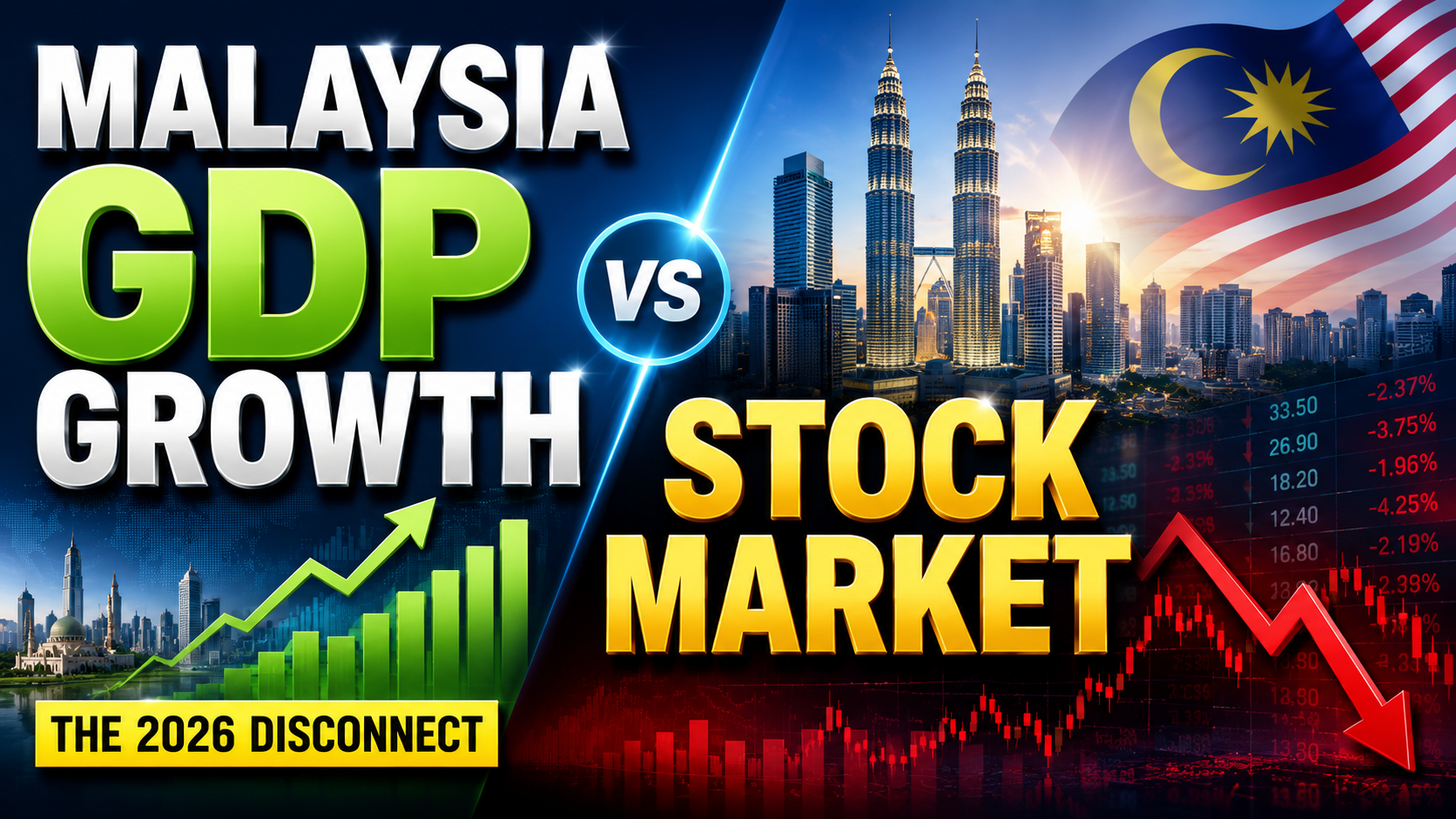
Malaysia posted its biggest trade surplus on record and second-quarter GDP growth of 5.8% in 2026, yet its stock market has stubbornly refused to rally — a disconnect that is puzzling investors even as the country climbs global competitiveness rankings and hosts record investor turnout at its largest retail investing event.
Record Growth Meets a Muted Market
Malaysia’s economy expanded 5.8% year-on-year in the second quarter of 2026, underpinning what former senior investment banker Ian Yoong Kah Yin describes as one of the most competitive economies globally, buoyed by the country’s largest-ever trade surplus, according to reporting in The Star. Yet with the exception of the semiconductor and plantation sectors, Yoong notes that many shares on Bursa Malaysia remain undervalued relative to that underlying strength — a gap he summarised memorably: “It’s like we held a party and no one came.”
The disconnect comes even as Hong Leong Investment Bank upgraded Malaysia’s full-year 2026 growth forecast to 4.7% from 4.5%, citing stronger-than-expected performance in the electrical and electronics sector alongside resilient domestic demand, according to BusinessToday. Household loans grew 5.2% year-on-year and credit card spending rose 10.2%, signalling that consumer demand remains a genuine pillar of growth rather than a statistical artefact of export strength alone.
A Competitiveness Ranking Jump — and a Retail Investing Boom
Malaysia’s underlying reform story has been validated externally. The country climbed eight places to rank 15th among 70 economies in the 2026 IMD World Competitiveness Ranking, its best showing in recent years, following an 11-place jump the year before, according to The Star. Economists attribute the climb to policy reforms improving government and business efficiency, streamlined investment approvals, accelerated digitalisation, and stronger fiscal management.
Retail investor enthusiasm, meanwhile, appears robust even if institutional capital has been slower to follow. INVEST Fair 2026, Malaysia’s largest retail investment event, drew an expected 20,000 visitors across more than 70 hours of programming at Kuala Lumpur’s Mid Valley Exhibition Centre in July, according to event coverage on TradingView. Separately, a survey of more than 3,500 active users by digital wealth platform Versa found that 70% of respondents would prioritise investing over debt repayment or emergency savings if they received a sudden windfall, according to The Star — evidence of a pronounced retail “investment reflex” even amid broader questions about household financial resilience.
Fixed Income Is Where the Real Money Is Flowing
While equities lag, Malaysia’s fixed income market tells a different story. Employees Provident Fund chief investment officer Mohamad Hafiz Kassim told the Sasana Symposium 2026 that Malaysia is “punching above its weight” on global fixed income indexes, drawing outsized capital allocation given interest rate and yield differentials between Malaysian Government Securities and US Treasuries — a dynamic occurring even as the ringgit has remained notably stable, according to The Star. Speakers at the same event pointed to the broader global shift toward passive investing as a structural tailwind Malaysia is well-positioned to capture with continued policy follow-through.
What Explains the Equity Gap
Analysts point to several possible explanations for the growth-market disconnect: persistent foreign investor caution tied to regional and Middle East-driven geopolitical risk, a valuation overhang from prior years, and sector concentration that leaves broad indices under-exposed to the semiconductor and technology names actually capturing AI-linked investment flows. Whatever the cause, the gap represents either an opportunity for value-focused investors or a warning sign that Malaysia’s headline growth figures are not yet translating into corporate earnings momentum broad enough to move the market.
What to Watch
The second half of 2026 will test whether Malaysia’s fixed income strength and competitiveness gains eventually pull equity valuations upward, or whether the stock market’s caution proves to be the more accurate signal about underlying corporate health. Continued data centre and semiconductor investment, alongside any further IMD-style competitiveness validation, will be key catalysts to track.
Discover more from The Economy
Subscribe to get the latest posts sent to your email.
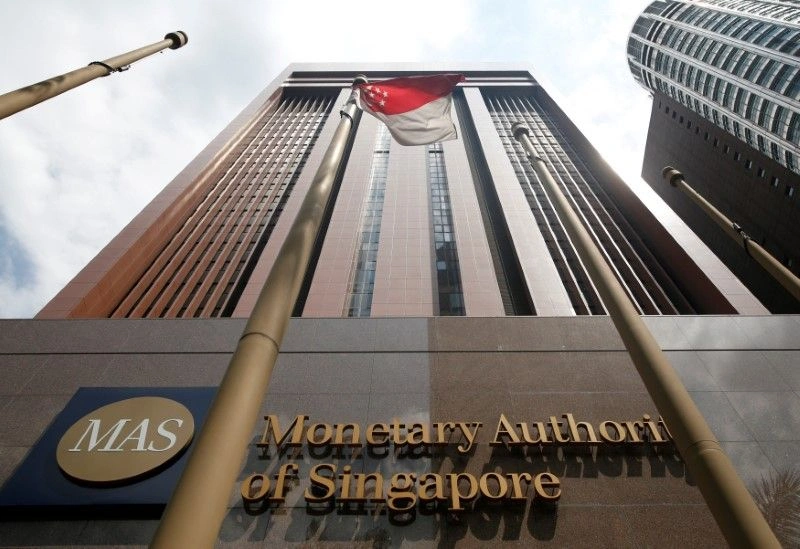
The Monetary Authority of Singapore nudged its exchange-rate-based policy stance slightly tighter in its July review, a modest but notable shift after the city-state’s economy grew a stronger-than-expected 5.7% year-on-year in the second quarter, powered by an AI-driven manufacturing boom that is increasingly reshaping the country’s growth mix.
Growth Beats Expectations Again
Singapore’s economy expanded 5.7% year-on-year in the second quarter of 2026, according to advance estimates from the Ministry of Trade and Industry released 14 July, moderating only slightly from an upwardly revised 6.3% in the first quarter, according to MAS’s own July policy statement. On a quarter-on-quarter seasonally adjusted basis, GDP rose 1.1%, continuing an unbroken run of above-trend expansion. Manufacturing has been the standout performer, posting 12.2% year-on-year growth in the second quarter — up from 8.0% in the first — driven by the electronics and precision engineering clusters riding the global AI capital expenditure wave, according to data reported by Indiplomacy.
The strength has prompted a wave of forecast upgrades. UOB Global Economics and Markets Research lifted its 2026 GDP growth forecast to 4.8% from 4%, while S&P Global Market Intelligence matched that upgrade, and Nomura flagged upside risk to its own 4.6% forecast, according to Xinhua — all comfortably above the Ministry of Trade and Industry’s official 2.0–4.0% guidance range.
MAS Leans Against Rising Core Inflation
The growth surprise has not been without cost. MAS Core Inflation, which excludes accommodation and private transport costs, rose to 1.5% year-on-year in the second quarter, up from 1.2% in the January–February period before the Middle East conflict began, according to the central bank’s own policy statement. Fuel-price surges have pushed up point-to-point transport and non-cooked food inflation, while retail goods prices have climbed on higher import costs and a tobacco tax increase.
In response, MAS increased the slope of the Singapore dollar nominal effective exchange rate (S$NEER) policy band slightly in its July review — a modest tightening move that builds on an April 2026 tightening step, according to the bank’s Macroeconomic Review. Singapore uses its exchange rate, rather than interest rates, as its primary monetary policy tool, managing the currency’s path within an undisclosed band against a basket of trading partner currencies.
The Positive Output Gap Is Widening
Perhaps the most telling technical signal in MAS’s July statement is its acknowledgment that Singapore’s positive output gap — the extent to which the economy is running above its estimated potential — is now forecast to widen further in 2026, rather than narrow as previously expected. That reflects both the stronger-than-anticipated first-half growth data and MAS’s expectation that GDP will be sustained at elevated levels near-term, powered by continued AI-related capital expenditure, a robust construction pipeline, and steady credit-driven expansion in the financial sector.
Singapore’s central bank, MAS, slightly tightened its S$NEER exchange-rate policy band in July 2026 after GDP grew 5.7% year-on-year in Q2, driven by AI-linked manufacturing growth of 12.2%. Core inflation rose to 1.5%, prompting the modest policy shift even as growth forecasts were upgraded to as high as 4.8%.
Why This Matters Beyond Singapore
As a bellwether for Asian trade and technology cycles, Singapore’s data offers one of the clearest real-time signals of how durable the global AI infrastructure buildout has become, even as broader Asian growth forecasts have been trimmed elsewhere in the region due to Middle East-driven energy costs. For global investors, the combination of resilient growth and rising core inflation puts MAS in a position other regional central banks may soon face: managing an AI-driven boom that is proving inflationary in ways that are only loosely connected to traditional demand-side overheating.
What to Watch
MAS’s next scheduled policy review will be closely watched for whether the central bank continues its gradual tightening path or judges that easing global energy costs — following the partial reopening of the Strait of Hormuz — have done enough of the disinflationary work on their own. Singapore’s full second-quarter economic survey, due after the advance estimate, will offer a fuller sectoral breakdown of where the AI-driven strength is concentrated.
Discover more from The Economy
Subscribe to get the latest posts sent to your email.
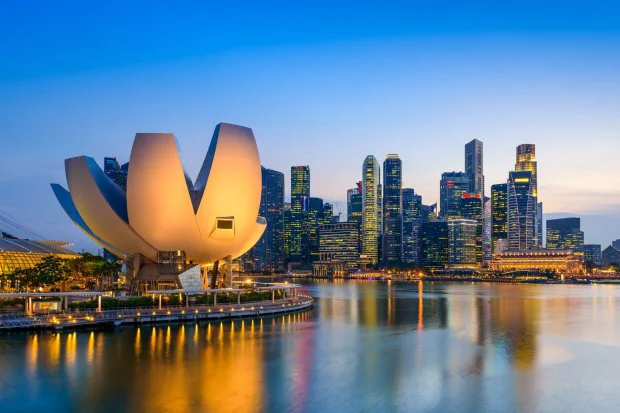
Indonesia has taken its first concrete legislative step toward building a financial centre intended to compete with Singapore, Hong Kong, and Dubai, as President Prabowo Subianto pushes an ambitious plan to draw foreign capital into Southeast Asia’s largest economy and lift growth toward 8% by the end of his term in 2029.
Parliament Passes Enabling Legislation
Indonesia’s parliament passed the enabling legislation for the new financial hub, laying its legal foundation, according to reporting by the South China Morning Post. The milestone marks the most tangible progress yet on a project analysts say is projected to attract billions of dollars in investment — though they caution that crucial details on tax incentives, investor eligibility requirements, and regulatory safeguards still need to be finalised before the centre can credibly compete with established regional players.
The ambition is unmistakable: a financial centre capable of pulling capital away from Singapore’s deep, established markets, Hong Kong’s China-gateway status, and Dubai’s fast-growing wealth-management ecosystem is a tall order, and observers note that persuading global institutional investors to relocate meaningful operations to a new jurisdiction is a multi-year undertaking that has only just begun in earnest.
Indonesia’s parliament passed enabling legislation in July 2026 for a new financial hub designed to rival Singapore, Hong Kong, and Dubai, as President Prabowo Subianto targets 8% GDP growth by 2029. Singapore remains Indonesia’s top foreign investor at $8.8 billion in H1 2026, ahead of Hong Kong and China.
A Broader Investment Story Already Taking Shape
The financial-hub push arrives alongside signs that Indonesia is already deepening its role as a regional investment destination. Singapore remained Indonesia’s largest foreign investor in the first half of 2026, contributing $8.8 billion, followed by Hong Kong at $7.8 billion, China at $3.9 billion, Japan at $1.9 billion, and the United States at $1.7 billion, according to investment data reported by the New Straits Times. Malaysia ranked fifth, contributing $700 million in the second quarter alone, as Indonesia’s total realised investment reached Rp511.8 trillion.
Indonesian Investment Minister Rosan Roeslani has pointed to regulatory reform — including Government Regulation No. 28, introduced last October, which he said has provided greater licensing certainty — as a key driver of investor interest, while explicitly acknowledging that neighbouring economies are reforming in parallel, requiring Indonesia to keep pace.
Growth Outlook Holds Steady Amid Regional Headwinds
The financial-hub push comes as Indonesia’s broader macroeconomic backdrop remains comparatively resilient. The Asian Development Bank’s July 2026 outlook kept Indonesia’s growth forecast unchanged at 5.2% for both 2026 and 2027, even as the bank lowered its overall developing Asia and Pacific growth projection to 4.9% amid Middle East-driven energy cost pressures. That stability stands in contrast to Malaysia, whose 2026 growth forecast was revised only marginally higher to 2%, according to the same ADB report — even as Maybank Investment Banking Group separately upgraded its own Malaysia forecast more aggressively, to 4.9%, citing strong regional investor interest at July’s Invest ASEAN conference in Singapore, which drew 200 institutional investors managing a combined $23 trillion in assets.
Rice Diplomacy as a Parallel Economic Thread
Indonesia’s regional economic engagement extends beyond high finance. State logistics agency Bulog is continuing negotiations with Malaysia and Singapore over proposed rice export deals, with pricing and commercial terms still under discussion as of mid-July, according to The Star. The talks illustrate the breadth of Indonesia’s economic diplomacy push across ASEAN even as its flagship financial-hub ambitions dominate headlines.
What It Means for Global Investors
For asset managers and multinationals weighing where to locate Southeast Asian operations, Indonesia’s financial-hub legislation is a signal of intent rather than an immediate call to relocate. The real test will come as tax-incentive structures, licensing rules, and investor-protection frameworks are finalised over the coming months — details that will determine whether Jakarta can credibly compete with Singapore’s decades-long regulatory head start, or whether the hub instead becomes a complementary gateway focused on domestic Indonesian capital markets and Belt-and-Road-adjacent regional flows.
Discover more from The Economy
Subscribe to get the latest posts sent to your email.

Nvidia’s H200 Chips Are Finally Reaching China — In Numbers Too Small to Matter Yet

Oil Prices Fall as Strait of Hormuz Reopens: 2026 Update

Malaysia GDP Growth vs Stock Market: The 2026 Disconnect

Singapore MAS Tightens Policy as GDP Growth Hits 5.7%

Fed Holds Rates Under Warsh as Trump Rolls Out New Tariffs

Indonesia Financial Hub 2026: Can It Rival Singapore, Dubai?

Russia Fuel Shortages 2026: Inside a Cracking War Economy

China Politburo July 2026: Stimulus Signals Explained

Andy Burnham, UK Gilts and Mortgages: July 2026 Explainer

Pakistan’s 2026 Monsoon Floods Threaten Fragile Economic Recovery as Inflation Nears 9%

Pakistan Gulf Investment Outflows 2026: Peace Deal Stakes Explained

Canada Trade Diversification 2026: China, Indonesia, UAE Deals Explained

US Forced-Labour Tariffs on 60 Countries: The Hidden Trade Shock of 2026

Global Central Banks 2026: Fed, BoE and BoJ Decisions Could Reshape Markets

Carry Trade Unwind 2026: How the Yen’s Snapback Triggered a Global Margin Call

AI Bubble Warning 2026: Why BIS, IMF and Bank of England Fear a Market Crash

BRICS De‑Dollarization Strategy Takes Shape with $15 Billion Local‑Currency Push

The AI Super Bubble Is Ready to Burst

Russia Bans Diesel Exports 2026: Global Fuel Market Impact Explained

Strait of Hormuz Blockade 2026: Oil Prices Surge 9% as US-Iran Conflict Reignites

Private Credit Warning: Most BDCs Turn Unprofitable in 2026, Reuters Finds

Bitcoin $150k Milestone Achieved as US Sovereign Crypto Pivot Looms

IMF Cuts Pakistan Growth Forecast, Raises Inflation to 8.4%

Gold Price Forecast 2026: Fed’s July 29 Decision and Record Central Bank Buying Explained

Gulf Capital Retreat From Pakistan 2026: UAE Loan Freeze & What It Means

India Economic Rise 2026: How the Subcontinent Toppled Japan

Strait of Hormuz 2026: Why Markets Still Don’t Trust It’s Open

China Housing Market Turnaround: White‑List Model Stabilises Prices
-

 Markets & Finance7 months ago
Top 15 Stocks for Investment in 2026 in PSX: Your Complete Guide to Pakistan’s Best Investment Opportunities
-

 Analysis5 months ago
Johor’s Investment Boom: The Hidden Costs Behind Malaysia’s Most Ambitious Economic Surge
-

 Analysis5 months ago
Top 10 Stocks for Investment in PSX for Quick Returns in 2026
-

 Analysis6 months ago
Brazil’s Rare Earth Race: US, EU, and China Compete for Critical Minerals as Tensions Rise
-

 Banks6 months ago
Best Investments in Pakistan 2026: Top 10 Low-Price Shares and Long-Term Picks for the PSX
-

 Investment7 months ago
Top 10 Mutual Fund Managers in Pakistan for Investment in 2026: A Comprehensive Guide for Optimal Returns
-

 Global Economy7 months ago
15 Most Lucrative Sectors for Investment in Pakistan: A 2025 Data-Driven Analysis
-

 Global Economy7 months ago
Pakistan’s Export Goldmine: 10 Game-Changing Markets Where Pakistani Businesses Are Winning Big in 2025