
Analysis
The Permanent Scars of the 2026 Strait of Hormuz Crisis

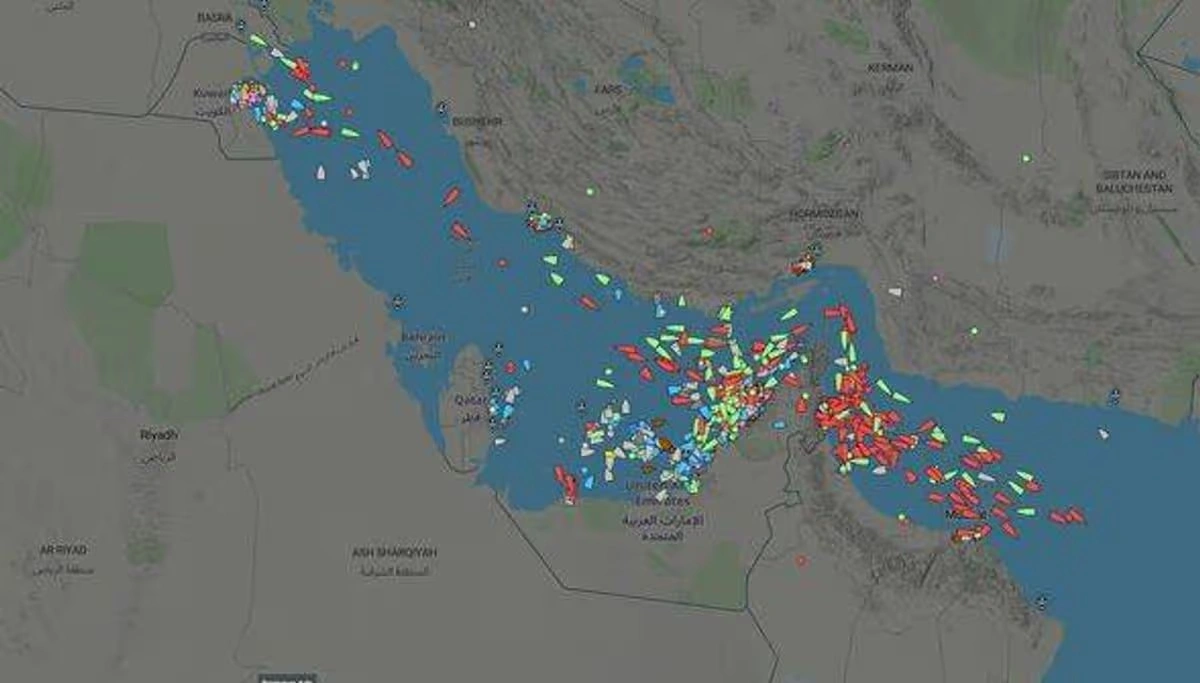
Ten million barrels a day offline. Qatar’s LNG trains in ruins. Brent past $120. The ceasefire changes the headlines — it does not change the damage. The Middle East energy order as we knew it is not disrupted. It is broken.
There is a peculiar ritual that follows every great energy shock: within days of the first price spike, the soothing voices of market analysts and government spokespeople emerge to reassure us that supply disruption is temporary, strategic reserves are ample, and the world’s oil machine will self-correct. The ritual is underway again. But this time — after forty-three days of the largest supply disruption in the history of the global oil market, as the International Energy Agency has described it — those soothing voices are reciting from a script the facts no longer support. The 2026 Strait of Hormuz crisis is not a disruption to be managed. It is a structural wound.
The arithmetic alone is staggering. Since Iran’s Revolutionary Guards declared the strait “not allowed” to commercial shipping on February 28, 2026 — hours after the United States launched Operation Epic Fury — tanker traffic through the waterway has collapsed by more than 90 percent. Roughly 10 million barrels per day of oil production have been effectively taken off world markets. That is more oil than Germany, France, the United Kingdom, and Italy consume combined. Add the simultaneous shutdown of Qatar’s LNG exports — the world’s largest — and you have an energy rupture that dwarfs the 1973 Yom Kippur embargo, the 1979 Iranian Revolution, and the 1990 Gulf War disruption, rolled into one.
Crisis at a Glance — Key Metrics (as of 12 April 2026)
| Metric | Figure |
|---|---|
| Gulf oil production effectively offline | ~10 mb/d |
| Brent crude peak | $120+ per barrel |
| Qatar LNG capacity destroyed | 17% — 3–5 year repair timeline |
| QatarEnergy estimated annual lost revenue | $20 billion |
| Asian LNG spot price spike post-Ras Laffan strike | +140% |
| Loaded tankers trapped in the Persian Gulf (9 Apr) | 230 vessels |
Yet numbers, however eye-watering, fail to capture the true nature of what has happened. The war has not merely interrupted flows through a choke point. It has physically destroyed irreplaceable infrastructure, accelerated a geopolitical realignment years in the making, and imposed costs — financial, strategic, and reputational — that the Gulf’s great petrostate empires will be paying for the better part of a decade. A fragile two-week ceasefire agreed on April 8 has not reopened the strait. By April 9, ADNOC CEO Sultan Al Jaber was blunt: “The Strait of Hormuz is not open. Access is being restricted, conditioned and controlled.” Two hundred and thirty laden tankers sat anchored inside the Gulf, waiting for a passage that, as of this writing, remains subject to Iranian veto.
The Physical Damage: Bombed Trains, Broken Compressors, Years of Repair
Start with the concrete and the steel — because in energy infrastructure, the physical damage is where the multi-year consequences begin. On March 18, Iranian missiles struck Ras Laffan Industrial City, the sprawling 200-square-kilometre complex eighty kilometres northeast of Doha that is, without exaggeration, the most important natural gas export hub on earth. QatarEnergy subsequently confirmed that two of its fourteen LNG production trains — the giant refrigeration units that liquefy gas for export — and one of its two gas-to-liquids (GTL) facilities were destroyed. According to Bloomberg, two of the plant’s 14 production trains were damaged, with repairs expected to take years.
QatarEnergy CEO Saad al-Kaabi was precise in his damage assessment: the attack wiped out capacity producing 12.8 million tonnes per year of LNG — 17 percent of Qatar’s total export capacity. Repairs will take three to five years. The reason is not a lack of money or will. It is physics and procurement. QatarEnergy requires replacement gas turbines to power the refrigeration compressors of the destroyed trains. Only three manufacturers worldwide produce the required equipment, and current order books put delivery timelines at two to four years. You cannot Amazon-Prime a gas turbine. The South site at Ras Laffan, which took the direct hits, has dropped from 36 million tonnes per annum capacity to 24 mtpa — a permanent loss that no ceasefire can rapidly undo.
“These are not repairs that can be made in a week or two. These are repairs that are going to take probably years to replace, and, by virtue of that, there is going to be a sizable impact.”
— Energy Economist, University of Colorado Denver, via Scientific American, March 2026
The damage beyond Qatar is less headline-grabbing but cumulatively severe. Kpler’s vessel-tracking analysis confirms that insurance withdrawal — not physical blockade alone — effectively shuttered the strait from day one of the conflict. By early March, insurance premiums for vessels transiting the passage had risen four to six times over the prior week. Iraq and Kuwait began curtailing oil well production by early March as onshore storage filled to capacity with crude that had nowhere to go. The collective oil output of Kuwait, Iraq, Saudi Arabia, and the UAE had dropped by a reported 6.7 million barrels per day by March 10, and by at least 10 million barrels per day by March 12. Saudi Arabia’s Ras Tanura refinery, one of the world’s largest at 550,000 barrels per day, was among Iranian targets. Iran also struck facilities in Kuwait, UAE, and threatened further strikes on the Jubail Petrochemical complex and UAE’s Al Hosn gasfield.
The infrastructure repair bill, when it is eventually totalled, will run well into the tens of billions of dollars across the Gulf. The direct $20 billion annual revenue loss from Ras Laffan alone — over a three-to-five-year repair horizon — implies a present-value destruction of somewhere between $40 billion and $70 billion in Qatari energy wealth, before secondary effects on planned expansions such as the North Field East project are accounted for.
The Hormuz Stranglehold: A 20% Global Oil Shock That the Pipelines Cannot Fix
One of the persistent myths of pre-war energy security planning was that Gulf producers had meaningful bypass routes. Saudi Arabia’s East-West Pipeline can carry crude to Yanbu on the Red Sea; the UAE’s Habshan-Fujairah pipeline offers an outlet to the Gulf of Oman. In theory, these could absorb some Hormuz disruption. In practice, as the Congressional Research Service noted in its March 2026 analysis, combined available capacity across both pipelines amounts to roughly 2.6 million barrels per day — a fraction of the 20 million barrels that normally transit the strait daily. Saudi Arabia did crank the East-West pipeline to its 7 million bpd capacity limit by end of March, according to Al Jazeera, pumping more oil through it than ever before. But there is no pipeline for LNG. Gas molecules trapped inside the Gulf have nowhere to go.
The scale of the supply shock — 20 percent of global seaborne oil trade suddenly offline — is without modern precedent. The 1973 embargo removed roughly 7 percent of global supply. The 1979 Iranian Revolution cut about 4 percent. Even combined, they did not approach what the 2026 Hormuz closure has achieved. Federal Reserve Bank of Dallas economists writing in March 2026 are unequivocal: “A complete cessation of oil exports from the Gulf region amounts to removing close to 20 percent of global oil supplies from the market.” Their models warn that a quarter-long closure would impose significant output losses on the global economy, weighted most heavily on Asia, which receives roughly 80 percent of Gulf crude exports.
The Asian Dilemma
China sourced roughly a third of its oil imports through Hormuz. Japan, as of February 2026, sourced 94.2 percent of its crude from the Middle East. India’s refineries pivoted rapidly to Russian crude — deepening a strategic dependency that will not easily reverse when the war ends. South Korea has emergency reserves estimated to last over a year. The Philippines, importing 98 percent of its oil from the Middle East, declared a state of national energy emergency on March 24. As Bloomberg’s analysis documents, fuel shortages spread from Thailand to Pakistan within weeks, while European traders warned of diesel scarcity if the strait remained closed.
Beyond Oil: The Invisible Damage — Fertilizer, Helium, and Food
This crisis has taught an uncomfortable lesson: the Strait of Hormuz is not merely an oil pipeline. It is a supply artery for the global agricultural system. Up to 30 percent of internationally traded fertilizers — primarily urea and ammonia — normally transit the strait. The Gulf region accounts for 30–35 percent of global urea exports and 20–30 percent of ammonia exports. Disruption to fertilizer supply during the Northern Hemisphere spring planting season could suppress corn yields in the United States, the world’s primary corn producer — with downstream effects rippling through beef, poultry, and dairy prices into 2027. Global fertilizer prices are estimated to average 15–20 percent higher in the first half of 2026 if the crisis continues.
Add to that helium — critical for MRI machines, semiconductor manufacturing, and scientific research — of which the Gulf is a major supplier. The crisis has constrained global helium supply, disrupting industries with few substitute suppliers. Sulfur — of which Gulf countries supply roughly 45 percent globally — faces similar choking, with knock-on effects on copper mining and acid production. The 2026 Hormuz crisis is not an energy crisis. It is a civilizational supply chain emergency whose secondary consequences will take years to fully surface.
“Every day the Strait remains restricted, the consequences compound. Supply is delayed, markets tighten, prices rise. The impact is felt beyond energy markets, in economies, industries and households worldwide.”
— Sultan Ahmed Al Jaber, CEO, ADNOC, via CNBC, 9 April 2026
The Structural Wound: Why This Is Not the 1970s — It Is Worse
Historical analogies are seductive in a crisis. Market veterans reflexively reach for 1973 and 1979, the canonical oil shocks. But the 2026 crisis differs from its predecessors in three ways that make it structurally more damaging.
First, physical destruction. The 1973 embargo was a political act — a tap turned off. The tap was always intact and could be turned back on. Ras Laffan’s destroyed LNG trains cannot be turned back on. The Pearl GTL facility — one of the world’s most complex energy installations — will require years of engineering work and two-to-four years of lead time just on gas turbine procurement. This is infrastructure damage, not a pricing dispute. The gap between “disruption” and “destruction” is measured in years, not quarters.
Second, the simultaneous closure of multiple commodity streams. The 1973 shock was an oil shock. The 2026 crisis is an oil shock, a gas shock, a fertilizer shock, a helium shock, and a food security shock — simultaneously, through a single choke point. The systemic interdependencies are categorically more complex, and the feedback loops — oil prices feeding into food prices feeding into inflation feeding into central bank tightening feeding into recession risk — operate faster in the digitally connected, just-in-time supply chain world of 2026 than they did in 1973.
Third, the Gulf Cooperation Council’s economic model has suffered a credibility rupture. Analysts describe a “systemic collapse of the GCC economic model” — the implicit contract in which Gulf states provided the world with uninterrupted energy flows in exchange for security guarantees and geopolitical accommodation. That contract has been violated. Not by choice, but by geography and the logic of warfare. Foreign investors who once treated Gulf energy infrastructure as the world’s most bankable physical asset are reassessing. Capital that was financing the Gulf’s Vision 2030-style economic diversification programmes will seek safer harbours, at precisely the moment when diversification was finally beginning to bear fruit.
Recovery Timeline: What Partial Ceasefire Actually Means
| Timeframe | Expected Milestone | Key Risk |
|---|---|---|
| May–June 2026 | Ras Laffan North site potentially restarts 12 operable LNG trains (Wood Mackenzie); 14 stranded LNG cargoes exit the Gulf | Fragile ceasefire collapses; Iran re-restricts passage |
| Aug–Sep 2026 | Ras Laffan South site earliest possible partial restart; tanker flows normalize if strait fully opens | Turbine procurement bottleneck; insurance market slow to re-normalise |
| 2027–2028 | Gulf oil production ramps back toward pre-war levels; stranded North Field East expansion resumes | Investor confidence gap; delayed capex decisions across region |
| 2029–2031 | Two destroyed LNG trains at Ras Laffan fully repaired and online (CEO estimate: 3–5 years from strike) | Gas turbine delivery delays; structural demand shift to US LNG may be permanent |
Wood Mackenzie’s assessment is sobering: even with a ceasefire, QatarEnergy cannot fully restart all twelve operable trains before late August at the earliest, assuming a May resumption — and that assumes security conditions permit it. “The ceasefire means it may be possible for the 14 trapped laden LNG cargoes in the Gulf to exit the Strait of Hormuz,” said Wood Mackenzie’s Tom Marzec-Manser. “But for there to be a real structural change in supply, the Ras Laffan site in Qatar would need to restart its 12 operable trains. It is unclear if QatarEnergy would consider doing this during a ceasefire.”
Winners, Losers, and the Accelerated Energy Transition
Winners
- US LNG exporters — structural demand shift from Qatar LNG by European and Asian buyers
- American shale producers — Brent above $100 makes marginal barrels highly profitable
- Russia — India and China deepening crude import dependency amid Gulf disruption
- Renewable energy developers — war accelerates energy diversification mandates globally
- Norwegian gas exporters — European pipeline gas alternatives gain premium
- Australian LNG — new long-term contracts from Asia locked in at elevated prices
Losers
- Qatar — $20B annual revenue loss, North Field expansion delayed, sovereign reputation damage
- Kuwait and Iraq — prolonged well shut-ins cause reservoir damage; fiscal crises deepen
- Asian LNG importers — Japan, South Korea, China facing multi-year supply tightness
- European industry — energy-intensive manufacturing faces existential competitiveness crisis
- Global food systems — fertilizer shock cascades into 2027 harvests
- Emerging markets — fuel import bills spike; currency crises in Philippines, Bangladesh, Pakistan
The most consequential long-run winner may be the energy transition itself — though not in any comfortable sense. As one executive interviewed by Bloomberg put it bluntly: “The main message is that we’re going to get the energy transition forced on us in a very painful way.” Forced transitions are rarely efficient ones. Governments scrambling to reactivate coal plants and speed-build LNG regasification terminals are making choices that will lock in infrastructure for thirty years. The crisis has simultaneously made fossil fuel investment look more profitable in the short term — producers will not rush to bet on multi-year projects given volatility risk — and made diversification away from Middle Eastern supply a strategic imperative. The result, paradoxically, may be more investment in both shale and renewables simultaneously, further compressing the role of Gulf producers in the global energy mix over the next decade.
Policy Implications: What Must Come Next
The 2026 Hormuz crisis has exposed the hollowness of decades of energy security planning. The assumption that strategic petroleum reserves — built for 90-day disruptions — could manage a complete cessation of Gulf supply was always a comforting fiction. The IEA’s emergency stock release mechanisms were designed for disruptions, not destructions. The fertilizer sector, as the Wikipedia crisis chronicle notes, lacks any internationally coordinated strategic reserves whatsoever, making supply disruptions there almost entirely unmanageable through existing tools.
- Establish international fertilizer strategic reserves — modelled on IEA oil emergency sharing agreements. The agricultural cascades from 2026 will arrive in 2027 and 2028; governments that act now can blunt the worst of them.
- Accelerate LNG import infrastructure in Europe and Asia — floating storage and regasification units can be deployed in 18–24 months. The lesson of 2026 is that no single supplier — not Qatar, not Russia — should command more than 20 percent of any country’s gas supply.
- Renegotiate the architecture of Gulf energy security guarantees — the implicit US-Gulf compact that underpinned the post-1945 energy order has cracked. New frameworks must involve China and India, as the world’s largest Gulf oil importers, in the burden-sharing of strait security.
- Design a Hormuz bypass financing mechanism — Saudi Arabia’s East-West Pipeline and UAE’s Fujairah pipeline together represent 2.6 mb/d of bypass capacity against a 20 mb/d strait flow. A multilateral infrastructure fund to expand and harden these alternatives is not just prudent; it is now an urgent civilizational priority.
- Resist the siren call of short-term shale bingeing — US producers face intense pressure to ramp output rapidly. But the lesson of every prior oil shock is that supply responses built on panic investment create the next crash. Disciplined, long-cycle capital allocation — not a shale free-for-all — will better serve global energy stability.
The Long View: A Region Diminished, a World Reconfigured
In the weeks since February 28, a great deal of commentary has focused on when the Strait of Hormuz will reopen. That is the wrong question. The right question is: what kind of Middle Eastern energy order will exist on the other side of this crisis?
The Gulf producers will recover. Kuwait and Iraq will pump oil again; Saudi Aramco will restore its formidable output; even Qatar will eventually restart its LNG trains, once replacement turbines arrive from the handful of manufacturers who make them. But the aura of invincibility — the sense that Persian Gulf energy infrastructure was somehow sheltered from the logic of warfare — has been permanently shattered. Every insurer, every long-term LNG contract negotiator, every sovereign wealth fund manager will price geopolitical risk in the Gulf differently for the next generation. Capital will diversify away from the region at the margin, year after year, compounding into a structural decline in Gulf market share even before physical recovery is complete.
The deeper irony is that Iran — by striking Qatar, a Muslim neighbour with whom it shares the world’s largest gas reservoir — has accelerated precisely the outcome it most fears: a world that finds its way around the Middle East’s energy geography. US LNG will lock in long-term supply contracts with Europe and Asia that were previously occupied by Qatari molecules. Australian and Norwegian exporters will sign deals that, under normal conditions, they could never have won on price. The energy transition, messy and painful as the crisis is making it, will receive a political mandate in Tokyo, Berlin, and Seoul that no climate conference could have generated.
History will record the 2026 Strait of Hormuz crisis as an inflection point — the moment when the post-1970s global energy order, already creaking under the weight of decarbonisation pressures and geopolitical fragmentation, finally broke. What replaces it will be more diversified, more expensive to build, and more resilient by design. The scars from Ras Laffan’s bombed LNG trains will fade, in time. The strategic wounds — to Gulf leverage, to the reliability premium that Middle Eastern energy once commanded — will not.
Every delay deepens the disruption, Sultan Al Jaber warned. He was speaking about tankers. He might just as well have been speaking about history.
Discover more from The Economy
Subscribe to get the latest posts sent to your email.



Four critical developments point to where payments in the region are heading next — and why the apps-first era is already history.
The Curtain Falls on the App Era
There is a story the fintech industry loves to tell about Southeast Asia. It begins with a farmer in rural Java tapping his phone to pay for fertiliser, a street-food vendor in Bangkok scanning a QR code with a tourist from Shanghai, a domestic worker in Singapore sending her week’s wages back to Manila in seconds. The hero of that story, in the industry’s telling, has always been the app — the digital wallet, the super-app, the neobank sitting on a home screen, gleaming with UX refinement and venture-capital ambition.
That story is not wrong. It is simply finished.
The consumer-app chapter of Southeast Asia’s payments journey — the decade of Grab, GoPay, GCash, TrueMoney, MoMo, and a hundred others racing to own the digital wallet on 680 million phones — has run its course. By the end of 2025, over 60% of all transactions across the region were digital, a staggering shift from the cash-dominated economy of a decade prior. The region’s digital economy surpassed US$300 billion in gross merchandise value, with e-commerce alone projected at US$185 billion, according to the Google, Temasek and Bain & Company e-Conomy SEA 2025 report. The apps won the consumer. That battle is over.
The new war — less visible, exponentially more consequential — is being fought at the infrastructure layer. In 2026, the real competition for Southeast Asia’s next trillion dollars of fintech value is not about which app sits on a consumer’s home screen. It is about who owns the rails, the nodes, the settlement fabric, and the intelligence layer that quietly powers every transaction, regardless of which logo the end-user sees. The payments infrastructure era has begun, and the region that builds it best will set the terms of global digital commerce for a generation.
“The most important infrastructure is the kind you never see.”
The Quiet Revolution Beneath the Surface
To understand why the infrastructure layer now matters more than any individual application, consider what has changed structurally across the region in the past 24 months.
First, the digital payments market has reached a scale where the marginal cost of acquiring the next user is rising sharply, while the marginal value of owning one more wallet is declining. Market consolidation — always the terminus of a platform land-grab — is well underway. The super-apps have converged. GrabPay, Sea’s ShopeePay, and Gojek’s GoPay have matured into relatively stable oligopolies in their respective markets. The frantic days of cash-burning to subsidise transactions and build habitual loyalty are drawing to a close as investors — who poured a stabilised $8 billion into the region’s digital economy in 2025, up 15% year-on-year — now demand sustainable unit economics over raw growth.
Second, the bottleneck in Southeast Asia fintech has visibly shifted. For years, the constraint was adoption: could you get enough people to download an app, link a bank account, and transact digitally? That problem is largely solved in the urban cores of Singapore, Bangkok, Jakarta, Kuala Lumpur, Manila, and Ho Chi Minh City. The remaining constraint is structural: cross-border friction, B2B settlement inefficiency, financial exclusion in second-tier cities and rural corridors, and the chronic inability of small businesses to access working capital embedded in their payment flows. None of these problems is solved by a prettier consumer interface. All of them are solved — or not solved — at the infrastructure layer.
Third, and most consequentially, a wave of state-backed, multilaterally coordinated infrastructure projects has arrived at exactly the right moment. Governments and central banks across the region have recognised that payments infrastructure is a public good — too important to be left entirely to private platform dynamics — and have committed serious institutional capital to building interoperable, open, sovereign rails.
The result is a region undergoing a quiet but profound rewiring. The apps remain. But the ground they stand on is being rebuilt.
The Four Critical Developments
1. Interoperable Real-Time Rails: The Plumbing That Changes Everything
The most architecturally significant development in Southeast Asia payments right now is not happening inside any startup. It is happening in central bank boardrooms and at the Bank for International Settlements in Basel, Switzerland.
Project Nexus — the BIS Innovation Hub initiative to connect the domestic instant payment systems of Malaysia (DuitNow), the Philippines (InstaPay/PESONet), Singapore (PayNow), Thailand (PromptPay), and India (UPI) into a single multilateral network — has crossed from blueprint into structured implementation. In March 2025, Nexus Global Payments incorporated in Singapore, established by the founding central banks, to manage the formal rulebook, technical implementation guides, and ISO 20022 specifications. A live pilot was completed in 2025, with full cross-border implementation targeted for 2026. The European Central Bank has been in an exploratory phase regarding integration, a development that would extend the network’s potential reach to over 2 billion people.
The significance of this is difficult to overstate. Previously, enabling real-time cross-border payments between, say, a Thai migrant worker in Singapore and her family in Chiang Mai required bilateral agreements negotiated country-by-country, each with its own technical integration, FX arrangement, and compliance framework. Project Nexus replaces that web of bespoke connections with a single multilateral hub — meaning that any country connected to Nexus can transact with every other connected country, instantly and cheaply. For the region’s estimated 10 million migrant workers, and for the SMEs engaged in intra-ASEAN trade, this is transformative.
Alongside Project Nexus, the ASEAN Regional Payment Connectivity (RPC) initiative has been quietly standardising QR code infrastructure across the region. Eight national QR systems — Cambodia’s KHQR, Indonesia’s QRIS, Lao PDR’s Lao QR, Malaysia’s DuitNow, the Philippines’ QR Ph, Singapore’s PayNow, Thailand’s PromptPay, and Vietnam’s VietQR — are now connected, enabling real-time currency conversion and cross-border scanning at point of sale. Japan is exploring integration. The tourist from Seoul scanning a Thai QR code, or the Indonesian exporter receiving instant payment from a Singaporean buyer — these are no longer aspirational scenarios. They are operational realities.
What the apps gave consumers was digital convenience within national borders. What the real-time rails give the entire economy is borderless, frictionless settlement as a foundation for the next decade of trade, tourism, and commerce.
2. Embedded Finance and Invisible B2B Infrastructure
The second critical development is less photogenic than a glowing network diagram, but arguably more commercially consequential: embedded finance is transitioning from a buzzword to actual infrastructure, and it is rewiring the B2B economy with particular force.
Embedded finance — the integration of financial services (credit, insurance, payments, FX) directly into non-financial platforms — is well past the pilot stage in Southeast Asia. But the frontier has shifted decisively from consumer-facing embeds (buy now, pay later at checkout; insurance at ride-hailing checkout) toward B2B and supply-chain infrastructure. Small businesses that once faced weeks-long bank loan processes can now access instant credit decisions directly within e-commerce or business platforms, enabled by open banking APIs that connect financial institutions to real-time transaction data.
This matters enormously in a region where the MSME funding gap — the difference between what small businesses need and what they can access from formal credit sources — runs into the hundreds of billions of dollars. Indonesia’s MSME sector alone contributes over 60% of GDP but has historically been served poorly by traditional banks unwilling to underwrite businesses without collateral or formal financial histories. The infrastructure being built now — API-native lending rails, real-time cash-flow underwriting embedded inside e-commerce and logistics platforms, merchant payment data flowing into credit models — represents a structural solution to a structural problem.
The architecture of this embedded layer is increasingly API-first and cloud-native, with banking-as-a-service (BaaS) providers acting as regulated intermediaries that allow non-bank platforms to offer financial products without holding their own licences. The companies winning in 2026 built their entire architecture API-first, making integration and partnership frictionless. This is not a marginal shift. It represents the effective unbundling of banking from banks — and its rebundling inside the digital platforms where Southeast Asian businesses and consumers already spend their operational lives.
The competitive implications are stark. A logistics platform in Vietnam that embeds working-capital financing into its merchant dashboard is not just offering a payment feature. It is building a financial relationship that makes switching costs prohibitive, transaction data proprietary, and growth capital a competitive moat. The platform that controls embedded financial infrastructure controls the commercial relationship entirely. The app on the consumer’s phone is a front door. The embedded financial plumbing is the foundation.
3. Tokenised Assets, Stablecoins, and Programmable Money on Regulated Rails
The third development requires a clear-eyed separation of what is real from what is still speculative: stablecoins and tokenised money are arriving as serious payments infrastructure in Southeast Asia, but only on regulated rails, and the use cases that matter are not retail crypto wallets.
Singapore’s Monetary Authority (MAS) announced in November 2025 that it would hold trials to issue tokenised MAS bills in 2026, alongside plans to bring in laws to regulate stablecoins as it moves forward with building a scalable tokenised financial ecosystem. The MAS Single-Currency Stablecoin Framework — requiring full reserve backing, licensed issuers, and guaranteed redemption at par — is now being operationalised. Stablecoins are currently valued at US$250 billion globally, with the market expected to grow two to three times by 2028.
The most interesting action in Southeast Asia is happening at the infrastructure layer. StraitsX, the Singapore-based stablecoin settlement layer, saw its card transaction volume surge 40 times between Q4 2024 and Q4 2025, with card issuance growing 83-fold. More significantly, its XSGD stablecoin — pegged 1:1 to the Singapore dollar and fully backed by reserves held at DBS and Standard Chartered — is being used not as a speculative asset but as settlement infrastructure. When a tourist from Bangkok taps to pay in Singapore using a Thai e-wallet, a stablecoin layer runs in the background, handling cross-border settlement while merchants receive instant payment in Singapore dollars. The stablecoin is invisible. The outcome — instant, cheap, transparent cross-border settlement — is not.
In November 2025, StraitsX announced an expanded payment network connecting Singapore, Thailand (via KBank), Taiwan, and Japan, slated for go-live in Q2 2026, establishing a unified stablecoin-native settlement corridor linking Southeast and Northeast Asia. It also announced the launch of XSGD and XUSD on the Solana blockchain, positioning them as infrastructure for AI agent-to-agent micropayments — a foreshadowing of the machine-economy payment infrastructure to come.
Programmable money is the deeper story here. When a payment instrument can be embedded with conditions — “release this payment when the goods arrive at the warehouse,” “distribute this subsidy only at certified pharmacies,” “pay this supplier automatically when the invoice is confirmed” — the entire architecture of commercial settlement changes. Smart-contract-enabled stablecoins turn every payment into a mini-legal agreement, reducing counterparty risk, shrinking settlement windows, and enabling financial products that are impossible on traditional rails. Singapore’s Project Orchid has demonstrated this at government scale, distributing subsidies as purpose-bound money. The private sector is watching closely.
The geopolitical dimension here is acute. Approximately 99% of stablecoins currently on the market are USD-pegged, according to BIS and US Treasury data. The US GENIUS Act, signed in July 2025, locked in American regulatory dominance over the stablecoin stack. Singapore, Thailand, and Malaysia are making deliberate bets on local-currency stablecoin rails — XSGD, and emerging equivalents — precisely to retain monetary sovereignty in an infrastructure layer that could otherwise default entirely to the US dollar. This is not merely a financial decision. It is a geopolitical one.
4. AI-Powered Intelligence Layered Into the Plumbing
The fourth development is where the payments story and the AI story collide, and the collision is less about chatbots at the consumer interface than about intelligent systems embedded silently within transaction infrastructure.
Among fintech leaders surveyed by Money20/20 Asia for its 2026 Future of Fintech in APAC report, 63.5% identified fraud prevention as their top operational priority, with regulators and industry players investing heavily in real-time risk intelligence and AI-driven security systems. This is not surprising in a region where scam compounds in Myanmar, Cambodia, and Laos have turned organised online fraud into an industrial operation, generating billions annually. One in three Vietnamese consumers hesitates to use digital payments not because of unawareness of fraud, but because they have no mechanism to verify where their money is going — a trust deficit that is fundamentally an infrastructure problem, not an education problem.
The solution being built is AI embedded directly into the payment rails. Modern fraud detection systems operating across Southeast Asia’s real-time payment networks now use Graph Neural Networks (GNNs) to detect complex money-laundering patterns and synthetic identity fraud in sub-100-millisecond latency windows. Financial institutions implementing modern AI identity verification stacks have seen fraud attempts drop by 60 to 70%. The integration of ISO 20022 standards across cross-border payments has revolutionised data richness, allowing fraud detection systems to verify the ultimate beneficial owner and the purpose of every transfer with unprecedented precision.
But AI in payments infrastructure is not only a security story. It is a credit story, a liquidity story, and a compliance story. Real-time transaction data flowing through payment rails — the working capital flows of millions of SMEs, the spending patterns of previously unbanked consumers, the invoice cycles of regional supply chains — is now being fed into AI models that dynamically assess creditworthiness, predict cash-flow stress, optimise FX hedging, and flag compliance anomalies before they become regulatory events. The payment rail, in this model, is not just a pipe. It is a sensing network, continuously gathering the data that makes intelligent financial decisions possible.
Asia-Pacific’s strategy of integrating fraud prevention into financial infrastructure itself — rather than treating it as a bolt-on security product — is being watched globally as a model. The Philippines’ Anti-Financial Account Scamming Act, which moves liability onto financial institutions and mandates real-time automated fraud monitoring, is the legislative expression of a deeper architectural philosophy: security is infrastructure, not a feature.
Why This Matters: SMEs, the Unbanked, and Regional Competitiveness
The case for caring about infrastructure rather than apps is not merely intellectual. For Southeast Asia’s 71 million micro, small, and medium enterprises — the backbone of every national economy in the region — the infrastructure era is the difference between having access to the formal financial system and being permanently excluded from it.
An SME textile exporter in Bandung that can settle a cross-border invoice with a Singaporean buyer in seconds, using a DuitNow-PayNow link over Project Nexus infrastructure, does not need to maintain a correspondent-banking relationship or pay wire transfer fees that compress its margins. An embedded finance layer reading that exporter’s transaction history in real time can offer a working-capital line the morning a large order arrives, not six weeks later after a bank loan review. These are not incremental improvements. They are structural changes in what is economically possible for a small business operating in Southeast Asia.
For the region’s estimated 290 million unbanked and underbanked adults — concentrated in rural Indonesia, Vietnam, the Philippines, and Myanmar — the infrastructure era matters differently. Consumer apps reached many of them. But reaching someone with a digital wallet and actually integrating them into the formal financial system are different things. The latter requires the credit pipes, the identity infrastructure, the regulatory frameworks, and the dispute resolution mechanisms that constitute real financial inclusion. That is infrastructure, not UX.
At the macro level, Southeast Asia’s ability to compete as a unified economic bloc — rather than a collection of nationally fragmented markets — depends on getting the payment rails right. The ASEAN region aspires to be the world’s fourth-largest economy by 2030. That aspiration is only plausible if regional trade can be settled without the friction, cost, and delay that correspondent banking currently imposes. Project Nexus, the RPC, and the stablecoin settlement networks being built now are the payment preconditions for a genuinely integrated ASEAN market.
Key Data Box: Southeast Asia Payments Infrastructure at a Glance (2026)
| Metric | Figure | Source |
|---|---|---|
| SEA digital economy GMV | >US$305 billion | e-Conomy SEA 2025 (Google/Temasek/Bain) |
| E-commerce GMV (2025) | ~US$185 billion | e-Conomy SEA 2025 |
| Share of digital transactions | >60% of all payments | e-Conomy SEA 2025 |
| Project Nexus target go-live | 2026 | BIS / MAS |
| Potential users connected by Nexus (Phase 1) | 1.7 billion | BIS |
| Global stablecoin market value | ~US$250 billion | MAS / SingaporeLegalAdvice |
| Stablecoin market projected growth | 2–3x by 2028 | MAS |
| APAC fintech leaders citing fraud prevention as top priority | 63.5% | Money20/20 Asia 2026 |
| StraitsX card transaction volume growth (2024–2025) | 40x | CoinDesk / StraitsX |
| SEA as primary growth target among APAC fintech leaders | 22.9% | Money20/20 Asia 2026 |
Risks, Regulatory Watchpoints, and the Geopolitical Angle
It would be convenient, but dishonest, to tell only the optimistic version of this infrastructure story.
The interoperability agenda faces real governance risks. Connecting nine distinct fast-payment systems across a region of extraordinary regulatory diversity — where central bank sophistication ranges from the MAS (among the world’s most advanced financial regulators) to institutions in Cambodia, Laos, and Myanmar still building foundational capacity — is vastly harder in practice than in an architectural diagram. Technical standards are one challenge; liability regimes across borders are another entirely. Who bears the loss when an instant cross-border payment is fraudulent? No clear multilateral framework yet exists.
The stablecoin landscape, though maturing rapidly, remains geopolitically contested. The US GENIUS Act creates a strong presumption in favour of USD-denominated stablecoins, and the network effects of dollar liquidity are formidable. Southeast Asian central banks betting on local-currency stablecoins are swimming against a powerful current. If XSGD-equivalent instruments fail to achieve sufficient liquidity at competitive FX spreads, the default path for cross-border settlement in the region may effectively become a dollarised stablecoin rail — reducing monetary sovereignty regardless of what the regulatory frameworks say.
Cybersecurity risk scales with the connectivity of the infrastructure being built. A deeply interconnected payments network — where a PromptPay transaction in Bangkok can cascade through Nexus nodes into UPI rails in Chennai — is also a single threat surface of enormous consequence. Southeast Asian countries have built some of the world’s most dynamic real-time payment infrastructures, but the verification layer to provide upfront protections has been somewhat neglected. The speed at which infrastructure is being built must not outpace the speed at which it is being secured.
Finally, there is the broader geopolitical framing. ASEAN’s payments infrastructure decisions in the next three years will determine whether the region sits within, or outside, the emerging dollar-dominated digital financial architecture that the United States is constructing through the GENIUS Act and its diplomatic relationships with allied regulators. The choice is not binary — Singapore in particular is navigating it with characteristic precision — but it is real. Payments infrastructure, as the region is now discovering, is never merely technical. It is strategic.
The Next Decade Belongs to the Builders of Rails
In 2016, the prophets of Southeast Asia fintech pointed to a teenager in Surabaya tapping a phone to pay for a motorbike ride and said: this is the future. They were right, but only partially. The tap was a symptom. The future was always in what happened next — the fraction-of-a-second journey of that payment through authentication, routing, settlement, reconciliation, and risk assessment, across infrastructure that nobody designed for the digital age.
The decade ahead belongs to the architects of that invisible journey. Not the brands on the home screen, but the engineers of interoperability. Not the wallets, but the rails. Not the consumer experience, but the institutional plumbing that makes every consumer experience possible. As digital payments move toward becoming the default rails for the vast majority of Southeast Asia’s commerce — and as programmable money, AI-embedded intelligence, and multilateral settlement networks converge — the region is engaged in the most consequential infrastructure build of its economic history.
The apps were the beginning of the story. The infrastructure is the story itself. And the next trillion dollars will flow through whoever builds it best.
Discover more from The Economy
Subscribe to get the latest posts sent to your email.

How once-unimaginable catastrophes become baseline assumptions
There is a particular kind of hubris that infects markets in the long stretches between catastrophes. Volatility compresses. Risk premia decay. The insurance gets quietly cancelled because it hasn’t paid out in years and the premiums feel like wasted money. Then the disaster arrives — not as a distant rumble but as a wall of water — and the entire analytical framework investors have spent years constructing turns out to have been a map of the wrong country.
We are living through one of the most instruction-rich moments in modern financial history. Since February 28, 2026, when the United States launched military operations against Iran and Tehran responded by closing the Strait of Hormuz, markets have been running a live masterclass in catastrophe pricing. West Texas Intermediate crude surged from $67 to $111 per barrel in under a fortnight — the fastest oil spike in four decades. War-risk insurance premiums on shipping through the Gulf soared more than 1,000 percent. The S&P 500 lost 5 percent in a single week, and the ECB and Bank of England are now staring down a renewed tightening scenario they spent the first quarter of 2026 insisting was off the table.
And yet — and this is the part that should make every portfolio manager uncomfortable — the analytical mistakes driving losses right now are not new. They are the same six structural errors investors have made in every previous crisis. Understanding them, really understanding them, is not an academic exercise. It is the difference between surviving the next disaster and being liquidated by it.
Key Takeaways at a Glance
- Markets price first-order disaster impacts; second- and third-order cascades are systematically underpriced
- Volatility is information; price-discovery failure is the true systemic risk — monitor private-to-public valuation spreads
- Tight CAT bond spreads signal capital crowding, not benign risk — use compression as a contrarian indicator
- Emerging market currencies and credit spreads lead developed-market pricing of global disasters
- Geopolitical risk premia decay faster than structural damage — separate the transitory from the permanent
- The best time to buy tail protection is when every indicator says you do not need it
Lesson One: Markets price the disaster they know, not the one that is compounding behind it
The economics of disaster pricing contain a fundamental asymmetry. Markets are reasonably good at incorporating a known risk — geopolitical tension, elevated VIX, stretched valuations — into current prices. What they catastrophically underprice is the second-order cascade that no single model captures.
Consider what the Hormuz closure actually detonated. Yes, oil went to $111 per barrel. Obvious. What was less obvious: the inflation feedback loop that forced investors to reprice central bank paths they had already discounted as settled. The Federal Reserve was expected to hold rates in 2026; futures now assign a 74 percent probability it does not cut at all this year. Europe’s energy import dependency made the ECB’s position worse. That transmission — from oil shock to rate-repricing to credit stress to equity multiple compression — is a chain, not a point event. Most risk models price the first link.
The academic framework for this is well established but rarely operationalised. The NBER disaster-risk literature, particularly Wachter (2013) and Barro (2006), argues that rare disasters produce risk premia that appear irrational in calm periods but are in fact the rational price of tail exposure across long time horizons. What these models miss, however, is that real-world disasters rarely arrive as clean, isolated point events. They arrive as cascades. The COVID-19 pandemic was not just a health shock — it was simultaneously a supply-chain shock, a demand shock, a sovereign-debt shock, and a labour-market restructuring shock. The Hormuz closure is not just an oil shock. It is an inflation shock, a monetary policy shock, a EM balance-of-payments shock, and an AI-investment sentiment shock, all at once.
Key takeaway: Map not just the primary disaster scenario but every second- and third-order transmission mechanism it activates. The primary impact is already partially in the price. The cascades are not.
Lesson Two: The real crisis is not volatility — it is the collapse of price discovery
Scott Bessent, the US Treasury Secretary, said something in March 2026 that deserves to be read not as politics but as a precise financial concept. Asked what genuinely frightened him after 35 years in markets, Bessent answered: “Markets go up and down. What’s important is that they are continuous and functioning. When people panic is when you’re not able to have price discovery — when markets close, when there is the threat of gating.”
Volatility is information. A price moving sharply up or down is a market doing exactly what it should: integrating new signals, adjusting expectations, clearing. The true systemic catastrophe is not a 10 percent drawdown. It is the moment when buyers and sellers can no longer find each other at any price — when the mechanism that produces prices breaks entirely.
This is not theoretical. Private credit markets are currently exhibiting exactly this dynamic. US BDCs — business development companies that provide credit to mid-market companies — have seen share prices fall 10 percent and trade 20 percent or more below their latest stated NAVs. Alternative asset managers that collect fees from these vehicles are down more than 30 percent. The public market is rendering a verdict on private valuations that the private market itself cannot yet deliver, because the private marks have not moved. There is no continuous clearing mechanism. There is no daily price discovery. There is only the last funding round — which is a negotiated fiction, not a price.
Investors who understand this distinction can do something useful with it: treat the spread between public-market pricing and private-market marks as a real-time fear gauge. When that gap widens sharply, the market is not panicking irrationally. It is pricing the absence of price discovery itself.
Key takeaway: Distinguish between volatility (information-rich, manageable) and price-discovery failure (structurally dangerous, contagion-prone). Monitor private-to-public valuation spreads as a leading indicator of the latter.
Lesson Three: Catastrophe bond complacency is always a warning, never a reassurance
In February 2026, Bloomberg reported that catastrophe-bond risk premia had fallen to levels not seen since before Hurricane Ian struck Florida in 2022. The cause was a surge of fresh capital chasing ILS yields. Managers called it a healthy market. A more honest reading is that it was a market pricing the wrong risk for the wrong reasons.
Here is the structural problem with catastrophe bonds, and indeed with most insurance-linked securities: the risk premium is set by the supply of capital chasing the trade, not by the true probability distribution of the underlying disaster. When capital floods in — as it has, driven by institutional allocators seeking uncorrelated returns — spreads compress regardless of whether the actual hurricane, flood, or geopolitical catastrophe risk has changed. The academic literature on CAT bond pricing, including recent work in the Journal of the Operational Research Society, confirms that cyclical capital flows consistently distort the risk-neutral pricing of catastrophe events.
The counter-intuitive lesson: when CAT bond spreads are tightest, protection is cheapest to buy and most expensive to have sold. The compression that looks like market efficiency is often capital crowding masquerading as a risk assessment. A catastrophe-bond market trading at pre-Ian yields six months before an Iran-driven energy crisis was not a serene market. It was a complacent one.
Key takeaway: Use catastrophe-bond spread compression not as a signal of benign risk conditions but as a contrarian indicator of under-priced tail exposure. Buy protection when it is cheap; do not sell it because it is cheap.
Lesson Four: Emerging markets absorb the shock first — and price it most honestly
There is a geographic hierarchy to disaster pricing that sophisticated global investors routinely ignore. When a major geopolitical or macro catastrophe detonates, the signal appears first in emerging market currencies, credit spreads, and energy import bills — not in the S&P 500 or the Dax. This is not because EM markets are more efficient. It is because they have less capacity to absorb shocks and therefore less incentive to pretend the shock is temporary.
The Hormuz closure is a case study. Developed-market investors spent the first week debating whether oil at $111 per barrel was “priced in.” Meanwhile, Gulf states were issuing precautionary production-cut announcements and Middle Eastern shipping had effectively ceased. Economies in South and Southeast Asia — which import 80 percent or more of their petroleum needs — faced simultaneous currency pressure (oil is dollar-denominated), fiscal pressure (fuel subsidies explode), and inflation pressure (food and transport costs surge). Countries like Pakistan, Sri Lanka, and Bangladesh were pricing a recession before most DM economists had updated their Q1 2026 forecasts.
The BIS research on disaster-risk transmission across 42 countries documents precisely this dynamic: world and country-specific disaster probabilities co-move in complex, non-linear ways. When global disaster probability rises, EM asset prices move first and fastest. For a DM investor, this is an early-warning system hiding in plain sight.
Key takeaway: Monitor EM currency indices, sovereign credit spreads, and fuel import data as leading indicators of how the global market is actually pricing a disaster — before the consensus in New York or London has caught up.
Lesson Five: Geopolitical risk premia have a half-life problem — and it is shorter than you think
Markets are extraordinarily good at normalising the catastrophic. This is not a character flaw; it is a survival mechanism. But for investors, the normalisation of extreme risk is one of the most financially treacherous dynamics in markets.
Consider the structural pattern Tyler Muir documented in his landmark paper Financial Crises and Risk Premia: equity risk premia collapse by roughly 20 percent at the onset of a financial crisis, then recover by around 20 percent over the following three years — even when the underlying structural damage persists. Wars display an even more dramatic version of this pattern. The initial shock is priced aggressively. But as weeks become months, the equity market begins to discount the conflict as background noise, even if oil remains $20 per barrel above pre-war levels and inflation continues to compound.
This half-life problem cuts in two directions. On the way in: investors are often too slow to price a new geopolitical risk, underestimating how durable its effects will be. On the way out: investors often reprice risk premia too quickly back to baseline, treating a structural change in the global system as if it were a weather event that has now passed. The Strait of Hormuz may reopen. But global shipping has permanently re-priced war-risk. Sovereign wealth funds in the Gulf are permanently reconsidering their US dollar reserve holdings. Indian and Japanese energy policymakers are permanently accelerating domestic diversification. These structural changes do not vanish when the headline risk premium fades.
Key takeaway: When pricing geopolitical disasters, separate the acute risk premium (which will fade) from the structural repricing (which will not). The former is a trading signal. The latter is an asset allocation decision that most portfolios have not yet made.
Lesson Six: The moment you feel safest is precisely when you are most exposed
The final lesson is the most counter-intuitive, and arguably the most important. There is a specific period in any market cycle — often 18 to 36 months after the previous crisis — when the cost of tail protection is at its cheapest, investor confidence is high, and catastrophe risk feels entirely theoretical. This is exactly when the next disaster is being loaded.
We can locate this period with precision in the current cycle. In early 2026, the CAPE ratio on US equities reached 39.8, its second-highest reading in 150 years. The Buffett Indicator (total market cap to GDP) hovered between 217 and 228 percent — historically associated with the period immediately before major corrections. CAT bond spreads were at post-Ian lows. VIX had compressed back to mid-teens. Private-credit redemption queues were elevated but not yet alarming. And the macroeconomic consensus — including, notably, within the US Treasury — was that tariff-driven inflation would prove transitory and that central banks would be cutting before mid-year.
Every one of those conditions has now reversed. The reversal took six weeks.
The academic literature on learning and disaster risk, particularly the Kozlowski, Veldkamp, and Venkateswaran (2020) framework on “scarring” from rare events, finds that markets systematically underestimate disaster probability in long stretches without disasters, then over-correct sharply when one arrives. This is not irrationality in the pejorative sense — it is Bayesian updating in the presence of genuinely ambiguous information. But the practical implication is stark: the time to buy disaster insurance is not after the disaster has arrived and the VIX has spiked to 45. It is in the quiet months when every indicator says you don’t need it.
Key takeaway: Maintain systematic, rule-based disaster hedges that do not depend on a real-time catastrophe forecast. The moment it feels unnecessary to hold tail protection is the moment the portfolio is most exposed to needing it.
The Synthesis: From Lessons to Portfolio Architecture
These six lessons converge on a single architectural principle: disaster pricing is not a moment-in-time forecast exercise. It is a permanent structural feature of portfolio construction.
The real mistake — the one that has cost investors dearly in 2020, in 2022, and again in 2026 — is not failing to predict the next disaster. It is believing that markets have already priced it in. The history of catastrophe pricing teaches us, with brutal consistency, that they have not. The cascade is underpriced. The price-discovery failure is unmodelled. The CAT bond spread is supply-driven, not risk-driven. The EM signal is ignored. The geopolitical risk premium is given a shorter half-life than the structural damage it caused. And the tail hedge is cancelled precisely when it is most needed.
The investors who will outperform across the full cycle are not those who predicted the Hormuz closure or the tariff escalation or the next crisis that has not yet been named. They are those who understood that unpriceable disasters are not unpriceable because they are impossible to imagine. They are unpriceable because the incentive structures of the investment industry consistently penalise the premiums required to hedge them.
That gap between what disasters cost and what markets charge for protection is not a market inefficiency. It is the most durable alpha in finance. Learning to harvest it is, in the deepest sense, the only lesson that matters.
Discover more from The Economy
Subscribe to get the latest posts sent to your email.
Analysis
How to Make the Startup Battlefield Top 20 — And What Every Company Gets Regardless (Even If You Don’t Win)

Applications close May 27, 2026. TechCrunch Disrupt runs October 13–15 in San Francisco. The clock is already ticking — and the smartest founders I know aren’t waiting.
Let me tell you about a founder I met in Lagos last spring. Her name is Adaeze, and she builds infrastructure for cross-border health payments across West Africa. She submitted to the Startup Battlefield 200 with nine months of runway, a product live in three markets, and the kind of quiet conviction that doesn’t photograph well but moves rooms. She didn’t make the Top 20. She didn’t step onto the Disrupt Main Stage. She didn’t shake hands with Aileen Lee under the camera lights.
What she did get was a TechCrunch profile, two warm intros from Battlefield alumni, a due diligence process that forced her to compress her pitch to its sharpest possible form, and — six weeks later — a Series A term sheet from a fund that had discovered her through the Battlefield ecosystem. “Not winning,” she told me, “was the best thing that happened to my company.”
That’s the story no one tells loudly enough. The Startup Battlefield Top 20 is real, legendary, and worth obsessing over. But the Battlefield 200 is where category-defining companies are actually forged — and the moment you hit submit, the real prize has already begun to arrive.
The Myth of the Main Stage: Why Everyone Chases Top 20 (And Why They’re Half Right)
The cultural mythology of the Startup Battlefield is formidable. Since its inception, the competition has introduced the world to companies including Dropbox, Mint, and Yammer at a moment when most of the investing world hadn’t yet heard their names. That legacy creates an understandable gravitational pull: every founder imagines themselves under those lights, six minutes on the clock, a panel of the most consequential venture capitalists alive leaning slightly forward.
And the 2026 judges panel is, frankly, extraordinary. Aileen Lee of Cowboy Ventures — the woman who coined the term “unicorn” — sits alongside Kirsten Green of Forerunner, whose consumer instincts have been quietly prescient for fifteen years. Navin Chaddha of Mayfield, Chris Farmer of SignalFire, Dayna Grayson of Construct Capital, Ann Miura-Ko of Floodgate, and Hans Tung of Notable Capital round out a panel whose collective portfolio value runs into the hundreds of billions. Six minutes in front of that group is, genuinely, not nothing.
But here’s the contrarian truth most competition coverage won’t say plainly: the Main Stage is a broadcast mechanism, not a selection mechanism. The investors in that room — and the far larger audience watching the livestream globally — are equally attentive to the Battlefield 200 track, the hallway conversations, the TechCrunch editorial context that frames every competing company. Making the Top 20 amplifies a signal. The Battlefield 200 creates the signal in the first place.
The real mistake isn’t failing to reach Top 20. It’s failing to apply.
What It Actually Takes to Make Startup Battlefield Top 20 in 2026
TechCrunch is not secretive about its selection criteria, which makes it all the more remarkable how many applications fail to address them directly. The official 2026 Battlefield selection framework prioritizes four factors — and most founders stack-rank them incorrectly.
1. Product Video: The Most Underestimated Requirement
The two-minute product video is where the majority of applications functionally end. Judges watch hundreds of these. They are, by professional training, pattern-matching for momentum, clarity, and differentiated function — not production quality. A founder filming in a Lagos apartment who shows the actual product moving actual money in real time will outperform a polished agency reel showing a UI mockup every single time.
Your product video needs three things: a real user doing a real thing in thirty seconds, a founder who speaks with the specificity of someone who built it themselves, and a problem framing that makes the viewer feel slightly embarrassed they hadn’t noticed it before. That’s it. That’s the whole brief.
2. Founder Conviction, Not Founder Charisma
There is a widespread and damaging conflation of conviction with performance. TechCrunch’s editorial team has been explicit: they are selecting for companies they believe will define markets, not founders they believe will win pitch competitions. Conviction means you have answered — specifically, not philosophically — why this market, why now, why you, and what happens if you’re right at scale. Charisma is pleasant. Conviction is decisive.
3. Competitive Differentiation That’s Immediately Legible
In a category saturated with AI-adjacent pitches, the differentiation bar has risen sharply for 2026. Judges are looking for what PitchBook’s 2025 venture trends analysis identified as “structural moats” — advantages rooted in proprietary data, regulatory positioning, hardware-software integration, or distribution relationships that aren’t easily replicated by a well-funded incumbent. If your differentiation is “we’re faster/cheaper/cleaner,” you haven’t found it yet.
4. An MVP That’s Actually in Market
The Battlefield 200 accepts pre-revenue companies, but the Top 20 almost universally goes to founders with real users experiencing a real product. This isn’t a formal criterion — it’s an observable pattern. Live usage creates a gravitational narrative that hypothetical TAMs simply cannot replicate. If you’re three months from launch, apply to Battlefield 200 now, use the application process to sharpen your story, and come back with stronger ammunition when your product is breathing.
The Hidden Premium Package: What Every Battlefield Applicant Gets
This is the part of the Battlefield story that receives almost no coverage, and I think that’s partly intentional. TechCrunch benefits from the mythology of the Main Stage. But the Battlefield 200 package — available to every company selected from thousands of global applicants — is, frankly, staggering for an early-stage company.
Every Battlefield 200 company receives:
- A dedicated TechCrunch article — organic, editorial, indexed globally. At a domain authority that rivals the FT for technology coverage, this is not a press release. This is coverage.
- Full Disrupt conference access — three days in the room where allocation decisions happen informally, between sessions, over coffee. Harvard Business Review research on startup ecosystems has consistently found that informal investor touchpoints at concentrated events produce conversion rates multiple times higher than formal pitch processes.
- Exclusive partner discounts and resources — AWS credits, legal services, SaaS tooling — the kind of operational runway extension that actually matters when you’re still pre-Series A.
- The Battlefield alumni network — a cross-vintage community of founders who have navigated similar scaling inflection points and are, as a cultural matter, unusually generous with warm introductions.
- The due diligence forcing function — this is the hidden premium feature nobody talks about. The application process forces you to compress your narrative, clarify your defensibility, and confront your assumptions in ways that three months of internal planning rarely achieves. The best founders I know treat Battlefield applications as strategic planning exercises with publishing rights.
You do not need to win to receive these. You need to be selected for the Battlefield 200. And you need to apply by May 27, 2026.
A Global Economist’s Lens: Why Battlefield Matters Far Beyond San Francisco
Here’s the dimension of this competition that the tech press chronically underweights: the Startup Battlefield is no longer a California story.
The 2026 applicant pool will draw from startup ecosystems that, five years ago, barely registered in global VC data. Lagos. Nairobi. Bangalore. Jakarta. São Paulo. Warsaw. Riyadh. These aren’t edge cases — they’re the growth frontier. The World Economic Forum’s 2025 Global Startup Ecosystem Report found that emerging-market startup activity grew at 2.3 times the rate of Silicon Valley across the prior two years, even as absolute capital remained concentrated in traditional hubs.
The Battlefield, when it amplifies a Nairobi health-tech company or a Warsaw defense-technology startup, isn’t being charitable. It’s being correct about where the next wave of valuable companies is actually forming. The judges know this. The TechCrunch editorial team knows this. The AI wave, the climate infrastructure wave, and the defense-tech wave are all, fundamentally, global waves — and the founders best positioned to ride them often sit far outside Sand Hill Road.
For international founders specifically, the Battlefield 200 functions as a credentialing mechanism in a way that no local competition can replicate. A TechCrunch editorial mention is legible to any investor in any timezone. That’s an asymmetric advantage worth crossing an ocean for.
The Insider Playbook: Application Tactics That Separate Top 20 from the Rest
Let me be direct. After studying Battlefield alumni companies and talking with founders across multiple cohorts, the differentiation between Top 20 and the broader Battlefield 200 comes down to a handful of consistent patterns.
Lead with the insight, not the solution. The most memorable applications open with a counterintuitive observation about a market — something that makes the reader feel briefly disoriented before the product snaps everything into focus. Don’t open with your product. Open with the thing you know that most people don’t.
Show the unfair advantage early. Judges are filtering for irreplaceability. What do you have that a well-funded competitor cannot simply buy? Name it explicitly. Don’t make judges infer it.
Let your numbers do the emotional labor. Retention rates, NPS scores, revenue growth trajectories — when these are strong, they communicate conviction more credibly than any adjective. If your numbers aren’t strong yet, show the qualitative signal with the same specificity: customer quotes, use-case depth, early partnership terms.
Apply even if you think you’re not ready. This is perhaps the most counterintuitive piece of advice I can offer, and I give it with full conviction. The application process itself — the forcing function of articulating your thesis, differentiation, and trajectory in a compressed format — is a strategic tool. The companies that use Battlefield applications as a planning discipline, regardless of outcome, emerge sharper. Apply now. Sharpen later if needed.
Target the Battlefield 200 explicitly, not just the Top 20. Frame your application for a reader who wants to discover a company worth writing about. TechCrunch’s editorial team is not just selecting pitch competitors — they’re selecting companies they want to cover. Give them a story.
The Founder Mindset Shift: Applying Is Never a Risk
There’s a question I hear constantly from founders considering the Battlefield: What if we apply and don’t get in?
I want to reframe this question entirely, because it misunderstands the nature of the opportunity.
The risk isn’t applying and not making Battlefield 200. The risk is building a company in 2026 without forcing yourself through the disciplined articulation that serious competition requires. The risk is arriving at your Series A pitch without having stress-tested your narrative against the sharpest editorial and investor judgment available for free. The risk is letting the May 27 deadline pass while you wait for more traction, more polish, more time — none of which will make the application easier, only theoretically safer.
The $100,000 equity-free prize awarded to the Top 20 winner is real and meaningful. But the actual prize structure of the Startup Battlefield is far more democratic than that figure suggests. Every company in the Battlefield 200 receives resources, visibility, and credibility that early-stage startups typically spend years accumulating through slower, more expensive channels.
The Main Stage is where careers are validated. The Battlefield 200 is where they’re launched.
Apply before May 27, 2026. TechCrunch Disrupt runs October 13–15 in San Francisco. The application is free. The upside is not.
The question isn’t whether you’re ready for the Battlefield. The question is whether you’re ready for what not applying costs you.
→ Submit your Startup Battlefield 2026 application at TechCrunch Disrupt before May 27, 2026. Applications are free. The stage is global. Your category is waiting.
Discover more from The Economy
Subscribe to get the latest posts sent to your email.
-

 Markets & Finance3 months ago
Top 15 Stocks for Investment in 2026 in PSX: Your Complete Guide to Pakistan’s Best Investment Opportunities
-

 Analysis2 months ago
Brazil’s Rare Earth Race: US, EU, and China Compete for Critical Minerals as Tensions Rise
-

 Banks3 months ago
Best Investments in Pakistan 2026: Top 10 Low-Price Shares and Long-Term Picks for the PSX
-

 Analysis2 months ago
Top 10 Stocks for Investment in PSX for Quick Returns in 2026
-

 Investment3 months ago
Top 10 Mutual Fund Managers in Pakistan for Investment in 2026: A Comprehensive Guide for Optimal Returns
-

 Asia3 months ago
China’s 50% Domestic Equipment Rule: The Semiconductor Mandate Reshaping Global Tech
-

 Global Economy3 months ago
Pakistan’s Export Goldmine: 10 Game-Changing Markets Where Pakistani Businesses Are Winning Big in 2025
-

 Global Economy3 months ago
15 Most Lucrative Sectors for Investment in Pakistan: A 2025 Data-Driven Analysis