
Analysis
The Final Loophole: Why Bill Browder Wants Sanctions on Refineries Processing Russian Oil


Putin’s biggest critic demands the West target facilities in China, India, and Turkey to stop billions flowing to the Kremlin’s war machine
On a frigid January morning in 2026, as world leaders convened for the latest round of Ukraine support talks, Bill Browder—the financier Vladimir Putin has threatened to kill more times than he can count—was making an uncomfortable case. The man who architected the Magnitsky Act, who transformed from Russia’s largest foreign investor into the Kremlin’s most wanted adversary, was telling Western policymakers they had missed the point entirely.
Three years of sanctions, hundreds of billions in frozen assets, and yet Russian oil revenues continue funding Putin’s war. The reason, Browder argued in testimony before UK Parliament and statements across global platforms, lies not in Moscow’s export terminals but in the refineries thousands of miles away—facilities in India, China, and Turkey that process Russian crude and quietly funnel the profits back to fund missiles, tanks, and the systematic destruction of Ukrainian cities.
“We should think about either applying sanctions to these refineries or creating some type of legislation where we are not allowed to buy oil from these refineries,” Browder stated plainly during parliamentary testimony, naming specific facilities: the Vadinar refinery in India, 49% owned by Russia’s state oil giant Rosneft; the massive Jamnagar complex on India’s western coast; and state-run operations like Bharat Petroleum and Hindustan Petroleum.
It was vintage Browder—forensic, unflinching, and willing to name names when others preferred diplomatic ambiguity.
The Architect of Financial Warfare
Bill Browder’s transformation from hedge fund manager to geopolitical crusader reads like a revenge thriller that happens to be true. In the 1990s, his Hermitage Capital Management became the largest foreign portfolio investor in Russia, riding the chaotic privatization wave to returns that made him fabulously wealthy. In 1997, his fund was the world’s best performer, up 238%.
But Browder made a fatal error in Putin’s Russia: he exposed corruption. When he investigated theft at Gazprom and other state-controlled giants, documenting how oligarchs were systematically looting shareholder value, he became a marked man. In 2005, Russian authorities declared him a threat to national security and deported him. Eighteen months later, police raided his Moscow offices, seizing corporate documents that would be used in a massive tax fraud scheme.
Browder’s Russian tax lawyer, Sergei Magnitsky, uncovered the scheme and testified against government officials. For his trouble, Magnitsky was arrested, systematically tortured, and died in a Moscow prison in 2009 after being denied medical care. That death transformed Browder from investor to activist. The result was the Magnitsky Act—legislation that freezes assets and bans visas for human rights violators—now adopted by the United States, Canada, the United Kingdom, the EU, and numerous other jurisdictions.
Putin’s fury was immediate and enduring. Russia convicted both Browder and the deceased Magnitsky in absentia. Interpol rejected five Russian requests to arrest Browder. In 2018, at the infamous Helsinki summit, Putin offered to allow US investigators to question Russian intelligence officers if the US would hand over Browder. Donald Trump called it “an incredible offer” before backtracking under withering criticism.
Now, nearly two decades after his expulsion, Browder is targeting what he sees as the last major sanctions loophole: the refineries that give Russian oil a second passport.
The Refinery Loophole: How Russia Launders Its Oil
The mechanics are straightforward, the implications profound. Under sanctions imposed by the G7 and EU, Russian crude oil can still be exported but faces a price cap of $60 per barrel. Western insurance, shipping, and financial services are theoretically withheld from transactions above this threshold. The intent was to keep Russian oil flowing—preventing a global price shock—while limiting Moscow’s revenue.
The reality has been far messier. According to data from the Centre for Research on Energy and Clean Air, approximately 75% of Russia’s exported crude now travels via a “shadow fleet” of aging tankers operating outside G7 insurance systems. These vessels—often flagged in dubious jurisdictions and insured by opaque entities—have gutted the price cap’s enforcement mechanism.
But the refinery route offers an even cleaner workaround. When Russian crude enters a refinery in India, China, or Turkey, it emerges as diesel, jet fuel, or other petroleum products. Under current sanctions frameworks, these refined products are not subject to the same restrictions as Russian crude—allowing them to be freely exported to European markets, the United States, Australia, and elsewhere.
In testimony before UK Parliament, Browder cited figures suggesting these refineries are collectively sending approximately $23 billion worth of refined products annually back to Western markets. Between January 2024 and June 2025, the US alone imported an estimated $3.6 billion in oil products from three Indian refineries, with roughly $1.5 billion of that processed from Russian crude, according to analyses from advocacy groups tracking the trade.
“On one side, either directly or indirectly, we are funding Russia to conduct their war,” Browder told Parliament. “On the other side, we are then funding the Ukrainians to fight back. Something has to give.”
The European Union moved to close part of this loophole on January 21, 2026, banning imports of refined products derived from Russian crude. The new measure specifically targets facilities in Turkey and India that had been major suppliers of diesel and blending components to European markets. Yet critics warn of enforcement challenges: refineries can blend crudes from multiple sources, making origin tracking difficult, and exemptions for certain countries create re-export opportunities.
The Numbers: Shifting Flows in Early 2026
The latest data reveals a market in flux as sanctions tighten and buyers recalibrate. Following the October 2025 US sanctions on Rosneft and Lukoil—which together account for over half of Russian oil production—and the EU’s January 2026 refined products ban, the geography of Russian oil exports is undergoing rapid transformation.
India’s Retreat
India, which emerged after February 2022 as the largest seaborne buyer of Russian Urals crude, has dramatically scaled back purchases. According to LSEG data, India’s Russian crude imports plunged 29% in December 2025 to their lowest level since the G7 price cap was first imposed. In January 2026, imports held near 1 million barrels per day (bpd)—down from an average of 1.3 million bpd throughout 2025.
The driver is dual pressure: looming US tariffs and compliance risks. President Trump doubled tariffs on Indian imports to 50% in response to Russian oil purchases, threatening India’s broader trade relationship with its largest partner. Indian refinery executives, heavily reliant on Western financing, admitted to Bloomberg that Russian purchases could fall to zero under sustained pressure. Reliance Industries, which signed a ten-year contract with Rosneft in December 2024 for approximately 500,000 bpd, announced it would “review” imports following government recommendations.
Turkey’s Pullback
Turkey, another major player, cut Russian Urals imports by approximately 69% in December 2025 ahead of the EU ban. January 2026 flows stabilized around 250,000 bpd—down from peaks of 400,000 bpd in mid-2025 and well below the 2025 average of 275,000 bpd. The state refiner Tupras, facing EU market access concerns, has led the reduction.
China’s Surge
China is absorbing the slack. Seaborne Russian crude imports to China jumped an estimated 36% from December 2025 to January 2026, reaching nearly 1.5 million bpd, according to preliminary data. Beyond steady pipeline deliveries of ESPO Blend crude from Russia’s Far East, China’s imports of Russian Urals crude hit a record 405,000 bpd in January 2026—the highest since mid-2023.
The surge is concentrated among China’s smaller independent “teapot” refiners, which received fresh import quotas totaling 7.4 million tonnes across more than twenty facilities. These privately-owned refineries, clustered in Shandong province, can process discounted Russian barrels that state-owned Chinese majors are increasingly avoiding due to sanctions compliance concerns. Shandong port authorities actually banned US-sanctioned vessels from their terminals in early January, forcing Russian exporters to rely on non-sanctioned portions of their shadow fleet.
| Country | 2025 Average (bpd) | Jan 2026 Estimate (bpd) | Change |
|---|---|---|---|
| China (seaborne) | 1,100,000 | 1,500,000 | +36% |
| India | 1,300,000 | ~1,000,000 | -23% |
| Turkey | 275,000 | ~250,000 | -9% |
Revenue Impact
The combined effect has been striking. Russian oil and gas revenues fell to a five-year low in 2025, down 24% year-over-year to approximately 8.48 trillion rubles ($108 billion), according to Russia’s Finance Ministry. The January 2026 data suggests further contraction, though China’s increased appetite prevents a total collapse. The price discount has widened dramatically: Russian Urals crude delivered to China now trades at discounts of $10-12 per barrel below Brent—double the pre-sanctions differential.
The Eight Refineries: Browder’s Target List
Browder’s proposal is surgical. Rather than attempt to ban Russian crude exports entirely—an action that could spike global oil prices and face fierce resistance from consuming nations—he advocates targeting the specific refineries that serve as conduits between Russian producers and Western markets.
His list includes:
India:
- Vadinar Refinery (Gujarat): 49% owned by Rosneft, processes approximately 400,000 bpd
- Jamnagar Refinery (Reliance Industries): World’s largest refining complex, major Russian crude importer
- Bharat Petroleum and Hindustan Petroleum: State-run facilities
China:
- Pipeline-connected refineries in northeastern provinces receiving Russian ESPO crude
- Select teapot refineries in Shandong province
Turkey:
- STAR Refinery (Tupras): Major processor of Russian Urals
The mechanism Browder envisions is straightforward: Western nations would prohibit the import of any refined petroleum products from facilities that process Russian crude above a certain threshold—say, 10% of their feedstock. This creates a binary choice for refiners: access to lucrative Western markets or access to discounted Russian barrels. They cannot have both.
“We have provided an array of different solutions,” Isaac Levi of CREA told Radio Free Europe. “One is banning the import of refined fuels from any refinery that has a pipeline connection to Russian crude. So that would mostly be those refineries in China that are connected to a Russian pipeline. Quite a simple method that could stop hundreds of millions if not billions of euros flowing to the Kremlin.”
The economic logic is compelling. For India’s Reliance Industries, for instance, the margins on discounted Russian crude ($6-8 per barrel below market) pale beside the value of open access to American and European refined product markets worth tens of billions annually. India is also negotiating a comprehensive trade agreement with the United States—leverage Washington could theoretically employ.
Why the Loophole Persists: Geopolitics vs. Economics
If the solution is so clear, why hasn’t it been implemented? The answer lies in the complex intersection of global energy markets, geopolitical relationships, and domestic political calculations.
India’s Balancing Act
India faces acute economic pressures. As the world’s third-largest oil importer and fastest-growing major economy, cheap Russian crude has been a fiscal windfall. From February 2022 through January 2026, India purchased approximately €144 billion worth of Russian fossil fuels—overwhelmingly crude oil. This discounted supply helped India manage inflation, reduce its current account deficit, and maintain economic growth above 6% annually.
Politically, India has maintained strategic autonomy. While deepening security cooperation with the United States through the Quad framework, New Delhi has refused to condemn Russia’s invasion of Ukraine in UN votes. Prime Minister Narendra Modi’s government argues that India’s energy security cannot be held hostage to European conflicts. The position resonates domestically: why should Indian consumers pay higher energy costs to subsidize European security?
Yet India’s position is weakening. A potential US trade deal—worth far more than Russian oil savings—creates genuine leverage. The January 2026 tariff increase to 50% was a warning shot. Indian officials have quietly urged refiners to reduce Russian crude intake, and the data suggests compliance is beginning.
China’s Strategic Calculus
China operates from a position of greater strength. As Russia’s largest trading partner and a permanent UN Security Council member, Beijing has little fear of secondary sanctions from Washington. Chinese imports of Russian fossil fuels totaled €293.7 billion from February 2022 through January 2026—dwarfing India’s purchases.
For China, discounted Russian energy serves multiple strategic objectives: it reduces costs for Chinese industry, deepens Russian dependence on Chinese markets (and thus Chinese geopolitical leverage), and demonstrates that Western sanctions regimes can be circumvented. The teapot refiners—nimble, privately-owned, and less concerned with Western market access—provide Beijing with plausible deniability while keeping Russian crude flowing.
Chinese state-owned refiners have become more cautious, avoiding sanctioned vessels and reducing exposure. But the teapots fill the gap, processing Russian crude with tacit state approval via import quota allocations.
Turkey’s NATO Dilemma
Turkey presents perhaps the most awkward case. A NATO member and EU candidate, Turkey has nonetheless refused to implement sanctions against Russia. Turkish imports of Russian energy—though declining under EU pressure—continue via both crude oil and pipeline gas through TurkStream.
President Recep Tayyip Erdoğan has positioned Turkey as a mediator in the Ukraine conflict, maintaining relationships with both Kyiv and Moscow. Economically, Russian energy and tourism revenue matter. Geopolitically, Turkey’s conflicts with other NATO members (particularly over Cyprus and Eastern Mediterranean gas) reduce Washington’s leverage.
The Trump Factor
The return of Donald Trump to the White House in January 2025 initially suggested a softer approach toward Russia, raising questions about sanctions enforcement. Yet Trump’s October 2025 sanctions on Rosneft and Lukoil surprised many observers, demonstrating a willingness to escalate economic pressure.
Trump’s transactional approach creates both opportunity and risk. He has publicly urged India and China to stop buying Russian oil, threatened massive tariffs, and called Russia’s economy “going to collapse.” But he has also expressed admiration for Putin and skepticism about continued Ukraine support. Whether refinery sanctions would align with a Trump-brokered peace deal or be abandoned as counterproductive remains uncertain.
The Counterarguments: Why Refineries Push Back
Refinery executives and the governments that host them have marshaled several objections to Browder’s proposal.
Technical Complexity
Modern refineries blend crude oils from multiple sources to achieve desired product specifications. Once crude enters a refinery, tracking which specific molecules end up in which exported product becomes nearly impossible. A diesel shipment from India to Europe might contain Russian crude blended with Saudi and American oil. How would sanctions enforce molecule-level origin tracking?
Browder’s camp counters that the solution is aggregate-based: if a refinery processes more than, say, 10% Russian crude, all its exports to sanctioning countries are banned. This creates powerful incentives to abandon Russian supply entirely rather than risk exclusion from Western markets.
Market Disruption Risks
India’s refiners argue that abruptly cutting Russian imports would raise their costs, reduce export competitiveness, and potentially create diesel shortages in South Asia. Global refining capacity is already tight after years of underinvestment. Removing major facilities from Western markets could spike refined product prices, hitting European diesel and aviation fuel supplies.
Energy economists note, however, that the 2026 global oil market is in oversupply. The International Energy Agency forecasts supply exceeding demand by 4 million bpd by year-end. OPEC+ is unwinding production cuts. Alternative crude sources—from the Middle East, Americas, and West Africa—are readily available, albeit at slightly higher prices. The disruption, while real, would be manageable.
Legal and Precedent Concerns
Some Western policymakers worry about the precedent of secondary sanctions targeting third-country commercial entities engaged in legal trade. Would sanctioning Indian refineries damage long-term US-India relations? Could it push India closer to Russia and China? Would it violate WTO principles?
These concerns carry weight but ignore context. The US has used secondary sanctions extensively—against Iran, North Korea, and even European companies dealing with these states. The legal framework exists. The question is political will.
The China Problem
Even if India and Turkey comply, China’s teapot refiners likely will not. They lack Western market exposure to leverage and operate with state protection. Sanctioning them accomplishes little beyond symbolic gestures.
Browder acknowledges this but argues that cutting off India and Turkey would still eliminate approximately $15-20 billion annually in Russian oil revenue. That represents roughly 3-4 million barrels per day of lost demand—a significant blow. China alone cannot absorb that volume at current prices without crashing Russian revenues further.
The Strategic Case: Tightening the Noose
Beyond the immediate revenue impact, Browder’s proposal carries broader strategic logic.
Psychological Warfare
Sanctions work not just through economic damage but through psychological pressure. They signal Western resolve and isolate the target regime. Each new sanctions package that Putin survives reinforces narratives of Russian resilience. But each incremental tightening—shadow fleet designations, Rosneft/Lukoil sanctions, refined product bans, and now potentially refinery sanctions—compounds the pressure.
Russian Finance Ministry projections for 2026 show oil and gas revenues at just 22% of the federal budget, down from historical peaks above 40%. Russia is compensating through massive tax increases, defense industry borrowing, and National Wealth Fund drawdowns. The fund’s liquid reserves have fallen from approximately 12 trillion rubles pre-war to under 4 trillion—and could be depleted by late 2026, according to Atlantic Council analysis.
Closing the Circle
The refinery loophole represents the last major gap in Russian oil sanctions architecture. Closing it would mean that Russian crude exports face:
- Price caps on direct sales
- Shadow fleet sanctions limiting logistics
- Major buyer sanctions (Rosneft/Lukoil)
- Refined product market exclusion
At that point, Russian oil’s only outlets are heavily discounted sales to China and a handful of smaller markets. Revenues would crater.
Leverage for Peace
Ironically, the strongest case for refinery sanctions may be their potential role in peace negotiations. If Trump or European leaders pursue a negotiated settlement in Ukraine, economic leverage over Moscow becomes critical. Putin has shown he will sacrifice economic prosperity for geopolitical gains. But sustained revenue collapse creates internal political pressures—from oligarchs whose wealth is hemorrhaging, regional governors whose budgets are cut, and defense contractors whose payments arrive late.
“As long as Russia can sell the oil, Russia can use that hard currency to buy weapons, and they can use those weapons to kill Ukrainians,” Browder testified. The converse is equally true: make selling the oil untenable, and Russia’s capacity to sustain war diminishes.
The Path Forward: Political Will or Business as Usual?
As of February 2026, refinery sanctions remain a proposal, not policy. Congressman Lloyd Doggett (D-TX) introduced the “Ending Importation of Laundered Russian Oil Act” with bipartisan support in January, targeting precisely the mechanism Browder identifies. The legislation would ban US imports from refineries processing Russian crude—a modest first step given the small volumes involved (roughly $1.5 billion annually) but symbolically significant.
The European Union’s January 21 refined product ban moves in the same direction, though enforcement concerns and country exemptions may limit effectiveness. India and Turkey are scrambling to adjust supply chains, as December 2025 and January 2026 data confirm.
The question is whether Washington and Brussels will press the advantage. India’s vulnerability is clear: trade leverage plus tariff threats have already reduced Russian crude imports by nearly 30%. Turkey’s NATO membership limits how far Ankara can deviate from alliance policy. China will remain defiant, but that should not paralyze action elsewhere.
Browder’s critics argue he overestimates sanctions’ effectiveness and underestimates their costs. They point to Russia’s economic resilience—3.6% GDP growth in 2024, continued missile production, and battlefield advances in Ukraine. Sanctions haven’t stopped the war, so why expect refinery measures to succeed where previous efforts fell short?
The counterargument is that economic pressure works slowly, then suddenly. Russia grew in 2024 because it mobilized wartime spending and drew down reserves. But 2025 growth has already slowed to around 1%, oil revenues have fallen 24%, inflation hovers near 10%, and the central bank key rate stands at 17%. The National Wealth Fund is being depleted to cover budget deficits approaching 2.6% of GDP. Banking sector stress is mounting as defense contractors struggle to service $180 billion in state-directed loans.
Russia is not collapsing, but it is being squeezed. Refinery sanctions would tighten the vise.
Conclusion: The Sanction That Could Matter
Bill Browder has spent nearly two decades waging financial warfare against Vladimir Putin. He transformed personal tragedy into global legislation, convincing governments to freeze billions in assets and ban hundreds of officials. He survived assassination threats, Interpol red notices, and a US president’s offer to hand him over to Moscow.
Now he is calling for one more escalation: target the refineries that give Russian oil a second life in Western markets. The proposal is technically feasible, economically sound, and strategically coherent. It faces political obstacles—from New Delhi’s energy anxieties to Ankara’s geopolitical tightrope to Washington’s inconsistent commitment.
But the arithmetic is undeniable. Russia has earned approximately €1 trillion from fossil fuel exports since invading Ukraine in February 2022. That trillion euros bought tanks, missiles, and three years of war. Every barrel of Russian crude that enters an Indian or Turkish refinery and emerges as diesel for European trucks or jet fuel for Western airlines helps fund the next artillery barrage on Kharkiv or Dnipro.
“Something has to give,” Browder said, “and what Putin is hoping is going to give is that we are going to run out of patience to fund the Ukrainians.”
The question facing Western capitals in 2026 is whether they will prove him right—or finally close the loophole and cut off Putin’s cash.
Discover more from The Economy
Subscribe to get the latest posts sent to your email.


Analysis
The Decline and Fall of the Roman Currency Empire: What Ancient Aurei Reveal About Dollar Dominance in 2026
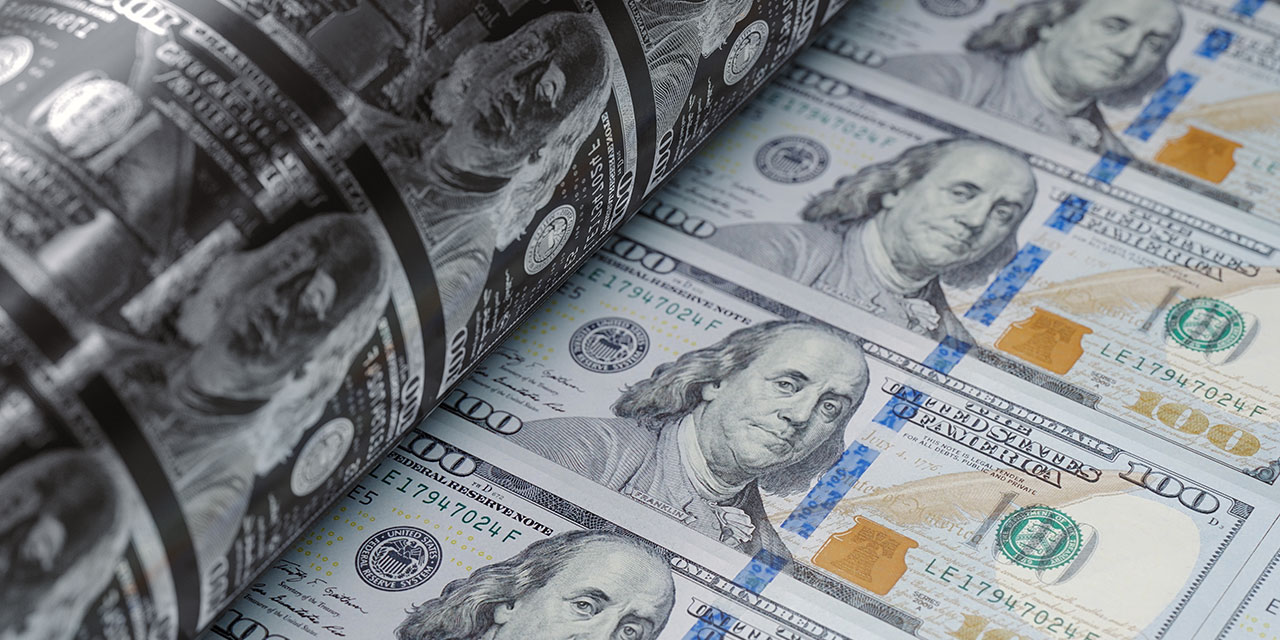
In the monsoon-softened earth of Kerala, a forgotten hoard once held the secrets of the world’s first global currency. What those labourers threw away in 1847 may be exactly what modern investors need today.
During the summer of 1847, a group of labourers breaking ground near Kottayam in what is now Kerala, India, felt their spades strike something hard and luminous beneath the red laterite soil. What tumbled into their calloused hands were dozens of gleaming gold discs — perfectly struck, astonishingly heavy, each bearing the stern profile of emperors dead for seventeen centuries. The coins caught the afternoon light like small suns. The men looked at one another, then at the coins, and made the calculation available to them: a handful of aurei bought a week’s rice, perhaps a modest length of cloth, maybe a few rupees from the local merchant who asked no questions and kept no records.
Most of those coins were melted within days — dissolved into anklets, earrings, temple offerings — their inscriptions of Augustus, Tiberius, and Nero reduced to anonymous gold. The labourers were not fools. They were hungry, and gold is gold. What they could not have known is that they were destroying physical nodes of the world’s first truly global reserve currency: Roman aurei that had crossed three continents, lubricated the silk and pepper trades, and turned up in hoards from the Scottish Highlands to the Malabar Coast. A handful of Kottayam coins survived and eventually reached museums. They are, today, archaeologically priceless and economically instructive.

The decline and fall of the Roman currency empire is not merely antiquarian spectacle. It is, in 2026, an uncomfortably precise mirror held up to dollar dominance — a system built on strikingly similar foundations of military supremacy, institutional trust, trade centrality, and what Valéry Giscard d’Estaing famously called America’s “exorbitant privilege.” Rome’s currency did not collapse overnight. It was slowly poisoned: debased coin by coin, deficit by deficit, until the trust that made a stamped disc of metal worth more than its weight simply evaporated. The question haunting policymakers, central bankers, and investors in 2026 is not whether the dollar will collapse tomorrow. It is whether the slow burn has already begun.
Rome’s Currency Empire at Its Zenith: The World’s First Reserve Currency
To understand what was lost in that Kerala field, you must first understand what the aureus was — and what it represented beyond its 8.19 grams of nearly pure gold.
By the reign of Augustus (27 BC–14 AD), Rome had achieved something no civilization before it had managed at scale: monetary standardization across an empire stretching from the Euphrates to the Rhine. The aureus sat atop a tripartite currency pyramid — gold aureus, silver denarius, bronze sestertius — whose exchange ratios were fixed, understood, and trusted from Britannia to Mesopotamia. This was not merely convenient. It was transformative. Merchants in Alexandria, Antioch, and Londinium could price, contract, and settle in the same currency. Rome had, in effect, created the ancient world’s dollar.
The parallels to the Bretton Woods architecture are not accidental. Both systems rested on three pillars: the issuing power’s military dominance (Rome’s legions, America’s carrier groups), its position as the indispensable node of global trade (Rome’s Mediterranean highway, America’s dollar-denominated commodities markets), and — most crucially — an unspoken faith that the issuer would not abuse the privilege. As the economic historian Peter Temin documented in his landmark study of the Roman economy, the Mediterranean under the early Principate functioned as a genuine integrated market, with Rome at its monetary centre.
The Kottayam hoard is not an anomaly. Roman coins have been excavated across the Indian subcontinent — at Pudukottai, Coimbatore, Eyyal — testament to the pepper, ivory, and textile trade that drew Roman gold eastward along the routes that would later become the Silk Road. The Roman geographer Pliny the Elder complained bitterly that India was draining the empire of 50 million sesterces annually in exchange for luxury goods — a first-century current account deficit that ought to resonate in Washington. Roman coins have also been found near Tusculum in Scotland, carried by soldiers and merchants to the very edge of the known world. The aureus was, in the most literal sense, a global currency — accepted not because Rome compelled it but because Rome’s reputation made it worth accepting.
That reputation rested on purity. The Augustan aureus was struck at roughly 99% gold. The denarius held approximately 90% silver. For two centuries, the system held. Then came Nero.
The Slow Poison: Debasement, Deficit, and the Fall of the Denarius
The Roman currency debasement inflation story is often told as a tale of imperial wickedness — greedy emperors shaving coins to fund luxuries. The reality is more structurally familiar, and therefore more alarming.
Rome’s fiscal problem was structural and bipartisan (to use an anachronism): the empire’s commitments — legions on the Rhine, grain doles in the capital, monumental public works, bureaucratic expansion — consistently outran its tax revenues. When the gap grew too wide, the temptation was always the same: reduce the precious metal content of coinage and mint more of it. Sound familiar?
The debasement timeline reads like a slow financial horror story:
- 64 AD — Nero: The denarius is reduced from ~90% to ~93% silver (a modest start, rationalised as “reform”). The aureus shrinks slightly in weight.
- 193–211 AD — Septimius Severus: Silver content of the denarius falls to ~56%. Military pay is raised to buy loyalty; debasement funds the raise.
- 218–222 AD — Elagabalus: Denarius silver content dips below 50%. The psychological threshold — the point at which the coin is more base metal than silver — has been crossed.
- 235–284 AD — The Crisis of the Third Century: Twenty-six emperors in fifty years. Silver content collapses to 2–5%. The antoninianus, a debased double-denarius, floods the market.
- 301 AD — Diocletian’s Edict on Maximum Prices: In a futile attempt to control the inflation that debasement has unleashed, Diocletian mandates price ceilings across the empire. The result is shortages, black markets, and economic paralysis.
The consequences were not abstract. Wheat prices in Roman Egypt rose roughly 200-fold between the first and fourth centuries AD — a hyperinflationary arc that would not disgrace Weimar Germany. Soldiers demanded payment in kind rather than coin, because coin had become unreliable. Merchants hoarded gold and silver objects, melting old aurei (like those Kottayam labourers, but with better information). The state, to enforce tax collection in an environment of monetary chaos, resorted increasingly to payment in grain, oil, and labour — a regression to barter that signalled the monetary system had effectively ceased to function.
What is particularly instructive — and what the fall of the Roman denarius today camp sometimes misses — is that debasement did not cause Rome’s fall directly. It accelerated a cluster of pathologies: erosion of institutional credibility, the fragmentation of trade networks as currency trust collapsed, the militarisation of fiscal policy, and the progressive unravelling of the social contract between ruler and ruled. The currency was a symptom and an accelerant simultaneously. When Diocletian’s price edict failed, it was not merely an economic policy that had collapsed. It was the state’s claim to monetary authority.
Uncomfortable Parallels to Dollar Dominance in 2026
The lessons from Roman empire currency collapse for USD hegemony are not the province of gold bugs and doom-scrollers. They are, increasingly, the concern of serious institutional economists — including Barry Eichengreen, whose recent analysis in The Economist (March 2026) revisits his foundational argument about dollar resilience while acknowledging, with unusual candour, that the structural supports are weakening in ways he had not fully anticipated a decade ago.
Consider the 2026 landscape against the Roman template:
The Exorbitant Privilege Is Real — and Increasingly Resented. America’s ability to borrow in its own currency, run persistent current account deficits, and use dollar-denominated sanctions as a geopolitical weapon mirrors Rome’s monetary centrality with uncomfortable precision. The IMF’s 2025 reserve currency composition data shows the dollar still commanding roughly 58% of global foreign exchange reserves — down from 71% in 2000. That 13-percentage-point erosion over a quarter-century is not a crisis. It is a trend. And trends, as Rome demonstrated, have momentum.
The Deficit Arithmetic Is Sobering. The U.S. federal debt-to-GDP ratio is projected by the Congressional Budget Office to exceed 130% by 2035 under current trajectories — a number that would have seemed fantastical to the architects of Bretton Woods. The 2026 fiscal deficit alone is projected near $2 trillion. Rome’s emperors of the third century did not consciously choose hyperinflation. They chose, year after year, to fund obligations they could not tax their way out of. The mechanism of modern monetary finance is more sophisticated than clipping coins, but the underlying logic — spending commitments that outrun fiscal capacity, bridged by the printing of money — is structurally identical.
Sanctions Overuse Is Eroding Dollar Credibility. When Rome debased its coinage, merchants in the eastern empire began routing around Roman monetary authority — shifting to barter, to Byzantine gold, to local currencies. Today, the dollar’s weaponisation through sanctions — the freezing of Russian central bank assets in 2022, the exclusion of Iranian banks from SWIFT — has prompted precisely this kind of rerouting. As the Financial Times has documented, BRICS+ nations are actively constructing bilateral payment rails, yuan-denominated commodity contracts, and central bank digital currency frameworks explicitly designed to reduce dollar dependency. Saudi Arabia’s decision to price a portion of its oil exports in yuan is, symbolically, the Malabar Coast merchants choosing not to accept aurei.
The Fed Independence Question Is Not Trivial. Diocletian’s price edict failed because it was a political intervention in a monetary problem that required structural fiscal adjustment. In 2026, with the Federal Reserve navigating a presidential transition and facing public pressure on interest rate policy, the institutional independence that has been the dollar’s most important non-military asset is under a strain that would concern any student of monetary history. Foreign Affairs has flagged this directly: central bank credibility, once lost, is extraordinarily expensive to rebuild — as Paul Volcker’s recession-inducing 1980s disinflation demonstrated.
Gold Is Whispering Something. Central bank gold purchases reached near-record levels in 2024 and 2025, with China, Poland, India, and Turkey among the largest buyers, according to the World Gold Council. This is not sentiment or superstition. It is sovereign hedging — precisely the behaviour Roman merchants displayed when they hoarded gold objects and refused to accept the debased antoninianus at face value. When those who manage the world’s reserves begin quietly accumulating the asset that exists outside any government’s monetary architecture, they are expressing, in the politest institutional language available, a concern about the long-term reliability of paper claims.
The 2026 Reckoning: What Rome Actually Teaches Policymakers
The dollar dominance risks 2026 literature has a tendency toward two equally unhelpful poles: triumphalism (“the dollar has no credible alternative and never will”) and catastrophism (“the dollar will collapse within the decade and we’re all going back to barter”). Rome’s actual history suggests a third path — the slow burn — that is more instructive and considerably more actionable.
Rome did not lose its monetary supremacy in a single dramatic crisis. The aurei found in Kerala were minted between roughly 50 BC and 200 AD — a span of two and a half centuries during which the system functioned well enough to finance transcontinental trade. The deterioration was generational. Parents passed debased coins to children who had never known the Augustan standard. The memory of monetary integrity faded before the reality of monetary chaos arrived. By the time Diocletian issued his famous edict, the damage was centuries in the making.
What Rome’s experience actually prescribes for 2026 is a short, unfashionable list:
Fiscal discipline is not optional for reserve currency issuers. The exorbitant privilege is real, but it is not unconditional. It rests on the implicit promise that the issuer will not abuse it. As Brookings Institution research on reserve currency durability consistently finds, the single most reliable predictor of reserve currency erosion is the issuer’s long-run fiscal trajectory. America’s current trajectory is not sustainable by any honest accounting. This is not a partisan observation. It is arithmetic.
Institutional independence is a strategic asset. The Federal Reserve’s credibility — earned painfully through the Volcker era and sustained through two generations of technocratic discipline — is worth more to dollar dominance than any number of aircraft carriers. Political pressure on central banks is not uniquely American; it is historically universal. And historically, it reliably precedes monetary instability.
Sanctions are a wasting asset. Each use of dollar-denominated financial exclusion as a geopolitical weapon accelerates the construction of alternative payment architectures. Rome’s military dominance in the first century was an enabler of monetary trust; in the third century, as military costs drove debasement, it became a destroyer of that same trust. America’s ability to project financial power and its long-run monetary credibility are not independent variables.
Diversification is not disloyalty. The nations currently building yuan payment rails or accumulating gold reserves are not, for the most part, ideological adversaries of the United States. They are rational actors managing tail risk — exactly as a prudent investor would. Treating reserve diversification as a hostile act misreads the signal and forecloses the diplomacy needed to manage the transition.
The dollar is not the denarius. The United States in 2026 is not Rome in 300 AD. The differences — democratic accountability, flexible exchange rates, deep capital markets, the absence of a credible institutional successor — are real and significant. Barry Eichengreen’s foundational work on dollar hegemony remains correct that currency transitions are measured in decades, not years. But “not collapsing overnight” and “structurally sound” are not the same thing. Rome’s merchants knew the difference. Eventually.
Conclusion: What the Labourers Did Not Know — And What We Have No Excuse Not To
Return, for a moment, to that field in Kerala. The labourers who unearthed those aurei in 1847 were not ignorant of gold’s value. They understood, perfectly well, that what they held was precious. What they could not know was the specific weight of history those coins carried — the empires they had financed, the trade routes they had lubricated, the monetary architecture they had once sustained across three continents. That context was invisible to them, and its invisibility made those coins worth only what the nearest merchant would pay.
The risk for modern investors, policymakers, and citizens is a different and less excusable form of the same blindness. The historical context is available. The data on reserve currency erosion is published quarterly by the IMF. The deficit trajectories are modelled publicly by the CBO. The central bank gold purchases are reported by the World Gold Council. The de-dollarization infrastructure being built across the Global South is covered, soberly and thoroughly, by every serious financial publication. The decline and fall of the Roman currency empire is not a secret. It is a curriculum.
What is missing is not information but urgency — the same urgency that is always missing in the slow-burn phase of a long historical transition, when each individual quarter looks manageable, each individual policy choice seems reasonable, and the cumulative drift remains visible only if you are willing to zoom out to the century-scale view that historians occupy and investors too rarely do.
The Kottayam labourers can be forgiven. They were hungry, they had no libraries, and the coins they melted down were, to any reasonable nineteenth-century assessment, simply gold. Modern policymakers operating in 2026 — with every lesson of Roman monetary history digitised, analysed, and available at a search query’s distance — will not be afforded the same forgiveness by the historians who come after them. The aurei are trying to tell us something. The question is whether we are listening before we melt them down.
Discover more from The Economy
Subscribe to get the latest posts sent to your email.
Analysis
Fed Could Slash Balance Sheet by $2tn Without Turmoil, Says Miran — As Trump Hails ‘Courage’ in Powell Probe

Fed Governor Stephen Miran outlines a $2tn balance-sheet reduction roadmap while Trump praises Pirro and Bondi for their “courage” in the DOJ probe of Chair Jerome Powell. Here’s what it means for markets.
On the same extraordinary Thursday that Federal Reserve Governor Stephen Miran stood before the Economic Club of Miami and sketched a meticulous blueprint for shrinking the world’s most powerful central bank by as much as $2 trillion, President Donald Trump was in the Oval Office doing something altogether less fastidious — lavishing praise on the officials hunting his own Fed chairman. “We have a moron at the Fed,” Trump declared, before adding that he wanted to “thank Jeanine Pirro and Pam and her group for having the courage to bring this suit.”
Two events. One seismic day. A perfect tableau of the tectonic collision reshaping American monetary policy in 2026.
Miran’s speech — calm, rigorous, and laden with footnotes — offered the intellectual scaffolding for a leaner Federal Reserve. Trump’s Oval Office remarks, by contrast, were a wrecking ball still swinging at the institutional walls those footnotes are meant to protect. Together, they encapsulate the defining tension of this moment: a policy reform agenda of genuine substance, entangled in a political pressure campaign that threatens to delegitimize it entirely.
Miran’s Roadmap: Engineering a Smaller Fed
The core of Governor Stephen Miran‘s March 26 address was a co-authored research paper titled “A User’s Guide to Reducing the Federal Reserve’s Balance Sheet” (Finance and Economics Discussion Series 2026-019), which maps out a phased, technically credible path toward a structurally smaller Fed footprint.
The current balance sheet stands at approximately $6.7 trillion — a figure that, while already down from its $9 trillion pandemic peak, remains historically elevated and, in Miran’s view, a source of ongoing market distortion. His thesis is deceptively simple: the Fed holds far more assets than it needs to because banks, under existing liquidity regulations, are compelled to hoard reserves. Fix the regulations, destigmatize emergency lending facilities, and the demand for those reserves — and by extension the need for a bloated balance sheet — shrinks organically.
“Shrinking the size of the balance sheet is desirable,” Miran told the audience, adding that those who say it cannot happen “simply lack imagination.”
The precise contours of his proposal rest on four interlocking levers:
- Easing liquidity regulations. Current rules — particularly the Liquidity Coverage Ratio and the Net Stable Funding Ratio — inflate banks’ demand for central-bank reserves as a buffer. Recalibrating these requirements would reduce reserve demand, allowing the Fed to hold fewer assets without destabilizing money markets.
- Tweaking bank stress tests. Stress scenarios that penalize banks for drawing on central-bank facilities inadvertently discourage their use, creating artificial demand for reserves as a substitute.
- Destigmatizing the discount window and standing repo facility. Banks are reluctant to access emergency lending because doing so signals weakness to the market. Normalizing these facilities — perhaps through mandatory, unpublicized usage — would allow them to function as genuine shock absorbers rather than instruments of last resort.
- Active liquidity management. More frequent open-market operations, Miran argued, could replace the blunt instrument of a permanently large balance sheet.
The governor was careful to note that the optimal size of the balance sheet “is a subject that warrants more serious work,” and that the $1 trillion to $2 trillion reduction figure represents a range, not a target. What was unambiguous was his directional conviction: “We should aim for as small a footprint in markets as possible to minimize government-induced distortions, including funding market disintermediation.”
The Ghost of QT Past — and Why This Time Is Different
Markets have reason to approach talk of balance-sheet reduction with scar tissue still fresh. The Fed’s previous quantitative tightening (QT) cycle, launched in 2022, ended not with a triumphant normalization but with a white-knuckled halt. When short-term financing markets experienced volatility and some banks’ funding costs significantly exceeded the Fed’s target range, the Fed was forced to hit the brakes. QT was wound down, and the balance sheet — far from returning to pre-pandemic norms — stabilized above $6.5 trillion before the Fed began cautiously rebuilding reserves.
Miran’s framework is explicitly designed to avoid a repeat. He emphasized that the most important guardrail is pace: “I would counsel a slow pace of reductions to ensure the private sector can absorb all the securities shed off our own balance sheet,” he said, adding that reductions should happen “passively, rather than via active sales.” Selling bonds outright would realize mark-to-market losses on holdings acquired at lower yields — an accounting embarrassment the Fed is keen to avoid.
Think of it as the difference between bleeding air slowly from an over-inflated tire versus puncturing it with a knife. The Miran approach relies on structural reform to lower the pressure threshold at which the system needs that air in the first place.
The broader macro stakes are not trivial. A smaller balance sheet, Miran contended, would allow for interest rates to be lower than they otherwise would be — a result that would simultaneously advance the Trump administration’s rate-cut agenda and give the Fed more room to deploy large-scale asset purchases in the next crisis, when the fiscal and political cost of doing so from an already-bloated balance sheet would be enormous.
The Kevin Warsh Factor: Confirmation Limbo
Miran’s speech did not land in an institutional vacuum. The issue of shrinking the Fed’s balance sheet could take on greater importance after Fed Chair-designate Kevin Warsh is confirmed to lead the central bank. Nominated on March 4, 2026, to succeed Powell when his chairmanship expires in May, Warsh is widely regarded as even more hawkish on the balance sheet than Miran — he has publicly called the Fed’s holdings “bloated” and argued that the freed capital should be redeployed as lower interest rates for households.
The irony, however, is excruciating. The very political pressure campaign Trump is waging against Powell has become the single largest obstacle to Warsh’s confirmation. Senator Thom Tillis of North Carolina has repeatedly vowed to block Warsh’s nomination from advancing through the Senate Banking Committee until the DOJ drops its probe of Powell. In a pointed remark, Tillis said: “I have no earthly idea what the market reaction would have been if suddenly the perception is that the Fed chair serves at the pleasure of the President.”
Trump, by praising the probe, is thus paradoxically delaying the confirmation of the very replacement he wants. This is not politics as three-dimensional chess. It is politics as a dog chasing its own tail at 500 basis points.
The DOJ Probe: ‘Courage’ or Constitutional Crisis?
The legal backdrop to all of this is extraordinary, and its trajectory over the past fortnight has moved quickly. US District Judge James Boasberg wrote in a blistering ruling that a “mountain of evidence suggests that the Government served these subpoenas on the Board to pressure its Chair into voting for lower interest rates or resigning.” Boasberg quashed the grand-jury subpoenas that DC US Attorney Jeanine Pirro had issued against the Federal Reserve as part of a criminal investigation nominally focused on cost overruns in the renovation of the Fed’s headquarters — a project the Fed says totals roughly $2.5 billion (Trump has repeatedly claimed the figure is “over $3 billion, maybe $4 billion”).
Then came the bombshell heard, perhaps deliberately, by no one in Trump’s immediate circle. A top deputy to Pirro, G.A. Massucco-LaTaif, told Judge Boasberg in a closed-door hearing that the office does “not know at this time” what evidence there is of fraud or criminal misconduct. Pirro’s deputy acknowledged that the Justice Department did not have evidence of wrongdoing in its criminal investigation.
The judge was unimpressed. Boasberg wrote: “On the other side of the scale, the Government has produced essentially zero evidence to suspect Chair Powell of a crime; indeed, its justifications are so thin and unsubstantiated that the Court can only conclude that they are pretextual.”
Despite all of this — the judicial rebuke, the deputy’s candid admission, the legal improbability of an appeal succeeding — Trump chose March 26 to celebrate the probe’s architects. He declared: “I want to thank Jeanine Pirro and Pam and her group for having the courage to bring this suit.”
The word “courage” is doing extraordinary load-bearing work in that sentence. A federal judge found essentially no probable cause. The lead prosecutor’s own deputy admitted ignorance of any crime. And yet the framing is one of brave officials daring to hold power to account. This is what the erosion of institutional norms looks like in real time: not a single dramatic rupture, but a steady rhetorical reframing of accountability as heroism and evidence as optional.
Powell’s Defiant Autumn
For his part, Jerome Powell has not bent. The JFK Library Foundation announced it will present the John F. Kennedy Profile in Courage Award to Powell on May 31, honoring him for “protecting the independence of the Federal Reserve despite years of personal attacks and threats from the highest levels of government.” Powell’s term as Fed chair ends in May; he could retain his governorship seat through 2028 if he chooses.
Powell’s institutional defiance has been the financial world’s most important — and arguably most undercovered — macro stability force of 2025–26. In a world where global investors price US Treasury bonds as risk-free assets partly because the Fed is independent, the market implications of a compliant Fed are not academic. They are embedded in sovereign spreads, dollar valuations, and the yield premiums demanded by foreign holders of American debt.
Market Implications: The Bull/Bear Framework
The Bull Case for Miran’s Balance-Sheet Blueprint
If implemented gradually and credibly, the Miran framework is genuinely constructive for risk assets. A structurally smaller balance sheet achieved through regulatory reform — rather than aggressive asset sales — would:
- Reduce the “term premium” investors demand on long-duration Treasuries, keeping yields anchored.
- Free the Fed to cut rates more aggressively (Miran has publicly called for over 100 basis points of cuts in 2026), supporting equity valuations.
- Enhance the Fed’s future crisis-response toolkit by ensuring a large-scale QE program in the next recession would not crowd out private credit on an already-saturated balance sheet.
- Signal a market-neutral, rules-based monetary framework — music to the ears of global reserve managers and central bank watchers at the BIS.
The Bear Case
The risks are equally real. Any miscalibration in the pace of balance-sheet reduction could reprise the 2019 repo market stress or the 2023 regional banking crisis. Liquidity is not a dial but a complex, non-linear system; reducing reserve demand through regulatory change while simultaneously rolling off securities leaves multiple pressure points in operation simultaneously.
More critically: the entire Miran framework requires institutional credibility to function. Investors must believe the Fed will proceed methodically, on its own terms, without political interference. If the DOJ probe drags on, if Warsh’s confirmation remains hostage to it, and if markets begin pricing in a Fed that operates under White House supervision, the term premium on Treasuries could rise even as the balance sheet shrinks — exactly the opposite of the intended effect.
Emerging market economies face a specific variant of this risk. A credibility discount on US monetary institutions would accelerate dollar-diversification efforts already underway in BRICS nations, pushing capital flows toward gold, euro-denominated assets, and renminbi instruments. For countries with dollar-pegged currencies or heavy USD-denominated debt service, a Fed credibility shock is not a background risk. It is a foreground crisis.
The Grand Irony: Two Kinds of Courage
There is something almost Shakespearean about the juxtaposition on March 26, 2026. Inside a Miami ballroom, a Fed governor with a Harvard doctorate was making the technical case — cautiously, methodically, with seventeen footnotes — for how the world’s largest central bank might, over many years, become a slightly smaller one. In Washington, the President of the United States was calling that central bank’s chairman “a moron” and congratulating the prosecutor whose deputy just admitted she cannot find a crime.
One document, Miran’s speech, will be read by central bankers in Frankfurt, Tokyo, and Sydney as a thoughtful contribution to the global literature on balance-sheet normalization. The other, Trump’s Oval Office remarks, will be read by those same central bankers as a warning — of what happens when executive ambition outruns judicial patience and institutional respect.
The word “courage” has two meanings in this story. One is Miran’s quiet intellectual courage: presenting a technically demanding, politically inconvenient proposal for shrinking a government institution in a moment when the White House prefers its central bank compliant, not lean. The other is the courage Trump attributed to officials pursuing a probe that a federal judge called pretextual and whose own prosecutor admitted was evidentially hollow.
History will distinguish between the two. Markets, which deal in probabilities rather than rhetoric, already are.
Expert Takeaway for Global Investors and Policymakers
Three signals deserve close monitoring in the weeks ahead:
1. The Warsh confirmation timeline. If Sen. Tillis’s blockade holds, Powell remains in the chair past May — potentially triggering further Trump escalation. A clean confirmation, by contrast, would allow the Miran balance-sheet framework to become official Fed policy under new leadership. Watch the Senate Banking Committee calendar.
2. The Boasberg appeal ruling. The DOJ’s appeal of the subpoena-blocking order is a legal long shot, but its outcome shapes the political temperature around Fed independence. A sustained appellate fight keeps the probe alive and the Tillis blockade in place. An early dismissal could clear the path for Warsh.
3. Reserve market technicals. The Fed is currently adding to its balance sheet through reserve-management purchases. Monitor overnight repo rates and bank reserve levels at the Fed for early signs of stress that might complicate, or accelerate, the political case for the Miran framework.
The bottom line: Miran has produced a credible, technically sophisticated roadmap for a leaner Fed. Whether that road gets traveled depends less on the elegance of his framework than on whether the political environment allows institutional trust to survive long enough to implement it.
That, in 2026, is the defining macro question. And for now, the answer remains genuinely uncertain.
Discover more from The Economy
Subscribe to get the latest posts sent to your email.
Tether engages KPMG for its first full USDT reserves audit — a seismic shift for stablecoin transparency. What the Big Four move means for US regulation, Circle’s USDC, and global crypto-finance.
For twelve years, Tether operated in the half-light of quarterly attestations — snapshots of solvency, not proof of it. That era is ending.
On March 24, 2026, Tether announced it had formally engaged a Big Four accounting firm to conduct its first-ever comprehensive financial statement audit of the $185 billion in reserves backing its USDT stablecoin. Three days later, the Financial Times identified that firm as KPMG — one of the world’s four largest professional services networks — tasked with auditing what Tether’s own chief financial officer Simon McWilliams called “the biggest ever inaugural audit in the history of financial markets.” PricewaterhouseCoopers has been separately engaged to strengthen internal controls and systems ahead of the review.
The announcement lands at a geopolitically charged moment. Tether is no longer simply the dominant liquidity engine of the crypto markets. It is mounting a full-scale re-entry into the United States, the world’s most consequential financial jurisdiction — and it is doing so armed with a regulatory-grade balance sheet, a White House-connected executive leading its domestic operations, and now the credibility of a Big Four imprimatur. The KPMG engagement is not merely an audit. It is a statement of intent.
From BDO Attestations to Big Four: Understanding the Magnitude of the Shift
To appreciate what a full KPMG audit represents, one must first understand what Tether’s transparency regime has, until now, consisted of. Since 2021, the company has published quarterly attestations through BDO Italia — narrow, point-in-time confirmations that Tether’s reserves exceeded its liabilities on a given date. These engagements verified a balance sheet snapshot. They did not examine internal controls, risk exposure across time, the integrity of accounting systems, or the accuracy of ongoing financial reporting.
The scope of the KPMG engagement extends well beyond simple reserve verification. According to CFO McWilliams, the engagement will review Tether’s full financial statements, including its “uniquely complex mix of digital assets, traditional reserves, and tokenised liabilities.” CoinGenius The audit will examine assets, liabilities, controls, and reporting systems across a reserve portfolio that spans US Treasury bills, gold, Bitcoin, and secured loans — a structure without precedent in auditing history.
The distinction matters enormously: previously, BDO Italia published quarterly attestations confirming reserves on a specific date, but those snapshots did not examine internal controls, ongoing operations, or risk exposure over time. BeInCrypto The KPMG mandate closes that gap entirely, subjecting Tether to the same scrutiny applied to the world’s largest banks and asset managers.
The choice of KPMG itself carries additional significance. Tether also hired a digital assets specialist from KPMG’s Canadian business as head of internal audit last year BeInCrypto — a strategic hire that now reads less like coincidence and more like preparation. The institutional groundwork was laid quietly while the announcement was still months away.
The Political Architecture Behind the Audit
No serious analysis of this story can ignore the political scaffolding holding it upright. Tether’s return to the United States is not happening in a regulatory vacuum — it is happening in the most crypto-friendly Washington in modern history, and its US operation is staffed at the highest level by figures drawn directly from the Trump administration’s inner circle.
Tether officially launched USAT on January 27, 2026 — a federally regulated, dollar-backed stablecoin developed specifically to operate within the United States’ new federal stablecoin framework established under the GENIUS Act. The issuer of USAT is Anchorage Digital Bank, N.A., America’s first federally regulated stablecoin issuer. Tether
Bo Hines, Trump’s former top crypto official, is now the CEO of Tether’s US operations. Howard Lutnick, Trump’s Commerce Secretary, is the former CEO of Cantor Fitzgerald — the company that manages the reserves of USAT. Fortune
The layering of these relationships — a former White House crypto czar running Tether’s domestic arm, and the sitting Commerce Secretary’s former firm serving as reserve custodian — has drawn both admiration and scrutiny from Washington observers. For supporters, it represents the most credible possible bridge between crypto’s offshore origins and domestic institutional legitimacy. For critics, it raises pointed questions about the permeability of the line between the crypto industry and its would-be regulators.
What is not in dispute is the regulatory architecture enabling the move. The GENIUS Act, signed into law last July, established the first federal framework for stablecoins in the United States. Under this framework, only stablecoins issued by federally or state-qualified entities can be marketed to US users, effectively forcing Tether to develop a compliant alternative or risk losing access to American institutions. FXStreet The KPMG audit is the final legitimizing step in a carefully sequenced campaign to position Tether not as a reformed outsider, but as a native participant in the American financial system.
The Reserve Question: Tether’s Original Sin
Tether’s credibility problem is not abstract. Five years ago, Tether was fined $41 million for falsely claiming that its stablecoins were fully backed by fiat currencies. In 2021, the company reached a settlement with the New York attorney general’s office after it allegedly covered up roughly $850 million in losses. Fortune In 2024, the Department of Justice was reported to be investigating the company for potential violations of anti-money-laundering and sanctions rules.
In 2021, CoinDesk filed a FOIL request with the New York Attorney General’s office seeking documents on USDT’s reserve composition. Tether fought the release in court and lost twice. The documents, received after a two-year legal battle in 2023, revealed that Tether held the vast majority of its $40.6 billion in reserves at Bahamas-based Deltec Bank as of March 2021, with heavy exposure to commercial paper issued by Chinese and international banks. CoinDesk
That was 2021. The composition of Tether’s reserves has since shifted dramatically. As of December 31, 2025, 83.11% of Tether’s reserves are in T-bills, with $122.32 billion worth of US government debt securities — placing Tether well ahead of Germany and Israel in terms of US Treasury holdings. TheStreet The company now self-describes as one of the largest buyers of US Treasury bills in the world. In a matter of years, it has transitioned from an entity whose offshore commercial paper exposure spooked regulators to one whose reserve profile rivals that of a mid-sized sovereign wealth fund.
The KPMG audit is designed to make that transformation verifiable — and permanent.
What KPMG’s Engagement Means for Stablecoin Transparency in 2026
The broader stablecoin industry is watching this audit closely, because it will establish a new baseline for what transparency means at scale. USDT remains the largest stablecoin in circulation, with a market capitalization above $180 billion and more than 500 million users globally. The scale has made Tether a significant player in short-term government debt markets, with executives previously signaling it could rank among the largest buyers of US Treasury bills. The Block
For comparison, Circle’s USDC — Tether’s closest US-regulated competitor — currently carries a market capitalization of approximately $78 billion, less than half of USDT’s. Circle has long leveraged its transparency and domestic regulatory alignment as a competitive moat. The KPMG engagement directly challenges that narrative.
As stablecoins evolve into core financial infrastructure, regulated issuers like USDC, RLUSD, and PYUSD are gaining share. RLUSD surpassed $1 billion in market cap within its first year. CoinDesk Yet none of these issuers operates at the reserve scale that Tether commands. If KPMG delivers a clean opinion — a meaningful “if” given the complexity of auditing $185 billion in digitally native and traditional assets simultaneously — the competitive calculus in the US stablecoin market will shift materially.
The audit’s scope is also unprecedented in a technical sense. CFO McWilliams noted the engagement will review Tether’s full financial statements, including its uniquely complex mix of digital assets, traditional reserves, and tokenised liabilities. The company noted that it retains earnings within its ecosystem rather than distributing profits, with resources held in affiliated proprietary holding companies. CoinGenius For auditors accustomed to traditional balance sheets, the multi-layered structure of a stablecoin issuer that spans on-chain tokenized liabilities and off-chain Treasury holdings represents genuinely novel methodological terrain.
The Fundraising Imperative
The timing of the KPMG announcement is also shaped by a more immediate commercial pressure. Tether plans a US expansion and seeks to raise up to $20 billion amid investor concerns over pricing and regulatory risk, with the company previously seeking $15 billion to $20 billion at a $500 billion valuation. CoinDesk Potential institutional investors, evaluating a stake in a company managing reserves larger than most sovereign debt portfolios, have reportedly flagged the absence of audited financials as a barrier.
The logic is straightforward: no institution managing fiduciary capital can invest in a company at a $500 billion valuation without audited financial statements. KPMG provides the indispensable documentary foundation for any such fundraise. It is, in essence, Tether’s admission ticket to the institutional capital markets it is now trying to access.
Tether has also outlined plans to add roughly 150 staff over the next 18 months as it scales operations. The Block That expansion — across compliance, risk, operations, and technology — signals that the company is building for a fundamentally different regulatory environment than the one it navigated in its early years.
There is also a jurisdiction-specific compliance driver. The audit could be part of the compliance requirements in El Salvador, where Tether was registered in 2025. Under the law, the company is required to provide audited financial statements to regulators by June. The Market Periodical The Salvadoran requirement, though modest in isolation, provides a fixed external deadline that concentrates minds internally.
The Global Economist’s View: Dollar Hegemony and the Stablecoin Infrastructure Bet
Zoom out far enough and the Tether-KPMG story ceases to be a crypto story and becomes a story about the architecture of the US dollar’s next chapter. USDT, with over 550 million users in 160 countries — many in emerging markets with limited access to traditional banking — functions in practice as a parallel dollar clearing system, one that processes trillions in volume annually and operates largely outside Federal Reserve oversight.
Washington’s strategic interest in that system is no longer ambiguous. USAT will leverage the Hadron by Tether technology platform, with Cantor Fitzgerald acting as designated reserve custodian and preferred primary dealer. The announcement represents the natural next step in reinforcing US dollar dominance through digital infrastructure. Tether
Bo Hines said that Tether is already among the largest 20 T-bill holders, including all sovereign states, and that increasing demand for both USDT and USAT could drive Tether to ramp up US Treasury bill purchases further in 2026. TheStreet A stablecoin issuer buying hundreds of billions in US government debt is not a peripheral actor. It is a structural pillar of dollar demand — and Washington has evidently concluded that legitimizing and domesticating Tether is preferable to the alternative.
The KPMG audit accelerates that domestication. An audited Tether is an institutionally legible Tether — one that pension funds can evaluate, sovereign wealth funds can reference, and foreign central banks can engage. In an era in which digital dollar infrastructure is increasingly recognized as a geopolitical instrument, the audit’s significance extends well beyond crypto-market dynamics.
Forward Signals: What to Watch
Several inflection points will determine whether this announcement becomes a lasting transformation or a sophisticated rebranding exercise.
The audit’s completion timeline has not been disclosed. Tether confirmed that initial onboarding with the auditor concluded several weeks before the March 24 announcement CoinGenius, but no target date for a published opinion has been provided. The complexity of the engagement — spanning digital asset holdings, traditional reserves, tokenized liabilities, and affiliated holding company structures — suggests the process will unfold over at least 12 to 18 months.
The independence of the KPMG engagement will also face scrutiny. Tether also hired a digital assets specialist from KPMG’s Canadian business as head of internal audit last year BeInCrypto — a fact that critics may interpret as a relationship that pre-dates the audit, raising questions about arm’s-length independence. Both KPMG and Tether will need to manage that perception carefully.
Regulatory reciprocity remains the wild card for global operations. USDT was effectively expelled from Europe after the MiCA law took effect. Hines predicted that USDT will also comply with the GENIUS Act, citing the law’s reciprocity clause, which allows stablecoin issuers from countries with similar regulatory frameworks to distribute stablecoins within the United States. Yahoo Finance Whether that clause is interpreted broadly enough to protect USDT’s global distribution network is a question that will be answered by regulators, not auditors.
And Circle, PayPal, and Ripple — whose RLUSD product crossed $1 billion in market cap in its first year — will not stand still. The stablecoin competition for US institutional capital is now a five-player race, and KPMG’s imprimatur, if earned, tips the scales meaningfully in Tether’s favor.
Conclusion: The Audit as Geopolitical Signal
In 2018, Tether’s first attempt at a full independent audit collapsed when its auditor severed ties before the engagement was complete. That episode became Exhibit A in years of arguments about the company’s commitment to transparency. What was once a cautionary tale is now, eight years later, being rewritten.
The engagement of KPMG — the world’s fifth-largest professional services network by revenue — is not a guarantee of a clean audit. It is a guarantee that the question will be answered. For a company that for over a decade managed to avoid answering it, that commitment, credibly made, is itself a transformation.
What Tether is building — audited, politically connected, reserve-transparent, and regulation-native — is not simply a better version of what came before. It is a fundamentally different kind of institution: part stablecoin issuer, part shadow sovereign bond fund, part instrument of American dollar diplomacy. Whether that institution passes KPMG’s scrutiny will be one of the most consequential financial audits of the decade.
The markets will wait. So will Washington. And so, increasingly, will the rest of the world.
📋 Key Takeaways
- KPMG confirmed by the Financial Times as Tether’s Big Four auditor for its first-ever full financial statement audit of USDT reserves (~$185 billion).
- PwC separately engaged to strengthen internal controls and systems ahead of the KPMG review.
- The audit covers assets, liabilities, tokenized stablecoin liabilities, and reporting systems — well beyond prior BDO Italia quarterly attestations.
- USAT launched January 27, 2026 under the GENIUS Act; issued by Anchorage Digital Bank; Bo Hines (former White House crypto director) serves as CEO.
- Cantor Fitzgerald (Howard Lutnick, now US Commerce Secretary) serves as USAT’s reserve custodian — embedding deep political relationships into Tether’s US infrastructure.
- Tether is seeking to raise $15–$20 billion at a $500 billion valuation; the audit is a prerequisite for institutional investor participation.
- USDT holds ~60% stablecoin market share globally; USDC trails at ~$78 billion market cap.
- Tether already holds over $122 billion in US Treasury bills — among the top 20 global T-bill holders, including sovereign states.
❓ FAQ(FREQUENTLY ASKED QUESTONS )
What is the Tether KPMG audit? KPMG has been engaged to conduct Tether’s first full independent financial statement audit of the $185 billion in reserves backing its USDT stablecoin. Unlike prior quarterly attestations, the KPMG audit will examine internal controls, financial reporting systems, and the full balance sheet over time.
Why does the Tether KPMG audit matter for US stablecoin regulation? The GENIUS Act, signed in July 2025, mandates transparency and reserve standards for US-regulated stablecoins. A clean KPMG audit would position Tether’s USDT and its new USAT token as compliant with the most rigorous institutional standards, accelerating integration with US financial infrastructure.
Who is Bo Hines and what is his role at Tether? Bo Hines is the former Executive Director of the White House Crypto Council under President Trump. He was appointed CEO of Tether’s USAT US operations, serving as the primary bridge between Tether’s global operations and Washington’s regulatory establishment.
How does Tether’s KPMG audit affect USDC and Circle? Circle has historically differentiated USDC through regulatory transparency and domestic compliance. A completed KPMG audit of Tether’s larger reserve base would significantly narrow that advantage, intensifying competition for US institutional stablecoin market share.
What is the GENIUS Act? The GENIUS Act is the United States’ first comprehensive federal legislative framework for payment stablecoins, signed into law in July 2025. It mandates full reserve backing, bank or federally qualified issuance, and Bank Secrecy Act anti-money-laundering compliance for all stablecoins marketed to US users.
Has Tether ever been audited before? No. Tether has published quarterly reserve attestations since 2021 through BDO Italia, but these are limited snapshots that do not constitute a full independent financial statement audit. A 2018 attempt at a full audit collapsed when the auditor severed ties before completion.
Discover more from The Economy
Subscribe to get the latest posts sent to your email.
-

 Markets & Finance3 months ago
Top 15 Stocks for Investment in 2026 in PSX: Your Complete Guide to Pakistan’s Best Investment Opportunities
-

 Analysis2 months ago
Brazil’s Rare Earth Race: US, EU, and China Compete for Critical Minerals as Tensions Rise
-

 Banks2 months ago
Best Investments in Pakistan 2026: Top 10 Low-Price Shares and Long-Term Picks for the PSX
-

 Investment2 months ago
Top 10 Mutual Fund Managers in Pakistan for Investment in 2026: A Comprehensive Guide for Optimal Returns
-

 Analysis1 month ago
Top 10 Stocks for Investment in PSX for Quick Returns in 2026
-

 Asia3 months ago
China’s 50% Domestic Equipment Rule: The Semiconductor Mandate Reshaping Global Tech
-

 Global Economy3 months ago
Pakistan’s Export Goldmine: 10 Game-Changing Markets Where Pakistani Businesses Are Winning Big in 2025
-

 Global Economy3 months ago
15 Most Lucrative Sectors for Investment in Pakistan: A 2025 Data-Driven Analysis