Analysis
Qatari Stocks Plunge Amid Iran Retaliation: UAE Markets Shuttered as Middle East Tensions Escalate Gulf Economic Fallout
Gulf stock markets reeled on March 2–3, 2026, as Qatar’s QE Index dropped 3.3–3.7%, UAE bourses shut for two days, and Brent crude surged past $82 a barrel—the sharpest regional market shock since the 2003 Iraq War—after Iran’s retaliatory strikes targeted cities across the Gulf following the killing of Supreme Leader Ali Khamenei.
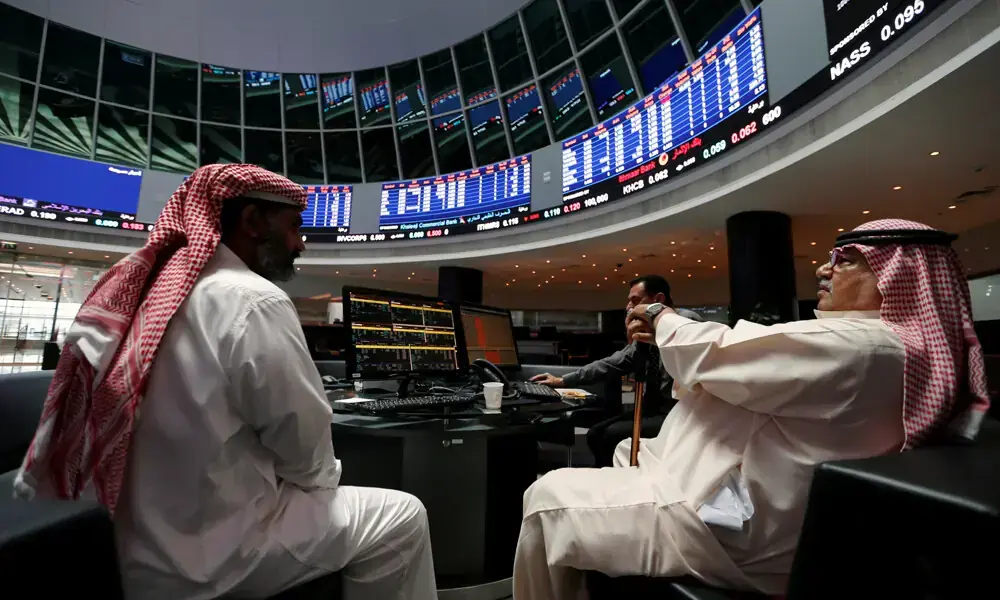
On the morning of March 2, 2026, the trading floors of Doha fell silent under the weight of something that felt less like economics and more like history. Smoke was still rising over parts of Dubai. Reports of explosions above Doha had persisted for a second consecutive day. Major airports across the Gulf—Abu Dhabi, Dubai, Doha—were either shuttered or operating at drastically curtailed capacity. And when Qatar’s benchmark stock index opened for the first time since the weekend’s cataclysm, it fell with a velocity that told its own grim story.
The trigger was unambiguous: a coordinated U.S.–Israeli military campaign, code-named Operation Epic Fury, had killed Iranian Supreme Leader Ayatollah Ali Khamenei and struck Iran’s nuclear and military infrastructure. Tehran’s response was swift, sweeping, and historic—hundreds of missiles and drone barrages aimed at U.S. military installations and civilian infrastructure across every major Gulf state. The region that had spent three decades marketing itself as the world’s most reliable crossroads of commerce was, overnight, a theatre of war.
The economic consequences have been immediate, measurable, and—depending on how the next seventy-two hours unfold—potentially generational. This is the story of what happened to Gulf markets, why it matters to the world, and what comes next.
The Events That Shook a Region
The strikes began on Saturday, February 28. By Sunday, March 1, as Reuters reported (DA 94), Iran had launched retaliatory attacks not just against Israel but across a remarkable geographic arc—Kuwait, Bahrain, Jordan, Saudi Arabia, Iraq, Oman, Qatar, and crucially, the UAE. Three people were killed in the UAE alone; hundreds of missiles and drones were intercepted, but many penetrated defenses, hitting near Zayed Port in Abu Dhabi and triggering alarm across residential districts in Dubai.
Israel launched fresh strikes on Tehran on Sunday, prompting yet another wave of Iranian barrages—a cycle of action and retaliation that President Donald Trump indicated on Truth Social would continue, in his words, “uninterrupted throughout the week or as long as necessary.” Iran, for its part, had IRGC (Islamic Revolutionary Guard Corps) forces broadcasting VHF warnings to vessels in the Strait of Hormuz: “No ship is allowed to pass.”
“Iran’s continuing missile and drone strikes on GCC countries have pushed markets into uncharted territory.” — Iridium Advisors, March 1, 2026
The Strait of Hormuz—a 33-kilometre-wide chokepoint through which, according to the U.S. Energy Information Administration, roughly 20 million barrels of oil transit daily—had effectively ceased to function. Tankers were idling on both sides of the strait. One oil tanker was struck off the coast of Oman. Insurance underwriters pulled coverage. Bloomberg (DA 94) confirmed that tanker traffic through the world’s most critical energy corridor had “largely halted.”
Gulf Market Reactions: A Market in Freefall
The financial verdict was swift and brutal. As reported by Zawya, Qatar’s QE Index—which had been closed for a public holiday on Sunday—opened Monday morning and dropped between 3.3% and 3.7%, with every single constituent falling. The country’s biggest bank, Qatar National Bank, declined 3.7%. Qatar Islamic Bank plunged 5.2%—on course for its worst single session since August 2023—after HSBC cut its price target. Maritime and logistics firm Qatar Navigation tumbled 6.2%, and LNG shipping company Qatar Gas Transport retreated 4.1%.
Qatar’s exposure is not merely symbolic. It is home to the largest U.S. military base in the region—Al Udeid Air Base—making it simultaneously a target and a linchpin of Western strategic positioning. Its LNG infrastructure, among the world’s most productive, is precisely the kind of asset that makes markets nervous when missile trajectories are being plotted nearby.
The UAE’s response was more radical, and in some ways more revealing. Bloomberg (DA 94) confirmed that the UAE Capital Markets Authority directed both the Abu Dhabi Securities Exchange (ADX) and the Dubai Financial Market (DFM) to remain closed on March 2 and March 3. The regulator cited its “supervisory and regulatory role” and committed to monitoring the situation on an “ongoing basis.” The unspoken reason was starker: a market reopening amid missile strikes against a city whose entire economic identity is built on stability would have risked a rout.
Dubai’s modern identity—built from a fishing village into a $500 billion economy through ports, aviation, real estate, and financial services—now faced an existential stress test. “The UAE relies on the frictionless movement of people and goods,” Stephen Fallon, founder of DBM Consulting, told The National (DA 76). “This is really bad for states like the UAE, because this is sort of the necessary oxygen to their economic model.”
Elsewhere, Saudi Arabia’s Tadawul All-Shares Index opened Sunday down 4.8%, recovering to close 2.2% lower. Kuwait suspended trading entirely—citing “exceptional circumstances”—while Bahrain fell 1%, Oman declined 1.4%, and Egypt’s blue-chip index, after plunging 5.5% in early trade, settled 2.5% down.
Oil Prices Surge: The Energy Shock Beneath the Headlines
The deeper and more globally consequential dimension of this crisis is oil. When futures markets opened Sunday evening, they moved with the kind of speed that suggests not just fear, but structural alarm. CNBC (DA 93) reported that Global benchmark Brent crude jumped approximately 9%, or $6.54, to $79.41 a barrel. Earlier in the session, Brent briefly spiked to $82.37—its highest level since January 2025—before settling back.
Barclays analysts revised their Brent crude forecast to $100 per barrel from an earlier estimate of $80, while UBS warned that a material disruption to Strait of Hormuz flows could push prices above $120 per barrel. CNBC (DA 93) noted that Amrita Sen of Energy Aspects expects prices to hold around the $80 level, absent a complete Hormuz closure. But the critical caveat is the qualifier: absent.
“Roughly one-fifth of global oil supply passes through the Strait of Hormuz… markets are more concerned with whether barrels can move than with spare capacity on paper.” — Jorge León, Rystad Energy
The Strait of Hormuz handles approximately 30% of the world’s seaborne crude oil, nearly 20% of global jet fuel, and about 16% of gasoline and naphtha, Al Jazeera (DA 92) reported. Some 84% of crude transiting the strait is bound for Asian markets—China, India, Japan, and South Korea accounting for 69% of all flows. A prolonged disruption does not merely rattle Gulf economies; it structurally threatens Asian manufacturing supply chains, inflationary dynamics in import-dependent economies, and the broader trajectory of global growth.
OPEC+ moved to boost production by 206,000 barrels per day in April—more than analysts expected—but energy analysts were circumspect. “Additional production will provide limited immediate relief, making access to export routes far more important than headline output targets,” said Jorge León of Rystad Energy. Saudi Arabia does have contingency infrastructure—an East-West pipeline connecting its Gulf terminals to Red Sea export facilities—which could partially compensate. But Iraq, Kuwait, and UAE have no such alternative.
Geopolitical Stakeholders: A Fractured Calculus
Every party in this escalation carries competing imperatives that make resolution as complex as the conflict itself.
The United States launched the strikes with stated objectives around Iran’s nuclear program. President Trump described Operation Epic Fury as an “overwhelming military offensive” that would continue until its objectives are achieved, framing economic disruption as a manageable secondary variable. The Atlantic Council offered a sober counterweight: during U.S. operations in Iraq between 2003 and 2011, crude averaged roughly $72 per barrel in nominal terms—well above the pre-crisis baseline of this conflict. The global economy adapted then; analysts argue it can adapt again. The strategic dilemma, however, is that prolonged price pressure may force a premature exit before nuclear objectives are secured.
Gulf States occupy an uncomfortable middle ground—dependent on American security guarantees, deeply intertwined with Iran economically and through sectarian politics, and now literally in the crosshairs. UAE officials sought to project normalcy: Abu Dhabi National Oil Company (ADNOC) announced its operations were continuing without interruption, a signal to international markets that core energy infrastructure remained intact. But Dubai International Airport’s suspension of operations—affecting one of the world’s busiest aviation hubs—was a visible and visceral disruption that no press release could fully offset.
Iran under post-Khamenei leadership faces an existential reckoning. The killing of the Supreme Leader creates not just a power vacuum but potentially a legitimacy crisis for the entire theocratic architecture of the Islamic Republic. Whether hardliners consolidate control and intensify strikes, or pragmatists seek off-ramps through negotiation, is the single most important variable in the coming days.
Israel continues fresh strike waves even as Iran retaliates—a posture that suggests a willingness to see the conflict expand rather than stabilize. Israeli officials have long argued that a nuclear-armed Iran represents an existential threat; this military action reflects a strategic judgment that the window to prevent that outcome is narrowing.
The Broader Economic Ripple: Supply Chains, Inflation, and Investor Sentiment
Beyond the immediate market shock, Reuters (DA 94) characterized Iran’s retaliatory strikes as triggering “the most widespread business disruption in the region since the pandemic.” The UAE federal labor authority advised companies to implement remote working through March 3. Major international firms with regional headquarters in Dubai and Abu Dhabi began activating business continuity protocols. Shipping insurance premiums—even for routes not directly through Hormuz—began climbing as underwriters repriced geopolitical risk across the entire region.
Khaled El Khatib, chief market analyst at easyMarkets, identified Dubai and Saudi Arabia as the most exposed to fast, volatile market reactions given their integration into international capital flows. “The foreign participation in the Saudi market, and the ‘safe haven’ title for the UAE market will make them more exposed to short-term volatility,” he said. This observation carries structural weight: the very attributes that made these markets attractive to international capital—openness, liquidity, integration—have made them more vulnerable to crisis-driven outflows.
For oil-producing states—particularly Saudi Arabia and Qatar—elevated crude prices deliver a fiscal windfall even as they absorb geopolitical risk. “Elevated oil prices provide a fiscal cushion for producers such as Saudi Arabia and Qatar,” Reuters noted, “strengthening revenues and liquidity.” Saudi Aramco shares, paradoxically, rose 1.5% on Monday as investors priced in the revenue upside. This fiscal duality—crisis as both threat and unexpected beneficiary—is one of the more counterintuitive dynamics of Gulf economics.
The Outlook: Duration Is Everything
The dominant variable in every projection—market, energy, geopolitical—is duration. A short, sharp conflict with a swift diplomatic resolution would likely see Gulf markets recover within weeks, oil prices ease, and aviation and shipping resume. History offers precedent: Israel’s 12-day conflict with Iran in 2025 produced oil spikes that reversed sharply upon ceasefire.
A protracted conflict is a categorically different scenario. CNN (DA 95) cited oil analyst Ellen Wald warning that if vessels avoid the Strait for weeks, “we will probably have some serious problems, particularly in Asia, for availability of crude oil and oil products”—potentially producing “serious price hikes and potentially even shortages.” Mohammed Ali Yasin, CEO of Ghaf Benefits, was blunt: “Markets will continue to be fragile and volatile as long as the military actions are active.”
Three scenarios present themselves. In the most benign, a U.S.–Iran ceasefire emerges within days—perhaps brokered through Omani or Swiss intermediaries—and markets rally sharply on relief. In a moderate scenario, weeks of limited strikes continue but Hormuz flows partially resume; oil stabilizes around $80–85 and Gulf markets discount a prolonged but bounded disruption. In the most severe scenario, sustained attacks on energy infrastructure or a complete Hormuz closure pushes Brent toward $120, triggers inflation surges in Asian economies, and imposes lasting reputational damage on the UAE’s status as a global business hub.
Conclusion: The Price of Proximity
There is a profound irony embedded in this crisis. The Gulf states spent forty years transforming themselves from oil-dependent backwaters into diversified, internationally integrated economies precisely to insulate themselves from the region’s endemic volatility. Dubai built the world’s busiest airport. Abu Dhabi listed its sovereign companies on international exchanges. Doha hosted world cups and peace negotiations. All of it was predicated on the implicit promise of stability—that geography could be decoupled from geopolitics.
That premise is now under its most direct challenge in decades. The Strait of Hormuz drop—so narrow a vessel barely fits—has always been the region’s economic Achilles heel. The events of this week have made that vulnerability undeniable to every institutional investor, every shipping insurer, every airline, and every global supply chain manager with Asian exposure.
And yet the region’s resilience should not be underestimated. Gulf sovereign wealth funds hold trillions in diversified global assets. Oil revenues—however they came to spike—will flow into reserves that underpin long-term economic planning. The fundamental commodity that the Gulf sits atop remains the most strategically important on earth. These are not economies that collapse under pressure; they absorb it, adapt to it, and—in the best historical cases—emerge stronger.
The question is not whether the Gulf will survive this crisis. It is what form of survival awaits—and at what cost, measured not just in basis points and barrel prices, but in the confidence that made this corner of the world worth watching in the first place.
Discover more from The Economy
Subscribe to get the latest posts sent to your email.
Analysis
US Crude Jumps 10%: WTI Closes In on Brent as Buyers Race for Barrels
There is a phrase traders use when a market stops behaving normally: price discovery under duress. On the morning of Friday, March 6, 2026, every oil trading desk on earth is living it.
West Texas Intermediate — the American benchmark that spent most of 2025 trading at a comfortable $3–$5 discount to its North Sea rival — has abruptly declared war on that gap. WTI crude futures climbed more than 10% on Friday, pulling closer to Brent as buyers sought available barrels, with Middle Eastern supply constrained by the effective closure of the Strait of Hormuz amid the expanding U.S.-Israeli conflict with Iran. At 10:37 AM CST (1637 GMT), Brent crude futures were up $5.42, or 6.35%, at $90.83 a barrel, while WTI was up $7.81, or 9.81%, at $88.96. By mid-session, WTI had crossed the $90 threshold for the first time since the early 2020s.
The numbers are staggering in their weekly context. US crude has gained nearly 35% this week, while Brent has advanced nearly 28% — a differential that tells you almost everything about the structural shift now reshaping global energy flows. This is not a risk-premium rally. It is a real, physical scramble for accessible barrels, and American crude is suddenly the most accessible barrel on the planet.
Market Snapshot: Where Prices Stand Right Now
| Benchmark | Price (USD/bbl) | Daily Change | Weekly Change |
|---|---|---|---|
| WTI Crude (NYMEX) | $90.14 | +11.27% | +35% |
| Brent Crude (ICE) | $92.32 | +8.09% | +28% |
| WTI–Brent Spread | ~$2.18 | Narrowing from $9 | Compressed rapidly |
| Murban (Abu Dhabi) | ~$99.60 | Approaching $100 | N/A |
| US Retail Gasoline | $3.25/gal | Up 27¢ since last week | N/A |
| European Gas (TTF) | ~€48/MWh | Off peak of €60+ | Peaked Tue Mar 3 |
Sources: CNBC Markets, Reuters, EIA.gov
Crude oil was set on Friday for its strongest weekly gain since the extreme volatility of the COVID-19 pandemic in spring 2020. That benchmark matters. The last time markets moved like this, the entire global economy had ground to a halt. Today, it is a single chokepoint — 21 miles wide at its narrowest — that is producing comparable price violence.
Anatomy of the 10% Jump: How We Got Here in Seven Days
The sequence of events that produced Friday’s historic surge began at dawn on Saturday, February 28, when the United States and Israel launched coordinated strikes on Iran — a campaign that, according to multiple intelligence sources, killed Supreme Leader Ali Khamenei along with other senior officials of the Islamic Republic.
Iran’s response was swift and structural. Iran launched retaliatory missile and drone attacks on Israeli territory and US military bases in Gulf states, while its Islamic Revolutionary Guard Corps (IRGC) issued warnings prohibiting vessel passage through the Strait of Hormuz, leading to an effective halt in shipping traffic.
The economic consequences cascaded in hours, not days. This is a real supply disruption, not a risk premium event. Physical barrels are being affected across crude, products, LPG, and LNG simultaneously. Markets that had spent weeks pricing in the possibility of conflict were suddenly forced to price in its reality.
Oil started its steep rally after the U.S. and Israel launched strikes on Iran, prompting Tehran to stop tankers moving through the Strait of Hormuz. Oil supply equal to about 20% of world demand usually passes through this waterway each day. With the Strait now effectively closed for seven days, that means about 140 million barrels of oil — equal to about 1.4 days of global demand — has been unable to reach the market.
The progression through the week was relentless. U.S. crude oil rose 8.4%, or $5.72, to $72.74 per barrel on Monday after the Strait closure was confirmed. On Thursday, WTI surged 8.51%, or $6.35, to close at $81.01 per barrel in the biggest single day gain since May 2020, while Brent rose 4.93%, or $4.01, to settle at $85.41 per barrel. Then came Friday’s fresh 10%+ thrust — the second straight day where WTI gains outpaced Brent. That asymmetry is the real story.
Why Buyers Are Choosing US Barrels: The Anatomy of a Structural Shift
For most of the past decade, buying American crude carried a logistics penalty. Cushing, Oklahoma — WTI’s physical delivery point — sits landlocked in the American interior. Shipping US crude to Asian refiners required pipeline transit to Gulf Coast export terminals, then a tanker voyage of three to four weeks. Brent, with its North Sea origin and proximity to Atlantic Basin refiners, commanded a premium for good reason: it was easier to get.
That calculus has inverted overnight.
“Refiners and trading houses are searching for alternative barrels, and the U.S. is the largest producer,” said Giovanni Staunovo, an analyst with UBS. “To prevent inventories in the U.S. being reduced too quickly via too high exports, the spread is moving back to the transportation costs.”
The statement is elegant in its simplicity. When Middle Eastern crude becomes geographically inaccessible — when insurance premiums make Hormuz transits economically lethal, when 150 tankers are anchored outside the strait rather than moving through it — the transportation cost of reaching US Gulf Coast export terminals suddenly looks very reasonable by comparison.
With energy production shut down or prevented from shipping in the Middle East, the US is now the world’s largest oil exporter. It is also the world’s largest LNG producer. That position, which would have been unthinkable in 2010, is now the most valuable card in global energy markets.
The numbers confirm the pivot. Shipping costs from the US Gulf to Asia shot up to around $14.50 a barrel — steep, but eminently preferable to the alternative: no barrel at all. Asian refiners that once relied almost exclusively on Gulf crude are phoning Houston and Midland. Indian refiners, meanwhile, have found another lifeline: the Treasury on Thursday granted waivers for companies to buy sanctioned Russian oil stored on tankers to ease supply constraints that have forced refineries in Asia to cut fuel processing, with the first waivers going to Indian refiners, who have since bought millions of barrels of Russian crude. Ship-tracking firm Kpler estimates about 30 million barrels of Russian oil are available and loaded on vessels in the Indian Ocean, Arabian Sea region and Singapore Strait, including volumes in floating storage.
WTI vs. Brent Convergence Explained: A Spread That Rewrote the Rulebook
The WTI–Brent spread is one of the most closely watched differentials in commodity markets. Under normal conditions, it reflects quality differences (WTI is slightly sweeter and lighter), pipeline infrastructure, and relative US export capacity. In early 2026, the spread had been running at roughly $3–$5 per barrel in Brent’s favor — historically unremarkable.
Then came the crisis. At one point, the Brent–WTI spread widened to $9 per barrel as the market’s initial instinct was to bid up the international benchmark in response to Middle Eastern supply risk. That instinct made sense for approximately 48 hours. Then the physical reality set in: Brent-linked grades were increasingly difficult to physically secure, while WTI barrels — sitting in Cushing and on US Gulf Coast terminals — were accessible, insurable, and shippable.
The Brent–WTI spread has narrowed over the past week, with buyers anticipating stronger demand for American export barrels if Middle East flows remain constrained, pulling WTI higher relative to the global benchmark.
The spread compression from $9 down toward $2 is not a technical anomaly. It is a market signal of extraordinary clarity: the world is repricing American crude as the primary reliable supply source for global refining, perhaps for the first time in modern energy history.
The extreme tightness in the physical market is creating a steep backwardation, with the front-month Brent contract trading $4.50 higher than the next one — a situation reminiscent of the acute shortages seen back in 2022, signaling a desperate scramble for prompt barrels.
The Strait in Numbers: Understanding the World’s Most Valuable 21-Mile Passage
To understand why oil markets are behaving as if the world’s energy system faces an existential threat, consider what the Strait of Hormuz actually carries.
- ~20 million barrels per day of crude oil — roughly one-fifth of global daily consumption — transits the Strait, according to the US Energy Information Administration
- ~20% of global LNG supply moves through the same corridor, primarily from Qatar
- ~30% of Europe’s jet fuel originates from or transits the Strait
- ~70–75% of Hormuz flows are destined for China, India, Japan, and South Korea
- ~150 tankers are currently anchored outside the Strait, unable or unwilling to proceed
- At least 5 tankers have been struck by Iranian projectiles or drones
The Strait of Hormuz is effectively closed for commercial shipping despite technically remaining open. Insurance withdrawal is doing the work that physical blockade has not — the outcome for cargo flow is largely the same.
Crude tanker transits through the Strait of Hormuz dropped to four vessels on Sunday, March 1, compared with an average of 24 per day since January, according to energy markets intelligence company Vortexa.
The production damage extends beyond shipping. Iraq has shut down 1.5 million barrels per day of production, according to two Iraqi officials who spoke to Reuters. Kuwait has also started cutting production after running out of storage space. When producers cannot ship their product, they eventually stop making it. Storage fills. Operations halt. The physical supply chain fractures in ways that take months — not days — to repair.
Global Economic Ripple Effects: From Refineries to Runways
The consequences of a $90+ oil market ripple through every corner of the global economy, but their pattern is uneven in ways that matter enormously for investors, policymakers, and consumers.
For American Consumers
Retail gasoline prices in the US have jumped nearly 27 cents since last week to $3.25 per gallon on average, according to the motorist group AAA. The last time gas prices made a similar jump was in March 2022 after Russia invaded Ukraine. That historical parallel carries a warning: the Russia shock of 2022 contributed to the most persistent inflationary episode in forty years in the United States.
For European Energy Markets
Natural gas prices in Europe surged, rising from €30/MWh the previous week to €46/MWh on Monday March 2, peaking above €60/MWh on Tuesday March 3 — nearly double from the previous week — before decreasing again to €48/MWh on Wednesday March 4. European diesel futures also reached their highest level since October 2022.
For Central Banks and Inflation Expectations
This is where the crisis becomes most structurally dangerous for the global economy. Persistently higher oil prices are threatening the interest rate policy of the main central banks, including the Federal Reserve, as high energy prices fuel inflation, limiting the scope to cut interest rates in the coming months.
The Fed had been widely expected to deliver two or three rate cuts in 2026. Those expectations are now under severe pressure. An oil supply shock of this magnitude effectively functions as a tax on every energy-consuming sector of the economy — manufacturing, logistics, aviation, petrochemicals — while simultaneously reducing the Fed’s room to maneuver.
For the Travel Industry: A Direct Hit to Jet Fuel
For travelers and the airlines that serve them, the math is painfully direct. Some 30 percent of Europe’s supply of jet fuel originates from or transits via the Strait of Hormuz. With QatarEnergy — the world’s third-largest LNG exporter and a major refinery products supplier — having halted operations, and with freight disruptions cascading through the supply chain, airlines face a structural fuel cost shock that will not dissipate quickly. Expect surcharges, capacity adjustments on Middle Eastern routes, and potential fare increases on long-haul Asia-Europe corridors. Travelers planning summer bookings should act now; the pricing environment for flights departing after April is already shifting materially upward.
For Asian Economies: The Epicenter of Vulnerability
Asian economies, including China and India, are left particularly exposed. Their scramble to secure oil from other countries could send global prices higher. The majority of the crude oil shipped through the Strait of Hormuz goes to Asia, with China, India, Japan, and South Korea accounting for nearly 70 percent of shipments. China — which has already halted fuel exports to protect its own domestic supply — faces an acute strategic problem: it is simultaneously the world’s largest oil importer and a country whose primary import corridor has been effectively severed.
Investor & Economist Outlook: What the Analysts Are Saying
The range of analyst forecasts tells you something important: nobody actually knows where this ends, and the honest ones admit it.
Barclays analysts told clients that Brent could hit $100 per barrel as the security situation in the Middle East spirals, and it is even possible that the market is looking at a material disruption that sends Brent spot prices above $120 per barrel, according to UBS analysts.
At the extreme end: Qatar’s energy minister, Saad al-Kaabi, told the Financial Times Friday that crude prices could reach $150 per barrel in the coming weeks if oil tankers were unable to pass through the Strait — a scenario that could “bring down the economies of the world.”
The JPMorgan assessment, perhaps, is the most measured and the most sobering. “The market is shifting from pricing pure geopolitical risk to grappling with tangible operational disruption,” said Natasha Kaneva, head of global commodities research at JPMorgan. That sentence deserves to be read slowly. The first phase of an energy crisis — the premium-pricing phase — is already over. We have entered the second, harder phase: the phase where physical barrels cannot be moved, and the market must clear on fundamentals alone.
Goldman Sachs expects the international benchmark Brent crude price to average $10 more than before at $76 per barrel in the second quarter of 2026, with WTI forecast increased by $9 to $71 — based on five more days of very low exports via the Strait of Hormuz, and then a gradual recovery over the following month. However, the bank warned that if there are five weeks of disruption, the price could be as high as $100 for a barrel of oil.
OPEC+ has pledged additional output. OPEC+ pledged to increase oil output by 206,000 barrels per day to mitigate shortages. But the fundamental constraint is not production; it is transportation. A significant portion of Gulf spare capacity cannot reach global markets if the Strait of Hormuz remains inaccessible. Saudi Arabia’s East-West Pipeline and the UAE’s Fujairah pipeline offer partial alternatives, but these routes could sustain a portion of displaced volume but would not offset a full Strait closure.
What Happens Next: Three Scenarios
Scenario 1 — De-escalation within two weeks (Base case, ~35% probability) Diplomatic back-channels, already reportedly active, produce a ceasefire framework. Tanker traffic resumes gradually. The Brent–WTI spread re-widens toward $4–$5. Oil retreats toward $75–$80 Brent. Gasoline prices ease but remain elevated through Q2.
Scenario 2 — Prolonged Strait disruption (Elevated case, ~45% probability) The conflict drags into April. “Every day the Strait stays closed, prices will go higher,” said Staunovo of UBS. Under this scenario, the IEA’s projected 2026 supply surplus flips to a significant deficit. Brent tests $100. WTI — continuing to close the spread — approaches $95–$98. The Fed delays rate cuts. Airline fuel surcharges become permanent features of ticketing.
Scenario 3 — Full Gulf production shutdown (Tail risk, ~20% probability) Gulf producers begin calling force majeure on export contracts — a scenario Qatar’s energy minister explicitly warned about. “Everybody that has not called for force majeure we expect will do so in the next few days that this continues,” Kaabi told the Financial Times. Under this scenario, 5 million barrels per day or more of production is effectively offline. Oil at $130–$150 becomes the central estimate. Stagflation risk across OECD economies becomes the dominant macroeconomic theme.
The International Economist’s Perspective: A Structural Inflection Point
Step back from the tick-by-tick price action and something deeper becomes visible. The convergence of WTI toward Brent is not merely a crisis trade. It is a structural signal that the geography of global energy is being redrawn.
For years, the shale revolution gave American crude a domestic abundance that depressed its global premium. The US became a major exporter, but Brent remained the world’s reference price precisely because it reflected the global clearing price — the benchmark against which scarce Middle Eastern barrels were priced. Today, those Middle Eastern barrels are not just scarce; they are physically unreachable. The reference benchmark is not the most globally significant oil; it is the most accessible oil. And for the first time in a generation, that oil is American.
There is a bitterly ironic twist here for the Trump administration. A White House that has repeatedly demanded lower oil prices — and that structured its foreign policy partly around energy dominance — now presides over the conditions that created the strongest oil price rally since the pandemic. “Consumer sectors lose, but producers benefit. The question is: How long will this last?” asked Rachel Ziemba of risk advisory firm NERA Economic Consulting.
The honest answer, as of March 6, 2026, is that nobody knows. The Strait of Hormuz remains the world’s most important energy chokepoint. Roughly 150 tankers are still anchored in its approaches. Trump has demanded unconditional surrender. Iran has called for de-escalation talks. Somewhere between those two positions lies the price of oil for the next decade — and the economic fate of billions of people who never asked to have any stake in either outcome.
Discover more from The Economy
Subscribe to get the latest posts sent to your email.
Analysis
Are you financially ‘prepped’ for higher inflation?
This 10-point personal finance checklist—grounded in real data—will actually protect your wealth.
Here is the thing about inflation anxiety: it tends to peak at precisely the wrong moment. Markets lurch. Cable news fills its chyrons with the word “stagflation.” Your neighbour emails you a link to a gold dealer. And somewhere in Washington, a Federal Reserve official who has said “data-dependent” eleven times in the same press conference is being asked, again, whether 2026 will look like 1979.
It will not. But that does not mean you should do nothing.
The US Consumer Price Index for All Urban Consumers rose 2.4 percent over the 12 months to January 2026—a figure that sounds almost quaint after the bonfire years of 2022. Yet beneath that headline sits a persistent ember. Core Personal Consumption Expenditure inflation, the Federal Reserve’s preferred measure, remains above target, and tariffs continue to threaten further goods-price pressure in the months ahead. Meanwhile, oil prices jumped more than 15 percent in a single week in early March 2026 as geopolitical tensions escalated, pushing the 10-year Treasury yield to around 4.14 percent and sending the VIX intraday to 28.15—a sharp reminder that markets can go from “Goldilocks” to “gyrating” in 72 hours.
The good news? Being financially prepped for higher inflation is not complicated. It requires neither a bunker nor a Bitcoin wallet. It requires a clear-eyed checklist, worked through calmly, once. Here is that checklist.
Why Higher Inflation Remains the Base Case in 2026
The story of inflation in 2026 is not a simple repeat of 2021–22’s supply-shock spiral. It is something more structural and, in some ways, more durable.
The Federal Reserve’s own staff projections note that tariff increases are still expected to provide some upward pressure on inflation in 2026, with inflation only projected to reach 2 percent in 2027. The Congressional Budget Office echoes this view: PCE inflation is projected to soften slightly in 2026 to approximately 2.7 percent as the full tariff effect begins to wane, but the return to the Fed’s 2 percent target is not expected until 2030.
The transmission channels are multiple. Import tariffs are repricing goods that households buy every month—consumer electronics, clothing, vehicle parts. Rabobank’s analysis flags that while higher goods prices are being partly offset by lower housing costs, the full impact of import tariffs has yet to materialize, with a meaningful decline in core inflation likely only in the second half of 2026. Shelter, the single largest component of the CPI basket, is cooling—but slowly. And energy is back as a wildcard: Brent crude near $84 a barrel on a single day in March 2026 showed how quickly the inflation channel can re-open via geopolitical shocks.
The picture in Europe is more complex still. The European Central Bank held its key deposit rate at 2 percent in early 2026, acknowledging that the inflation trajectory and wider economic conditions did not warrant a move, but cautioning that the outlook remains unpredictable. In the United Kingdom, the Bank of England cut to 3.75 percent, navigating between four hawks concerned about persistent 3.6 percent inflation and four doves focused on deteriorating labour market conditions.
The net global read: central banks are not rushing to rescue your purchasing power. That job falls to you.
The 10-Point “Financially Prepped for Higher Inflation” Checklist
1. Audit Your Emergency Fund—and Reprice It for 2026 Inflation
The emergency fund calculus has changed. Three to six months of expenses is the conventional benchmark—but which expenses? Most people set their fund target based on what they spent in 2022 or 2023. With the CPI shelter index still rising month-over-month in January 2026 and food costs up modestly too, your monthly burn rate is almost certainly higher today. Recalculate using your last three months of actual bank statements, multiply by six, and hold the result in a high-yield savings account currently yielding 4.5–5.0 percent annually (many online banks remain competitive at this level). This single step ensures your emergency fund for inflation 2026 is calibrated to reality, not memory.
Action: Open a dedicated HYSA. Move any emergency cash earning less than 3.5 percent. Review the target figure every January.
2. Lock in Real Yield With I-Bonds and TIPS
US Treasury I-Bonds adjust their interest rate every six months based on CPI. The composite rate resets each May and November; with headline inflation running above 2.4 percent and a fixed-rate component, current I-Bonds offer a risk-free real return unavailable in cash. The annual purchase limit is $10,000 per person per year (plus $5,000 via tax refunds). Treasury Inflation-Protected Securities (TIPS), available via TreasuryDirect.gov or a brokerage, adjust their principal with CPI and are ideal for amounts exceeding the I-Bond cap. With 10-year Treasury yields stabilising in the 4.10–4.20 percent range, a short-duration TIPS ladder running one to five years provides inflation protection without significant interest-rate risk.
Action: Maximise this year’s I-Bond purchase for every adult in your household. Add a TIPS allocation of 5–10 percent of your fixed-income sleeve.
3. Pressure-Test Your Mortgage or Rent Exposure
Homeowners with fixed-rate mortgages are, structurally, among the few winners in an inflationary environment: their debt shrinks in real terms while their asset appreciates. Mortgage rates stabilised near 6.2 percent in early 2026, creating a significant divide between those locked in below 4 percent and those refinancing or renting today. If you are renting, your landlord’s cost base is rising too—budget for a rental increase of 4–7 percent at your next renewal and build the contingency into your annual plan. Variable-rate mortgage holders should model a 100-basis-point shock to their monthly payment and ensure they can absorb it from savings alone, without touching investments.
Action: Model three mortgage-rate scenarios (flat, +100bp, +200bp) in a simple spreadsheet. Know your break-even point before you need it.
4. Review Your Equity Allocation for Inflation-Resilient Sectors
Not all equities perform equally when prices rise. Historically, energy, materials, consumer staples, and healthcare tend to outperform in inflationary periods because they can pass costs to customers. Utilities and highly leveraged growth stocks tend to underperform when real rates rise. The S&P 500 was up over 1.9 percent year-to-date in early 2026 after gaining 17.9 percent in 2025, but that index-level calm masks significant sector dispersion. Rebalancing into a modest tilt toward value and commodity-linked equities—perhaps 10–15 percent of your equity sleeve—is not a market-timing bet. It is a deliberate hedge against the inflation scenario that remains in play.
Action: Check your current sector weights. If financials, tech, and discretionary collectively exceed 60 percent of your equity exposure, consider a rebalancing conversation with your adviser. [Internal link placeholder: “Best inflation-resistant ETFs for 2026”]
5. Trim Floating-Rate Consumer Debt Immediately
This is the most urgent point on any personal finance checklist inflation 2026 should carry. With the Fed holding the funds rate at 3.50–3.75 percent in January 2026 and markets still pricing only two cuts this year, credit card rates—which track the prime rate—remain north of 20 percent at most US issuers. Carrying a $5,000 balance at 22 percent APR costs you $1,100 per year in interest alone. No investment strategy can reliably beat a guaranteed 22 percent return from eliminating that liability. Prioritise: credit cards, personal loans, then home equity lines of credit. Do it now, before any further tariff-driven price shocks widen the gap between what you earn and what you owe.
Action: Use the avalanche method—pay minimum on all debts, direct every extra dollar to the highest-rate balance first. Set a 90-day target to eliminate credit card balances entirely.
6. Renegotiate Discretionary Subscriptions and Insurance Premiums
Tariffs are feeding into goods prices, and insurance costs—auto, home, and health—have proved particularly sticky, rising faster than headline CPI in recent years. Most households have not reviewed their insurance premiums in 18 months or more. A 30-minute comparison exercise on auto and home insurance could realistically save $400–$800 annually—the equivalent of a half-point raise. Similarly, subscription services have quietly layered on price increases: the average American household now carries 12 active subscriptions, according to C+R Research. Audit your statement, cancel two or three, and redirect the savings to your HYSA.
Action: Set a calendar reminder for this weekend: compare home and auto insurance quotes online. Cancel any subscription not used in 30 days.
7. Negotiate Your Salary—With Inflation Data in Hand
Real wages—earnings adjusted for inflation—have only recently turned positive after being negative for much of 2022–24. The window to recapture lost ground is now. With the CPI running at 2.4 percent over the year to January 2026, asking for a 5–6 percent raise is both defensible and, in a tight labour market, increasingly achievable. The Bureau of Labor Statistics’ own wage tracker and sector-specific salary surveys (LinkedIn Salary, Glassdoor) arm you with the numbers. Walk into the conversation not with emotion but with data: “CPI is X, my sector median is Y, I am at Z—let’s close that gap.”
Action: Research your sector’s current median salary before your next performance review. Frame any ask in real terms, not nominal ones. Every 1 percent of annual salary left on the table compounds significantly over a career.
8. Diversify Into Real Assets—Modestly and Deliberately
Real assets—commodities, timberland, farmland, listed infrastructure—have a historical tendency to maintain or grow in value as prices rise. Gold is the most discussed: spot gold was trading near $5,150 per ounce on March 6, 2026, having reached an all-time high of $5,595 in late January before correcting. A 5–10 percent portfolio allocation to gold via a physically-backed ETF (iShares Gold Trust, SPDR Gold Shares) or commodity-linked fund is a reasonable hedge—not a speculation. Avoid leveraged commodity ETFs, which decay in value over time regardless of the underlying asset’s direction.
Action: Check whether your portfolio holds any real assets. If not, consider a modest gold or broad commodity allocation during the next rebalancing. Hold in a tax-advantaged account if possible.
9. Stress-Test Your Retirement Contributions Against Real Return
The insidious damage of persistent inflation is not what it does to your monthly grocery bill. It is what it does to your retirement projection. A 2.7 percent annual inflation rate over 20 years reduces the real value of a £100,000 or $100,000 nominal sum by more than 40 percent. If your pension or 401(k) statements still project returns in nominal terms without inflation adjustment, you may be significantly overestimating your retirement readiness. Maximise contributions to tax-advantaged accounts—401(k), IRA, ISA, SIPP—where compounding works hardest because taxes are deferred. The 2026 401(k) contribution limit is $23,500 (plus $7,500 catch-up for over-50s), per the IRS.
Action: Ask your pension provider or brokerage to model your projected balance in real, inflation-adjusted terms. Increase your contribution by at least one percentage point this year.
10. Build a “Prices-Paid” Baseline—Know Your Actual Inflation Rate
The CPI is a national average across a diverse population. Your personal inflation rate—shaped by your city, housing tenure, diet, commuting habits, and healthcare consumption—could be meaningfully higher or lower. A Londoner who rents, cycles to work, and eats plant-based food faces a very different price environment from a suburban American who drives, owns a home, and carries private health insurance. Tracking your spending by category for 60 days using a budgeting app (YNAB, Copilot, Emma) reveals your actual exposure. Once you know your personal inflation rate, every item on this checklist becomes more precisely targeted.
Action: Download a budgeting app this weekend. Tag every transaction for 60 days. Calculate your personal CPI. Revisit this checklist with your real number.
The Global Traveller’s Angle—Currency Hedging and the Beat Rising Inflation 2026 Strategy for International Readers
For internationally mobile readers—and for anyone who travels frequently for business or leisure—inflation has a second dimension: currency exposure.
The euro has appreciated nearly 14 percent against the dollar over the last 12 months amid rising concerns over the unpredictability of US economic policy, a shift that has both depressed returns on US-denominated assets held by European investors and made American holidays more affordable for Eurozone travellers. Conversely, the ECB is keeping rates at 2 percent while the Fed continues cutting toward 3 percent by year-end—a narrowing rate differential that many strategists believe will continue to support a stronger euro into the second half of 2026.
Practical tips for the internationally mobile reader:
- Multi-currency accounts. Services like Wise, Revolut, or Charles Schwab’s brokerage account (which refunds all foreign ATM fees) eliminate punitive currency conversion charges. If you travel or pay bills in more than one currency, holding balances in USD, EUR, and GBP simultaneously shields you from conversion-rate timing risk.
- Book flights and hotels in local currency. When booking internationally via platforms like Expedia, always pay in the destination currency rather than accepting dynamic currency conversion—the latter typically embeds a 3–5 percent markup. [Internal link placeholder: “How to avoid hidden FX fees when booking travel in 2026”]
- TIPS and gilts as currency hedges. UK readers holding inflation-linked gilts benefit not only from CPI protection but also from potential sterling appreciation as the Bank of England’s relatively higher rates attract capital inflows.
- Dollar-cost average into foreign equities. Rather than making a single large conversion at today’s rate, systematic monthly purchases of an international equity ETF spread your currency entry points over 12 months, reducing the risk of buying at a EUR/USD peak.
What NOT to Do—The Four Mistakes Most People Make When Inflation Rises
1. Panic-selling equities for cash. Cash appears safe when markets gyrate, but it is the one asset class guaranteed to lose real value when inflation runs above your savings rate. Bonds delivered positive performance in 2025 with most traditional bond categories returning 6–8 percent—far ahead of cash—demonstrating that patience within a diversified portfolio outperforms reactionary moves.
2. Overloading on commodities. Gold at $5,150 is not cheap. A 5–10 percent portfolio allocation is prudent. Forty percent is a bet. The same logic applies to oil futures, agricultural commodities, and Bitcoin—all of which are significantly more volatile than inflation itself and can inflict real losses at precisely the moment you cannot afford them.
3. Ignoring the denominator. Focusing exclusively on investment returns while ignoring spending inflation is a common mistake. A portfolio growing at 7 percent nominally while your personal cost of living rises 5 percent produces only a 2 percent real gain. The checklist above deliberately addresses both sides of that equation.
4. Waiting for certainty. The Fed’s own policymakers acknowledged that rising tariff revenue could push goods inflation higher in coming months while simultaneously signalling a data-driven approach to rate decisions. There is no clarity coming soon. The households who navigate this environment best will be those who act on incomplete information—systematically, unemotionally, and early.
Conclusion
The most dangerous response to an inflationary environment is paralysis—scrolling through market data, refreshing portfolio apps, waiting for the Federal Reserve to solve a problem that monetary policy alone cannot fully address. The households that will emerge from this period financially stronger are not the ones who predicted the next CPI print correctly. They are the ones who quietly built up their emergency buffers, locked in real yields, eliminated high-cost debt, and understood their own spending well enough to know where they were genuinely exposed.
Higher inflation is not an emergency. It is a context. Work through this list, one item per weekend if you prefer, and you will arrive at the end of 2026 in materially better financial shape—regardless of what the central banks decide to do.
Because the best hedge against an uncertain price level is a clear-eyed personal balance sheet.
Discover more from The Economy
Subscribe to get the latest posts sent to your email.
Analysis
The Redemption Wall: BlackRock Caps Private Credit Withdrawals as $1.2 Billion in Exit Requests Expose Industry’s Liquidity Fault Line
The world’s largest asset manager just blinked — and private credit’s decade-long fairy tale may never read quite the same way again
On the morning of Friday, March 6, 2026, a brief corporate statement landed in the inboxes of financial advisers and institutional allocators across the globe. It was measured in language, careful in tone, and deliberately framed as routine. But in the tightly wound world of private credit, where perception is almost indistinguishable from reality, the announcement carried the force of a thunderclap.
BlackRock Inc. had curbed withdrawals from one of its biggest private credit funds after client requests for redemptions spiked — the latest sign of retail anxiety rippling through the $1.8 trillion private credit industry. Bloomberg The fund in question: the $26 billion HPS Corporate Lending Fund, known by its ticker HLEND, a non-traded business development company (BDC) that BlackRock controls following its landmark acquisition of HPS Investment Partners. The numbers were stark, the implications starker. Shareholders had requested the repurchase of 9.3% of their shares — but management decided to cap the buyback at 5%. Bloomberg BlackRock’s HPS Corporate Lending Fund received withdrawal requests worth $1.2 billion in the first quarter, or roughly 9.3% of its net asset value. HPS Investment Partners told investors it would pay out $620 million as part of the quarterly redemption, hitting a 5% threshold that allows the asset manager to restrict further withdrawals. U.S. News & World Report
BlackRock’s shares fell 4.6% in early New York trading, erasing billions in market capitalisation in a matter of hours. For an asset manager whose brand rests on the twin pillars of scale and stability, the symbolism was uncomfortably resonant.
A $12 Billion Bet Under Pressure
To understand why Friday’s announcement matters so deeply, one must first understand what BlackRock was building — and what it paid to build it.
BlackRock bought HPS in a $12 billion deal last year, as part of its push to expand into the burgeoning private credit sector. U.S. News & World Report At the time, it was the largest acquisition in the firm’s history, a defining wager by CEO Larry Fink that private credit — the business of lending directly to companies outside the traditional banking system — represented the defining asset class of the next decade. The deal gave BlackRock control over one of the most respected credit franchises in the alternatives world, a firm that had invested nearly $211 billion in private credit transactions across more than 1,000 companies since its founding in 2007.
HLEND was intended to be the jewel in that crown: a perpetually non-traded BDC offering accredited retail investors and wealth-channel clients access to senior secured, floating-rate corporate loans — the kind of income-generating instruments previously reserved for sovereign wealth funds and pension giants. As of January 31, 2026, HLEND was advertising an annualized distribution yield of 10.2%, Hlend a headline number that made it one of the most aggressively marketed income products across the US wealth management landscape. The promise: superior returns, modest volatility, quarterly liquidity windows. The fine print: those liquidity windows could be capped. That fine print is now front-page news.
The Anatomy of a Gate: How Semi-Liquid Funds Fail Their Own Promise
For investors unfamiliar with the structural mechanics of non-traded BDCs, the concept of a redemption cap can feel like a trap sprung without warning. In practice, it is a contractual feature disclosed in every fund prospectus — but one that advisers have often underweighted in their client conversations.
HLEND conducts quarterly repurchases of up to 5% of aggregate outstanding shares at NAV, with shares held for less than one year repurchased at 98% of NAV — a 2% early redemption fee. Alternativesinvestor When demand to exit exceeds that 5% threshold, management has the right — indeed, the fiduciary obligation under its stated mandate — to restrict further withdrawals. The contractual architecture is not broken. The investor experience, however, emphatically is.
The tension at the heart of every semi-liquid private credit fund is an ancient one in finance, dressed in modern clothes: assets that are inherently illiquid — private corporate loans that cannot be sold on an exchange at a moment’s notice — packaged into vehicles that dangle the promise of quarterly exits. When markets are calm and returns are strong, the architecture holds. When sentiment sours, the structural mismatch between what investors believe they own and what they actually own becomes brutally apparent.
Morningstar analyst Jack Shannon has flagged the potential for certain managers of semi-liquid funds to gate or change the redemption terms on those vehicles, raising the stakes for advisers to ensure their clients are appropriately aware and educated going in. “The Blue Owl lesson, to me, is how are these firms actually selling this to people?” he said in a recent interview. “Are they being upfront about the liquidity?” InvestmentNews
Not BlackRock Alone: An Industry in Simultaneous Crisis
Friday’s announcement did not emerge in a vacuum. It is, rather, the latest and most significant data point in a cascading series of stress events that have collectively stripped the private credit industry of the aura of invincibility it cultivated through the post-pandemic boom years.
Consider the sequence:
- Blue Owl Capital triggered the first shockwave when it chose to replace client redemptions with promised future payouts at one of its flagship retail-oriented credit vehicles, agreeing to sell approximately $1.4 billion in loan assets from certain business development companies to manage the pressure.
- Blackstone, the industry’s undisputed colossus, disclosed what JPMorgan analysts described as the first quarter of outflows at BCRED, the largest of its kind that doesn’t trade on the market, and a “significant expression of souring investor sentiment on direct lending.” U.S. News & World Report The New York-based investment giant let clients pull a bigger than usual $3.7 billion from the $82 billion fund, known as BCRED; adding $2 billion of new commitments left net withdrawals at $1.7 billion. U.S. News & World Report
- BlackRock’s own TCP Capital Corp sharpened the anxiety further, when it marked down a roughly $25 million loan to Infinite Commerce Holdings, an Amazon storefront aggregator, from par to effectively worthless — a move that was still valued at par just three months earlier. InvestmentNews This marked the second abrupt write-to-zero in recent months for BlackRock’s private credit division.
Taken individually, each of these events could be explained away. Taken together, they form a pattern that experienced credit investors recognise: the early stages of a confidence crisis in a structurally fragile market segment.
The Macro Backdrop: Why Investors Are Fleeing Now
Understanding the outflow surge requires stepping back from the fund-level mechanics and examining the macro environment that has made private credit investors suddenly, urgently, want their money back.
Investors are rushing to safe havens as markets reel with heightened volatility this year, amid mounting concerns of an economic slowdown from a prolonged conflict in the Middle East, AI-fueled disruptions, and loan defaults. U.S. News & World Report The cocktail is toxic for an asset class that sold itself on stability.
Private credit flourished in a specific economic environment: one characterised by near-zero interest rates, compressed public market volatility, and a relentless search for yield among institutional and retail investors alike. As banks retreated from leveraged corporate lending after 2010, alternative asset managers stepped into the gap — offering borrowers speed and flexibility in exchange for higher borrowing costs, and offering investors attractive floating-rate income streams. For a decade, the model worked with remarkable consistency.
But the interest rate environment that powered the sector’s ascent has now become a source of stress. According to the fourth-quarter filing, 91% of portfolio markdowns stemmed from transactions underwritten in 2021 or earlier, which faced challenges due to “persistently high interest rates.” Futu News The private credit industry’s substantial bets on software companies now facing disruption from artificial intelligence have added another layer of vulnerability. Borrowers that looked bulletproof in 2021 look considerably more fragile against the backdrop of AI-driven sector disruption, geopolitical instability, and tightening credit conditions.
Bill Eigen, who runs the absolute return and opportunistic fixed income team at JPMorgan Asset Management, told CNBC he is seeing “a lot of interesting things happening in the market right now, and none of them are great for private credit,” adding that “private markets mean private pricing, and bad news often happens all at once and the opacity and the leverage in the sector is concerning.” InvestmentNews
The BDC Capital Formation Collapse: A 40% Decline Forecast
The systemic implications extend far beyond any single fund gate. For the wealth management ecosystem — the financial advisers, family offices, and registered investment advisers who have collectively steered hundreds of billions of retail dollars into private credit BDCs over the past three years — the structural reckoning is only beginning.
Investment bank RA Stanger, which closely tracks alternative assets including private equity and private credit, said it “believes alternatives are beginning to enter a hairpin turn, with capital shifting away from private credit,” and is now forecasting an approximately 40% year-over-year decline in BDC capital formation for 2026. U.S. News & World Report That projection, if accurate, would represent the most severe fundraising contraction in the BDC sector’s modern history — a withdrawal of confidence that would force managers to compete fiercely for a shrinking pool of new subscriptions even as they manage an expanding wave of redemption requests from existing investors.
The analogy RA Stanger reaches for is instructive: the shift bears resemblance to the drop-off in real estate funds for wealthy investors in 2023, when Blackstone blocked withdrawals from a fund in that sector. U.S. News & World Report That episode eventually stabilised — but only after a prolonged period of gating, forced asset sales, and the gradual rebuilding of investor confidence. Private credit managers may be entering a similarly uncomfortable interregnum.
What BlackRock Says — And What It Doesn’t
In the statement it released alongside the redemption cap announcement, HPS struck a notably optimistic tone. HPS said in a statement that the uncertainty presents an opportunity: “In our judgment, preserving the fund’s available capital to lean into this perceived opportunity set, while providing liquidity to shareholders consistently with” the fund’s stated parameters, was the appropriate course of action. U.S. News & World Report
The framing is deliberate. Rather than acknowledging investor distress, the message positions the gate as a strategic deployment decision — capital preserved today is capital available to exploit distressed lending opportunities tomorrow. It is a defensible argument, and in purely investment terms, it may even be correct. Private credit managers who maintained dry powder during the 2020 dislocation generated exceptional vintage-year returns.
But the audience for that message is not a room of endowments and sovereign funds comfortable with ten-year lock-ups. It is a wealth-channel client base that was sold quarterly liquidity as a feature — and is now being told, in polished corporate language, that the feature has been suspended.
Blackstone President Jon Gray, speaking to CNBC amid his own firm’s redemption pressures, offered the most candid formulation of the industry’s argument: caps on withdrawals are “really a feature, not a bug of these products.” The trade-off, he said, is giving up some liquidity for the potential of higher returns. That framing is intellectually honest. Whether it resonates with investors who feel they were not adequately warned of the trade-off is another question entirely.
The Sceptics and the Optimists: A Divided Street
Wall Street is not uniformly bearish. The dissenting case — that private credit’s current turbulence is cyclical rather than structural — has credible proponents.
Oppenheimer analyst Chris Kotowski argued in a recent note, “We do not believe in the narrative of a broad-based deterioration in private credit,” pointing instead to what he describes as generally solid credit quality and robust institutional fundraising. Goldman Sachs analysts have also said they do not view nontraded private credit vehicles as a systemic risk, citing the relatively small size of the retail segment, available liquidity on fund balance sheets and strong demand from buyers of direct loans. InvestmentNews
These are not trivial points. The institutional private credit market — the world of pension fund mandates, insurance company separate accounts, and sovereign wealth fund direct lending programmes — is not experiencing the same stress as the retail-channel BDC segment. Institutional investors, by definition, entered these instruments with eyes open on liquidity, with longer time horizons and the analytical resources to model redemption risk. The crisis, such as it is, is concentrated in the wealth channel, where product complexity and liquidity promises may have been imperfectly communicated.
The critical question for 2026 is whether that distinction holds — or whether institutional confidence begins to erode in sympathy with the retail distress now unfolding.
Implications for Pensions, Insurers, and the Broader Allocation Ecosystem
For institutional investors with existing private credit allocations — pension funds, life insurers, endowments — Friday’s events are, for now, a spectator sport. Their vehicles are typically fully locked-up, with no quarterly redemption windows to trigger. But the repricing of risk that retail outflows can cause in the secondary loan market has downstream consequences that no institutional portfolio is fully insulated from.
| Institution Type | Exposure to Semi-Liquid BDCs | Primary Risk Vector |
|---|---|---|
| US Pension Funds | Limited (institutional mandates) | Secondary market pricing, valuation marks |
| Insurance Companies | Moderate (via managed accounts) | Regulatory capital treatment, credit downgrades |
| Registered Investment Advisers | High (retail client allocations) | Client redemption requests, suitability liability |
| Family Offices | High (direct BDC investments) | Liquidity mismatch, concentrated positions |
| Endowments & Foundations | Low-Moderate | Vintage-year vintage underperformance risk |
The regulatory dimension is sharpening as well. The Securities and Exchange Commission has spent the past two years scrutinising how non-traded BDCs are marketed to retail and semi-institutional investors, with particular attention to the clarity of liquidity disclosures. Friday’s events at BlackRock and the preceding weeks’ pressures at Blackstone and Blue Owl are precisely the kind of market stress episodes that accelerate regulatory action.
The Road Ahead: Three Scenarios for Private Credit in 2026
Scenario One — Orderly Adjustment: Redemption pressures peak in Q1 2026 as tactical repositioning by retail investors runs its course. Loan credit quality holds, defaults remain manageable, and the industry’s institutional fundraising continues to offset retail outflows. Private credit emerges from the cycle with a more sober, better-educated investor base and tighter liquidity disclosure standards. The asset class survives, smaller and humbler.
Scenario Two — Prolonged Gating Cycle: Multiple managers activate redemption caps simultaneously, triggering a self-reinforcing confidence spiral. Secondary market liquidity deteriorates as funds attempt to sell assets to meet partial redemptions. Valuation marks come under pressure. Regulatory scrutiny intensifies. New subscriptions into BDC vehicles collapse, consistent with RA Stanger’s 40% capital formation forecast. A painful but ultimately non-systemic correction unfolds over 12–18 months.
Scenario Three — Systemic Stress: Corporate credit quality deteriorates materially — driven by AI disruption of leveraged buyout portfolio companies, geopolitical demand shocks, or a US recession. Loan defaults rise sharply. Fund NAVs decline significantly. Gating becomes widespread across the sector. Regulatory intervention forces structural changes to semi-liquid vehicles. The 2023 non-traded REIT episode becomes the closest analogue, with private credit potentially requiring years to rehabilitate its retail investor franchise.
Most serious analysts currently assign the highest probability to Scenario Two, with Scenario One as the hopeful base case and Scenario Three as a tail risk that cannot be dismissed.
The Verdict: A Stress Test the Industry Cannot Afford to Fail
The private credit industry has spent the better part of a decade arguing that it represents the maturation of alternative finance — that it is a disciplined, institutionally-grounded asset class that offers genuine diversification and income generation without the volatility of public markets. That argument rests, ultimately, on trust: trust that valuations are honest, that liquidity promises are honoured within their stated parameters, and that the opacity inherent in private markets is a feature of complexity rather than a vector for concealment.
Private credit has transitioned from niche to mainstream. With mainstream status comes mainstream scrutiny. Hedgeco The stress test that is now underway at BlackRock’s HPS Corporate Lending Fund, at Blackstone’s BCRED, and across the BDC landscape is not merely a liquidity test. It is a credibility test — for fund managers, for financial advisers who recommended these products, and for regulators who permitted their aggressive retail distribution.
How the industry responds in the coming weeks and months will determine whether private credit’s extraordinary growth story merely pauses for recalibration, or whether March 2026 is remembered as the moment the tide irreversibly turned.
BlackRock, for its part, has the scale, the balance sheet, and the institutional credibility to weather a prolonged redemption cycle. The $12 billion it paid for HPS was a bet on a decade-long secular shift in corporate finance. One difficult quarter does not invalidate that thesis.
But the investors now queuing at the metaphorical exit — requesting nearly twice the liquidity their fund is contractually obligated to provide — are sending a message that the world’s largest asset manager cannot afford to receive in silence: the era of uncritical private credit enthusiasm is over. What comes next demands not just better liquidity management, but a fundamental renegotiation of the terms on which this asset class presents itself to the world.
The gate is up. The question is whether it is a speed bump — or a wall.
Discover more from The Economy
Subscribe to get the latest posts sent to your email.
-
Markets & Finance2 months agoTop 15 Stocks for Investment in 2026 in PSX: Your Complete Guide to Pakistan’s Best Investment Opportunities
-
Analysis4 weeks agoBrazil’s Rare Earth Race: US, EU, and China Compete for Critical Minerals as Tensions Rise
-
Banks2 months agoBest Investments in Pakistan 2026: Top 10 Low-Price Shares and Long-Term Picks for the PSX
-
Investment2 months agoTop 10 Mutual Fund Managers in Pakistan for Investment in 2026: A Comprehensive Guide for Optimal Returns
-
Asia2 months agoChina’s 50% Domestic Equipment Rule: The Semiconductor Mandate Reshaping Global Tech
-
Global Economy2 months agoPakistan’s Export Goldmine: 10 Game-Changing Markets Where Pakistani Businesses Are Winning Big in 2025
-
Global Economy2 months agoWhat the U.S. Attack on Venezuela Could Mean for Oil and Canadian Crude Exports: The Economic Impact
-
Global Economy2 months ago15 Most Lucrative Sectors for Investment in Pakistan: A 2025 Data-Driven Analysis