
Analysis
Merck’s $6 Billion Cancer Power Move: The Terns Pharma Deal That Rewrites Pharma’s Post-Keytruda Playbook

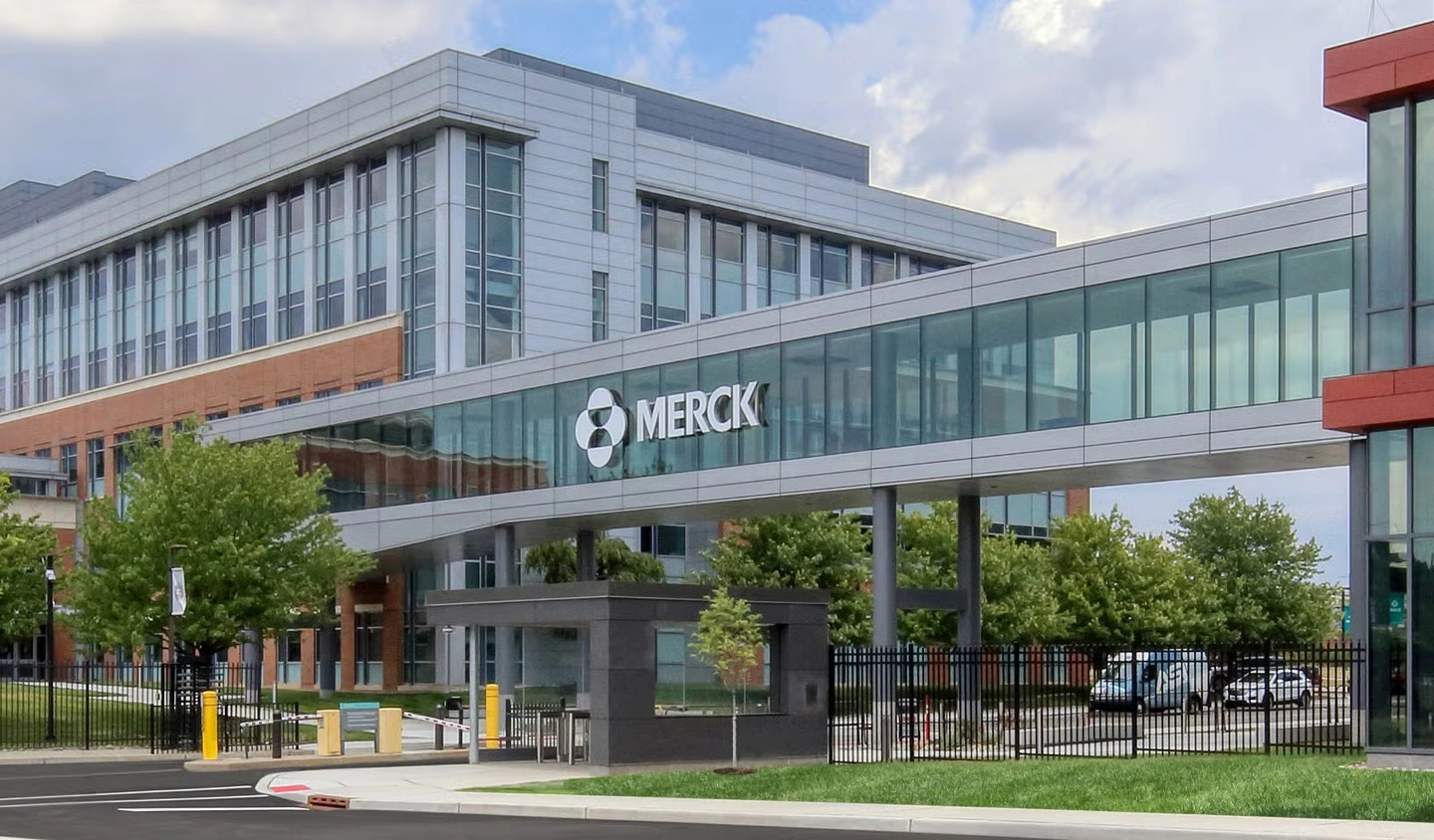
Merck nears a $6bn all-cash acquisition of Terns Pharma and its CML drug TERN-701. Here’s the full strategic picture—what it means for patients, investors, and Big Pharma’s 2026 M&A wave.
The ink isn’t dry. The deal isn’t signed. But the logic behind Merck’s reported $6 billion pursuit of Terns Pharmaceuticals is already one of the clearest strategic narratives in modern pharma — a $30 billion time bomb called Keytruda, and the urgent search for what comes after.
Merck is nearing a roughly $6 billion all-cash deal to acquire Terns Pharmaceuticals, the Financial Times reported on Tuesday, citing people familiar with the matter. MarketScreener Talks between the two companies are at an advanced stage, and a deal could be reached within days. MarketScreener The target: a Foster City, California clinical-stage company whose lead drug is quietly generating the most excitement in blood cancer treatment since a Novartis blockbuster redrew the CML landscape a generation ago.
For Merck, this is not merely another acquisition. It is an act of strategic triage — and perhaps the most scientifically precise bet the Kenilworth giant has placed since it licensed pembrolizumab from Schering-Plough in 2009 and renamed it Keytruda.
Why Keytruda’s Patent Cliff Is the Most Watched Clock in Global Pharma
To understand why Merck is willing to pay a premium for a drug that has never been approved — and has barely cleared Phase 1 — you must first understand the existential arithmetic of the world’s best-selling medicine.
Keytruda is slated for a loss of exclusivity in 2028, and a growing pipeline of biosimilars is already lining up to take a shot at the drug’s massive market. Fierce Pharma The cancer therapy brought the company $29.5 billion last year C&EN, representing nearly half of Merck’s total revenue. CEO Robert Davis sees about $70 billion in commercial opportunities by the mid-2030s and has described the current pipeline as one of the “deepest and broadest” Merck has ever had. Stocktwits
That confidence, however, must be earned — deal by deal, trial by trial. Merck has predicted Keytruda will collect $35 billion in peak annual sales in 2028, the same year the drug will face an expected patent cliff. Fierce Pharma After that, biosimilar entrants from Samsung Bioepis, Amgen, and Indian manufacturers are expected to erode revenues precipitously. The company needs successors, and it needs them now.
The response has been an M&A blitz of rare intensity. Merck has accelerated dealmaking in recent months, snapping up Verona Pharma for $10 billion and Cidara Therapeutics for $9.2 billion last year Investing.com, adding a first-in-class COPD therapy and a long-acting flu antiviral, respectively. Merck has been building up its late-stage drug pipeline since 2021 and has signed several deals to broaden its portfolio. U.S. News & World Report February brought yet another structural bet: Merck split its core pharmaceutical business in two — one housing its oncology portfolio and the other including all non-cancer medicines Fierce Pharma — a move analysts interpreted as pre-positioning for either a spin-off, a focused acquisition strategy, or both.
The Terns deal, if confirmed, is the latest and sharpest arrow in that quiver.
TERN-701: The Drug That Has CML Specialists Talking in Superlatives
Chronic myeloid leukemia is not a common cancer. Roughly 8,900 new cases are diagnosed in the United States each year. But it is a high-value market — heavily treated with expensive precision medicines — and Terns has built its entire identity around the conviction that the next generation of CML therapy remains conspicuously unfinished.
Terns’ lead cancer drug candidate is TERN-701, which is in development for the treatment of relapsed/refractory CML under the Phase 1 CARDINAL trial. RTTNews The drug’s mechanism is where the science gets genuinely interesting: TERN-701 is active at the myristate pocket of BCR-ABL1, providing it with 10,000 times greater selectivity than active-site tyrosine kinase inhibitors. Onclive
That molecular precision matters enormously in a disease defined by acquired resistance. The current standard of care for later-line CML, Novartis’s asciminib (Scemblix), was itself an allosteric BCR-ABL inhibitor that redrew treatment algorithms when it won approval — but resistance mutations and tolerability issues mean a significant portion of patients still cycle through therapies without achieving durable molecular response. Early study results suggest that TERN-701 could be a successor to Novartis’s blockbuster Scemblix. Statnews
The CARDINAL trial data, presented at the American Society of Hematology annual meeting in December 2025, was what turned heads. At the recommended Phase 2 dose of at least 320 mg once daily, the overall 24-week major molecular response rate was 80% among efficacy-evaluable patients with more than 24 weeks of follow-up. Onclive For patients maintaining MMR, the rate held at 100%. Ternspharma
The safety profile is equally notable. The majority of treatment-emergent adverse effects were low grade, with no apparent dose relationship. Rates of cytopenias were generally low, with less than 10% Grade 3 thrombocytopenia and neutropenia. Onclive No dose-limiting toxicities were observed up to the maximum dose of 500mg QD. Ternspharma
For heavily pre-treated patients — many of whom had previously received asciminib, ponatinib, and investigational next-generation therapies — these numbers are not merely encouraging. They are, by the standards of relapsed/refractory CML, remarkable. “Best-in-disease potential” is the phrase Terns itself has used, and the clinical data does not obviously contradict that claim.
The Valuation Calculus: What Does $6 Billion Actually Buy?
The all-cash deal is expected to value Terns at a premium to its market capitalization of about $5.3 billion. Investing.com That premium, while meaningful, is modest by the standards of 2025–2026 oncology M&A — a sector where bidding wars routinely push acquirers to 60–80% above last close.
Why the relative restraint? Several factors shape the math.
TERN-701 remains in Phase 1. There is no approved product, no commercial infrastructure, and no Phase 3 data. Pivotal trial results — the evidence that would trigger blockbuster valuations and genuine upside scenarios — are still at least two to three years away. For a drug targeting a relatively rare indication, the peak revenue ceiling, while lucrative, is bounded. Analysts covering the CML market typically model mature annual sales for a best-in-class next-generation allosteric inhibitor in the $2–4 billion range globally, depending on label breadth and first-line expansion.
At $6 billion all-cash, Merck is effectively paying two to three times peak sales estimates upfront — aggressive, but not irrational when the acquirer is running a multi-decade oncology platform and values de-risked, validated science over raw market speculation.
The deal also reflects Terns’ strategic leverage. Terns had cash runway into 2028 focused on advancing the CML program internally and partnering metabolic assets Ternspharma — meaning the company was not under existential financial pressure to sell. That negotiating position, combined with competitive interest from other potential suitors, likely shaped the final price.
The Broader Strategic Picture: Merck’s New Oncology Architecture
The Terns acquisition, viewed in isolation, reads as a sensible pipeline bolt-on. Viewed in the context of Merck’s full strategic reshaping, it takes on a different quality — the latest piece in what is becoming one of the most ambitious pharma rebuilding exercises since the post-Lipitor era.
Consider the deal sequencing. Merck’s $11.5 billion deal for Acceleron Pharmaceuticals added the pulmonary arterial hypertension therapy Winrevair; the Verona Pharma acquisition brought Ohtuvayre, a first-in-class COPD treatment; and the Cidara deal added CD388, a long-acting antiviral against all flu strains. Invezz Each transaction has shared a common logic: early enough in commercial life to offer genuine upside, but far enough along in clinical development to substantially de-risk.
TERN-701 fits that template — though the clinical-stage risk is somewhat higher than in those prior deals. What elevates the strategic rationale is the oncology division context. As part of the restructuring, Merck’s human-health business will be split into two — one housing its oncology portfolio and the other including all of its non-cancer medicines. U.S. News & World Report Citi analysts said the split would help to more clearly distinguish Merck’s mature oncology portfolio from its newer, acquisition-driven assets. U.S. News & World Report
Adding a potentially best-in-class CML asset directly strengthens the new oncology unit’s pipeline depth — a consideration that matters not only commercially, but also in how investors and potential partners value the separated entity. If Merck eventually pursues a spin-off or strategic transaction involving the oncology division, a richer pipeline commands a materially higher multiple.
There is also the question of platform. BCR-ABL inhibition in CML has historically served as a scientific and regulatory template for targeted therapies in adjacent hematological malignancies. If TERN-701’s allosteric mechanism proves transferable — to blast phase CML, to Philadelphia chromosome-positive ALL, or to other BCR-ABL-driven contexts — the addressable market expands substantially beyond the initial rare indication.
What It Means for Patients: Access, Pricing, and the CML Treatment Gap
Abstract strategy and valuation calculus exist in tension with a more human question: what does this deal mean for the roughly 30,000 Americans — and hundreds of thousands globally — currently living with CML?
On balance, consolidation under a well-capitalized major pharma is likely to accelerate the path to approval. Merck’s regulatory infrastructure, commercial relationships, and Phase 3 execution capability represent genuine accelerants for a drug that Terns, as a clinical-stage company, would have struggled to advance at comparable speed. The CARDINAL trial needs to expand into a full pivotal program; a major pharma’s resources materially compress that timeline.
The pricing question is less comfortable. Tyrosine kinase inhibitors for CML are already among the most expensive chronic disease therapies in the U.S. market. Novartis’s asciminib lists at over $200,000 annually. Should TERN-701 achieve approval — and the Phase 1 data suggests it is on track to try — it will enter a market where Merck will be under both commercial pressure to recoup its $6 billion investment and political pressure to justify the cost of a rare disease therapy.
The international access picture is sharper still. Keytruda may face “price setting” from the Inflation Reduction Act in 2026 C&EN, and the broader U.S.-China oncology R&D race is intensifying as Chinese biotechs, many partnered with or competing directly against Western majors, rapidly advance their own BCR-ABL and kinase inhibitor portfolios. A Merck-owned TERN-701 will need a global commercialization strategy that balances pricing sustainability in the U.S. against access in markets where affordability remains the defining constraint.
The 2026 M&A Wave: Terns as Precedent, Not Outlier
Industry-watchers have spent the past 18 months watching the pharma M&A pipeline with unusual intensity, and the Terns deal — if it closes — will not be the last deal of this kind in 2026. The conditions for a sustained acquisition wave remain firmly in place.
Patent cliffs are not unique to Merck. AstraZeneca, Bristol-Myers Squibb, and Pfizer all face meaningful revenue transitions in the latter half of the decade. Interest rates, while elevated versus the zero-rate era, remain manageable for investment-grade acquirers with strong cash generation. Biotech valuations, while partially recovered from the 2022–2023 trough, have not returned to the frothy heights that previously priced out strategic acquirers. That creates a window — perhaps 18 to 36 months — in which well-capitalized majors can acquire genuine clinical-stage innovation at multiples that may look cheap in retrospect.
The calculus changes if clinical-stage failures mount, or if the regulatory environment shifts adversely for rare oncology indications. But for now, the structural incentives point toward more deals, not fewer. Merck CEO Robert Davis said as much in February: “Our belief in our ability to have substantial growth once we get closer to the [loss of exclusivity] is as high as it’s ever been. And we’re not done.” Fierce Pharma
The Terns deal, at $6 billion, is arguably modest by the ambitions of that statement — a targeted bet on a validated mechanism in a well-understood disease, dressed in the clinical data that Big Pharma acquirers find most legible. What comes next in Merck’s dealmaking could be considerably larger.
Forward Scenarios: Three Possible Outcomes for TERN-701
Scenario 1 — Accelerated Approval Pathway: If TERN-701’s Phase 1 data is persuasive enough for Breakthrough Therapy Designation (which Terns has not yet obtained), Merck could potentially pursue an accelerated approval pathway using MMR as a surrogate endpoint — a strategy previously used for asciminib. A 2028–2029 approval timeline is not implausible. In this scenario, the deal looks like sharp value creation.
Scenario 2 — Pivotal Trial Success, Standard Path: The more likely route involves a full Phase 3 randomized controlled trial, standard FDA review, and approval in the early 2030s. In this scenario, TERN-701 becomes a useful but not transformative contributor to Merck’s oncology revenue — meaningful for patients, positive but not game-changing for Merck’s post-Keytruda financials.
Scenario 3 — First-Line Expansion: The real prize — the scenario that would vindicate the $6 billion price tag in full — is if TERN-701 demonstrates superiority or equivalence to standard-of-care in earlier lines of CML therapy. A first- or second-line label would multiply the addressable patient population by an order of magnitude, transforming a rare disease asset into a genuine oncology pillar.
The Bottom Line
The Merck–Terns deal is not, by the standards of 2025–2026 Big Pharma dealmaking, extraordinary in size. What makes it significant is its specificity. Merck is not buying a diversified biotech platform or hedging its bets across a sprawling pipeline. It is making a concentrated, scientifically defensible wager on one drug, one mechanism, and one disease — a bet that a next-generation allosteric BCR-ABL inhibitor with 80% major molecular response rates in heavily pre-treated patients represents exactly the kind of targeted, data-driven oncology innovation that commands a premium in any market cycle.
Whether TERN-701 ultimately delivers on its early clinical promise remains genuinely uncertain. Phase 1 data, however spectacular, does not guarantee Phase 3 success. Regulatory hurdles, competitive pressure from asciminib and emerging Chinese generics, and the perennial challenges of rare disease commercialization will all shape the eventual story.
But for the patients cycling through failed CML therapies — people who have exhausted three, four, even six prior tyrosine kinase inhibitors — the prospect of a new mechanism with a favorable safety profile and compelling molecular response rates is not a valuation abstraction. It is the news they have been waiting for.
Merck is betting $6 billion on the proposition that those patients deserve a better option. That, at its core, is the deal.
Key Deal Facts at a Glance
- Deal Value: ~$6 billion, all-cash
- Target: Terns Pharmaceuticals (NASDAQ: TERN), Foster City, CA
- Lead Asset: TERN-701 — oral, allosteric BCR-ABL inhibitor for relapsed/refractory CML
- Clinical Stage: Phase 1 CARDINAL trial (dose expansion ongoing)
- Key Clinical Data: 80% MMR rate at ≥320mg dose, 0 dose-limiting toxicities
- Terns Market Cap Pre-Deal: ~$5.3 billion
- Merck’s M&A Spend Since 2024: $25+ billion (Verona Pharma, Cidara, Terns)
- Keytruda Annual Revenue: ~$30 billion; LOE expected 2028
- Deal Status: Advanced negotiations; expected to close within days
Sources: Financial Times, Reuters, Fierce Pharma, Terns Pharmaceuticals IR, ASH 2025 oral presentation (Blood, 2025;146:901), OncLive, Seeking Alpha, STAT News
Discover more from The Economy
Subscribe to get the latest posts sent to your email.



When the Trump administration’s tariff regime rattled export-dependent Asian economies in 2025, Malaysia’s finance ministry response stood out for its composure. “We didn’t panic,” the finance minister told reporters, describing a deliberate strategy of diversification and negotiation rather than reactive concessions (Fortune).
From crisis response to execution agenda
That composure has carried into 2026. Malaysia’s economy minister has described this year explicitly as one of “execution,” as the Anwar Ibrahim administration works to lock in the policy gains built through 2025’s trade turbulence (Fortune). The framing matters: it signals Putrajaya sees 2026 less as a year of new initiatives and more as a year of delivering on commitments already made — the Johor-Singapore Special Economic Zone chief among them.
The semiconductor exposure that both helps and constrains
Malaysia’s electrical and electronics sector accounts for roughly 40% of total exports, with semiconductors alone comprising about 65% of E&E exports (J.P. Morgan Private Bank). That concentration is precisely why Malaysia benefited from 2025’s tariff exemptions on semiconductors, electronics and pharmaceuticals, and precisely why any future change to those exemptions carries outsized risk for Malaysian growth relative to more diversified regional peers (J.P. Morgan Private Bank).
The Johor-Singapore SEZ as the structural bet
Johor’s 7,300-acre innovation sandbox, part of the new special economic zone with Singapore, is Malaysia’s clearest attempt to convert its manufacturing base into a higher-value regional hub rather than remain a low-cost assembly point (Fortune). The zone’s stated ambition — combining Johor’s “land and scale” with Singapore’s “capital and speed” — positions the region to capture AI-linked infrastructure and hardware investment that would otherwise bypass both countries individually (Fortune).
Corporate consolidation follows the growth signal
Confidence in Malaysia’s execution story is visible in corporate activity too: two Southeast Asia 500 companies are reportedly exploring a merger that would form Malaysia’s largest construction conglomerate, a scale bet that typically follows — rather than precedes — genuine confidence in a multi-year infrastructure pipeline (Fortune).
The regulatory friction points
Not every 2026 storyline is frictionless. Malaysia has moved to temporarily block the Grok AI platform alongside Indonesia following a sexual-deepfake scandal, illustrating that Malaysia’s AI-forward economic strategy is running in parallel with an increasingly assertive AI-governance posture — a tension regional investors should track as a signal of how Malaysia intends to regulate the same technology sector it is courting for investment (Fortune).
What “execution” needs to mean by year-end
For Malaysia’s 2026 narrative to hold, three things need to materialise beyond announcements: measurable Johor SEZ tenant commitments, continued semiconductor export resilience against any tariff-exemption rollback, and a construction-sector consolidation that actually delivers infrastructure rather than simply consolidating market share.
Discover more from The Economy
Subscribe to get the latest posts sent to your email.

Singapore has spent the past two years becoming one of the primary beneficiaries of the global AI infrastructure buildout, alongside Taiwan’s semiconductor sector. The city-state’s role as a data-center hub allowed it to capture significant capital inflows even as the broader labour-market impact of that investment stayed limited, given how capital-intensive AI infrastructure spending tends to be (J.P. Morgan Private Bank).
Why the AI cycle didn’t stay contained to Singapore
What is changing in 2026 is the geography of that investment. J.P. Morgan’s Asia outlook notes Southeast Asian economies — traditionally anchored in commodities and export manufacturing — are now aligning more closely with the global AI investment cycle by deepening involvement in higher-value areas: infrastructure, hardware and complementary supply chains (J.P. Morgan Private Bank).
Land constraints in Singapore make expansion difficult, which is precisely where the Johor-Singapore Special Economic Zone becomes central to the region’s AI investment thesis rather than a side story.
The Johor SEZ as capacity release valve
Johor has launched a 7,300-acre innovation sandbox as part of the new special economic zone bordering Singapore, explicitly designed to combine Johor’s land and scale with Singapore’s capital and speed, according to the state investment committee’s chair (Fortune). One local official described the ambition bluntly: the zone is meant to be more than “an industrial park with a nicer brochure” (Fortune).
Malaysia’s structural beneficiary position
Malaysia’s electrical and electronics sector already accounts for roughly 40% of the country’s total exports, with semiconductors comprising about 65% of E&E exports — positioning Malaysia as a structural beneficiary of the AI-linked shift in regional trade, according to J.P. Morgan’s Asia analysis (J.P. Morgan Private Bank). Malaysia’s economy minister has framed 2026 explicitly as a year of “execution” for the Anwar administration as it tries to lock in these policy gains (Fortune).
Monetary policy backdrop supports the buildout
Asian central banks spent much of 2025 easing policy and are entering the final stages of that cycle in 2026, shifting more of the growth-support burden to fiscal policy — a backdrop J.P. Morgan expects to support stronger domestic credit growth and consumer demand across the region, reinforcing rather than competing with the AI capital cycle (J.P. Morgan Private Bank).
The regional risk to watch
Most of the region avoided the brunt of 2025’s tariff shock thanks to exemptions on semiconductors, electronics and pharmaceuticals, but that exemption structure remains a policy choice in Washington rather than a permanent feature — meaning the Singapore-Johor AI corridor’s growth case still carries meaningful US trade-policy risk that investors should not discount simply because 2025’s tariffs were absorbed relatively smoothly (J.P. Morgan Private Bank).
Discover more from The Economy
Subscribe to get the latest posts sent to your email.

Dubai’s transformation from oil-adjacent trading post to global capital hub is no longer a talking point — it is a measurable trend. The emirate’s newly launched Economic Survey 2026 shows GDP climbing to $265 billion alongside rising employment, while international family offices are gathering for the Family Office Summit Dubai 2026 as the city cements its position as a family-wealth hub (Gateway Group; Arabian Business).
The non-oil growth engine
The UAE enters 2026 with the World Bank projecting national growth of roughly 5%, well above the global average, driven substantially by 5.3% expansion in the non-oil sector (Barchart). Technology, green energy and healthcare are the top-performing sectors, and 64% of UAE executives expect trade volumes to exceed 2025 levels — confidence underpinned by the country’s expanding network of Comprehensive Economic Partnership Agreements (Barchart). Historically, oil production accounted for half of Dubai’s GDP; today it contributes less than 1% (Wikipedia/Economy of Dubai).
Why family offices specifically are relocating
The Family Office Summit Dubai 2026 is drawing international participants precisely because the emirate has built regulatory infrastructure — inside jurisdictions like the DIFC — designed to attract exactly this category of capital. As one DIFC executive noted, incentives alone are no longer enough to win global finance; institutional credibility and regulatory clarity now matter more, which explains why firms such as Sixth Street have opened Abu Dhabi offices as global investment houses deepen their Middle East presence (Gateway Group).
Infrastructure is compounding the pull
Beyond finance, the UAE’s infrastructure build-out is reinforcing the wealth-hub thesis. Etihad Rail’s Abu Dhabi–Fujairah passenger service and the Madinat Zayed and Liwa station openings, arriving ahead of schedule, signal a state execution model that investors increasingly cite as a differentiator versus regional peers (GCC Business Watch). Dubai has also rolled out a AED 1 billion economic support package aimed at business liquidity and resilience amid regional geopolitical headwinds (GCC Business Watch).
The regional competition for capital
Dubai’s rise is happening alongside — not in isolation from — a broader Gulf capital race. Saudi Arabia’s economy is set for stronger growth per IMF assessments, and Gulf sovereign and corporate capital is increasingly being deployed across sectors from AI infrastructure to green growth commitments, meaning Dubai’s wealth-hub status will need continual reinforcement rather than passive maintenance (GCC Business Watch).
The bottom line for investors
For family offices weighing jurisdiction, Dubai’s pitch in 2026 combines three elements rarely available together: near-zero effective taxation, a non-oil economy growing faster than most G20 peers, and physical and financial infrastructure being built ahead of demand rather than in reaction to it. That combination — not simply low tax rates — is what is now pulling global family wealth toward the emirate.
Discover more from The Economy
Subscribe to get the latest posts sent to your email.

Russia’s War Economy Got a Reprieve From Iran

China’s Economy Has a Structural Problem: Factories Are Winning, Households Are Losing

How Malaysia “Shrugged Off” Trump’s Tariffs — and What Comes Next

Singapore’s AI Boom Is Now a Two-Country Story

Why Global Family Offices Are Converging on Dubai in 2026

A Weak Jobs Report Just Rewired the Fed’s Autumn — And Wall Street Cheered

Britain’s Fragile Rebound Meets a Budget Deadline and a Trump Ultimatum

Pakistan’s Economy Grew 3.7% — So Why Doesn’t It Feel Like a Recovery?

Top 15 Financial Stocks for Investment in PSX

Pakistan Exports 2026: Record $35.6B Forecast Masks Trade Deficit Risk

UK’s Jobs Downturn Now Matches the 2008 Financial Crisis — And AI Is Accelerating It

Fed Rate Cut Bets Surge After Shock US Jobs Report Exposes Labor Market Cracks

Pakistan’s Trade Gap Widens to $3.95bn Despite Meeting FY26 Current Account Target

Why Ottawa Is Betting on Dubai: Inside Canada’s Gulf Trade Pivot

China Politburo July 2026: Stimulus Signals Explained

Down But Not Out: Inside the Slow Sinking of Russia’s War Economy

Gulf Capital Retreat From Pakistan 2026: UAE Loan Freeze & What It Means

Pakistan’s Economic Survey FY26: Inflation Spike Insights

Russia Fuel Shortages 2026: Inside a Cracking War Economy
Top 15 Financial Stocks for Investment in PSX

Strait of Hormuz Crisis 2026: How Trump’s Toll U-Turn Exposes Global Economic Risk

Russia’s War Economy Model Is Starting to Crack, Think Tank Warns

Pakistan’s Economic Growth: Resilience Amid Challenges

Andy Burnham, UK Gilts and Mortgages: July 2026 Explainer

Fed Chair Kevin Warsh’s AI Rate Bet 2026: Inside the FOMC Split on Productivity vs Inflation

Pakistan Economy 2026: IMF Growth Warning vs. a Booming KSE-100

Anthropic’s Trillion-Dollar Race: Inside the Path to an October 2026 IPO

Pakistan Passed Its Third IMF Review
-

 Markets & Finance7 months ago
Top 15 Stocks for Investment in 2026 in PSX: Your Complete Guide to Pakistan’s Best Investment Opportunities
-

 Analysis6 months ago
Johor’s Investment Boom: The Hidden Costs Behind Malaysia’s Most Ambitious Economic Surge
-

 Analysis6 months ago
Top 10 Stocks for Investment in PSX for Quick Returns in 2026
-

 Analysis6 months ago
Brazil’s Rare Earth Race: US, EU, and China Compete for Critical Minerals as Tensions Rise
-

 Banks7 months ago
Best Investments in Pakistan 2026: Top 10 Low-Price Shares and Long-Term Picks for the PSX
-

 Investment7 months ago
Top 10 Mutual Fund Managers in Pakistan for Investment in 2026: A Comprehensive Guide for Optimal Returns
-

 Global Economy8 months ago
15 Most Lucrative Sectors for Investment in Pakistan: A 2025 Data-Driven Analysis
-

 Global Economy8 months ago
Pakistan’s Export Goldmine: 10 Game-Changing Markets Where Pakistani Businesses Are Winning Big in 2025