
Analysis
How China Forgot Karl Marx: The Chinese Economy Runs on Labor Exploitation

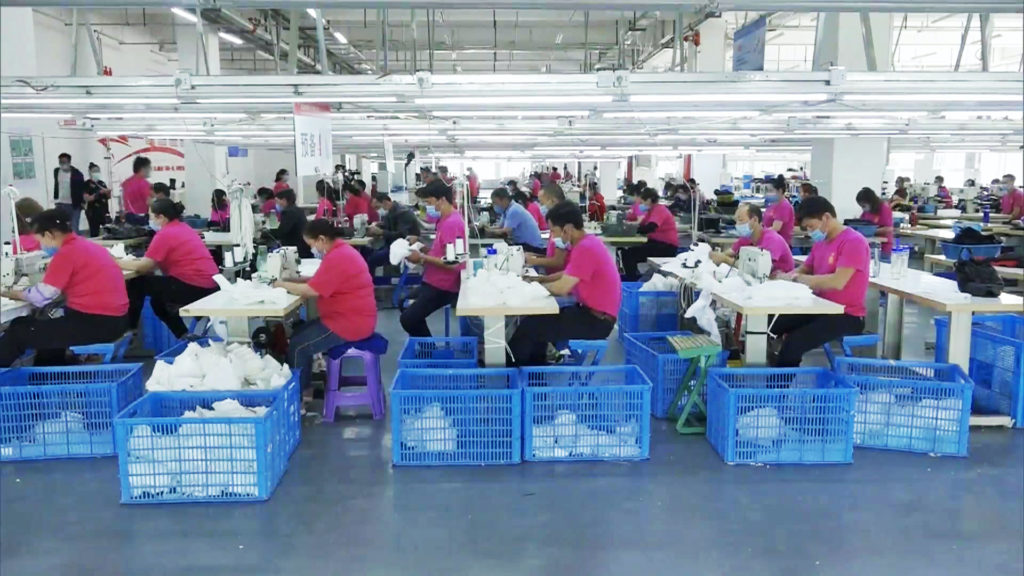
In the early 1980s, something extraordinary was happening in rural China. Incomes were surging. Families who had known only collective poverty under Mao Zedong’s commune system were suddenly trading at market prices, leasing land, and tasting prosperity for the first time in a generation. To most observers — Western economists, development agencies, awed foreign correspondents — this was an unambiguous miracle. But inside the halls of the Chinese Communist Party, one senior official was deeply unsettled by what he saw.
His name was Deng Liqun — no relation to Deng Xiaoping, China’s paramount leader who had initiated these reforms — and he was alarmed not by poverty, but by its opposite: the emergence of rural businesses hiring large numbers of workers. Citing Das Kapital directly, Deng Liqun invoked Marx’s analysis of surplus extraction and warned his colleagues that China was breeding a new exploiter class from within the revolutionary state itself. His warnings were dismissed, sidelined, or quietly buried. Forty years later, as Chinese factory workers report daily wages collapsing to less than 100 yuan amid a record export boom, the uncomfortable question is: was Deng Liqun right all along?
The Seven-Worker Loophole: When Marx Became a Management Consultant
To understand the ideological contortion at the heart of modern China, one must revisit a peculiar episode in the history of economic thought. As Deng Xiaoping’s reformers sought to legalize private enterprise in the early 1980s, they faced a Marxist problem: how could a Communist Party permit capitalist employers? Their solution was as creative as it was absurd.
Party theorists dug into Volume IV of Das Kapital and located a passage in which Marx cited the example of an employer with eight workers as the threshold at which genuine capitalist exploitation begins. The inference was swift and convenient: hire no more than seven workers, and you are not a capitalist. The “seven-worker rule” became, briefly, the ideological boundary between socialism and sin. As one analyst of the period put it, the Party had transformed Marx into a management consultant — and a lenient one at that.
The rule did not last. Entrepreneurs like Nian Guangjiu, the Shazi Guazi (“Fool’s Sunflower Seeds”) magnate, hired hundreds of workers and dared Beijing to intervene. Deng Xiaoping, pragmatist to the bone, let it pass. The seven-worker rule was quietly abandoned. China’s private sector began its long, relentless ascent.
But Deng Liqun continued to press his case. Throughout the 1980s, as China’s reformist faction consolidated power, he remained one of the party’s most vocal critics of market liberalization, warning that unchecked private capital would reproduce exactly the exploitative dynamics Marx had described. He was repeatedly outmaneuvered. He died in 2015, at age 99, largely forgotten — a curio of ideological defeat.
What he could not have known is that the data would eventually vindicate him.
The Numbers Behind the Narrative
China’s economic rise remains one of history’s most astonishing chapters. Hundreds of millions lifted from poverty. A GDP that expanded from a fraction of the United States’ to roughly 70 percent of it in nominal terms. The construction of entire cities from bare earth. No serious analyst dismisses this achievement.
But growth and fairness are different metrics. And on the metrics that matter most to a self-proclaimed workers’ state, the picture is quietly damning.
According to estimates by the International Labour Organization, China’s output per hour worked in 2025 stood at just $20 in constant international dollars — behind the global average of $23, and roughly on par with Brazil and Mexico. The United States, by comparison, registers $82 per hour. China does not achieve its manufacturing dominance through efficiency or technological leverage. It achieves it through sheer volume of hours — the kind of raw labor extraction that, as a recent analysis in Foreign Affairs argued, is precisely the dynamic Deng Liqun warned about four decades ago.
Income inequality tells an equally uncomfortable story. China’s official Gini coefficient stands at 0.47 — already above the internationally recognized warning threshold of 0.40, beyond which social instability becomes a material risk. But economists at Cornell University and Peking University, working with alternative datasets, place the true figure closer to 0.52, putting China in the company of some of the world’s most unequal societies. Meanwhile, data from Peking University’s China Development Report reveals that the top 1 percent of Chinese households own roughly one-third of the country’s property — a concentration of wealth that would have struck the founders of the People’s Republic as counterrevolutionary.
The public-private wage gap compounds the picture. According to data from China Briefing, the average annual urban wage in China’s public sector reached RMB 120,698 in 2023, while the average in the private sector — where the vast majority of Chinese workers are employed — was just RMB 68,340. Those who work for the state earn nearly twice those who do not. In a country that officially represents the proletariat, the proletariat is still on the outside looking in.
The Factory Floor in 2026
Abstract statistics find their most vivid expression on the ground. A Bloomberg investigation from March 2026 documented day laborers in Guangzhou waiting in winter cold for factory agents to offer work. One worker, Sheng, 55, described his income having more than halved to less than 100 yuan — roughly $14 — per day. Some workers cannot find employment for months at a time, he said. This is occurring while China posts record export numbers, defying the Trump administration’s escalating tariffs with a manufacturing juggernaut that continues to flood global markets.
The paradox is complete: the export machine hums, profits accumulate, trade surpluses swell — and the workers who power all of it are left behind. It is not incidental. It is structural. As China Labor Watch’s executive director Li Qiang argued in January 2026, China’s decisive competitive advantage lies in its weak labor protections, and it is now exporting this low-rights model globally — a race to the bottom dressed in the language of development.
Nowhere is this more starkly illustrated than in the platform economy. According to the All-China Federation of Trade Unions, the number of workers in “new forms of employment” — overwhelmingly gig-economy roles with minimal protections — surpassed 84 million in 2024, representing 21 percent of the total workforce. Among food-delivery riders on Meituan alone, nearly half worked fewer than 30 days per year, pointing to an army of precarious, intermittent laborers with no benefits, no unions, and no recourse. As of 2022, at least 70,000 of these riders held master’s degrees.
996, Involution, and the Vocabulary of Exhaustion
China’s young workers have developed their own lexicon for what Marxist theory would call surplus extraction. The “996” schedule — work from 9 a.m. to 9 p.m., six days a week — became the defining norm of China’s tech industry, a practice that a joint study by Chinese and Australian universities, published in October 2025, described as “modern labour slavery,” directly linking it to chronic burnout, mental health decline, and fertility postponement. Officially illegal under China’s Labor Law, 996 persists through what labor researchers describe as “informal-flexible despotism” — the unspoken threat of unemployment for those who refuse to comply.
The cultural response has been the phenomenon of neijuan, or “involution” — the sense of being trapped in relentless, self-defeating competition that produces no advancement. As youth unemployment reached 17.8% in July 2025 — six times the official urban headline rate — and this year’s graduating class of 12.22 million enters a trade-war-disrupted economy also disrupted by artificial intelligence, neijuan has metastasized from internet slang into political critique. Its counterpart, tangping — “lie flat” — is the passive resistance of those who have concluded that the system is designed not to reward their labor but to extract it.
These are not marginal, youth-culture curiosities. They are symptoms of a structural contradiction at the heart of the Chinese political economy: a party that claims to represent workers presiding over conditions that would have warranted a chapter in Volume I of Das Kapital.
Xi Jinping’s Marxist Revival: Signal or Noise?
Against this backdrop, Xi Jinping’s periodic invocations of Marxist rhetoric acquire a particular ambiguity. His “common prosperity” campaign, elevated in August 2021 as “an essential requirement of socialism,” set targets to reduce the Gini coefficient from 0.47 toward 0.40 by 2025 and 0.35 by 2035. The crackdown on tech giants — Alibaba, DiDi, Meituan — was framed in language recognizable to any student of Marx: reining in monopoly capital, redistributing to the people.
Yet the common prosperity campaign has conspicuously failed to deliver on its core promise. The Gini has not meaningfully declined. Minimum wages, while rising nominally, remain well below levels that would allow Chinese households to become the robust consumers the economy urgently needs. The crackdown on tech billionaires proved more politically convenient than structurally transformative: it punished visible wealth without redistributing it, and it chilled private investment without replacing it with workers’ power.
As CSIS’s Interpret: China project has noted, the common prosperity campaign’s success will ultimately be judged not by economics but by whether it can “maintain social harmony and stability” — which is to say, by whether the CCP can suppress the political consequences of inequality without addressing its material causes. That is not Marxism. That is its managed inverse.
The Overproduction Trap: What Karl Marx Got Right, and What China Ignored
Marx’s central warning in Capital was not simply about exploitation in isolation. It was about the systemic consequences of treating workers purely as inputs: overproduction crises, demand collapse, competitive race-to-the-bottom dynamics that ultimately undermine the capitalist system itself. He called it “the epidemic of overproduction.”
China in 2026 is exhibiting textbook symptoms. The electric vehicle sector’s median net profit margin collapsed to just 0.83% in 2024, down from 2.7% in 2019, as brutal price wars among BYD, Tesla, and dozens of domestic brands hollowed out margins. The solar manufacturing industry lost $40 billion to overcapacity. Steel, cement, food delivery — sector after sector is caught in the deflationary spiral that Chinese policymakers euphemistically call “involution” but that economists recognize as classic overproduction: too much supply chasing too little domestic demand, because workers who make the goods cannot afford to buy them.
The CCP’s own theorists have identified the root: household consumption remains stubbornly low as a share of GDP — hovering near 37-38 percent, compared with 68 percent in the United States and over 50 percent in most developed economies. The Foreign Affairs analysis draws the Henry Ford parallel with precision: Ford famously raised his workers’ wages so they could afford his cars. China’s economy does the reverse — it suppresses wages to make exports price-competitive, and then wonders why domestic demand refuses to ignite.
The Global Stakes: What China’s Labor Model Exports
The implications extend well beyond China’s borders. As China Labor Watch has documented, Beijing’s manufacturing dominance is now being actively exported through Belt and Road projects, industrial parks across Africa and Southeast Asia, and Chinese-owned factories in countries from Ethiopia to Cambodia. The labor conditions travel with the capital. A race to the bottom in labor rights is a deliberate feature, not an accident, of China’s industrial model — and it sets the competitive benchmark to which other manufacturing nations must respond or decline.
For Western policymakers, this reframes the trade debate. Tariffs address the symptom — price-competitive imports — without touching the cause, which is systematic wage compression underwritten by a state that suppresses independent unions, restricts collective bargaining, and classifies labor organizing as a political threat. The US-China trade war’s escalating tariff regime, which has seen duties on Chinese goods reach 145 percent, is economically disruptive for both sides. But it does not change the structural reality that China’s manufacturing advantage is built on a foundation that would have been recognizable to Friedrich Engels touring Manchester in 1845.
Conclusion: The Haunting of Deng Liqun
History’s ironies rarely arrive cleanly. Deng Liqun was, in many respects, a problematic figure — a hardliner who helped orchestrate ideological campaigns that silenced liberal reformers and contributed to the atmosphere of repression that culminated in Tiananmen. His Marxism was often a political instrument as much as a philosophical commitment.
But on this one point, his analysis was structurally sound: a Communist Party that permits unlimited private capital accumulation without empowering workers to claim a proportionate share of the value they create is not transcending Marx. It is fulfilling him. The exploitation he predicted has arrived — not in the form of Victorian factory owners with top hats, but in the form of platform algorithms calculating delivery routes to the nearest yuan, 996 schedules enforced through the threat of precarity, and a gig economy that has absorbed 84 million workers without offering a single one a union card.
Xi Jinping’s “common prosperity” rhetorical architecture is vast and elaborate. The material delivery, forty years after Deng Liqun’s warnings, remains insufficient. China’s economy runs on labor exploitation. Marx would have recognized it immediately. He would have found it almost unremarkable. What would have astonished him — what should astonish us — is that the party invoking his name is the one enforcing it.
Discover more from The Economy
Subscribe to get the latest posts sent to your email.



Key Takeaways
- Rolex’s secondary market rose approximately 7.9% year-over-year as of 2026 (per WatchCharts data) — trailing Patek Philippe (+16.2%) and Tudor (+11.4%) but still outperforming Audemars Piguet (+3.4%).
- Rolex raised U.S. retail prices 4–9% in January 2026 (steel models ~5.6%, gold models ~8.7%), narrowing the historical gap between retail and pre-owned pricing.
- Not every model appreciates: steel sports references (Submariner, GMT-Master II, Daytona) have held value far better than two-tone or widely available dress references like the standard Datejust.
- The Lady-Datejust posted the sharpest 2026 gain among tracked collections — up 22.73%, from roughly $9,269 to $11,376 — driven by demand for smaller, “everyday luxury” watches.
- Gold’s rise past $2,400/oz has directly lifted the investment case for Rolex’s precious-metal references (Day-Date, Sky-Dweller, Yacht-Master).
The Model-by-Model Picture
| Category | 2026 Trend |
|---|---|
| Lady-Datejust | +22.73% (strongest performer among tracked collections) |
| Steel sports models (Submariner, GMT-Master II) | Held value well; corrected from 2022 peak but stabilized above retail |
| Daytona | Corrected from highs above $50,000 to the mid-$30,000s; still among the most sought-after references |
| Two-tone/widely available Datejust | Flat to negative — “holds value” is an overstatement for this category |
| Gold references (Day-Date, Sky-Dweller) | Lifted by gold’s rise above $2,400/oz |
Why the “Rolex Always Appreciates” Myth Is Fading
The pandemic-era boom pushed some references — the Daytona above all — to speculative highs disconnected from historical norms. Since the March 2022 peak, steel sports models have compressed meaningfully, and dealers who bought inventory near the top have in some cases faced 20–40% markdowns on liquidation. The lesson for 2026 buyers: Rolex as a category is not a monolith. Value retention depends heavily on specific reference, condition, and whether the piece comes with box and papers (“full set”).
What’s Actually Driving 2026 Strength
- Retail price increases raise the floor. When a new Submariner retails at $10,050 (up from $9,500), a pre-owned example at $11,000–$12,000 suddenly represents a smaller premium — narrowing the gap without secondary prices actually moving.
- Supply discipline remains Rolex’s core lever. The brand has never confirmed production numbers, and secondary-market premiums remain entirely a function of Rolex’s own manufacturing decisions — a risk factor as much as a support.
- Certified Pre-Owned rollout. Rolex’s now fully rolled-out CPO program has changed how buyers transact in the used market, adding a layer of brand-verified legitimacy that supports pricing.
The Case for Rolex as a Portfolio Diversifier
Financial advisors increasingly frame luxury watches not as a replacement for equities or bonds, but as a tangible, historically low-correlation diversifier — one that carries its own risks (illiquidity, condition-dependent pricing, no yield) but has demonstrated multi-decade resilience for specific references.
Is Rolex a good investment in 2026?
It depends heavily on the specific reference. Steel sports models like the Submariner and Daytona have held or grown in value; two-tone and widely available dress models generally have not. Overall, Rolex’s secondary market rose about 7.9% year-over-year in 2026, trailing Patek Philippe but ahead of Audemars Piguet.
Discover more from The Economy
Subscribe to get the latest posts sent to your email.

Navigating Mortgage and Loan Refinancing in a High-Yield Environment
Global public debt crossing critical thresholds has kept central bank policies volatile, resulting in fluctuating US Treasury yields throughout 2026. For homeowners and commercial property holders burdened by previous high-interest borrowing cycles, finding optimal refinance windows has become a high-stakes financial puzzle. Stalled disinflation and stubborn employment numbers mean rate cuts are incremental, requiring borrowers to act with precision.
Timing your mortgage or commercial loan refinance in this environment requires a deep understanding of yield curve movements and lender risk appetites.
Decoding 2026 Refinance Dynamics
The 10-Year Treasury Yield Benchmark
Mortgage rates continue to track closely with the 10-year US Treasury yield. When macroeconomic anxiety spikes debt issuance, yields rise, tightening consumer borrowing capacity. Savvy borrowers monitor weekly Treasury auctions to lock in rates during brief dip windows.
Hybrid ARMs and Alternative Structures
With fixed rates remaining elevated, 7/1 and 10/1 adjustable-rate mortgages (ARMs) have surged in popularity. These products offer lower initial monthly payments, giving borrowers breathing room until central bank easing cycles fully materialize.
| Loan Product | Current Rate Range | Best For | Key Risk Factor |
| 30-Year Fixed Mortgage | 6.2% – 6.8% | Long-term predictability | Higher initial monthly outlay |
| 7/1 Hybrid ARM | 5.5% – 5.9% | Short-term ownership / flipping | Rate reset risk after year 7 |
| Commercial Refinance | 7.0% – 8.2% | Corporate asset restructuring | Strict DSCR lender covenants |
Actionable Steps for Successful Refinancing
To maximize your chances of securing favorable refinance terms in a volatile market, follow a disciplined preparation strategy.
Boost Your Credit Score Immediately: Lenders in 2026 are applying stringent credit tiering; a 20-point increase can drop your APR by a crucial quarter-point.
Shop Regional Credit Unions: Smaller financial institutions often offer portfolio loans with more flexible underwriting than major national banks.
Calculate the Break-Even Point: Ensure your total closing costs are recouped through monthly savings within 24 months of closing.
“Market Strategist View: Refinancing in 2026 is an exercise in opportunistic timing. Borrowers must maintain immaculate financial profiles ready to strike the moment Treasury yields dip.”
Mastering the complexities of today’s debt environment ensures you can successfully lower your debt service costs and protect your long-term financial stability.
Discover more from The Economy
Subscribe to get the latest posts sent to your email.

The days of pulling generic auto insurance quotes based purely on your zip code and age are officially over. In 2026, insurance comparison engines are powered entirely by generative AI and real-time telematics. These platforms digest thousands of live data points—ranging from your driving smoothness via connected vehicle sensors to real-time traffic congestion patterns—to generate hyper-personalized premiums instantly.
For consumers, this evolution represents both a massive opportunity for savings and a hidden trap for penalty pricing. Understanding how AI algorithms evaluate risk is essential for anyone looking to lower their monthly auto insurance premiums.
How AI Comparison Engines Evaluate Your Risk Profile
Behavioral Telematics and Connected Cars
Modern cars stream performance data directly to insurance aggregators. Generative AI models analyze braking sharpness, acceleration curves, cornering G-forces, and phone distraction metrics. Drivers who maintain smooth, defensive habits are rewarded with dynamic rate cuts of up to 40% compared to traditional rating tiers.
Predictive Traffic and Weather Modeling
AI tools now cross-reference your daily commute route with predictive weather and accident probability models. If your standard parking location or driving corridor has a statistically higher incidence of uninsured motorist claims, your quotes will reflect that hyper-local risk assessment.
| Comparison Factor | Traditional Rating Model | 2026 Generative AI Model | Impact on Premium |
| Mileage & Usage | Annual estimated odometer reading | GPS tracking & live trip duration | High (up to 35% savings) |
| Driving Behavior | MVR driving record & accidents | Real-time braking, speed, & G-force | Critical (determines tier) |
| Vehicle Tech | Make, model, and safety rating | ADAS calibration & repair cost data | Moderate |
Strategies to Lower Your AI-Driven Insurance Quote
To outsmart the algorithm and secure the lowest possible premium in 2026, drivers must proactively manage their digital footprint on insurance platforms.
Opt-In for Telematics Trial Periods: Many insurers offer immediate 15% discounts just for installing their driving app; let it track safe habits for 30 days to lock in permanent savings.
Scrub Unverified Public Records: Ensure your motor vehicle report is free of clerical errors that AI risk models misinterpret as reckless behavior.
Compare AI Aggregators: Use platforms that integrate multi-carrier API feeds rather than single-brand comparison sites to find the best risk-adjusted rate.
“Industry Note: AI-driven pricing rewards transparency and precision. Drivers who actively manage their telematics data consistently out-save those relying on legacy quote calculators.”
Embracing AI comparison tools allows savvy policyholders to customize coverage limits precisely to their driving habits, eliminating wasted premium spend while ensuring robust protection.
Discover more from The Economy
Subscribe to get the latest posts sent to your email.

Bitcoin & XRP 2026: Inside Crypto’s Institutional Era

Global Economy 2026: IMF Growth, AI Stocks & Market Risk

China’s Local Debt Race Against Time: Why Economists Demand Central Action Before the Deflation Window Closes

Money News: How to Protect Your Portfolio From Global Inflation

World Bank Projections: Emerging vs. Big Economies of Asia

IMF Reports 2026: What the Latest Data Means for the Global Economy

Singapore Stocks Outlook: A Safe Haven in the Asian Market?

China Stocks vs. Japan Stocks: Where Should You Invest in Late 2026?

VIX Index Explained: How to Trade Wall Street’s Fear Gauge Today

Commercial vs Residential Real Estate: Which Wins in 2026?

Presidential Stock Market Performance: How Trump’s Second Term Compares to History

2026 Real Estate Market News: Are We Heading for a Correction?

Bitcoin Price Forecast 2026–2027: Will the 4-Year Cycle Hold?

Fidelity Crypto vs. Traditional Brokerages: A Guide for Modern Investors

US-China Relations in Q3 2026: Trade Tariffs and Supply Chain Risks

Top 30 Stocks for Investment in PSX for Massive ROI in 2026

SpaceX Starship Flight 14: First Orbital Attempt & Starlink V3 Launch Explained

AI Chip Stocks 2026: The Best Semiconductor Investments Beyond Marvell

The 2026 Crypto Regulatory Shift: What It Means for Institutional Investors

Tween Back-to-School Trends 2026: What’s Driving the $85B Season

AI-Powered Training: The Next Multi-Billion Dollar Ecosystem in Fitness

Oil Prices Break $100 in 2026: Middle East Conflict & Energy Markets

10-Year Treasury Yield Hits 4.80%: What It Means for Rates & Portfolios

Fidelity Investments Review 2026: SPAXX Yields & Zero-Fee Funds

BRICS+ Cross-Border Payments 2026: Interoperability Explained

Shein Clothes Quality & Safety in 2026: What Lab Tests Show

MRVL Earnings 2026: Why Marvell Sank Despite Beating Estimates

China’s US$10.8 Billion Trade Shortcut: Why the Pinglu Canal Matters
-

 Markets & Finance9 months ago
Top 15 Stocks for Investment in 2026 in PSX: Your Complete Guide to Pakistan’s Best Investment Opportunities
-

 Analysis7 months ago
Johor’s Investment Boom: The Hidden Costs Behind Malaysia’s Most Ambitious Economic Surge
-

 Analysis7 months ago
Top 10 Stocks for Investment in PSX for Quick Returns in 2026
-

 Analysis8 months ago
Brazil’s Rare Earth Race: US, EU, and China Compete for Critical Minerals as Tensions Rise
-

 Banks8 months ago
Best Investments in Pakistan 2026: Top 10 Low-Price Shares and Long-Term Picks for the PSX
-

 Investment8 months ago
Top 10 Mutual Fund Managers in Pakistan for Investment in 2026: A Comprehensive Guide for Optimal Returns
-

 Global Economy9 months ago
15 Most Lucrative Sectors for Investment in Pakistan: A 2025 Data-Driven Analysis
-

 Global Economy9 months ago
Pakistan’s Export Goldmine: 10 Game-Changing Markets Where Pakistani Businesses Are Winning Big in 2025