
Geopolitics
Global Cooperation Barometer 2026: Why International Collaboration Isn’t Dead—It’s Just Evolving [WEF Report Analysis]

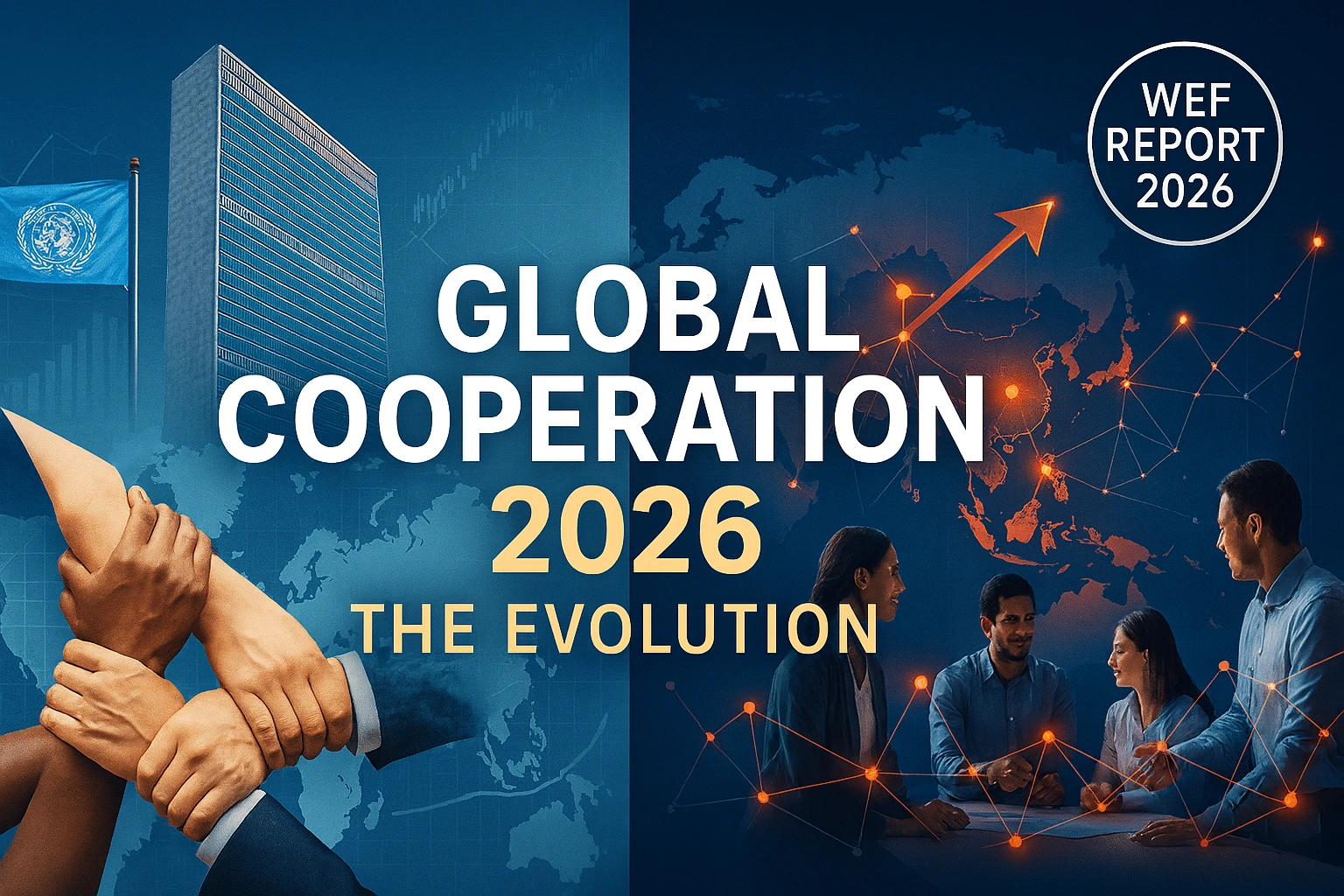
While 123 million people were forcibly displaced in 2024—the highest number on record—global cooperation metrics held remarkably steady. This paradox lies at the heart of the World Economic Forum’s Global Cooperation Barometer 2026, a comprehensive analysis that challenges our assumptions about international collaboration in an age of rising tensions.
The third edition of this landmark report, developed in partnership with McKinsey & Company, reveals a nuanced truth: global cooperation isn’t collapsing—it’s transforming. Traditional multilateral frameworks may be straining under geopolitical pressures, but smaller, more agile coalitions are emerging to fill critical gaps in trade, technology transfer, climate action, and even security.
This evolution represents what UN Secretary-General António Guterres calls “hard-headed pragmatism”—the recognition that cooperation makes sense when it delivers tangible mutual benefits, even in a fragmented world.
What is the Global Cooperation Barometer 2026?
The Global Cooperation Barometer is an annual assessment by the World Economic Forum and McKinsey & Company that measures international collaboration across five key areas: trade and capital, innovation and technology, climate and natural capital, health and wellness, and peace and security. Using 41 metrics indexed to 2020, the 2026 edition finds overall cooperation held steady despite geopolitical tensions, but its composition shifted dramatically—from large multilateral frameworks toward smaller, flexible coalitions based on aligned interests and pragmatic problem-solving.
After analyzing 41 distinct metrics across five essential pillars—trade and capital, innovation and technology, climate and natural capital, health and wellness, and peace and security—the report’s central finding is clear: cooperation is adapting to new realities rather than disappearing entirely.
The Surprising Resilience of Global Cooperation
The 2026 Global Cooperation Barometer tracks international collaboration from 2012 through 2024, with all data indexed to 2020 as a baseline. This methodology, endorsed by OECD economists, allows researchers to isolate trends that emerged before the COVID-19 pandemic and those accelerated by it.
The topline finding? Overall cooperation levels in 2024 remained virtually unchanged from 2023, despite an environment characterized by:
- Escalating trade barriers and protectionist policies
- Multiple active military conflicts across three continents
- Heightened mistrust between major economic powers
- Record levels of forced displacement
- Increasing restrictions on technology transfers
According to Børge Brende, President and CEO of the World Economic Forum, “The paradox is that, at a time of such rapid change, developing new and innovative approaches to cooperation requires refocusing on some of the basics—notably, doubling down on dialogue.”
Understanding the Methodology
The barometer’s rigor lies in its comprehensive approach. Each of the five pillars comprises two indices:
- Action Index: Measures concrete cooperative behaviors (trade flows, knowledge exchange, financial transfers)
- Outcome Index: Tracks results of cooperation (life expectancy, emissions levels, conflict casualties)
Data is normalized to account for economic growth and population changes, ensuring that trendlines reflect genuine cooperation shifts rather than simple expansion. For example, trade metrics are measured as a percentage of global GDP, while migration data is normalized to global population levels.
This methodology, reviewed by International Monetary Fund economists, provides an apples-to-apples comparison across vastly different domains—from pharmaceutical R&D cooperation to peacekeeping deployments.
The Composition Shift That Matters
While aggregate cooperation held steady, the composition of that cooperation shifted dramatically. Metrics tied to global multilateral institutions—those large-scale frameworks involving most of the world’s nations—declined sharply:
- UN Security Council resolutions fell from 50 in 2023 to 46 in 2024
- Multilateral peacekeeping operations dropped by 11% year-over-year
- Official Development Assistance plummeted 10.8% in 2024
- International Health Regulations compliance weakened
Simultaneously, cooperation flourished in areas where flexible, interest-based partnerships could operate:
- Cross-border data flows surged, with international bandwidth now 4x larger than pre-pandemic levels
- Services trade continued its five-year growth trajectory
- Climate finance reached record levels, approaching $1 trillion annually
- Foreign direct investment in strategic sectors (semiconductors, data centers, EV batteries) accelerated
This divergence reveals a fundamental shift: from universal frameworks to tailored coalitions. As McKinsey’s research demonstrates, cooperation increasingly follows geopolitical alignment, with partners choosing collaborators based on shared interests and values rather than institutional membership alone.
Trade and Capital: Reconfiguration Over Retreat
The trade and capital pillar reveals perhaps the most complex story in the entire report. On the surface, cooperation appears flat—neither advancing nor retreating significantly. But beneath this stability, tectonic plates are shifting.
The Great Trade Rearrangement
According to World Trade Organization data analyzed in the report, global goods trade grew slightly slower than overall GDP in 2024, leading to a marginal decline in trade intensity. More revealing than the volume, however, is the geographic redistribution underway.
McKinsey Global Institute research finds that the average “geopolitical distance” of global goods trade fell by approximately 7% between 2017 and 2024. Countries are trading more with geopolitically aligned partners and less with distant ones—particularly between the United States and China.
The numbers tell a stark story:
- US imports from China fell 20% in the first seven months of 2025 compared to the same period in 2024
- Developing countries’ share of manufacturing exports rose by 5 percentage points in 2024
- China represented over half of this growth, adding $276 billion in exports
- Trade concentration (measured by the Herfindahl-Hirschman Index) declined by about 1%, indicating slight diversification
“We’re witnessing not deglobalization but reglobalization,” explains Dr. Richard Baldwin, Professor of International Economics at the Graduate Institute Geneva. “Trade relationships are being rewired along lines of trust and strategic alignment.”
The Silent Surge in Services and Capital
While goods trade reconfigured, less visible but equally important flows accelerated. Services trade—encompassing IT services, professional services, travel, and digitally delivered offerings—continued climbing throughout 2024.
According to UNCTAD data, services trade growth was driven primarily by:
- Digitally delivered services: IT consulting, cloud services, software development
- Business services: R&D, engineering, professional services
- Travel services: Rebounding from pandemic lows, though not yet at 2019 levels
Foreign direct investment told a similar story. While overall FDI flows remained complex (influenced by “phantom FDI” in tax havens), greenfield investment announcements—representing real productive capacity—surged in future-shaping industries.
FDI Markets data reveals a striking trend: newly announced greenfield projects concentrated heavily in:
- Semiconductors: $89 billion in announced projects globally
- Data centers and AI infrastructure: $370 billion (up from $190 billion in 2024)
- EV battery manufacturing: $67 billion
- Critical minerals processing: $34 billion
These investments flowed predominantly between geopolitically aligned partners. Advanced economies, particularly the United States, attracted the lion’s share, while China’s portion of announced FDI inflows dropped from 9% (2015-19 average) to just 3% (2022-25).
The Multilateral Casualty: Foreign Aid
The sharpest decline in the trade and capital pillar came in Official Development Assistance. According to OECD tracking, ODA fell 10.8% in 2024, with only four donor countries exceeding the UN target of 0.7% of gross national income.
The 2025 outlook appears even bleaker. The OECD projects an additional 9-17% decline in ODA, driven by:
- Reduced humanitarian aid budgets
- Decreased refugee spending in donor countries
- Lower aid to Ukraine as military assistance shifts
- Domestic political pressures in major donor nations
This trend has profound implications for low and middle-income countries that depend on international assistance for health systems, education, and infrastructure development.
New Coalition Models Emerge
Despite these challenges, innovative cooperation frameworks are sprouting. The Future of Investment and Trade (FIT) Partnership, launched in September 2025, brings together 14 economies—including Singapore, New Zealand, Switzerland, and the UAE—to pilot practical trade cooperation mechanisms.
According to Brookings Institution analysis, such “minilateral” arrangements offer several advantages over traditional multilateral treaties:
- Speed: Smaller groups reach consensus faster
- Flexibility: Tailored agreements address specific needs
- Resilience: Less vulnerable to any single member’s withdrawal
- Pragmatism: Focus on mutual gains rather than universal principles
Other examples include the EU-Mercosur trade agreement (after a decade of negotiations), the ASEAN Digital Economy Framework Agreement, and bilateral critical minerals deals between the US and allies like Australia and Canada.
Innovation and Technology: The AI Race Drives Selective Cooperation
The innovation and technology pillar registered a 3% year-over-year increase—one of the strongest performances across all five domains. Yet this growth masks growing tensions over technology transfer, particularly in areas deemed strategically sensitive.
The Data Flow Explosion
International bandwidth capacity quadrupled between 2019 and 2024, according to International Telecommunication Union statistics. Cross-border data flows—measured as a percentage of total internet traffic—continued their upward trajectory, fueled by:
- Cloud computing adoption accelerating globally
- Remote work normalizing post-pandemic
- Streaming services expanding internationally
- AI model training requiring distributed datasets
Cisco’s annual internet report projects that global IP traffic will reach 4.8 zettabytes per year by 2027, with a growing share crossing international borders.
This digital connectivity enabled a corresponding rise in IT services trade. Software development, cloud services, and AI consultation increasingly operate as global markets, with talent and expertise flowing across borders despite physical restrictions.
The Strategic Technology Paradox
Even as general technology cooperation flourished, restrictions tightened on specific advanced technologies. The United States expanded export controls on:
- Advanced semiconductors and chipmaking equipment
- AI training systems above certain computational thresholds
- Quantum computing components
- Certain biotechnology applications
According to McKinsey research on export controls, these restrictions primarily target China but ripple across global supply chains, affecting companies and research institutions worldwide.
The paradox? Cooperation in cutting-edge technologies continues—but increasingly within aligned blocs. Examples include:
US-Aligned Technology Partnerships:
- US-India Initiative on Critical and Emerging Technology (iCET)
- US-EU Trade and Technology Council advancing AI safety standards
- US-Japan semiconductor research collaboration
- US-UAE framework on advanced technology cooperation
China-Led Technology Initiatives:
- 5G infrastructure partnerships across Southeast Asia and Africa
- AI research centers in Gulf states
- Data center investments in emerging markets
- Technology transfer agreements with Belt and Road countries
Foreign Affairs magazine describes this as “technological bifurcation”—not complete decoupling, but the emergence of parallel ecosystems with limited interconnection.
The Student Visa Squeeze
One concerning trend threatens long-term technology cooperation: declining international student mobility. After reaching record highs in 2024 (up 8% from 2023), international student flows appear to be contracting in 2025.
Data from major destination countries shows:
- United States: F-1 and M-1 student visas down 11% in Q1 2025
- United Kingdom: Student visa grants fell 2% year-over-year
- Australia: International student approvals dropped 64% (driven by new policy restrictions)
- Canada: Study permits declined amid new caps on international students
According to the Institute of International Education, this reversal could have long-term consequences for innovation. Historically, international students have contributed disproportionately to research breakthroughs, entrepreneurship, and cross-border knowledge networks.
Dr. Mary Sue Coleman, President of the Association of American Universities, warns: “When we restrict the flow of talent, we don’t just hurt international students—we diminish our own innovative capacity.”
The Productivity Question
Despite increases in most innovation metrics, one crucial outcome measure remained stubbornly flat: total factor productivity growth. The Conference Board’s data shows global productivity growth has stagnated for over a decade, raising questions about whether current cooperation patterns effectively translate into tangible economic benefits.
However, McKinsey Global Institute research suggests this may change. Generative AI could increase global productivity growth by 0.1 to 0.6 percentage points annually through 2040, but only if cooperation enables:
- Cross-border data access for model training
- International talent mobility for AI development
- Shared safety standards and governance frameworks
- Collaborative research on frontier applications
The question isn’t whether technology cooperation will matter—it’s whether current cooperation patterns will be sufficient to realize these gains.
Climate and Natural Capital: Deployment Rises, Outcomes Lag
The climate and natural capital pillar demonstrates both the promise and limitations of current cooperation patterns. Investment and deployment reached record levels, yet environmental outcomes continue deteriorating.
The Clean Energy Deployment Surge
Solar and wind capacity additions doubled between 2022 and 2024—from 300 to 600 gigawatts—according to the International Renewable Energy Agency. In the first half of 2025 alone, installations were 60% higher than the same period in 2024.
Remarkably, in the last 18 months, the world installed more solar capacity than in the previous three years combined.
International Energy Agency analysis attributes this acceleration to:
- Dramatic cost reductions: Solar module prices fell 90% over the past decade
- Global supply chains: Chinese manufacturing scale drove affordability
- Policy alignment: Domestic energy security goals converged with climate objectives
- Climate finance flows: Both public and private investment reached near $1 trillion annually
China accounted for two-thirds of solar, wind, and electric vehicle additions, but developing economies showed strong momentum. India became the world’s second-largest solar installer, while Brazil accelerated wind and solar deployment significantly.
The Natural Capital Challenge
While energy transition metrics improved, natural capital indicators stagnated or worsened:
- Marine protected areas: Growth stalled during 2023-24
- Terrestrial protected areas: Expansion slowed after steady progress
- Ocean Health Index: Continued gradual decline
- Biodiversity loss: Accelerated despite international commitments
The UN’s High Seas Treaty, reaching the required 60 ratifications in late 2025, offers hope. Entering force in January 2026, it creates the first legally binding framework for protecting two-thirds of the ocean beyond national jurisdiction.
Yet implementation remains uncertain, and the treaty faces the same multilateral pressures affecting other global agreements.
The Emissions Reality Check
Despite record clean energy deployment, global greenhouse gas emissions continued rising in 2024. Global Carbon Project data shows fossil fuel emissions reached approximately 37.8 billion tonnes of CO2 in 2024, up from 37.3 billion tonnes in 2023.
According to McKinsey Global Institute research, the energy transition is progressing at roughly half the speed needed to meet Paris Agreement goals of limiting warming to 1.5°C.
There is one encouraging trend: emissions intensity (emissions per unit of GDP) continues declining, demonstrating that economic growth can occur alongside emissions management—even if absolute reductions remain elusive.
Regional Climate Coalitions Take the Lead
As comprehensive global agreements prove challenging, regional cooperation is filling gaps:
European Union Initiatives:
- The Clean Industrial Deal (February 2025) aims to make decarbonization a competitive advantage
- The Net-Zero Industry Act accelerates manufacturing of clean technologies in Europe
- The Critical Raw Materials Act secures strategic inputs for the energy transition
- The EU-Central Asia Hydrogen Partnership (September 2025) creates new clean energy corridors
ASEAN Cooperation:
- The LTMS-PIP (Laos-Thailand-Malaysia-Singapore Power Integration Project) enables cross-border clean power trading
- Progress toward an integrated ASEAN Power Grid enhances energy security while enabling renewable deployment
- The ASEAN Community Vision 2025 and Master Plan on ASEAN Connectivity both reached target dates with mixed implementation
COP30 Outcomes: The UN climate conference in Brazil produced several commitments:
- Tripling of adaptation finance by 2035
- Launch of the Tropical Forests Forever Facility to boost investment in protected areas
- New mechanisms for loss and damage funding
Climate Policy Initiative analysis notes that while these commitments are significant, the critical challenge remains implementation—translating pledges into deployed capital and measurable emissions reductions.
The Just Energy Transition Shortfall
One area of cooperation that significantly underperformed expectations: the Just Energy Transition Partnerships (JETPs). These international financing mechanisms aim to assist emerging economies in transitioning to low-emission energy systems.
Despite commitments totaling $50 billion, only $7 billion had been delivered by June 2025—a 86% shortfall. According to World Resources Institute analysis, delays stemmed from:
- Bureaucratic complexity in mobilizing multilateral funds
- Competing domestic priorities among donor nations
- Difficulty coordinating between multiple financial institutions
- Recipients’ concerns about sovereignty and conditionality
This underperformance illustrates a broader challenge: while climate cooperation shows resilience in some areas (financing, trade, technology deployment), translating commitments into action remains difficult in the current geopolitical environment.
Health and Wellness: Resilient Outcomes, Eroding Support
The health and wellness pillar presents perhaps the most deceptive picture in the entire barometer. Overall cooperation appears stable—but this masks a dangerous erosion of the foundational support systems that enable positive health outcomes.
The Outcome Resilience
All major health outcome metrics improved in 2024, according to the Institute for Health Metrics and Evaluation:
- Life expectancy continued its post-pandemic recovery
- Child mortality (under-five) declined further
- Maternal mortality decreased in most regions
- Disability-adjusted life years (DALYs) improved globally
These improvements reflect long-term developmental trends, post-pandemic normalization, and the cumulative effect of previous investments in global health systems.
However, health experts warn these improvements may prove temporary if current trends in health cooperation continue.
The Development Assistance Crisis
Development Assistance for Health fell 6% to $50 billion in 2024—continuing a three-year downward trend. IHME projections suggest an additional $11 billion decline in 2025, largely due to expected cuts from US funding agencies (approximately $9 billion).
Major donor reductions include:
- United States: PEPFAR (President’s Emergency Plan for AIDS Relief) facing budget pressures; USAID tightening cost-sharing requirements
- United Kingdom: Continued retrenchment in global health spending amid domestic fiscal pressures
- Germany: ODA cuts affecting health assistance
According to World Health Organization officials, this creates a dangerous dynamic: bilateral health assistance increasingly focuses on direct service delivery (medicines, diagnostics, frontline care) while reducing support for health system infrastructure, training, and governance.
Dr. Tedros Adhanom Ghebreyesus, WHO Director-General, describes this as “robbing Peter to pay Paul—we’re treating today’s patients while dismantling the systems needed to care for tomorrow’s.”
The Multilateral-Bilateral Shift
A significant trend emerged in 2024: funding through multilateral channels (WHO, Global Fund, multilateral development banks) fell by approximately 20%, while bilateral country-to-country funding declined only 3%.
This shift toward bilateral assistance has several implications:
Potential Benefits:
- More direct accountability between donor and recipient
- Faster deployment to specific needs
- Reduced bureaucratic overhead
- Clearer metrics for impact assessment
Significant Risks:
- System-level costs (training, governance, infrastructure) go unfunded
- Recipients face increased burden on domestic budgets
- Coordination between different bilateral programs weakens
- Political considerations may override health priorities
- Smaller countries with less strategic importance receive less support
Pandemic Preparedness in Limbo
The WHO Pandemic Agreement, adopted in May 2025 after three years of challenging negotiations, represents both an achievement and a disappointment in health cooperation.
On one hand, the agreement marks the first binding global framework for pandemic response, addressing lessons from COVID-19 around:
- Equitable access to vaccines and therapeutics
- Information sharing during outbreaks
- Research collaboration and pathogen surveillance
- Capacity building in low-resource settings
On the other hand, the United States—the world’s largest economy and historically the leading contributor to global health—did not participate in the agreement. This absence raises questions about the framework’s practical effectiveness.
Dr. Jennifer Nuzzo, Director of the Pandemic Center at Brown University School of Public Health, notes: “Treaties create obligations on paper, but pandemic preparedness requires sustained investment, trust, and coordination—all of which are in short supply in the current environment.”
Regional Health Cooperation Gains Ground
As global multilateral frameworks face pressure, regional cooperation showed promising developments:
Africa:
- The African Medicines Agency held its second session in Kigali (June 2025), advancing pharmaceutical regulatory harmonization
- The Accra Compact aligned African governments on health sovereignty priorities
- South Africa’s Aspen Pharmacare expanded COVID-19 vaccine manufacturing for the continent
Caribbean:
- The Organisation of Eastern Caribbean States scaled a model to reduce insulin prices region-wide
- Negotiations advanced on a Caribbean pharmaceutical procurement alliance
Latin America:
- Brazil’s Butantan Institute partnered with other regional manufacturers on vaccine development
- The Pan American Health Organization (PAHO) strengthened regional disease surveillance
The Lancet, in a November 2025 editorial, described these developments as “pragmatic regionalism”—a recognition that health security increasingly depends on strong regional capacity rather than solely on global institutions.
The Healthspan-Lifespan Gap
One troubling trend that demands attention: while life expectancy continues rising, “health-adjusted life expectancy” (years lived in good health) lags behind. According to research published in JAMA Network Open, this means people are living more years with illness and disability.
This “healthspan-lifespan gap” varies significantly by geography and socioeconomic status, but it’s widening in most regions—suggesting that current health cooperation patterns, while extending life, may be less effective at ensuring those additional years are healthy and productive.
Peace and Security: The Pillar Under Greatest Strain
No pillar declined as sharply as peace and security. Every single metric tracked in this domain fell below pre-pandemic levels, reflecting an intensification of conflict and a weakening of multilateral conflict resolution mechanisms.
The Conflict Surge
The number of active conflicts increased in 2024, according to Uppsala Conflict Data Program. Major conflicts include:
- The ongoing Russia-Ukraine war (continuing into its third year)
- Israel-Hamas conflict in Gaza (beginning October 2023)
- Israel-Hezbollah hostilities (escalating in 2024)
- Civil war in Sudan (displacing 11.5 million people)
- Civil war in Myanmar (intensifying since 2021 coup)
- Intensified fighting in eastern Democratic Republic of Congo
Battle-related deaths remained near 2023 levels, with the Russia-Ukraine conflict accounting for over 40% of total fatalities.
The Displacement Crisis
Forcibly displaced people reached a record 123 million globally by the end of 2024, according to UNHCR. This represents an increase from 117 million in 2023 and 108 million in 2022.
The Sudan conflict alone displaced approximately 11.5 million people—the largest single-year displacement since Syria’s civil war peaked in 2013-2015.
Refugee flows strained hosting countries, particularly:
- Turkey (hosting 3.6 million Syrian refugees plus new arrivals)
- Pakistan (hosting Afghan refugees amid economic crisis)
- Uganda (hosting over 1.5 million refugees from multiple neighboring conflicts)
- Poland and other Eastern European nations (supporting Ukrainian refugees)
According to Internal Displacement Monitoring Centre, the costs of supporting displaced populations fall disproportionately on middle-income countries neighboring conflict zones—countries that often lack the resources for adequate support.
Multilateral Mechanisms Under Pressure
The decline in multilateral peace and security cooperation manifested in several metrics:
UN Security Council:
- Resolutions decreased from 50 (2023) to 46 (2024)
- Vetoes by permanent members blocked action on several major conflicts
- The ratio of resolutions to active conflicts declined significantly
- Until November 2025, no new peacekeeping operation had been mandated since 2014
Peacekeeping Operations:
- The ratio of multilateral peacekeeping operations to conflicts fell by approximately 11% year-over-year
- Personnel deployed to multilateral peace operations declined by more than 40% between 2015 and 2024
- Budget constraints disrupted operations, with the approved UN peacekeeping budget falling from $9.7 billion (2014) to $4.7 billion (2025)
Stockholm International Peace Research Institute attributes these declines to:
- Geopolitical tensions among major powers limiting consensus
- Donor fatigue and budget pressures in contributing countries
- Questions about peacekeeping effectiveness in complex civil wars
- Host country sovereignty concerns limiting mandate flexibility
The Cyber and Grey-Zone Threat
Beyond traditional kinetic conflict, 2024 saw intensification of cyberattacks and “grey-zone” activities—actions that fall below the threshold of open warfare but still inflict significant damage.
Verizon’s 2025 Data Breach Investigations Report documents surging cyber incidents across Asia, the Middle East, and Europe. High-profile attacks in 2024-25 included:
- Tata Motors’ Jaguar Land Rover halted production due to cyberattack (September 2025)
- Marks & Spencer faced up to £300 million losses from cyber breach (May 2025)
- Multiple critical infrastructure attacks across Europe
Physical infrastructure also came under attack through grey-zone operations:
- Sabotage of gas pipelines in Europe
- Damage to undersea internet cables in the Red Sea and West Africa (three major multi-cable outages)
- GPS jamming affecting civilian aviation
- Disinformation campaigns targeting elections in multiple democracies
Center for Strategic and International Studies analysis suggests these grey-zone activities are becoming the preferred tool for state and non-state actors seeking to achieve strategic objectives while avoiding direct military confrontation.
The Defense Spending Response
Countries responded to deteriorating security with increased defense budgets:
NATO:
- All 32 member states met the 2% of GDP defense spending target in 2025 (compared to fewer than 20 in 2024)
- The alliance raised its spending target to 5% of GDP for 2035 at The Hague Summit (June 2025)
Asia-Pacific:
- China continued double-digit defense budget increases
- Japan increased defense spending significantly, moving toward the 2% NATO target
- India expanded military modernization programs
- Australia boosted defense spending in response to regional tensions
European Union:
- The European Defence Agency reported increased spending across member states
- New EU defense industrial strategy launched to build autonomous capabilities
According to International Institute for Strategic Studies, global military expenditure reached approximately $2.4 trillion in 2024, representing roughly 2.2% of global GDP—the highest level since the early post-Cold War period.
Regional Peacekeeping Fills the Gap
Despite the decline in UN-led multilateral operations, regional bodies stepped up:
African Union:
- Led security transition in Somalia (ATMIS – African Union Transition Mission in Somalia)
- Deployed forces to eastern Democratic Republic of Congo
- Supported peacekeeping efforts in South Sudan
ECOWAS (Economic Community of West African States):
- Maintained presence in several West African nations
- Coordinated responses to coups and instability in the Sahel
Arab League and GCC (Gulf Cooperation Council):
- Mediation efforts in Yemen
- Coordination on security challenges in the Red Sea corridor
United States Institute of Peace research suggests regional organizations often have advantages in peacekeeping:
- Better understanding of local contexts and dynamics
- Greater perceived legitimacy among parties to conflicts
- Ability to act when great power politics block global action
- More flexible mandates and lighter bureaucracy
However, these operations also face significant challenges, including limited resources, potential conflicts of interest among regional powers, and questions about impartiality.
Emerging Bright Spots in Conflict Resolution
Despite the overall decline, some successful examples of cooperation emerged in 2024-25:
Türkiye’s Mediation:
- The Ankara Declaration (February 2025) led to de-escalation of tensions between Ethiopia and Somalia
- Turkish diplomacy facilitated technical talks and confidence-building measures
Armenia-Azerbaijan Progress:
- The two nations agreed on the text of a peace treaty with EU and US facilitation
- Steps taken to keep third-country forces off borders reduced immediate escalation risks
Israel-Hamas Ceasefire:
- After 15 months of conflict, Qatar and Egypt mediated a ceasefire agreement in January 2025
- While fragile, the agreement created space for humanitarian access and reconstruction discussions
These examples underscore a theme throughout the barometer: while large-scale multilateral frameworks struggle, tailored diplomatic efforts by committed mediators can still yield results.
The Rise of Minilateralism: From Global to Agile
The single most important trend across all five pillars is the shift from universal, rules-based multilateralism toward smaller, flexible, interest-based coalitions.
Defining the New Cooperation Landscape
Multilateralism traditionally involved:
- Near-universal membership (180+ countries)
- Comprehensive frameworks (covering many issues)
- Consensus-based decision-making
- Institutional permanence (UN, WTO, WHO, etc.)
- Rules-based order with dispute resolution mechanisms
Minilateralism (sometimes called “plurilateralism”) instead features:
- Small groups of like-minded countries (3-20 members)
- Focused agendas (addressing specific challenges)
- Streamlined decision-making (easier consensus)
- Purpose-built arrangements (dissolving when objectives met)
- Pragmatic cooperation based on mutual interests
According to Council on Foreign Relations analysis, minilateralism offers several advantages in the current environment:
- Speed: Smaller groups negotiate and implement faster
- Flexibility: Tailored solutions address specific needs without compromising for universal buy-in
- Resilience: Less vulnerable to any single member’s withdrawal or obstruction
- Effectiveness: Clear objectives and accountable membership improve outcomes
- Complementarity: Can coexist with and supplement multilateral frameworks
Examples Across the Five Pillars
Trade and Capital:
- Future of Investment and Trade (FIT) Partnership (14 economies)
- EU-Mercosur trade agreement (after decade of negotiations)
- ASEAN Digital Economy Framework Agreement
- US-Australia-Japan-India Quad economic cooperation
- Bilateral critical minerals partnerships (US-Australia, US-Canada, US-Japan)
Innovation and Technology:
- US-India Initiative on Critical and Emerging Technology
- US-EU Trade and Technology Council
- US-Japan semiconductor research collaboration
- US-UAE advanced technology cooperation framework
- Various AI safety research partnerships
Climate and Natural Capital:
- EU Clean Industrial Deal and regional decarbonization efforts
- LTMS-PIP Southeast Asian power grid integration
- EU-Central Asia Hydrogen Partnership
- Just Energy Transition Partnerships (despite underperformance, represent minilateral model)
Health and Wellness:
- African Medicines Agency regional pharmaceutical cooperation
- OECS insulin procurement collaboration (Caribbean)
- Accra Compact on African health sovereignty
- Various regional vaccine manufacturing partnerships
Peace and Security:
- African Union-led peacekeeping missions
- ECOWAS regional security coordination
- Türkiye-mediated bilateral negotiations (Ethiopia-Somalia, others)
- Quad security dialogue (US-Japan-Australia-India)
The Geopolitical Clustering Dynamic
McKinsey Global Institute research identifies a clear pattern: cooperation increasingly occurs within geopolitical blocs defined by shared values, security concerns, and economic interests.
Three broad clusters are emerging:
Western-Aligned Bloc:
- North America, Europe, developed Asia-Pacific (Japan, South Korea, Australia)
- Characterized by: democratic governance, market economies, security alliances (NATO, bilateral treaties)
- Deepening integration in technology, defense, critical supply chains
China-Aligned Bloc:
- China, Russia, some Central Asian nations, selective African and Latin American partnerships
- Characterized by: state-directed economics,alternative governance models, Belt and Road participation
- Growing integration in infrastructure, commodities, some technologies
Non-Aligned/Swing States:
- India, Brazil, Indonesia, Turkey, Gulf states, much of Africa and Latin America
- Characterized by: strategic autonomy, economic pragmatism, multiple partnerships
- Maintain relationships across blocs, optimize for national interests
Critically, these clusters are not rigid or exclusive. Many countries maintain relationships across boundaries, and cooperation patterns vary by issue area. India, for example, partners with the US on technology and security (Quad) while maintaining trade relationships with Russia and China.
The Dialogue Imperative
For this new cooperation landscape to function effectively, dialogue becomes more—not less—important.
As UN Secretary-General António Guterres emphasized in his September 2025 address to the General Assembly: “Taking steps forward to address global priorities can only happen if parties first talk with one another to find commonality.”
Yet dialogue quality has deteriorated. Too often, international engagements feature:
- Positioning statements rather than genuine exchange
- One-way communication designed to hold ground rather than find common ground
- Performative diplomacy focused on domestic audiences
- Tactical maneuvering instead of problem-solving
Effective dialogue in the minilateral era requires:
- Confidential channels: Away from public pressure and domestic political constraints
- Specific agendas: Focused on concrete problems with potential solutions
- Good-faith participation: Genuine willingness to find mutually beneficial outcomes
- Technical expertise: Subject matter experts alongside diplomats
- Follow-through mechanisms: Implementation plans with clear accountability
Harvard Negotiation Project research emphasizes that successful minilateral cooperation depends on participants separating people from problems, focusing on interests rather than positions, and generating options for mutual gain before deciding on specific approaches.
What the Shifting Cooperation Landscape Means for Global Business
The transformation in global cooperation patterns has profound implications for multinational corporations, investors, and business leaders navigating an increasingly complex environment.
The Corporate Sentiment Split
The Global Cooperation Barometer survey of approximately 800 executives across 81 economies revealed a striking divergence in perceptions:
- 40% reported that growing barriers in trade, talent, and capital flows hampered their ability to do business
- 60% said the effects were neutral or not substantially negative
This split suggests that business impacts depend heavily on:
- Industry: Technology and pharmaceuticals face more restrictions than services
- Geography: Companies operating between aligned partners less affected than those spanning geopolitical divides
- Business model: Digital platforms more adaptable than asset-heavy manufacturers
- Strategic positioning: Proactive adaptation mitigates negative effects
According to Harvard Business Review analysis, companies successfully navigating this environment share several characteristics:
- Geopolitical intelligence capabilities: Dedicated teams tracking regulatory changes, alliance shifts, and emerging restrictions
- Flexible supply chains: Multiple sourcing options and rapid reconfiguration ability
- Regional strategies: Tailored approaches for different geopolitical clusters
- Government relations excellence: Deep understanding of policy priorities and effective engagement
- Scenario planning: Regular war-gaming of geopolitical shocks and strategic responses
The Opportunity in Reconfiguration
While some business leaders focus on cooperation’s decline, others see opportunity in its transformation. McKinsey research identifies several emerging opportunities:
New Trade Corridors:
- Intra-ASEAN trade growing rapidly as regional integration deepens
- Africa-India trade expanding as both seek diversification
- Middle East-Europe connections strengthening (renewable energy, logistics)
- Latin American regional trade agreements creating larger effective markets
Strategic Industry Positioning:
- Semiconductor manufacturing expanding beyond East Asia (US, Europe, India investments)
- EV battery supply chains developing regional hubs (Europe, North America, Southeast Asia)
- Critical minerals processing diversifying away from China dominance
- Pharmaceutical manufacturing regionalizing for supply security
Services and Digital Growth:
- IT services demand surging as businesses digitize and adopt AI
- Professional services expanding as companies navigate complex regulatory environments
- Digital platforms less constrained by physical trade barriers
- Knowledge-intensive services benefiting from continued (if selective) talent mobility
Climate Transition Opportunities:
- $1 trillion+ annual climate finance creating massive market
- Clean technology manufacturing and deployment accelerating globally
- Energy transition requiring infrastructure investment across developing economies
- Carbon markets and climate services expanding
Building a Geopolitical Nerve Center
McKinsey research on geopolitical risk management recommends companies establish a dedicated “geopolitical nerve center”—a cross-functional team responsible for:
Monitoring and Intelligence:
- Track regulatory changes across jurisdictions
- Monitor geopolitical developments affecting operations
- Assess competitor positioning and strategic moves
- Maintain relationships with policy experts and government officials
Scenario Planning and War-Gaming:
- Develop detailed scenarios for potential geopolitical shocks (new sanctions, conflict escalation, alliance shifts)
- War-game company responses with senior leadership quarterly
- Identify trigger points for pre-authorized decisions
- Maintain updated playbooks for rapid response
Strategic Coordination:
- Align business unit strategies with geopolitical realities
- Coordinate government relations across regions
- Manage trade-offs between efficiency and resilience
- Balance short-term costs of adaptation with long-term risk reduction
Capability Building:
- Develop internal expertise on key geographies and issues
- Build relationships with external experts and advisors
- Train leadership on geopolitical risk assessment
- Foster cultural awareness and sensitivity
Companies that invested in these capabilities earlier are now outperforming. According to Boston Consulting Group analysis, firms in the top quartile of geopolitical preparedness showed 3-5 percentage points higher return on invested capital during 2022-24 compared to bottom-quartile peers.
Three Strategies for Navigating the New Cooperation Paradigm
As global cooperation evolves, leaders in both public and private sectors must adapt their approaches. Three strategies emerge from the barometer’s findings:
1. Match Cooperation Format to Specific Issues
Not all challenges require universal, multilateral solutions. Leaders should strategically choose cooperation formats based on:
Issue Characteristics:
- Technical problems with clear solutions: Small expert groups (e.g., technology standards)
- Economic opportunities with aligned incentives: Bilateral or regional trade agreements
- Security challenges with geographic concentration: Regional organizations
- Global challenges requiring universal participation: Reformed multilateral institutions (climate, pandemics)
Partner Alignment:
- High alignment: Deep integration possible (single markets, currency unions, defense alliances)
- Moderate alignment: Issue-specific cooperation (trade agreements, technology partnerships)
- Low alignment: Transactional engagement (commodity trade, specific projects)
Time Sensitivity:
- Immediate crises: Ad hoc coalitions of capable and willing actors
- Medium-term challenges: Purpose-built minilateral partnerships
- Long-term systemic issues: Institutional frameworks with staying power
The key is strategic flexibility—maintaining participation in multiple cooperation formats simultaneously, activating different partnerships for different challenges.
2. Strengthen Resilience Through New Organizational Capabilities
Both governments and businesses must build capabilities to thrive in a more fragmented cooperation landscape:
For Governments:
Intelligence and Foresight:
- Establish forward-looking analytical units tracking cooperation trends
- Maintain comprehensive mapping of existing partnerships and potential new ones
- Develop scenario planning for different cooperation futures
Diplomatic Agility:
- Train diplomats in minilateral negotiation techniques
- Empower smaller negotiating teams with flexible mandates
- Build rapid response capacity for emerging cooperation opportunities
Policy Coordination:
- Break down silos between trade, security, climate, and health policy
- Recognize interconnections across cooperation domains
- Develop whole-of-government strategies for key relationships
For Businesses:
Geopolitical Intelligence:
- Build dedicated teams monitoring regulatory and political developments
- Develop early warning systems for cooperation disruptions
- Maintain networks of advisors across key geographies
Operational Flexibility:
- Design supply chains with multiple sourcing options
- Maintain manufacturing and service delivery capacity in multiple regions
- Develop rapid reconfiguration capabilities
Strategic Relationships:
- Cultivate relationships with policymakers in key markets
- Participate actively in industry associations and multi-stakeholder forums
- Build trust through consistent engagement, not just during crises
According to McKinsey & Company research, companies that systematically built these capabilities showed higher revenue growth (2-4 percentage points annually) and lower volatility (15-25% lower earnings variance) compared to peers during 2020-24.
3. Pursue Public-Private and Private-Private Coalitions
Cooperation need not flow only through governmental channels. Innovative partnership models can accelerate progress:
Public-Private Coalitions:
These partnerships leverage complementary strengths:
- Government: Convening power, regulatory authority, patient capital, long-term perspective
- Business: Technical expertise, operational efficiency, innovation capacity, private capital
Successful examples include:
Minerals Security Partnership:
- Governments and leading mining/manufacturing companies
- Objective: Accelerate critical mineral projects
- Approach: Coordinated investment and market-making
- Result: Pipeline of projects moving toward financial close
Coalition for Epidemic Preparedness Innovations (CEPI):
- Governments, foundations, pharmaceutical companies
- Objective: Accelerate vaccine development for emerging threats
- Approach: Coordinated R&D funding and manufacturing capacity
- Result: Rapid COVID-19 vaccine development and future preparedness
Private-Private Coalitions:
When public policy moves slowly, businesses can self-organize:
The Resilience Consortium (World Economic Forum/McKinsey):
- Brings together businesses’ agility, MDBs’ capital mobilization capacity
- Focus on building resilience in critical supply chains
- Enables rapid coordination without waiting for government action
Industry-Specific Standards Bodies:
- Technology companies collaborating on AI safety standards
- Pharmaceutical companies coordinating on pandemic preparedness
- Logistics companies optimizing supply chain resilience
According to World Economic Forum research, effective public-private partnerships share common characteristics:
- Clear governance: Defined roles, decision-making processes, accountability
- Aligned incentives: Structure ensuring all parties benefit from success
- Measurable objectives: Concrete targets and transparent progress tracking
- Risk sharing: Appropriate distribution of risks and rewards
- Long-term commitment: Patience through inevitable implementation challenges
Looking Ahead: Cooperation’s Future in 2026 and Beyond
As we move deeper into 2026, several trends deserve close attention:
Pressure Points to Watch
US Policy Direction:
- Tariff policies and their implementation affecting global trade flows
- Foreign aid levels impacting health and development cooperation
- Technology export controls shaping innovation ecosystems
- Immigration policies affecting talent mobility
China’s Strategic Choices:
- Economic opening or further self-reliance emphasis
- Technology cooperation with developing economies
- Belt and Road Initiative evolution
- Role in multilateral institutions
European Union Cohesion:
- Internal political dynamics affecting unity
- Defense spending and security cooperation expansion
- Industrial policy and subsidy competition
- Enlargement and neighborhood relations
Emerging Economy Agency:
- India’s positioning between major powers
- Gulf states’ technology and economic partnerships
- African regional integration progress
- Latin American trade and political alignments
Multilateral Institution Reform:
- UN Security Council reform discussions
- WTO dispute resolution restoration
- World Bank/IMF governance changes
- WHO funding and authority
Reasons for Measured Optimism
Despite significant challenges, several factors suggest cooperation’s resilience:
Economic Incentives Remain Strong:
- Global supply chains still deliver efficiency gains
- Cross-border investment creates wealth
- International students and workers enhance innovation
- Trade benefits consumers through lower prices and greater choice
Technology Enables New Forms:
- Digital platforms reduce coordination costs
- Data flows enable distributed collaboration
- Remote communication makes distance less relevant
- AI could enhance translation and cross-cultural understanding
Shared Challenges Demand Collective Action:
- Climate change affects all countries
- Pandemics ignore borders
- Cybersecurity threats require coordination
- Economic instability ripples globally
Pragmatic Leaders Understand Value:
- Surveys show majority recognize cooperation benefits
- Business leaders adapt strategies rather than retreat
- Diplomats seek creative solutions within constraints
- Civil society maintains cross-border networks
The Adaptation Imperative
The central message of the Global Cooperation Barometer 2026 is neither pessimistic nor naively optimistic. Instead, it offers a realistic assessment: cooperation is under pressure but adapting.
The question isn’t whether countries and organizations will cooperate—they will, because they must. The question is whether they’ll adapt quickly and effectively enough to address urgent challenges while managing tensions.
As Børge Brende of the World Economic Forum notes: “Cooperative approaches are vital for advancing corporate, national and global interests. The barometer finds that, in the face of strong headwinds, cooperation is still taking place, albeit in different forms than in the past.”
The path forward requires:
- Dialogue: Open, constructive engagement to identify common interests
- Flexibility: Willingness to try new cooperation formats and partnerships
- Pragmatism: Focus on tangible outcomes rather than ideological purity
- Patience: Recognition that building trust and achieving results takes time
- Innovation: Creative approaches to long-standing challenges
Conclusion: Cooperation Evolving, Not Collapsing
The 2026 Global Cooperation Barometer paints a nuanced picture of international collaboration in an era of geopolitical fragmentation. While traditional multilateral frameworks face unprecedented strain, cooperation persists and evolves through smaller, more flexible coalitions.
Across trade, technology, climate, health, and security—the five pillars of global cooperation—we see common patterns:
- Multilateral mechanisms declining but not disappearing entirely
- Regional and minilateral partnerships filling gaps with agile, interest-based cooperation
- Economic incentives continuing to drive collaboration where mutual benefits are clear
- Outcomes holding steady or improving in some areas, deteriorating in others
- Adaptability emerging as the key to navigating uncertainty
For business leaders, this environment demands new capabilities: geopolitical intelligence, supply chain flexibility, strategic relationship management, and scenario planning. Companies that proactively adapt can find opportunity in reconfiguration rather than merely managing decline.
For government officials and diplomats, success requires matching cooperation formats to specific challenges, building diverse partnership portfolios, and maintaining dialogue even—especially—with those with whom disagreement runs deep.
For all stakeholders, the fundamental truth remains: many of today’s most pressing challenges cannot be solved by any country or organization alone. Climate change, pandemic preparedness, economic prosperity, technological innovation, and peace all require cooperative effort.
The shape of that cooperation may look different from the post-World War II multilateral order. It may be more fragmented, more pragmatic, more selective about participants and more focused on concrete outcomes. But cooperation itself—the human capacity to work together toward shared goals—endures.
As we navigate 2026 and beyond, the barometer’s message is clear: cooperation isn’t dying. It’s evolving. And our collective ability to adapt will determine whether that evolution leads to a more resilient, prosperous, and peaceful world—or to continued fragmentation and missed opportunities.
The choice isn’t between cooperation and isolation. It’s between rigid adherence to fading frameworks and creative adaptation to new realities. The data suggests pragmatic optimism: cooperation is down but not out, strained but not shattered, adapting even as it’s tested.
In this era of transformation, the question each leader must answer is not “should we cooperate?” but “how shall we cooperate most effectively?” The Global Cooperation Barometer 2026 provides essential data for answering that question wisely.
Methodology Note: This article draws primarily from the World Economic Forum’s Global Cooperation Barometer 2026 Third Edition, produced in partnership with McKinsey & Company. All statistics are sourced from the report’s 41 tracked metrics unless otherwise noted. Additional reporting includes interviews with policy experts, analysis of supplementary data sources, and review of academic literature on international cooperation.
Discover more from The Economy
Subscribe to get the latest posts sent to your email.


Geoeconomics
Lula Re-elected in 2026: What Changes for the Dollar, Brazilian Stocks, and Interest Rates?
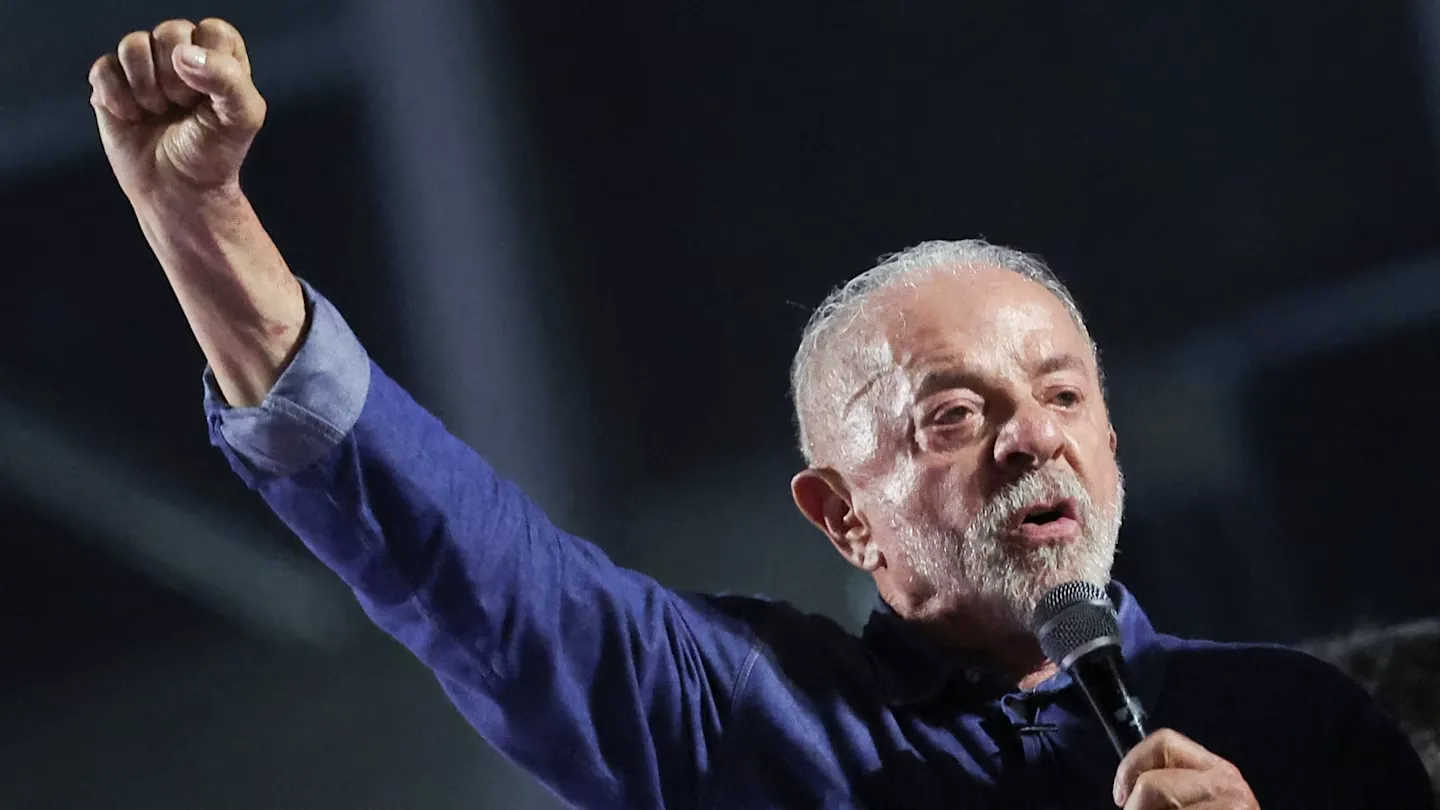
Luiz Inácio Lula da Silva was reelected president of Brazil in the runoff election on October 25, 2026, receiving 64,256,232 votes, equivalent to 51.79% of valid votes, according to the official announcement by the Superior Electoral Court (TSE). The result concluded the vote count in the presidential contest against Flávio Bolsonaro, but it did not automatically answer investors’ questions about public debt, spending, inflation, and growth. To understand the dollar and Brazil’s stock market after the election, it is more useful to examine which policies will be proposed, who can approve them, and how asset prices will incorporate that information than to assume a single market response based on who won.
This analysis was prepared on October 26, 2026, and does not provide unverified intraday quotations for the dollar or the Ibovespa. The election result is attributed to the TSE; interest-rate information to the Central Bank of Brazil; and macroeconomic scenarios to IMF documents. Trading-session fluctuations require additional checks against data showing the time, market, and source.
What the TSE Confirmed—and What Remains Disputed
The TSE announced Lula’s victory in the early hours of October 26. The vote count recorded 51.79% of valid votes for the reelected president and 48.21% for Flávio Bolsonaro, according to the official result reported in the court’s election coverage. The margin matters: the published count produced a clear outcome, but it also revealed a politically divided electorate.
The Associated Press reported that Flávio Bolsonaro challenged the process after voting hours were extended under exceptional circumstances. According to the report, the head of the electoral court said the extension did not change the outcome. A political challenge is not the same as a judicial annulment of an election. Investors, voters, and journalists should distinguish between the announced result, any appeals, and any subsequent legal ruling. This prevents an allegation from being presented as an established fact.
The winner faces a reality that does not disappear when the votes are counted: governing will depend on budget negotiations, Congress, court decisions, and economic actors. An electoral mandate confers the power to propose measures, not unilateral authority to change every tax, expenditure, and monetary rule immediately.
Why the Dollar Has No Predetermined Political Reaction
The USD/BRL exchange rate indicates how many Brazilian reais are needed to buy one US dollar. When the rate rises, the US currency becomes more expensive in reais; when it falls, the real appreciates against the dollar. It is tempting to attribute every movement to the elected president. But the exchange rate is simultaneously influenced by US interest rates, commodity prices, importers’ demand, investor flows, fiscal expectations, and global risk aversion.
An election can change expectations about tax revenue, fiscal expansion, and the credibility of policy targets. But much of that adjustment may have happened before the result as opinion polls and perceived probabilities shifted. A relatively small movement after the vote count would not prove market indifference; likewise, a sharp rise or fall could reflect international news released at the same time.
The proper method is to compare the observed exchange rate with the previous closing rate, record the exact time in Brasília, identify the exchange-rate category, and check for competing news developments. The commercial exchange rate traded in financial markets is not the same as the rate charged by a currency exchange bureau for travel. The official PTAX reference rate also follows its own methodology and schedule, unlike a simple instantaneous quote. To check these categories, consult the Central Bank of Brazil’s foreign-exchange services.
Therefore, publishing a statement such as “the dollar surges after Lula’s victory” without a confirmed price, timestamp, and size of the move would be misleading. It would also be wrong to conclude that any appreciation of the real demonstrates full market approval of the government’s program. Markets do not vote; they reprice probabilities and risks in response to multiple sources of information.
The Selic Rate Links Fiscal Policy, Exchange Rates, and Asset Prices
At its September meeting, the Monetary Policy Committee (Copom) reduced the benchmark interest rate to 13.75% per year, effective September 17, 2026, according to the Central Bank’s official announcement. This is a verifiable figure from before the runoff election, not a Central Bank reaction to Sunday’s result.
Interest rates matter because comparatively attractive returns on investments denominated in reais can draw capital, provided investors consider the risks acceptable. However, high rates also make borrowing, corporate financing, and debt servicing more expensive, constraining economic activity and putting pressure on public finances. The relationship is not linear: fiscal deterioration could require higher interest rates to compensate for risk, even if monetary authorities wanted to stimulate the economy.
In its September 2026 Monetary Policy Report, the Central Bank described unusually elevated inflation risks, expectations that remained under pressure, and caution in the adjustment process. The document provides a more reliable starting point than interpretations made just hours after the election. Copom makes decisions based on inflation, expectations, economic activity, and risks; there is no automatic rule requiring interest rates to rise or fall because a particular candidate wins.
If the government’s policy signals are consistent with a sustainable fiscal path, the risk premium could decline. If investors perceive persistent spending growth without credible financing, longer-term interest rates could rise. These are conditional scenarios, not forecasts of rates on a particular day.
The Ibovespa Responds to Profits, Sectors, and the Cost of Capital
Brazil’s stock market is not a simple referendum on the government. Exporters may benefit from a weaker real when converting foreign-currency revenue, although dollar-denominated costs and currency hedges alter the effect. Retailers and credit-dependent companies are often more sensitive to domestic interest rates and consumer spending. Banks face their own variables: lending spreads, loan defaults, demand for credit, and regulatory changes.
Companies involved in oil, mining, pulp, and food production also respond to global demand and international prices. News concerning China, the United States, or freight costs may carry more weight in a trading session than a domestic announcement. State-owned companies require specific analysis of strategy, governance, tariff rules, investment plans, and capital allocation, without assuming changes will occur on the first day after the election.
There is also a statistical trap: the index’s performance can conceal underlying differences. A gain driven by a handful of large companies does not prove a broad improvement in financing conditions for every Brazilian business. To assess the market’s reaction, examine sector weights, trading volume, long-term interest rates, and the performance of companies with different currency exposures.
Monitoring Matrix: What to Watch Instead of Guessing the Closing Price
| Topic | Indicator Worth Monitoring | Potential Economic Impact |
|---|---|---|
| Budget and debt | Targets, revenue sources, and the spending trajectory | Risk premiums, long-term interest rates, and exchange rates |
| Central Bank | Inflation, expectations, and Copom statements | Credit, fixed-income investments, and stock valuations |
| Foreign trade | Commodity prices and demand from trading partners | Exporters and dollar inflows |
| State-owned companies | Investment plans, governance, and tariffs | Expected earnings and perceived risk |
| Institutional politics | Negotiations and formal decisions | Feasibility and timing of reforms |
None of these indicators should be reduced to a single headline. What matters most is identifying persistent changes between policy announcements and their implementation.
The Fiscal Challenge Remains After the Election
A government may want to expand public services, investment, and social programs. The economic question is how to finance those commitments while keeping them compatible with growth, taxation, and debt sustainability. If expansion boosts demand in the short term but undermines confidence in fiscal sustainability, the effects on consumption and long-term investment may point in opposite directions.
In its July 2026 annual consultation, the IMF projected 2.4% growth for Brazil in 2026, alongside external and fiscal risks. That forecast was made months before the runoff election; it was not a post-election update. The organization highlighted international trade, prices, and financial conditions as important variables for the coming years.
Tax revenues depend on economic activity and the composition of growth. A credit-driven cycle may temporarily boost government revenues without resolving structural spending pressures. Measures to improve productivity, infrastructure, and tax simplification take time to yield measurable results. Government plans should therefore be judged not only by their promises but also by their timelines, costs, funding sources, and ability to be implemented.
The assessment must also recognize that public finances cannot be captured by a single indicator. The primary balance, interest payments, financing requirements, and nominal GDP growth can move in different directions. Communication that highlights only one number risks obscuring the more important underlying trajectory.
Exports, China, and Washington’s Trade Policy
Brazil sells agricultural products, minerals, energy, and manufactured goods to a range of markets. Changes in relations with the United States or China may affect prices, tariffs, and productive investment. But an election does not automatically rewrite existing contracts or eliminate international rules. Trade negotiations commonly involve sectors with competing interests, meaning a political victory may generate benefits for one group and costs for another.
The real responds to foreign-currency inflows and outflows, but export earnings also depend on volume, prices, and timing. Higher commodity prices may support some export revenues even amid domestic political turbulence; a global demand slowdown may hurt exporters even if the government announces fiscal measures that investors consider prudent.
For readers outside financial markets, it is worth monitoring the prices of imported fuel, international airfares, electronics, and agricultural inputs. A more expensive dollar tends to raise some costs in reais over time, but the extent to which those increases reach consumers depends on inventories, competition, contracts, and taxes. No one should promise that a single day’s exchange-rate movement will immediately change every price.
Three Scenarios for 2027—not Three Predictions
Greater predictability scenario: The government and Congress negotiate a budget with clear targets, inflation declines, and external conditions do not deteriorate. In that case, risk premiums could fall and create room for less restrictive financial conditions. This does not mean every stock must rise or that the dollar will decline without interruption.
Intermediate scenario: Fiscal decisions advance unevenly, reforms take longer, and economic activity slows moderately. Exchange rates and interest rates could fluctuate in response to domestic and international factors, with widely varying outcomes across companies. This scenario is a reminder that a “neutral market” is an oversimplification: different sectors experience different effects.
Pressure scenario: External shocks, revenue shortfalls, or persistent doubts about financing drive up the cost of capital. Higher interest rates may support the currency at certain times, but they can also slow investment and weaken the debt outlook. The ultimate outcome would depend on the combination of shocks and the policy responses.
These scenarios are conditional exercises designed to aid analysis, not estimated probabilities or recommendations to buy or sell securities.
What Still Cannot Be Claimed as of October 26
Sunday’s election result has been officially announced. There is still no basis for attributing a definitive dollar exchange rate, a long-term Ibovespa trend, or a future Copom decision to that result alone. A new mandate does not, by itself, determine the final wording of laws, Congress’s actions, or external conditions. Nor should a challenge reported after the runoff be confused with an actual reversal of the election result.
To follow the transition, first consult TSE announcements and formal decisions; then review Central Bank documents, budget proposals, and corporate disclosures. Only after that should these developments be connected to timestamped financial data. In economic reporting, the order of verification matters: institutional fact, economic mechanism, and finally price interpretation.
Frequently Asked Questions
Did Lula Win Brazil’s 2026 Presidential Election?
Yes. The TSE announced his reelection with 51.79% of valid votes in the October 25 runoff, according to its October 26 announcement. His opponent’s challenge was reported as a challenge, not an annulment.
Will the Dollar Rise Because of the Result?
There is no automatic answer. The real reflects interest rates, fiscal expectations, trade, global dollar movements, and news already priced into markets. A credible forecast requires a clearly stated time horizon and explicit assumptions.
Will the Stock Market Rise or Fall Today?
A specific direction can only be reported using trading data identified by time and market. This article does not present an unconfirmed intraday price as fact.
Will the Central Bank Change the Selic Rate Because of the Election?
The decision depends on monetary-policy objectives and indicators, not an automatic electoral trigger. The official pre-election reference was 13.75% per year, announced in September 2026.
Does the Result Change Taxes Immediately?
No. Most tax and budget changes require a proposal, legislative consideration, approval, and rules governing when they take effect. The result changes the political context, but it does not replace legal procedures.
What Readers Need to Know
The election settled who won, not what the dollar will be worth or how each company will grow. The useful task now is to monitor the decisions that follow: the budget, political negotiations, fiscal credibility, inflation, interest rates, and trade relations. Well-informed readers do not need to react to every fluctuation; they need to understand which developments would change the assessment of risk.
Discover more from The Economy
Subscribe to get the latest posts sent to your email.
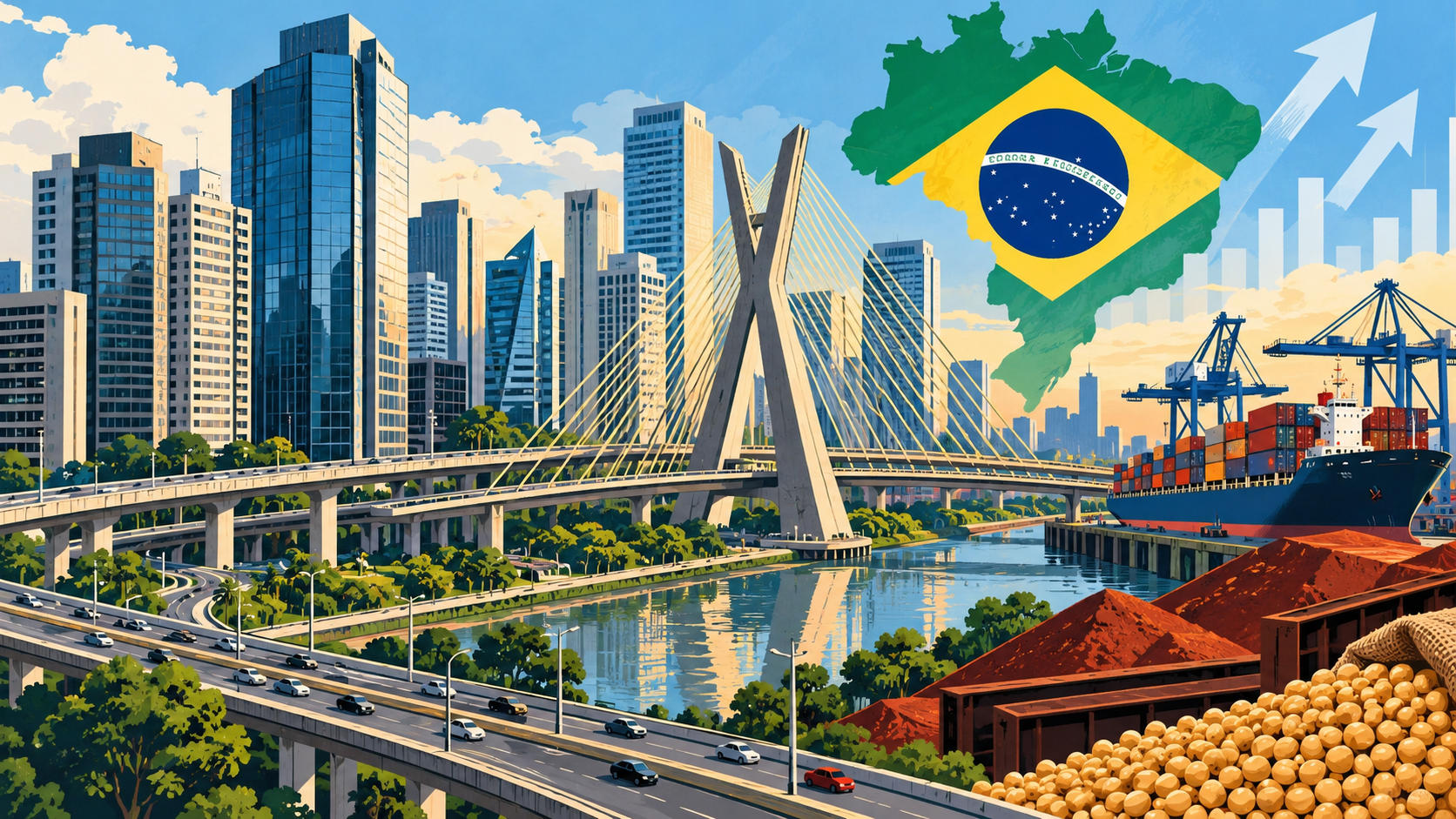
Brazilian President Luiz Inácio Lula da Silva won the October 25, 2026 presidential runoff, according to the Superior Electoral Court’s announcement on October 26. He secured 51.79% of valid votes, defeating Flávio Bolsonaro, whose 48.21% share underscored the country’s political divide. For international investors and trading partners, however, the more consequential economic story begins after the vote count: Lula’s next term will be judged on whether Brazil can preserve social commitments and investment while stabilizing public finances, containing inflation and taking advantage of shifting global trade patterns.
The Associated Press reported that Bolsonaro disputed the result and sought to challenge the election after voting hours were extended at some locations. The electoral court president said the extension did not change the outcome. A political challenge is not a court order overturning the published result. That distinction matters as the country approaches the next term: legal institutions, rather than competing campaign narratives, determine the formal status of the election.
The first test: reconciling fiscal commitments with rising debt
Brazil does not enter the new political cycle with unlimited spending capacity. The International Monetary Fund’s July 2026 Article IV consultation emphasized the need for a stronger medium-term fiscal effort, more efficient expenditure and credible constraints on the public-debt trajectory. The institution supported protecting targeted social spending while finding room for productive investment, rather than presenting all public spending as equally beneficial or equally dispensable.
The challenge is structural. Mandatory expenditures, tax exemptions, debt-servicing costs and relatively slow productivity growth can absorb resources that might otherwise build infrastructure, improve schools or modernize ports. A government can win support for expanded benefits without securing the future financing needed to maintain them. Conversely, an indiscriminate spending squeeze can weaken services, household demand and political backing for reform. Investors care about the balance between these objectives because persistent deficits may raise the compensation demanded for lending to the government.
The IMF’s 2026 country report projected a substantial gross debt burden under its preferred international definition, approaching 98% of GDP in 2026. That figure differs from debt ratios published under some Brazilian national definitions; readers should not compare the numbers without examining their accounting perimeter. The underlying IMF staff report also discusses a wider overall budget deficit and the importance of medium-term adjustment.
What would fiscal credibility look like in practice? Not a single headline about “cuts” or “investment,” but a package linking multi-year spending plans to revenue, realistic economic assumptions and operational milestones. Transparent treatment of state-owned enterprises and one-off revenues would strengthen the signal. An analyst should be wary of projections that require exceptional commodity prices or one-time receipts every year to close recurring gaps.
The second test: inflation, interest rates and the cost of investment
Brazil’s policy rate is an important bridge between public finance and private business investment. The central bank’s September 16, 2026 decision set the Selic target at 13.75% annually from September 17. That decision preceded the election and reflected the monetary-policy authority’s assessment of inflation and other risks at the time; it was not a response to the runoff result.

High nominal rates can attract income-seeking capital and restrain some forms of spending, but they also raise funding costs for businesses and the government. The relevant question for a factory builder or infrastructure developer is not only whether rates fall, but whether financing can be secured on terms consistent with the project’s expected cash flows. Falling short-term rates accompanied by stubbornly high long-term risk premiums may offer less relief than a headline suggests.
The IMF’s July projections pointed to 5.6% end-2026 inflation in its baseline, while the central bank’s September monetary-policy report described unusually elevated risks and expectations that remained difficult to anchor. Forecasts are conditional, and documents prepared months before an election should not be mislabeled as post-election market expectations. Together, however, they show the policy dilemma: a central bank must manage inflation while households and companies seek more affordable credit.
A stronger fiscal position could make the process of disinflation less costly by reducing the risk premium embedded in market rates. If fiscal uncertainty grows, the reverse can occur. It is not an automatic binary choice—global monetary conditions, exchange rates, food prices and energy shocks may dominate individual months—but the interaction explains why fiscal and monetary credibility remain central to Brazil’s global investment case.
The third test: turning commodity strength into productivity
Brazil occupies an influential position in global supply chains for food, minerals and energy. Export revenue can strengthen the external position, improve tax receipts and attract investment, but commodity wealth alone is not the same as sustained productivity growth. World demand and price cycles are volatile; an economy reliant on favorable terms of trade can find itself exposed when global consumption weakens.
The IMF’s 2026 country assessment highlighted terms-of-trade support from oil prices and the prospect of higher hydrocarbon production. It also warned about geopolitical escalation and a weaker external environment. Those two observations belong together. Higher oil prices can support an exporting industry’s revenue while increasing fuel and input costs across other parts of the economy.
Agriculture presents a similar set of crosscurrents. Brazilian producers can benefit from international food demand, yet remain exposed to fertilizer availability, logistics, currency swings, weather and overseas regulation. An export boom may produce substantial commercial profits without solving road capacity, rail connections or technology gaps that constrain producers inland. More competitive logistics can improve resilience even if export prices fall.
For global readers, the larger question is whether Brazil can move more goods reliably through ports, increase local processing and build businesses with valuable technologies and services. Success would be visible in investment, worker productivity and value added, not merely an impressive trade-surplus figure during a commodity upswing.
A useful test of an export announcement
Ask what has been signed rather than merely discussed; whether financing is secured; when capacity becomes operational; which approvals remain; and what happens to costs if the real, interest rates or input prices move unfavorably. A large memorandum of understanding can signal intent, but it does not necessarily represent a completed project or committed export volume.
The fourth test: navigating China, the United States and Europe
Brazil’s trade and diplomacy are affected by its relationships with several major partners, whose interests are not always aligned. Chinese demand influences important commodity markets, the United States shapes financial conditions and market access, and European policy can affect agricultural standards and regulatory requirements. Lula’s preference for strategic autonomy and a broad set of relationships is politically meaningful, but firms still need clarity on tariffs, contracts and regulatory compliance.
A government may seek stronger cooperation with one partner on green energy, another on industrial equipment and another on agricultural market access. The success of that approach depends on whether commercial opportunities emerge without creating unsustainable financial or diplomatic costs. A country can benefit from more diverse buyers; it can also face pressure if rival powers attach geopolitical conditions to market access or technology transfers.
The IMF’s October 2026 World Economic Outlook projected 3.1% global growth in 2026 and 3.4% in 2027 in its baseline, while stressing risks from conflict, trade tensions and fiscal vulnerabilities. These are global forecasts based on information available through early October, not a forecast reflecting the Brazilian runoff result. They provide the broader environment in which the new administration must make trade decisions.
Brazil’s involvement in the EU–Mercosur process illustrates the difference between diplomatic headlines and implemented access. Negotiation, approval, ratification and entry into force are different stages, sometimes spanning different institutions. Investors should verify the legal status of any agreement before assuming that tariffs have changed or quotas become available. The IMF’s detailed Brazil report discusses the potential benefits of international economic integration, but actual outcomes require the relevant approvals and industry implementation.
Why exchange rates do not tell the whole trade story
A cheaper real can make some exports more competitive in foreign-currency terms, but imported machinery, fuel, fertilizer and components may become more expensive. Contracts may be priced or hedged in dollars, and high domestic interest rates affect working capital. Exporting businesses need an adequate combination of logistics, market access, financing and product quality. Political rhetoric about a “strong currency” or a “competitive currency” cannot settle those trade-offs.
The fifth test: institutions, tax reform and project execution
Brazil has institutions capable of placing important limits on a president’s economic ambitions. Legislative coalitions influence fiscal rules, tax measures and public spending. Courts can affect regulatory decisions, while the central bank conducts monetary policy through its own framework. A president’s electoral victory changes the administration’s mandate, but it does not unilaterally rewrite the legal foundations of corporate taxation or investor protection.
The IMF’s assessment noted the implementation of Brazil’s value-added-tax reform as one potentially important source of efficiency. The reform is complex and phased, which means compliance systems and supply-chain decisions may require adjustment well before its full benefits are measured. An investor deciding where to establish an operation should understand the transition timetable rather than assuming that every rule changes instantly in 2027.
Infrastructure and energy investment involve similar execution constraints. Financing must align with environmental permitting, transmission or transport connections, local labor skills and contract enforcement. A project announced at a political summit may remain years from commercial service. The practical measure of a business-friendly environment is the reliability of these ordinary processes, not the frequency of announcements.
For the incoming term, a successful reform strategy would establish priorities that can survive election cycles and offer investors predictable compliance pathways. Broad political agreement is difficult in a polarized country, but some areas—simpler tax administration, logistics improvements and sound project selection—can generate gains across party lines.
The investor dashboard: five questions and the evidence to seek
| Strategic question | What to monitor | Why it matters |
|---|---|---|
| Can debt stabilize? | Multi-year fiscal framework, primary balance and financing costs | Determines room for durable public and private investment |
| Will inflation ease? | Central bank reports, underlying price indicators and expectations | Affects household purchasing power and cost of capital |
| Are export gains durable? | Volumes, commodity prices, logistics capacity and costs | Tests whether external strength survives weaker prices |
| Is trade access expanding? | Implemented agreements, tariffs, standards and signed contracts | Distinguishes diplomatic intent from real commercial advantage |
| Are reforms being executed? | Regulations, approvals, implementation dates and productivity | Separates political promises from measurable outcomes |
This framework deliberately avoids a single “buy or sell Brazil” conclusion. Different investors carry different currency exposure, duration risk, tax obligations and tolerance for political uncertainty. Even within Brazil, a regulated utility, a domestic retailer, a commodity producer and a technology exporter can respond differently to the same policy announcement.
Three credible 2027 pathways
Constructive pathway. Clearer fiscal commitments, gradually moderating inflation and progress on tax and infrastructure execution lower uncertainty. Firms may find more sustainable borrowing conditions and global investors may demand smaller risk premiums. This is a conditional scenario rather than a forecast that every asset class rises.
Mixed pathway. Investment projects advance in some sectors, while expenditure rigidity and a polarized Congress slow broader adjustment. Rate reductions provide selective relief, yet long-term financing costs remain elevated and the currency reacts to competing domestic and international signals. Some exporters prosper while consumer-facing businesses struggle.
Adverse pathway. External shocks and fiscal disappointment combine to raise funding costs. Weak international demand hurts exports, while high domestic rates restrain investment. The government faces harder trade-offs between supporting activity and protecting price stability. The existence of this risk does not imply it will materialize; it shows why resilient planning requires downside assumptions.
No probabilities have been assigned to these scenarios. A numerical prediction without a model, timestamp or documented assumptions would give readers false precision. The useful exercise is deciding what evidence would move an assessment from one pathway to another.
What is known, and what remains open
The official electoral outcome is known: Lula won the presidential runoff with 51.79% of valid votes. The central bank’s September rate decision and the IMF’s July and October forecasts are known as dated documents. The political challenge reported after voting is a disputed action whose legal status requires monitoring. A future budget, enacted trade change or interest-rate decision is not established merely because it is discussed by analysts the day after an election.
International readers should be cautious about reporting a one-day currency move as a judgment on Lula’s entire policy program. Prices incorporate interest-rate expectations in multiple countries, commodity markets and investor positioning. A thorough market note would need the quoted market, exact timestamp and a comparison with relevant benchmarks. This article is about medium-term policy tests, not an unverified intraday trading signal.
There is also a risk of treating a new presidential term as if it begins with a blank slate. Brazil’s debt obligations, existing contracts, social programs, tax-transition schedules and institutional processes extend across administrations. Many economic outcomes in 2027 will reflect choices made years earlier, alongside policies not yet announced.
Questions international readers ask
Did Lula win Brazil’s 2026 election?
Yes. The TSE announcement reports 51.79% of valid votes in the October 25 runoff.
Is Brazil entering an economic crisis?
Neither an election result nor a single debt forecast establishes that claim. Brazil faces substantial fiscal and inflation risks, but also has large production capacity and a diversified set of international relationships. A meaningful assessment requires dated data and explicit scenarios.
Will foreign investors benefit from a weaker real?
That depends on the asset’s local performance, currency hedging, funding and eventual repatriation. A weaker real may help certain exporters but reduce returns translated into other currencies.
Is the Mercosur–EU deal already changing tariffs?
Do not infer implementation from headlines alone. Check the specific legal approval and entry-into-force status applicable to the product and jurisdiction in question.
Does a Lula victory mean interest rates will immediately fall?
No. Brazil’s central bank uses its inflation-targeting framework and economic evidence. The September policy rate was 13.75%; future decisions remain contingent on the data and policy process.
An economic mandate, not an economic verdict
Lula’s victory settles a major political question; it does not answer how Brazil will finance its ambitions, strengthen productivity or manage a difficult trading environment. Those answers will emerge in budgets, central-bank communications, legislation, company investment and the pace of reform implementation. For investors, business leaders and international partners, those measurable actions deserve more attention than the first burst of post-election market interpretation. The next term’s economic significance will be earned through execution, not inferred from the vote margin alone.
Discover more from The Economy
Subscribe to get the latest posts sent to your email.
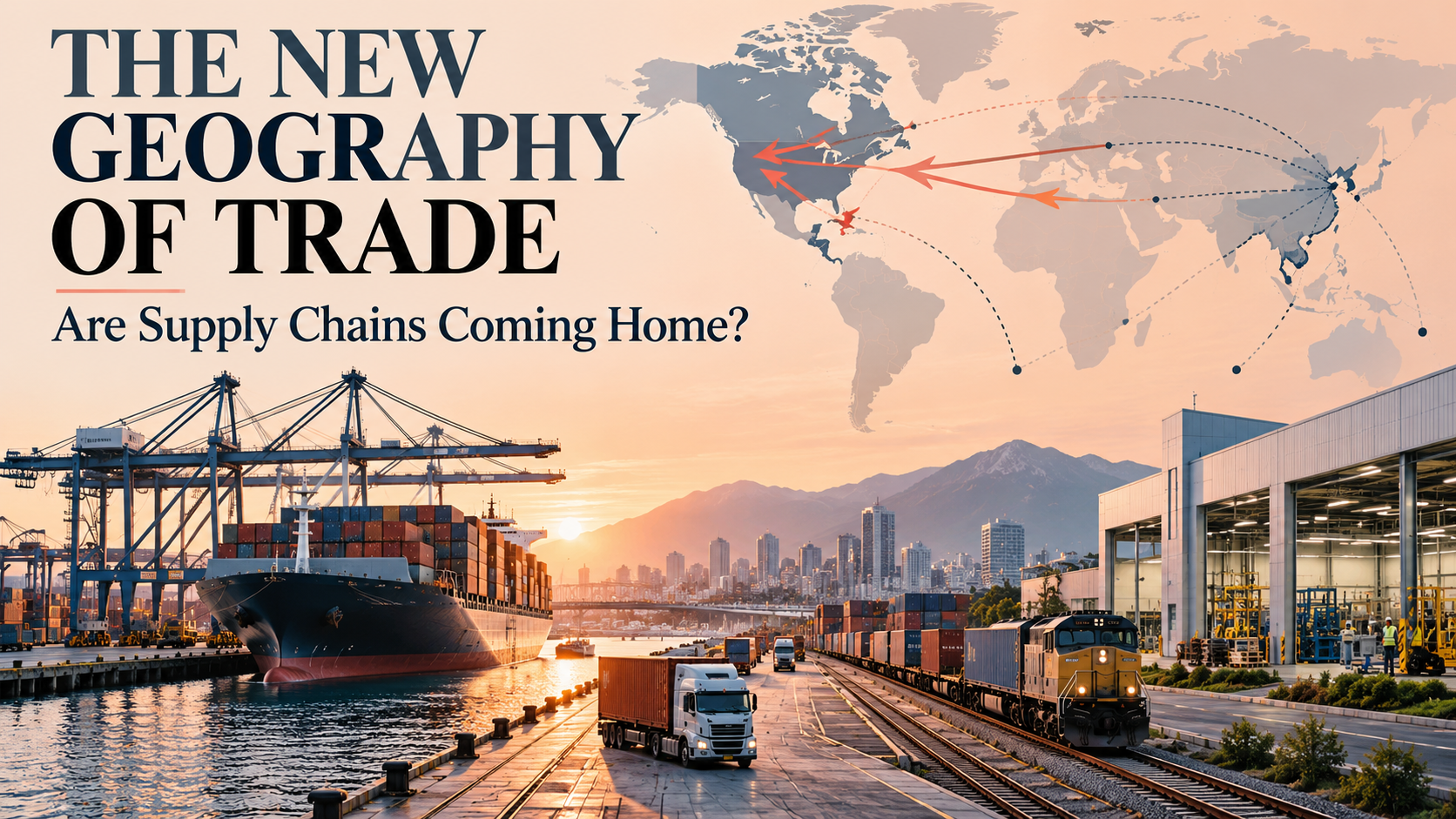
Global supply chains are changing, but the evidence does not support a simple retreat from international trade. Companies are balancing cost against disruption risgek, diversifying suppliers and reconsidering where strategically important production takes place. Some facilities are moving closer to customers; others are shifting to trusted partners or expanding in established Asian manufacturing clusters.
This is a redesign of globalization, not necessarily its end. The World Trade Organization’s October 2026 outlook expects merchandise trade volumes to grow by 3.9% this year and 4.1% in 2027, even after the Middle East conflict disrupted energy and transport routes. The sharper story is which products and economies are driving that growth, and which firms are bearing higher resilience costs.
Key takeaways
- Nearshoring moves production closer to customers; friend-shoring prioritizes strategically aligned partners; neither necessarily eliminates international trade.
- The WTO upgraded its 2026 merchandise-trade growth forecast as supply chains adapted and AI goods demand rose.
- More supplier diversity can reduce disruption exposure but increase inventories, compliance and operating costs.
- Investment is concentrating in advanced technology, energy and strategic manufacturing.
- Pakistan can benefit from supply diversification only through reliable delivery, skills, logistics and trade facilitation.
Why ‘reshoring’ is an incomplete description
A multinational may move one stage of production from a distant supplier while retaining components and equipment sourced from several countries. Measuring the final assembly address tells only part of the story. Modern manufacturing networks are built around intermediate inputs, specialized suppliers, intellectual property and reliable services.
A factory can be geographically close but commercially fragile if critical components still depend on a distant chokepoint. Conversely, a geographically dispersed supplier network can be resilient when sourcing is genuinely diversified and logistics are transparent. Resilience is therefore a property of the entire chain, not merely the location of the last factory.
Trade policy makes this more complex. Tariffs can favour domestic assembly, but firms may still need to import machinery or raw materials. Origin requirements can alter supplier choice. Export restrictions on strategically important technologies can reshape both markets and the timing of investment. These effects should be evaluated product by product rather than described as one global trend.
What the latest trade data actually say
The WTO’s October trade report revised 2026 merchandise trade growth to 3.9%, from 1.9% in its March baseline. It also lowered the 2026 forecast for commercial services trade growth to 3.3%, compared with an earlier 4.8%, with travel affected by the conflict and higher fuel costs. These are different trade categories; stronger goods growth should not be presented as evidence that air travel or every cross-border service is booming.
AI-enabling goods accounted for 47% of merchandise trade-value growth in the first half of 2026, the WTO reports. Technology’s outsized contribution explains part of why trade can appear surprisingly healthy while many importers and tourism businesses are struggling. It also highlights concentration: the countries supplying equipment and components capture gains unavailable to exporters outside those networks.
The WTO’s forecast is conditional. A further disruption in energy markets or a material reassessment of AI investment could change it. Both policymakers and businesses need contingency plans rather than a single straight-line prediction.
Four models of supply-chain redesign
| Strategy | Main objective | Benefit | Hidden cost |
|---|---|---|---|
| Nearshoring | Shorter delivery distance | Lower transit time | May sacrifice supplier specialization |
| Friend-shoring | Reduce geopolitical restrictions | Greater policy predictability | Narrower pool of eligible suppliers |
| Multi-sourcing | Maintain alternatives | Less exposure to one supplier | Higher qualification and management expense |
| Regional hub-and-spoke | Serve several markets from one network | Scale plus regional flexibility | Hub and transport chokepoints remain |
Original conceptual framework. Actual results depend on product, geography and regulation.
The choice depends on what failure costs. A clothing retailer may optimize replenishment speed; a medical-equipment producer may place higher weight on product certification and continuity; a semiconductor user may prioritize access to specialized fabrication. Applying the same sourcing formula to all three would be poor strategy.
A useful model is expected total cost: normal production and shipping costs plus the likely cost of interruption, inventory, financing and regulatory compliance. This is harder to estimate than a unit factory price, but it reflects the risk firms are actually trying to manage.
The investment map is changing faster than most export maps
Companies announce projects before factories become operational. A new plant may require years of permits, construction, utilities, workforce recruitment and supplier qualification. Analysts should therefore separate announced projects, committed spending and actual export shipments.
The UNCTAD World Investment Report 2026 found that global FDI rose to $1.6 trillion in 2025, but was concentrated. Strategic sectors represented 44% of announced greenfield project values, compared with 16% in 2020. This measure tracks the announced value of new projects, not proof that 44% of operating global factories have moved.
The report underscores an uncomfortable problem for smaller economies: courting a strategic investor can require large infrastructure commitments and incentives, while the future employment and technology spillovers remain uncertain. Governments should publish transparent project evaluations rather than compete blindly in subsidy auctions.
Asia is a network, not a single destination
Asian economies occupy different positions in the trade system. Some supply highly specialized chips and equipment. Others offer large-scale assembly, raw materials, logistics or business services. Supply-chain diversification may benefit a secondary production location without displacing the original supplier, because firms often need both sites.
There is also a misconception that supply-chain relocation always means lower-cost labour replacing higher-cost labour. Today, electricity reliability, supplier density, customs efficiency, quality control and geopolitical access can matter as much as hourly wages. Automation can further lower labour’s share of production costs while raising the importance of engineering and maintenance skills.
The WTO’s trade analysis provides a useful check on sweeping narratives: adaptive global supply chains have contributed to stronger-than-anticipated merchandise trade even during the year’s disruption. A more regional structure may coexist with rising worldwide flows of intermediate and capital goods.
Pakistan’s opportunity—and the execution test
Pakistan has reasons to pursue export diversification, but not to assume that geopolitical shifts automatically create orders. International buyers require consistent quality, contract enforcement, dependable energy, timely delivery, predictable taxation and credible documentation. A production location wins repeat business only when the entire operating system performs.
For apparel and textiles, faster customs processing, reliable raw-material access and improvements in compliance can matter greatly. For higher-value engineering exports, testing facilities, supplier certification and technical training are essential. For digital services, payment access, security and customer trust form a different kind of supply chain.
The IMF’s October 2026 Pakistan assessment calls for stronger competition, fewer trade barriers, improved public-sector governance and more cost-efficient energy. These reforms directly influence whether Pakistan can become a viable alternative supplier.
A realistic programme should begin with the sectors in which firms already have export relationships and can upgrade quality or delivery. Public policy then needs to remove obstacles that are common across many firms: unstable electricity, unnecessary permits, costly logistics and low access to export finance.
How executives should stress-test their sourcing strategy
First, map suppliers beyond the first tier. A company can have three direct vendors that all rely on the same factory upstream. Second, identify single points of failure in ports, energy, communications and financing. Third, quantify the working-capital cost of larger inventories. Fourth, model how tariffs and exchange rates change final delivered cost. Fifth, test alternative suppliers before an emergency rather than during one.
The objective is not to eliminate all exposure; that is usually impossible. It is to build enough visibility and flexibility that a temporary interruption does not trigger an expensive production shutdown. Companies should also avoid imposing excessive diversification costs on low-risk items when bottlenecks elsewhere would be more damaging.
Why resilience has a price—but also a payoff
Resilience spending should not be confused with inefficiency. Maintaining a qualified secondary supplier costs money even when the primary supplier operates normally. The economic benefit appears only when a disruption occurs and orders can continue. Governments and firms therefore need to weigh the cost of redundancy against losses from shutdowns, not insist that the lowest invoice price is always optimal.
The opposite mistake is equally serious. A blanket domestic-content rule can force firms to buy expensive inputs without meaningfully reducing exposure, especially where the local supplier still relies on imported components or fuel. The IMF’s October global outlook identifies trade tensions as a potential downside risk; it is not an argument for indiscriminate barriers. Policy should focus on the specific weakness it is designed to address.
Energy infrastructure offers a useful case study. The IEA’s October ASEAN review shows that the region relies on a diverse mix of domestic resources, cross-border supplies and imported fuels. Even a factory producing entirely for a nearby market is exposed if its electricity supply depends on a fragile gas-import route. Trade and energy security therefore need to be planned together.
There is also a development-finance dimension. The UN DESA discussion of the Middle East conflict’s effects highlights how shocks can squeeze financing and investment in lower-income economies. A supplier moving production to a new country does not automatically overcome those financing constraints. Ports, power, quality assurance and working capital need investment before export orders can scale.
Finally, track realized results. UNCTAD’s investment overview demonstrates how strategic investment has become concentrated; the question for recipients is how much translates into operating capacity and domestic supplier development. Governments should publish completed project milestones and the extent of local procurement, rather than count memoranda of understanding as finished factories.
Risks and uncertainties
Trade forecasts can be revised. Supply-chain projects may be delayed or cancelled, and political preferences can change after elections or negotiations. More local production may reduce certain transport risks but increase consumer costs. Friend-shoring can strengthen trust within blocs while fragmenting markets between them. Trade-flow data cannot, on their own, establish the motives behind a company’s sourcing decisions.
What deserves close monitoring is the share of intermediate goods traded, supplier concentration, customs performance, announced versus completed projects, logistics reliability and whether new locations develop an ecosystem of supporting firms. Those measures reveal more than the headline count of relocated factories.
Frequently asked questions
What is nearshoring?
Nearshoring is the movement of production or service activity closer to the customer or final market, often to shorten lead times and reduce transportation exposure.
What is friend-shoring?
It describes sourcing or investment preferences influenced by geopolitical alignment and the desire for dependable international relationships.
Is globalization ending in 2026?
No simple evidence supports that claim. WTO forecasts still show expanding goods trade, but its composition and geography are shifting.
Why is AI relevant to global trade?
AI infrastructure increases demand for semiconductors, servers, electrical equipment and related components, influencing international goods flows.
Do shorter supply chains always reduce costs?
No. A shorter route can reduce delay risk but may increase production prices, capital spending or supplier concentration.
How can Pakistan attract more supply-chain investment?
By improving energy reliability, customs speed, quality assurance, logistics, technical skills and the consistency of trade rules.
Conclusion
The new geography of trade is being defined less by the end of globalization than by the price businesses are willing to pay for reliability. The winners will not necessarily be those closest to customers or those offering the lowest wages. They will be countries and suppliers that combine credible delivery, competitive costs, diversified inputs and predictable policy. That is a demanding agenda—but a useful one for Asia and Pakistan.
Discover more from The Economy
Subscribe to get the latest posts sent to your email.

Neocloud Economics in 2026: GPU Debt, Utilization and Power

What Is a Neocloud? How AI GPU Clouds Work and Compare

Lula Re-elected in 2026: What Changes for the Dollar, Brazilian Stocks, and Interest Rates?

Lula Wins Brazil’s 2026 Election: Five Economic Tests for 2027

SSI November 2026 Payment: Why Benefits Arrive October 30

Russia Sanctions Waiver: What Asian Oil Buyers Gain

Asia Markets Weekly: How Oil, US Yields and the Fed Reach Tokyo, Kuala Lumpur and Karachi

Gold Near $4,000: Buy, Hold or Wait? A Pakistan Tola Price Guide

US 10-Year Treasury Yield Near 5%: The Hidden Cost for Pakistani Investors

Fed Meeting on October 28: Hike or Hold—and Why Pakistan Investors Should Care

Can Pakistan Turn US–Iran Mediation Into an Economic Dividend?

Oil Above $100: How Higher Crude Prices Reach Pakistan’s Rupee, Petrol and Imports

SBP Interest Rate at 11.5%: What Will Decide Pakistan’s Next Policy Move?

The Global South: Debt, Climate Finance and Investment in 2026

Crude Oil & Petroleum Market Analysis: OPEC+ Decisions and Price Forecasts

Top US Convenience Store Chains: Store Counts, EV Charging, and Sales Trends

Algorithmic Dogfights: Why the U.S. and China Must Establish Rules of Engagement for Autonomous Air Power

Who Is Shivon Zilis? The Neuralink Executive at the Center of the Musk–OpenAI Trial

Social Security Extra $90 Deposit: Who Qualifies for the October 2026 Medicare Rebate?

Corporate America Faces a New Debt Test as US Borrowing Costs Surge

Gold Price Outlook 2026: The Forces Behind the Forecasts—and What Could Reverse Them

Global Economic Outlook 2026: 7 Forces Reshaping Markets, Trade and Business

Gold Falls 3.7% as Yields Surge: Is Gold Still a Safe Haven in 2026?

Stock Market Crash in 2026? Warning Signs, Scenarios and a Calm Investor Checklist

Anthropic Bans Sustained Abuse of Claude AI Under New Usage Policy Effective November 12, 2026

MAS Allocates S$1.45 Billion to Five Asset Managers in Third EQDP Batch: Total Deployment Reaches S$5.4 Billion

Stock Market Today: Dow, S&P 500, and Nasdaq Retreat as Treasury Yields

Geopolitics and Your Portfolio: How International Affairs Move Global Markets
-

 Markets & Finance10 months ago
Top 15 Stocks for Investment in 2026 in PSX: Your Complete Guide to Pakistan’s Best Investment Opportunities
-

 Analysis8 months ago
Johor’s Investment Boom: The Hidden Costs Behind Malaysia’s Most Ambitious Economic Surge
-

 Analysis8 months ago
Top 10 Stocks for Investment in PSX for Quick Returns in 2026
-

 Banks9 months ago
Best Investments in Pakistan 2026: Top 10 Low-Price Shares and Long-Term Picks for the PSX
-

 Analysis9 months ago
Brazil’s Rare Earth Race: US, EU, and China Compete for Critical Minerals as Tensions Rise
-

 Investment10 months ago
Top 10 Mutual Fund Managers in Pakistan for Investment in 2026: A Comprehensive Guide for Optimal Returns
-

 Global Economy10 months ago
15 Most Lucrative Sectors for Investment in Pakistan: A 2025 Data-Driven Analysis
-

 Global Economy10 months ago
Pakistan’s Export Goldmine: 10 Game-Changing Markets Where Pakistani Businesses Are Winning Big in 2025