
Asia
G7 to Release Emergency Oil Reserves as Middle East War Triggers Worst Crude Shock Since 2022

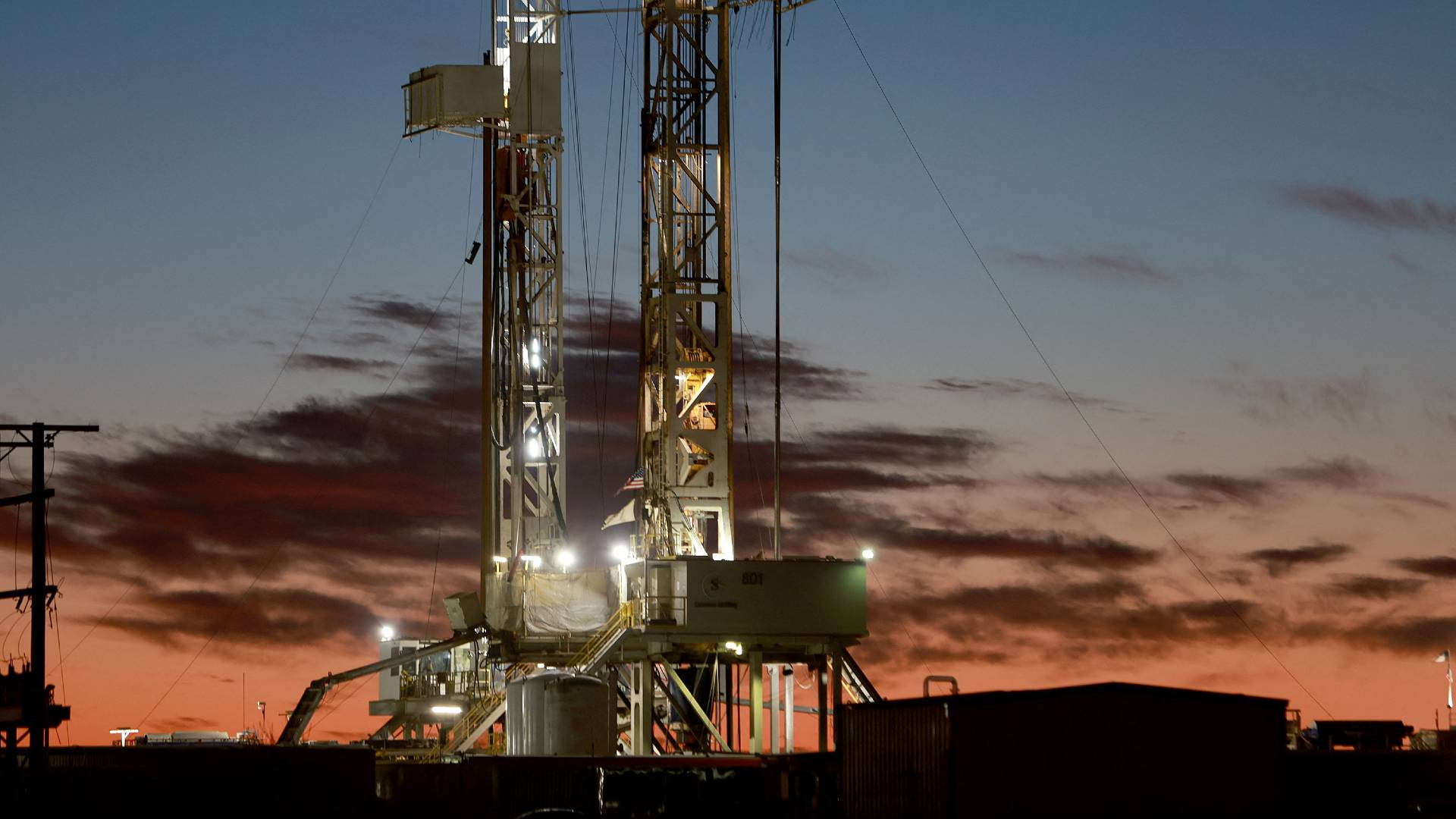
Brent crude surges to a four-year high of $119.50 before retreating. G7 finance ministers convene an emergency call. The Strait of Hormuz, the world’s most critical oil artery, is effectively closed. For the global economy, the clock is ticking.
In the clearest sign yet that the world’s wealthiest democracies are alarmed by the speed and severity of the current oil shock, G7 finance ministers held an emergency meeting Monday to discuss a possible joint release of petroleum from strategic reserves coordinated by the International Energy Agency, as oil prices surged following the conflict in the Gulf. Investing.com
The call — scheduled for around 1:30 p.m. CET and initiated by France, which currently holds the G7 presidency Bloomberg — represents the most consequential coordinated energy-market intervention discussed by Western governments since Russia’s invasion of Ukraine in 2022. Three G7 countries, including the United States, have so far expressed support for the idea, according to the Financial Times, which first reported the talks. U.S. News & World Report
The urgency is unmistakable. Oil prices surged to their highest since 2022, crossing $119 a barrel on Monday before pulling back toward $100, paring a nearly 30 percent spike as the International Energy Agency convened an extraordinary meeting of member governments. Energy Connects
The Anatomy of a Price Shock: What Happened and Why
To understand why governments are reaching for their deepest emergency tools, it helps to trace what has unfolded since the night of February 28.
West Texas Intermediate crude futures surpassed $100 per barrel for the first time since mid-2022 — when Russia’s invasion of Ukraine jolted global energy markets — with WTI rising as high as $119 a barrel overnight. CNBC The trigger: a sustained, widening conflict involving the United States, Israel, and Iran that has choked one of the most strategically vital waterways on Earth.
The Iran war has disrupted 20% of global oil supply for nine days and counting, more than double the previous record set during the Suez Crisis of 1956–57, which disrupted just under 10%, according to Rapidan Energy Group. Axios
The chokepoint is the Strait of Hormuz. Ships carrying roughly 20 million barrels of oil a day have been left stranded in the Persian Gulf, unable to safely pass through the narrow mouth of the Gulf bordered on its north side by Iran. PBS The numbers downstream are staggering: output in Iraq, the second-biggest OPEC producer, has effectively collapsed, with production from its three main southern oilfields falling 70% to 1.3 million barrels per day. CNBC Kuwait has begun precautionary production cuts. The UAE is under pressure.
Qatar’s energy minister, Saad al-Kaabi, told the Financial Times that Gulf exporters would halt production in days if tankers cannot pass the Strait of Hormuz — a scenario he warned could spike oil prices to $150 a barrel and “bring down the economies of the world.” CNBC
What the G7 Is Actually Proposing
The mechanics of any coordinated release matter enormously. Some US officials believe a joint release in the range of 300 million to 400 million barrels would be appropriate. Investing.com
According to the FT, G7 governments are considering a coordinated release of 300 to 400 million barrels from their stockpiles. The IEA’s 32 member governments hold strategic reserves as part of a collective emergency system designed precisely for oil price crises like this one. Energy Connects
Current G7 oil reserves sit at approximately 1.2 billion barrels, meaning the proposed release would represent a substantial share of their collective holdings. KAOHOON INTERNATIONAL For context, the United States Strategic Petroleum Reserve — the world’s largest — has an authorized storage capacity of 714 million barrels, stored in huge underground salt caverns along the Gulf of America coastline. Energy Connects
French President Emmanuel Macron confirmed the deliberation publicly. Oil prices moderated after Macron confirmed that “the use of strategic reserves is an envisaged option,” though Brent remained above $100 per barrel. Fortune
The precedent for such action exists. In 2022, the IEA coordinated the largest-ever release of strategic reserves — some 182 million barrels — in response to the Russia-Ukraine war. The G7 reserve release, if it materializes, would be the most significant coordinated intervention in oil markets since that episode. CoinDesk
The Macroeconomic Stakes: Inflation, Growth, and the Central Bank Dilemma
The speed and scale of this oil shock puts central banks in an extraordinarily difficult position. After years of effort to bring post-pandemic inflation back toward 2% targets, a persistent energy price surge threatens to reignite price pressures just as the disinflation battle appeared won.
IMF Managing Director Kristalina Georgieva warned that “every 10% increase in oil prices — if persistent through most of this year — results in a 40 basis point increase in global headline inflation and a 0.1 to 0.2% fall in global output.” IOL With oil prices up more than 30% from pre-war levels, the arithmetic is sobering: the current shock, if sustained, could add more than a full percentage point to global headline inflation while meaningfully slowing growth.
The IMF currently forecasts world growth of 3.3% in 2026 and 3.2% in 2027, but Georgieva warned that this resilience is being tested by the latest conflict as shipping through the Strait of Hormuz has dropped by about 90%. IOL
The IMF is already in discussions with the most vulnerable energy-importing economies to potentially assist them financially if energy prices and market uncertainty spike further. OilPrice.com Emerging markets with high energy import dependence — particularly across South and Southeast Asia — face currency pressures, widening current-account deficits, and fiscal strain simultaneously.
For the United States, the political arithmetic is equally uncomfortable. Average gasoline prices reached $3.45 a gallon Sunday, up 16% from the week prior, according to AAA. A prolonged spike in oil and gas prices could exacerbate America’s struggles with affordability, putting Trump and Republicans in a precarious political position ahead of midterm elections. CNN
Key Data Snapshot: Oil Market Crisis at a Glance (March 9, 2026)
| Indicator | Value | Change |
|---|---|---|
| Brent Crude (intraday high) | $119.50/bbl | +30% from pre-war level |
| Brent Crude (current) | ~$104/bbl | +12% on day |
| WTI Crude (current) | ~$102/bbl | +12% on day |
| Iraq oil output | 1.3M bbl/day | -70% |
| Strait of Hormuz traffic | ~10% of normal | -90% |
| US gasoline (avg) | $3.45/gallon | +16% week-on-week |
| Jet fuel (US) | $3.95/gallon | +56% vs. pre-war |
| G7 proposed SPR release | 300–400M barrels | — |
| Total G7 SPR holdings | ~1.2B barrels | — |
Sources: Reuters, CNBC, Bloomberg, IEA
Asia on the Frontline of the Energy Crisis
No region outside the Gulf itself is more exposed to this shock than Asia. Many of Asia’s largest energy consumers — including China, Japan, South Korea, and India — depend heavily on crude oil and LNG shipments from the Middle East transported through the Strait of Hormuz. Economy Post
Asian equity markets slumped as energy prices spiked, with Japan’s Nikkei down more than 6% and South Korea’s KOSPI falling similarly. The National These are not merely stock-market gyrations. For Japan — which imports nearly all of its oil — a sustained $30-per-barrel increase in crude translates directly into higher manufacturing costs, a weaker yen, and imported inflation on everything from food to transport.
China, which holds the world’s second-largest strategic petroleum reserve at approximately 400 million barrels, faces competing pressures: as a major energy importer, it absorbs higher costs; as a geopolitical actor, it observes Western reserve deployments closely and may choose strategic inaction.
The SPR Calculus: Can 400 Million Barrels Turn the Tide?
Strategic petroleum reserve releases are a blunt instrument. They buy time — they do not resolve underlying supply disruptions. The 2022 IEA coordinated release helped cool prices temporarily, but Brent ultimately remained elevated for months as the Ukraine war dragged on.
The current scenario is both more acute and more uncertain. Unlike 2022, where Russian export flows — though reduced — continued, the Strait of Hormuz closure represents a near-total blockade of the world’s most concentrated oil export corridor. Whether 300 to 400 million barrels of reserve releases can substitute for the 9 to 14 million barrels per day that have effectively gone offline is deeply uncertain.
The more powerful signal may be psychological. A coordinated G7 release — particularly one that includes Japan and Europe alongside the United States — communicates resolve, limits speculative overshoot, and buys diplomatic time for ceasefire efforts. That signal alone moved markets Monday: Brent fell from $119.50 to around $104 on the news of the talks, a $15 drop in hours.
How This Oil Shock Hits Travelers and the Aviation Industry
Airfares, Cancellations, and the $4,000 Flight
For ordinary travelers, the consequences of this oil shock are already landing in their inboxes — and their wallets.
Jet fuel, which accounts for about one-fifth of airlines’ operating expenses, cost $3.95 a gallon Thursday — up 56% from $2.50 in late February, one day before the joint US-Israel attack on Iran. CBS News That cost trajectory is not sustainable for carriers already operating on thin margins.
More than 37,000 flights to and from the Middle East have been cancelled since the conflict began on February 28. A Seoul-to-London flight on Korean Air jumped from $564 to $4,359 in just one week, according to Google Flights data. OilPrice.com
Diesel prices doubled in Europe, and jet fuel prices rose by close to 200% in Asia, according to Claudio Galimberti, chief economist at Rystad Energy. PBS Airlines in the region are rerouting through longer corridors — around the Arabian Peninsula rather than over it — burning additional fuel on already strained operations.
Airline stocks tumbled across global markets Monday. In Asia, Korean Air fell 8.6%, Air New Zealand dropped 7.8%, and Cathay Pacific lost 5%, while European carriers including Air France-KLM, IAG, and Lufthansa slid between 4% and 6%. OilPrice.com
Tourism, Hospitality, and the Consumer Spending Squeeze
The travel industry’s pain extends well beyond the airlines. Hotels, cruise lines, and tour operators serving the Gulf have seen mass cancellations. Gulf-based carriers — Emirates, Qatar Airways, and Etihad — which normally handle roughly a third of Europe-to-Asia passenger traffic — face operational paralysis as long as regional airspace remains closed.
More broadly, higher fuel costs ripple through to every energy-intensive economic sector. Shipping surcharges lift the price of imported goods. Petrochemical feedstocks — the building blocks of plastics, packaging, and fertilizers — track crude oil prices. For consumers already strained by years of post-pandemic inflation, the cumulative effect threatens to suppress discretionary spending on travel, dining, and durable goods precisely as central banks were beginning to ease.
What Comes Next: Three Scenarios
Scenario 1 — Short conflict, rapid reopening. If the Strait of Hormuz reopens within two to three weeks and Gulf producers resume normal output, the reserve release buys critical breathing room. Oil retreats toward $80 to $90 per barrel by late March. The inflation impact is transitory; central banks hold steady.
Scenario 2 — Prolonged closure, sustained elevated prices. If the conflict drags into April or May, the structural supply deficit deepens. Even a full release of 400 million barrels covers roughly 40 to 45 days of the disrupted supply. Oil could test $130 to $150. Stagflation risk rises materially across import-dependent economies.
Scenario 3 — Escalation to Gulf infrastructure. The most dangerous scenario remains an Iranian strike on Saudi Arabia’s East-West Pipeline or Aramco processing facilities. That scenario — with 9 to 14 million additional barrels per day at risk — would overwhelm any SPR response and potentially take Brent past $150 or higher.
What It Means for You
For households, the most immediate consequence of this oil shock is visible at the pump and, soon, at check-in. Fuel surcharges on international flights are already rising. If current dynamics persist through the spring, round-trip transatlantic fares could climb 20% to 30% above pre-war levels, and long-haul Asia-Europe routes will be the hardest hit. Travelers with existing bookings should review their itineraries, check fuel surcharge provisions in their ticket contracts, and consider travel insurance that covers fuel-related disruptions — a category most standard policies exclude.
For investors and businesses, the more consequential question is duration. Oil shocks that resolve within a quarter tend to leave only modest marks on corporate earnings and macroeconomic trajectories. Shocks that persist for two or more quarters — as in 1973 and 2022 — fundamentally reset inflation expectations, force central bank tightening, and compress equity valuations across energy-intensive sectors. The SPR announcement has bought time. What policymakers — and military planners — do with that time will determine which scenario unfolds.
For policymakers themselves, Monday’s G7 emergency call is a reminder that energy security has never truly left the top of the agenda. The world has spent the past four years diversifying away from fossil fuel dependence, investing in renewables, and reshoring critical supply chains. Yet a single chokepoint — 21 miles wide at its narrowest — retains the power to send the global economy into crisis within days. The most durable policy lesson of the Iran war crisis may ultimately be the same one written by every energy shock since 1973: strategic reserves stabilize markets, but they do not substitute for structural resilience.
FAQ: G7 Emergency Oil Reserves and the Middle East Crisis
What are strategic petroleum reserves (SPRs)? Strategic petroleum reserves are sovereign stockpiles of crude oil held by governments as an emergency buffer against supply disruptions. The United States holds the world’s largest SPR — with authorized capacity of 714 million barrels stored in underground salt caverns along the Gulf Coast.
Why are G7 countries considering a joint oil reserve release? The Iran war, which began February 28, 2026, has effectively closed the Strait of Hormuz to tanker traffic, cutting off roughly 20% of global seaborne oil supply. Brent crude surged more than 30% to nearly $120 a barrel before G7 talks prompted a partial retreat. A coordinated release is intended to stabilize markets and limit inflationary damage to the global economy.
How much oil is the G7 considering releasing? Reports suggest a coordinated release of 300 to 400 million barrels, coordinated through the International Energy Agency. Total G7 reserves stand at approximately 1.2 billion barrels, so the proposed release would be the largest in history.
How will the oil price surge affect airline tickets? Jet fuel has already risen 56% in the United States and nearly 200% in Asia since the conflict began. United Airlines CEO Scott Kirby warned that higher fuel costs will have a “meaningful” impact on ticket prices “probably starting quick.” Travelers should expect surcharges on international routes, particularly trans-Pacific and Europe-Asia itineraries.
What is the IMF saying about the impact on the global economy? IMF Managing Director Kristalina Georgieva stated that every 10% increase in oil prices sustained for a year adds 40 basis points to global inflation and reduces global output by 0.1% to 0.2%. With oil prices currently up more than 30%, the risk to the disinflation progress made in 2024 and 2025 is significant.
Discover more from The Economy
Subscribe to get the latest posts sent to your email.


The room at the State Bank of Pakistan’s Karachi headquarters may have been airconditioned on a warm Monday morning, but the temperature in global energy markets was anything but. As Governor Jameel Ahmad chaired the second Monetary Policy Committee meeting of 2026, Brent crude was careening past $103 a barrel — its highest since 2022 — while tanker traffic through the Strait of Hormuz had ground to a near-halt under the shadow of the US-Israeli war on Iran. The MPC’s decision, telegraphed by virtually every analyst in the market, arrived with unusual unanimity: the benchmark policy rate would stay unchanged at 10.5%.
It was a pause born not of confidence, but of calibrated caution — and perhaps the most consequential hold in Pakistan’s two-year monetary easing cycle.
SBP MPC Decision March 2026: What the Statement Actually Says
The official Monetary Policy Statement was diplomatically precise in framing the dilemma. “While the incoming data was largely consistent with the macroeconomic projections shared after the January meeting,” the MPC noted, “the Committee observed that the macroeconomic outlook has become quite uncertain following outbreak of the war in the Middle East.”
That single sentence encapsulates the entire complexity facing Pakistan’s central bank in March 2026: the domestic data looks broadly fine; the external world does not.
The MPC went further, identifying three concrete transmission channels through which the conflict is striking the Pakistani economy: a sharp rise in global fuel prices, elevated freight and insurance costs, and disruptions to cross-border trade and travel. “Given the evolving nature of events,” it added, “the intensity and duration of the conflict will both be important determinants of the impact on the domestic economy.”
In other words, the SBP is watching, not acting — and deliberately so.
Pakistan Interest Rate Hold: The Numbers Behind the Decision
To understand why the MPC held, it helps to survey the macroeconomic landscape that informed the room.
Inflation rebounding, but manageable — for now. After dipping as low as 3% mid-2025, Pakistani consumer price inflation climbed to 5.8% year-on-year in January 2026 and further to 7% in February — the upper edge of the SBP’s 5–7% medium-term target range. Core inflation has remained persistently sticky, hovering around 7.4% in recent months. The MPC had flagged at the January meeting that some months in the second half of FY26 could breach 7%; February’s print validated that warning precisely. With petrol prices raised by Rs55 per litre to Rs321.17 in the days before the meeting — a direct pass-through of the global energy shock — the domestic inflation trajectory has become materially more uncertain.
The external account: resilience with caveats. The current account posted a surplus of $121 million in January 2026, compressing the cumulative July–January FY26 deficit to just $1.1 billion. Workers’ remittances — a structural pillar of Pakistan’s external financing — continued to absorb a significant share of the trade deficit, while the SBP’s ongoing interbank foreign exchange purchases helped drive liquid FX reserves to $16.3 billion as of February 27, up from $16.1 billion in mid-January. The committee set a firm target of reaching $18 billion by June 2026 — a milestone that now depends critically on the timely realisation of planned official inflows, including disbursements under Pakistan’s $7 billion IMF Extended Fund Facility.
GDP momentum intact but under threat. Large-scale manufacturing growth has surprised to the upside this fiscal year, and the SBP maintained its GDP growth projection at 3.75–4.75% for FY26. Private sector credit expanded by Rs187 billion between July and November FY25, led by textiles, wholesale & retail, and chemicals. Consumer financing — particularly auto loans — has strengthened as financial conditions eased. But the current oil shock introduces a significant headwind: higher input costs, squeezed margins, and the prospect of renewed monetary tightening if inflation reaccelerates.
Pakistan Economy Risks: The Gulf Conflict Inflation Channel
The geopolitical backdrop informing this decision is arguably the most volatile since Russia’s invasion of Ukraine in February 2022, and the MPC explicitly drew that parallel. “The macroeconomic fundamentals, especially in terms of inflation and the country’s FX and fiscal buffers, are better compared to the time of the start of the Russia-Ukraine war in early 2022,” the statement noted — a reassuring comparison, but one that implicitly acknowledges the severity of the threat.
Here is what has unfolded in the space of roughly ten days:
| Event | Market Impact |
|---|---|
| US-Israeli strikes on Iran begin (Feb 28) | Brent crude +25% in two weeks |
| Strait of Hormuz shipping near-halted | Freight & war-risk insurance surges |
| Iraq output collapses 60–70% | Global supply shortfall ~20 mb/d |
| Brent crude surpasses $103/bbl (Mar 9) | Highest since Russia-Ukraine shock |
| Qatar warns of $150/bbl risk | G7 emergency reserve discussions begin |
For Pakistan specifically, the pass-through arithmetic is sobering. The country imports virtually all of its crude oil requirements; historically, a $10 rise in Brent crude adds approximately 0.5–0.6 percentage points to Pakistan’s CPI within two to three quarters. With Brent having surged nearly $30 above its pre-conflict baseline, the potential inflation add-on over the coming two quarters — absent countervailing fiscal measures — could be 1.5–1.8 percentage points. That alone would push headline inflation toward 8.5–9%, well outside the target range and into territory that could force the SBP’s hand toward a rate increase.
The freight and insurance channel matters too. Pakistan’s exports — textiles, leather goods, surgical instruments — predominantly move by sea. War-risk insurance premiums for vessels transiting the Gulf region have spiked dramatically since late February, compressing export margins and threatening the competitiveness that the country has painstakingly rebuilt over the past eighteen months. Importers face mirror-image pressures: higher landed costs for energy, industrial inputs, and food commodities.
SBP Rate Decision Analysis: Why the Easing Cycle Has Effectively Paused
This is the SBP’s second consecutive hold — a sharp turn from the aggressive easing trajectory of the previous eighteen months. Between June 2024 and December 2025, the Monetary Policy Committee delivered a cumulative 1,150 basis points of rate cuts, bringing the policy rate down from a record 22% to 10.5%. That was one of the most dramatic easing cycles in any major emerging market during that period, and it was earned: inflation collapsed from multi-decade highs above 38% to the lower single digits, the rupee stabilised, and FX reserves rebuilt from critical lows.
The January 2026 hold surprised many analysts — Arif Habib Limited had pencilled in a 75bps cut to 9.75%, and a Reuters poll had pointed to a 50bps reduction — but it now reads as prescient caution. Governor Ahmad flagged at that press conference that inflation could breach 7% in some second-half months. It did, in February. The Middle East crisis then eliminated whatever residual space for cuts remained.
A Reuters poll conducted ahead of Monday’s meeting found near-unanimous consensus for a hold, with Topline Securities reporting that 96% of survey respondents expected no rate cut — a remarkable about-face from the 80% who had anticipated a cut ahead of January’s meeting. The shift in market expectations speaks to how quickly the geopolitical risk premium has repriced Pakistan’s monetary outlook.
The IMF’s own guidance reinforces the SBP’s caution. During its second programme review, the Fund urged that monetary policy remain “appropriately tight and data-dependent” to keep inflation expectations anchored and external buffers intact — language that sits uncomfortably with near-term rate cuts.
SBP FX Reserves and the External Account: A Fragile Resilience
Perhaps the most reassuring aspect of Monday’s statement was its treatment of the external account. The current account surplus in January, continued SBP interbank purchases, and the gradual rebuild of FX reserves to $16.3 billion all suggest that Pakistan enters this shock with considerably better buffers than it possessed in 2022 — when reserves plunged below $4 billion and the country teetered on the edge of sovereign default.
That buffer is real, but it is not inexhaustible. Three risks loom:
Oil import bill expansion. Pakistan’s monthly crude import bill will rise sharply if prices sustain above $100/bbl. The SBP’s current account deficit projection of 0–1% of GDP for FY26 was modelled on oil in the $70–80 range. A prolonged Hormuz closure tilts that range meaningfully toward the upper bound — or beyond it.
Remittance disruptions. A significant portion of Pakistani workers are employed in Gulf states — Saudi Arabia, the UAE, Qatar, and Kuwait collectively host over 4 million Pakistani expatriates. Gulf economic disruption, energy revenue compression, and potential labour-market contraction in those countries could dampen remittance flows, removing a critical current account stabiliser.
Official inflow timing. The SBP’s $18 billion FX reserve target for June 2026 hinges on planned official inflows materialising on schedule. Geopolitical turbulence has historically caused IMF disbursement delays and bilateral lending hesitancy. Any slippage here would tighten the external constraint and, with it, the SBP’s room for manoeuvre.
Pakistan Economy Risks and Scenarios: Three Paths From Here
Scenario 1 — Rapid de-escalation (probability: low-medium). A swift US-Iran deal and Hormuz reopening within two to four weeks would allow oil prices to retreat toward $70–80/bbl, stabilise Pakistan’s import bill, and potentially reopen the door to a 25–50bps cut at the May 2026 MPC meeting. This is the base case for FY26 projections remaining intact.
Scenario 2 — Prolonged but contained conflict (probability: high). A six-to-eight week Hormuz disruption, with Brent stabilising in the $90–110 range, would push Pakistan’s CPI toward 8–9% in Q4 FY26 and FY27 Q1. The SBP holds through May and likely through July, pausing the easing cycle for two to three meetings. GDP growth dips toward the lower end of the 3.75–4.75% range.
Scenario 3 — Escalation and infrastructure damage (probability: low but non-trivial). Qatar’s energy minister has warned publicly that sustained Hormuz closure could drive Brent to $150/barrel — a scenario that Goldman Sachs estimates could add 0.7 percentage points to Asian inflation for every $15 oil price increase under a six-week closure. For Pakistan, that arithmetic implies a potential CPI overshoot to 10–12%. The SBP would be forced to consider a rate increase — a reversal that would set back the economic recovery significantly, pressure fiscal consolidation, and complicate the IMF programme.
Implications for Pakistani Borrowers, Investors, and Exporters
Corporate borrowers and SMEs: The 10.5% policy rate, while materially lower than the 22% peak, still represents a significant real financing cost for businesses. The hold — and the likelihood of an extended pause — delays the relief that industry bodies had anticipated from a return to single-digit rates. The Pakistan Business Council and various textile associations had lobbied for further cuts to restore export competitiveness.
Fixed-income investors: Government securities yields, which had been compressing in anticipation of further rate cuts, will likely stabilise or widen slightly at the short end as the hold extends. T-bill yields in the 10.5–11% range remain attractive in real terms relative to expected near-term inflation, but the duration risk on longer-tenor PIBs rises in a scenario where rate hikes become plausible.
Equity markets: The KSE-100 index, which had benefited significantly from falling rates and improving macro fundamentals, faces a more challenging environment. Energy sector stocks — particularly downstream oil marketing companies — face margin compression as import costs rise. However, the broader index may find some support from the fact that the SBP is holding rather than hiking, signalling that it views FY26 macroeconomic projections as still broadly achievable.
Exporters and remittance recipients: The PKR/USD exchange rate — which had stabilised in the 278–285 range — faces upward pressure from the widening trade balance. Topline Securities’ pre-MPC survey projected PKR stability in the 280–285 range through June 2026, a projection that assumes oil prices partially retrace from current peaks. Any significant rupee depreciation would create an imported inflation feedback loop that complicates the SBP’s task further.
Structural Reforms: The SBP’s Unanswered Question
Monday’s statement, like its January predecessor, reiterated the need for a “coordinated and prudent monetary and fiscal policy mix — as well as productivity-enhancing structural reforms — to increase exports and achieve high growth on a sustainable basis.” That language has appeared in virtually every MPC statement for years. It points to a fundamental vulnerability that no interest rate decision can resolve.
Pakistan’s export base, dominated by low-value-added textiles, has shown structural stagnation relative to regional peers. Its tax-to-GDP ratio — with FBR revenue growth decelerating to 7.3% in December 2025, well short of budgeted targets — remains among the lowest in Asia. Its energy import dependency leaves the current account structurally exposed to precisely the kind of shock that has arrived this week.
The SBP can hold rates, build reserves, and manage the short-term pass-through of oil prices. What it cannot do is substitute for the fiscal discipline, industrial policy, and governance improvements that would reduce Pakistan’s structural vulnerability to external shocks. The Gulf war has exposed that vulnerability with stark clarity.
Outlook: Cautious Resilience, Rising Risks
The SBP’s decision to hold at 10.5% was the right call for a central bank navigating a crisis of uncertain magnitude and duration. Pakistan enters this shock with better buffers than it possessed in 2022 — higher reserves, lower inflation, a stabilised currency, and an active IMF backstop. Those are not trivial advantages.
But the window for complacency is narrow. Brent crude at $103 and rising, a Hormuz chokepoint under active military threat, and a domestic inflation trajectory already touching the upper edge of the target range leave the SBP with limited runway. Governor Ahmad and his committee have effectively entered a watchful holding pattern: data-dependent, geopolitics-sensitive, and acutely aware that the next move could be a hike rather than a cut.
For global investors watching Pakistan’s emerging-market trajectory, the message is nuanced: the macro stabilisation story remains intact, but the risk premium has risen meaningfully. Sovereign spreads, equity valuations, and the rupee will all need to reprice for a world where $100+ oil is not a tail risk but a baseline.
The easing cycle that began in June 2024 is, for now, on hold. Whether it resumes — or reverses — depends on decisions being made not in Karachi, but in Washington, Tel Aviv, and Tehran.
Discover more from The Economy
Subscribe to get the latest posts sent to your email.
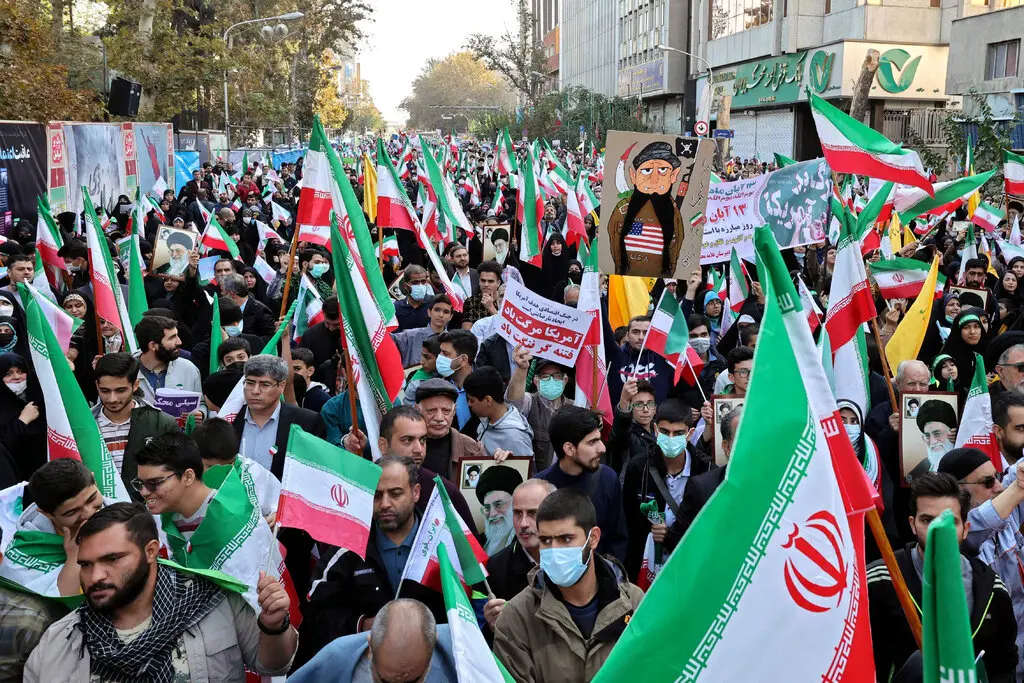
The war that began at dawn on February 28 is rewriting the economic fortunes of every nation between the Bosphorus and the Strait of Hormuz.
The tanker sat motionless in the blue-grey waters off Fujairah, its hull riding high and its captain’s radio silent. Nearby, 149 other vessels — laden with crude oil, liquefied natural gas, and refined products worth tens of billions of dollars — floated in identical limbo. The Strait of Hormuz, the narrow throat through which roughly one-fifth of the world’s daily oil supply must pass, had effectively ceased to function. It was March 3, 2026. The US-Israel war on Iran was five days old, and the global economy was already beginning to haemorrhage.
The joint US-Israeli operation codenamed “Operation Epic Fury” struck Iranian military installations, nuclear sites, and the Islamic Republic’s Supreme Leader Ali Khamenei on February 28 — a decapitation strike that killed him within hours. Iran’s retaliation was immediate and sweeping: missile and drone barrages struck Israeli cities, US military bases across the Gulf, and critical infrastructure in the UAE, Saudi Arabia, Qatar, Bahrain, and Kuwait. NPR The Islamic Revolutionary Guard Corps broadcast on international distress frequencies that no ship was permitted to pass the Strait of Hormuz. Within 24 hours, the world’s most critical energy chokepoint had become a war zone.
The economic consequences — already severe and still unfolding — are being distributed with brutal unevenness across the region. What follows is the first comprehensive accounting of those consequences, country by country, sector by sector.

The Strait of Hormuz: A $500 Billion Artery Under Fire
Before cataloguing the damage, it helps to understand the anatomy of the wound. According to the US Energy Information Administration, about 20 million barrels of oil worth roughly $500 billion in annual global energy trade transited through the Strait of Hormuz each day in 2024. Al Jazeera The waterway, just 21 miles wide at its narrowest point, is the sole maritime exit for the combined oil and gas exports of Iran, Iraq, Kuwait, Qatar, Saudi Arabia, and the UAE.
Iran declared the strait closed on March 3, which led to an immediate halt in tanker traffic. By that date, tanker traffic had dropped by approximately 70% from pre-conflict levels, with over 150 ships anchoring outside the strait to avoid risks. Wikipedia Insurance underwriters quickly withdrew coverage, making transit commercially unviable for most operators even before Iran fired on vessels. Michelle Bockmann, a senior maritime intelligence analyst at Windward, confirmed that traffic was down at least 80% and that the shipping industry had already experienced a “huge spike” in freight costs for routes out of the Middle East and the Gulf. Al Jazeera
The numbers convey scale; the human stakes require context. As of Tuesday, March 3, Brent crude oil prices had risen by around 7% since the conflict began, reaching as high as $83 per barrel. European natural gas futures jumped by around 30% following strikes on Qatar, a major exporter of the commodity. Daily freight rates for LNG tankers jumped more than 40% on Monday after Qatar halted operations. Time By March 7, Brent had surged above $90 per barrel — its highest level since September 2023.
| Commodity/Indicator | Pre-Conflict (Feb 27) | Post-Conflict Peak (Mar 7) | % Change |
|---|---|---|---|
| Brent Crude ($/bbl) | ~$70 | $90+ | +28% |
| European Gas Futures (TTF) | Baseline | +30% | +30% |
| LNG Tanker Freight Rates | Baseline | +40% | +40% |
| War-Risk Ship Insurance | 0.125% | 0.2–0.4% | +60–220% |
| Dow Jones Industrial Average | Baseline | -400+ points | Negative |
Sources: Kpler, TIME, Al Jazeera
Iran: An Economy in Free Fall Before the First Missile Landed
To understand Iran’s economic catastrophe, one must understand that the war found the country already on its knees. The World Bank projected in October 2025 that Iran’s economy would shrink in both 2025 and 2026, with annual inflation rising toward 60%. House of Commons Library Protests had been burning across all 31 provinces since December 28, 2025, ignited by currency collapse and soaring living costs. The rial had entered free fall months before a single American stealth aircraft crossed into Iranian airspace.
The US maximum-pressure sanctions campaign, re-imposed aggressively under the second Trump administration, had targeted Iran’s lifeblood. The US State Department issued multiple rounds of sanctions through February 2026, targeting Iranian oil networks, shadow fleet vessels, weapons procurement networks, and individuals involved in suppressing protests. U.S. Department of State Iran had reportedly lost tens of millions of dollars in capital flight, with senior leaders moving personal fortunes abroad — a detail US Treasury Secretary Scott Bessent publicly confirmed, describing it as officials “abandoning ship.”
Now, with infrastructure strikes destroying 4,000 civilian buildings by March 6, oil export revenue evaporating, and humanitarian corridors severed, Iran’s GDP trajectory is catastrophic. Based on the documented impact of wars elsewhere, Iran’s GDP is likely to fall by more than 10%, though Iran itself last published official GDP data in 2024. Chatham House The Iranian rial, already in collapse, has become functionally worthless in external markets.
Saudi Arabia: Caught Between Windfall and Warfare
Saudi Arabia occupies the most paradoxical position of any regional power. Higher oil prices — a direct consequence of this conflict — represent the kingdom’s primary revenue stream. Yet the kingdom’s oil infrastructure has become a target, its Ras Tanura refinery suspending production after strikes, and the Iranian drone campaign making a sustained windfall deeply uncertain.
Saudi Arabia maintains the most robust alternative infrastructure among Gulf producers through its East-West Pipeline system, capable of handling 5 million barrels per day to Red Sea terminals at Yanbu. Discovery Alert This has allowed Riyadh to demonstrate some resilience — pre-loading crude shipments before the crisis and redirecting flows away from the Strait — but pipeline capacity covers only a fraction of typical exports. Combined bypass capacity from all Gulf producers totals only around 2.6 million barrels per day, a fraction of the 20 million that normally transit Hormuz. Iraq, Kuwait, and Qatar have no comparable alternatives. Atlasinstitute
The tourism dimension of Saudi Arabia’s economic transformation — Vision 2030’s crown jewel — has suffered an immediate and potentially lasting shock. International flights were suspended, hotel bookings across NEOM and Red Sea Project sites collapsed, and the kingdom’s diversification ambitions have been abruptly deferred. Iran’s indiscriminate missile and drone strikes across the UAE, Saudi Arabia, Bahrain, Qatar, and Kuwait have introduced new investment risks, with attacks hitting military bases, airports, hotels, apartments, and financial centers. Allspring Global Investments
UAE and Qatar: Two Models, One Disaster
The UAE had spent years building itself into the world’s premier risk-off refuge — a gleaming monument to stability in a perpetually unstable neighbourhood. That brand proposition has been severely tested. When Dubai International Airport was damaged by drone strikes on March 1, it temporarily halted all flights and reopened only in limited capacity a few days later. Encyclopedia Britannica The UAE’s carefully curated image as a safe transit hub — one of the world’s busiest aviation networks, a gateway for 21 million annual tourists, home to the region’s deepest financial markets — absorbed a direct hit.
Qatar’s situation is arguably more acute. As the world’s largest LNG exporter, the Gulf emirate had long structured its entire economy around the secure passage of gas tankers through Hormuz. Qatar’s state-owned energy firm confirmed it would be stopping LNG production at its two main facilities after attacks on QatarEnergy’s operating facilities in Ras Laffan Industrial City and Mesaieed Industrial City. Time Qatari Energy Minister Saad Sherida al-Kaabi warned that if the war continues, other Gulf energy producers may be forced to halt exports and declare force majeure, and that “this will bring down economies of the world.”
Satellite imagery analysis suggested Ras Laffan — the crown of Qatar’s gas empire — had not suffered the structural damage initially feared, but the reputational damage and the export halt itself were enough to send European natural gas futures surging 30% in a single session.
Iraq and Kuwait: The Most Exposed Producers
Of all the regional economies, Iraq and Kuwait face the starkest immediate danger from the Strait of Hormuz closure. Iraq produces the second-highest volume of crude oil in OPEC behind Saudi Arabia, and while it can export some oil to the north via a pipeline through Turkey, the vast majority of crude moves through its southern port in Basra. Iraq relies entirely on Hormuz — if there is complete disruption, there is no other outlet for Basra’s crude. Time
On March 3, Bloomberg reported that Iraq had started shutting down operations at the Rumaila oil field due to lack of storage space, as tankers were unable to leave the strait. Wikipedia For a nation whose government budget depends on oil revenues for roughly 90% of its income, the arithmetic is punishing.
Kuwait faces the earliest shutdown risk of any Gulf producer due to its 100% Hormuz dependency and limited onshore storage capacity. Discovery Alert Unlike Saudi Arabia and the UAE, Muscat has no bypass pipeline. Should the effective closure persist beyond three to four weeks, Kuwait’s sovereign revenues could face a structural gap that its sovereign wealth fund — the Kuwait Investment Authority, one of the world’s oldest — would be required to partially bridge.
Turkey: $14 Billion in Reserves and a Disinflation Dream Deferred
Turkey’s position in this conflict is defined by a painful irony: Ankara is neither a belligerent nor a beneficiary, yet it is absorbing serious economic collateral damage almost in real time. President Erdoğan, who had long cultivated Iran as a strategic partner and energy supplier, now watches his central bank bleed reserves to defend the lira.
Although Turkey is not directly involved in the conflict, the financial spillovers have already cost the country roughly $14 billion in foreign-exchange reserves, highlighting the broader economic impact of the regional crisis. PA TURKEY
The structural vulnerability runs deep. A surge in energy import costs would push Turkey’s current account deficit toward 4% of GDP, well above the 2.3% forecast for 2026 and far higher than the 1.3% target in the government’s Medium-Term Programme. Higher energy prices feed directly into transportation expenses, industrial production costs, and food prices — in an environment where inflation is already elevated, another surge could derail the ongoing disinflation process. PA TURKEY
According to a Central Bank of Turkey study, a $10 increase in Brent crude oil prices would result in a $4–5 billion rise in the current account deficit. ING revised Turkey’s 2026 current account deficit forecast to $32 billion. ING THINK Turkey’s two-year government bond yield rose from 36.2% to 37.6% in a single week. Tourism — which generated over $60 billion for Turkey in 2025 — is already being threatened as the Eastern Mediterranean is perceived as an “unstable zone.”
Secondary Casualties: Jordan, Egypt, Lebanon
The conflict’s economic blast radius extends well beyond direct combatants. Jordan, which imports nearly all its energy and whose economy depends heavily on Gulf remittances and transit trade, faces immediate inflationary pressure from fuel prices. Egypt, already grappling with a sovereign debt crisis and a sharply devalued pound, confronts disruption to Suez Canal revenues — already wounded by the Houthi campaign — and a collapse in Red Sea tourism bookings. Lebanon, perpetually on the edge of a formal fiscal collapse, sees its tenuous economic stabilization at risk of unravelling.
In countries where energy subsidies remain extensive and government finances are already shaky, higher energy prices could unsettle bond markets. Chatham House Jordan and Egypt fit that description precisely.
Aviation and Hospitality: The Tourism Sector’s Vanishing Act
The economic impact of the US-Iran conflict on economy of regional powers extends far beyond oil terminals and currency desks — it reaches into hotels, airports, and the entire ecosystem of Gulf hospitality that has been painstakingly assembled over two decades.
Airspace closures in the UAE, Qatar, Kuwait, and other Gulf states led to the grounding of thousands of flights, affecting major carriers like Emirates Airlines and causing significant losses in tourism revenue. Wikipedia Emirates, the world’s largest long-haul carrier by passenger volume, suspended operations to multiple Middle Eastern destinations. Booking.com and Expedia data tracked near-total cancellations for March hotel arrivals across the Gulf. Cruise lines reduced Persian Gulf operations, with at least 15,000 passengers stranded across six major cruise ships.
The economic fallout US-Iran conflict brings to UAE, Qatar, and Kuwait’s tourism sectors cannot be easily quantified, but early modelling by regional hospitality groups suggests a full cancellation of the spring travel season — historically one of the region’s strongest booking periods — with projections of 40–60% revenue declines for Q1 2026.
The Global Dimension: BRICS, De-dollarisation, and Shifting Alliances
The conflict is materially improving Russia’s competitive position in crude oil markets. With Middle Eastern barrels facing logistical disruption, both India and China face strong incentives to deepen reliance on Russian supply. Kpler This accelerates a structural realignment that predates the current conflict: the gradual BRICS de-dollarisation of energy trade, the growth of yuan-denominated oil settlements, and the quiet expansion of Russia’s shadow fleet infrastructure.
Iran’s oil, already routed through a sophisticated sanctions-busting shadow fleet, had China and Iran’s primary trading partner as almost the only vessels still transiting the Strait in the conflict’s early days. CNBC If the conflict reshapes global energy trade routes — pushing Asian buyers deeper into Russian and Central Asian supply chains — the geopolitical consequences will outlast any ceasefire by years.
Three Scenarios for the Next 12 Months
Base Case (Probability: 55%): A conflict lasting two to four weeks, ending in a partial ceasefire brokered through Omani or Qatari mediation. Oxford Economics projects the conflict will likely last one to three weeks, at most two months. Oxford Economics Brent stabilises between $75–$85 per barrel. The Strait reopens to commercial traffic. Gulf economies absorb a Q1 revenue shock but recover partially by mid-year. Iran’s GDP falls 10–15%. Turkey’s current account deficit widens to $30–32 billion. Saudi Vision 2030 experiences a six-to-twelve-month delay in major non-oil projects.
Best Case (Probability: 20%): Rapid de-escalation within ten days, driven by coercive diplomacy. Oil prices retreat to $72–75 per barrel. Hormuz reopens fully by mid-March. Gulf tourism rebounds strongly in Q2. Turkey’s disinflation trajectory resumes by April. Iran remains in economic contraction but avoids a full humanitarian crisis. Regional sovereign wealth funds absorb short-term shocks without structural damage.
Worst Case (Probability: 25%): The conflict extends beyond six weeks, with sustained attacks on Gulf energy infrastructure and a de facto long-term Hormuz closure. If oil prices climb toward $100 per barrel and remain elevated throughout the year, accompanied by a comparable rise in natural gas prices, inflation might be roughly one percentage point higher globally and GDP growth perhaps 0.25–0.4 percentage points lower. Chatham House Iran sanctions oil price volatility reaches historic extremes. Turkey faces a full balance-of-payments crisis. Gulf states invoke force majeure on sovereign contracts. A regional recession becomes probable. The Qatari Energy Minister’s warning that prolonged disruption “will bring down economies of the world” shifts from rhetoric to a credible risk scenario. Wikipedia
Conclusion: The Chokepoint as a Mirror
The Strait of Hormuz crisis reveals something that decades of geopolitical risk modelling consistently underestimated: the global economy’s dependence on a single waterway 21 miles wide. Every barrel stranded off Fujairah, every LNG tanker anchored in the Gulf of Oman, every hotel room emptied in Dubai or Doha, is a data point in a lesson the world is learning at enormous cost.
The US-Iran conflict’s impact on Saudi Arabia’s economy 2026, on Turkey’s GDP and tourism, on the economic fallout across UAE, Qatar, and Kuwait — these are not peripheral aftershocks. They are the primary economic signal of a geopolitical era defined by concentrated chokepoints, sanctions as strategic weapons, and the lethal intersection of energy geography and great-power rivalry.
The tankers will eventually move again. But the trade routes, the alliances, and the economic order they carry will look different when they do.
Key Sources:
- US EIA: Strait of Hormuz Fact Sheet
- Kpler: US-Iran Conflict Reshapes Global Oil Markets
- Chatham House: How Will the Iran War Affect the Global Economy?
- Oxford Economics: The 2026 Iran War – An Initial Take
- Al Jazeera: Shutdown of Hormuz Strait Raises Fears of Soaring Oil Prices
- CNBC: Strait of Hormuz Closure – Which Countries Will Be Hit Most
- NPR: Trump Warns Iran ‘Will Be Hit Very Hard’
- ING Think: Monitoring Turkey – Geopolitical Shock Increases Risks
- P.A. Turkey: A $14 Billion Reserve Hit for Türkiye
- P.A. Turkey: What the Iran War Means for Türkiye
- Allspring Global: Market Impacts: Iran Conflict
- Atlas Institute: The Strait That Moves the Market
- Wikipedia: Economic Impact of the 2026 Iran War
- Wikipedia: 2026 Strait of Hormuz Crisis
- Britannica: 2026 Iran Conflict
- House of Commons Library: Iran – Challenges in 2026
- TIME: Strait of Hormuz Global Oil and Gas Trade Disrupted
Discover more from The Economy
Subscribe to get the latest posts sent to your email.
Beijing is formally repositioning Hong Kong from a neutral intermediary between Chinese and global capital into a ‘vanguard’ of the state’s financial security architecture — and the infrastructure to do exactly that is already operational.
For decades, the working assumption in global finance was that Hong Kong’s value lay in its studied neutrality. It was the threshold between two monetary worlds — a place where mainland capital could breathe the same air as Western institutional money without either being contaminated by the other. That assumption is now obsolete.
The Hong Kong Beijing vanguard financial sovereignty dynamic crystallised quietly across a string of policy announcements that, viewed individually, read as routine bureaucratic coordination. Viewed together, they mark one of the more consequential strategic reorientations in contemporary Asian finance. Under Xi Jinping’s “strong financial nation” doctrine, Beijing is no longer content to treat Hong Kong as a convenient pass-through. It is redesigning the city as an active instrument — a forward position in what Chinese state media and senior officials now explicitly call the construction of a “financially strong nation.” The word in circulation among pro-Beijing commentators is no longer “bridge.” It is vanguard.
The Ideological Turn: From Bridge to Vanguard
The language shift matters enormously. A bridge is passive infrastructure; it serves whoever crosses it. A vanguard has a mission, an adversary, and a direction of march. The semantic pivot reflects an ideological evolution at the highest levels of Chinese statecraft that arguably began crystallising at the Central Financial Work Conference in October 2023, where Xi articulated the ambition of building China into a qiánjìn guójiā — a strong financial nation. That formulation elevated monetary sovereignty and payment infrastructure from commercial concerns to instruments of national security.
Beijing financial sovereignty Hong Kong — the concept is no longer abstract. By late 2025, senior officials were writing in People’s Daily that China’s forthcoming 15th Five-Year Plan must “accelerate the construction of a financially strong nation” and explicitly support Hong Kong in consolidating its offshore renminbi hub function. The 15th Five-Year Plan, expected to receive formal National People’s Congress endorsement imminently, will set China’s strategic coordinates through 2030 — and Hong Kong figures with unusual prominence in the financial architecture chapters.
What emerges from a careful reading of that framework, alongside Hong Kong’s 2026-27 Budget speech delivered by Financial Secretary Paul Chan on February 25, is a document of strategic alignment that goes well beyond typical intergovernmental coordination. The Budget commits Hong Kong to contribute to the national objective of accelerating the construction of a financially strong nation. More strikingly, it is the first time Hong Kong has committed to producing its own five-year plan in coordination with the national blueprint — a structural embedding of the SAR into Beijing’s planning cycle with no precedent under “One Country, Two Systems.”
The Infrastructure Already in Place
mBridge, CIPS, and the Architecture of Dollar Independence
The most consequential developments are not rhetorical. They are engineered. The mBridge multilateral CBDC platform, developed through a collaboration between the HKMA, the People’s Bank of China, and the central banks of the UAE and Thailand, processed over US$55.5 billion in cross-border transactions by late 2025 — with the digital yuan accounting for roughly 95 percent of settlement volume. That figure represents a system at operational scale, not a proof-of-concept experiment.
Simultaneously, the PBoC’s Cross-Border Interbank Payment System (CIPS) continues its expansion in Hong Kong, deepening a renminbi-denominated settlement infrastructure that, in aggregate with mBridge, constitutes the foundations of a payments architecture capable of operating independently of dollar-denominated correspondent banking. This is not speculative. It is the explicit design intention behind what Beijing describes as its Hong Kong financial security architecture — a redundant settlement layer that can route Chinese trade and financial flows without touching the SWIFT-dollar nexus if geopolitical conditions ever demand it.
The RMB Liquidity Doubling and What It Actually Signals
On January 26, the HKMA announced that its RMB Business Facility — the mechanism through which onshore renminbi liquidity is channelled into offshore markets via a “hub-and-spoke” model with Hong Kong at the centre — would double from RMB 100 billion to RMB 200 billion (approximately US$27.8 billion), effective February 2. The expansion followed overwhelming demand: all 40 participating banks had exhausted their initial quotas within three months of the facility’s October 2025 launch.
HKMA Chief Executive Eddie Yue described the expansion as designed to “provide timely and sufficient RMB liquidity to meet market development needs.” What the statement elides, but the architecture makes explicit, is the geographic reach of that liquidity. According to the HKMA, participating banks are not merely recycling yuan within Hong Kong. They are channelling it to corporate clients across ASEAN, the Middle East, and Europe — precisely the corridors that the offshore RMB hub vanguard model was designed to penetrate. A Hong Kong bank can now funnel cheaper RMB liquidity to its Singapore or London subsidiaries, extending Beijing’s monetary infrastructure into the deepest capillaries of Western finance.
Complementing the facility doubling, the 2026-27 Budget outlined measures to construct an offshore RMB yield curve through regular bond issuances across maturities, facilitate RMB foreign exchange quotations against regional currencies, and accelerate research into incorporating RMB counters into the Southbound Stock Connect. Together, these constitute what analysts at FOFA Group describe as “systemic measures to reduce corporate exchange rate risks and increase the proportion of RMB invoicing and settlement” — currently around 30 percent of China’s goods trade, a figure Beijing intends to raise materially.
The IPO Revival as Strategic Capital Mobilisation
Hong Kong Reclaims the Global Crown
The numbers are striking enough to arrest even the most seasoned equity strategist. According to KPMG’s 2025 IPO Markets Review, Hong Kong reclaimed the top spot in global IPO rankings for the first time since 2019, driven by a record number of A+H share-listings that contributed over half of total funds raised. The London Stock Exchange Group confirmed that 114 companies raised US$37.22 billion on the HKEX main board in 2025 — a 229 percent increase from US$11.3 billion in 2024, placing Hong Kong well ahead of Nasdaq’s US$27.53 billion. Four of the world’s ten largest IPOs that year were Hong Kong listings. As of December 7, 2025, HKEX had an all-time high of over 300 active IPO applications in its pipeline, including 92 A+H listing applicants.
The CATL moment. When Contemporary Amperex Technology Co. — the world’s largest electric vehicle battery maker — raised US$4.6 billion on debut in June 2025, its H-share tranche priced at a premium to its A-shares, a rare occurrence that signalled something deeper than sentiment recovery. International institutional investors were expressing, through price discovery, confidence in Hong Kong’s continued capacity to deliver credible valuations on China’s most strategically important industrial companies. That confidence has since been replicated across Hengrui Pharmaceutical, Haitian Flavouring & Food, and Sanhua Intelligent Controls — collectively accounting for four of the world’s ten largest IPOs.
The “Going Global” Strategy Hardens Into Architecture
The commercial logic of this IPO surge is inseparable from Beijing’s political economy. The Hong Kong 15th Five-Year Plan coordination framework explicitly designates the city as the primary offshore platform for mainland enterprises pursuing international expansion under the “going global” strategy. The GoGlobal Task Force, established under the 2025 Policy Address and coordinated by InvestHK, now operates as a one-stop platform marshaling legal, accounting, and financial advisory functions to position Hong Kong as the base from which Chinese firms access global markets. The 2026-27 Budget entrenched this with a cross-sectoral professional services platform and targeted promotional campaigns.
For international investors, the implication is nuanced but important: the Hong Kong international financial centre 2026 is not a market recovering its pre-2019 identity. It is a market acquiring a new one — one in which the dominant issuer class is strategically aligned mainland enterprises, the dominant growth sectors are those embedded in China’s 15th Five-Year Plan priorities (AI, biotech, new energy, advanced manufacturing), and the dominant policy imperative is Beijing’s, not the SAR’s.
The Virtual Asset Divergence: A Regulatory Laboratory
Nowhere is Hong Kong’s new function as Beijing’s financial laboratory more transparent than in the city’s treatment of virtual assets. Since its comprehensive ban on cryptocurrency trading in 2021, the PBoC has maintained an adversarial posture toward privately issued digital assets. In February 2026, the PBoC together with seven central authorities issued a joint notice classifying most virtual currency activity and real-world asset tokenization as illegal absent explicit state approval — extending liability to intermediaries and technology providers and imposing strict supervision over cross-border issuance structures.
Hong Kong, simultaneously, has moved in precisely the opposite direction: licensing crypto exchanges, issuing regulatory frameworks for stablecoin issuers, and advertising itself as Asia’s virtual asset hub. This regulatory divergence is so deliberate it can only be read as coordinated. Hong Kong acts as the state’s controlled experiment — piloting the integration of digital asset infrastructure with RMB payment rails in a jurisdiction where failure can be contained and success can be replicated. The longer-term implication — a Hong Kong-licensed stablecoin operating as an offshore RMB proxy, connecting RMB internationalization Hong Kong with emerging digital finance corridors — is not speculative fiction. It is the logical terminus of the current regulatory architecture.
Singapore, the West, and the Impossible Middle Ground
The Divergence With Singapore
The comparison with Singapore illuminates Hong Kong’s trajectory by contrast. Singapore has spent the post-2020 period consolidating what might be called studied ambiguity: a financial centre that is deeply integrated into both Western and Chinese capital flows without being directionally committed to either. According to InCorp’s 2025-2026 analysis, Singapore’s economy grew 4.2 percent year-on-year in Q3 2025, with predictable inflation at 0.5-1.5 percent for 2026 — a macroeconomic profile that appeals precisely to Western multinationals seeking stable regional headquarters removed from US-China friction.
Singapore’s weakness, as the Anbound Think Tank has noted, is structural: as a city-state with a population of several million and no hinterland of the scale China offers, it cannot generate IPO pipelines of comparable depth or provide the kind of renminbi liquidity infrastructure that Hong Kong’s PBoC-backed facilities now deliver. Singapore competes on neutrality. Hong Kong is now competing on alignment — and betting that, in a bifurcating world, alignment with the world’s second-largest economy is the stronger hand.
What Western Banks Face
For global banks — HSBC, Standard Chartered, Citigroup, JPMorgan — the repositioning of Hong Kong creates a structurally uncomfortable operating environment. Over 70 of the world’s top 100 banks maintain a presence in Hong Kong. That presence was premised on the city’s capacity to intermediate between two capital systems without imposing a political tariff on the transaction. As that neutrality erodes, Western institutions face a binary they have been studiously avoiding: participate in Hong Kong’s deepening integration into Beijing’s financial architecture and accept the associated secondary sanctions exposure, or reduce their footprint and cede one of Asia’s richest revenue pools to Chinese and regional competitors.
The Bloomberg Professional analysis on Hong Kong’s wealth management outlook put it with characteristic precision: more Western investors may continue shifting assets to Singapore and elsewhere as geopolitical risks persist, leaving the city’s private wealth growth constrained in the near term. The risk is asymmetric. If US-China tensions escalate toward financial decoupling, the cost of having both a large Hong Kong operation and robust SWIFT-dollar compliance infrastructure could become prohibitive. The question is not whether that scenario will arrive but how quickly institutions are building contingency capacity for when it does.
The Structural Constraint Beijing Cannot Resolve Without Hong Kong
The extraordinary thing about Beijing’s China 15th Five-Year Plan Hong Kong finance ambitions is that they are driven as much by vulnerability as by confidence. Despite more than a decade of active promotion, the renminbi’s share of global foreign exchange reserves has declined, from approximately 2.8 percent in early 2022 to roughly 1.9 percent by late 2025, according to IMF COFER data. China’s capital account remains substantially closed. A fully open renminbi is structurally incompatible with the Communist Party’s political economy — it would require subordinating monetary policy to market forces and accepting the wealth transfer mechanisms that full convertibility entails.
Hong Kong resolves this dilemma with elegant precision. As an offshore platform under Chinese jurisdiction with residual common law credibility — enough, at least, to maintain international institutional confidence in its clearing and custody infrastructure — it can pilot instruments that cannot be tested on the mainland without exposing the domestic financial system to associated risks. The Hong Kong renminbi offshore hub function is not merely a commercial service. It is a controlled decompression valve through which Beijing can internationalise its currency, its payment infrastructure, and its capital market access without conceding the internal monetary sovereignty that the Party regards as existential.
The RMB internationalization Hong Kong pipeline is thus a geopolitical instrument dressed in the clothing of financial services — and increasingly, even the disguise is being shed. The 2026-27 Budget’s explicit alignment with the 15th Five-Year Plan’s financial sovereignty objectives is the first time a Hong Kong budget document has openly acknowledged this dual function.
The Investor Verdict: What the Numbers Cannot Fully Capture
Featured snippet: Beijing is repositioning Hong Kong as a ‘vanguard’ of its financial security architecture by embedding the city’s regulatory, monetary, and capital market infrastructure into the 15th Five-Year Plan framework — a shift that transforms Hong Kong from a neutral intermediary into an active instrument of RMB internationalization and dollar-independent settlement architecture.
The headline figures — Hong Kong ranked first globally in IPO fundraising in 2025, the HKEX pipeline at over 300 applicants, RMB Business Facility doubled to RMB 200 billion, mBridge processing over US$55.5 billion in settlements — create an impression of unambiguous momentum. And in commercial terms, that impression is not wrong. Deloitte forecasts Hong Kong will raise at least HK$300 billion in IPO proceeds in 2026. UBS’s vice-chairman in Hong Kong describes the pipeline as “very strong.”
But the momentum is directional in a way that has not fully priced into Western institutional thinking. The Hong Kong international financial centre 2026 that is emerging from this policy moment is a significantly more capable financial hub than its 2020-2023 nadir — but it is a hub serving a strategic agenda that differs from the open, neutral intermediary model on which its original international reputation was built.
For international investors and multinational financial institutions, this creates a set of questions that are not yet fully embedded in standard risk frameworks. How will secondary sanctions exposure evolve as Hong Kong’s mBridge and CIPS participation deepens? How will US-China financial decoupling scenarios affect the liquidity of H-share positions held by Western institutional funds? How should capital allocation between Hong Kong and Singapore — or Hong Kong and Tokyo, or Hong Kong and London — be recalibrated in a world where Hong Kong’s regulatory architecture is increasingly coordinates with Beijing’s security priorities rather than responding to market forces alone?
None of these questions have clean answers today. But the framework for thinking about them has permanently shifted. The “bridge” model that gave global finance its comfortable relationship with Hong Kong is being methodically replaced by something far more purposeful — and far more geopolitically consequential.
Conclusion: The Vanguard Doctrine and Its Implications
The word vanguard has a specific meaning in the Chinese political tradition. It is the term Mao reserved for the Communist Party itself — the leading force that preceded the masses into territory not yet secured. Its application to Hong Kong’s financial role under the 15th Five-Year Plan is not accidental. It signals that Beijing no longer views the city’s international financial function as a legacy arrangement to be managed but as an active instrument to be deployed.
For policymakers in Washington, Brussels, and London — and for the compliance officers, risk committees, and board directors of every major financial institution with a Hong Kong presence — the strategic reconfiguration underway demands a correspondingly strategic response. Incremental adjustments to existing frameworks will not suffice. The “strong financial nation” doctrine has graduated from slogan to architecture, and Hong Kong is where that architecture is being built.
The city’s financial mojo, to borrow the Economist’s phrase, is not in question. What is in question is whose agenda that mojo now serves — and at what cost to those who assumed the answer would always be: everyone’s.
Discover more from The Economy
Subscribe to get the latest posts sent to your email.
-

 Markets & Finance2 months ago
Top 15 Stocks for Investment in 2026 in PSX: Your Complete Guide to Pakistan’s Best Investment Opportunities
-

 Analysis1 month ago
Brazil’s Rare Earth Race: US, EU, and China Compete for Critical Minerals as Tensions Rise
-

 Banks2 months ago
Best Investments in Pakistan 2026: Top 10 Low-Price Shares and Long-Term Picks for the PSX
-

 Investment2 months ago
Top 10 Mutual Fund Managers in Pakistan for Investment in 2026: A Comprehensive Guide for Optimal Returns
-

 Asia2 months ago
China’s 50% Domestic Equipment Rule: The Semiconductor Mandate Reshaping Global Tech
-

 Global Economy2 months ago
Pakistan’s Export Goldmine: 10 Game-Changing Markets Where Pakistani Businesses Are Winning Big in 2025
-

 Global Economy2 months ago
What the U.S. Attack on Venezuela Could Mean for Oil and Canadian Crude Exports: The Economic Impact
-

 Global Economy2 months ago
15 Most Lucrative Sectors for Investment in Pakistan: A 2025 Data-Driven Analysis