
ASEAN
From Reset to Readiness: Southeast Asia’s Capital Markets in 2026

Southeast Asia capital markets 2026 are poised for growth after a reset year. Explore IPO trends, foreign inflows, AI opportunities, and investment strategies across ASEAN.
The trading floor in Jakarta’s financial district hums with a different energy these days. Where 2024 brought hesitation and volatility, early 2026 carries something more tangible: anticipation. On screens across the room, green tickers outnumber red ones. Foreign investors, absent for much of the previous two years, are tentatively returning. The Indonesian rupiah, once under relentless pressure, has found footing. A senior equity analyst leans back in her chair, reviewing the latest IPO filings. “We’re not celebrating yet,” she says, “but we’re ready.”
This moment—cautious, data-driven, forward-looking—captures the inflection point facing Southeast Asia’s capital markets in 2026. After a turbulent 2024 marked by aggressive Federal Reserve tightening, dollar strength, and capital flight, 2025 became what many now call the “reset year.” Interest rates peaked and began their descent. The dollar’s relentless climb reversed. Initial public offerings, moribund across much of ASEAN for two years, began showing signs of life in Hong Kong and India, stabilizing sentiment regionally. Institutional investors who had written off emerging Asia started circling back.
Now, as Southeast Asia capital markets 2026 take shape, the fundamental question isn’t whether conditions have improved—they demonstrably have. It’s whether this region of 680 million people, growing at roughly 4.5–5% annually, can translate macro stabilization into durable capital market momentum. The answer matters enormously: to pension funds reallocating toward emerging markets, to tech startups eyeing public listings, to infrastructure developers requiring patient capital, and to the millions of Southeast Asians whose prosperity depends on efficient capital allocation.
This article examines that question through multiple lenses—monetary policy shifts, returning foreign capital, country-by-country dynamics, sectoral opportunities, and looming risks—to provide investors, policymakers, and market participants with a comprehensive roadmap for navigating Southeast Asia’s capital markets in the year ahead.
The 2025 Reset – What Changed and Why It Matters
Understanding 2026 requires grasping what made 2025 pivotal. Three structural shifts occurred, each reversing painful trends from the previous two years.
Interest Rate Reversal and Its Ripple Effects
The Federal Reserve’s pivot from hawkish tightening to cautious easing fundamentally altered capital flows. After holding rates at 5.25–5.50% through much of 2024, the Fed began cutting in late 2024 and continued through 2025, bringing rates down to approximately 4.25% by year-end. This wasn’t merely technical—it represented a regime change. Emerging market bonds, yielding 6–8% in local currencies, suddenly looked attractive again relative to risk-free Treasuries. Indonesian 10-year bonds rallied. Thai government debt found buyers. The cost of capital across ASEAN declined measurably.
Regional central banks responded asymmetrically. Bank Indonesia cut rates 75 basis points over six months, supporting rupiah stability while stimulating domestic credit. The Monetary Authority of Singapore maintained its gradual appreciation stance but signaled comfort with slower tightening. Vietnam’s State Bank navigated between supporting the dong and preventing overheating, ultimately finding equilibrium around 5% policy rates. The result: borrowing costs for corporations fell, IPO windows opened, and refinancing risk for leveraged companies diminished.

Dollar Weakness and Currency Stabilization
Perhaps nothing mattered more for Southeast Asia investment trends 2026 than the dollar’s retreat. After appreciating nearly 20% against a basket of ASEAN currencies between 2022 and early 2024, the greenback gave back approximately half those gains through 2025. The rupiah strengthened from 16,000 to roughly 15,200 per dollar. The Thai baht recovered from 36 to 33. Vietnamese dong volatility subsided.
This wasn’t just about exchange rates—it was about confidence. Corporate treasurers with dollar debt breathed easier. Exporters regained competitiveness. Most critically, foreign portfolio investors who had suffered devastating currency losses in 2023–2024 saw hedging costs decline and return profiles improve. December 2025 data showed foreign inflows returning to Southeast Asian equities for the first time in nearly two years, with approximately $337 million entering regional markets—modest in absolute terms but symbolically significant.
IPO Market Thawing
Initial public offerings serve as both capital-raising mechanism and sentiment barometer. By this measure, 2024 was catastrophic: IPO volumes across Southeast Asia fell roughly 60% year-over-year as volatility, valuation compression, and risk aversion shuttered primary markets. Companies postponed listings. Venture capital-backed startups extended runway. Private equity firms held assets longer than planned.
The 2025 thaw began not in ASEAN but nearby—Hong Kong and India. Hong Kong’s IPO pipeline rebuilt through mid-2025 as Chinese companies sought international capital and valuations stabilized. Indian listings, particularly in technology and consumer sectors, attracted robust demand. This mattered for Southeast Asia: institutional investors who had sworn off emerging market IPOs began participating again. Underwriting syndicates reformed. Pricing mechanisms functioned. By late 2025, Indonesian and Singaporean issuers were testing investor appetite with small-to-medium offerings, often receiving adequate subscriptions.
Critically, the IPO revival emphasized quality over quantity. Unlike the 2020–2021 SPAC-fueled bubble, 2025’s offerings featured profitable or near-profitable companies with clear business models. This profitability focus would define Southeast Asia IPO outlook 2026.
Key Signals Emerging Across the Region
Beneath macro stabilization, several micro-level signals suggest Southeast Asia capital markets 2026 possess genuine momentum rather than mere mean reversion.
Artificial Intelligence Adoption and Supply Chain Integration
Southeast Asia’s relationship with artificial intelligence operates on two levels: adoption and infrastructure. On adoption, companies across sectors—from Indonesian banks deploying AI credit scoring to Vietnamese manufacturers implementing predictive maintenance—are integrating these technologies faster than many predicted. This creates investable opportunities in AI services, software, and consulting firms serving regional enterprises.
More significantly, Southeast Asia increasingly anchors AI’s physical supply chain. Malaysia and Singapore have emerged as preferred locations for semiconductor packaging and testing, benefiting from China-US technology decoupling. Thailand attracts data center investment thanks to cooling costs and connectivity. Vietnam manufactures electronics components feeding AI hardware. As global tech firms diversify manufacturing beyond China—Apple, Microsoft, and Nvidia have all expanded regional footprints—Southeast Asian suppliers gain revenue visibility and valuation multiples.
This isn’t without competition or risk. India pursues similar positioning. China’s overcapacity in green tech and legacy semiconductors pressures margins. But for patient capital, the intersection of AI demand and Southeast Asian supply chain advantages represents a multi-year theme.
Corporate Governance Improvements
Emerging markets perennially battle governance skepticism—justified by decades of related-party transactions, opaque disclosures, and minority shareholder dilution. Southeast Asia’s progress, while uneven, merits acknowledgment. Singapore maintains world-class standards; the question was whether others would follow.
Indonesia provides the clearest example of evolution. After high-profile corporate scandals in 2019–2020, regulators tightened disclosure requirements and strengthened independent director mandates. The Indonesian Stock Exchange implemented automated surveillance for unusual trading. Family-controlled conglomerates, traditionally resistant to external oversight, increasingly appoint professional CEOs and separate governance from ownership, responding to institutional investor pressure.
Vietnam’s journey proves rockier—state-owned enterprise reform lags, and Communist Party influence complicates board independence—but even here, companies seeking international capital recognize governance as a competitive differentiator. The ASEAN Corporate Governance Scorecard, while imperfect, shows measurable year-over-year improvements across most metrics.
For foreign investors burned by governance failures, these improvements matter enormously. Pension funds and sovereign wealth funds can justify allocations only when governance risk is bounded. The 2025–2026 period marks a tentative recalibration.
Liquidity and Market Depth
Trading volumes tell stories. Through 2023–2024, ASEAN stock markets often felt thin—large block trades moved prices materially, bid-ask spreads widened, and institutional investors struggled to deploy capital without signaling. This illiquidity stemmed from retail investor dominance, limited market-making, and foreign exodus.
The 2025 recovery in volumes, while incomplete, restored basic market function. Indonesian daily equity turnover rose from $400 million in early 2024 to approximately $650 million by late 2025. Thai markets saw similar patterns. More importantly, derivatives markets—often the first to die and last to recover—began functioning again. Index futures found counterparties. Options on major stocks traded with tighter spreads.
Liquidity begets liquidity: as foreign institutions return, they provide the size and sophistication that deepens markets, which attracts more institutions. This virtuous cycle, fragile in early 2026, represents critical infrastructure for sustained capital market development.
Country-by-Country Outlook for 2026
Southeast Asia’s diversity defies generalization. Each market faces distinct opportunities and constraints shaped by politics, policy, and position in global supply chains.
Indonesia: Cautious Optimism Amid Political Transition
Indonesia enters 2026 with contradictory signals. President Prabowo Subianto’s administration, now several months old, pursues ambitious economic targets—8% growth, massive infrastructure investment—while grappling with fiscal constraints and bureaucratic inertia. The rupiah’s stabilization supports confidence, but inflation risks lurk if commodity prices spike or currency weakness returns.
For capital markets, Indonesia’s scale matters most. With 280 million people and a rapidly expanding middle class, consumer-oriented companies—retail, digital payments, food and beverage—offer growth uncorrelated with global cycles. The Jakarta Composite Index, after grinding sideways through 2024, posted modest gains in 2025 and begins 2026 near 7,500, still below 2021 peaks but establishing a base.
IPO activity should accelerate modestly. Several Indonesian unicorns—including logistics and e-commerce platforms—delayed listings through the downturn but now face investor pressure to monetize. These offerings will test whether public markets assign valuations justifying the wait. Early indicators suggest pricing discipline: investors demand profitability paths, not just growth narratives.
Risks center on policy unpredictability. Resource nationalism—proposals to restrict mineral exports or mandate local processing—could deter mining investment. Fiscal slippage might spook bond markets. But Indonesia’s demographic tailwinds and domestic consumption story remain fundamentally intact.
Singapore: Regional Hub Navigating Geopolitical Crosscurrents
Singapore’s role as Southeast Asia’s financial center ensures that ASEAN stock markets 2026 dynamics flow through Singaporean institutions, even when underlying activity occurs elsewhere. The Straits Times Index reflects this intermediary position—movements often correlate more with regional sentiment than domestic fundamentals.
Singapore’s 2026 narrative emphasizes three themes. First, wealth management inflows: high-net-worth individuals from China, India, and Southeast Asia continue parking assets in Singapore amid geopolitical uncertainty, supporting private banking and asset management fees. Second, fintech and digital asset regulation: Singapore’s pragmatic approach to cryptocurrency and blockchain—neither banning nor embracing uncritically—positions it as Asia’s preferred digital finance hub as clearer global frameworks emerge. Third, real estate stabilization: after painful corrections in 2023–2024, residential and commercial property markets find equilibrium, reducing banking sector stress.
For investors, Singapore offers liquidity and governance at premium valuations. The challenge lies in finding growth: GDP expansion hovers around 2–3%, limiting domestic opportunities. Instead, Singapore-listed regional plays—companies headquartered there but operating across ASEAN—provide leveraged exposure to faster-growing neighbors.
Vietnam: Growth Engine with Execution Risks
Vietnam’s economic dynamism—GDP growth consistently near 6–7%—makes it Southeast Asia’s most compelling growth story. Foreign direct investment, particularly in manufacturing, continues flowing as multinationals diversify supply chains away from China. Samsung, Apple suppliers, and textile manufacturers operate vast Vietnamese facilities.
Capital markets, however, lag fundamentals. The Ho Chi Minh Stock Exchange suffers from limited foreign participation (capped at 49% ownership in many sectors), state-owned enterprise dominance, and regulatory opacity. The VN-Index spent 2024–2025 range-bound despite strong economic growth, frustrating investors.
The 2026 question: can Vietnam’s capital markets mature to reflect its economy? Optimists point to incremental reforms—loosening foreign ownership limits, improving settlement infrastructure, enhancing disclosure. The government recognizes that deeper capital markets could reduce reliance on bank lending and foreign debt. Pessimists note slow implementation and vested interests resisting change.
For emerging markets Southeast Asia 2026 allocations, Vietnam represents a frontier within a frontier—high growth potential paired with high execution risk. Investors typically access Vietnam through funds rather than direct stock picking, given information asymmetries and liquidity constraints.
Thailand: Structural Headwinds Meeting Tactical Opportunities
Thailand enters 2026 confronting longer-term challenges: aging demographics, middle-income trap dynamics, and political instability that periodically disrupts policy continuity. The Thai baht’s strength, while stabilizing capital flows, pressures exporters. Tourism recovery from pandemic lows is largely complete, removing a growth tailwind.
Yet tactical opportunities exist. Thai real estate investment trusts, after severe 2022–2024 drawdowns, offer yields near 7–8% with occupancy recovering in Bangkok’s office and retail sectors. The Stock Exchange of Thailand, while lacking dynamic tech champions, hosts solid consumer staples and infrastructure companies trading at discounted valuations relative to regional peers.
The automotive sector merits attention: Thailand serves as ASEAN’s Detroit, producing roughly 2 million vehicles annually. The transition to electric vehicles creates both disruption and opportunity. Legacy automakers and suppliers face obsolescence risk; EV component manufacturers and battery suppliers could thrive. Navigating this transition requires selectivity.
Malaysia and the Philippines: Divergent Trajectories
Malaysia combines competent technocratic management with political fragmentation. Prime Minister Anwar Ibrahim’s coalition government pursues market-friendly reforms—subsidy rationalization, fiscal consolidation—but implementation proceeds slowly given coalition dynamics. The ringgit’s recovery through 2025 helps, as does Malaysia’s positioning in semiconductor supply chains.
Malaysian markets offer value—the KLCI trades at roughly 14x earnings, below historical averages and regional peers—but growth remains elusive. Institutional investors typically underweight Malaysia, viewing it as stable but uninspiring. This creates contrarian opportunities for patient capital willing to accept low-single-digit returns in exchange for stability.
The Philippines presents greater volatility. Infrastructure investment under the Marcos administration supports construction and materials sectors. Overseas Filipino remittances provide consumption stability. But fiscal deficits, infrastructure bottlenecks, and governance concerns constrain upside. The Philippine Stock Exchange Index recovered modestly in 2025 but remains well off peaks, reflecting cautious sentiment.
Sector Opportunities and Risks Across ASEAN
Beyond country-specific dynamics, sectoral themes shape Southeast Asia capital markets 2026.
Initial Public Offerings: Quality Over Quantity
The Southeast Asia IPO outlook 2026 emphasizes profitability and sustainable business models—a marked shift from the growth-at-any-cost mentality of previous cycles. Prospective issuers include:
- Profitable tech platforms: E-commerce, digital payments, and logistics companies that survived the 2022–2024 downturn by achieving unit economics discipline. These firms, often backed by Softbank, Sequoia, or Temasek, face investor pressure to exit via IPO.
- Infrastructure and renewables: Toll roads, power generation, and renewable energy projects offer predictable cash flows attractive in volatile markets. Governments across ASEAN encourage private capital participation in infrastructure through public listings.
- Consumer brands: Regional food and beverage, retail, and healthcare companies targeting ASEAN’s expanding middle class. These businesses typically generate steady profits and offer domestic growth uncorrelated with exports.
Pricing discipline will define success. Investors burned by overvalued 2021 listings demand reasonable entry points. Companies accepting lower valuations in exchange for successful flotations will fare better than those holding out for peak prices.
Private Equity: Patient Capital Finds Opportunities
Southeast Asia private equity 2026 benefits from dislocated valuations and motivated sellers. Private equity firms raised substantial capital in 2020–2021 but struggled to deploy given high public market valuations. The 2022–2024 correction created entry points.
Key trends include corporate carve-outs (multinationals divesting non-core regional assets), family business succession (next generation seeking institutional partners), and growth equity in mid-market companies (profitable firms needing capital for expansion). Holding periods will likely extend given IPO market uncertainty, but ultimate returns could prove attractive for funds buying well.
Technology and Fintech: Navigating the AI Opportunity
Technology sector opportunities span consumer-facing platforms and enterprise solutions. Consumer internet companies—ride-hailing, e-commerce, food delivery—consolidate after a bruising shakeout, leaving fewer, stronger players. These survivors often possess network effects and improving margins.
Enterprise software targeting ASEAN businesses represents an emerging opportunity. As companies digitize operations, demand grows for locally-relevant solutions in accounting, HR, inventory management, and customer relationship management. These businesses typically generate recurring revenue and scale capital-efficiently.
Fintech evolution continues. After regulatory crackdowns on aggressive lending practices, digital banks and payment platforms focus on sustainable growth. Indonesia and the Philippines, with large unbanked populations, offer greenfield opportunities. Singapore’s progressive regulation supports innovation in areas like tokenized securities and programmable money.
Real Estate and REITs: Selective Recovery
Real estate investment trusts across Southeast Asia suffered brutal 2022–2024 downturns as rising rates compressed valuations and occupancy concerns emerged. The sector enters 2026 healing but unevenly.
Logistics and industrial REITs benefit from e-commerce growth and supply chain diversification. Grade-A office properties in prime locations (Singapore CBD, Jakarta’s Golden Triangle) see stable demand from multinationals and financial services. Retail REITs struggle with e-commerce competition but best-in-class malls maintain traffic.
Residential property markets vary dramatically: Singapore stabilizes after government cooling measures; Vietnam’s high-end segment faces oversupply; Indonesian middle-class housing shows resilience. For equity investors, REITs offer yield and simplicity over direct property ownership.
Where Disciplined Capital is Heading
Understanding capital flows—who’s investing, in what, and why—reveals Southeast Asia capital markets 2026 dynamics.
Foreign Institutional Return: Cautious and Selective
The $337 million in foreign inflows during December 2025 represented just a trickle compared to the billions that exited in prior years. But direction matters more than magnitude. Institutional investors—pension funds, sovereign wealth funds, endowments—are revisiting ASEAN allocations after multi-year underweights.
This return emphasizes quality and liquidity. Investors favor Singapore and Indonesian blue-chips over frontier exposures. They demand governance standards, analyst coverage, and trading volumes supporting large positions. Small-cap and mid-cap opportunities exist but require specialized managers and longer time horizons.
Thematic investments attract attention: AI supply chain beneficiaries, energy transition plays, financial inclusion stories. Broad index exposure generates less enthusiasm given weak historical returns and corporate governance concerns.
Domestic Institutional Growth
An underappreciated Southeast Asia investment trends 2026 story involves domestic institutional capital—pension funds, insurance companies, sovereign funds—gaining scale and sophistication. Indonesia’s pension assets exceed $40 billion and grow annually. Malaysia’s Employees Provident Fund ranks among Asia’s largest pension systems. Singapore’s GIC and Temasak operate globally but maintain regional focus.
As these institutions mature, they provide capital market stability—long-term investors absorbing volatility rather than amplifying it. They also demand governance improvements and professional management, raising standards for listed companies.
Private Wealth Allocation
Southeast Asia’s wealth creation—from entrepreneurs, professionals, and intergenerational wealth transfer—increasingly seeks local investment opportunities rather than automatically flowing to developed markets. This “capital repatriation” supports regional markets, though wealthy individuals typically favor private equity, real estate, and private credit over public equities.
Risks on the Horizon: What Could Derail the Recovery
Prudent analysis requires examining downside scenarios that could undermine Southeast Asia capital markets 2026 momentum.
U.S. Tariff Risks and Trade War Escalation
Despite President Trump’s January 2025 inauguration, specific tariff implementations remain unclear as of mid-January 2026. However, campaign rhetoric suggested potential tariffs on Chinese goods (60%+) and broader emerging market imports (10–20%). Should such policies materialize, Southeast Asia faces complex dynamics.
Direct effects likely prove modest—ASEAN exports to the U.S. constitute roughly 10–15% of total trade, and countries like Vietnam already faced anti-circumvention scrutiny. Indirect effects matter more: Chinese overcapacity dumped into Southeast Asian markets, supply chain disruptions, and reduced global trade volumes. Past trade wars showed ASEAN often benefits from diversion effects, but escalation could overwhelm these gains.
Investors should monitor quarterly trade data and currency volatility. Countries with diversified export markets (Indonesia, Philippines with domestic consumption focus) face less risk than export-dependent economies (Vietnam, Malaysia).
China Economic Spillovers
China’s economic trajectory—property market struggles, deflationary pressures, demographic decline—shapes Southeast Asia through multiple channels. Chinese tourist spending, investment flows, and commodity demand all influence ASEAN economies. A hard landing in China would reverberate regionally.
Current indicators show Chinese economic stabilization rather than acceleration—GDP growth near 4–5%, stimulus targeted rather than flood-like. But risks include shadow banking system stress, local government debt crises, or geopolitical shocks (Taiwan tensions) that could trigger capital flight affecting all emerging markets.
Valuation and Bubble Concerns
After significant 2024–2025 compression, Southeast Asian equity valuations look reasonable—forward P/E ratios around 12–15x, broadly in line with historical averages and below developed markets. But pockets of exuberance exist, particularly in AI-related stocks and some consumer tech platforms.
The risk isn’t generalized overvaluation but selective bubbles fueled by narrative momentum rather than fundamentals. Investors chasing “the next Nvidia” or “Southeast Asian AI play” may overpay for businesses with tenuous connections to genuine AI opportunities. Discipline and fundamental analysis matter more than ever.
Inflation Rebound and Policy Errors
The benign inflation environment enabling rate cuts could reverse. Commodity price spikes—oil, food, industrial metals—would pressure central banks to tighten prematurely, aborting the nascent recovery. Geopolitical shocks (Middle East conflict escalation, Russia-Ukraine developments) could trigger such spikes.
Regional central banks must navigate between supporting growth and controlling inflation. Policy errors—cutting too aggressively and allowing inflation to re-accelerate, or maintaining tight policy despite growth weakness—could destabilize markets. Indonesia and the Philippines, with higher inflation sensitivities, face greater risk.
Conclusion: Readiness for the Next Phase
Southeast Asia capital markets enter 2026 neither celebrating unbridled optimism nor mired in crisis pessimism. Instead, they occupy a pragmatic middle ground: cautiously ready. The 2025 reset—falling rates, dollar stabilization, IPO market thawing—established preconditions for recovery. But converting preconditions into durable momentum requires execution: companies delivering profits, governments implementing reforms, investors exercising discipline.
The region’s fundamental attractions remain intact. Demographics favor consumption growth across Indonesia, the Philippines, and Vietnam. Supply chain diversification continues benefiting manufacturing hubs. Digital transformation creates investable opportunities in fintech, e-commerce, and enterprise software. Infrastructure needs guarantee project pipelines for patient capital.
Yet challenges persist. Governance improvements, while real, remain incomplete. Geopolitical risks—U.S.-China tensions, tariff threats—could disrupt carefully laid plans. Valuations, while reasonable in aggregate, require selectivity given wide dispersion across countries and sectors.
For investors, Southeast Asia capital markets 2026 demand active engagement rather than passive allocation. Country selection matters: Indonesia and Singapore offer different risk-return profiles than Vietnam or the Philippines. Sector selection matters: AI supply chain beneficiaries face different trajectories than consumer staples. Timing matters: entry points will vary as markets digest economic data and policy developments.
The traders in Jakarta, Singapore, Bangkok, and Ho Chi Minh City understand this nuanced reality. They’ve weathered the storm of 2022–2024, absorbed the lessons of the 2025 reset, and now position for 2026’s opportunities with eyes wide open. Their caution isn’t pessimism—it’s professionalism. Their readiness isn’t complacency—it’s preparation grounded in experience.
In this balance between caution and readiness lies Southeast Asia’s capital market opportunity. The region won’t deliver spectacular returns overnight. But for disciplined investors with multi-year horizons, willing to navigate complexity and embrace volatility, the ASEAN economic outlook 2026 offers compelling risk-adjusted returns in a world where such opportunities grow increasingly scarce. The reset is complete. The readiness phase begins now.
Discover more from The Economy
Subscribe to get the latest posts sent to your email.



Singapore’s non-oil domestic exports rose 20.7% year-on-year in June 2026, driven by a 115.4% surge in integrated circuit shipments tied to AI demand, even as a separate and less-covered trade story unfolds next door: Malaysia-Indonesia bilateral trade is projected to grow 10% to US$29.3 billion in 2026, powered by expanding halal-sector cooperation.
The story most coverage is missing
Regional business press has extensively covered Singapore’s semiconductor export boom. What’s had far less coverage is the parallel, non-tech growth engine developing in the halal trade corridor between Malaysia and Indonesia — a structural, policy-driven trade relationship that is scaling steadily even as the AI trade headlines dominate attention.
Singapore: the AI supply chain’s export barometer
Singapore’s June non-oil domestic exports climbed 20.7% year-on-year, with integrated circuit exports jumping 115.4% and disk media products and personal computers rising 170.9% and 95.8% respectively — a direct read on how deeply the AI infrastructure buildout is flowing through the city-state’s electronics trade (VietnamPlus/VNA). Non-electronic exports told a different story, falling 2.9% in June after a 17.7% rise in May, mainly on weaker shipments of non-monetary gold, petrochemicals and food preparations — evidence the export strength is narrowly concentrated in the AI-linked segment rather than broad-based.
Singapore’s economic gravitational pull on its neighbours is intensifying too: a joint study by the Singapore Business Federation, Restaurant Association of Singapore and Singapore Retailers Association found Singaporean consumers are projected to spend an additional S$1.05 billion (roughly US$810 million) annually in Johor Bahru, just across the Malaysian border — a cross-border consumption pattern that is becoming a meaningful line item in regional retail planning (VietnamPlus/VNA).
The halal corridor: a steadier, policy-built growth story
While AI exports grab headlines, Malaysia’s bilateral trade with Indonesia is forecast to grow 10% to US$29.3 billion in 2026, according to Malaysia’s Chargé d’Affaires in Jakarta, Farzamie Sarkawi — up from US$26.61 billion in 2025, itself a 5.3% increase on the year before (BusinessToday Malaysia).
The driver is structural rather than cyclical: a halal Memorandum of Cooperation signed by the two countries in 2023 established mutual recognition of halal certification, easing product movement and market access across sectors. Sarkawi described the arrangement as delivering “positive progress” through knowledge exchange, training and improved market access for businesses in both countries (BusinessToday Malaysia). The ambition extends beyond the bilateral relationship: intra-D-8 trade — spanning the eight-nation Developing 8 bloc of Muslim-majority economies — currently runs between US$150 billion and US$160 billion annually, with a stated target of US$500 billion by 2030.
The macro backdrop: a region growing, unevenly
The Asian Development Bank’s July 2026 outlook shows Indonesia’s growth forecast holding steady at 5.2% for both 2026 and 2027, while Malaysia’s outlook is unchanged at 4.6% for 2026 and 4.5% for 2027 (ADB). Regional growth leadership, per McKinsey’s Q1 2026 review, sits with Indonesia, Singapore and Vietnam, while the Philippines lagged as domestic challenges weighed on activity (McKinsey).
Indonesia’s investment story has particular momentum: foreign direct investment grew for a second consecutive quarter, rising 8.1% to 249.9 trillion rupiah (roughly US$14.5 billion) in the first quarter of 2026, with Singapore remaining Indonesia’s largest single foreign investor at US$4.6 billion, ahead of China, Japan, Hong Kong and the United States (McKinsey). Realised investment for full-year 2025 reached a record Rp1,931.2 trillion (about US$120.7 billion), exceeding the government’s own target, driven by downstream industrial projects outside Java (BERNAMA).
Indonesia’s central bank has flagged currency management as an active watch item, signalling readiness to step up both onshore and offshore FX intervention to curb rupiah weakness and keep inflation within its 2026-2027 target band (McKinsey). Foreign investment in Indonesian government bonds has nonetheless rebounded, with net inflows of 17.7 trillion rupiah following outflows in the first quarter, alongside cumulative foreign holdings of 174 trillion rupiah in Bank Indonesia Rupiah Securities (BERNAMA).
Institutional context: Singapore’s coming ASEAN chairmanship
Adding a governance dimension to the economic picture, Singapore is set to take over the ASEAN chairmanship from the Philippines in 2027, with Prime Minister Lawrence Wong pledging a smooth transition — a leadership handover that will shape how the bloc coordinates trade and investment policy, including the halal-corridor and semiconductor-trade dynamics described above, through the second half of the decade (BERNAMA).
The bottom line
Southeast Asia’s 2026 growth story is not a single narrative but two distinct, converging tracks: a high-velocity, AI-linked export boom concentrated in Singapore’s electronics trade, and a steadier, policy-engineered halal-sector trade corridor between Malaysia and Indonesia that is quietly scaling toward a $500 billion bloc-wide target by 2030. Investors and policymakers tracking only the semiconductor headlines risk missing the second, structurally more durable growth engine sitting right alongside it.
Discover more from The Economy
Subscribe to get the latest posts sent to your email.
While global headlines chase the AI infrastructure story in the US and China, one of the most interesting AI capital-deployment stories on the planet is unfolding almost unnoticed across a 4-kilometre stretch of water between Singapore and Malaysia — and it’s worth understanding for anyone tracking where the next wave of Southeast Asian growth is actually landing.
What the JS-SEZ Actually Is
The Johor-Singapore Special Economic Zone, formally established on January 7, 2025, covers roughly 3,588 square kilometres across southern Johor state. It spans nine flagship areas and targets investment across eleven sectors, including manufacturing, logistics, financial services, the digital economy, tourism, education, healthcare, and the green economy (Forest City SFZ / Manila Times).
The core idea is simple, even if the execution is complex: Singapore contributes financial infrastructure, regulatory credibility, and capital markets access; Johor contributes roughly four times Singapore’s land area and a median monthly wage around one-seventh of Singapore’s, creating room for industrial-scale development that Singapore’s tiny footprint simply can’t accommodate (Trowers & Hamlins).
The Numbers That Show This Isn’t Just Another SEZ Announcement
Skeptics have plenty of reason to be cautious about grand cross-border economic zone announcements — Southeast Asia has seen plenty of ambitious blueprints fizzle. But the JS-SEZ’s investment figures suggest real capital is already moving, not just political goodwill.
The zone attracted $19 billion in approved investments in 2025, with more than 57% of cumulative approved projects already entering the implementation stage — not just paper commitments (VietnamPlus). That momentum continued into 2026, with $1.3 billion in new approved investments in the first quarter alone, and the Invest Malaysia Facilitation Centre Johor (IMFC-J) fielding 285 investment enquiries worth a combined $18.5 billion in just the first five months of the year.
Separately, Singapore’s Ministry of Trade and Industry confirmed Singapore-based companies have committed more than S$5.5 billion into Johor since the memorandum of understanding was signed (Forest City SFZ). On the Malaysian side, domestic and foreign investment into the region more than doubled from MYR 48.5 billion (roughly US$11.9 billion) in 2024 to MYR 110 billion (about US$27 billion) in 2025, with 70% of that total year’s investment specifically tied to JS-SEZ projects (Lundgreen’s Investor Insights).
The Real Story: Johor Is Becoming Singapore’s Data Centre Overflow Valve
Here’s the angle competitors are missing entirely: this isn’t primarily a manufacturing or logistics story. It’s a data centre story, and it’s happening precisely because Singapore has run out of room and water to support the AI infrastructure boom domestically.
Roughly 60% of Southeast Asia’s data centres are already concentrated in Johor (Lundgreen’s Investor Insights). That’s not a coincidence — Singapore enforces strict limits on new data centre expansion domestically, largely due to power and water constraints, pushing hyperscale demand across the border. Global players including Microsoft, ByteDance, and AirTrunk have already invested in Johor’s data centre buildout, and Johor also benefits from proximity to Singapore’s extensive submarine cable network — around 30 international cables carrying a combined 44.8 terabits per second of capacity (Trowers & Hamlins).
The economics are striking at a granular level: based on Johor State Data Centre Development planning guidelines, every MYR 1 billion (roughly US$250 million) invested in a data centre creates 400 to 600 jobs and adds MYR 500 million (about US$126 million) to Malaysia’s GDP (Lundgreen’s Investor Insights). With data centres, manufacturing, and energy topping the list of investor enquiries by sector, and China, Singapore, and South Korea ranking as the top three source countries for investment interest (Invest Johor), the zone is quietly positioning itself as a geopolitically neutral alternative for AI infrastructure at a moment when US-China tensions make data centre siting decisions increasingly political.
The Infrastructure Piece Everyone’s Watching: The RTS Link
The physical backbone tying this all together is the Johor Bahru-Singapore Rapid Transit System Link, a four-kilometre rail connection between Bukit Chagar and Woodlands North designed to carry up to 10,000 passengers per hour in each direction, cutting a commute that currently involves congested causeway traffic down to roughly five minutes (Forest City SFZ). It’s targeted to begin passenger service by the end of 2026 — a deadline that, if hit, would materially improve the shared-labour-market model underpinning the entire economic zone concept, where thousands of Malaysians already commute daily into Singapore.
What’s Genuinely Uncertain — and Why That Matters for Investors
This is where most boosterish coverage of the JS-SEZ falls short: it’s not risk-free, and the risks are structural rather than cosmetic.
No unified regulatory framework yet exists. The JS-SEZ falls under Malaysian jurisdiction, and substantive regimes — tax, labour law, compliance — remain entirely separate between the two countries. Current cross-border coordination focuses on facilitation rather than genuine legal integration, and the formal master plan and investment blueprint, originally targeted for the first quarter of 2026, has already been delayed (Trowers & Hamlins).
Implementation friction is real, not theoretical. Existing Singaporean businesses operating in Johor are reportedly receiving contrasting guidance from Malaysia’s federal and state governments on tax treatment — exactly the kind of bureaucratic inconsistency that can quietly erode investor confidence even as headline investment figures climb.
The minimum investment threshold favors large players over SMEs. Malaysia’s tax incentive package, administered through MIDA, requires a minimum capital investment of RM500 million (roughly US$126 million) to qualify — a bar high enough to exclude most small and mid-sized businesses from the zone’s most attractive incentives, concentrating benefits among multinationals and large regional players.
Water is the long-term constraint to watch. Data centres consume enormous volumes of water for cooling, and shifting that burden onto Johor — precisely because Singapore’s own water resources are limited — creates an environmental sustainability question that current green initiatives (stormwater reuse, greywater recycling, solar-powered facilities) are only beginning to address at scale.
What This Means for Businesses Weighing Entry
For companies evaluating the JS-SEZ as an expansion target, the practical playbook emerging from early movers suggests: treat Johor as a genuinely separate operating environment rather than “Singapore with cheaper rent,” budget for parallel legal review in both jurisdictions rather than assuming harmonized compliance, and prioritize sectors — data centres, advanced manufacturing, logistics — where the zone’s infrastructure investment is most mature, rather than betting on sectors still waiting on the delayed master plan for clarity.
The Bottom Line
The JS-SEZ has moved past the announcement-and-optimism phase that sinks most cross-border economic zones and into measurable capital deployment — $19 billion in approved 2025 investment with the majority already under implementation is a meaningful signal, not just a talking point. But the zone’s success now depends on execution details that don’t make for exciting headlines: harmonizing tax treatment, delivering the RTS Link on schedule, finalizing the long-delayed master plan, and managing the environmental trade-offs of becoming Southeast Asia’s default data centre overflow zone. Investors who track those unglamorous milestones will understand the JS-SEZ’s real trajectory long before the next round of splashy investment-forum press releases does.
Discover more from The Economy
Subscribe to get the latest posts sent to your email.
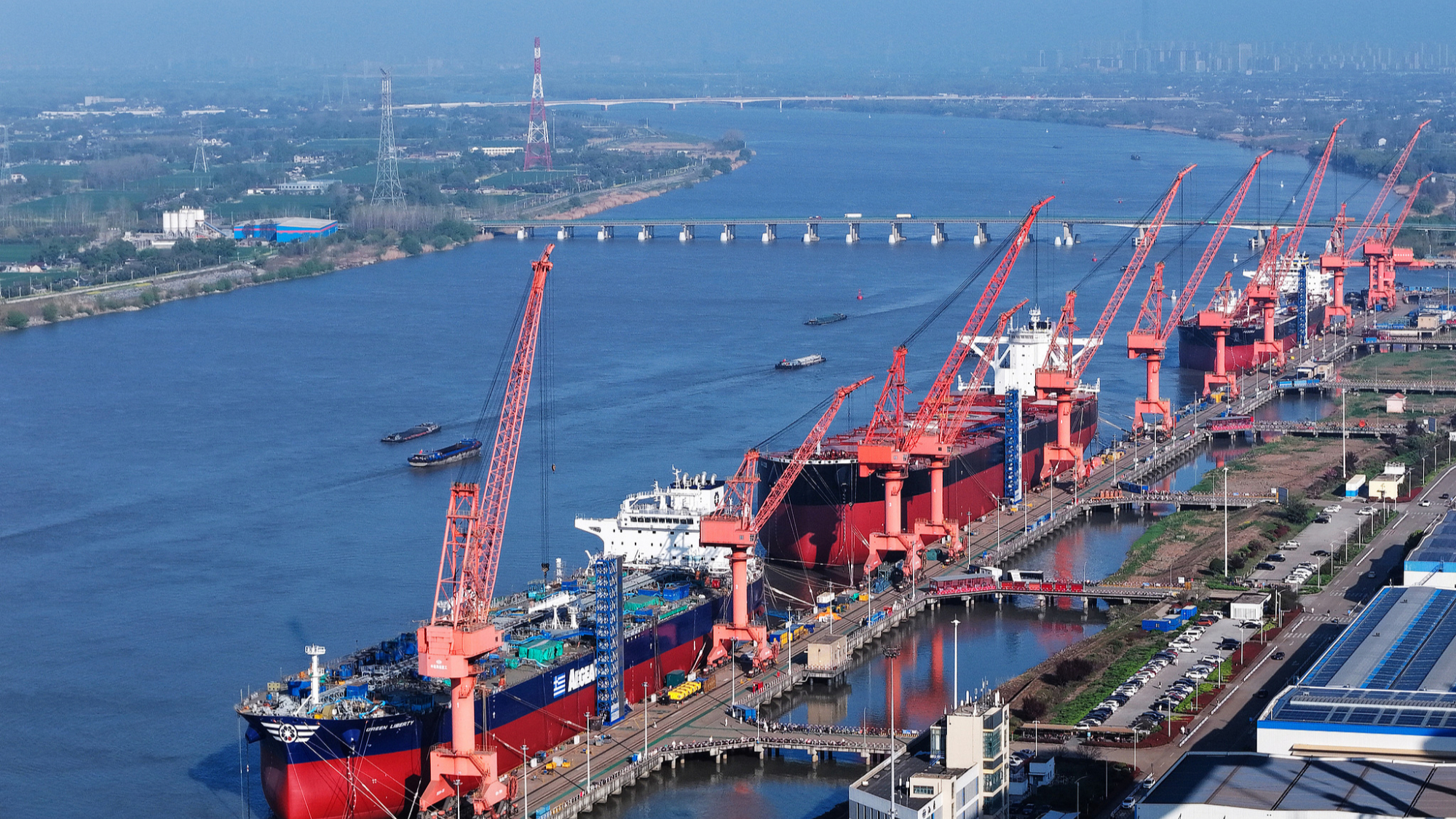
The ASEAN+3 region expanded 4.3% in 2025, outperforming expectations despite what regional economists describe as the most significant shift in global trade policy in decades, according to the AMRO ASEAN+3 Regional Economic Outlook 2026.
A Region Built on Firm Foundations
The ASEAN+3 Macroeconomic Research Office (AMRO) — whose membership spans the ten ASEAN states plus China, Hong Kong, Japan, and Korea — attributes the region’s resilience to firm domestic demand, robust export performance, sustained investment, and deepening intraregional trade linkages. The region enters 2026 with most economies retaining meaningful fiscal and monetary policy space, a buffer regional policymakers built deliberately following the shocks of the preceding decade.
Two Risks Now Dominate the Outlook
AMRO identifies the balance of risks as tilted firmly to the downside for the year ahead, driven by two distinct but interacting shocks. First, the Middle East conflict and the resulting disruption to energy supply through the Strait of Hormuz pose what AMRO calls a significant near-term threat to both regional growth and inflation. Second, shifting US trade policy continues to inject two-sided risk into technology demand and broader trade flows, with financial market volatility compounding the downside pressure from both channels simultaneously.
Semiconductors Anchor the Region’s Trade Position
Regional semiconductor exports remain a structural strength even amid the broader uncertainty. AMRO’s data tracks ASEAN-6 semiconductor exports — spanning Indonesia, Malaysia, the Philippines, Singapore, Thailand, and Vietnam — as a critical driver of regional trade resilience, reflecting the bloc’s entrenchment in global chip and electronics supply chains at a moment when demand for AI-related hardware remains exceptionally strong globally, per AMRO’s full 2026 report.
China’s Property Drag Still Ripples Outward
Even as China’s export engine benefits from AI-driven demand, AMRO notes that overall Chinese investment remained slightly softer in the period under review, with spending on clean energy and advanced manufacturing only partly offsetting a prolonged property-sector adjustment. Given the depth of intraregional trade linkages AMRO’s own research documents, continued softness in Chinese domestic investment carries spillover implications for supply chains and demand across the wider ASEAN+3 bloc, even as China’s headline export growth remains robust.
The Regional Growth Picture, Country by Country
Within the bloc, growth trajectories are diverging. Indonesia, Singapore, and Vietnam are leading regional growth momentum into 2026, while Malaysia and Thailand continue to expand at a steadier, more moderate pace, and the Philippines lags due to domestic structural challenges, according to McKinsey’s Southeast Asia quarterly economic review. The Asia House Annual Outlook separately forecasts overall Asian growth easing to 3.8% from 4.1% according to WTO estimates, reflecting softer global demand, a modest China slowdown, and the fading effect of earlier supply-chain frontloading, though the region is still expected to outperform the global growth average, per Asia House’s 2026 outlook.
Preserving Policy Flexibility Is the Central Challenge
AMRO frames the region’s central policy challenge for 2026 not as responding to any single shock, but as preserving the flexibility to respond to whichever shock materializes first — whether a further escalation in Middle East energy disruption, a sharper-than-expected US tariff or technology-policy shift, or a deeper Chinese property-sector adjustment than currently modeled. For businesses and investors across Singapore, Malaysia, Indonesia, and the wider bloc, that framing suggests 2026 will reward economies and companies that maintain optionality rather than committing early to any single scenario for how the region’s twin external shocks ultimately resolve.
Discover more from The Economy
Subscribe to get the latest posts sent to your email.

Crypto Daily Outlook: Bitcoin, Altcoins, and the Future of Decentralized Finance

Anthony Scaramucci’s Crypto Prediction: Why MicroStrategy’s Move Is Bitcoin’s “iPhone Moment”

Best Dividend Stocks 2026: European & Asian Blue Chips

World Bank & IMF Reports 2026: Why the “3% Growth” Consensus Is Actually a Debate

Elon Musk’s Boring Company Hits $23B Valuation After UAE-Led $3 Billion Series D

Middle East War Economics 2026: Oil Prices & Energy Markets

PSX Forecast 2026: KSE-100, IMF Reviews & Geopolitics

Asian Markets Outlook 2026: China, Japan & Singapore Stocks

Global Economy 2026: IMF Growth, Inflation & Private Credit

Current Account Deficit (CAD) : Causes and Impact

Balance of Payments (BOP)

The Falkland Islands Dispute: Sovereign Wealth, Offshore Drilling, and Market Impacts

Gross Domestic Product (GDP): Nominal vs. Real

What is Inflation and the Consumer Price Index (CPI)?

State Farm’s $5B Dividend 2026: Who Qualifies & Payout Dates

US-China Relations in Q3 2026: Trade Tariffs and Supply Chain Risks

Gold’s Wild 2026: From a Record $5,600 Peak to a 24% Crash and Back Toward $4,500

Oil Surges as Strait of Hormuz Traffic Collapses Again

The Rocket That Won’t Quit: Inside SpaceX’s Falcon 9 Launch Machine

Bank of England Set to Hold Rates Through Year-End, Reuters Poll Shows

SpaceX Starship Flight 14: First Orbital Attempt & Starlink V3 Launch Explained

The 2026 Crypto Regulatory Shift: What It Means for Institutional Investors

AI Chip Stocks 2026: The Best Semiconductor Investments Beyond Marvell

Retail Earnings Week: What Home Depot, Target & Walmart Reveal

Top 30 Stocks for Investment in PSX for Massive ROI in 2026

AI-Powered Training: The Next Multi-Billion Dollar Ecosystem in Fitness

Russia’s Black Sea Oil Exports Fall for a Fifth Straight Week

Tween Back-to-School Trends 2026: What’s Driving the $85B Season
-

 Markets & Finance8 months ago
Top 15 Stocks for Investment in 2026 in PSX: Your Complete Guide to Pakistan’s Best Investment Opportunities
-

 Analysis7 months ago
Johor’s Investment Boom: The Hidden Costs Behind Malaysia’s Most Ambitious Economic Surge
-

 Analysis7 months ago
Top 10 Stocks for Investment in PSX for Quick Returns in 2026
-

 Analysis7 months ago
Brazil’s Rare Earth Race: US, EU, and China Compete for Critical Minerals as Tensions Rise
-

 Banks8 months ago
Best Investments in Pakistan 2026: Top 10 Low-Price Shares and Long-Term Picks for the PSX
-

 Investment8 months ago
Top 10 Mutual Fund Managers in Pakistan for Investment in 2026: A Comprehensive Guide for Optimal Returns
-

 Global Economy9 months ago
15 Most Lucrative Sectors for Investment in Pakistan: A 2025 Data-Driven Analysis
-

 Global Economy9 months ago
Pakistan’s Export Goldmine: 10 Game-Changing Markets Where Pakistani Businesses Are Winning Big in 2025