
Analysis
ECB Stands Firm: Interest Rates Held at 2% as Eurozone Navigates Economic Crossroads

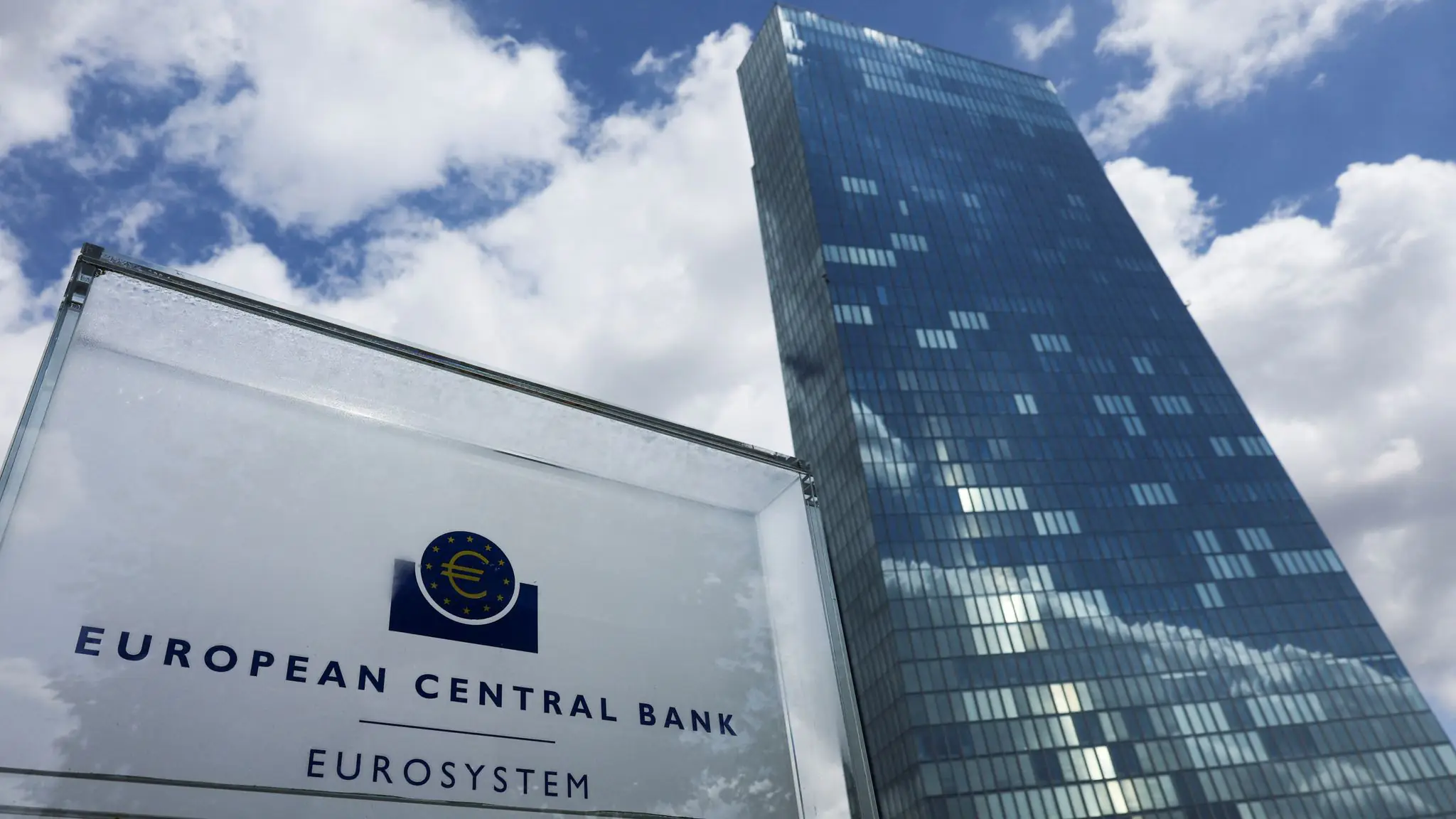
On a brisk morning in Frankfurt, café owners across the Eurozone poured their usual espressos, unaware that a decision made just kilometers away would ripple through their loan repayments, customer spending power, and business expansion plans for months to come. The European Central Bank has held its key interest rate at 2%, marking a pivotal moment in the institution’s delicate balancing act between taming stubborn inflation and nurturing fragile economic growth across the 20-nation currency bloc.
This decision, announced following the ECB’s February 2026 monetary policy meeting, represents a strategic pause in what has been one of the most aggressive tightening cycles in the central bank’s 27-year history. But as ECB President Christine Lagarde emphasized during her subsequent press conference, “data-dependent” doesn’t mean “data-passive”—the central bank remains vigilant as economic headwinds gather strength.
The Numbers Behind the Decision: What the Data Reveals
The ECB’s decision to maintain the deposit facility rate at 2% comes against a backdrop of conflicting economic signals that would challenge even the most seasoned policymakers. According to the latest Eurostat figures, headline inflation across the Eurozone stood at 2.4% year-on-year in January 2026—tantalizingly close to, yet stubbornly above, the ECB’s 2% target.
Key economic indicators influencing the decision:
- Core inflation: Remains elevated at 2.7%, reflecting persistent price pressures in services
- GDP growth: Eurozone economy expanded by a modest 0.8% in Q4 2025, below forecasts
- Unemployment: Holding steady at 6.4%, near historical lows
- Wage growth: Accelerating at 4.2% annually, raising concerns about second-round inflation effects
- Consumer confidence: Improved marginally but remains in negative territory at -12.3
The ECB interest rate decision 2026 reflects what Bloomberg economists characterize as a “Goldilocks dilemma in reverse”—the economy isn’t hot enough to justify further tightening, yet inflation isn’t cool enough to warrant cuts.
Why the ECB Chose to Hold: Unpacking the Strategic Calculus
Understanding the ECB’s monetary policy requires appreciating the institution’s dual mandate: price stability above all, with economic growth considerations when inflation is under control. The decision to pause rate adjustments stems from several interconnected factors.
The Inflation Puzzle Remains Unsolved
Despite significant progress from the 10.6% peak recorded in October 2022, inflation continues to exhibit what ECB Chief Economist Philip Lane termed “uncomfortable stickiness,” particularly in the services sector. Energy prices, once a primary driver of inflation, have stabilized following the resolution of geopolitical tensions in Eastern Europe. However, this welcome development has been offset by persistent wage-price spirals in labor-intensive sectors.
Reuters analysis suggests that services inflation—accounting for roughly 45% of the Eurozone’s consumption basket—remains the central bank’s primary concern. Haircuts in Milan, legal services in Amsterdam, and restaurant meals in Madrid continue seeing price increases well above the ECB’s comfort zone, driven by businesses passing along higher labor costs to consumers who, despite economic uncertainty, continue spending.
Growth Concerns Constrain Policy Options
The Eurozone’s economic expansion, while positive, remains anemic by historical standards. Germany, the bloc’s economic locomotive, narrowly avoided technical recession in late 2025, with manufacturing output contracting for six consecutive quarters. France’s economy shows marginally better performance, but political uncertainty following recent parliamentary elections has dampened business investment.
Southern European economies present a mixed picture. Spain and Portugal demonstrate surprising resilience, benefiting from robust tourism sectors and successful labor market reforms. Italy, conversely, struggles with structural challenges that predate the current monetary policy cycle.
“The ECB finds itself threading a needle,” notes Dr. Carsten Brzeski, Global Head of Macro at ING, in a recent commentary. “Cut rates too soon, and you risk reigniting inflation. Hold too long, and you strangle the nascent recovery.”
Currency Dynamics and Global Policy Divergence
The ECB vs Fed policy comparison reveals significant divergence that complicates the European central bank’s task. While the Federal Reserve has signaled a more accommodative stance with its own interest rate holds following aggressive 2022-2023 hikes, market expectations for Fed rate cuts in H2 2026 have created downward pressure on the euro.
A weaker euro, while beneficial for Eurozone exporters, poses inflationary risks by making imported goods—particularly energy and raw materials priced in dollars—more expensive. The euro-dollar exchange rate, currently hovering around $1.09, reflects these cross-currents, with currency traders parsing every word from both Frankfurt and Washington for clues about future policy paths.
Market Reactions: How Investors Are Interpreting the Signal
Financial markets had largely anticipated the ECB’s decision to hold rates at 2%, with money market futures pricing in an 87% probability of unchanged rates in the days preceding the announcement. Nevertheless, the devil resided in the details—specifically, in the ECB’s forward guidance and its assessment of inflation persistence.
Immediate market responses included:
- European equities: The Euro Stoxx 50 rose 0.8% in afternoon trading, with rate-sensitive bank stocks outperforming
- Bond markets: German 10-year bund yields declined 6 basis points to 2.31%, suggesting investors expect eventual rate cuts
- Currency markets: The euro strengthened modestly against the dollar, gaining 0.3% to $1.0925
- Credit spreads: Italian-German bond spreads tightened slightly, indicating improved peripheral market sentiment
The impact of ECB rate hold on inflation expectations can be measured through break-even inflation rates derived from inflation-linked bonds. Five-year, five-year forward inflation expectations—the ECB’s preferred long-term gauge—remain anchored at 2.1%, suggesting market confidence in the central bank’s commitment to price stability.
Real-World Impact: What This Means for Businesses and Households
Beyond financial markets, the ECB’s decision reverberates through everyday economic life across the Eurozone. For the 340 million people living under the euro’s umbrella, interest rate policy translates into tangible effects on mortgages, savings, business loans, and employment prospects.
Homeowners and Mortgage Borrowers
Approximately 40% of Eurozone mortgages carry variable rates, meaning borrowers have experienced significant payment increases since the ECB began raising rates in July 2022. A household with a €300,000 mortgage has seen monthly payments rise by roughly €450 compared to the ultra-low rate environment of 2021.
The decision to hold rates provides welcome stability for these borrowers, though it offers no relief. New mortgage origination remains subdued across most Eurozone markets, with housing transaction volumes down approximately 22% compared to 2021 levels.
Savers Finally See Returns
After a decade of negative real interest rates that eroded purchasing power, savers are experiencing a remarkable reversal. Bank deposit rates across the Eurozone now average 2.8% for one-year term deposits, finally outpacing inflation and offering positive real returns for the first time since 2011.
This development has profound implications for wealth distribution and intergenerational equity. Older Europeans, who disproportionately hold savings rather than debt, benefit from higher rates. Younger cohorts, burdened with mortgages and education loans, face headwinds.
Corporate Investment Decisions
For businesses contemplating expansion, the cost of capital remains elevated compared to the 2015-2021 period. Corporate borrowing rates averaging 4-5% for investment-grade companies create a high hurdle rate for new projects, contributing to sluggish business investment that has characterized the Eurozone’s post-pandemic recovery.
However, companies with strong balance sheets find themselves in an advantageous position. “We’re seeing quality businesses able to access capital markets at reasonable rates, while weaker credits face significant challenges,” explains Marie-Claire Dubois, Chief Investment Officer at BNP Paribas Asset Management.
Regional Disparities: One Size Doesn’t Fit All
One of the ECB’s enduring challenges stems from the Eurozone’s economic heterogeneity. A single interest rate must somehow serve the needs of both Germany’s export-oriented manufacturing economy and Greece’s tourism-dependent service sector, both Netherlands’ robust labor market and Spain’s improving but still-elevated unemployment.
Current economic divergences across major Eurozone economies:
- Germany: GDP growth 0.4%, inflation 2.1%, unemployment 3.3%
- France: GDP growth 0.9%, inflation 2.6%, unemployment 7.4%
- Italy: GDP growth 0.6%, inflation 2.3%, unemployment 7.8%
- Spain: GDP growth 1.8%, inflation 2.7%, unemployment 11.2%
This heterogeneity means that the ECB’s interest rate policy inevitably fits some economies better than others. Current rates might be appropriate for overheating labor markets in Germany and the Netherlands, while potentially constraining already-weak growth in Italy and Greece.
Looking Ahead: What Comes Next for Eurozone Monetary Policy
The ECB’s forward guidance, carefully calibrated to avoid boxing policymakers into predetermined paths, suggests that interest rates will remain “sufficiently restrictive for as long as necessary” to ensure inflation returns sustainably to target. Translating this central banker-speak into actionable intelligence requires reading between the lines of Lagarde’s press conference remarks and the accompanying monetary policy statement.
Scenarios for Rate Movement
Financial markets currently assign the following probabilities to potential ECB actions by year-end 2026:
- One 25-basis-point cut (45% probability): Most likely if inflation continues gradual descent and growth remains subdued
- Rates unchanged (35% probability): If inflation proves more persistent than expected or growth accelerates
- Two or more cuts (15% probability): Only if significant economic deterioration or disinflationary breakthrough occurs
- Rate increase (5% probability): Highly unlikely absent major inflation shock
The European economic stability 2026 outlook hinges on several critical variables beyond the ECB’s control: geopolitical developments, energy market dynamics, global trade patterns, and fiscal policy decisions by member state governments.
The Fed Connection: Transatlantic Monetary Policy Coordination
While the ECB maintains its independence, Federal Reserve policy decisions inevitably influence European monetary conditions through currency and capital flow channels. The Fed’s own decision to hold its policy rate at 4.25-4.50% while signaling potential cuts later in 2026 creates both opportunities and challenges for ECB policymakers.
If the Fed cuts before the ECB, euro appreciation could help dampen European inflation by reducing import costs—a welcome assist. However, excessive euro strength could undermine Eurozone export competitiveness, particularly vis-à-vis American markets that absorb roughly 20% of European exports.
Recent IMF analysis suggests that central banks in advanced economies are entering a new era of policy coordination—not through explicit agreements, but through heightened awareness of spillover effects in an interconnected global economy.
Expert Perspectives: What the Analysts Are Saying
The financial community’s reaction to the ECB interest rate decision reveals nuanced interpretations of the central bank’s strategy:
Optimistic view: “The ECB has successfully engineered a soft landing,” argues Henrik Andersen, Chief Economist at Danske Bank. “Inflation is declining without triggering recession—a remarkable achievement given the magnitude of shocks absorbed since 2022.”
Cautious view: “Declaring victory prematurely would be a policy error,” warns Sylvie Matherat, former ECB Director General. “Core services inflation remains too high, and wage growth could reignite price pressures if the bank eases too soon.”
Bearish view: “The ECB is behind the curve and risks overtightening,” contends Willem Buiter, former Citigroup Chief Economist. “The economy is weaker than official data suggest, and maintaining restrictive policy courts unnecessary recession risk.”
The Historical Context: How We Got Here
To appreciate the significance of holding rates at 2%, consider the extraordinary journey European monetary policy has traveled. From 2014 to 2022, the ECB maintained negative deposit rates—an unprecedented experiment that saw banks paying for the privilege of parking reserves at the central bank.
The shift from -0.5% in June 2022 to the current 2% represents the fastest tightening cycle in ECB history, far exceeding the pace of adjustments during the 2005-2008 normalization. This aggressive action was necessitated by inflation that, at its peak, reached levels unseen since the euro’s launch in 1999.
Conclusion: Navigating Uncertainty in Uncharted Waters
The ECB’s decision to hold interest rates at 2% encapsulates the central bank’s cautious optimism tempered by persistent uncertainties. Policymakers have successfully reduced inflation from crisis levels without triggering economic collapse—no small feat given the magnitude of recent shocks. Yet the journey toward sustainable 2% inflation and robust growth remains incomplete.
For businesses, households, and investors across the Eurozone, the implications are clear: interest rates will remain elevated by recent historical standards for the foreseeable future, requiring continued adjustment to a higher-rate environment. The era of free money has definitively ended, replaced by a more traditional monetary policy regime that rewards savers, disciplines borrowers, and forces businesses to justify investment decisions with genuine economic returns.
As markets continue parsing every data release and every Lagarde utterance for clues about the ECB’s next move, one thing remains certain: the path from here will be determined by incoming data, not predetermined schedules. In this sense, the ECB’s data-dependent approach represents both prudent policy and acknowledgment of profound uncertainty about the post-pandemic, post-energy-crisis economic landscape.
What should you watch next? Key data releases including February inflation figures (due March 5), Q1 GDP growth (late April), and the ECB’s March meeting will provide crucial insights into whether the current pause represents a plateau before cuts or an extended hold. The Christine Lagarde ECB press conference scheduled for March 7 will be particularly scrutinized for any shifts in tone regarding the inflation outlook.
Discover more from The Economy
Subscribe to get the latest posts sent to your email.


When the Trump administration’s tariff regime rattled export-dependent Asian economies in 2025, Malaysia’s finance ministry response stood out for its composure. “We didn’t panic,” the finance minister told reporters, describing a deliberate strategy of diversification and negotiation rather than reactive concessions (Fortune).
From crisis response to execution agenda
That composure has carried into 2026. Malaysia’s economy minister has described this year explicitly as one of “execution,” as the Anwar Ibrahim administration works to lock in the policy gains built through 2025’s trade turbulence (Fortune). The framing matters: it signals Putrajaya sees 2026 less as a year of new initiatives and more as a year of delivering on commitments already made — the Johor-Singapore Special Economic Zone chief among them.
The semiconductor exposure that both helps and constrains
Malaysia’s electrical and electronics sector accounts for roughly 40% of total exports, with semiconductors alone comprising about 65% of E&E exports (J.P. Morgan Private Bank). That concentration is precisely why Malaysia benefited from 2025’s tariff exemptions on semiconductors, electronics and pharmaceuticals, and precisely why any future change to those exemptions carries outsized risk for Malaysian growth relative to more diversified regional peers (J.P. Morgan Private Bank).
The Johor-Singapore SEZ as the structural bet
Johor’s 7,300-acre innovation sandbox, part of the new special economic zone with Singapore, is Malaysia’s clearest attempt to convert its manufacturing base into a higher-value regional hub rather than remain a low-cost assembly point (Fortune). The zone’s stated ambition — combining Johor’s “land and scale” with Singapore’s “capital and speed” — positions the region to capture AI-linked infrastructure and hardware investment that would otherwise bypass both countries individually (Fortune).
Corporate consolidation follows the growth signal
Confidence in Malaysia’s execution story is visible in corporate activity too: two Southeast Asia 500 companies are reportedly exploring a merger that would form Malaysia’s largest construction conglomerate, a scale bet that typically follows — rather than precedes — genuine confidence in a multi-year infrastructure pipeline (Fortune).
The regulatory friction points
Not every 2026 storyline is frictionless. Malaysia has moved to temporarily block the Grok AI platform alongside Indonesia following a sexual-deepfake scandal, illustrating that Malaysia’s AI-forward economic strategy is running in parallel with an increasingly assertive AI-governance posture — a tension regional investors should track as a signal of how Malaysia intends to regulate the same technology sector it is courting for investment (Fortune).
What “execution” needs to mean by year-end
For Malaysia’s 2026 narrative to hold, three things need to materialise beyond announcements: measurable Johor SEZ tenant commitments, continued semiconductor export resilience against any tariff-exemption rollback, and a construction-sector consolidation that actually delivers infrastructure rather than simply consolidating market share.
Discover more from The Economy
Subscribe to get the latest posts sent to your email.

Singapore has spent the past two years becoming one of the primary beneficiaries of the global AI infrastructure buildout, alongside Taiwan’s semiconductor sector. The city-state’s role as a data-center hub allowed it to capture significant capital inflows even as the broader labour-market impact of that investment stayed limited, given how capital-intensive AI infrastructure spending tends to be (J.P. Morgan Private Bank).
Why the AI cycle didn’t stay contained to Singapore
What is changing in 2026 is the geography of that investment. J.P. Morgan’s Asia outlook notes Southeast Asian economies — traditionally anchored in commodities and export manufacturing — are now aligning more closely with the global AI investment cycle by deepening involvement in higher-value areas: infrastructure, hardware and complementary supply chains (J.P. Morgan Private Bank).
Land constraints in Singapore make expansion difficult, which is precisely where the Johor-Singapore Special Economic Zone becomes central to the region’s AI investment thesis rather than a side story.
The Johor SEZ as capacity release valve
Johor has launched a 7,300-acre innovation sandbox as part of the new special economic zone bordering Singapore, explicitly designed to combine Johor’s land and scale with Singapore’s capital and speed, according to the state investment committee’s chair (Fortune). One local official described the ambition bluntly: the zone is meant to be more than “an industrial park with a nicer brochure” (Fortune).
Malaysia’s structural beneficiary position
Malaysia’s electrical and electronics sector already accounts for roughly 40% of the country’s total exports, with semiconductors comprising about 65% of E&E exports — positioning Malaysia as a structural beneficiary of the AI-linked shift in regional trade, according to J.P. Morgan’s Asia analysis (J.P. Morgan Private Bank). Malaysia’s economy minister has framed 2026 explicitly as a year of “execution” for the Anwar administration as it tries to lock in these policy gains (Fortune).
Monetary policy backdrop supports the buildout
Asian central banks spent much of 2025 easing policy and are entering the final stages of that cycle in 2026, shifting more of the growth-support burden to fiscal policy — a backdrop J.P. Morgan expects to support stronger domestic credit growth and consumer demand across the region, reinforcing rather than competing with the AI capital cycle (J.P. Morgan Private Bank).
The regional risk to watch
Most of the region avoided the brunt of 2025’s tariff shock thanks to exemptions on semiconductors, electronics and pharmaceuticals, but that exemption structure remains a policy choice in Washington rather than a permanent feature — meaning the Singapore-Johor AI corridor’s growth case still carries meaningful US trade-policy risk that investors should not discount simply because 2025’s tariffs were absorbed relatively smoothly (J.P. Morgan Private Bank).
Discover more from The Economy
Subscribe to get the latest posts sent to your email.

Dubai’s transformation from oil-adjacent trading post to global capital hub is no longer a talking point — it is a measurable trend. The emirate’s newly launched Economic Survey 2026 shows GDP climbing to $265 billion alongside rising employment, while international family offices are gathering for the Family Office Summit Dubai 2026 as the city cements its position as a family-wealth hub (Gateway Group; Arabian Business).
The non-oil growth engine
The UAE enters 2026 with the World Bank projecting national growth of roughly 5%, well above the global average, driven substantially by 5.3% expansion in the non-oil sector (Barchart). Technology, green energy and healthcare are the top-performing sectors, and 64% of UAE executives expect trade volumes to exceed 2025 levels — confidence underpinned by the country’s expanding network of Comprehensive Economic Partnership Agreements (Barchart). Historically, oil production accounted for half of Dubai’s GDP; today it contributes less than 1% (Wikipedia/Economy of Dubai).
Why family offices specifically are relocating
The Family Office Summit Dubai 2026 is drawing international participants precisely because the emirate has built regulatory infrastructure — inside jurisdictions like the DIFC — designed to attract exactly this category of capital. As one DIFC executive noted, incentives alone are no longer enough to win global finance; institutional credibility and regulatory clarity now matter more, which explains why firms such as Sixth Street have opened Abu Dhabi offices as global investment houses deepen their Middle East presence (Gateway Group).
Infrastructure is compounding the pull
Beyond finance, the UAE’s infrastructure build-out is reinforcing the wealth-hub thesis. Etihad Rail’s Abu Dhabi–Fujairah passenger service and the Madinat Zayed and Liwa station openings, arriving ahead of schedule, signal a state execution model that investors increasingly cite as a differentiator versus regional peers (GCC Business Watch). Dubai has also rolled out a AED 1 billion economic support package aimed at business liquidity and resilience amid regional geopolitical headwinds (GCC Business Watch).
The regional competition for capital
Dubai’s rise is happening alongside — not in isolation from — a broader Gulf capital race. Saudi Arabia’s economy is set for stronger growth per IMF assessments, and Gulf sovereign and corporate capital is increasingly being deployed across sectors from AI infrastructure to green growth commitments, meaning Dubai’s wealth-hub status will need continual reinforcement rather than passive maintenance (GCC Business Watch).
The bottom line for investors
For family offices weighing jurisdiction, Dubai’s pitch in 2026 combines three elements rarely available together: near-zero effective taxation, a non-oil economy growing faster than most G20 peers, and physical and financial infrastructure being built ahead of demand rather than in reaction to it. That combination — not simply low tax rates — is what is now pulling global family wealth toward the emirate.
Discover more from The Economy
Subscribe to get the latest posts sent to your email.

Russia’s War Economy Got a Reprieve From Iran

China’s Economy Has a Structural Problem: Factories Are Winning, Households Are Losing

How Malaysia “Shrugged Off” Trump’s Tariffs — and What Comes Next

Singapore’s AI Boom Is Now a Two-Country Story

Why Global Family Offices Are Converging on Dubai in 2026

A Weak Jobs Report Just Rewired the Fed’s Autumn — And Wall Street Cheered

Britain’s Fragile Rebound Meets a Budget Deadline and a Trump Ultimatum

Pakistan’s Economy Grew 3.7% — So Why Doesn’t It Feel Like a Recovery?

Top 15 Financial Stocks for Investment in PSX

Pakistan Exports 2026: Record $35.6B Forecast Masks Trade Deficit Risk

UK’s Jobs Downturn Now Matches the 2008 Financial Crisis — And AI Is Accelerating It

Fed Rate Cut Bets Surge After Shock US Jobs Report Exposes Labor Market Cracks

Pakistan’s Trade Gap Widens to $3.95bn Despite Meeting FY26 Current Account Target

Why Ottawa Is Betting on Dubai: Inside Canada’s Gulf Trade Pivot

Gold Price Forecast 2026: Fed’s July 29 Decision and Record Central Bank Buying Explained

China Politburo July 2026: Stimulus Signals Explained

Pakistan Economy 2026: GDP Grows 3.7% as IMF Completes EFF Review Amid Middle East Risk

Strait of Hormuz Blockade 2026: Oil Prices Surge 9% as US-Iran Conflict Reignites

Down But Not Out: Inside the Slow Sinking of Russia’s War Economy

Gulf Capital Retreat From Pakistan 2026: UAE Loan Freeze & What It Means

Global Stock Market Selloff 2026: Stagflation Fears Return as Iran Conflict Reignites

Pakistan’s Economic Survey FY26: Inflation Spike Insights

Russia Fuel Shortages 2026: Inside a Cracking War Economy

Strait of Hormuz Crisis 2026: How Trump’s Toll U-Turn Exposes Global Economic Risk

Bank of England Rate Decision Amid Energy Crisis

Russia’s War Economy Model Is Starting to Crack, Think Tank Warns

Pakistan’s Economic Growth: Resilience Amid Challenges

Andy Burnham, UK Gilts and Mortgages: July 2026 Explainer
-

 Markets & Finance7 months ago
Top 15 Stocks for Investment in 2026 in PSX: Your Complete Guide to Pakistan’s Best Investment Opportunities
-

 Analysis6 months ago
Johor’s Investment Boom: The Hidden Costs Behind Malaysia’s Most Ambitious Economic Surge
-

 Analysis6 months ago
Top 10 Stocks for Investment in PSX for Quick Returns in 2026
-

 Analysis6 months ago
Brazil’s Rare Earth Race: US, EU, and China Compete for Critical Minerals as Tensions Rise
-

 Banks7 months ago
Best Investments in Pakistan 2026: Top 10 Low-Price Shares and Long-Term Picks for the PSX
-

 Investment7 months ago
Top 10 Mutual Fund Managers in Pakistan for Investment in 2026: A Comprehensive Guide for Optimal Returns
-

 Global Economy8 months ago
15 Most Lucrative Sectors for Investment in Pakistan: A 2025 Data-Driven Analysis
-

 Global Economy8 months ago
Pakistan’s Export Goldmine: 10 Game-Changing Markets Where Pakistani Businesses Are Winning Big in 2025