
Asia
Asia’s Economic Powerhouses: The Top 10 Countries with the Highest Projected GDP Growth Rates in 2026

We are in an era of persistent global economic fragility—marked by tepid growth in advanced economies, lingering inflationary pressures, and fracturing geopolitical alignments—a single continent continues to serve as the world’s indispensable engine of expansion: Asia. While forecasts from the International Monetary Fund (IMF) and the World Bank paint a subdued picture for much of the West in 2026, the dynamism of developing and emerging Asia offers a compelling counter-narrative of ambition, resilience, and transformation. This is not merely the story of China’s scale anymore; it is an increasingly multipolar tale of demographic vigor, strategic reforms, and technological leapfrogging spreading from the Indian subcontinent to the archipelagos of Southeast Asia and the resource-rich nations of Central Asia.
The coming year is poised to underscore this divergence. As major central banks tentatively navigate a post-tightening landscape, the Top 10 Countries of Asia with Best GDP Growth Rate in 2026 are projected to surge ahead, with growth rates clustering between 6% and 8%—figures that would be unimaginable in Europe or North America. This list, derived from the latest consensus of the IMF’s January 2026 World Economic Outlook, the Asian Development Bank’s (ADB) Asian Development Outlook Update (December 2025), and the World Bank’s Global Economic Prospects, reveals a fascinating mosaic of economic models. From consumption-driven giants to export-oriented manufacturing hubs and commodity-powered reformers, these nations collectively define the frontier of global growth.
However, raw growth figures only tell part of the story. Beneath the headline numbers lie complex narratives of policy choices, vulnerability to external shocks, and the urgent challenge of translating rapid GDP expansion into sustainable, inclusive development. This analysis goes beyond a simple ranking. We will dissect the key structural drivers propelling each economy, weigh the formidable risks—from debt sustainability and climate vulnerability to geopolitical tensions—and explore what the ascendancy of these fastest growing economies in Asia 2026 means for global trade patterns, investment flows, and the broader balance of economic power. The journey through this top 10 list is a journey through the future contours of the world economy.
Regional Overview: The Multipolar Engine of Global Growth
The Asian economic outlook for 2026 is one of layered momentum. South Asia, led by India and Bangladesh, remains the unequivocal growth leader, fueled by young populations, rising domestic demand, and accelerating digital and physical infrastructure investment. Southeast Asia demonstrates remarkable resilience; nations like Vietnam, the Philippines, and Indonesia are successfully navigating global demand shifts, bolstering their positions within reconfigured supply chains, and seeing a robust return of tourism and services.
East Asia presents a more moderated picture. China’s growth, while stabilizing through targeted stimulus, continues its gradual deceleration as authorities manage structural transitions in the property sector and seek higher-quality growth. Japan and South Korea are forecast to see modest, steady expansion. Meanwhile, Central Asia emerges as a region of notable opportunity. Countries like Uzbekistan and Kazakhstan are leveraging commodity wealth, undertaking significant business climate reforms, and benefiting from redirected trade routes, placing them firmly among the highest GDP growth Asia 2026 cohort.
A critical throughline for all these top performing Asian economies in 2026 is the strategic navigation of geopolitical fragmentation. The drive for “friendshoring” and supply chain diversification, coupled with proactive trade agreements (like the Regional Comprehensive Economic Partnership, RCEP), is providing a tailwind for many. Yet, this same fragmentation presents acute risks, including protectionist measures, technology decoupling, and the potential for regional instability. Success in 2026 will hinge not just on economic fundamentals, but on diplomatic dexterity.
The Countdown: Asia’s Top 10 Fastest-Growing Economies in 2026
The following ranking is based on the latest available real GDP growth projections for 2026, using the IMF’s January 2026 data as the primary anchor, cross-referenced with ADB and World Bank forecasts for consistency. All percentages represent real, annual GDP growth projections.
#1: India – 6.8% Projected Growth
India’s economic momentum appears not just sustained but broadening. Even as its base expands, it is forecast to remain the world’s fastest-growing major economy. The driver’s seat is occupied by formidable domestic demand: a burgeoning middle class, strong public capital expenditure on infrastructure (roads, railways, ports, and digital networks), and a vibrant, venture-capital-funded startup ecosystem, particularly in fintech and enterprise software. Manufacturing is gaining traction through the Production Linked Incentive (PLI) schemes, aimed at making India a competitive alternative in electronics, pharmaceuticals, and renewable energy components.
However, the path is not without potholes. The primary challenge remains generating sufficient formal employment for its massive youth cohort. Private corporate investment, while improving, needs to accelerate further. Geopolitically, India skillfully walks a tightrope, benefiting from Western supply chain diversification while maintaining economic ties with Russia. Climate risks—from extreme heat impacting agriculture and labor productivity to water stress—loom large as a structural constraint. Execution of land, labor, and agricultural reforms will be critical to unlocking its full potential and cementing its position as the foremost of the fastest growing countries in Asia 2026.
#2: Vietnam – 6.5% Projected Growth
Vietnam continues its quiet, relentless ascent as a manufacturing powerhouse. Its stable political environment, competitive labor costs, strategic geography, and a web of ambitious free trade agreements (including with the EU and through RCEP) make it a premier destination for foreign direct investment (FDI). This is especially true in electronics, textiles, and increasingly, semiconductors and data centers. A burgeoning digital economy and a recovery in tourism are providing additional thrust.
Risks center on infrastructure strain—ports and power grids require massive upgrades to keep pace—and an impending middle-income trap. The country must move up the value chain into higher-skilled manufacturing and services. Furthermore, its deep reliance on external demand makes it vulnerable to a protracted global slowdown. Managing relations with both the US and China, its two largest trading partners, remains a delicate, ongoing diplomatic necessity for Hanoi.
#3: Philippines – 6.2% Projected Growth
The Philippine economy is powered by a powerful trifecta: resilient consumption, sustained remittance inflows from its vast overseas diaspora, and an aggressive public infrastructure program, “Build Better More.” A young, English-speaking population is also fueling a high-growth business process outsourcing (BPO) sector that is evolving into higher-value IT and creative services.
President Ferdinand Marcos Jr.’s administration has prioritized economic reopening and fiscal consolidation. The main headwinds are inflationary, particularly from food prices, which can erode consumer spending power. High levels of public debt, accumulated during the pandemic, limit fiscal firepower. Like its regional peers, the Philippines is acutely vulnerable to climate shocks, facing an average of 20 typhoons annually, which disrupt agriculture and infrastructure.
#4: Bangladesh – 6.0% Projected Growth
Bangladesh’s remarkable growth story, long anchored by its ready-made garment (RMG) exports, is at a pivotal juncture. To maintain its trajectory and graduate from Least Developed Country (LDC) status, it must diversify. Signs are promising: growing FDI in pharmaceuticals, ceramics, and light engineering, alongside a digital finance revolution driven by platforms like bKash. Domestic demand is resilient, supported by stable remittances.
The challenges are substantial. It faces a severe macroeconomic imbalance—depleting foreign exchange reserves, a weakening Taka, and high inflation—which requires careful monetary and fiscal management. Political stability is a watchpoint following the 2024 elections. Furthermore, the RMG sector itself must evolve to meet higher global standards on sustainability and labor practices. Navigating these shoals will determine if Bangladesh can sustain its place among Asia’s fastest growing countries.
#5: Uzbekistan – 5.8% Projected Growth
The reformist star of Central Asia, Uzbekistan has undertaken a sweeping transformation since 2016. Liberalizing its currency, easing trade barriers, and privatizing state-owned enterprises have unlocked significant economic energy. Growth is fueled by a gold, copper, and natural gas export boom, alongside a renaissance in domestic manufacturing and services. Its large, young population and strategic position on emerging Middle Corridor trade routes between China and Europe offer significant potential.
The risks are institutional. The fight against corruption and the strengthening of judicial independence are works in progress. The economy remains highly susceptible to fluctuations in global commodity prices. While reforms have been bold, their depth and consistency will be tested as the country seeks to attract higher-value, non-extractive FDI and build a more diversified economic base.
#6: Cambodia – 5.7% Projected Growth
Cambodia’s economy is undergoing a critical transition. Its traditional pillars—garment exports and tourism—are recovering steadily. However, the future lies in moving beyond basic textiles into more complex footwear and travel goods, and leveraging new investment laws to attract FDI into electronics assembly and auto parts. The China-Cambodia Free Trade Agreement and Belt and Road Initiative (BRI) investments in infrastructure provide a significant tailwind.
Vulnerabilities are pronounced. The economy is heavily dollarized, limiting monetary policy options. Its export profile is narrow and faces increasing competition from regional peers. Geopolitical alignment with China, while economically beneficial in the short term, may limit opportunities with Western markets concerned about strategic dependencies. Deep-seated issues of governance and human capital development remain long-term constraints.
#7: Indonesia – 5.3% Projected Growth
As Southeast Asia’s largest economy, Indonesia benefits from immense scale and resource wealth. The cornerstone of its 2026 outlook is the continued development of its downstream commodities policy—banning the export of raw nickel, bauxite, and other minerals to force the creation of domestic smelting and refining industries. This aims to capture more value from its natural resources. Strong consumption from its 270-million-strong population and a booming digital economy provide a stable foundation.
President Prabowo Subianto’s administration inherits both promise and peril. The flagship new capital city, Nusantara, represents a massive fiscal commitment with uncertain economic returns. Protectionist trade policies risk inviting retaliation and could slow productivity growth. Furthermore, the commodity-driven growth model is cyclical and environmentally intensive. Balancing nationalism with global integration will be Prabowo’s central economic challenge.
#8: Tajikistan – 5.2% Projected Growth
Tajikistan’s growth is underpinned by two dominant factors: massive public investment in hydropower and transportation infrastructure (notably the Rogun Dam), and substantial remittance inflows from migrant workers, primarily in Russia. As a key node in China’s Belt and Road Initiative, it is also seeing increased investment in mining and connectivity projects.
The economy is exceptionally fragile. It is arguably the most remittance-dependent country in the world, making it highly sensitive to economic conditions in Russia. Debt sustainability is a perennial concern, with significant obligations to China. Climate change presents a paradoxical threat: while offering hydropower potential, glacial melt and changing weather patterns also risk water security and agriculture.
#9: Kyrgyz Republic – 5.0% Projected Growth
Similar to its neighbor Tajikistan, the Kyrgyz Republic’s economy is propelled by the “Gold-Remittance” nexus. The massive Kumtor gold mine is a primary export earner and government revenue source, while remittances fuel domestic consumption. Efforts to develop tourism around its stunning natural landscapes are showing promise, and it serves as a re-export hub for Chinese goods to other Central Asian markets and Russia.
The risks are acute. Political instability is a recurrent theme, with periodic protests and changes in government undermining policy continuity. The economy is disproportionately affected by sanctions on Russia, a major trade partner. Corruption and a weak business environment deter more diversified, value-added investment, keeping the economy locked in a volatile, low-value-added cycle.
#10: Laos – 4.8% Projected Growth
Laos rounds out the top 10, though its growth comes with profound caveats. The economy is being pulled in two directions: a debt-driven infrastructure boom (primarily hydropower dams and a China-Laos railway) and severe macroeconomic distress. The railway has boosted tourism and trade connectivity, while power exports to Thailand and Vietnam are a key revenue source.
However, Laos stands as a cautionary tale. It faces a dire debt crisis, with obligations exceeding 100% of GDP and a significant portion owed to Chinese state-owned enterprises. Currency depreciation and soaring inflation have eroded living standards. Its growth is thus bifurcated—sectoral infrastructure projects create GDP activity, while the broader economy struggles. Without a comprehensive debt restructuring, its growth is unsustainable.

Comparative Analysis & Structural Drivers
What unites these diverse top performing Asian economies 2026? Several cross-cutting drivers emerge:
- Demographic Dividends: Nations like India, the Philippines, and Bangladesh possess young, growing populations, fueling labor force expansion and vibrant domestic markets.
- Strategic Integration: Proactive trade policy (e.g., Vietnam’s FTAs, RCEP adoption) and positioning within alternative supply chains (“China+1”) are providing a powerful export lift.
- Infrastructure Investment: Whether through public spending (India, Philippines) or BRI projects (Central Asia, Laos), massive capital expenditure is addressing bottlenecks and boosting short-term demand.
- Digital Leapfrogging: Widespread mobile internet adoption is accelerating financial inclusion, e-commerce, and service sector productivity across the board.
- Commodity Endowments: For Central Asia and Indonesia, resource wealth—when managed wisely—funds development and drives exports.
Conversely, they share common vulnerabilities: exposure to climate change, reliance on volatile external finance (remittances, FDI, commodity prices), and the persistent challenge of weak institutions and governance.
Risks and Opportunities: The 2026 Crucible
The optimistic projections for these fastest growing economies in Asia 2026 are contingent on navigating a minefield of risks.
- Geopolitical Fragmentation: An escalation of tensions in the Taiwan Strait or South China Sea, or a hardening of tech/trade blocs, could severely disrupt the export-dependent models of Vietnam, Cambodia, and others.
- Climate Vulnerability: From Bangladesh’s floods to Southeast Asia’s droughts and heatwaves, physical climate risks threaten agriculture, infrastructure, and labor productivity, imposing heavy adaptation costs.
- Debt Sustainability: While less acute than in some other emerging markets, debt burdens are rising in South Asia (Pakistan, Sri Lanka are warnings) and are critical in Laos. Higher-for-longer global interest rates increase servicing costs.
- The “Middle-Income Trap”: Countries like Vietnam, Indonesia, and the Philippines must execute complex reforms in education, innovation, and institutional quality to escape low-value-added manufacturing and services.
The opportunities, however, are transformative. Successful navigation of 2026 could cement Asia’s role as the center of global demand, not just supply. The green transition represents a massive opportunity in renewable energy (solar, hydropower), critical minerals processing (Indonesia, Central Asia), and electric vehicle supply chains. Furthermore, the rise of regional security and trade architectures, less dependent on any single power, could foster a new era of stability-led prosperity.
Conclusion
The list of the Top 10 Countries of Asia with Best GDP Growth Rate in 2026 is more than a statistical snapshot; it is a roadmap to the economic future. It reveals a continent where dynamism has become decentralized, with growth champions emerging across every subregion. This dispersion of economic power makes Asia’s overall growth more resilient, even as China moderates.
Yet, as our analysis shows, high GDP growth rates are a starting point, not an end goal. The true test for these fastest growing countries in Asia 2026 will be the quality and sustainability of their expansion. Can growth generate broad-based employment, withstand external shocks, and occur within planetary boundaries? The answers will depend on difficult policy choices made in capital cities from New Delhi to Jakarta to Tashkent in the months ahead.
For investors and policymakers worldwide, the imperative is clear: look beyond the headlines and the simple rankings. Understand the unique narrative, the structural drivers, and the embedded risks in each of these economies. They are not just growing fast; they are actively shaping the next chapter of globalization. Their success or failure will, to a remarkable degree, dictate the tone of the global economy for decades to come.
Discover more from The Economy
Subscribe to get the latest posts sent to your email.


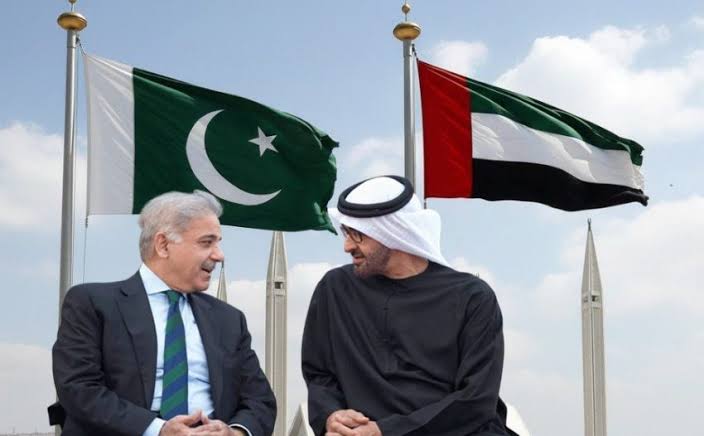
What happened: In early 2026, the United Arab Emirates declined to roll over a $3 billion loan to Pakistan — the first such refusal in seven years. The repayment equalled roughly 18% of Pakistan’s foreign currency reserves, arriving as Islamabad also faced a $1.3 billion bond payment and was waiting on the next IMF tranche.
Why it matters: It’s the clearest sign yet that Gulf sovereign patience with Pakistan’s balance-of-payments cycle is thinning, even as Gulf states simultaneously court China, Saudi Arabia, and each other for capital in a tightening regional liquidity environment.
The Story Nobody’s Connecting
Most coverage of Pakistan’s 2026 external account stress treats the UAE’s loan decision as an isolated liquidity event — a “routine financial transaction,” in the words of Pakistan’s own Ministry of Foreign Affairs. That framing misses the bigger pattern. The same weeks that Abu Dhabi called in its $3 billion, unusual delays began appearing in bank transfers from Saudi Arabia to the UAE itself — friction between the Gulf’s two largest economies, at a moment when both are also managing their own post-war oil price adjustment. (Pakistan & Gulf Economist)
Put those two data points together and a different story emerges: this isn’t just about Pakistan’s creditworthiness. It’s about Gulf capital becoming more selective, more transactional, and less willing to extend informal grace periods across the board — with Pakistan simply the most exposed borrower in the queue.
The Numbers Behind the Pressure
Pakistan’s State Bank held $16.4 billion in reserves as of late March 2026 — enough to cover roughly three months of imports, a threshold economists generally treat as a comfort floor, not a cushion. (Mettis Global News) The UAE’s declined rollover landed at the same time as a looming $1.3 billion international bond payment and dependence on the next $1.2 billion IMF disbursement — a convergence of obligations that left the State Bank with limited room to maneuver beyond import restrictions, rate hikes, or fresh commercial borrowing.
The backdrop matters too. The rupee had been trading in a comparatively narrow 278–282 band before the escalation of the Iran conflict pushed global oil prices higher, squeezing Pakistan’s import bill precisely when its Gulf safety net began to wobble. The KSE-100 benchmark, meanwhile, had already shed around 15% amid the broader pressure. (Mettis Global News)
This is not Pakistan’s first Gulf-dependency cycle. The IMF’s own record shows a now-familiar pattern: staff-level agreements reached in Dubai, UAE pledges of multibillion-dollar investment arriving alongside IMF tranches, and Gulf bridge financing used to stave off sovereign default in periods when reserves cover shrinks toward zero. (Business Standard) What’s different in 2026 is that the bridge itself is showing cracks.
Islamabad’s Official Line vs. the Structural Reality
Pakistan’s government has leaned into a “stability to sustainable growth” narrative around its FY2026–27 federal budget, with the finance minister framing the transition as export-driven rather than reserve-dependent. Business groups have broadly welcomed the budget, and the current account posted a $459 million surplus in May 2026, an improvement attributed to strong remittance inflows. (Business Recorder) The Monetary Policy Committee has held rates steady rather than reaching for emergency tightening, which is itself a signal that the central bank does not yet see the UAE episode as a systemic trigger.
But a current account surplus built substantially on remittances is different from one built on export competitiveness or durable FDI. Pakistan’s trade structure still leans heavily on a narrow set of partners: China supplies over a quarter of its imports and a meaningful share of its exports, the UAE is both a top export destination and its second-largest import source, and Gulf states collectively remain the primary channel for both remittances and emergency liquidity. (Wikipedia — Economy of Pakistan) That concentration is precisely what makes a single Gulf lender’s changed appetite so consequential.
Why the Oil Backdrop Compounds the Risk
None of this is happening in a vacuum. The IMF’s own July 2026 commentary noted that global oil markets “absorbed the war shock” from the Iran conflict, but cautioned that buffers — spare production capacity, strategic reserves, shipping insurance capacity — are running low. (IMF Blog) For an oil-importing, reserve-constrained economy like Pakistan, a second energy price shock without deeper buffers would land directly on the same reserves the UAE loan was meant to protect.
What to Watch Next
- Whether Saudi Arabia steps in as an alternative bridge lender, or whether the Riyadh–Abu Dhabi transfer friction signals a broader Gulf liquidity tightening that limits everyone’s appetite to backstop Pakistan.
- The pace and size of the next IMF tranche, and whether Fund conditionality shifts to demand deeper reserve buffers given the UAE precedent.
- Whether China increases its role as lender of last resort, deepening Pakistan’s dependency in exactly the direction Gulf financing was historically meant to offset.
Discover more from The Economy
Subscribe to get the latest posts sent to your email.
Introduction
The European Council formally extended its economic sanctions against Russia for another full year on 25 June 2026, keeping restrictive measures in place until 31 July 2027 (Council of the EU). More than four years into the war, the headline story of Russia’s economy has shifted from whether sanctions would work to a more nuanced question: how much longer can the Kremlin keep financing the war before the accumulated strain becomes impossible to hide behind favorable official statistics.
The Sanctions Architecture, Renewed Again
The EU’s economic measures against Russia, first introduced in 2014 and dramatically expanded after the February 2022 full-scale invasion, now span trade, finance, energy and dual-use technology restrictions, alongside asset freezes and travel bans on a broad range of individuals and entities (Council of the EU). Since February 2022, the EU has adopted 20 separate sanctions packages, and the European Council has explicitly stated it remains determined to keep weakening Russia’s war economy by further reducing its energy revenues, curbing shadow-fleet oil shipping operations and constraining its banking system (Council of the EU). Separately, on 3 July 2026 the EU sanctioned six individuals connected to the poisoning and death of opposition figure Alexei Navalny, underscoring that the sanctions regime continues to expand on human-rights grounds as well as economic ones (Council of the EU Sanctions Timeline).
The Headline Numbers Beijing-Style Optimism Can No Longer Explain Away
Russia’s GDP is now put at roughly $2.51 trillion, the world’s eleventh-largest economy — comparable in size to South Korea despite Russia’s vastly larger landmass and resource base — with 2026 growth projected at just 1.0% and inflation running at 5.2% (Statistics of the World). More pessimistic estimates put full-year 2026 growth even lower, at around 0.4%, which would be worse than 2025’s already-weak 1% expansion and would mark a sharp deceleration from the 4.1% growth Russia posted in 2023 as it forged new trading relationships to route around initial sanctions (Forbes).
Oil and gas revenues — historically around half of Russia’s state income — have fallen to roughly a quarter, a deliberate outcome of Western sanctions strategy that targets how much Russia earns from exports rather than blocking those exports outright (Stockholm School of Economics/SITE). Russia’s oil and gas budget revenues reportedly halved in January 2026 alone, with crude prices falling below $73 a barrel before the Middle East conflict briefly reversed the trend, sending Brent surging more than 55% to near $120 a barrel at its peak (Forbes).
The Middle East War: A Temporary Lifeline With Long-Term Costs
The spike in oil prices tied to the Iran conflict, combined with a period of eased US sanctions enforcement on Russian oil under President Trump, offered Moscow unexpected fiscal breathing room in mid-2026 (Forbes). But that same conflict has undermined Russia’s longer-term energy diversification ambitions in the region: two Russian-backed power plant projects in Iran have been put on hold, along with oil and gas exploration work and plans to build new transit routes linking Russia to India via Iran (Forbes).
The Gap Between Official Statistics and Underlying Reality
Perhaps the most important analytical point from recent research is not about any single data point but about the reliability of Russian statistics themselves. Torbjörn Becker of the Stockholm Institute of Transition Economics has argued the real test of sanctions is not whether they end the war overnight, but how much they erode the Kremlin’s capacity to finance it — and by that measure, the evidence points to deeper strain than headline GDP figures suggest (Stockholm School of Economics/SITE). Becker notes that Russia’s economy grew only modestly in 2022 despite oil prices rising sharply that year — a gap between expected and actual performance that implies a considerably larger hidden economic hit than the official contraction figures showed (Stockholm School of Economics/SITE). Compounding the problem, Russian authorities have stopped publishing several key statistics since 2022, making independent assessment of inflation, consumption and real economic conditions increasingly difficult — leading Becker to conclude that “statistics have become part of the narrative” rather than a neutral measure of economic reality (Stockholm School of Economics/SITE).
The Military-Civilian Economic Split
A recurring theme across recent analysis is the growing bifurcation between Russia’s overheating military-industrial sector and a stagnating civilian economy. This imbalance has pushed interest rates higher and forced the liquidation of a striking 71% of Russia’s gold reserves to help fund continued war spending (Forbes). Russia’s total fossil fuel export revenue is estimated at roughly €734 million per day, underscoring just how central hydrocarbon income remains to the entire war financing model even as that revenue stream shrinks (Forbes).
The Counter-Narrative: Wages Still Rising
It would be inaccurate to describe Russia’s economy as in freefall. CSIS research notes that Russian salaries rose 17.8% in nominal terms and 8.7% in real terms in 2024 compared to 2023, with disposable incomes up 6.1% in 2023 and 7.3% in 2024 — growth rates not seen in Russia in almost two decades (CSIS). Government budget projections still expect real salaries to rise, albeit at a decelerating pace: 7% in 2025, 5.7% in 2026 and 4.1% in 2027 — a marked slowdown from the 2024 peak but still roughly double the pre-invasion decade average (CSIS). This wage growth, driven substantially by wartime labor shortages and military-adjacent spending, is precisely the kind of headline-stabilizing data point that has allowed Putin to argue publicly that sanctions have failed to cripple his economy (Fortune) — even as think tanks describe the broader trajectory as pushing Russia toward what one report calls an “economic, political, and military abyss” (Fortune).
What Comes Next
Renewed legislative pressure in Washington — including the Sanctioning Russia Act introduced with strong bipartisan support — signals appetite in the US for tightening the screws further, even as the loss of a key congressional champion for that effort has complicated the political path forward (TIME). Whether the EU’s renewed sanctions regime, continued oil price pressure, and constrained reserves ultimately force a shift in Kremlin calculus toward negotiation remains the central open question for 2027.
Key Takeaways
- The EU has extended Russia sanctions for a further year, through 31 July 2027, continuing a regime built from 20 separate packages since 2022.
- Russia’s 2026 GDP growth is forecast between 0.4% and 1.0%, a sharp deceleration from 2023’s 4.1% post-shock rebound.
- Oil and gas revenue’s share of Russian state income has fallen from roughly half to about a quarter as Western sanctions target export earnings specifically.
- Russia has liquidated a large share of its gold reserves to sustain war financing amid a widening split between an overheating military sector and a stagnating civilian economy.
- Official Russian statistics likely understate the true economic strain, according to independent economists who cite a widening gap between reported and expected performance.
Sources: Council of the EU, Council of the EU Sanctions Timeline, Stockholm School of Economics/SITE, Forbes, Statistics of the World, CSIS, Fortune, TIME
Discover more from The Economy
Subscribe to get the latest posts sent to your email.
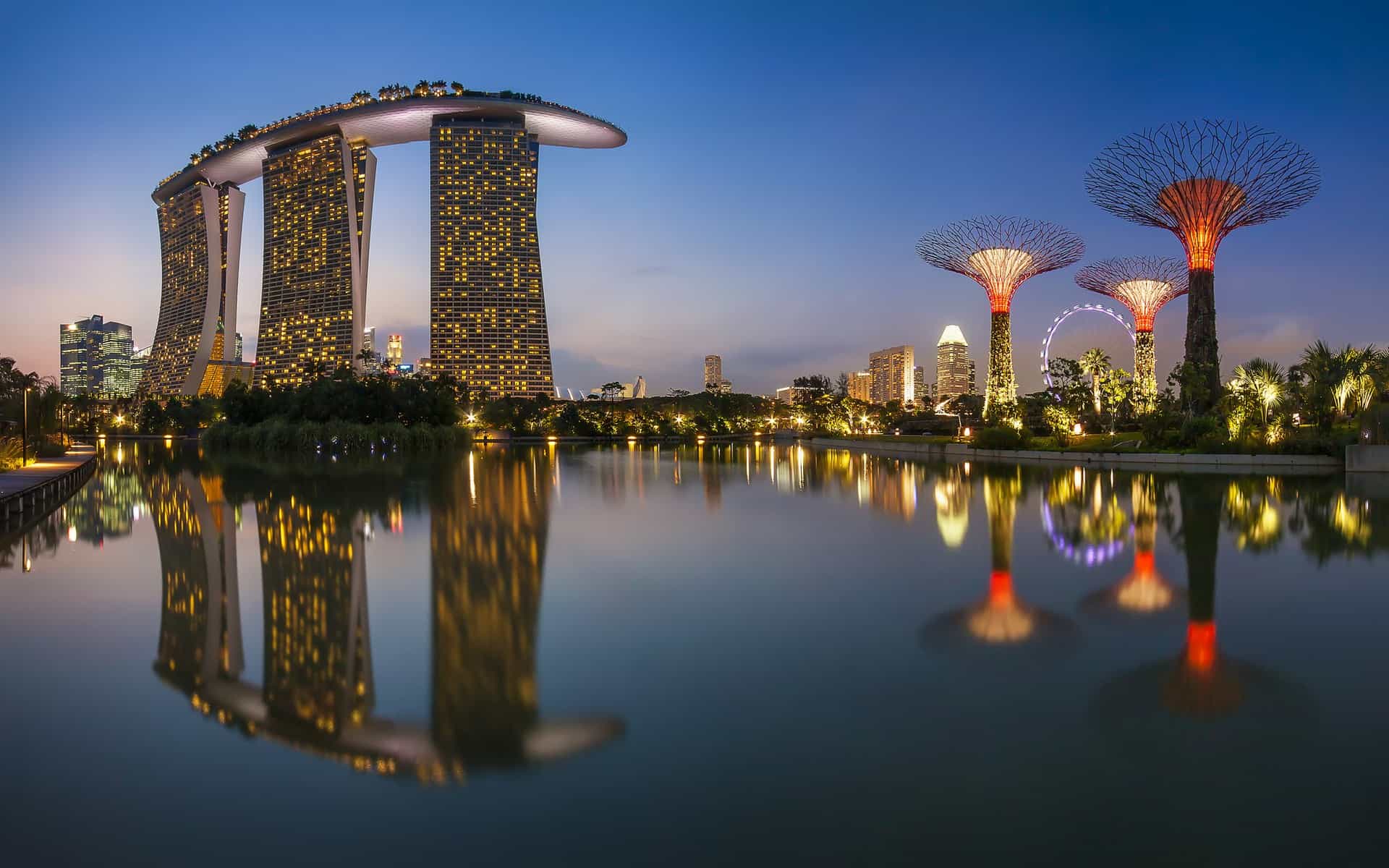
Singapore’s non-oil domestic exports rose 20.7% year-on-year in June 2026, driven by a 115.4% surge in integrated circuit shipments tied to AI demand, even as a separate and less-covered trade story unfolds next door: Malaysia-Indonesia bilateral trade is projected to grow 10% to US$29.3 billion in 2026, powered by expanding halal-sector cooperation.
The story most coverage is missing
Regional business press has extensively covered Singapore’s semiconductor export boom. What’s had far less coverage is the parallel, non-tech growth engine developing in the halal trade corridor between Malaysia and Indonesia — a structural, policy-driven trade relationship that is scaling steadily even as the AI trade headlines dominate attention.
Singapore: the AI supply chain’s export barometer
Singapore’s June non-oil domestic exports climbed 20.7% year-on-year, with integrated circuit exports jumping 115.4% and disk media products and personal computers rising 170.9% and 95.8% respectively — a direct read on how deeply the AI infrastructure buildout is flowing through the city-state’s electronics trade (VietnamPlus/VNA). Non-electronic exports told a different story, falling 2.9% in June after a 17.7% rise in May, mainly on weaker shipments of non-monetary gold, petrochemicals and food preparations — evidence the export strength is narrowly concentrated in the AI-linked segment rather than broad-based.
Singapore’s economic gravitational pull on its neighbours is intensifying too: a joint study by the Singapore Business Federation, Restaurant Association of Singapore and Singapore Retailers Association found Singaporean consumers are projected to spend an additional S$1.05 billion (roughly US$810 million) annually in Johor Bahru, just across the Malaysian border — a cross-border consumption pattern that is becoming a meaningful line item in regional retail planning (VietnamPlus/VNA).
The halal corridor: a steadier, policy-built growth story
While AI exports grab headlines, Malaysia’s bilateral trade with Indonesia is forecast to grow 10% to US$29.3 billion in 2026, according to Malaysia’s Chargé d’Affaires in Jakarta, Farzamie Sarkawi — up from US$26.61 billion in 2025, itself a 5.3% increase on the year before (BusinessToday Malaysia).
The driver is structural rather than cyclical: a halal Memorandum of Cooperation signed by the two countries in 2023 established mutual recognition of halal certification, easing product movement and market access across sectors. Sarkawi described the arrangement as delivering “positive progress” through knowledge exchange, training and improved market access for businesses in both countries (BusinessToday Malaysia). The ambition extends beyond the bilateral relationship: intra-D-8 trade — spanning the eight-nation Developing 8 bloc of Muslim-majority economies — currently runs between US$150 billion and US$160 billion annually, with a stated target of US$500 billion by 2030.
The macro backdrop: a region growing, unevenly
The Asian Development Bank’s July 2026 outlook shows Indonesia’s growth forecast holding steady at 5.2% for both 2026 and 2027, while Malaysia’s outlook is unchanged at 4.6% for 2026 and 4.5% for 2027 (ADB). Regional growth leadership, per McKinsey’s Q1 2026 review, sits with Indonesia, Singapore and Vietnam, while the Philippines lagged as domestic challenges weighed on activity (McKinsey).
Indonesia’s investment story has particular momentum: foreign direct investment grew for a second consecutive quarter, rising 8.1% to 249.9 trillion rupiah (roughly US$14.5 billion) in the first quarter of 2026, with Singapore remaining Indonesia’s largest single foreign investor at US$4.6 billion, ahead of China, Japan, Hong Kong and the United States (McKinsey). Realised investment for full-year 2025 reached a record Rp1,931.2 trillion (about US$120.7 billion), exceeding the government’s own target, driven by downstream industrial projects outside Java (BERNAMA).
Indonesia’s central bank has flagged currency management as an active watch item, signalling readiness to step up both onshore and offshore FX intervention to curb rupiah weakness and keep inflation within its 2026-2027 target band (McKinsey). Foreign investment in Indonesian government bonds has nonetheless rebounded, with net inflows of 17.7 trillion rupiah following outflows in the first quarter, alongside cumulative foreign holdings of 174 trillion rupiah in Bank Indonesia Rupiah Securities (BERNAMA).
Institutional context: Singapore’s coming ASEAN chairmanship
Adding a governance dimension to the economic picture, Singapore is set to take over the ASEAN chairmanship from the Philippines in 2027, with Prime Minister Lawrence Wong pledging a smooth transition — a leadership handover that will shape how the bloc coordinates trade and investment policy, including the halal-corridor and semiconductor-trade dynamics described above, through the second half of the decade (BERNAMA).
The bottom line
Southeast Asia’s 2026 growth story is not a single narrative but two distinct, converging tracks: a high-velocity, AI-linked export boom concentrated in Singapore’s electronics trade, and a steadier, policy-engineered halal-sector trade corridor between Malaysia and Indonesia that is quietly scaling toward a $500 billion bloc-wide target by 2030. Investors and policymakers tracking only the semiconductor headlines risk missing the second, structurally more durable growth engine sitting right alongside it.
Discover more from The Economy
Subscribe to get the latest posts sent to your email.

Canada Trade Diversification 2026: China, Indonesia, UAE Deals Explained

US Forced-Labour Tariffs on 60 Countries: The Hidden Trade Shock of 2026

Global Central Banks 2026: Fed, BoE and BoJ Decisions Could Reshape Markets

Gulf Capital Retreat From Pakistan 2026: UAE Loan Freeze & What It Means

Pakistan’s Most Reliable Export Is Its People: Remittances Hit $41.6 Billion, Overtaking Total Exports

Indonesia’s Confidence Problem: Record Investment, a Sinking Rupiah, and a Widening Credibility Gap

Down But Not Out: Inside the Slow Sinking of Russia’s War Economy

China’s Growth Slips to a Four-Year Low: Why Beijing Still Won’t Pull the Stimulus Trigger

The Johor-Singapore Corridor: How Malaysia Became Southeast Asia’s AI Infrastructure Powerhouse

Canada’s Economy ‘On Pause’: Inside the CUSMA Deadline That Passed Without a Deal

Dubai’s Millionaire Magnet: How the UAE Turned Middle East Turmoil Into a Capital Safe-Haven Boom

Britain’s Sixth Prime Minister in a Decade: What Starmer’s Exit Means for Gilts, Sterling and Your Portfolio

Anthropic Offers Up to $600,000 Salary for Critical IPO Role as AI Giant Prepares for Wall Street Debut

EU Readies Crisis Team for Potential China Rare Earths Stand-Off as Supply Chain Risks Mount

Carry Trade Unwind 2026: How the Yen’s Snapback Triggered a Global Margin Call

AI Bubble Warning 2026: Why BIS, IMF and Bank of England Fear a Market Crash

BRICS De‑Dollarization Strategy Takes Shape with $15 Billion Local‑Currency Push

The AI Super Bubble Is Ready to Burst

Russia Bans Diesel Exports 2026: Global Fuel Market Impact Explained

Strait of Hormuz Blockade 2026: Oil Prices Surge 9% as US-Iran Conflict Reignites

Private Credit Warning: Most BDCs Turn Unprofitable in 2026, Reuters Finds

IMF Cuts Pakistan Growth Forecast, Raises Inflation to 8.4%

Bitcoin $150k Milestone Achieved as US Sovereign Crypto Pivot Looms
Gulf Capital Retreat From Pakistan 2026: UAE Loan Freeze & What It Means

India Economic Rise 2026: How the Subcontinent Toppled Japan

Strait of Hormuz 2026: Why Markets Still Don’t Trust It’s Open

Argentina Economy 2026: Milei’s Fiscal Surplus, Inflation Drop to 29%, and What Comes Next

China Housing Market Turnaround: White‑List Model Stabilises Prices
-

 Markets & Finance7 months ago
Top 15 Stocks for Investment in 2026 in PSX: Your Complete Guide to Pakistan’s Best Investment Opportunities
-

 Analysis5 months ago
Johor’s Investment Boom: The Hidden Costs Behind Malaysia’s Most Ambitious Economic Surge
-

 Analysis5 months ago
Top 10 Stocks for Investment in PSX for Quick Returns in 2026
-

 Analysis6 months ago
Brazil’s Rare Earth Race: US, EU, and China Compete for Critical Minerals as Tensions Rise
-

 Banks6 months ago
Best Investments in Pakistan 2026: Top 10 Low-Price Shares and Long-Term Picks for the PSX
-

 Investment7 months ago
Top 10 Mutual Fund Managers in Pakistan for Investment in 2026: A Comprehensive Guide for Optimal Returns
-

 Global Economy7 months ago
15 Most Lucrative Sectors for Investment in Pakistan: A 2025 Data-Driven Analysis
-

 Global Economy7 months ago
Pakistan’s Export Goldmine: 10 Game-Changing Markets Where Pakistani Businesses Are Winning Big in 2025