
Analysis
ABHI MFB, NADRA Technologies to Accelerate Digital Transformation


Karachi’s fintech corridor produced another paper trail this week. ABHI Microfinance Bank has signed a memorandum of understanding with NADRA Technologies Limited (NTL), the commercial arm of Pakistan’s national identity authority, to explore digital financial solutions built on the country’s biometric backbone. It’s the bank’s fifth public MoU since January, a pace that says as much about Pakistan’s digital transformation push as the deal itself.
A Partnership Born From Pattern, Not Surprise
Anyone tracking ABHI Microfinance Bank’s communications over the past five months will recognize the shape of this announcement before reading past the headline. In January, it was Daira, a SECP-licensed digital lender, on Buy Now, Pay Later infrastructure. In February, Jaffer Business Systems on AI-enabled banking and TouchPoint on ATM and self-service hardware. By the following month, Knowledge Platform brought education financing into the fold. NADRA Technologies is simply the latest signature on a strategy that’s becoming impossible to miss.
That repetition matters. ABHI Microfinance Bank, formed in 2025 when fintech firm ABHI and TPL Corp Limited acquired and relaunched FINCA Microfinance Bank, has been explicit about its ambition: transform from a traditional lender into what its leadership calls a technology-led, customer-centric digital platform. Partnering with NADRA’s commercial wing — the entity behind Pakistan’s biometric passports, e-Sahulat network, and identity verification rails used across 200-plus global projects — gives that ambition a concrete identity-verification spine.
- State Bank of Pakistan data shows digital channels now handle roughly 88% of retail payment transactions, up from 78% two years prior — a structural shift that rewards banks who can onboard customers without paper.
- Branchless banking agents nationwide have crossed 731,000, yet rural penetration still lags, leaving a financial-inclusion gap that biometric-backed digital onboarding is designed to close.
Section 1 — What Was Actually Signed
The MoU follows a template ABHI Microfinance Bank has used with each of its recent technology partners: a non-binding framework establishing the intent to jointly explore use cases before either side commits to commercial terms. Based on the structure of ABHI’s other 2026 agreements — with JBS, TouchPoint, and Pathfinder Group — the NADRA Technologies arrangement most plausibly centers on integrating NTL’s identity-verification and biometric authentication infrastructure into ABHI’s customer onboarding and digital account-opening workflows.
That focus tracks with what NADRA Technologies has been building elsewhere. The company recently signed a separate MoU with Identity360 Global to develop AI-based digital identity and biometric onboarding tools aimed squarely at financial services, telecommunications, and government platforms — naming banking explicitly as a target sector. NTL has also rolled out live biometric verification for professional registration bodies like the Pakistan Medical and Dental Council, demonstrating the same eSahulat-based verification rails a microfinance bank would need for paperless account opening.
A few data points anchor why this matters operationally:
- ABHI Microfinance Bank already requires CNIC, NADRA token, or NICOP verification for digital account opening under its existing onboarding terms — meaning identity infrastructure isn’t a new dependency, it’s a deepening one.
- NADRA Technologies launched a Bug Bounty Challenge in February 2026 specifically to stress-test its digital identity systems ahead of wider private-sector integrations — a signal the agency is preparing its rails for exactly this kind of commercial banking traffic.
- The bank’s branch footprint — 110-plus branches across 100-plus cities — gives any biometric integration immediate physical reach beyond app-only fintech competitors.
Analytical Layer — Why Every Pakistani Microfinance Bank Wants a NADRA Deal
What does NADRA Technologies actually do for banks?
NADRA Technologies provides biometric identity verification, e-KYC infrastructure, and secure authentication services that let banks confirm a customer’s identity electronically using NADRA’s national database — replacing in-branch paperwork with instant digital verification through the eSahulat network and related biometric rails.
The deeper story isn’t this single MoU — it’s the identity-as-infrastructure model Pakistani fintech has quietly adopted. Where European neobanks lean on third-party KYC vendors and American fintechs stitch together credit-bureau APIs, Pakistani digital banks increasingly route through one sovereign chokepoint: NADRA. That’s a structural advantage no private vendor can replicate, because NADRA’s database covers essentially the entire adult population.
Still, concentration cuts both ways. A bank that ties its onboarding funnel to a single state-linked identity provider inherits that provider’s operational risk. NADRA’s own bug-bounty initiative this year is a tacit admission that its rails, now handling commercial-sector integrations at scale, face a widening attack surface. ABHI Microfinance Bank’s decision to formalize this dependency through an MoU — rather than a basic API contract — suggests its leadership wants governance terms, not just technical access, written into the relationship from the outset.
That’s consistent with the pattern across ABHI’s other recent agreements, which the bank has structured with explicit confidentiality, intellectual-property, and dispute-resolution clauses governed under Pakistani law with Islamabad jurisdiction. It reads less like opportunistic press-release diplomacy and more like a bank methodically assembling a technology stack — hardware from TouchPoint, AI capability from JBS, agent interoperability from Pathfinder, and now identity infrastructure from NADRA — one MoU at a time.
Implications — Who Feels This Beyond the Signing Room
For Pakistan’s roughly 91 million holders of formal financial-institution accounts, the near-term effect is invisible: faster account opening, fewer in-branch verification steps, lower friction for the two-fifths of adults the Asian Development Bank estimates still sit outside formal banking. Microfinance banks live or die on acquisition cost per customer, and biometric onboarding strips out exactly the paperwork-heavy steps that make rural and semi-urban account opening expensive.
For policymakers, the deal reinforces a direction Pakistan’s National Steering Committee on Cashless Pakistan has already set: digitizing government and retail payments fully by 2026, with digital financial inclusion targeted above 70% of adults by 2030. Every bank that wires itself into NADRA’s identity rails advances that target without the state spending a rupee on the integration.
For SMEs and informal merchants — the segment ABHI has targeted with prior financing partnerships covering Daraz, Foodpanda, and similar platforms — easier digital onboarding through NADRA verification could shorten the path from informal cash transactions to documented, creditworthy banking relationships. That matters for a sector where the SBP’s own 2026 payments review flagged a “sticky cash culture” as the single largest drag on digital migration, with ATMs still overwhelmingly used for cash withdrawal rather than deposit.
The risk runs the other direction too: as more banks plug into the same identity backbone, a single vulnerability in NADRA’s systems becomes a systemic one. NADRA Technologies’ decision to run a public bug bounty ahead of these integrations suggests the agency understands that concentration risk, even if it hasn’t said so explicitly.
Competing Perspectives — Not Everyone Reads This as Progress
Critics of Pakistan’s identity-centralization model — voiced periodically by privacy researchers and some technology-policy commentators — argue that funneling an expanding share of commercial banking traffic through a single state-linked identity authority creates exactly the kind of single point of failure that cybersecurity practitioners warn against. A breach or outage at NADRA’s commercial layer wouldn’t just disrupt one bank’s app; it could simultaneously degrade onboarding across every institution that has wired itself into the same rails.
There’s also a competitive argument worth airing: smaller fintechs without ABHI’s scale or TPL Corp’s backing may struggle to negotiate the same MoU-based, governance-rich access NADRA Technologies has extended to larger players, potentially entrenching an advantage for banks that can afford dedicated technology-partnership teams. ABHI’s pace — five MoUs in roughly five months — is itself evidence of the resources such relationship-building demands.
That said, NADRA’s own public materials lean toward optimism, framing collaborative partnerships and “ongoing change” as necessary preconditions for closing Pakistan’s institutional and infrastructure gaps in digital governance. Whether that optimism survives the operational reality of scaling biometric verification across dozens of bank integrations simultaneously is the genuine open question here — not whether the technology works, but whether the institution managing it can absorb the load without becoming the system’s weakest link.
The Bigger Picture
Strip away the press-release language and what’s left is a quieter, more consequential trend: Pakistan’s microfinance sector is rebuilding itself around a handful of shared digital chokepoints — NADRA for identity, Raast for payments, a thinning list of infrastructure vendors for everything else. ABHI Microfinance Bank’s MoU with NADRA Technologies is one data point in that consolidation, not an isolated announcement. Whether it produces the frictionless onboarding both parties are promising, or simply adds another dependency to an already concentrated stack, will show up in account-opening numbers long before it shows up in another press statement.
Pakistan’s banks are betting their growth on infrastructure they don’t fully control. That bet is either the fastest route to financial inclusion the country has tried, or the quiet construction of a single point of failure — and right now, nobody outside NADRA’s own bug-bounty reports can say which.
Discover more from The Economy
Subscribe to get the latest posts sent to your email.



Thursday, August 6, 2026, is not an ordinary session for SpaceX shareholders. It is the day the company’s first post-IPO lockup period expires, freeing up to roughly 911.5 million insider-held shares — worth close to $123 billion at recent prices — for potential sale on the open market, according to The Motley Fool. To put that in perspective: SpaceX’s entire public float has stood below 280 million shares since its record-breaking June 12 IPO, meaning the unlock could roughly triple the number of tradable shares in a single day.
This is the story competitor outlets are covering as a single-day news event. Few are explaining why the structure of SpaceX’s lockup makes this particular date so unusual — or what it signals about how the company priced risk into its unprecedented listing.
Why this lockup is different from a typical IPO unlock
Most companies use a single 180-day lockup. SpaceX instead built a staggered, performance-linked release schedule tied to its earnings calendar. Insiders became eligible to sell an initial 20% tranche on the second full trading day after the company’s first quarterly earnings report as a public company — which landed on August 4, pushing the unlock date to August 6, per The Motley Fool’s original lockup breakdown.
A bonus 10% tranche would have unlocked early had SPCX traded at least 30% above its $135 IPO price for five of the ten sessions before earnings. That threshold — above $175 — was never reached; the stock has instead spent recent weeks trading near or below its offer price, having fallen more than 40% from the post-IPO high of $225.64 it touched four days after listing, according to StartupHub.ai.
Further pressure is scheduled, not speculative. Additional 7% employee tranches are due around August 21 and September 10, and analysts at 22V Research estimate insiders could collectively be free to sell as much as 44% of total shares by early September — an roughly ninefold increase in the tradable float from where it stood at listing, per Yahoo Finance.
The fundamentals behind the slide
The unlock is landing on a stock that was already under pressure for reasons beyond supply mechanics. SpaceX reported a $4.9 billion net loss for 2025 and lost a further $4.28 billion in the first quarter of 2026, a burn rate that has cooled post-IPO enthusiasm even among investors who back the long-term Starship and Starlink thesis, according to analysis from DayTradingToolkit. Despite posting stronger-than-expected earnings this week, SPCX shares tumbled roughly 14% as the market looked past the results and priced in the incoming supply, based on Bloomberg’s markets desk.
What history suggests happens next
Lockup expirations do not automatically trigger crashes — the actual price impact depends on how much of the newly eligible stock insiders choose to sell, and at what price they’re willing to part with it. Some analysts argue the reaction could be a useful signal in itself: if SPCX absorbs this wave of supply without breaking to fresh lows, that would suggest the market has already priced in the dilution risk, a view echoed by commentary from The Motley Fool’s investing desk. Others counsel patience, arguing the stock’s valuation looks stretched even before accounting for the added float.
For investors weighing an entry point, the practical takeaway is that August 6 is the first of several tests, not the last. The rolling 7% employee releases in late August and September mean supply pressure is likely to recur through the fourth quarter, with the float expected to expand roughly sixfold by late September and to around a third of total shares by Halloween, according to earlier lockup modelling reported by Investing.com.
Key takeaways
- SpaceX’s first lockup expiration frees up to 911.5 million shares (~$123 billion) for potential sale starting August 6, 2026.
- The bonus early-unlock trigger — a 30% share-price premium to the $135 IPO price — was not met, so this is the baseline release, not an accelerated one.
- SPCX has fallen over 40% from its post-IPO peak and briefly traded below its offer price.
- Further 7% tranches are scheduled for late August and mid-September, meaning supply-driven volatility is likely to continue into Q4 2026.
- The stock’s slide reflects both the lockup mechanics and underlying losses of roughly $4.28 billion in Q1 2026 alone.
FAQ
When does SpaceX’s stock lockup expire? The first tranche expired August 6, 2026, two trading days after SpaceX’s first quarterly earnings report as a public company. Additional tranches are scheduled through December 8, 2026.
How many SpaceX shares could be sold? Up to approximately 911.5 million shares — about 20% of eligible insider holdings — became sellable on August 6, against a public float that had been below 280 million shares.
Why did SpaceX stock fall despite strong earnings? Investors appear to be pricing in the incoming supply from the lockup expiration rather than reacting purely to quarterly results, alongside continued losses tied to Starship development costs.
Discover more from The Economy
Subscribe to get the latest posts sent to your email.

China’s global hunt for billions in unpaid taxes is rewriting the rules for its wealthy citizens.
Just after the Lunar New Year in 2026, a Shenzhen-based family office manager began fielding a new, unwelcome kind of call from his clients. Chinese tax authorities were asking them to settle liabilities on overseas capital gains—some dating back to 2017, others as far as 2000. He had no explanation for the arbitrary five-year window, only the stark reality of a new era: the era of Beijing’s global tax hunt.
Within weeks, the picture became clearer and more alarming for the country’s ultra-wealthy. Banks in mainland China had received instructions to freeze the accounts of wealthy depositors until they could prove taxes on foreign assets, trusts, and investments had been paid. As one banker put it, speaking to the Financial Times under the condition of anonymity: “These wealthy individuals now immediately need to pay penalties and taxes in cash to reactivate their accounts.” The policy response is unambiguous: the People’s Republic has launched a campaign to recover what it believes to be hundreds of billions of dollars in unpaid taxes.
It is, by any measure, a foundational shift in China’s fiscal policy, prompted by a grinding budget deficit and a genuine overhaul of its tax system to align more closely with the United States’ model of global taxation.
The Crunch and the Crackdown
The reason for the campaign’s urgency is a stark one: Beijing is running out of money. The traditional engines of state revenue have seized. Total government land sales, once a core source of funding for local governments, have collapsed from a peak of 8.7 trillion yuan ($1.3 trillion) in 2021 to just 4.15 trillion yuan after the spectacular unwinding of the property market .
This is not a short-term liquidity crisis. It is a structural fiscal realignment. Since the pandemic, overall budget revenue in China has largely stagnated, falling by 1.7% to 21.6 trillion yuan ($3.2 trillion) in 2025 . With the property sector no longer the reliable cash cow it once was, the state has been forced to look elsewhere, and it has set its sights on the billions of dollars in wealth held offshore by its citizens. The State Taxation Administration and the Ministry of Finance confirmed the new measures, formalising a pursuit that was already well underway .
This is the hard data behind the crackdown: a fiscal imperative. It signals that the government is willing to reach decades back into the past—some accounts are being scrutinised as far back as the year 2000—to plug the hole in the present.
The Core Development: A Data-Driven Manhunt
What makes this campaign different from previous sporadic efforts is its technological sophistication and its sheer scope. The hunt is not merely targeted; it is systematic and data-driven.
Chinese authorities are leveraging the full force of modern financial surveillance, utilising data obtained through the OECD’s Common Reporting Standard (CRS), which China has been an active participant in since 2018. As tax lawyer Ye Yongqing of Anli Partners noted, regulators are steadily strengthening the supervision of cross-border capital flows and foreign exchange transactions, narrowing the scope for wealthy Chinese to transfer assets offshore .
Private bankers and wealth managers are already seeing the impact. Singapore-based bankers who manage assets for Chinese families have confirmed that new rules on foreign trusts have “shocked” their clients . Last month, China introduced comprehensive tax rules on assets transferred to foreign trusts, closing a long-standing loophole. Under the new regime, income generated by overseas trusts will be taxed at 20% across multiple stages.
The specific assets under scrutiny are varied, including real estate, stocks, precious metals, and even cryptocurrencies . Financial institutions are being asked to verify whether income from these assets has been declared to Beijing. The retroactive nature of the campaign—in some cases extending more than 25 years—has been confirmed by multiple officials, bankers, and advisors .
Why are banks freezing accounts?
Chinese banks have been instructed to cooperate with tax authorities by freezing the accounts of wealthy depositors until they settle tax liabilities on their overseas assets. This includes gains from foreign stocks, real estate, trusts, and insurance policies. The freeze is only lifted when the individual pays the outstanding tax and penalties in cash, creating powerful leverage for the state to enforce compliance quickly.
An American Model, A Chinese Reality
The structural ambition of this campaign reaches well beyond a one-off tax grab. It represents a deliberate strategy to move China’s tax system closer to the US model.
Just as the US Internal Revenue Service taxes American citizens on their worldwide income regardless of where they reside, China is beginning to adopt a similar territorial approach. This is a significant escalation. For years, wealthy Chinese individuals have used offshore trusts and other complex structures to defer or eliminate tax liabilities on foreign earnings. These structures were often established during the heyday of Hong Kong IPOs, providing a “perfect income tax shield,” according to a Singapore-based banker . The new rules aim to dismantle those shields.
The implications are profound. When the taxman begins to treat offshore gains the same as domestic profits, the calculus of wealth management for high-net-worth individuals changes entirely. As Ye Yongqing noted, this “reduces the scope for wealthy Chinese to transfer their assets abroad or structure their tax affairs through offshore vehicles” .
Victor Shih, a professor of political economy at the University of California, San Diego, summed up the driving force simply: “The motive behind the new campaign is clearly fiscal” . That fiscal necessity is now reshaping the legal architecture of Chinese wealth.
The Second-Order Effects: Compliance and Capital Flight
Downstream consequences of this policy are already rippling through the economy and across borders.
For those in the cross-border trade business, the squeeze is tangible. Zhejiang-based exporter Henry Huang told the South China Morning Post that the heightened scrutiny of unreported overseas income is “taking a real bite out of profits,” forcing him to rethink cross-border operations with little room to pass on costs to price-sensitive US and European customers .
Chinese authorities are also ramping up the legal and psychological pressure. The public security ministry’s “Fox Hunt” campaign, which focuses on extraditing economic fugitives, has already captured over 880 overseas suspects, demonstrating a hardened stance on economic crime .
Yet the most significant risk might be a self-inflicted wound. There is a growing concern that such an aggressive enforcement posture, while potentially lucrative, could accelerate the very capital flight it is designed to reverse. If the wealthy feel they are being pursued relentlessly and facing punitive fines, they may seek to move not just their cash but their entire operations to jurisdictions they perceive as safer.
A Dissenting View: The Cost of Compliance
Of course, the narrative is not without its critics. Some experts warn that the crackdown could have unintended consequences that outweigh the potential revenue gains. The shift in policy, while designed to boost state coffers, might create an exodus of talent and capital.
Furthermore, the operational challenges for tax authorities are immense. While big data and the CRS give them a new level of visibility, they are still largely in the dark about the total quantum of overseas assets. A Bloomberg report from January noted that “even in Beijing’s tightly controlled society, the crackdown is proving spotty,” with local authorities largely unaware of the amount of wealth stashed abroad .
The risk is that a “one-size-fits-all” approach could drive the most mobile taxpayers away. A banker in Singapore managing Chinese wealth observed that many trust owners now face “one-off tax liabilities” and may be forced to sell assets to cover the bills . The campaign may ultimately shrink the tax base it is trying to capture, a classic Laffer Curve dilemma applied to capital.
The “global tax hunt” is, at its heart, a story of transformation. It illustrates a China trying to build a modern welfare state without the traditional safety net of property speculation. The era of the tax-free offshore account for Chinese citizens is ending, not with a whimper but with a series of account freezes and data-driven audits. The policy represents a historic pivot, a move to international norms that at once strengthens Beijing’s fiscal position and challenges the global mobility of its wealthiest citizens. The state’s appetite for its own citizens’ foreign wealth has only just begun, and it is ravenous.
Discover more from The Economy
Subscribe to get the latest posts sent to your email.
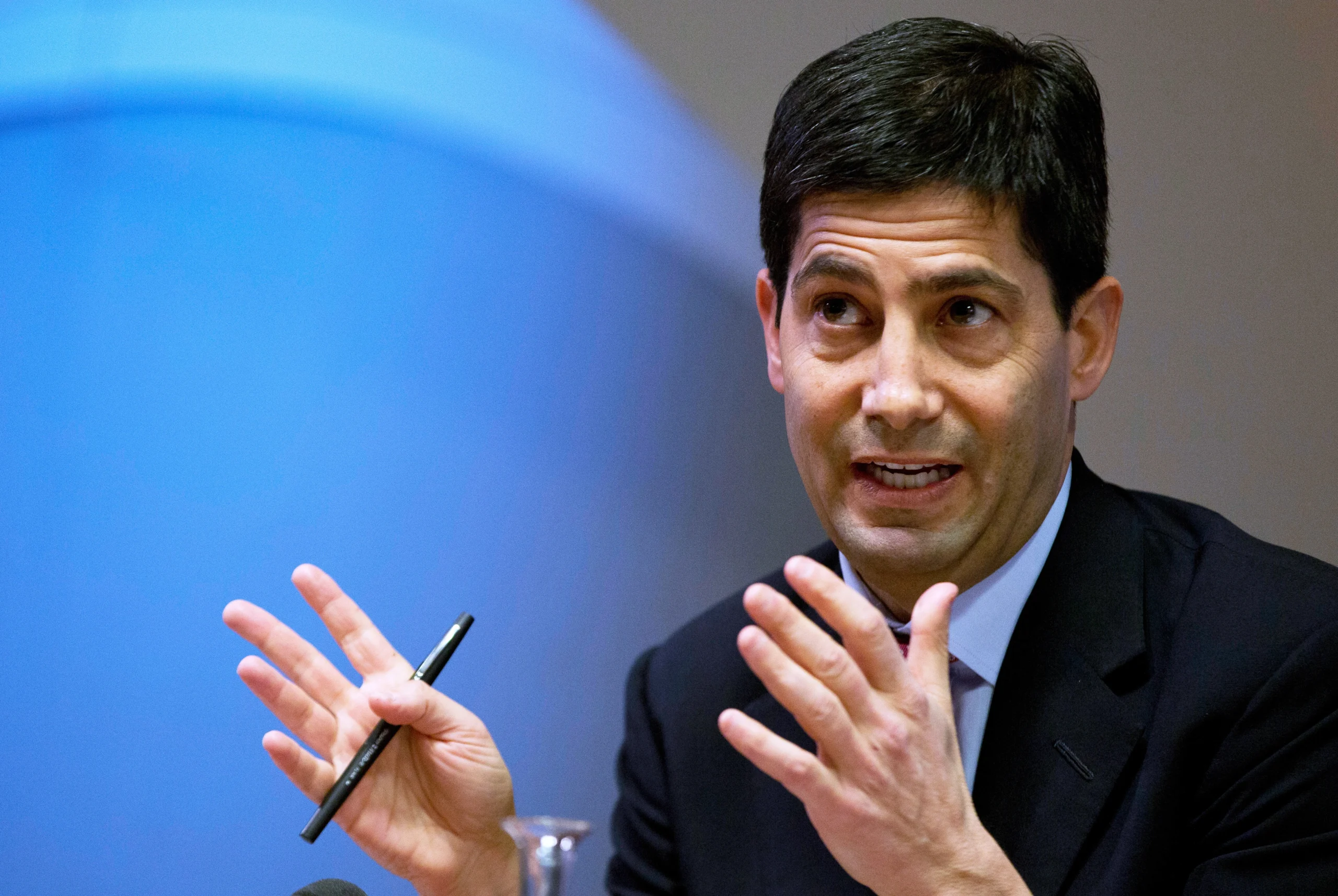
The Federal Reserve’s rate-setting committee held its benchmark borrowing rate steady on July 29, keeping it in a range of 3.5% to 3.75% — but the calm on the surface masked one of the most contested votes of the post-pandemic era. The Federal Open Market Committee split 9 to 3, with three members pushing to raise rates rather than hold, according to NPR’s coverage of the decision.
Chair Kevin Warsh, who took over the Eccles Building earlier this year after a nomination process that rattled bond markets, used his post-meeting press conference to make a point of not making a point. Rather than signal where rates are headed next, Warsh told reporters the Fed would judge market reaction “direct and unfiltered” instead of offering the rolling forecasts investors have come to expect, a stance detailed in CNBC’s meeting recap.
A rate hike was genuinely on the table
What made this meeting unusual wasn’t just the dissent — it was how close markets came to pricing in a hike rather than a cut. Fed funds futures tracked by CME Group put the odds of a rate increase at roughly 35% heading into the decision, up sharply from 26% a week earlier, according to CNBC’s markets analysis. That is a striking reversal from the rate-cutting cycle many investors had expected when Warsh’s nomination was first floated as a “productivity-led growth” pivot away from his predecessor’s caution.
The market reaction told its own story. The S&P 500 slid roughly 0.6% during Warsh’s press conference, the Dow shed more than 840 points intraday, and the 10-year Treasury yield rose to 4.657%, even as the Fed opted for a hold rather than a hike.
Why Warsh is playing it differently
Warsh’s approach reflects both economic and political calculus. Treasury yields have climbed since the Fed’s prior meeting despite the hold, a dynamic Warsh acknowledged directly. And unlike his predecessor, Warsh has been explicit that he intends to set policy independent of the White House’s preferences — even as he awaits a possible additional ally on the Board once a pending internal review concludes, according to CNBC’s analysis of the political backdrop.
Why this matters beyond Washington
A genuinely undecided Fed has knock-on effects well past US borrowers. Higher-for-longer Treasury yields pull global capital toward dollar assets, complicating rate paths in London, Ottawa, and emerging markets alike — a dynamic playing out in parallel with the UK’s own fiscal squeeze (see our companion report on the Autumn Budget) and China’s deflationary drag on global demand. For businesses and investors across the Gulf, Southeast Asia, and South Asia weighing dollar-denominated debt or dollar-pegged currencies, an unpredictable Fed chair is arguably a bigger variable than the rate level itself.
Discover more from The Economy
Subscribe to get the latest posts sent to your email.

Pakistan Economy 2026: Why GDP Growth Isn’t Reaching Ordinary Households

Strait of Hormuz Deal 2026: Iran-Oman Talks, Oil Price Impact & What Happens Next

SpaceX Stock Lockup Expiration Explained: Why $123B in Shares Could Hit the Market

The Taxman Cometh from Beijing

Pakistan IMF Program 2026: Inside the Push Toward an Interest-Free Economy

Russia Oil Revenue 2026: How Sanctions on Rosneft and Lukoil Are Draining the War Chest

Canada US Trade War 2026: Inside Carney’s Push to Cut Ties With Trump’s Tariffs

Rachel Reeves’s £25 Billion Problem: What the Autumn Budget Gap Means for Britain

Inside the Fed’s Most Divided Vote in Years: Why Warsh Held the Line on Rates

Pakistan Passed Its Third IMF Review

The Fed Is Fractured — And a New Chair Just Made It Louder, Not Quieter

The UK Economy in 2026 Is Neither Recession Nor Recovery :Stagflaton

Indonesia’s $121 Billion Nickel Bet Is Facing a Battery Chemistry

Why Ultra-Wealthy Families Are Splitting Between Singapore and Dubai inmarkets 2026

Russia Bans Diesel Exports 2026: Global Fuel Market Impact Explained

Gold Price Forecast 2026: Fed’s July 29 Decision and Record Central Bank Buying Explained

Strait of Hormuz Blockade 2026: Oil Prices Surge 9% as US-Iran Conflict Reignites

Strait of Hormuz 2026: Why Markets Still Don’t Trust It’s Open

China Politburo July 2026: Stimulus Signals Explained

Pakistan Economy 2026: GDP Grows 3.7% as IMF Completes EFF Review Amid Middle East Risk

Down But Not Out: Inside the Slow Sinking of Russia’s War Economy

Apple vs OpenAI Lawsuit: The Economic Story Behind the Headline

Gulf Capital Retreat From Pakistan 2026: UAE Loan Freeze & What It Means

Indonesia Russian Oil Imports 2026: Why Jakarta Is Diversifying Crude Supply

Global Stock Market Selloff 2026: Stagflation Fears Return as Iran Conflict Reignites

The Yuan Now Settles 67% of Russian Oil Payments — Quiet De-Dollarization in Action

AI Capex Bubble 2026: The Hidden $662B Debt Nobody Reports

Pakistan’s Economic Survey FY26: Inflation Spike Insights
-

 Markets & Finance7 months ago
Top 15 Stocks for Investment in 2026 in PSX: Your Complete Guide to Pakistan’s Best Investment Opportunities
-

 Analysis5 months ago
Johor’s Investment Boom: The Hidden Costs Behind Malaysia’s Most Ambitious Economic Surge
-

 Analysis6 months ago
Top 10 Stocks for Investment in PSX for Quick Returns in 2026
-

 Analysis6 months ago
Brazil’s Rare Earth Race: US, EU, and China Compete for Critical Minerals as Tensions Rise
-

 Banks7 months ago
Best Investments in Pakistan 2026: Top 10 Low-Price Shares and Long-Term Picks for the PSX
-

 Investment7 months ago
Top 10 Mutual Fund Managers in Pakistan for Investment in 2026: A Comprehensive Guide for Optimal Returns
-

 Global Economy7 months ago
15 Most Lucrative Sectors for Investment in Pakistan: A 2025 Data-Driven Analysis
-

 Global Economy7 months ago
Pakistan’s Export Goldmine: 10 Game-Changing Markets Where Pakistani Businesses Are Winning Big in 2025