
Policy
US Tariffs 2026: How Trump’s 11.7% Effective Rate Is Reshaping Global Trade & Inflation

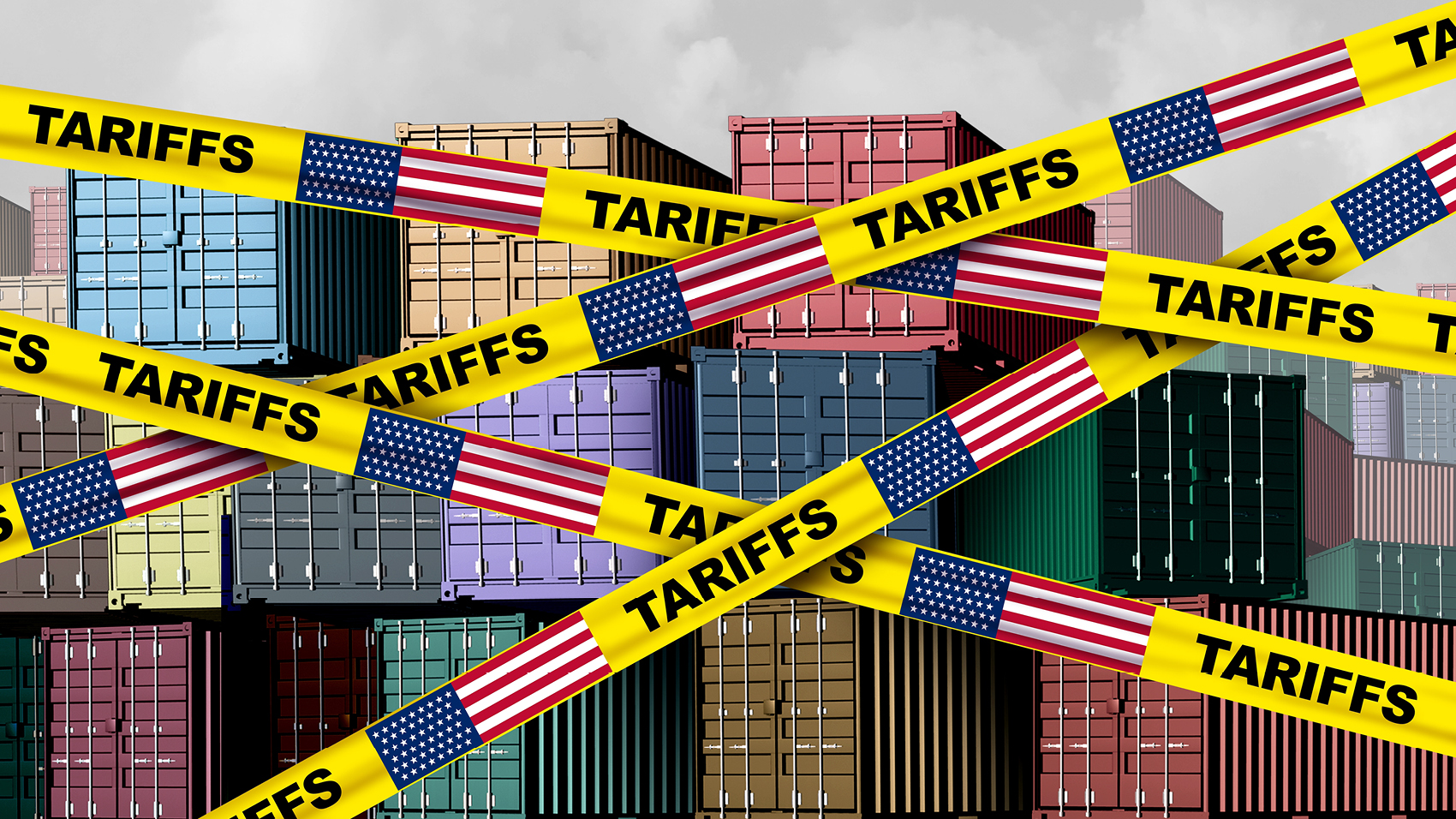
The effective US tariff rate has risen from 2.1% to 11.7% under Trump. Here’s how the tariff regime is reshaping global supply chains, consumer prices, and the trade war outlook for 2026.
In 2025, the Trump administration implemented the most sweeping overhaul of US trade policy since the Smoot-Hawley Tariff Act of 1930. Through executive action — primarily invoking emergency economic powers and national security statutes — the administration raised the effective US tariff rate from 2.1% to an estimated 11.7% as of January 2026.
Eighteen months later, the consequences of that decision are visible across every dimension of the US and global economy: in consumer prices, in supply chain restructuring, in the Federal Reserve’s inflation calculations, and in the diplomatic relationships that underpin global trade.
The tariff regime is not an abstract policy debate. It is a tax — and like all taxes, it has winners, losers, and unintended consequences that took time to manifest and will take years more to fully resolve.
The Scale of the Tariff Shock
To appreciate the magnitude of the 2025 tariff escalation, the baseline comparison matters. Before the first Trump administration’s tariff actions in 2018, the average US effective tariff rate on imports was approximately 1.5%. The first Trump term raised it to approximately 3%. The second term’s actions pushed it to 11.7% — a level not seen in the US in decades.
The mechanics varied by category:
- China-specific tariffs remained elevated and in many cases were increased further, targeting electronics, machinery, textiles, and consumer goods
- A 10% global baseline tariff on all imports was implemented through executive action, though this was challenged in the courts
- Sector-specific tariffs targeted steel, aluminium, solar panels, electric vehicles, and semiconductors from multiple origin countries
The Supreme Court rejected several of the most aggressive tariff actions in 2025, ruling that some executive tariff applications exceeded statutory authority. This opened the door for importers to seek refunds on improperly collected duties — a complex refund process that the administration has contested aggressively. The Supreme Court’s intervention did not eliminate the tariff regime; it trimmed its most legally exposed elements while leaving the core architecture intact.
A 10% global baseline tariff remains in effect as of June 2026.
Who Is Actually Paying the Tariffs
The most persistent economic misconception about tariffs is that foreign exporters pay them. They do not. Tariffs are paid by importing firms — US companies that purchase foreign goods — and the economic burden is distributed between exporters, importers, and consumers depending on market conditions.
The best available evidence suggests that more than 50% of Trump tariff costs are now being passed through to US consumers — a pass-through rate that has been somewhat slower than the near-100% observed under the first-term tariffs, but is accelerating as inventory buffers built before tariff implementation are depleted.
For the median US household, the effective tariff tax represents a meaningful annual cost increase — concentrated in electronics, clothing, furniture, appliances, and consumer goods where import shares are high and domestic substitutes are limited or more expensive.
The pass-through to prices has been one of the primary contributors to US inflation remaining above 3% — and is a key reason why the Federal Reserve’s task of returning inflation to 2% is more difficult than a simple demand-management problem would suggest.
Supply Chain Restructuring: Three Years In
The tariff regime has succeeded in its stated objective of prompting supply chain diversification away from China. But “diversification” has not meant “reshoring.” The dominant pattern has been near-shoring — shifting production to third countries that are not subject to the highest US tariff rates.
Vietnam, Mexico, India, Bangladesh, and Indonesia have been the primary beneficiaries of China-targeted tariff diversion. US imports from these countries have increased substantially since 2022, with Vietnam in particular becoming a major hub for electronics assembly, textile production, and component manufacturing previously concentrated in China.
The irony is that much of this production still relies on Chinese inputs — materials, components, and intermediate goods that flow through third-country manufacturing before reaching the US market. The tariff regime has in many cases added a processing step to the supply chain without fundamentally reducing Chinese industrial participation in global production networks.
Mexico, benefiting from the US-Mexico-Canada Agreement, has seen a surge of near-shoring investment from both US and Chinese firms seeking US market access through a tariff-advantaged production base. This has created genuine economic activity in Mexico while raising questions about whether the tariff regime is achieving its intended effect on Chinese production capacity.
China’s Response: Export Diversification and the Trade Surplus
China’s trade surplus — the gap between what it exports and what it imports — has actually expanded in 2026, despite (or perhaps because of) the US tariff regime. Chinese exporters have aggressively diversified their market base, deepening trade relationships with:
- Southeast Asia (ASEAN markets, particularly Vietnam, Indonesia, Thailand)
- Latin America (Brazil, Mexico, Argentina)
- Africa (through the Belt and Road infrastructure network)
- Middle East (Gulf states diversifying from Western supply chains)
- Russia (bilateral trade dramatically expanded since Western sanctions)
This market diversification has reduced China’s vulnerability to US tariff pressure while maintaining the export-led growth model. The result is a structural change in global trade flows — with Chinese goods increasingly reaching the world through routes that bypass direct US market entry.
The EU has responded separately. European tariffs on Chinese electric vehicles, implemented in 2025, represent the most significant trade action in the China-Europe relationship in years. But China’s response has been measured — targeting European luxury goods with retaliatory measures while continuing to invest in European market access through investment in non-tariffed segments.
The Inflation Arithmetic
The tariff-inflation relationship is one of the most debated and most significant economic linkages in 2026.
The direct mechanism is straightforward: tariffs raise the cost of imported inputs, which businesses pass through to consumer prices. The indirect mechanism is subtler: tariffs reduce import competition, allowing domestic producers to raise prices without competitive constraint. Both channels are operational in the current US economy.
Stanford’s Institute for Economic Policy Research estimated that tariff pass-through to consumers now exceeds 50%, with the full pass-through taking 12–18 months from tariff implementation. Given the tariff escalation of 2025, the full inflationary impact is still working its way through the system as of mid-2026.
This creates a structural floor on US inflation that makes the Federal Reserve’s 2% target difficult to achieve without either reversing the tariff regime (a political impossibility under the current administration) or engineering a significant recession that reduces demand enough to offset the supply-side price pressure.
The Fed cannot solve a tariff-driven inflation problem with interest rate tools alone. This is the core of the policy trap that Kevin Warsh inherited upon taking the Fed chair position.
The WTO and the Multilateral Trade Framework
The US tariff regime has created significant strain on the World Trade Organization framework. Multiple WTO dispute settlement proceedings have been filed by trading partners including the EU, China, Japan, South Korea, and Canada. The US has contested these proceedings and has maintained its practice of blocking WTO Appellate Body appointments — a practice that began in the first Trump term and has effectively disabled the WTO’s binding dispute resolution mechanism.
The practical consequence: the global trading system has fragmented into a series of bilateral and regional arrangements, with the WTO’s rules-based framework increasingly supplemented or supplanted by power-based bilateral negotiations.
For businesses operating across borders, this fragmentation creates compliance complexity, supply chain uncertainty, and strategic risk that has no precedent in the post-war era of multilateral trade liberalisation.
What Comes Next: The Second Half of 2026
Several tariff-related developments are likely to shape the trade environment in the second half of 2026:
Supreme Court refund proceedings — the ongoing dispute over duty refunds for imports collected under executive actions that courts ruled as exceeding statutory authority. Resolution will affect importers’ balance sheets and the effective tariff rate going forward.
EU-US tariff negotiations — the Biden-era tariff truce framework has partially frayed under the Trump administration’s more aggressive posture. EU-US talks on steel, aluminium, and digital services remain ongoing and unresolved.
China-US trade dynamics — with China’s trade surplus expanding and US domestic pressure for further action on Chinese imports growing, additional tariff escalation cannot be ruled out. The November 2026 midterm elections create political incentives for trade action.
WTO dispute outcomes — while the Appellate Body remains disabled, preliminary panel rulings could create diplomatic pressure points with major trading partners.
The Bottom Line
The Trump tariff regime has fundamentally altered the US and global trade landscape. The effective tariff rate of 11.7% represents the most significant barrier the US has erected to international commerce in generations, with consequences that run from consumer prices and Federal Reserve policy to supply chain geography and WTO institutional legitimacy.
The tariff regime is not going away. Political economy — domestic manufacturing interests, national security framing, and electoral incentives — makes tariff rollback extremely unlikely under the current administration.
The relevant questions for investors and businesses are not whether tariffs will be reversed, but how supply chains adapt, how much of the inflationary pass-through remains ahead, and whether the trade war escalates or stabilises in the second half of 2026.
FAQ
Q: What is the current US tariff rate in 2026?
A: The US effective tariff rate rose from approximately 2.1% before the Trump administration to an estimated 11.7% as of January 2026. A 10% global baseline tariff on all imports remains in effect after the Supreme Court struck down some of the most aggressive executive tariff actions.
Q: How do tariffs affect inflation in 2026?
A: More than 50% of tariff costs are now being passed through to US consumers, according to Stanford SIEPR research. This represents a structural supply-side inflation pressure that the Federal Reserve cannot resolve through interest rate policy alone.
Q: What happened to US-China trade in 2026?
A: US-China direct trade has declined under tariff pressure, but China has diversified its export markets significantly — increasing flows to Southeast Asia, Latin America, Africa, and the Middle East. China’s overall trade surplus has actually expanded in 2026.
Q: How are tariffs affecting US consumers in 2026?
A: US consumers are facing higher prices on electronics, clothing, appliances, and consumer goods as tariff costs are passed through the supply chain. This contributes to the inflation reading of 4.2% in May 2026 and reduces household purchasing power.
Discover more from The Economy
Subscribe to get the latest posts sent to your email.


China Economy
China’s Economy Has a Structural Problem: Factories Are Winning, Households Are Losing
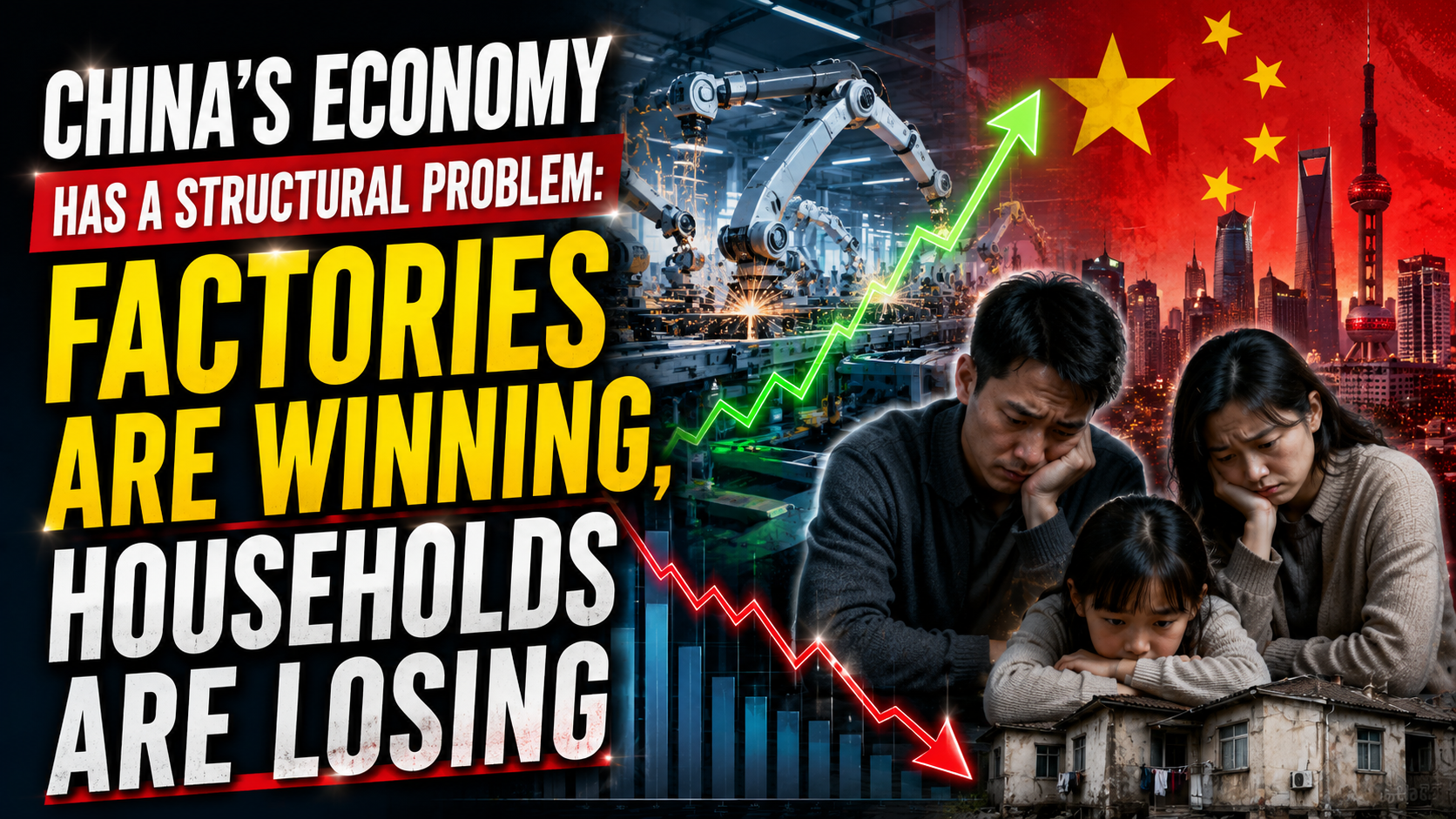
China’s headline growth numbers still look respectable at first glance. GDP expanded 4.3% year-on-year in the June quarter, down from 5.0% in the first quarter, bringing first-half growth to 4.7% (GoMarkets). But the composition beneath that headline is where the real story sits — and it points to a widening structural imbalance rather than a routine slowdown.
The production-consumption gap, in numbers
Industrial output rose 5.4% across the first half of 2026, anchored by a 5.3% annual gain in June concentrated in manufacturing and high-tech sectors (GoMarkets). Consumer activity, by contrast, remained deeply subdued: retail sales grew just 1.0% year-on-year in June and only 1.3% over the full six-month period (GoMarkets). That is roughly a four-to-one gap between how fast China is producing and how fast its own citizens are spending — a divergence with few precedents in the country’s post-2000 growth history.
Property remains the drag beneath the drag
Capital allocation data confirms the imbalance runs deeper than a temporary consumer pullback. Fixed-asset investment fell 5.7% across the first half of 2026, real estate development investment dropped a sharp 18.0%, and housing starts contracted alongside falling property sales (GoMarkets). For an economy in which real estate has historically been a primary household wealth store, an 18% investment contraction in the sector helps explain why consumer confidence — and therefore retail spending — has not recovered in line with industrial output.
Why manufacturing strength isn’t translating to household income
The pattern suggests China’s growth model is increasingly supply-driven rather than demand-driven: factories and high-tech manufacturing continue to expand production, largely for export markets, while the domestic income and confidence channels that would normally translate industrial strength into consumer spending remain broken. This is precisely the imbalance Beijing’s policymakers have spent years pledging to correct through “dual circulation” and consumption-boosting initiatives, with limited visible success by mid-2026.
The regional and global read-through
China’s uneven recovery profile is now one of three defining Asia-Pacific storylines for August 2026, alongside the Bank of Japan’s monetary normalisation and the Reserve Bank of Australia’s rate decision — and these narratives are increasingly intersecting rather than running independently, given how China’s demand weakness affects commodity exporters and regional supply chains alike (GoMarkets). China’s continued dominance within BRICS, and its willingness to use the platform to advance national economic interests, adds a geopolitical dimension to what is fundamentally a domestic demand problem (Inquirer).
What would actually close the gap
Closing a four-to-one production-to-consumption gap requires more than incremental stimulus — it requires either a sustained property-sector stabilisation that restores household wealth confidence, or a direct transfer-based approach to boosting disposable income that bypasses the property channel altogether. Absent one of those two shifts, China’s 2026 growth figures will likely keep looking healthier in aggregate than they feel to the households generating the underlying production.
Discover more from The Economy
Subscribe to get the latest posts sent to your email.

The Federal Reserve held its benchmark interest rate steady at 3.5%-3.75% on July 29, 2026, but the more consequential detail was the vote itself: 9-3, with three regional Federal Reserve Bank presidents — Cleveland’s Beth Hammack, Minneapolis’s Neel Kashkari, and Dallas’s Lorie Logan — dissenting in favor of a rate hike, according to CNBC’s coverage of the meeting. Inflation has remained above the Fed’s 2% target for more than five years, the underlying tension driving the split.
A New Chair, A Different Communication Style
The decision was the latest under Fed Chair Kevin Warsh, who took over after Jerome Powell’s term expired on May 15, 2026, according to iShares’ 2026 Fed outlook. Warsh has deliberately shortened the Fed’s post-meeting statements and pulled back on the kind of explicit forward guidance markets had grown accustomed to under his predecessors — he has reportedly dedicated one of five internal task forces specifically to rethinking how the Fed communicates, according to CNBC’s reporting. Warsh has publicly called inflation “a choice,” repeatedly emphasizing the importance of getting prices under control in recent congressional testimony.
At his post-meeting press conference, Warsh pushed back on characterizing the decision as a “pause,” instead describing it as “a rigorous review of the economic situation” and “a view of what our own homework is to try to resolve those questions in the period ahead,” according to a separate CNBC recap. Warsh has reportedly used the phrase “family fight” 13 times across five public appearances to acknowledge the committee’s internal divisions — an unusually candid framing for a sitting Fed Chair.
Why the Split Exists
Governor Christopher Waller has separately voiced concern that higher rates could become necessary without more inflation progress, even though he voted for the hold at this meeting. The full committee’s June projections penciled in one quarter-point increase by the end of 2026 — a notable shift from the rate-cutting path markets had priced in earlier in the year, according to the Fed’s own June 2026 Summary of Economic Projections, which explicitly flags that the federal funds rate outlook “is subject to considerable uncertainty” given how sensitive each participant’s view is to how inflation and employment data evolve from here.
Complicating Factors
Renewed U.S.-Iran tensions have already pushed mortgage rates near a one-year high independent of the Fed’s own decisions, since longer-term rates track Treasury yields and inflation expectations rather than the Fed funds rate directly, according to CNBC’s analysis. Separately, iShares had earlier projected that once a new Chair was confirmed, the Fed might seek one or two rate cuts to bring rates closer to a 3%-3.25% range — a path the July hold and hawkish dissents now put in serious doubt.
The next FOMC meeting is scheduled for September 15-16, 2026, and will include a fresh Summary of Economic Projections, according to Forbes’ Fed tracker — the next real test of whether Warsh’s committee can narrow its internal divide or whether the “family fight” framing becomes the defining feature of Fed policy through the rest of 2026.
Discover more from The Economy
Subscribe to get the latest posts sent to your email.
The US is imposing 10–12.5% tariffs on 60 countries over forced-labour enforcement gaps. Here’s what it means for Canada, Pakistan, and global sourcing.
Most tariff coverage in 2026 has focused on headline-grabbing bilateral fights — Section 232 metals duties, the US-Canada CUSMA review, reciprocal tariff threats. But a quieter measure moving through the USTR process may end up touching more of global trade than any single country-specific tariff: a forced-labour enforcement tariff applied not to a handful of adversaries, but to 60 economies accounting for 99% of US imports.
In mid-2026, the US Trade Representative proposed tariffs of 10% to 12.5% on imports from 60 economies — covering roughly 99% of US imports — after finding these countries had not adequately enforced bans on forced-labour goods. Countries with partial enforcement commitments face the lower 10% rate; the rest face 12.5%, with a special mechanism for apparel and textiles.
What the rule actually does
The USTR’s findings state that these 60 economies have failed to adequately prohibit or enforce bans on goods made with forced labour, which the agency frames as a source of unfair competition against countries that do enforce such bans. The proposed structure is two-tiered: a 10% tariff for countries that already have some form of forced-labour import prohibition or have committed to implementing one, and a 12.5% tariff for the remaining countries. A separate mechanism would allow limited apparel and textile imports at reduced rates, softening the blow for garment-dependent exporters.
Canada is on the list despite being a treaty partner under CUSMA — a reminder that forced-labour enforcement gaps are being treated as a distinct trade-policy lever, separate from tariff and quota negotiations under existing free-trade agreements.
Why this is the underreported story
Coverage so far has treated this as a compliance footnote inside broader tariff news. It deserves more attention for three reasons:
- Scale: unlike sector tariffs on steel or autos, this rule touches nearly the entire US import base at once, which means the aggregate cost pass-through to US consumers could exceed any single sector-specific measure.
- Enforcement burden shifts downstream: exporting countries — including major garment and electronics suppliers in Asia — will need to demonstrate active supply-chain auditing, not just legal prohibitions on paper, to qualify for the lower rate.
- Leverage point beyond trade: it gives Washington a tool to press human-rights and labour-standards issues inside what looks, on the surface, like a routine tariff schedule.
What exporters and sourcing teams should watch
- Whether their country lands in the 10% or 12.5% tier once USTR finalises findings after the July 2026 comment period
- Documentation requirements for the textile/apparel carve-out
- Whether affected governments respond with formal labour-enforcement commitments to shift tiers before the rule takes effect.
Discover more from The Economy
Subscribe to get the latest posts sent to your email.

Russia’s War Economy Got a Reprieve From Iran

China’s Economy Has a Structural Problem: Factories Are Winning, Households Are Losing

How Malaysia “Shrugged Off” Trump’s Tariffs — and What Comes Next

Singapore’s AI Boom Is Now a Two-Country Story

Why Global Family Offices Are Converging on Dubai in 2026

A Weak Jobs Report Just Rewired the Fed’s Autumn — And Wall Street Cheered

Britain’s Fragile Rebound Meets a Budget Deadline and a Trump Ultimatum

Pakistan’s Economy Grew 3.7% — So Why Doesn’t It Feel Like a Recovery?

Top 15 Financial Stocks for Investment in PSX

Pakistan Exports 2026: Record $35.6B Forecast Masks Trade Deficit Risk

UK’s Jobs Downturn Now Matches the 2008 Financial Crisis — And AI Is Accelerating It

Fed Rate Cut Bets Surge After Shock US Jobs Report Exposes Labor Market Cracks

Pakistan’s Trade Gap Widens to $3.95bn Despite Meeting FY26 Current Account Target

Why Ottawa Is Betting on Dubai: Inside Canada’s Gulf Trade Pivot

Gold Price Forecast 2026: Fed’s July 29 Decision and Record Central Bank Buying Explained

China Politburo July 2026: Stimulus Signals Explained

Pakistan Economy 2026: GDP Grows 3.7% as IMF Completes EFF Review Amid Middle East Risk

Strait of Hormuz Blockade 2026: Oil Prices Surge 9% as US-Iran Conflict Reignites

Down But Not Out: Inside the Slow Sinking of Russia’s War Economy

Gulf Capital Retreat From Pakistan 2026: UAE Loan Freeze & What It Means

Global Stock Market Selloff 2026: Stagflation Fears Return as Iran Conflict Reignites

Pakistan’s Economic Survey FY26: Inflation Spike Insights

Russia Fuel Shortages 2026: Inside a Cracking War Economy

Strait of Hormuz Crisis 2026: How Trump’s Toll U-Turn Exposes Global Economic Risk

Bank of England Rate Decision Amid Energy Crisis

Russia’s War Economy Model Is Starting to Crack, Think Tank Warns

Pakistan’s Economic Growth: Resilience Amid Challenges
Top 15 Financial Stocks for Investment in PSX
-

 Markets & Finance7 months ago
Top 15 Stocks for Investment in 2026 in PSX: Your Complete Guide to Pakistan’s Best Investment Opportunities
-

 Analysis6 months ago
Johor’s Investment Boom: The Hidden Costs Behind Malaysia’s Most Ambitious Economic Surge
-

 Analysis6 months ago
Top 10 Stocks for Investment in PSX for Quick Returns in 2026
-

 Analysis6 months ago
Brazil’s Rare Earth Race: US, EU, and China Compete for Critical Minerals as Tensions Rise
-

 Banks7 months ago
Best Investments in Pakistan 2026: Top 10 Low-Price Shares and Long-Term Picks for the PSX
-

 Investment7 months ago
Top 10 Mutual Fund Managers in Pakistan for Investment in 2026: A Comprehensive Guide for Optimal Returns
-

 Global Economy8 months ago
15 Most Lucrative Sectors for Investment in Pakistan: A 2025 Data-Driven Analysis
-

 Global Economy8 months ago
Pakistan’s Export Goldmine: 10 Game-Changing Markets Where Pakistani Businesses Are Winning Big in 2025