
Analysis
Rising Fuel Prices in Pakistan: The Middle East Conflict’s Cascading Economic Toll

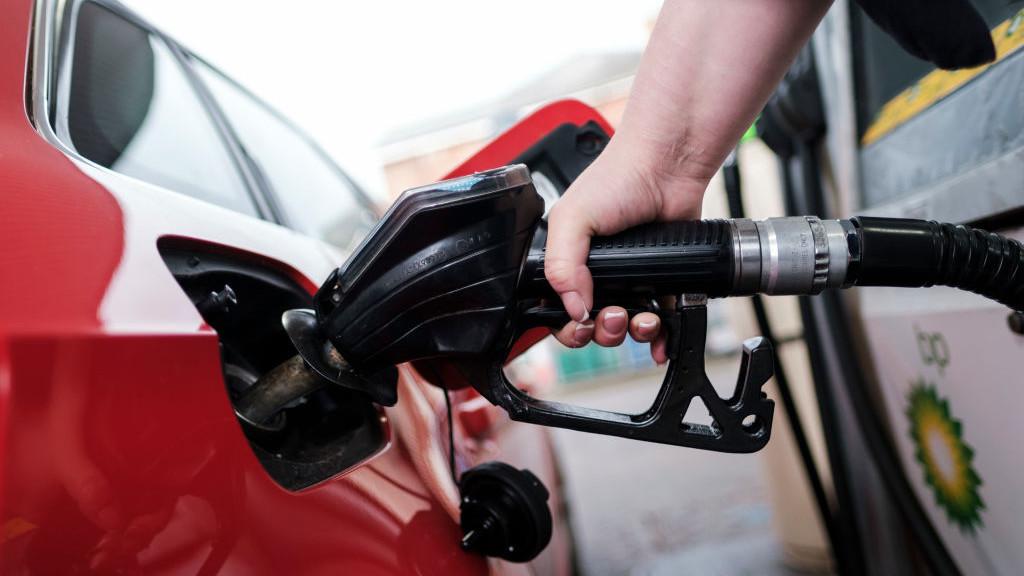
On the morning of March 6, 2026, Sohail Ahmed pulled his motorcycle into a petrol station in Karachi and watched the meter tick past 3,200 rupees. A week earlier, the same fill-up had cost him 2,662. Ahmed is 27, a delivery rider who supports a family of seven, and he had little patience for the government’s freshly announced austerity package — the four-day workweeks for civil servants, the school closures. “For me, the main concern is the fuel price because that increases the cost of every little thing,” he told Al Jazeera. He was right. And then some. Al Jazeera
The Geography of Vulnerability
Pakistan has always been exposed to what happens in the Gulf — structurally, financially, and politically. Over 80% of the country’s oil and refined fuel needs are met through imports, and roughly 80% of its crude oil imports typically pass through the Strait of Hormuz before reaching Karachi’s port. When the United States and Israel launched military operations against Iran on February 28, 2026, igniting the most severe Middle East conflict in decades, that vulnerability ceased to be a theoretical risk. OilPrice.com
Iran’s subsequent closure of the Strait of Hormuz triggered what the International Energy Agency described as the greatest global energy security challenge the oil market has ever confronted. About 25 to 30% of global oil and 20% of liquefied natural gas passes through the chokepoint, feeding demand across Asia and parts of Europe. For Pakistan, the consequences arrived almost immediately. International Monetary Fund
Prime Minister Shehbaz Sharif said Pakistan’s oil import bill had surged from $300 million before the conflict to $800 million, erasing all the economic progress the country had made over the past two years. Pakistan was not walking into this from a position of strength. The country holds only 10–14 days of petroleum reserves — significantly less than regional peers like India, which maintains roughly 65–70 days of stock. The margin for error was already razor-thin. Al JazeeraOilPrice.com
Rising Fuel Prices in Pakistan: A Record No One Wanted to Set
Pakistan has recorded the world’s second-highest surge in domestic fuel prices since the start of the Iran war, with petrol and diesel soaring 56% — second only to Myanmar’s 90% increase, and far exceeding hikes in the United States, Britain, and several regional countries. Arab News
The numbers are striking. Before the conflict, petrol sold for Rs 266.17 per litre and diesel for Rs 280.86. By April 4, 2026, both had reached an all-time high of Rs 520.35 per litre. A modest government cut in mid-May brought petrol to Rs 409.78 and diesel to Rs 409.58 — still 56% above pre-war levels. Under normal conditions, the Oil and Gas Regulatory Authority reviews prices fortnightly. Since March 2026, OGRA has been operating on weekly review cycles, a concession to extraordinary market volatility.
The arithmetic of Pakistan’s energy exposure is unsparing. A study by the Pakistan Institute of Development Economics (PIDE) found that every $10 increase in global oil prices raises Pakistan’s annual petroleum import bill by approximately $1.8–$2.0 billion. PIDE has warned that a closure of the Strait of Hormuz could trigger an oil price rally of up to $150 per barrel, causing Pakistan’s monthly fuel import bills to skyrocket to between $3.5 billion and $4.5 billion. OilPrice.com
Between July 2025 and February 2026, Pakistan’s oil imports totalled $10.71 billion. The trajectory of subsequent months suggests the full fiscal-year figure will be dramatically higher. OilPrice.com
The IMF, which is administering a $7.2 billion Extended Fund Facility for Pakistan, has made clear that Islamabad’s room for manoeuvre is tightly circumscribed. In April, when Prime Minister Sharif sought IMF approval for higher fuel subsidies, he was rebuffed. A temporary concession — an Rs 80 per litre reduction in petroleum levies on petrol — eventually expired, restored to protect a more than $1 billion loan tranche. The government’s own minister acknowledged it was not raising petroleum prices willingly, but was compelled to do so because of obligations under the IMF programme. Aaj English TV
Pakistan also launched Operation Muhafiz-ul-Bahr — “Protector of the Seas” — a Pakistan Navy maritime security mission in March 2026, aimed at ensuring uninterrupted trade through critical Sea Lines of Communication. It is an assertion of sovereign intent. It cannot, however, move crude oil markets.
Why Pakistan’s Economy Is Disproportionately Exposed to the Middle East Oil Shock
The picture is more complicated than simple price pass-through.
How does the Middle East conflict affect fuel prices in Pakistan? The conflict disrupted the Strait of Hormuz, through which 80% of Pakistan’s crude imports transit. Iran’s closure of this chokepoint cut global supply and pushed Brent crude above $100 per barrel. Pakistan imports over 80% of its fuel needs, so price spikes transmit directly to domestic pumps. Combined with a weakening rupee and a petroleum reserve buffer of just 10–14 days, the shock reached Pakistani consumers faster — and more severely — than in almost any other major importing economy.
Pakistan’s structural vulnerability reflects policy failures that compounded over decades, not a single administration’s mistakes. Its strategic reserve cover — 10 to 14 days — leaves virtually no buffer when supply chains rupture. The IEA recommends 90 days as a minimum. The gap between recommendation and reality is not a rounding error; it is a national risk.
Then there is the currency dimension. Oil is priced in US dollars. A weakening rupee magnifies every global price movement even when crude prices hold steady. Both pressures converged in March 2026: global crude spiked and the rupee came under renewed depreciation pressure as Pakistan’s current account deficit widened.
The IMF’s April 2026 World Economic Outlook offered the clearest quantitative framework: for the average MENAP emerging-market oil importer, a 10% increase in crude oil prices reduces output by approximately 0.5 percentage point and adds roughly 1 percentage point to inflation. Pakistan has not experienced a 10% increase. It has experienced a sustained environment of triple-digit crude prices, implying GDP compression and inflation consequences that would, in any other moment, constitute a national emergency. International Monetary Fund
The State Bank of Pakistan confirmed as much. It raised its key policy rate by a full percentage point to 11.5%, noting that the prolonging of the Middle East conflict had intensified risks to the macroeconomic outlook. Inflation surged to 10.9% in April from 7.3% in March. Pakistan’s weekly Sensitive Price Indicator — the economy’s most granular near-term barometer — rose 14.52% year-on-year in the week ending May 14, with Topline Securities projecting a May CPI reading of between 11% and 11.5%, which would mark the highest monthly inflation in 23 months. Al JazeeraPakistan Today
The Gulf dependency also runs deeper than energy. Approximately nine million Pakistanis work in Gulf Cooperation Council countries. A slowdown in Gulf construction, tighter regional financial conditions, or delayed hiring due to the ongoing war can hit Pakistan through workers’ income as well as capital flows. Remittances are a critical pillar of Pakistan’s balance of payments. It’s a second-order consequence that most inflation models do not fully capture. New Kerala
Second-Order Fallout: Agriculture, Food Security, and Political Risk
The most immediate transmission channel is transport. Within hours of the Rs 55 per litre fuel hike on March 6, freight charges from Pakistan’s major wholesale hubs had reacted. Transport costs from major wholesale hubs such as Karachi, Faisalabad, and Sargodha nearly doubled following the fuel price hike, triggering significant price increases for essential food items across Punjab province. Mutton climbed to PKR 2,700 per kg. Milk sold at PKR 230. Gram pulse reached PKR 390. These are not abstract indices — they are the daily mathematics of 230 million people, tens of millions of whom already spent over 40% of household income on food before the crisis arrived. New Kerala
Agriculture is where the second-order shock becomes structurally dangerous. High-Speed Diesel powers tractors, tube wells, harvesters, and water pumps across Pakistan’s agricultural sector, and changes in diesel prices directly influence food production costs and agricultural operations. With the wheat harvest arriving in April and May, higher diesel costs translated into higher production costs for Pakistan’s most essential staple. Farmers either absorb these costs — reducing income and, eventually, cultivated acreage — or pass them along as higher flour prices. Profit by Pakistan Today
The disruption of fertiliser shipments — with about one-third of global fertiliser passing through the Strait of Hormuz — compounds the agricultural threat, raising concerns about yields and harvests through the year. Pakistan’s food security situation, already strained by severe flooding in preceding seasons, now faces a compounded supply-side shock. International Monetary Fund
The political dimensions are harder to quantify but impossible to ignore. Rickshaw drivers protested in Lahore on April 7. Pakistan’s Senate has witnessed sharp opposition attacks on the government’s management of the crisis. Economist Kaiser Bengali, former planning and development adviser to the Sindh government, said: “We are in a state of absolute dependency, where even a $1 billion tranche, which is a microscopic amount in global fiscal terms, can make the difference between survival and collapse.” Al Jazeera
PIDE has warned that the impact of rising fuel prices could potentially push inflation from 7% to 17% in a worst-case scenario, a level that would torch the purchasing power of Pakistan’s lower-middle-income households and set off a political crisis that fiscal statistics alone do not convey. OilPrice.com
The Case for Cautious Optimism — and Its Limits
Not every analyst believes the situation is unmanageable.
Energy analyst Amer Zafar Durrani, a former World Bank official and chief executive of advisory firm Reenergia, said the government’s austerity measures could work in the short term. Pakistan has also demonstrated some flexibility in supply diversification: talks on alternative LNG sourcing have moved beyond Qatar, and the long-delayed Iran-Pakistan gas pipeline has been quietly revisited in diplomatic channels. Al Jazeera
The April 7 ceasefire — and a subsequent two-week extension — did provide genuine relief. Brent crude retreated from triple-digit levels. Pakistan was able to cut petrol and diesel prices by Rs 5 per litre on May 16. The weekly OGRA review cycle, itself a marker of how abnormal the preceding months had been, appeared ready to normalise.
Energy expert Muhammad Saad Ali, head of research at Lucky Investments Limited, noted that Pakistan still has alternative options to manage gas supply disruptions, and that the situation is “not a shortage like it was after the Ukrainian war.” Arab News
Yet the structural argument is harder to set aside. Pakistan’s 10–14-day reserve cover has not changed. Its 80% import dependency on petroleum has not changed. Its susceptibility to exchange rate pressure has not changed. The IMF’s own modelling warns that for countries with preexisting fuel subsidies and links to the Middle East through remittances, the current conflict delivers additional pressure on both household incomes and external balances. IMF programme constraints limit the government’s ability to cushion consumers, even if policymakers wanted to. International Monetary Fund
Operation Muhafiz-ul-Bahr reflects genuine strategic ambition. A naval security mission cannot, however, alter Brent crude futures.
The real question — whether this crisis accelerates overdue structural reforms in Pakistan’s energy sector, or whether it is simply endured until global oil markets stabilise — remains uncomfortably open.
A Reckoning Long in the Making
Pakistan’s predicament is, in one sense, the story of every energy-importing developing economy in 2026: a country caught between geopolitical forces entirely beyond its control and domestic vulnerabilities that were very much within its power to address — and, for the most part, weren’t. The Strait of Hormuz did not create Pakistan’s 10-day reserve buffer or its 80% import dependency. It exposed them.
The IMF has noted that for fuel-importing economies, the effect of the Strait’s de facto closure is that of a large, sudden tax on income. For a country already under strict multilateral conditionality — with a fiscal position that cannot absorb broad subsidies and a political landscape that cannot easily absorb the social costs of austerity — that is not merely an economic metaphor. It describes the precise shape of the bind. International Monetary Fund
Sohail Ahmed is unlikely to track the IMF’s MENAP Regional Economic Outlook. He will, however, notice if his costs fall further. The Rs 5 per litre cut on May 16 reduced his tank refill by roughly 160 rupees — a gesture against a 56% cumulative surge.
What Pakistan’s economy requires is not a gesture. It’s a strategy that outlasts the conflict.
Discover more from The Economy
Subscribe to get the latest posts sent to your email.



Key Takeaways
- Rolex’s secondary market rose approximately 7.9% year-over-year as of 2026 (per WatchCharts data) — trailing Patek Philippe (+16.2%) and Tudor (+11.4%) but still outperforming Audemars Piguet (+3.4%).
- Rolex raised U.S. retail prices 4–9% in January 2026 (steel models ~5.6%, gold models ~8.7%), narrowing the historical gap between retail and pre-owned pricing.
- Not every model appreciates: steel sports references (Submariner, GMT-Master II, Daytona) have held value far better than two-tone or widely available dress references like the standard Datejust.
- The Lady-Datejust posted the sharpest 2026 gain among tracked collections — up 22.73%, from roughly $9,269 to $11,376 — driven by demand for smaller, “everyday luxury” watches.
- Gold’s rise past $2,400/oz has directly lifted the investment case for Rolex’s precious-metal references (Day-Date, Sky-Dweller, Yacht-Master).
The Model-by-Model Picture
| Category | 2026 Trend |
|---|---|
| Lady-Datejust | +22.73% (strongest performer among tracked collections) |
| Steel sports models (Submariner, GMT-Master II) | Held value well; corrected from 2022 peak but stabilized above retail |
| Daytona | Corrected from highs above $50,000 to the mid-$30,000s; still among the most sought-after references |
| Two-tone/widely available Datejust | Flat to negative — “holds value” is an overstatement for this category |
| Gold references (Day-Date, Sky-Dweller) | Lifted by gold’s rise above $2,400/oz |
Why the “Rolex Always Appreciates” Myth Is Fading
The pandemic-era boom pushed some references — the Daytona above all — to speculative highs disconnected from historical norms. Since the March 2022 peak, steel sports models have compressed meaningfully, and dealers who bought inventory near the top have in some cases faced 20–40% markdowns on liquidation. The lesson for 2026 buyers: Rolex as a category is not a monolith. Value retention depends heavily on specific reference, condition, and whether the piece comes with box and papers (“full set”).
What’s Actually Driving 2026 Strength
- Retail price increases raise the floor. When a new Submariner retails at $10,050 (up from $9,500), a pre-owned example at $11,000–$12,000 suddenly represents a smaller premium — narrowing the gap without secondary prices actually moving.
- Supply discipline remains Rolex’s core lever. The brand has never confirmed production numbers, and secondary-market premiums remain entirely a function of Rolex’s own manufacturing decisions — a risk factor as much as a support.
- Certified Pre-Owned rollout. Rolex’s now fully rolled-out CPO program has changed how buyers transact in the used market, adding a layer of brand-verified legitimacy that supports pricing.
The Case for Rolex as a Portfolio Diversifier
Financial advisors increasingly frame luxury watches not as a replacement for equities or bonds, but as a tangible, historically low-correlation diversifier — one that carries its own risks (illiquidity, condition-dependent pricing, no yield) but has demonstrated multi-decade resilience for specific references.
Is Rolex a good investment in 2026?
It depends heavily on the specific reference. Steel sports models like the Submariner and Daytona have held or grown in value; two-tone and widely available dress models generally have not. Overall, Rolex’s secondary market rose about 7.9% year-over-year in 2026, trailing Patek Philippe but ahead of Audemars Piguet.
Discover more from The Economy
Subscribe to get the latest posts sent to your email.

Navigating Mortgage and Loan Refinancing in a High-Yield Environment
Global public debt crossing critical thresholds has kept central bank policies volatile, resulting in fluctuating US Treasury yields throughout 2026. For homeowners and commercial property holders burdened by previous high-interest borrowing cycles, finding optimal refinance windows has become a high-stakes financial puzzle. Stalled disinflation and stubborn employment numbers mean rate cuts are incremental, requiring borrowers to act with precision.
Timing your mortgage or commercial loan refinance in this environment requires a deep understanding of yield curve movements and lender risk appetites.
Decoding 2026 Refinance Dynamics
The 10-Year Treasury Yield Benchmark
Mortgage rates continue to track closely with the 10-year US Treasury yield. When macroeconomic anxiety spikes debt issuance, yields rise, tightening consumer borrowing capacity. Savvy borrowers monitor weekly Treasury auctions to lock in rates during brief dip windows.
Hybrid ARMs and Alternative Structures
With fixed rates remaining elevated, 7/1 and 10/1 adjustable-rate mortgages (ARMs) have surged in popularity. These products offer lower initial monthly payments, giving borrowers breathing room until central bank easing cycles fully materialize.
| Loan Product | Current Rate Range | Best For | Key Risk Factor |
| 30-Year Fixed Mortgage | 6.2% – 6.8% | Long-term predictability | Higher initial monthly outlay |
| 7/1 Hybrid ARM | 5.5% – 5.9% | Short-term ownership / flipping | Rate reset risk after year 7 |
| Commercial Refinance | 7.0% – 8.2% | Corporate asset restructuring | Strict DSCR lender covenants |
Actionable Steps for Successful Refinancing
To maximize your chances of securing favorable refinance terms in a volatile market, follow a disciplined preparation strategy.
Boost Your Credit Score Immediately: Lenders in 2026 are applying stringent credit tiering; a 20-point increase can drop your APR by a crucial quarter-point.
Shop Regional Credit Unions: Smaller financial institutions often offer portfolio loans with more flexible underwriting than major national banks.
Calculate the Break-Even Point: Ensure your total closing costs are recouped through monthly savings within 24 months of closing.
“Market Strategist View: Refinancing in 2026 is an exercise in opportunistic timing. Borrowers must maintain immaculate financial profiles ready to strike the moment Treasury yields dip.”
Mastering the complexities of today’s debt environment ensures you can successfully lower your debt service costs and protect your long-term financial stability.
Discover more from The Economy
Subscribe to get the latest posts sent to your email.

The days of pulling generic auto insurance quotes based purely on your zip code and age are officially over. In 2026, insurance comparison engines are powered entirely by generative AI and real-time telematics. These platforms digest thousands of live data points—ranging from your driving smoothness via connected vehicle sensors to real-time traffic congestion patterns—to generate hyper-personalized premiums instantly.
For consumers, this evolution represents both a massive opportunity for savings and a hidden trap for penalty pricing. Understanding how AI algorithms evaluate risk is essential for anyone looking to lower their monthly auto insurance premiums.
How AI Comparison Engines Evaluate Your Risk Profile
Behavioral Telematics and Connected Cars
Modern cars stream performance data directly to insurance aggregators. Generative AI models analyze braking sharpness, acceleration curves, cornering G-forces, and phone distraction metrics. Drivers who maintain smooth, defensive habits are rewarded with dynamic rate cuts of up to 40% compared to traditional rating tiers.
Predictive Traffic and Weather Modeling
AI tools now cross-reference your daily commute route with predictive weather and accident probability models. If your standard parking location or driving corridor has a statistically higher incidence of uninsured motorist claims, your quotes will reflect that hyper-local risk assessment.
| Comparison Factor | Traditional Rating Model | 2026 Generative AI Model | Impact on Premium |
| Mileage & Usage | Annual estimated odometer reading | GPS tracking & live trip duration | High (up to 35% savings) |
| Driving Behavior | MVR driving record & accidents | Real-time braking, speed, & G-force | Critical (determines tier) |
| Vehicle Tech | Make, model, and safety rating | ADAS calibration & repair cost data | Moderate |
Strategies to Lower Your AI-Driven Insurance Quote
To outsmart the algorithm and secure the lowest possible premium in 2026, drivers must proactively manage their digital footprint on insurance platforms.
Opt-In for Telematics Trial Periods: Many insurers offer immediate 15% discounts just for installing their driving app; let it track safe habits for 30 days to lock in permanent savings.
Scrub Unverified Public Records: Ensure your motor vehicle report is free of clerical errors that AI risk models misinterpret as reckless behavior.
Compare AI Aggregators: Use platforms that integrate multi-carrier API feeds rather than single-brand comparison sites to find the best risk-adjusted rate.
“Industry Note: AI-driven pricing rewards transparency and precision. Drivers who actively manage their telematics data consistently out-save those relying on legacy quote calculators.”
Embracing AI comparison tools allows savvy policyholders to customize coverage limits precisely to their driving habits, eliminating wasted premium spend while ensuring robust protection.
Discover more from The Economy
Subscribe to get the latest posts sent to your email.

Stock Market Crash in 2026? Warning Signs, Scenarios and a Calm Investor Checklist

Peso Mexicano vs Dólar Estadounidense: A Practical USD/MXN Guide for October 2026

Is the Stock Market Open on Columbus Day 2026? NYSE, Nasdaq and Bonds Explained

Concert Ticket Prices in 2026: Dynamic Pricing, Fees and How to Buy Safely

High-Yield Savings Accounts in 2026: How to Compare APY Without Chasing a Headline

EU-China Trade Deal 2026: How Beijing and Brussels Avoided a Trade War—and Who Wins

Social Security 2027 COLA Announcement: Date, Formula and What Retirees Should Check

China’s AI Microdrama Boom: How Beijing Is Reshaping Global Media

Q3 2026 Earnings Preview: Can Record Profit Expectations Keep Wall Street’s Rally Alive?

Russia Diesel Deal 2026: Oil Prices and Inflation Risks

Fed Rates 2026: Treasury Yields, Bonds and SGOV Explained

S&P 500 Market Breadth 2026: Weak Rally or Rotation?

The AI Capex Boom: Data Centers Reshaping Growth

Palantir Stock in 2026: Extraordinary AI Growth

PSX Forecast 2026: KSE-100, IMF Reviews & Geopolitics

Middle East War Economics 2026: Oil Prices & Energy Markets

China Stocks Today: Are Big Economies in Asia Nearing a Market Bottom?

Crypto Daily Outlook: Bitcoin, Altcoins, and the Future of Decentralized Finance

Global Pension Systems Ranked: The World’s Best and Worst Retirement Frameworks

World’s Largest Economies: Ranking the Top Global Powers

Elon Musk’s Next Moves: Disrupting the 2026 Global Economy

Pakistan Economy 2026: Inside the SBP’s Balancing Act

World Bank & IMF Reports 2026: Why the “3% Growth” Consensus Is Actually a Debate

GasBuddy Market Insights: How Crude Price Shifts Impact Local Fuel Cost Averages

Crude Oil & Petroleum Market Analysis: OPEC+ Decisions and Price Forecasts

Global Equity Market Divergence: US Tech vs. European Dividend Stocks vs. Asian Growth

IMF & World Bank Global Economic Outlook: Growth Forecasts Across Europe and Asia

Silver Price Today: Why the Xi-Trump AI Standoff Is Fueling a Safe-Haven Rally
-

 Markets & Finance9 months ago
Top 15 Stocks for Investment in 2026 in PSX: Your Complete Guide to Pakistan’s Best Investment Opportunities
-

 Analysis8 months ago
Johor’s Investment Boom: The Hidden Costs Behind Malaysia’s Most Ambitious Economic Surge
-

 Analysis8 months ago
Top 10 Stocks for Investment in PSX for Quick Returns in 2026
-

 Banks9 months ago
Best Investments in Pakistan 2026: Top 10 Low-Price Shares and Long-Term Picks for the PSX
-

 Analysis8 months ago
Brazil’s Rare Earth Race: US, EU, and China Compete for Critical Minerals as Tensions Rise
-

 Investment9 months ago
Top 10 Mutual Fund Managers in Pakistan for Investment in 2026: A Comprehensive Guide for Optimal Returns
-

 Global Economy10 months ago
15 Most Lucrative Sectors for Investment in Pakistan: A 2025 Data-Driven Analysis
-

 Global Economy10 months ago
Pakistan’s Export Goldmine: 10 Game-Changing Markets Where Pakistani Businesses Are Winning Big in 2025