
Analysis
SpaceX IPO Set to Lock In Musk’s Control With Mars-Linked Pay Deal

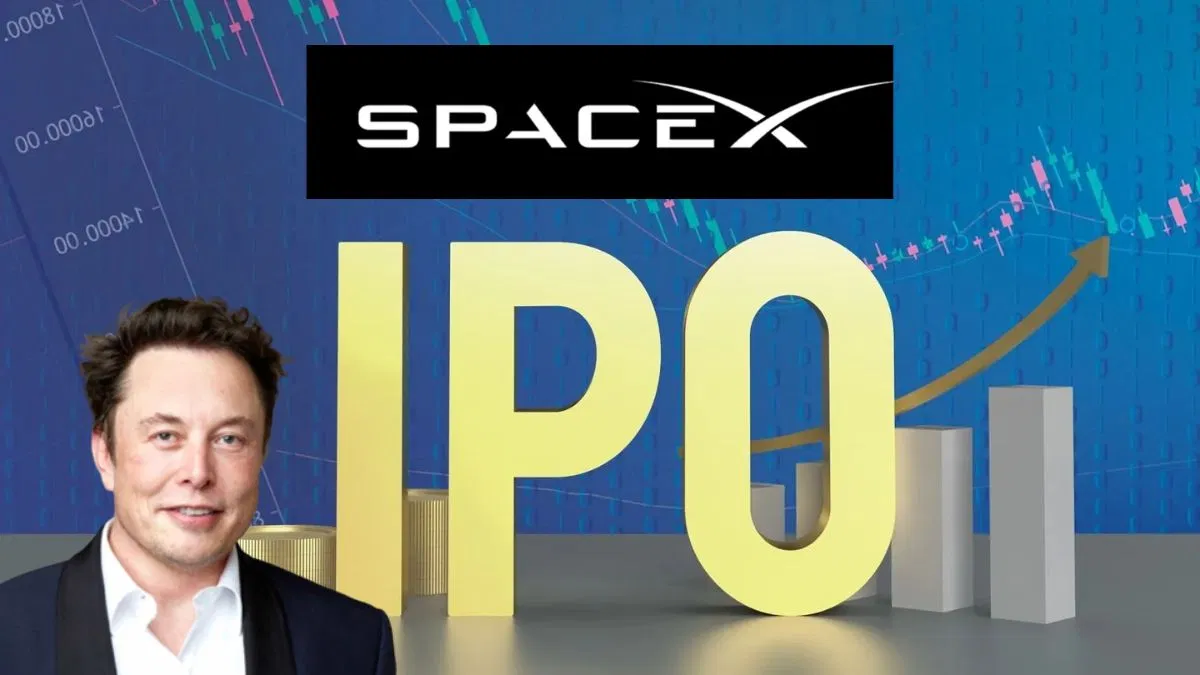
Investors are being asked to fund the largest public offering in history at a $1.75 trillion valuation, while ceding near-total governance to a founder whose payday depends on colonizing Mars.
When Space Exploration Technologies Corp. confidentially submitted its S-1 in early April, the document did more than tee up a record-breaking listing. It codified a bargain Wall Street has quietly accepted for a decade in Silicon Valley, but never at this scale: public capital, private control, and a compensation plan that reads like science fiction.
SpaceX is targeting a debut around June 28, Elon Musk’s 55th birthday, with a valuation of roughly $1.75 trillion and a raise of $50 billion to $75 billion, according to Reuters reporting on the filing. That would dwarf Saudi Aramco’s $29.4 billion debut in 2019 and instantly place SpaceX among the five most valuable listed companies on earth, despite 2025 revenue of $18.67 billion and a consolidated loss of $4.94 billion.
The numbers alone would be enough to dominate a summer IPO calendar crowded with OpenAI and Anthropic. What makes SpaceX different is governance. The prospectus, reviewed by Reuters, locks in a dual-class structure, ties Musk’s fortune to a $7.5 trillion market cap and a permanent Mars colony of one million people, and effectively makes him irremovable. It is less an IPO than a constitutional convention for Muskonomy.
The deal on the table
SpaceX arrives in public markets not as a pure-play rocket company but as a conglomerate. In January, Musk merged SpaceX with xAI in a deal that valued the rocket maker at $1 trillion and the AI lab at $250 billion, creating a vertically integrated stack of launch, satellites, and compute.
The financials disclosed in the filing show why the merger matters. Starlink, the satellite internet division, generated $4.42 billion in operating profit last year, subsidizing a fivefold surge in capital spending to $20.7 billion, more than half of which went to AI infrastructure. The combined entity ended 2025 with $24.8 billion in cash, $92 billion in assets and $50.8 billion in liabilities, swinging from a $791 million profit in 2024 to a loss as xAI investments accelerated, Reuters notes.
That spending underpins the pitch: SpaceX is no longer selling launch cadence alone. It is selling orbital data centers, defense bandwidth, lunar logistics, and, eventually, interplanetary transport. Management told analysts during April briefings in Starbase that it has applied for permission to launch up to one million solar-powered satellites engineered as space-based data centers, a concept NASA engineers have debated for two decades.
Investor appetite has been ferocious. Private secondary sales valued SpaceX near $800 billion in late 2025. Now underwriters led by Goldman Sachs and Morgan Stanley are marketing a $1.75 trillion to $2 trillion range, a 95-times multiple of 2025 sales that makes even Nvidia look restrained. The company plans to allocate roughly 30% of the offering to retail, an unusually high share designed to harness Musk’s fan base.
How control is engineered
The centerpiece of the governance package is familiar in form but extreme in degree. Upon listing, SpaceX will have Class A shares with one vote each for public investors, and Class B shares with ten votes each held by Musk and a small insider group. Reuters confirmed the 10-to-1 structure in filing excerpts.
Musk will remain chief executive, chief technology officer, and chairman of a nine-person board. More importantly, the charter contains provisions that require his consent for his own removal, limit shareholders’ ability to bring class actions, and push disputes into arbitration in Texas.
Corporate governance experts say this goes beyond Google or Meta precedents. “While such structures are common among founder-led technology companies, they limit public shareholders’ ability to influence strategy or challenge management,” Cornell finance professor Minmo Gahng told Reuters in its coverage of the filing.
The practical effect is stark. Even after selling tens of billions in stock and diluting his economic stake to well below 50%, Musk would retain voting control for the foreseeable future. The structure also entrenches Gwynne Shotwell and CFO Bret Johnsen, who together hold significant Class B allocations.
For investors, the trade is explicit: you are buying exposure to Musk’s execution, not a board’s oversight.
The Mars-linked pay package
If the voting structure secures control, the compensation plan secures ambition.
In January, SpaceX’s board approved a performance award that would grant Musk 200 million super-voting restricted shares only if two conditions are met together: SpaceX reaches a $7.5 trillion market capitalization, and it establishes a self-sustaining human colony on Mars with at least one million residents. The details were first revealed in Reuters’ review of the SEC filing and elaborated by The Economic Times.
A second tranche awards up to 60.4 million additional restricted shares if SpaceX hits intermediate valuation milestones and operates space-based data centers delivering at least 100 terawatts of compute, equivalent to about 100,000 one-gigawatt nuclear plants running simultaneously.
There is no time limit other than Musk’s continued employment. If the targets are missed, he receives nothing beyond his nominal $54,080 annual salary, a figure unchanged since 2019.
Eric Hoffmann of Farient Advisors told Reuters he knew of “nothing remotely comparable” in modern executive pay. “The measuring stick is, has it been done in human history? These haven’t. So that’s hard.”
The design is deliberate. It reframes the perennial Tesla question, whether Musk is spread too thin, into a competition for his attention. Tesla’s board argued last autumn that a massive pay package was necessary to keep Musk focused on EVs. Now SpaceX is bidding against it with civilization-scale incentives. As Hoffmann put it, “SpaceX and Tesla, both effectively controlled by Elon Musk, are now bidding against each other for his attention.”
Valuation: arithmetic versus narrative
At $1.75 trillion, SpaceX would trade at roughly 94 times 2025 revenue and, on a price-to-earnings basis, it has no earnings. Bulls argue that is the wrong lens.
Starlink alone is on track for $15 billion to $18 billion in revenue in 2026, with margins expanding as Gen2 satellites cut cost per bit. The Pentagon’s proliferated LEO contracts, Ukraine and Taiwan backhaul, and direct-to-cell partnerships with T-Mobile and Rogers turn it into a quasi-utility. Launch remains a moat: SpaceX flew more than 90% of global mass to orbit in 2025.
The xAI merger adds optionality. By colocating Grok training in orbit, SpaceX argues it can sidestep terrestrial power constraints and land-use battles that have slowed Meta and Microsoft data center builds. The 100-terawatt target in Musk’s pay plan is not a typo; it is a statement of intent to own AI infrastructure beyond earth.
Skeptics counter that the business is being priced for three simultaneous S-curves: satellite broadband at global scale, fully reusable Starship at airline-like cadence, and orbital compute at unprecedented power levels. Each faces technical, regulatory, and capital hurdles. Starship has yet to demonstrate reliable orbital refueling. Space-based data centers face thermal rejection limits and launch cost economics that remain speculative even at $10 per kilogram.
The $7.5 trillion valuation embedded in the pay deal implies SpaceX would need to exceed the combined market caps of Apple, Microsoft, and Nvidia today. That would require not just dominating launch and broadband, but becoming the default platform for off-world industry.
Investors are being asked to underwrite that leap with limited governance recourse. As the Financial Times-cited Reuters report noted in January, the IPO is being marketed as a “belief” stock, where valuation fluctuates with public faith in Musk’s vision.
Investor implications: what you actually own
For portfolio managers, the SpaceX IPO presents a governance discount in reverse. Traditionally, dual-class shares trade at a discount for weak shareholder rights. Here, the market appears willing to pay a premium for Musk’s control, treating it as a feature, not a bug.
Key terms to understand:
- Voting: Class B carries 10 votes. Musk and insiders will hold majority voting power post-IPO.
- Board: Nine members, with Musk as chair. Removal requires supermajority provisions he controls.
- Litigation: Charter mandates arbitration in Texas and limits class actions.
- Compensation: 200M shares at $7.5T + 1M Mars residents; 60.4M shares at space data center milestones. Both vest in tranches as valuation rises.
- Use of proceeds: Roughly $30B for Starship production and launch infrastructure, $20B for Starlink Gen3, $15B for xAI compute, remainder for balance sheet.
The risk is not just valuation but agency. With control locked, capital allocation will reflect Musk’s priorities, which may diverge from near-term shareholder returns. The Mars colony condition, while headline-grabbing, also creates a perverse incentive to pursue the most capital-intensive project in human history, potentially at the expense of dividends or buybacks.
There is also Tesla overlap. Musk owns about 20% of Tesla and remains its CEO. Both companies are now competing for AI talent, capital, and his time. Tesla shareholders have already sued over the xAI merger, alleging resource diversion. SpaceX’s filing acknowledges potential conflicts but offers no firewall beyond board discretion.
For retail investors, the allure is obvious: a chance to own the space economy’s toll road. For institutions bound by stewardship codes, the weak shareholder rights may force underweight positions or exclusion from ESG mandates.
The broader context: a new space economy
SpaceX’s listing arrives as Washington reframes space as critical infrastructure. NASA’s Artemis program depends on Starship for lunar landings. The Space Force’s proliferated architecture relies on Starlink. Defense budgets are climbing, and commercial launch is now a national security priority.
That policy tailwind underpins revenue durability. It also invites scrutiny. Regulators in Brussels and Washington are already probing Starlink’s market power in rural broadband. A public SpaceX with a $1.75 trillion valuation will face antitrust questions that a private company could dodge.
Meanwhile, the xAI integration positions SpaceX directly against OpenAI, Anthropic, and Google. Musk’s argument is that orbital solar provides near-limitless clean power for training, bypassing grid constraints. Critics note that beaming power and data back to earth at scale remains unproven, and that terrestrial nuclear and geothermal may be cheaper.
Competitors are watching. Blue Origin, Rocket Lab, and Europe’s ArianeGroup have all seen stock pops on SpaceX IPO news. Yet none match its launch cadence or vertical integration. The real competition may be time: can SpaceX scale Starship and Starlink cash flows fast enough to fund AI capex before public markets demand profitability?
Forward view
This IPO is not really about 2026 earnings. It is about whether capital markets are willing to institutionalize a 30-year project to make humanity multiplanetary, with one person holding the voting keys.
There is a coherent bull case. If Starship achieves full reusability, launch costs fall below $100 per kilogram, unlocking orbital manufacturing and data centers. If Starlink reaches 100 million subscribers, it generates $50 billion-plus in high-margin recurring revenue. If xAI leverages that infrastructure, SpaceX becomes the AWS of orbit. A $7.5 trillion valuation then looks less absurd and more like early Amazon math.
The bear case is equally coherent. Governance concentration has historically correlated with value destruction when founder risk materializes. Mars colonization requires technologies that do not exist and a regulatory framework that does not exist. Tying pay to a million-person colony may align incentives, but it also aligns the company with a goal that could consume unlimited capital with uncertain returns.
What is undeniable is the structure’s honesty. Unlike many founder-controlled IPOs that dress up dual-class shares in ESG language, SpaceX is explicit: you are funding Musk’s timeline for Mars, and for space-based AI. The pay package makes that contract literal.
For investors comfortable outsourcing strategy to a singular, proven operator, that clarity is valuable. For those who believe diversified boards and shareholder accountability improve long-term returns, it is disqualifying.
The market will decide in June. If the book is multiple times oversubscribed, as bankers expect, it will signal that public markets have evolved beyond the Berle-Means corporation toward something closer to a mission-driven partnership, where capital follows vision, not votes.
That would be a landmark moment not just for aerospace, but for corporate governance itself. It would also lock in, for at least a generation, Elon Musk’s control over the infrastructure that may define the next century of computing, communications, and exploration.
Whether that is a triumph of long-term capitalism or a cautionary tale of concentrated power will be judged not by the first-day pop, but by whether, decades from now, a million people are indeed living on Mars, and whether the shareholders who funded the attempt were along for the ride by choice or by design.
Discover more from The Economy
Subscribe to get the latest posts sent to your email.



Key Takeaways
- Rolex’s secondary market rose approximately 7.9% year-over-year as of 2026 (per WatchCharts data) — trailing Patek Philippe (+16.2%) and Tudor (+11.4%) but still outperforming Audemars Piguet (+3.4%).
- Rolex raised U.S. retail prices 4–9% in January 2026 (steel models ~5.6%, gold models ~8.7%), narrowing the historical gap between retail and pre-owned pricing.
- Not every model appreciates: steel sports references (Submariner, GMT-Master II, Daytona) have held value far better than two-tone or widely available dress references like the standard Datejust.
- The Lady-Datejust posted the sharpest 2026 gain among tracked collections — up 22.73%, from roughly $9,269 to $11,376 — driven by demand for smaller, “everyday luxury” watches.
- Gold’s rise past $2,400/oz has directly lifted the investment case for Rolex’s precious-metal references (Day-Date, Sky-Dweller, Yacht-Master).
The Model-by-Model Picture
| Category | 2026 Trend |
|---|---|
| Lady-Datejust | +22.73% (strongest performer among tracked collections) |
| Steel sports models (Submariner, GMT-Master II) | Held value well; corrected from 2022 peak but stabilized above retail |
| Daytona | Corrected from highs above $50,000 to the mid-$30,000s; still among the most sought-after references |
| Two-tone/widely available Datejust | Flat to negative — “holds value” is an overstatement for this category |
| Gold references (Day-Date, Sky-Dweller) | Lifted by gold’s rise above $2,400/oz |
Why the “Rolex Always Appreciates” Myth Is Fading
The pandemic-era boom pushed some references — the Daytona above all — to speculative highs disconnected from historical norms. Since the March 2022 peak, steel sports models have compressed meaningfully, and dealers who bought inventory near the top have in some cases faced 20–40% markdowns on liquidation. The lesson for 2026 buyers: Rolex as a category is not a monolith. Value retention depends heavily on specific reference, condition, and whether the piece comes with box and papers (“full set”).
What’s Actually Driving 2026 Strength
- Retail price increases raise the floor. When a new Submariner retails at $10,050 (up from $9,500), a pre-owned example at $11,000–$12,000 suddenly represents a smaller premium — narrowing the gap without secondary prices actually moving.
- Supply discipline remains Rolex’s core lever. The brand has never confirmed production numbers, and secondary-market premiums remain entirely a function of Rolex’s own manufacturing decisions — a risk factor as much as a support.
- Certified Pre-Owned rollout. Rolex’s now fully rolled-out CPO program has changed how buyers transact in the used market, adding a layer of brand-verified legitimacy that supports pricing.
The Case for Rolex as a Portfolio Diversifier
Financial advisors increasingly frame luxury watches not as a replacement for equities or bonds, but as a tangible, historically low-correlation diversifier — one that carries its own risks (illiquidity, condition-dependent pricing, no yield) but has demonstrated multi-decade resilience for specific references.
Is Rolex a good investment in 2026?
It depends heavily on the specific reference. Steel sports models like the Submariner and Daytona have held or grown in value; two-tone and widely available dress models generally have not. Overall, Rolex’s secondary market rose about 7.9% year-over-year in 2026, trailing Patek Philippe but ahead of Audemars Piguet.
Discover more from The Economy
Subscribe to get the latest posts sent to your email.

Navigating Mortgage and Loan Refinancing in a High-Yield Environment
Global public debt crossing critical thresholds has kept central bank policies volatile, resulting in fluctuating US Treasury yields throughout 2026. For homeowners and commercial property holders burdened by previous high-interest borrowing cycles, finding optimal refinance windows has become a high-stakes financial puzzle. Stalled disinflation and stubborn employment numbers mean rate cuts are incremental, requiring borrowers to act with precision.
Timing your mortgage or commercial loan refinance in this environment requires a deep understanding of yield curve movements and lender risk appetites.
Decoding 2026 Refinance Dynamics
The 10-Year Treasury Yield Benchmark
Mortgage rates continue to track closely with the 10-year US Treasury yield. When macroeconomic anxiety spikes debt issuance, yields rise, tightening consumer borrowing capacity. Savvy borrowers monitor weekly Treasury auctions to lock in rates during brief dip windows.
Hybrid ARMs and Alternative Structures
With fixed rates remaining elevated, 7/1 and 10/1 adjustable-rate mortgages (ARMs) have surged in popularity. These products offer lower initial monthly payments, giving borrowers breathing room until central bank easing cycles fully materialize.
| Loan Product | Current Rate Range | Best For | Key Risk Factor |
| 30-Year Fixed Mortgage | 6.2% – 6.8% | Long-term predictability | Higher initial monthly outlay |
| 7/1 Hybrid ARM | 5.5% – 5.9% | Short-term ownership / flipping | Rate reset risk after year 7 |
| Commercial Refinance | 7.0% – 8.2% | Corporate asset restructuring | Strict DSCR lender covenants |
Actionable Steps for Successful Refinancing
To maximize your chances of securing favorable refinance terms in a volatile market, follow a disciplined preparation strategy.
Boost Your Credit Score Immediately: Lenders in 2026 are applying stringent credit tiering; a 20-point increase can drop your APR by a crucial quarter-point.
Shop Regional Credit Unions: Smaller financial institutions often offer portfolio loans with more flexible underwriting than major national banks.
Calculate the Break-Even Point: Ensure your total closing costs are recouped through monthly savings within 24 months of closing.
“Market Strategist View: Refinancing in 2026 is an exercise in opportunistic timing. Borrowers must maintain immaculate financial profiles ready to strike the moment Treasury yields dip.”
Mastering the complexities of today’s debt environment ensures you can successfully lower your debt service costs and protect your long-term financial stability.
Discover more from The Economy
Subscribe to get the latest posts sent to your email.

The days of pulling generic auto insurance quotes based purely on your zip code and age are officially over. In 2026, insurance comparison engines are powered entirely by generative AI and real-time telematics. These platforms digest thousands of live data points—ranging from your driving smoothness via connected vehicle sensors to real-time traffic congestion patterns—to generate hyper-personalized premiums instantly.
For consumers, this evolution represents both a massive opportunity for savings and a hidden trap for penalty pricing. Understanding how AI algorithms evaluate risk is essential for anyone looking to lower their monthly auto insurance premiums.
How AI Comparison Engines Evaluate Your Risk Profile
Behavioral Telematics and Connected Cars
Modern cars stream performance data directly to insurance aggregators. Generative AI models analyze braking sharpness, acceleration curves, cornering G-forces, and phone distraction metrics. Drivers who maintain smooth, defensive habits are rewarded with dynamic rate cuts of up to 40% compared to traditional rating tiers.
Predictive Traffic and Weather Modeling
AI tools now cross-reference your daily commute route with predictive weather and accident probability models. If your standard parking location or driving corridor has a statistically higher incidence of uninsured motorist claims, your quotes will reflect that hyper-local risk assessment.
| Comparison Factor | Traditional Rating Model | 2026 Generative AI Model | Impact on Premium |
| Mileage & Usage | Annual estimated odometer reading | GPS tracking & live trip duration | High (up to 35% savings) |
| Driving Behavior | MVR driving record & accidents | Real-time braking, speed, & G-force | Critical (determines tier) |
| Vehicle Tech | Make, model, and safety rating | ADAS calibration & repair cost data | Moderate |
Strategies to Lower Your AI-Driven Insurance Quote
To outsmart the algorithm and secure the lowest possible premium in 2026, drivers must proactively manage their digital footprint on insurance platforms.
Opt-In for Telematics Trial Periods: Many insurers offer immediate 15% discounts just for installing their driving app; let it track safe habits for 30 days to lock in permanent savings.
Scrub Unverified Public Records: Ensure your motor vehicle report is free of clerical errors that AI risk models misinterpret as reckless behavior.
Compare AI Aggregators: Use platforms that integrate multi-carrier API feeds rather than single-brand comparison sites to find the best risk-adjusted rate.
“Industry Note: AI-driven pricing rewards transparency and precision. Drivers who actively manage their telematics data consistently out-save those relying on legacy quote calculators.”
Embracing AI comparison tools allows savvy policyholders to customize coverage limits precisely to their driving habits, eliminating wasted premium spend while ensuring robust protection.
Discover more from The Economy
Subscribe to get the latest posts sent to your email.

Bank of Japan Hikes Benchmark Rate to 1.25%: Unwinding the Global Yen Carry Trade

Gold Falls 3.7% as Yields Surge: Is Gold Still a Safe Haven in 2026?

US 10-Year Yield Hits 5.24%: What the Historic Bond Market Sell off Means for Mortgages and Investors

Battle for the Farm Belt: How Tariff Pressures and Fuel Costs Are Reshaping Iowa’s 2026 Midterms

Southeast Asia’s Critical Minerals Power Play: Can ASEAN Avoid Choosing Between China and the US?

MAS Allocates S$1.45 Billion to Five Asset Managers in Third EQDP Batch: Total Deployment Reaches S$5.4 Billion

Beyond Singapore’s Borders: How Squeezed SMEs Can Unlock High-Yield Growth Across ASEAN

Bank Jago’s Wealth Management Push:Indonesia’s 31.1 Million Investors boom

Beyond the Four-Year Degree: The $100K+ Trade Careers Young Americans Are Overlooking

SpaceX Starship Achieves First Full Orbit on Historic 10-Hour Test Flight 14

Google’s $15B Finland AI Investment: Data Centers, Nuclear Power & Jobs

Fast Invoice Factoring: Rates, APR Math & Contract Traps

SOC 2 Type II Guide: Cost, Timeline & Compliance Companies

Hong Kong Wages Surge 3.4% in June: Sector Data & Analysis

Top 30 Stocks for Investment in PSX for Massive ROI in 2026

Oil Prices Break $100 in 2026: Middle East Conflict & Energy Markets

BRICS+ Cross-Border Payments 2026: Interoperability Explained

Fidelity Investments Review 2026: SPAXX Yields & Zero-Fee Funds

10-Year Treasury Yield Hits 4.80%: What It Means for Rates & Portfolios

IMF & World Bank 2026 Global Economic Outlook: Growth, Inflation, Debt

Shein Clothes Quality & Safety in 2026: What Lab Tests Show

China’s US$10.8 Billion Trade Shortcut: Why the Pinglu Canal Matters

High-CPM Finance Niches 2026: Publisher Monetization Blueprint

Middle East War Economics 2026: Oil Prices & Energy Markets

China Stocks Today: Are Big Economies in Asia Nearing a Market Bottom?

Global Pension Systems Ranked: The World’s Best and Worst Retirement Frameworks

Social Security Trust Fund 2032: OASI Depletion Timeline Explained

Enterprise AI Platforms Disrupting B2B SaaS in 2026: Full Analysis
-

 Markets & Finance9 months ago
Top 15 Stocks for Investment in 2026 in PSX: Your Complete Guide to Pakistan’s Best Investment Opportunities
-

 Analysis7 months ago
Johor’s Investment Boom: The Hidden Costs Behind Malaysia’s Most Ambitious Economic Surge
-

 Analysis7 months ago
Top 10 Stocks for Investment in PSX for Quick Returns in 2026
-

 Banks9 months ago
Best Investments in Pakistan 2026: Top 10 Low-Price Shares and Long-Term Picks for the PSX
-

 Analysis8 months ago
Brazil’s Rare Earth Race: US, EU, and China Compete for Critical Minerals as Tensions Rise
-

 Investment9 months ago
Top 10 Mutual Fund Managers in Pakistan for Investment in 2026: A Comprehensive Guide for Optimal Returns
-

 Global Economy9 months ago
15 Most Lucrative Sectors for Investment in Pakistan: A 2025 Data-Driven Analysis
-

 Global Economy9 months ago
Pakistan’s Export Goldmine: 10 Game-Changing Markets Where Pakistani Businesses Are Winning Big in 2025