
Regulations
Maharlika’s Bold ₱15 Billion Lifeline to Petron: How the Philippines Is Weaponizing Its Sovereign Fund to Secure Energy


The Maharlika Investment Corporation’s emergency-style credit line to Petron marks a strategic inflection point—not just for one refinery, but for the entire architecture of Philippine energy policy.
The tankers that ply the Strait of Hormuz carry more than crude oil. They carry, in a very real sense, the economic fate of nations like the Philippines—a country that imports roughly 98 percent of its petroleum requirements and has watched with mounting anxiety as Middle East tensions have periodically threatened those supply lines. When a series of Iranian-linked disruptions last year jolted regional fuel markets and sent domestic pump prices spiraling, Manila’s policy architects were forced into a reckoning long deferred: the Philippines needed not just emergency reserves, but institutional architecture capable of acting with the speed and scale of a crisis.
In late April 2026, that architecture arrived in a form that would have seemed improbable three years ago. The Maharlika Investment Corporation—the Philippines’ young, controversial, and increasingly assertive sovereign wealth fund—extended a ₱15 billion (approximately S$310 million, or roughly US$230 million) short-term revolving credit facility to Petron Corporation, the country’s largest oil refiner and fuel retailer. The facility is designed to finance crude oil imports and expand fuel inventory buffers, functioning, in the words of MIC Chief Executive Rafael Jose “Joel” Consing Jr., as “a structural response to the volatility that has defined global energy markets in the post-pandemic era.”
It is also, quite explicitly, Maharlika’s first direct, emergency-style financial intervention into a private-sector energy entity—and a signal that the fund’s mandate, already broader than its critics once feared, is broader still.
The Deal: What ₱15 Billion Actually Buys
The mechanics of the facility deserve scrutiny before its symbolism. Under the terms announced by MIC, the revolving credit line is structured as a short-duration instrument—consistent with working capital and trade finance conventions—allowing Petron to draw and repay in cycles aligned with crude cargo scheduling. This is not equity, not a bailout in the conventional sense, and not a long-term bond. It is, essentially, a sovereign-backed liquidity cushion that allows the San Miguel Corporation subsidiary to purchase crude on more favorable payment terms, smooth import cycles, and maintain larger strategic inventories than its balance sheet alone might comfortably sustain.
The rationale is operationally precise. Petron operates the only full-conversion refinery in the Philippines—the 180,000-barrel-per-day Limay facility in Bataan—and its import dependency on Middle Eastern crudes, particularly from Saudi Arabia, Kuwait, and the UAE, makes it acutely exposed to both price volatility and physical supply disruptions. During episodes of regional tension in late 2025, spot crude procurement reportedly became more expensive and logistically complex, squeezing margins and threatening the refinery’s ability to maintain minimum strategic stock levels required under the Department of Energy’s fuel security protocols.
MIC’s credit line, in effect, de-risks the procurement cycle. It gives Petron the financial headroom to buy forward, build buffer stock, and avoid the kind of spot-market desperation that exacerbates price spikes for Philippine consumers. “Energy security is not a slogan,” Consing has said in public remarks. “It is a balance sheet problem—and sovereign capital can solve balance sheet problems that private capital alone cannot, or will not, under conditions of elevated uncertainty.”
Why This Matters: A New Chapter for Maharlika
To understand the significance of this move, it helps to recall how contested Maharlika’s founding was. When the Marcos Jr. administration pushed through the Maharlika Investment Fund Act in July 2023, it faced withering criticism from opposition legislators, civil society groups, and development economists who warned that seeding a sovereign wealth fund with capital from state-owned financial institutions—the Land Bank of the Philippines and Development Bank of the Philippines contributed a combined ₱50 billion in initial capital—created fiscal risks with few safeguards. The World Bank and IMF both flagged governance concerns. Comparisons to Malaysia’s scandal-tarnished 1MDB were, perhaps unfairly but inevitably, invoked.
MIC’s early deployments were largely defensive—designed to demonstrate prudence rather than ambition. Initial portfolio moves focused on grid infrastructure co-investments and exposure to regional bonds, designed to project sobriety. The Petron credit line is a different kind of move entirely. It is activist, interventionist, and calibrated to demonstrate that Maharlika can function not just as a passive allocator of capital, but as an instrument of national economic resilience.
The distinction matters for multiple audiences. For domestic consumption, the Marcos administration can present it as decisive governance in a moment of genuine vulnerability. For international investors and rating agencies, it raises questions that are not easily resolved: Does a sovereign fund backstopping a private energy company represent smart statecraft, or does it blur the line between public and private risk in ways that create moral hazard?
The Energy Security Context: A Country Running on Borrowed Stability
The Philippines’ structural energy vulnerability is not a new problem, but 2025 and 2026 have sharpened its urgency to an uncomfortable degree. The country ranks among Southeast Asia’s most import-dependent economies for petroleum, with no meaningful domestic crude production to speak of and a retail fuel market that directly transmits global oil price shocks to the 115 million Filipinos who rely on motorcycles, jeepneys, and trucking for their daily mobility and commerce.
When Middle East tensions flared following a series of incidents in the Gulf of Oman corridor in mid-2025, the Philippine government declared an energy supply emergency—one of several such declarations in recent years—and activated emergency procurement mechanisms under the Philippine Oil Deregulation Law. The Department of Energy ordered refiners and importers to accelerate stock build-up. Petron, as the country’s anchor refiner, was at the center of those emergency protocols. But executing them required capital that, under the conditions prevailing in global credit markets at the time, was expensive and difficult to mobilize quickly.
Enter Maharlika. The timing is not coincidental. “The facility reflects Maharlika’s evolving role as a strategic reserve of institutional capital that can be deployed where market failures or market friction create national vulnerability,” one senior Manila-based energy economist, speaking on background, told this reporter. “It is not a subsidy—it is a bridge.”
Governance Questions: The Temasek Standard and the Distance to It
Any serious analysis of this transaction must engage with the governance question head-on. Singapore’s Temasek Holdings is the regional benchmark for sovereign fund activism in strategic sectors. Temasek holds significant stakes in Singapore Airlines, Sembcorp Industries, and multiple utilities—precisely the kind of strategic national assets where private capital alone might underinvest or misallocate. But Temasek operates under a governance architecture refined over five decades, with commercial independence from political direction codified in law and in practice.
MIC is three years old. Its governance framework, while more robust than initial critics feared, has not yet been tested by a downturn, a scandal, or an investment that goes badly wrong in public. The Petron credit line, structured as a revolving facility rather than equity, limits MIC’s downside exposure in important ways—if Petron defaults (an unlikely but non-trivial risk given its San Miguel Group parentage), MIC is a creditor, not a shareholder. But the transaction still raises structurally important questions.
First, the pricing and terms of the facility have not been disclosed in full. Independent analysts would want to confirm that the interest rate and collateral arrangements are commercially arm’s-length—that Petron is not receiving a subsidy dressed as a credit line. MIC has asserted that the facility is priced at market-reflective rates, but full disclosure would strengthen credibility considerably.
Second, the selection of Petron rather than other market participants—smaller independent importers, for instance, or the state-owned PNOC—merits a public explanation grounded in transparent criteria. Petron is, by virtue of size and infrastructure, the logical anchor for emergency supply protocols. But the absence of an open competitive process for sovereign-backed financing is a governance gap that MIC should acknowledge and address as its activities expand.
Third, and most broadly: this transaction establishes a precedent. If Maharlika can extend emergency-style credit to a private energy company today, what prevents similar facilities from being extended to other politically connected conglomerates tomorrow, under pressure, in future moments of economic stress? The fund’s board would do well to codify the criteria for such interventions before the next crisis arrives.
Market Implications: Inflation, Consumer Prices, and the Investor Signal
For ordinary Filipinos, the most direct implication of the Maharlika-Petron facility is the potential it creates to stabilize pump prices during periods of global crude volatility. If the facility enables Petron to maintain larger strategic stocks, the refiner is better positioned to absorb short-term supply shocks without passing immediate price increases through to the consumer—a dynamic that the Bangko Sentral ng Pilipinas watches closely given fuel’s outsized weight in the Philippine consumer price index.
The BSP’s most recent monetary policy assessment noted that energy price volatility remains the single largest upside risk to the inflation outlook for 2026. A structural mechanism that reduces Petron’s exposure to spot-market panics could, at the margin, reduce the frequency and severity of the retail price spikes that force the central bank into reactive tightening cycles. This is a macro benefit that is real, if difficult to quantify with precision.
For equity investors, the picture is more nuanced. Petron’s shares have traded under pressure in recent months, weighed by margin concerns and the general uncertainty around the refining sector’s medium-term outlook as EV adoption—still nascent in the Philippines, but accelerating—begins to reshape long-run demand curves. The MIC credit line provides a short-term liquidity backstop that reduces near-term default risk but does not address the structural questions around Petron’s long-run competitiveness. Analysts at regional brokerages have noted the facility as a positive credit event, though its impact on equity valuations is likely modest.
The Regional Lens: ASEAN’s Energy Security Race
The Philippines is not alone in confronting these dynamics. Across ASEAN, governments are scrambling to build institutional buffers against the energy supply risks that have become structural features of the post-Ukraine, post-pandemic global economy. Vietnam has expanded its strategic petroleum reserve, Indonesia has tightened domestic fuel supply obligations on producers, and Thailand has accelerated offshore LNG terminal development. Singapore, notably, has used Temasek and GIC as quiet instruments of energy sector resilience for decades.
What is striking about the Maharlika-Petron deal is that it represents a relatively rapid learning curve for an institution that is still, by sovereign fund standards, in its infancy. The International Forum of Sovereign Wealth Funds notes that most sovereign funds require a decade or more to move from passive investment into active sectoral intervention. MIC has done so in less than three years—which can be read either as impressive institutional agility or as premature expansion that outpaces governance capacity. The honest answer is probably both.
Looking Forward: Storage, Grid, and the Long Game
The credit line is best understood not as a one-off transaction, but as the first visible element of a broader energy security architecture that the Marcos administration is assembling. Multiple sources familiar with MIC’s forward pipeline suggest that the fund is evaluating co-investments in strategic petroleum storage infrastructure—a capability the Philippines conspicuously lacks relative to IEA member standards—as well as possible participation in floating storage and regasification units (FSRUs) for LNG imports.
If these projects materialize, Maharlika’s role in Philippine energy security will have evolved from a liquidity provider to a genuine infrastructure investor. That is a more complex, longer-duration, and higher-risk posture—but it is also more defensible as a sovereign wealth mandate than revolving credit facilities to private refiners.
The ultimate test of this strategy is not whether it works in a single quarter or a single crisis. It is whether the Philippines, five or ten years hence, is meaningfully less vulnerable to the energy shocks that the 21st century will continue to deliver with unnerving regularity. On that question, the Maharlika-Petron deal is a promising beginning, not a sufficient answer.
Conclusion: Audacity, Anchored Carefully
Sovereign wealth funds are, by design, instruments of strategic patience—pools of capital insulated from electoral cycles and market panics, capable of acting where private capital cannot. The Maharlika Investment Corporation has, with this ₱15 billion facility, demonstrated that it can act with the speed and purpose that genuine emergencies demand. That is not a small thing for an institution still earning its credibility.
But the audacity of the intervention must be matched by the rigor of its governance. The terms should be fully disclosed. The selection criteria should be transparent. And the precedent should be codified before circumstance forces it to be improvised. The difference between a strategic sovereign fund and a politically convenient slush fund is not rhetoric—it is process, transparency, and accountability, applied consistently, especially when they are inconvenient.
For now, the verdict is cautiously encouraging. The Philippines needed a structural response to its energy vulnerability, and Maharlika has provided one. Whether it is the right response, in the right form, at the right price, is a question that deserves a fuller public answer than it has yet received.
Frequently Asked Questions
What is the Maharlika-Petron credit facility and why does it matter? The ₱15 billion (approximately US$230 million) revolving credit line extended by the Maharlika Investment Corporation to Petron Corporation is designed to finance crude oil imports and expand fuel inventory buffers. It is significant as MIC’s first direct intervention in a private-sector energy entity, marking a new phase in the fund’s mandate as an instrument of national economic resilience.
Is this a government bailout of Petron? Not in the conventional sense. The facility is structured as a commercial revolving credit line—Petron pays interest and must repay draws as it receives proceeds from fuel sales. MIC is acting as a lender, not an equity investor. However, the involvement of sovereign capital does imply a degree of public-sector risk that warrants transparent governance.
How does this affect fuel prices for Filipino consumers? By enabling Petron to maintain larger strategic fuel inventories, the facility potentially reduces the refiner’s exposure to global supply disruptions that would otherwise force emergency spot purchases at elevated prices—costs typically passed on to consumers. The practical inflation-dampening effect is real but difficult to quantify precisely.
What governance safeguards govern MIC’s investment decisions? MIC operates under the Maharlika Investment Fund Act of 2023, which mandates a board structure with independent directors and requires investments to meet risk-return criteria comparable to commercial standards. Critics argue that the governance framework, while improved from initial drafts, has not yet been tested through a full market cycle or adverse scenario.
How does this compare to what Temasek does in Singapore? Temasek has a five-decade track record of active sovereign investment in strategic sectors, operating under robust legal and institutional independence from political direction. MIC is three years old and moving faster than most sovereign funds of comparable age—which could reflect exceptional institutional capability or premature expansion that outpaces accountability mechanisms.
What is the Philippines’ broader energy security strategy beyond this deal? Beyond the MIC-Petron facility, the Philippine government is exploring strategic petroleum storage infrastructure, LNG import terminal co-investments, and deeper regional energy cooperation frameworks under ASEAN. The Maharlika fund is reportedly evaluating co-investments in floating storage and regasification units (FSRUs) as part of a longer-term energy resilience architecture.
Could Maharlika extend similar facilities to other private companies? Potentially, yes—and that is precisely why governance advocates are calling for the fund to codify explicit criteria for emergency-style sovereign interventions before the next crisis creates pressure to act without adequate institutional deliberation.
Discover more from The Economy
Subscribe to get the latest posts sent to your email.



As rapid demographic aging, falling birth rates, and rising national debt pressures converge, governments worldwide face an unprecedented retirement security crisis. According to comprehensive benchmark research from the Mercer CFA Institute Global Pension Index, national pension architectures vary dramatically in their capacity to deliver adequate retirement income, long-term financial viability, and institutional trust.
While top-performing European and Asian nations have built resilient, multi-pillar retirement models, several major economies lag significantly behind, leaving millions of future retirees exposed to poverty and financial volatility.
The Global Evaluation Framework: How Pensions Are Measured
Comparative pension research published by the Monash University Centre for Financial Studies evaluates national retirement frameworks using 50+ individual indicators divided into three sub-indices:
- Adequacy (40% Weighting): Assesses base benefit levels, net pension replacement rates, tax incentives, homeownership rates, and personal savings structures.
- Sustainability (35% Weighting): Evaluates demographic dependency ratios, mandatory retirement ages, state debt levels, labor force participation among older workers, and economic growth potential.
- Integrity (25% Weighting): Examines regulatory oversight, governance standards, plan communication, operational transparency, and systemic trust.
Systems earning an A-Grade (Score > 80) feature first-class, robust retirement frameworks that deliver comprehensive benefits with strong future viability. Conversely, systems receiving a D-Grade (Score 35–50) exhibit structural vulnerabilities that threaten future retiree welfare without urgent reform.
Global Pension Systems Index Comparison
| Country | Overall Grade | Index Score | Adequacy Score | Sustainability Score | Integrity Score | Primary Architecture Type |
| Netherlands | A | 85.4 | 85.6 | 82.4 | 89.1 | Quasi-Mandatory Occupational / Public State |
| Iceland | A | 83.5 | 82.7 | 84.6 | 86.0 | Universal Mandatory Occupational & State |
| Denmark | A | 81.6 | 81.1 | 82.5 | 81.4 | Fully Funded Mandatory Occupational (ATP) |
| Singapore | A | 80.5 | 79.8 | 74.0 | 88.5 | Central Provident Fund (CPF) Mandatory Savings |
| Israel | A | 80.2 | 73.6 | 76.1 | 83.9 | Mandatory Pension Law & State Safety Net |
| United Kingdom | B | 72.2 | 68.5 | 65.2 | 87.1 | Auto-Enrolment Workplace & State Pension |
| United States | C+ | 61.1 | 63.9 | 60.1 | 59.5 | Social Security + Voluntary 401(k)/IRA |
| Japan | C | 56.3 | 60.2 | 46.5 | 68.1 | Two-Tier Public System & Corporate Plans |
| Argentina | D | 45.5 | 50.7 | 40.0 | 50.0 | Pay-As-You-Go Public Pension |
| Philippines | D | 42.7 | 38.9 | 52.5 | 35.0 | Social Security System (SSS) & Private Plans |
| India | D | 43.8 | 33.5 | 41.8 | 61.0 | National Pension System (NPS) & Provident Fund |
The World’s Top 5 Pension Frameworks (Grade A)
[Level 1: Universal Basic State Safety Net]
                 ↓
[Level 2: Mandatory Occupational / Workplace Pensions]
                 ↓
[Level 3: Voluntary Private Supplemental Savings]
1. Netherlands (Overall Score: 85.4)
The Dutch retirement system consistently sets the benchmark for global excellence. Combining a collective basic state pension (AOW) with quasi-mandatory, industry-wide occupational plans, the Netherlands yields net income replacement rates exceeding 80% for long-term workers. Extensive collective risk-sharing and stringent regulation by the Central Bank ensure high solvency and trust.
2. Iceland (Overall Score: 83.5)
Iceland’s system excels in long-term financial viability and labor participation. It relies on a multi-tiered framework comprising a basic state pension alongside mandatory occupational pension funds where both employers (minimum 11.5%) and employees (4%) contribute. Iceland maintains high labor force participation among workers aged 55 to 74, reinforcing systemic sustainability.
3. Denmark (Overall Score: 81.6)
Denmark relies on a basic public pension supplemented by fully funded occupational schemes (ATP) negotiated through collective labor agreements. High national savings rates, income redistribution for lower-wage earners, and transparent governance yield high marks across all three sub-indices.
4. Singapore (Overall Score: 80.5)
Reaching A-grade status for the first time in recent index evaluations, Singapore’s model centers around the state-administered Central Provident Fund (CPF). Mandatory contribution rates—up to 37% of wages split between employer and employee—are channeled into dedicated accounts for retirement, housing, and healthcare, delivering a high integrity rating.
5. Israel (Overall Score: 80.2)
Israel’s pension infrastructure combines a universal state old-age allowance with mandatory contributions to pension funds, provident funds, or insurance policies established under its Mandatory Pension Law. Strong capital accumulation and clear participant reporting underpin its top-tier status.
The World’s Struggling Pension Frameworks (Grade D)
India (Overall Score: 43.8)
India’s low score stems primarily from limited coverage within its large informal labor force. While the formal sector is served by the Employees’ Provident Fund Organisation (EPFO) and the National Pension System (NPS), the vast majority of workers lack access to formal retirement savings. According to World Bank Pension Data, expanding social pension safety nets for unorganized workers remains an urgent policy challenge.
The Philippines (Overall Score: 42.7)
The Philippine system, governed by the Social Security System (SSS) for private-sector workers and the Government Service Insurance System (GSIS) for public employees, faces challenges regarding benefit adequacy and regulatory integration. Low voluntary savings rates and limited coverage among self-employed individuals constrain its performance.
Argentina (Overall Score: 45.5)
Argentina’s pay-as-you-go (PAYGO) public pension structure has been heavily affected by high inflation, currency devaluation, and fiscal instability. Macroeconomic headwinds periodically erode the real purchasing power of monthly payouts, impacting its overall sustainability score.
Macro Trends Reshaping Retirement Security
   Demographic Aging           DB-to-DC Shift          Economic Volatility
(Higher Dependency Ratio)   (Risk Moves to Worker)    (Inflation & Debt)
           │                         │                         │
           └─────────────────────────┼─────────────────────────┘
                                     ▼
                     [Heightened Longevity & Savings Risk]
Data from the OECD Pensions at a Glance Report highlights three overarching structural pressures impacting pension systems worldwide:
- Shift from Defined Benefit (DB) to Defined Contribution (DC): Governments and employers continue transitioning away from guaranteed DB pensions toward DC plans (like 401(k)s and superannuation). While this reduces liabilities for employers, it transfers market investment, inflation, and longevity risks directly to individual retirees.
- Demographic Aging & Population Inversion: Extended life expectancies paired with declining fertility rates are compressing old-age dependency ratios. In many developed nations, the ratio of active workers supporting each retiree is projected to drop from 3.5:1 down to nearly 1.5:1 over the coming decades.
- The Gender Pension Gap: Policy analysis by the World Economic Forum reveals that women face retirement benefit gaps of 20% to 35% compared to men globally. Career breaks for caregiving, lower lifetime earnings, and part-time employment patterns contribute to lower accumulated retirement balances.
Strategic Blueprint: Policy Recommendations for Reform
To enhance long-term retirement security, policy experts recommend five key structural interventions:
- Implement Auto-Enrolment: Introduce mandatory or auto-enrolment workplace pension schemes to broaden coverage among private and gig-economy workers.
- Increase Retirement Ages: Align statutory retirement ages with life expectancy projections to support system sustainability.
- Protect Minimum Benefits: Establish non-contributory basic pensions to protect low-income and informal workers from poverty in old age.
- Promote Financial Literacy: Provide accessible financial advice and clear, mandatory benefit statements to empower employees in managing Defined Contribution accounts.
- Phase Out Early Withdrawal Provisions: Restrict access to retirement funds prior to official retirement age to prevent capital depletion.
Discover more from The Economy
Subscribe to get the latest posts sent to your email.

The 2026 AI governance conversation has largely been framed as a contest between great powers — the United States, China, and the European Union pursuing incompatible regulatory visions. That framing captures only part of the picture. A parallel and increasingly consequential dynamic involves non-state actors — from terrorist organizations exploiting open-weight AI models to civil society groups and industry consortia shaping the rules themselves — operating both as subjects of the emerging global guardrail push and, in some cases, as active participants in building it.
Key Takeaways
- The UN’s Global Dialogue on AI Governance and Independent International Scientific Panel on AI, launched from the 2024 Global Digital Compact, convened its first substantive session in Geneva in 2026 — described by the Council on Foreign Relations as a test of whether global AI governance can move beyond fragmented national approaches.
- A benchmark pilot by Tech Against Terrorism found that almost one-third of AI model responses provided meaningful uplift when prompted to assist malicious actors preparing terrorist activity, despite existing guardrails — and researchers assessed that guardrails are likely removable for all open-weight models, a structural, not merely operational, vulnerability.
- Recorded drone strike events rose 115-fold between 2018 and 2025, with 565 distinct armed groups — including non-state actors and criminal networks alongside state militaries — carrying out at least one drone attack in that period, according to the 2026 Global Peace Index.
- AI-enabled target-to-fire times have compressed from roughly a day using 1990s cruise missile systems to as little as five seconds with autonomous selection systems now in active use in conflicts including Ukraine — a compression the Global Peace Index explicitly warns is outpacing the international legal and diplomatic frameworks needed to govern it.
- A May 2026 terrorism case filed by India’s National Investigation Agency documented a defendant linked to al Qaeda in the Indian Subcontinent using YouTube and ChatGPT to learn improvised explosive device construction and mixture ratios — illustrating how AI reduces informational friction for less experienced non-state actors even as researchers note operational execution barriers remain significant.
Two Distinct Meanings of “Non-State Actors” in the 2026 AI Governance Debate
Precision matters here, because “non-state actors” spans two substantively different categories in current policy discourse, each with distinct guardrail implications.
Non-state actors as governance participants include large technology companies (Google, Meta, Microsoft, and others), multistakeholder organizations like the Partnership on AI, and civil-society watchdog groups such as the Civil Liberties Union for Europe — entities with formal or informal access to shape AI regulatory processes at the OECD, the EU, and increasingly at the UN level. Research on this dimension has found that large tech companies possess the monetary resources and technical expertise to actively promote their regulatory preferences within legislative and bureaucratic processes, while civil society organizations have played a documented, vocal role in specific negotiations — including the EU AI Act process.
Non-state actors as security threats include terrorist organizations, insurgent groups, criminal networks, and militias exploiting increasingly accessible AI capabilities to enhance operational effectiveness — the category most directly implicated in the “global guardrails” security debate, and the focus of the remainder of this analysis.
The Democratization Problem: Why Open-Source AI Changes the Threat Calculus
A recurring, structural concern across 2026 security research is that the proliferation of sophisticated open-source AI models has lowered the barrier to entry for non-state actors — including terrorist groups and armed militias — to acquire meaningful operational capability. Open-source and commercial foundation models can be repurposed relatively easily for military or paramilitary applications, a dynamic that Belfer Center research explicitly warns contributes to a “race to the bottom” on safety and reliability standards among both states and non-state actors competing for tactical or strategic advantage from early adoption.
The severity of this concern is directly quantified by a 2026 benchmark pilot from Tech Against Terrorism, which found that almost one-third of AI model responses provided meaningful uplift when prompted to assist malicious actors preparing terrorist activity — despite guardrails explicitly designed to prevent exactly this outcome. The research’s most strategically significant finding is not the uplift rate itself but the assessment that guardrails are probably removable for all open-weight models, meaning the release of a capable open-weight model is potentially catastrophically irreversible from a governance standpoint: once released, the safety measures built into the model cannot be reliably re-imposed by any subsequent regulatory action.
Documented Cases: From Tactical Planning to Explosive Device Instruction
The 2026 evidence base for non-state actor AI exploitation has moved from theoretical concern to documented case material. CSIS research cites a May 2026 charge sheet filed by India’s National Investigation Agency in connection with a November 2025 bombing in Delhi, in which the accused principal — linked to al Qaeda in the Indian Subcontinent — reportedly used YouTube and ChatGPT to learn how to construct an improvised explosive device and determine correct mixture proportions.
Separately, reporting drawing on the 2026 Global Terrorism Index describes AI reportedly helping a designated terrorist organization refine unit sizing, protect explosive components delivered by drone, and plan raids with greater tactical precision — part of a broader pattern the 2026 Global Peace Index frames not as AI inventing new categories of violence, but as making existing violence more efficient. This distinction matters directly for governance strategy: if AI is primarily an efficiency multiplier on existing threat patterns rather than a source of categorically new threats, the governance priority becomes controlling the technology’s diffusion pathways rather than searching for entirely novel threat vectors.
Importantly, CSIS research also notes meaningful operational limits remain: violence is difficult to execute successfully, and untrained individuals frequently fail during operational execution due to stress, inexperience, poor tradecraft, or logistical shortcomings that AI assistance does not eliminate. Advanced terrorist operations still typically require organizational trust, coordination, operational security, financing, and real-world experience that AI-generated technical instructions alone cannot substitute for.
The Speed Problem: Autonomous Systems and the Governance Gap
Beyond informational uplift for individual actors, the 2026 Global Peace Index identifies a second, more systemic non-state actor dynamic: the militarization of AI in ongoing conflicts, where target-to-fire times have compressed dramatically — from approximately a day using 1990s-era cruise missile systems to as little as five seconds with autonomous target-selection systems now in active use in conflicts including Ukraine. Recorded drone strike events rose 115-fold between 2018 and 2025, with 565 distinct armed groups — a category explicitly including non-state actors and criminal networks alongside state militaries — carrying out at least one documented drone attack during that period.
The Global Peace Index’s central warning is structural: this speed of technological change is arriving well ahead of the international legal and diplomatic frameworks needed to govern it, creating a widening gap between what autonomous and semi-autonomous systems can now do operationally and what international oversight mechanisms exist to meaningfully constrain their use — a gap that applies with particular force to non-state actors operating outside the state-level arms control and export regimes that, however imperfectly, still apply some constraint to national militaries.
The Institutional Response: Building Global Guardrails in 2026
The primary multilateral response to this landscape has centered on the UN’s Global Dialogue on AI Governance, launched from the 2024 Global Digital Compact alongside a companion Independent International Scientific Panel on AI. UN Secretary-General António Guterres has framed the effort’s core rationale directly: no single country can see the full picture of AI risk alone, and shared understanding is necessary to build effective guardrails, unlock AI’s benefits, and foster cooperation. The Global Dialogue represents, per Council on Foreign Relations analysis, a genuine test of whether international AI governance can move beyond fragmented, incompatible national approaches toward a more coordinated and inclusive form — though early indications suggest not all countries support this coordinated model equally, and the effort unfolds against a backdrop of the EU’s rights-based regulatory approach, the US’s preference for voluntary standards, and China’s emphasis on state control existing in active tension with one another.
This tension matters directly for the non-state-actor security dimension: a genuinely global guardrail regime capable of constraining terrorist or criminal exploitation of AI capabilities requires exactly the kind of coordinated, cross-jurisdictional cooperation that great-power regulatory competition currently undermines. Smaller and developing states, meanwhile, gain a formal voice in these new UN-backed forums but remain structurally dependent on the small number of major powers that control the bulk of global AI talent, capital, and computing infrastructure — limiting their practical influence over how any eventual guardrail regime is designed and enforced.
Implications for Foreign Policy and Technology Governance Stakeholders
- Open-weight model release policy deserves treatment as an irreversible governance decision, not an incremental product choice. Given the finding that guardrails are likely removable from any open-weight model post-release, policy frameworks evaluating AI model release should weight this irreversibility explicitly rather than treating open-weight releases as equivalent in risk profile to controllable, API-gated model access.
- Governance frameworks should target diffusion pathways, not solely model capability. Since the 2026 evidence base suggests AI is primarily amplifying existing non-state actor threat efficiency rather than creating unprecedented threat categories, policy resources may generate more impact by controlling how capable models reach less-resourced or less-vetted actors than by attempting to cap frontier model capability alone.
- The autonomous-systems governance gap requires urgency independent of the broader UN Dialogue timeline. With target-to-fire compression already operational in live conflicts and 565 armed groups (including non-state actors) already engaged in drone warfare, the multilateral governance process’s more deliberate, consensus-building pace may not match the operational speed of the threat it aims to address.
- Civil society and industry non-state actors remain a meaningful, underutilized lever for governance influence. Given documented civil-society influence in processes like the EU AI Act negotiation, foreign policy and technology governance stakeholders should treat multistakeholder engagement — not only formal state-to-state negotiation — as a genuine channel for shaping eventual global guardrail design.
Frequently Asked Questions
Are terrorist groups actually using AI for operational planning in 2026?
Yes, with documented cases: a May 2026 Indian terrorism case involved a defendant who used ChatGPT and YouTube to learn explosive device construction, and broader reporting describes AI assisting a designated terrorist organization with unit sizing and raid planning — though researchers note significant operational execution barriers remain independent of AI assistance.
Can AI safety guardrails be removed from open-source models?
Research from Tech Against Terrorism’s 2026 benchmark pilot assessed that guardrails are likely removable for all open-weight AI models, making open-weight model releases a potentially irreversible governance risk once safety measures can no longer be reliably enforced post-release.
What is the UN doing about global AI governance in 2026?
The UN launched the Global Dialogue on AI Governance and an Independent International Scientific Panel on AI, stemming from the 2024 Global Digital Compact, aiming to build coordinated international guardrails — though the effort operates amid significant tension between the EU’s rights-based, the US’s voluntary-standards, and China’s state-control regulatory approaches.
Conclusion
The 2026 non-state actor dimension of AI governance defies a simple narrative: the same technology lowering barriers for terrorist groups to plan attacks with greater precision is also, through civil society and multistakeholder participation, actively shaping the emerging global guardrail frameworks meant to constrain that very misuse. With autonomous weapons systems already compressing target-to-fire times to single-digit seconds in live conflicts, and open-weight model guardrails assessed as fundamentally removable once released, the core tension facing foreign policy and technology governance stakeholders is one of speed: whether the deliberate, consensus-driven pace of UN-backed multilateral coordination can keep pace with a threat landscape that is, by the clearest available evidence, evolving considerably faster.
Discover more from The Economy
Subscribe to get the latest posts sent to your email.
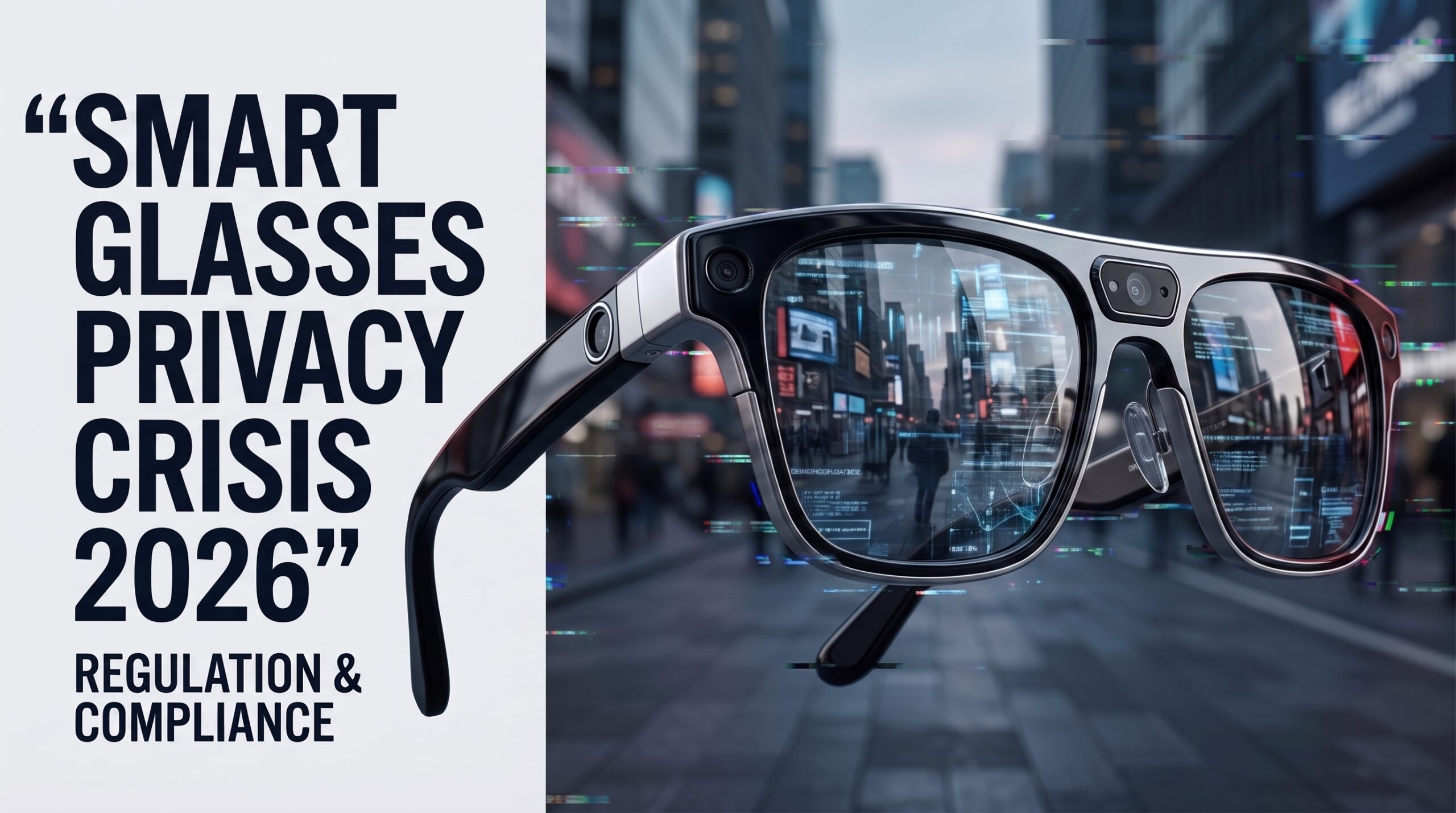
For most of the past decade, smart glasses were a philosophical privacy concern — a hypothetical about what might happen if cameras became wearable and identity recognition became instant. The first half of 2026 turned that hypothetical into a documented chain of concrete events: whistleblower reports, federal class-action lawsuits, regulatory investigations spanning three continents, a confirmed facial-recognition code deployment inside a consumer app, and a first-of-its-kind statewide court ban — all within roughly six months. For corporate compliance and legal teams, smart glasses have moved from an emerging-technology curiosity to an active regulatory exposure.
Key Takeaways
- The EU AI Act’s Article 5 prohibitions on real-time remote biometric identification in public spaces became fully applicable on August 2, 2026, directly implicating facial-recognition-capable smart glasses across the European Union.
- Several European countries — including France, Germany, and the Netherlands — are actively considering bans on Meta’s smart glasses, with the European Data Protection Board conducting a dedicated “social acceptability” review of the category in 2026.
- A Swedish media investigation found contractors in Nairobi, Kenya reviewing smart glasses footage for AI training had seen recordings of bathroom visits, banking details, and intimate moments — a finding that triggered a US class action, formal European Parliament questions, and a Renew Europe group letter to the European Commission.
- Harvard students demonstrated in 2024 (with continued relevance through 2026 policy debates) that consumer smart glasses combined with publicly available facial-recognition tools could identify a stranger’s name, address, and phone number in just over a minute — using entirely off-the-shelf, publicly available components, not custom hardware.
- 75 civil liberties, domestic violence, and worker rights organizations formally called on Meta to halt facial recognition plans for its Ray-Ban and Oakley product lines, while EPIC has separately urged the FTC and a nine-state regulatory consortium to block the feature.
The 2026 Timeline: How a Philosophical Concern Became a Regulatory Crisis
The acceleration of smart glasses privacy scrutiny in 2026 did not stem from a single triggering event but from a sequence in which each incident amplified the next. The starting point was a Swedish media investigation — reported by Svenska Dagbladet and Göteborgs-Posten — that found subcontractors in Nairobi, Kenya reviewing footage captured by Ray-Ban Meta users as part of Meta’s AI model training pipeline had encountered recordings including bathroom visits, banking details, and people having sex. This reporting directly triggered a US class-action lawsuit, formal questions from Members of the European Parliament to the European Commission, and a letter from the Renew Europe political group specifically asking what regulatory action the EU could take.
Separately, and around the same period, Wired reported finding facial recognition code already built into the mobile companion app used to connect smart glasses to a user’s phone — even though the feature had not been publicly activated. This “dormant capability” finding is legally significant: it shifts the regulatory question from whether a company might add facial recognition in the future to whether the infrastructure for that capability already exists inside a shipped consumer product.
The Regulatory Response: A Fragmented but Intensifying Patchwork
European Union: GDPR and the AI Act Converge
Camera-equipped smart glasses trigger overlapping EU legal regimes. Basic camera capture invokes GDPR Article 6 transparency requirements and member-state recording consent statutes. Facial recognition processing that extracts biometric templates for identification purposes goes further, triggering GDPR Article 9’s special category provisions for biometric data. Critically, the EU AI Act’s Article 5 prohibitions on real-time remote biometric identification in public spaces for law enforcement purposes became fully applicable on August 2, 2026 — a hard regulatory deadline that directly implicates any facial-recognition-capable consumer wearable operating in EU public spaces.
France’s data protection authority (CNIL) and the European Data Protection Board both opened dedicated regulatory workstreams on smart glasses in 2026, with an EDPB report specifically addressing the “social acceptability” of the category expected by the end of summer 2026. This is not the EU’s first engagement with the category: when Meta launched the original Ray-Ban Stories in September 2021, both Ireland’s Data Protection Commission and Italy’s Garante raised concerns about whether people being recorded would realistically notice a small LED recording indicator light — a concern that has only intensified as devices have become more capable and less visually distinguishable from ordinary eyewear.
United States: A Regulatory Patchwork With No Federal Framework
There is currently no federal law in the United States specifically governing smart glasses. Devices instead fall under a patchwork of existing frameworks never designed with always-on, AI-integrated wearables in mind: state-level recording consent laws (some states require all-party consent to recordings), wiretapping statutes, and state biometric privacy laws such as Illinois’s Biometric Information Privacy Act (BIPA), which imposes specific obligations around biometric data collection and consent.
This patchwork has produced uneven but escalating enforcement activity:
- EPIC (Electronic Privacy Information Center) has formally urged the FTC and a bipartisan nine-state regulatory consortium to block Meta from adding facial recognition to its smart glasses line, arguing the feature would violate the FTC Act and state unfair/deceptive trade practice laws.
- A March 2026 class-action complaint filed in the US District Court for the Northern District of California (Bartone and Canu v. Meta Platforms and Luxottica of America) alleges Meta’s “designed for privacy, controlled by you” marketing claims were materially false.
- 75 organizations — spanning domestic violence advocacy, worker rights, and civil liberties groups — jointly called on Meta to halt and publicly disavow any plans to add facial recognition to its Ray-Ban and Oakley product lines.
- Institutional bans have emerged independently of federal or state legislation, including a first-of-its-kind statewide court ban and exclusion from major industry conferences (one Las Vegas conference banned camera-equipped smart glasses with zero exceptions, including prescription versions, during its August 2026 event).
Why This Category of Device Presents a Unique Risk Profile
The core technical concern, as articulated by privacy researchers, is structural rather than incidental: putting a camera into glasses is already an inherent privacy risk because it normalizes covert recording in public and private spaces alike; adding facial recognition on top of that camera compounds the risk into what one privacy law expert described as “an intolerable escalation.” Without any opt-in mechanism for the person being recorded or identified, this technology fundamentally changes what a stranger in public can learn about an individual — from effectively nothing to a complete identity dossier, generated in seconds.
The Harvard student demonstration (I-XRAY), which combined consumer smart glasses, a facial image search engine (PimEyes), and a large language model, proved this is not a theoretical risk requiring sophisticated technical resources: the entire mechanism relied exclusively on publicly available tools, and the students identified dozens of individuals — including fellow students — without those individuals ever being aware. The researchers deliberately withheld their code from public release specifically because of this ease of replication.
Corporate Compliance Implications
For organizations navigating this environment in 2026, several compliance considerations are now concrete rather than speculative:
- Facial-recognition capability, whether active or dormant, is now a material legal fact. The discovery of inactive facial recognition code inside a companion app demonstrates that regulators and plaintiffs’ counsel will scrutinize latent capability, not merely activated features.
- Workplace and public-facing business policies need explicit smart glasses provisions. Institutions managing sensitive populations — healthcare facilities, courts, financial institutions handling in-person transactions, and any business subject to two-party consent recording laws — face direct exposure from customer- or employee-worn recording devices that may not be visually identifiable as recording equipment.
- AI training data pipelines involving human review require jurisdiction-specific scrutiny. The Kenya-based content review scandal illustrates that offshoring sensitive video review work does not insulate a company from EU or US regulatory and reputational consequences.
- Marketing claims about privacy design are now litigation-tested. The pending California class action demonstrates that “privacy by design” marketing language is being treated as a potentially actionable representation, not mere puffery.
Frequently Asked Questions
Is facial recognition currently active on consumer smart glasses like Ray-Ban Meta?
As of the most recent public statements, Meta has indicated no facial recognition feature has been launched on its Ray-Ban glasses, though reporting has found dormant facial recognition code within the companion mobile app and internal plans reportedly under consideration.
What does the EU AI Act say about smart glasses and facial recognition?
The EU AI Act’s Article 5 prohibits real-time remote biometric identification in public spaces for law enforcement purposes, and this provision became fully applicable on August 2, 2026 — directly relevant to any facial-recognition-capable wearable device operating within the EU.
Is there a federal law regulating smart glasses in the United States?
No. Smart glasses in the US currently fall under a patchwork of state-level recording consent laws, wiretapping statutes, and biometric privacy laws like Illinois’s BIPA, none of which were specifically designed for always-on, AI-integrated wearable devices.
Conclusion
The 2026 smart glasses privacy crisis illustrates a recurring pattern in technology regulation: a capability that was philosophically debated for years becomes a concrete legal and compliance problem only once a documented chain of real-world incidents — a whistleblower report, a demonstrated exploit, a discovered dormant feature — converts abstract risk into evidence. With the EU AI Act’s biometric provisions now fully in force, US litigation actively testing corporate privacy marketing claims, and civil society organizations coordinating pressure across continents, corporate legal and compliance teams can no longer treat smart glasses as a future risk to monitor — it is a present regulatory and reputational exposure requiring active policy response.
Discover more from The Economy
Subscribe to get the latest posts sent to your email.

Gold Falls 3.7% as Yields Surge: Is Gold Still a Safe Haven in 2026?

US 10-Year Yield Hits 5.24%: What the Historic Bond Market Sell off Means for Mortgages and Investors

Battle for the Farm Belt: How Tariff Pressures and Fuel Costs Are Reshaping Iowa’s 2026 Midterms

Southeast Asia’s Critical Minerals Power Play: Can ASEAN Avoid Choosing Between China and the US?

MAS Allocates S$1.45 Billion to Five Asset Managers in Third EQDP Batch: Total Deployment Reaches S$5.4 Billion

Beyond Singapore’s Borders: How Squeezed SMEs Can Unlock High-Yield Growth Across ASEAN

Bank Jago’s Wealth Management Push:Indonesia’s 31.1 Million Investors boom

Beyond the Four-Year Degree: The $100K+ Trade Careers Young Americans Are Overlooking

SpaceX Starship Achieves First Full Orbit on Historic 10-Hour Test Flight 14

Google’s $15B Finland AI Investment: Data Centers, Nuclear Power & Jobs

Fast Invoice Factoring: Rates, APR Math & Contract Traps

SOC 2 Type II Guide: Cost, Timeline & Compliance Companies

Hong Kong Wages Surge 3.4% in June: Sector Data & Analysis

Silver Price Today: Why the Xi-Trump AI Standoff Is Fueling a Safe-Haven Rally

Top 30 Stocks for Investment in PSX for Massive ROI in 2026

Oil Prices Break $100 in 2026: Middle East Conflict & Energy Markets

BRICS+ Cross-Border Payments 2026: Interoperability Explained

Fidelity Investments Review 2026: SPAXX Yields & Zero-Fee Funds

10-Year Treasury Yield Hits 4.80%: What It Means for Rates & Portfolios

IMF & World Bank 2026 Global Economic Outlook: Growth, Inflation, Debt

Shein Clothes Quality & Safety in 2026: What Lab Tests Show

China’s US$10.8 Billion Trade Shortcut: Why the Pinglu Canal Matters

High-CPM Finance Niches 2026: Publisher Monetization Blueprint

Middle East War Economics 2026: Oil Prices & Energy Markets

China Stocks Today: Are Big Economies in Asia Nearing a Market Bottom?

Global Pension Systems Ranked: The World’s Best and Worst Retirement Frameworks

Social Security Trust Fund 2032: OASI Depletion Timeline Explained

Enterprise AI Platforms Disrupting B2B SaaS in 2026: Full Analysis
-

 Markets & Finance9 months ago
Top 15 Stocks for Investment in 2026 in PSX: Your Complete Guide to Pakistan’s Best Investment Opportunities
-

 Analysis7 months ago
Johor’s Investment Boom: The Hidden Costs Behind Malaysia’s Most Ambitious Economic Surge
-

 Analysis7 months ago
Top 10 Stocks for Investment in PSX for Quick Returns in 2026
-

 Banks9 months ago
Best Investments in Pakistan 2026: Top 10 Low-Price Shares and Long-Term Picks for the PSX
-

 Analysis8 months ago
Brazil’s Rare Earth Race: US, EU, and China Compete for Critical Minerals as Tensions Rise
-

 Investment9 months ago
Top 10 Mutual Fund Managers in Pakistan for Investment in 2026: A Comprehensive Guide for Optimal Returns
-

 Global Economy9 months ago
15 Most Lucrative Sectors for Investment in Pakistan: A 2025 Data-Driven Analysis
-

 Global Economy9 months ago
Pakistan’s Export Goldmine: 10 Game-Changing Markets Where Pakistani Businesses Are Winning Big in 2025