
Auto
The Electric Awakening: Toyota’s Strategic Gambit to Counter the Chinese Surge


The Pragmatic Pivot
In the hushed boardrooms of Toyota City, the skepticism that once defined the world’s largest automaker regarding battery-electric vehicles (BEVs) has been replaced by a focused, almost martial, sense of urgency. Long the champion of the “multi-pathway” strategy—a balanced diet of hybrids, hydrogen, and combustion—Toyota is now aggressively “switching on” its EV ambitions.
This is not a white-flag surrender to the electric zeitgeist, but a calculated counter-offensive. Driven by the existential threat of Chinese titans like BYD and GAC, Toyota is compressing a decade of development into a three-year sprint. With a target of 1.5 million EV sales by 2026 and 15 new models by 2027, the giant is finally moving.
I. The China Crisis: Why Toyota Had to Move
For decades, Toyota treated the Chinese market as a reliable profit engine. However, the rapid ascent of domestic “New Energy Vehicle” (NEV) brands has upended the status quo. BYD’s vertical integration and cost-efficiency have allowed it to offer EVs at price points Toyota’s traditional architecture couldn’t match.
The “Local-for-Local” Strategy
Toyota’s response has been a radical shift toward localized R&D. By partnering with BYD for battery tech and Huawei for software (specifically the HarmonyOS smart cockpit in the new bZ7 sedan), Toyota is effectively “Sinicizing” its supply chain to reclaim market share.
- Cost Reduction: Leveraging local Chinese suppliers has slashed production costs by an estimated 30%.
- Speed to Market: The bZ3X and bZ7 were developed in record time compared to typical Japanese cycles.
II. The Kyushu Battery Fortress
A cornerstone of this pivot is the massive investment in domestic and global battery production. The new plant in Kyushu, Japan, serves as a high-tech hub for next-generation lithium-ion and upcoming solid-state batteries.
Key Production Metrics (2025–2026)
| Facility | Focus | Capacity/Investment |
| Kyushu Plant | High-performance BEV batteries | Lead hub for “next-gen” cells |
| North Carolina (US) | SUV/Highlander EV batteries | $13.9 Billion total investment |
| GAC-Toyota JV | Affordable LFP batteries | Targeting <$20k price points |
III. Technical Edge: The Solid-State Holy Grail
While the market frets over current sales, Toyota is playing the long game with all-solid-state batteries. Projected for commercial pilot runs by 2027-2028, this technology promises:
- 1,200 km range on a single charge.
- 10-minute charging times.
- Significantly higher safety and energy density than current liquid-electrolyte batteries.
“We are not just catching up; we are preparing to leapfrog,” noted a senior Toyota engineer during the 2025 technical briefing. This high-stakes bet aims to render the current Chinese cost advantage obsolete by shifting the battle to superior energy physics.
IV. Regional Strategies: A Tale of Two Markets
Toyota’s EV strategy is a masterclass in geopolitical navigation.
The West: Hybrid Dominance as a Bridge
In the US and Europe, where EV mandates are softening and charging infrastructure remains patchy, Toyota’s record-breaking hybrid sales (the Prius and RAV4 Hybrid) provide the cash flow to fund the EV transition. In the US, the upcoming Highlander EV (three-row SUV) is positioned to dominate the family segment.
The East: The Battle for Survival
In China, the strategy is “survive and thrive.” The bZ series—including the sleek bZ7 flagship—is Toyota’s attempt to prove it can build a “software-defined vehicle” that appeals to tech-savvy Gen Z buyers in Shanghai and Beijing.
V. Risks and Industry Implications
The pivot is not without peril.
- Margin Compression: EVs currently carry lower margins than hybrids. Toyota must scale rapidly to protect its bottom line.
- Brand Identity: Transitioning from “reliable combustion” to “tech-forward electric” requires a massive marketing pivot.
- Tariff Wars: With increasing tariffs on Chinese-made components, Toyota’s reliance on Chinese tech for its global models could become a liability.
Conclusion: The Giant Refuses to Fall
Toyota’s “switching on” to EVs is a pragmatic recognition that the era of pure internal combustion is waning. However, by refusing to abandon hybrids and hydrogen, they are hedging against a volatile energy future. If their solid-state ambitions materialize by 2027, the “Toyota EV Counter” might not just blunt the Chinese threat—it might redefine the global industry once again.
References:
- Toyota Motor Europe 2025 Record Sales
- Toyota’s $5.6B Battery Investment
- The 2026 bZ7 and Huawei Partnership
Discover more from The Economy
Subscribe to get the latest posts sent to your email.


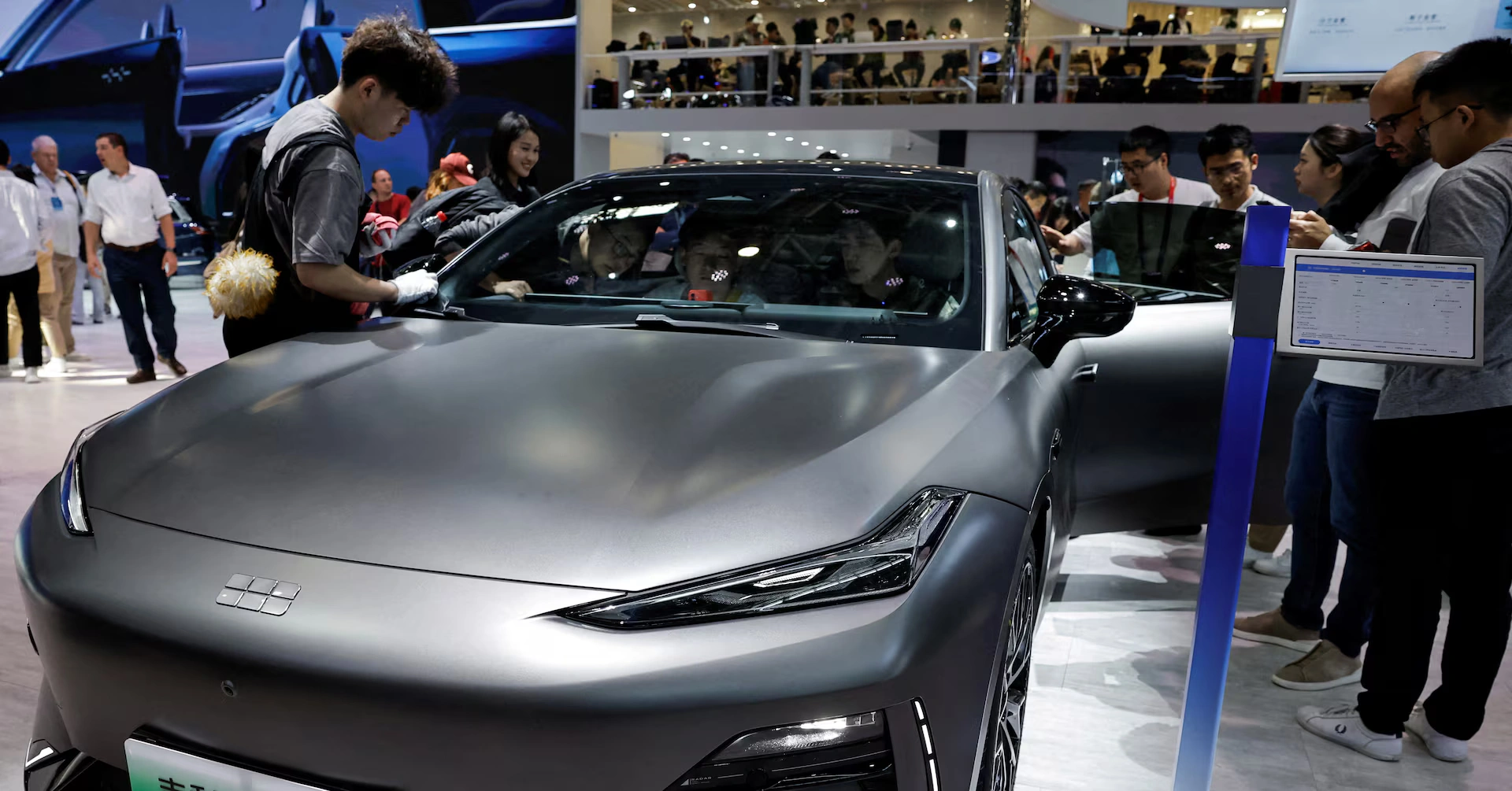
A Wuling Hongguang MiniEV rolls off a Liuzhou production line priced at $6,560. A Chevrolet Equinox EV, built four time zones away in Spring Hill, Tennessee, starts above $34,000. The gap between those two numbers is the real story of the global auto industry in 2026, and Chinese EVs are no longer a distant threat to Detroit — they are a wall the United States has built around itself, one that is already cracking at the edges in Mexico and Canada. The 100% U.S. tariff has not solved the competitiveness problem. It has only postponed the reckoning.
The Tariff Wall Is Holding, But the Perimeter Isn’t
Washington’s strategy has been simple: keep Chinese EVs out, buy American manufacturers time to catch up. The result has been a market frozen in place rather than one transformed. A 100% import tariff, first imposed by the Biden administration and kept in place by President Trump, continues to block direct retail competition between Chinese OEMs and U.S.-listed automakers on American soil. Detroit’s response has been retreat, not reinvention — General Motors and Ford have both pared back their near-term EV production targets, and the Big Three’s global market share has slid from 21.4% in 2019 to roughly 15.7% in 2025, according to reporting cited by the Detroit News.
That figure matters because it shows the tariff has protected market share at home while doing nothing to arrest the bigger loss abroad. BYD overtook Tesla as the world’s top-selling EV maker in 2025, delivering 2.26 million units against Tesla’s 1.64 million — a gap that didn’t exist five years ago and that no American tariff schedule touches, because it was won in markets the U.S. doesn’t control.
Meanwhile the wall has a side door. Canada cut its tariff on Chinese-built EVs to 6.1% in January 2026, allowing up to 49,000 vehicles a year in a deal Prime Minister Mark Carney struck directly with Beijing — reportedly in exchange for China easing its own tariffs on Canadian canola oil. The quota is expected to climb roughly 6% annually, reaching 70,000 within five years. BYD now has a partial North American foothold without ever crossing the U.S. border.
The headline number is almost absurd by American standards. Five of China’s best-selling EVs sit in a $10,000 to $12,000 price band, while the average new car in the U.S. now costs roughly $50,000 — more than four times as much. The Wuling Hongguang MiniEV anchors the bottom of that stack at $6,560, and Geely’s EX2 populates the $8,000–$12,000 tier with a full feature set; auto analyst Felipe Munoz has pointed to the EX2’s interior quality and use of cabin space as evidence that the price gap isn’t simply a subsidy illusion.
That price advantage is not a temporary distortion of currency or labor costs. It is structural. China’s three best-selling EV brands — BYD, Wuling, and Geely — received approval for 83 new passenger car models collectively in the twelve months to October 2025. Volkswagen received approval for six. Nissan got two. That isn’t a difference in effort; it’s a difference in industrial architecture — state subsidy, vertical integration across the battery supply chain, and a domestic manufacturing base operating at a scale Western automakers have never built. A 2024 AlixPartners report found Chinese EV models reach market two to three years faster than non-Chinese brands, a velocity gap tariffs delay but cannot erase.
Three numbers explain why this matters beyond price tags:
- 16 million — electric cars China produced in 2025, roughly 20% more than domestic demand absorbed, according to the International Energy Agency, pushing the surplus into export markets.
- 75% — China’s share of global EV manufacturing capacity.
- 40% — China’s share of global EV trade volume.
China isn’t just making cheaper cars. It’s making more of them than its own market can absorb, and that surplus is finding doors the United States hasn’t fully sealed — Mexico, where Chinese vehicles briefly captured a quarter of total sales before a new 50% tariff took effect in January 2026, and Canada, where the door is now deliberately ajar.
Why a 100% Tariff Hasn’t Produced American Competitiveness
Does the US tariff on Chinese EVs actually protect American carmakers long-term?
The tariff protects domestic sales volume in the short term but does not address the underlying cost and innovation gap. It has allowed GM, Ford, and Tesla to avoid building lower-priced models, leaving them structurally unprepared for competition whenever the tariff wall is lowered, bypassed regionally, or rendered irrelevant by Chinese manufacturing on North American soil.
That’s the uncomfortable analytical truth underneath the trade statistics. A protective tariff only works if the protected industry uses the breathing room to close the gap it’s being shielded from. Instead, the opposite has happened. Without Chinese competition forcing their hand, U.S. manufacturers — even Tesla, the supposed EV pioneer — have concentrated on affluent buyers rather than developing the lower-priced, lower-margin vehicles that would broaden the market. Tesla has, by its own public framing, become more focused on robotaxis and humanoid robots than on delivering new affordable models.
That’s a strategic choice with consequences. EV sales in the U.S. have softened since Biden-era tax credits expired, and the national charging buildout has underdelivered. Ford and GM have both announced significant pullbacks to their EV ambitions — not because Chinese cars are competing with them directly, but because the broader market the tariff was meant to nurture hasn’t matured the way policymakers hoped.
There’s also a quieter erosion happening through software, not steel. Volvo recently received U.S. government approval to continue selling vehicles running Chinese-developed and maintained software, even after a Biden-era rule targeting companies with significant Chinese ownership took effect in March 2026. The tariff wall was built for hardware. It was never designed for code.
The next phase of this story isn’t about whether Chinese EVs reach North America — they already have, through Mexico and now Canada. It’s about whether they reach the United States, and how.
Direct imports of Chinese-made EVs into the U.S. remain highly unlikely in the near term given the political weight the United Auto Workers carries in swing-state politics, and given the bipartisan security concerns that have hardened, not softened, since 2024. But a joint-venture manufacturing arrangement — Chinese EVs built on U.S. soil, with U.S. labor, under licensing or partnership structures — is increasingly treated as plausible by industry analysts. Ford has reportedly explored ties with Geely, and the Trump administration’s rhetoric toward Chinese EV plants in the U.S. has at times sounded more welcoming than the tariff policy it inherited suggests.
For policymakers, the second-order effect is a credibility problem. Stellantis, which owns Dodge, Chrysler, Jeep, and Ram alongside several European brands, now competes in a hemisphere where its northern and southern neighbors are taking opposite approaches — Canada opening a narrow channel, Mexico closing one. A North American auto market that operated for three decades as a single integrated zone under NAFTA and its successor is fragmenting into three different tariff regimes for the same category of vehicle. That complicates supply chains for every automaker with cross-border plants, not just the ones trying to sell EVs.
For American consumers, the implication is more direct and less abstract: continued exclusion from a global product category that is, by most independent measures, cheaper, more feature-rich, and evolving faster than its domestic alternative. The Council on Foreign Relations has framed this gap in stark terms — China’s EV producers have “taken the world by storm” in a way that poses a structural threat to an American auto industry still organized around a century-old product architecture.
Not everyone agrees the tariff is a mistake. The dominant counter-argument, voiced consistently by the UAW and echoed across both political parties, rests on national security and industrial-base preservation: allowing subsidized Chinese EVs unrestricted access to the U.S. market wouldn’t just compress American automaker margins — it could hollow out domestic manufacturing employment in a politically and economically sensitive sector, the way Japanese and South Korean competition reshaped Rust Belt manufacturing in the late twentieth century, but compressed into a far shorter timeline.
There’s also a more technical objection. Critics of liberalization point to the gap between the 100% tariff’s stated justification — countering Chinese state subsidies — and the scale of the subsidies themselves. Trade economists at Bruegel have noted the tariff rate implies that half the cost of a Chinese EV is government-funded, a claim that exceeds most independent estimates of actual subsidy levels, suggesting the policy may be doing more political signaling than precise economic correction.
Energy economist James Sallee of UC Berkeley represents the opposing camp most bluntly: he argues the Canada-China deal demonstrates that simply allowing the world’s most popular EVs to compete directly in North America would expand consumer access and accelerate decarbonization, without the U.S. needing to wait for Detroit to catch up on its own.
The contest over Chinese EVs was never really about a single number on a customs form. It’s about whether an industrial strategy built on exclusion can substitute for one built on competitiveness — and five years into the experiment, the evidence is uneven at best. The tariff has done exactly what it promised: it has kept Chinese-badged cars off American driveways. It has not done what its architects implied it would: force U.S. automakers to build something that could win on price, speed, or software if the wall ever came down.
That wall is no longer airtight. It has a 49,000-vehicle gap in Canada, a software loophole at Volvo, and a Mexican border where tariff rates are being renegotiated under pressure rather than settled by policy. None of those cracks amount to collapse. But they are the shape of how trade walls usually fail — not all at once, but at the edges, until the center can no longer hold the line it was built to protect.
America’s carmakers don’t have to compete with Chinese EVs today. That is not the same as being able to avoid it indefinitely.
Discover more from The Economy
Subscribe to get the latest posts sent to your email.
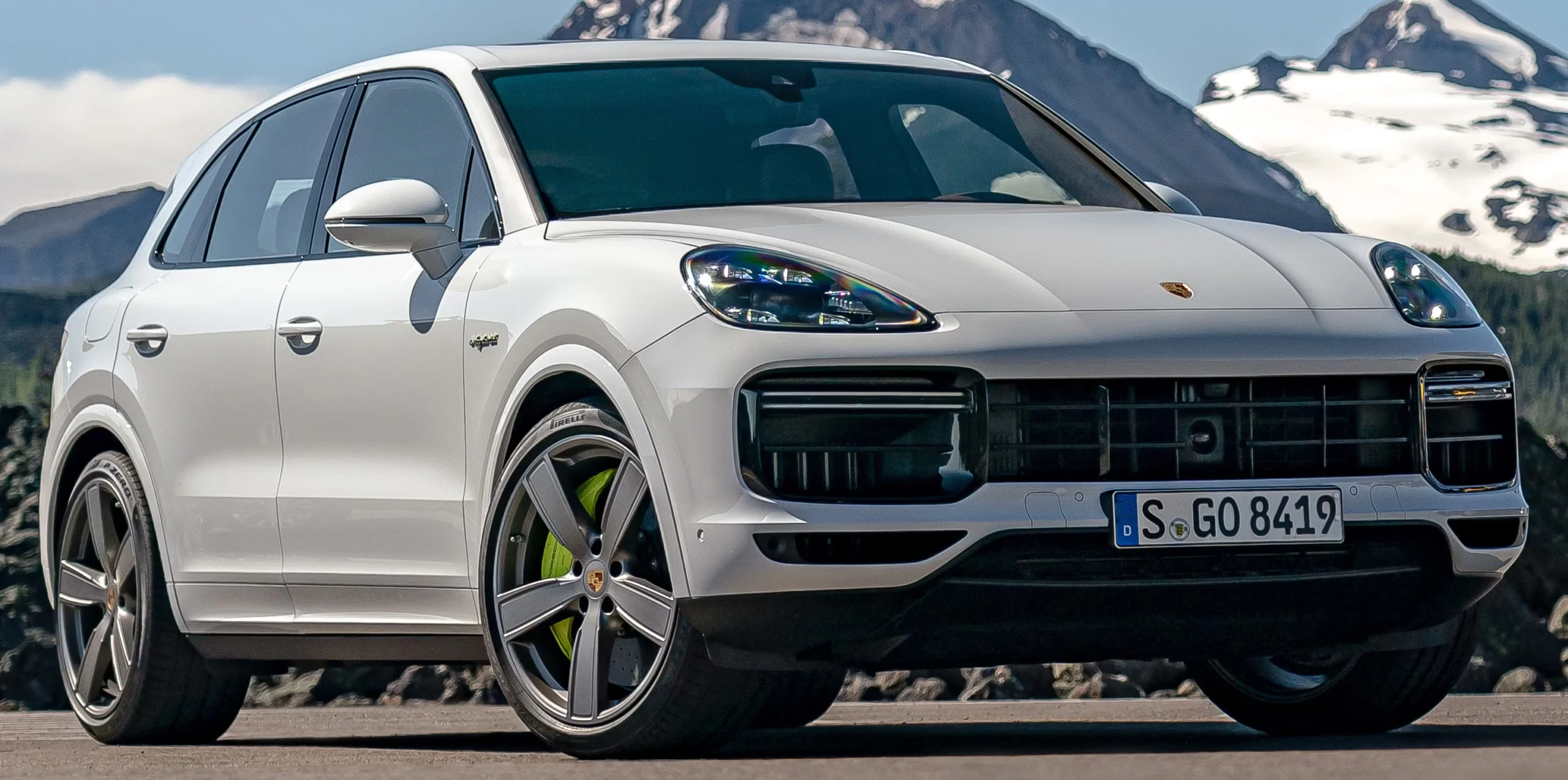
At Gaydon, Warwickshire, on June 17, 2026, Jaguar Land Rover’s chief executive, PB Balaji, told a room of bondholders, banks and Tata Motors investors that the carmaker’s American future runs less through the charging cable than through old-fashioned petrol — and plenty of it. JLR’s strategy now targets US millionaires and billionaires with hybrid and petrol-powered Range Rovers and Defenders, betting that buyers who don’t blink at six-figure price tags also won’t blink at Donald Trump’s tariffs. It’s a reversal five years in the making. Shares in Tata Motors Passenger Vehicles fell more than 8% on the day.
The timing isn’t accidental. JLR is still digging out from a cyberattack that the UK’s Cyber Monitoring Centre called the most economically damaging cyber event in the country’s history — a five-week production shutdown last September that cost an estimated £1.9 billion and rippled through more than 5,000 supplier firms. Layer on a 25% US import tariff imposed in April 2025, later trimmed to 10% for UK-built cars under a bilateral trade deal but left higher for Slovak-built Defenders, and the arithmetic of selling cars in America turned brutal. JLR’s full-year results for FY26, posted on its own investor relations site, explain why patience has worn thin: revenue of £22.9 billion, wholesale volume down 23.2% on the previous year, and an EBIT margin of just 0.7%. Against that backdrop, doubling down on wealthy, price-insensitive American buyers looks less like ambition and more like survival.
Inside JLR’s Plan to Win Over America’s Millionaires and Billionaires
At the heart of Wednesday’s presentation was a structure JLR calls House of Brands: four distinct identities — Range Rover, Defender, Discovery and Jaguar — each pursuing a different relationship with the battery. Jaguar alone goes fully electric, built on a new Electric Modular Architecture (EMA) at Halewood, Merseyside, with the first Type 01 grand tourer due this year. Range Rover, Defender and Discovery keep what JLR calls propulsion flexibility: mild hybrid, full hybrid, plug-in hybrid and battery-electric variants sold side by side for as long as customers want them.
That flexibility is the real story. Trade publication WardsAuto reported that JLR now frames hybrid and combustion models as a deliberate bridge while battery-electric versions catch up with demand, not a stopgap to be abandoned the moment EV sales improve. That’s a marked change in tone from 2021, when JLR’s original Reimagine strategy promised Jaguar would lead an electric-only future for the entire group.
North America sits at the center of the new plan. Balaji told reporters that rising demand for luxury goods, paired with strong brand loyalty, points to real growth potential in the region, and singled out Defender as a candidate for new high-end variants tailored to American buyers. JLR is already exploring how to make that happen on the ground: a non-binding memorandum of understanding signed with Stellantis weeks earlier opens the door to building Defender-style vehicles on US soil, sidestepping import tariffs altogether, according to bmmagazine.
JLR laid out the financial logic in hard numbers:
- £3.7 billion in near-term investment, much of it aimed at next-generation Range Rover and Range Rover Sport electric variants and the Jaguar Type 01
- £1.7 billion in cost savings over two years, intended to push the company’s breakeven point down from 350,000 units to roughly 300,000
- A 4% EBIT margin target for FY27 — modest by historic JLR standards, but a clear improvement on FY26’s 0.7%
- An £18 billion investment commitment running through FY29, unchanged despite the turbulence
What JLR’s Hybrid and Petrol Strategy Reveals About the Luxury EV Slowdown
JLR isn’t alone in pulling back. Auto Express noted that Porsche has abandoned its target of selling 80% electric vehicles by 2030, reintroducing hybrid and petrol models; Lamborghini converted a planned electric model into a hybrid; and Bentley pushed back its first all-electric SUV by roughly a year. The pattern across the ultra-luxury tier is consistent: brands that promised an electric-only future are buying themselves more time with combustion and hybrid power, in precisely the price bracket JLR is now chasing.
Why Is JLR Targeting Millionaires and Billionaires in the US?
Wealthy American buyers are largely indifferent to tariff-driven price increases, and the US supplies more than a quarter of JLR’s global revenue. With roughly 20 million American millionaires and a record 989 US billionaires per Forbes’ 2026 list, JLR sees more durable margins in fewer customers than in volume.
The logic traces back further than this week. Carscoops reported in 2023 that then-chief-executive Adrian Mardell first floated the idea of chasing America’s millionaire class rather than competing on volume, pointing to Jaguar’s stronger, wealthier customer base in the 1990s. What’s changed under Balaji is the scope: the millionaire pitch now spans the whole House of Brands, not just a reinvented Jaguar, and it comes paired with an explicit hybrid-and-petrol commitment rather than a promise that EVs alone would carry the group upmarket.
Yet the electric ambition hasn’t disappeared — it’s been re-sequenced. Jaguar’s first EMA-based product and a Range Rover Electric variant are both due this year, giving JLR a foot in both camps: electric halo cars to prove technological credibility, and combustion-hybrid volume to keep the balance sheet alive while battery costs and US charging infrastructure catch up with the company’s own ambitions.
The Second-Order Effects: Suppliers, Rivals and the UK’s Manufacturing Base
The shift carries consequences well beyond JLR’s own balance sheet. The company’s UK supply chain, still recovering from last year’s cyberattack, depends on stable production volumes to absorb fixed costs; the Bank of England said the production halt alone shaved 0.17 percentage points off UK GDP in September 2025, a reminder of how tightly JLR’s fortunes are woven into Britain’s industrial output. A pivot toward hybrid and petrol variants, which draw on more conventional and more diversified parts than battery-electric platforms, could ease some of that pressure by spreading orders across a wider supplier base rather than concentrating them on battery and motor specialists.
For competitors, JLR’s move sharpens an emerging two-speed market in luxury vehicles. BMW, Mercedes-Benz and Porsche all manufacture inside the United States, face a smaller tariff penalty as a result, and can afford to keep pushing electric models without the same urgency to lean back on combustion. JLR, lacking US factories, doesn’t have that luxury. Its discussions with Stellantis about American production are as much about tariff arithmetic as about market positioning — and a sign of how seriously the company takes the cost gap. Automotive News has separately reported that JLR absorbed a $520 million tariff hit in the US even after raising prices, underlining just how exposed the company remains without domestic assembly.
For policymakers, the implications cut two ways. A renewed reliance on combustion and hybrid technology buys JLR time but complicates the UK’s own net-zero ambitions for vehicle manufacturing, given the company’s outsized share of British car output. In Washington, the strategy amounts to a quiet vote of confidence that tariff policy, disruptive as it’s been, hasn’t driven JLR out of the US market. Instead, the company is reorganizing around it — exploring domestic assembly through Stellantis and leaning into the one customer segment tariffs can’t easily touch. Small and medium-sized JLR suppliers, many of whom received emergency financing after the cyberattack, stand to benefit most directly from steadier production, since a wider, more flexible model range generally means more predictable order volumes than a high-stakes bet on EV-only output timed against uncertain demand.
The Skeptics’ Case: Is This Strategic Patience or Retreat?
Not everyone reads JLR’s pivot as prudence. Critics within the industry argue that five years after Reimagine promised an electric-only Jaguar and a rapidly electrifying Land Rover lineup, repeated delays to the Range Rover Electric and now an explicit embrace of petrol and hybrid power for growth read less like sequencing and more like retreat. The brand froze sales of some combustion Jaguar models in 2024 to clear room for its rebrand, only to lean on hybrid and petrol Land Rover products two years later to hit growth targets — a contradiction that gives ammunition to those who say the original electric-only timeline was unrealistic from the start.
There’s also a balance-sheet argument against complacency. JLR’s FY26 free cash flow was negative £2.2 billion, and an EBIT margin target of just 4% for FY27 remains well below the 10% management once promised before tariffs and the cyberattack intervened. Tata Motors Passenger Vehicles’ 8% share-price drop on results day suggests investors share some of that skepticism, even as they welcome a more conservative breakeven target.
JLR’s defenders counter that hybrid and petrol sales are simply more profitable than EVs at current battery costs, and that doubling down on America’s wealthiest buyers — rather than racing rivals toward mass-market EV volume — is the only credible path back to double-digit growth. That said, the next two years of delivery, not Wednesday’s slide deck, will settle the argument.
The tension at the heart of JLR’s announcement isn’t really about batteries versus engines. It’s about whether a heritage luxury group, still recovering from the costliest cyberattack in UK history and squeezed by an American tariff regime built for an earlier kind of trade war, can buy itself enough time with the wealthy to outlast the slower parts of the electric transition. Balaji is betting that America’s millionaires and billionaires, insulated from sticker shock by definition, are patient enough to wait while charging infrastructure and battery economics catch up. Mardell made a version of the same bet in 2023, before tariffs, before the breach, before a 23% drop in wholesale volumes. What’s different now is the size of the wager. JLR isn’t just reaching upmarket anymore — it’s reorganizing its entire House of Brands around the proposition that scarcity, not scale, is the only luxury strategy still standing.
Discover more from The Economy
Subscribe to get the latest posts sent to your email.
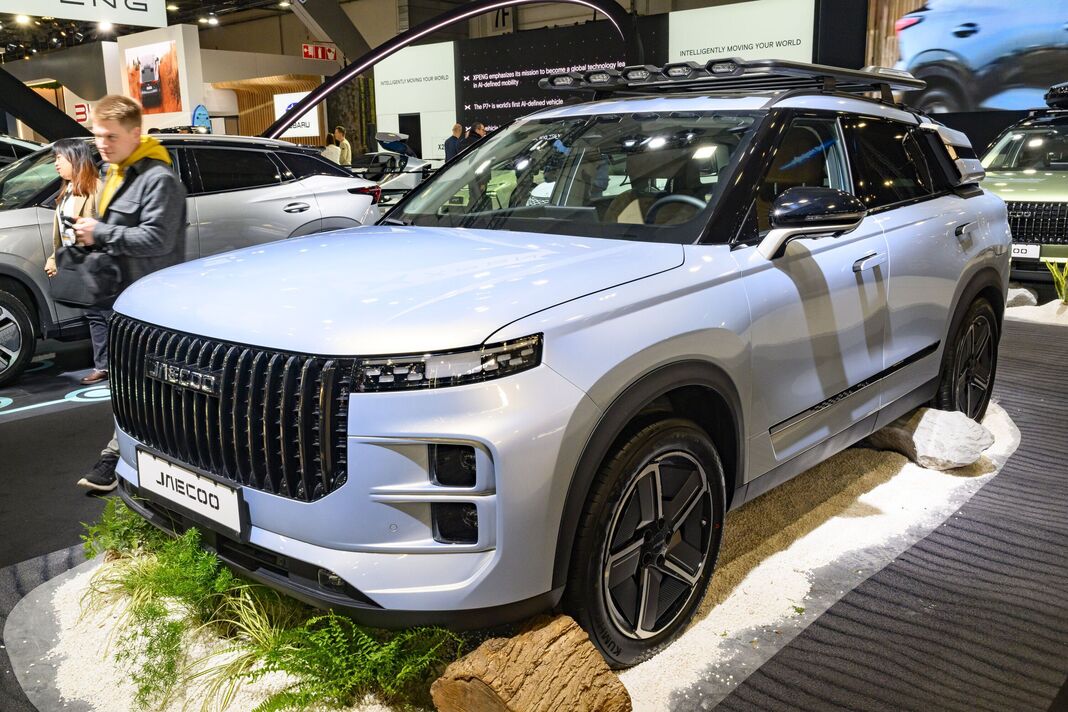
European cars made in China — from BMW’s Mini to Volvo’s EX30 — are caught between a cost logic that made them viable and a political climate determined to unmake it.
The Mini Aceman rolling off the production line at Zhangjiagang, Jiangsu, is a perfectly German car in almost every respect — designed in Munich, engineered by BMW, badged with the Union Jack heritage that its brand has traded on for six decades. The factory, however, belongs to Great Wall Motor. The batteries are Chinese. And starting in late October 2024, every one of those small electric crossovers exported to Europe arrived carrying a 20.7% countervailing duty on top of the EU’s standard 10% import levy. That tension — between where a brand lives in the consumer’s imagination and where it is physically built — now sits at the centre of the most consequential trade dispute in the European automotive industry’s recent history.
European brands manufacture cars in China to exploit a cost advantage in battery and component supply chains that can reach 90% cheaper than European equivalents. BMW, Volvo, and Polestar established Chinese factories to serve the local market and reduce production costs for global export — a strategy now under pressure from EU tariffs of up to 20.7% and proposed local-content rules requiring 70% EU-made components for subsidy eligibility.
For the better part of a decade, manufacturing European-brand vehicles in China was an elegant solution to two converging pressures: the extraordinary cost advantage of Chinese battery and component supply chains, and the imperative to establish a local footprint in the world’s largest car market. The logic was impeccable. A BMW iX3 built in Shenyang through the BMW Brilliance joint venture could reach European showrooms at a price its Leipzig-built equivalent could not match. A Volvo EX30 assembled in Zhangjiakou gave Geely-owned Volvo a sub-€40,000 electric entry point that repositioned the Swedish brand for a new generation of buyers.
That arithmetic is now being systematically dismantled. According to Bloomberg analysis, Chinese brands accounted for 11% of all electrified car sales in Europe across 2025, more than doubling their share from 2024 — and that figure rises to roughly one in seven when non-Chinese brands manufacturing in China are counted alongside them. The competitive pressure is real. So, increasingly, is the policy backlash.
Which European Cars Are Made in China — and Why It Happened
The roster of European cars made in China is longer and more distinguished than most European consumers realise. BMW produces both the electric Mini Cooper and the Mini Aceman at Zhangjiagang through Spotlight Automotive, a joint venture with Great Wall Motor established in 2018. Reuters reported in February 2026 that BMW is now in active negotiations with the European Commission over a minimum-price model that could replace the tariff entirely — mirroring a precedent set weeks earlier when Volkswagen’s Cupra brand secured the EU’s first-ever tariff exemption for its Tavascan SUV, built in China and now cleared to enter Europe under a minimum import price and annual quota arrangement.
Volvo, owned by China’s Geely Group since 2010, operates three Chinese factories and for years exported its compact EX30 from Zhangjiakou to every major market worldwide. The EX90 SUV, the EM90 people-carrier, and the S90 saloon are still assembled in China. Polestar — the Geely-backed performance brand spun out in 2017 — builds its entire model range on Chinese soil: the Polestar 2 in Zhejiang, the Polestar 3 in Chengdu, the Polestar 4 in Ningbo.
€2 billion — estimated annual EU tariff revenue from China-made EVs. Roughly 80% is collected from Chinese brands; the remainder from BMW, Mini, Tesla, Volvo, and other Western manufacturers producing in China. Source: CEPR, January 2026.
The deeper structural reason for this geography is cost. Chinese battery manufacturing retains a roughly 90% price advantage over European equivalents, according to a March 2026 Transport & Environment analysis — meaning that building an EV in Chengdu and shipping it westward was, for years, materially cheaper than building it in Ghent even after accounting for logistics. BMW, in its plainest internal admissions to British officials, delayed investment in Mini’s Oxford plant for electric production citing precisely this calculus. “Market uncertainty” was the official framing; competitive cost disadvantage was the substance.
Renault produced its Dacia Spring — Europe’s cheapest electric car — in China through a Dongfeng joint venture until tariff pressure forced a pricing recalculation. The broader picture is one of a decade-long industrial migration that European policymakers tolerated, then encouraged, then abruptly decided to reverse.
Why EU Tariffs Hit European Brands as Hard as Chinese Ones
What tariffs apply to European cars made in China?
European-branded vehicles manufactured in China face the same countervailing duties as their Chinese-owned competitors, because the EU’s anti-subsidy investigation was geographic, not proprietary. Any battery-electric vehicle built in China and exported to the EU is subject to the additional levy, regardless of whether the parent company is headquartered in Shanghai or Stuttgart. BMW Brilliance Automotive — the joint venture that produces the iX3 and Mini models — was designated a “co-operating company” in the EU probe, earning a 20.7% additional duty rate. Geely, as Volvo’s parent, faced an 18.8% rate on its Chinese-built models, lifting Volvo’s total import duty from 10% to nearly 29%.
“A price floor keeps consumer prices artificially high, effectively transferring income from European consumers to Chinese producers — and European brands bear that cost too.”
— Centre for Economic Policy Research, January 2026
The proposed workaround — replacing tariffs with minimum import prices — is not obviously better for the brands caught in the middle. CEPR economists warned in January that a price floor would simply transfer surplus from European consumers to Chinese and Western producers alike, without altering the underlying competitive dynamics. BMW shareholders might welcome the margin preservation; BMW buyers almost certainly would not.
EU Additional Countervailing Duties on China-Made EVs (on top of standard 10%)
| Brand / Group | Additional Duty | Status |
|---|---|---|
| BYD Group | +17.0% | In force since Oct 2024 |
| Geely Group (incl. Volvo, Polestar) | +18.8% | In force since Oct 2024 |
| BMW Brilliance (incl. Mini, iX3) | +20.7% | Under minimum-price negotiation |
| SAIC Group (incl. MG) | +35.3% | In force since Oct 2024 |
| VW Cupra Tavascan | 0% | Exempted Feb 2026 (min. price + quota) |
The Cupra Tavascan precedent is worth dwelling on. Volkswagen’s willingness to accept a price floor — effectively committing to sell its China-made SUV at a minimum threshold — represents the first successful navigation of this new regulatory terrain by a Western brand. It won’t be the last. BMW’s parallel negotiations with Brussels signal that the minimum-price model is becoming the de facto template for resolving the inherent awkwardness of European brands penalising themselves through their own supply chain choices.
The Industrial Accelerator Act and the 70% Threshold That Changes Everything
Even with tariff exemptions in play, the policy ground beneath European-brand China manufacturing is shifting more fundamentally. On 4 March 2026, EU Industry Commissioner Stéphane Séjourné unveiled the Industrial Accelerator Act — Brussels’ most ambitious industrial policy intervention since the Green Deal. The legislation, tabling a 70% EU-content requirement for electric vehicles, would directly condition public financial support for vehicle purchases on where they are made. Cars built in China by any company — including BMW, Volvo, and Polestar — would be ineligible for subsidy-backed purchase schemes in the EU’s member states.
That is not a marginal threat. Public incentive schemes have been central to EV uptake across Germany, France, and the Netherlands. Strip those incentives from China-sourced models and the competitive case for keeping production there collapses almost entirely — at least for the European market.
70% — EU content requirement for EVs under the Industrial Accelerator Act. The threshold would exclude any China-manufactured vehicle — European-branded or otherwise — from public purchase subsidies across EU member states. Source: Euronews, March 2026.
Volvo has already read this signal. Belgian production of the EX30 began in Ghent in April 2025, transferring the model out of Chinese manufacturing and into the IAA’s safe harbour. The switch cut waiting times from up to eight months to roughly 90 days, and it sidestepped the 28.8% combined duty that was eating into margins on every China-shipped unit. The EX40 is expected to follow into Ghent production in 2026. What looked like an expedient tariff dodge is now something more structural: a reorientation of where Volvo’s European product range is actually manufactured.
BMW’s trajectory is more complicated. The Mini Cooper and Aceman remain in Zhangjiagang, and BMW has delayed the Oxford electrification investment repeatedly. If the Industrial Accelerator Act passes in its current form, retaining that China production for European sales becomes very difficult to justify. China’s Ministry of Commerce threatened formal retaliation on 27 April 2026, arguing that the IAA’s local-content requirements violate WTO principles — a complaint Brussels has heard before and, on past evidence, is prepared to absorb.
The Case for Keeping Production in China — and Why It Still Has Force
The protectionist momentum in Brussels is real. It doesn’t follow that re-shoring European-brand production from China is straightforwardly desirable — or even achievable at a price European consumers will accept.
Transport & Environment’s own modelling, cited in its March 2026 report, suggests that European battery manufacturing could close the cost gap with China to around 30% if the continent scales production aggressively. That is a significant reduction from the current 90% gap. It is also still a 30% disadvantage — one that will be passed on to car buyers unless subsidised away through the same public funds the IAA seeks to redirect.
The arithmetic hasn’t changed. Only the politics has.
Polestar’s first-quarter 2026 results showed widening losses and deteriorating gross margins even as volume grew, with tariffs cited as a direct contributor. Moving production to South Korea and the United States — as Polestar is attempting — addresses the political problem but not the cost one. Building elsewhere is simply more expensive.
There is also a subtler argument that European policymakers tend to dismiss: the jobs created by European-brand China manufacturing are not zero. BMW’s Shenyang operations employ tens of thousands of workers, and the component supply chains feeding Volvo’s Chinese plants generate economic activity across Geely’s sprawling industrial network. When Chinese officials argue that the IAA’s local-content rules would “harm European consumers and global industry alike,” they’re not entirely wrong — though their primary motivation is self-evidently not European consumer welfare.
The more honest version of the counterargument is a timing one. If European battery manufacturing is still 30% more expensive than Chinese supply in 2026, mandating 70% EU content now means mandating higher car prices now. The transition costs are front-loaded. The competitive payoff — a Europe that can actually build the components its automotive industry needs — is, at best, a decade away.
A Decade’s Logic, One Season’s Politics
What is unfolding is not simply a trade dispute. It is the reckoning for a strategic calculation that made financial sense for much of the 2010s: that European brands could manufacture in China, capture its cost advantages, serve its domestic market, and remain primarily European companies in any sense that mattered to regulators or consumers. That assumption has proved fragile in both directions at once. Chinese domestic demand for European brands has softened as homegrown competitors improved. And European regulators, alarmed by the pace of Chinese brand expansion at home, have decided that the implicit subsidy flowing to European-brand China manufacturing can no longer be tolerated.
Volvo’s Ghent pivot, BMW’s Brussels negotiations, Cupra’s minimum-price precedent — these are not isolated events. They are the first movements of a much larger industrial reshuffling, one that will take years to complete and whose final cost — to consumers, to brands, to the workers on both sides — remains genuinely uncertain.
The badge still says Munich. But for how much longer the factory says China is now a political question as much as an economic one.
Discover more from The Economy
Subscribe to get the latest posts sent to your email.

Goldman Sachs: “The Circulatory System Is Not Working”

Why the U.S. Budget Airline Model Is Running Out of Runway

China’s Oil Shock Absorber: How Beijing Kept Crude Prices Half of What Analysts Predicted

CRH Nears Biggest-Ever Deal to Acquire Arcosa

U.S. Inflation at a Three-Year High: How the Iran War Turned an Economic Recovery Into a Stagflation Risk

IPO Summer 2026: Anthropic, OpenAI, and the Race to Price Artificial Intelligence on Public Markets

Strait of Hormuz Crisis 2026: How a Waterway War Broke Global Oil Markets

Kevin Warsh’s Fed Debut: Rate Hikes Now on the Table as U.S. Monetary Policy Enters a New Era

SpaceX IPO 2026: Inside the $85.7 Billion Listing That Made Elon Musk the World’s First Trillionaire

PSX KSE-100 Up 500+ Points: The Geopolitical Impact on Stocks

Did Anthropic Talk Its Way Into an AI Export Ban?

Big Bonuses for South Korea’s Chip Workers Put Central Bank on Inflation Alert

Easing Iran Tensions Push Mortgage Rates Lower — But a Potential Fed Hike Clouds the Outlook

Paramount’s $111 Billion Warner Bros. Discovery Merger Clears DOJ, But Faces New Hurdles

China Overhauls the World’s Biggest Surveillance Network with Advanced AI

How AI Is Forcing McKinsey and Its Peers to Rethink Pricing

SpaceX IPO: Inside the $2 Trillion Market Debut

KPMG Australia CEO Resigns After Whistleblower Claims Exposed Investigation Failures

PwC China Partner Payouts Cut Amid Evergrande Audit Fraud

Broadcom Market Value Loss: Revenue Forecast Disappoints

The Guardrails Are Down: How Meta and Google’s AI Models Fold Under Pressure

Pakistan Budget FY 2026-27: Relief, Prospects, and the Tightrope Walk

Benefitbay Raises $18M to Build the Plumbing for America’s ICHRA Shift

Nasdaq Tumbles 4% as Chip and Memory Stocks Sink: A $1.2 Trillion Wipeout

Here’s How Much It’ll Cost You to Be Part of SpaceX’s Record-Breaking $75 Billion IPO

Japanese Mid-Sized Firms Flock to Southeast Asia for Growth

Southeast Asia Energy Shock: Economies Struggle to Cope

Singapore Puts a Clock on Wealth: MAS Orders Banks to Halve Account-Opening Times
-

 Markets & Finance6 months ago
Top 15 Stocks for Investment in 2026 in PSX: Your Complete Guide to Pakistan’s Best Investment Opportunities
-

 Analysis4 months ago
Top 10 Stocks for Investment in PSX for Quick Returns in 2026
-

 Analysis5 months ago
Brazil’s Rare Earth Race: US, EU, and China Compete for Critical Minerals as Tensions Rise
-

 Analysis4 months ago
Johor’s Investment Boom: The Hidden Costs Behind Malaysia’s Most Ambitious Economic Surge
-

 Banks5 months ago
Best Investments in Pakistan 2026: Top 10 Low-Price Shares and Long-Term Picks for the PSX
-

 Investment5 months ago
Top 10 Mutual Fund Managers in Pakistan for Investment in 2026: A Comprehensive Guide for Optimal Returns
-

 Global Economy6 months ago
15 Most Lucrative Sectors for Investment in Pakistan: A 2025 Data-Driven Analysis
-

 Global Economy6 months ago
Pakistan’s Export Goldmine: 10 Game-Changing Markets Where Pakistani Businesses Are Winning Big in 2025