Analysis
KKR’s $10 Billion Exit Gamble: What the Potential Sale of Its Ex-Unilever Spreads Empire Reveals
Eight years after the largest European leveraged buyout of 2017, KKR is back at the table — this time on the sell side. The question is whether the market is ready to pay up for a business straddling one of consumer goods’ most contested fault lines.
Walk into any well-stocked supermarket in Amsterdam, Lagos, or São Paulo and you will find it — a cheerful yellow tub, modest in size but outsized in ambition. Flora, the plant-based spread that has graced European breakfast tables for six decades, is today the flagship of Flora Food Group, a Dutch food conglomerate that also owns Blue Band, Becel, Country Crock, I Can’t Believe It’s Not Butter!, and Violife — and, critically, the entire strategic wager that Kohlberg Kravis Roberts placed on the long-term viability of plant-based fats when it carved out Unilever’s spreads division in 2018.
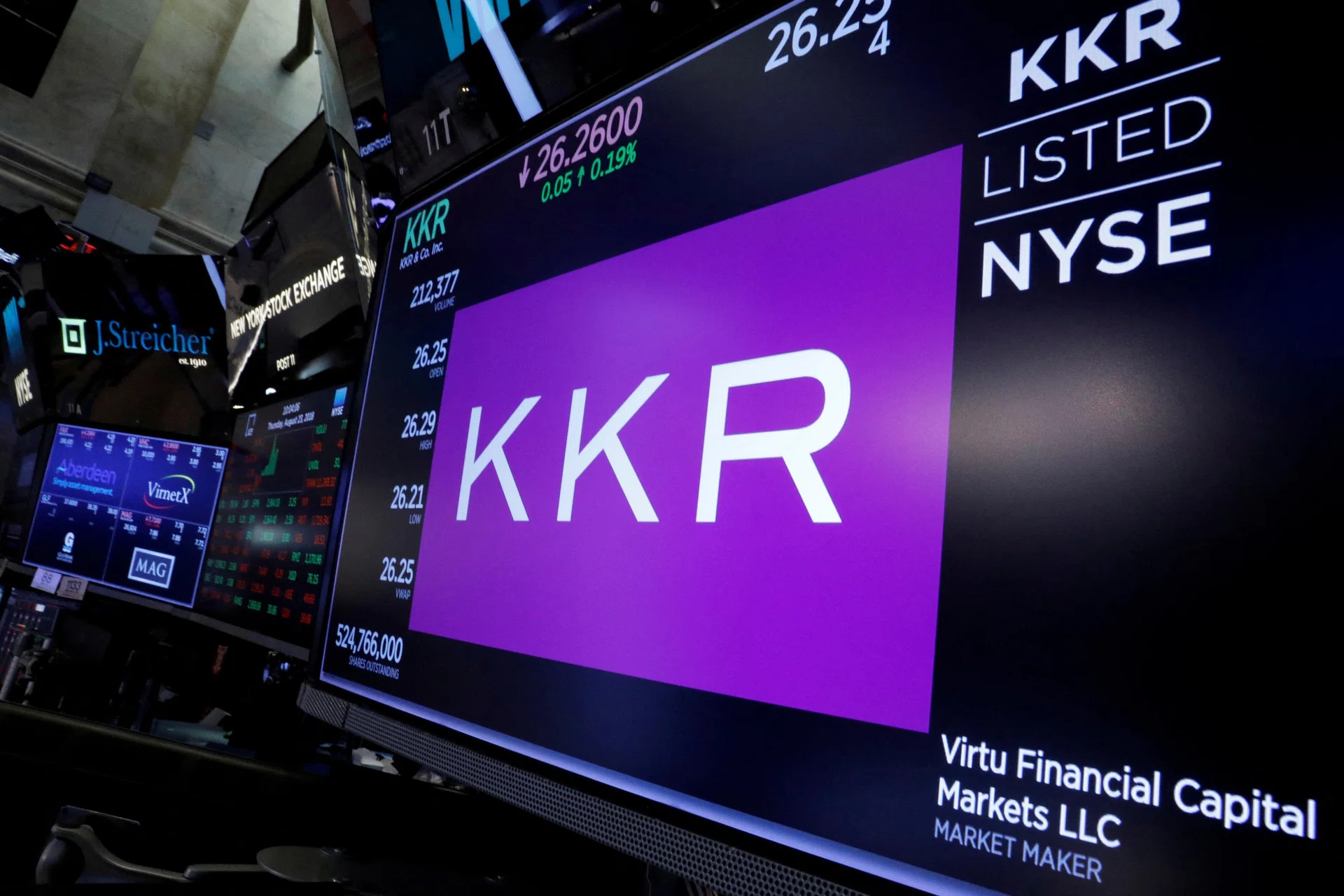
That wager is now approaching its verdict. Bloomberg reported on 30 April 2026 that KKR is actively exploring a sale of Flora Food Group for as much as $10 billion, with sell-side advisers working through potential buyer meetings. It is a figure that sounds impressive until you trace the deal’s full arc — and then it begins to look rather more complicated.
The story of how a margarine portfolio became a $10 billion negotiation is, at its core, a story about private equity’s enduring faith in categories that the wider market has given up on, the fickle nature of consumer health trends, and what happens when a highly leveraged buyout runs headlong into an era of rising dairy butter, retreating plant-based enthusiasm, and stubbornly high borrowing costs. It is also, frankly, a stress test of whether KKR — one of the world’s most sophisticated dealmakers — can deliver a return that justifies the wait.
Sprexit: How KKR Came to Own the World’s Largest Margarine Empire
To understand where Flora Food Group stands today, it is necessary to revisit the catalysing crisis that brought it into existence as a standalone entity. In February 2017, Kraft Heinz launched an unsolicited $143 billion takeover bid for Unilever — a brazen move that shocked the consumer goods establishment and sent Unilever’s chief executive, Paul Polman, scrambling for a defensive narrative. The bid was rebuffed within days, but its lasting effect was to commit Unilever to a more ruthless posture on portfolio rationalisation.
The spreads business — margarine, plant-based blends, cooking fats — was an obvious candidate for disposal. In the five years leading to 2014, global margarine sales had fallen roughly 6% while butter sales climbed 7%. The category carried robust margins but declining volumes, an awkward combination in an age when activist investors demanded growth, not mere profitability. In April 2017, Unilever formally put the division up for sale, sparking a bidding war that drew Apollo, CVC, Bain Capital, and Clayton, Dubilier & Rice before KKR prevailed at €6.825 billion ($8.04 billion) — the biggest leveraged buyout in Europe that year.
The business was renamed Upfield, and KKR’s thesis was clear: strip out corporate overhead from a business that had been slowly suffocating inside Unilever’s vast machine, pivot aggressively toward plant-based positioning, leverage the portfolio’s extraordinary global reach — present in roughly 100 countries — and exit within five to seven years at a healthy premium. It was a template that private equity had successfully applied to other Unilever orphans: HUL’s flavours unit, Coty’s beauty brands, Alberto-Culver. Why not margarine?
“Private equity’s love affair with declining categories is built on a simple insight: mature businesses can generate tremendous cash, if only you are willing to manage them without corporate sentimentality.”
KKR’s Stewardship: The Good, the Complicated, and the Debt Pile
KKR did deliver genuine operational discipline. Upfield shed excess manufacturing capacity, consolidated back-office functions, and pushed aggressively into plant-based innovation — purchasing Violife, the Greek plant-based cheese brand, in 2020 and investing €50 million in a new research and development campus. The rebranding to Flora Food Group in September 2024 was itself a signal: an effort to align the portfolio’s identity with its plant-based ambitions and shed the Upfield name, which had never quite achieved commercial resonance beyond the trade press.
The financial results tell a story of resilience, if not quite triumph. Flora Food Group’s 2024 Annual Report disclosed €3.1 billion in net sales, with 96% of product volumes meeting core nutrition benchmarks. By 2025, the company’s investor page cited approximately €3.0 billion in net sales — a slight decline year on year, and a figure that, while not catastrophic, suggests the business is managing volumes rather than growing them. For a leveraged buyout carrying the kind of debt load Upfield accumulated, that distinction matters enormously.
And here lies the central complication. According to Reorg Research, Flora Food Group’s reported leverage ratio stood at 6.9x net debt to EBITDA as of September 2023 — elevated even by leveraged buyout standards, and a direct consequence of the structure that financed the original €6.8 billion acquisition. In July 2023, the company was compelled to extend the maturity of term loan tranches totalling over €3 billion across three currencies to January 2028, buying time but also advertising to the market that the original exit runway had narrowed.
This debt burden is why Bloomberg reported in February 2025 that KKR was likely to hold the business until at least 2026 — not out of lingering affection for margarine, but because a sale at the time would not have cleared the debt cleanly enough to return meaningful equity to KKR’s funds. The ADQ talks of 2024, which collapsed over price disagreements with the Abu Dhabi sovereign wealth fund, were a missed opportunity that has since complicated the exit narrative.
Flora Food Group — Key Financials at a Glance (April 2026)
| Metric | Value |
|---|---|
| Net Sales 2024 | €3.1 billion |
| Net Sales 2025 | ~€3.0 billion |
| Target Valuation | ~$10 billion |
| EBITDA (marketed) | €800M–€900M |
| Leverage (Sept 2023) | 6.9x net debt/EBITDA |
| Countries of Operation | ~100 |
| Employees | ~4,600 |
| M&A Advisers | Citi, Goldman Sachs |
The Butter Counter-Revolution: Market Dynamics That Complicate the Story
KKR bought into spreads at precisely the moment when the broader culture appeared to be pivoting against them — and then doubled down on plant-based at precisely the moment when that pivot showed signs of plateauing. Both moves were defensible at the time; both are now being tested.
Dairy’s Quiet Comeback
The rehabilitation of butter — once demonised as a cardiovascular villain — has been one of consumer goods’ most striking reversals of the past decade. Driven by the rise of full-fat, clean-label, ketogenic, and ancestral dietary philosophies, butter has recovered not just cultural cachet but commercial mass. The global butter market was valued at $43.83 billion in 2025 and is projected to grow at a compound annual rate of 4.34% to reach $63.49 billion by 2034 — a rate that comfortably outpaces most plant-based spread forecasts. In the United States, the shift toward grass-fed, organic, and artisanal butter has eroded the margarine aisle in a way that no marketing campaign has convincingly reversed.
This is not merely a fashionable food trend. It reflects a genuine paradigm shift in nutritional thinking: saturated fats, once the enemy, have been partly rehabilitated by a body of research questioning the oversimplified fat-heart disease hypothesis. Consumers who once reached for “I Can’t Believe It’s Not Butter!” because they believed it was healthier are now, with similar conviction, reaching for Kerrygold or Président. The irony — and strategic challenge — for Flora Food Group is that several of its most storied brands built their identity on exactly this anti-dairy, pro-margarine messaging that has now fallen out of favour.
The Plant-Based Plateau
The plant-based food category, which experienced its evangelical peak around 2019–2021, has since entered a more sobering phase. Data from SPINS compiled by the Good Food Institute shows that in 2025, total US retail plant-based food dollar sales declined 2% and unit volumes also fell 2%. While the overall retail market still totalled $7.9 billion — double its 2017 size — the trajectory has clearly flattened, and the declines in premium categories have been steeper than the headlines suggest. Taste gaps, price premiums versus conventional equivalents, and a broader consumer pullback on discretionary spending have all compounded.
Flora Food Group’s flagship product range spans this contested territory. Its plant-based butters and spreads remain category leaders, and it has invested genuinely in reformulation and sustainability packaging — Mintel noted in late 2025 that Flora Food Group launched what it described as the world’s first plastic-free recyclable tub for plant butters. But innovation in packaging does not address the more fundamental tension: the consumer who most fervently wants plant-based butter is also the consumer most likely to make her own nut butter or seek out artisan alternatives. The mass-market grocery shopper, who is Flora’s bread and butter (so to speak), remains stubbornly ambivalent.
Volume Compression and Pricing Power
The post-pandemic inflation cycle placed heavy input cost pressure on fat-based products — vegetable oils, palm oil, sunflower oil — before the commodity cycle partially reversed. Flora Food Group navigated this environment through pricing actions, but pricing in a commodity-adjacent category has limits. When a business reports approximately €3.0 billion in net sales in 2025 versus €3.1 billion in 2024, the question of whether the modest decline reflects volume pressure, price normalisation, or deliberate strategic SKU rationalisation becomes critical to valuation. For prospective buyers underwriting a $10 billion enterprise value, the answer to that question matters enormously.
Can KKR Double Its Money on Margarine? The Valuation Puzzle
At $10 billion, KKR would be booking a nominal gain of approximately $2 billion, or roughly 25%, over its original $8 billion acquisition cost — before accounting for the costs of eight years of debt service on a heavily leveraged structure. In real terms, adjusting for the time value of money, this would represent a distinctly mediocre return on one of the largest consumer staples buyouts in history.
The mathematics depend critically on how one frames the EBITDA multiple. According to Reorg Research, the business is being marketed off EBITDA of between €800 million and €900 million depending on adjustments — a range that implies an enterprise value multiple of roughly 10 to 11 times EBITDA at the $10 billion headline price (accounting for current EUR/USD exchange dynamics). That is not an unreasonable multiple for a branded consumer staples business with genuine global distribution depth and category leadership in plant-based fats. Comparable acquisitions in the European consumer staples universe have traded at 9 to 13 times EBITDA in recent years, depending on growth profile and leverage.
Bull case for $10bn: A strategic buyer — a sovereign wealth fund, a major Asian food conglomerate, or a CPG giant seeking instant scale in plant-based — could justify paying a 10–11x EBITDA multiple for a business with genuinely irreplaceable global distribution across 100 countries, a portfolio of household-name brands, and what remains the world’s largest plant-based consumer packaged goods platform.
Bear case: The leverage overhang, the declining revenue trajectory, and the structural headwinds in core geographies could compress the achievable multiple to 8–9x — implying a significantly lower clearing price, and one that would require much more creative structuring to make the numbers work for KKR’s fund economics.
The ADQ precedent: The failed 2024 sale to Abu Dhabi’s ADQ at roughly the same $10 billion headline suggests that the price gap between seller expectations and buyer willingness has not materially closed. KKR’s decision to hold for another year to tackle the debt pile may have improved the credit story, but it has not transformed the strategic narrative.
The question — can KKR double its money on margarine? — turns out to have a sobering answer: almost certainly not, at least not on an equity-return basis. What KKR can hope for is a clean exit that returns capital to its 2018-vintage funds, clears the debt, and allows it to characterise the investment as a value-preservation story in a difficult macro environment. For a firm of KKR’s stature and track record, that framing is available. It simply is not the triumph the original thesis promised.
“The deal that was once the largest leveraged buyout in Europe may ultimately be remembered less for its returns than for the market education it provided about the limits of plant-based premiumisation in a mainstream grocery context.”
The PE Exit Environment: Why 2026 Is Both Better and More Complicated
Private equity’s exit machine, which seized up dramatically when interest rates rose sharply in 2022–2023, has been slowly unjamming. Sponsor-to-sponsor deals have picked up, strategic acquirers are returning to the table, and several large IPO windows opened in late 2025. But the consumer staples segment remains challenging: growth profiles are thin, commodity exposure creates earnings volatility, and public market investors — burned by the de-ratings of 2022 — remain sceptical of high-multiple consumer deals.
For KKR, the 2028 debt maturity creates a structural deadline that is not fully negotiable. A sale in 2026 would provide a comfortable runway; a failed sale in 2026 reopens the IPO and minority-stake options that KKR had previously considered. The appointment of Citi and Goldman Sachs as sell-side advisers signals that this process is real, not exploratory — the bankers’ fireplace chats with potential buyers are underway, and the buyer universe will likely include Middle Eastern sovereign funds, Asian strategic players (Japan’s Kewpie, India’s Tata Consumer, or similar), and potentially a consortium structure that lets multiple buyers share the risk of a $10 billion bet on fats.
What This Tells Us About Private Equity in Slow-Growth Consumer Categories
The Flora Food Group saga is instructive well beyond the specifics of margarine and plant-based spreads. It illustrates the particular tensions that arise when private equity buys a structurally challenged category and attempts to re-narrative it as a growth story through brand reorientation and sustainability positioning.
The strategy is not inherently flawed. KKR’s Unilever carve-out created genuine operational value: a leaner cost structure, focused management attention, innovation investment, and geographic portfolio pruning that would never have occurred inside the parent. These are real contributions. The problem arises when the macro environment — in this case, the dairy rehabilitation trend, the plant-based plateau, and the interest rate shock — moves against the investment thesis faster than operational improvements can compensate.
There is also a broader lesson here about sustainability positioning as a valuation driver. Flora Food Group has leaned heavily into its sustainability narrative — carbon footprint comparisons to dairy, plastic-free packaging, science-based targets. These are genuine commitments and they carry real market value in certain buyer segments. But sustainability positioning has not proven sufficient to reverse category volume declines, and it has not — at least in consumer staples — translated reliably into premium multiples at the point of sale. The investor who buys Flora Food Group in 2026 will be buying a sustainability story alongside a business reality, and disentangling the two is among the most complex tasks in contemporary CPG valuation.
Unilever’s “Sprexit” Revisited: Lessons for CPG Portfolio Management
It is worth pausing to note what Unilever itself has done since its 2017 “Sprexit.” The Anglo-Dutch giant, under successive management teams, has continued its own portfolio pruning — divesting ice cream (including Ben & Jerry’s and Wall’s) and sharpening its focus on personal care and premium beauty. In retrospect, the spreads disposal looks prescient: Unilever extracted a full-price exit at the peak of PE appetite, offloaded a structurally challenged category, and redeployed capital into higher-growth areas. The buyer absorbed the subsequent turbulence.
This dynamic — incumbent CPG companies extracting value by selling declining-trajectory businesses to PE at cycle-peak prices — is not unique to Unilever. It is a recurring pattern in consumer goods dealmaking, and one that ought to give pause to private equity firms underwriting growth stories in commodity-adjacent food categories. The spreads business was never truly a growth business; it was a cash-generative, brand-rich, distribution-dense business that required a different kind of stewardship than a buyout structure, with its accompanying debt burden and return expectations, naturally provides.
Who Buys the Butter Empire — and Why It Matters
If a deal does materialise in 2026, the identity of the buyer will be as revealing as the price. A sovereign wealth fund — the category that ADQ represented in 2024 — would be making a long-duration bet on the durability of plant-based fats as a food staple in emerging markets, where Blue Band and Becel hold particularly strong positions in Africa and Asia. A strategic acquirer from the food industry would be buying distribution, brand equity, and manufacturing scale. A financial buyer — another PE firm — would effectively be making the same leveraged bet KKR made in 2017, only with eight years less runway and a somewhat thinner growth story.
Each buyer type carries different implications for employees, innovation investment, sustainability commitments, and ultimately for the brands themselves. Flora, Blue Band, and Becel are not merely assets on a balance sheet — they are products consumed daily by hundreds of millions of people across income brackets and geographies. The stewardship question is not merely financial; it is social and strategic.
Verdict: A Long Bet Reaching Its Reckoning
KKR’s potential sale of Flora Food Group at $10 billion is neither a triumph nor a failure in the conventional sense. It is something more nuanced and, in many ways, more interesting: a reckoning with the limits of private equity’s ability to transform structurally challenged consumer categories through leverage and rebranding alone.
The business KKR built out of Unilever’s spreads division is a genuine global enterprise — €3 billion in revenue, 4,600 people, operations across 100 countries, a market-leading position in plant-based fats, and a sustainability platform that is ahead of most CPG peers. These are real achievements. The question that the $10 billion price tag cannot fully obscure is whether they are sufficient to generate the return that eight years, €6.8 billion in acquisition cost, and a mountain of leveraged debt demand.
The winner in this story, so far, is Unilever. Paul Polman’s “Sprexit” extracted maximum value at peak pricing from a business that was, in truth, in long-term structural decline. The loser — if there is one — is the thesis that plant-based positioning alone could convert a secular decline into a secular growth story.
The most fascinating question is what happens next. If Flora Food Group finds a buyer at or near $10 billion, it will confirm that global distribution depth and brand heritage retain premium value even in slow-growth categories — an encouraging signal for CPG deal-making in 2026 and beyond. If the process stalls again, as it did in 2024, it will raise harder questions about the true clearing price for large, highly leveraged consumer staples carve-outs in an era when both PE returns and plant-based enthusiasm have moderated.
Either way, the next chapter in the great margarine saga deserves close reading. Somewhere between the butter aisle and the private equity conference room, the future of food — slow, steady, leveraged, and stubbornly complex — is still being written.
Discover more from The Economy
Subscribe to get the latest posts sent to your email.
Analysis
Lazard’s $575 Million Bet on Campbell Lutyens Is a Declaration of War in Private Capital Advisory
When Lazard wrote a cheque for the largest independent private capital adviser, it wasn’t just buying a business. It was buying the future architecture of global finance.
There is a particular moment in every industry’s evolution when consolidation stops being a trend and becomes a verdict. When the largest, most credentialed players stop merely expanding and start to restructure the competitive landscape around themselves. In global finance, that moment arrived on April 30, 2026, with the announcement that Lazard — the storied 178-year-old advisory house — has agreed to acquire Campbell Lutyens for approximately $575 million, with up to an additional $85 million in performance-contingent consideration.
The combined entity will be branded Lazard CL, elevated to Lazard’s third global business line alongside its flagship M&A advisory and asset management divisions. It is, by any serious measure, the most consequential deal in private capital advisory in a generation.
But numbers, however impressive, rarely tell the whole story. The deeper question is architectural: What does this deal reveal about where global capital markets are heading, and why is Lazard — historically a sovereign M&A and restructuring powerhouse — making such an aggressive bet on private markets advisory right now?
The answer, I will argue, is that Lazard has read the map correctly. The convergence of traditional investment banking with the explosive, still-maturing private capital ecosystem is not a cyclical phenomenon. It is a structural reorganisation of how capital is raised, recycled, and deployed globally — and the institutions that build the infrastructure to serve both sides of that equation will define the next era of finance.
The Deal in Detail: What Lazard Is Actually Buying
Let us be precise about what $575 million buys.
Campbell Lutyens, founded in London in 1988 by John Campbell, Richard Lutyens, and Bill Dacombe, has spent 35 years becoming the most formidable independent private capital advisory franchise in the world. The firm is not simply a fund placement agent — a characterisation that would be reductive to the point of inaccuracy. Over its history, Campbell Lutyens has raised or advised on more than $713 billion in capital across fund placements, secondary transactions, and GP capital advisory mandates. It operates from 15 offices across three continents, with particular strength in private equity, private credit, infrastructure, and real assets.
Its secondary advisory practice is, in the industry’s quiet consensus, among the very best in the world. The firm has pioneered the advisory model for GP-led secondary transactions — continuation funds, strip sales, preferred equity solutions — at precisely the moment when the secondary market has become indispensable to the global private equity ecosystem.
The combined Lazard CL platform, as disclosed in the announcement, will encompass:
- More than 280 advisory professionals across 18 global offices
- A dedicated institutional distribution team of over 60 professionals
- More than 230 fee-paying mandates in the past two years
- Over $100 billion in GP and LP secondary transaction volume handled in the same period
- Combined capital raised for clients exceeding $190 billion over two years
- A projected combined revenue run-rate of approximately $500 million in 2027
The leadership structure is equally deliberate. Holcombe Green, Lazard’s existing Global Head of Private Capital Advisory, and Gordon Bajnai, Campbell Lutyens’ CEO, will co-lead Lazard CL, reporting directly to Lazard CEO and Chairman Peter Orszag. Andrew Sealey, Campbell Lutyens’ Chairman, takes the non-executive Chair of the combined unit. The retention of the full senior leadership cohort from both firms is itself a signal: Lazard is not buying a book of business. It is buying a culture of execution, a network of relationships, and an institutional knowledge-base that took three decades to accumulate.
Why Now? The Macro Forces Driving the Convergence
To understand the urgency behind this deal, you must first understand the macroeconomic environment in which private capital now operates.
The post-2022 rate environment fundamentally altered the private equity ecosystem. Higher-for-longer interest rates compressed exit multiples, extended holding periods, and created a liquidity drought for limited partners who found themselves over-allocated to illiquid alternatives. The IPO window remained largely shut. Strategic M&A was constrained by elevated financing costs and regulatory friction. Sponsors who raised vintage 2019 and 2020 funds found themselves holding assets they could not exit through traditional channels.
The response was a surge in secondary market activity and GP-led liquidity solutions — continuation funds, NAV-backed financing, preferred equity structures — that allowed GPs to either crystallise carry on select assets or provide LPs with liquidity without forcing a full fund wind-down. According to industry data tracked by major advisory firms, secondary market transaction volumes have grown substantially, crossing $233 billion globally in recent estimates, as both LP portfolio sales and GP-led transactions have accelerated.
This is not a temporary valve release. It is a permanent expansion of the secondary market’s structural role in private capital. Continuation funds, in particular, have evolved from a niche tool of last resort into a mainstream capital management instrument embraced by premier franchise managers. The market for secondary advisory — advising both GPs engineering these structures and LPs navigating the fairness questions on the other side — has become one of the highest-value-added activities in all of advisory finance.
Simultaneously, private credit has continued its inexorable rise. As banks retreated from leveraged lending under Basel III endgame pressures, private credit funds filled the vacuum. Those funds need to be raised, their GP economics need to be refinanced, and their secondary market for LP interests needs to be serviced. Campbell Lutyens has been at the centre of all three activities.
Dry powder among global private equity and private credit managers remains near record levels, with sovereign wealth funds from the Gulf, Singapore, and Norway continuing to deploy capital into private markets at scale. The fundraising and advisory infrastructure required to intermediate these capital flows is not a boutique operation — it demands global reach, institutional credibility, data-driven analytics, and the ability to run complex, multi-jurisdictional transactions simultaneously. This is what Campbell Lutyens provides. It is also, critically, what Lazard now needs.
The Strategic Logic: Why Lazard, and Why This Works
Lazard’s entry into private capital advisory was not improvised. Holcombe Green has built Lazard’s PCA practice systematically over several years, establishing credibility in fundraising advisory, secondary transactions, and GP capital solutions as standalone capabilities. The Campbell Lutyens acquisition is not a pivot — it is an acceleration.
The synergies between Lazard’s existing business lines and Lazard CL are specific and substantial:
M&A and Restructuring Referrals. Lazard’s M&A advisory franchise works with sponsor-backed companies at every stage of their corporate lifecycle. When a private equity-owned company is considering a sale process, recapitalisation, or merger, the same GP’s fund-level liquidity needs are directly adjacent. A continuation fund advisory assignment and a sale-side M&A mandate can now be coordinated within one firm — an integrated offering that neither Campbell Lutyens alone nor Lazard’s PCA team alone could provide at full scale.
GP Capital Solutions and M&A Connectivity. Campbell Lutyens’ GP capital advisory practice advises asset managers on management company financing, GP minority stake sales, and strategic consolidation — a market that has seen significant activity from consolidators like Blue Owl, Petershill, and Dyal Capital. Lazard’s M&A advisory capability adds a powerful deal-execution dimension to Campbell Lutyens’ advisory relationships with mid-size and large GP firms.
Sovereign Wealth Fund and Institutional LP Relationships. Lazard has deep relationships with sovereign wealth funds through its geopolitical and M&A advisory work — relationships that translate directly into capital raising for private funds seeking marquee LP anchors. Conversely, Campbell Lutyens’ 300-professional global network brings Lazard relationships with over a thousand institutional LPs and GP franchises that Lazard’s M&A team can engage as corporate advisory clients.
The Data Advantage. Campbell Lutyens has built what it describes as a data-led advisory approach, combining market intelligence with execution capability. Combined with Lazard’s cross-asset analytical infrastructure, Lazard CL’s ability to benchmark fund terms, model secondary pricing, and advise on optimal transaction timing becomes considerably more sophisticated than what either firm could offer independently.
The Competitive Implications: A New Hierarchy in Private Capital Advisory
The market will be reconfigured by this transaction. Let us be direct about who is affected and how.
The independent boutiques — Evercore’s private funds group, PJT Partners’ Park Hill business, and Moelis’ comparable practices — have been the dominant forces in private capital advisory alongside Campbell Lutyens. They will now face a competitor with meaningfully greater scale, a global M&A and restructuring franchise to cross-sell from, and the institutional credibility of a 178-year-old brand name. The pressure on boutiques to differentiate on specialisation, speed, and relationship depth will intensify considerably.
The bulge brackets — JPMorgan, Goldman Sachs, Bank of America — have been quietly building and expanding their own private capital advisory capabilities. JPMorgan notably established a strategic collaboration with Campbell Lutyens in 2023 for GP-led continuation fund transactions — a partnership that will now presumably be reconsidered given that Campbell Lutyens is becoming a direct competitor within Lazard’s integrated advisory platform. The bulge brackets have balance sheet. Lazard CL will have independence and M&A credibility. These are different but formidable value propositions, and the market is large enough for both — for now.
The league tables will shift. Private capital advisory is one of the few corners of advisory finance where the traditional investment banking league tables are largely irrelevant. Revenue, mandate count, and secondary volume advised are the currencies of reputation. On all three metrics, Lazard CL launches immediately into the upper tier of global providers.
Risks and Reservations: A Sober Assessment
No serious analysis of this transaction can ignore its risks. There are three that merit attention.
Integration risk is real. Campbell Lutyens has been wholly owned by its professionals — a structure that, as its own website acknowledges, provides alignment that external ownership cannot easily replicate. The firm’s culture is European in temperament, independent in character, and has operated for 35 years without the overhead and politics of a large institutional parent. Lazard’s culture, while more entrepreneurial than bulge bracket competitors, is still an institutional employer with compliance infrastructure, compensation politics, and reporting hierarchies. Retaining the senior partners of Campbell Lutyens — the individuals who carry the client relationships — is the central integration challenge, and the performance consideration structure (up to $85 million over multiple years) reflects Lazard’s awareness of this risk.
Conflict management is non-trivial. A firm advising GPs on their fund economics while also advising on the M&A of the same GP’s portfolio companies must manage information barriers with rigour. The advisory world has navigated these tensions before, but the broader and more integrated the platform, the more complex the conflict management architecture must be.
Sponsor concentration risk. Private capital advisory revenue is highly relationship-driven, and relationships with sponsors can be cyclical. If a period of prolonged GP fundraising difficulty — a downturn in LP appetite, a sustained period of high benchmark rates — were to compress the fundraising market, Lazard CL’s revenue base would feel pressure at precisely the moment Lazard needs it to deliver on accretion targets. The diversification of revenue across fund placement, secondary advisory, and GP capital solutions mitigates this, but does not eliminate it.
The Broader Signal: What This Means for the Industry
Step back from the transaction specifics and the picture that emerges is both coherent and consequential.
We are witnessing the institutionalisation of private capital advisory — its transition from a cottage industry of independent specialists into an integrated service line within diversified global advisory firms. This mirrors what happened to M&A advisory in the 1990s, when boutique expertise was progressively absorbed into or challenged by increasingly capable bulge bracket teams.
The “democratisation” narrative that accompanied the rise of private markets — the idea that fragmentation and independence would be preserved as alternative assets became mainstream — is yielding to a more familiar logic: scale, integration, and brand name matter in advisory, and clients seeking coverage across fund placement, secondaries, GP capital, M&A, and restructuring will gravitate toward platforms that can provide it all.
This has implications for GPs themselves. A large manager working with Lazard CL on its Fund VI fundraise can now also access Lazard’s M&A advisory for its portfolio companies, its restructuring expertise for distressed holdings, and its sovereign relationships for LP development — all within a single banking relationship. The efficiency and relationship depth this creates for GPs will be attractive, and it will pressure mid-size advisory firms to either specialise more narrowly or seek consolidation of their own.
Lazard CEO Peter Orszag’s Lazard 2030 vision — building a more productive, resilient, and growth-oriented firm — is now considerably clearer in its architecture. Private capital advisory was identified as a core growth pillar. With Lazard CL generating a projected $500 million in combined revenues by 2027 against Lazard’s current total revenue base of approximately $3.1 billion, the private markets division will represent a meaningful share of the firm’s top line. The deal is, at 13% of Lazard’s market capitalisation, a bold commitment of capital. It is also expected to be accretive to 2027 earnings, suggesting management is confident in the revenue outlook.
Looking Forward: The Questions 2027 Will Have to Answer
No acquisition of this scale is consummated without open questions, and candour demands we name them.
Will the Campbell Lutyens partners stay? The first two years of any professional services acquisition are the most vulnerable. If senior advisers depart — taking relationships with GPs and LPs built over decades — the strategic rationale erodes quickly. Lazard must prioritise culture preservation and compensation parity with the urgency the situation demands.
Will the JPMorgan collaboration be renegotiated or terminated? The 2023 joint advisory arrangement between Campbell Lutyens and JPMorgan for GP-led continuation funds was innovative and market-leading. Lazard will need to determine whether that collaboration continues — a delicate negotiation — or whether Lazard CL absorbs that execution capability internally.
Will secondary market volumes sustain? The current boom in secondary market transactions is real, but it has also been partially driven by the specific macro conditions of the past three years. If rate cuts materialise more aggressively than anticipated in 2026–27, traditional exit markets may reopen, reducing pressure on GPs to pursue secondaries-led liquidity. This would not be catastrophic for Lazard CL — secondary markets are now structural, not merely cyclical — but it would affect revenue growth trajectories.
And finally: Who is next? If Lazard’s move validates the integration thesis for private capital advisory, the pressure on competitors to respond will be acute. Evercore, PJT, and Moelis may find themselves fielding calls from acquirers. The second and third moves in this consolidation game will define whether Lazard CL’s head start becomes a durable advantage or simply the opening bid in a broader restructuring of the advisory landscape.
Conclusion: The Bridge Has Been Built
Private capital advisory has, for two decades, been a business built on the tension between independence and scale. The argument for independence — alignment, absence of conflict, boutique agility — has been compelling and commercially successful. Campbell Lutyens is the proof case.
But the argument for scale — global reach, M&A integration, data infrastructure, institutional credibility — has grown stronger as private markets themselves have grown larger, more complex, and more deeply intertwined with public market M&A activity, corporate restructuring, and sovereign capital deployment.
Lazard, with this acquisition, has built the bridge between those two worlds. Lazard CL will not be a boutique. It will not be a bulge bracket. It will be something new: a private capital-native advisory powerhouse embedded within a globally credentialed M&A and advisory institution. Whether that formulation proves more than the sum of its parts will depend on leadership, culture, and execution — factors that cannot be quantified in a press release.
What can be said with confidence today is that the private capital advisory market will not look the same after Lazard CL. The question for everyone else in the industry is not whether to respond, but how quic
Discover more from The Economy
Subscribe to get the latest posts sent to your email.
AI
Google’s AI Supremacy Bet: Outpacing Rivals Amid Big Tech’s $725 Billion Spending Surge and the Pentagon Contract Backlash
The search giant is pulling ahead in the hyperscaler arms race—but at what cost to its soul, its workforce, and its original promise?
There is a scene playing out across Silicon Valley that would have seemed like science fiction a decade ago: the world’s most profitable technology companies are engaged in a collective capital expenditure supercycle of almost incomprehensible scale, committing a combined sum approaching $725 billion to AI infrastructure in 2026 alone. Data centers are rising from deserts. Undersea cables are being rerouted. Nuclear reactors are being negotiated. And at the center of this frenzy—not just participating, but quietly pulling ahead—is Google.
Alphabet’s recent quarterly results told a story that Wall Street had not quite expected with such clarity. Google Cloud grew 63% year-on-year to reach $20 billion in a single quarter, with its backlog expanding at a pace that suggests enterprise AI monetization is no longer a projection slide—it is a revenue line. Against a backdrop in which Meta’s stock briefly wobbled on disclosure of accelerated capex plans, and Microsoft faced pointed questions about the pace of Azure AI conversion, Google emerged as the rare hyperscaler that investors seemed to trust with its own checkbook. That is a meaningful distinction in a market increasingly skeptical of AI’s near-term return on investment.
Yet the Google story in 2026 is not merely a financial one. It is, simultaneously, an ethical drama, a geopolitical chess move, and a management test of the highest order. The company’s decision to extend its Gemini AI models to Pentagon classified workloads—permitting their use for “any lawful government purpose”—has triggered the kind of internal revolt that Sundar Pichai has navigated before, but perhaps never quite like this. More than 600 employees signed an open letter to the CEO expressing what they described as shame, ethical alarm, and deep concern over the potential for their work to be directed toward surveillance systems, autonomous weapons targeting, or other military applications they never signed up to build.
Welcome to Google in the age of AI supremacy.
The $725 Billion Capex Supercycle: What the Numbers Actually Mean
To understand Google’s position, one must first absorb the full weight of what the hyperscaler investment surge represents. The aggregate capital expenditure guidance across Alphabet, Meta, Amazon Web Services, and Microsoft for 2026 now approaches—and by some analyst compilations, exceeds—$725 billion. Alphabet alone has guided toward $180–190 billion in infrastructure investment for the year. Amazon has signaled approximately $200 billion. Meta, despite the investor nervousness its updated capex guidance provoked, is tracking toward $125–145 billion. Microsoft, which has somewhat pulled back from the most aggressive single-year targets of prior guidance cycles, remains elevated by any historical standard.
These are not numbers that fit comfortably inside traditional return-on-investment frameworks. To put them in perspective: the combined GDP of Pakistan, Egypt, and Chile is roughly equivalent to what the four largest American technology companies plan to spend building AI infrastructure in a single calendar year. The International Monetary Fund would classify this as a capital formation event of macroeconomic consequence—not a corporate earnings footnote.
The money is flowing into several interconnected categories: GPU procurement (Nvidia’s order books are reportedly filled years into the future), data center construction across North America, Europe, and Southeast Asia, power infrastructure and grid connections, and increasingly, investments in alternative energy sources. Google itself has signed agreements with nuclear energy developers to power data centers with small modular reactors—a technology that, three years ago, would have been considered speculative engineering rather than near-term procurement strategy.
What distinguishes Google’s investment posture from its peers is not simply the quantum of spending, but the evidence that it is beginning to pay off in observable, auditable revenue. The 63% year-on-year growth in Google Cloud—achieved not in a base period of suppressed demand but against already elevated post-pandemic comparisons—suggests that enterprise customers are not merely piloting Gemini-powered tools. They are deploying them at scale and paying for the privilege. The expanding backlog is perhaps the more significant metric: it implies committed future revenue, reducing the speculative character of Alphabet’s infrastructure build and lending credibility to the argument that the company has struck a monetization rhythm its rivals have not yet matched.
Google Cloud vs. the Field: Where the AI Revenue Race Stands
Cloud Growth Rates Tell a Revealing Story
For investors parsing the competitive landscape of AI infrastructure monetization, the cloud revenue trajectories are the most consequential data series to watch. Google Cloud’s 63% YoY growth comfortably outpaces the growth rates posted by Azure and AWS in the same period, though it is worth noting that Google Cloud is working from a smaller absolute base—a structural advantage that tends to inflate percentage growth in ways that can flatter.
What is harder to dismiss is the qualitative character of that growth. Alphabet’s management has been unusually specific about the sources of Cloud acceleration: AI-native workloads, Gemini API consumption, and—critically—enterprise deals that bundle infrastructure with model access and deployment support. This is not commodity cloud compute growing on price. It is differentiated AI services growing on capability, which carries both higher margins and more durable competitive moats.
Meta’s situation offers an instructive contrast. When CFO Susan Li disclosed the upward revision in Meta’s capex guidance earlier this year, the market’s reaction was immediate and sharp: shares fell several percent intraday on concerns that the spending was outpacing visible monetization pathways. The investor community’s message was clear—AI infrastructure investment is not inherently valued; AI infrastructure investment with a credible revenue story is. Google, for now, has that story. Meta is still largely telling one.
Microsoft presents a more nuanced picture. The Azure AI growth story remains compelling on its own terms, powered by the OpenAI partnership and a deeply embedded enterprise customer base that is actively integrating Copilot across productivity software. But Microsoft has also faced questions about whether its OpenAI exposure—an investment structure that comes with revenue-sharing obligations and significant compute cost transfers—creates a ceiling on margin expansion that purely proprietary model developers like Google do not face. The answer is not yet definitive, but it is a structural question that Alphabet’s architecture avoids.
The Pentagon Deal: Strategic Maturity or Moral Compromise?
Google’s Gemini and the New Defense-AI Nexus
The decision to authorize Gemini models for Pentagon classified workloads did not emerge in a vacuum. It followed a pattern now visible across the industry: OpenAI secured its own classified government contracts; Elon Musk’s xAI has been in conversations with U.S. defense and intelligence agencies; and even Anthropic—often positioned as the safety-first alternative in the AI landscape—has navigated the tension between its constitutional AI principles and government partnership demands with less public grace than its branding might suggest.
For Google, the context is particularly charged. The company famously did not renew its Project Maven contract with the Pentagon in 2018 after employee protests forced a retreat that became a case study in how internal dissent could redirect corporate strategy. That withdrawal was framed at the time as a principled stand. Eight years later, the company has effectively reversed course—not in secret, but through a contract clause that explicitly permits Gemini’s use for “any lawful government purpose,” a formulation broad enough to encompass intelligence analysis, targeting support systems, and surveillance infrastructure.
The 600-plus employees who signed the open letter to Pichai were not naive. They understood, as Google’s leadership understands, that “lawful” is a word that carries different weights in peacetime and in active conflict. Their letter expressed shame—a particularly pointed word, implying that the company’s actions reflect on those who build its products in ways they did not consent to. They raised specific concerns about autonomous weapons systems, the potential for AI-assisted targeting to remove human judgment from lethal decisions, and the use of surveillance tools against civilian populations.
These are not hypothetical concerns. The use of AI systems in conflict zones—from drone targeting assistance to signals intelligence processing—is already a documented reality across several active theaters. The employees signing that letter had read the same reports as everyone else.
The Geopolitical Imperative Google Cannot Ignore
And yet. The case for Google’s decision, when made honestly and without sanitizing language, is both harder and more important to engage with than its critics typically allow.
The United States is engaged in a technological competition with China that has no clean civilian-military boundary. The People’s Liberation Army and China’s leading AI laboratories—many of which receive state funding and operate under laws requiring cooperation with national intelligence agencies—are not separating their research programs into “acceptable” and “unacceptable” domains. Huawei, Baidu, Alibaba, and a constellation of less visible firms are building AI capabilities that will be available to Chinese defense planners whether American technology companies participate in U.S. defense programs or not.
The choice, in other words, is not between a world where AI is and is not integrated into military systems. It is a choice about which country’s AI systems—and which country’s values, however imperfectly encoded—predominate in those applications. That is a different argument, and one that many of Google’s protesting employees would engage with more seriously than the binary “we should not do this” framing that open letters tend to collapse into.
Sundar Pichai has been careful not to make this argument too loudly, because doing so would effectively confirm every worst-case interpretation of what the Pentagon contract enables. But it is the unstated logic beneath the decision, and it tracks with a broader shift in how Silicon Valley’s leadership class has recalibrated its relationship with Washington under the pressure of geopolitical competition.
The “Don’t Be Evil” Reckoning: Silicon Valley’s Original Sin Returns
Talent, Culture, and the Ethics of Scale
Google’s internal ethics have always been a managed tension rather than a resolved principle. The “don’t be evil” motto—quietly retired from the corporate code of conduct years ago—was always more aspiration than constraint. The company that refused Pentagon contracts in 2018 was also the company whose advertising systems created surveillance capitalism as a viable business model. The company whose employees are now expressing shame over military AI is also the company that built tools used for targeted political advertising, data brokerage ecosystems, and content moderation systems whose biases remain poorly understood.
This is not to dismiss the sincerity of the protesting employees—many of whom are taking genuine professional risk by signing public letters critical of their employer. It is to suggest that the ethical terrain of building AI at Google’s scale has never been clean, and that the Pentagon contract represents a threshold crossing that is visible and legible in ways that other ethically complex decisions are not.
The talent implications are real and should not be underestimated. Google competes for a narrow pool of exceptional AI researchers and engineers who have, in many cases, genuine ideological commitments about how their work should be used. If the company’s defense posture drives significant attrition among its most senior technical staff—particularly those in safety, alignment, and model evaluation roles—the reputational and capability costs could compound in ways that quarterly cloud revenue figures would not immediately reveal.
There is also a recruitment dimension. The most coveted AI talent at the PhD and postdoctoral level increasingly includes researchers with explicit views about AI safety and dual-use concerns. Several leading AI safety researchers have, over the past two years, declined offers from companies they perceived as insufficiently rigorous about military and surveillance applications. Whether Google’s defense pivot costs it meaningful talent acquisition capability is a question that will only be legible in retrospect—but it is not a trivial one.
The Macroeconomics of the AI Infrastructure Boom: ROI, Risk, and Reckoning
Is This a Supercycle or a Superbubble?
The $725 billion capex figure demands an honest engagement with the question that haunts every capital investment supercycle: what is the realistic return, and over what timeline?
The optimistic case—articulated by Alphabet’s management, embraced by a significant portion of the investment community, and supported by Google Cloud’s current trajectory—holds that AI is a foundational infrastructure shift comparable to the build-out of the internet itself. On this view, the companies that secure early dominance in AI compute, model capability, and enterprise deployment will enjoy compounding advantages that justify present investment at almost any near-term cost.
The skeptical case notes that the internet build-out of the late 1990s also featured extraordinary capital commitment, confident narratives about foundational transformation, and a subsequent reckoning that erased trillions in market value before the genuinely transformative value was realized. The parallel is not exact—there is considerably more real revenue being generated by AI services today than existed in the dot-com era—but it is not comforting.
The energy demand implications of this infrastructure build are particularly worth lingering on. AI data centers are extraordinarily power-intensive. The aggregate electricity demand implied by the planned hyperscaler build-out in 2026 is estimated to rival the annual electricity consumption of several medium-sized European countries. This is creating bottlenecks that cannot be resolved through procurement alone: grid infrastructure investment, permitting timelines, and the physics of power generation impose hard constraints that no amount of capital can immediately overcome. Google’s nuclear energy agreements are partly a reflection of this reality—the company is trying to secure power supply years ahead of need because the alternative is having stranded compute assets.
The data center construction boom is also reshaping regional economies in ways that create both opportunity and friction. Communities in Virginia, Texas, Iowa, and increasingly in European jurisdictions are navigating the dual reality of significant tax base expansion and serious pressure on water resources, local grid stability, and community infrastructure from facilities that employ relatively few people per square foot of construction.
Google’s Structural Advantages: Why It May Be the Best-Positioned Hyperscaler
Proprietary Models, Vertical Integration, and the Search Moat
Of the four major hyperscalers competing in the AI infrastructure race, Google enters 2026 with a structural profile that is, on balance, the most defensible. This is not a conclusion that was obvious two years ago, when the GPT-4 moment appeared to catch Google flat-footed and when early Bard launches drew unfavorable comparisons that damaged the company’s AI credibility.
The situation has materially changed. Gemini 2.0 and its successors represent genuinely competitive frontier models. Google’s TPU infrastructure—custom silicon designed specifically for AI workload optimization—provides a cost-efficiency advantage at scale that Nvidia-dependent rivals cannot easily replicate. The integration of Gemini across Google’s existing product surface area (Search, Workspace, YouTube, Android) provides a distribution moat for AI capabilities that no other company can match in sheer reach.
The Search integration is particularly underappreciated. Google processes more than 8.5 billion queries per day. The ability to deploy AI-enhanced search responses, AI-assisted advertising targeting, and AI-powered content generation tools across that volume at near-zero marginal cost—because the infrastructure is already built and amortized—creates an economic leverage point that pure-play cloud competitors cannot access.
Microsoft’s Copilot integration into Office is the closest analog, but Microsoft’s enterprise installed base, while large, is not consumer-scale in the same way. The potential for Google to monetize AI capabilities across its consumer surface while simultaneously building cloud enterprise revenue creates a dual-engine revenue structure that is uniquely robust.
Looking Forward: The Questions That Will Define the Next Decade
The Google of 2026 is a company that has made its bets and is beginning to collect on some of them. The cloud revenue trajectory, the model capability improvements, the defense sector expansion, and the infrastructure investment all reflect a leadership team that has absorbed the lessons of the post-ChatGPT moment and responded with strategic discipline rather than reactive flailing.
But the questions that will define whether Google’s AI supremacy is durable or temporary are not primarily technical. They are political, ethical, and economic.
Can Google retain the talent it needs? The employee letter is a warning signal, not merely a PR nuisance. If the company’s defense pivot accelerates a drift of safety-conscious AI researchers toward academic institutions, non-profits, or rival companies with different postures, the long-term model quality implications are non-trivial.
Will AI capex ROI materialize at the pace implied by current valuations? The Google Cloud growth story is real, but the multiple at which Alphabet trades assumes that the current growth rate is sustainable and that AI spending will convert into margin expansion rather than permanent cost elevation. That is a forecast, not a fact.
How will the geopolitical landscape shape the competitive environment? If U.S.-China technology decoupling accelerates, Google’s exclusion from the Chinese market—already a reality—limits its addressable market in ways that Chinese AI companies, operating in a protected domestic environment, do not face in reverse. The Pentagon partnership may open U.S. government revenue doors, but it also accelerates the fragmentation of the global technology landscape in ways that could, over time, constrain Google’s international growth.
What is the social contract for AI infrastructure? The energy, water, and land demands of the AI infrastructure build are becoming subjects of serious regulatory and community scrutiny. The companies that navigate those relationships with genuine stakeholder engagement will build social licenses that prove valuable; those that treat them as obstacles to be managed will accumulate political liabilities that eventually impose costs.
Google’s AI supremacy bet is, ultimately, a wager on the company’s capacity to be simultaneously the most capable, the most commercially successful, the most trusted, and the most strategically sophisticated actor in a field that is reshaping every dimension of economic and political life. That is an ambitious combination. The cloud revenue numbers suggest it is not an impossible one.
Whether the employees signing letters of shame, the communities negotiating data center impacts, and the governments writing AI governance frameworks will allow Google the space to prove it—that is the open question that no earnings transcript can answer.
Discover more from The Economy
Subscribe to get the latest posts sent to your email.
Analysis
Oil Surges Past $125 as the Strait of Hormuz Blockade Enters Uncharted Territory
Brent crude hits a new conflict high as the world’s most critical energy chokepoint remains locked — and the real crisis has barely begun.
Brent crude has surged past $125 as the Strait of Hormuz blockade continues into its third week. Analysts warn of stagflationary shockwaves, supply disruption not seen since the 1970s, and a structural reshaping of global energy alliances. Here is what it means — and what comes next.
When historians eventually write the definitive account of the 2026 energy crisis, they will likely describe two distinct moments: the day the Strait of Hormuz effectively closed, and the day markets finally understood what that meant. As of April 30, Brent crude has surged past $125 per barrel — briefly touching $129 in intraday trading — rising more than 6% in a single session, its sharpest single-day move since Russia’s invasion of Ukraine in February 2022. WTI crude has tracked close behind, crossing $121 for the first time since the post-pandemic recovery cycle.
This is not a price spike. It is a structural rupture.
The dual blockade — Iranian-imposed restrictions on shipping lanes combined with a US naval cordon around Iranian export terminals — has effectively severed approximately 20% of global seaborne oil flows and a significant share of the world’s liquefied natural gas trade from the Persian Gulf. According to the Energy Information Administration, roughly 21 million barrels per day transited the Strait of Hormuz in 2024, making it by far the world’s most consequential energy chokepoint. With no credible diplomatic resolution in sight — and the Trump administration sending signals this week that the naval operation could be sustained for months — the question is no longer whether there will be economic pain. The question is how deep and how lasting.
The Anatomy of a Supply Shock: Why This Time Is Different
Energy markets have weathered crises before. The 1973 Arab oil embargo. The Iranian Revolution of 1979. The Gulf War. The post-Ukraine sanctions regime. Each produced a price surge, a period of demand destruction, and eventually a new equilibrium. But analysts at ING, who revised their 2026 Brent crude forecast sharply upward this week, argue this disruption is categorically different — not merely in scale but in structural character.
Previous supply shocks were largely unilateral: one actor restricting supply while global logistics adapted around them. What the Hormuz blockade has introduced is a bilateral chokepoint: Iran cannot export, but neither can Qatar’s LNG terminals operate at full capacity, neither can Abu Dhabi’s offshore production reach tankers freely, and neither can the dozens of supertankers now anchored in the Gulf of Oman receive clearance to proceed. The chokepoint is not a political statement. It is a physical lock.
Global oil inventories, already drawn down through 2025 by a combination of robust Asian demand and OPEC+’s disciplined production management, entered this crisis at their lowest seasonally-adjusted levels in over a decade. The International Energy Agency’s latest Oil Market Report underscores the alarming pace of inventory draws: OECD commercial crude stocks are declining at an annualized rate that, if sustained for two quarters, would represent a deficit not seen in the modern integrated oil market era.
The just-in-time architecture of global energy supply — designed for efficiency, not resilience — is now exposed as a systemic vulnerability. As Foreign Affairs recently argued, the era of treating energy logistics as a solved problem ended the moment a single maritime lane became a geopolitical weapon.
Stagflation’s Ghost Returns — and This Time It Has a Passport
The macroeconomic implications of a prolonged Hormuz disruption extend well beyond the pump price. To understand the full cascade, consider the chain of dependencies that a $125-plus oil price severs or strains simultaneously.
Jet fuel, diesel, and heavy fuel oil costs feed directly into shipping rates, which feed into the price of virtually every traded good on earth. The Baltic Dry Index — a proxy for global freight costs — has risen 34% since the blockade began. Agricultural commodity markets are already pricing in higher fertilizer costs: natural gas, partially rerouted from Gulf LNG, is the primary feedstock for nitrogen fertilizers, and Bloomberg’s commodity desk has flagged early signs of price pressures in key food-exporting regions across South Asia and Sub-Saharan Africa.
Central banks, which spent three years fighting the post-COVID inflation surge, now face what some economists are calling a “second-generation supply shock”: an exogenous price impulse that threatens to re-anchor inflation expectations upward just as they had stabilized. The Federal Reserve, the European Central Bank, and the Bank of England all face an identical and deeply uncomfortable policy trilemma: raise rates to suppress inflation and risk recession; hold rates and watch real incomes erode; or cut rates to cushion economic activity and risk entrenching a new inflationary plateau.
This is stagflation’s logic — slow growth, rising prices — and it has happened before. The 1979 oil shock produced exactly this outcome. But in 1979, the global economy was not carrying $330 trillion in aggregate debt, and digital interconnectedness had not made supply chain disruption simultaneously instantaneous and globally visible. The feedback loops today are faster, more correlated, and harder to break.
Winners, Losers, and the Uncomfortable Geography of Crisis
Not every actor in the global energy system suffers equally. Some, in fact, stand to benefit — at least in the short term. A rigorous analysis of winners and losers reveals the profound geopolitical realignment that high oil prices accelerate.
United States shale producers are the most obvious beneficiaries. The Permian Basin and the broader unconventional oil complex can operate profitably at $70 per barrel; at $125, they are printing money. Production capacity, constrained in recent years by investor pressure to prioritize returns over growth, is likely to see a capital surge. The Financial Times has reported preliminary signs of accelerated rig deployment in West Texas and the Bakken. More importantly, the US now holds extraordinary diplomatic leverage: its ability to flood the market with additional barrels — or withhold them — gives Washington a strategic tool as powerful as any sanctions regime.
Norway, Canada, Brazil, and Guyana — major non-OPEC, non-Gulf producers — all benefit from elevated prices while facing none of the direct disruption. Petrobras and the Guyana consortium operating the Stabroek block are sitting on some of the most valuable unexploited barrels on earth at current prices.
Renewable energy investors face a complicated dynamic. On one hand, the structural case for energy independence has never been more viscerally obvious to policymakers and the public. On the other, the capital equipment required for the energy transition — steel for wind turbines, copper for grids, polysilicon for solar panels — is itself energy-intensive to produce and transport. A sustained high-oil-price environment raises the transition cost even as it raises the transition imperative. The Brookings Institution’s Energy Security Initiative argues that this paradox will ultimately resolve in favor of renewable acceleration — but the transition path may be more inflationary than optimists assumed.
Asia’s industrial economies are in the most precarious position. Japan, South Korea, Taiwan, and India are heavily import-dependent and have limited domestic energy alternatives. India in particular, which had carefully cultivated discounted Russian crude supplies post-Ukraine as a hedge, now finds that hedge partially neutralized: Russian ESPO blend oil, routed through Asian terminals, cannot fully compensate for the Gulf volume loss. China, which holds the world’s largest strategic petroleum reserve and has been quietly drawing it down since late March, is buying time — but not much of it.
OPEC+ as an institution faces an existential paradox. Saudi Arabia, the UAE, and Kuwait — all Gulf producers — have capacity that is technically available but logistically stranded. Riyadh can pump; it cannot ship. The cartel’s ability to act as the global oil market’s “central bank” — its defining strategic role since the 1970s — has been surgically removed by the geography of conflict. This is not a drill for OPEC+. It is a structural demotion.
The Hormuz Blockade and the Strategic Petroleum Reserve Question
Washington’s Strategic Petroleum Reserve, drawn to multi-decade lows during the 2022 energy crisis and only partially replenished since, stands as one of the few immediately available shock absorbers in the current environment. The Biden administration’s aggressive SPR drawdown — documented extensively by the EIA — left the US with roughly 370 million barrels entering 2026, against a statutory capacity of 714 million. A coordinated IEA member-state release could, in theory, provide three to four months of buffer before structural supply measures take effect.
The Trump administration has been deliberately ambiguous about SPR deployment, signaling this week that any release would be “conditional on diplomatic progress” — a formulation that serves both as a pressure tool on Tehran and as a bargaining chip with domestic shale producers who prefer high prices. This calculated ambiguity is sophisticated energy statecraft, but it carries a cost: every day of uncertainty extends the price spike and deepens the inflation impulse.
The Atlantic Council’s Global Energy Center has recommended a coordinated 60-day IEA release combined with accelerated US shale production incentives — a dual-track approach that would signal resolve without sacrificing the leverage high prices provide.
The Peace That Isn’t Coming — and What That Means for Markets
Diplomatic channels between Washington and Tehran have not merely stalled; they have structurally collapsed. The Wall Street Journal reported this week that back-channel negotiations, which had been quietly active since February, were suspended after Iran-aligned proxy forces struck a US naval vessel in the Gulf of Oman. Neither side now has a clear off-ramp that does not involve some form of public capitulation — an outcome domestic politics in both countries makes nearly impossible in the short term.
This geopolitical cul-de-sac is what separates the current crisis from previous Gulf disruptions. In 1990-91, the international coalition was broad and the strategic objective clear. Today, the conflict’s scope remains deliberately ambiguous, the US Congressional mandate is contested, and America’s Gulf allies — particularly Saudi Arabia — are engaged in private mediation attempts that Washington has neither endorsed nor fully rejected. The Reuters analysis of Gulf diplomatic triangulation suggests Riyadh is attempting to position itself as the essential intermediary — a role that would dramatically enhance Saudi strategic leverage regardless of outcome.
Markets, which initially priced the blockade as a 2-to-4 week disruption, are now recalibrating to a 3-to-6 month scenario. That recalibration is what drove the 6%-plus session on April 29 and the brief touch above $129. When Goldman Sachs and ING revise upward simultaneously — and both now have Brent targets at $140 in a “prolonged blockade” scenario — the market signal is unambiguous. This is not a spike. It is a repricing.
What Policymakers Must Do — and Quickly
The policy response to this crisis must operate on three simultaneous tracks, and it must be coordinated internationally in a way that no single administration has yet demonstrated the will to organize.
The immediate priority is supply-side credibility. A coordinated IEA strategic reserve release, properly scoped and communicated, should be announced within days — not weeks. The signal matters as much as the volume. Markets price expectations; a credible commitment to supply stabilization can moderate the price surge even before a single barrel reaches port.
The medium-term priority is logistical diversification. The Hormuz crisis has exposed the fatal concentration of global energy logistics through a single, militarily-contestable waterway. Emergency investment in the East-West pipeline capacity across Saudi Arabia, expansion of Oman’s port infrastructure, and accelerated development of alternative LNG export facilities in the US Gulf Coast and Australia should receive immediate government-backed financing. These are not speculative infrastructure projects. They are geopolitical insurance.
The long-term priority — and this requires a degree of political courage that has been conspicuously absent — is a serious, funded, and globally coordinated acceleration of the energy transition. Not as an ideological commitment, but as a security imperative. Every gigawatt of domestic renewable capacity that Europe, Asia, and the US builds is one less barrel of politically hostage-able imported crude. The Hormuz blockade has made the ROI calculation on energy transition unmistakably clear: the cheapest barrel of oil is the one you never need.
The $125 Question: Ceiling or Floor?
At current trajectory, with inventories drawing, OPEC+ production stranded, and peace talks suspended, the $125 level looks less like a ceiling than a floor. The path to $140 — and beyond — is more visible than the path back to $90.
The one wildcard that could change this calculus rapidly is a breakthrough: a ceasefire, a partial reopening of the Strait to neutral-flag shipping, or an emergency diplomatic agreement brokered through Riyadh or Muscat. But diplomatic breakthroughs, by definition, are rarely predictable — and betting on one requires more optimism than current evidence justifies.
What the energy crisis of 2026 has revealed, above all, is a profound structural truth that decades of relative energy abundance had allowed the world to ignore: the global economy’s circulatory system runs through 21 miles of Iranian-controlled water. That single fact — more than any market statistic, analyst forecast, or policy announcement — is what markets are now, finally and belatedly, pricing in full.
The era of cheap, abundant, frictionless energy was always partly an illusion sustained by geography, diplomacy, and luck. In the Strait of Hormuz, all three have failed simultaneously. The world that emerges from this crisis — its alliances, its energy architecture, its inflation regime — will look fundamentally different from the one that entered it.
For investors, policymakers, and citizens alike, the only serious question is whether the response will be proportionate to the moment. History suggests it rarely is — until the cost of failing to respond becomes impossible to ignore.
The meter is running.
Discover more from The Economy
Subscribe to get the latest posts sent to your email.
-
Markets & Finance4 months agoTop 15 Stocks for Investment in 2026 in PSX: Your Complete Guide to Pakistan’s Best Investment Opportunities
-
Analysis3 months agoBrazil’s Rare Earth Race: US, EU, and China Compete for Critical Minerals as Tensions Rise
-
Analysis2 months agoTop 10 Stocks for Investment in PSX for Quick Returns in 2026
-
Investment4 months agoTop 10 Mutual Fund Managers in Pakistan for Investment in 2026: A Comprehensive Guide for Optimal Returns
-
Banks3 months agoBest Investments in Pakistan 2026: Top 10 Low-Price Shares and Long-Term Picks for the PSX
-
Global Economy4 months agoPakistan’s Export Goldmine: 10 Game-Changing Markets Where Pakistani Businesses Are Winning Big in 2025
-
Global Economy4 months ago15 Most Lucrative Sectors for Investment in Pakistan: A 2025 Data-Driven Analysis
-
Asia4 months agoChina’s 50% Domestic Equipment Rule: The Semiconductor Mandate Reshaping Global Tech