
Analysis
How Beijing’s Block of Meta’s Manus Deal Is Redrawing the Map of Global AI

China’s rejection of Meta’s $2 billion acquisition of agentic AI startup Manus is not merely a regulatory footnote. It is a strategic declaration—one that signals AI has crossed a threshold from commercial asset to national sovereign resource, and that the old playbook for internationalizing Chinese technology is finished.
By the middle of 2025, a new term had entered the quiet lexicon of venture capitalists navigating the US-China technology rift: “Singapore-washing.” The concept was simple enough. A promising Chinese AI startup, wary of rising geopolitical risk, would shift its legal registration to a neutral Southeast Asian jurisdiction, relocate a portion of its team, raise Western capital, and present itself to global markets as a de facto global firm—one that happened to be founded by Chinese engineers but was now safely incorporated outside the dragon’s reach.
Manus looked, for a time, like the paradigmatic success story of this model. Founded as the Monica.im project by Beijing Butterfly Effect Technology, it released its first general-purpose AI agent in March 2025 to breathless comparisons with DeepSeek. The startup had passed $100 million in annual recurring revenue by December 2025—eight months after launching a product—claiming at the time to be the fastest company in the world to reach that milestone from zero. CNBC It had moved staff to Singapore mid-year, raised $75 million in a round led by Silicon Valley’s Benchmark, and attracted the attention of Meta Platforms, which announced a $2 billion acquisition in December 2025.
Then, on April 27, 2026, Beijing slammed the door.
China’s National Development and Reform Commission ordered the deal’s cancellation in a brief statement, citing laws and regulations, without elaborating further. Bloomberg The message, however, was anything but brief in its implications.
The Anatomy of a Blocked Deal
To understand why Beijing intervened, one must look past the Singapore address on Manus’s incorporation documents. According to Chinese regulatory findings, Manus’s core technologies were developed in China and involve processing massive amounts of user data. Its China-based affiliated entities—Beijing Red Butterfly Technology and Beijing Butterfly Effect Technology—remained active, and the technical origin and domestic entities had not been legally separated. TechNode
In Beijing’s legal reading, this was not a Singaporean company selling itself to an American buyer. This was Chinese intellectual property—developed on Chinese soil, using Chinese data infrastructure—attempting to depart through a side door without paying the sovereign toll.
Under China’s Measures for the Security Review of Foreign Investment, the Catalogue of Technologies Prohibited and Restricted from Export, and the Measures for Security Assessment of Data Export, core AI algorithms fall under restricted export technologies, requiring compliance with technology export licensing procedures and data security assessment requirements. TechNode The parties, regulators alleged, had circumvented these procedures entirely.
The human consequences were stark. The Financial Times reported in March that Manus co-founders Xiao Hong and Ji Yichao had been subjected to exit bans—barred from leaving China as the investigation deepened. Meanwhile, Manus employees had already moved into Meta offices in Singapore, capital had been transferred, and exiting investors including Tencent, ZhenFund, and Hongshan had received their proceeds. Business Standard Unwinding the deal, as the NDRC now demands, will be legally and logistically Byzantine.
Singapore-Washing: A Model Under Siege
The Manus affair has exposed what was always the fundamental vulnerability in the Singapore-washing strategy: geography is not sovereignty. A legal address in one of the world’s most business-friendly jurisdictions cannot override the reality of where technology was conceived, where engineers were trained, and where the underlying data originates.
Beijing is sending a message, and it reads clearly: residency in Singapore will no longer insulate Chinese-founded companies from regulatory scrutiny, forcing founders to choose between Western capital and Chinese ties. Yahoo Finance
This represents a seismic shift in the operating assumptions of Chinese entrepreneurship over the past decade. The variable interest entity (VIE) structure, red-chip listings, offshore incorporation, talent relocation—these were all instruments of a system that allowed Chinese innovation to access global capital while remaining, in practice, deeply embedded in China’s domestic ecosystem. Beijing tolerated this ambiguity when the technology in question was consumer internet. It is no longer prepared to do so when the asset in question is frontier artificial intelligence.
The reasoning, while heavy-handed in execution, is not without internal logic. According to Stanford University’s 2026 AI Index report, the long-standing performance gap between US and Chinese AI systems has effectively disappeared, with models from both countries now competing at comparable levels—and Chinese systems like DeepSeek-R1 at times matching leading US models. International Business Times When you are operating in a near-peer technological competition with the world’s largest economy, allowing your most valuable intellectual assets to be acquired by a direct rival is not merely bad commercial strategy. From Beijing’s perspective, it is a national security failure.
The Broader Crackdown: Capital Controls Enter the AI Age
The Manus block did not arrive in isolation. It is the visible tip of a rapidly submerging policy architecture.
Chinese agencies including the NDRC have told several private firms in recent weeks that they should reject capital of US origin in funding rounds unless explicitly approved. Yahoo Finance The scope of these instructions is remarkable. Moonshot AI, which is considering an initial public offering, was among those that received guidance from the state planner. Fellow startup StepFun received similar instructions. Regulators have also decided on similar restrictions for ByteDance, the owner of TikTok, blocking secondary share sales to US investors without government approval. Yahoo Finance
Consider the scale of disruption this implies. Moonshot AI is seeking to raise as much as $1 billion in a funding round that would value the startup at approximately $18 billion. StepFun, which is considering a $500 million float in Hong Kong, is in the process of unwinding its overseas entities and onshoring capital to meet regulatory requirements. Yahoo Finance
The new restrictions risk further isolating China’s recovering tech sector from the venture backing that has underpinned it for two decades, much of which was sourced from American pensions and endowments. Yahoo Finance The parallel move to restrict red-chip firms from seeking Hong Kong IPOs simultaneously closes off two of the primary channels through which Chinese companies have historically accessed Western capital markets. The architecture of financial globalization that powered China’s technology rise is being deliberately disassembled, brick by brick.
A Mirror Image: The Decoupling Is Now Bilateral
To appreciate the full symmetry of what is happening, one must look westward as well. Washington did not wait for Beijing to move first. The US Treasury Department finalized rules in 2025 restricting American outbound investment into Chinese companies operating in AI, semiconductors, and quantum computing. Congressional proposals including the COINS Act have sought to formalize and expand these restrictions. The Committee on Foreign Investment in the United States (CFIUS) has increasingly scrutinized technology transactions involving Chinese counterparties, regardless of where the formal acquirer is registered.
In other words, Beijing’s move is not an unprovoked act of protectionism. It is, in considerable measure, a mirror response to the regime Washington has been constructing for years. China’s escalation mirrors steps taken by Washington months earlier, when US authorities restricted outbound investment into Chinese companies operating in AI, semiconductors, and quantum computing on national security grounds. FX Leaders Both governments now operate from the same strategic premise: advanced artificial intelligence is not a commercially neutral technology. It is a lever of national power, and allowing adversaries to access it—through acquisition, investment, or talent migration—is a strategic error.
What has changed, dramatically and perhaps irreversibly, is the speed at which this mutual calculus is hardening. The Manus affair compressed years of latent tension into months of regulatory escalation. What once required a geopolitical incident to trigger can now be set off by a single startup’s term sheet.
The Chilling Effects on Innovation and Entrepreneurship
None of this, however, occurs without cost—and Beijing’s calculus, however strategically coherent, carries real dangers for the ecosystem it claims to protect.
The founders of Manus did not set out to betray China. They built a remarkable technology, attracted global capital, and attempted to navigate a world in which their homeland’s commercial and regulatory environment had become increasingly inhospitable to internationally ambitious startups. The exit bans imposed on Xiao Hong and Ji Yichao—whatever the legal justification—send a chilling signal to every talented Chinese engineer who might contemplate building for a global market.
Chinese government scrutiny of AI companies could impact other Chinese startups’ strategies for expansion and funding in the United States. The Washington Post The subtler damage is harder to measure but likely deeper: the erosion of the entrepreneurial confidence that produced companies like Manus in the first place. If the reward for building a breakout AI startup in China is an exit ban and a forced transaction reversal, the rational response for ambitious engineers is either to stay entirely within the domestic system—or to leave China earlier and more completely than Manus ever did.
Neither outcome serves Beijing’s long-term interests. The first risks insulating Chinese AI development from the competitive pressure that drives frontier innovation. The second accelerates precisely the kind of talent drain the crackdown is ostensibly designed to prevent.
Implications for Global Investors and the Future of Agentic AI
For the global venture capital community, the Manus block is a hard lesson in jurisdictional risk. The Singapore-registration playbook worked, until it didn’t. Benchmark, which led Manus’s Series A at a $500 million valuation, now finds itself holding an asset caught in one of the most complex geopolitical unwindings in recent startup history. Future investments in companies with significant Chinese technical heritage will require a level of regulatory due diligence that venture firms have historically neither staffed nor priced.
The specific domain of agentic AI—autonomous systems capable of executing complex multi-step tasks across diverse environments—makes this regulatory conflict particularly consequential. Agentic AI is widely viewed as the next major frontier of commercial AI deployment, with applications spanning enterprise automation, scientific research, and consumer productivity. When Meta announced the Manus deal, it said it would look to accelerate AI innovation for businesses and integrate advanced automation into its consumer and enterprise products, including its Meta AI assistant. CNBC The block does not merely deprive Meta of a team and a technology. It delays and fragments the development of a genuinely transformative technology category at the precise moment when the competitive race is most intense.
Recommendations: Navigating the New Landscape
The structural forces driving this bifurcation are not going away. But they need not produce an outcome that is worse for everyone. Several principles should guide policymakers, investors, and technologists in the period ahead.
For governments: Both Washington and Beijing should establish clearer, more predictable frameworks for cross-border technology investment reviews. The opacity of China’s current approach—a one-line NDRC statement, exit bans without charges, informal guidance to portfolio companies—creates uncertainty that harms legitimate commercial activity far beyond the specific deals under scrutiny. Rules that are knowable in advance are less disruptive than rules that arrive by surprise.
For investors: Structural due diligence must now include technology provenance analysis—understanding not just where a company is registered, but where its core intellectual property was developed, where its data originates, and whether its founding team could face legal constraints in either jurisdiction. Geography of incorporation is no longer a sufficient proxy for legal exposure.
For technology companies: The era of the “borderless startup” in AI is functionally over. Companies with genuine global ambitions must make earlier, cleaner decisions about their primary regulatory home. Ambiguity that was once commercially convenient has become a liability that can be weaponized by regulators on either side of the Pacific.
The Longer View
History will likely record the Meta-Manus episode as one of those moments when the underlying logic of an era became suddenly, viscerally legible. For the better part of two decades, the world operated on the assumption that technology and capital were, at their core, cosmopolitan forces—that they would flow toward talent and opportunity regardless of national boundaries, and that this flow was ultimately good for everyone.
That assumption is not dead. But it is seriously wounded. As the NDRC tightens its grip, the digital arteries connecting US and Chinese tech sectors are being severed, one funding round at a time. TechStory
The Manus block is not the end of Chinese AI innovation—China’s engineers are too numerous, too talented, and too well-supported by state capital for that. Nor is it the end of Meta’s ambitions in agentic AI. But it is the end of the comfortable fiction that the US-China technology competition could be navigated by clever corporate structuring. The battle lines are now drawn at the level of technology itself—who built it, where, with whose data, and for whose benefit.
In that contest, there are no neutral flags of convenience, and Singapore is no longer far enough away.
Discover more from The Economy
Subscribe to get the latest posts sent to your email.


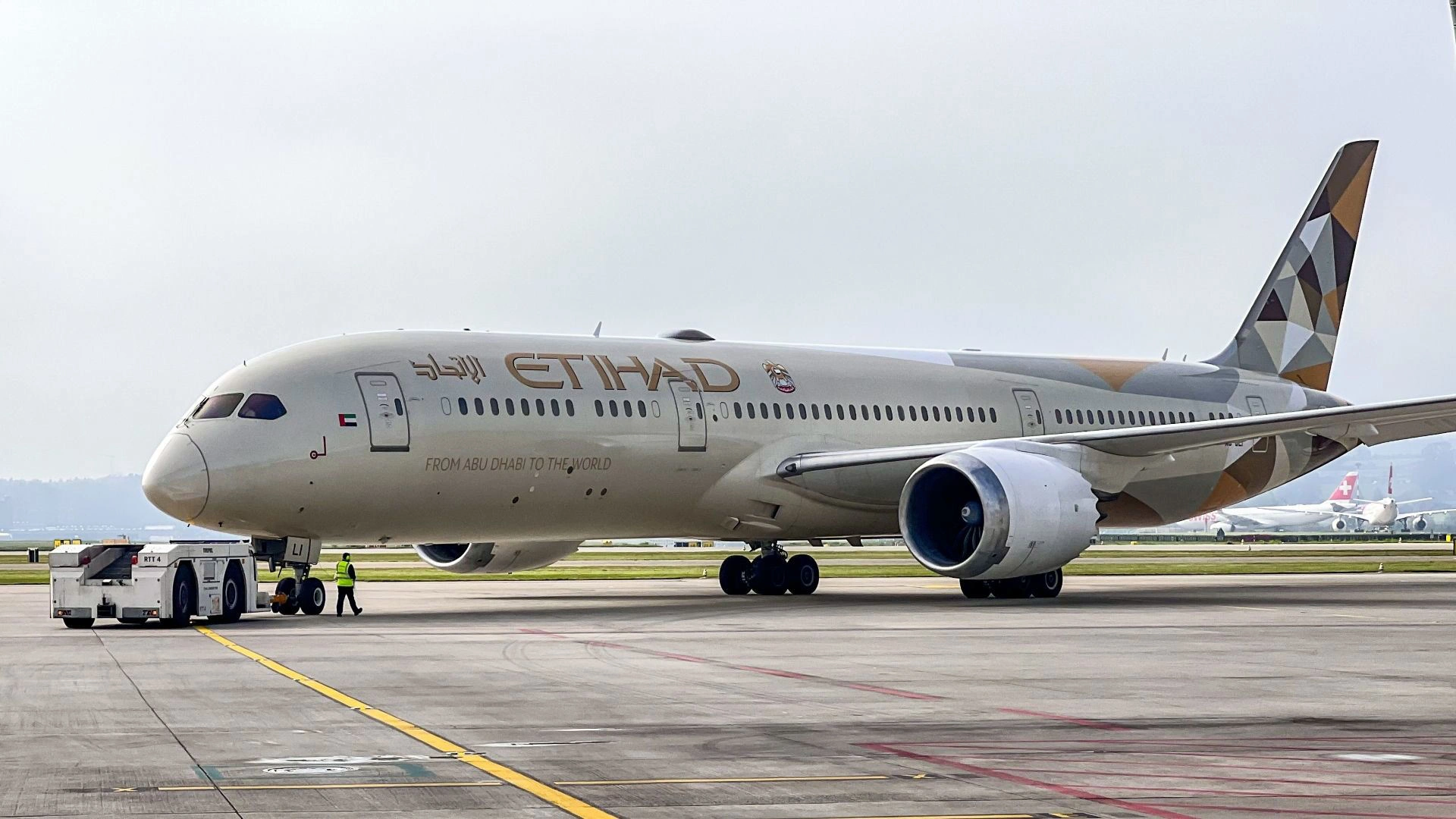
Antonoaldo Neves, Etihad Airways’ chief executive, took the helm with a singular, unsentimental mandate: strip away the vanity and chase the yield. The ghosts of the airline’s disastrous 2010s equity spending spree—a period defined by burning cash on doomed European carriers like Air Berlin and Alitalia—are finally exorcised. Today, from the polished concourses of the newly inaugurated Terminal A at Zayed International Airport, a quieter, deadlier calculus is taking shape. This week’s announcement of an Etihad European expansion—specifically adding Prague and Warsaw to its summer 2025 route map—is not merely about planting flags in foreign capitals. It is a calculated strike in the escalating air war over the global transit passenger.
The aviation landscape of the Arabian Gulf has fundamentally transformed since the pandemic. Abu Dhabi is no longer trying to outspend Dubai or out-fly Doha. Instead, it is playing a game of surgical precision.
Global passenger demand is currently testing the physical limits of airport infrastructure and aircraft leasing markets. According to the International Air Transport Association (IATA), Middle Eastern carriers posted a 10.8% year-on-year increase in international traffic midway through 2024. Yet, growth is bottlenecked by systemic delivery delays from both Boeing and Airbus, forcing airline executives to treat every available aircraft as an ultra-premium asset.
That said, Etihad remains remarkably unbothered by the macro-level chaos. Armed with a leaner fleet and a restructured balance sheet, the carrier is selectively targeting secondary European markets where legacy competitors are retreating or failing to meet surging point-to-point demand.
The Economics of Eastern Europe
Prague and Warsaw are not the glittering long-haul megahubs of London or Frankfurt. They are, however, formidable economic engines in their own right. By deploying Boeing 787 Dreamliners to these cities, Etihad is capturing a highly specific demographic. They are targeting affluent Eastern European tourists heading to Southeast Asia, alongside a rapidly growing cohort of corporate travellers facilitating trade between the Arabian Peninsula and the Visegrád Group.
Etihad new destinations are chosen through ruthless route profitability algorithms, not political prestige.
For years, passengers from Poland and the Czech Republic bound for Thailand, Vietnam, or the Maldives had to transit through Munich, Paris, or Amsterdam. This geographic inefficiency enriched Air France-KLM and the Lufthansa Group. Abu Dhabi is simply cutting out the middleman. By flying directly into these Eastern European capitals, Etihad captures the full fare premium while dramatically reducing the total travel time for the consumer.
The numbers justify the aggression. Passenger footfall between Eastern Europe and the United Arab Emirates has surged, driven by relaxed visa regimes and an influx of foreign direct investment. Reuters market data indicates that European outbound leisure travel has fully eclipsed 2019 levels, with premium cabin yields holding stubbornly high despite lingering inflationary pressures across the eurozone.
This is where the Neves strategy shines. He knows widebody aircraft are precious commodities in a supply-constrained world. You do not park a $250 million jet on the tarmac for nine hours at Heathrow if you can turn it around in two hours at Warsaw Chopin Airport. The asset utilisation rates on these mid-haul, six-hour European sectors are phenomenally efficient. They allow the aircraft to return to Abu Dhabi just in time to catch the midnight departure wave feeding traffic to Mumbai, Bangkok, and Sydney.
Reframing the Abu Dhabi Aviation Strategy
The obvious question requires a direct answer. Why is Etihad expanding its European network? Etihad is expanding its European network to capture underserved point-to-point premium leisure traffic and to feed its highly profitable Southeast Asian transit routes. This strategy bypasses congested Western European hubs while maximising the daily utilisation of its current widebody aircraft fleet.
That 43-word reality dictates every move the airline makes today.
The era of “The Residence”—the hyper-luxurious three-room suite in the sky that once defined the brand under former CEO James Hogan—is fading into aviation history. Today, the Abu Dhabi aviation strategy is defined by load factors, belly-hold cargo revenue, and operating margins.
The picture is more complicated when you look 130 kilometres up the road. Emirates, the colossus of Dubai, operates a fundamentally different model. Tim Clark built a machine designed to move the entire world through a single point using massive, high-density Airbus A380s. Qatar Airways, under the relentless drive of former chief Akbar Al Baker and his successor Badr Mohammed Al Meer, built an obsessive, high-frequency network that blankets the globe.
Etihad is choosing the middle path. It cannot match Emirates on pure volume, and it will not bleed cash to match Qatar on sheer connectivity.
What follows, however, is a masterclass in niche dominance. By targeting cities like Prague and Warsaw, Etihad avoids entering a financial bloodbath over landing slots at London Heathrow or Paris Charles de Gaulle. They are finding uncontested airspace. The Financial Times recently observed that mid-sized network carriers are currently posting the highest operating margins in the industry. They achieve this precisely because they are not forced to dump excess capacity on hyper-competitive trunk routes just to maintain market share.
Supply Chains and Sovereign Ambitions
This expansion ripples far beyond the departure gates of Eastern Europe. Downstream, the implications for European legacy carriers are severe.
Air France-KLM and the Lufthansa Group have historically relied on their Eastern European feeder networks to prop up the profitability of their long-haul Asian operations. When Middle East carriers Europe strategies shift toward these secondary cities, the European incumbents bleed high-yielding transit passengers. A Polish executive travelling to Singapore no longer needs to connect in Frankfurt; they can fly south to Abu Dhabi and connect east, often on newer aircraft and with superior service.
There is also the physical reality of the metal. The global aviation supply chain is severely fractured. Both Boeing and Airbus are missing delivery targets by months, and in some cases, years. Airlines are being forced to extend the leases of older, less fuel-efficient aircraft and cannibalise parts just to maintain their published schedules. Engine durability issues from manufacturers like Pratt & Whitney have grounded dozens of narrowbody jets globally.
In this hostile environment, launching two medium-haul destinations is a flex of operational reliability.
It signals to the market—and to the sovereign wealth funds backing the enterprise—that Etihad has secured the necessary lift to execute its “Journey 2030” growth mandate. The carrier plans to double its fleet to 150 aircraft and triple its passenger numbers to 33 million by the end of the decade. Adding routes is easy; flying them profitably when aircraft are scarce is the true test of management.
Every new European route also serves the broader geopolitical mandate of the UAE. Abu Dhabi is aggressively pivoting away from hydrocarbon dependency. Bloomberg Intelligence estimates that the broader tourism, logistics, and aviation sector now accounts for a rapidly growing percentage of the emirate’s non-oil GDP. Zayed International Airport capacity was built for exactly this moment. The glittering Terminal A, a $3 billion architectural marvel capable of handling 45 million passengers annually, needs humans to justify its existence. Prague and Warsaw are merely the latest tributaries feeding the river.
The Limits of the Desert Hub Model
Still, skepticism remains. The rapid scaling of Gulf carriers has historically triggered fierce protectionist backlash from European regulators and domestic airlines.
Can a region roughly the size of Scotland truly sustain three massive global aviation hubs operating within a 400-kilometre radius? Dissenting voices argue that the current yield environment is an anomaly, artificially inflated by post-pandemic revenge travel and constrained global capacity. Once Airbus and Boeing resolve their supply chain bottlenecks and flood the market with new jets, yields will inevitably soften.
“The Gulf carrier model is heavily reliant on a continuous, uninterrupted flow of global free trade and open borders,” notes a recent structural analysis by CAPA – Centre for Aviation. “As European states become increasingly protective of their environmental targets and domestic carriers, securing bilateral air rights for unlimited expansion will become exponentially more difficult.”
This is a structural vulnerability that cannot be ignored. European governments, spurred by Brussels, are imposing synthetic aviation fuel mandates and aggressive carbon taxes that disproportionately affect long-haul transit carriers. If Poland or the Czech Republic face pressure from the European Union to cap Gulf carrier frequencies on environmental grounds, the economics of these new routes collapse overnight. Lufthansa CEO Carsten Spohr has spent the better part of a decade lobbying for what he terms a “level playing field” against state-backed Gulf carriers.
Etihad’s smaller scale—its very advantage in agility—makes it susceptible to targeted price wars. If Emirates decides to drop a 500-seat A380 into Prague, or if Qatar Airways slashes fares out of Warsaw to protect its market share, Etihad lacks the immense financial shock absorbers of its neighbours to sustain a protracted war of attrition.
Closing the Loop on Legacy
The addition of Prague and Warsaw is a microcosm of modern aviation economics. It is not a story of flag-waving vanity, but of calculated, almost clinical efficiency. Etihad has learned the hardest lesson of the airline industry through bitter experience: prestige does not pay the fuel bill, and equity stakes in failing airlines do not buy loyalty.
By hunting in the geographic gaps left by European incumbents and avoiding the brutal crossfire of its larger Gulf neighbours, the airline is engineering a quiet, highly profitable resurrection. The battle for the global transit passenger is no longer being won solely on the flagship routes between London and Sydney. It is being fought, and won, in the margins.
Discover more from The Economy
Subscribe to get the latest posts sent to your email.

The confrontation usually happens behind closed glass doors in a bustling DIFC high-rise or a crowded Deira trading office. Voices rise, tempers fracture, and the ultimate corporate sanction is delivered in a single, heated sentence: “You are done—clear your desk.”
For the expatriate professional, the immediate aftermath is a cocktail of adrenaline and panic. In an economy where your residency, your bank accounts, and your family’s legal status are inextricably chained to your employment contract, a sudden dismissal is not just a career setback. It is an existential threat.
But legal reality in the Emirates operates on a strictly documented basis. If you are fired verbally in the UAE, the termination is effectively an illusion in the eyes of the state. The Ministry of Human Resources and Emiratisation (MoHRE) does not recognize heat-of-the-moment outbursts. They recognize paper, digital signatures, and registered post.
What follows is an examination of why the spoken word carries zero weight in UAE termination proceedings, and how the absence of a formal, written notice legally arms the employee while exposing the employer to severe financial penalties.
The Macro Landscape of UAE Labour Reform
To understand why documentation is treated with such uncompromising severity, one must look at the structural pivot the Emirates has executed over the past five years. The nation is aggressively transitioning from a transient, tax-free waystation into a permanent, highly regulated global knowledge economy.
This ambition requires a predictable, transparent legal framework. Foreign direct investment and top-tier global talent do not flow into jurisdictions where executives can be dismissed on a whim without procedural fairness. Recognizing this, the federal government entirely overhauled its labor architecture. On February 2, 2022, Federal Decree-Law No. 33 of 2021 came into effect, representing the most sweeping transformation of workplace regulations in the country’s history.
The new legal framework effectively dismantled the remnants of the old sponsorship mentalities, replacing them with fixed-term contracts and strict procedural mandates. It was designed by Minister of Human Resources Dr. Abdulrahman Al Awar to align the UAE with OECD labor standards, ensuring that both capital and labor operate on a balanced, predictable playing field.
A central pillar of this new framework is the formalization of the termination process. The state demands visibility into the ending of an employment relationship because that ending triggers a cascade of bureaucratic events: visa cancellations, the calculation of end-of-service gratuities, and the repatriation of foreign workers. When an employer attempts to bypass this with a verbal firing, they are not just breaking a corporate rule. They are disrupting the state’s regulatory apparatus.
The Core Development: Why the Spoken Word Fails
When examining the mechanics of dismissal, the primary question must be answered directly. Can an employer fire you without written notice in the UAE?
Under UAE Labour Law, an employer cannot legally fire you without written notice. A verbal dismissal is legally invalid and is heavily presumed by labour courts to be an “arbitrary dismissal.” To terminate a contract legally, the employer must provide formal written notice that explicitly states the reasons for termination, initiating the statutory notice period of 30 to 90 days.
This requirement is not a mere administrative suggestion. It is the absolute bedrock of the termination process.
If a manager tells you to leave the premises and not return, they have committed a critical procedural error. Without a written letter detailing the termination, the employment contract remains entirely active. You are still legally employed. Your salary continues to accrue. Your visa remains valid.
The danger for the employee in this scenario is accidental abandonment. If you take the verbal command at face value, pack your belongings, and stop coming to the office, the employer can legally pivot and accuse you of absconding. Under Article 50 of the Labour Law, unjustified absence for seven consecutive days allows an employer to terminate the contract without notice and potentially withhold end-of-service benefits.
This creates a perilous trap for the uninformed worker. The employer shouts a dismissal, the employee complies by staying home, and the employer then files an absconding report with MoHRE, framing the victim as the violator.
To neutralize this threat, the legally literate employee must force the issue into the written record. If dismissed verbally, you must immediately send an email to HR and upper management. The communication should be polite, strictly factual, and timestamped. It should state: “Following our conversation this morning where I was verbally instructed to leave the premises and end my employment, I am writing to request my formal, written notice of termination as required by UAE Labour Law, outlining the reasons for my dismissal and the start date of my notice period. Until I receive this, I remain ready and willing to fulfill my contractual duties.”
This single email shifts the entire legal burden back onto the company. It proves you have not absconded. It proves you are willing to work. And it creates a permanent digital paper trail that a labor court judge will rely upon when the dispute inevitably escalates.
The Analytical Layer: Arbitrary Dismissal and Compensation
Moving beyond the immediate mechanics of the firing, we must examine how UAE courts interpret a lack of documentation. The judicial system is remarkably consistent on this point: a failure to provide written notice is the fastest route to an employer losing a labor dispute.
When an employer terminates a contract without a valid, documented, and legally permissible reason, it qualifies as arbitrary dismissal under Article 47 of the law. The financial consequences for the company are severe.
If the labor court determines the dismissal was arbitrary—which a purely verbal firing almost guarantees—the employer can be ordered to pay up to three months of the employee’s total salary as compensation. This is entirely separate from, and in addition to, the standard end-of-service gratuity, pending unpaid salaries, and payment in lieu of the unserved notice period.
For a mid-level executive earning 40,000 AED a month, a careless verbal firing by a hot-headed manager can instantly create a legal liability of over 120,000 AED for the company, before even calculating standard severance.
The courts demand strict evidence of poor performance or gross misconduct to justify a termination. If the employer claims the verbal firing was the result of the employee’s incompetence, the court will demand to see the paper trail. Where are the written warnings? Where are the performance improvement plans? Under the UAE’s progressive disciplinary system, an employer must issue formal warnings before moving to termination.
A sudden, undocumented dismissal tells the court that no such disciplinary process occurred. It signals an impulsive, retaliatory, or discriminatory firing.
Yet, the legal landscape is not entirely uniform. The rules shift depending on your precise geographic jurisdiction within the Emirates. While the mainland operates strictly under MoHRE regulations, free zones like the Dubai International Financial Centre (DIFC) and Abu Dhabi Global Market (ADGM) operate their own English common law court systems.
The DIFC Employment Law (Law No. 2 of 2019) is similarly strict regarding written documentation, but it removes the specific concept of “arbitrary dismissal” compensation in favor of strict contractual adherence and a mandatory penalty for late payment of final settlements. Regardless of the zone, the universal truth remains: verbal instructions to leave the company are legally toxic.
Downstream Consequences: Visas, Banking, and Survival
The insistence on written notice extends far beyond the walls of the HR department. In the UAE, your employment contract is the central node of your financial and social existence. Severing it has immediate, profound downstream effects.
First is the matter of banking. UAE financial institutions are notoriously swift to act when an employment relationship ends. Under the terms of most personal loans, car loans, and credit cards in the Emirates, the bank holds a lien on the employee’s end-of-service gratuity. When a company eventually processes a final settlement, it is legally obligated to mark the transfer as a “final payment.”
This coding acts as an automated tripwire for the bank. If you have outstanding debt, the bank may instantly freeze your accounts to secure the funds, demanding proof of a new job before releasing the capital. A verbal firing delays and confuses this entire process. If you are locked in a multi-month labor dispute over a verbal dismissal, your salary stops arriving, but your final settlement is delayed by litigation. This leaves the expatriate in a financial vacuum, unable to service local debt and at risk of criminal bounced-cheque cases.
Second is the visa grace period. Historically, losing your job in the UAE meant you had exactly 30 days to exit the country or find new employment. The resulting panic often forced highly skilled workers to accept substandard jobs simply to maintain their residency.
The government explicitly recognized this as a drag on economic stability. Recent reforms have fundamentally changed the residency landscape. Today, depending on your skill tier, reforms implemented by the UAE cabinet allow grace periods of up to 180 days after a visa is officially cancelled.
But this grace period only begins when the visa is legally cancelled by MoHRE, a process that requires a formal, signed termination and a signed settlement document. A verbal firing leaves the employee in bureaucratic purgatory. You cannot start a new job because your current visa is still active. You cannot access the 180-day grace period because you haven’t been legally terminated. You are a ghost in the system.
This is why compelling the employer to issue a written termination letter is the vital first step. It starts the clock. It triggers your legal entitlements. It forces the bureaucratic gears to turn, allowing you to transition your visa, secure your funds, and remain in the country legally while you plot your next move. According to recent demographic data, expatriates make up over 88% of the UAE’s population, and ensuring their frictionless transition between roles is a stated macroeconomic priority for federal policymakers.
The Employer’s Defense: Burden and Reality
To present a complete picture, we must examine the reality from the employer’s perspective. Why do verbal firings still happen in a jurisdiction that punishes them so severely?
The defense often centers on the administrative burden placed upon small and medium enterprises (SMEs). In a fast-paced trading environment or a high-turnover retail business, managers often view the strict procedural requirements of MoHRE as incompatible with the daily realities of running a business.
When an employee commits a serious breach of trust—perhaps suspected theft, violent behavior, or catastrophic negligence—the immediate instinct of a business owner is to remove the threat from the premises. Drafting formal letters, initiating 30-day notice periods, and scheduling HR meetings feels agonizingly slow when the business is actively bleeding capital or facing reputational damage.
Legal advocates for employers argue that the current system is occasionally exploited by underperforming employees. A poorly performing worker who knows the law can sometimes weaponize the procedural requirements, using a minor technical misstep by the employer—like a verbal outburst by a stressed manager—to extract an arbitrary dismissal settlement.
That said, the law does provide an escape valve for employers in genuine crisis. Article 44 of the Labour Law outlines ten specific scenarios where an employer can terminate an employee instantly, without notice and without end-of-service benefits. These include submitting forged documents, failing to perform basic duties despite written warnings, revealing corporate secrets, or being found drunk at work.
Crucially, however, even an Article 44 dismissal requires a written investigation and a formal letter stating exactly which clause the employee violated. The state grants the employer the power to fire instantly for gross misconduct, but it refuses to waive the requirement for a written record.
Furthermore, courts are highly skeptical of Article 44 dismissals. Employers who attempt to use it to bypass notice periods often find themselves brutally cross-examined by labor judges. If the employer fails to provide an airtight, documented investigation proving the gross misconduct, the court will automatically revert the case to an arbitrary dismissal, handing the victory to the employee.
The burden of proof rests entirely on capital, not labor. In a region historically criticized by international rights organizations for favoring corporate power, the contemporary UAE labor court is surprisingly, structurally biased toward the worker when documentation is absent.
Synthesis: The Value of the Paper Trail
The UAE’s labor market has matured at a staggering pace. It has evolved from a deeply asymmetrical system into a highly codified, internationally competitive legal arena. In this modern landscape, verbal instructions regarding employment status are not just unprofessional; they are legally non-existent.
For the employer, yielding to anger and verbally dismissing a worker is an unforced error that invites catastrophic financial penalties and protracted litigation. It turns a simple staffing change into an arbitrary dismissal claim that the company is mathematically likely to lose.
For the employee, understanding this framework is the ultimate shield against corporate abuse. The moment a manager attempts to end your livelihood with spoken words, the power dynamic actually inverts. By refusing to abscond, calmly demanding written notice, and maintaining a meticulous digital trail, the worker traps the careless employer in the strict machinery of federal law. In the UAE, the loudest voice in the room never wins the labor dispute. The victor is always the one holding the paperwork.
Discover more from The Economy
Subscribe to get the latest posts sent to your email.

Islamabad’s fiscal arithmetic for 2026-27 tells two stories at once. One is a government insisting the worst of the inflation crisis has passed, with growth ticking back toward 4%. The other is a security state absorbing more than Rs3 trillion in defence outlays, its largest allocation on record, against a regional backdrop still rattled by the Iran-Israel-US conflict that erupted in February. Finance Minister Muhammad Aurangzeb presented both numbers in the same breath, and that juxtaposition is the story.
A Budget Shaped by War, Reserves, and the IMF
Pakistan’s FY27 budget didn’t emerge in a vacuum. It was drafted while an IMF mission led by Iva Petrova was still in Islamabad picking through the numbers, and while the State Bank was nursing reserves that had only just climbed back toward $17 billion after years of near-default anxiety. The IMF’s Executive Board completed the third review of Pakistan’s Extended Fund Facility arrangement and the second review of its Resilience and Sustainability Facility on May 8, 2026, releasing roughly $1.1 billion and $220 million respectively, and bringing total disbursements under the two programmes to about $4.8 billion.
That context matters because it’s the IMF’s framework, more than domestic politics, that has shaped the headline targets. Pakistan’s economy grew 3.7% in FY2025-26, up from 3.2% in FY2024-25, with nominal GDP reaching Rs126.9 trillion ($452.1 billion) and per capita income rising to $1,901. The FY27 numbers are calibrated against that base, with the government betting that a fragile recovery can be nursed along without breaking the fiscal discipline Washington has demanded.
Section 1: The Numbers Behind Pakistan’s FY27 Budget
The Pakistan FY27 budget sets out a GDP growth target of 4%, up from an estimated 3.7% this year, alongside an inflation projection of 8.2%. The budget deficit is projected at 3.6% of GDP, with the government aiming for a primary surplus of 2% of GDP and a federal deficit of Rs7.02 trillion. Those are not small ambitions for a country that, less than three years ago, was weeks away from default.
The revenue side carries the heaviest lift. The Federal Board of Revenue has been handed a tax collection target of Rs15.26 trillion for FY27, an increase of more than 8% from Rs14.13 trillion in the outgoing year. That’s a number the IMF effectively wrote into the programme months ago, and it leaves little room for the kind of populist tax relief that often appears in election-adjacent budgets.
Then there’s defence. Defence spending has been raised to over Rs3 trillion for FY27, up from Rs2.56 trillion last year, with Aurangzeb telling parliament that “defence spending has been increased considerably to make the country invincible due to the uncertainty in the region.” It’s the second consecutive year of double-digit increases to the military budget — last year’s allocation itself had jumped sharply after the brief but intense conflict with India in May 2025.
Development spending, by contrast, has been held tight. The federal Public Sector Development Programme has been set at roughly Rs1 trillion, with provincial Annual Development Programmes adding a further Rs2.2 trillion, taking the national development outlay to about Rs3.7 trillion. Social protection got a modest boost: the Benazir Income Support Programme allocation rises to Rs838 billion, up 17% from last year, with coverage extended to 12 million families.
Section 2: What Does Pakistan’s Rs3 Trillion Defence Budget Actually Mean?
Pakistan’s defence budget for 2026-27 isn’t just a line item — it’s a statement about how the security establishment views the regional environment, and about where the civilian government’s bargaining power ends. At over Rs3 trillion, defence spending now equals roughly 2.1% of GDP, up from 2.03% in the FY26 revised estimate. On paper that’s a modest shift in the ratio. In rupee terms, though, it’s an 18% jump in a single year, layered on top of the 20% increase the previous government approved after the May 2025 clashes with India.
What is Pakistan’s GDP growth target for FY27? Pakistan has set a GDP growth target of 4% for fiscal year 2026-27, up from an estimated 3.7% in the outgoing year. The target rests on sectoral projections of 3.6% growth in agriculture, 4.5% in industry, and 4.2% in services — all modest accelerations from FY26 outturns.
The defence allocation didn’t arrive in isolation, either. Aurangzeb framed it alongside a diplomatic flourish: he lauded the role of Pakistan’s armed forces, calling them a source of foreign exchange earnings, and described the strategic defence agreement between Pakistan and Saudi Arabia as “a moment of pride,” adding that Pakistan would “always steadfastly stand alongside KSA.” That’s not boilerplate. It’s a budget speech doing double duty as a signal to Riyadh, to New Delhi, and to a domestic audience that has spent a year absorbing the costs of a conflict most Pakistanis didn’t choose.
What’s harder to square is how a government under an IMF primary-surplus mandate finds room for both a record defence bill and a 14% jump in core tax collection without squeezing development spending into irrelevance. The answer, so far, appears to be: it doesn’t fully square. The Rs1 trillion federal PSDP is essentially flat in real terms once 8.2% inflation is stripped out — meaning roads, dams, and digital infrastructure projects are being asked to do the same job with less purchasing power than last year.
Section 3: Markets, the IMF, and the Citizen’s Wallet
The immediate audience for this budget isn’t really the Pakistani public — it’s the IMF board, which has another review scheduled for the second half of 2026. An IMF mission led by Iva Petrova concluded a staff visit to Islamabad on May 20, 2026, focused specifically on “the FY2027 budget formulation, and progress on the reform agenda under the Extended Fund Facility (EFF) and the Resilience and Sustainability Facility (RSF),” with the next full review mission expected later this year. If Islamabad’s numbers diverge too sharply from what was discussed in those meetings, the budget could become a negotiating problem before it’s even fully implemented.
For markets, the signal is broadly reassuring — at least on paper. A fourth consecutive primary surplus, a stated commitment to fiscal consolidation, and a tax target that’s already been pre-cleared with the Fund all point toward continuity rather than rupture. The State Bank’s decision to raise its policy rate by 100 basis points to 11.5% in April, the first hike since June 2023, suggests the central bank is already pricing in the inflationary drag from higher global oil prices since the Middle East war began.
For ordinary citizens, the picture is more complicated. The budget does carve out some relief for salaried workers, with income tax rates cut across several brackets — for instance, the rate on annual salaries between Rs3.2 million and Rs4.1 million falls to 25% from 30%, and the bracket from Rs4.1 million to Rs5.6 million drops to 29% from 35%. But with inflation forecast at 8.2% — itself a figure many independent economists consider optimistic — those gains could be eaten up quickly if energy and food prices track anywhere near the trajectory seen since the conflict began.
Energy remains the wildcard that could unravel the whole framework. Circular debt in the power sector alone sits close to Rs1.84 trillion even after a major bank refinancing facility, and the combined energy sector shortfall — including gas — has reportedly climbed past Rs5 trillion. Any subsidy reintroduced to cushion consumers from cost-reflective tariffs would directly threaten the 2% primary surplus target the entire IMF arrangement is built around.
Section 4: Not Everyone Buys the Optimism
The government’s framing — 4% growth, 8.2% inflation, a primary surplus locked in for a fourth straight year — assumes the Middle East conflict’s economic fallout stays contained. Not every economist agrees that’s the safer bet.
Dr Hafiz Pasha’s recent analysis places FY27 growth at just 2.5% against the government’s 4% and the IMF’s earlier 3.5% baseline, inflation at 12% against the official 8.2%, and the current account deficit at $10 billion rather than the roughly $4 billion implied by Fund projections — with reserves declining rather than continuing to build. The gap between these scenarios isn’t academic. If Pasha’s stress case is closer to reality, the tax revenue assumptions underpinning the entire budget — that 14% jump in FBR collections — become much harder to deliver, and the primary surplus the IMF is counting on could evaporate.
Even the IMF’s own staff report, published in mid-May, hedged its bets. The Fund’s third review noted that GDP growth had accelerated in the first half of FY26 and the current account was broadly balanced, but acknowledged that “the impact of the war in the Middle East clouds Pakistan’s near-term outlook and there is great uncertainty about how developments will unfold.” That report was written before the worst of the oil-price shock had fully filtered through to Pakistan’s import bill — and the gap between that baseline and the budget presented weeks later suggests the government chose to project confidence rather than caution. Whether that confidence survives contact with a second IMF review later this year is an open question that won’t be settled by a budget speech, however carefully worded.
The Bigger Picture
What Pakistan’s FY27 budget really reveals is a government trying to hold two contradictory commitments at once: a security posture that demands ever-larger defence outlays in a volatile region, and an IMF programme that demands fiscal restraint as the price of continued solvency. For now, both demands have been met — on paper, through a combination of aggressive tax targets, modest development spending, and a growth forecast that several independent economists consider generous. The real test arrives not in parliament, where the budget will pass with the government’s majority, but in the months ahead, when oil prices, energy subsidies, and the next IMF mission will decide whether 4% growth and 8.2% inflation were a forecast — or a wish.
Discover more from The Economy
Subscribe to get the latest posts sent to your email.

The Pragmatic Pivot: Etihad European Expansion Signals New Strategy

Can You Be Fired Verbally in the UAE? The Legal Reality

Pakistan’s FY27 Budget Bets on 4% Growth While Defence Spending Crosses Rs3 Trillion

Isme Tells Government to Redirect FDI Funding Towards Irish Entrepreneurs

Asia Energy Crisis Hits ‘Worst-Case Scenario’ as ADB Warns of Structural Collapse

The Automated Authority: Inside the KPMG AI Report Hallucination Scandal

Hong Kong Bank Accounts for Mainland Residents: Capital Flight Surge

Pakistan’s AI moment: Rs9bn prescription for a structural problem

SpaceX IPO: Musk Raises $75bn in History’s Largest Listing

Tightrope Walk: Pakistan Unveils Crucial FY2026-27 Federal Budget Today

Public Debt Bond Markets: Why Investors Learned to Love Debt

Xponential Fitness Franchise Lawsuit: The $3.97M Judgment

UK Labour Productivity: Are We Finally Seeing a Rebound?

UK Stablecoin Regulation: Can Britain Catch Up?

China Overhauls the World’s Biggest Surveillance Network with Advanced AI

Kevin Warsh Takes the Fed’s Helm — and Walks Straight Into a Rate-Hike Storm

S&P 500 Slips Back to 7,408 as Oil Storms Past $109, Bond Yields Clock 19-Year Highs

McKinsey’s Post-AI Pay Reckoning: Why Partners Face Cash Cuts in a Radical Compensation Overhaul

SpaceX, OpenAI & Anthropic IPOs: Wall Street’s $200B AI Test

SpaceX IPO: Inside the $2 Trillion Market Debut

How AI Is Forcing McKinsey and Its Peers to Rethink Pricing

SpaceX IPO Set to Lock In Musk’s Control With Mars-Linked Pay Deal

KPMG Australia CEO Resigns After Whistleblower Claims Exposed Investigation Failures

Why Selling Persists at the PSX as the US-China Stalemate on Iran Deepens Market Jitters

The Guardrails Are Down: How Meta and Google’s AI Models Fold Under Pressure

Broadcom Market Value Loss: Revenue Forecast Disappoints

Cerebras IPO: The Wafer-Scale AI Challenger That Just Priced at $185 — and Why the Market Is Betting It Can Crack Nvidia’s Fortress

Pakistan Budget FY 2026-27: Relief, Prospects, and the Tightrope Walk
-

 Markets & Finance5 months ago
Top 15 Stocks for Investment in 2026 in PSX: Your Complete Guide to Pakistan’s Best Investment Opportunities
-

 Analysis4 months ago
Top 10 Stocks for Investment in PSX for Quick Returns in 2026
-

 Analysis4 months ago
Brazil’s Rare Earth Race: US, EU, and China Compete for Critical Minerals as Tensions Rise
-

 Banks5 months ago
Best Investments in Pakistan 2026: Top 10 Low-Price Shares and Long-Term Picks for the PSX
-

 Investment5 months ago
Top 10 Mutual Fund Managers in Pakistan for Investment in 2026: A Comprehensive Guide for Optimal Returns
-

 Analysis4 months ago
Johor’s Investment Boom: The Hidden Costs Behind Malaysia’s Most Ambitious Economic Surge
-

 Global Economy6 months ago
15 Most Lucrative Sectors for Investment in Pakistan: A 2025 Data-Driven Analysis
-

 Global Economy6 months ago
Pakistan’s Export Goldmine: 10 Game-Changing Markets Where Pakistani Businesses Are Winning Big in 2025