
Analysis
China Reviews Meta’s $2bn Manus Deal—and Bars Founders From Leaving

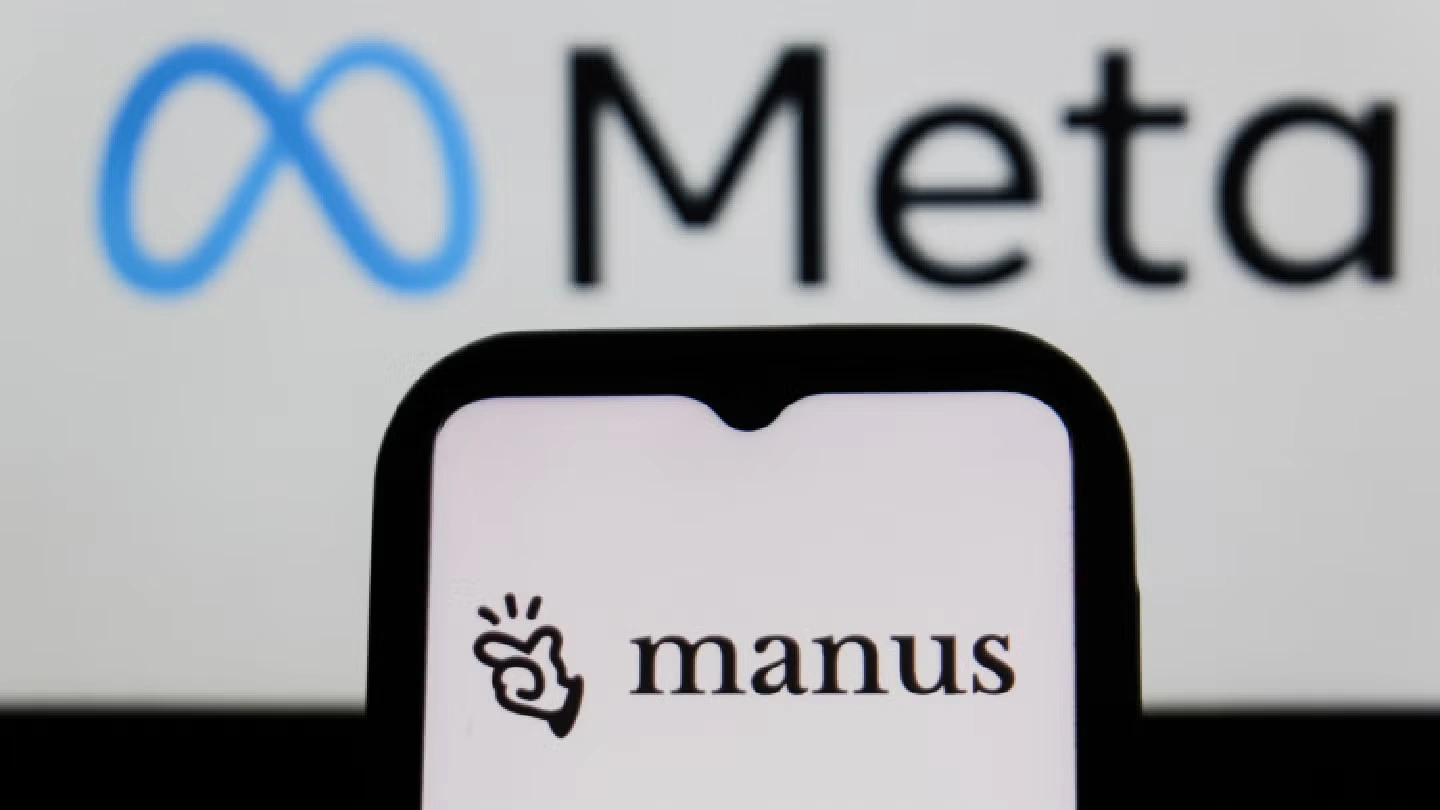
Beijing’s export-control probe into Meta’s acquisition of the agentic AI startup is the sharpest test yet of who owns the talent and technology produced by China’s restless entrepreneur class.
The transaction had looked like a clean escape. Manus, an artificial intelligence startup founded in Beijing, had spent the better part of two years engineering its own liberation: relocating its headquarters to Singapore, laying off its mainland staff, shuttering its Chinese offices, and raising money from Benchmark, one of Silicon Valley’s most storied venture capital firms. When Meta announced in late December that it would acquire Manus for over $2 billion—the social media giant’s third-largest deal in its history—the founders appeared to have navigated one of the most treacherous passages in global tech. They had moved, adapted, and escaped.
Then Beijing blinked last.
On Wednesday, Reuters confirmed reports from the Financial Times that China has restricted two co-founders of Manus from leaving the country, as regulators formally review whether Meta’s $2 billion acquisition violates China’s investment rules. MarketScreener What began in January as a procedural commerce ministry inquiry has hardened into something far more personal: exit bans on the individuals who built the product, signalling that Beijing regards the transfer of agentic AI capabilities to a Western technology giant not as a routine M&A transaction, but as a matter of national security.
The implications extend far beyond one startup and one deal.
What Is Manus—and Why Does Beijing Care?
Manus AI’s parent entity, Butterfly Effect, was founded in 2022 by serial entrepreneur Xiao Hong in Beijing, with operations in Wuhan. It was originally a fully Chinese company—founded in China, operated domestically, and run by Chinese founders. Triviumchina Its first product, Monica, was an AI-powered browser extension. Manus, its successor, was something more ambitious: an autonomous AI agent capable of independently browsing the web, executing code, generating reports, and managing complex workflows with minimal human direction.
From day one, the company targeted international users rather than the domestic market. Triviumchina Founder Xiao Hong, known professionally as “Red,” was explicit about why: overseas users’ willingness to pay for software was roughly five times that of Chinese users, and with payments denominated in dollars and an exchange rate of seven renminbi to the dollar, the foreign market was at least 35 times larger. Triviumchina
That calculus proved correct. Within eight months of launch, Manus reached $100 million in annual recurring revenue and draws 22 million monthly visits. WinBuzzer Rather than building its own frontier model, Manus focuses on orchestration and reliable task execution atop existing large language models WinBuzzer—a strategy that made it fast, capital-efficient, and deeply attractive to a company like Meta, which already owns the distribution infrastructure to deploy agents at planetary scale.
Worth more than $2 billion, the deal will be assessed for its consistency with relevant laws and regulations, Ministry of Commerce spokesman He Yadong said at a regular briefing. Bloomberg Regulators began examining possible national security implications shortly after the December announcement.
The reason Beijing cares is elementary: the episode highlights a dilemma for the Chinese authorities—how to get the balance right between promoting Chinese technology internationally and retaining some level of control over homegrown AI companies and founders. The Wire China
The Architecture of an Escape—and Its Limits
The Manus story is, at its core, a story about the limits of regulatory arbitrage in an era of competing superpowers.
Despite being founded by Chinese engineers and backed by Chinese investors, the company moved its headquarters to Singapore in June 2025. Its product became unavailable in China in July. Around the same time, Manus reportedly laid off its Chinese staff and closed its offices in the country. Rest of World The move fit a wider pattern that analysts have termed “Singapore-washing”—a strategy where Chinese tech firms move headquarters or core operations to Singapore to attract foreign investment and avoid regulatory constraints back home. Heavyweights like ByteDance and Shein have made this transition in the past. Rest of World
For Manus, the logic was particularly ruthless in its precision. The company took a series of decisive steps: rejecting capital from state-owned investors while raising a $75 million round led by Benchmark in April, and gutting its China operations before relocating to Singapore in June. Triviumchina Corporate records reviewed by The Wire China suggest the Singapore entity was incorporated as early as 2023, when they set up a firm called Butterfly Effect Pte, which is in turn wholly owned by Butterfly Effect Holding, a Cayman Islands company. The Wire China
Yet the escape was structurally incomplete. Data from WireScreen shows that Xiao remains the legal representative of Beijing Butterfly Effect Technology as well as its second-largest shareholder. The Wire China Beijing’s lawyers had their thread. Manus’s mainland-registered parent company, Butterfly Effect, remains under the founders’ control, and early-stage research and development were conducted in China—factors that could strengthen the argument that Chinese regulators still have a say. eWEEK
The charges now under investigation are expansive. Regulators are examining potential violations of rules governing cross-border currency flows, tax accounting, and overseas investments, in addition to the original export-control inquiry. Bloomberg The central legal question is whether Manus needed an export licence when it relocated its technology and team from Beijing to Singapore before Meta’s acquisition was announced. Beijing’s 2020 Export Control Law includes a catch-all provision covering any technology transfer that could endanger “national security or national interests”—terms deliberately left undefined to give regulators broad discretion. byteiota
A Geopolitical Prism, Not a Legal Dispute
To reduce this case to its legal dimensions would be to misunderstand it.
China’s review of Meta’s acquisition of Manus signals Beijing’s intent to more tightly police foreign involvement in sensitive technologies developed by Chinese entrepreneurs, as more founders move operations overseas to sidestep geopolitical scrutiny. South China Morning Post The review, according to analysts, could become a high-profile test case for China’s equivalent of the Committee on Foreign Investment in the United States—CFIUS—which vets and blocks inbound investment on national security grounds.
The valuation optics make Beijing’s frustration palpable. Chinese firms that offered to acquire Manus before Meta’s deal valued it at only tens of millions—two orders of magnitude below what Meta paid. WinBuzzer In other words, the Chinese market entirely failed to recognise or reward what Manus had built. It took a Californian buyer to attach a proper price to Chinese talent. That gap, more than any legal technicality, explains the emotional charge behind Beijing’s intervention.
One source cited by the Financial Times said the deal had drawn attention in Beijing precisely because it could incentivise other startups to relocate abroad to bypass domestic supervision. eWEEK The worry is systemic: if Manus succeeds, it becomes a template. Every ambitious Chinese AI founder with a global product and a Singapore residency permit becomes a potential national security liability.
This is the core tension that Beijing cannot resolve through regulation alone. The fundamental reason Manus AI wanted to move abroad was not U.S. investment restrictions, but weak domestic demand. Triviumchina Fixing that requires economic reforms, not exit bans.
Meta’s Exposure—and Its Strategy
For Meta, the Manus acquisition was never really about Manus alone.
Meta has said it will keep Manus independent while integrating its agents into Facebook, Instagram, and WhatsApp. WinBuzzer Xiao Hong, who goes by “Red,” was expected to report directly to Meta COO Javier Olivan Substack after the deal closed. The 100-person Manus team represented a concentrated bet on agentic AI—systems capable of acting autonomously in the world rather than simply answering questions.
Meta has pledged a clean break. Meta has pledged there will be no continuing Chinese ownership in Manus and that it will discontinue operations in China. WinBuzzer Its spokesperson Andy Stone stated that “the transaction complied fully with applicable law,” adding that Meta anticipates “an appropriate resolution to the inquiry.” WinBuzzer
Yet the company’s relationship with China is complicated by deep-seated mutual suspicion. Facebook has been blocked in mainland China since 2009. Mark Zuckerberg spent years attempting to court Beijing—learning Mandarin, establishing a brief corporate foothold in Hangzhou—before abandoning the effort. The Manus deal may represent a new phase: rather than seeking entry into China, Meta is actively extracting talent and technology from it.
Washington, for its part, views this positively. Chris McGuire, a former National Security official in the Biden administration, noted that what Manus shows is that there are going to be firms that choose to defect, and that their interests in operating at the cutting edge and making money are greater than in inherent fidelity to the Chinese state. The Wire China
Echoes of TikTok—but With a Different Anatomy
The Manus case invites comparison to the TikTok saga, but the parallel is instructive precisely where it breaks down.
ByteDance and TikTok faced American regulatory pressure to sever their Chinese ownership structure. The concern was that a Chinese parent company could access U.S. user data or manipulate the algorithm for political purposes. In the Manus case, the pressure runs in the opposite direction: it is Beijing demanding that a Singapore-registered company with a Chinese parent acknowledge Chinese jurisdiction.
Both cases, however, share a deeper commonality: the collapse of the fiction that corporate domicile determines national allegiance. Governments on both sides of the Pacific have concluded that a startup’s nationality is determined by the passport of its founders and the origin of its intellectual property—not by the address on its certificate of incorporation. The era of regulatory arbitrage through nominal relocation may be ending.
The Benchmark dimension adds yet another layer. The U.S. Treasury Department has reportedly been looking into Benchmark for its investment in Manus last year, before the company shifted its headquarters to Singapore. Rest of World In other words, the same transaction that triggered a Chinese export-control probe also attracted scrutiny from Washington’s outbound investment review framework. Manus finds itself squeezed from both directions—exactly the double bind that “Singapore-washing” was supposed to prevent.
The Exit Ban: A Message to Every Chinese Founder
The imposition of exit bans on Manus’s co-founders carries significance that transcends their personal circumstances.
Exit bans—the practice of prohibiting individuals from leaving China while under investigation—are a well-established instrument of Chinese enforcement. They have been used against foreign executives in financial disputes, against dissidents, and against individuals whose cooperation is sought in criminal or regulatory proceedings. Their application here, to the founders of a Singapore-incorporated AI startup that sold to an American company, suggests that Beijing has decided to treat the outward flow of Chinese AI talent as an enforcement matter rather than an economic question.
Chris Miller, a professor at Tufts University and author of Chip War, warned that if China deters China-founded startups from expanding internationally, that is a bad thing for the startup ecosystem. The more China relies on potential sticks to keep companies in line with its political priorities, the more that has real risks for China’s efforts to build and support its own ecosystem. The Wire China
The Brookings Institution’s Kyle Chan observed, as reported by WinBuzzer, that Beijing appears to be demanding public support from Chinese tech founders, leaving them unable to stay silent. WinBuzzer The message to every ambitious engineer contemplating a Singapore incorporation is unmistakable: your physical body remains subject to Chinese jurisdiction even after your company has been redomiciled elsewhere.
Three Scenarios for Investors and Policymakers
The resolution of the Manus-Meta review will likely follow one of three paths, each with distinct implications for the global AI competitive landscape.
Scenario One: Conditional Approval. Beijing extracts concessions—restrictions on transferring China-developed intellectual property to U.S. servers, ongoing reporting obligations, or a commitment to wind down the Chinese entity on a specified timeline—before granting clearance. This is the most probable outcome. It preserves Beijing’s claim to jurisdiction while allowing the deal to proceed, and avoids the international embarrassment of blocking an acquisition that Manus’s Singapore incorporation was specifically designed to facilitate.
Scenario Two: Protracted Delay. China drags out the investigation for six to twelve months, using regulatory uncertainty as negotiating leverage in broader U.S.-China diplomatic discussions. The uncertainty alone serves Beijing’s interests by making Western acquirers think twice before pursuing future acquisitions of Chinese-origin startups. Meta’s AI integration timeline slips; investor confidence in Singapore-domiciled Chinese AI companies erodes.
Scenario Three: An Unwinding. Regulators determine that Chinese export-control law was violated and seek to reverse or restructure the transaction. This is the least likely outcome—it would damage China’s startup ecosystem, signal that successful exits to Western companies are structurally impossible, and likely accelerate the brain drain it is designed to prevent. But it cannot be entirely discounted. The exit bans suggest Beijing is prepared to apply maximum pressure before revealing how far it is willing to go.
The Deeper Fault Line
The Manus case is, in the final analysis, a consequence of a structural failure rather than a legal dispute.
China built one of the world’s most dynamic AI startup ecosystems—technically sophisticated, capital-efficient, globally ambitious—and then created the conditions that made its best companies want to leave. Regulatory opacity, weak domestic demand for premium software, U.S. chip restrictions, and the ever-present risk of sudden political intervention drove founders like Xiao Hong to conclude that their only viable path to scale ran through Singapore and Silicon Valley.
Beijing now finds itself attempting to retrofit a sovereignty claim onto a company that had been rationally, legally, and methodically exiting its jurisdiction for years. The exit bans on Manus’s founders are less a legal remedy than an admission of failure—a government reaching for coercive tools because the market tools were inadequate, and the founders were smart enough to know it.
For the global AI industry, the lesson is stark. Capital is mobile, code can be moved, and companies can be reincorporated. But people—their bodies, their families, their residual corporate holdings—remain subject to the laws of the countries that produced them. In the age of AI nationalism, talent is the last and most contested asset of all.
Discover more from The Economy
Subscribe to get the latest posts sent to your email.



Key Takeaways
- Rolex’s secondary market rose approximately 7.9% year-over-year as of 2026 (per WatchCharts data) — trailing Patek Philippe (+16.2%) and Tudor (+11.4%) but still outperforming Audemars Piguet (+3.4%).
- Rolex raised U.S. retail prices 4–9% in January 2026 (steel models ~5.6%, gold models ~8.7%), narrowing the historical gap between retail and pre-owned pricing.
- Not every model appreciates: steel sports references (Submariner, GMT-Master II, Daytona) have held value far better than two-tone or widely available dress references like the standard Datejust.
- The Lady-Datejust posted the sharpest 2026 gain among tracked collections — up 22.73%, from roughly $9,269 to $11,376 — driven by demand for smaller, “everyday luxury” watches.
- Gold’s rise past $2,400/oz has directly lifted the investment case for Rolex’s precious-metal references (Day-Date, Sky-Dweller, Yacht-Master).
The Model-by-Model Picture
| Category | 2026 Trend |
|---|---|
| Lady-Datejust | +22.73% (strongest performer among tracked collections) |
| Steel sports models (Submariner, GMT-Master II) | Held value well; corrected from 2022 peak but stabilized above retail |
| Daytona | Corrected from highs above $50,000 to the mid-$30,000s; still among the most sought-after references |
| Two-tone/widely available Datejust | Flat to negative — “holds value” is an overstatement for this category |
| Gold references (Day-Date, Sky-Dweller) | Lifted by gold’s rise above $2,400/oz |
Why the “Rolex Always Appreciates” Myth Is Fading
The pandemic-era boom pushed some references — the Daytona above all — to speculative highs disconnected from historical norms. Since the March 2022 peak, steel sports models have compressed meaningfully, and dealers who bought inventory near the top have in some cases faced 20–40% markdowns on liquidation. The lesson for 2026 buyers: Rolex as a category is not a monolith. Value retention depends heavily on specific reference, condition, and whether the piece comes with box and papers (“full set”).
What’s Actually Driving 2026 Strength
- Retail price increases raise the floor. When a new Submariner retails at $10,050 (up from $9,500), a pre-owned example at $11,000–$12,000 suddenly represents a smaller premium — narrowing the gap without secondary prices actually moving.
- Supply discipline remains Rolex’s core lever. The brand has never confirmed production numbers, and secondary-market premiums remain entirely a function of Rolex’s own manufacturing decisions — a risk factor as much as a support.
- Certified Pre-Owned rollout. Rolex’s now fully rolled-out CPO program has changed how buyers transact in the used market, adding a layer of brand-verified legitimacy that supports pricing.
The Case for Rolex as a Portfolio Diversifier
Financial advisors increasingly frame luxury watches not as a replacement for equities or bonds, but as a tangible, historically low-correlation diversifier — one that carries its own risks (illiquidity, condition-dependent pricing, no yield) but has demonstrated multi-decade resilience for specific references.
Is Rolex a good investment in 2026?
It depends heavily on the specific reference. Steel sports models like the Submariner and Daytona have held or grown in value; two-tone and widely available dress models generally have not. Overall, Rolex’s secondary market rose about 7.9% year-over-year in 2026, trailing Patek Philippe but ahead of Audemars Piguet.
Discover more from The Economy
Subscribe to get the latest posts sent to your email.

Navigating Mortgage and Loan Refinancing in a High-Yield Environment
Global public debt crossing critical thresholds has kept central bank policies volatile, resulting in fluctuating US Treasury yields throughout 2026. For homeowners and commercial property holders burdened by previous high-interest borrowing cycles, finding optimal refinance windows has become a high-stakes financial puzzle. Stalled disinflation and stubborn employment numbers mean rate cuts are incremental, requiring borrowers to act with precision.
Timing your mortgage or commercial loan refinance in this environment requires a deep understanding of yield curve movements and lender risk appetites.
Decoding 2026 Refinance Dynamics
The 10-Year Treasury Yield Benchmark
Mortgage rates continue to track closely with the 10-year US Treasury yield. When macroeconomic anxiety spikes debt issuance, yields rise, tightening consumer borrowing capacity. Savvy borrowers monitor weekly Treasury auctions to lock in rates during brief dip windows.
Hybrid ARMs and Alternative Structures
With fixed rates remaining elevated, 7/1 and 10/1 adjustable-rate mortgages (ARMs) have surged in popularity. These products offer lower initial monthly payments, giving borrowers breathing room until central bank easing cycles fully materialize.
| Loan Product | Current Rate Range | Best For | Key Risk Factor |
| 30-Year Fixed Mortgage | 6.2% – 6.8% | Long-term predictability | Higher initial monthly outlay |
| 7/1 Hybrid ARM | 5.5% – 5.9% | Short-term ownership / flipping | Rate reset risk after year 7 |
| Commercial Refinance | 7.0% – 8.2% | Corporate asset restructuring | Strict DSCR lender covenants |
Actionable Steps for Successful Refinancing
To maximize your chances of securing favorable refinance terms in a volatile market, follow a disciplined preparation strategy.
Boost Your Credit Score Immediately: Lenders in 2026 are applying stringent credit tiering; a 20-point increase can drop your APR by a crucial quarter-point.
Shop Regional Credit Unions: Smaller financial institutions often offer portfolio loans with more flexible underwriting than major national banks.
Calculate the Break-Even Point: Ensure your total closing costs are recouped through monthly savings within 24 months of closing.
“Market Strategist View: Refinancing in 2026 is an exercise in opportunistic timing. Borrowers must maintain immaculate financial profiles ready to strike the moment Treasury yields dip.”
Mastering the complexities of today’s debt environment ensures you can successfully lower your debt service costs and protect your long-term financial stability.
Discover more from The Economy
Subscribe to get the latest posts sent to your email.

The days of pulling generic auto insurance quotes based purely on your zip code and age are officially over. In 2026, insurance comparison engines are powered entirely by generative AI and real-time telematics. These platforms digest thousands of live data points—ranging from your driving smoothness via connected vehicle sensors to real-time traffic congestion patterns—to generate hyper-personalized premiums instantly.
For consumers, this evolution represents both a massive opportunity for savings and a hidden trap for penalty pricing. Understanding how AI algorithms evaluate risk is essential for anyone looking to lower their monthly auto insurance premiums.
How AI Comparison Engines Evaluate Your Risk Profile
Behavioral Telematics and Connected Cars
Modern cars stream performance data directly to insurance aggregators. Generative AI models analyze braking sharpness, acceleration curves, cornering G-forces, and phone distraction metrics. Drivers who maintain smooth, defensive habits are rewarded with dynamic rate cuts of up to 40% compared to traditional rating tiers.
Predictive Traffic and Weather Modeling
AI tools now cross-reference your daily commute route with predictive weather and accident probability models. If your standard parking location or driving corridor has a statistically higher incidence of uninsured motorist claims, your quotes will reflect that hyper-local risk assessment.
| Comparison Factor | Traditional Rating Model | 2026 Generative AI Model | Impact on Premium |
| Mileage & Usage | Annual estimated odometer reading | GPS tracking & live trip duration | High (up to 35% savings) |
| Driving Behavior | MVR driving record & accidents | Real-time braking, speed, & G-force | Critical (determines tier) |
| Vehicle Tech | Make, model, and safety rating | ADAS calibration & repair cost data | Moderate |
Strategies to Lower Your AI-Driven Insurance Quote
To outsmart the algorithm and secure the lowest possible premium in 2026, drivers must proactively manage their digital footprint on insurance platforms.
Opt-In for Telematics Trial Periods: Many insurers offer immediate 15% discounts just for installing their driving app; let it track safe habits for 30 days to lock in permanent savings.
Scrub Unverified Public Records: Ensure your motor vehicle report is free of clerical errors that AI risk models misinterpret as reckless behavior.
Compare AI Aggregators: Use platforms that integrate multi-carrier API feeds rather than single-brand comparison sites to find the best risk-adjusted rate.
“Industry Note: AI-driven pricing rewards transparency and precision. Drivers who actively manage their telematics data consistently out-save those relying on legacy quote calculators.”
Embracing AI comparison tools allows savvy policyholders to customize coverage limits precisely to their driving habits, eliminating wasted premium spend while ensuring robust protection.
Discover more from The Economy
Subscribe to get the latest posts sent to your email.

SpaceX Starship Achieves First Full Orbit on Historic 10-Hour Test Flight 14

Google’s $15B Finland AI Investment: Data Centers, Nuclear Power & Jobs

Fast Invoice Factoring: Rates, APR Math & Contract Traps

SOC 2 Type II Guide: Cost, Timeline & Compliance Companies

Hong Kong Wages Surge 3.4% in June: Sector Data & Analysis

Silver Price Today: Why the Xi-Trump AI Standoff Is Fueling a Safe-Haven Rally

Citibank & Dólar Estadounidense: Forex Playbook After the Xi-Trump Truce

How the Trump-Xi White House Summit Is Reshaping Mortgage Rates Today for Real Estate Investors

Indonesia Navigates Mega-Project Risks as China and Russia Eye the 2,772km Trans-Kalimantan Railway

Trump-Xi 2026 Summit Takeaways: The Trade Truce, Taiwan, and the AI Divide

Solar Panel Installation Cost in 2026: Why the Math Changed Overnight

Business Insurance: What Coverage You Actually Need and What It Costs in 2026

Auto Insurance Quotes: How to Get the Lowest Rate Without Losing Coverage

Huntington Online Banking: Full Features, Fees, and How It Compares in 2026

Top 30 Stocks for Investment in PSX for Massive ROI in 2026

SpaceX Starship Flight 14: First Orbital Attempt & Starlink V3 Launch Explained

Oil Prices Break $100 in 2026: Middle East Conflict & Energy Markets

BRICS+ Cross-Border Payments 2026: Interoperability Explained

Fidelity Investments Review 2026: SPAXX Yields & Zero-Fee Funds

Tween Back-to-School Trends 2026: What’s Driving the $85B Season

10-Year Treasury Yield Hits 4.80%: What It Means for Rates & Portfolios

Shein Clothes Quality & Safety in 2026: What Lab Tests Show

IMF & World Bank 2026 Global Economic Outlook: Growth, Inflation, Debt

China’s US$10.8 Billion Trade Shortcut: Why the Pinglu Canal Matters

High-CPM Finance Niches 2026: Publisher Monetization Blueprint

Middle East War Economics 2026: Oil Prices & Energy Markets

China Stocks Today: Are Big Economies in Asia Nearing a Market Bottom?

Social Security Trust Fund 2032: OASI Depletion Timeline Explained
-

 Markets & Finance9 months ago
Top 15 Stocks for Investment in 2026 in PSX: Your Complete Guide to Pakistan’s Best Investment Opportunities
-

 Analysis7 months ago
Johor’s Investment Boom: The Hidden Costs Behind Malaysia’s Most Ambitious Economic Surge
-

 Analysis7 months ago
Top 10 Stocks for Investment in PSX for Quick Returns in 2026
-

 Banks8 months ago
Best Investments in Pakistan 2026: Top 10 Low-Price Shares and Long-Term Picks for the PSX
-

 Analysis8 months ago
Brazil’s Rare Earth Race: US, EU, and China Compete for Critical Minerals as Tensions Rise
-

 Investment9 months ago
Top 10 Mutual Fund Managers in Pakistan for Investment in 2026: A Comprehensive Guide for Optimal Returns
-

 Global Economy9 months ago
15 Most Lucrative Sectors for Investment in Pakistan: A 2025 Data-Driven Analysis
-

 Global Economy9 months ago
Pakistan’s Export Goldmine: 10 Game-Changing Markets Where Pakistani Businesses Are Winning Big in 2025