
Opinion
Oil set for steepest weekly gain since 2020 as Middle East conflict spreads


Brent crude breaks $88 amid a severe Strait of Hormuz oil disruption, threatening to upend the global macroeconomic recovery.
The global energy complex is undergoing its most violent recalibration in four years. What began as localized geopolitical friction has rapidly metastasized into a systemic supply shock. Oil prices today are no longer merely reflecting standard supply-and-demand fundamentals; they are actively pricing in the immediate, physical threat of a wider regional war. As military engagements escalate across the Persian Gulf, we are witnessing the steepest weekly gain oil since 2020, an ascent that has forced central bankers, corporate executives, and policymakers to rapidly revise their economic growth and inflation models.
On Friday morning, trading screens across London and New York flashed a relentless upward trajectory. Brent extended its rally, rising $2.95, or 3.45%, to $88.36 per barrel. The core Brent crude $88 surge causes are rooted squarely in the physical restriction of crude flows. Hundreds of tankers are currently idling like ghosts in the Gulf, trapped by maritime blockades, targeted strikes on refineries, and the asymmetric threats to energy infrastructure. This Strait of Hormuz oil disruption has effectively paralyzed roughly one-fifth of the world’s daily crude consumption, sparking panic buying across Asian and European commodity desks.
The reverberations of this Brent crude rally are profound. Unlike the demand-destruction crash of the COVID-19 pandemic or the heavily telegraphed sanctions rollout following Russia’s 2022 invasion of Ukraine, the Iran war impact on global oil supply 2026 is immediate and highly physical. Markets are acknowledging a grim historical reality: when the Strait of Hormuz closed oil prices respond with unprecedented, violent velocity.
Why the Strait of Hormuz Disruption Is Driving the Brent Crude Rally
To understand the sheer scale of the oil rally 22% this week Middle East, one must look at the geography of global energy transit. The Strait of Hormuz is the world’s most critical oil transit chokepoint. On a typical day, ships carrying oil equivalent to 20% of global demand sail through this narrow waterway, supplying major Asian economic engines including China and India.
When analyzing oil prices today, the premium is entirely tied to maritime security. The ongoing Strait of Hormuz oil disruption has forced global shipping conglomerates to divert or anchor their fleets. As reported by Reuters in their initial coverage of the maritime halt, over 150 ships were stranded around the Strait by mid-week following the escalation of US-Israeli and Iranian strikes.
For the Brent crude price, this translates to an astronomical risk premium. Buyers are scrambling to secure prompt barrels, pushing the futures curve into deep backwardation—a market structure where near-term prices are significantly higher than future delivery months, signaling acute, immediate scarcity. The Brent crude rally is not speculative; it is a desperate physical scramble for energy security.
The Numbers: Benchmarking the Surge
The metrics underpinning oil prices today are historic. The WTI crude weekly gain currently sits near 27%, the most aggressive upward movement since April 2020. Brent futures have surged nearly 22% this week, echoing the volatility of the pandemic’s deepest supply cuts.
| Benchmark | Current Price | Daily Change | Weekly Gain Context |
| Brent Crude (ICE) | $88.36 | +$2.95 (+3.45%) | +22.0% (Largest since May 2020) |
| WTI Crude (NYMEX) | $84.95 | +$3.94 (+4.86%) | +27.0% (Largest since April 2020) |
| Dutch TTF Natural Gas | €38.80 / MWh | +21.0% | +25.0% |
The WTI crude weekly gain is particularly telling. While WTI is a US-centric benchmark, its massive surge illustrates that the oil prices Middle East conflict contagion is fully globalized. Domestic US producers cannot simply pump enough shale oil overnight to offset a prolonged Strait of Hormuz oil disruption.
How the Iran Conflict Is Reshaping Oil Prices Today
The geopolitical chessboard is shifting rapidly in response to the Brent crude price surge. The Iran war impact on global oil supply 2026 is forcing uneasy compromises in Washington and allied capitals. Desperate to cool the Brent crude rally, the US Treasury has executed a controversial but necessary geopolitical maneuver regarding sanctioned energy.
In a move aimed squarely at suppressing the soaring Brent crude price, Washington granted Indian refiners a 30-day waiver to purchase Russian oil currently stranded at sea. This U.S. Russian oil waiver energy prices strategy highlights the fragile state of global supply. India, the world’s third-largest oil importer, receives 40% of its crude via the Strait of Hormuz. By legally allowing New Delhi to absorb non-sanctioned Russian barrels floating in international waters, the US hopes to ease the demand pressure that is currently driving oil prices today.
The New York Times reported extensively on how this waiver alters sanctions policy, noting that when the Strait of Hormuz closed oil prices, the West was forced to choose between strict enforcement against Moscow and domestic economic survival. This U.S. Russian oil waiver energy prices dynamic proves that in the face of the oil prices Middle East conflict, economic pragmatism trumps ideological sanctions.
[Read our full analysis of OPEC+ spare capacity strategies and Saudi Arabia’s production limits here]
Macroeconomic Contagion: Inflation and Central Banks
If the Strait of Hormuz oil disruption persists, the macroeconomic damage will be severe. The Brent crude rally threatens to undo two years of painful monetary tightening by the Federal Reserve, the European Central Bank, and the Bank of England.
When evaluating the Brent crude price, economists watch the $90 threshold closely. According to Bloomberg Economics estimates on global GDP and energy shocks, every sustained $10 increase in the price of oil shaves roughly 0.1% to 0.2% off global GDP growth while simultaneously pushing headline inflation higher.
The oil prices Middle East conflict dynamic presents a nightmare scenario for central bankers: stagflation. As the WTI crude weekly gain filters down to wholesale costs, manufacturers and logistics companies will pass these costs onto consumers. While Federal Reserve Governor Christopher Waller recently signaled that a brief gas price spike is unlikely to cause sustained inflation, a prolonged Strait of Hormuz oil disruption alters that calculus entirely. If oil prices today become the new baseline, rate cuts slated for later this year will almost certainly be taken off the table.
Global Impacts: What an $88+ Barrel Means for Your Wallet
For the global executive, the informed investor, and the everyday consumer, the oil prices Middle East conflict premium is about to become highly visible. The most immediate impact of the Brent crude rally will be felt at the pump and at the terminal.
- Retail Gasoline: Analysts are warning that US retail gasoline futures, which have already surged over 9% to their highest levels since 2024, will inevitably push average pump prices back above the politically sensitive $3.50 to $4.00 a gallon mark. The WTI crude weekly gain guarantees higher input costs for domestic refiners.
- Aviation and Travel: If you are browsing Expedia for corporate travel or summer vacations, prepare for immediate fare hikes. Jet fuel is heavily correlated with the Brent crude price. While major carriers utilize fuel hedging, the sheer velocity of the oil rally 22% this week Middle East will force airlines to introduce fuel surcharges within weeks.
- Supply Chain Logistics: The Strait of Hormuz oil disruption does not just trap crude; it traps diesel, natural gas, and petrochemical feedstocks. Maritime freight rates will spike, increasing the final delivery cost of consumer goods globally.
As The Economist recently noted in its geopolitical risk outlook, Western consumers are deeply insulated from Middle Eastern politics until those politics dictate the price of their morning commute. The Brent crude $88 surge causes are thousands of miles away, but the economic bite is inherently local.
Analyst Outlook & Forward Scenarios: Could We See $150 a Barrel?
The critical question dictating oil prices today is duration. Is this a temporary geopolitical spasm, or a structural realignment of the Middle East?
Market analysts are divided into two camps regarding the Brent crude price trajectory:
- The Geopolitical Risk Premium Camp: Some analysts, such as those at Citi, expect the Brent crude rally to stabilize between $80 and $90 a barrel. They argue that the WTI crude weekly gain already prices in the worst of the immediate conflict. If the US and Iran engage in back-channel de-escalation, the Strait of Hormuz oil disruption could clear, allowing the risk premium to deflate.
- The Systemic Escalation Camp: The darker scenario models what happens if the Iran war impact on global oil supply 2026 becomes permanent. Qatar’s energy minister recently warned the Financial Times that if Gulf energy producers are forced to shut down exports for weeks, the market could see crude rocket to $150 a barrel.
If the Strait of Hormuz closed oil prices will not stop at $90. The loss of 20 million barrels per day cannot be replaced by OPEC+ spare capacity, which currently relies heavily on a Saudi Arabian infrastructure that is itself vulnerable to the widening war. The oil prices Middle East conflict scenario at $150 a barrel would trigger a synchronized global recession, destroying energy demand through pure economic attrition.
Furthermore, the U.S. Russian oil waiver energy prices relief valve is only a temporary band-aid. Diverting sanctioned oil to India merely shifts barrels around a stressed global chessboard; it does not create the new supply necessary to offset a true Persian Gulf blockade. The historic WTI crude weekly gain we saw this week is a warning shot across the bow of the global economy.
The New Age of Energy Realpolitik
We have officially entered an era where energy fundamentals are entirely subordinated to geopolitics. The oil rally 22% this week Middle East is not an anomaly; it is a feature of a multipolar world where critical chokepoints are actively contested.
The Brent crude $88 surge causes are complex, tying together drone strikes in Tehran, idling supertankers in the Gulf of Oman, and emergency waivers drafted in Washington. But the result is painfully simple: energy security is no longer guaranteed. As markets digest the reality of the steepest weekly gain oil since 2020, investors and consumers alike must brace for a protracted period of volatility. The Brent crude rally has violently reminded the West of its enduring reliance on the world’s most volatile region.
As oil prices today hover ominously near the $90 threshold, the global economy holds its breath. Will diplomatic off-ramps emerge to unblock the Strait, or are we witnessing the opening salvos of an energy shock that will redefine the decade?
Discover more from The Economy
Subscribe to get the latest posts sent to your email.


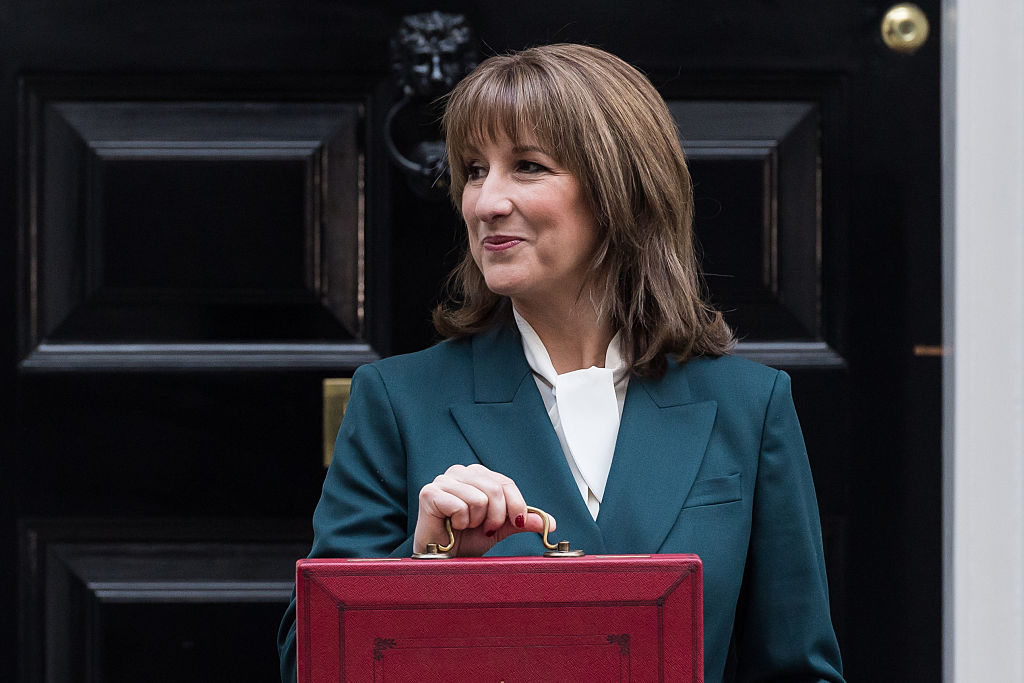
Britain’s economy is growing again — just not fast enough to spare Chancellor Rachel Reeves from another difficult budget. The UK expanded by roughly 0.1% in August, keeping the economy on track for about 0.2% growth in the third quarter, but that modest rebound won’t be enough to close a fiscal hole opening beneath the government’s plans, according to analysis from FXStreet.
Where the £25 billion gap comes from
The Office for Budget Responsibility is expected to downgrade its economic assessment this autumn relative to its Spring Statement forecast, chiefly on weaker productivity assumptions. Combined with higher gilt yields and a series of policy reversals over the past year, that downgrade is projected to blow a roughly £25 billion annual hole in the public finances compared with the position Reeves described in March, per the same FXStreet analysis. A separate assessment attributes some of the UK’s recent resilience to a substantial rise in government spending — departmental budgets have grown roughly 4% in real terms — a tailwind officials do not expect to persist into the next fiscal year.
This follows an already-large tax package. Reeves’s autumn 2025 budget delivered more than £26 billion in new tax measures, according to Allianz Trade’s UK economic outlook, on top of £41.5 billion in tax increases the year before. Much of that revenue is earmarked for higher welfare spending, leaving comparatively little room for growth-focused stimulus.
The government’s counter-narrative
Downing Street has framed its record differently. In its own Spring Forecast presentation, the government pointed to inflation falling faster than expected, GDP per person growing more than projected in the original Budget, and household energy bill relief as evidence its plan is working, according to the UK government’s own Spring Forecast statement. Officials also cite the UK’s growth rate as the fastest in the G7 among European economies in 2025.
The Bank of England, meanwhile, has penciled in third-quarter growth of around 0.4% — a target that already looks difficult to reach given the pace of expansion through August and September, according to FXStreet’s assessment of the BoE forecast gap.
Why global finance is watching
For institutional investors from Singapore to Dubai, the UK’s fiscal trajectory matters beyond domestic politics. Persistently elevated gilt yields make UK sovereign debt more attractive on a relative-yield basis but signal continued fiscal strain — a dynamic that has already accelerated the migration of UK-domiciled wealth toward lower-tax jurisdictions including Singapore and the UAE (see our companion report on the non-dom exodus). A credible autumn budget, or the absence of one, will shape whether that capital flow accelerates further.
Discover more from The Economy
Subscribe to get the latest posts sent to your email.
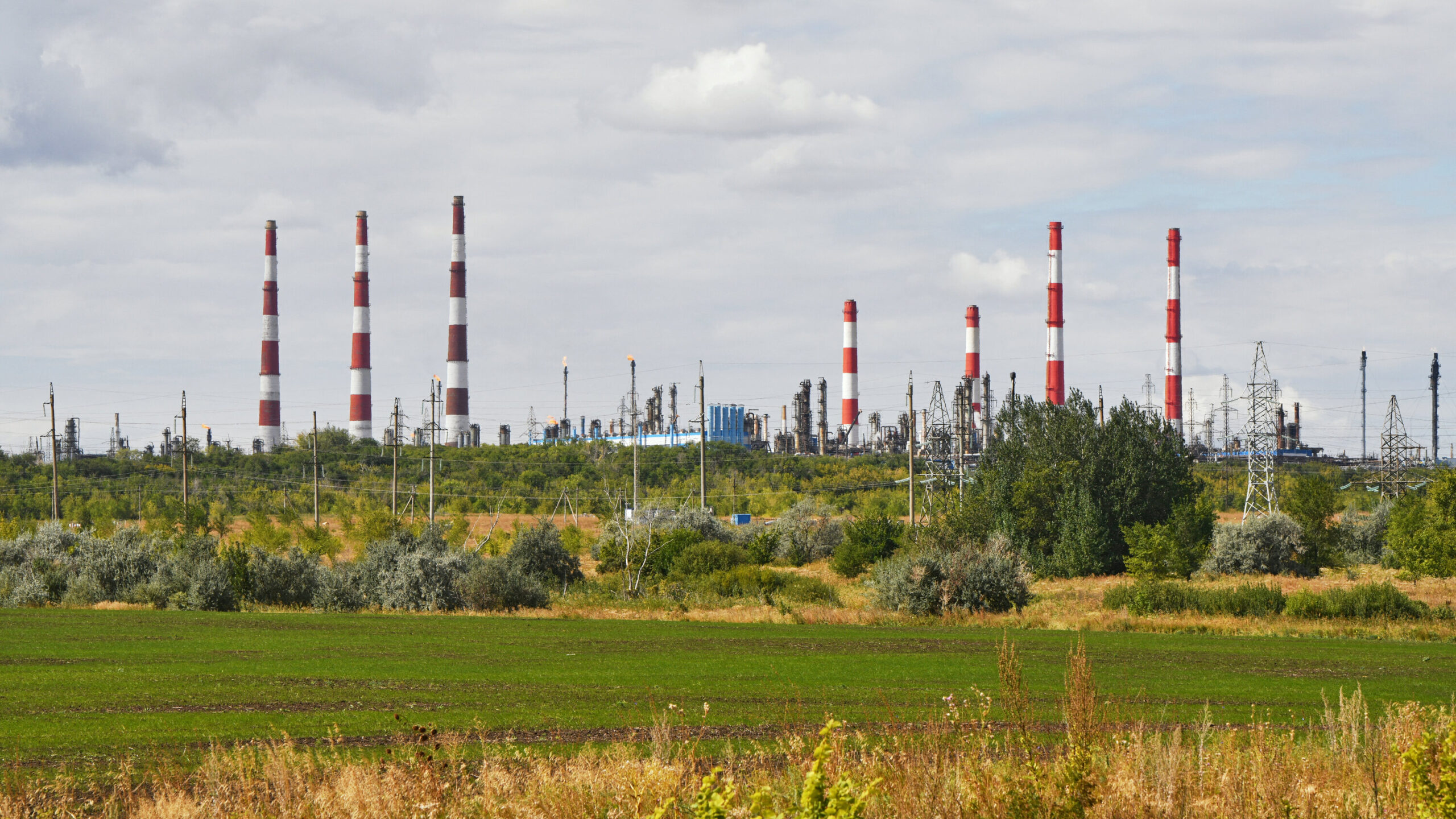
Gasoline shortages have begun appearing at filling stations in and around Moscow, a striking domestic symptom of strain in an economy the Kremlin has long held up as proof that Western sanctions have failed, even as gold reserve liquidation and a collapsing growth outlook point to deepening fiscal pressure from four years of war.
Fuel Shortages Reach the Capital
Images circulating from Moscow filling stations in mid-July showed pylons signalling “no gasoline” at pumps operated by domestic retailer Neftmagistral, according to reporting by TIME on the state of Russia’s war economy. Fuel shortages inside Russia’s own borders — as opposed to sanctions-driven export disruption — mark an escalation of a squeeze that has been building for months across the domestic refining and distribution network.
Growth Grinds Toward a Standstill
Russia’s economy is now projected to grow just 0.4% in 2026, down from an already anaemic 1% in 2025, when the country narrowly avoided outright recession, according to analysis published by Forbes. That trajectory stands in sharp contrast to the 4.1% rebound Russia posted in 2023, when the economy adapted to initial sanctions by forging new trade relationships — a bounce that has since proven unsustainable as wartime spending exhausted its stimulative effect and energy prices softened.
The same analysis notes that Russia has liquidated 71% of its gold reserves to help fund a civilian sector now stagnating alongside an overheating military-industrial complex, a combination that has pushed interest rates higher and squeezed non-defence business investment. Russia’s oil and gas revenues, which fund roughly 40% of the federal budget, reportedly halved in January 2026 before a temporary reprieve arrived via the Middle East conflict, when Brent crude surged more than 55% and the Trump administration eased some sanctions on Russian oil exports.
Gasoline shortages have reached Moscow filling stations in 2026 as Russia’s war economy shows deepening strain: GDP growth is projected at just 0.4% for the year, gold reserves have been 71% liquidated, and the EU has extended sanctions through July 2027, targeting energy revenue and shadow-fleet oil shipping.
Sanctions Extended Through 2027
The European Union has moved to lock in pressure for the medium term. The Council of the EU formally extended its economic sanctions regime against Russia for a further twelve months, through 31 July 2027, covering trade, finance, energy, and dual-use technology sectors first imposed in 2014 and dramatically expanded since February 2022. The bloc has said it remains determined to keep weakening Russia’s war economy, specifically citing plans to further curb shadow-fleet oil shipping operations and constrain the country’s banking system.
Enforcement has intensified in parallel. UK authorities reported seizing sanctioned goods on 58 occasions in the 2025/26 financial year and issuing a £1.1 million settlement for a sanctions breach, according to a summary of enforcement activity published by Fieldfisher.
The Iran War’s Double-Edged Lifeline
The Middle East conflict has proven a complicated boon for Moscow. While the oil-price spike has temporarily bolstered Russia’s export revenue, the same instability has undermined Russian energy and infrastructure ambitions in Iran itself — two Russian-backed power plant projects have reportedly been paused, along with oil and gas exploration work tied to a planned transit corridor linking Russia to India via Iranian territory, according to the Forbes analysis. In other words, the war that briefly rescued Russia’s energy revenues has simultaneously stalled one of its key long-term strategic diversification projects.
What Comes Next
With GDP growth cooling to near-zero, gold reserves depleted, and domestic fuel shortages now visible to ordinary Russians in the capital, the gap between the Kremlin’s public resilience narrative and underlying fiscal strain appears to be widening. Whether this translates into changed battlefield calculus or fresh diplomatic flexibility remains the central open question for Western policymakers as EU sanctions lock in through mid-2027.
Discover more from The Economy
Subscribe to get the latest posts sent to your email.
Introduction
The European Council formally extended its economic sanctions against Russia for another full year on 25 June 2026, keeping restrictive measures in place until 31 July 2027 (Council of the EU). More than four years into the war, the headline story of Russia’s economy has shifted from whether sanctions would work to a more nuanced question: how much longer can the Kremlin keep financing the war before the accumulated strain becomes impossible to hide behind favorable official statistics.
The Sanctions Architecture, Renewed Again
The EU’s economic measures against Russia, first introduced in 2014 and dramatically expanded after the February 2022 full-scale invasion, now span trade, finance, energy and dual-use technology restrictions, alongside asset freezes and travel bans on a broad range of individuals and entities (Council of the EU). Since February 2022, the EU has adopted 20 separate sanctions packages, and the European Council has explicitly stated it remains determined to keep weakening Russia’s war economy by further reducing its energy revenues, curbing shadow-fleet oil shipping operations and constraining its banking system (Council of the EU). Separately, on 3 July 2026 the EU sanctioned six individuals connected to the poisoning and death of opposition figure Alexei Navalny, underscoring that the sanctions regime continues to expand on human-rights grounds as well as economic ones (Council of the EU Sanctions Timeline).
The Headline Numbers Beijing-Style Optimism Can No Longer Explain Away
Russia’s GDP is now put at roughly $2.51 trillion, the world’s eleventh-largest economy — comparable in size to South Korea despite Russia’s vastly larger landmass and resource base — with 2026 growth projected at just 1.0% and inflation running at 5.2% (Statistics of the World). More pessimistic estimates put full-year 2026 growth even lower, at around 0.4%, which would be worse than 2025’s already-weak 1% expansion and would mark a sharp deceleration from the 4.1% growth Russia posted in 2023 as it forged new trading relationships to route around initial sanctions (Forbes).
Oil and gas revenues — historically around half of Russia’s state income — have fallen to roughly a quarter, a deliberate outcome of Western sanctions strategy that targets how much Russia earns from exports rather than blocking those exports outright (Stockholm School of Economics/SITE). Russia’s oil and gas budget revenues reportedly halved in January 2026 alone, with crude prices falling below $73 a barrel before the Middle East conflict briefly reversed the trend, sending Brent surging more than 55% to near $120 a barrel at its peak (Forbes).
The Middle East War: A Temporary Lifeline With Long-Term Costs
The spike in oil prices tied to the Iran conflict, combined with a period of eased US sanctions enforcement on Russian oil under President Trump, offered Moscow unexpected fiscal breathing room in mid-2026 (Forbes). But that same conflict has undermined Russia’s longer-term energy diversification ambitions in the region: two Russian-backed power plant projects in Iran have been put on hold, along with oil and gas exploration work and plans to build new transit routes linking Russia to India via Iran (Forbes).
The Gap Between Official Statistics and Underlying Reality
Perhaps the most important analytical point from recent research is not about any single data point but about the reliability of Russian statistics themselves. Torbjörn Becker of the Stockholm Institute of Transition Economics has argued the real test of sanctions is not whether they end the war overnight, but how much they erode the Kremlin’s capacity to finance it — and by that measure, the evidence points to deeper strain than headline GDP figures suggest (Stockholm School of Economics/SITE). Becker notes that Russia’s economy grew only modestly in 2022 despite oil prices rising sharply that year — a gap between expected and actual performance that implies a considerably larger hidden economic hit than the official contraction figures showed (Stockholm School of Economics/SITE). Compounding the problem, Russian authorities have stopped publishing several key statistics since 2022, making independent assessment of inflation, consumption and real economic conditions increasingly difficult — leading Becker to conclude that “statistics have become part of the narrative” rather than a neutral measure of economic reality (Stockholm School of Economics/SITE).
The Military-Civilian Economic Split
A recurring theme across recent analysis is the growing bifurcation between Russia’s overheating military-industrial sector and a stagnating civilian economy. This imbalance has pushed interest rates higher and forced the liquidation of a striking 71% of Russia’s gold reserves to help fund continued war spending (Forbes). Russia’s total fossil fuel export revenue is estimated at roughly €734 million per day, underscoring just how central hydrocarbon income remains to the entire war financing model even as that revenue stream shrinks (Forbes).
The Counter-Narrative: Wages Still Rising
It would be inaccurate to describe Russia’s economy as in freefall. CSIS research notes that Russian salaries rose 17.8% in nominal terms and 8.7% in real terms in 2024 compared to 2023, with disposable incomes up 6.1% in 2023 and 7.3% in 2024 — growth rates not seen in Russia in almost two decades (CSIS). Government budget projections still expect real salaries to rise, albeit at a decelerating pace: 7% in 2025, 5.7% in 2026 and 4.1% in 2027 — a marked slowdown from the 2024 peak but still roughly double the pre-invasion decade average (CSIS). This wage growth, driven substantially by wartime labor shortages and military-adjacent spending, is precisely the kind of headline-stabilizing data point that has allowed Putin to argue publicly that sanctions have failed to cripple his economy (Fortune) — even as think tanks describe the broader trajectory as pushing Russia toward what one report calls an “economic, political, and military abyss” (Fortune).
What Comes Next
Renewed legislative pressure in Washington — including the Sanctioning Russia Act introduced with strong bipartisan support — signals appetite in the US for tightening the screws further, even as the loss of a key congressional champion for that effort has complicated the political path forward (TIME). Whether the EU’s renewed sanctions regime, continued oil price pressure, and constrained reserves ultimately force a shift in Kremlin calculus toward negotiation remains the central open question for 2027.
Key Takeaways
- The EU has extended Russia sanctions for a further year, through 31 July 2027, continuing a regime built from 20 separate packages since 2022.
- Russia’s 2026 GDP growth is forecast between 0.4% and 1.0%, a sharp deceleration from 2023’s 4.1% post-shock rebound.
- Oil and gas revenue’s share of Russian state income has fallen from roughly half to about a quarter as Western sanctions target export earnings specifically.
- Russia has liquidated a large share of its gold reserves to sustain war financing amid a widening split between an overheating military sector and a stagnating civilian economy.
- Official Russian statistics likely understate the true economic strain, according to independent economists who cite a widening gap between reported and expected performance.
Sources: Council of the EU, Council of the EU Sanctions Timeline, Stockholm School of Economics/SITE, Forbes, Statistics of the World, CSIS, Fortune, TIME
Discover more from The Economy
Subscribe to get the latest posts sent to your email.

The Taxman Cometh from Beijing

Pakistan IMF Program 2026: Inside the Push Toward an Interest-Free Economy

Russia Oil Revenue 2026: How Sanctions on Rosneft and Lukoil Are Draining the War Chest

Canada US Trade War 2026: Inside Carney’s Push to Cut Ties With Trump’s Tariffs

Rachel Reeves’s £25 Billion Problem: What the Autumn Budget Gap Means for Britain

Inside the Fed’s Most Divided Vote in Years: Why Warsh Held the Line on Rates

Pakistan Passed Its Third IMF Review

The Fed Is Fractured — And a New Chair Just Made It Louder, Not Quieter

The UK Economy in 2026 Is Neither Recession Nor Recovery :Stagflaton

Indonesia’s $121 Billion Nickel Bet Is Facing a Battery Chemistry

Why Ultra-Wealthy Families Are Splitting Between Singapore and Dubai inmarkets 2026

China Chose Political Control Over Fixing Its Deflation Trap in 2026

Oil Markets Are Oversupplied and Geopolitically Explosive at the Same Time

Russia’s Budget Deficit Blew Past Its Full-Year Target in Three Months

Russia Bans Diesel Exports 2026: Global Fuel Market Impact Explained

Gold Price Forecast 2026: Fed’s July 29 Decision and Record Central Bank Buying Explained

Strait of Hormuz Blockade 2026: Oil Prices Surge 9% as US-Iran Conflict Reignites

Strait of Hormuz 2026: Why Markets Still Don’t Trust It’s Open

China Politburo July 2026: Stimulus Signals Explained

Pakistan Economy 2026: GDP Grows 3.7% as IMF Completes EFF Review Amid Middle East Risk

Down But Not Out: Inside the Slow Sinking of Russia’s War Economy

Gulf Capital Retreat From Pakistan 2026: UAE Loan Freeze & What It Means

Apple vs OpenAI Lawsuit: The Economic Story Behind the Headline

Indonesia Russian Oil Imports 2026: Why Jakarta Is Diversifying Crude Supply

Global Stock Market Selloff 2026: Stagflation Fears Return as Iran Conflict Reignites

The Yuan Now Settles 67% of Russian Oil Payments — Quiet De-Dollarization in Action

AI Capex Bubble 2026: The Hidden $662B Debt Nobody Reports

Pakistan’s Economic Survey FY26: Inflation Spike Insights
-

 Markets & Finance7 months ago
Top 15 Stocks for Investment in 2026 in PSX: Your Complete Guide to Pakistan’s Best Investment Opportunities
-

 Analysis5 months ago
Johor’s Investment Boom: The Hidden Costs Behind Malaysia’s Most Ambitious Economic Surge
-

 Analysis6 months ago
Top 10 Stocks for Investment in PSX for Quick Returns in 2026
-

 Analysis6 months ago
Brazil’s Rare Earth Race: US, EU, and China Compete for Critical Minerals as Tensions Rise
-

 Banks7 months ago
Best Investments in Pakistan 2026: Top 10 Low-Price Shares and Long-Term Picks for the PSX
-

 Investment7 months ago
Top 10 Mutual Fund Managers in Pakistan for Investment in 2026: A Comprehensive Guide for Optimal Returns
-

 Global Economy7 months ago
15 Most Lucrative Sectors for Investment in Pakistan: A 2025 Data-Driven Analysis
-

 Global Economy7 months ago
Pakistan’s Export Goldmine: 10 Game-Changing Markets Where Pakistani Businesses Are Winning Big in 2025