Analysis
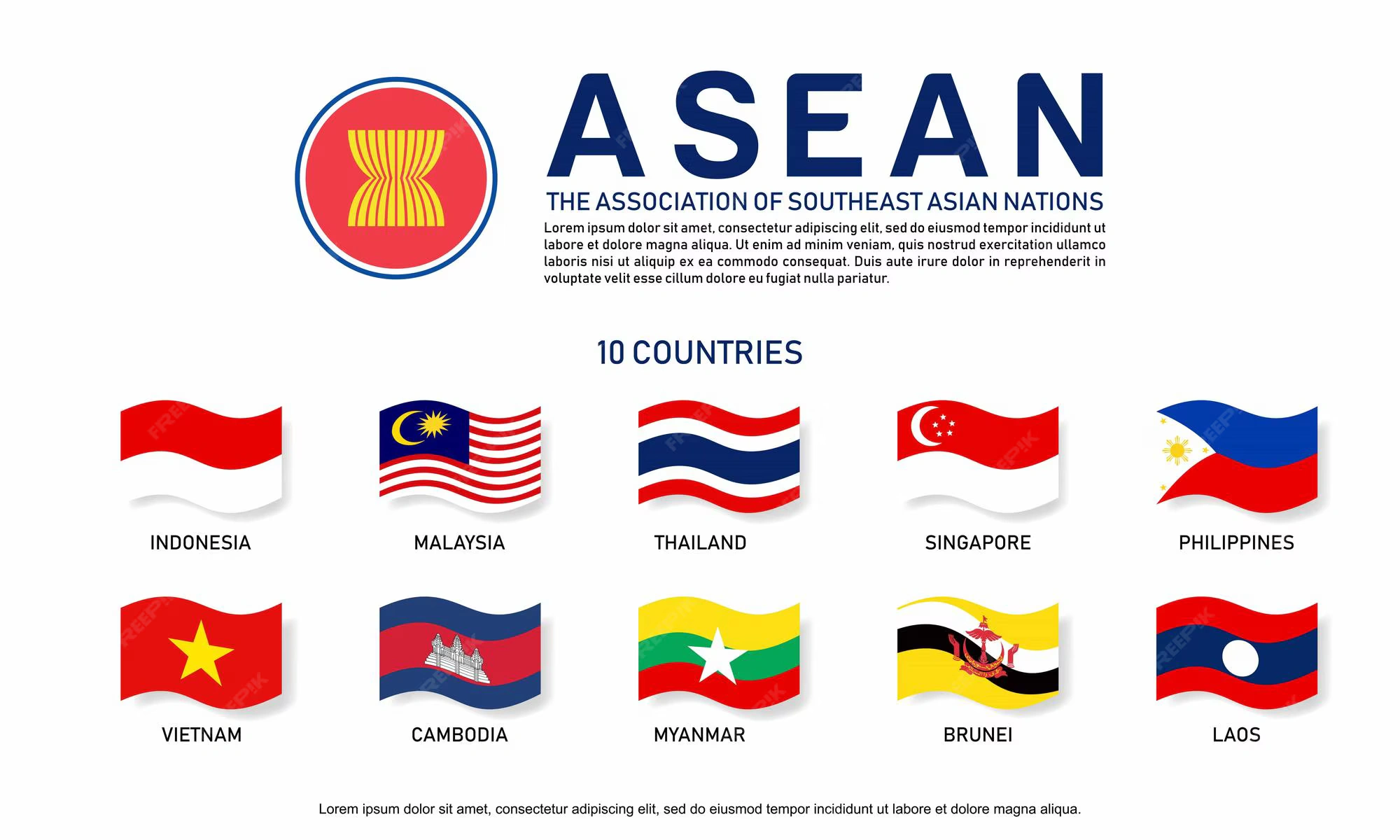
10 Ways ASEAN Could Be Instrumental in Competing with the US Dollar Through a Common Currency for Economic Stability
This article discovers 10 powerful ways an ASEAN common currency could challenge US dollar dominance, reduce regional vulnerability, and drive ASEAN economic stability — backed by 2026 data, policy frameworks, and forward-looking analysis.
Introduction: The Dollar’s Grip Is Loosening — And ASEAN Is Watching Closely
For nearly eight decades, the US dollar has been the undisputed axis of global commerce. Roughly 88% of all foreign exchange transactions still involve the greenback, according to the Bank for International Settlements. But across Southeast Asia, something quietly tectonic is underway.
In boardrooms from Jakarta to Kuala Lumpur, and in the policy corridors of the ASEAN Secretariat, a once-fringe conversation has turned urgent: what would it take for Southeast Asia to build a monetary architecture less tethered to Washington’s fiscal cycles, Federal Reserve rate decisions, and geopolitical preferences?
The numbers are compelling. AMRO-ASIA.org’s 2026 Regional Economic Outlook projects ASEAN+3 growth at 4.0% in 2026, outpacing advanced economies by a considerable margin. ASEAN’s digital economy is on track to hit $560 billion by 2030 per the World Economic Forum. Local Currency Settlement (LCS) transactions have more than doubled, now accounting for an estimated 15% of intra-regional trade flows, up from under 7% in 2021.
An ASEAN common currency — or at minimum, a deeply integrated ASEAN currency framework — is no longer a utopian thought experiment. It is a strategic imperative gaining institutional momentum. This analysis explores ten actionable, data-grounded pathways through which ASEAN could leverage monetary integration to challenge dollar dominance and build lasting ASEAN economic stability.
1. Building a Regional Payment Connectivity Infrastructure That Bypasses SWIFT
The most immediate lever available to ASEAN is not a single currency, but a shared payments rail that reduces the transactional footprint of the dollar. The Regional Payment Connectivity (RPC) initiative, linking real-time payment systems across Indonesia, Malaysia, the Philippines, Singapore, and Thailand, is already live. By 2025, QR-code cross-border payments between these nations had processed over $4 billion in cumulative transactions without a single dollar intermediating the exchange.
Project Nexus, developed under the BIS Innovation Hub, takes this further by creating a multilateral, instant payment network across ASEAN member central banks. When payment infrastructure no longer defaults to dollar-clearing, the cognitive and institutional bias toward dollar invoicing weakens — and that behavioral shift is where ASEAN de-dollarization truly begins.
The lesson from Europe is instructive: SEPA (Single Euro Payments Area) preceded full monetary union, normalizing euro-denominated transactions before the currency itself matured as a reserve asset. ASEAN’s RPC is playing that exact role today.
2. Scaling Local Currency Settlement Frameworks Between Bilateral Pairs
Before any multilateral ASEAN monetary union is politically feasible, bilateral local currency frameworks are quietly rewiring trade finance. Japan and Indonesia formalized a yen-rupiah settlement corridor in 2023, allowing direct conversion without dollar intermediation. China-Malaysia ringgit-yuan corridors, Thailand-India baht-rupee agreements, and Singapore’s multi-currency MAS frameworks have followed in rapid succession.
According to the Asian Development Bank’s Asian Economic Integration Report 2025, local currency transactions in ASEAN as a share of total bilateral trade have risen by approximately 8 percentage points since 2020. The key insight: each bilateral corridor reduces the marginal cost of a future multilateral settlement system, essentially pre-building the plumbing of regional monetary union one pipe at a time.
| Framework | Currency Pair | Trade Volume (2025 est.) | USD Bypassed? |
|---|---|---|---|
| Japan-Indonesia LCS | JPY-IDR | ~$18B | Yes |
| China-Malaysia | CNY-MYR | ~$32B | Yes |
| India-Thailand | INR-THB | ~$9B | Yes |
| Singapore MAS Multi-FX | SGD-basket | ~$55B | Partial |
3. Leveraging CBDCs and mBridge to Create a De Facto ASEAN Digital Currency Layer
Central Bank Digital Currencies (CBDCs) may be the most underappreciated vehicle for ASEAN currency integration. The mBridge project — a multi-CBDC platform co-developed by the central banks of China, Hong Kong, Thailand, and the UAE under BIS coordination — has already completed pilot transactions worth over $22 million in wholesale cross-border settlements.
More significantly, Thailand’s Bank of Thailand and Singapore’s MAS are both advancing retail CBDC frameworks with interoperability protocols designed for regional use. If ASEAN’s ten central banks converge on a common CBDC interoperability standard — even without a single currency — the practical effect would be a synthetic “ASEAN digital currency layer” enabling seamless cross-border payments in ASEAN at near-zero cost and without dollar conversion.
The IMF’s 2025 Working Paper on CBDC Cross-Border Implications notes that multi-CBDC arrangements can reduce FX transaction costs by up to 50% and settlement times from two days to under ten seconds. For a region conducting $3.8 trillion in annual intra-regional trade, that efficiency dividend is enormous — and denominated in local currency, not dollars.
4. Establishing an ASEAN Monetary Fund as a Credible Backstop
One of the dollar’s most durable advantages is not transactional but psychological: it is the currency of last resort. When crises hit — as they did for Thailand in 1997, Indonesia in 1998, or regionally during COVID-19 — nations scramble for dollar liquidity. An ASEAN common currency or even a deep currency cooperation framework requires an equally credible regional lender of last resort.
The Chiang Mai Initiative Multilateralisation (CMIM), currently sized at $240 billion, represents the seed of such an institution. But its activation threshold remains politically high — historically requiring IMF co-conditionality — and it has never been fully drawn upon. Reforming CMIM into a more autonomous, rapidly deployable ASEAN Monetary Fund, modeled on the European Stability Mechanism (ESM), would provide the credibility backstop that a regional currency requires.
The ADB estimates that deepening CMIM and reducing its IMF linkage could cut member nations’ precautionary reserve holdings by 15-20% — freeing up hundreds of billions in dollar reserves currently sitting idle as insurance policies.
5. Reducing Commodity Invoicing in Dollars Through Petrochemical and Agricultural Benchmarks
ASEAN is one of the world’s most commodity-rich regions — the top exporter of palm oil, a major LNG producer, and a growing force in critical minerals essential for the energy transition. Yet nearly all of these commodities are priced and invoiced in US dollars, a structural dependency that amplifies currency volatility for producing nations whenever the Fed tightens policy.
An ASEAN commodity pricing benchmark — beginning with palm oil, which Malaysia and Indonesia effectively control as a duopoly — denominated in a basket of regional currencies or an ASEAN unit of account, could begin the process of de-linking commodity flows from dollar pricing. This is not unprecedented: the euro has steadily gained ground as an invoicing currency in European energy markets since the early 2000s, reducing eurozone nations’ exposure to dollar energy shocks.
Indonesia’s President Joko Widodo’s 2022 push to price nickel exports in non-dollar terms was politically bold but logistically premature. By 2026, with deeper regional payment rails in place, the infrastructure conditions for ASEAN vs US dollar dominance in commodity pricing are maturing meaningfully.
6. Harmonizing Capital Market Regulations to Attract Intra-ASEAN Investment in Local Currency
ASEAN financial resilience requires not just payment systems but deep, liquid capital markets denominated in regional currencies. Currently, ASEAN’s bond markets are fragmented, illiquid at the regional level, and heavily reliant on dollar-denominated issuance to attract foreign capital. The ASEAN+3 Bond Market Initiative (ABMI) has made progress, but intra-ASEAN bond holdings remain disproportionately low relative to the region’s economic weight.
A harmonized ASEAN capital market framework — common listing standards, mutual recognition of securities, and a unified clearing infrastructure — would enable pension funds, sovereign wealth funds, and insurers to diversify into ASEAN-currency assets at scale. Singapore’s SGX, Bursa Malaysia, and the Stock Exchange of Thailand collectively manage over $1.2 trillion in market capitalization; deeper integration could create a market rivaling the London Stock Exchange in depth.
The WEF’s 2026 ASEAN Competitiveness Report flags regulatory harmonization as the single highest-return, lowest-cost reform available to reduce US dollar dependence in ASEAN — yet one where political will remains the binding constraint.
7. Using the ACU (ASEAN Currency Unit) as a Basket Reference Unit Before Full Union
History suggests that successful currency unions pass through a reference unit phase before full monetary integration. The European Currency Unit (ECU), a weighted basket of EC member currencies, operated from 1979 to 1999 — a twenty-year normalization period during which markets, contracts, and institutions built comfort with a pan-European monetary reference.
An ASEAN Currency Unit (ACU) — a GDP-weighted or trade-weighted basket of member currencies — could serve a similar bridging function today. It would not require surrendering monetary sovereignty (the ECU never did), but it would provide a common reference for intra-ASEAN contracts, bond issuances, and ultimately central bank reserve allocations. Over time, as ACU-denominated markets deepen, the ACU could organically evolve toward a transactional currency.
Academic research published on ResearchGate by Plummer & Chia (2024) modeling optimal ASEAN currency basket weights suggests that a trade-weighted ACU would have reduced exchange rate volatility for member nations by an estimated 22-31% during the 2020-2024 period of dollar strength — a powerful empirical case for its adoption.
8. Anchoring ASEAN Currency Integration to the Digital Economy Boom
ASEAN’s digital economy is the region’s most compelling growth narrative — and arguably its most powerful argument for ASEAN currency integration. A $560 billion digital economy by 2030 will generate billions of micro-transactions, platform payments, and cross-border digital service flows that are inherently inefficient to route through dollar FX conversion.
Grab, Sea Limited, GoTo, and Lazada together process hundreds of millions of transactions annually across multiple ASEAN currencies. The FX conversion friction in these ecosystems represents both a cost and a strategic vulnerability: dollar strengthening directly erodes the purchasing power of consumers and merchants transacting in baht, rupiah, ringgit, and peso.
A unified ASEAN digital payment token — not necessarily a legal tender replacement, but a layer-two settlement mechanism for digital commerce — could eliminate this friction entirely. Singapore’s MAS has been quietly piloting exactly this through its Project Ubin and subsequent initiatives, and the Financial Times has reported growing private sector appetite among ASEAN fintechs for a regional stablecoin framework backed by a basket of central bank reserves.
9. Coordinating Monetary Policy Through an Enhanced ASEAN+3 Macroeconomic Framework
ASEAN economic stability ultimately requires more than infrastructure — it requires policy coordination. One of the most persistent criticisms of any ASEAN monetary union proposal is the region’s structural heterogeneity: Singapore’s per capita GDP exceeds $80,000; Myanmar’s barely clears $1,200. A one-size-fits-all monetary policy would be genuinely destabilizing for the weaker economies.
But coordinated monetary policy — a middle path between full union and complete independence — is both feasible and urgently needed. The AMRO (ASEAN+3 Macroeconomic Research Office) already serves as a regional surveillance body, publishing quarterly assessments of member economies. Empowering AMRO with formal policy coordination mandates — analogous to the ECB’s role before it assumed full monetary authority — could enable synchronized interest rate corridors, coordinated FX intervention frameworks, and a regional inflation target that reduces policy divergence over time.
AMRO’s 2026 projections showing ASEAN+3 growth at 4.0% amid global headwinds demonstrate that the region already moves with a degree of macroeconomic synchronicity that underpins the case for deeper coordination.
10. Deploying ASEAN’s Geopolitical Moment to Build Institutional Legitimacy
Perhaps the most undervalued driver of ASEAN de-dollarization is geopolitical timing. The fracturing of the post-Cold War US-led financial order — accelerated by the weaponization of dollar-clearing systems against Russia in 2022, US-China decoupling pressures, and the Global South’s growing frustration with IMF conditionality — has created a window of institutional legitimacy for regional monetary alternatives that did not exist a decade ago.
ASEAN’s non-aligned tradition, its “ASEAN Way” of consensus-building, and its position as a credible neutral party in US-China competition make it uniquely placed to lead a monetary architecture that is neither a dollar replacement nor a yuan vehicle, but something genuinely multipolar. The WEF’s 2026 analysis on ASEAN strategic autonomy frames this moment as a “once-in-a-generation” opportunity for the region to shape global financial norms rather than merely comply with them.
Indonesia — the world’s fourth most populous nation, G20 member, and 2023 ASEAN Chair — has increasingly articulated a vision of ASEAN currency leadership as part of its broader Global South positioning. With ASEAN’s combined GDP crossing $4.5 trillion in 2025 and the region on track to become the world’s fourth-largest economic bloc by 2030, the geopolitical credibility to back institutional monetary ambition is materially present.
Conclusion: Not If, But When — And How Carefully
The question facing ASEAN’s finance ministers, central bankers, and heads of government is not whether a common currency or deep monetary integration is desirable in principle. Most economists agree it is. The question is sequencing: building the payment rails first, then the settlement frameworks, then the reference currency unit, then the institutional governance — and doing each step well enough that markets, not just politicians, begin to trust the architecture.
The euro’s cautionary tale is relevant here. Its design flaws — a monetary union without fiscal union — nearly tore the eurozone apart in 2010-2012. ASEAN must learn from that near-catastrophe: any ASEAN common currency must be accompanied by adequate fiscal transfer mechanisms, flexible convergence criteria that respect member diversity, and democratic accountability structures that prevent technocratic overreach.
But the trajectory is unmistakable. Cross-border payments in ASEAN are growing, dollar invoicing is declining at the margin, CBDC interoperability is advancing, and the geopolitical wind is at the region’s back. An ASEAN monetary framework competitive with — not necessarily replacing — the US dollar is not a fantasy. It is a project already underway, gathering institutional mass and market momentum with every bilateral LCS agreement, every mBridge pilot transaction, and every digital payment processed in baht instead of dollars.
The dollar will not fall. But its monopoly is ending. And Southeast Asia is positioning itself to shape what comes next.
Key Sources & Further Reading
- AMRO-ASIA.org — ASEAN+3 Regional Economic Outlook 2026
- IMF.org — Dollar Dominance in Trade and Finance
- ADB.org — Asian Economic Integration Report 2025
- WEF.org — ASEAN Strategic Autonomy 2026
- BIS.org — Project Nexus: Enabling Instant Cross-Border Payments
- FT.com — ASEAN Digital Currency Frameworks
- Economist.com — The Future of the Dollar as Reserve Currency
- ResearchGate — Plummer & Chia (2024): Optimal Currency Areas in ASEAN
- ASEANBriefing.com — Local Currency Trade in ASEAN
- ASEAN Exchanges — Currency Resilience Report 2025
Discover more from The Economy
Subscribe to get the latest posts sent to your email.
Analysis
Bangladesh’s Bank Resolution Act 2026: Doors Re-Opened for Ex-Owners — Reform Reversal or Pragmatic Bailout?
In April 2026, as Dhaka’s political calendar accelerates toward general elections and the IMF watches every legislative move from Washington, Bangladesh’s newly elected BNP-led parliament has quietly detonated a grenade in the middle of a still-fragile banking reform. The Bank Resolution Act 2026, enacted on Friday, April 11, paves a wide — some would say suspiciously wide — road for former bank owners to reclaim institutions they drove into distress. The question hardening in the minds of depositors, reform economists, and international creditors alike is brutally simple: is this pragmatic crisis management, or the most elegant act of regulatory impunity Bangladesh has ever legislated?
What the Bank Resolution Act 2026 Actually Says — and What It Doesn’t
Let’s start with the architecture of the law, because the devil lives in its fine print.
Under the Bank Resolution Act 2026, former directors or owners of banks that are merging or listed for mergers can pay just 7.5 percent upfront of the amount injected by the government or Bangladesh Bank to reclaim their institutions. The remaining 92.5 percent is repayable within two years at 10 percent simple interest. The Daily Star Before any approval is granted, Bangladesh Bank must conduct due diligence and seek government clearance. Even after approval, the central bank will closely monitor the merged entity for two years, with a special committee reviewing compliance — and failure to meet conditions could lead to cancellation of approval and further regulatory action. The Daily Star
On paper, the safeguards sound serious. In practice, economists who have spent years watching Bangladesh’s banking politics are not reassured. Zahid Hussain, former lead economist at the World Bank’s Dhaka office and a member of the interim government’s banking reform task force, warned that the amendment destroys the credibility of the reform process, saying that “a clear roadmap has been provided for former owners to re-occupy banks that were distressed due to their own mismanagement and the siphoning of funds.” The Business Standard
The numbers Hussain cites are staggering in their implication. He estimated that for the five merged banks, the total required payment would be roughly Tk 35,000 crore — and expressed concern that the terms are so lenient that former owners could easily pay the initial 7.5 percent and borrow the remainder from the banking sector itself. The Business Standard That is not a bailout mechanism. That is a round-trip ticket funded by the very system that was looted.
The Sommilito Islami Bank Merger: A Reform That May Never Have Happened
To understand what is now at stake with the Bank Resolution Act 2026, you must first understand what the 2025 Ordinance was attempting to accomplish — and why it mattered beyond Bangladesh’s borders.
As part of its reform drive, in May 2025, the interim administration had approved the Bank Resolution Ordinance 2025 to merge five troubled Shariah-based private banks into a state-run entity titled Sommilito Islami Bank. The five institutions — First Security Islami Bank, Social Islami Bank, Union Bank, Global Islami Bank, and Exim Bank — had collectively become symbols of politically directed lending and governance failure. The Daily Star
The boards of four of the banks were dominated by the controversial S Alam Group, led by its Chairman Mohammed Saiful Alam, while Exim Bank was long controlled by Nassa Group Chairman Md Nazrul Islam Mazumder. The Daily Star The S Alam Group banks return 2026 scenario — which the new Act explicitly enables — is not abstract; these are the same ownership structures whose related-party lending created the crisis in the first place.
The Shariah banks merger reversal risk is now real enough that even Bangladesh Bank’s own officials are alarmed. Bangladesh Bank officials told The Daily Star that concerns remain over how these banks will be managed if former owners return, whether depositors will be able to recover their money, and that if a bank is returned to its previous owners, it cannot easily be taken back again. “This raises doubts about whether they would be able to run the banks properly and ensure full legal and regulatory compliance,” one official said, adding that the return of previous owners could hinder the ongoing merger process. The Daily Star
That is a central bank quietly sounding an alarm about a law passed by its own government. Read that again.
The Macroeconomic Context: A Sector Already on Life Support
No assessment of the Bank Resolution Act 2026 can be divorced from the catastrophic baseline it is operating against. The World Bank’s Bangladesh Development Update released in 2025 documented a sector in acute distress. Banking sector-wide non-performing loans reached 24.1 percent by March 2025, significantly above the South Asian average of 7.9 percent. The capital-to-risk-weighted asset ratio fell to 6.3 percent, well below the regulatory minimum of 10 percent. World Bank
These are not technical footnotes. A CRAR of 6.3 percent — against a required 10 percent minimum, and a Basel III-compliant effective floor closer to 12.5 percent when capital conservation buffers are included — means Bangladesh’s banking system is operating with a structural capital hole that is visible from space.
The IMF’s 2025 Article IV Consultation, concluded on January 26, 2026, was characteristically blunt. Directors highlighted the urgent need for a credible banking sector reform strategy consistent with international standards to restore banking sector stability. Such a strategy should include estimates of undercapitalization, define fiscal support, and outline legally robust restructuring and resolution plans. They also cautioned against unsecured liquidity injections into weak banks. International Monetary Fund The ink on that consultation was barely dry when parliament passed the Bank Resolution Act 2026 — a law whose principal mechanism is, functionally, a structured return of capital to distressed institutions controlled by their original owners.
The IMF’s language about “prolonged reliance on forbearance measures” was not accidental. Fund staff specifically stated that “any approach to dealing with weak banks should ensure healthy balance sheets, sustained profitability, and adequate liquidity without prolonged reliance on forbearance measures.” International Monetary Fund What the new Act provides — a 7.5 percent entry ticket and 10 percent simple interest on a two-year repayment — is, by any global standard, forbearance in a legislative costume.
The International Standard: What the BRRD, FDIC, and India’s IBC Actually Require
To appreciate why the Bank Resolution Act 2026 troubles international observers, compare it against the frameworks Bangladesh has nominally aligned itself with.
The European Union’s Bank Recovery and Resolution Directive (BRRD) operates on a “no creditor worse off” principle, with resolution authorities empowered to impose losses on shareholders and unsecured creditors before any public money is committed. Critically, the BRRD explicitly prohibits the return of equity to former shareholders whose mismanagement contributed to resolution proceedings. The message is structural: resolution is not a waiting room for rehabilitation. It is a point of no return.
The US Federal Deposit Insurance Corporation (FDIC) model is similarly unambiguous. When an institution enters FDIC resolution, former owners lose their equity entirely. The FDIC then sells assets, transfers deposits, or establishes bridge banks — without reopening a window for the people who broke the bank in the first place. The concept of a former owners Bangladesh Bank Resolution Act mechanism — paying back a fraction upfront and recovering control — would be legally inconceivable under FDIC rules.
India’s Insolvency and Bankruptcy Code (IBC), enacted in 2016, went further: its Section 29A specifically bars promoters who have defaulted from participating in resolution plans for their own companies. After years of politically connected promoters recycling distressed assets back to themselves, India drew an explicit legislative line. Bangladesh, in April 2026, appears to be drawing that line in the opposite direction.
The Chambers and Partners Banking Regulation 2026 Guide for Bangladesh acknowledges that the regulatory agenda of Bangladesh Bank for 2025 and 2026 is “exceptionally dynamic, driven by a national push for enhanced governance, financial sector stability, and compliance with IMF programme conditions.” Chambers and Partners The Bank Resolution Act 2026 as enacted tests whether that dynamism is substantive or cosmetic.
The Government’s Defence: Fiscal Pragmatism or Political Convenience?
Finance Minister Amir Khosru Mahmud Chowdhury presented the Act in parliament as a “market solution” — a phrase that in emerging market contexts tends to arrive dressed as economic logic and leave as political cover. The minister described the government as having already invested approximately Tk 80,000 crore into weak banks and potentially needing another Tk 1 lakh crore — a financial burden he called unsustainable. “This new arrangement places the obligation of recapitalisation and liability settlement on the applicants, reducing the pressure on the government and the Deposit Insurance Fund,” he stated. The Business Standard
This argument has a kernel of validity that cannot be entirely dismissed. A sovereign that has already pumped the equivalent of several GDP percentage points into failing banks and faces the prospect of doubling down — during a period when, as the IMF notes, Bangladesh’s debt service-to-revenue ratio exceeds 100 percent — has a legitimate interest in finding private recapitalization. The question is not whether to seek private capital. It is from whom, and on what terms.
The Act’s critics, including Zahid Hussain, argue the answer currently provided is: the same people who caused the crisis, on terms lenient enough to enable regulatory arbitrage. Hussain warned that the provision undermines past reform efforts, noting: “If, under this law, the previous owners return and reclaim their organisations, the integrity of the new structure created after the merger could be lost. In that case, all merger-related work would effectively become meaningless.” The Daily Star
He is right. And the S&P Global Islamic Banking Outlook 2026 context makes this more acute: Islamic finance institutions globally are under increased scrutiny for governance standards, with rating agencies increasingly marking down Shariah-compliant lenders in frontier markets where board independence and related-party transaction controls are weak. The Som milito Islami Bank ex-owners returning to manage the merged entity would face an uphill battle establishing the governance credibility that international Islamic finance counterparties — Gulf investors, sukuk markets, multilateral development banks — now routinely require.
The Post-Hasina Governance Test: Is Bangladesh Building Institutions or Recycling Networks?
The deepest concern about the Bank Resolution Act 2026 is not technical. It is political economy.
Bangladesh’s post-August 2024 moment — the political transition that followed the uprising ending Sheikh Hasina’s government — was described by reformers and development partners as a generational opportunity to rebuild institutional integrity. Finance Adviser Dr. Salehuddin Ahmed himself described the inherited banking system as one hollowed out by “rampant embezzlement, unchecked corruption, and politically driven loan rescheduling.” BBF Digital
The three-year reform roadmap — backed by the IMF, World Bank, and Asian Development Bank — committed Bangladesh to asset quality reviews, risk-based supervision, the Distressed Asset Management Act, and legally robust restructuring frameworks. The overarching goal was to “ensure banks are financially sound and to end the long-standing practice of granting regulatory forbearance to weaker institutions.” The Daily Star
The Bank Resolution Act 2026 as enacted is not a clean break from that narrative. It is, at minimum, an asterisk — and at worst, a structural loophole that future actors will exploit regardless of what due diligence and monitoring clauses say on paper. Bangladesh Bank officials themselves acknowledge the asymmetry: once a bank is returned to former owners, recovering it is legally and operationally far harder than the two-year monitoring clause implies.
The former owners Bangladesh Bank Resolution Act pathway, combined with the ex-owners reclaim banks Bangladesh mechanism at 7.5 percent upfront, sets a precedent that future distressed bank owners will study carefully. The message it sends to the market — domestic and international — is that Bangladesh Bank resolution is a negotiated exit, not a structural consequence. That signal will outlive any monitoring committee.
What a Credible Reform Would Look Like
This article does not argue for leaving the five merged Shariah banks in permanent regulatory limbo. Merger uncertainty damages depositors. Extended state management creates moral hazard in the other direction. Bangladesh does need a resolution pathway.
But a credible pathway, consistent with the BRRD model and India’s IBC experience, would require: mandatory and independent forensic audits of all related-party transactions before any return of ownership is considered; an open competitive bidding process for new strategic investors — not a preferential window for former owners; full equity writedowns for shareholders whose mismanagement contributed to resolution triggers; enhanced personal liability provisions backed by asset freezes, not merely regulatory monitoring; and independent board composition certified by Bangladesh Bank before any operational handback.
The IMF, in its January 2026 Article IV, called for “swift action to operationalize new legal frameworks that facilitate orderly bank restructuring while safeguarding small depositors” alongside “robust asset quality reviews for all large and systemic banks, bank restructuring aimed at forward-looking viability, strengthened risk-based supervision, and enhanced governance and transparency.” International Monetary Fund The Bank Resolution Act 2026 addresses the first clause and largely bypasses the rest.
The Verdict: Alarming Precedent, Redeemable Only by Enforcement
Bangladesh’s Bank Resolution Act 2026 is not beyond redemption. The due diligence requirement, BB monitoring provisions, and cancellation clauses are meaningful — if enforced with the independence the law’s critics doubt Bangladesh Bank can summon under a newly elected government whose political networks overlap uncomfortably with the very ownership groups seeking re-entry.
The Tk 35,000 crore question is not whether former owners can write the initial cheque. It is whether Bangladesh’s regulatory institutions have the spine to cancel approvals when compliance conditions are not met, to withstand political pressure during the two-year supervision window, and to protect the 17 million depositors whose savings are concentrated in institutions whose balance sheets remain deeply impaired.
For international investors, IMF programme managers, and World Bank country teams watching from Washington and Jakarta, the Bank Resolution Act 2026 is a stress test of post-crisis institutional credibility. Bangladesh passed the legislative test of enacting a resolution framework in 2025. It now faces the harder test: proving that the framework means what it says, even when the politically connected come knocking.
History suggests that in emerging markets, that second test is the one that matters — and the one most frequently failed.
Discover more from The Economy
Subscribe to get the latest posts sent to your email.
Analysis
From 1MDB to ‘Corporate Mafia’: Malaysia’s New Governance Test
A decade after 1MDB shook Malaysia, a new scandal targets the anti-graft agency itself. Are the rules still being applied fairly — or is the watchdog now the predator?
The Gunman in the Restaurant
On a June afternoon in 2023, Tai Boon Wee was summoned to The Social, a Kuala Lumpur suburb restaurant famous for football screenings and chicken wings. He had just been questioned by the Malaysian Anti-Corruption Commission over accounting irregularities at GIIB Holdings, the rubber products company he founded. When he arrived, a man named Andy Lim — a new shareholder — was waiting. Before long, Lim raised his arms to reveal a pistol beneath his jacket. He wanted two board seats, and the weapon was his negotiating tool.
The CCTV footage of that meeting, reviewed by Bloomberg journalists Tom Redmond and Niki Koswanage, would become the combustible heart of one of the most consequential investigative reports in Southeast Asian financial journalism in years. Published on February 11, 2026, the Bloomberg feature — titled “Who’s Watching Malaysia’s Anti-Corruption Watchdog?” — described how a commission set up to fight graft was allegedly helping a group of businessmen seize control of companies, with questions about its conduct going all the way to the top. Bloomberg
That question — all the way to the top — is the one that Kuala Lumpur has been unable to shake since. And for global investors already edgy about rule-of-law risks in Southeast Asia, it is exactly the kind of question that changes capital allocation decisions.
Malaysia is facing a new governance test. One that may prove more corrosive to institutional credibility than even 1MDB — because this time, the allegation is not that the watchdog failed. It is that the watchdog became the wolf.
A Different Kind of Scandal
The 1MDB affair — in which an estimated $4.5 billion was looted from a state investment fund and spent on superyachts, Picassos, and Hollywood productions — was breathtaking in its brazenness but ultimately comprehensible. It was a straight-line theft: powerful men used state resources as a personal treasury. International prosecutors, from Washington to Singapore to Zurich, followed the money. Najib Razak was convicted. Goldman Sachs paid. The architecture of the crime, however grotesque, was legible.
What Bloomberg’s 2026 investigation describes is something structurally different — and, in some ways, more insidious. The report details how the MACC, led by chief commissioner Azam Baki, is alleged to have assisted rogue businessmen in forcibly taking over public-listed companies by using the agency’s extensive powers to arrest, intimidate, and threaten charges against company founders and executives. MalaysiaNow The alleged playbook is precise and repeatable: targeted investors take stakes, MACC probes are triggered against company founders, bank accounts are frozen, board seats reshuffled, and in some instances founders are pushed out altogether. Dimsum Daily
This is not theft by subtraction — the pillaging of a state fund. It is theft by substitution: the weaponisation of the state’s anti-corruption apparatus to facilitate corporate predation in the private sector. It attacks the engine of market confidence itself.
Victor Chin, a Malaysian businessman himself under investigation for alleged involvement in the scheme, put it with chilling clarity in a March statement: “The corporate mafia is not just about a person or single organisation. It is a tactic, and it is ongoing. The individuals may change, and the target companies may differ, but the method remains the same in each corporate attack.” Bloomberg
When the alleged perpetrators of a scheme are the ones best placed to describe its mechanics, you know the system has entered a complex moral inversion.
The Architecture of the ‘Corporate Mafia’
At the operational centre of the Bloomberg investigation is a MACC unit known as “Section D,” which handles complaints and arrests related to corruption in listed companies. The unit was led by Wong Yun Fui, currently MACC’s deputy director of investigations. MalaysiaNow According to the report, this unit became the enforcement arm that businessmen allegedly used to apply pressure on company founders.
The gunman episode at The Social restaurant crystallised the alleged methodology. After Tai Boon Wee was approached by Andy Lim — who demanded board seats at GIIB Holdings with a firearm — police eventually arrested Lim and confiscated the pistol. But sources told Bloomberg that Azam subsequently called the police to request the return of Lim’s gun, and that conversations within MACC revealed Lim was “very close with Azam Baki,” a friendship also referenced in an internal memo circulated within the agency. MalaysiaNow
Azam has denied the allegations comprehensively and filed a lawsuit against Bloomberg seeking RM100 million in damages. The MACC’s advisory board urged an end to speculation, arguing assessments must be grounded in verifiable facts.
But the Bloomberg investigation did not rest on a single incident. Another businessman, Brian Ng, recounted a similar experience to that of Tai: facing an MACC investigation, he was summoned to a restaurant meeting with one Francis Leong, allegedly a member of the same “corporate mafia” network linked to Victor Chin. MalaysiaNow The pattern recurs: MACC investigation, unexpected meeting, coercive demand.
Then came Victor Chin’s own allegations. In April 2026, Chin filed suit against Aminul Islam — also known as Amin — a labor tycoon involved in Malaysia’s foreign worker recruitment sector, alleging that Aminul orchestrated pressure from law enforcement agencies and applied other tactics in an attempt to take over NexG Bhd, a provider of identification systems, where Chin had served as chief operating officer until September 2025. Bloomberg
NexG is not a minor player. The company holds lucrative government contracts worth over RM2.5 billion to supply identification documents, including passports, foreign worker IDs, and driving licences. Asia News Network In other words, at the centre of an alleged “corporate mafia” operation is a company controlling some of the most sensitive state-issued identity infrastructure in the country. The governance implications are not merely financial.
The Azam Baki Question — and Anwar’s Dilemma
Azam Baki’s tenure at MACC has been extended three times by Prime Minister Anwar Ibrahim MalaysiaNow, a remarkable act of institutional loyalty — or political insulation — given the accumulation of controversies. Bloomberg reported that corporate filings showed Azam held 17.7 million shares in Velocity Capital Partner Bhd as of last year, a stake worth roughly RM800,000 at recent prices, above guideline thresholds for public officials. Dimsum Daily Azam subsequently admitted to purchasing the shares while serving as MACC chief but maintained he had broken no laws, saying the holdings were acquired transparently and disposed of within the year.
This was notably not the first time. Azam was previously implicated for the same alleged violation back in 2021 and was absolved after the Securities Commission determined his brother had used his trading account. MalaysiaNow The pattern of allegation, denial, and institutional absolution has cycled twice now, each rotation generating less public credulity than the last.
Anwar’s handling of the crisis has drawn intense scrutiny. Bloomberg reported that Anwar urged officials to avoid immediately releasing a report on Azam’s shareholdings to the public — a report produced by a three-person committee of senior civil servants led by the attorney-general, which had reported its findings to cabinet and been referred to the chief secretary for next steps. Bloomberg The delay — combined with the composition of the investigative panel, all members of which are appointed by and report directly to the prime minister — prompted civil society groups to question whether an “independent” panel was anything of the sort.
Civil society groups called for any commission to be led by a figure of genuine judicial stature, such as former Chief Justice Tengku Maimun Tuan Mat, and to operate outside the orbit of executive appointment. Bloomberg That call has gone unanswered.
Anwar’s own position has been contradictory to a degree that has frustrated even his allies. In Parliament on March 3, he said he disagreed with Bloomberg’s allegations but acknowledged the investigations remained open. When questioned about the government’s level of transparency, he told the Dewan Rakyat: “Both of these are not closed — that is the difference.” The Star It is a distinction that fails to satisfy an electorate watching police visit Bloomberg’s office in the Petronas Towers — the physical centrepiece of Malaysia’s modernity — to demand the names of the journalists who wrote the stories.
Police launched a criminal defamation investigation into Bloomberg under Section 500 of the Penal Code and Section 233 of the Communications and Multimedia Act 1998 — both laws frequently used to silence government critics, journalists, and whistleblowers. MalaysiaNow Shooting the messenger is never a good look for a government committed, rhetorically at least, to institutional reform.
Why This Is More Corrosive Than 1MDB
The comparison to 1MDB is unavoidable, but it can mislead. The 1MDB scandal was, in its grotesque way, a monument to old-school kleptocracy: money looted, laundered, and spent. It was recoverable — legally, reputationally, institutionally — because it was a crime committed against the state’s governance apparatus, not through it.
What the MACC “corporate mafia” allegations describe, if credible, is a crime committed through the state’s governance apparatus. And that distinction matters enormously for investor confidence.
When you corrupt a state fund, you destroy one institution. When you allegedly corrupt the anti-corruption institution itself — instrumentalising it as the enforcement arm of private predation — you undermine the entire architecture of market governance. Every listed company becomes a potential target. Every MACC investigation becomes a source of uncertainty rather than assurance. The cost of doing business in Malaysia rises not because of regulatory overreach, but because of regulatory arbitrage by the powerful.
Malaysia is already facing a threat of investor flight in cases of transparency lapses — FDI reportedly declined 15% in the fourth quarter of 2025, a drop analysts have linked to the accumulation of governance-related uncertainty. TECHi The country’s Corruption Perceptions Index score has stagnated at around 50 out of 100, a reflection of persistent concerns about public sector integrity that have remained largely unaddressed despite the post-1MDB reform rhetoric. Ainvest
The geopolitical stakes compound this domestic governance failure. Malaysia sits at the intersection of the US-China technology competition, hosting semiconductor facilities critical to both Western supply chain diversification and China’s regional ambitions. The United States alone reported $7.4 billion in approved investments in Malaysia in 2024, with Germany and China following closely. U.S. Department of State Investors selecting between Kuala Lumpur, Ho Chi Minh City, and Penang as regional bases are doing so in an environment where governance credibility is a quantifiable competitive variable, not a soft consideration.
A country that cannot guarantee that its anti-corruption agency will not be weaponised against the companies that foreign investors have backed is a country that will see capital quietly redirect to neighbours less entangled in institutional scandal.
The Political Fallout: Alliances Fracturing
The corporate mafia allegations have metastasised beyond a governance controversy into a political crisis for Anwar’s unity coalition. Human Resources Minister Ramanan Ramakrishnan — a senior figure in Anwar’s Parti Keadilan Rakyat — was compelled to publicly deny in late March that he had solicited or received a RM9.5 million bribe from Victor Chin, allegedly to help resolve Chin’s legal troubles with the police and MACC. Bloomberg “I never met him. I don’t know him,” Ramanan insisted. The denial may be truthful, but the requirement to make it is itself a measure of how deeply the scandal has penetrated.
Even within Anwar’s coalition, frustration has reached breaking point: DAP, a key coalition partner, moved its national congress two months earlier — from September to July — so members could vote on whether to remain in Anwar’s government depending on whether genuine reforms actually materialise. The Rakyat Post That is a live tripwire beneath an already fragile coalition arithmetic.
When three young protestors interrupted an Azam Baki speech on integrity in early April with placards calling for his arrest, they were detained — prompting lawyers to condemn what they described as a violation of constitutionally guaranteed free speech. MalaysiaNow The irony of arresting citizens for protesting at an integrity event is the kind of tableau that writes itself into the international press cycle.
As of mid-April, Azam’s contract as MACC chief is set to expire on May 12, and reporting by Singapore’s Straits Times — citing high-level sources — suggests his tenure will not be renewed, with Anwar himself reportedly telling cabinet in recent weeks: “Azam is done.” The Star If confirmed, this would mark a significant reversal after three contract extensions — and would almost certainly be read less as a principled reform decision than as political triage, the abandonment of a liability rather than a genuine reckoning with institutional failure.
What Global Governance Frameworks Are Saying
The World Bank’s Worldwide Governance Indicators consistently flag Malaysia’s “Rule of Law” and “Control of Corruption” scores as weak relative to the country’s income level — a divergence that academics have termed the “Malaysian governance paradox”: sophisticated economic management coexisting with institutional opacity.
The IMF’s Article IV consultations on Malaysia have repeatedly emphasised the need for transparent anti-corruption enforcement as a prerequisite for sustained productivity-led growth. The MACC’s alleged weaponisation, if substantiated, would represent precisely the type of governance failure IMF analysts flag as most damaging to private sector confidence — not because it increases regulatory burden, but because it makes regulatory enforcement unpredictable and politically transactional.
ASEAN peers are watching closely. Thailand’s Securities and Exchange Commission has accelerated its own listed-company protection framework in the past 18 months. Indonesia’s Financial Services Authority (OJK) has strengthened minority shareholder protections. Vietnam has passed sweeping anti-corruption amendments. Malaysia, which marketed itself aggressively as a reformed investment destination post-1MDB, risks ceding ground in the regional governance competition at precisely the moment when FDI is being reshuffled by supply-chain decoupling and the semiconductor buildout.
The Path Forward: Five Prescriptions
The question of whether Malaysia is facing a new governance test has been answered — it plainly is. The more urgent question is whether its institutions retain the capacity to pass it.
First, a genuinely independent Royal Commission of Inquiry is the necessary minimum. The current multi-agency task force — comprising the police, Securities Commission, MACC, and Inland Revenue Board — suffers from an obvious conflict: the MACC is both an investigating body and a subject of investigation. Civil society groups have rightly called for a commission led by figures of judicial stature entirely outside the executive appointment chain. Bloomberg
Second, the long-delayed reform to separate the Attorney General’s dual role as both chief legal adviser to the government and public prosecutor must be enacted as a matter of urgency. As long as the same official advises the cabinet and controls prosecution decisions, the structural incentive for political interference in high-profile cases remains intact.
Third, the MACC’s internal oversight architecture — specifically the “Section D” unit and its relationship to listed-company investigations — requires forensic external audit. This is not simply an accountability exercise; it is a market integrity imperative. The Bursa Malaysia cannot operate as a transparent exchange if its listed companies are subject to coercive manipulation through regulatory channels.
Fourth, whistleblower protection legislation must be materially strengthened. The current framework explicitly excludes protection for those who disclose allegations to the media — a provision that chills the very disclosures necessary for public accountability.
Fifth, and perhaps most fundamentally, Prime Minister Anwar Ibrahim must choose between political calculation and institutional credibility. He cannot occupy both positions simultaneously. His decision to repeatedly extend Azam’s tenure, to resist the rapid release of the investigative committee’s findings, and to characterise Bloomberg’s reporting as a “foreign-backed” operation has forfeited credibility with precisely the international investor and civil society audience whose confidence is essential to his economic reform agenda.
The reputational cost of delay compounds with time. Every week that the corporate mafia inquiry remains procedurally murky is another week in which fund managers in Singapore, London, and New York quietly update their country-risk matrices.
Conclusion: The Watchdog Must Be Watched
Ten years ago, 1MDB forced the world to ask whether Malaysia’s institutions could survive political capture. The answer, eventually, was yes — at enormous cost, over a decade, and only with the weight of international law enforcement bearing down on Kuala Lumpur from multiple continents.
The corporate mafia allegations present a more structurally dangerous question: not whether an institution failed, but whether an institution was deliberately inverted — turned from a shield for market integrity into a weapon against it. If the allegations are substantiated, the damage is not confined to the MACC. It radiates outward to the Securities Commission, to Bursa Malaysia, to every listed company where founders must now wonder whether an unexpected call from a new shareholder is a market transaction or the opening gambit of a coordinated predation.
Malaysia has the economic fundamentals to absorb governance shocks. Its semiconductor positioning, its infrastructure, its skilled workforce — these are genuine competitive assets. But assets depreciate when institutions corrode. And institutions corrode fastest when the people charged with preventing corruption become, in the vocabulary of the street, part of the mafia.
The answer to the question — is Malaysia facing a new governance test? — is unambiguous. What remains uncertain is whether Kuala Lumpur’s political class has learned, from the long, expensive, humiliating lesson of 1MDB, that the cost of institutional failure is paid not in one dramatic reckoning, but in thousands of small decisions made by investors and companies who quietly chose to build elsewhere.
The watchdog must be watched. Malaysia’s institutions know this. The question is whether they have the will to act on it before the window closes.
Discover more from The Economy
Subscribe to get the latest posts sent to your email.
Analysis
Employment Rights Act 2026: The Day-One Revolution SMEs Can’t Ignore – What the April Changes Really Mean for Small Business
The Employment Rights Act changes of April 2026 rewrote the rules overnight. From day-one SSP to the new Fair Work Agency, here’s what UK SME owners must do now – and why smart leaders will treat compliance as competitive advantage.
Six days ago, the UK’s employment landscape changed more dramatically than at any point since the Thatcher era. On 6 April 2026, a clutch of reforms drawn from the Employment Rights Act 2025 quietly came into force — no fanfare, no countdown clock, no prime ministerial press conference. Just a dense legislative update that landed in the inbox of every HR manager, employment lawyer, and small business owner in Britain, demanding immediate compliance from firms that, frankly, had their hands full dealing with Making Tax Digital for sole traders, a record National Minimum Wage rise, and the continuing aftershocks of business rates revaluation.
These are not trivial tweaks. The employment law changes of April 2026 represent a fundamental reorientation of the balance of power between employer and employee — the most worker-friendly legislative shift since the Blair government’s Working Time Regulations. For the 5.5 million small and medium-sized enterprises that form the spine of the UK economy, employing roughly 16 million people, they are a double-edged sword: a genuine step forward for worker dignity and, simultaneously, a cash-flow, compliance, and cultural challenge that will test even well-run small firms.
The question isn’t whether you agree with the reforms. The question is whether you’re ready for them.
SSP From Day One: A Small Change With Large Consequences
Let’s begin with what looks, on the surface, like a minor administrative adjustment. Statutory Sick Pay is now payable from the first day of illness, not the fourth. The old three-day waiting period — a relic of 1980s legislation designed to deter absenteeism — has been abolished. Simultaneously, the Lower Earnings Limit has been removed, meaning that workers earning below the previous threshold of £123 per week now qualify for SSP for the first time. The rate itself sits at the lower of £123.25 per week or 80% of average weekly earnings.
For a seasonal café in Cornwall with eight part-time staff, or a micro-manufacturer in the West Midlands with twelve employees on variable-hours contracts, this is not an abstraction. It is a real and immediate cost. The Federation of Small Businesses has consistently flagged that the SSP burden falls disproportionately on micro-firms, which lack the HR infrastructure to manage absence strategically and rarely have occupational sick pay schemes to fall back on. The government’s modelling assumes the change will reduce “presenteeism” — the economically damaging phenomenon of unwell workers dragging themselves into work and spreading illness — and there is good evidence for this from comparable reforms in Denmark and the Netherlands. Over a five-year horizon, that argument likely holds. Over a five-week payroll cycle in a cash-constrained small business, it bites.
What you should do now: Review your absence management policy immediately. If you don’t have one, write one. Ensure your payroll software is updated to calculate SSP from day one — several legacy systems used by SMEs default to the old four-day trigger and may require a manual update or vendor patch.
The deeper reform, however — and the one most likely to reshape workplace culture in small firms — is the removal of SSP eligibility thresholds entirely. Millions of low-paid, part-time, and gig-adjacent workers who were previously invisible to the statutory safety net now have a legal floor beneath them. Oppose it philosophically if you wish, but recognise what it signals: the era of building a workforce strategy around disposable low-cost labour is, legislatively speaking, over.
Day-One Family Leave: The Hiring Conversation You Weren’t Having
The second tranche of changes is, in some ways, more disruptive than SSP — because it doesn’t just affect costs. It affects how you hire, how you plan projects, and how you structure teams.
Under the new rules, paternity leave and unpaid parental leave are available from the first day of employment. No qualifying period. No six-month threshold. No waiting for your new hire to “prove themselves” before they become entitled to take time with a newborn or an adopted child. The notice period for paternity leave has been cut to 28 days, down from 15 weeks. The restriction preventing shared parental leave from being taken before 26 weeks of service has been removed.
And then there is Bereaved Partner’s Paternity Leave — a reform that deserves to be named plainly for what it is: a recognition that grief does not wait for a contract anniversary. Bereaved partners may now take up to 52 weeks of unpaid leave from day one of employment. It is, without question, the right thing to do. Any employer who argues otherwise will find themselves on the wrong side of not just the law, but of an increasingly values-driven talent market.
For SMEs, the practical implication is that hiring a new employee now involves accepting a wider range of contingencies from week one. This is not unprecedented — it is, in fact, how most EU member states have operated for years. France, Germany, and the Nordics impose family-leave obligations on employers from day one without qualification. UK small firms competing for international talent or operating in sectors with high graduate turnover have long been at a disadvantage on this metric. Now, at least partially, that gap has closed.
The candid truth is this: if a member of your team takes paternity leave in their first week, you had a resourcing problem before they arrived. The reform is revealing a vulnerability that already existed — it isn’t creating one.
Collective Redundancy: The Doubled Protective Award Is Not a Footnote
Of all the new UK employment rights changes of April 2026, the doubling of the protective award for collective redundancy consultation failures may be the one that most concentrates minds in boardrooms — including small ones.
The maximum protective award for failing to properly consult employees during a collective redundancy — defined as 20 or more redundancies at a single establishment within 90 days — has been doubled to 180 days’ uncapped pay per employee. Read that again: uncapped. For a firm making 25 redundancies and facing a tribunal finding of procedural failure, the liability exposure has moved from serious to potentially existential.
The policy logic is sound: collective consultation requirements exist to ensure workers have genuine notice, genuine engagement, and genuine alternatives explored before jobs disappear. The ACAS guidance on collective redundancy is comprehensive and, frankly, not difficult to follow. The firms that face protective award claims are, by and large, firms that either didn’t know the rules or chose to ignore them. Doubling the penalty is a proportionate response to a compliance gap that has persisted too long.
But here is the SME-specific concern: the 20-employee threshold means that a 40-person firm proposing to make 20 redundancies — perhaps after losing a major contract — is now operating in territory where a process failure could exceed the firm’s annual turnover in liability. Legal advice before any restructuring of this scale is no longer optional. It is the cost of doing business.
Whistleblowing, Record-Keeping, and the Quiet Reforms You Missed
Amid the noise around SSP and family leave, two quieter changes deserve SME attention.
First: sexual harassment disclosures are now explicitly classified as “protected disclosures” under whistleblowing law. This is a clarification rather than a revolution, but it matters — it means employees who raise concerns about sexual harassment internally or externally cannot be dismissed, demoted, or disadvantaged without an employer facing potentially significant tribunal risk. For SMEs without formal whistleblowing policies, now is the time to establish one. ACAS has published practical guidance on what a proportionate policy looks like for small firms.
Second, and perhaps most underestimated: mandatory six-year retention of detailed annual leave records. This includes ordinary and additional leave taken, carry-over arrangements, pay elements used to calculate holiday pay, and any payments in lieu. Six years. For firms that currently track leave via a shared spreadsheet or a paper diary on the office wall — and there are more of these than policymakers acknowledge — this represents a genuine operational lift. It also creates an audit trail that the new Fair Work Agency (more on this below) can follow.
If your leave management is informal, formalise it before an inspection, not after.
The Fair Work Agency: The Regulator That Could Change Everything
Here is where the April 2026 reforms acquire their teeth.
On 7 April 2026 — one day after the legislative changes took effect — the Fair Work Agency launched as the UK’s new single enforcement body for employment rights. It replaces the fragmented architecture of HMRC’s minimum wage enforcement, the Employment Agency Standards Inspectorate, and the Gangmasters and Labour Abuse Authority, consolidating them into a single agency with inspection powers, penalty powers, and the ability to support workers in bringing tribunal claims.
The significance of this cannot be overstated. For years, employment rights in the UK have existed on paper in ways they have not existed in practice. The enforcement gap — between what the law says and what workers actually receive — has been well documented, particularly in sectors like hospitality, logistics, social care, and retail where SME employers dominate. The new Fair Work Agency is the government’s statement that this gap will be closed.
For compliant employers, this should be welcome news. A level playing field benefits firms that do things properly. The restaurateur paying correct minimum wage while a competitor undercuts them by £1.50 an hour has, for too long, been told to accept that unfairness. The FWA represents a structural shift toward genuine competitive equality.
For non-compliant employers — whether through negligence or deliberate practice — the risk calculus has changed fundamentally. An inspection is no longer a theoretical possibility. It is a question of when.
What Every SME Leader Should Do This Month
The April 2026 reforms are not a future problem. They are a current one. Here is a pragmatic action checklist drawn from the specific changes now in force:
- Update your payroll system to trigger SSP from day one of illness, and ensure it calculates the lower-of-£123.25-or-80%-of-average-weekly-earnings correctly for variable-hours workers.
- Remove qualifying-period references from your paternity leave, parental leave, and bereavement leave policies. Any policy that still references a 26-week qualifying period for shared parental leave is now non-compliant.
- Brief your line managers on the 28-day paternity leave notice requirement. A manager who rejects or penalises a new joiner’s paternity leave notice is exposing your business to a day-one tribunal claim.
- Establish or audit your whistleblowing policy to ensure it explicitly covers sexual harassment disclosures as protected.
- Implement a digital leave management system that captures and stores the data required under the new six-year retention rules. CIPD’s Good Work index includes useful benchmarks for what good leave administration looks like in firms of different sizes.
- Take legal advice before any collective redundancy involving 20 or more employees. The doubled protective award means the cost of a procedural error now vastly exceeds the cost of proper legal support.
- Register your awareness of the FWA and conduct an internal audit of your employment practices against minimum wage, holiday pay, and working time obligations. Do it proactively — before an inspector does it for you.
The Productivity Question Nobody Is Asking Loudly Enough
Step back from the compliance checklist for a moment and ask a harder question: will these reforms make the UK economy more productive?
The honest answer is: probably yes, over time, but not without friction.
The UK’s productivity puzzle — the stubborn gap between output per hour here and in comparable economies — has multiple causes, but workforce insecurity is a significant one. Economists at the Resolution Foundation and the CIPD have consistently found that workers without basic protections — no sick pay, no leave entitlements, high job insecurity — invest less in their roles, move between employers more frequently, and are harder to train effectively. The business case for basic protections is not merely ethical; it is microeconomic.
The comparative context matters too. An SME in Stuttgart or Stockholm already operates in an environment with substantially stronger worker protections than April’s reforms introduce in the UK. German small businesses, famously, operate under co-determination structures that give employees genuine governance rights — a concept that remains politically distant in Westminster. The UK is not leaping ahead of international norms; it is closing a gap with them.
The genuine implementation burden, however, falls disproportionately on small firms that lack the HR infrastructure of large corporates. A 400-person firm with an HR director can absorb these changes into existing workflows. A 12-person firm whose owner also handles payroll, business development, and client work on the same day has a real capacity problem. The government’s rollout support — guidance documents, ACAS resources, FWA advisory functions — needs to be proportionate to this reality.
Trade union recognition has also been simplified under the April reforms, with the membership threshold for applying to the Central Arbitration Committee now reduced to 10% and the 40% ballot turnout requirement removed. For sectors where collective bargaining has been historically weak — logistics, hospitality, much of the care sector — this may prove, over time, to be the most structurally significant reform of all. It is certainly the one that will take longest to play out.
Looking Ahead: The October 2026 Cliff Edge
If April felt significant, October 2026 deserves a prominent entry in your planning calendar. The next wave of reforms will include:
- Extension of tribunal claim windows to six months (up from three), meaning employees will have twice as long to bring unfair dismissal, discrimination, and related claims.
- A new duty to include union rights in Section 1 employment statements — the written particulars of employment every employer must provide.
- “All reasonable steps” standard for harassment prevention, extended explicitly to third-party harassment. If your staff interact with customers, clients, or contractors, you are being placed under a proactive duty to prevent harassment from those parties — not just to respond to it.
- Fire-and-rehire restrictions, making such practices automatically unfair dismissal unless business collapse is genuinely unavoidable. This closes a loophole that became deeply controversial during the pandemic and its aftermath.
- Union access rights to workplaces for organising purposes.
October will require another round of policy updates, manager training, and legal review. Build this into your business calendar now rather than scrambling in September.
The fuller government timeline is available directly from gov.uk, and it is essential reading for any business planning headcount, restructuring, or new contracts over the next 18 months.
Compliance as Competitive Advantage
Here is the argument I want to leave you with, because it is the one that rarely gets made clearly enough.
Every reform cycle creates winners and losers — not between employers and workers, but between employers. The firms that treat the April 2026 employment law changes as a compliance burden to be minimised will spend the next year in a defensive crouch, reacting to queries, patching policies, and hoping the Fair Work Agency doesn’t come knocking.
The firms that treat these reforms as an invitation to build genuinely great workplaces will find themselves with a structural talent advantage that no recruitment budget can easily replicate.
Day-one family leave, properly communicated in your hiring process, becomes a recruitment asset — particularly in a tight labour market for skilled workers in their thirties. A well-run whistleblowing process becomes a signal of organisational integrity to the customers, suppliers, and investors increasingly asking ESG questions of small businesses. SSP from day one, framed honestly, becomes part of a conversation about psychological safety that the best candidates actively want to have.
The Employment Rights Act changes of April 2026 are not the end of the world for small business. In the hands of an SME leader willing to think strategically rather than reactively, they are a framework for building something better.
The question is what kind of employer you want to be. The law has just made that question harder to avoid.
Discover more from The Economy
Subscribe to get the latest posts sent to your email.
-
Markets & Finance3 months agoTop 15 Stocks for Investment in 2026 in PSX: Your Complete Guide to Pakistan’s Best Investment Opportunities
-
Analysis2 months agoBrazil’s Rare Earth Race: US, EU, and China Compete for Critical Minerals as Tensions Rise
-
Banks3 months agoBest Investments in Pakistan 2026: Top 10 Low-Price Shares and Long-Term Picks for the PSX
-
Analysis2 months agoTop 10 Stocks for Investment in PSX for Quick Returns in 2026
-
Investment3 months agoTop 10 Mutual Fund Managers in Pakistan for Investment in 2026: A Comprehensive Guide for Optimal Returns
-
Asia3 months agoChina’s 50% Domestic Equipment Rule: The Semiconductor Mandate Reshaping Global Tech
-
Global Economy3 months agoPakistan’s Export Goldmine: 10 Game-Changing Markets Where Pakistani Businesses Are Winning Big in 2025
-
Global Economy4 months ago15 Most Lucrative Sectors for Investment in Pakistan: A 2025 Data-Driven Analysis