
African Union
Rising Fury: How African Youth Corruption is Fueling Anger at the African Union and Threatening a Demographic Boom

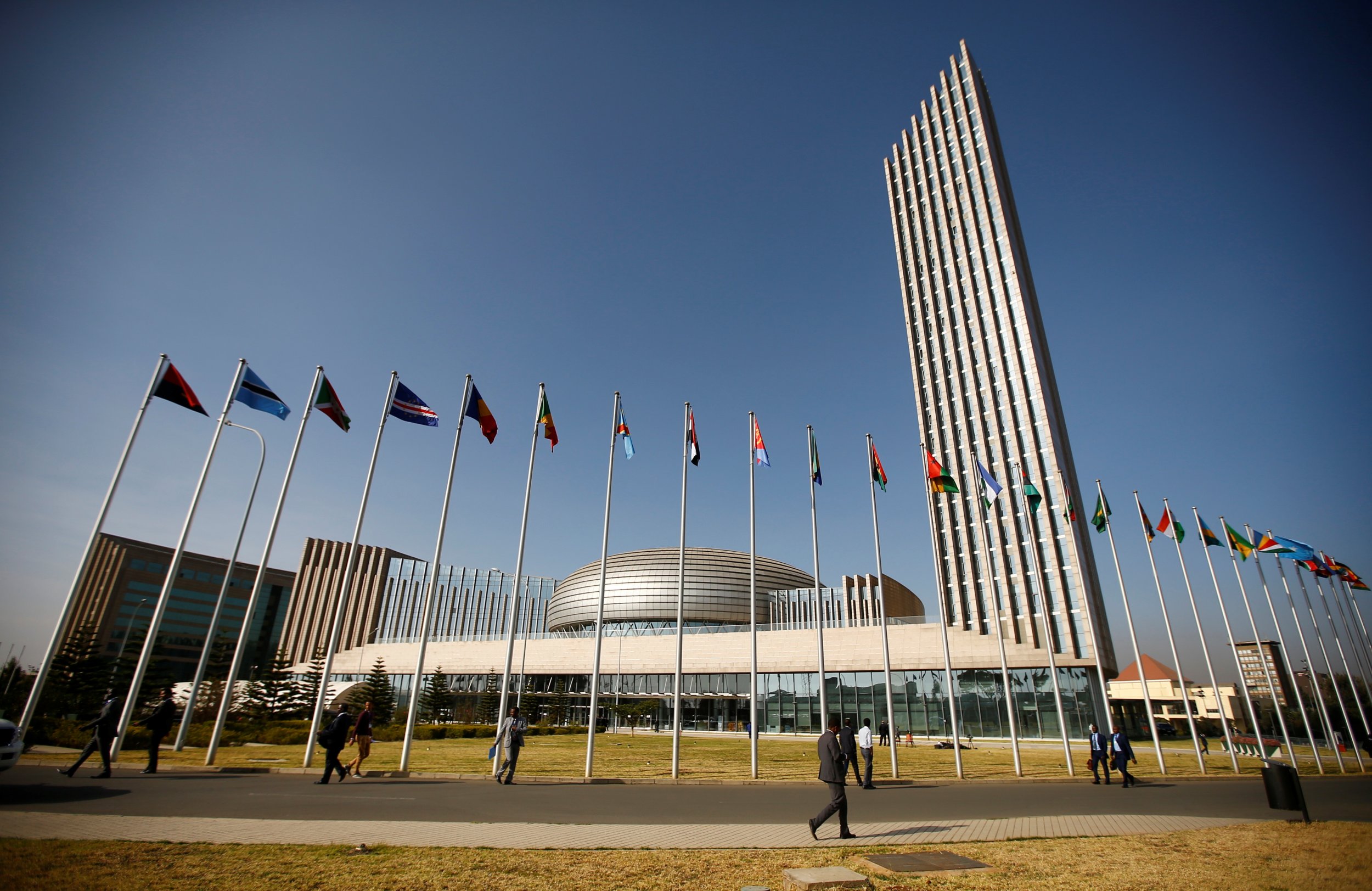
Africa’s youngest generation is demanding accountability from the continent’s oldest leaders—and the future hangs in the balance
The tear gas canisters arced through the Nairobi sky on June 25, 2024, landing among thousands of young Kenyans who had breached Parliament’s gates. They weren’t there to celebrate—they were there to rage. Armed with nothing but smartphones and a hashtag, #RejectFinanceBill2024, Kenya’s Gen Z had organized what would become one of the most significant youth uprisings in modern African history. At least 60 protesters were killed that day, yet a year later, they returned to the streets in even greater numbers across 27 of Kenya’s 47 counties.
This wasn’t an isolated incident. From Lagos to Antananarivo, Kampala to Maputo, a generation is rising—and they’re tired of waiting.
Africa’s Youngest Population Faces Its Oldest Leaders
Africa has the youngest population in the world, with more than 400 million people aged 15 to 35 years old—a demographic set to double to over 830 million by 2050. Yet this youthful continent is governed by leaders with an average age of 64.3 in 2024, creating what analysts call a dangerous generational paradox.
“What the youth is really asking and why people are frustrated is because this is not an African Union for citizens,” says Liesl Louw-Vaudran, a senior analyst with the Crisis Group. Many young Africans view the AU as “a bloc of old leaders” that sees their interests as less of a priority.
This disconnect isn’t just political theater—it’s fueling a crisis that threatens to transform Africa’s demographic dividend into a demographic disaster.
The Corruption Crisis: Numbers That Tell a Story
The statistics paint a sobering picture. According to the 2024 African Youth Survey by the Ichikowitz Family Foundation, which surveyed 5,604 young people across 16 African countries, 83% are concerned about corruption at home. More critically, 62% believe their governments are failing to address it.
The consequences are stark: nearly 58% of young Africans said they are “very likely” or “somewhat likely” to consider emigrating in the next three years, with corruption cited as the single biggest obstacle to progress.
Transparency International’s 2025 Corruption Perceptions Index confirms the scope of the problem. Sub-Saharan Africa averages just 32 out of 100—the lowest score of any global region. Only four out of 49 African countries score above 50: Seychelles (68), Cabo Verde (62), Botswana (58), and Rwanda (58). At the bottom languish Somalia (9), South Sudan (9), Eritrea (13), and Sudan (14).
| Country | CPI Score (2025) | Global Ranking |
|---|---|---|
| Seychelles | 68 | 24th |
| Cabo Verde | 62 | 35th |
| Botswana | 58 | – |
| Rwanda | 58 | – |
| Nigeria | 26 | 142nd |
| Mozambique | 21 | – |
| Somalia | 9 | Bottom 3 |
| South Sudan | 9 | Bottom 3 |
For context, the global average CPI score fell to 42 in 2025—its lowest in over a decade—meaning most African nations fall significantly below even this declining global standard.
When Hashtags Become Revolutions
The youth anger African Union leaders once dismissed as social media noise has evolved into a potent political force. Digital platforms aren’t just organizing tools—they’re creating new forms of leaderless, decentralized movements that are proving remarkably resilient to traditional state repression.
In Kenya, the Gen Z protesters who mobilized against the 2024 Finance Bill used TikTok, Instagram, and X (formerly Twitter) to educate each other about tax policy and coordinate nationwide demonstrations. “The biggest mobilizers of the protest were the Gen Zs,” says Kenyan activist Boniface Mwangi. “They were on TikTok, Instagram and on X. The majority of the people in the streets were young people.”
The movement forced President William Ruto to withdraw the controversial bill and dissolve his cabinet. But it didn’t stop there. Despite brutal crackdowns that left 82 cases of enforced disappearances between June and December 2024, according to Kenya’s National Commission on Human Rights, protests continued into 2025 with renewed vigor.
In Nigeria, the #EndBadGovernance protests in August 2024 echoed the 2020 #EndSARS movement, with young Nigerians rallying against fuel subsidy removal, hunger, and hardship. Despite violent repression, youth activists are “more organized, more radicalized and less trusting of this elite pact,” according to organizer Francis Onyango.
Madagascar saw its own youth awakening in late 2025, as chronic water and power cuts triggered weeks of protests that evolved into broader demands against unemployment, corruption, and cost-of-living crises. The state-owned utility Jirama became a national metaphor for endemic corruption—businesses shut mid-shift, city water taps stayed dry, and protesters filled the streets of eight cities.
The Economics of Emigration: Africa’s Brain Drain Crisis
Perhaps the most damaging consequence of African youth corruption is the exodus it’s triggering. When 58% of young people are considering leaving the continent, that represents a catastrophic drain of human capital that Africa can ill afford.
“Corruption is now front and center in the minds of the youth on the continent,” states the African Youth Survey. “They believe that corruption in their countries is robbing them of their birthright, the single greatest hurdle they face to achieve their own potential and achieve a better life that was denied to their parents and their grandparents.”
This isn’t abstract frustration—it’s economic calculation. In a continent where over 53 million youth are not engaged in any form of employment, education, or training, young people are making rational decisions about their futures. The 2024 survey found that three-quarters of respondents said it was difficult to find a job, and two-thirds were dissatisfied with their governments’ efforts to create employment opportunities.
The International Labour Organization reports that the youth labor force in sub-Saharan Africa is estimated to grow by 72.6 million between 2023 and 2050. Without corresponding job creation and governance reforms, this demographic boom could fuel migration, political instability, and lost economic potential on an unprecedented scale.
The AU’s Accountability Crisis: Agenda 2063’s Broken Promises
The African Union’s ambitious Agenda 2063 blueprint promised to transform Africa into a global powerhouse through youth-led development, targeted investments in education, technology, and entrepreneurship. The African Youth Charter, Youth Decade Plan of Action, and Malabo Decision on Youth Empowerment all committed to promoting youth participation throughout society.
Yet these promises ring hollow to a generation watching their leaders prioritize state visits over service delivery, conferences over concrete action.
“The organization has missed opportunities to be people-centered and citizen-driven and has instead focused largely on governments and leaders,” says Louw-Vaudran. With a young population set to double by 2050, Africa is the only rapidly growing region where its people are getting poorer—a devastating indictment of current leadership.
The generational divide manifests in polling data: young Africans overwhelmingly want tougher sanctions against corrupt politicians, including banning them from standing for office. They want different forms of government, more accountability, and leaders who prioritize their futures over patronage networks.
Human Stories Behind the Statistics
Behind every statistic is a human story. Consider Grace Wanjiru, a 24-year-old Kenyan graduate who joined the Parliament protests despite her mother’s fears. “My degree means nothing when there are no jobs,” she told reporters before tear gas dispersed the crowd. “They steal our future and expect us to stay silent.”
Or Ahmed Hassan, a Nigerian software developer who moved to Canada in 2024. “I tried to build a tech startup in Lagos,” he explains. “But when you need to pay bribes for electricity connections, business permits, even to register your company—you realize the system is designed to fail young people.”
These aren’t isolated voices. They represent a continental shift in consciousness, amplified by social media’s ability to show young Africans what’s possible elsewhere. “They want more than their parents. They are more informed. They are more politically active,” notes Murithi Mutiga, program director for Africa at the International Crisis Group.
The Ripple Effect: From Kenya to the Continent
The Kenyan uprising has become a template. Protesters in Madagascar and Morocco explicitly studied the Kenyan movement’s tactics—leaderless coordination, patriotic imagery (carrying national flags and singing anthems), viral memes, and livestreamed confrontations that brought global attention.
In Morocco, hundreds of young protesters organized through a movement called GenZ 212 have staged protests in at least eleven cities, demanding investment in public health and education while denouncing the government’s multibillion-dollar football infrastructure spending. “Women are dying in maternity hospitals because of lack of sufficient medical staff,” one organizer noted, “while they build stadiums.”
Uganda saw anti-corruption marches throughout 2024 and 2025, with climate activists opposing the East African Crude Oil Pipeline facing harassment and arrests. In Mozambique, thousands rallied after the death of rapper Azagaia, demanding an end to corruption and social injustice. Ghana witnessed #OccupyJulorbiHouse protests highlighting economic discontent.
The pattern is clear: youth-led movements are spreading across Africa, unified by digital coordination, anti-corruption demands, and rejection of gerontocratic leadership.
What Success Looks Like: The Exception That Proves the Rule
Not all is bleak. Rwanda has emerged as a standout example of what focused investment in youth can yield. Through its Vision 2050 framework, the country integrated youth development into governance. The Rwanda Coding Academy, established in 2019, trains students in AI, robotics, and software engineering. According to Rwanda’s Ministry of Education, over 95% of graduates are either employed or pursuing higher education abroad.
Ghana’s Free Senior High School policy, launched in 2017, has dramatically increased secondary school attendance, with more than 1.6 million students benefiting so far. These examples demonstrate that when African governments genuinely prioritize youth empowerment with transparent, accountable systems, results follow.
The Path Forward: Can the AU Reinvent Itself?
For the African Union to regain legitimacy among youth, it must fundamentally reimagine its purpose and operations. Paul Banoba, Transparency International’s Regional Advisor for Africa, is clear: “African governments need to urgently translate anti-corruption commitments into decisive action by further strengthening accountability institutions and increasing transparency, protecting civic space and supporting public participation, along with necessary checks and balances on power.”
This means:
Institutional Reforms: Anti-corruption agencies must be truly independent, well-funded, and protected from political interference. Whistleblowers need robust legal protections, not persecution.
Youth Inclusion: Meaningful participation in decision-making, not tokenistic youth councils. If 60% of Africa’s population is under 25, leadership structures should reflect this reality.
Digital Governance: Leveraging technology for transparency—public procurement systems, online service delivery, and digital payment platforms that reduce opportunities for bribery.
Economic Opportunity: Job creation through genuine support for entrepreneurship, not political patronage. Africa’s tech startup ecosystem raised $3.3 billion in 2022—1,000% more than in 2015—showing private capital follows where corruption is controlled and innovation flourishes.
The Ticking Clock
By 2035, more young Africans will enter the workforce each year than in the rest of the world combined. This could be the foundation for unprecedented growth—or unprecedented instability.
“Movements don’t always win in one round,” observes Francis Onyango. “This was a rupture. Now the youth are more organized, more radicalized and less trusting of this elite pact.”
The question facing African leaders isn’t whether change is coming—it’s whether they’ll lead it or be swept aside by it. The streets of Nairobi, Lagos, and Antananarivo have already provided their answer. Young Africans are done waiting for permission to demand accountability.
As Kenya’s youth protesters demonstrated, even brutal repression can’t silence a generation that has nothing left to lose and everything to fight for. “Since colonial times, the Kenyan state has used repression to silence the people quite effectively,” says activist Wanjeru Kiama. “But Gen Z is proving to be a different breed. The more the state represses them through abductions, extrajudicial murders and brutalization in the streets, the more the movement grows.”
The African Union faces a stark choice: transform into a genuinely people-centered institution that tackles corruption impact African youth face daily, or watch its relevance erode among the very generation that holds Africa’s future in their hands.
With over 400 million young Africans today and 830 million projected by 2050, the continent’s trajectory will be shaped not by aging autocrats in summit halls, but by the protesters in the streets who refuse to inherit their parents’ acquiescence to corruption.
The uprising has begun. The only question is whether Africa’s leaders will rise to meet it.
Discover more from The Economy
Subscribe to get the latest posts sent to your email.


SpaceX IPO 2026: History’s Biggest Stock Debut?

Pakistan Economy 2026: Inside the SBP’s Balancing Act

Is AI a Stock Bubble in 2026? What the Data Shows

Oil Prices 2026: Inside the Hormuz Crisis That Won’t End

Gold Price 2026: Inside the Wildest Rally in Decades

Federal Reserve 2026: Inside Kevin Warsh’s First Year

Fox Corp 2026: Record Revenue, Tubi Growth & Roku Deal

Wendy’s Stock 2026: Inside the Turnaround Plan

Technology News 2026: Inside the $1.3T AI Chip Boom

UK Stocks 2026: Inside the FTSE 100’s Record Run

Asian Stock Markets 2026: Japan, China, Pakistan & More

Mortgage Rates Today 2026: Full Rate Guide & Forecast

Beyond Paper Wealth: Unpacking Donald Trump’s Multibillion-Dollar Liquidity and Legal Crisis

Bitcoin & XRP 2026: Inside Crypto’s Institutional Era

Top 30 Stocks for Investment in PSX for Massive ROI in 2026

SpaceX Starship Flight 14: First Orbital Attempt & Starlink V3 Launch Explained

AI Chip Stocks 2026: The Best Semiconductor Investments Beyond Marvell

Fidelity Investments Review 2026: SPAXX Yields & Zero-Fee Funds

Oil Prices Break $100 in 2026: Middle East Conflict & Energy Markets

The 2026 Crypto Regulatory Shift: What It Means for Institutional Investors

Tween Back-to-School Trends 2026: What’s Driving the $85B Season

BRICS+ Cross-Border Payments 2026: Interoperability Explained

AI-Powered Training: The Next Multi-Billion Dollar Ecosystem in Fitness

10-Year Treasury Yield Hits 4.80%: What It Means for Rates & Portfolios

Shein Clothes Quality & Safety in 2026: What Lab Tests Show

China’s US$10.8 Billion Trade Shortcut: Why the Pinglu Canal Matters

MRVL Earnings 2026: Why Marvell Sank Despite Beating Estimates

Leveraging Viral AI & Climate Hashtags for Brand Growth on X
-

 Markets & Finance9 months ago
Top 15 Stocks for Investment in 2026 in PSX: Your Complete Guide to Pakistan’s Best Investment Opportunities
-

 Analysis7 months ago
Johor’s Investment Boom: The Hidden Costs Behind Malaysia’s Most Ambitious Economic Surge
-

 Analysis7 months ago
Top 10 Stocks for Investment in PSX for Quick Returns in 2026
-

 Banks8 months ago
Best Investments in Pakistan 2026: Top 10 Low-Price Shares and Long-Term Picks for the PSX
-

 Analysis8 months ago
Brazil’s Rare Earth Race: US, EU, and China Compete for Critical Minerals as Tensions Rise
-

 Investment9 months ago
Top 10 Mutual Fund Managers in Pakistan for Investment in 2026: A Comprehensive Guide for Optimal Returns
-

 Global Economy9 months ago
15 Most Lucrative Sectors for Investment in Pakistan: A 2025 Data-Driven Analysis
-

 Global Economy9 months ago
Pakistan’s Export Goldmine: 10 Game-Changing Markets Where Pakistani Businesses Are Winning Big in 2025