
Global Economy
15 Strategic Pathways to Accelerate Pakistan’s GDP Growth: A Policy Roadmap for Economic Transformation

Expert analysis: How Pakistan can accelerate economic growth from 2.7% to 6%+ through strategic reforms in exports, tech, agriculture & more. Data-driven insights.
Pakistan stands at a critical economic crossroads in 2025. With GDP growth projected at just 2.7% according to the IMF—barely half the rate needed to absorb the 2.4 million Pakistanis entering the workforce annually—the nation faces a stark choice between bold structural reform and continued stagnation. Yet beneath these sobering headlines lies extraordinary untapped potential worth over $100 billion in additional GDP by 2030.
Consider this paradox: Pakistan received a record-breaking $38.3 billion in remittances in fiscal year 2024-25, a 27% year-over-year surge that now exceeds total export earnings. Meanwhile, textile exports climbed to $17.8 billion, and foreign direct investment increased 56% in the first seven months of FY25. These are not the indicators of a failing economy—they’re the building blocks of transformation waiting to be assembled into a coherent growth strategy.
The evidence from regional peers is instructive. Vietnam attracted $6.9 billion in FDI in just the first two months of 2025, while Bangladesh—despite recent political turmoil—maintained $30 billion in annual remittances. India secured $71 billion in FDI throughout 2024, with booming semiconductor and fintech sectors. Pakistan possesses similar strategic advantages: a 255-million-strong market, a youthful population with 60% under age 30, and geographic positioning at the nexus of South Asia, Central Asia, and the Middle East.
What separates high-growth emerging markets from stagnant ones isn’t resource endowment or population size—it’s execution. This analysis presents 15 evidence-based pathways, grounded in successful emerging market strategies and Pakistan’s unique competitive advantages, that could accelerate the nation’s trajectory from today’s $374.6 billion economy to a $500 billion powerhouse within the decade.
1. Revolutionize Export Competitiveness Through Value-Addition
Pakistan’s textile sector generated $17.8 billion in FY25, accounting for 55.8% of total exports. Yet the sector operates at just 60% of its $25 billion installed capacity. The solution isn’t producing more cotton yarn—where exports plummeted 34% year-over-year—but moving aggressively into value-added segments.
Data reveals the strategy’s viability: ready-made garments surged 23% in the first five months of FY25, while knitwear climbed 18.4%. Bangladesh, despite political unrest, still commands global apparel markets worth $35 billion annually. Pakistan’s advantage lies in redirected orders from Bangladesh’s struggling factories—over 2,300 registered units have closed in 18 months—and China’s textile tariffs. Leading exporters like Interloop Limited ($147 billion PKR in FY24) and Style Textile ($135 billion PKR) demonstrate the sector’s premium potential.
The pathway forward requires three elements: industrial electricity tariffs below $0.08 per kWh to match Vietnamese competitiveness, accelerated customs clearance reducing the average 12-day port turnaround, and targeted financing for machinery modernization. With consistent energy supply and restored zero-rating on local supplies, Pakistan could realistically achieve $25 billion in textile exports by 2027, adding $7-8 billion annually to GDP.
2. Transform Agriculture into a High-Productivity Export Engine
Agriculture contributes 23.5% to Pakistan’s GDP and employs 37.4% of the workforce, yet productivity lags decades behind global standards. The sector recorded just 0.56% growth in FY25, with major crops contracting 13.5% due to climate shocks and outdated practices. This represents Pakistan’s single largest missed opportunity.
The World Bank estimates that modernizing Pakistani agriculture could unlock $30-40 billion in additional value by 2030. Consider the baseline: per-hectare wheat yields average 2.9 tons compared to India’s 3.4 tons and China’s 5.6 tons. Rice yields similarly trail at 3.2 tons per hectare versus Vietnam’s 5.8 tons. Livestock, which showed 4.7% growth and accounts for 60% of agricultural GDP, remains largely informal and inefficient.
Evidence-based reforms would focus on three priorities. First, precision agriculture adoption—drip irrigation, GPS-guided machinery, and soil health monitoring—could boost yields 25-35% while reducing water consumption by 40%. Second, establishing cold-chain infrastructure spanning farm-to-market networks would reduce the current 30-40% post-harvest losses worth $4 billion annually. Third, creating value-added processing zones for fruits, vegetables, and dairy would triple export revenues from the current $4.5 billion baseline.
China has already signed protocols for Pakistani dried chili, dairy products, and heated beef exports. Leveraging the China-Pakistan Agricultural Cooperation framework with its focus on germplasm resources and processing technology could transform Pakistan from a food importer to a regional agricultural powerhouse.
3. Unleash Digital Economy Growth and IT Export Expansion
Pakistan’s IT exports reached $3.8 billion in FY24-25, marking an 18% year-over-year increase. With over 130 million broadband connections and a rapidly growing freelance economy, the sector represents Pakistan’s fastest pathway to high-value, low-carbon GDP growth. Yet the nation captures less than 1% of the global $1.2 trillion IT services market.
India’s IT sector generates $245 billion annually—nearly 10% of its GDP—demonstrating the scalable potential. Vietnam’s tech sector attracted 68% of its FY25 FDI inflows, showing how digital infrastructure drives broader economic transformation. Pakistan’s English-speaking workforce, competitive labor costs 40-50% below India’s, and expanding fiber-optic networks create a foundation for exponential growth.
The strategy requires coordinated action across four dimensions. First, establishing 50 new technology parks in Tier-2 cities—Faisalabad, Sialkot, Multan—would decentralize opportunities beyond Karachi, Lahore, and Islamabad. Second, reforming data localization requirements and simplifying foreign payment processing would attract multinational R&D centers, as seen with Google and Microsoft’s investments in India’s tier-2 cities. Third, creating a $500 million venture capital co-investment fund would catalyze Pakistan’s struggling startup ecosystem, which saw funding collapse 88% from $355 million in 2022 to just $43 million in 2024. Fourth, training 500,000 developers, data scientists, and AI specialists through public-private partnerships would address the acute talent shortage.
Industry projections suggest these reforms could drive IT exports to $15 billion by 2030, contributing 1.5-2% additional GDP annually while creating 1.5 million high-paying jobs.
4. Attract FDI Through Regulatory Simplification and Investment Zones
Foreign Direct Investment totaled just $2.46 billion in FY25—representing merely 0.6% of GDP—compared to India’s $71 billion (2.2% of GDP), Vietnam’s $35.7 billion (8.1% of GDP), and even Bangladesh’s $3.5 billion (1.1% of GDP). Pakistan’s FDI-to-GDP ratio has consistently underperformed regional peers for two decades, costing the economy an estimated $40-50 billion in lost growth.
The challenge isn’t Pakistan’s investment potential—the country allows 100% foreign ownership across most sectors and offers a $374 billion market. The problem is execution. The World Bank’s Doing Business indicators reveal the bottlenecks: starting a business requires 17 procedures over 16.5 days compared to 7 procedures and 4 days in Singapore. Contract enforcement takes 1,071 days versus Malaysia’s 425 days. Recovering insolvency requires 2.9 years against Vietnam’s 5 years.
Evidence from successful reformers shows the pathway. In 2014, India launched “Make in India” alongside 98 regulatory reforms, attracting $64 billion in FDI within 24 months. Rwanda cut business registration from 14 days to 6 hours, triggering a sustained FDI surge. The UAE’s free zones with zero taxation, 100% repatriation, and fast-track approvals now host 380,000 companies.
Pakistan’s Special Investment Facilitation Council (SIFC) represents a promising start, but implementation remains inconsistent. The strategy should prioritize three initiatives: establishing 10 sector-specific Special Economic Zones with five-year tax holidays, automated customs clearance, and dedicated utility connections; creating single-window digital portals for investment approvals, eliminating the current 35-40 agency touchpoints; and guaranteeing dispute resolution through international arbitration backed by sovereign commitment.
Saudi Arabia’s planned investment in Pakistan’s Reko Diq copper-gold project—potentially $2 billion for 10-20% equity—illustrates the latent interest. Systematic reforms could realistically triple FDI to $7.5 billion annually by 2028, adding 0.8-1% to annual GDP growth.
5. Capitalize on Record Remittances Through Financial Inclusion
Overseas Pakistanis sent $38.3 billion home in FY25, a stunning 27% increase that marks the highest remittance flow in Pakistan’s history. This eclipsed total export earnings of $29.5 billion, making remittances the nation’s largest foreign exchange source. Saudi Arabia contributed $8.2 billion, UAE $6.8 billion, and the UK $6.4 billion, demonstrating the diaspora’s substantial economic power.
Yet Pakistan captures only a fraction of remittances’ growth potential. Studies by the World Bank show that every dollar of remittances spent through formal banking systems multiplies economic impact 2.3-2.8 times through consumption, investment, and credit expansion. Currently, 25-30% of remittance-dependent households lack formal bank accounts, limiting this multiplier effect.
The transformation strategy centers on financial deepening. First, extending the Roshan Digital Account platform—which has attracted $7.4 billion since September 2020—to offer diaspora investors stakes in infrastructure bonds, real estate investment trusts (REITs), and Pakistan Stock Exchange listings would channel remittances into productive investment rather than pure consumption. Second, creating remittance-linked microfinance products allowing recipients to access working capital loans at preferential rates would boost entrepreneurship in rural areas where 65% of remittances flow. Third, reducing transaction costs through fintech competition—Pakistan’s average remittance cost remains 6.1% versus the G20 target of 3%—would increase net inflows by $800 million-$1 billion annually.
Morocco’s experience demonstrates the model: by offering diaspora-specific investment vehicles and streamlined property purchase procedures, the country doubled remittance-funded productive investment from 15% to 30% between 2015-2023. Pakistan could realistically channel 35-40% of the $38 billion into business formation, housing construction, and equity markets, generating $15-20 billion in additional economic activity and 0.5-0.7% annual GDP growth.
6. Modernize Energy Infrastructure to Lower Industrial Costs
Pakistan’s industrial electricity tariffs averaging $0.12-0.14 per kWh rank among the world’s highest, compared to $0.06-0.08 in Vietnam and $0.07-0.09 in Bangladesh. This cost differential alone explains much of Pakistan’s export competitiveness gap. Energy costs represent 25-30% of textile manufacturing expenses, 18-22% in cement production, and 15-20% in chemicals—making competitiveness impossible at current rates.
The energy sector’s contradictions are striking: Pakistan possesses enormous untapped renewable potential—60,000 MW of wind, 100,000 MW of solar, and 3,100 MW of readily exploitable hydropower—yet relies on expensive imported LNG and furnace oil for 40% of generation. The result is unsustainable circular debt exceeding PKR 2.3 trillion ($8.2 billion) and commercial losses that get passed to consumers.
International Monetary Fund analysis suggests that comprehensive energy reform could reduce industrial power costs by 30-35% while eliminating circular debt within three years. The strategy requires four parallel initiatives: accelerating renewable energy adoption through competitive bidding that has already driven solar costs below $0.04 per kWh; renegotiating legacy Independent Power Producer agreements that guarantee 15-17% dollar-denominated returns regardless of generation; privatizing distribution companies to end politically-motivated theft that averages 18% system-wide losses; and completing long-delayed transmission upgrades that bottleneck 4,000-5,000 MW of available generation.
China’s State Grid Corporation has expressed interest in modernizing Pakistan’s transmission infrastructure, while UAE’s TAQA and Saudi Arabia’s ACWA Power could anchor renewable projects. Reducing industrial electricity tariffs to regional averages would restore $8-10 billion in export competitiveness, boost manufacturing GDP by 1.5-2%, and create 400,000-500,000 jobs in export-oriented industries.
7. Optimize Tax Policy for Broadening the Base Without Crushing Growth
Pakistan’s tax-to-GDP ratio of 10.2% ranks among the world’s lowest—less than half of India’s 21.3%, Bangladesh’s 18.7%, or Vietnam’s 19.4%. This chronic revenue deficit constrains public investment in infrastructure, education, and health while forcing unsustainable borrowing. Yet counterintuitively, Pakistan simultaneously imposes some of the highest tax rates on formal businesses: 29% corporate tax, 35% super tax on high earners, and a maze of withholding taxes that effectively push marginal rates above 40%.
The result is a destructive equilibrium: only 3.2 million Pakistanis file income tax returns in a nation of 255 million, while registered taxpayers face punitive rates that discourage formalization. The Finance Act 2025’s harsh enforcement measures—including Section 37A and 37B allowing arrests without prior notice—have triggered capital flight rather than compliance. Simultaneously, IMF assessment reveals that tax exemptions and concessions cost 4.6% of GDP annually, disproportionately benefiting real estate, energy, and connected sectors.
Evidence from successful reformers demonstrates the alternative pathway. Indonesia broadened its tax base from 27 million to 45 million filers between 2016-2023 through voluntary disclosure programs, simplified filing, and lower rates—raising the tax-to-GDP ratio from 10.8% to 13.2%. Rwanda achieved 15.2% tax-to-GDP despite being poorer than Pakistan by eliminating exemptions, digitizing administration, and creating a reputation for fairness.
Pakistan’s optimal strategy balances three priorities: reducing corporate tax rates to 20-22% to match regional competitors while eliminating most exemptions and concessions; expanding the tax net to capture the undocumented real estate, wholesale trade, and services sectors through property transaction monitoring, utility consumption cross-referencing, and digital trail enforcement; and providing three-year tax holidays for new business registrations coupled with aggressive prosecution of major evaders. Combined with simplified filing through a unified portal, these reforms could realistically boost tax collection to 13-14% of GDP within three years—adding PKR 2-2.5 trillion ($7-9 billion) annually for growth-enhancing infrastructure investment.
8. Develop Human Capital Through Education-to-Employment Alignment
Pakistan faces a demographic paradox: 60% of its 255 million people are under age 30—potentially the world’s largest youth dividend—yet 40% of university graduates remain unemployed or underemployed. The disconnect between education and market demands costs the economy an estimated $15-20 billion annually in lost productivity while fueling social frustration.
Current spending patterns explain the crisis. Public education expenditure remains stuck at 2.2% of GDP versus the UNESCO-recommended 4-6% and regional comparators like India (4.6%), Vietnam (4.1%), and Bangladesh (2.9%). This translates to minimal per-student investment: Pakistan spends $180 per primary student compared to India’s $521 and Vietnam’s $611. Unsurprisingly, learning outcomes lag dramatically—only 38% of Grade 5 students demonstrate basic reading proficiency according to the World Bank.
Beyond funding, curriculum misalignment creates structural unemployment. Engineering graduates learn theoretical concepts divorced from industry practice. Business schools produce MBAs who’ve never analyzed real financial statements. Computer science majors graduate without knowledge of modern development frameworks. Meanwhile, employers desperately seek skilled workers: the textile sector needs 80,000 trained technicians, IT companies struggle to fill 120,000 positions, and construction projects face chronic shortages of qualified supervisors.
The solution requires wholesale reform across three dimensions. First, expanding technical and vocational education through German-style apprenticeship programs combining classroom instruction with paid workplace training. Germany’s model produces employment rates above 90% for vocational graduates. Second, mandating industry advisory boards for all university programs, ensuring curriculum matches market needs. Third, creating 200 sector-specific training centers—Advanced Manufacturing Institute, Digital Skills Academy, Agricultural Extension Centers—operated through public-private partnerships modeled on Singapore’s SkillsFuture program.
Investment would be substantial: $3-4 billion annually, or 0.8-1.0% of GDP. But returns would far exceed costs: trained workers earn 40-60% higher wages, boosting consumption and tax revenue, while reduced skill mismatches could add 0.7-0.9% to annual GDP growth.
9. Unlock Manufacturing Growth Through SME Access to Finance
Small and medium enterprises constitute 90% of Pakistani businesses and employ 78% of the non-agricultural workforce, yet receive less than 7% of total banking credit. This credit starvation constrains the economy’s most dynamic sector, limiting job creation and innovation. Meanwhile, banks park excess liquidity in risk-free government securities yielding 12-15% rather than extending business loans.
The contrast with successful Asian economies is stark. In Vietnam, SMEs access 28% of total credit; in Thailand 32%; in South Korea 38%. These nations achieved inclusive growth by systematically reducing SME financing barriers through credit guarantee schemes, alternative lending platforms, and regulatory incentives for bank lending.
Pakistan’s SME credit gap is estimated at $50-70 billion—nearly equivalent to 15-20% of GDP. This financing deficit prevents promising manufacturers from upgrading machinery, prevents service providers from expanding, and prevents retailers from opening new locations. The result is artificially suppressed economic activity across every sector.
The breakthrough strategy would deploy five complementary mechanisms. First, establishing a $10 billion National SME Credit Guarantee Corporation that assumes 50-70% of default risk, mirroring successful programs in Japan and South Korea that catalyzed 4-6x leverage in private lending. Second, licensing 20-30 specialized SME banks focused exclusively on businesses with annual revenues between PKR 50 million-800 million, similar to India’s Small Industries Development Bank. Third, creating alternative credit assessment frameworks based on transaction history, utility payments, and supply chain relationships rather than traditional collateral requirements that exclude 80% of SMEs. Fourth, digitizing the entire loan application and approval process through blockchain-verified documentation, reducing approval time from 120-180 days to 7-10 days. Fifth, mandating that commercial banks dedicate 18-20% of their lending portfolio to SMEs within three years, enforced through differentiated reserve requirements.
International experience suggests these reforms could increase SME lending from $15 billion currently to $45-50 billion within five years. With average loan-to-value ratios of 60-70%, this would unlock $70-80 billion in SME investment, generating 2-2.5 million jobs and adding 1.2-1.5% to annual GDP growth through enhanced productivity and expanded production.
10. Leverage CPEC and Regional Connectivity for Trade Expansion
The China-Pakistan Economic Corridor represents Pakistan’s most significant infrastructure investment—$62 billion committed across energy, transport, and special economic zones. Yet seven years after CPEC’s 2017 peak, the returns remain disappointing. Only 9 of 27 planned Special Economic Zones are operational, Chinese FDI has declined to $568 million in FY24 from peak levels, and trade volumes have failed to meet projections.
The challenge extends beyond CPEC. Pakistan’s trade with Central Asian republics—Kazakhstan, Uzbekistan, Turkmenistan, Kyrgyzstan, Tajikistan—totals barely $900 million despite a combined market of 75 million people and $320 billion GDP. Iran, sharing an 800-kilometer border, records just $2.1 billion in bilateral trade. Afghanistan, despite Pakistani transit trade access, generates controversial and often disrupted commerce.
This represents a colossal missed opportunity. Pakistan’s geography positions it as the natural bridge linking China’s western regions, Central Asia’s energy and mineral wealth, and South Asia’s consumer markets. The Gwadar Port, once operational at capacity, could handle 300-400 million tons annually—10x current volumes. The Karakoram Highway and upgraded rail connections could carry $20-30 billion in annual transit trade.
Unlocking this potential requires strategic recalibration across four priorities. First, completing “early harvest” CPEC projects—particularly the 1,872 km ML-1 railway upgrade connecting Karachi to Peshawar at $6.8 billion cost—that would reduce freight time from 18 hours to 8 hours while boosting capacity from 34 to 137 trains daily. Second, operationalizing Gwadar Port through aggressive marketing to Chinese, Central Asian, and Afghan shippers, offering competitive handling rates 15-20% below Karachi while guaranteeing smooth customs clearance. Third, negotiating bilateral Free Trade Agreements with Uzbekistan and Kazakhstan, focusing on textiles-for-energy exchanges and agricultural product access. Fourth, establishing the long-discussed Pakistan-Afghanistan-Uzbekistan railway corridor that would slash Central Asian shipping costs by 40-50% compared to current Iran-Turkey routes.
Turkey’s strategic positioning between Europe and Asia provides the template: it evolved from peripheral economy to global logistics hub, capturing $25-30 billion in annual transit revenue. Pakistan could realistically generate $10-15 billion in transit fees, logistics services, and warehousing revenues by 2030 while boosting manufactured exports through Central Asian market access. Combined impact: 0.6-0.8% additional annual GDP growth plus 300,000-400,000 jobs in logistics, warehousing, and trade services.
11. Accelerate Digital Financial Services and Fintech Innovation
Pakistan’s financial inclusion rate stands at 21% according to the World Bank, meaning 79% of adults—nearly 120 million people—lack formal banking access. This financial exclusion constrains consumption, prevents savings accumulation, blocks entrepreneurship, and forces reliance on informal moneylenders charging 30-60% annual interest. Yet Pakistan simultaneously hosts 130 million mobile phone users and 100 million smartphone connections—the infrastructure for fintech revolution exists.
India’s digital payments transformation offers the clearest roadmap: the Unified Payments Interface (UPI) processed 15.2 billion transactions worth $350 billion in 2024, up from essentially zero in 2016. This digital leap included 400 million previously unbanked citizens, catalyzed 150 million nano-entrepreneurs, and added an estimated 1.2% to annual GDP growth. Kenya’s M-Pesa mobile money platform similarly revolutionized financial access, lifting 194,000 households—2% of Kenyan households—out of poverty according to MIT research.
Pakistan’s digital payment volume totaled just $42 billion in FY24, representing 11% of GDP compared to India’s 68% and Kenya’s 47%. The potential for expansion is extraordinary: capturing just 25% of Pakistan’s cash economy—estimated at 60-70% of all transactions—would inject $90-100 billion into formal channels, expanding the tax base, enabling credit scoring, and facilitating e-commerce.
The acceleration strategy requires five synchronized reforms. First, mandating open banking standards allowing third-party developers to build payment applications on bank infrastructure, mirroring the UK’s revolutionary approach that spawned 400 fintech companies. Second, licensing 50 specialized Electronic Money Institutions (EMIs) to offer mobile wallets, peer-to-peer transfers, and merchant payments without full banking infrastructure requirements. Third, establishing a national digital identity system linked to biometric verification that eliminates the cumbersome documentation currently blocking account opening. Fourth, creating regulatory sandboxes where fintech startups can test innovative products—microloans based on mobile usage, agricultural insurance using satellite data, gold-backed savings accounts—without bureaucratic approval delays. Fifth, requiring all government payments including salaries, pensions, and procurement to flow exclusively through digital channels, forcing adoption among the 4 million government employees and millions of vendor relationships.
International consultancies estimate these reforms could boost financial inclusion to 65-70% within four years while generating $8-10 billion in annual fintech transaction revenue. The multiplier effects—enhanced tax collection, expanded credit, reduced corruption, accelerated e-commerce—could add 0.5-0.7% to annual GDP growth while creating 150,000-200,000 fintech-enabled jobs.
12. Develop Tourism as a High-Growth Foreign Exchange Source
Pakistan welcomed merely 1.8 million international tourists in 2024, generating approximately $800 million in foreign exchange earnings. This compares catastrophically to Vietnam’s 12.6 million visitors ($35 billion revenue), Egypt’s 14.9 million ($13 billion), and Turkey’s 51.4 million visitors ($51 billion). Yet Pakistan possesses tourism assets arguably superior to these comparators: five UNESCO World Heritage Sites, the world’s second-highest peak K2, pristine beaches spanning 1,046 kilometers, the ancient Indus Valley Civilization ruins, and the spectacular Karakoram Highway rated among the world’s greatest road journeys.
Security concerns and international perceptions explain much of the tourism deficit, but internal constraints matter equally. Pakistan offers just 85,000 quality hotel rooms compared to Vietnam’s 550,000 and Turkey’s 1.2 million. Tourist visa processes remain cumbersome despite the 2019 e-visa system introduction. Domestic connectivity is poor—reaching northern tourism destinations requires 12-18 hours by road from major cities. Marketing budgets trail regional peers by 90-95%.
The World Travel and Tourism Council estimates Pakistan’s tourism potential at $18-22 billion annually by 2030—representing 25-28x current levels—based on infrastructure investment and perception management. This would generate 2.5-3.0 million direct jobs while stimulating construction, hospitality, transport, and handicrafts sectors.
The roadmap requires investment across six pillars. First, launching a $500 million “Brand Pakistan” global marketing campaign highlighting safety improvements, natural beauty, and cultural heritage, modeled on Turkey’s “Home of Peace” rebrand that reversed tourism declines post-2016. Second, fast-tracking 150 tourism infrastructure projects including mountain resorts in Hunza and Skardu, coastal developments in Gwadar and Karachi, and heritage tourism circuits connecting Mohenjo-daro, Harappa, Taxila, and Lahore. Third, training 100,000 hospitality workers through specialized tourism academies and language programs. Fourth, simplifying visa processing to 24-hour e-visa issuance for citizens of 100+ countries, matching Thailand’s streamlined approach. Fifth, developing domestic aviation infrastructure with 15 new small airports connecting tourism destinations directly to major cities, reducing travel time by 60-70%. Sixth, creating safety certifications and tourist police units that guarantee visitor security.
Turkey’s experience—growing tourism from 31 million visitors ($25 billion) in 2011 to 51 million ($51 billion) in 2024 despite security challenges—proves the model works. Pakistan could realistically attract 8-10 million tourists by 2030, generating $8-10 billion in revenue and contributing 0.4-0.5% to annual GDP growth.
13. Strengthen Institutional Governance and Anti-Corruption Frameworks
The IMF’s 2025 Governance and Corruption Diagnostic Assessment delivered a devastating verdict: Pakistan loses 5-6.5% of GDP annually—approximately $20-25 billion—to corruption driven by entrenched “elite capture.” This systemic leakage equals the nation’s entire education and health budgets combined. Procurement costs run 25-30% above international norms. Infrastructure projects face 40-50% budget overruns, mostly from corrupt practices. Tax exemptions worth 4.6% of GDP flow to politically connected sectors.
The human cost extends beyond numbers. Investors consistently rank corruption as Pakistan’s top business obstacle—above security concerns and infrastructure deficits. The World Bank’s 2024 Ease of Doing Business indicators placed Pakistan 108th of 190 nations, with contract enforcement and property registration particularly problematic. Transparency International scores Pakistan 133rd of 180 nations on its Corruption Perceptions Index.
Yet countries have escaped corruption traps through sustained institutional reform. Rwanda, post-genocide, overhauled governance systems and achieved 49th place globally—ahead of several European nations. Singapore, once corruption-ridden, implemented draconian enforcement that transformed it into the world’s second-least-corrupt country. Georgia reduced corruption dramatically between 2003-2012 through police restructuring, civil service reform, and digital government services that eliminated human discretion.
Pakistan’s optimal strategy combines six components. First, establishing genuinely autonomous anti-corruption courts modeled on Hong Kong’s Independent Commission Against Corruption (ICAC), with special prosecutors, judges shielded from political pressure, and fast-track proceedings guaranteeing verdicts within 6-9 months rather than the current 8-12 years. Second, digitizing all government services—business registration, tax filing, permit issuance, land records—through citizen-facing portals that eliminate discretionary official interaction, mirroring Estonia’s e-governance model where 99% of public services operate online. Third, implementing transparent procurement systems with competitive bidding, public contract disclosure, and third-party audits for all projects exceeding PKR 100 million. Fourth, protecting whistleblowers through anonymity guarantees, financial rewards (10-15% of recovered funds), and relocation assistance when needed. Fifth, prosecuting high-profile cases demonstrating that elite impunity has ended—Singapore’s founding leader Lee Kuan Yew famously imprisoned his own minister for corruption. Sixth, professionalizing the civil service through merit-based recruitment, performance incentives, and competitive compensation that reduces temptation.
The World Bank estimates that reducing corruption by 50% could boost GDP growth by 1.5-2.0% annually through enhanced investment, improved infrastructure delivery, and strengthened institutions. For Pakistan, this translates to $6-8 billion additional annual GDP by 2030—matching the total received from IMF programs but generated sustainably through better governance.
14. Pursue Climate Resilience and Green Growth Opportunities
The catastrophic 2022 floods that submerged one-third of Pakistan, displaced 33 million people, and caused $30 billion in damages—43% in agriculture alone—exposed the nation’s acute climate vulnerability. Yet climate change represents not just existential threat but economic opportunity: the global green economy is projected to reach $10.3 trillion by 2030, and Pakistan’s strategic positioning enables capturing substantial market share.
Pakistan ranks among the world’s top 10 most climate-vulnerable nations according to the Climate Risk Index, facing glacial melt threatening water security for 240 million people, rising temperatures reducing crop yields by 10-15% over recent decades, intensifying monsoons causing more frequent catastrophic flooding, and desertification affecting 1.6 million hectares. These climate stresses will cost an estimated 3-5% of GDP annually by 2030 without adaptation measures.
Simultaneously, green economy opportunities are immense. Pakistan’s renewable energy potential—60,000 MW wind, 100,000 MW solar, 3,100 MW small hydro—could position it as a clean energy exporter to South and Central Asia. Carbon credit markets, where Pakistan holds 500-700 million tons of sequestration potential through reforestation, could generate $5-10 billion if properly developed. Green hydrogen production using cheap solar electricity could supply hard-to-decarbonize sectors including shipping and chemicals.
The transformation requires integrated climate-economy strategy across five priorities. First, investing $4-6 billion annually in climate adaptation infrastructure including flood management systems, drought-resistant agricultural practices, early warning networks, and resilient housing—expenses that pay for themselves by preventing disaster losses. Second, channeling 50% of CPEC Phase II investments toward renewable energy projects, expanding solar and wind capacity from current 3,500 MW to 25,000 MW by 2030 and replacing expensive imported fossil fuels. Third, launching the 10 Billion Tree Tsunami program to restore degraded forests, create carbon sequestration certificates tradable on international markets, and boost ecotourism. Fourth, developing green manufacturing zones focused on electric vehicle assembly, solar panel production, and battery manufacturing that supply both domestic markets and regional exports. Fifth, accessing the $20 billion World Bank Country Partnership Framework emphasizing clean energy and climate resilience projects announced in 2025.
International experience shows that climate-smart growth isn’t contradictory—Denmark derives 50% of electricity from wind while maintaining high income levels; Costa Rica achieved 98% renewable electricity and tourism-driven prosperity. For Pakistan, integrated climate action could add 0.4-0.6% to annual GDP growth through renewable energy savings, green exports, and avoided disaster costs while creating 400,000-500,000 green economy jobs.
15. Deepen Capital Market Development and Corporate Governance
The Pakistan Stock Exchange (PSX) closed 2024 as one of the world’s best-performing markets, with the KSE-100 index surging 85% to reach 115,000 points. Yet despite this spectacular run, market capitalization remains just $108 billion—representing 29% of GDP compared to India’s 120%, Indonesia’s 42%, and Bangladesh’s 38%. Only 534 companies list on PSX versus 5,400 on India’s NSE, 850 on Indonesia’s IDX, and 380 on Vietnam’s HOSE.
This underdevelopment reflects deeper structural issues. Foreign institutional investment constitutes merely 4-6% of PSX market cap compared to 23% in India and 18% in Indonesia. Corporate bond markets are virtually nonexistent—$3.8 billion outstanding versus India’s $320 billion and Indonesia’s $195 billion. Pension fund assets equal just 2.1% of GDP against India’s 15% and Malaysia’s 68%. Retail equity participation captures only 0.5% of the population—1.2 million investors in a nation of 255 million.
This capital market shallowness constrains growth by forcing excessive dependence on bank financing, preventing companies from raising long-term investment capital, offering limited retirement savings vehicles, and denying households wealth-building opportunities. It also blocks foreign portfolio investment that could provide $8-12 billion annually.
The deepening strategy requires comprehensive capital market reforms across six dimensions. First, incentivizing IPOs through five-year tax holidays for newly listed companies with minimum $50 million market cap, mirroring Vietnam’s successful approach that drove 100+ IPOs between 2018-2023. Second, strengthening corporate governance through mandatory independent directors (40% of boards), quarterly earnings disclosure, and severe penalties for financial fraud that restore investor confidence. Third, developing fixed-income markets by requiring government-owned enterprises to issue corporate bonds, establishing credit rating agencies, and creating bond ETFs accessible to retail investors. Fourth, expanding pension coverage from 6 million workers currently to 25 million through auto-enrollment workplace savings plans invested 60% in equities, following Chile’s privatized pension model. Fifth, allowing Real Estate Investment Trusts (REITs) for commercial property with pass-through taxation, unlocking Pakistan’s $400-500 billion real estate sector for middle-class investment. Sixth, streamlining foreign investment procedures through single-day registration, guaranteed repatriation, and treaty protections that match regional standards.
The World Bank estimates that doubling capital market depth to 60% of GDP could boost annual growth by 0.8-1.2% through enhanced corporate investment, efficient capital allocation, and expanded household wealth. For Pakistan, this would mean PSX market capitalization reaching $220-240 billion by 2030, corporate bond markets expanding to $40-50 billion, and 8-10 million retail investors—generating an additional $8-10 billion in annual economic activity.
The Path Forward: From Analysis to Implementation
Pakistan’s economic stagnation is neither inevitable nor permanent. Each of the 15 pathways outlined above is grounded in evidence from successful emerging markets and Pakistan’s demonstrated capabilities. Collectively, these reforms could realistically accelerate GDP growth from the current 2.7% to 5.5-6.5% within five years—a doubling that would fundamentally transform living standards, employment, and national confidence.
The arithmetic is compelling. Export competitiveness gains could add $12-15 billion annually. Agricultural modernization could unlock $8-10 billion. IT sector scaling could contribute $8-12 billion. FDI tripling would inject $4-5 billion yearly. Remittance optimization could generate $6-8 billion in multiplier effects. Energy reform would save $8-10 billion. Tax broadening would mobilize $7-9 billion for infrastructure. SME financing would create $15-18 billion in new business activity. Regional connectivity could generate $10-15 billion. Fintech expansion would formalize $20-25 billion. Tourism development could earn $8-10 billion. Governance improvements would recover $10-12 billion annually. Climate-smart growth could contribute $4-6 billion while avoiding disaster losses. Capital market deepening would mobilize $8-10 billion.
The combined potential exceeds $150 billion in additional annual GDP by 2030—transforming Pakistan from a $375 billion economy to $500-550 billion, raising per capita income from $1,680 to $2,150-2,350, and creating 8-10 million quality jobs for the bulging youth population.
Yet implementation represents the genuine challenge. Pakistan has produced countless reform blueprints—Vision 2010, Vision 2025, countless IMF programs—that foundered on elite resistance, bureaucratic inertia, and political instability. What distinguishes successful reformers like Vietnam, Rwanda, or Indonesia isn’t better strategies but sustained execution across electoral cycles backed by political leadership willing to confront vested interests.
Three factors could make this time different. First, the emerging geopolitical environment offers unprecedented opportunities—Saudi Arabia’s $25 billion investment interest, UAE’s expansion plans, China’s CPEC recalibration, and Western desire for supply chain diversification away from China. Second, the dire fiscal situation creates reform urgency—Pakistan cannot sustain current debt servicing consuming 50% of revenues while running persistent current account deficits. Third, digital technology enables reform implementation in ways impossible two decades ago—Estonia built world-leading e-governance, India revolutionized payments through UPI, Rwanda digitized land records to end corruption.
The window of opportunity is closing. Pakistan’s youth bulge—potentially the world’s largest productive workforce by 2030—will either drive unprecedented prosperity or fuel social instability if economic inclusion fails. Regional competitors aren’t standing still: Bangladesh seeks $30 billion annual garment exports despite current challenges, Vietnam pursues $50-60 billion FDI annually, India positions itself as a semiconductor and pharmaceutical manufacturing hub.
Pakistan’s choice is stark: embrace bold, evidence-based reforms that unlock the nation’s extraordinary potential, or settle for continued stagnation punctuated by repeated IMF bailouts. The pathways outlined above represent not wishful thinking but proven strategies adapted to Pakistani realities. Implementation requires political courage, institutional persistence, and societal commitment to meritocracy over patronage.
The question isn’t whether Pakistan can achieve 6-7% sustained GDP growth—the data says unambiguously it can. The question is whether Pakistan’s leaders and citizens will summon the collective will to make it happen. The $500 billion economy, 10 million new jobs, and doubled living standards await—but only if Pakistan acts decisively, starting now
Discover more from The Economy
Subscribe to get the latest posts sent to your email.


The IMF’s July 2026 update projects global growth of 3.0% for 2026 and 3.4% for 2027 — a modest slowdown from the 3.5% average of 2024–25, driven by the economic drag of the Middle East conflict being partly offset by an accelerating AI-driven technology cycle. In short: the world economy is being carried by one trade, and it is concentrated in a handful of companies.
That single sentence captures the defining tension of the 2026 economy. Two forces are pulling in opposite directions, and which one wins will determine whether this is remembered as the year markets shrugged off geopolitical risk, or the year they didn’t see the correction coming.
The IMF’s Divergent World
According to the IMF’s World Economic Outlook Update, the growth slowdown is not evenly distributed. Economies deeply integrated into the AI and technology value chain — chiefly the United States and parts of Asia — are absorbing the benefits of the technology boom, while energy-importing and conflict-adjacent economies are absorbing most of the damage. That divergence has been the throughline of every IMF release this year: the April 2026 edition, published as the Middle East conflict first erupted, had cut its forecast to 3.1% for 2026 under a “reference forecast” that assumed the war would stay limited in scope and duration, while warning that a longer or broader conflict — or a reassessment of AI-driven productivity expectations — could meaningfully weaken growth.
For content targeting “IMF reports” and “world economy” search intent, the practical takeaway is this: growth forecasts have been revised four times in twelve months, each revision hinging on two swing factors — the war’s duration and the durability of the AI capital-spending cycle. Anyone publishing on this topic needs to track both, because either one turning could flip the entire growth story.
Wall Street’s AI Concentration Problem
Featured Snippet Target: Three companies — Alphabet, Amazon, and Meta — are now expected to drive roughly 70% of the S&P 500’s 2026 earnings growth, according to Charles Schwab’s market analysis, with combined 2026 capital expenditure guidance exceeding $500 billion. That concentration means the index’s headline diversification is largely cosmetic; its performance now rides on whether a handful of hyperscalers convert AI spending into earnings.
This is the risk hiding inside every “stock market today” headline. Reuters reported the S&P 500 climbing to a record high in early January 2026, powered by gains in Nvidia and Alphabet, with one Tulsa-based fund manager summing up the prevailing mood as a repeat of the prior year’s approach — buy the AI leaders and hold. Since then, hyperscaler capital spending has only accelerated: Alphabet, Amazon, and Microsoft each posted capex increases of well over 25% year-on-year in recent quarters, and combined hyperscaler AI spending commitments for 2026 have topped $700 billion, according to reporting relayed through Yahoo Finance’s technology coverage.
That spending is no longer being funded purely out of free cash flow. A growing share is debt-financed — Macquarie’s Investment Strategy Insights noted that consensus hyperscaler capex estimates for FY26–FY28 were revised up from roughly $2.5 trillion to $2.8 trillion during the reporting season, with gross debt issuance expected to peak near $460 billion in FY28, or about a third of total capex. Analysts have started describing this shift as a change in market character altogether — a move from an era where buybacks reliably supported share prices to one where capital expenditure, not shareholder returns, is what the market rewards.
That has two implications for markets content this year. First, market concentration has hit levels not seen since the dot-com era — roughly two dozen stocks now account for over half of the S&P 500’s total value, which is a comparable concentration level to the 32-stock peak reached during the 2000 bubble. Second, volatility has already started creeping back in: CNBC flagged in mid-September that bond yields were spiking and AI-linked names were selling off even as broader investor sentiment stayed constructive on equities — a split market where the AI trade and the rest of Wall Street are no longer moving in lockstep.
Why the Divergence Matters for Every Asset Class
The IMF’s macro divergence and Wall Street’s AI concentration are, in effect, the same story told twice — a bet on a narrow slice of the global economy carrying the rest. Energy importers and low-income developing economies are absorbing the geopolitical shock the IMF describes, just as the “average” S&P 500 stock is absorbing less of the earnings growth than the concentration numbers suggest. Both dynamics raise the same underlying question for 2026 planning: what happens to growth, and to equity valuations, if either pillar — the ceasefire holding, or hyperscaler capex converting into real earnings — gives way.
For now, neither has. The IMF’s reference forecast still assumes the conflict stays contained, and hyperscaler earnings, so far, have largely met or beaten the market’s demanding bar: Alphabet’s April quarter, for instance, saw earnings per share and Google Cloud growth both come in well ahead of consensus. But both are assumptions, not certainties, and the 2026 economy is being priced as though they will hold indefinitely.
The Bottom Line
Global growth of 3.0% sounds unremarkable in isolation. What makes 2026 distinctive is how much of that growth — and how much of the corresponding equity market gains — is concentrated in AI infrastructure spending by a small number of companies and countries. Investors, policymakers, and anyone allocating capital this year need to treat the AI capex cycle not as a side story to the macro picture, but as the macro picture’s main engine.
Next step: Track the IMF’s next World Economic Outlook update alongside hyperscaler earnings season — the two releases, taken together, are now the single best gauge of where the 2026 global economy is actually heading.
Discover more from The Economy
Subscribe to get the latest posts sent to your email.
China Economy
China’s Local Debt Race Against Time: Why Economists Demand Central Action Before the Deflation Window Closes
Key Policy Takeaways
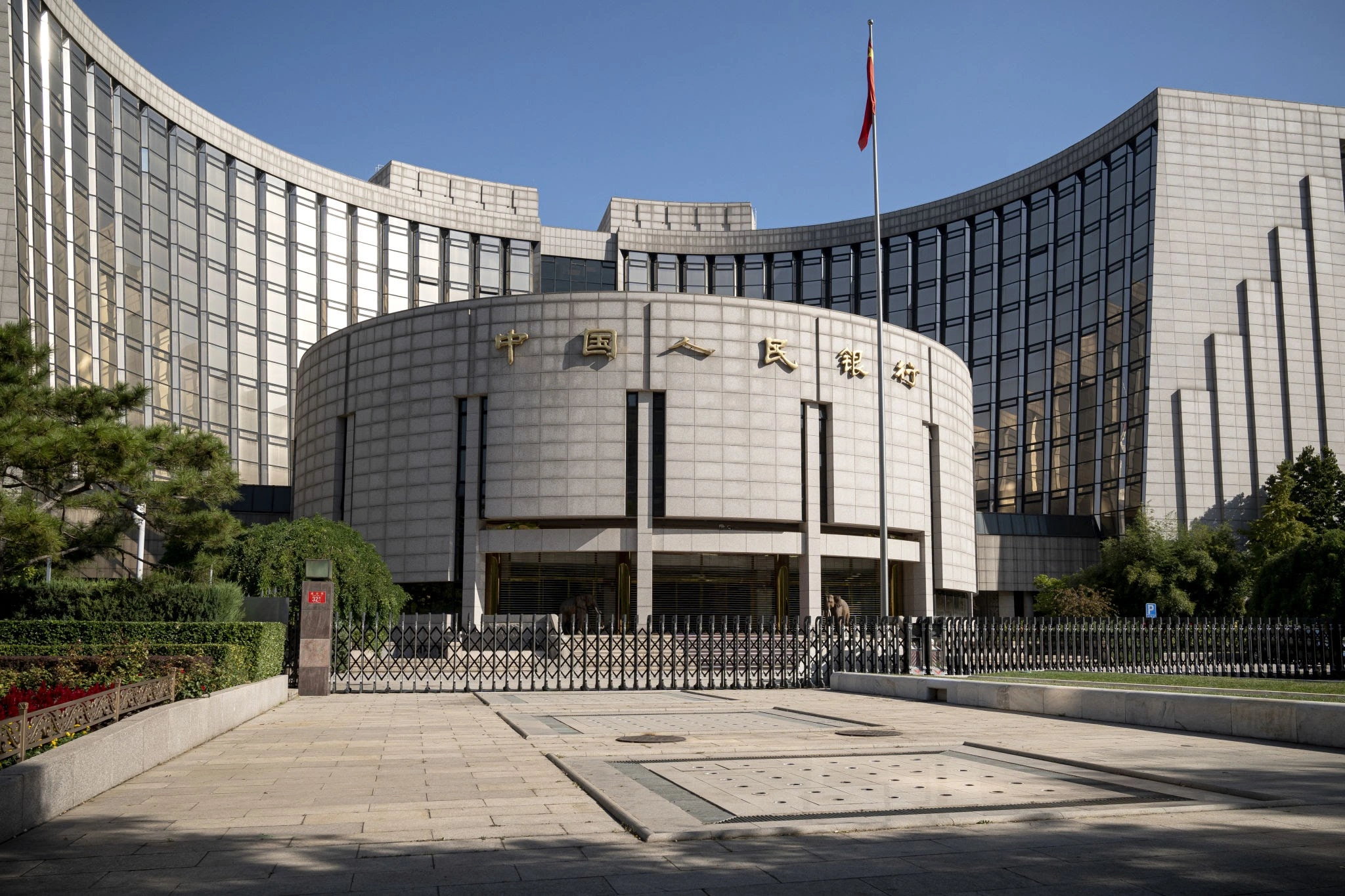
- The Fiscal Dilemma: China’s local government hidden debt (off-balance-sheet LGFV liabilities) is estimated by the International Monetary Fund (IMF) to exceed 60 trillion yuan (~US$8.4 trillion).
- The Vanishing Window: Ultra-low benchmark interest rates and weak price indices offer Beijing an ideal window to swap high-cost, short-duration local liabilities for long-duration central sovereign bonds.
- The Risk of Delay: Waiting until inflation rebounds or global monetary policy tightens will significantly increase debt-servicing burdens and squeeze commercial bank margins.
- Structural Reform Needed: Refinancing alone is insufficient; Beijing must overhaul central-local tax distribution to prevent new hidden debts from accumulating.
1. The Perishable Window: Why Low Inflation Is a Double-Edged Sword
Prominent Chinese economic advisors are urging Beijing to capitalize on the country’s prevailing low-interest and soft-price environment to execute a comprehensive debt restructuring. According to research from the World Bank, China’s subdued consumer and producer price trends have created a rare, temporary period where sovereign issuance can be expanded with minimal immediate risk of runaway inflation or surging debt-servicing yields.
When price levels and market borrowing rates are low, the cost of issuing special central government bonds (Treasuries) is at historical troughs. By leveraging this environment, Beijing can absorb or refinance high-yield municipal obligations at fractions of their original servicing cost.
However, macroeconomists warn that this window is shrinking:
[Low Inflation & Low Yields] ──► [Lower Sovereign Issuance Costs] ──► [Ideal Debt Swap Window]
          │                                                                  │
          ▼ (If Delayed)                                                     ▼ (If Executed Now)
[Erosion of Local Revenues] ──► [Rising Default & Credit Risks]   ──► [Restored Fiscal Flexibility]
If Beijing delays central balance-sheet expansion, prolonged deflation risks further eroding local government tax revenues and land sales proceeds. Analysis from S&P Global Market Intelligence indicates that land sales revenues—historically accounting for up to 30% of municipal fiscal funds—have dropped significantly from their peak levels, leaving local authorities without the primary engine used to service off-balance-sheet vehicles.
2. The LGFV Mechanics: How Hidden Debt Stalls Regional Growth
The root of China’s fiscal challenge lies in Local Government Financing Vehicles (LGFVs)—special entities created by provinces and cities to finance public infrastructure without officially breaching central deficit caps.
The Anatomy of China’s Municipal Balance Sheet
- Official Municipal Debt: Directly tracked bonds subject to strict quota limits set by the National People’s Congress.
- Implicit / Hidden LGFV Debt: High-cost, off-balance-sheet bank loans, corporate bonds, and shadow banking products carrying implicit guarantees but yielding insufficient commercial returns.
As highlighted in a macroeconomic study by the Peterson Institute for International Economics (PIIE), when local debt-servicing costs outpace local economic growth, municipal governments are forced into fiscal austerity. This results in delayed civil service pay, cuts to public transit subsidies, and reduced local procurement—directly depressing domestic demand and compounding broader deflationary pressures.
3. The “Involution” Loop: Price Wars and Subsidized Capacity
A critical dynamic overlooked in conventional coverage is how local debt fuels industrial “involution” (内卷)—cutthroat, race-to-the-bottom price competition.
Faced with declining traditional tax revenues and mounting debt obligations, regional authorities frequently use local subsidies, cheap land allocation, and state-directed credit to prop up favored local manufacturing sectors (such as solar components, EV parts, and industrial chemicals).
┌────────────────────────────────────────────────────────────────────────┐
│                        THE INVOLUTION CYCLE                            │
├────────────────────────────────────────────────────────────────────────┤
│ 1. Local Debt Pressure  ──► Municipalities seek fast industrial GDP    │
│ 2. Target Subsidies     ──► Directed capital into local manufacturing  │
│ 3. Industrial Overcap   ──► Manufacturers overproduce to maintain scale  │
│ 4. Price Wars (CPI/PPI) ──► Deflationary pressure squeezes margins     │
│ 5. Lower Tax Revenues   ──► Debt burden expands relative to revenue    │
└────────────────────────────────────────────────────────────────────────┘
According to sector reporting from Rhodium Group, this localized credit allocation keeps unproductive firms afloat, floods domestic markets with overcapacity, and drives price deflation across industrial outputs. To break this loop, economists argue that Beijing must restrict local industrial subsidies while substituting them with direct central transfers to households.
4. Policy Roadmap: How Beijing Can Safely De-Risk Local Liabilities
To outperform past partial debt swaps, top financial experts recommend a coordinated four-point execution plan:
| Strategic Pillar | Action Item | Target Economic Outcome |
| 1. Central Balance Sheet Expansion | Issue Ultra-Long Special Sovereign Bonds to swap LGFV debt into central debt. | Reduces aggregate interest payments by hundreds of billions of yuan annually. |
| 2. Commercial Bank Shielding | Structure interest rate cuts alongside targeted PBoC liquidity injections. | Protects bank Net Interest Margins (NIMs) from lower bond yields. |
| 3. Tax Revenue Sharing Reform | Rebalance the 1994 tax-sharing system to allocate a higher tax share to local authorities. | Permanently aligns municipal spending obligations with recurring revenue. |
| 4. Consumption-Focused Stimulus | Shift state expenditures from physical infrastructure to social security, healthcare, and income support. | Unlocks household savings and drives organic demand-led reflation. |
Reports from the Organisation for Economic Co-operation and Development (OECD) emphasize that structural fiscal reform—specifically updating the distribution of revenues between Beijing and provincial capitals—is necessary to prevent local governments from simply building new hidden debt after the current swap is completed.
5. Global Implications for Investors and Markets
For international markets, China’s decision to act decisively on local debt carries substantial weight:
- Commodity & Global Demand: Restructuring local debt allows municipalities to resume core public works and social spending, stabilizing demand for global industrial metals and capital equipment, as monitored by the Asian Development Bank.
- Currency and Yield Dynamics: As noted by analysis in the Financial Times and market coverage in Bloomberg News, a central government debt swap reduces tail-risk in China’s financial sector, offering long-term stability for the Renminbi (RMB) even as benchmark rates remain low.
- Banking Sector Relief: Replacing non-performing or low-yielding LGFV loans with sovereign-backed paper lowers credit risk weights for state banks, preserving regulatory capital buffers across the broader financial system.
Discover more from The Economy
Subscribe to get the latest posts sent to your email.

The World Bank’s June 2026 assessment carries a phrase that should stop any investor mid-scroll: a “lost decade” of development for many emerging markets.
Global growth is projected to slow from 2.9% in 2025 to 2.5% in 2026 — the lowest rate since the COVID-19 pandemic — amid weaker prospects for energy-importing economies and those directly affected by hostilities.
Within that aggregate, Asia is splitting into two distinct groups. Understanding which side an economy falls on is now the primary emerging-market allocation decision.
Key Takeaways
- Global growth: 2.5% in 2026, firming in 2027–28 as energy supplies recover and trade strengthens.
- The revision was brutal. January 2026 projected 2.6% with an upward revision; June cut it.
- India remains the outlier. FY2026-27 growth of 6.6%, rebounding to 7.2% in FY2027-28.
- China decelerates. Growth slowing to 4.4% in 2026 from 4.9%.
- The 2020s are on track to be the weakest decade for global growth since the 1960s.
The Two Reports That Define 2026
The World Bank publishes Global Economic Prospects twice a year, and the gap between the January and June 2026 editions is the story.
January: Cautious Optimism
The January report described a global economy proving more resilient than anticipated despite persistent trade tensions and policy uncertainty, with growth easing to 2.6% in 2026 before rising to 2.7% in 2027 — an upward revision from the previous June forecast.
About two-thirds of that upgrade came from the United States alone.
June: The Energy Shock
By June, the Middle East conflict had driven sharp energy price increases and the projection fell to 2.5%, with emerging market and developing economies facing the weakest per capita income growth since the pandemic.
The Bank explicitly notes that the conflict’s impact on global trade has been partly offset by robust AI-related investment, while consensus inflation expectations picked up notably following the energy price surge. Local-currency bond yields and external bond spreads remained higher in commodity importers.
That last sentence is the whole emerging-market thesis in one line: commodity importers are paying more to borrow at exactly the moment they need to borrow more.
Asia’s Two Tiers
| Economy | Projection | Position |
|---|---|---|
| India | 6.6% FY26-27, 7.2% FY27-28 | Domestic-demand-led, upgraded |
| China | 4.4% in 2026 (from 4.9%) | Export-supported, stimulus-dependent |
| EMDEs (all) | 4.0% in 2026 (from 4.2%) | Slowing |
| EMDEs excl. China | 3.7% in 2026 | Flat versus 2025 |
| United States | 2.2% in 2026 | Tax-incentive supported |
The EMDE-excluding-China figure of 3.7%, unchanged from 2025, is the number that matters most and gets quoted least. Strip out China, and the developing world is not slowing — it simply is not accelerating. Stagnation at a level too low to close income gaps.
The India Case
India stands apart in the June projections. Growth is projected to moderate to 6.6% in FY2026-27 — a 0.1 percentage point upgrade relative to January — before rebounding to 7.2% in FY2027-28, a 0.6 point upgrade.
The moderation reflects private demand cooling under input cost pressures. The rebound reflects structural factors:
- Trade agreements. Implementation of major FTAs with the EU, UK and Australia is described as crucial to offsetting cooling merchandise demand from traditional Western markets.
- FDI sustainability. Trade agreements and structural business reforms are expected to sustainably support inflows across the forecast horizon.
- Fiscal trade-offs. Lower fuel taxes and GST reforms temporarily erode the revenue base, requiring a shift toward slower public capex growth and current spending cuts to avoid deficit spikes.
That last point is the underappreciated risk. India’s growth upgrade is partly financed by revenue concessions that must eventually be reversed or absorbed.
The China Case
China’s projected slowdown to 4.4% in 2026 came with an upward revision of four-tenths of a percentage point from the previous June forecast, attributed to fiscal stimulus and increased exports to non-US markets.
That revision has since been validated by trade data. The question for 2027 is whether export strength can persist if global demand slows to the 2.5% pace the Bank projects.
China’s position is structurally different from India’s: externally driven where India is domestically driven, stimulus-dependent where India is reform-dependent.
What the “Lost Decade” Framing Actually Means
The World Bank’s language is deliberately stark. If current forecasts hold, the 2020s are on track to be the weakest decade for global growth since the 1960s and too low to avert stagnation and joblessness in emerging market and developing countries.
The distributional evidence is concrete: at the end of 2025, nearly all advanced economies enjoyed per capita incomes exceeding their 2019 levels, but about one in four developing economies had lower per capita incomes than before the pandemic.
Chief Economist Indermit Gill framed the underlying tension precisely: the global economy has become less capable of generating growth while appearing more resilient to policy uncertainty — a divergence he warned cannot persist without fracturing public finance and credit markets.
Investment Implications by Tier
Tier 1 — Energy importers in the technology value chain. India, Vietnam, Malaysia, Taiwan, Korea. AI-related export revenues offset higher energy costs. Currency and equity performance has held up.
Tier 2 — Energy exporters outside the conflict zone. Gulf states excluding those directly affected, parts of Africa and Latin America. Favourable terms of trade, fiscal space expanding.
Tier 3 — Energy importers outside the technology chain. Pakistan, Bangladesh, Sri Lanka, Kenya, much of Sub-Saharan Africa. Higher import bills, higher borrowing costs, no offsetting export windfall.
Tier 3 is where sovereign stress concentrates. Higher local-currency bond yields and wider external spreads in commodity importers mean refinancing costs rise as fiscal positions deteriorate.
What This Means for the Global Market in 2027
The 2027 recovery is conditional on two assumptions. Activity is expected to firm in 2027–28 as energy supplies recover and trade strengthens. Both require the conflict to de-escalate. Neither is guaranteed.
AI adoption is the identified upside. The Bank names artificial intelligence adoption, clean energy investment and regional trade agreements as potential long-term recovery catalysts. Only the first is currently delivering at scale.
Sovereign debt is the accumulating risk. Elevated yields in commodity importers compound every year they persist. A 2027 refinancing wave at current spreads would strain multiple frontier sovereigns simultaneously.
Regional trade agreements are the underrated policy lever. India’s FTA implementation is the clearest test case. If it delivers the projected FDI and export offset, it becomes a template for the rest of emerging Asia.
Compare the IMF and World Bank carefully. The Fund projects 3.0% for 2026; the Bank projects 2.5%. The difference is methodological — PPP versus market exchange rate weighting — not a disagreement about the world.
Frequently Asked Questions
What is the World Bank’s global growth forecast for 2026?
The June 2026 Global Economic Prospects projects global growth slowing to 2.5% in 2026, down from 2.9% in 2025 — the lowest rate since the pandemic.
What is India’s projected GDP growth?
India is projected to grow 6.6% in FY2026-27 before rebounding to 7.2% in FY2027-28, both upgrades relative to January 2026 projections.
Why are World Bank and IMF forecasts different?
The World Bank weights using market exchange rates while the IMF uses purchasing-power-parity weights, which gives more weight to faster-growing emerging economies.
What does “lost decade” mean for emerging markets?
The Bank warns the 2020s could be the weakest decade for global growth since the 1960s, with roughly one in four developing economies having lower per capita incomes at end-2025 than in 2019.
Discover more from The Economy
Subscribe to get the latest posts sent to your email.

Bitcoin & XRP 2026: Inside Crypto’s Institutional Era

Global Economy 2026: IMF Growth, AI Stocks & Market Risk

China’s Local Debt Race Against Time: Why Economists Demand Central Action Before the Deflation Window Closes

Money News: How to Protect Your Portfolio From Global Inflation

World Bank Projections: Emerging vs. Big Economies of Asia

IMF Reports 2026: What the Latest Data Means for the Global Economy

Singapore Stocks Outlook: A Safe Haven in the Asian Market?

China Stocks vs. Japan Stocks: Where Should You Invest in Late 2026?

VIX Index Explained: How to Trade Wall Street’s Fear Gauge Today

Commercial vs Residential Real Estate: Which Wins in 2026?

Presidential Stock Market Performance: How Trump’s Second Term Compares to History

2026 Real Estate Market News: Are We Heading for a Correction?

Bitcoin Price Forecast 2026–2027: Will the 4-Year Cycle Hold?

Fidelity Crypto vs. Traditional Brokerages: A Guide for Modern Investors

US-China Relations in Q3 2026: Trade Tariffs and Supply Chain Risks

Top 30 Stocks for Investment in PSX for Massive ROI in 2026

SpaceX Starship Flight 14: First Orbital Attempt & Starlink V3 Launch Explained

AI Chip Stocks 2026: The Best Semiconductor Investments Beyond Marvell

The 2026 Crypto Regulatory Shift: What It Means for Institutional Investors

Tween Back-to-School Trends 2026: What’s Driving the $85B Season

Fidelity Investments Review 2026: SPAXX Yields & Zero-Fee Funds

Oil Prices Break $100 in 2026: Middle East Conflict & Energy Markets

AI-Powered Training: The Next Multi-Billion Dollar Ecosystem in Fitness

10-Year Treasury Yield Hits 4.80%: What It Means for Rates & Portfolios

BRICS+ Cross-Border Payments 2026: Interoperability Explained

Shein Clothes Quality & Safety in 2026: What Lab Tests Show

MRVL Earnings 2026: Why Marvell Sank Despite Beating Estimates

China’s US$10.8 Billion Trade Shortcut: Why the Pinglu Canal Matters
-

 Markets & Finance9 months ago
Top 15 Stocks for Investment in 2026 in PSX: Your Complete Guide to Pakistan’s Best Investment Opportunities
-

 Analysis7 months ago
Johor’s Investment Boom: The Hidden Costs Behind Malaysia’s Most Ambitious Economic Surge
-

 Analysis7 months ago
Top 10 Stocks for Investment in PSX for Quick Returns in 2026
-

 Analysis8 months ago
Brazil’s Rare Earth Race: US, EU, and China Compete for Critical Minerals as Tensions Rise
-

 Banks8 months ago
Best Investments in Pakistan 2026: Top 10 Low-Price Shares and Long-Term Picks for the PSX
-

 Investment8 months ago
Top 10 Mutual Fund Managers in Pakistan for Investment in 2026: A Comprehensive Guide for Optimal Returns
-

 Global Economy9 months ago
15 Most Lucrative Sectors for Investment in Pakistan: A 2025 Data-Driven Analysis
-

 Global Economy9 months ago
Pakistan’s Export Goldmine: 10 Game-Changing Markets Where Pakistani Businesses Are Winning Big in 2025