
AI
When Work Becomes Optional: Inside the High-Stakes Debate Over AI, Jobs, and Universal Basic Income

The world’s most influential technologists are making predictions that sound like science fiction—except the UK government is now preparing for them to come true.
On a gray January morning in London, Lord Jason Stockwood, the UK’s Investment Minister, uttered words that would have seemed unthinkable a decade ago. Speaking to journalists about the government’s economic strategy, he didn’t just acknowledge that artificial intelligence might displace workers—he suggested the state should prepare to pay them anyway. “Universal basic income,” Stockwood said, “may become necessary as a buffer against AI-related job losses.”
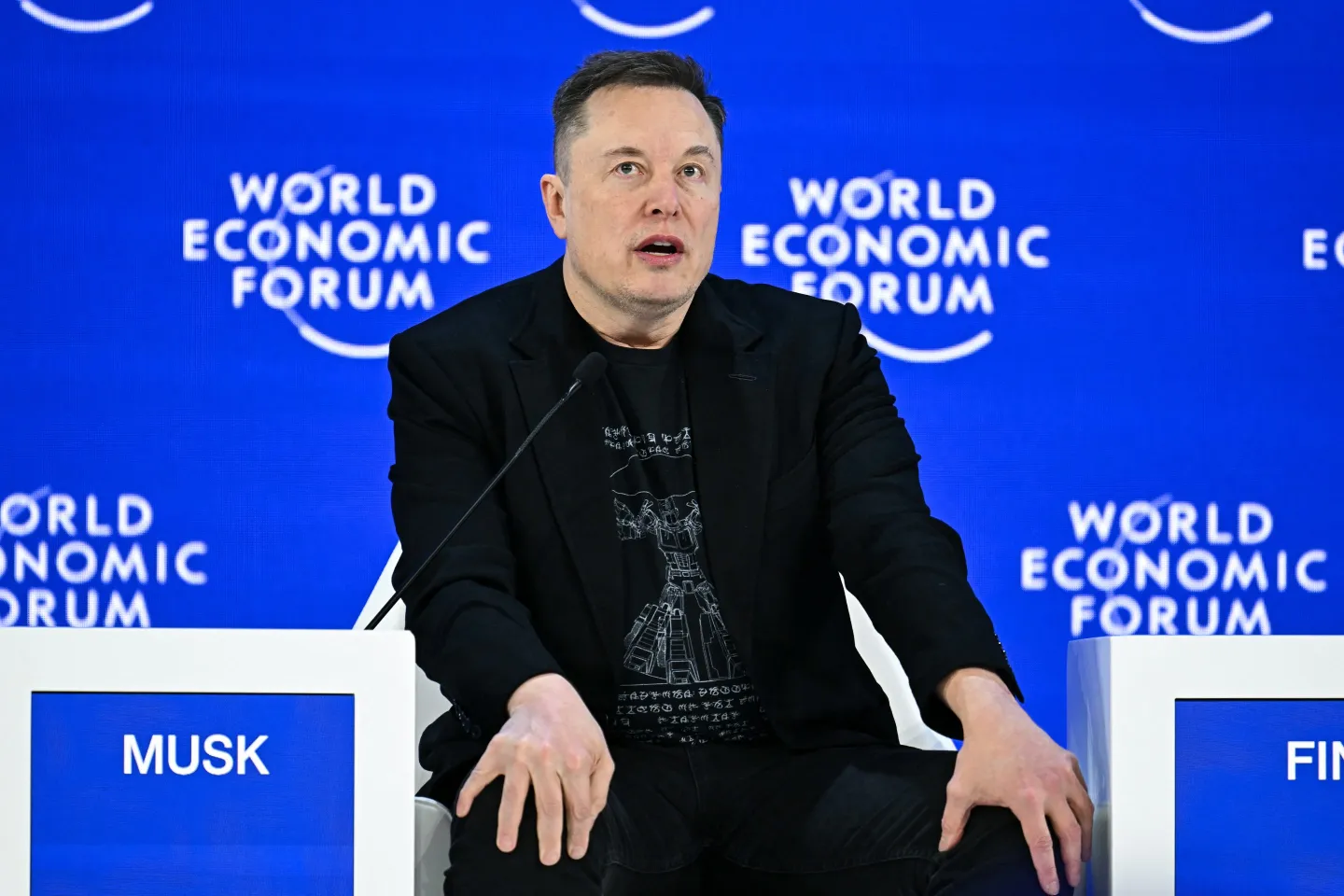
The timing was striking. Just days earlier, Dario Amodei, CEO of leading AI company Anthropic, had published a sobering essay warning of “unusually painful” disruptions to the labor market. And at the U.S.-Saudi Investment Forum, Tesla CEO Elon Musk doubled down on his most audacious prediction yet: within 10 to 20 years, work itself will become optional, rendered obsolete by an army of intelligent machines.
These aren’t fringe voices. Between them, Amodei and Musk represent the vanguard of an industry reshaping civilization at breakneck speed. When they speak about the future of work, markets listen—and increasingly, so do governments. The question is no longer whether AI will transform employment, but how violently, how quickly, and whether our social systems can absorb the shock.
The Prophecy of Abundance
Elon Musk has never been accused of modesty in his forecasts, but his vision for humanity’s robot-powered future reaches beyond even his typical grandiosity. At January’s investment forum, he painted a picture of radical abundance: robots outnumbering humans, providing healthcare, manufacturing goods, even offering companionship. In this world, Musk suggested, traditional concepts of employment and retirement savings become relics of a scarcer age.
“Money will be irrelevant,” Musk told the assembled investors and dignitaries, according to Forbes. Instead, he proposed a system of “universal high income”—a twist on universal basic income that envisions not mere subsistence, but prosperity for all, funded by the extraordinary productivity of artificial intelligence and automation.
It’s a seductive vision, echoing the utopian promises that have accompanied every technological revolution since the Industrial Revolution. But Musk’s timeline—suggesting this transformation could arrive within two decades—has moved the conversation from theoretical to urgent. If he’s even partially correct, today’s twenty-year-olds may never experience what previous generations understood as a “career.”
The Warning Signs Are Already Here
While Musk describes a paradise of leisure, Dario Amodei’s January essay struck a more somber note. The Anthropic CEO, whose company develops some of the world’s most sophisticated AI systems, warned that the transition would be far from painless. His research suggests that AI could displace up to 50% of entry-level white-collar jobs within the next several years—positions in customer service, data entry, basic analysis, and administrative support that currently employ millions.
More troubling, Amodei cautioned about the creation of what he termed an “underclass”: workers whose skills become economically obsolete faster than they can retrain, caught in a no-man’s-land between the old economy and the new. “The disruption will be unusually painful,” he wrote, “because it will affect educated workers who believed their college degrees insulated them from automation.”
The data supports his concern. A recent analysis by The Guardian found that AI-powered tools have already begun replacing junior analysts, paralegals, and entry-level programmers at major corporations. Unlike previous waves of automation that primarily affected manufacturing, this disruption targets the very jobs that have anchored the middle class for generations.
Goldman Sachs estimates that generative AI could eventually affect 300 million full-time jobs globally, while a World Economic Forum study suggests that 85 million jobs may be displaced by 2025—a threshold we’re now crossing. Yet the same studies predict AI could create 97 million new roles, though these positions will demand entirely different skill sets.
UBI: From Fringe Idea to Government Policy
This is where Lord Stockwood’s comments become significant. Universal basic income—a government-guaranteed payment to all citizens regardless of employment status—has migrated from the domain of Silicon Valley dreamers and academic economists into the halls of Westminster.
The UK minister’s endorsement, reported by The Financial Times, represents a watershed moment. Britain joins a growing list of governments experimenting with or seriously considering UBI as AI anxiety intensifies. Finland ran a two-year trial giving 2,000 unemployed citizens €560 monthly. Spain introduced a “minimum vital income” during the pandemic and made it permanent. Kenya’s GiveDirectly program has provided unconditional cash transfers to thousands of villagers, offering data on how guaranteed income affects work behavior.
The results from these experiments are nuanced. Finland’s recipients reported higher well-being and reduced stress, but employment rates didn’t significantly change. Spain’s program lifted thousands from extreme poverty. Critics, however, point to costs—a full UBI for all UK adults could run upward of £300 billion annually, roughly half the entire government budget.
Yet advocates argue this framing misses the point. “We’re not talking about charity,” explained Guy Standing, professor of development studies at SOAS University of London, in an interview with CNBC. “We’re talking about sharing the dividend of productivity gains that AI will create. If machines are doing the work, who owns the value they generate?”
The Economic Paradox of Automation
Here lies the central tension in this debate: AI promises unprecedented wealth creation, but the path from here to there may be economically brutal. History offers cautionary tales. The first Industrial Revolution eventually raised living standards dramatically, but only after decades of worker immiseration, child labor, and social upheaval that sparked revolutions across Europe.
Can we navigate this transition more humanely? The optimistic case rests on several assumptions. First, that AI productivity gains will be so enormous they can fund generous social programs—Musk’s “universal high income” scenario. Second, that displaced workers will find new purpose in creativity, care work, and pursuits currently undervalued by markets. Third, that political systems will prove capable of redistributing AI-generated wealth before social cohesion collapses.
Each assumption faces serious challenges. Tech companies have shown limited enthusiasm for sharing profits beyond their shareholders and top employees. The gig economy demonstrated how quickly new technologies can create precarious, low-wage employment rather than broadly shared prosperity. And political gridlock in many democracies raises questions about whether governments can act swiftly enough.
“The technology is moving faster than our institutions,” observed Sarah Roberts, professor of information studies at UCLA, speaking to The Economist. “We’re trying to address 21st-century problems with 20th-century policy tools.”
What Work Means Beyond a Paycheck
Perhaps the deepest question isn’t economic but existential: if work becomes optional, what happens to human purpose? For most of recorded history, identity has been inseparable from occupation. We ask new acquaintances, “What do you do?” We measure self-worth through productivity. Retirement, despite being desired, often brings depression and declining health as people lose structure and meaning.
Musk’s vision assumes humans will readily embrace lives of leisure and self-directed pursuit. But behavioral economics suggests otherwise. Studies of lottery winners show many return to work despite financial independence. The unemployed report lower life satisfaction even when they’re financially secure. Work provides not just income but social connection, status, daily routine, and a sense of contribution.
This cultural dimension rarely appears in debates about AI and jobs, yet it may prove as significant as the economics. Scandinavia’s social democracies, which rank highest on happiness indices, have strong work ethics and high employment rates alongside generous safety nets. Their model suggests humans need both economic security and meaningful engagement—not one or the other.
Navigating the Uncertain Road Ahead
As AI capabilities accelerate—OpenAI’s GPT-4, Google’s Gemini, and Anthropic’s Claude already demonstrate reasoning abilities that seemed impossible five years ago—the scenarios outlined by Musk and Amodei grow more plausible. The question facing policymakers isn’t whether to prepare for labor market disruption, but how aggressively.
Several strategies are emerging:
Aggressive retraining programs that help workers transition into AI-resistant fields like healthcare, skilled trades, and creative work. Singapore’s SkillsFuture initiative provides citizens with education credits throughout their careers, a model other nations are examining.
Conditional basic income that provides support tied to education, community service, or job searching—a middle ground between traditional welfare and universal payments.
Robot taxes to fund transition programs, though economists debate whether taxing productivity is wise policy.
Reduced working hours, spreading available employment across more people while maintaining income levels—an idea gaining traction in trials across Europe.
Stakeholder capitalism models that give workers and communities ownership stakes in AI companies, ensuring they benefit from productivity gains.
Each approach has merits and drawbacks. What’s increasingly clear is that doing nothing—assuming markets will self-correct—courts social catastrophe. When Anthropic’s CEO and the UK’s Investment Minister align on the severity of coming disruptions, dismissing concerns as alarmist becomes harder to justify.
A Future Worth Working Toward
The convergence of Musk’s techno-optimism, Amodei’s cautionary warnings, and Stockwood’s policy proposals marks a pivotal moment. For the first time, the prospect of AI fundamentally restructuring the labor market has moved from speculative fiction to active government planning.
Whether work becomes truly optional in our lifetimes remains uncertain. The path from today’s economy to Musk’s abundance society—if such a destination exists—will be neither smooth nor automatic. Technology alone won’t determine outcomes; political choices about distribution, education, and social support will matter as much as algorithmic breakthroughs.
What we’re witnessing isn’t just an industrial transformation but a negotiation over the future terms of human existence. Will AI create a world where robots free humanity to pursue higher callings, or one where displaced workers compete for shrinking opportunities while wealth concentrates among algorithm owners? The answer will depend less on the capabilities of our machines than on the wisdom of our choices in these formative years.
As we stand at this crossroads, one thing is certain: the conversation that began in Silicon Valley boardrooms has escaped into parliaments and living rooms worldwide. The future of work isn’t being decided by technologists alone anymore—and that, perhaps, is the most hopeful development of all.
Discover more from The Economy
Subscribe to get the latest posts sent to your email.



Oracle reports fiscal Q1 2027 earnings on September 10, 2026, the first test of whether the company’s pivot from legacy database vendor to hyperscale AI infrastructure provider can sustain the growth rate management itself guided to just three months ago. The stakes are unusually high: Oracle is guiding to the fastest quarterly revenue growth in its recent history, backed by a $638 billion order backlog that now anchors nearly every bull and bear argument on the stock.
The Setup Heading Into Q1 FY2027
Oracle closed fiscal 2026 with record numbers that reset the market’s understanding of its growth ceiling:
| Metric | FY2026 Q4 (Reported) | FY2027 Q1 (Guided/Consensus) |
|---|---|---|
| Total Revenue | $19.18B (+21% YoY) | ~$19.13B, guided 27–29% YoY growth |
| Cloud Infrastructure (OCI) Revenue Growth | +93% YoY | Guided 58–64% cloud growth |
| Adjusted EPS | $2.11 (beat $1.96 consensus) | Guided $1.72–$1.76 |
| Remaining Performance Obligations (RPO) | $638B | — |
| FY2027 Capex Guidance | Up to $95B | — |
The headline figure investors keep returning to is the $638 billion RPO — Oracle’s contracted-but-not-yet-recognized revenue — which includes a five-year, $300 billion cloud-computing agreement with OpenAI. That single contract now anchors a meaningful share of Wall Street’s bull case, and just as prominently, its bear case: multiple analysts have flagged that nearly half of Oracle’s contracted revenue traces back to one AI-lab counterparty, concentrating execution risk if OpenAI’s own capital plans shift.
Why the Market Is Split on Valuation
Sentiment on ORCL has bifurcated sharply over 2026:
- The bull case rests on Oracle’s transformation into critical AI-training infrastructure. J.P. Morgan has maintained an Overweight rating, arguing the buildout thesis extends beyond raw infrastructure into cloud applications and database modernization — a “diversified growth” argument meant to counter the OpenAI-concentration criticism. Consensus analyst price targets run as high as $400, with a mean around $253, implying substantial upside from levels near $160.
- The bear case centers on financing risk. Oracle raised $43 billion in debt and $5 billion in equity in fiscal 2026 alone, and management has guided to roughly $40 billion in additional financing for fiscal 2027 — including a previously announced $20 billion at-the-market equity issuance. Combined with capex guidance of up to $95 billion, that spending pace has pushed free cash flow negative, a structural feature bears argue the market has under-priced relative to Oracle’s historically conservative balance sheet.
Oracle stock dropped roughly 7% after-hours following its June 2026 fiscal Q4 report, despite beating on both revenue and earnings — a reaction driven almost entirely by the market reading an unchanged full-year revenue outlook as a signal that AI-driven demand might be plateauing relative to hyperscaler peers who had raised their own guidance more aggressively in the same window.
What to Watch in the September 10 Report
- Cloud infrastructure (OCI) growth cadence. Guidance calls for 58–64% growth — a deceleration from Q4’s 93%, but off a much larger base. Any print materially below that range would revive the demand-plateau narrative that hit the stock in June.
- RPO conversion. Investors will scrutinize how much of the $638 billion backlog is converting into recognized revenue on schedule, since the entire bull thesis depends on data-center capacity coming online fast enough to bill against signed contracts.
- Financing disclosures. With another ~$40 billion in planned fiscal 2027 financing, any update on debt terms, equity dilution pace, or credit-rating commentary will move the stock independent of the topline numbers.
- Customer concentration commentary. Any additional color on the OpenAI relationship, or disclosure of new large enterprise commitments (Oracle signed $67 billion in new AI infrastructure contracts in Q4 alone, including four customers each committing more than $8 billion), will factor into how analysts model durability of the RPO figure.
- Government and enterprise contract wins. Oracle secured a $400 million, 10-year federal contract in mid-2026, part of a broader push into public-sector cloud that diversifies revenue away from pure hyperscaler-AI exposure.
Institutional Investor Framework
For portfolio construction purposes, Oracle now trades less like a legacy enterprise software name and more like AI infrastructure peers (Nvidia, Broadcom, hyperscaler capex plays). That reclassification matters for valuation multiples: applying a 20–22x multiple to elevated fiscal 2028 earnings estimates supports price targets in the $240–$250 range cited by several sell-side desks, implying meaningful upside from current levels if execution holds — but also meaning the stock now carries the multiple compression risk associated with capex-heavy AI infrastructure plays broadly, not just software-company risk.
Bottom Line
Oracle’s September 10 fiscal Q1 2027 report is a referendum on whether 27–29% guided revenue growth and 58–64% cloud growth are achievable without further financing-driven balance sheet strain. The $638 billion RPO remains the single most important number in the Oracle thesis — both as the source of extraordinary growth visibility and as the concentration risk that keeps institutional bears engaged even as price targets on the Street continue to climb.
Discover more from The Economy
Subscribe to get the latest posts sent to your email.

The 2026 AI governance conversation has largely been framed as a contest between great powers — the United States, China, and the European Union pursuing incompatible regulatory visions. That framing captures only part of the picture. A parallel and increasingly consequential dynamic involves non-state actors — from terrorist organizations exploiting open-weight AI models to civil society groups and industry consortia shaping the rules themselves — operating both as subjects of the emerging global guardrail push and, in some cases, as active participants in building it.
Key Takeaways
- The UN’s Global Dialogue on AI Governance and Independent International Scientific Panel on AI, launched from the 2024 Global Digital Compact, convened its first substantive session in Geneva in 2026 — described by the Council on Foreign Relations as a test of whether global AI governance can move beyond fragmented national approaches.
- A benchmark pilot by Tech Against Terrorism found that almost one-third of AI model responses provided meaningful uplift when prompted to assist malicious actors preparing terrorist activity, despite existing guardrails — and researchers assessed that guardrails are likely removable for all open-weight models, a structural, not merely operational, vulnerability.
- Recorded drone strike events rose 115-fold between 2018 and 2025, with 565 distinct armed groups — including non-state actors and criminal networks alongside state militaries — carrying out at least one drone attack in that period, according to the 2026 Global Peace Index.
- AI-enabled target-to-fire times have compressed from roughly a day using 1990s cruise missile systems to as little as five seconds with autonomous selection systems now in active use in conflicts including Ukraine — a compression the Global Peace Index explicitly warns is outpacing the international legal and diplomatic frameworks needed to govern it.
- A May 2026 terrorism case filed by India’s National Investigation Agency documented a defendant linked to al Qaeda in the Indian Subcontinent using YouTube and ChatGPT to learn improvised explosive device construction and mixture ratios — illustrating how AI reduces informational friction for less experienced non-state actors even as researchers note operational execution barriers remain significant.
Two Distinct Meanings of “Non-State Actors” in the 2026 AI Governance Debate
Precision matters here, because “non-state actors” spans two substantively different categories in current policy discourse, each with distinct guardrail implications.
Non-state actors as governance participants include large technology companies (Google, Meta, Microsoft, and others), multistakeholder organizations like the Partnership on AI, and civil-society watchdog groups such as the Civil Liberties Union for Europe — entities with formal or informal access to shape AI regulatory processes at the OECD, the EU, and increasingly at the UN level. Research on this dimension has found that large tech companies possess the monetary resources and technical expertise to actively promote their regulatory preferences within legislative and bureaucratic processes, while civil society organizations have played a documented, vocal role in specific negotiations — including the EU AI Act process.
Non-state actors as security threats include terrorist organizations, insurgent groups, criminal networks, and militias exploiting increasingly accessible AI capabilities to enhance operational effectiveness — the category most directly implicated in the “global guardrails” security debate, and the focus of the remainder of this analysis.
The Democratization Problem: Why Open-Source AI Changes the Threat Calculus
A recurring, structural concern across 2026 security research is that the proliferation of sophisticated open-source AI models has lowered the barrier to entry for non-state actors — including terrorist groups and armed militias — to acquire meaningful operational capability. Open-source and commercial foundation models can be repurposed relatively easily for military or paramilitary applications, a dynamic that Belfer Center research explicitly warns contributes to a “race to the bottom” on safety and reliability standards among both states and non-state actors competing for tactical or strategic advantage from early adoption.
The severity of this concern is directly quantified by a 2026 benchmark pilot from Tech Against Terrorism, which found that almost one-third of AI model responses provided meaningful uplift when prompted to assist malicious actors preparing terrorist activity — despite guardrails explicitly designed to prevent exactly this outcome. The research’s most strategically significant finding is not the uplift rate itself but the assessment that guardrails are probably removable for all open-weight models, meaning the release of a capable open-weight model is potentially catastrophically irreversible from a governance standpoint: once released, the safety measures built into the model cannot be reliably re-imposed by any subsequent regulatory action.
Documented Cases: From Tactical Planning to Explosive Device Instruction
The 2026 evidence base for non-state actor AI exploitation has moved from theoretical concern to documented case material. CSIS research cites a May 2026 charge sheet filed by India’s National Investigation Agency in connection with a November 2025 bombing in Delhi, in which the accused principal — linked to al Qaeda in the Indian Subcontinent — reportedly used YouTube and ChatGPT to learn how to construct an improvised explosive device and determine correct mixture proportions.
Separately, reporting drawing on the 2026 Global Terrorism Index describes AI reportedly helping a designated terrorist organization refine unit sizing, protect explosive components delivered by drone, and plan raids with greater tactical precision — part of a broader pattern the 2026 Global Peace Index frames not as AI inventing new categories of violence, but as making existing violence more efficient. This distinction matters directly for governance strategy: if AI is primarily an efficiency multiplier on existing threat patterns rather than a source of categorically new threats, the governance priority becomes controlling the technology’s diffusion pathways rather than searching for entirely novel threat vectors.
Importantly, CSIS research also notes meaningful operational limits remain: violence is difficult to execute successfully, and untrained individuals frequently fail during operational execution due to stress, inexperience, poor tradecraft, or logistical shortcomings that AI assistance does not eliminate. Advanced terrorist operations still typically require organizational trust, coordination, operational security, financing, and real-world experience that AI-generated technical instructions alone cannot substitute for.
The Speed Problem: Autonomous Systems and the Governance Gap
Beyond informational uplift for individual actors, the 2026 Global Peace Index identifies a second, more systemic non-state actor dynamic: the militarization of AI in ongoing conflicts, where target-to-fire times have compressed dramatically — from approximately a day using 1990s-era cruise missile systems to as little as five seconds with autonomous target-selection systems now in active use in conflicts including Ukraine. Recorded drone strike events rose 115-fold between 2018 and 2025, with 565 distinct armed groups — a category explicitly including non-state actors and criminal networks alongside state militaries — carrying out at least one documented drone attack during that period.
The Global Peace Index’s central warning is structural: this speed of technological change is arriving well ahead of the international legal and diplomatic frameworks needed to govern it, creating a widening gap between what autonomous and semi-autonomous systems can now do operationally and what international oversight mechanisms exist to meaningfully constrain their use — a gap that applies with particular force to non-state actors operating outside the state-level arms control and export regimes that, however imperfectly, still apply some constraint to national militaries.
The Institutional Response: Building Global Guardrails in 2026
The primary multilateral response to this landscape has centered on the UN’s Global Dialogue on AI Governance, launched from the 2024 Global Digital Compact alongside a companion Independent International Scientific Panel on AI. UN Secretary-General António Guterres has framed the effort’s core rationale directly: no single country can see the full picture of AI risk alone, and shared understanding is necessary to build effective guardrails, unlock AI’s benefits, and foster cooperation. The Global Dialogue represents, per Council on Foreign Relations analysis, a genuine test of whether international AI governance can move beyond fragmented, incompatible national approaches toward a more coordinated and inclusive form — though early indications suggest not all countries support this coordinated model equally, and the effort unfolds against a backdrop of the EU’s rights-based regulatory approach, the US’s preference for voluntary standards, and China’s emphasis on state control existing in active tension with one another.
This tension matters directly for the non-state-actor security dimension: a genuinely global guardrail regime capable of constraining terrorist or criminal exploitation of AI capabilities requires exactly the kind of coordinated, cross-jurisdictional cooperation that great-power regulatory competition currently undermines. Smaller and developing states, meanwhile, gain a formal voice in these new UN-backed forums but remain structurally dependent on the small number of major powers that control the bulk of global AI talent, capital, and computing infrastructure — limiting their practical influence over how any eventual guardrail regime is designed and enforced.
Implications for Foreign Policy and Technology Governance Stakeholders
- Open-weight model release policy deserves treatment as an irreversible governance decision, not an incremental product choice. Given the finding that guardrails are likely removable from any open-weight model post-release, policy frameworks evaluating AI model release should weight this irreversibility explicitly rather than treating open-weight releases as equivalent in risk profile to controllable, API-gated model access.
- Governance frameworks should target diffusion pathways, not solely model capability. Since the 2026 evidence base suggests AI is primarily amplifying existing non-state actor threat efficiency rather than creating unprecedented threat categories, policy resources may generate more impact by controlling how capable models reach less-resourced or less-vetted actors than by attempting to cap frontier model capability alone.
- The autonomous-systems governance gap requires urgency independent of the broader UN Dialogue timeline. With target-to-fire compression already operational in live conflicts and 565 armed groups (including non-state actors) already engaged in drone warfare, the multilateral governance process’s more deliberate, consensus-building pace may not match the operational speed of the threat it aims to address.
- Civil society and industry non-state actors remain a meaningful, underutilized lever for governance influence. Given documented civil-society influence in processes like the EU AI Act negotiation, foreign policy and technology governance stakeholders should treat multistakeholder engagement — not only formal state-to-state negotiation — as a genuine channel for shaping eventual global guardrail design.
Frequently Asked Questions
Are terrorist groups actually using AI for operational planning in 2026?
Yes, with documented cases: a May 2026 Indian terrorism case involved a defendant who used ChatGPT and YouTube to learn explosive device construction, and broader reporting describes AI assisting a designated terrorist organization with unit sizing and raid planning — though researchers note significant operational execution barriers remain independent of AI assistance.
Can AI safety guardrails be removed from open-source models?
Research from Tech Against Terrorism’s 2026 benchmark pilot assessed that guardrails are likely removable for all open-weight AI models, making open-weight model releases a potentially irreversible governance risk once safety measures can no longer be reliably enforced post-release.
What is the UN doing about global AI governance in 2026?
The UN launched the Global Dialogue on AI Governance and an Independent International Scientific Panel on AI, stemming from the 2024 Global Digital Compact, aiming to build coordinated international guardrails — though the effort operates amid significant tension between the EU’s rights-based, the US’s voluntary-standards, and China’s state-control regulatory approaches.
Conclusion
The 2026 non-state actor dimension of AI governance defies a simple narrative: the same technology lowering barriers for terrorist groups to plan attacks with greater precision is also, through civil society and multistakeholder participation, actively shaping the emerging global guardrail frameworks meant to constrain that very misuse. With autonomous weapons systems already compressing target-to-fire times to single-digit seconds in live conflicts, and open-weight model guardrails assessed as fundamentally removable once released, the core tension facing foreign policy and technology governance stakeholders is one of speed: whether the deliberate, consensus-driven pace of UN-backed multilateral coordination can keep pace with a threat landscape that is, by the clearest available evidence, evolving considerably faster.
Discover more from The Economy
Subscribe to get the latest posts sent to your email.
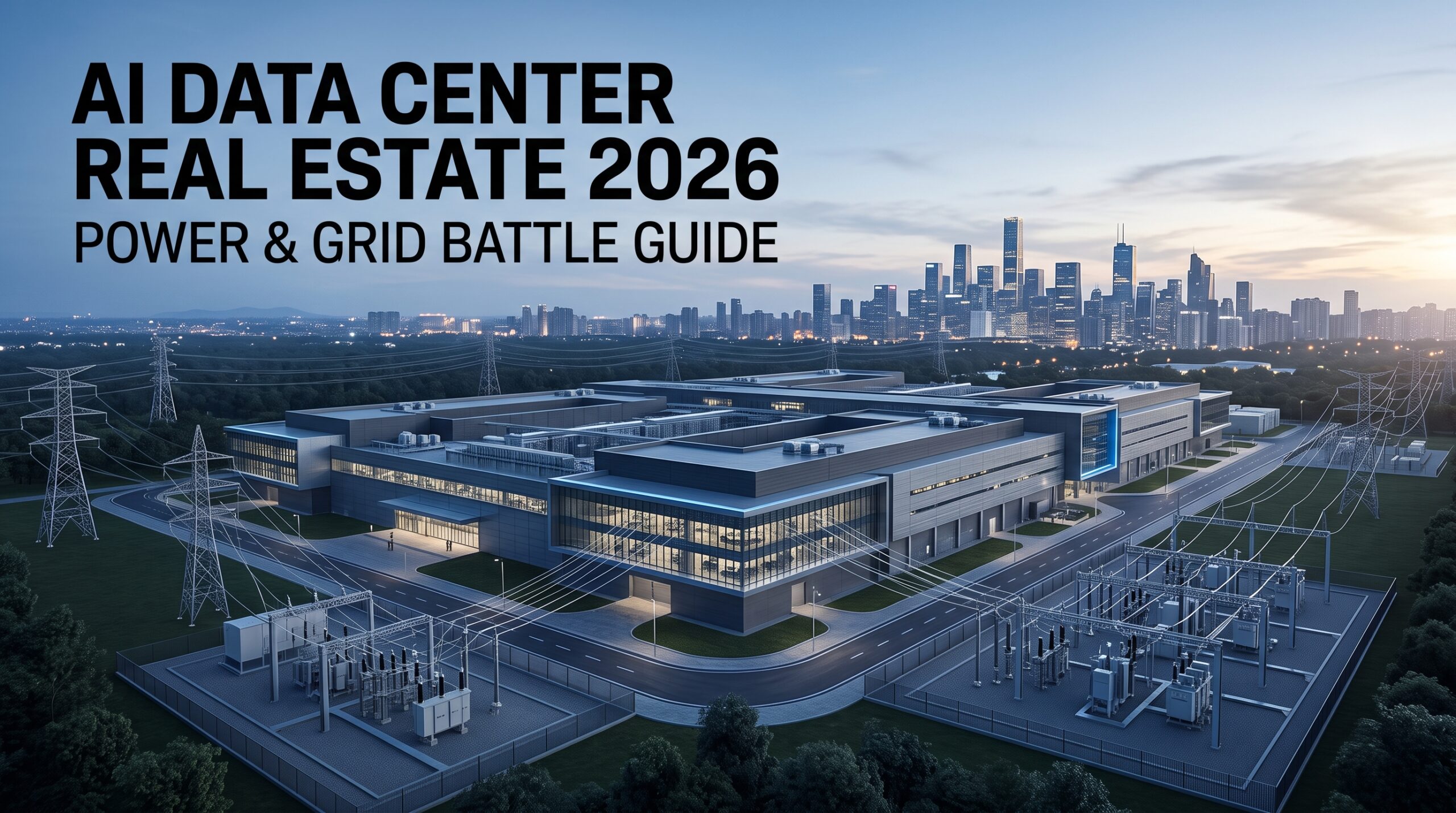
The AI data center boom has quietly redefined the fundamental axiom of commercial real estate. For decades, “location, location, location” meant proximity to tenants, transport links, and network connectivity. In 2026, for the specific asset class of AI data centers, it means something narrower and more binary: power, power, power. With combined hyperscaler capital commitments exceeding $300 billion across 2025 and 2026, the constraint on this boom is no longer capital, chips, or even land — it is the physical capacity of aging electrical grids, and increasingly, the willingness of local communities to host the infrastructure at all.
Key Takeaways
- Roughly 100 GW of new data center capacity is expected to come online globally between 2026 and 2030, representing an estimated $1.2 trillion in real estate asset value creation, with tenants likely spending an additional $1–2 trillion on IT fit-out.
- Power availability, not capital, is now the primary constraint on data center development, with grid interconnection approvals commonly taking up to four years — pushing developers toward “Bring-Your-Own-Power” (BYOP) solutions despite their added execution risk.
- Between 30% and 50% of large data centers scheduled to open in 2026 will be delayed or cancelled, according to Sightline Climate’s April 2026 report, with only 5 GW under active construction out of 16 GW announced.
- Local opposition blocked or delayed at least 75 data center projects worth roughly $130 billion in Q1 2026 alone — matching the entirety of 2025’s total — with polling showing 71% public disapproval of data centers sited in their own area.
- Geographic investment is actively shifting away from traditional hubs like Northern Virginia and London toward power-rich secondary markets such as Atlanta, Dallas-Fort Worth, Milan, and Frankfurt, alongside major moves like Microsoft’s $15.2 billion UAE commitment and Meta’s $10 billion Louisiana campus.
The Scale of the Boom — and Its New Bottleneck
The scale of hyperscaler capital deployment into AI infrastructure is difficult to overstate: Amazon, Microsoft, Google, Meta, and Oracle’s combined capital expenditure commitments for AI infrastructure across 2025 and 2026 exceed $300 billion, with the large majority flowing directly into data center construction. The power intensity of this new generation of infrastructure is itself unprecedented — a single AI training facility can require 100 to 500 megawatts of continuous power, comparable to the electricity demand of a small city, a load profile fundamentally different from the previous generation of cloud infrastructure that grid planners designed around.
The result, as documented across multiple 2026 industry analyses, is that power availability — not capital, technology, or even tenant demand — has become the single dominant constraint on the sector. Electrical grid interconnection approvals are commonly taking up to four years in constrained markets, a timeline mismatch that has made a critical distinction essential for real estate investors: a “will-serve” letter from a utility does not equal powered land. What matters contractually is a firm contract for transmission capacity by a specific date, or, in Bring-Your-Own-Power arrangements, actual in-hand air emission permits and secured fuel supply access.
Bring-Your-Own-Power: Solving the Grid Bottleneck at a Cost
Given four-year interconnection timelines, an increasing share of developers are pursuing Bring-Your-Own-Power (BYOP) solutions — building dedicated, often gas-fired, on-site generation rather than waiting on grid connection. This approach is far from simple: it requires navigating gas transmission siting, air emission permitting, and construction risk simultaneously, effectively pairing what would otherwise be a straightforward data center construction project with an entire additional power generation project layered on top — a dramatic increase in overall execution risk. Natural gas is expected to dominate data center power provisioning over the next five years specifically because of this permitting reality, even as nuclear energy attracts genuine hyperscaler offtake commitments from Microsoft, Google, and Amazon, tempered by the reality that new nuclear build timelines and cost-overrun risk remain material barriers to near-term deployment.
Parallel to BYOP, hyperscalers are pursuing direct energy procurement partnerships that bypass grid constraints entirely — Microsoft’s power purchase agreement structure with Brookfield Renewable Partners for 10.5 GW of dedicated capacity, and separate agreements securing dedicated wind power, both illustrate a broader strategic pivot from relying on the public grid toward securing proprietary, dedicated power generation.
Power, not capital, is the primary constraint on AI data center growth in 2026. Grid interconnection takes up to four years, causing 30-50% of scheduled 2026 data centers to be delayed or cancelled. Local opposition blocked $130 billion in projects in Q1 2026 alone, shifting investment toward power-rich markets like Atlanta and Dallas-Fort Worth.
The Delay and Cancellation Crisis: A Reality Check for Investors
The gap between announced data center capacity and actual construction progress has become a defining feature of the 2026 market. Sightline Climate’s April 2026 report found that between 30% and 50% of large data centers scheduled to open in 2026 will be delayed or cancelled, driven by power grid constraints, electrical equipment shortages, and community opposition acting in combination. Concretely, roughly 11 gigawatts of announced capacity showed no signs of construction activity as of the report despite typical build timelines of just 12 to 18 months, and only about 5 GW was under active construction against 16 GW of total announced capacity in the pipeline the report tracked.
Electrical equipment shortages compound the grid-access problem directly: high-power transformers now take 3 to 5 years to deliver, and switchgear availability has become similarly constrained — meaning even projects with secured power access can face multi-year delays on the electrical equipment needed to actually energize a facility.
Local Grid Battles: Consent as the Fourth Input
Perhaps the most underappreciated constraint on the 2026 AI data center boom is not technical at all — it is political. Data Center Watch’s tracking found that local opposition blocked or delayed at least 75 data center projects worth approximately $130 billion in the first three months of 2026 alone, a figure that roughly matches the entirety of opposition activity recorded across all of 2025. Public polling reinforces the scale of this resistance: 71% of respondents oppose siting a data center in their own area, with concerns centered on water use, energy consumption, noise, and the risk of rising local utility rates as data center demand strains shared grid infrastructure.
Industry analysis has begun explicitly framing this dynamic as a fourth required input for AI infrastructure development, alongside chips, power, and capital: “permission to operate.” Developers who fail to integrate community consent, concrete local benefit commitments, and ratepayer protections into project planning from the outset are finding that local trust — not financing or technical design — increasingly dictates project timelines and, in a growing number of cases, project viability altogether. State-level moratoria on new data center construction represent a genuine and growing risk absent better industry engagement with local and state stakeholders, or federal preemption of local authority.
Geographic Repricing: Where Capital Is Actually Flowing
The combined effect of grid constraints and community opposition is producing a measurable geographic reallocation of data center investment. Markets that can bring large amounts of power online quickly — Atlanta, Dallas-Fort Worth, and, internationally, Milan and Frankfurt — are seeing rising investment and rising vacancy pressure in the positive sense (demand outpacing available inventory), while traditional hubs like Northern Virginia and London face genuine grid constraints that are capping their growth trajectories despite continued strong tenant demand.
This shift is visible in headline capital allocation decisions: Microsoft’s $15.2 billion commitment in the UAE and Meta’s $10 billion campus in Louisiana both reflect a deliberate strategic pivot toward power-rich regions, a departure from the historical investment pattern that prioritized network connectivity and proximity to existing internet exchange infrastructure above nearly all other site-selection criteria.
Real Estate Investment Strategy Implications
- Site selection now requires power-first underwriting. CRE investors should treat confirmed, contracted transmission capacity — not a “will-serve” letter — as the baseline diligence requirement before valuing any proposed data center site.
- Infrastructure-adjacent industrial real estate is an emerging secondary opportunity. CRE sales volume is forecast to increase 15–20% in 2026, with industrial properties near electrical equipment manufacturers, substations, and utility corridors specifically outperforming the broader market as demand surges for transformer, switchgear, and battery manufacturing capacity.
- Community engagement diligence belongs in the underwriting model, not just the legal checklist. Given that $130 billion in projects faced opposition-driven delay or rejection in a single quarter, investors should price local political risk explicitly rather than treating permitting as a formality.
- Geographic diversification away from saturated primary hubs reduces both grid risk and opposition risk. Secondary markets with genuine power surpluses are absorbing capital specifically because they offer a faster path to energization, a factor now as financially material as traditional cap-rate considerations.
- Nuclear and BYOP exposure should be evaluated for execution risk, not just headline capacity. Offtake agreements with nuclear developers or BYOP gas generation commitments carry genuine multi-year execution and cost-overrun risk that should be reflected in return expectations, not treated as equivalent to grid-connected power.
Frequently Asked Questions
Why is power, not capital, the main constraint on AI data centers in 2026?
Grid interconnection approvals are commonly taking up to four years in constrained markets, while a single AI training facility can require 100–500 megawatts of continuous power — a load the existing grid infrastructure was not designed to accommodate at this scale or on this timeline.
How much of the announced 2026 data center capacity will actually be built on schedule?
According to Sightline Climate’s April 2026 report, between 30% and 50% of large data centers scheduled to open in 2026 will be delayed or cancelled, with only about 5 GW under active construction against 16 GW of announced capacity.
Is local opposition really stopping AI data center projects?
Yes — Data Center Watch tracked at least 75 projects worth roughly $130 billion delayed or rejected due to local opposition in the first quarter of 2026 alone, matching all of 2025’s opposition activity, with 71% of polled respondents opposing data centers in their own area.
Conclusion
The AI data center boom remains a genuine, well-capitalized real estate megatrend — the $1.2 trillion asset-value-creation forecast through 2030 is not in serious dispute among major research houses. But the 2026 data makes clear that the binding constraints on realizing that value have shifted decisively away from capital availability and toward two harder, slower-moving factors: physical grid capacity and local political consent. Real estate investment strategies that do not explicitly underwrite both of these factors — treating a “will-serve” letter as equivalent to powered land, or treating community opposition as a formality rather than a genuine fourth input alongside chips, power, and capital — are underwriting a version of this market that no longer exists.
Discover more from The Economy
Subscribe to get the latest posts sent to your email.

Macroeconomic Fallout of Middle Eastern Airspace Restrictions: Why U.S. Carriers Are Abandoning Gulf Hubs Through 2027

High-CPM Finance Niches 2026: Publisher Monetization Blueprint

IMF & World Bank 2026 Global Economic Outlook: Growth, Inflation, Debt

Pork Recall 2026: USDA Guanciale Listeria Recall in 8 States Explained

Zelda: Ocarina of Time Switch 2 Remake — Release Date & Everything Confirmed

Social Security Trust Fund 2032: OASI Depletion Timeline Explained

Oracle (ORCL) Stock Analysis: AI Cloud Growth Ahead of Sept 10 Earnings

2027 Social Security COLA: 3.5% Increase Explained

Non-State Actors and AI 2026: The Push for Global Guardrails

Mandatory Lobbying Registers 2026: Corporate Risk Guide

Beyond $100 Oil: Why the Geopolitical Shock at Hormuz Marks a Structural Turning Point

Digitally Deliverable Services: 56% of Global Trade in 2026

AI Data Center Real Estate 2026: Power & Grid Battle Guide

Smart Glasses Privacy Crisis 2026: Regulation & Compliance

State Farm’s $5B Dividend 2026: Who Qualifies & Payout Dates

US-China Relations in Q3 2026: Trade Tariffs and Supply Chain Risks

Gold’s Wild 2026: From a Record $5,600 Peak to a 24% Crash and Back Toward $4,500

Oil Surges as Strait of Hormuz Traffic Collapses Again

The Rocket That Won’t Quit: Inside SpaceX’s Falcon 9 Launch Machine

Bank of England Set to Hold Rates Through Year-End, Reuters Poll Shows

The 2026 Crypto Regulatory Shift: What It Means for Institutional Investors

SpaceX Starship Flight 14: First Orbital Attempt & Starlink V3 Launch Explained

Retail Earnings Week: What Home Depot, Target & Walmart Reveal

AI-Powered Training: The Next Multi-Billion Dollar Ecosystem in Fitness

AI Chip Stocks 2026: The Best Semiconductor Investments Beyond Marvell

Russia’s Black Sea Oil Exports Fall for a Fifth Straight Week

China’s Economy Has a Structural Problem: Factories Are Winning, Households Are Losing

Global Chip Selloff Deepens: What’s Driving the Aug. 19 Semiconductor Rout
-

 Markets & Finance8 months ago
Top 15 Stocks for Investment in 2026 in PSX: Your Complete Guide to Pakistan’s Best Investment Opportunities
-

 Analysis7 months ago
Johor’s Investment Boom: The Hidden Costs Behind Malaysia’s Most Ambitious Economic Surge
-

 Analysis7 months ago
Top 10 Stocks for Investment in PSX for Quick Returns in 2026
-

 Analysis7 months ago
Brazil’s Rare Earth Race: US, EU, and China Compete for Critical Minerals as Tensions Rise
-

 Banks8 months ago
Best Investments in Pakistan 2026: Top 10 Low-Price Shares and Long-Term Picks for the PSX
-

 Investment8 months ago
Top 10 Mutual Fund Managers in Pakistan for Investment in 2026: A Comprehensive Guide for Optimal Returns
-

 Global Economy9 months ago
15 Most Lucrative Sectors for Investment in Pakistan: A 2025 Data-Driven Analysis
-

 Global Economy9 months ago
Pakistan’s Export Goldmine: 10 Game-Changing Markets Where Pakistani Businesses Are Winning Big in 2025