
Business
Singapore’s ASEAN 2027 Chair: AI Strategy, SMEs & Digital Public Goods

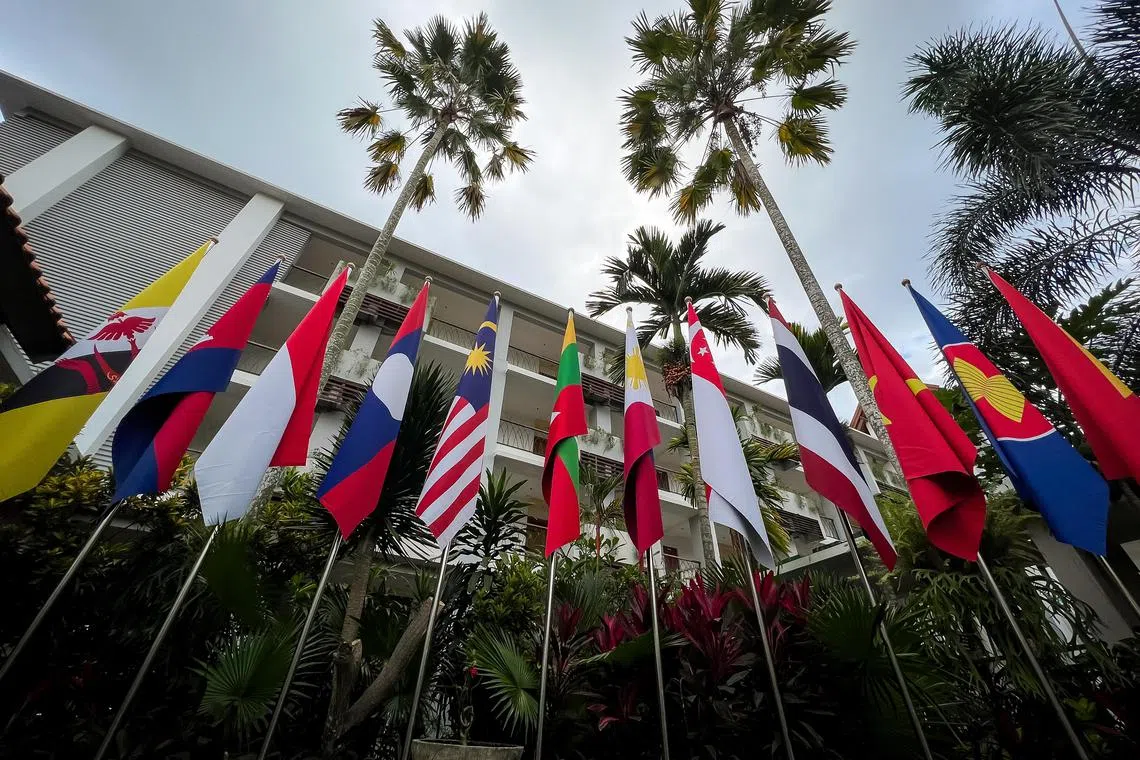
The question Southeast Asia has been unable to answer for three years is straightforward: who speaks for the region when artificial intelligence terms get negotiated? On June 17, 2026, Singapore signalled that it intends to be that voice. Speaking at the Asia Economic Summit in Jakarta, Minister for Digital Development and Information Josephine Teo declared that when Singapore assumes the ASEAN chairmanship in 2027, helping more businesses across the region adopt AI will be the centrepiece of its agenda. The announcement landed against a backdrop of genuine regional urgency — and some quietly mounting anxiety about what fragmentation in AI strategy will ultimately cost.
The Regional Landscape Singapore Is Stepping Into
Southeast Asia is not short of ambition. Its digital economy is expected to surpass US$300 billion in 2025, according to a joint report by Google, Temasek and Bain & Company, driven by e-commerce expansion and accelerating AI adoption. Data centre capacity across the region is on track to triple between 2025 and 2030. Undersea cable networks are expanding at pace.
Yet the infrastructure story obscures a governance gap that has grown wider, not narrower. The ASEAN Guide on AI Governance and Ethics, endorsed by digital ministers in February 2024, carries no binding obligations and no enforcement mechanisms. Meanwhile, the EU’s Artificial Intelligence Act — phased in between 2025 and 2027 — imposes mandatory conformity assessments and hard prohibitions on high-risk applications. The gap between these two frameworks is not merely regulatory. It is a bargaining power gap that every ASEAN member state eventually pays for when it sits across a table from a major technology vendor.
Into this landscape steps Singapore, with a track record as what the S. Rajaratnam School of International Studies (RSIS) has called a “connector country” — a state whose primary strategic interest lies in keeping channels open, standards interoperable, and cross-border processes predictable.
What Singapore Is Actually Proposing
Building Shared Digital Public Goods
At the core of Singapore’s 2027 agenda is an argument that much of the infrastructure supporting AI adoption need not be proprietary — and should not be. Minister Teo pointed to shared digital public goods as the mechanism for this: common policy templates, interoperability standards, and governance frameworks that smaller firms across the bloc can access and deploy without building from scratch.
This is not an abstract proposition. Singapore has been running this playbook domestically for years. Its linkage of PayNow with Thailand’s PromptPay demonstrated that cross-border payment interoperability can reduce friction in everyday commercial transactions. Its nationwide e-invoicing network — built on the Pan-European PEPPOL standard, making Singapore the first PEPPOL Authority outside Europe — showed that adopting shared infrastructure can create structural advantages for exporters. The theory now is that these models can be regionalised.
What does Singapore’s ASEAN chairmanship mean for AI policy?
Singapore’s 2027 ASEAN chairmanship is a strategic inflection point for regional AI governance. As the first chair under the new ASEAN Economic Community Strategic Plan 2026–2030, Singapore can set binding deliverables in cross-border data flows, SME-focused digital infrastructure, and AI governance alignment — converting the bloc’s voluntary ethics frameworks into operational architecture.
Teo also pushed back explicitly on what she described as a narrow interpretation of “AI sovereignty” — the idea that each country should own every layer of the AI stack, from chips and models to data pipelines and applications. She called this unrealistic for most ASEAN economies and potentially counterproductive: it would fragment investment, duplicate effort, and deny smaller firms access to tools they couldn’t build alone. “Collectively, we should help these small companies to thrive and to scale,” she said, “whether they are in Jakarta, Bandung, Hanoi, or Bangkok.”
Rallying SMEs at Scale
The emphasis on small and medium-sized enterprises is deliberate and data-grounded. Singapore’s own National AI Impact Programme, announced as part of the updated National AI Strategy (NAIS) in May 2026, commits to supporting 10,000 SMEs over three years to move from AI experimentation into operational integration. Singapore’s 2026 Budget extended this with a 400% tax deduction on qualifying AI expenditures under the Enterprise Innovation Scheme, capped at S$50,000 per year of assessment for 2027 and 2028.
The regional ambition scales that domestic effort outward. Teo indicated Singapore would build on the Philippines’ chairmanship in 2025, which initiated the ASEAN AI Safety Network — a regional platform for best-practice exchange and responsible AI standards. The Philippines’ mandate was to kick-start implementation; Singapore’s stated intent is consolidation and scaling.
Why 2027 Matters More Than It Looks
What Does Singapore’s ASEAN Chairmanship Mean for AI Policy?
Singapore’s 2027 ASEAN chairmanship represents a strategic inflection point for regional AI governance. As the first chair to operate under the new ASEAN Economic Community Strategic Plan 2026–2030, Singapore can set binding deliverables in cross-border data flows, AI governance alignment, and SME-focused digital public infrastructure — converting the bloc’s voluntary ethics frameworks into operational architecture.
That framing matters because 2027 is not a routine handover. The ASEAN Digital Economy Framework Agreement (DEFA), expected to be signed in November 2026, will be fresh law when Singapore takes the chair. Singapore will inherit both the momentum of a newly ratified pact and the political capital to determine how its provisions on data flows and AI governance get operationalised in the early years. That is a structural advantage that chairmanships rarely offer so cleanly.
Singapore’s own digital economy has grown from 17% of GDP in 2022 to close to 20% of GDP in 2024, according to RSIS research. That growth has been driven in meaningful part by cross-border interoperability efforts — exactly the toolkit Singapore now wants to export to the region. There is a self-reinforcing logic here: a more digitally integrated ASEAN creates more traffic and value through Singapore, which has made digital integration a core economic interest rather than a secondary policy preference.
Still, the gap between Singapore’s domestic capacity and that of ASEAN’s less digitally developed members is substantial. Vietnam, the Philippines, Indonesia, Thailand — each has launched its own AI strategy in recent years, but implementation depth varies considerably. The risk is that Singapore’s chairmanship agenda, however well-designed, runs ahead of the institutional capacity to absorb it across ten member states with divergent regulatory traditions.
The Compute and Infrastructure Equation
Singapore is also investing in hard infrastructure at scale. The ASPIRE 2B supercomputer at the National Supercomputing Centre Singapore is being expanded from 2026 as part of a planned national advanced compute and AI platform. A Digital Infrastructure Act, tabled in Parliament, will set baseline sustainability standards for data centres — positioning Singapore as the region’s benchmark for AI compute governance.
Data centre capacity tripling across ASEAN by 2030 sounds impressive. The picture is more complicated when you consider that most of that expansion is concentrated in Singapore, Malaysia, and to a growing extent Indonesia. The compute gap between these markets and ASEAN’s smaller economies — Cambodia, Laos, Myanmar — is not narrowing at any meaningful pace.
Second-Order Consequences: Who Benefits, Who Is Left Exposed
For multinational technology firms, Singapore’s chairmanship agenda is broadly good news. A push toward harmonised governance frameworks reduces compliance costs across markets. Cross-border data flow agreements reduce the legal friction that currently forces companies to structure regional data operations around the most restrictive national regimes. Singapore’s preference for interoperability over sovereignty makes ASEAN a more predictable operating environment.
For ASEAN’s SME base — the real target of Singapore’s programme — the calculus is more conditional. Access to shared digital public goods and AI tools has genuine transformative potential for a small manufacturer in Bandung or a logistics firm in Da Nang. But adoption requires more than access. It requires digital literacy, legal certainty about cross-border data use, and some confidence that the tools won’t become dependent on infrastructure controlled by external actors with conflicting interests.
That last point is where Singapore’s framing of “shared” infrastructure gets tested. Much of the AI stack that SMEs would access is built on foundation models and cloud infrastructure from a small number of American and Chinese technology firms. Singapore’s own US$743 million five-year AI research commitment, announced in February 2024, is impressive by regional standards. It is modest relative to the investment being deployed by the platforms whose tools the region is being encouraged to adopt.
For policymakers in ASEAN’s mid-tier economies — Malaysia, Vietnam, Thailand — the Singapore chairmanship offers something useful: a capable and trusted convening authority willing to do the technical legwork on governance frameworks that smaller secretariats lack the capacity to produce. Malaysia’s National AI Office, established in December 2025, and Vietnam’s domestic AI policy both point toward increasing appetite for regional coordination. Singapore, with its institutional depth and established bilateral frameworks with virtually every major technology power, is well-placed to broker that coordination.
The Case for Scepticism
Not everyone shares Singapore’s confidence that regional AI integration is the right strategic direction — or that Singapore is the right actor to lead it.
Some critics within ASEAN policy circles argue that the region’s digital fragmentation is not a coordination failure to be solved from above, but a rational response to genuinely different national circumstances. Indonesia, with a population of 280 million and deep concerns about data sovereignty, has legitimate reasons to approach cross-border data flow agreements cautiously. Myanmar, in a different situation entirely, is structurally excluded from any meaningful regional AI agenda regardless of what Singapore’s chairmanship produces.
There is also a legitimate concern about the geopolitical framing. Singapore has positioned itself as a model of “strategic neutrality” in the US-China technology contest. That neutrality has served it well diplomatically. But neutrality has limits when the infrastructure decisions being made — on compute access, model deployment, and data governance — inevitably advantage one set of technology suppliers over another. The ASEAN AI fragmentation analysis published by Indoneo in May 2026 was blunt: without coordinated strategy, individual countries are negotiating separately with the world’s most powerful technology firms and losing leverage with every deal they sign alone.
Singapore’s answer is that coordination is precisely what it’s offering. Critics’ answer is that coordination built around Singapore’s particular model of open digital infrastructure may inadvertently lock in dependencies that larger, more sovereign-minded ASEAN states will eventually resist.
A Region’s Credibility on the Line
Singapore has earned a real platform for this chairmanship. It has built the domestic infrastructure, produced a credible national AI strategy, and backed it with genuine investment. Prime Minister Lawrence Wong’s establishment of the National AI Council in February 2026 — making strategic AI direction a matter of direct prime ministerial attention — signals that this is not posture. It is policy.
The ambition to bring shared digital public goods to a region of 680 million people, to pull SMEs from experimentation into operational AI use, and to convert voluntary governance frameworks into enforceable regional architecture — that is a meaningful agenda. The question it leaves open is whether an ASEAN chairmanship, which lasts one year and runs on consensus, is the right instrument for structural change of that depth.
Regional integration, in Southeast Asia, has always moved at the speed of the most reluctant participant. Singapore has never found that constraint comfortable. In 2027, it will discover whether the tools it’s built — governance frameworks, interoperability standards, shared infrastructure models — are persuasive enough to accelerate that pace. What it achieves will say as much about ASEAN’s capacity for collective action as it will about Singapore’s strategic ingenuity.
Discover more from The Economy
Subscribe to get the latest posts sent to your email.


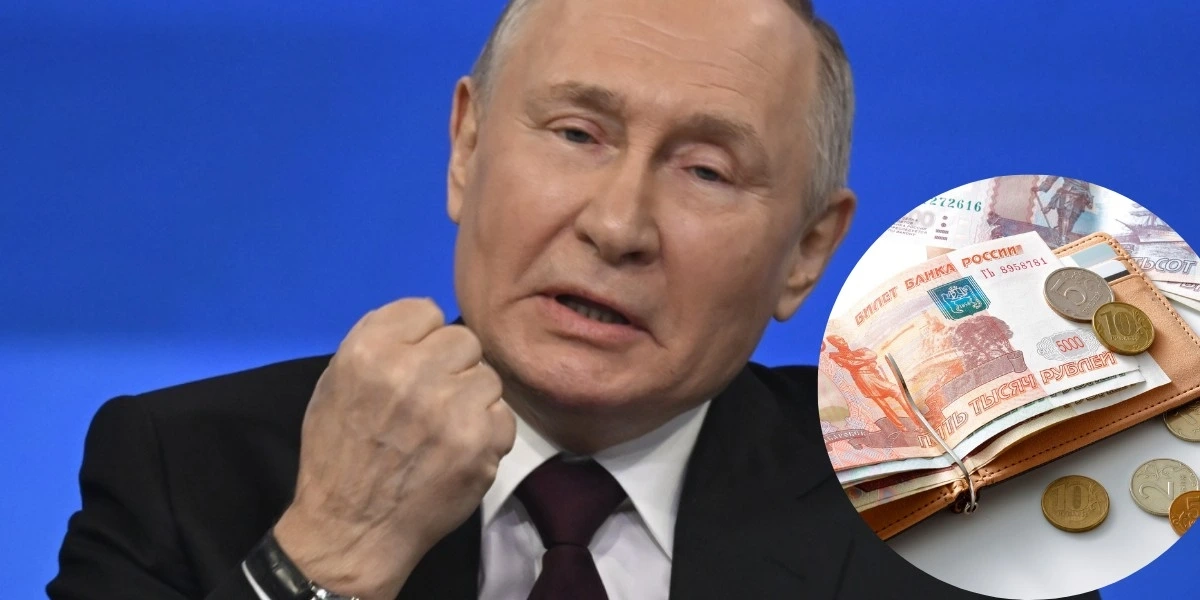
Russia’s federal budget deficit hit 4.58 trillion rubles — roughly $58.8 billion, or 1.9% of GDP — in the first quarter of 2026 alone, already surpassing Moscow’s entire annual deficit target of 3.79 trillion rubles, according to Finance Ministry data reported by The Moscow Times. Total revenue fell 8.2% to 8.3 trillion rubles even as spending jumped 17% to 12.9 trillion rubles.
Oil Revenue Is the Core Problem
The pain concentrated almost entirely in energy receipts. Oil and gas revenue collapsed 45.4% year-on-year in the first quarter, according to Meduza, which attributed the decline primarily to falling global oil prices alongside reduced export volumes following repeated Ukrainian drone strikes on major export terminals including Ust-Luga, Primorsk and Novorossiysk. By April, cumulative hydrocarbon revenue for the year had fallen 38.3% to $30.6 billion, according to analysis published by Ukraine’s foreign intelligence service, SZRU, which noted all three key energy revenue streams — additional income tax, gas export duty, and mineral extraction tax — collapsed simultaneously.
How the Kremlin Is Plugging the Gap
Two mechanisms are absorbing the shock. First, Moscow raised its base VAT rate by 2 percentage points to 22% starting in 2026 and stripped most small-business VAT exemptions, pushing non-oil-and-gas revenue up 10.2% even as the broader economy weakened, according to SZRU’s analysis. Second, and more significant, the treasury has leaned heavily on domestic debt markets: OFZ bond placements delivered 1.7 trillion rubles net over four months, covering 45% of the annual deficit, according to a contrarian assessment from the New Eurasian Strategies Centre.
That analysis argues the more likely 2026 outcome isn’t fiscal collapse but simply higher spending financed by cheap debt — revenue collection is running 3-4 percentage points behind the pace of recent years, but reserves and borrowing capacity remain deep enough that the “fiscal squeeze” narrative may overstate near-term risk.
The National Welfare Fund Problem
The structural issue is longer-term. Since early 2025, oil prices have stayed below the threshold needed to replenish Russia’s National Welfare Fund (NWF), meaning the sovereign buffer that absorbed prior shocks is no longer being topped up, according to the OSW Centre for Eastern Studies. Finance Minister Anton Siluanov has acknowledged the original 1.6%-of-GDP deficit target may need revision, alongside discussion of tightening Russia’s fiscal rule parameters, per Interfax.
Corporate Stress Is Spreading
The fiscal strain is showing up in the private sector too. More than half of large Russian companies ended 2025 with declining profits and frozen investment plans, and roughly 300 companies were reportedly preparing to close as of late February 2026, according to Ukrainian intelligence reporting cited by NV. For the first time on record, 74 of Russia’s regional budgets (oblasts) reportedly fell into deficit simultaneously.
The bottom line: Russia’s 2026 fiscal position is genuinely deteriorating relative to plan, but with deep reserves and functioning debt markets still available, the more accurate framing is a slow-motion transition to war-financed deficit spending rather than an acute crisis — one whose durability depends almost entirely on how long global oil prices stay depressed.
Discover more from The Economy
Subscribe to get the latest posts sent to your email.
The US is imposing 10–12.5% tariffs on 60 countries over forced-labour enforcement gaps. Here’s what it means for Canada, Pakistan, and global sourcing.
Most tariff coverage in 2026 has focused on headline-grabbing bilateral fights — Section 232 metals duties, the US-Canada CUSMA review, reciprocal tariff threats. But a quieter measure moving through the USTR process may end up touching more of global trade than any single country-specific tariff: a forced-labour enforcement tariff applied not to a handful of adversaries, but to 60 economies accounting for 99% of US imports.
In mid-2026, the US Trade Representative proposed tariffs of 10% to 12.5% on imports from 60 economies — covering roughly 99% of US imports — after finding these countries had not adequately enforced bans on forced-labour goods. Countries with partial enforcement commitments face the lower 10% rate; the rest face 12.5%, with a special mechanism for apparel and textiles.
What the rule actually does
The USTR’s findings state that these 60 economies have failed to adequately prohibit or enforce bans on goods made with forced labour, which the agency frames as a source of unfair competition against countries that do enforce such bans. The proposed structure is two-tiered: a 10% tariff for countries that already have some form of forced-labour import prohibition or have committed to implementing one, and a 12.5% tariff for the remaining countries. A separate mechanism would allow limited apparel and textile imports at reduced rates, softening the blow for garment-dependent exporters.
Canada is on the list despite being a treaty partner under CUSMA — a reminder that forced-labour enforcement gaps are being treated as a distinct trade-policy lever, separate from tariff and quota negotiations under existing free-trade agreements.
Why this is the underreported story
Coverage so far has treated this as a compliance footnote inside broader tariff news. It deserves more attention for three reasons:
- Scale: unlike sector tariffs on steel or autos, this rule touches nearly the entire US import base at once, which means the aggregate cost pass-through to US consumers could exceed any single sector-specific measure.
- Enforcement burden shifts downstream: exporting countries — including major garment and electronics suppliers in Asia — will need to demonstrate active supply-chain auditing, not just legal prohibitions on paper, to qualify for the lower rate.
- Leverage point beyond trade: it gives Washington a tool to press human-rights and labour-standards issues inside what looks, on the surface, like a routine tariff schedule.
What exporters and sourcing teams should watch
- Whether their country lands in the 10% or 12.5% tier once USTR finalises findings after the July 2026 comment period
- Documentation requirements for the textile/apparel carve-out
- Whether affected governments respond with formal labour-enforcement commitments to shift tiers before the rule takes effect.
Discover more from The Economy
Subscribe to get the latest posts sent to your email.
Banks
Pakistan’s Most Reliable Export Is Its People: Remittances Hit $41.6 Billion, Overtaking Total Exports
Introduction
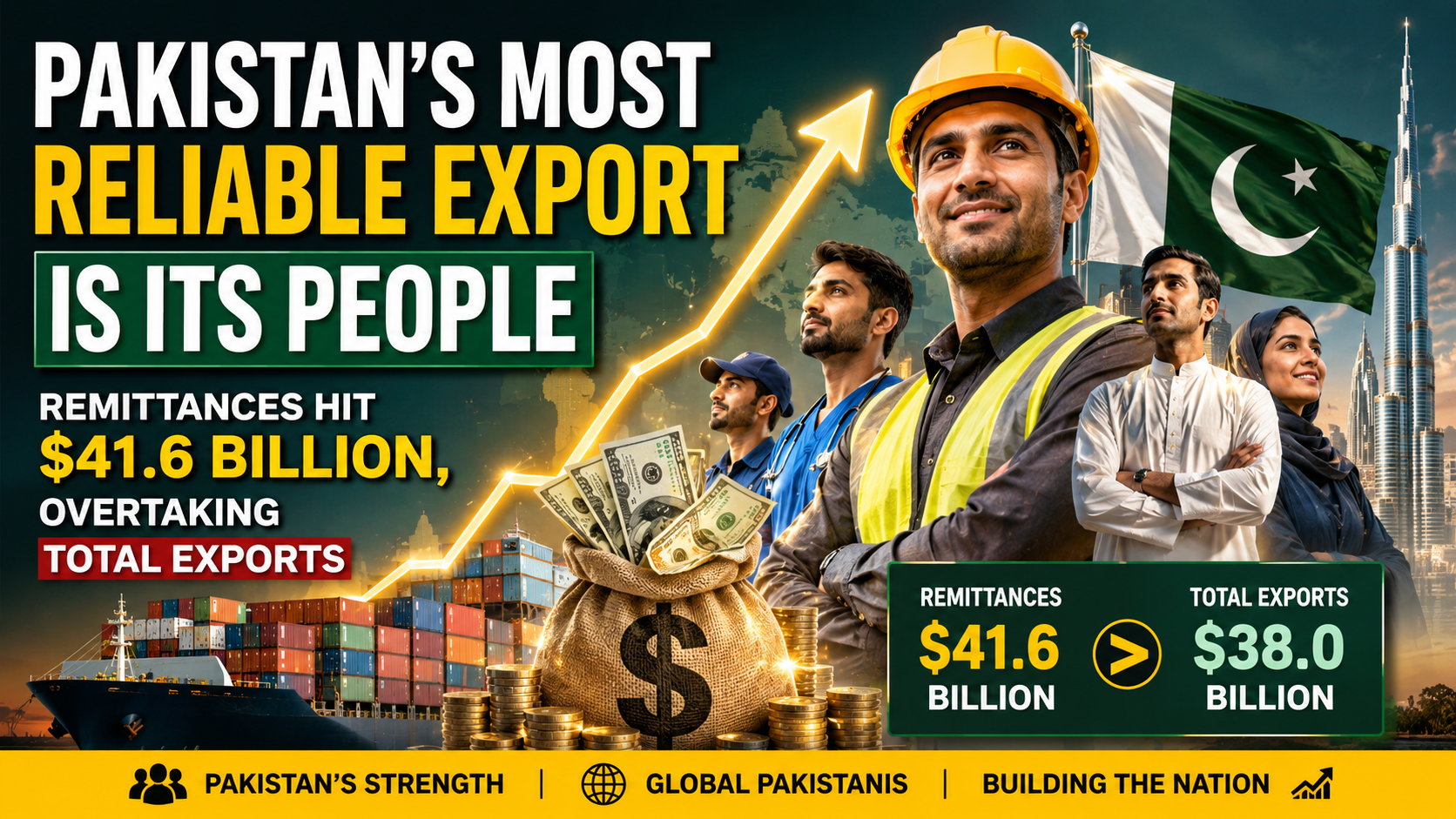
For the first time in the country’s history, money sent home by Pakistan’s overseas workers has exceeded the value of everything Pakistan actually sells abroad. Remittances hit a record $41.6 billion in the fiscal year ending June 30, 2026, according to State Bank of Pakistan data — surpassing total merchandise exports for the same period and cementing a structural shift that economists are increasingly uneasy about (VOI World/State Bank of Pakistan).
The Numbers Behind the Milestone
Remittance inflows rose 8.6% year-on-year in FY26, up from $38.3 billion in FY25 (VOI World). Some reporting puts the full 11-month figure even higher at $38 billion before the final month was tallied, with May 2026 alone contributing $4.25 billion — an amount roughly equal to what the entire country spends on imports in a single month (Express Tribune). A separate Express Tribune report puts the full FY26 total even higher, at $41.58 billion, an increase of nearly $3.29 billion over the prior year, delivered “without structured educational, training or welfare support” for the overseas workforce generating it (Express Tribune — Remittances Without Structured Support).
Saudi Arabia remained the single largest source of remittances in June 2026 at $829.6 million, followed by the UAE ($792.3 million), the United Kingdom ($514.9 million) and the United States ($296.8 million), with Italy and Oman each contributing more than $100 million (VOI World). That geographic concentration matters: a substantial share of Pakistan’s remittance base originates from the Gulf, leaving the country’s external account exposed to labor market reforms, economic cycles and geopolitical developments concentrated in a single, currently volatile region (Business Recorder Editorial).
Exports Have Been Stuck for Years
The remittance surge stands in sharp contrast to Pakistan’s export performance, which has shown little sustained dynamism despite years of concessional financing, preferential tariff regimes and subsidized energy for exporters (Business Recorder Editorial). The textile sector — long considered the backbone of Pakistan’s export economy — has been stuck in a $15–18 billion annual range for years, even as a handful of forward-thinking textile groups have managed to grow exports and diversify product lines under the exact same operating conditions others cite as prohibitive (Express Tribune). Separately reported nine-month data for the fiscal year showed exports contracting 5.8% to $23.3 billion even as imports rose nearly 8% to $46.8 billion, widening the trade gap further (Minute Mirror).
Over the three fiscal years from 2023 to 2025, Pakistan received $95.8 billion in remittances compared with $91 billion in merchandise exports — a gap that reflects, according to Business Recorder analysis, a deliberate policy orientation that has effectively institutionalized remittances as the default tool for stabilizing the current account rather than addressing the underlying export weakness (Business Recorder Opinion).
The Dutch Disease Warning
Independent economists have begun explicitly framing this pattern as a precursor to Dutch disease — the phenomenon where a large, easy source of foreign currency inflow reduces the pressure and incentive to build a competitive tradeable export sector (Business Recorder Opinion). The policy dimension is not incidental: under IMF program conditions, a long-standing subsidy that had encouraged banks to actively mobilize remittance transfers was withdrawn in the 2026 Budget, contributing to a temporary slowdown in inflows during the early months of the fiscal year before the government released Rs30 billion from its contingency fund to help revive momentum (Business Recorder Opinion).
A Business Recorder editorial published in July 2026 was blunt about the implication: Pakistan’s overseas workers have effectively become the country’s “most reliable export,” with its own people functioning as its largest export commodity — a framing the editorial explicitly calls an unsustainable foundation for long-term development strategy (Business Recorder Editorial).
The Silver Linings
The remittance boom has provided genuine macroeconomic stabilization. Total liquid foreign reserves crossed $23.98 billion as of early July 2026, including $18.47 billion held by the State Bank of Pakistan itself, with the rupee holding relatively steady around Rs278 per dollar in the interbank market (Express Tribune — Remittances Without Structured Support). Inflation has also been easing, and large-scale manufacturing showed signs of recovery with 5.9% growth in earlier-reported data, while agricultural lending rose 14.4% during July–February, extending credit access to farmers (Minute Mirror). Separately, Pakistan has reportedly repaid roughly Rs4,722 billion in debt ahead of schedule and posted a historic milestone in IT sector exports, suggesting pockets of genuine structural improvement exist alongside the broader export stagnation (Radio Pakistan).
Why This Matters Beyond Pakistan
Pakistan’s experience is a useful case study for other remittance-dependent emerging economies navigating IMF program conditions. The core tension — using a reliable, low-effort capital inflow to paper over a harder structural problem in the tradeable goods sector — is not unique to Pakistan, but few economies illustrate the scale of the imbalance as starkly as a country where remittances now formally exceed total exports.
Key Takeaways
- Pakistan’s FY26 remittances hit a record $41.6 billion, surpassing total merchandise exports for the first time in the country’s history.
- Saudi Arabia and the UAE remain the largest single sources, concentrating external account risk in the Gulf region.
- Textile exports have been stuck between $15–18 billion annually for years despite sustained government support.
- Economists are increasingly framing the remittance-export imbalance as a Dutch disease risk rather than a stabilization success story.
- Reserves have strengthened to nearly $24 billion and the rupee has stabilized, but the underlying export competitiveness problem remains unresolved.
Sources: VOI World, Express Tribune — Remittances Dwarf Exports, Express Tribune — Remittances Without Structured Support, Business Recorder Opinion, Business Recorder Editorial, Minute Mirror, Radio Pakistan
Discover more from The Economy
Subscribe to get the latest posts sent to your email.

Pakistan Passed Its Third IMF Review

The Fed Is Fractured — And a New Chair Just Made It Louder, Not Quieter

The UK Economy in 2026 Is Neither Recession Nor Recovery :Stagflaton

Indonesia’s $121 Billion Nickel Bet Is Facing a Battery Chemistry

Why Ultra-Wealthy Families Are Splitting Between Singapore and Dubai inmarkets 2026

China Chose Political Control Over Fixing Its Deflation Trap in 2026

Oil Markets Are Oversupplied and Geopolitically Explosive at the Same Time

Russia’s Budget Deficit Blew Past Its Full-Year Target in Three Months

Malaysia’s Rare Earth Bet: Six Powers Are Negotiating for Kuantan at Once

Gulf Sovereign Capital Bypasses Pakistan Despite Record 2026 Spending Spree

Pakistan’s $10bn US Facility Request: Inside the New Gulf Capital Triangle

China Criticizes US Bill Targeting Russian Oil Buyers — Why It Matters

Nvidia’s H200 Chips Are Finally Reaching China — In Numbers Too Small to Matter Yet

Oil Prices Fall as Strait of Hormuz Reopens: 2026 Update

AI Bubble Warning 2026: Why BIS, IMF and Bank of England Fear a Market Crash

Russia Bans Diesel Exports 2026: Global Fuel Market Impact Explained

Gold Price Forecast 2026: Fed’s July 29 Decision and Record Central Bank Buying Explained

Strait of Hormuz Blockade 2026: Oil Prices Surge 9% as US-Iran Conflict Reignites

Strait of Hormuz 2026: Why Markets Still Don’t Trust It’s Open

Gulf Capital Retreat From Pakistan 2026: UAE Loan Freeze & What It Means

Down But Not Out: Inside the Slow Sinking of Russia’s War Economy

Pakistan IMF Deal 2026: Third Review Cleared, Budget 2026-27 and Inflation Outlook

China Politburo July 2026: Stimulus Signals Explained

Pakistan Economy 2026: GDP Grows 3.7% as IMF Completes EFF Review Amid Middle East Risk

Global Stock Market Selloff 2026: Stagflation Fears Return as Iran Conflict Reignites

The Yuan Now Settles 67% of Russian Oil Payments — Quiet De-Dollarization in Action

Apple vs OpenAI Lawsuit: The Economic Story Behind the Headline

Strait of Hormuz Crisis 2026: How Trump’s Toll U-Turn Exposes Global Economic Risk
-

 Markets & Finance7 months ago
Top 15 Stocks for Investment in 2026 in PSX: Your Complete Guide to Pakistan’s Best Investment Opportunities
-

 Analysis5 months ago
Johor’s Investment Boom: The Hidden Costs Behind Malaysia’s Most Ambitious Economic Surge
-

 Analysis5 months ago
Top 10 Stocks for Investment in PSX for Quick Returns in 2026
-

 Analysis6 months ago
Brazil’s Rare Earth Race: US, EU, and China Compete for Critical Minerals as Tensions Rise
-

 Banks7 months ago
Best Investments in Pakistan 2026: Top 10 Low-Price Shares and Long-Term Picks for the PSX
-

 Investment7 months ago
Top 10 Mutual Fund Managers in Pakistan for Investment in 2026: A Comprehensive Guide for Optimal Returns
-

 Global Economy7 months ago
15 Most Lucrative Sectors for Investment in Pakistan: A 2025 Data-Driven Analysis
-

 Global Economy7 months ago
Pakistan’s Export Goldmine: 10 Game-Changing Markets Where Pakistani Businesses Are Winning Big in 2025