
Analysis
Pakistan’s Call for the Swift Restoration of Normal Shipping in the Strait of Hormuz Is the Most Important Diplomatic Voice in the World Right Now

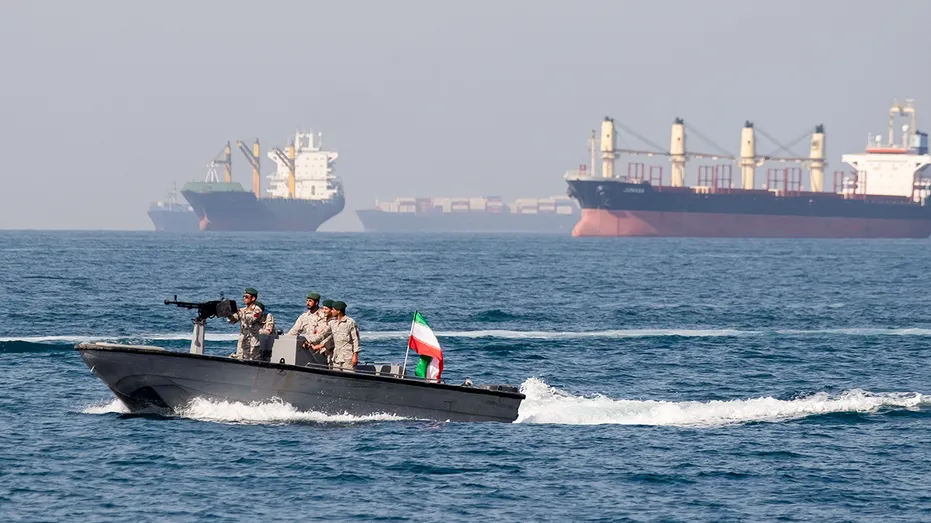
As the worst energy supply shock since the Arab oil embargo of 1973 cascades through global markets — costing an estimated $20 billion a day in lost economic output — Islamabad’s principled stand for de-escalation and dialogue at the United Nations may be the last offramp before catastrophe becomes permanent.
Consider the geography of catastrophe. Twenty-one miles wide at its narrowest point. Flanked on one side by Iran, on the other by Oman and the United Arab Emirates. And through that sliver of contested water, until the morning of February 28, 2026, flowed roughly a quarter of the world’s seaborne oil trade and a fifth of its liquefied natural gas — the circulatory system of the modern global economy, reduced now to a near-standstill. Ship transits through the Strait of Hormuz fell from around 130 per day in February to just six in March — a 95-percent collapse. The head of the International Energy Agency, Fatih Birol, called it “the largest supply disruption in the history of the global oil market.” History, not hyperbole.
Into this silence — the silence of anchored tankers, shuttered trade corridors, and a Security Council paralysed by superpower vetoes — one country has spoken with consistent clarity, moral seriousness, and something rare in contemporary diplomacy: genuine principle uncontaminated by bloc loyalty. That country is Pakistan.
On April 7, Ambassador Asim Iftikhar Ahmad stood before the United Nations Security Council and, even as he abstained from a draft resolution he considered fatally flawed, called for the swift restoration of normal navigation through the Strait, demanded an end to hostilities, and spotlighted a concrete five-point plan for regional peace. Nine days later, on April 16, as the General Assembly convened its mandatory veto debate — triggered by the double veto of China and Russia that killed the Bahrain-sponsored resolution — Pakistan’s voice returned to the chamber, making the same case. Not Washington’s case. Not Tehran’s. Not Beijing’s. Pakistan’s own: that the Strait must reopen, that dialogue is the only viable exit, and that the world’s most vulnerable cannot afford another day of delay.
This is why that voice matters — economically, diplomatically, and morally — more than almost any other being raised in New York right now.
I. Why Every Economy on Earth Has a Stake in the Strait of Hormuz
The Strait of Hormuz is not merely a shipping lane. It is, as the UN Trade and Development agency (UNCTAD) has observed, a concentrated expression of the world’s energy and commodity architecture — one whose blockage does not merely raise oil prices but triggers cascading failures across fertiliser markets, aluminium supply chains, LNG contracts, and food systems simultaneously.
| Metric | Figure |
|---|---|
| Global seaborne oil trade through the Strait (pre-closure) | ~25% |
| Brent crude peak price | $126/barrel — largest monthly rise ever recorded |
| Estimated daily global GDP losses at peak disruption | $20 billion |
| Global seaborne urea fertilizer trade originating in the Gulf | 46% |
The Atlantic Council’s commodity analysis makes sobering reading: beyond energy, the closure has throttled methanol exports critical to Asia’s plastics industries, strangled sulfur exports on which global agriculture depends, and disrupted the petroleum coke supply chains that feed electric vehicle battery manufacturing. The crisis has not spared the green energy transition; it has set it back. Federal Reserve Bank of Dallas researchers estimate that if the disruption persists for three quarters, fourth-quarter-over-fourth-quarter global GDP growth could fall by 1.3 percentage points — a recession-triggering shock for dozens of emerging economies with no fiscal buffer to absorb it.
The cruelest arithmetic of all belongs to food. The Arabian Gulf region supplies at least 20 percent of all seaborne fertiliser exports globally. Countries like India, Brazil, and China — which collectively import over a third of global urea — have scrambled to find alternatives. Analysts have warned that a prolonged disruption will tighten fertiliser availability in import-dependent regions, potentially raising global food production costs at precisely the moment when inflation is already eroding household incomes across the Global South. The UNCTAD has been characteristically restrained in its language; the underlying reality is not: 3.4 billion people live in countries already spending more on debt service than on health or education. An energy and food shock of this magnitude does not inconvenience them. It can devastate them.
II. Pakistan at the Security Council — and Beyond
When China and Russia vetoed the Bahrain-led Security Council resolution on April 7, it was easy for commentators to read Pakistan’s abstention as fence-sitting — a small power hedging between Washington’s alliance structures and Beijing’s economic embrace. That reading is lazy and wrong.
Pakistan’s representative made Islamabad’s reasoning explicit before the Council: “Time and space must be allowed for ongoing diplomatic efforts.” The draft resolution, even in its heavily watered-down final form after six rounds of revision, retained language that Pakistan — along with China and several other non-permanent members — feared could be interpreted as a legal veneer for expanded military operations. Earlier versions had invoked Chapter VII of the UN Charter, which authorises the use of force; that language was removed, but residual ambiguities remained. Abstaining was not neutrality. It was a deliberate signal that Islamabad supports the objective — the swift restoration of normal shipping in the Strait of Hormuz — while refusing to bless a mechanism that could achieve the opposite of de-escalation.
“The ongoing situation in the Strait of Hormuz has resulted in one of the largest energy supply shocks in modern history. The impact is felt not only in terms of energy flows but also fertilisers and other essential commodities, thus affecting food security, cost of living and squeezing the livelihood of the most vulnerable.”
— Ambassador Asim Iftikhar Ahmad, Pakistan’s Permanent Representative to the UN, Security Council, April 7, 2026
That abstention was preceded and followed by concrete diplomatic action. In late March, Pakistan hosted the foreign ministers of Egypt, Saudi Arabia, and Türkiye in Islamabad — a remarkable convening, given the divergent interests at the table — in a coordinated effort to build a diplomatic off-ramp. Pakistan and China jointly issued a Five-Point Initiative for Restoring Peace and Stability in the Gulf and the Middle East region, a framework that deserves far more international attention than it has received. The five points were:
- Immediate cessation of all hostilities
- Launch of inclusive peace talks
- Protection of civilians and critical infrastructure
- Restoration of maritime security in the Strait of Hormuz
- Firm reaffirmation of the UN Charter and international law as the basis for resolution
Then, on April 11 and 12, Pakistan hosted the Islamabad Talks — a gruelling 21-hour mediation session between American and Iranian delegations, led by Vice President JD Vance and Foreign Minister Abbas Araghchi respectively, with Prime Minister Shehbaz Sharif and Field Marshal Asim Munir anchoring Pakistan’s mediation team. The talks produced a temporary ceasefire. It has, since, frayed at its edges — the Strait has not fully reopened, Iran reportedly lost track of mines it had laid — but the ceasefire was nonetheless a diplomatic achievement of the first order, and it happened because Islamabad was willing to absorb the political risk of hosting it.
Then came April 16 and the General Assembly’s mandatory veto debate — convened under the 2022 “Uniting for Peace” mechanism requiring the Assembly to review any exercise of the permanent-member veto within ten working days. Pakistan returned to the chamber with the same message it has carried throughout: de-escalate, restore shipping, return to dialogue. General Assembly President Annalena Baerbock declared that debate must move “to action” on stabilising the Middle East. Pakistan’s position, in both chambers, has been exactly that — an insistence on translating words into a tangible, enforceable return to normal navigation.
III. The Catastrophic Cost of Continued Closure
Prolonging the closure of the Strait of Hormuz is not a geopolitical bargaining chip. It is economic self-harm on a global scale — and the pain falls most heavily on those least responsible for the conflict that caused it.
Global merchandise trade, which grew at 4.7 percent in 2025, is now projected by UNCTAD to slow to between 1.5 and 2.5 percent in 2026. The Gulf Cooperation Council states, which rely on the Strait for over 80 percent of their caloric intake through imported food, face something approaching a humanitarian emergency of their own making — the maritime blockade triggered a food supply crisis, with 70 percent of the region’s food imports disrupted by mid-March, forcing retailers to airlift staples at costs that have produced a 40 to 120 percent spike in consumer prices. Kuwait and Qatar, whose populations depend on desalination plants for 99 percent of their drinking water, saw those plants targeted by strikes. No actor in this conflict has been insulated from its consequences.
Pakistan itself has absorbed the shock with particular intensity. As a country reliant on imported energy, Islamabad formally requested Saudi Arabia in early March to reroute oil supplies through the Red Sea port of Yanbu, bypassing the closed Strait — a logistical improvisation that illustrates both the creativity and the fragility of Pakistan’s energy security. Iran subsequently granted Pakistani-flagged vessels limited passage through the Strait as part of a “friendly nations” arrangement, a concession that reflected both goodwill and the utility of Pakistan’s diplomatic positioning. But exceptions for individual flags are not a substitute for the universal freedom of navigation that international law guarantees and global commerce requires.
Economic modelling by SolAbility estimates total global GDP losses ranging from $2.41 trillion in an optimistic scenario to $6.95 trillion under full escalation — figures that dwarf any conceivable strategic benefit to any party. This is not a crisis with winners. It is a crisis that compounds, daily, the suffering of billions of people who had no vote in any of the decisions that produced it.
IV. The Strategic Case for De-Escalation
There is a tempting narrative, audible in Washington and in certain Gulf capitals, that the Strait of Hormuz crisis admits a military solution — that sufficient force, applied with sufficient resolve, can reopen the shipping lanes and restore the status quo ante. This narrative is wrong, and dangerously so.
Iran’s ability to impose costs in the Strait is not a function of its conventional military strength relative to the United States. It is a function of geography and asymmetric warfare. Cheap drones and sea mines — not advanced warships — are the instruments of blockade, and they remain effective even against superior firepower. A military reopening, even if temporarily successful, would deepen the political conditions that produced the closure in the first place, guarantee future disruptions, and — in the worst case — widen a regional conflict that has already demonstrated its capacity to destabilise global commodity markets from aluminum to fertiliser to jet fuel.
The only durable solution is political. The IEA, UNCTAD, the Atlantic Council, and now the UN General Assembly President have all arrived at the same conclusion: reducing risks to global trade and development requires de-escalation, safeguarding maritime transport, and maintaining secure trade corridors in line with international law. This is not naivety. It is the hard logic of a crisis in which every alternative to dialogue has already been tried and found wanting.
Pakistan’s five-point framework addresses this logic directly. It does not pretend that the underlying conflict — the US-Israeli strikes on Iran, Tehran’s retaliation, the cascade of regional consequences — can be wished away. It acknowledges root causes while insisting that the Strait itself, a global commons on which billions depend, must be decoupled from the bilateral grievances of belligerents. Freedom of navigation is not a concession to any party. It is a prerequisite for civilised international order.
V. The Veto, the Assembly, and the Future of Multilateralism
The double veto of April 7 was not simply a geopolitical manoeuvre. It was a stress test of the entire post-1945 multilateral architecture — and the architecture is showing cracks.
China and Russia argued, not without legal logic, that the draft resolution failed to address root causes and risked providing cover for expanded military action. The United States and its allies argued, equally not without logic, that freedom of navigation cannot be held hostage to geopolitical disagreements about who started a war. Both positions contain truth. Neither resolves the crisis. The result, as Bahrain’s Foreign Minister Abdullatif Al-Zayani observed, is a signal that “threats to international navigation could pass without a firm response” — a signal with implications that extend far beyond the Strait of Hormuz.
Ambassador Asim Iftikhar Ahmad has been equally clear-eyed about the structural problem. Speaking at the Intergovernmental Negotiations on Security Council reform, he described the veto as increasingly “anachronistic” in the context of modern global governance, calling for its abolition or severe restriction. “The paralysis that we see often at the Security Council,” he told member states, “stems from the misuse or abuse of the veto power by the permanent members.” This is a position of principle, not of convenience — Pakistan has held it consistently, and the Hormuz crisis has given it new and terrible urgency.
The General Assembly veto debate of April 16 is, in this sense, more than a procedural exercise. It is the broader membership of the United Nations asserting its right to address failures that the Security Council cannot or will not fix. Pakistan’s participation in that debate — as both a voice for de-escalation and as the nation that physically hosted the only peace talks to produce even a temporary ceasefire — gives Islamabad’s words a weight that purely rhetorical contributions lack. Pakistan is not merely commenting on the crisis. It is trying, actively and at real political cost, to resolve it.
VI. Pakistan’s Quiet Diplomacy and the Road Ahead
Pakistan’s positioning in this crisis reflects a foreign policy reality that Western analysts have often underestimated: Islamabad is one of the very few capitals with functioning diplomatic relationships across the entire spectrum of principals in the Middle East conflict. It has deep historical ties to Saudi Arabia and the Gulf states. It has a complex but open channel to Iran, sharpened by geography and decades of bilateral engagement. It has a strategic partnership with China. It has a defence relationship with the United States. And it has recently demonstrated the capacity to leverage all of these simultaneously in the service of a single objective: ending the war and reopening the Strait.
That capacity should not be taken for granted — it is the product of deliberate diplomatic work, not structural inevitability. Pakistan remained in contact with both Washington and Tehran following the Islamabad Talks, seeking to facilitate a second round of negotiations before the ceasefire’s expiration. Reports in mid-April indicated that US and Iranian teams were in discussions about returning to Islamabad for a further round. Whether those talks materialise, and whether they produce an agreement that genuinely reopens the Strait and restrains both sides, remains deeply uncertain. But the diplomatic infrastructure that Pakistan has built — with genuine credibility on both sides of the conflict — is a resource that the international community cannot afford to waste.
The restoration of normal shipping in the Strait of Hormuz is not a Pakistani interest. It is a global interest — for energy importers from Japan to Germany, for food-importing nations from Egypt to Bangladesh, for the three-and-a-half billion people living in countries already straining under debt loads that leave them no margin for a commodity price shock of this magnitude. Pakistan’s voice at the United Nations, consistent and principled from the Security Council on April 7 to the General Assembly on April 16, has been making exactly this case.
Conclusion: The World Cannot Afford to Ignore This
The Strait of Hormuz crisis is, at its core, a story about the failure of great powers to subordinate their bilateral grievances to global responsibilities. The United States and Israel chose military action with incomplete accounting of its maritime consequences. Iran chose a blockade that punishes the world’s most vulnerable economies for decisions made in Washington and Jerusalem. China and Russia chose a veto that, whatever its legal justifications, left the Security Council unable to articulate even a minimal framework for shipping protection. All of these decisions compound daily into a crisis whose total cost — measured in higher food prices, stunted developing-world growth, and cascading supply chain failures — is already measured in the trillions.
Pakistan has not been a bystander. It has been a mediator, a host, a co-author of peace frameworks, and a consistent voice at the United Nations calling for what the situation so obviously requires: a swift restoration of normal shipping in the Strait of Hormuz, cessation of hostilities, and return to dialogue. Ambassador Asim Iftikhar Ahmad’s interventions at the Security Council and the General Assembly have been models of what multilateral diplomacy can be when it is driven by principle rather than by bloc loyalty or bilateral calculation.
The Strait must reopen. Not because any single party deserves to win the argument about who caused this war — but because the alternative, a world in which critical maritime chokepoints can be weaponised indefinitely without consequence, is a world none of us want to inhabit. Pakistan understands this with particular clarity, because it lives it. Its citizens pay higher energy costs, its farmers face fertiliser shortages, its diplomats work overtime to build the bridges that others are burning. The least the world can do is listen to what Islamabad is saying — and act on it.
Discover more from The Economy
Subscribe to get the latest posts sent to your email.



Navigating Mortgage and Loan Refinancing in a High-Yield Environment
Global public debt crossing critical thresholds has kept central bank policies volatile, resulting in fluctuating US Treasury yields throughout 2026. For homeowners and commercial property holders burdened by previous high-interest borrowing cycles, finding optimal refinance windows has become a high-stakes financial puzzle. Stalled disinflation and stubborn employment numbers mean rate cuts are incremental, requiring borrowers to act with precision.
Timing your mortgage or commercial loan refinance in this environment requires a deep understanding of yield curve movements and lender risk appetites.
Decoding 2026 Refinance Dynamics
The 10-Year Treasury Yield Benchmark
Mortgage rates continue to track closely with the 10-year US Treasury yield. When macroeconomic anxiety spikes debt issuance, yields rise, tightening consumer borrowing capacity. Savvy borrowers monitor weekly Treasury auctions to lock in rates during brief dip windows.
Hybrid ARMs and Alternative Structures
With fixed rates remaining elevated, 7/1 and 10/1 adjustable-rate mortgages (ARMs) have surged in popularity. These products offer lower initial monthly payments, giving borrowers breathing room until central bank easing cycles fully materialize.
| Loan Product | Current Rate Range | Best For | Key Risk Factor |
| 30-Year Fixed Mortgage | 6.2% – 6.8% | Long-term predictability | Higher initial monthly outlay |
| 7/1 Hybrid ARM | 5.5% – 5.9% | Short-term ownership / flipping | Rate reset risk after year 7 |
| Commercial Refinance | 7.0% – 8.2% | Corporate asset restructuring | Strict DSCR lender covenants |
Actionable Steps for Successful Refinancing
To maximize your chances of securing favorable refinance terms in a volatile market, follow a disciplined preparation strategy.
Boost Your Credit Score Immediately: Lenders in 2026 are applying stringent credit tiering; a 20-point increase can drop your APR by a crucial quarter-point.
Shop Regional Credit Unions: Smaller financial institutions often offer portfolio loans with more flexible underwriting than major national banks.
Calculate the Break-Even Point: Ensure your total closing costs are recouped through monthly savings within 24 months of closing.
“Market Strategist View: Refinancing in 2026 is an exercise in opportunistic timing. Borrowers must maintain immaculate financial profiles ready to strike the moment Treasury yields dip.”
Mastering the complexities of today’s debt environment ensures you can successfully lower your debt service costs and protect your long-term financial stability.
Discover more from The Economy
Subscribe to get the latest posts sent to your email.

The days of pulling generic auto insurance quotes based purely on your zip code and age are officially over. In 2026, insurance comparison engines are powered entirely by generative AI and real-time telematics. These platforms digest thousands of live data points—ranging from your driving smoothness via connected vehicle sensors to real-time traffic congestion patterns—to generate hyper-personalized premiums instantly.
For consumers, this evolution represents both a massive opportunity for savings and a hidden trap for penalty pricing. Understanding how AI algorithms evaluate risk is essential for anyone looking to lower their monthly auto insurance premiums.
How AI Comparison Engines Evaluate Your Risk Profile
Behavioral Telematics and Connected Cars
Modern cars stream performance data directly to insurance aggregators. Generative AI models analyze braking sharpness, acceleration curves, cornering G-forces, and phone distraction metrics. Drivers who maintain smooth, defensive habits are rewarded with dynamic rate cuts of up to 40% compared to traditional rating tiers.
Predictive Traffic and Weather Modeling
AI tools now cross-reference your daily commute route with predictive weather and accident probability models. If your standard parking location or driving corridor has a statistically higher incidence of uninsured motorist claims, your quotes will reflect that hyper-local risk assessment.
| Comparison Factor | Traditional Rating Model | 2026 Generative AI Model | Impact on Premium |
| Mileage & Usage | Annual estimated odometer reading | GPS tracking & live trip duration | High (up to 35% savings) |
| Driving Behavior | MVR driving record & accidents | Real-time braking, speed, & G-force | Critical (determines tier) |
| Vehicle Tech | Make, model, and safety rating | ADAS calibration & repair cost data | Moderate |
Strategies to Lower Your AI-Driven Insurance Quote
To outsmart the algorithm and secure the lowest possible premium in 2026, drivers must proactively manage their digital footprint on insurance platforms.
Opt-In for Telematics Trial Periods: Many insurers offer immediate 15% discounts just for installing their driving app; let it track safe habits for 30 days to lock in permanent savings.
Scrub Unverified Public Records: Ensure your motor vehicle report is free of clerical errors that AI risk models misinterpret as reckless behavior.
Compare AI Aggregators: Use platforms that integrate multi-carrier API feeds rather than single-brand comparison sites to find the best risk-adjusted rate.
“Industry Note: AI-driven pricing rewards transparency and precision. Drivers who actively manage their telematics data consistently out-save those relying on legacy quote calculators.”
Embracing AI comparison tools allows savvy policyholders to customize coverage limits precisely to their driving habits, eliminating wasted premium spend while ensuring robust protection.
Discover more from The Economy
Subscribe to get the latest posts sent to your email.

Despite decades of bans and strict handling mandates, asbestos remains a silent killer across legacy manufacturing plants, shipyards, and modern green-energy infrastructure retrofits. In 2026, regulatory changes by the EPA and tightened occupational health standards have triggered a fresh wave of mesothelioma litigation. Manufacturers attempting to fast-track industrial transitions are encountering catastrophic oversight, exposing workers to legacy toxins and opening corporate parent companies to unprecedented liability.
Navigating a mesothelioma claim in 2026 requires understanding how modern industrial supply chains intersect with historical exposure. Trusts established decades ago are being audited under stricter transparency laws, altering payout ratios and accelerating fast-track settlements for terminally ill plaintiffs.
Modern Industrial Exposure Hotspots
Green Retrofitting and Renewable Energy Infrastructure
A primary source of 2026 asbestos exposure occurs during the decommissioning and retrofitting of older industrial facilities for renewable energy production. Workers insulating electrical grids, modernizing HVAC systems, or upgrading manufacturing floors frequently disturb encapsulated asbestos materials that were improperly documented or ignored during facility audits.
Automotive and Aerospace Supply Chains
With advanced manufacturing booming, workers handling specialized friction materials, gaskets, and heat shields face ongoing risks. Supply chain tracing has become more sophisticated, allowing legal teams to pinpoint exact corporate entities responsible for raw material distribution across multinational borders.
| Industry Sector | Primary Exposure Risk | Legal Venue / Trust | Avg. Claim Value Range |
| Green Energy Retrofit | Disturbed insulation, pipe lagging | Federal Tort / Manufacturer Trust | $1.2M – $3.5M |
| Shipbuilding & Marine | Boiler insulation, structural seals | Asbestos Bankruptcy Trusts | $800K – $2.4M |
| Automotive Manufacturing | Brake components, high-heat gaskets | Third-Party Product Liability | $600K – $1.8M |
Securing Maximum Compensation: Steps for Plaintiffs
Time is of the essence in mesothelioma cases. Plaintiffs and their families must act decisively to secure financial recovery before statutes of limitations expire.
Retain Specialized Counsel: Work exclusively with national mesothelioma law firms possessing deep historical databases of asbestos-containing products.
Audit Employment History: Document every job site, supervisor name, and equipment brand encountered throughout your career.
Expedite Medical Filings: Secure a formal pathological diagnosis quickly to qualify for expedited trust fund distribution and priority trial settings.
“Expert Insight: Modern asbestos litigation is no longer just about historical tracking; it is about holding modern corporations accountable for failing to conduct rigorous environmental safety audits before initiating industrial retrofits.”
By combining meticulous work history reconstruction with aggressive multi-trust filings, victims can secure substantial financial relief to cover specialized immunotherapy and family support.
Discover more from The Economy
Subscribe to get the latest posts sent to your email.

Elon Musk’s Boring Company Hits $23B Valuation After UAE-Led $3 Billion Series D

Middle East War Economics 2026: Oil Prices & Energy Markets

PSX Forecast 2026: KSE-100, IMF Reviews & Geopolitics

Asian Markets Outlook 2026: China, Japan & Singapore Stocks

Global Economy 2026: IMF Growth, Inflation & Private Credit

Current Account Deficit (CAD) : Causes and Impact

Balance of Payments (BOP)

The Falkland Islands Dispute: Sovereign Wealth, Offshore Drilling, and Market Impacts

Gross Domestic Product (GDP): Nominal vs. Real

What is Inflation and the Consumer Price Index (CPI)?

US-China Trade Competition 2026: Supply Chain Relocation Guide

Oil Prices Break $100 in 2026: Middle East Conflict & Energy Markets

South-South Trade Expansion: Digital Integration and Emerging Market Growth

$166B Tariff Refund Tapering Fast: Is Your Business Missing Out?

State Farm’s $5B Dividend 2026: Who Qualifies & Payout Dates

US-China Relations in Q3 2026: Trade Tariffs and Supply Chain Risks

Gold’s Wild 2026: From a Record $5,600 Peak to a 24% Crash and Back Toward $4,500

Oil Surges as Strait of Hormuz Traffic Collapses Again

The Rocket That Won’t Quit: Inside SpaceX’s Falcon 9 Launch Machine

Bank of England Set to Hold Rates Through Year-End, Reuters Poll Shows

SpaceX Starship Flight 14: First Orbital Attempt & Starlink V3 Launch Explained

The 2026 Crypto Regulatory Shift: What It Means for Institutional Investors

AI Chip Stocks 2026: The Best Semiconductor Investments Beyond Marvell

Retail Earnings Week: What Home Depot, Target & Walmart Reveal

AI-Powered Training: The Next Multi-Billion Dollar Ecosystem in Fitness

Russia’s Black Sea Oil Exports Fall for a Fifth Straight Week

Top 30 Stocks for Investment in PSX for Massive ROI in 2026

Tween Back-to-School Trends 2026: What’s Driving the $85B Season
-

 Markets & Finance8 months ago
Top 15 Stocks for Investment in 2026 in PSX: Your Complete Guide to Pakistan’s Best Investment Opportunities
-

 Analysis7 months ago
Johor’s Investment Boom: The Hidden Costs Behind Malaysia’s Most Ambitious Economic Surge
-

 Analysis7 months ago
Top 10 Stocks for Investment in PSX for Quick Returns in 2026
-

 Analysis7 months ago
Brazil’s Rare Earth Race: US, EU, and China Compete for Critical Minerals as Tensions Rise
-

 Banks8 months ago
Best Investments in Pakistan 2026: Top 10 Low-Price Shares and Long-Term Picks for the PSX
-

 Investment8 months ago
Top 10 Mutual Fund Managers in Pakistan for Investment in 2026: A Comprehensive Guide for Optimal Returns
-

 Global Economy9 months ago
15 Most Lucrative Sectors for Investment in Pakistan: A 2025 Data-Driven Analysis
-

 Global Economy9 months ago
Pakistan’s Export Goldmine: 10 Game-Changing Markets Where Pakistani Businesses Are Winning Big in 2025