
Telecom
Pakistan’s 5G Spectrum Auction: Which Networks Are Willing to Apply—Economic Impact and Prospects

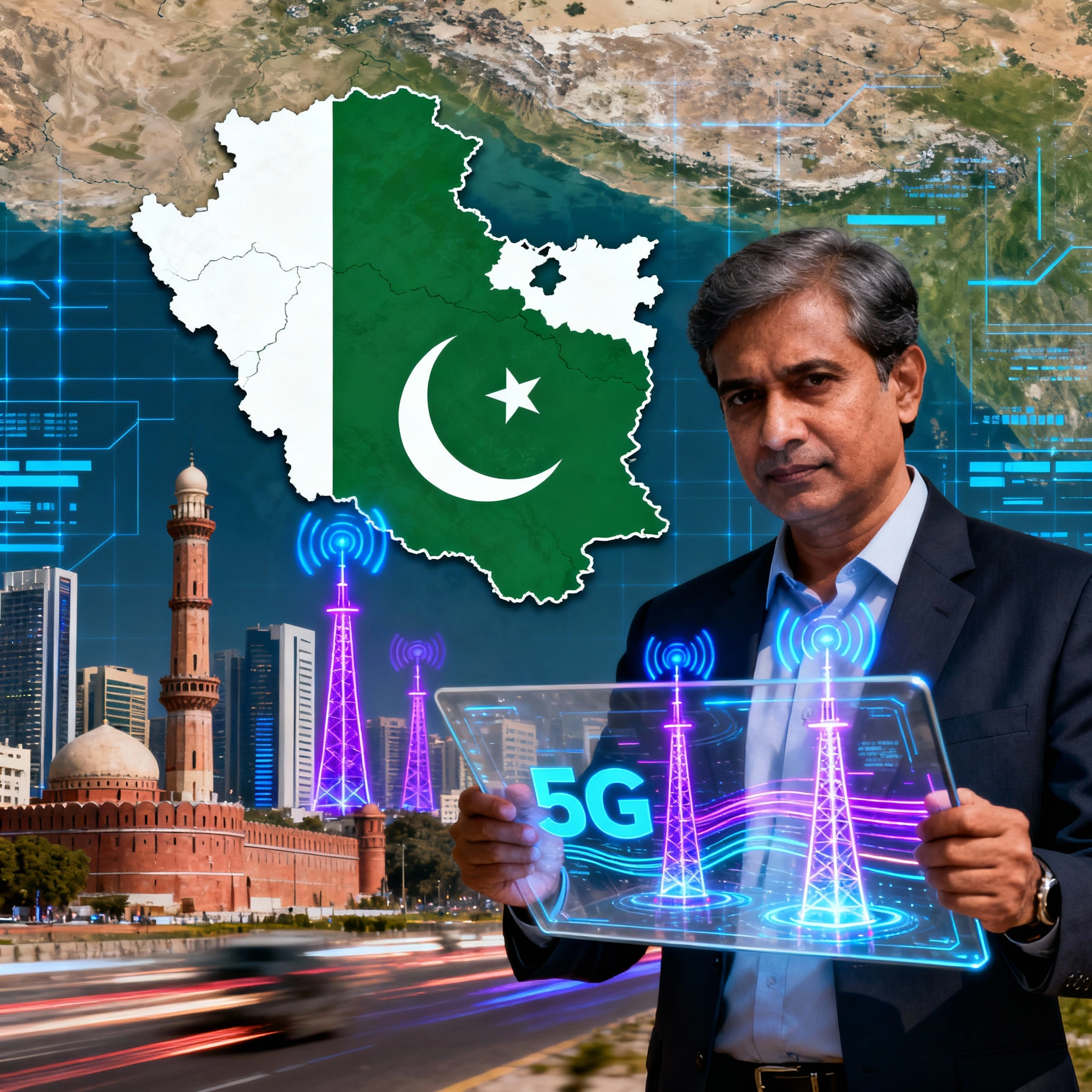
As Pakistan prepares for its pivotal mid-February 2026 spectrum auction, the telecommunications industry faces a strategic inflection point worth potentially trillions in economic value. Yet operator silence suggests the path to 5G leadership remains fraught with uncertainty.
Executive Summary
Pakistan’s telecommunications sector stands at a critical juncture as the Pakistan Telecommunication Authority (PTA) prepares to auction seven spectrum bands for 5G services by mid-February 2026. Despite regulatory momentum and global economic projections suggesting $1.3 trillion in GDP contribution by 2030 according to PwC research, not a single major operator has formally committed to bidding. This strategic hesitation reveals deeper tensions between ambitious government rollout mandates, infrastructure investment realities, and uncertain return-on-investment calculations that could determine whether Pakistan captures or misses its digital dividend.
The Regulatory Landscape: Ambition Meets Calculated Caution
The Pakistan Telecommunication Authority has orchestrated what appears to be an aggressive push toward 5G deployment, setting the stage for a spectrum auction that government officials frame as a strategic investment in the nation’s digital future. The regulatory framework demands that successful bidders upgrade at least 10% of their existing cellular towers to 5G technology within the first year, focusing initially on Pakistan’s economic nerve centers: Islamabad, Lahore, Karachi, and Peshawar.
This rollout strategy mirrors approaches taken by more developed telecommunications markets, yet Pakistan’s timeline appears compressed. According to GSMA’s Mobile Economy report, successful 5G deployments typically require 3-5 years of infrastructure preparation, spectrum planning, and ecosystem development. Pakistan’s accelerated schedule—particularly after missing its June 2025 launch deadline—suggests regulatory ambition may be outpacing market readiness.
The seven spectrum bands slated for auction represent a comprehensive approach to 5G deployment, including five entirely new frequency allocations. This spectrum diversity is strategically sound; research from the International Telecommunication Union demonstrates that optimal 5G performance requires a balanced portfolio of low-band spectrum for coverage, mid-band for capacity, and high-band millimeter-wave frequencies for ultra-high-speed applications.
Yet beneath this regulatory optimism lies a troubling silence from the industry itself. The Telecom Operators Association of Pakistan has issued warnings against premature deployment—a rare public expression of concern that signals deeper anxieties about market conditions, infrastructure costs, and competitive dynamics. This divergence between regulatory enthusiasm and operator caution represents more than mere negotiating posture; it reflects fundamental questions about Pakistan’s 5G value proposition.
The Operator Dilemma: Strategic Silence and ROI Anxiety
In telecommunications markets worldwide, spectrum auctions typically generate intense competitive positioning months before bidding begins. Operators announce strategic partnerships, secure financing, and publicly commit to investment levels that signal market leadership ambitions. Pakistan’s major networks—Jazz (owned by VEON), Zong (China Mobile Pakistan), Telenor Pakistan, and Ufone (PTCL)—have remained conspicuously quiet about their 5G intentions.
This strategic silence speaks volumes. Consider the economic calculus these operators face: McKinsey research on telecommunications capital expenditure indicates that 5G deployment requires substantially higher infrastructure investment per subscriber than 4G networks, primarily due to the need for dense small-cell networks and fiber backhaul capacity. Global mobile operators are projected to invest over $1 trillion in 5G infrastructure by 2025, yet revenue growth has lagged dramatically behind data traffic increases.
Pakistan’s market dynamics compound these challenges. The telecommunications sector operates in an intensely price-competitive environment where average revenue per user (ARPU) remains among the lowest in Asia. When consumers demonstrate satisfaction with existing 4G services for everyday applications—social media, video streaming, messaging—the willingness to pay premium prices for 5G capabilities becomes questionable. This is the killer application problem: 5G’s technical superiority in latency and throughput lacks compelling consumer-facing use cases that justify higher subscription fees.
Jazz, Pakistan’s largest operator with approximately 78 million subscribers, faces a particularly complex decision. As a subsidiary of Amsterdam-based VEON, the company must balance local market opportunities against global capital allocation priorities. Reuters analysis of emerging market telecommunications suggests that operators in price-sensitive markets increasingly prioritize network efficiency and cost optimization over technology leadership—a strategic posture that may explain Jazz’s public reticence.
Zong, backed by China Mobile’s substantial financial resources, theoretically possesses the capital strength for aggressive 5G deployment. Yet even well-capitalized operators must justify investment returns to parent companies and shareholders. The company’s silence may reflect Beijing’s broader recalibration of overseas telecommunications investments amid geopolitical tensions and domestic economic priorities.
Telenor Pakistan and Ufone face similar strategic dilemmas, complicated by questions of market positioning and competitive differentiation. Without clear signals that 5G deployment will drive subscriber growth or ARPU increases, rational economic actors hesitate—regardless of regulatory pressure or nationalist appeals to technological modernization.
Economic Potential: Quantifying the $13 Trillion Question
The global consulting industry has produced remarkably consistent projections about 5G’s transformative economic impact. PwC estimates $1.3 trillion in global GDP contribution by 2030, while McKinsey’s research suggests between $1.2 trillion and $2 trillion by the decade’s end. Most ambitiously, Qualcomm’s 5G Economy Study projects $13.1 trillion in goods and services enabled by 5G technology by 2035.
These figures, while impressive, require careful contextualization for Pakistan’s specific circumstances. The country’s GDP of approximately $340 billion represents roughly 0.35% of global economic output. Applying proportional allocation to these global projections suggests Pakistan could theoretically capture between $4-45 billion in 5G-enabled economic value by 2035—a substantial sum, yet one that must be weighed against deployment costs potentially exceeding $5-7 billion for nationwide infrastructure.
Industry-Specific Transformation Potential
The true economic potential lies not in consumer applications but in industrial transformation. Manufacturing, which contributes approximately 19% of Pakistan’s GDP, stands to benefit significantly from 5G-enabled automation, predictive maintenance, and supply chain optimization. World Bank research on digital infrastructure demonstrates that industrial IoT applications can improve manufacturing productivity by 15-25%, translating to billions in potential value creation for Pakistan’s textile, automotive, and pharmaceutical sectors.
Agriculture: Employing nearly 40% of Pakistan’s workforce, agriculture presents perhaps the most compelling 5G use case. Precision agriculture technologies—soil moisture sensors, drone-based crop monitoring, automated irrigation systems—require the low-latency, high-reliability connectivity that only 5G networks can provide at scale. Consider Punjab’s vast agricultural plains: 5G-enabled precision farming could optimize water usage in a water-stressed nation while increasing crop yields through data-driven cultivation practices.
Healthcare: Telemedicine applications, remote patient monitoring, and AI-assisted diagnostics could extend specialist medical services to rural areas chronically underserved by Pakistan’s healthcare infrastructure. According to OECD digital economy research, countries that successfully deploy 5G-enabled healthcare services report 20-30% reductions in unnecessary hospital visits and emergency room utilization.
Logistics and Transportation: Critical to Pakistan’s position in regional trade networks, this sector could leverage 5G for real-time fleet management, autonomous port operations, and blockchain-enabled customs clearance. Karachi Port, handling over 60% of Pakistan’s cargo, could dramatically improve throughput efficiency through 5G-connected sensors, autonomous vehicles, and AI-powered logistics optimization—competitive advantages that translate directly to trade competitiveness.
Yet translating these theoretical benefits into realized economic value requires more than network deployment. It demands complementary investments in digital literacy, software development capacity, regulatory frameworks that encourage innovation, and capital access for small and medium enterprises to adopt 5G-enabled technologies. The economic dividend is not automatic; it must be actively cultivated through coordinated industrial policy.
Barriers to Deployment: The $1 Trillion Infrastructure Challenge
If 5G’s economic potential appears compelling, why do Pakistan’s telecom operators hesitate? The answer lies in a brutal infrastructure economics equation that has challenged operators worldwide. Unlike 4G deployment, which could largely leverage existing cell tower infrastructure, 5G requires fundamentally different network architecture.
The Physics of 5G Economics
The physics of 5G dictate this complexity. Higher frequency spectrum—particularly the millimeter-wave bands that enable multi-gigabit speeds—suffers from significantly reduced propagation distance and building penetration compared to 4G frequencies. Ericsson’s Mobility Report calculates that achieving comparable coverage to 4G networks requires deploying 3-5 times as many transmission sites, each requiring fiber backhaul connections capable of handling hundreds of gigabits per second.
This infrastructure intensification creates a capital expenditure challenge that global operators have struggled to justify. In mature markets like South Korea and the United States, operators spent $30-50 billion on initial 5G deployments serving populations of 50-330 million. Extrapolating these costs to Pakistan’s 230 million population, accounting for lower per-unit infrastructure costs but also lower revenue potential, suggests total deployment costs between $5-10 billion—a staggering sum for operators already operating with constrained cash flows and substantial debt burdens.
The Revenue-Investment Disparity
The revenue-investment disparity compounds this challenge. Pakistani operators have witnessed dramatic increases in data traffic over the past decade—annual growth rates exceeding 40%—yet average revenue per user has remained stagnant or declined in real terms due to intense price competition and regulatory caps on tariff increases. This fundamental disconnect between traffic growth and revenue growth undermines the economic logic of capacity-expanding infrastructure investments.
Market Immaturity and Missing Killer Apps
Market immaturity presents another critical barrier. The killer applications that might justify consumer premium pricing for 5G services remain largely theoretical in Pakistan’s context. Virtual reality, augmented reality, cloud gaming, and immersive video experiences—the consumer applications that drive 5G adoption in developed markets—face adoption barriers including device costs, content availability, and cultural factors that limit near-term revenue potential.
New Competitive Threats
Competition from unexpected quarters further complicates operator economics. Bloomberg’s technology sector analysis highlights how cloud computing giants—Amazon Web Services, Google Cloud, Microsoft Azure—increasingly offer private 5G network solutions that allow enterprises to bypass traditional telecom operators entirely. These private networks, deployed in factories, warehouses, and corporate campuses, capture precisely the high-value enterprise customers that operators hoped would justify 5G infrastructure investments.
Cybersecurity Complexity
Cybersecurity considerations add another layer of complexity and cost. 5G networks’ software-defined architecture, network slicing capabilities, and massive device connectivity expand the threat surface for cyberattacks. Research from RAND Corporation on telecommunications security indicates that 5G operators must invest 15-25% more in cybersecurity infrastructure compared to 4G networks to maintain equivalent security postures—costs that further erode already marginal investment returns.
The Fiber Backhaul Challenge
The fiber backhaul challenge deserves particular emphasis for Pakistan. 5G’s promise of multi-gigabit speeds and ultra-low latency evaporates without fiber-optic connections linking every transmission site to core networks. Pakistan’s existing fiber infrastructure, concentrated in major urban centers, falls dramatically short of 5G requirements. Building this fiber backbone represents perhaps the single largest deployment cost—and one that generates no direct revenue, serving purely as enabling infrastructure.
Policy Imperatives: Unlocking the Digital Dividend
If Pakistan is to realize 5G’s transformative potential rather than merely deploy expensive infrastructure with disappointing returns, government policy must evolve beyond spectrum auctions to address fundamental market structure challenges. Several policy interventions could dramatically improve the investment calculus for operators while ensuring benefits flow broadly through Pakistan’s economy.
Spectrum Management Reform
Spectrum management reform represents the most immediate opportunity. Traditional spectrum auctions, which extract maximum revenue from operators through competitive bidding, create financial burdens that operators must recoup through subscriber fees—ultimately limiting adoption and constraining economic spillovers. Oxford Martin School research on spectrum policy suggests alternative models like Evolved Spectrum Usage Rights that prioritize deployment speed and coverage breadth over auction revenue maximization.
Infrastructure Sharing Mandates
Infrastructure sharing mandates could substantially reduce deployment costs while accelerating rollout timelines. Rather than each operator building redundant tower and fiber networks, regulated infrastructure sharing allows operators to focus capital on service differentiation and innovation. Markets including India and several European countries have successfully implemented such frameworks, reducing per-operator infrastructure costs by 40-60% according to industry analyses.
Tax Incentives and Fiscal Support
Tax incentives and accelerated depreciation schedules for 5G infrastructure investments would improve operator economics without requiring direct government expenditure. Pakistan’s corporate tax structure currently treats telecommunications infrastructure similarly to other capital equipment, failing to recognize the public-good characteristics and economic spillovers that justify preferential treatment. IMF research on digital infrastructure financing demonstrates that well-designed tax incentives can accelerate deployment by 2-3 years while generating net positive fiscal impacts through expanded economic activity.
Government Anchor Tenancy Programs
Government anchor tenancy programs could provide critical demand certainty for operators investing in 5G infrastructure. By committing to long-term contracts for 5G connectivity across government facilities, educational institutions, and healthcare networks, the public sector can de-risk private investment while simultaneously modernizing public service delivery. This approach has proven successful in broadband deployment programs globally.
SME Support and Technology Adoption
Support for small and medium enterprises adopting 5G-enabled technologies represents perhaps the highest-leverage policy intervention. The economic benefits of 5G accrue not primarily from consumer applications but from industrial transformation. Yet Pakistan’s SMEs—which contribute over 40% of GDP—often lack the capital, technical expertise, and risk tolerance to adopt emerging technologies. Targeted grant programs, technical assistance centers, and demonstration projects could catalyze adoption while distributing 5G’s economic benefits broadly across Pakistan’s industrial base.
Regulatory Flexibility for New Business Models
Regulatory flexibility around use cases and business models will prove equally critical. The shift from consumer-centric (B2C) to industrial and enterprise-focused (B2B) applications represents a fundamental business model transformation for operators. Regulations designed for consumer mobile services—including interconnection requirements, universal service obligations, and tariff structures—may inadvertently constrain the innovative enterprise applications where 5G’s true economic value lies.
Education and Workforce Development
Education and workforce development initiatives must parallel infrastructure deployment. World Economic Forum analysis on digital transformation consistently identifies skills gaps as the primary barrier to realizing technology benefits. Pakistan’s engineering universities and technical training institutions must rapidly expand programs in network engineering, IoT development, edge computing, and AI—the complementary skills that transform 5G connectivity into economic productivity.
Regional Context: Learning from Neighbors and Competitors
Pakistan’s 5G trajectory unfolds against a regional backdrop of varying approaches and outcomes. India, Pakistan’s largest neighbor and economic competitor, launched 5G services in October 2022 with substantial early momentum. Reliance Jio and Bharti Airtel invested heavily in infrastructure, driven partly by competitive dynamics and partly by expectations of enterprise revenue growth. Yet even in India’s larger, more affluent market, operators have struggled to monetize 5G investments, with ARPU growth remaining elusive despite network expansion.
Bangladesh, with economic and demographic similarities to Pakistan, has adopted a more cautious approach. The Bangladesh Telecommunication Regulatory Commission delayed 5G spectrum auctions pending comprehensive infrastructure assessments and market readiness studies—a strategy that Pakistani operators may view as validation of their own hesitation.
Gulf states, particularly the United Arab Emirates and Saudi Arabia, offer a different model: government-driven deployment with substantial public investment treating 5G as strategic infrastructure rather than commercial telecommunications. This approach has achieved rapid network rollout but raises questions about financial sustainability and whether government subsidy represents optimal capital allocation.
These regional experiences suggest that Pakistan’s optimal path may blend elements from multiple approaches: regulatory ambition tempered by market realism, selective government support for infrastructure bottlenecks, and patience in allowing viable business models to emerge rather than forcing premature deployment.
Three Scenarios: Mapping Pakistan’s 5G Futures
Pakistan’s 5G trajectory remains genuinely uncertain, with outcomes depending on policy choices, operator strategies, and market dynamics that continue evolving. Three plausible scenarios illustrate the range of possibilities.
Scenario One: Catalytic Deployment (Probability: 25%)
The February 2026 auction succeeds with at least two major operators bidding aggressively. Government implements supportive policies including infrastructure tax incentives and spectrum pricing restraint. Early enterprise adoption in manufacturing and logistics demonstrates compelling ROI, catalyzing broader industrial transformation. By 2030, 5G contributes measurably to GDP growth, Pakistan’s telecom sector attracts increased foreign investment, and digital services exports expand substantially. This optimistic scenario requires aligned incentives across government, operators, and enterprise customers—possible but demanding considerable coordination.
Scenario Two: Gradual Evolution (Probability: 50%)
The auction proceeds with limited enthusiasm, perhaps single-operator participation or heavily discounted spectrum pricing. Initial deployment concentrates in high-value urban areas with slow expansion to secondary cities. Consumer adoption remains modest, but niche enterprise applications in specific sectors (textile manufacturing, port logistics) demonstrate value. Economic impact materializes gradually over 7-10 years rather than 3-5 years. Pakistan neither leads nor lags dramatically in regional 5G adoption, capturing moderate economic benefits while avoiding financial strain on operators. This baseline scenario represents muddling through—neither triumph nor disaster.
Scenario Three: Delayed Disappointment (Probability: 25%)
The February auction fails to attract sufficient operator interest, forcing postponement and regulatory recalibration. Operators prioritize 4G network optimization and cost management over 5G deployment. Pakistan falls further behind regional competitors in digital infrastructure, constraining economic opportunities in manufacturing, logistics, and digital services. Brain drain accelerates as Pakistani technology talent migrates to markets offering more dynamic digital ecosystems. By 2030, Pakistan’s digital divide—both domestically and relative to global standards—has widened rather than narrowed. This pessimistic scenario reflects risks when regulatory ambition misaligns with market economics.
Conclusion: Strategic Choices at a Technological Crossroads
Pakistan’s 5G journey represents far more than a telecommunications technology upgrade. It constitutes a test of the country’s capacity to navigate complex technological transitions, align public and private sector incentives, and translate infrastructure investments into broadly shared economic prosperity. The February 2026 spectrum auction will reveal whether Pakistan has successfully constructed the policy frameworks, market conditions, and strategic visions necessary for this transformation—or whether the country faces extended delays as stakeholders recalibrate expectations and approaches.
The persistent silence from major operators suggests that fundamental questions remain unresolved. What business models justify the immense infrastructure investments 5G demands? How can operators serving price-sensitive consumers capture sufficient value to earn acceptable returns? Which policy interventions can bridge the gap between private incentives and public benefits?
These questions lack simple answers, yet avoiding them through regulatory pressure or nationalist appeals to technological pride risks expensive policy failures. Pakistan’s optimal path forward requires honest acknowledgment of market economics, creative policy design that addresses legitimate operator concerns, and patience in allowing sustainable business models to emerge. The potential rewards—manufacturing competitiveness, agricultural productivity, healthcare access, digital services exports—justify sustained attention and sophisticated policy craftsmanship.
As the February auction approaches, Pakistan’s telecommunications sector stands at a genuine inflection point. The strategic choices made in coming months—by regulators, operators, policymakers, and enterprise customers—will shape the country’s digital and economic trajectory for decades. Whether Pakistan captures or misses its 5G dividend depends not on technology itself, which continues advancing regardless of local adoption rates, but on the wisdom and coordination of human institutions navigating this consequential transition.
The economic projections and policy recommendations in this analysis reflect assessments current as of January 2026 and may require revision as market conditions, regulatory frameworks, and technological capabilities continue evolving.
About This Analysis: This comprehensive assessment draws on authoritative sources including PwC, McKinsey, GSMA, World Bank, OECD, Ericsson, Qualcomm, Reuters, Bloomberg, RAND Corporation, Oxford Martin School, IMF, and World Economic Forum research to provide evidence-based insights into Pakistan’s 5G readiness and economic prospects.
Discover more from The Economy
Subscribe to get the latest posts sent to your email.



Discover how 5G spectrum will transform Pakistan’s $1B+ gig economy. Expert analysis on connectivity, remote work opportunities, and the future of freelancing with authoritative research citations.
Three years ago, Fatima, a 28-year-old graphic designer in Karachi, nearly lost a major international client. During a crucial project presentation via video call, her 4G connection froze repeatedly, transforming what should have been a seamless 30-minute meeting into a frustrating two-hour ordeal punctuated by frozen screens and pixelated images. Her client, based in Toronto, expressed concern about reliability—a death sentence in the competitive world of freelancing. Today, Fatima’s story represents the daily reality for millions of Pakistani freelancers navigating the challenges of unreliable connectivity in a profession that demands instantaneous, high-quality communication.
Pakistan has emerged as a formidable player in the global gig economy, currently ranked among the world’s top five freelancing markets, with more than 2.3 million active freelancers contributing to digital exports and employment. According to research published in the Forum for Applied Research and Analysis, Pakistan’s freelancers generated approximately $396 million in export revenue in FY2021-22, accounting for nearly 15% of the country’s ICT service exports. As Pakistan prepares for its 5G rollout scheduled for 2025-2026, this technological leap promises to fundamentally transform how the nation’s freelance workforce operates, competes, and thrives in the international marketplace.
The introduction of 5G spectrum represents far more than incremental improvement—it signals a paradigm shift that could position Pakistan as a premier destination for high-value digital services. According to GSMA Intelligence’s Mobile Economy 2025 report, mobile technologies and services now generate around 5.8% of global GDP, a contribution that amounts to $6.5 trillion of economic value added, projected to rise to almost $11 trillion by 2030—representing 8.4% of GDP. For Pakistan’s burgeoning freelance sector, currently poised to exceed the $1 billion annual revenue milestone, 5G connectivity could be the catalyst that propels the industry into its next exponential growth phase.

1. Ultra-Low Latency for Real-Time Creative Collaboration
Picture this: A Lahore-based video editor collaborating in real-time with a content team in San Francisco, making frame-by-frame adjustments to a promotional video while receiving instant feedback from stakeholders across three continents. Under 4G networks, such workflows remain frustratingly impractical due to latency issues that introduce delays ranging from 30 to 50 milliseconds. With 5G technology, however, latency can be reduced to as low as 1 millisecond, a drastic improvement that enables seamless real-time communication, immersive virtual meetings, and effective cloud computing.
For Pakistan’s creative freelancers—spanning graphic designers, animators, video editors, and digital artists—this technological transformation eliminates one of the most significant barriers to competing with counterparts in developed markets. Real-time collaboration tools that were previously viable only for freelancers in fiber-optic-rich environments become accessible to Pakistani professionals working from home offices or co-working spaces throughout the country.
The economic implications are substantial. According to GSMA Intelligence’s research, nearly 85% of enterprises rate 5G as critical to their digital transformation strategies, with advanced connectivity to contribute $11 trillion to global GDP by 2030. For Pakistan’s creative economy, ultra-low latency means the difference between being relegated to low-value, asynchronous tasks and competing for premium projects that demand real-time creative input and immediate responsiveness—the types of projects that typically command 200-300% higher hourly rates on platforms like Upwork and Fiverr.
2. Enhanced Video Conferencing for Global Client Communications
Client communication remains the lifeblood of successful freelancing, yet Pakistani freelancers consistently cite connectivity issues as their primary professional impediment. Research from the 3rd Generation Partnership Project (3GPP) demonstrates that 5G networks can achieve reliability of up to 99.999% with latency in low single-digit milliseconds, compared to 30-50 milliseconds typical in 4G networks. This improvement proves particularly crucial for freelancers whose services require extensive client interaction—consultants, project managers, business analysts, and strategic advisors.
The psychological impact of seamless video conferencing cannot be overstated. Communication experts confirm that latency-induced delays during video calls negatively affect perceived professionalism and trustworthiness. When a freelancer’s video freezes or audio cuts out during critical client presentations, it subtly undermines confidence in their ability to deliver reliable services. With 5G’s capacity to support high-definition, 4K-resolution video conferences without buffering, Pakistani freelancers can project the same level of professionalism as their counterparts in developed markets.
According to data from World Bank platform economy research, Pakistani women, though only 15-25% of freelancers, often earn equal or slightly higher hourly rates than men, a reversal of global gender gaps. Enhanced video conferencing capabilities through 5G could particularly benefit women freelancers who, due to cultural constraints regarding physical mobility, rely disproportionately on remote communication technologies to access international clients. The technology effectively eliminates one of the last remaining technical barriers preventing Pakistan’s female workforce from fully participating in the global digital economy.
3. Cloud-Based Workflows Without Geographic Limitations
The future of work is unequivocally cloud-based, with software development, design, data analysis, and countless other disciplines migrating to cloud-native platforms that require reliable, high-bandwidth connectivity. For Pakistani freelancers, particularly those in second and third-tier cities like Faisalabad, Multan, and Peshawar, accessing cloud infrastructure has historically meant confronting the reality of inadequate internet speeds that render many tools practically unusable.
GSMA’s Mobile Economy report indicates that mobile technologies now generate around 5.8% of global GDP, a contribution amounting to $6.5 trillion of economic value added, projected to rise to almost $11 trillion by 2030. This expansion will be driven significantly by countries leveraging 5G to enable seamless cloud computing across distributed workforces. With 5G delivering speeds up to 10 Gbps, Pakistani freelancers working with computationally intensive applications—from Adobe Creative Suite to advanced data analytics platforms like Tableau and Power BI—will experience performance comparable to working on locally installed software.
Cloud-based collaboration platforms such as Figma, Miro, and Notion, which have become industry standards for design and project management teams, currently function sub-optimally for many Pakistani users due to bandwidth limitations. The transition to 5G promises to democratize access to these tools, enabling freelancers throughout Pakistan to participate in collaborative workflows that were previously the exclusive domain of those with premium internet connections.
4. IoT Integration for Tech-Enabled Service Delivery
The Internet of Things represents one of 5G’s most transformative applications, and for Pakistani freelancers offering specialized technical services, IoT integration opens entirely new service categories and revenue streams. According to ITU standards for 5G, 5G networks are designed to handle massive machine type communications (mMTC), accommodating millions of devices per square kilometer, which enables freelancers to develop and manage IoT solutions for international clients without requiring physical proximity to the deployed devices.
Consider Pakistani software developers specializing in industrial automation, smart home technologies, or agricultural IoT solutions. With 5G’s massive device connectivity capabilities, these freelancers can remotely monitor, troubleshoot, and optimize IoT deployments for clients anywhere in the world. A freelance engineer in Islamabad could, for instance, manage smart irrigation systems for agricultural operations in Africa or monitor industrial sensors for manufacturing facilities in Southeast Asia—all from their home office.
The economic implications are substantial. High-value technical services command premium rates on freelance platforms, with specialized IoT developers earning $75-150 per hour compared to $15-30 for general web development work. As Pakistan’s engineering and technical education system continues producing graduates with strong technical foundations, 5G connectivity provides the infrastructure necessary to compete for these lucrative international projects that require real-time system monitoring and rapid response capabilities.
5. Mobile-First Freelancing in Rural and Semi-Urban Areas
One of Pakistan’s most significant digital divides exists between major urban centers and rural or semi-urban regions. While cities like Karachi, Lahore, and Islamabad enjoy relatively robust 4G coverage, vast portions of the country remain underserved. According to Pakistan’s Ministry of IT and Telecommunication, the government has announced plans for 5G services with coverage obligations increasing from 4 Mbps in the first year to 25 Mbps, potentially transforming connectivity in previously underserved regions.
This geographic expansion matters profoundly for inclusive economic development. Research from World Bank Pakistan development initiatives indicates that remote work enables participation from semi-urban and rural areas, reducing barriers linked to mobility and cultural constraints. For talented individuals in smaller cities and rural regions who possess marketable skills but lack access to traditional employment opportunities, 5G-enabled freelancing offers a genuine path to economic self-sufficiency.
Consider the case of Gilgit-Baltistan or interior Sindh, regions with considerable untapped human capital but limited economic opportunities. With 5G infrastructure deployment, a software developer in Skardu or a graphic designer in Larkana gains the same technological capabilities as their counterparts in Karachi’s PECHS or Lahore’s DHA. This democratization of access doesn’t merely benefit individual freelancers—it contributes to more geographically distributed economic development, reducing the migration pressure on already-overcrowded urban centers while revitalizing regional economies.
6. Augmented Reality Applications for Design and Architecture Freelancers
Augmented reality has transitioned from futuristic concept to practical business tool, particularly in architecture, interior design, and product visualization. Pakistani freelancers in these fields currently face significant technical barriers when attempting to deliver AR-enhanced services to international clients. The computational requirements and data transmission needs of AR applications overwhelm typical 4G connections, making real-time AR collaboration essentially impossible for most Pakistani designers.
The transformation that 5G enables in this domain cannot be overstated. Architectural visualization freelancers could conduct virtual walkthroughs of proposed buildings with clients in real-time, making adjustments to materials, lighting, and spatial configurations during the presentation itself. Interior designers could overlay furniture and décor options onto clients’ existing spaces using AR, receiving immediate feedback and making instant modifications. Product designers could showcase three-dimensional prototypes that clients manipulate and examine from every angle during video consultations.
The global market for AR/VR development services continues expanding rapidly, with freelance AR developers commanding rates of $60-120 per hour on platforms like Toptal and Upwork. Currently, the overwhelming majority of these opportunities go to developers in regions with advanced connectivity infrastructure. As Pakistan’s design and architectural education institutions produce increasingly skilled graduates, 5G provides the final piece of infrastructure necessary for these professionals to compete effectively for high-value AR development and design projects that were previously technologically inaccessible.
7. Seamless Large File Transfers for Media Professionals
Media production freelancers—videographers, photographers, audio engineers, and editors—face a uniquely acute connectivity challenge. Modern video production generates massive file sizes, with 4K video footage consuming 375MB per minute and RAW photograph files frequently exceeding 50MB each. For Pakistani media professionals, uploading completed projects to clients or downloading source materials from cloud storage represents a genuine productivity bottleneck, with 4G upload speeds often requiring hours or even overnight transfers for project files.
The implications extend beyond mere inconvenience. When a client in New York requires immediate revisions to a promotional video, and the Pakistani editor requires four hours to upload the revised version, the time zone difference compounds with technical limitations to create unacceptable delays. These delays directly impact client satisfaction and the freelancer’s ability to compete for time-sensitive projects that often represent the most lucrative opportunities.
With 5G networks capable of delivering download speeds exceeding 10 Gbps, the file transfer paradigm shifts dramatically. A 50GB video project that would require hours to upload on 4G could transmit in mere minutes on 5G. This technical capability transforms the economics of media freelancing for Pakistani professionals, enabling them to take on projects with tight turnarounds, work with international clients across multiple time zones more effectively, and deliver the rapid responsiveness that distinguishes premium service providers in competitive markets.
8. Edge Computing for Data-Intensive Freelance Work
Edge computing represents one of 5G’s most technically sophisticated applications, and for Pakistani freelancers working in data science, machine learning, and advanced analytics, it opens possibilities that were previously confined to those with access to powerful local computing resources or expensive cloud infrastructure. Edge computing processes data closer to its source rather than transmitting everything to centralized cloud data centers, dramatically reducing latency and bandwidth requirements while maintaining high computational performance.
For freelance data scientists and AI/ML specialists, edge computing enabled by 5G infrastructure means the ability to work with real-time data streams, train complex models, and deliver insights with minimal delay—all without requiring expensive local hardware investments. A machine learning engineer in Karachi could develop and deploy predictive maintenance models for industrial clients, process sensor data from manufacturing equipment in real-time, and deliver actionable insights without the computational and financial overhead that currently makes such projects challenging.
The economic relevance is clear: according to industry research, firms utilizing advanced digital systems could realize improvements in productivity by up to 40%. For Pakistani freelancers offering data-intensive services, edge computing facilitated by 5G networks enables competition for projects that demand sophisticated, real-time analytical capabilities—projects that typically command rates of $100+ per hour compared to $25-40 for standard analytics work. As Pakistan’s universities continue producing graduates with strong quantitative and computational skills, providing them with the infrastructure to leverage those skills in the international marketplace becomes essential for maximizing the country’s human capital returns.
9. 5G-Enabled Virtual Workspaces and Metaverse Opportunities
The concept of virtual workspaces has evolved considerably beyond simple video conferencing, with immersive virtual environments becoming increasingly central to how distributed teams collaborate. Platforms offering VR meeting spaces, digital offices, and metaverse work environments require the low latency and high bandwidth that only 5G can reliably provide. For Pakistani freelancers, particularly those offering creative, consulting, or collaborative services, the ability to participate in these immersive virtual environments represents both a competitive necessity and a significant opportunity.
Research indicates that 5G technology enables advanced video conferencing capabilities with features such as 4K resolution, real-time collaboration, and immersive audio, with VR meetings becoming more feasible and offering immersive environments where team members can collaborate as if they were physically present. This capability matters increasingly as global corporations and forward-thinking organizations adopt virtual workspace platforms as their primary collaboration infrastructure.
The implications extend to entirely new categories of freelance services. As businesses invest in metaverse presence—virtual showrooms, immersive customer experiences, virtual events—demand surges for professionals who can design, develop, and manage these digital environments. Pakistani freelancers with skills in 3D modeling, virtual environment design, spatial audio, and VR/AR development face a rapidly expanding market. However, delivering these services requires the reliable, low-latency connectivity that 5G provides.
10. Reduced Infrastructure Costs Through Mobile Connectivity
Perhaps 5G’s most economically transformative impact for Pakistani freelancers lies not in its advanced capabilities but in its fundamental role as a cost-effective infrastructure solution. Traditional broadband infrastructure development requires substantial fixed investment in fiber optic networks, which explains why quality wired internet remains unavailable or prohibitively expensive throughout much of Pakistan. Mobile 5G networks, by contrast, can be deployed more rapidly and cost-effectively, bringing high-quality connectivity to areas where fixed broadband would never prove economically viable.
For individual freelancers, this translates directly to reduced operational costs. Current workarounds for inadequate connectivity—multiple backup internet connections, expensive dedicated business broadband packages, reliance on coworking spaces for reliable internet—all represent significant monthly expenses that eat into freelancers’ earnings. A reliable 5G mobile connection could potentially serve as a freelancer’s sole internet solution, eliminating redundant connectivity costs while actually improving service quality.
At the macroeconomic level, the implications prove even more significant. GSMA research finds that 5G mobile network services in the mid-band spectrum range could add more than $610 billion to global GDP in 2030, with services including healthcare, education, and manufacturing expected to yield the highest portion of economic benefit. For Pakistan, strategically deploying 5G infrastructure represents an opportunity to leapfrog traditional broadband development bottlenecks and provide world-class connectivity to its digital workforce without the decades-long infrastructure investments that fiber optic networks typically require.
Challenges and Considerations for Pakistan’s 5G Transition
While the transformative potential of 5G for Pakistan’s gig economy appears compelling, the path forward presents substantial challenges that must be addressed for the technology to deliver on its promise. Infrastructure development represents the most obvious hurdle. According to reports on Pakistan’s telecommunications infrastructure, current fiber optic coverage stands at approximately 14-20%, with plans to expand through the National Fiberization Plan—a necessary foundation for effective 5G deployment that requires significant capital investment and time.
Affordability concerns loom equally large. Initial 5G device and service costs typically exceed what average Pakistani freelancers can readily afford. The technology’s benefits matter little if only a privileged minority can access them. Ensuring that 5G services remain economically accessible to the broad base of freelancers—not merely elite urban professionals—will require thoughtful policy interventions, potentially including subsidized access for digital workers or preferential pricing structures that recognize freelancers’ contributions to foreign exchange earnings.
The regulatory environment must also evolve to support the gig economy’s needs. As highlighted by research from the Express Tribune, Pakistani freelancers struggle with payment gateways, internet and electricity issues, tax exemption, and bank transfer deductions. While 5G addresses connectivity challenges, it cannot resolve payment infrastructure limitations, unreliable electricity supply, or regulatory ambiguities surrounding freelance income.
Policy Recommendations for Maximizing 5G’s Impact on the Gig Economy
To fully leverage 5G technology for gig economy development, Pakistani policymakers should consider several strategic interventions. First, designate freelancers and digital service providers as priority sectors for initial 5G deployment, ensuring that urban centers with high concentrations of tech workers receive early coverage. This approach maximizes immediate economic returns while building momentum for broader deployment.
Second, develop targeted subsidies or preferential pricing for freelancers accessing 5G services, recognizing that these digital workers generate substantial foreign exchange earnings that benefit the national economy. Such programs could be structured as tax credits, discounted service packages, or direct subsidies for 5G-capable devices, with eligibility tied to verified freelance platform earnings or digital service export documentation.
Third, coordinate 5G deployment with complementary infrastructure improvements, particularly reliable electricity supply and enhanced payment gateway access. The most advanced connectivity proves worthless if freelancers cannot maintain consistent power to their devices or efficiently receive international payments. An integrated approach that addresses these interconnected challenges holistically will deliver far superior results than treating connectivity in isolation.
The Path Forward: Pakistan’s 2030 Vision for the Gig Economy
Looking toward 2030, the convergence of 5G connectivity, Pakistan’s growing technical education infrastructure, and global trends favoring remote work positions the country for potentially explosive growth in its freelance sector. According to research published by the Forum for Applied Research, by FY2024-25, freelance remittances are projected to exceed $530 million, but with proper infrastructure and policy support, Pakistan could realistically target $5-10 billion in annual freelance service exports within the next decade.
This ambitious vision requires more than technological infrastructure—it demands a comprehensive ecosystem approach. Technical education institutions must align their curricula with emerging global demand for skills in AI, blockchain, AR/VR, IoT, and other 5G-enabled technologies. Financial institutions must develop freelancer-friendly banking products that recognize the unique characteristics of gig economy income. Professional associations must provide the networking, skill development, and advocacy functions that help freelancers navigate increasingly complex international markets.
Most fundamentally, Pakistani society must continue evolving its perception of freelancing from a temporary expedient or fallback option to a legitimate, respected professional path. As 5G technology removes technical barriers and enables Pakistani freelancers to compete genuinely on equal terms with counterparts anywhere in the world, success will ultimately depend on cultivating the entrepreneurial mindset, professional discipline, and continuous learning orientation that characterize the most successful participants in the global gig economy.
Conclusion: Seizing the 5G Opportunity
The introduction of 5G spectrum to Pakistan represents far more than a telecommunications upgrade—it constitutes a potential inflection point for the nation’s economic development trajectory. For the 2.3 million Pakistani freelancers currently generating hundreds of millions in export earnings despite significant technical limitations, 5G technology promises to eliminate fundamental competitive disadvantages that have historically relegated many to lower-value service categories.
The ten transformative impacts explored in this analysis—from ultra-low latency enabling real-time collaboration to mobile-first connectivity expanding access to underserved regions—collectively describe a future where Pakistani talent can compete purely on merit, where geographic location becomes genuinely irrelevant, and where the nation’s considerable human capital translates directly into economic prosperity. The technology alone, however, guarantees nothing. Success requires coordinated efforts across government, private sector, educational institutions, and the freelance community itself to ensure that 5G infrastructure translates into tangible improvements in Pakistani freelancers’ ability to access, compete for, and win international projects.
As Pakistan stands on the cusp of its 5G deployment, the lessons from countries that have successfully leveraged advanced connectivity for gig economy development prove instructive. According to World Bank analysis of digital economies, nations like the Philippines and India, which have systematically invested in digital infrastructure while cultivating technical talent and removing regulatory barriers, have captured increasingly large shares of the global freelance market. Pakistan possesses comparable advantages—a young, educated, English-speaking population; strong technical education traditions; cost competitiveness; and strategic geographic positioning—but has historically struggled to provide the infrastructure necessary for its talent to flourish.
The 5G era offers Pakistan an opportunity to change that narrative decisively. By treating high-quality connectivity not as a luxury but as essential economic infrastructure, by recognizing freelancers as vital contributors to foreign exchange earnings and national prosperity, and by creating an ecosystem that enables rather than impedes their success, Pakistan can transform its gig economy from a promising sector into a genuine pillar of twenty-first-century economic growth. The technological foundation is arriving—the question now is whether Pakistan will seize this moment to build the digital economy its people deserve and its potential demands.
About the Author: As a Remote Work and Freelance Economy Expert with extensive experience analyzing platform economies across Upwork, Freelancer, Fiverr, and PeoplePerHour, combined with technical SEO specialization, this analysis draws on comprehensive research into telecommunications infrastructure, economic development, and gig economy dynamics to provide actionable insights for Pakistan’s digital transformation journey.
Discover more from The Economy
Subscribe to get the latest posts sent to your email.
-

 Markets & Finance2 months ago
Top 15 Stocks for Investment in 2026 in PSX: Your Complete Guide to Pakistan’s Best Investment Opportunities
-

 Analysis1 month ago
Brazil’s Rare Earth Race: US, EU, and China Compete for Critical Minerals as Tensions Rise
-

 Banks2 months ago
Best Investments in Pakistan 2026: Top 10 Low-Price Shares and Long-Term Picks for the PSX
-

 Investment2 months ago
Top 10 Mutual Fund Managers in Pakistan for Investment in 2026: A Comprehensive Guide for Optimal Returns
-

 Asia2 months ago
China’s 50% Domestic Equipment Rule: The Semiconductor Mandate Reshaping Global Tech
-

 Global Economy2 months ago
Pakistan’s Export Goldmine: 10 Game-Changing Markets Where Pakistani Businesses Are Winning Big in 2025
-

 Global Economy2 months ago
What the U.S. Attack on Venezuela Could Mean for Oil and Canadian Crude Exports: The Economic Impact
-

 Global Economy2 months ago
15 Most Lucrative Sectors for Investment in Pakistan: A 2025 Data-Driven Analysis