
SME Finance
SME Finance Pakistan 2026: Why Small Businesses Still Struggle for Credit

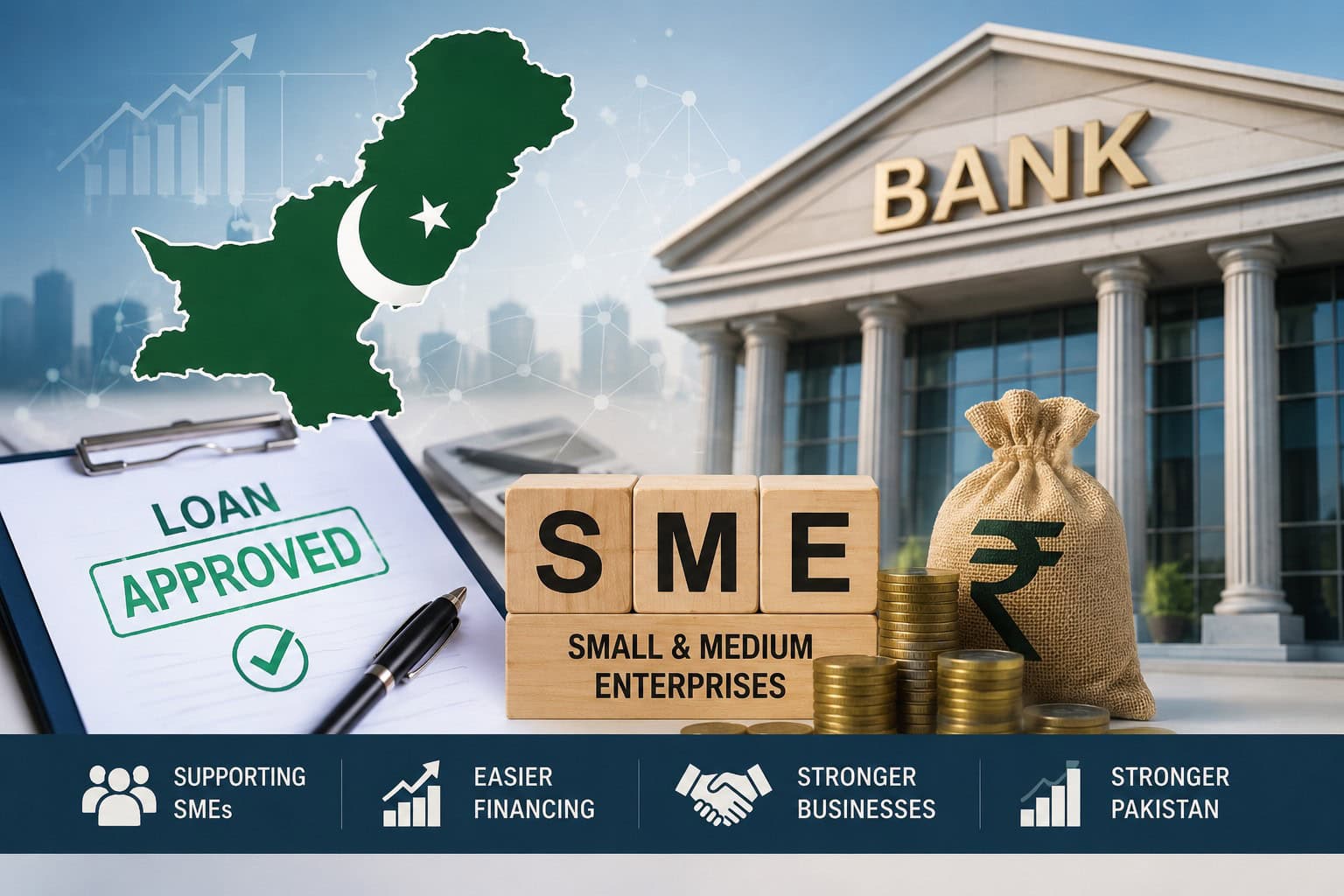
Learn why small Pakistani businesses struggle for loans, what SBP changed in July 2026 and how to assess borrowing costs and improve access to finance.
Key Takeaways
- The SBP revised SME sales-turnover definitions effective 16 July 2026: micro up to Rs30 million; small above Rs30 million to Rs400 million; medium above Rs400 million to Rs2 billion, according to the official circular.
- Revised prudential regulations took effect 1 January 2026; a new definition does not automatically make an applicant eligible for a loan.
- Working-capital finance and fixed-investment loans solve different problems, so a small firm must match borrowing duration to cash-flow cycles.
- Credit reform will not succeed through targets alone; better records, predictable taxation, faster contract enforcement and suitable financial products matter.
A small food processor in Hyderabad may have orders, workers and a functioning factory but no affordable way to buy packaging in bulk. That is the real story behind SME finance Pakistan 2026. Banks can see a growing customer base yet remain unsure whether the borrower’s invoices are genuine, how seasonal cash flow will cover instalments or how a dispute would be resolved.
The State Bank has updated its prudential rules and definitions. The July 16, 2026 circular puts micro, small and medium enterprises into turnover bands intended to reflect current conditions. That is useful. But the bigger task is moving beyond collateral-heavy lending toward evidence-based credit for firms that have sales, skills and realistic repayment capacity. A rule change cannot substitute for trustworthy accounts or economic demand.
What is an SME in Pakistan under the July 2026 SBP definition?
For the SBP regulatory categories, micro enterprises have annual turnover up to Rs30 million; small enterprises above Rs30 million to Rs400 million; and medium enterprises above Rs400 million to Rs2 billion. An eligible enterprise up to five years old may be defined as a start-up. Other agencies can use different definitions.
Who counts as an SME under Pakistan’s 2026 banking rules?
The State Bank circular issued 16 July 2026 revised the definitions for banking-regulatory purposes using annual sales turnover. These categories are not necessarily identical to the business definitions used by every tax or provincial authority.
| Enterprise category | Annual turnover for SBP regulation, July 2026 |
|---|---|
| Micro | Up to Rs30 million |
| Small | More than Rs30 million and up to Rs400 million |
| Medium | More than Rs400 million and up to Rs2 billion |
| Start-up | A qualifying micro, small or medium firm up to five years old |
Turnover is not profit. A wholesale trader can record large sales on narrow margins. A specialised software firm may have smaller revenue but strong recurring profits. Lenders should examine both the scale and the quality of cash flows.
Why definitions matter
Classification may influence which prudential framework, bank product or reporting category applies. But a business crossing from micro into small classification does not automatically receive a loan or become exempt from ordinary risk checks. Owners must still provide accurate records, comply with the lender’s conditions and explain the purpose of borrowing.
The November 2025 SBP prudential reform, applicable from 1 January 2026, was aimed at more sustainable and inclusive SME finance. The July update adjusted definitions to economic realities, rather than representing an across-the-board government loan guarantee.
Why do banks reject viable businesses?
Small firms frequently blur personal and business transactions. A shop owner may have steady customers but no credible monthly sales ledger. Payments to suppliers may pass through cash or family accounts. The bank then sees insufficient documentary evidence despite the business owner being able to describe every customer and product.
Collateral creates a second barrier. Land titles can be contested, property values can fluctuate and enforcing security may take time. A lender that relies only on property is likely to favour an established business owner over a potentially faster-growing young enterprise.
Third, cash flow is volatile. An agricultural trader may make most sales after harvest while a school-supplies business peaks before the academic year begins. Standard monthly instalments can be poorly matched to both. The issue is not simply that banks refuse to lend; it is that financial products often fail to fit the business model.
The World Bank Pakistan framework identifies the private investment environment as crucial to longer-term growth. For credit markets, it implies more reliable commercial records, fewer bureaucratic bottlenecks and stronger dispute resolution. Banks must also improve the way they assess productive assets and trade receivables, not just buildings.
How expensive is an SME loan really?
The State Bank held its policy rate at 11.5% on 14 September 2026, as recorded by official SBP monetary information. That rate is not the same as the rate an individual SME pays. Banks price loans using funding costs, expected default losses, operating expenses, collateral strength and profit margins.
Consider a hypothetical Rs2 million working-capital facility used continuously for one year at an illustrative annual interest cost of 18%, excluding fees and principal repayments. Simple interest would be Rs360,000. If there were a separate Rs20,000 arrangement fee, the first-year financing cost would total Rs380,000. These rates and costs are examples, not a market quote.
| Illustrative facility | Amount |
|---|---|
| Borrowed principal | Rs2,000,000 |
| Example nominal annual interest | 18% |
| Simple one-year interest | Rs360,000 |
| Example one-time fee | Rs20,000 |
| Illustrated financing cost | Rs380,000 |
Real loans can have reducing balances, different compounding, insurance, security documentation costs and early-repayment clauses. Compare the full repayment schedule and effective annual cost, not just the advertised rate.
A business should ask a sharper question than whether the lender will approve finance: does the expected profit from using this money exceed its all-in cost after allowing for delays, unsold goods and bad debts?
Could cash-flow lending work without conventional collateral?
A merchant receiving digital payments can show repeatable sales. A small exporter with purchase orders may show contract value and shipment history. An established factory can demonstrate inventory turns and receivables. These are all potentially relevant signals, but banks need controls to distinguish genuine trade from inflated invoices or circular transfers.
Receivables finance can address timing. If a strong customer owes a supplier Rs1 million payable in 60 days, a lender may finance part of the expected collection, subject to credit checks and an enforceable assignment. The transaction is different from giving an unsecured long-term loan based on optimism about future sales.
Equipment finance can connect repayment to increased productive capacity. A packaging machine that reliably raises daily throughput may be easier to assess than a general-purpose cash request. Still, equipment resale values and maintenance costs matter.
The SBP revised prudential regulations provide the regulatory context. Innovation must be paired with responsible underwriting and clear customer disclosure. Encouraging indiscriminate lending to meet political quotas would merely move losses to banks, taxpayers or future borrowers.
What should Pakistan learn from digital payment adoption?
Electronic sales records can lower the cost of assessing a business, particularly where transactions once went unrecorded. The SBP’s payments-review publications show sustained growth in formal digital transactions. However, cash remains important outside the banking system, and digital transaction volume cannot be used as a direct measure of all household or business spending.
A corner shop in Quetta might begin by accepting QR payments and using a simple accounting application. After several months, an accurate daily sales history may help show the bank that the business has enough gross margin to repay a seasonal loan. But data sharing requires informed consent, cybersecurity standards and the right to correct errors.
The goal should not be to impose expensive point-of-sale equipment on every shop. Simple and interoperable digital invoices, receipts and business accounts can be enough to begin formalising sales evidence. A lender should explain which data it uses and offer a human review when an automated credit score rejects a borrower.
Cross-border exporters also need credible trade-document verification. For both domestic and international firms, lower payment friction helps produce a consistent record of earnings.
What reforms would turn credit access into stronger businesses?
Banks should publish transparent eligibility checklists for micro and small borrowers, clarify total loan charges and offer products whose repayment schedules fit seasonal income. Government can support the legal systems underpinning invoices, commercial contracts, property rights and business registration. Neither side can fix the market alone.
The July 2026 turnover definitions make it easier to classify firms, but reforms should be judged by outcomes: productive loans disbursed, performing repayment rates, first-time borrowers served and survival of firms using finance. A sudden jump in lending that produces poor repayment is not success.
Train business owners in working-capital management. A borrower who cannot calculate gross margins may borrow too much even at a favourable rate. Encourage lenders to explain credit decisions in plain language and identify documents or changes that could improve an application.
Finally, avoid substituting an interest subsidy for deeper reform. Subsidised credit may assist selected firms, but if tax rules, energy prices and payment collection remain unpredictable, the same businesses may return to trouble when the subsidy ends. The point of SME finance is the capacity to earn and repay, not borrowing for its own sake.
What This Means for You
Shopkeeper or trader: Separate personal cash from business receipts. Prepare a 12-month sales record, supplier invoices, rent payments and an inventory summary. Calculate how much working capital is actually tied up between paying suppliers and collecting from customers.
Manufacturer: Match the proposed loan to new contracts or machinery productivity. Stress-test revenues against higher energy costs and customer payment delays; never finance permanently weak profit margins with short-term debt.
Freelancer building an agency: Preserve foreign-client invoices and bank receipts. Ask lenders whether your business form and recurring export income count toward their underwriting requirements.
Banker and regulator: Measure rejection reasons, recovery quality and how many previously unserved firms become sustainable borrowers. Use the July 2026 definitions consistently, but keep room for commercial judgement supported by evidence.
What to Watch Next
- 26 October 2026: The State Bank monetary-policy decision and any revision to its inflation assessment; verify any schedule change with the SBP.
- Early November 2026, exact release date to be confirmed: Pakistan Bureau of Statistics October inflation and merchandise-trade releases.
- Late October–November 2026, date not yet confirmed: Any IMF Executive Board announcement on the October staff-level agreement; staff agreement is not Board approval.
- Throughout FY2026–27: Updated SBP monthly balance-of-payments and remittance statistics; compare cumulative results rather than one month alone.
Frequently Asked Questions
What is an SME in Pakistan under the July 2026 SBP definition?
For the SBP regulatory categories, micro enterprises have annual turnover up to Rs30 million; small enterprises above Rs30 million to Rs400 million; and medium enterprises above Rs400 million to Rs2 billion. An eligible enterprise up to five years old may be defined as a start-up. Other agencies can use different definitions.
Can a new small business get a bank loan in Pakistan?
It may be eligible for a lender’s SME or start-up product, but eligibility and approval depend on the rules, business records, expected repayment, collateral or other security and individual bank assessments. The July 2026 SME definitions do not guarantee approval.
What is the interest rate for SME loans in 2026?
There is no single mandated rate for every SME facility. Funding benchmarks such as the SBP policy rate are different from commercial loan pricing. Ask each lender for its effective annual cost, repayment schedule, fees and any security requirements.
How can a small company improve loan approval chances?
Maintain separate business accounts, accurate invoices, supplier and customer records, tax documents where applicable and a realistic cash-flow forecast. Explain precisely how the borrowing will generate enough earnings to repay. Do not inflate figures or borrow solely because a subsidised product is available.
Can digital payments help small businesses access credit?
A consistent documented payment history can give lenders better evidence of turnover, especially when supported by invoices and bank records. It is not automatic approval. Borrowers should understand consent and privacy terms for credit models using transaction data.
Pakistan does not need to make every small business a borrower. It needs to stop excluding productive firms merely because they lack the paperwork or collateral that a traditional loan officer finds most convenient. Good credit converts reliable sales into greater capacity; bad credit only postpones a cash crisis.
Discover more from The Economy
Subscribe to get the latest posts sent to your email.


AI Investment Boom 2026–2027: Can Pakistan Capture the Upside?

Global Economy 2026–2027: What Slower Growth Means for Pakistan

Why Global Inflation Is Rising Again in 2026, and What It Means for Pakistan

Raast Pakistan 2026: Digital Payments, Fintech

Pakistan Real Estate Tax 2026: What Buyers, Sellers and Investors Must Check

SME Finance Pakistan 2026: Why Small Businesses Still Struggle for Credit

Pakistan IMF Programme 2026: Why Bailouts Keep Returning

Agri-Tech Pakistan 2026: Where Farming Innovation Could Actually Pay

Pakistan Tax Net: Why Agriculture, Retail and Property Are So Hard to Tax

KSE-100 Index 2026: Is Pakistan’s Stock-Market Recovery Sustainable?

Pakistan IT Exports 2026: What Would It Take to Reach $10 Billion?

Pakistan AI Policy 2025: Can It Raise Productivity and Create Jobs?

Pakistan Remittances 2026: How Overseas Workers Support the Economy

Can Pakistan Reach $34 Billion in Exports? The Real Barriers and Fastest Fixes

Crude Oil & Petroleum Market Analysis: OPEC+ Decisions and Price Forecasts

World’s Largest Economies: Ranking the Top Global Powers

Pakistan Economy 2026: Inside the SBP’s Balancing Act

Asian Stock Markets 2026: Japan, China, Pakistan & More

Silver Price Today: Why the Xi-Trump AI Standoff Is Fueling a Safe-Haven Rally

SpaceX IPO 2026: History’s Biggest Stock Debut?

Oil Prices 2026: Inside the Hormuz Crisis That Won’t End

Algorithmic Dogfights: Why the U.S. and China Must Establish Rules of Engagement for Autonomous Air Power

Top US Convenience Store Chains: Store Counts, EV Charging, and Sales Trends

Who Is Shivon Zilis? The Neuralink Executive at the Center of the Musk–OpenAI Trial

Business Insurance: What Coverage You Actually Need and What It Costs in 2026

Global Economic Outlook 2026: 7 Forces Reshaping Markets, Trade and Business

Corporate America Faces a New Debt Test as US Borrowing Costs Surge

Is AI a Stock Bubble in 2026? What the Data Shows
-

 Markets & Finance10 months ago
Top 15 Stocks for Investment in 2026 in PSX: Your Complete Guide to Pakistan’s Best Investment Opportunities
-

 Analysis8 months ago
Johor’s Investment Boom: The Hidden Costs Behind Malaysia’s Most Ambitious Economic Surge
-

 Analysis8 months ago
Top 10 Stocks for Investment in PSX for Quick Returns in 2026
-

 Banks9 months ago
Best Investments in Pakistan 2026: Top 10 Low-Price Shares and Long-Term Picks for the PSX
-

 Analysis9 months ago
Brazil’s Rare Earth Race: US, EU, and China Compete for Critical Minerals as Tensions Rise
-

 Investment9 months ago
Top 10 Mutual Fund Managers in Pakistan for Investment in 2026: A Comprehensive Guide for Optimal Returns
-

 Global Economy10 months ago
15 Most Lucrative Sectors for Investment in Pakistan: A 2025 Data-Driven Analysis
-

 Global Economy10 months ago
Pakistan’s Export Goldmine: 10 Game-Changing Markets Where Pakistani Businesses Are Winning Big in 2025