
AI
OpenAI Acquires TBPN for “Low Hundreds of Millions”

The AI giant’s first media acquisition isn’t really about a talk show. It’s about who controls the story of the century.
On April 2, 2026, OpenAI announced something that stopped Silicon Valley mid-scroll. The company that built ChatGPT — the most consequential software product in a generation — had purchased TBPN, a live-streaming tech talk show launched just eighteen months ago by two former startup founders. The deal, reported by the Financial Times as priced in the “low hundreds of millions of dollars,” marks OpenAI’s first-ever media acquisition. It is, on its surface, an extraordinary thing: a $300 billion AI behemoth buying a buzzy, eleven-person internet show hosted in the cultural register of ESPN’s SportsCenter, but for venture capital.
Yet reducing this to a curiosity — a quirky acqui-hire dressed up in strategic language — would be a significant analytical error. The OpenAI TBPN acquisition is, in fact, one of the most legible strategic documents that Sam Altman’s organisation has ever produced. Read it carefully and you will find a company that understands something most of its Silicon Valley peers do not: in the attention economy of artificial intelligence, the narrative is the product.
Silicon Valley’s Newest Obsession, Now Owned by Its Biggest Character
TBPN — Technology Business Programming Network — is not, by conventional media metrics, a behemoth. The New York Times has called it “Silicon Valley’s newest obsession,” a description that captures the phenomenon’s cultural weight without fully explaining its mechanics. The show, hosted daily Monday through Friday from 11 a.m. to 2 p.m. Pacific Time, draws roughly 70,000 viewers per episode across YouTube, X, LinkedIn, and Spotify. It generated approximately $5 million in advertising revenue in 2025 and was on pace to exceed $30 million in 2026 — an impressive growth trajectory, though still a rounding error in OpenAI’s financial universe.
What TBPN has built, and what money cannot easily replicate, is access embedded within credibility. Hosts John Coogan and Jordi Hays — both veteran entrepreneurs with personal relationships throughout the Valley — have created a rare forum where Mark Zuckerberg, Satya Nadella, Marc Benioff, and Sam Altman himself come not to give polished press-conference answers but to react, riff, and occasionally say something they probably shouldn’t. It is the place where executive moves are processed like sports trades, where AI announcements are dissected in real time, where the texture of industry thinking is visible in a way that no Bloomberg terminal can capture.
The show has gained a cult following in Silicon Valley, functioning as a kind of safe space where industry power players can speak candidly and be questioned by fellow insiders. TechCrunch That candour — authentic, unmediated, peer-to-peer — is precisely the asset OpenAI has acquired. Not a studio, not a distribution platform, not a subscriber list. A room where the powerful feel comfortable.
The “Side Quests” Irony: OpenAI’s Most Visible Contradiction
The timing of this deal is, to put it diplomatically, awkward.
The acquisition comes after Fidji Simo, who runs OpenAI’s product business, urged staff in a separate memo to stay focused on core business lines such as ChatGPT and coding tools, writing, “We cannot miss this moment because we are distracted by side quests.” PYMNTS.com That memo was circulated weeks before TBPN was announced. The irony was not lost on anyone. Fortune noted the apparent contradiction with characteristic directness, calling the TBPN deal “OpenAI’s surprise side quest” and pointing out that the company had just raised $122 billion and promptly used some of it to buy a podcast.
OpenAI insiders pushed back on this framing. People close to the company rejected the accusation that TBPN is such a side issue, noting that since neither researchers nor engineers would be deployed for the show and it does not constitute a new product, the acquisition is not a distraction. Trending Topics It is a fair technical point. But it misses the deeper political charge embedded in the criticism.
The “side quests” memo was itself a signal — to employees, to investors, to the market — that OpenAI was tightening its focus ahead of what many believe will be an IPO this year. Purchasing a media company weeks later, at a valuation that requires significant financial and managerial capital to justify, disrupts that signal badly. It invites exactly the kind of question that pre-IPO companies dread: Does leadership know what it is doing?
Bloomberg reported that demand is weakening for private shares of OpenAI in the secondary market. If OpenAI intends to go public this year, as many speculate, it needs a narrative reset — fast. And the quickest way to control the narrative is to literally own the medium that distributes it. Fortune
There is the cold, uncomfortable logic of this deal, stated plainly. The OpenAI TBPN acquisition is not, at its core, an editorial investment. It is a pre-IPO communications infrastructure play dressed in the language of authentic discourse.
Chris Lehane, “The Dark Arts,” and the Architecture of Influence
If Fidji Simo’s internal memo represents the deal’s public rationale, the organisational reporting structure reveals its true character. TBPN will sit within OpenAI’s Strategy organisation and report directly to Chris Lehane, the company’s chief global affairs officer.
Lehane, who has been described as a master of the “political dark arts,” is also behind the crypto industry super PAC Fairshake, which spent hundreds of millions to kneecap anti-crypto candidates in the 2024 election. He invented the phrase “vast right-wing conspiracy” as a tool to deflect press scrutiny of the Clinton White House. TechCrunch
This is not a communications hire who will oversee press releases. Lehane is an operator — a man who thinks in terms of information ecosystems, power centres, and long-game influence architecture. In an interview with CNN, Lehane cited the long history of “companies and entities owning and acquiring media properties,” harkening to the days of Westinghouse — a comparison that, in its historical sweep, rather proved critics’ point. CNN
The OpenAI narrative control strategy, as it is emerging, is sophisticated in a way that blunt corporate PR rarely is. The goal is not to produce flattering content about OpenAI — that would destroy TBPN’s value almost immediately. The goal, as Lehane framed it to CNN, is to “scale what they can do and how they do it, so that they are able to really continue to deliver those ideas but to bigger and bigger audiences.” Lehane understands that credibility cannot be manufactured. It can only be preserved, leveraged, and quietly amplified.
TBPN president Dylan Abruscato posted that the show will retain full control over all its editorial decisions and branding. But as The Information‘s Martin Peers noted bluntly, “OpenAI’s promise of editorial independence for TBPN is irrelevant. Independence for what purpose? Can you imagine TBPN doing a hard-hitting piece on OpenAI? It’s not in the show’s DNA.” CNN
This is precisely the point. TBPN has never been adversarial journalism. It is, constitutionally, a celebration of builders and the things they build. Its editorial DNA is not investigative; it is conversational. OpenAI has not purchased a watchdog. It has purchased a microphone that already faces the right direction. The future of tech journalism AI companies are building is not censorship — it is curation at scale, the quieter, more durable form of influence.
The Competitive Context: Why This Is Not Just About Messaging
OpenAI, jostling with Anthropic for enterprise customers, has bought TBPN, an online tech talk show that has built a loyal Silicon Valley following through interviews with industry CEOs. wkzo That competitive framing — OpenAI vs. Anthropic — is the most analytically underexplored dimension of this deal.
Anthropic has, in recent months, managed to position itself as the “responsible AI” company — a brand distinction that has significant commercial consequences as enterprise customers, particularly in regulated sectors, weigh their AI vendor choices on reputational as well as technical grounds. Anthropic’s showdown with the Pentagon this year left OpenAI looking like the bad guy Fortune, a perception that is competitively costly in ways that quarterly revenue figures cannot yet capture but that institutional investors understand deeply.
OpenAI has multiple image problems compounding simultaneously: its evolving corporate structure, the ongoing legal battle with Elon Musk, its defence contracts, and questions about its long-term commercial viability. The deal’s timing, weeks before the Altman-Musk trial, underscores its role in narrative control. TBPN’s reliance on X for distribution adds irony, as OpenAI bolsters a show on a platform owned by its legal adversary while positioning itself to amplify pro-AI voices. MLQ
The OpenAI media empire in formation — and it is fair to call it an empire in its nascent stage — is fundamentally a response to competitive asymmetry. When you cannot win on every dimension of public perception through conventional means, you change the terrain. You do not just participate in the conversation. You own a piece of the room.
The Precedent Problem: What History Teaches Us
OpenAI’s out-of-the-blue acquisition of TBPN continues a pattern that dates back a hundred years, to 1926, when RCA created NBC in part to sell radios. Time and time again, pioneers of new platforms have also bought up content and influenced conversations about those platforms. CNN
The analogy is instructive, and not entirely comfortable. RCA-NBC is the sanitised version of the story. The messier version is CoinDesk, acquired by Digital Currency Group in 2016 to provide credible coverage of the crypto markets that DCG itself was helping to create. CoinDesk maintained editorial independence for years — and then, as the FTX collapse exposed the ecosystem’s rot, the publication’s ownership became a central question in every story it touched. Critics point to earlier cases in which similar assurances faltered under the pressure of economic interests, such as with the crypto news portal CoinDesk. Trending Topics
The counterfactual — what happens to TBPN’s editorial character when OpenAI faces a genuinely damaging story, a real safety incident, an IPO stumble, a regulatory crisis — remains untested. Sam Altman’s pledge that he will “help enable” continued scrutiny of the company through his “occasional stupid decisions” is, in the cold light of corporate history, a charming but structurally inadequate guarantee.
The Geopolitical Dimension: AI, Discourse, and American Soft Power
There is a dimension of this deal that has received insufficient attention in the breathless coverage of the past 48 hours: its global implications for AI discourse and American soft power.
OpenAI is not merely a technology company. It is a geopolitical actor operating at the frontier of what many governments consider a strategic resource comparable to nuclear capability. The U.S. government — through its funding posture, export controls, and regulatory framework — has implicitly positioned OpenAI and its peers as instruments of American technological primacy. The OpenAI TBPN implications extend, therefore, well beyond Silicon Valley’s internal culture.
TBPN, as scaled by OpenAI’s resources and international distribution ambitions, becomes something more than a daily talk show. It becomes a platform — potentially the platform — through which America’s most consequential AI company explains itself to the world. Fidji Simo’s internal memo spoke explicitly about helping people “understand the full impact of this technology on their daily lives.” That is a communications mandate with global reach.
In an era when China’s AI narrative is shaped by state media and Europe’s is shaped by regulatory anxiety, OpenAI shaping the AI conversation through a credible, founder-native media format is a form of soft power that governments and trade bodies should pay attention to. The Financial Times, the Economist, and Reuters will continue to provide independent analysis. But for the large and growing audience of builders, developers, and technology-adjacent investors who shape downstream opinion, TBPN under OpenAI will increasingly define the ambient discourse. That is not nothing. That is, arguably, everything.
What This Means for Independent Tech Media
Let us state the uncomfortable conclusion directly: the future of independent tech media has become more complicated this week.
TBPN’s acquisition, at these valuations, for a company that is eighteen months old and generating $5 million in annual revenue, establishes a price signal that will distort the emerging creator economy in ways both predictable and not. Every founder-hosted talk show, every technically credible Substack, every daily-format YouTube programme covering AI is now implicitly a potential acquisition target. The logic of “going direct” — of AI companies bypassing traditional media to communicate with their most relevant audiences — has been financially ratified in a way it had not been before.
TBPN’s fast ascent is a vote for people who think live-streaming is the media format of the future. While TBPN doesn’t command a huge live audience, the format gives them three hours of content they can then slice up and shoot out in shareable bites, all over the internet. AOL OpenAI will now industrialise that playbook, funding a distribution flywheel that independent competitors cannot match.
The implication for journalism — genuine, adversarial, accountability journalism about AI companies — is a further concentration of the field around a handful of publications with the institutional independence and financial resources to sustain it: the Financial Times, The New York Times, Wired, The Atlantic, and a shrinking list of peers. Everyone else will be navigating an information environment increasingly shaped, at the edges, by the very companies they are ostensibly covering.
The Brutally Honest Verdict
Here is what we know with confidence: OpenAI paid a significant sum for an eleven-person company with $5 million in revenue and no proprietary technology. The deal makes no conventional financial sense. It makes complete strategic sense.
Sam Altman called TBPN’s hosts “genius marketers” and acknowledged that “given the amazing things AI can do, there’s got to be better marketing for AI.” TheWrap That is the most candid sentence Altman has uttered about this deal, and it deserves to sit at the centre of every analysis. This is not, fundamentally, a media company buying a media property. It is a marketing operation conducted at acquisition scale, dressed in the language of editorial values and the aesthetics of authenticity.
That does not make it wrong. Corporations have always sought to shape the environments in which they operate. The question is whether the architecture of influence being built here — TBPN under OpenAI, reporting to a political operator of Lehane’s calibre, on the eve of a potentially historic IPO — is transparent enough in its design for the market, for regulators, and for the public to evaluate on its merits.
The answer, as of today, is not yet. But the story is just beginning. And now, in a meaningful sense, so is OpenAI’s media empire.
Discover more from The Economy
Subscribe to get the latest posts sent to your email.


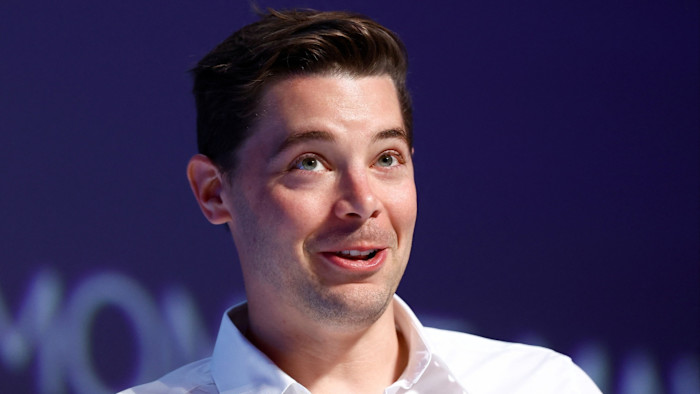
The memo landed on a Thursday afternoon, and for anyone who has followed OpenAI’s evolution from scrappy non-profit to near-trillion-dollar enterprise machine, the subtext was louder than the text. Fidji Simo — the former Meta and Instacart executive who had become the company’s most visible commercial face — announced to her team that she would be taking medical leave to manage a neuroimmune condition. In the same breath, she disclosed that Brad Lightcap, the quietly indispensable COO who had run OpenAI’s operational machinery since the GPT-3 era, was moving out of his role and into something called “special projects.” And that the company’s chief marketing officer, Kate Rouch, was stepping down — not to a rival, but to fight cancer.
Three senior executives, three simultaneous transitions, all announced in a single internal memo. On the surface, it reads like a company under strain. Look closer, and it reads like something more deliberate, more consequential — and far more revealing about where OpenAI actually intends to go.
The Lightcap Move: Elevation or Exile?
The first question anyone asks about a COO being moved to “special projects” is whether this is a promotion or a parking lot. In most corporate contexts, the phrase is C-suite shorthand for managed exits. At OpenAI in April 2026, it is almost certainly neither.
According to a memo viewed by Bloomberg, Lightcap will now lead special projects and report directly to CEO Sam Altman, with one of his primary mandates being to oversee OpenAI’s push to sell software to businesses through a joint venture with private equity firms. Bloomberg That joint venture — internally referred to as DeployCo — is no sideshow. OpenAI is in advanced talks with TPG, Advent International, Bain Capital, and Brookfield Asset Management to form a vehicle with a pre-money valuation of roughly $10 billion, through which PE investors would commit approximately $4 billion and receive equity stakes, along with influence over how OpenAI’s technology is deployed across their portfolio companies. Yahoo Finance
Put plainly: Lightcap is not being sidelined. He is being handed what may be the single most strategically important commercial initiative in OpenAI’s history. The COO title, which implied running the whole operational machine, has been traded for something narrower and arguably higher-stakes — the task of turning OpenAI’s enterprise ambitions into a durable revenue stream before the IPO window opens.
Lightcap had served as OpenAI’s go-to executive for complex deals and investments, and had been a visible face of the company’s commercial ambitions, speaking publicly about hardware plans and brokering enterprise deals across the industry. OfficeChai Those skills translate directly. Structuring preferred equity instruments with sovereign-scale PE firms, negotiating board seats, aligning incentive structures across TPG, Bain, and Brookfield — this is a relationship-heavy, structurally intricate mandate that requires someone who understands both the technology and the term sheet.
The COO role, meanwhile, passes operationally into the hands of Denise Dresser. Dresser is a seasoned enterprise executive with decades of experience including several senior positions at Salesforce, and most recently served as CEO of Slack. OfficeChai Her appointment as Chief Revenue Officer earlier this year already signaled that OpenAI was getting serious about enterprise distribution at scale. Now, with Lightcap’s commercial duties folded into her remit, Dresser becomes the most powerful commercial executive in the company below Altman himself.
The Enterprise Imperative — and Why It’s Urgent
To understand why Lightcap’s new assignment matters, you need to understand OpenAI’s revenue arithmetic. Enterprise now makes up more than 40% of OpenAI’s total revenue and is on track to reach parity with consumer revenue by the end of 2026, with GPT-5.4 driving record engagement across agentic workflows. OpenAI That sounds impressive until you consider the comparative dynamics. Among U.S. businesses tracked by Ramp Economics Lab, Anthropic’s share of combined OpenAI-plus-Anthropic enterprise spend has grown from roughly 10% at the start of 2025 to over 65% by February 2026. OpenAI’s enterprise LLM API share has fallen from 50% in 2023 to 25% by mid-2025. TECHi®
The numbers are startling. OpenAI has the bigger brand, the larger user base, and the higher valuation. But in the market that matters most to institutional investors evaluating an IPO — high-value, sticky, recurring enterprise contracts — it has been losing ground to a younger rival. As Morningstar analysis has noted, OpenAI has never publicly disclosed its enterprise customer retention rate, a conspicuous omission for a company approaching a trillion-dollar valuation. Morningstar
The private equity joint venture is a direct response to this problem. A single PE partnership can unlock AI deployments across entire industry sectors simultaneously — a scale that consulting-led integrations cannot match. OpenAI’s enterprise business generates $10 billion of its $25 billion in total annualized revenue; channeling AI tools directly into portfolio companies controlled by PE partners would create a new enterprise AI distribution strategy beyond traditional software sales channels. WinBuzzer
In this context, handing Lightcap the DeployCo mandate is not a demotion. It is a precision deployment — sending your most experienced deal-maker to close the most important deal-making project in the company’s commercial evolution.
Fidji Simo’s Absence, and What It Reveals
The Simo news is harder to separate from human concern. Fidji Simo, CEO of AGI development, will take medical leave for several weeks to navigate a neuroimmune condition. As she noted in her memo, the timing is maddening given that OpenAI has an exciting roadmap ahead. National Today Her candor — the frank acknowledgment that her body “is not cooperating” — is the kind of leadership transparency that is still rare in Silicon Valley’s performative culture, and it deserves recognition as such.
But her absence also removes the executive who had, in the space of barely a year, become the principal architect of OpenAI’s application-layer strategy. Simo had been central to moves including acquiring Statsig for $1.1 billion, buying tech podcast TBPN as a narrative infrastructure play, launching the OpenAI Jobs platform, and publicly championing the company’s application-layer strategy. OfficeChai While she is away, co-founder Greg Brockman will step in to handle product management. NewsBytes
Brockman’s return to operational product responsibility is itself significant. The co-founder who stepped back from day-to-day duties to take a leave of his own in 2024 is now being called back into the arena, which underscores both OpenAI’s depth of bench concern and, more charitably, the genuine camaraderie that defines its founding generation. It also places an unusual degree of product authority back with someone whose instincts are research-first — a potential counter-current to the enterprise-revenue urgency the rest of the restructuring signals.
The Kate Rouch Question: Talent, Health, and the Human Cost of Hypergrowth
If Lightcap’s transition is a strategic calculation and Simo’s absence is a medical reality, Kate Rouch’s departure sits at the painful intersection of both. The chief marketing officer is stepping down to focus on her cancer recovery, with plans to return in a different, more limited role when her health allows. In the interim, the company is searching for a new CMO. TechCrunch
There is no analytical frame that makes this feel anything other than what it is — a human being dealing with something far more serious than quarterly targets, and a company that, whatever its strategic intentions, is navigating extraordinary personal circumstances among its leadership ranks. Three senior executives facing serious health challenges simultaneously is not a pattern you expect to see in a single memo, and it would be inappropriate to reduce it to a governance risk calculation.
And yet, for investors evaluating OpenAI’s trajectory toward a public listing, the concentration of institutional knowledge at the senior level — and the fragility that implies — is a legitimate consideration. OpenAI has built an extraordinary organization, but it has done so at a pace and intensity that extracts real costs from the people inside it. The question of whether hypergrowth culture is sustainable is not abstract when you are reading about simultaneous health crises in the C-suite.
What This Means for the IPO Narrative
On March 31, 2026, OpenAI closed a funding round totaling $122 billion in committed capital at a post-money valuation of $852 billion, anchored by Amazon ($50 billion), NVIDIA ($30 billion), and other strategic investors. Nerdleveltech A Q4 2026 IPO is widely expected, and the executive restructuring announced this week must be read against that backdrop.
For an IPO to succeed at a valuation approaching or exceeding $1 trillion, OpenAI needs to demonstrate two things that public investors demand above all else: predictable, recurring enterprise revenue, and a governance structure that inspires confidence. The current week’s events simultaneously advance one objective and complicate the other.
On the revenue side, placing Lightcap on the PE joint venture and Dresser on commercial operations is exactly the right structure. Both OpenAI and Anthropic are aggressively courting private equity firms because they control enterprise companies and influence how businesses budget for software and AI — a race growing more urgent as both companies prepare to go public as soon as this year. Yahoo Finance Lightcap’s focused mandate, freed from the operational overhead of a COO role, gives him the bandwidth to close the DeployCo negotiation properly.
On governance, the picture is messier. Three simultaneous leadership transitions — one strategic, two health-related — will attract scrutiny from institutional investors who prize continuity in the months before an S-1 filing. The company’s statement that it is “well-positioned to keep executing with continuity and momentum” Yahoo Finance is the right message, but reassurances require underlying architecture. The burden now falls on Dresser, Brockman, and Altman to demonstrate that OpenAI’s flywheel keeps spinning without missing a revolution.
The Deeper Signal: From Startup to Scaled Enterprise
Step back from the individual moves and a coherent portrait emerges. OpenAI is no longer a startup that accidentally became a cultural phenomenon. It is becoming — with considerable growing pains — a scaled enterprise technology company, and the leadership restructuring reflects that maturation.
The classic startup COO is a generalist: part chief of staff, part dealmaker, part operational firefighter. As companies scale, that role almost always bifurcates. The operational machinery gets a dedicated leader with process-discipline instincts (Dresser, who built Slack’s enterprise go-to-market at scale). The deal-making and strategic partnership functions migrate to someone who can work at a higher level of complexity and ambiguity (Lightcap, now reporting directly to Altman). This bifurcation is not unusual — it is, in fact, the textbook trajectory of every company that has successfully navigated the transition from breakout growth to institutional durability.
What makes OpenAI’s version distinctive is the altitude at which it is happening. The PE joint venture Lightcap is overseeing is not a side arrangement — it is a $10 billion structural bet on a new distribution model for enterprise AI at a moment when the competitive window is closing. Once an AI system is embedded into internal workflows, switching providers becomes costly and time-consuming; early partnerships can define long-term market share. SquaredTech Lightcap’s role is to ensure that OpenAI wins that embedding race before Anthropic does.
Meanwhile, Dresser brings to the revenue function exactly the muscle memory that OpenAI needs: she ran enterprise at Salesforce and then rebuilt Slack’s commercial operations at a moment when the company needed to prove it could grow beyond viral adoption into boardroom-level contracts. The parallels to OpenAI’s current moment are striking. ChatGPT’s consumer virality is not in question. What remains unproven — to skeptical institutional investors, to enterprise buyers, and to rival AI companies gaining ground — is whether OpenAI can convert that consumer footprint into enterprise contracts with the kind of net revenue retention that justifies a trillion-dollar valuation.
What This Means: A Forward-Looking Assessment
For policymakers: The accelerating concentration of AI distribution power through private equity networks deserves regulatory attention. When TPG, Bain, and Brookfield control how AI is deployed across hundreds of portfolio companies spanning financial services, healthcare, and logistics, the implications for competition policy, data governance, and labor markets are substantial. This is not a hypothetical — it is an arrangement being structured right now.
For enterprise technology buyers: The restructuring is, in net terms, good news. Dresser’s commercial acumen and Lightcap’s deal-making focus suggest OpenAI is getting more serious about enterprise SLAs, integration support, and the kind of long-term account management that large organizations actually require. The era of enterprise AI as a self-serve API product is giving way to something that looks more like traditional enterprise software — with all the commercial discipline and relationship investment that entails.
For investors: The executive transitions complicate, but do not invalidate, the IPO thesis. OpenAI is generating $2 billion in revenue per month and is still burning significant cash; the push toward enterprise profitability is not optional, it is existential. CNBC Lightcap’s DeployCo mandate is the most direct mechanism for closing that gap. If the PE joint venture closes as structured and delivers on its distribution promise, the enterprise revenue trajectory could meaningfully improve the margin story ahead of an S-1 filing.
For the AI industry: The talent and health pressures visible in this single memo — across Simo, Rouch, and implicitly in the organizational strain that produces such simultaneous transitions — are a signal worth taking seriously. The AI industry’s intensity is not sustainable at current velocities for all of the people inside it. The companies that figure out how to pursue frontier AI development while maintaining the human durability of their leadership will outlast those that do not.
Brad Lightcap’s transition, in the end, is not the story of an executive being sidelined. It is the story of a company deploying its most trusted commercial architect on its most consequential commercial mission, at the exact moment when the outcome will determine whether OpenAI’s extraordinary private-market story becomes a publicly accountable one. The structural logic is sound. The human arithmetic is harder. And for an AI company that has spent years promising to be beneficial for humanity, learning to be sustainable for the humans inside it may be the more immediate test.
Discover more from The Economy
Subscribe to get the latest posts sent to your email.
AI
Meta’s $3bn Project Walleye: A First-of-Its-Kind AI Data Center Financing That Changes Everything
Meta’s ‘Project Walleye’ Ohio data centre is seeking $3bn in loans where lenders will fund both construction and power — a historic first in hyperscale project finance. Here’s why it matters, who wins, and what Wall Street is choosing not to see.
The Fish That Swallowed the Grid
There is something almost deliberately provocative about the codename. “Walleye” — the freshwater predator native to the lakes and rivers of Ohio — is not, on the surface, an obvious brand for what may be the most structurally consequential financing deal in the short, frantic history of AI infrastructure. And yet the name fits. A walleye hunts in murky water, using superior low-light vision to catch prey that more cautious creatures cannot see. The investors circling Meta’s Ohio data centre campus are doing something similar: extending credit into territory that the conventional project finance market has, until this week, refused to enter.
The Financial Times reported this week that a data centre campus backed by Meta — codenamed “Project Walleye” and located in Ohio — is seeking $3 billion in loans in a deal that would be the first of its kind: a structure in which lenders finance not merely the building itself but the power infrastructure required to run it. In one transaction, the walls between real estate finance and energy finance dissolve. What emerges is something new — an integrated asset class that reflects the uncomfortable truth that, in the age of generative AI, a data centre without its own power source is not a data centre at all. It is an aspiration.
What Makes Project Walleye Genuinely Different
To understand why this deal matters, you need to understand what it is not. It is not another hyperscale sale-leaseback, of which Meta has already produced several. It is not the $27–30 billion Hyperion deal in Louisiana, a monument to financial engineering in which PIMCO anchored a debt package rated A+ by S&P, the bonds traded above par at 110 cents on the dollar, and Blue Owl ended up owning 80% of a facility that Meta will lease back under a triple-net structure. The Hyperion deal was bold, but its logic was recognisable: secure an investment-grade lease from a AAA-adjacent tenant, wrap it in a special-purpose vehicle, and sell it to insurers hungry for long-duration yield. The project finance market has been doing versions of this for airports and toll roads for decades.
Project Walleye is different in a way that seems technical until you think about it carefully, at which point it becomes radical. Lenders have previously financed data centre buildings. Lenders have financed power plants. What they have not done — until now, apparently — is finance them together, as a single integrated asset, in a single loan package. The reason is straightforward: the two asset classes carry different risks, different depreciation curves, different regulatory frameworks, and different exit strategies. A building, in theory, can be repurposed. A 200-megawatt gas peaker plant built directly on a hyperscale campus for one tenant is considerably harder to redirect if that tenant walks away.
By choosing to blend these two risk profiles into a single $3 billion loan, the lenders on Project Walleye are making a statement about how they think the AI infrastructure world works now. They are saying, in effect, that the power asset and the compute asset are not separable. That the collateral is not a building plus some turbines — it is an energy-compute system, a new kind of thing that requires a new kind of underwriting.
This is, to use the technical term, a genuinely big deal.
Why Now? The Physics of the AI Arms Race
The timing is no accident. Meta’s capital expenditure guidance for 2026 runs to $115–135 billion — roughly double what the company spent in 2025, and approximately 67% of its projected annual revenue. Mark Zuckerberg has committed to what he privately described to President Trump as more than $600 billion in US investment through 2028. The company is simultaneously building Prometheus, a 1-gigawatt supercluster in Ohio expected to come online in 2026; Hyperion in Louisiana, which could eventually scale to 5GW; and a 1GW campus in Lebanon, Indiana that broke ground in February. The numbers have stopped sounding like corporate announcements and started sounding like industrial policy.
The problem — and this is the problem that Project Walleye exists to solve — is that the US electricity grid was not designed for any of this. Ohio’s Sidecat campus sits in a region where grid load is expected to quadruple within two years. AEP Ohio is building two 13-mile, 345-kilovolt transmission lines specifically to serve data centre demand, with construction running through 2027. Meta, unwilling to wait, has had a 200-megawatt natural gas plant approved for direct construction on the campus itself. It has signed 20-year nuclear power agreements with Vistra covering plants near Cleveland and Toledo. It has backed Oklo’s advanced nuclear development in Pike County, targeting 1.2GW of baseload capacity by the mid-2030s.
The pattern is clear: the hyperscalers have concluded that waiting for the grid is a strategic error. Power is now a competitive moat, not a utility bill. And if power is a competitive moat, it has to be financed — which means it has to be financeable. Project Walleye is the financial industry’s attempt to catch up with that logic.
The Broader Architecture: Private Credit’s Defining Moment
Project Walleye does not exist in a vacuum. It is the latest iteration of a financing revolution that has been building since 2024, when it became apparent that the traditional bank syndication market — adequate for the $50–100 million data centre deals of the pre-AI era — was simply not structured to handle transactions at the scale the hyperscalers require.
Of the roughly $950 billion of project debt issued in 2025, approximately $170 billion was for data centre-related loans — an increase of 57% from the prior year, according to IJGlobal. Morgan Stanley expects $250–300 billion of issuance in 2026 from hyperscalers and their joint ventures alone. The investment-grade corporate bond market has absorbed $93 billion from Alphabet, Amazon, Meta, and Oracle in 2025 alone — roughly 6% of all debt issued. The ecosystem that has emerged to fund this is a coalition of private credit funds, insurance company balance sheets, sovereign wealth vehicles, and pension capital, all chasing long-duration, investment-grade-adjacent yield in a world where traditional fixed income cannot provide it.
Blue Owl, PIMCO, Apollo, KKR, Carlyle, and Brookfield have all competed for pieces of Meta’s deal flow. Morgan Stanley has served as the choreographer, engineering structures that satisfy accounting standards (keeping the debt off Meta’s balance sheet), ratings agencies (securing A+ classifications on what is, at some level, a bet on continued AI adoption), and regulators (navigating the complex intersection of utility law, real estate finance, and project debt). The Hyperion SPV structure — in which Blue Owl owns 80%, Meta owns 20% with a residual value guarantee, and the bonds trade freely in secondary markets — is now something of a template. Project Walleye suggests the template is being stretched.
Who Wins, Who Bears the Risk, and What the Rating Agencies Are Not Saying
The winners, in the immediate term, are obvious enough. Meta preserves its balance sheet flexibility by financing infrastructure off-book, freeing cash for AI model development, chip procurement, and the talent wars that the Zuckerberg superintelligence unit has turned into a $15 billion recruiting exercise. The private credit funds and insurance companies that lend into these deals collect spreads that, in a world of compressed returns, look genuinely attractive — around 225 basis points over US Treasuries for the Hyperion bonds, which immediately traded above par.
The risk profile is more interesting — and more contested. The structural risk in Project Walleye is the one that applies, in more or less severe form, to every deal in this space: technological obsolescence. A lender who finances a building is, ultimately, betting on the enduring value of physical real estate. A lender who finances a power plant is betting on the value of generation assets. A lender who finances both, integrated around a single hyperscaler tenant on a 20-year lease, is betting on the continued relevance of the specific compute architecture that tenant requires today. As one sophisticated buyer of securitised debt told the FT, they were actively avoiding such deals over concerns that “the properties would be obsolete by the time the debt matured.” That is not a fringe view. It is the view of a sophisticated institutional investor looking at the same deal terms that PIMCO and its peers are embracing with apparent enthusiasm.
The power plant component of Project Walleye compounds this. A 200-megawatt gas plant built to serve a single data centre campus has a 30-year engineering lifespan and a 20-year economic lifespan. If the data centre’s lease is not renewed — enabled, as the Union of Concerned Scientists noted acidly in the Louisiana context, by the very SPV structures that allow Meta to walk away after four years — the cost of that stranded power asset does not disappear. In Louisiana, it would appear on household utility bills. In Ohio, the stranding risk falls, ultimately, on the lenders themselves. This is a materially different risk from anything the project finance market has previously priced.
The rating agencies, characteristically, are lagging. A+ ratings on complex SPV debt backed by residual value guarantees from a company whose own guidance on capex swings by tens of billions of dollars between quarters is not a judgment about the intrinsic value of the asset. It is a judgment about Meta’s current creditworthiness. Those are different things, and conflating them is precisely how credit cycles go wrong.
The Geopolitics of Electricity: Ohio as a Battleground
There is a geopolitical dimension to Project Walleye that deserves more than a footnote. Ohio has, in the space of roughly 18 months, become one of the most strategically contested pieces of energy geography in the United States. The former Portsmouth Gaseous Diffusion Plant in Pike County — once a pillar of America’s nuclear weapons programme — is now the site of a joint SoftBank-AEP Ohio data centre and power project backed by $33.3 billion in Japanese funding tied to Trump’s US-Japan Strategic Trade and Investment Agreement, promising 10GW of compute and 9.2GW of natural gas generation. Oklo is building advanced nuclear reactors on the same former federal land. Meta has signed agreements with Vistra for nuclear offtake from existing Ohio plants.
In this context, Project Walleye is not merely a financing innovation. It is a territorial claim. By integrating power finance with building finance in a single transaction, Meta is asserting that its Ohio presence is not a campus — it is infrastructure. The kind of infrastructure that states build roads and transmission lines to support. The kind of infrastructure that receives tax abatements approved by emergency resolution, under NDAs, before residents know who the developer is. The kind of infrastructure that, once financed at the scale of $3 billion with a 20-year lease and its own dedicated power plant, is effectively impossible to unwind without significant political and financial consequences.
This is, depending on your perspective, either the healthy industrialisation of a Rust Belt state that has been waiting decades for transformative investment, or a slow-motion capture of public energy infrastructure by private capital operating at sovereign scale. Probably it is both.
The Contrarian Case: What Could Go Wrong
Let me steelman the bear case, because the bull case is writing itself in every term sheet signed between Midtown Manhattan and Menlo Park.
The first risk is concentration. The $3 trillion AI infrastructure build-out is, at its foundation, a bet on a single technology paradigm — transformer-based large language models running on Nvidia GPU clusters — persisting long enough to justify 20-year debt maturities. If DeepSeek’s efficiency breakthroughs in early 2025 were a warning shot, the Llama 4 reception and the broader question of whether inference will be as compute-intensive as training suggest the compute requirements curve could flatten or invert faster than the bond maturities on Hyperion or Walleye.
The second risk is political. The community pushback at Meta’s Piqua, Ohio development — where city commissioners signed NDAs before residents knew who the developer was — is not an isolated incident. It is a preview of the democratic backlash that follows when infrastructure of this scale is deployed faster than local governance can process it. Ratepayer revolts, state legislative restrictions on data centre power priority, and federal scrutiny of the off-balance-sheet structures that allowed these deals to avoid the balance sheet of a AAA-rated tech company are all foreseeable.
The third risk is the one nobody in this market talks about, because naming it feels impolite: Mark Zuckerberg. Meta’s ability to service all of this off-balance-sheet debt — to renew those leases, honour those residual value guarantees, maintain those long-term nuclear offtake agreements — depends on Meta remaining a dominant, profitable company for two decades. The residual value guarantee on Hyperion is only as good as Meta’s balance sheet. And Meta’s balance sheet, magnificent as it currently is, is 67% committed to capex guidance that assumes AI pays off at a scale that has not yet been demonstrated.
What Investors and Policymakers Should Do Next
Project Walleye will not be the last of its kind. If it closes at anywhere near $3 billion with the integrated construction-plus-power structure the FT describes, it will become the reference transaction for every hyperscaler in America trying to finance its own power independence. Morgan Stanley’s phone will ring. So will every ratings agency’s model team, every insurance company’s alternatives desk, and every sovereign wealth fund that has been circling digital infrastructure without quite finding the right entry point.
For investors, the opportunity is real but requires a discipline the market has not yet consistently displayed. Price the obsolescence risk. Distinguish between an A+ rating on a Meta-backed lease and an A+ assessment of a 200-megawatt gas plant built in 2026 for a tenant whose compute architecture may look unrecognisable in 2040. Demand transparency on exit mechanisms, walk-away provisions, and stranded asset liabilities. The Hyperion bonds traded to 110 cents on the dollar not because they were priced correctly but because demand exceeded supply. That is a market signal about appetite, not about fundamental value.
For policymakers — particularly in Ohio, Louisiana, and the dozen other states now competing aggressively for hyperscale investment — the lesson of Project Walleye is that the financial structure of these deals has real-world consequences that extend beyond the fence line of the campus. When lenders finance the power plant alongside the building, who bears the residual risk if the tenant leaves? That question deserves a legislative answer before the next $3 billion deal closes, not after.
For the rest of us, watching the walleye hunt in the murky water of AI infrastructure finance, the appropriate response is not panic, and it is not uncritical enthusiasm. It is the kind of careful attention that this particular fish, with its superior low-light vision, would understand: the ability to see clearly in conditions that are genuinely, sometimes deliberately, obscure.
Discover more from The Economy
Subscribe to get the latest posts sent to your email.
AI
Gwynne Shotwell’s Moonshot: How SpaceX Plans to Build AI Data Centers in Orbit and Manufacture Satellites on the Lunar Surface
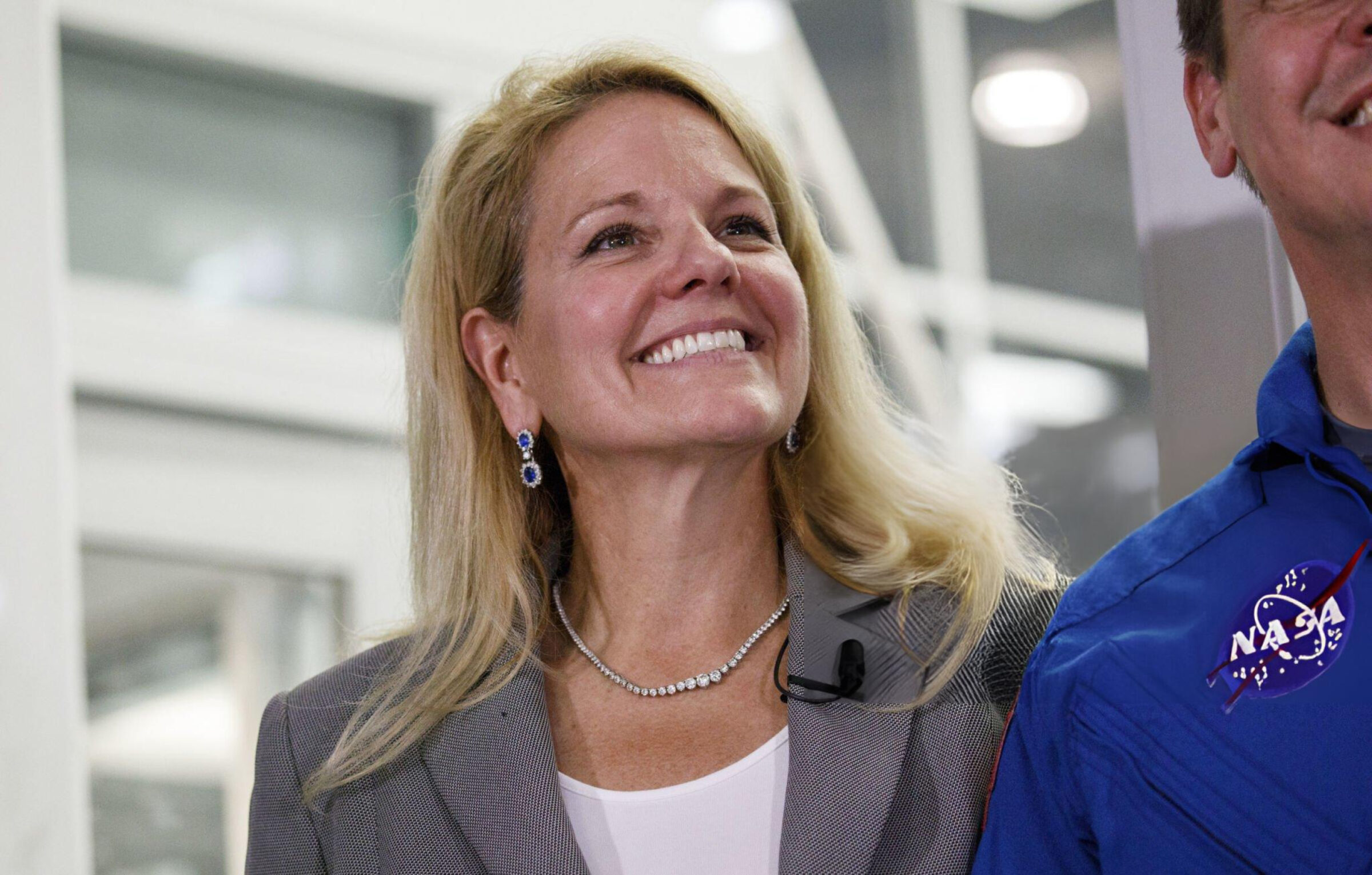
The woman behind history’s most valuable private company is steering a $1.25-trillion enterprise toward a future where artificial intelligence lives in space — and is built on the Moon.
On a Friday morning in February, inside a building roughly the size of sixteen football fields, the air smells of stainless steel and ambition. Eighteen Starship spacecraft line the gleaming white floor of SpaceX’s Starfactory in Starbase, Texas — some nothing more than enormous cylindrical barrels, nearly 30 feet across, awaiting their destinies. Others stand fully assembled, tapered nosecones already fitted, ready to be lifted atop their towering first-stage boosters to form a rocket that, at 40 stories, dwarfs every launch vehicle in history. Walking a high catwalk above this cathedral of engineering, surveying the controlled chaos below, is Gwynne Shotwell — President and COO of SpaceX, nearly 24 years into her tenure, and now the operational commander of what has quietly become the most consequential company on Earth.
“By 2028,” she says, casting her gaze across the factory floor, “these should be long gone. They better have flown by then.”
That sentence carries more weight than it might seem. Because buried inside it — inside every weld seam and stainless-steel barrel on that factory floor — is a plan to reshape not just how humanity reaches space, but what humanity does once it gets there. Shotwell and SpaceX are not simply building rockets. They are constructing the physical infrastructure for a new civilization’s computing backbone: artificial intelligence data centers in orbit, satellite manufacturing plants on the Moon, and a trillion-dollar company preparing to go public in what will likely be the largest IPO in capital markets history.
The Gwynne Shotwell AI Moon strategy is no longer a vision statement. It is an engineering program.
From Employee No. 7 to the World’s Most Valuable Company
Shotwell joined SpaceX in 2002 as its seventh employee, having persuaded a young Elon Musk over a cocktail-party conversation that his fledgling rocket venture desperately needed someone to sell it to the world. She was right then, and she has been right about most things since. Over more than two decades, she transformed SpaceX from an eccentric California startup that nearly went bankrupt in 2008 into a $1.25-trillion enterprise that dominates commercial launch, operates the world’s largest satellite constellation, and holds multi-billion-dollar contracts with both NASA and the U.S. Department of Defense.
The metrics alone are staggering. SpaceX’s Falcon 9 has now completed more than 630 successful launches, including a record 165 flights in 2025 alone. Starlink, the satellite internet service Shotwell championed from early ideation, now serves over 9.2 million active subscribers globally and generated more than $10 billion in revenue last year. The company reported approximately $16 billion in total revenue for 2025 and, according to Reuters, profit approaching $8 billion — numbers that would place it comfortably among the most profitable technology companies in the world, if it were public.
As of February 2026, it is becoming something larger. On February 2, SpaceX announced a landmark merger with xAI, Elon Musk’s artificial intelligence company, in an all-stock deal that valued the combined entity at $1.25 trillion — the largest private merger in recorded history. With a targeted IPO valuation now approaching $1.75 trillion, SpaceX is preparing to file its S-1 prospectus for a June 2026 listing that analysts expect to raise more than $75 billion, shattering Saudi Aramco’s $29.4 billion record from 2019.
Shotwell’s role is expanding accordingly. “It will morph over time,” she told TIME, “which is how my role has always gone.”
That is a characteristically understated way of describing what amounts to the operational merger of the world’s most powerful launch infrastructure with one of the most capable AI research programs on the planet. NASA Administrator Bill Nelson once said of Musk: “One of the most important decisions he made is he picked a president named Gwynne Shotwell. She runs SpaceX. She is excellent.” The coming years will test that excellence at a scale no executive in aerospace has ever faced.
The Convergence: Why SpaceX Needed xAI, and Vice Versa
To understand why Musk structured this merger — and why Shotwell is now driving its integration — you need to understand what AI actually needs, and what AI actually costs.
Global data center electricity consumption is projected to exceed 1,000 terawatt-hours in 2026, nearly double what it was just four years ago. A January 2026 report by Bloom Energy projects that U.S. data centers’ total combined energy demand will nearly double between 2025 and 2028, from 80 to 150 gigawatts — the equivalent of adding a country with Spain’s entire energy consumption in just three years. Goldman Sachs projects that data center power consumption will push core inflation up by 0.1 percent in both 2026 and 2027, as capacity market prices in key grid regions spike tenfold. Water is equally strained: AI data centers consume billions of gallons annually for cooling, concentrated precisely in the driest American regions where solar power is abundant.
This is not a minor inefficiency. It is a civilizational bottleneck.
Musk identified it publicly at the World Economic Forum in Davos in January: “The lowest-cost place to put AI will be in space, and that will be true within two years, maybe three at the latest.” Over the past three weeks, SpaceX has filed plans with the FCC for what amounts to a million-satellite data-center network. Shotwell confirmed in her TIME interview that she is “surprised it got little news” — an observation that speaks to how dramatically the mainstream press has underestimated the technical and economic substance of this plan.
The physics of orbital computing are compelling. According to a Starcloud whitepaper referenced by the World Economic Forum, a solar array in a dawn-dusk sun-synchronous orbit can generate over five times the energy of an equivalent array on Earth, achieving a capacity factor above 95 percent compared to just 24 percent for terrestrial solar farms. Cooling — the other existential problem for data centers — becomes passively trivial: deep space is roughly 270 degrees Celsius colder than room temperature, eliminating the need for energy-intensive chillers and fresh-water cooling systems entirely. According to IEEE Spectrum analysis, one architecture envisions a 240-kilowatt satellite housing two GPU racks with 144 processors, networked across 4,300 satellites to deliver a gigawatt of computing power.
For SpaceX, the logic is circular in the most profitable possible way. Shotwell put it plainly: “Starlink basically created this incredible demand for Falcon 9, and the AI satellites will do the same for Starship launches.” The more AI satellites SpaceX needs to launch, the more Starships must fly. The more Starships fly, the cheaper and more reliable each flight becomes. The cheaper each flight becomes, the more economically rational it is to move computing infrastructure to orbit. It is a flywheel that no other company on Earth has the launch capacity to spin.
The Technical Architecture: What a SpaceX Orbital Data Center Actually Looks Like
The FCC filing for up to one million AI satellites is not a placeholder. It reflects a specific engineering vision that has been taking shape inside both SpaceX and xAI since at least mid-2025.
The satellites themselves are conceptually distinct from Starlink’s existing broadband mesh. Rather than routing internet traffic between ground stations and end users, these AI satellites would function as distributed compute nodes — effectively, server farms in orbit. Each would carry specialized processing hardware, draw on continuous solar generation, and radiate waste heat passively into deep space through large metallic panels. Their orbital positioning would be optimized not primarily for latency to ground users, but for inter-satellite laser communication links that minimize the lag between compute nodes.
The merger with xAI provides the software layer: Grok’s large language models, reasoning engines, and inference systems would run natively on this distributed space-based architecture. The integration of Starlink’s global satellite mesh with xAI’s language models is explicitly designed to move massive compute workloads into space to exploit continuous solar energy and natural radiative cooling. This reframes the entire competitive landscape for SpaceX. The company would no longer be competing with Boeing or Lockheed Martin for launch contracts. It would be competing — and potentially undercutting — Microsoft Azure, Amazon Web Services, and Google Cloud, while being the only provider on Earth that controls launch vehicles, satellite hardware, and the AI models running on top of them.
The Lunar Gambit: Mass Drivers, Mining, and Manufacturing on the Moon
If the orbital AI constellation sounds audacious, the lunar vision that follows is genuinely unprecedented in the history of industrial planning.
Shotwell’s preferred scenario — which she describes as achievable “ideally in five years” — involves constructing a manufacturing base on the lunar surface capable of producing AI satellites from materials mined on the Moon. The gravitational physics are the core argument: with lunar gravity at roughly one-sixth of Earth’s, launching a payload from the Moon’s surface requires exponentially less energy than lifting an equivalent mass off Earth. Mass drivers — electromagnetic catapults that accelerate cargo along a track before releasing it into space — would serve as the primary launch mechanism, since the Moon’s lack of atmosphere eliminates aerodynamic drag entirely. The combination of locally sourced materials, in-situ manufacturing, and electromagnetic launch could reduce the effective cost of deploying each AI satellite by an order of magnitude compared to Earth-based production and Starship-based launch.
“If we’re building these satellites on the Moon with elements and materials from the Moon,” Shotwell told TIME, “it would be much faster and cheaper to launch them.”
This is not science fiction. The Moon’s regolith contains silicon, aluminum, iron, titanium, and oxygen in exploitable concentrations. Semiconductor fabrication from lunar silicon is technically challenging but not physically impossible. The governance question — who regulates a private lunar manufacturing base, and under what legal framework — remains genuinely unresolved; Shotwell acknowledged as much in her TIME interview. “It’s a great question,” she said of how a lunar city might be governed, “and I don’t know the answer.”
That honesty is telling. SpaceX is moving faster than the regulatory frameworks designed to constrain it, which is both its greatest competitive advantage and its most significant long-term liability.
The Artemis Alignment: Moon First, Mars Later
The lunar manufacturing vision intersects with a more immediate program: NASA’s Artemis initiative to return humans to the Moon. SpaceX’s Starship is the designated Human Landing System (HLS) for Artemis IV, currently targeting a crewed touchdown in early 2028. “It’s a hard problem and the whole architecture is complex,” Shotwell said, “but we’re gunning for 2028.”
Standing on the Starfactory catwalk and gesturing at the assembled vehicles below, she added: “By 2028, these should be long gone. They better have flown by then.”
The strategic logic of prioritizing the Moon over Mars — a subtle but significant shift from SpaceX’s founding narrative — is now explicit. Musk himself has described the near-term focus as a “self-growing city on the Moon” achievable within a decade, while Shotwell carefully insists the Mars vision has not been abandoned. What has changed is sequencing: the Moon offers both a near-term demonstration platform for SpaceX’s infrastructure capabilities and a potential manufacturing base that could dramatically accelerate the Mars timeline.
The geopolitical dimension of this sequencing deserves underscoring. China’s lunar ambitions are advancing on a parallel track: the China National Space Administration has targeted a crewed lunar landing by 2030 and has announced its intention to establish a permanent lunar research station by 2035. The industrial and strategic implications of whichever nation — or private entity — first establishes durable manufacturing infrastructure on the Moon are difficult to overstate. Control of the Moon’s resources, particularly water ice at the poles that could be converted to rocket propellant, could determine the economics of deep space access for decades.
Starship: The Machine That Makes It Possible
None of this is achievable without Starship — and Starship, in 2026, is finally becoming real.
Eleven uncrewed Starships have been launched since 2023, each producing 16.7 million pounds of thrust from its 33 first-stage engines — more than double the ground-shaking power of the Apollo-era Saturn V. The Super Heavy booster’s catch system — whereby the launch tower’s mechanical arms literally catch the returning booster mid-air — has now been demonstrated successfully, representing arguably the most dramatic reusability achievement in aerospace history.
| Vehicle | First Stage Thrust | Payload to LEO | Reusability |
|---|---|---|---|
| SpaceX Starship | 16.7 million lb (33 engines) | ~150 tonnes (target) | Full stack reusable |
| Saturn V | ~7.9 million lb (5 engines) | 130 tonnes | Expendable |
| SpaceX Falcon 9 | ~1.7 million lb (9 engines) | 22.8 tonnes | Booster reusable |
| United Launch Alliance Vulcan | ~1.7 million lb (2 engines) | 27 tonnes | Expendable |
Starship’s payload capacity and full reusability are what make the orbital AI constellation economically conceivable. A single Starship mission can deliver dozens of satellites simultaneously; with rapid reuse, the marginal cost per kilogram continues to fall toward targets that would have seemed hallucinatory a decade ago. Shotwell’s estimate that Starlink’s internal demand drove Falcon 9 reliability gains applies equally to what AI satellite demand will do for Starship: the production pressure of 1 million AI satellites is not a bug in the plan. It is the reliability engine.
Challenges, Risks, and the Skeptics’ Case
To engage seriously with this vision requires engaging seriously with its obstacles.
Launch economics at scale: Even with SpaceX driving down costs, launching hardware into orbit still runs roughly $1,500 per kilogram. A functional AI satellite with meaningful compute density — two GPU racks, as in the IEEE architecture — would weigh hundreds of kilograms. At current prices, scaling to one million satellites is a multi-trillion-dollar proposition before manufacturing costs are counted.
Latency: Signals traveling to low Earth orbit and back introduce delays of roughly 20-40 milliseconds — manageable for most workloads, but potentially problematic for real-time inference applications. For geostationary orbit, round-trip latency approaches 240 milliseconds, which is genuinely prohibitive for many AI use cases.
Radiation hardening: Consumer-grade semiconductors degrade rapidly in orbit’s radiation environment. Radiation-hardened components cost significantly more and typically lag terrestrial chips by several generations in computational efficiency.
Space traffic: Shotwell acknowledged the debris concern in her TIME interview, comparing 30,000 satellites to 30,000 cars — sparse if positions are known and communicated. But 1 million satellites is an order of magnitude beyond anything currently in orbit, and regulators at the FCC, ITU, and equivalent bodies in other countries will scrutinize collision-avoidance architecture rigorously.
Governance and geopolitics: A private lunar manufacturing base operated by a U.S. company raises profound questions under the Outer Space Treaty of 1967, which prohibits national appropriation of the Moon but is silent on private resource extraction. The legal framework is evolving, and SpaceX’s first-mover advantage may crystallize before international consensus does — which is precisely what competitors in Beijing are calculating.
The skeptics within the technical community are not wrong to raise these objections. Fortune’s reporting found that while Musk and some bulls argue space-based AI could become cost-effective within a few years, many experts say meaningful scale remains decades away. One COO of a terrestrial data center company put it bluntly: “Putting the servers in orbit is a stupid idea.” But that same Fortune piece noted the counterpoint that carries more historical weight: “You shouldn’t bet against Elon.” In 2002, putting a reusable rocket on a pad in Texas seemed equally stupid. In 2026, it is the global standard for commercial launch.
The IPO and the Economic Stakes
When SpaceX goes public — likely in June 2026, at a valuation that may reach $1.75 trillion — investors will not simply be buying a rocket company. They will be buying a thesis about where computation goes next.
SpaceX generated approximately $16 billion in revenue in 2025 with EBITDA of roughly $7.5 billion, with analysts projecting $23.8 billion in 2026 revenue. The Starlink business unit, with its 9.2 million paying subscribers and near-monopoly on high-performance satellite broadband in dozens of markets, is already functioning as a cash-generative telecommunications utility. The xAI integration adds an AI product layer — Grok and the inference infrastructure behind it — and, more importantly, the strategic rationale for deploying that compute into orbit.
The IPO structure is expected to include dual-class shares, maintaining Musk’s voting control while accessing public capital. Retail investors are reportedly being allocated up to 30 percent of shares — three times the Wall Street standard — a decision that reflects both populist branding and practical recognition that the SpaceX story resonates most powerfully with individuals who have watched it unfold in real time.
For the broader space economy, the public offering has catalytic implications. Morgan Stanley has estimated the total space economy could reach $1 trillion annually by 2040; SpaceX’s IPO will function as a pricing signal for every space-adjacent startup, satellite operator, and launch services competitor in the world.
Future Scenarios: Three Trajectories for the SpaceX AI Moon Strategy
Scenario A — Compressed timeline (2028–2031): Starship achieves full reusability and high cadence by 2028, enabling Artemis IV crewed Moon landing and initial Starlink V3/AI satellite deployment. Lunar base groundbreaking by 2030, first in-situ manufactured AI satellites launched from the Moon by 2031. Combined SpaceX entity becomes the world’s most valuable company by market capitalization, displacing Apple or Nvidia.
Scenario B — Extended timeline (2031–2036): Technical setbacks in Starship development — orbital refueling complexity, heat shield durability, booster cadence — push timelines out by three to five years. AI constellation reaches 100,000 satellites by 2032, lunar manufacturing by 2035. SpaceX remains dominant but faces meaningful competition from Amazon’s Project Kuiper and Blue Origin’s New Glenn.
Scenario C — Regulatory disruption: International coordination on space traffic and lunar governance hardens into binding treaty obligations that constrain private resource extraction and orbital congestion. A major collision event in low Earth orbit triggers FCC and ITU responses that throttle the AI satellite constellation before it reaches scale. SpaceX pivots toward terrestrial AI infrastructure, leveraging xAI’s software capabilities rather than its orbital ambitions.
Most analysts consider Scenario B the base case. Scenario A, as SpaceX’s history suggests, cannot be dismissed. Scenario C is the risk that neither Shotwell nor any investor in SpaceX’s IPO fully prices in.
FAQ: SpaceX AI on the Moon and Orbital Data Centers
What exactly are SpaceX’s AI satellites? SpaceX has filed with the FCC for licensing to operate up to one million AI satellites in orbit. These are not traditional communications satellites — they are designed to function as distributed computing nodes, essentially data centers in space. Each satellite would generate power from solar arrays, run AI inference workloads, and radiate waste heat passively into the cold of space. They are designed to circumvent the energy and cooling crises that are constraining terrestrial AI infrastructure.
Why is SpaceX planning to manufacture satellites on the Moon? The Moon’s gravitational pull is approximately one-sixth of Earth’s. Launching a satellite from the lunar surface requires dramatically less energy than lifting an equivalent payload from Earth. If satellites can be built from materials mined on the Moon — silica for semiconductors, aluminum and titanium for structures, oxygen for propellant — and launched via electromagnetic mass drivers, the cost per satellite could fall by an order of magnitude compared to Earth-based production.
What is the SpaceX-xAI merger and why does it matter? In February 2026, SpaceX completed an all-stock acquisition of xAI, Elon Musk’s AI company, in a deal valued at $1.25 trillion — the largest private merger in history. The combination links SpaceX’s launch vehicles and satellite infrastructure with xAI’s Grok language models and AI research. The stated goal is to build space-based AI infrastructure: orbital data centers powered by the SpaceX launch system and running xAI software.
When will humans return to the Moon, and what role does SpaceX play? SpaceX’s Starship is the designated Human Landing System for NASA’s Artemis IV mission, targeting a crewed lunar landing in early 2028. Shotwell has publicly committed to this timeline, stating the 18 Starships currently in production at Starbase need to have flown “long before then.”
Is Gwynne Shotwell the most important person in the space industry? She is arguably the most consequential. While Elon Musk provides the strategic vision and the public narrative, Shotwell has been the operational architect of SpaceX for nearly 24 years — building the commercial manifest, managing regulatory relationships across five federal agencies and dozens of governments, scaling Starlink from concept to 9 million subscribers, and now integrating xAI into a $1.75-trillion pre-IPO enterprise. NASA’s own administrator has called her “excellent.” The industry does not disagree.
The Next Industrial Revolution Will Be Launched from Texas
In the long sweep of economic history, there are moments when the physical location of industrial production shifts so fundamentally that the old maps become useless. The textile mills moved from cottage to factory. Steel moved from forge to blast furnace. Computing moved from mainframe to server farm. Each transition concentrated wealth, reshaped geopolitics, and rendered the previous infrastructure obsolete within a generation.
What Gwynne Shotwell is building — methodically, incrementally, from a factory floor in South Texas — is the infrastructure for a transition of equivalent magnitude. If the AI satellites fly, if the orbital data centers come online, if the lunar manufacturing base is established before Beijing’s equivalent program achieves the same, then the question of where artificial intelligence lives — where it is powered, where it is cooled, where it is built — will have been answered by a woman from a small town in northern Illinois who once convinced a young engineer that his rocket company needed someone to sell it to the world.
She was right then. The next two decades will reveal whether she is right about everything else. The odds, surveyed from a catwalk above eighteen half-built Starships on a Texas factory floor, look better than anyone outside that building has yet fully understood.
Discover more from The Economy
Subscribe to get the latest posts sent to your email.
-

 Markets & Finance3 months ago
Top 15 Stocks for Investment in 2026 in PSX: Your Complete Guide to Pakistan’s Best Investment Opportunities
-

 Analysis2 months ago
Brazil’s Rare Earth Race: US, EU, and China Compete for Critical Minerals as Tensions Rise
-

 Banks3 months ago
Best Investments in Pakistan 2026: Top 10 Low-Price Shares and Long-Term Picks for the PSX
-

 Investment3 months ago
Top 10 Mutual Fund Managers in Pakistan for Investment in 2026: A Comprehensive Guide for Optimal Returns
-

 Analysis2 months ago
Top 10 Stocks for Investment in PSX for Quick Returns in 2026
-

 Asia3 months ago
China’s 50% Domestic Equipment Rule: The Semiconductor Mandate Reshaping Global Tech
-

 Global Economy3 months ago
Pakistan’s Export Goldmine: 10 Game-Changing Markets Where Pakistani Businesses Are Winning Big in 2025
-

 Global Economy3 months ago
15 Most Lucrative Sectors for Investment in Pakistan: A 2025 Data-Driven Analysis