Connect with us

Analysis

Hong Kong Budget Surplus 2026: Back in the Black — But at What Cost?

Published

on

After three bruising years of deficit spending, Hong Kong’s finances have staged a remarkable comeback. The Hong Kong budget surplus 2026 tells a story of discipline, sacrifice, and a city betting on its own reinvention — but the fine print deserves a closer read.

There is a particular satisfaction in watching a city defy its own pessimism. Twelve months ago, Financial Secretary Paul Chan stood before the Legislative Council and projected a deficit of HK$67 billion for the 2025–2026 financial year. This week, he delivered something far more surprising: a consolidated surplus of HK$2.9 billion (approximately S$469 million), ending a three-year run of red ink a full two years ahead of schedule. For a global financial hub that has spent much of the past half-decade navigating geopolitical headwinds, a pandemic hangover, and an exodus of capital and talent, the numbers feel almost cinematic.

But fiscal turnarounds rarely arrive without a reckoning. Hong Kong’s return to surplus carries the fingerprints of austerity as surely as it does good fortune — and understanding both is essential to grasping where Asia’s most storied financial centre is genuinely headed.

How Hong Kong Turned Its Deficit Around: The Numbers Behind the Narrative

The Hong Kong budget surplus 2026 did not materialise from thin air. Two powerful forces converged: a surging asset market and a government that, for once, held the line on spending with unusual resolve.

On the revenue side, stamp duties from property and equity transactions surged as Hong Kong’s asset markets came alive in the second half of 2025. The Hang Seng Index recovered meaningful ground after years of suppressed valuations, drawing back institutional investors who had previously rotated into alternative Asian markets. Land premium income — long the bedrock of Hong Kong’s fiscal architecture — also recovered modestly as developers, sensing a floor in residential prices, resumed land bids at competitive levels.

According to data from the Hong Kong Government Budget, fiscal reserves are projected to stand at approximately HK$657.2 billion by March 31, 2026 — still a substantial war chest by most international standards, though notably lower than the HK$900-billion-plus reserves of a decade ago. That erosion, gradual but telling, is the quiet subplot beneath the headline surplus.

GDP growth for 2025 came in at the upper end of expectations, with the government projecting a 2.5–3.5% expansion for 2026, buoyed by tourism recovery, financial services activity, and growing integration with mainland China’s consumption economy. Reuters reported that a buoyant broader economy had helped tip Hong Kong’s public finances back into positive territory, with trade flows through the port recovering beyond post-pandemic lows.

The Sacrifices Behind the Surplus: A Closer Look at Hong Kong Austerity Measures

Numbers on a budget page are abstractions. The Hong Kong austerity measures impact is considerably more concrete for the city’s 7.5 million residents.

Civil service job cuts have been among the most visible instruments of fiscal consolidation. The government has allowed natural attrition to reduce headcount while implementing hiring freezes across multiple departments — a policy that has drawn muted criticism from public sector unions but limited political resistance in a legislature now dominated by pro-establishment voices. The effect is real: leaner government, slower public services, and a workforce increasingly asked to do more with structurally less.

More contentious has been the reduction in education funding. Hong Kong’s universities — once ranked among Asia’s finest and lavished with public investment — have faced successive budget squeezes. Several institutions have responded by raising tuition, cutting interdisciplinary research programmes, and, in some cases, offering voluntary redundancy schemes to academic staff. At a moment when Hong Kong is pivoting toward an innovation-driven economy, the irony of underinvesting in education has not been lost on economists.

“You cannot simultaneously declare yourself an innovation hub and defund the universities that produce your innovators,” one senior academic at the University of Hong Kong told this correspondent, requesting anonymity given the political sensitivity of the topic. The tension is structural, not incidental.

Healthcare and social welfare programmes have also faced tighter allocations, with real per-capita spending declining in inflation-adjusted terms over the past three years. For the city’s rapidly ageing population — a demographic pressure that will only intensify through the 2030s — this creates fiscal risks that the current surplus does not resolve.

Paul Chan’s Fiscal Strategy: Skilled Accounting or Structural Gamble?

Paul Chan’s fiscal strategy has attracted both admirers and sceptics in roughly equal measure. Chan himself has been careful to contextualise the turnaround. “The global environment has remained volatile, and Hong Kong has continued to undergo economic transformation,” he noted in his budget speech. “Yet, Hong Kong has always thrived amid changes and progressed through innovation… Our economy has recalibrated its course and is advancing steadily.”

The framing is deliberate. Chan knows that a single surplus year, driven in part by asset market timing rather than structural reform, is a fragile foundation for confidence. Bloomberg observed that Hong Kong was “suddenly flush with cash,” but also flagged that the revenue windfall was partially cyclical — dependent on the continuation of asset market conditions that are notoriously difficult to forecast.

To Chan’s credit, the government has simultaneously pursued bond issuance for infrastructure spending — a pragmatic separation of capital and recurrent expenditure that mirrors practices common in advanced economies. Infrastructure bonds have funded projects in the Northern Metropolis development zone near the mainland border, a signature initiative designed to attract technology companies and create a new economic engine north of the traditional urban core. Whether this bet on Hong Kong’s asset boom recovery through spatial economic diversification pays off remains the central question of the decade.

The Asia Times has been less charitable in its analysis, arguing that the surplus “masks a mounting structural deficit” driven by an ageing population, declining workforce participation, and an exodus of younger, higher-earning residents who have not fully been replaced. That structural critique deserves serious engagement rather than bureaucratic dismissal.

Hong Kong Asset Boom Recovery: Durable or Cyclical?

The Hong Kong asset boom recovery that underpins this fiscal improvement carries its own vulnerabilities. Property markets, which contribute directly and indirectly to a significant share of government revenue, remain sensitive to interest rate differentials between Hong Kong, the United States (given the currency peg), and mainland China. Any deterioration in U.S.–China relations — still the defining geopolitical variable for the city — could reverse capital flows with speed that Hong Kong’s relatively thin fiscal buffer may struggle to absorb.

Equity markets have been more encouraging. The Hang Seng’s partial rehabilitation has been driven by a combination of Chinese state-directed liquidity, genuine earnings recovery in tech and financial stocks, and a repositioning of global portfolios toward undervalued Asian assets. The Financial Times has tracked this rotation closely, noting that Hong Kong’s role as a capital markets gateway between China and the West — much pronounced dead in the early 2020s — has proven more resilient than many assumed.

The Northern Metropolis, meanwhile, is beginning to take physical shape. Early-stage technology clusters and cross-border data infrastructure projects have attracted a modest but meaningful cohort of mainland Chinese and international firms, suggesting that the government’s spatial economic strategy is not entirely illusory. Still, the timeline from infrastructure investment to sustained fiscal dividends is measured in years, not quarters.

Projections to 2030: The Road Ahead for Hong Kong’s Fiscal Health

Indicator2025 Actual2026 Forecast2028 Projection2030 Projection
Fiscal Balance (HK$ bn)+2.9+3.5–5.0 est.Marginal surplusRisk of deficit without reform
Fiscal Reserves (HK$ bn)~657~660–665~670–680TBD (population pressure)
GDP Growth~2.8%2.5–3.5%2.0–3.0%1.8–2.5% (demographic drag)
Public Debt-to-GDPLowRising modestlyModerateWatch level

The projections above, informed by government forecasts and commentary from Deloitte and KPMG’s Hong Kong practices, illustrate a medium-term fiscal picture that is cautiously optimistic but structurally unresolved. KPMG’s local economists have highlighted that without meaningful broadening of the tax base — a long-taboo conversation in Hong Kong — recurrent revenue growth will continue to lag expenditure demands from an ageing society.

The Economist has previously argued that Hong Kong’s fiscal model, built on land sales and financial transaction taxes rather than broad-based income or consumption taxes, is a legacy structure designed for different demographic and economic conditions. That argument has gained rather than lost force in the intervening years.

What This Means for Everyday Hongkongers

Behind the macro numbers are human stories that balance sheets do not capture. Teachers navigating underfunded classrooms. Civil servants managing heavier workloads with frozen pay progression. Young families who left during the upheaval years between 2019 and 2022 and are now weighing, tentatively, whether the city they grew up in has found its footing again.

The Hong Kong fiscal black 2026 achievement is real, and it matters. Confidence in fiscal management is not a luxury — it is a precondition for the investment and talent attraction that Hong Kong requires. But confidence cannot be manufactured by a single surplus year, particularly one substantially aided by asset market timing that may not repeat.

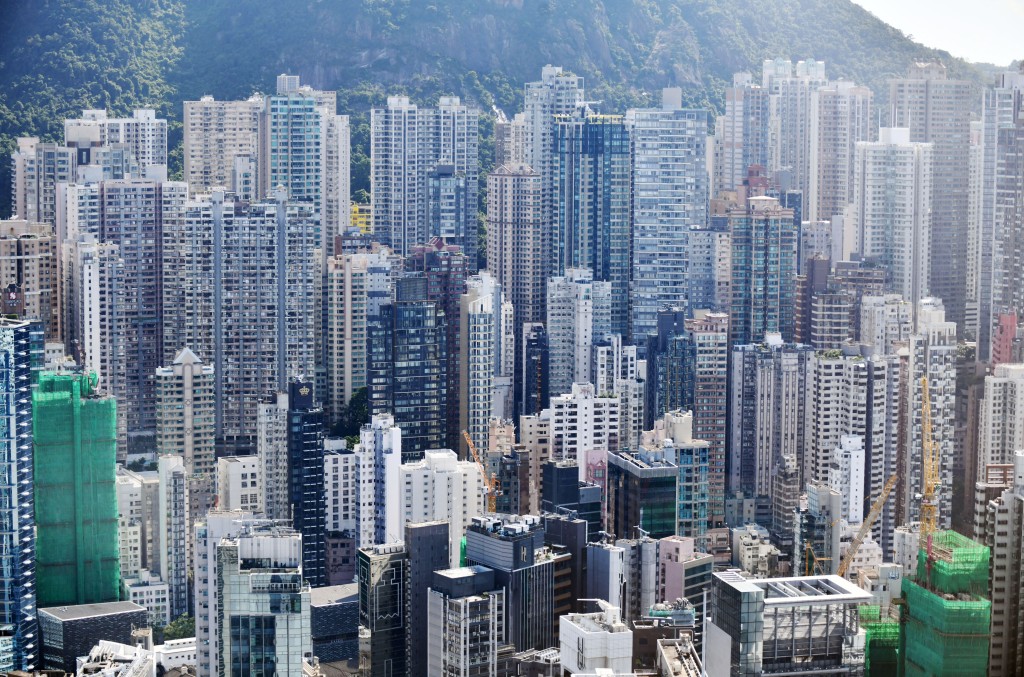
The city’s genuine long-term asset is its institutional quality: its legal system, its financial infrastructure, its connectivity to the world’s second-largest economy, and the compressed genius of its skyline. These are not the kinds of things that appear on a budget spreadsheet, but they are what international investors and mobile talent actually price.

Conclusion: A Surplus Worth Celebrating — and Interrogating

Hong Kong’s return to fiscal surplus is a genuine achievement, and Paul Chan deserves credit for the discipline required to get here ahead of schedule. The Hong Kong budget surplus 2026 is a signal worth heeding: this city is not the cautionary tale its harshest critics predicted.

But the more demanding question is what comes next. A city that has cut education budgets and reduced public sector capacity in the name of fiscal consolidation will need to reinvest — and reinvest generously — if its innovation economy ambitions are to be credible. The Northern Metropolis strategy is promising but unproven. The structural demographic challenge is advancing regardless of the business cycle.

Hong Kong has always been a city that thrives by navigating improbable circumstances with extraordinary skill. The dice, as Chan notes, are rolling in its favour again. The question is whether the city uses this window of relative fiscal stability to make the transformative investments that austerity deferred — or whether it banks the surplus and waits for the next storm.

History suggests Hong Kong performs best when it chooses ambition over caution. The budget numbers suggest it has earned, narrowly, the right to make that choice again.


Discover more from The Economy

Subscribe to get the latest posts sent to your email.

Analysis

Two Capitals, One Budget, Zero Consensus: Inside NATO’s Turf War with the EU Over Europe’s Defence Future

Published

on

The row between Brussels and NATO headquarters is not a procedural squabble. It is a civilisational argument about who governs the security of a continent — and it is happening right now, in real time, with real money.

When NATO Secretary General Mark Rutte stood before the European Parliament’s security committee on 26 January 2026 and told MEPs they were “dreaming” if they thought Europe could defend itself without America, the room didn’t applaud. It erupted. French Foreign Minister Jean-Noël Barrot shot back within hours: “Europeans can and must take charge of their own security.” Former European Council President Charles Michel was blunter still: “Europe will defend itself. And Donald Trump is not my daddy.” Nathalie Loiseau, a senior French MEP, called the moment “disgraceful.”

That exchange — raw, public, and utterly undiplomatic — was not a bad day at the office. It was the visible surface of something deeper and far more consequential: a genuine NATO–EU turf war over defence spending, industrial sovereignty, and the fundamental question of who controls Europe’s security architecture. The money involved — well over a trillion euros by 2030 — means the stakes could hardly be higher.

The Numbers That Started the Fight

To understand why the tension has turned existential, start with the scale of the transformation underway.

At NATO’s Hague Summit in June 2025, allies shattered the old 2% GDP benchmark that had defined the burden-sharing debate since 2014. All 32 members had finally reached that floor — for the first time in the Alliance’s recorded history — but rather than declare victory, they committed to an audacious new pledge: 3.5% of GDP on core defence by 2035, with a broader 5% target encompassing defence-related security expenditure. As Rutte presented his 2025 Annual Report in Brussels on 26 March 2026, he confirmed that European allies and Canada had already increased defence spending by 20% in a single year, a surge without precedent outside of wartime.

The national figures are staggering in their own right. Germany’s defence budget rose to €95 billion in 2025 — double its 2021 level — and is projected to reach €117.2 billion in 2026 and €162 billion by 2029, equivalent to roughly 3.2% of GDP. Berlin’s reform of its constitutional debt brake, secured by Chancellor Friedrich Merz in early 2025, was perhaps the single most consequential defence policy decision in post-Cold War European history. France raised its 2026 defence allocation to €68.5 billion, or 2.25% of GDP, despite wider fiscal pressures. Poland — long the scold of NATO’s free-riders — is now spending an extraordinary 4.48% of GDP, with the Baltic states not far behind: Lithuania at 4.00%, Latvia at 3.73%, and Estonia at 3.38%. Norway, improbably, has become the first European ally to surpass the United States in defence spending per capita.

And then there is Brussels. The European Commission’s ReArm Europe/Readiness 2030 framework is designed to unlock up to €800 billion in defence investment over four years, principally through fiscal flexibility, EU-backed bonds, and its centrepiece instrument: SAFE (Security Action for Europe), a €150 billion low-interest loan facility for joint procurement that entered into force in May 2025. By early April 2026, the Council had already greenlighted SAFE funding for 18 EU member states.

Two institutions. One security continent. And increasingly, a fundamental disagreement about who is in charge.

The Architecture of Friction

The NATO-EU defence spending turf war is not new, but it has never been this consequential. For decades, institutional friction was managed through well-worn diplomatic formulas: “complementarity,” “no duplication,” “single set of forces.” These phrases papered over a genuine structural tension — NATO is a treaty-based military alliance that includes the United States, the United Kingdom, Turkey, Canada and Norway as non-EU members; the EU is a political-economic union with growing but constitutionally limited defence ambitions.

The friction points have now crystallised into three distinct fault lines.

Fault Line One: Who Defines the Target?

The most visible dispute concerns the headline numbers. NATO’s Hague pledge of 3.5-5% of GDP is a political commitment made by heads of government to an Atlantic alliance. The EU’s €800 billion ReArm Europe envelope is a separate institutional initiative developed by the European Commission under Ursula von der Leyen, in parallel and with its own governance, its own priorities, and — critically — its own conditionalities about where the money must be spent.

When Rutte addressed the European Parliament in January 2026, he was careful in his language about complementarity, calling for “NATO setting standards, capabilities, command and control, and the EU focusing on resilience, the industrial base, regulation, and financing.” But this apparently tidy division conceals a sovereignty question of the highest order: who decides what capabilities Europe needs? Who arbitrates between NATO Capability Targets and EU capability priorities? Who writes the procurement specifications that determine which fighter jet, which missile system, which munition gets built?

Rutte himself warned explicitly against creating a “European pillar” as a parallel structure, calling it “a bit of an empty word” that would require “men and women in uniform on top of what is happening already” and make coordination harder. “I think Putin will love it,” he said. Paris heard this as a threat. Warsaw heard it as common sense. The gap between those two interpretations is not merely tactical — it is civilisational.

Fault Line Two: The Industrial Sovereignty Battle

The sharpest and least-reported dimension of this NATO-EU turf war is industrial. SAFE is not simply a financing instrument — it is, by design, a mechanism for building a European Defence Technological and Industrial Base (EDTIB) that privileges European suppliers. The regulation is explicit: at least 65% of the value of any SAFE-funded contract must go to suppliers from EU member states, EEA countries, or Ukraine. Non-EU components are capped at 35% of total contract costs.

In practice, this means that €150 billion of defence procurement — and by extension, the industrial choices that will define European military capacity for a generation — will be steered away from US and UK defence companies. The implications for transatlantic industrial integration are profound. Since 2022, European NATO allies have spent $184 billion purchasing defence equipment from American companies — roughly half of all procurement spending. SAFE’s “European preference” provisions are designed, at least in part, to reverse that flow.

The United Kingdom provides the most vivid case study of what this means in practice. Despite signing a Security and Defence Partnership with the EU in May 2025, London’s negotiations over SAFE participation collapsed in November 2025. The Commission reportedly proposed a UK financial contribution of between €4 billion and €6.75 billion for full participation — a figure Britain’s Defence Secretary John Healey confirmed was unacceptable. Canada, by contrast, secured participation for a one-off fee of roughly €10 million. The contrast — a key NATO ally and close security partner asked to pay six hundred times what a non-European country paid — illustrates how far the EU’s defence industrial logic has drifted from NATO’s alliance-first framework.

Türkiye, a NATO member for over seven decades and a significant defence industrial power in its own right — producing drones that European militaries have purchased in quantity — sits in institutional limbo, deepening what analysts have called “the EU-NATO coordination problem” at its very heart.

The consequences are not abstract. The Franco-British Storm Shadow missile — among the most operationally significant precision weapons deployed in Europe — could under current SAFE rules only be procured from its French production site, not its British one. In a conflict scenario, that is not a procurement inefficiency. It is a capability risk.

Fault Line Three: The Strategic Autonomy Paradox

Behind the institutional friction lies a philosophical rupture that no amount of joint declarations can fully paper over. The EU’s quest for strategic autonomy — the ability to act independently in matters of security without reflexive dependence on Washington — has accelerated dramatically under the pressure of Donald Trump’s second presidency.

Trump’s threat to annex Greenland, his public declaration that America “never needed” its NATO allies, his suspension of military assistance to Kyiv — these were not rhetorical provocations. They were strategic shocks that convinced a critical mass of European leaders that the old bargain, under which Europe bought American security by hosting American troops and purchasing American equipment, could no longer be taken for granted. As Rutte himself acknowledged, “without Trump, none of this European rearmament would have happened.”

And yet the logic of strategic autonomy, pursued to its conclusion, undermines the very alliance that provides Europe’s most credible military guarantee. Rutte made this point with unusual directness: if Europe truly wanted to go it alone, he argued, it would need not 5% of GDP in defence spending but 10%, plus its own independent nuclear deterrent, at a cost of “billions and billions of euros.” The European pillar, in his formulation, risks becoming a competitor to the transatlantic one rather than a reinforcement of it.

France, predictably, sees this differently. Macron has insisted on a “European Strategic Autonomy” that includes an eventual European nuclear dimension, a “Made in Europe” defence industrial preference, and the right of European nations to have their own seat at any future arms control negotiations with Russia — not as a supplicant of Washington but as a sovereign actor in their own right. At the Munich Security Conference in February 2026, Macron explicitly invoked the Greenland crisis as evidence that European sovereignty was under threat not just from Russia, but from allied coercion.

The paradox is this: the constituencies most willing to invest in European rearmament — Poland, the Baltic states, the Nordic nations — are precisely those that remain the most committed Atlanticists, believing rearmament strengthens NATO rather than supplementing it. The states most aligned with Macron’s autonomy thesis — France, Belgium, to some degree Germany — have historically been the most reluctant to spend. The political economy of European defence was always peculiar; it has now become actively contradictory.

The Risk of Duplication — and Something Worse

The bluntest warning about where all this leads came not from a politician but from a bureaucratic observation buried in SAFE’s own legislative architecture. The European Parliament’s December 2025 resolution warned that poor investment coordination could lead to “inefficiencies and unnecessary costs.” In the bland vocabulary of EU institutional documents, that is a category-five alarm.

Europe’s defence industrial landscape was already characterised by fragmentation, overlapping national programmes, and a persistent failure to achieve the economies of scale that only joint procurement can deliver. Rutte noted this directly in a speech that deserves far wider quotation: “We have to get rid of that idiotic system where every Ally is having these detailed requirements, which makes it almost impossible to buy together. One nation needs the rear door of an armoured personnel carrier opening to the left. Another needs it to open to the right. And a third one needs it to open upwards. This has got to change.”

Now consider what happens if NATO’s capability targets pull in one direction while EU procurement priorities pull in another, and member states — each seeking to protect their own defence industrial champions — game both systems simultaneously. You get not complementarity but competitive fragmentation at industrial scale. You get a continent spending more than at any point since the Cold War while delivering less collective capability than the sum of its parts.

The EU’s own White Paper on the Future of European Defence acknowledged that over 70% of defence acquisitions by EU member states in the two years following Russia’s full-scale invasion of Ukraine were made outside the EU, chiefly from the United States. The SAFE mechanism is explicitly designed to reverse this. NATO’s position is that this reversal, if managed poorly, will raise costs, reduce innovation, and create capability gaps that adversaries will exploit.

Both sides are right. And that is the most dangerous kind of institutional disagreement.

The Ankara Summit and the Reckoning Ahead

All of this converges on the NATO Ankara Summit scheduled for July 2026. The agenda will nominally focus on demonstrating allied unity and confirming the credibility of the 5% GDP pathway. In reality, it will be a stress test of how far NATO’s European members have drifted toward a parallel institutional logic — and how much of that drift is recoverable.

The NATO common fund is itself growing — €5.3 billion for 2026, with a military budget of €2.42 billion — but these figures represent barely 0.3% of total allied defence spending. The Alliance runs on national contributions, nationally procured equipment, and nationally designed capabilities. Its genius was always to coordinate all of this under a common planning framework and a credible Article 5 guarantee. The EU’s genius, if it can claim one in the defence domain, lies in its financial firepower, its regulatory authority over the single market, and its unique capacity to channel collective resources through institutions that Washington cannot veto.

What Europe actually needs is not a choice between these two logics but a synthesis of them. The building blocks for such a synthesis exist — the NATO-EU Joint Declaration of January 2023, the various cooperation frameworks between OCCAR and NATO’s Support and Procurement Agency, the role of the European Defence Agency as a bridge institution. Rutte himself sketched the appropriate division of labour: NATO for standards, capabilities, command and control; the EU for resilience, industrial capacity, regulation, and financing.

But a division of labour requires trust and agreed boundaries. Right now, the boundaries are contested at the highest levels. When an EU regulation can exclude the United Kingdom — America’s closest military ally and a permanent UN Security Council member with independent nuclear capability — from preferred status in a procurement programme built on European taxpayers’ money, the division of labour has curdled into something resembling a protection racket for European defence industry incumbents.

The Opinion: This Is Not Bureaucratic Friction. It Is a Power Struggle.

Let me be direct about what I think this is, because the diplomatic language that surrounds it obscures rather than illuminates.

The NATO-EU turf war over defence spending is a genuine power struggle — one that will determine whether Europe’s security architecture in the 2030s is transatlantic or continental, whether the United Kingdom remains integrated into European defence or is structurally excluded, and whether the enormous spending surge now underway produces actual collective military capability or a fragmented, expensive, politically managed industrial complex that looks formidable on paper and performs badly in the field.

The EU is not wrong to want a stronger industrial base. European strategic autonomy is not a French fantasy — it is a rational response to the demonstrated unreliability of the Trump administration. The SAFE mechanism, whatever its imperfections, represents the most serious attempt in the history of European integration to build common defence industrial capacity. This matters.

But NATO is not wrong either. The alliance’s planning standards, interoperability requirements, and command structures are the tested, proven infrastructure of collective European defence. Rutte’s warning that duplicating these structures would be ruinously expensive and operationally counterproductive is not self-interested institutional advocacy — it is a serious strategic argument. The exclusion of the UK and Turkey from full participation in EU defence programmes is not a minor administrative detail — it is a fracture in the Western defence community at exactly the moment when coherence is most needed.

What is missing — and what Ankara must provide — is not a winner in this turf war but a genuine governing framework for the trillion-euro rearmament now underway. That means, at minimum, three things.

First, a formal agreement that NATO’s Defence Planning Process provides the primary capability requirements against which EU procurement — including SAFE — is measured and designed. Industrial preference is legitimate; industrial fragmentation in the name of preference is self-defeating.

Second, a resolution of the UK-SAFE impasse before the Ankara summit. The spectacle of Britain — which hosts America’s most important intelligence-sharing infrastructure, contributes the Alliance’s second-largest conventional military, and provides nuclear deterrence alongside France — being locked out of European defence procurement on the basis of Brexit accounting is strategically absurd. The European Parliament itself has called for talks to resume. Leadership, rather than institutional inertia, should now deliver them.

Third, and most fundamentally, a candid conversation — at head-of-government level, not delegated to defence ministers and bureaucrats — about the nuclear question. France has an independent deterrent. Britain has one. Germany does not, and Germany is the largest conventional spender on the continent. Sweden is reportedly exploring nuclear cooperation with France and the UK. The United States’ nuclear umbrella is the article of faith on which NATO’s ultimate deterrence rests. If that umbrella is genuinely no longer reliable, Europe needs to know — and to plan accordingly, together.

The turf war between NATO and the EU is, at its core, an argument about whether Europe’s security future is to be governed by the logic of an alliance or the logic of a union. These are not mutually exclusive — but they are currently in fierce competition. The continent is spending more on its own defence than at any point in living memory. Whether that spending makes Europe safer depends entirely on whether NATO and the EU can stop fighting over the budget long enough to agree on what it’s for.

Key Figures at a Glance

Country2025 Defence Spend (% GDP)2026 Budget (€bn)
Poland4.48%~55bn
Lithuania4.00%
Latvia3.73%
Estonia3.38%
Germany2.14%117.2bn
France2.25%68.5bn
Denmark2.65%
EU-27 Total~1.9% avg~381bn

Sources: European Parliament Think Tank, NATO Annual Report 2025, EU Council

The Ankara summit in July 2026 will be, above all else, a test of whether Europe’s leaders can govern the century’s most consequential security spending surge — or whether they will let it be dissipated in institutional competition. History will not be patient with the outcome.


Discover more from The Economy

Subscribe to get the latest posts sent to your email.

Continue Reading

Analysis

Indonesia Eyes Russian Crude as Hormuz Crisis Deepens Import Gap and Subsidy Strain

Published

on

Jakarta’s pivot to discounted Russian barrels is shrewd realpolitik. But it walks a razor-thin tightrope between Washington and Moscow — and lays bare the fragility of Asia’s entire oil architecture.

On the morning of April 13, 2026, President Prabowo Subianto arrived at the Kremlin carrying something most world leaders have long stopped bringing to Moscow: genuine leverage. With the Strait of Hormuz still convulsing under the weight of Iranian drone strikes and the global oil benchmark hovering above $100 a barrel for the first time in four years, Indonesia’s head of state sat across from Vladimir Putin not as a supplicant but as a customer — and Russia, desperate for new buyers in an era of tightening Western sanctions, was very much open for business.

The meeting lasted several hours. By the time the readouts emerged, the outlines of a deal were visible to anyone watching: long-term crude oil and LPG supply arrangements, cooperation on refinery development, and an explicit Russian offer to “increase supplies of oil and LNG to the Indonesian market.” Within 48 hours, Pertamina’s corporate secretary confirmed publicly that the company’s refineries were fully capable of processing Russian crude. Jakarta’s strategic pivot was no longer subtext. It was policy.

What followed was a global shrug from the Western press and a quiet tremor in the energy security community. Indonesia, after all, is not India. It is not China. It is a G20 democracy with a functioning multiparty system, a long-standing tradition of non-alignment, and a freshly signed defence cooperation agreement with the United States — on the very same day as the Moscow summit. The dual manoeuvre was audacious, and characteristically Prabowo: plant one foot in each camp, and dare anyone to push you over.

A Thousand Barrel Problem, Per Minute

To understand why Jakarta is willing to absorb the diplomatic friction of a Russian crude deal, one has to understand the arithmetic of Indonesia’s energy predicament. It is severe, and it has been structural for over two decades.

Indonesia currently consumes approximately 1.6 million barrels of oil per day against a domestic production base that — declining steadily since the late 1990s — has contracted to roughly 572,000 barrels per day as of December 2025. The arithmetic is unforgiving: a million-barrel-per-day import dependency, in an era of weaponised chokepoints. For a country of 280 million people sprawled across 17,000 islands, this is not merely a balance-of-payments challenge. It is a civilisational vulnerability.

Indonesia Energy Gap — At A Glance (2026)

IndicatorFigureSource
Domestic crude production~572,000 bpdTrading Economics / SKK Migas
Total oil consumption~1,600,000 bpdIndonesia Investments / IEA
Net import gap~1,028,000 bpdDerived
Share of fuel needs imported~60%Arab News / Antara
Share previously sourced from Middle East~20–25%Jakarta Post / Arab News
2026 energy subsidy budget (Pertamina + PLN)IDR 381.3 trn (~$22.5B)Indonesian Ministry of Finance / Invezz
Additional fiscal exposure per $1 oil rise~$400M widened deficitIndonesia Business Post
Urals discount to Brent (March 2026 avg.)~$6.4/bblCREA Monthly Tracker, April 2026

Sources: Indonesia Investments, Trading Economics, Arab News, Jakarta Post, Indonesian Ministry of Finance, Centre for Research on Energy and Clean Air (CREA). All figures April 2026.

Until February 2026, roughly 20 to 25 percent of Indonesia’s imported oil arrived through or from the Persian Gulf — a figure that had been declining as Jakarta diversified toward West African and North American crudes. Then the United States and Israel launched strikes on Iran, and everything changed at once.

Iran’s Revolutionary Guards declared the Strait of Hormuz effectively closed on March 4, 2026, following weeks of escalating attacks on commercial shipping. Tanker traffic through the world’s most consequential 33-kilometre waterway — through which some 25 percent of seaborne crude and 20 percent of global LNG normally transit — collapsed by more than 90 percent. The International Energy Agency’s Fatih Birol called it “the largest supply disruption in the history of the global oil market.” That is not a metaphor. It is a measurement.

For Indonesia, this was not an abstract geopolitical event. Two Pertamina tankers were immediately trapped in the Persian Gulf. Purchases from the Middle East — previously around a quarter of Indonesia’s crude import mix — were abruptly disrupted. Brent crude surpassed $100 per barrel on March 8 for the first time since 2022, and continued climbing. Against government budget assumptions of $70 per barrel, every dollar of incremental price increase widens Indonesia’s fiscal deficit by approximately $400 million. The government had already budgeted IDR 381.3 trillion — roughly $22.5 billion — for energy subsidies and compensation payments to Pertamina and PLN. That figure, built on a fragile $70 assumption, now looked dangerously inadequate.

“With the Middle East’s energy resources bottled up by the closure of the Strait of Hormuz, Indonesia is desperate to secure alternative supplies of crude oil — and Russia has plenty for sale.”

— Ian Storey, Principal Fellow, ISEAS-Yusof Ishak Institute, Singapore; quoted in the South China Morning Post, April 14, 2026


The Discount That Matters

Russia’s strategic offer arrives at a moment of unusual pricing opportunity. Urals crude averaged roughly $6.40 per barrel below Brent in March 2026, according to data from the Centre for Research on Energy and Clean Air — a discount that, while narrower than the $12.60 recorded in February and the vertiginous $30-plus discounts of early 2023, still represents material savings across a purchase programme of any scale. For a country importing upwards of a million barrels per day, even a $5-per-barrel discount translates to $1.8 billion annually. At $6 to $8, the savings approach $2.5 billion — fiscally meaningful in a year when Jakarta is already projecting a deficit approaching 2.9 percent of GDP.

There is also the question of ESPO Blend — Russia’s Pacific-facing export grade, loaded at Kozmino port and far better suited to Indonesian refineries given its lighter, sweeter profile relative to the sulphurous Urals. The transit route from Vladivostok to Indonesia’s refinery hubs at Balikpapan and Cilacap is comparatively direct, bypassing the Persian Gulf altogether. This is not a minor logistical footnote; it is the geological and geographic rationale that makes the entire proposition compelling. Russia’s east-of-Suez export infrastructure already serves China and South Korea. Indonesia is simply the next logical customer on the arc.

The precedent, moreover, is no longer theoretical. Ship-tracking data from Kpler and Vortexa indicated that two cargoes of Russian Sakhalin Blend crude — each approximately 700,000 barrels — were discharged at Balikpapan and Cilacap in December 2025 and January 2026, even as Pertamina publicly denied the imports. That corporate ambiguity has now dissolved: on April 15, a day after Prabowo’s return from Moscow, Pertamina’s corporate secretary stated plainly that “Pertamina’s refinery unit is capable of processing it into refined products” and that the company would “certainly support” any government directive to proceed.

The Subsidy Trap — and the Russian Exit Ramp

The most underappreciated dimension of this story is not geopolitical. It is fiscal. Indonesia’s fuel subsidy architecture is a system that was designed for a different era — one of cheap Gulf crude and stable rupiah — and it now functions as a fiscal trap that tightens with every dollar of oil price inflation.

In 2024, Indonesia spent $5.1 billion on its 3-kg LPG subsidy alone, $1.1 billion on transport fuel subsidies, and $7.3 billion in direct compensation payments to Pertamina and PLN — totalling over $13.5 billion in quantified oil and gas support. The 2026 budget earmarked even more: $22.5 billion, on the basis of $70 oil. Officials have now confirmed that subsidised fuel prices — Pertalite and Bio Solar — will remain frozen through end-2026, with the government absorbing the widening gap between international prices and domestic pump prices. As Coordinating Minister Airlangga Hartarto acknowledged in early April, this floor only holds “as long as oil prices do not exceed 97 on average.” With Brent well above that threshold, the government is already in territory where Pertamina is absorbing losses the state budget was not designed to cover.

Russian crude — cheaper at source and arriving through a sanctions-adjacent but not unnavigable commercial channel — offers a partial but genuine path toward narrowing that gap. Not a solution to the subsidy trap; but oxygen while Jakarta decides whether it has the political will to reform one of Southeast Asia’s most politically radioactive domestic programmes.

Three Scenarios: Russia’s Fiscal Impact on Indonesia

① Modest diversification (100–150k bpd Russian crude)
Annual saving of ~$220–$350M at a $6/bbl discount vs Brent alternatives. Buys political time. Limited sanctions exposure. Commercially viable via non-Western tankers.

② Substantial substitution (300–400k bpd)
Annual saving of ~$650M–$875M. Covers roughly 3–4% of the total energy subsidy bill. Meaningful fiscal relief. Raises EU/US diplomatic friction. Refinery upgrading required for Urals.

③ Strategic partnership (long-term G2G contract)
Includes Russian upstream investment in ageing Indonesian oil blocks, LPG supply, potential joint refinery development. Locks in supply certainty but deepens diplomatic exposure. Most significant fiscal and energy security upside; highest geopolitical cost.

The Tightrope Act — Washington, Sanctions, and the Non-Aligned Wager

No competent analysis of Indonesia’s Russian crude play can ignore the sanctions landscape. The G7 price cap on Russian oil — reduced to $44.10 per barrel effective February 2026 — ostensibly limits Western financial and maritime services to cargoes traded at or below that ceiling. In practice, roughly 48 percent of Russia’s seaborne crude is now transported by “shadow” tankers operating outside Western insurance and flagging systems, rendering the cap a leaky instrument at best. The EU briefly considered imposing sanctions on Indonesia’s Karimun transshipment hub in February 2026 after tracking data revealed Russian Sakhalin Blend being discharged at Pertamina ports. That threat has, for now, receded — partly because Jakarta simultaneously deepened its security ties with Washington.

The audacity of Prabowo’s April 13 positioning — signing a US defence cooperation agreement on the same calendar day as the Kremlin meeting — is not accidental naivety. It is doctrine. Since his election in 2024, Prabowo has pursued a foreign policy that Indonesia’s foreign ministry describes as “bebas aktif” — free and active. In practice: join BRICS, engage Trump’s Board of Peace, volunteer peacekeepers for Gaza, sign a defence pact with Australia, and buy oil from Russia. Indonesian Cabinet Secretary Teddy Indra Wijaya described the Moscow discussions as covering “long-term cooperation” in the oil and gas industries — language calibrated to signal seriousness without triggering immediate Western alarm.

For Jakarta’s economic planners, the calculus is clear-eyed: as Nailul Huda of the Centre of Economic and Law Studies in Jakarta put it, “these energy negotiations must cleverly avoid being controlled by US interests.” Indonesia needs bargaining chips to resist pricing pressure from any single supplier — including the United States, which would dearly love to sell LNG to Southeast Asia’s largest economy. Russian crude is less a geopolitical statement than a commercial hedge.

The Refinery Question — and the Infrastructure Clock

One structural constraint complicates the narrative of seamless diversification: Pertamina’s legacy refinery fleet. Indonesia’s major processing facilities — particularly the Cilacap complex and the Balikpapan refinery currently being expanded under the RDMP programme — were designed primarily for sweet, light domestic crude and Middle Eastern medium grades. Russian Urals is a medium-sour crude; ESPO is lighter and sweeter and considerably more compatible. Pertamina’s VP for Corporate Communication Muhammad Baron said the company would “examine crude specifications” and noted that ongoing refinery modernisation “is expected to give greater flexibility to process a wider range of crude types.”

This is not obfuscation. It is engineering reality. Crude substitution at scale requires desulphurisation upgrades, changes to coker configurations, and adjustments to hydrotreating units. The Balikpapan RDMP — which will bring that refinery’s capacity to 360,000 bpd — includes precisely such upgrades. But major capital works take years. In the near term, ESPO Blend is the practical option; full Urals compatibility is a medium-term proposition contingent on investment decisions being taken now. The stakes of delay are not trivial: Pertamina’s refinery chief confirmed as early as May 2025 that the company had “opened to imports from Russia since last May” — suggesting the technical groundwork, at least at the margins, is already underway.

Implications for Asia’s Oil Order

Zoom out, and what Indonesia is navigating in 2026 is a microcosm of a broader structural shift underway across the entire Indo-Pacific. The Strait of Hormuz crisis has crystallised something energy security analysts have argued for years: the architecture of Asian oil supply — built on Gulf crude, US-secured sea lanes, and Western-insured shipping — is not a given. It is a geopolitical construct, and constructs can fail.

India understood this first, pivoting aggressively to Russian crude after the 2022 Ukraine invasion. China had already built parallel supply chains. Now Indonesia, Thailand, Vietnam and even the Philippines are being forced into analogous calculations. The Philippines declared a national energy emergency; Thailand, Vietnam and Indonesia began encouraging remote work for civil servants to reduce fuel consumption. These are symptoms of a structural dependency that years of energy diversification policy quietly failed to address.

Russia, meanwhile, is the paradoxical beneficiary of a crisis its own earlier actions helped architect. Moscow is now earning an average of €510 million per day from oil and gas exports — roughly 14 percent higher than in February, even as G7 price caps nominally remain in force. The Hormuz closure has lifted Urals pricing just as Southeast Asian demand for alternative barrels surges. Putin, sitting in the Kremlin on April 13, needed no map to read the room: Indonesia was coming to him, not the other way around.

What emerges from this confluence is what might be called the new “non-aligned oil order” — a loose architecture in which price-sensitive developing-world importers, unconstrained by NATO obligations or EU membership, pragmatically route crude purchases toward whatever source is cheapest, most available, and least encumbered by chokepoint risk. India, China, Turkey, Indonesia: these are not ideological allies of Moscow. They are sovereign buyers making sovereign calculations. The G7’s price cap was supposed to close off this space. It hasn’t.

The Verdict: Smart Hedge, Structural Risk

Indonesia’s Russian crude pivot deserves neither the breathless alarm some Western commentators have attached to it nor the dismissal of those who treat it as purely transactional. It is both of those things at once — and something more: a window into the accelerating disintegration of the post-Cold War energy order that once gave Western-aligned institutions decisive leverage over the global oil market.

For Prabowo, the immediate arithmetic is compelling. Russian crude offers price relief, supply certainty, and a credible alternative to Middle Eastern dependence in a period when the Strait of Hormuz is a war zone. It gives Jakarta leverage in negotiations with American LNG sellers, Gulf producers, and West African exporters alike. It buys time — perhaps two to three years — for Indonesia to make the harder structural choices: subsidy reform, refinery upgrades, domestic upstream revival, and an energy transition that the government acknowledges it needs but has repeatedly postponed.

The risks are real and should not be minimised. Secondary sanctions exposure remains non-trivial; the EU’s willingness to sanction the Karimun hub signals that the line between tolerance and enforcement is thin and politically contingent. A Trump administration navigating a hot war with Iran is not a predictable partner, and Indonesia’s defence cooperation agreement is only as durable as the next presidential mood swing in Washington. Logistics and refinery compatibility, while manageable, are not trivial.

But the deeper risk is the one no one in Jakarta’s cabinet rooms is comfortable articulating publicly: that the Russian crude option, like so many emergency energy policies before it, becomes permanent. That what begins as pragmatic hedging calcifies into structural dependency — this time not on the Gulf, but on the Kremlin. Indonesia has navigated those shoals before. Whether it can do so again, in a world more fractured and less predictable than the one it inherited, is the question that will define its energy future long after the Strait of Hormuz reopens.


Discover more from The Economy

Subscribe to get the latest posts sent to your email.

Continue Reading

Analysis

Gulf States Turn to Private Deals in $10bn Wartime Borrowing Spree: Abu Dhabi, Qatar and Kuwait Sidestep Public Markets

Published

on

As missiles rain down on Gulf infrastructure and the Strait of Hormuz sits effectively closed to commercial traffic, the region’s sovereigns are doing what elite borrowers have always done when the crowd turns hostile: they are going around it.

The Quiet $10 Billion Rush Behind Closed Doors

In my two decades covering Gulf capital markets, I have never seen anything quite like the past six weeks. While the world’s financial press has been fixated on oil prices, ceasefire negotiations, and the Pentagon’s deployment of paratroopers to the region, something equally consequential has been happening in the quieter corridors of high finance — a discreet, accelerating rush by the Gulf’s most creditworthy sovereigns to raise cash through private bond placements that bypass the volatility, disclosure requirements, and brutal new-issue premiums of public markets entirely.

Abu Dhabi and Qatar have placed billions of dollars through private bond sales in recent weeks amid the market volatility caused by the war in Iran. The UAE capital raised $500 million by reopening a 2034 bond, a day after tapping the same bond and a separate 2029 issue for $2 billion, with the private deals arranged by Standard Chartered. Bloomberg Qatar, meanwhile, placed approximately $3 billion through a JPMorgan-led private transaction, with Qatar National Bank adding a further $1.75 billion in its own placement. Kuwait, whose petroleum chief has been the region’s most publicly anguished voice on the economic carnage, has now joined the discreet borrowing spree. By the second week of April 2026, total Gulf private bond sales were approaching $10 billion — a figure that would be remarkable in normal times and is staggering in these.

The question is not whether this borrowing was necessary. It plainly was. The question is what it tells us about the durability of Gulf sovereign credit, the architecture of global debt markets under geopolitical stress, and the hidden costs that Gulf finance ministries will be quietly paying for years.

When Public Markets Become Uninhabitable

To understand why Abu Dhabi, Qatar, and Kuwait have gone private, you need to understand what has happened to public bond markets since the escalation of the Iran conflict in late February 2026. The war — triggered by a coordinated wave of U.S.-Israeli airstrikes against Iran on February 28 — immediately shattered the benign issuance environment that had characterized the opening months of the year. Through January and February, Gulf hard currency debt issuance had been on track for a banner year, with $44 billion of bonds and sukuk placed in just two months, backed by strong appetite for investment-grade regional paper and average spreads of roughly 130 basis points.

That window slammed shut almost overnight. War-premium volatility pushed new-issue spreads to levels that made public issuance prohibitively expensive. Bankers working the region privately describe new-issue premiums of 10 to 30 basis points on private deals — painful, but manageable. In a public roadshow environment, with investor sentiment fractured and bid lists shortened by redemptions, those premiums would likely be double that, with no guarantee of a fully covered book. For sovereigns accustomed to issuing into oversubscribed order books, the optics of a partially-covered public deal would be worse than no deal at all.

Private placements solve that problem neatly. A sovereign finance ministry, working through a single mandated bank — Standard Chartered for Abu Dhabi, JPMorgan for Qatar — approaches a curated list of anchor investors directly. Price discovery happens off-screen. There is no public roadshow, no visible order book, no Bloomberg headline ticking the bid-to-cover ratio in real time. The deal closes, the cash arrives, and the sovereign moves on. The elegance of the mechanism is precisely its invisibility.

The Economic Damage: A Region Under Siege

To appreciate the urgency behind these transactions, consider the scale of economic devastation that has unfolded since hostilities began. Unlike previous crises, Gulf wealth funds are confronting a shock that is not driven by lower oil prices or a global credit crunch: the region itself is under attack and, because of Iran’s effective closure of the Strait of Hormuz, much of its oil wealth is trapped. Semafor

The numbers are breathtaking. The closure of the Strait of Hormuz, through which the bulk of Persian Gulf oil and gas is exported, along with an estimated $25 billion in damage wrought by Iranian rockets and drones on gas and oil infrastructure, is triggering the worst economic crisis in the Gulf region in decades. The IMF reports that the economies of Qatar, the UAE, Bahrain, and Kuwait will contract in 2026 to the tune of several tens of billions of dollars, while the entire Middle East’s projected economic growth will drop from 3.6% pre-war to 1.1%. CSMonitor.com

London-based Capital Economics is even more stark: Qatar’s GDP is forecast to shrink by 13% this year, the UAE’s by 8%, and Saudi Arabia’s by 6.6%. Tourism revenues — a central pillar of Gulf economic diversification strategies — have collapsed. The World Bank now expects Gulf growth to slow to 1.3% this year, from 4.4% in 2025, while Gulf officials estimate tourism losses of as much as $32 billion. The Kuwaiti and Qatari economies are expected to contract by more than 5%. Semafor

The human dimension should not be lost in the data. Kuwait was producing about 2.6 million barrels per day prior to the war, and it will take months for oil production in the Gulf to reach full capacity, as Kuwait and its neighbors have shut oil wells. CNBC Refineries have been hit. Tanker traffic has collapsed. Airport operations, once the envy of the aviation world, are running at severely diminished capacity across Dubai, Abu Dhabi, and Doha. For states that had spent a decade magnificently diversifying away from oil-dependency, the war has brutally reasserted just how much that diversification still relied on unimpeded energy exports flowing through 21 miles of contested water.

Strategic Sophistication or Hidden Vulnerability?

It would be easy — and lazy — to read the Gulf’s private placement spree purely as a sign of distress. That reading is incomplete. There is genuine strategic sophistication at work.

By moving to private markets, Abu Dhabi, Qatar, and Kuwait are preserving their public market credentials for when conditions normalize. A sovereign that hits the public market in wartime — paying wide, getting a patchy book, and enduring negative price action — can damage its benchmark bonds for years. A sovereign that quietly finances itself through discreet private channels, then returns to public markets with a clean slate once the ceasefire holds, emerges with its pricing power intact. The short-term cost — those 10-30bp premiums — is the price of protecting a far more valuable long-term asset: investor perception.

The choice of mandated arrangers is also telling. Standard Chartered’s deep Gulf franchise and its relationships with Asian sovereign wealth funds and central bank reserve managers make it the natural choice for Abu Dhabi’s discreet taps. JPMorgan’s dominance in the institutional U.S. fixed-income universe gives Qatar access to the deep-pocketed insurance companies and pension funds that can absorb large, private chunks of paper without flinching. These are not panicked phone calls to emergency lenders. They are disciplined transactions executed by well-staffed finance ministries that have war-gamed exactly this scenario.

And yet — and this is the part that should trouble investors and policymakers — there are real risks accumulating beneath the surface of this apparent calm.

The Hidden Costs of Going Dark

Private placements are structurally less transparent than public bond issuance. There is no prospectus, no regulatory filing, no roadshow presentation available to the broader market. The terms — exact spread, investor composition, covenant structure — are known only to the parties involved. For sovereigns that have spent years cultivating retail and institutional investor bases through transparent, well-documented public deals, a prolonged shift toward private channels could gradually erode the depth of that investor base. Relationships built on annual public roadshows atrophy when the roadshows stop coming.

There is also the question of cost aggregation. Each individual private placement, at 10-30bp over what a public deal might achieve in benign conditions, appears manageable. But consider: if Gulf sovereigns collectively place $10 billion privately at even a 15bp premium over hypothetical public pricing, the additional annual interest burden approaches $150 million. Over a five-year bond tenor, that is $750 million — real money, even for sovereigns with trillion-dollar sovereign wealth fund cushions.

Speaking of those cushions: they are being stretched. Saudi Arabia’s Public Investment Fund, Abu Dhabi-based Mubadala, and Qatar Investment Authority combined for almost $25 billion in new investments in Q1 2026 — a pace that, without war, would portend a banner year for state investors. But the pace of overseas investment will likely slow if the war drags on. Some funds — such as Abu Dhabi Investment Authority and Kuwait Investment Authority — may be used to support government budgets and slow investments in private markets. Semafor

This is the quiet fiscal tension that most commentary is missing. Gulf sovereign wealth funds — collectively worth some $5 trillion today, on a trajectory toward $18 trillion by 2050 — have historically been the region’s most powerful argument for long-term financial resilience. They are now being called upon to serve a dual function: continue generating returns abroad while standing ready to backstop domestic fiscal shortfalls. That is not an impossible ask. But it is a more difficult one than the funds have faced before, and it carries a real opportunity cost for the global portfolio mandates they have spent years refining.

What This Means for Global Finance and the Petrodollar System

The Gulf’s wartime borrowing spree is not happening in a vacuum. It intersects with several longer-term structural shifts in global finance that the Iran conflict is now forcibly accelerating.

The most significant is the continued erosion — quiet, incremental, but unmistakable — of the petrodollar architecture. The 2026 conflict has amplified discussions around non-dollar oil settlements, with reports of tankers potentially passing through the Strait of Hormuz when transactions use the yuan. KuCoin Private bond deals arranged through London-based banks and placed with a globally diversified investor base — rather than publicly issued in dollars under U.S.-regulated market frameworks — fit into this broader pattern of Gulf capital quietly seeking multiple anchors.

For investors, the implications are nuanced. Those who have been allocated chunks of Abu Dhabi’s or Qatar’s private placements are sitting on paper that is illiquid, opaque, and priced at a premium — but also backed by sovereigns with extraordinary balance sheets, real assets, and powerful geopolitical incentives to honor their obligations in full. The risk-reward calculus favors the patient, long-term institutional holder over the trading desk. For emerging market fund managers monitoring the region’s public bond curves, the near-term question is simpler: when do public markets reopen, and what will the first public deal after the war reveal about how much these private transactions have truly cost?

GlobalCapital has noted that the Iran war could permanently reshape the ultra-competitive Gulf capital markets landscape — a market where, before February 2026, sovereigns like Abu Dhabi and Qatar commanded among the tightest spreads of any emerging market issuer on the planet. The structural damage to that premium pricing reputation depends almost entirely on how long the conflict continues and how credible the eventual fiscal recovery story proves to be.

The Longer View: Resilience With Asterisks

It would be wrong to conclude that the Gulf’s wartime pivot to private markets represents a fundamental breakdown of sovereign creditworthiness. The region’s fiscal buffers, institutional quality, and strategic geopolitical relationships with both Western and Eastern creditors remain formidable. Abu Dhabi’s ability to move $2.5 billion in forty-eight hours through a single mandated bank, without a public roadshow and without visible market disruption, is itself a testament to how deeply its credit is embedded in the portfolios of the world’s most sophisticated institutional investors.

But resilience is not the same as immunity. The Gulf is currently running a multi-front stress test that no amount of pre-war financial modeling fully anticipated: oil revenues disrupted, tourism collapsed, airspace restricted, shipping hazardous, and borrowing costs elevated. The private placement spree is an intelligent, well-executed response to an extraordinarily difficult environment. It is not, however, a free lunch.

Finance ministers in Abu Dhabi, Doha, and Kuwait City are writing checks today — in the form of elevated private deal premiums, potential SWF drawdowns, and deferred public market activity — that their successors will be cashing for years. The bills, when they come due, will be payable in the currency of transparency and public market credibility that these sovereigns have spent a decade carefully accumulating.

The real test of Gulf sovereign finance will not be whether Abu Dhabi and Qatar can close private deals in wartime. They have just proved, emphatically, that they can. The test will be how cleanly they can return to public markets, at what spread, and with what story — and whether the world’s capital markets ultimately conclude that the Iran conflict was a crisis these states navigated, rather than a turning point from which they never fully recovered.

As of mid-April 2026, the answer to that question is still being written — one quiet private placement at a time.

Have Gulf sovereigns made the right call by going private — or are they incurring hidden costs that will haunt them when markets reopen? Share your analysis and follow the debate.


Discover more from The Economy

Subscribe to get the latest posts sent to your email.

Continue Reading

Trending

Copyright © 2025 The Economy, Inc . All rights reserved .

Discover more from The Economy

Subscribe now to keep reading and get access to the full archive.

Continue reading