
Analysis
The Next Global Food Crisis Has Already Begun: How Blocked Fertilizer Shipments and a Fading La Niña Are Locking In 2026 Harvest Losses

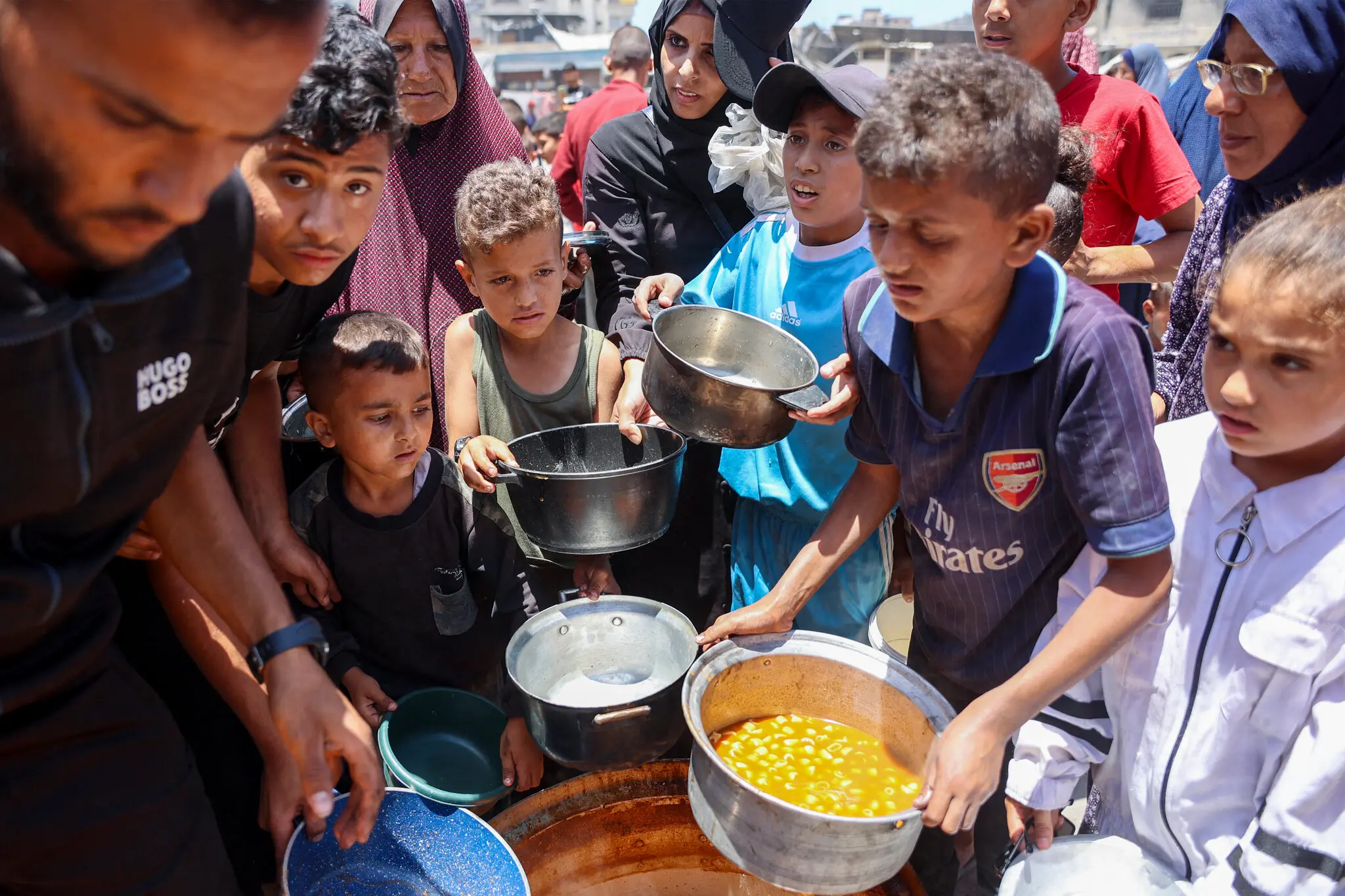
The Strait of Hormuz crisis has detonated one of the most severe shocks to global agricultural supply chains in a generation. With spring planting underway across the Northern Hemisphere and fertilizer inventories draining by the day, the food inflation of 2026–2027 is not a forecast—it is already being written in empty bags and dry fields.
Consider a smallholder in Bihar, India’s most agriculturally precarious state, preparing her Kharif fields in late spring. She has been waiting weeks for her urea allocation. The bags that arrived were fewer than ordered and cost nearly a third more than last season. She will plant anyway—she has no choice—but she will apply less fertilizer than the crop needs. Across South Asia, across the Sahel, across the river deltas of Bangladesh, millions of farmers are making exactly the same quiet, devastating calculation. The harvest they shortchange today is the food crisis of 2027.
The trigger is by now well-documented but insufficiently understood in its full systemic depth. On February 28, 2026, the United States and Israel launched “Operation Epic Fury” against Iran. Within days, tanker traffic through the Strait of Hormuz collapsed by more than 90 percent, as Iranian drone strikes on commercial shipping drove every major insurer to withdraw war-risk coverage. Without insurance, no captain runs a vessel worth hundreds of millions of dollars through a contested chokepoint for a cargo of fertilizer. The economics are brutally simple.
What has not been simple to convey to policymakers—or to a public still fixating on oil prices—is that the Hormuz closure is not merely an energy shock. As FAO Chief Economist Máximo Torero put it bluntly at a UN press briefing in late March: “This is not only an energy shock. It is a systematic shock affecting agrifood systems globally.” The distinction matters enormously, and it is one the world has not yet fully reckoned with.
The Fertilizer Chokepoint Nobody Planned For
Most people understand the Strait of Hormuz as an oil artery. What they do not understand is that it is equally a food artery.
Up to 30 percent of internationally traded fertilizers normally transit the Strait. The Gulf region—Saudi Arabia, Qatar, the UAE, Iran, and Bahrain—accounts for roughly a third of global urea exports and around 20 to 30 percent of ammonia exports. The region also produces nearly half of the world’s traded sulfur, a byproduct of oil and gas refining that is essential for converting phosphate rock into the water-soluble fertilizer plants can absorb. When the Gulf goes dark, it does not just switch off the lights. It pulls out the nutrients from under the world’s crops.
The numbers are already stark. Benchmark urea prices have surged approximately 30 percent in a single month, according to Carnegie Endowment analysts Noah Gordon and Lucy Corthell, who identified the cascading second-order effects even before markets had fully priced them in. At ports like New Orleans, urea is now trading above $600 per metric ton; diammonium phosphate and MAP have crossed $700 per metric ton. Fitch Ratings has raised its full-year 2026 ammonia and urea price expectations by around 25 percent. The World Bank’s commodity market data shows urea prices surging nearly 46 percent month-on-month between February and March—a shock comparable in speed, if not yet in magnitude, to the worst weeks of the 2022 Ukraine fertilizer crisis.
There is a cruel asymmetry in who bears this cost. The United States produces roughly three-quarters of the fertilizer it consumes and is partially insulated. But Brazil imports more than 80 percent of its fertilizers, relying heavily on Gulf-sourced nitrogen and phosphate. Ethiopia sources almost all of its nitrogen fertilizer through Gulf supply routes and is confronting acute shortages at its most critical planting juncture. India—the world’s second-largest agricultural economy and a country where smallholder farmers operate with razor-thin margins—faces reduced domestic nitrogen fertilizer output precisely as its Kharif season approaches. Bangladesh’s fertilizer plants have paused operations as LNG prices have spiked. Schools in Pakistan have closed as energy supply falters.
The interconnection that makes this crisis uniquely insidious is the natural gas link. Nitrogen fertilizers—urea, ammonium nitrate, UAN—are synthesized from ammonia, which requires enormous volumes of natural gas both as feedstock and energy. European gas prices have surged 50 to 75 percent since the conflict began. Egypt, a major nitrogen fertilizer producer that had partially compensated for Gulf supply losses during the 2022 Ukraine crisis, has now lost its pipeline gas imports from Israel and must compete on the now-devastated LNG spot market. The secondary circuit has blown. There is no obvious compensating supplier.
A Lingering Climate Hangover
The fertilizer shock does not arrive in isolation. It lands on agricultural systems already stressed by a protracted La Niña episode that, while weaker than the 2020–2022 triple-dip event, left distinctive fingerprints on key growing regions before its recent fade.
Through the first quarter of 2026, NOAA’s Climate Prediction Center confirmed La Niña persisted, albeit in a weakened state, with its atmospheric circulation patterns carrying through into the early Northern Hemisphere spring with a characteristic lag. For South America, the pattern reinforced dryness risk across parts of Argentina’s eastern corn belt and southern Brazil’s second-crop maize, precisely the safrinha crop that accounts for the bulk of Brazil’s annual maize production. Forecasters including Dr. Michael Cordonnier maintained cautious uncertainty on Argentine soybean estimates through January, noting that the La Niña-driven dryness risk, while not catastrophic, remained live.
Drought in parts of the U.S. central and southern Plains, which lingered from a dry late 2025 and which La Niña conditions reinforced into early 2026, has stressed the hard red winter wheat crop. The FAO’s March 2026 Cereal Price Index noted international wheat prices rising 4.3 percent in a single month, supported by “deteriorating crop condition ratings in the United States amid drought concerns and expectations of reduced plantings in Australia in response to anticipated higher fertilizer costs.” That phrase—”reduced plantings in response to higher fertilizer costs”—deserves more attention than it has received. It is a direct supply-side feedback loop: the Hormuz crisis is now reshaping what farmers in the Southern Hemisphere will choose to plant in the second half of 2026.
La Niña’s precise contribution is not the dominant story here, and it would be analytically dishonest to inflate it. Meteorologists and agricultural scientists broadly concur that the current episode has been relatively mild compared to its predecessors, and the transition to ENSO-neutral and possibly El Niño conditions through mid-2026 should bring relief to South American and some East African growing areas. But two important caveats apply. First, the timing of that transition matters acutely: a lagged atmospheric response means La Niña’s influence lingers into the Northern Hemisphere planting window even after Pacific Ocean temperatures have normalized, exactly as the USDA’s ENSO advisory for spring 2026 warned. Second, and more consequently, a late-developing El Niño carries its own risks for the western Pacific Rim—drought in parts of Australia, Southeast Asia, and southern Africa—arriving precisely as the fertilizer shock is biting hardest into 2026–27 crop cycles.
The climate and geopolitical shocks are not additive. They are multiplicative. A farmer who cannot afford fertilizer is far more vulnerable to a drought stress event than a well-nourished crop. The margin for error has narrowed catastrophically.
Why This Crisis Is Different From 2022
It has become fashionable to invoke the 2022 Ukraine shock as the reference point for the current crisis. The comparison is instructive but dangerous if it breeds complacency.
In 2022, the primary disruption was to grain exports: Russia and Ukraine together accounted for roughly 29 percent of global wheat exports, and their simultaneous exit from global markets caused a supply panic that drove wheat prices up over 70 percent. Fertilizer prices also spiked sharply, but the shock was diffuse—the price transmission to food was visible within weeks because wheat itself was the missing commodity.
The 2026 Hormuz disruption follows a different and in some respects more treacherous logic. As analysts at the University of Illinois’s farmdoc daily noted, the Persian Gulf is not a major grain export region, so the Hormuz closure primarily increases fertilizer costs rather than directly removing grain from the market. Crop futures moved upward after the initial shock but modestly—corn and soybean futures rose only 3.6 to 8 percent in the first two weeks, compared to the 70 percent-plus wheat surge in 2022.
This relative calm in grain futures is precisely the danger. It suggests markets are pricing the current crisis as a cost shock to inputs rather than an immediate supply shock to outputs. They are correct—for now. But fertilizer is not a commodity that can be substituted overnight. A farmer who under-applies urea at planting cannot compensate at harvest. The yield reduction is baked in at the moment the bag stays on the shelf. And because fertilizer use follows a nonlinear yield response, even modest reductions—say, 10 to 15 percent fewer kilograms per hectare applied by cost-squeezed smallholders—can produce disproportionately large declines in output, particularly in regions where nutrient application is already far below agronomic optimum. This is the amplifier that the grain futures desks are not fully pricing.
If the disruption persists for three months or longer, FAO projects reduced yields for wheat, rice, and maize, crop substitution toward nitrogen-fixing legumes, and escalating competition between food crops and biofuel feedstocks as elevated oil prices stimulate ethanol and biodiesel demand. The 2022 food crisis peaked visibly and painfully within six months of the Ukraine invasion. The 2026 crisis will peak more quietly, and somewhat later—perhaps not until the 2026–27 harvest season—but with consequences no less severe for those at the bottom of the global income distribution.
The World Food Programme estimates that the conflict could push 45 million additional people into acute hunger by mid-2026. That is a figure that deserves to be read slowly.
The Architecture of Neglect
Every major food supply chain crisis—1973, 2008, 2011, 2022—has, in its aftermath, prompted confident declarations that the international community has learned its lesson and will build resilience. Every declaration has quietly dissolved under the pressure of competing budget priorities and market complacency during the long, calm years that follow.
The Hormuz crisis has exposed four specific architectural failures that go beyond this particular conflict.
The strategic reserve asymmetry. G7 countries do not maintain strategic fertilizer reserves to match their oil stockpiles. This is not an oversight—it reflects a deliberate political economy in which energy security has powerful industrial lobbies and food security has smallholder farmers who are voiceless in international forums. Saudi Arabia built a pipeline to enable Red Sea exports of oil when the Hormuz chokepoint is threatened. There is no equivalent pipeline for ammonia, and there are no globally coordinated ammonia stockpiles. The food system has been treated, implicitly, as a residual claim on energy infrastructure rather than as independent strategic infrastructure of its own.
The insurance failure. War-risk insurance premiums surged from 0.25 percent to as high as 10 percent of vessel value, resetting weekly, within days of the Hormuz disruption. Even if the conflict ends tomorrow—and the Security Council vote on Bahrain’s proposal to mandate open passage remains deadlocked as of this writing—the insurance industry will require months of incident-free sailing before normalizing premiums. One industry expert estimated that even a rapid diplomatic resolution would take months before maritime trade returns to normal shipping capacity. The planting season does not wait for insurers.
The China paradox. Even before the Iran war, China had been restricting fertilizer exports to protect its own farmers. China’s self-sufficiency in fertilizers was supposed to make it a buffer; instead, its export restrictions amplify global scarcity. Beijing needs Brazil to grow soybeans to feed Chinese livestock. Brazil needs Gulf urea to grow those soybeans. The Gulf is blocked. The interdependence is total and the safety valve does not exist.
The just-in-time delusion. The 2022 Ukraine shock was supposed to cure the world of just-in-time supply chain management in strategic commodities. It manifestly did not. Fertilizer inventories globally were at comfortable but not exceptional levels when the Hormuz disruption hit; the 40 to 60 day supply buffer that most import-dependent countries held has been eroding since early March. Countries like Ethiopia, which sources essentially all of its nitrogen fertilizer via Gulf supply routes, had no meaningful buffer at all.
What Must Change
The immediate priority, as the International Crisis Group’s Comfort Ero has argued, is a humanitarian transit deal through the Strait of Hormuz that allows food and fertilizer shipments to pass regardless of the military situation. Iran’s partial concessions—allowing vessels from China, Russia, India, Iraq, Pakistan, and several Southeast Asian nations to transit, and agreeing to a UN request for humanitarian and fertilizer shipments—are welcome but fragile and selective. What is needed is a robust, institutionally anchored mechanism analogous to the Black Sea Grain Initiative of 2022, covering all flag states and backed by a credible monitoring framework. The UN task force announced in early April is a starting point, not a solution.
Beyond the immediate crisis, three structural shifts deserve serious international investment.
Fertilizer diplomacy must become food diplomacy. The G7, G20, and major multilateral lenders need to treat fertilizer supply chains with the same strategic seriousness they apply to oil and semiconductor supply chains. This means coordinated strategic reserves, early-warning systems linked to ENSO forecasts, and pre-negotiated alternative routing agreements before the next chokepoint fails—not after.
Green ammonia deserves urgent acceleration, not because it is cheap, but because geography-based vulnerability demands it. The FAO’s long-term recommendation for green ammonia is not a climate fantasy—it is a food security hedge. Distributed production of nitrogen fertilizers, decoupled from Gulf gas fields, is the structural answer to geographic concentration risk. Every dollar invested in green ammonia production in Africa, South Asia, or Latin America is a dollar of insurance against the next Hormuz closure.
Smallholder resilience cannot be an afterthought. The farmer in Bihar who is applying less urea to her Kharif field right now will not generate a headline. She will not appear in a futures market report. But she—and the 300 million smallholders like her across Asia and Africa—is where the food crisis actually lives. Emergency credit facilities, targeted subsidy deployment, and climate-smart agronomic support that reduces fertilizer dependency through precision application and nitrogen-fixing cover crops are not soft development investments. They are the front line of food price stability for the entire world.
The FAO Food Price Index reached 128.5 points in March 2026, its second consecutive monthly increase, driven by energy-related pressures now bleeding into every agricultural commodity group. It remains below the terrifying peak of March 2022. But the gap is closing, and it is closing for structural reasons—reasons that will not reverse when a ceasefire is eventually signed and the drones stop flying over the Strait.
The food crisis of 2026–2027 will not announce itself with a single dramatic headline. It will arrive, as it always does for the world’s poorest, in the slow accumulation of empty shelves, skipped meals, and fields that yielded less than they should have—because the bag of urea arrived too late, cost too much, or never arrived at all. We have been warned. The question is whether the warning will be heard before the harvest, or only after it.
Discover more from The Economy
Subscribe to get the latest posts sent to your email.


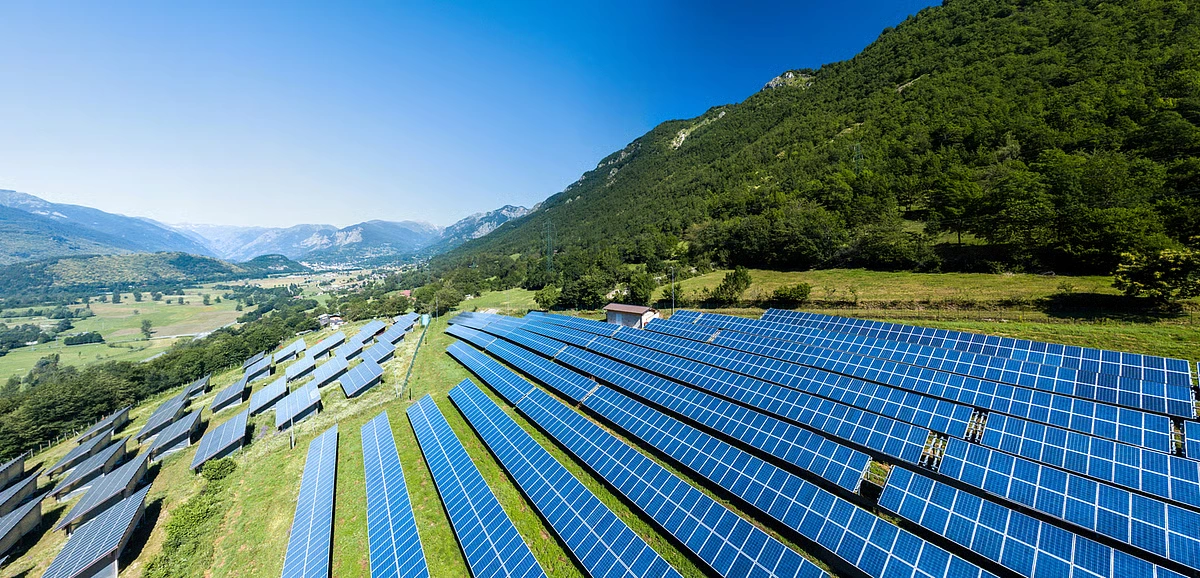
The rupture in world order is not merely political. It is thermodynamic. Two civilizational models—one running on molecules, one on electrons—are now in direct and irreversible collision. The side that misreads this as a trade dispute will lose the century.
When Mark Carney stepped to the podium in Davos on January 20, 2026, he did not arrive with a policy platform. He arrived with a death certificate. The rules-based liberal international order—that elaborate postwar architecture of interlocking institutions, U.S.-guaranteed public goods, and lawyerly multilateralism—was finished, he told a stunned room of hedgers, ministers, and central bankers. Not wounded. Not strained. Finished. “The old order is not coming back,” he said, to a rare standing ovation. “Nostalgia is not a strategy.”
He was right. But Carney, precise and sober as ever, still understated the depth of the break. What is ending is not merely a diplomatic arrangement or a particular configuration of great-power relations. What is ending is the fossil-fueled metabolic order that made the liberal world profitable, politically stable, and physically possible for three-quarters of a century. We are not watching a geopolitical transition. We are watching a civilizational one—the close of the Carbon Age and the violent, disorganized birth of the Electric Century. And the central story of that birth is the contest now taking shape between electrostates and petrostates: between nations rewiring the global grid and nations weaponizing the pipelines of the past.
The Metabolic Rupture: Why This Is Different From Every Previous Energy Shift
Energy transitions have happened before. Coal displaced wood. Oil displaced coal. Each shift reshuffled geopolitical hierarchies, created new empires, and ruined old ones. But what distinguishes the current transition is its deliberately competitive character. This is not a market quietly rotating from one fuel to another. It is a strategic mobilization—two superpower blocs making diametrically opposed bets about what will power the 21st-century economy, and consciously constructing the institutions, alliances, and supply chains to back those bets.
The term “electrostate” has proliferated rapidly in the analytical literature of 2025 and 2026, and for good reason: it captures something real about how national power is being reconstituted. An electrostate, in its cleanest definition, is a nation that draws a large and growing share of its total final energy consumption in the form of electricity—and that has positioned itself to dominate the technologies, supply chains, and standards that make mass electrification possible. A petrostate, by contrast, is a nation whose political economy, fiscal base, and civilizational identity remain anchored in the extraction and export of fossil fuels—and, crucially, in the perpetuation of a global order that keeps those fuels indispensable.
By this reckoning, the contest is not simply China versus America, though that is its sharpest edge. It is a structural divide running through the global economy, separating nations whose relative geopolitical position improves as the world electrifies from those whose position deteriorates with every solar panel installed and every internal combustion engine retired.
The Electrostate: China’s Monopoly on the Future’s Hardware
No serious analyst disputes China’s position. The numbers are not debatable; they are staggering. According to the International Energy Agency, China controls more than 90 percent of global rare earth processing and 94 percent of permanent magnet production—the components essential for EV motors and wind turbines. Its share in manufacturing solar panels exceeds 80 percent. It produces more than 70 percent of all lithium-ion EV batteries and accounts for over 70 percent of global electric vehicle production. In 2025, China installed nearly twenty times the wind and solar capacity of the United States. Nine-tenths of China’s investment growth in 2025 was concentrated in the green energy sector.
These figures describe not a market participant but a hegemon. China has, in less than a generation, constructed what analysts at the Columbia University Center on Global Energy Policy call the “electric stack”—a vertically integrated command of every layer of the clean energy supply chain, from rare earth mining to battery chemistry to EV software. Critically, it has decoupled this dominance from Western demand: nearly half of China’s green technology exports now flow to emerging markets across Africa, Southeast Asia, and Latin America, embedding Beijing as the indispensable infrastructure partner for the global south’s electrification journey.
This is not accidental. It is the product of what historian Nils Gilman has called China’s “authoritarian developmental state” operating with a generational strategic horizon that democratic governments structurally cannot match. Beijing’s dominance of the green supply chain is simultaneously an industrial policy triumph, a geopolitical masterstroke, and—for nations that have not yet grasped its implications—a slow-motion trap. The leverage here is not the blunt instrument of a gas cutoff. It is subtler and more durable: control over standards, compatibility, long-term dependency, and the terms on which the developing world modernizes its energy metabolism.
The Petrostate Counterplay: Washington’s Bet on Molecules
Against this, consider the American wager. By early 2026, U.S. crude production remained near record highs—approximately 13.6 million barrels per day—making the United States the world’s largest oil and gas producer and its largest LNG exporter. The Trump administration, having dismissed climate change as a “disastrous ideology” in its 2025 National Security Strategy, has doubled down on what it calls “energy dominance”: rolling back renewable subsidies, fast-tracking fossil fuel permits, and positioning American LNG as the geopolitical tether that keeps European and Asian allies aligned with Washington.
There is a coherent strategic logic here, and it should not be dismissed. The “shale shield” is real. When Russian gas flows to Europe collapsed after 2022, American LNG kept the lights on in Berlin and Warsaw. Energy secretary Chris Wright’s comment at Davos—that global renewable investment had been “economically a failure”—was received as ideological dogma by most of the room, but it contained a grain of tactical truth: energy density, portability, and the ability to dispatch power on demand still matter enormously in a crisis. A China that produces 70 percent of the world’s EV batteries remains the world’s largest importer of oil and gas. In a military confrontation, an electrostate without domestic hydrocarbon reserves has vulnerabilities that no number of solar panels eliminates overnight.
And yet. The petrostate counterplay is a strategy for the next decade, not the next half-century. It is a bet that the world will continue to need molecules at current volumes for long enough that the political and fiscal costs of the green transition can be deferred indefinitely. That bet is becoming harder to sustain with each passing year. As the Thucydides trap of the 21st century closes not around military force but around industrial capacity, the United States is bringing a very good weapon to a fight that has already changed its rules.
The most consequential piece of strategic self-harm in the Trump administration’s energy posture is not any particular rollback but a systemic failure of industrial policy imagination. By withdrawing renewable subsidies and erecting tariff walls against Chinese solar and battery imports, Washington has not protected American industry—it has orphaned it. Hyperscale AI companies, desperate to power vast compute clusters, are theoretically the vanguard of an American electrostate. But as economist Adam Tooze has argued, even if generating capacity could be built, the U.S. grid interconnection process is so bureaucratically broken that it cannot be hooked up efficiently. The United States is not incapable of electrification. It is structurally slowing itself down while Beijing sprints.
The Middle Powers: Crucible of the New Order
Between the two blocs lies a crowded, strategically consequential middle ground that will determine which model ultimately prevails. The EU, India, Brazil, Indonesia, South Korea, Japan, Australia, and a constellation of African and Latin American nations are all, in different ways, being forced to choose their metabolic alignment—or to construct a third path that neither bloc controls.
This is where Carney’s Davos architecture becomes genuinely interesting, even if its execution remains uncertain. His call for “coalitions of the willing” based on “common values and interests” is not mere diplomatic boilerplate. It is an acknowledgment that the middle powers possess something neither superpower bloc can replicate: legitimacy without hegemony. They can act as bridge-builders, standard-setters, and coalition anchors in a way that neither Beijing nor Washington can, precisely because they are not superpowers.
The material basis for middle-power leverage in the electrostate era is minerals. The lithium deposits of Argentina’s salt flats, the nickel and cobalt reserves of Australia’s Kalgoorlie Basin, the rare earth distributions across Indonesia and Kazakhstan—these are not peripheral endowments. They are the physical foundation of the electric economy, and nations that hold them possess a form of structural leverage that the postcolonial Non-Aligned Movement of the 1950s could only dream of. The difference is that this leverage is technologically activated: it only converts into power if mineral-rich middle powers invest in the processing, refining, and value-added manufacturing capacity to avoid simply re-running the colonial commodity trap under a green banner.
Australia’s position is illustrative. It holds some of the world’s largest reserves of lithium, nickel, and rare earth elements. Whether it becomes an electrostate—a nation that converts mineral endowment into clean-tech manufacturing dominance—or remains a raw material exporter shipping inputs to Chinese factories will be one of the defining strategic choices of the decade. The EU’s Carbon Border Adjustment Mechanism, which took effect in 2026 and taxes carbon-intensive imports at the border, creates a powerful incentive structure for middle powers to electrify their own production before they lose market access.
The Alliance of Petrostates: A Marriage of Inconvenience
The petrostate camp is more fractured than its rhetorical solidarity suggests. The United States, Russia, and Saudi Arabia may share a tactical interest in prolonging global fossil fuel consumption and spreading doubt about the clean energy transition. But their strategic interests diverge sharply—on oil pricing, on Ukraine, on regional proxy conflicts from Sudan to Syria, and on the fundamental question of who leads a post-liberal world order. This coalition has the structural instability of the Berlin-Rome-Tokyo Axis: a convergence of reactionary interests rather than a coherent vision.
Saudi Arabia’s position is particularly revealing. Riyadh has simultaneously championed oil’s long-term future at every COP negotiation while investing its sovereign wealth aggressively in clean technology and AI. The Saudi Aramco CEO’s performance at Davos—insisting on sustained oil demand while the Kingdom quietly deepens its relationship with Chinese EV manufacturers and battery infrastructure—was a masterclass in strategic ambiguity. The Gulf states understand, even if Washington currently does not, that the question is not whether the transition happens but who controls it.
Russia’s calculus is grimmer. Cut off from Western capital and technology markets by sanctions, and with its economy increasingly a raw material appendage of China’s industrial machine, Moscow is perhaps the most purely dependent member of the petrostate axis. Its leverage—natural gas to Europe, oil to China—is eroding on the European flank and being repriced downward on the Chinese one. The much-discussed revival of Nord Stream 2 under a potential U.S.-Russia détente would be a geopolitical paradox: a move that simultaneously serves American deal-making ambitions and further entrenches the fossil fuel dependency that the electrostate transition is designed to escape.
The Irreversibility Thesis: Why the Split Cannot Be Undone
The deepest analytical error in most coverage of the electrostates-versus-petrostates contest is to treat it as reversible—as though a change of administration in Washington, a commodity price shock, or a diplomatic reset could restore the pre-2020 energy geopolitical equilibrium. It cannot, for three structural reasons.
First, the cost curve. Solar and wind electricity generation costs have fallen by roughly 90 percent over the past decade and are continuing to decline. At current trajectories, clean electricity is becoming the cheapest form of power in most of the world’s major economies, regardless of subsidies. Economic gravity works in only one direction here.
Second, the infrastructure lock-in. Every electric vehicle sold, every heat pump installed, every grid-scale battery deployed creates a physical constituency for electrification that compounds over time. Nations that electrify early create self-reinforcing industrial ecosystems; nations that delay face progressively higher entry costs into industries where learning curves have already been climbed.
Third, the security logic. For the 70 percent of the world’s population that lives in fossil fuel-importing countries, as Columbia’s Center on Global Energy Policy notes, domestic renewable energy is not merely a climate preference—it is an energy security imperative. Every geopolitical crisis that drives oil prices above $100 per barrel (as the U.S.-Israeli war on Iran’s infrastructure did in early 2026) provides fresh proof that dependence on fossil fuel imports is a strategic vulnerability. Each shock accelerates the electrostate transition.
These three forces interact and compound. The question is not whether the global energy metabolism will shift from molecules to electrons. The question is whether that shift will be led by a democratic electrostate bloc that embeds open standards, interoperability, and developmental equity into the emerging infrastructure—or whether it will be captured by a Chinese-dominated Green Entente whose infrastructural leverage over the global south will be, in its own way, as coercive as the petrostates’ pipelines ever were.
Conclusion: What Carney Knew, and What He Left Unsaid
Carney’s Davos eulogy was remarkable for its honesty. It was incomplete in its prescription. Naming the rupture is necessary but insufficient. The harder task—the one that policymakers, investors, and strategists across the middle-power world now face—is constructing an electrostate architecture that is genuinely pluralistic rather than substituting one form of infrastructural dependency for another.
For the United States, the strategic error is not that it remains a major fossil fuel producer. Hydrocarbons will remain part of the global energy mix for decades. The error is abdicating industrial policy leadership in the technologies that will define the economy of the 2040s and 2050s. A nation that simultaneously abandons renewable subsidies, blocks cheap Chinese clean-tech imports, and fails to fix its grid interconnection crisis is not pursuing energy dominance. It is pursuing energy nostalgia.
For middle powers—from India to Indonesia to Brazil to Canada—the window for strategic positioning is open but will not remain so indefinitely. Nations with mineral wealth, demographic dividends, and genuine diplomatic capital must convert those endowments into manufacturing depth and supply chain participation before the electric infrastructure of the 21st century is locked in around them rather than built with them.
The fossil-fueled liberal order is over. Carney was right about that. What replaces it—an Electric Century shaped by openness, interoperability, and distributed prosperity, or a new metabolic hegemony as coercive as the one it replaced—remains genuinely undecided. That is the contest worth watching. That is the rupture that matters.
For Policymakers, Investors, and Strategists
The electrostate transition is not a speculative future. It is the present, disaggregated unevenly across geographies. Nations and institutions that treat it as a distant trend will find themselves navigating a world whose infrastructure, alliances, and leverage structures have already been rebuilt around them. The actionable imperative is bilateral: accelerate domestic electrification to reduce fossil fuel strategic vulnerability, and secure supply-chain participation in the clean-tech stack through partnerships, investment, and minerals diplomacy—before the commanding heights of the Electric Century are beyond reach.
The molecules are running out of time. The electrons are just getting started.
Discover more from The Economy
Subscribe to get the latest posts sent to your email.
Analysis
How China Reinvented the BRI: Western Tariffs Accelerated Its Transformation Into a Sophisticated Extension of China’s Industrial Policy
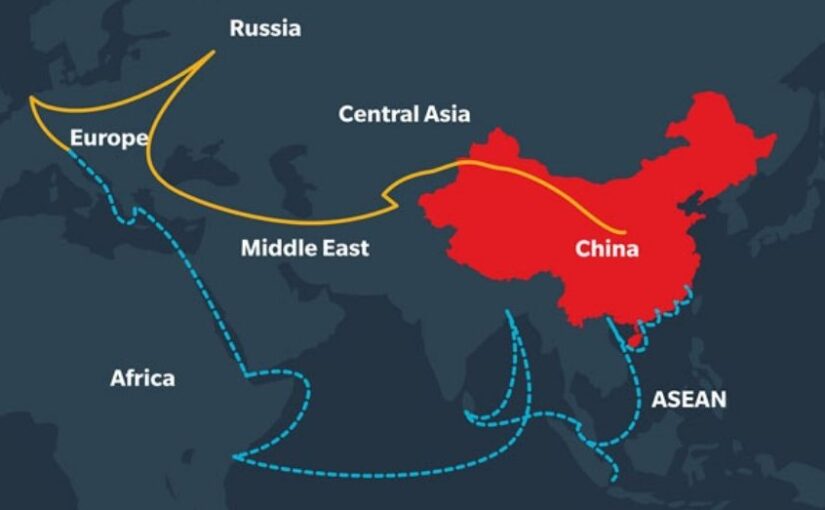
There is a particular kind of policy failure that announces itself quietly—not with a crisis, but with a statistic that arrives too late to matter. For Western capitals still congratulating themselves on having exposed the “debt-trap diplomacy” of China’s Belt and Road Initiative, that statistic arrived in early 2025: $213.5 billion. That is the total value of BRI engagement last year, the highest figure ever recorded, driven by $128.4 billion in construction contracts and $85.2 billion in investments, according to the definitive annual tracking report by the Green Finance & Development Center at Fudan University and the Griffith Asia Institute.
The West had been writing the BRI’s obituary for years. It turns out the patient wasn’t dying—it was in surgery, emerging leaner, smarter, and considerably more dangerous to ignore.
This is the story of how China reinvented the BRI, and why the transformation is Beijing’s most consequential geopolitical pivot since Deng Xiaoping told his country to hide its strength and bide its time. Except now, China isn’t hiding anything.
From Debt-Trap Fears to Industrial Powerhouse: The Narrative That Aged Poorly
Cast your mind back to 2018. Western think-tanks were publishing breathless reports about “debt-trap diplomacy.” The IMF was warning about unsustainable Chinese loans. Hambantota port in Sri Lanka had become shorthand for everything allegedly predatory about the BRI. American officials quietly believed the initiative would collapse under its own contradictions—bad loans, political backlash, COVID disruptions, and the rising chorus of recipient-country grievances would do what sanctions could not.
Some of that critique was legitimate. Early BRI lending was frequently opaque, environmentally careless, and calibrated more toward Chinese state-owned construction firms than the development needs of host countries. AidData’s landmark 2021 research documented “hidden debt” problems in dozens of countries and found that a significant share of projects generated local frustration.
But here is where the Western analysis went badly wrong: it assumed Beijing would respond to criticism the way a Western institution might—with retrenchment, reform panels, and lengthy consultations. Instead, China did something far more strategically coherent. It quietly dismantled the version of the BRI that was failing and replaced it with one calibrated for a new era of great-power competition.
The result? While the West debated whether the BRI was dead, China’s total foreign trade hit approximately $6.4 trillion in 2024, with a historic trade surplus of roughly $1.19–1.2 trillion—figures reported by Reuters that would have seemed fantastical just a decade ago. The BRI isn’t a side project anymore. It is the arterial system through which that surplus finds its geopolitical purpose.
Tariffs as Catalyst: The 2025 Rebound Numbers Tell a Specific Story
The conventional wisdom holds that Western tariffs—Biden’s chips restrictions, the EU’s EV duties, Trump’s sweeping trade barriers—put China on the defensive. The 2025 BRI data suggests exactly the opposite dynamic: tariffs functioned as an accelerant, forcing Beijing to accelerate the very industrial-policy upgrades the BRI now embodies.
Consider the logic. When Washington raised tariffs on Chinese goods and Brussels slapped duties on Chinese EVs, it created an immediate problem for China’s manufacturing export machine: where do the goods go? The answer, executed with characteristic patience, was to restructure the BRI not just as a market for Chinese exports, but as a platform for relocating Chinese production—or at least assembly—to tariff-exempt or tariff-advantaged third countries.
This is BRI supply chain rerouting tariffs in practice, not theory. Chinese firms, particularly in solar, EVs, and batteries, have been quietly establishing manufacturing footholds in BRI partner countries—Morocco, Indonesia, Hungary, Uzbekistan, Ethiopia—that enjoy preferential trade access to Western markets. The BRI’s infrastructure investments, once mocked as vanity ports and empty highways, now serve as the backbone for this industrial relocation strategy.
Key 2025 data points from the GFDC/Griffith report:
- $128.4 billion in construction contracts—the single largest component, reflecting continued hard-infrastructure buildout, now increasingly in energy and digital sectors
- $85.2 billion in direct investments—up sharply, and skewed toward manufacturing and green-tech rather than traditional ports and roads
- Africa and Central Asia led in project volume; Latin America showed the most dramatic investment value growth
- The private sector—companies like LONGi Green Energy, CATL, and East Hope Group—now drives a meaningful share of BRI deals, replacing the lumbering state-owned enterprises of the initiative’s first decade
That last point deserves emphasis. The shift from SOE-dominated lending to private-sector industrial investment is arguably the single most important structural change in the BRI’s reinvention. It is also the change that Western policymakers have been slowest to register.
The New BRI Playbook: Minerals, Green Tech, and Friends-with-Benefits Deals
If the old BRI was about concrete—ports, roads, pipelines, stadiums—the new BRI is about control of the materials and technologies that will define the next economic epoch. Three interlocking strategies define what might be called Beijing’s BRI 2.0 playbook.
First: Critical minerals security. China already refines the lion’s share of the world’s lithium, cobalt, nickel, and rare earths. The new BRI deepens this advantage by securing upstream supply through investment and long-term offtake agreements with mining countries across Africa (DRC, Zimbabwe, Zambia), Central Asia (Kazakhstan, Kyrgyzstan), and Latin America (Chile, Bolivia, Argentina’s lithium triangle). This isn’t charity—it’s vertical integration on a geopolitical scale. When Western nations talk about “friend-shoring” critical mineral supply chains, they are largely scrambling to catch up with arrangements China has been cementing through BRI frameworks for years.
Second: Green-tech export platforms. The EU’s Carbon Border Adjustment Mechanism and American clean-energy subsidies under the IRA were designed, partly, to create a market for Western green technology. Beijing read the same signals and moved faster. Chinese solar manufacturers, EV producers, and battery firms are using BRI partner countries as manufacturing hubs and as captive markets simultaneously. LONGi is building solar panel factories in the Middle East and Southeast Asia; CATL is establishing battery plants in Hungary and Morocco; East Hope is processing aluminium in Southeast Asia using cheaper regional energy. The BRI corridor isn’t just a trade route—it’s a China Belt and Road industrial policy shift writ in gigawatts and gigafactories.
Third: De-dollarization infrastructure. This is the most contested element, but it is real and accelerating. An increasing share of BRI transactions are settled in renminbi or via bilateral currency arrangements. The digital yuan—e-CNY—is being piloted in several BRI corridors. This is not imminent dollar displacement, but it is the patient construction of an alternative plumbing system for global finance, one that could matter enormously in a future sanctions scenario. The Council on Foreign Relations’ BRI backgrounder notes the financial architecture of the BRI as one of its most underappreciated dimensions.
What This Means for the Global South—and the West
The Global South’s relationship with the new BRI is more complicated than either its cheerleaders or its critics admit.
On one hand, recipient countries are more sophisticated than they were in 2013. Governments in Africa, Southeast Asia, and Latin America have watched the Hambantota cautionary tale; many now negotiate harder, demand local employment provisions, and push back on terms that seem tilted too heavily toward Chinese interests. The South China Morning Post has documented a genuine evolution in BRI deal structures—shorter loan tenors, more equity-participation arrangements, greater (if still imperfect) attention to environmental standards.
On the other hand, the fundamental power asymmetry remains. China offers something no other actor currently provides at scale: the combination of capital, construction capacity, and market access in a single package. The EU’s Global Gateway initiative—announced with considerable fanfare as the Western answer to the BRI—has pledged €300 billion through 2027, but disbursement has been slow, governance conditions can be onerous for developing-nation governments, and it cannot match China’s speed of project execution. Foreign Policy’s recent analysis captures the frustration among Global South policymakers who find Western alternatives rhetorically appealing but operationally disappointing.
This creates a dynamic that the West has not adequately grappled with: the BRI rebound 2025 is not primarily a story about Chinese aggression—it is a story about a vacuum the West has failed to fill. Countries that might prefer Western investment are accepting Chinese terms not because they love Beijing, but because the alternative is waiting indefinitely for funds that never quite materialize.
The geopolitical implications compound. Every BRI manufacturing hub established in a third country is a potential hedge against Western market access for that country. Every critical-mineral offtake agreement is a node in a supply chain that circumvents Western leverage. Every e-CNY transaction is a small withdrawal from the dollar’s gravitational pull. Individually, these are manageable. Aggregated over a decade, they constitute a structural shift in global economic architecture.
Why the BRI Is Now “Tariff-Proof”—And a Model for 21st-Century Industrial Statecraft
Here is the contrarian argument that Western analysts need to sit with: Western tariffs didn’t weaken China—they handed Beijing the perfect excuse to upgrade the BRI from concrete to competitive advantage.
The tariff pressure of 2018–2025 forced Chinese industrial policy to become more sophisticated. Firms that might have been content to export finished goods from home factories were pushed—by tariffs, by the risk of further escalation—to internationalize their production. The BRI provided the geographic framework, the infrastructure, and increasingly the regulatory and financial architecture to make that internationalization possible.
The result is a version of the BRI that is, paradoxically, more resilient to Western pressure than its predecessor. When the BRI was primarily about loans and construction contracts, Western pressure could target Chinese banks and state firms. Now that private Chinese industrial companies are the driving force, using locally incorporated entities, partnering with third-country firms, and settling deals in non-dollar currencies, the leverage points are harder to identify and harder to squeeze.
This is what makes the China BRI 2025 moment genuinely novel: it represents the emergence of a model for 21st-century industrial statecraft that Western nations don’t have a clear answer to. It blends state strategy with private-sector execution, hard infrastructure with technology transfer, financial architecture with trade facilitation—all in service of a coherent industrial-policy vision that links domestic manufacturing capacity to overseas market and resource access.
The Economist has noted that China’s approach to industrial policy has grown more sophisticated precisely under the pressure of Western countermeasures—a dynamic that mirrors historical cases where external pressure accelerated rather than retarded technological development.
What the West Should Do Differently: A Pragmatic Agenda
Diagnosis without prescription is just complaint. Here is what a more effective Western response might look like.
Stop celebrating the BRI’s supposed failures. Every time a Western think-tank declares the BRI dead and China proves otherwise, Western credibility takes a quiet hit in exactly the capitals that matter most. Accurate threat assessment is the prerequisite for effective strategy.
Accelerate Global Gateway and PGI disbursement—radically. The Partnership for Global Infrastructure and Investment (G7’s answer to BRI) and the EU’s Global Gateway need to move from pledges to projects at Chinese speeds. This requires cutting bureaucratic timelines, accepting more risk, and being willing to fund imperfect projects in imperfect countries. Development finance cannot be held to standards that make it functionally unavailable.
Compete on the private sector, not just the public sector. China’s most powerful new BRI instrument is private industry—CATL, LONGi, Huawei—backed by state industrial policy but operating with commercial agility. Western governments need to find ways to mobilize their own private sectors into developing-world markets at scale, through blended finance, risk guarantees, and trade facilitation that makes it commercially viable for Western firms to compete where Chinese firms currently dominate.
Engage on critical minerals with genuine urgency. The window to build alternative supply chains for lithium, cobalt, and rare earths is narrowing with each new BRI offtake agreement signed. The World Bank’s minerals framework provides useful architecture; what’s missing is the political will to fund it at the necessary scale.
Stop treating the Global South as a passive audience. The most effective counter-BRI strategy is not to badmouth the BRI—it is to offer recipient countries genuine choices. That means engaging with their actual development priorities, not just Western strategic preferences. Countries that feel they have real alternatives are countries that will negotiate harder with Beijing. Countries that feel they have no choice will sign whatever China puts in front of them.
The View from 2030
Project forward five years. If current trajectories hold, the BRI will have established a durable manufacturing and supply-chain ecosystem across Africa, Central Asia, the Middle East, and Latin America—one calibrated to Chinese industrial priorities, financed through diversified instruments, and partially insulated from Western financial pressure. The critical-minerals supply chains feeding China’s green-tech export machine will be deeper and harder to disrupt. The renminbi’s role in trade settlement will be meaningfully larger, if not yet dominant.
This is not inevitable. China faces real headwinds: domestic economic stress, growing recipient-country pushback on debt and local employment, competition from India and middle powers in specific corridors, and the possibility that some of its industrial bets—particularly in green tech—will be disrupted by technology shifts it doesn’t control.
But the West’s continued tendency to misread the BRI—to see it as a failing initiative rather than an evolving strategic instrument—makes the pessimistic scenario more likely. How China reinvented the BRI is not just an economic story. It is a masterclass in strategic adaptation under pressure, executed by a state that is patient, pragmatic, and playing a longer game than its rivals typically recognize.
The $213.5 billion that moved through BRI channels in 2025 is not a number. It is a signal. The question is whether Washington, Brussels, and London are finally ready to read it correctly.
Discover more from The Economy
Subscribe to get the latest posts sent to your email.

The memo landed on a Thursday afternoon, and for anyone who has followed OpenAI’s evolution from scrappy non-profit to near-trillion-dollar enterprise machine, the subtext was louder than the text. Fidji Simo — the former Meta and Instacart executive who had become the company’s most visible commercial face — announced to her team that she would be taking medical leave to manage a neuroimmune condition. In the same breath, she disclosed that Brad Lightcap, the quietly indispensable COO who had run OpenAI’s operational machinery since the GPT-3 era, was moving out of his role and into something called “special projects.” And that the company’s chief marketing officer, Kate Rouch, was stepping down — not to a rival, but to fight cancer.
Three senior executives, three simultaneous transitions, all announced in a single internal memo. On the surface, it reads like a company under strain. Look closer, and it reads like something more deliberate, more consequential — and far more revealing about where OpenAI actually intends to go.
The Lightcap Move: Elevation or Exile?
The first question anyone asks about a COO being moved to “special projects” is whether this is a promotion or a parking lot. In most corporate contexts, the phrase is C-suite shorthand for managed exits. At OpenAI in April 2026, it is almost certainly neither.
According to a memo viewed by Bloomberg, Lightcap will now lead special projects and report directly to CEO Sam Altman, with one of his primary mandates being to oversee OpenAI’s push to sell software to businesses through a joint venture with private equity firms. Bloomberg That joint venture — internally referred to as DeployCo — is no sideshow. OpenAI is in advanced talks with TPG, Advent International, Bain Capital, and Brookfield Asset Management to form a vehicle with a pre-money valuation of roughly $10 billion, through which PE investors would commit approximately $4 billion and receive equity stakes, along with influence over how OpenAI’s technology is deployed across their portfolio companies. Yahoo Finance
Put plainly: Lightcap is not being sidelined. He is being handed what may be the single most strategically important commercial initiative in OpenAI’s history. The COO title, which implied running the whole operational machine, has been traded for something narrower and arguably higher-stakes — the task of turning OpenAI’s enterprise ambitions into a durable revenue stream before the IPO window opens.
Lightcap had served as OpenAI’s go-to executive for complex deals and investments, and had been a visible face of the company’s commercial ambitions, speaking publicly about hardware plans and brokering enterprise deals across the industry. OfficeChai Those skills translate directly. Structuring preferred equity instruments with sovereign-scale PE firms, negotiating board seats, aligning incentive structures across TPG, Bain, and Brookfield — this is a relationship-heavy, structurally intricate mandate that requires someone who understands both the technology and the term sheet.
The COO role, meanwhile, passes operationally into the hands of Denise Dresser. Dresser is a seasoned enterprise executive with decades of experience including several senior positions at Salesforce, and most recently served as CEO of Slack. OfficeChai Her appointment as Chief Revenue Officer earlier this year already signaled that OpenAI was getting serious about enterprise distribution at scale. Now, with Lightcap’s commercial duties folded into her remit, Dresser becomes the most powerful commercial executive in the company below Altman himself.
The Enterprise Imperative — and Why It’s Urgent
To understand why Lightcap’s new assignment matters, you need to understand OpenAI’s revenue arithmetic. Enterprise now makes up more than 40% of OpenAI’s total revenue and is on track to reach parity with consumer revenue by the end of 2026, with GPT-5.4 driving record engagement across agentic workflows. OpenAI That sounds impressive until you consider the comparative dynamics. Among U.S. businesses tracked by Ramp Economics Lab, Anthropic’s share of combined OpenAI-plus-Anthropic enterprise spend has grown from roughly 10% at the start of 2025 to over 65% by February 2026. OpenAI’s enterprise LLM API share has fallen from 50% in 2023 to 25% by mid-2025. TECHi®
The numbers are startling. OpenAI has the bigger brand, the larger user base, and the higher valuation. But in the market that matters most to institutional investors evaluating an IPO — high-value, sticky, recurring enterprise contracts — it has been losing ground to a younger rival. As Morningstar analysis has noted, OpenAI has never publicly disclosed its enterprise customer retention rate, a conspicuous omission for a company approaching a trillion-dollar valuation. Morningstar
The private equity joint venture is a direct response to this problem. A single PE partnership can unlock AI deployments across entire industry sectors simultaneously — a scale that consulting-led integrations cannot match. OpenAI’s enterprise business generates $10 billion of its $25 billion in total annualized revenue; channeling AI tools directly into portfolio companies controlled by PE partners would create a new enterprise AI distribution strategy beyond traditional software sales channels. WinBuzzer
In this context, handing Lightcap the DeployCo mandate is not a demotion. It is a precision deployment — sending your most experienced deal-maker to close the most important deal-making project in the company’s commercial evolution.
Fidji Simo’s Absence, and What It Reveals
The Simo news is harder to separate from human concern. Fidji Simo, CEO of AGI development, will take medical leave for several weeks to navigate a neuroimmune condition. As she noted in her memo, the timing is maddening given that OpenAI has an exciting roadmap ahead. National Today Her candor — the frank acknowledgment that her body “is not cooperating” — is the kind of leadership transparency that is still rare in Silicon Valley’s performative culture, and it deserves recognition as such.
But her absence also removes the executive who had, in the space of barely a year, become the principal architect of OpenAI’s application-layer strategy. Simo had been central to moves including acquiring Statsig for $1.1 billion, buying tech podcast TBPN as a narrative infrastructure play, launching the OpenAI Jobs platform, and publicly championing the company’s application-layer strategy. OfficeChai While she is away, co-founder Greg Brockman will step in to handle product management. NewsBytes
Brockman’s return to operational product responsibility is itself significant. The co-founder who stepped back from day-to-day duties to take a leave of his own in 2024 is now being called back into the arena, which underscores both OpenAI’s depth of bench concern and, more charitably, the genuine camaraderie that defines its founding generation. It also places an unusual degree of product authority back with someone whose instincts are research-first — a potential counter-current to the enterprise-revenue urgency the rest of the restructuring signals.
The Kate Rouch Question: Talent, Health, and the Human Cost of Hypergrowth
If Lightcap’s transition is a strategic calculation and Simo’s absence is a medical reality, Kate Rouch’s departure sits at the painful intersection of both. The chief marketing officer is stepping down to focus on her cancer recovery, with plans to return in a different, more limited role when her health allows. In the interim, the company is searching for a new CMO. TechCrunch
There is no analytical frame that makes this feel anything other than what it is — a human being dealing with something far more serious than quarterly targets, and a company that, whatever its strategic intentions, is navigating extraordinary personal circumstances among its leadership ranks. Three senior executives facing serious health challenges simultaneously is not a pattern you expect to see in a single memo, and it would be inappropriate to reduce it to a governance risk calculation.
And yet, for investors evaluating OpenAI’s trajectory toward a public listing, the concentration of institutional knowledge at the senior level — and the fragility that implies — is a legitimate consideration. OpenAI has built an extraordinary organization, but it has done so at a pace and intensity that extracts real costs from the people inside it. The question of whether hypergrowth culture is sustainable is not abstract when you are reading about simultaneous health crises in the C-suite.
What This Means for the IPO Narrative
On March 31, 2026, OpenAI closed a funding round totaling $122 billion in committed capital at a post-money valuation of $852 billion, anchored by Amazon ($50 billion), NVIDIA ($30 billion), and other strategic investors. Nerdleveltech A Q4 2026 IPO is widely expected, and the executive restructuring announced this week must be read against that backdrop.
For an IPO to succeed at a valuation approaching or exceeding $1 trillion, OpenAI needs to demonstrate two things that public investors demand above all else: predictable, recurring enterprise revenue, and a governance structure that inspires confidence. The current week’s events simultaneously advance one objective and complicate the other.
On the revenue side, placing Lightcap on the PE joint venture and Dresser on commercial operations is exactly the right structure. Both OpenAI and Anthropic are aggressively courting private equity firms because they control enterprise companies and influence how businesses budget for software and AI — a race growing more urgent as both companies prepare to go public as soon as this year. Yahoo Finance Lightcap’s focused mandate, freed from the operational overhead of a COO role, gives him the bandwidth to close the DeployCo negotiation properly.
On governance, the picture is messier. Three simultaneous leadership transitions — one strategic, two health-related — will attract scrutiny from institutional investors who prize continuity in the months before an S-1 filing. The company’s statement that it is “well-positioned to keep executing with continuity and momentum” Yahoo Finance is the right message, but reassurances require underlying architecture. The burden now falls on Dresser, Brockman, and Altman to demonstrate that OpenAI’s flywheel keeps spinning without missing a revolution.
The Deeper Signal: From Startup to Scaled Enterprise
Step back from the individual moves and a coherent portrait emerges. OpenAI is no longer a startup that accidentally became a cultural phenomenon. It is becoming — with considerable growing pains — a scaled enterprise technology company, and the leadership restructuring reflects that maturation.
The classic startup COO is a generalist: part chief of staff, part dealmaker, part operational firefighter. As companies scale, that role almost always bifurcates. The operational machinery gets a dedicated leader with process-discipline instincts (Dresser, who built Slack’s enterprise go-to-market at scale). The deal-making and strategic partnership functions migrate to someone who can work at a higher level of complexity and ambiguity (Lightcap, now reporting directly to Altman). This bifurcation is not unusual — it is, in fact, the textbook trajectory of every company that has successfully navigated the transition from breakout growth to institutional durability.
What makes OpenAI’s version distinctive is the altitude at which it is happening. The PE joint venture Lightcap is overseeing is not a side arrangement — it is a $10 billion structural bet on a new distribution model for enterprise AI at a moment when the competitive window is closing. Once an AI system is embedded into internal workflows, switching providers becomes costly and time-consuming; early partnerships can define long-term market share. SquaredTech Lightcap’s role is to ensure that OpenAI wins that embedding race before Anthropic does.
Meanwhile, Dresser brings to the revenue function exactly the muscle memory that OpenAI needs: she ran enterprise at Salesforce and then rebuilt Slack’s commercial operations at a moment when the company needed to prove it could grow beyond viral adoption into boardroom-level contracts. The parallels to OpenAI’s current moment are striking. ChatGPT’s consumer virality is not in question. What remains unproven — to skeptical institutional investors, to enterprise buyers, and to rival AI companies gaining ground — is whether OpenAI can convert that consumer footprint into enterprise contracts with the kind of net revenue retention that justifies a trillion-dollar valuation.
What This Means: A Forward-Looking Assessment
For policymakers: The accelerating concentration of AI distribution power through private equity networks deserves regulatory attention. When TPG, Bain, and Brookfield control how AI is deployed across hundreds of portfolio companies spanning financial services, healthcare, and logistics, the implications for competition policy, data governance, and labor markets are substantial. This is not a hypothetical — it is an arrangement being structured right now.
For enterprise technology buyers: The restructuring is, in net terms, good news. Dresser’s commercial acumen and Lightcap’s deal-making focus suggest OpenAI is getting more serious about enterprise SLAs, integration support, and the kind of long-term account management that large organizations actually require. The era of enterprise AI as a self-serve API product is giving way to something that looks more like traditional enterprise software — with all the commercial discipline and relationship investment that entails.
For investors: The executive transitions complicate, but do not invalidate, the IPO thesis. OpenAI is generating $2 billion in revenue per month and is still burning significant cash; the push toward enterprise profitability is not optional, it is existential. CNBC Lightcap’s DeployCo mandate is the most direct mechanism for closing that gap. If the PE joint venture closes as structured and delivers on its distribution promise, the enterprise revenue trajectory could meaningfully improve the margin story ahead of an S-1 filing.
For the AI industry: The talent and health pressures visible in this single memo — across Simo, Rouch, and implicitly in the organizational strain that produces such simultaneous transitions — are a signal worth taking seriously. The AI industry’s intensity is not sustainable at current velocities for all of the people inside it. The companies that figure out how to pursue frontier AI development while maintaining the human durability of their leadership will outlast those that do not.
Brad Lightcap’s transition, in the end, is not the story of an executive being sidelined. It is the story of a company deploying its most trusted commercial architect on its most consequential commercial mission, at the exact moment when the outcome will determine whether OpenAI’s extraordinary private-market story becomes a publicly accountable one. The structural logic is sound. The human arithmetic is harder. And for an AI company that has spent years promising to be beneficial for humanity, learning to be sustainable for the humans inside it may be the more immediate test.
Discover more from The Economy
Subscribe to get the latest posts sent to your email.
-

 Markets & Finance3 months ago
Top 15 Stocks for Investment in 2026 in PSX: Your Complete Guide to Pakistan’s Best Investment Opportunities
-

 Analysis2 months ago
Brazil’s Rare Earth Race: US, EU, and China Compete for Critical Minerals as Tensions Rise
-

 Banks3 months ago
Best Investments in Pakistan 2026: Top 10 Low-Price Shares and Long-Term Picks for the PSX
-

 Investment3 months ago
Top 10 Mutual Fund Managers in Pakistan for Investment in 2026: A Comprehensive Guide for Optimal Returns
-

 Analysis2 months ago
Top 10 Stocks for Investment in PSX for Quick Returns in 2026
-

 Asia3 months ago
China’s 50% Domestic Equipment Rule: The Semiconductor Mandate Reshaping Global Tech
-

 Global Economy3 months ago
Pakistan’s Export Goldmine: 10 Game-Changing Markets Where Pakistani Businesses Are Winning Big in 2025
-

 Global Economy3 months ago
15 Most Lucrative Sectors for Investment in Pakistan: A 2025 Data-Driven Analysis