
Governance
Mandatory Lobbying Registers 2026: Corporate Risk Guide


Corporate government affairs teams have long treated lobbying disclosure as a routine compliance function — a form filed, a box checked. That assumption is breaking down across major jurisdictions in 2026. From Canada’s newly drafted Foreign Influence Transparency and Accountability Act to expanded US foreign-agent disclosure bills and the EU’s ongoing overhaul of its mandatory Transparency Register, multinational corporations now face a rapidly tightening, increasingly public web of lobbying disclosure regimes — with the reputational risk of exposure, not just the legal penalty for non-compliance, emerging as the dominant business concern.
Key Takeaways
- Canada’s draft Foreign Influence Transparency and Accountability Act (FITAA) regulations, published January 3, 2026, impose short reporting deadlines — 14 days for new arrangements and 60 days for pre-existing ones — with an estimated 2,422 businesses and individuals expected to be affected and a projected $25.90 million total compliance cost through 2035.
- The US Senate passed two bills in December 2025 to broaden foreign-agent disclosure requirements: the Disclosing Foreign Influence in Lobbying Act and the Lobbying Disclosure Improvement Act, which would require registered lobbyists to identify any foreign government or political party participating in the “direction, planning, supervision, or control” of their lobbying activities — regardless of whether that entity provides financing.
- The EU’s Transparency Register has faced formal criticism from the European Court of Auditors, which found the EU awarded over €7 billion in NGO funding between 2021 and 2023 with more than 90% of recipients not clearly categorized, and identified self-declaration without verification as a source of legal uncertainty and misuse risk.
- The OECD’s Anti-Corruption and Integrity Outlook 2026 finds that lobbying regulation quality remains among the lowest-scoring areas of integrity systems across OECD member and partner countries, even as adoption of lobbying registers has expanded in recent years.
- A growing number of countries are adopting dedicated foreign-influence frameworks distinct from general lobbying rules, specifically targeting activities conducted on behalf of foreign governments, political organizations, and state-affiliated actors — a regulatory category largely separate from domestic corporate lobbying disclosure.
The Shift From Domestic Lobbying Disclosure to Foreign Influence Transparency
The most consequential regulatory development for multinational corporations in 2026 is not incremental tightening of existing domestic lobbying rules, but the emergence of a distinct, more aggressive regulatory category: foreign influence transparency frameworks. These are explicitly designed to capture lobbying and influence activities conducted on behalf of foreign governments, political organizations, or state-affiliated actors — a category that OECD analysis identifies as a growing global regulatory trend, separate from and layered on top of general lobbying disclosure requirements.
This distinction matters enormously for multinational corporations, which frequently engage in advocacy activity that could plausibly be characterized as connected to a foreign principal’s interests — whether through subsidiary structures, joint ventures with state-linked entities, or advocacy coordinated with a home-country government’s economic interests abroad. A company that has treated its domestic lobbying registration as sufficient compliance may find itself newly exposed under a foreign-influence framework that was not previously relevant to its activities.
Canada’s FITAA: A Case Study in the New Compliance Burden
Canada’s Foreign Influence Transparency and Accountability Act (FITAA) illustrates both the scope and speed of this regulatory shift. Draft regulations published January 3, 2026 require organizations to disclose substantial detail to a newly created Commissioner: core corporate information, identification of individuals significantly involved in influence activities, and a detailed description of the arrangement — including its duration, compensation, the political or governmental processes targeted, and the foreign principal’s objectives. Additional disclosure is required for activities involving communications with public officeholders, information dissemination, or the provision of money, items of value, services, or facilities.
The compliance timeline is notably aggressive: businesses face just 14 days to report new arrangements and 60 days for pre-existing ones. The Canadian government’s own regulatory impact analysis estimates approximately 2,422 businesses and individuals will be affected (872 individuals and 1,550 businesses), with a projected total compliance cost of $25.90 million between 2026 and 2035 — a figure derived in part by benchmarking against Australia’s existing Foreign Influence Transparency Scheme, suggesting Canadian regulators are explicitly modeling FITAA on precedents from other jurisdictions rather than building an isolated framework.
Critically, while only a portion of submitted information will be publicly accessible, the registry will still publicly display corporate and foreign-principal identities and the individuals involved — meaning the reputational exposure exists independent of the underlying compliance penalty structure. A company’s public association with a specific foreign principal, once disclosed in a searchable public registry, cannot be walked back through subsequent compliance.
The United States: Broadening Foreign-Agent Disclosure
The US regulatory trajectory in 2026 points in the same direction. Two bills passed by the Senate in December 2025 — the Disclosing Foreign Influence in Lobbying Act and the Lobbying Disclosure Improvement Act — would materially broaden existing disclosure requirements under the Foreign Agents Registration Act (FARA) and the Lobbying Disclosure Act (LDA). The core expansion: registered lobbyists would need to disclose any foreign government entity or political party that merely participates in the “direction, planning, supervision, or control” of their lobbying activities, regardless of whether that entity actually finances the activity.
This financing-independent disclosure trigger is a significant expansion of scope. Under prior frameworks, financial ties were often central to establishing a foreign-agent relationship requiring disclosure; the new standard would capture coordination and influence relationships even in the absence of direct payment — a structure that could implicate multinational corporations whose government affairs strategy is coordinated, even informally, with a parent company’s home-government interests or with joint-venture partners linked to foreign states.
The EU Transparency Register: A Cautionary Tale on Enforcement Gaps
The European Union’s experience with its mandatory Transparency Register — made compulsory via a 2021 interinstitutional agreement, later joined by the Council — offers a useful caution for multinationals assuming that registration alone satisfies compliance expectations. The European Court of Auditors’ special report found that while the register provides useful information for tracking lobbying activity, its enforcement measures fall short in practice: the primary enforcement mechanism available is removal of lobbyists from the register itself, and the system’s substantial reliance on self-declaration without independent verification creates both legal uncertainty and elevated misuse risk.
The Court of Auditors specifically flagged that the EU awarded over €7 billion in NGO funding between 2021 and 2023 with more than 90% of recipients not clearly categorized, and that disclosure of advocacy activities financed by these grants was often weak. This finding has fueled a broader debate — with some arguing NGOs face insufficient scrutiny, and others arguing companies and business associations face comparatively fewer transparency obligations than non-profit entities and frequently bypass them. For multinationals, the practical lesson is that formal registration does not equate to reputational safety: register quality, enforcement gaps, and asymmetric scrutiny across sectors remain live political and media narratives that can surface regardless of a company’s technical compliance status.
The Reputational Risk Dimension
The OECD’s Anti-Corruption and Integrity Outlook 2026 identifies lobbying regulation quality as among the lowest-scoring areas of integrity systems across OECD member and partner countries, despite wider adoption of lobbying registers in recent years — a gap between formal regulatory adoption and substantive regulatory quality that creates a specific reputational hazard: a company can be in full technical compliance with a weak or inconsistently enforced register while still facing significant reputational exposure if investigative journalism, NGO research, or opposition political actors highlight the substance of its disclosed lobbying relationships.
This dynamic has already played out in EU institutional contexts, where high-profile corruption scandals (such as the case widely known as “Qatargate”) exposed the gap between formal transparency register participation and the actual influence relationships operating around EU institutions, damaging the reputations of both public institutions and the private and non-profit actors implicated — even where formal registration requirements had technically been observed.
Compliance and Reputational Risk Management Strategies
- Map foreign-influence exposure separately from domestic lobbying compliance. Given that frameworks like FITAA and the expanded FARA/LDA bills are structured as distinct regulatory categories, corporate compliance teams should conduct a dedicated foreign-principal relationship audit rather than assuming domestic lobbying registration covers this exposure.
- Treat public registry disclosure as a permanent reputational fact, not a reversible compliance step. Since FITAA and comparable frameworks will publicly display corporate and foreign-principal identities regardless of confidentiality around other submitted details, government affairs teams should evaluate disclosure implications before entering into arrangements that could trigger registration, not after.
- Prepare for financing-independent disclosure triggers. The US bills’ focus on “direction, planning, supervision, or control” — independent of financing — signals a broader global regulatory direction that compliance frameworks built around financial-flow tracking alone will not adequately capture.
- Anticipate short compliance windows as the emerging global standard. FITAA’s 14-day/60-day reporting windows reflect a regulatory design trend toward rapid disclosure; compliance infrastructure built around slower, retrospective reporting cycles common under older lobbying laws will likely need modernization.
- Monitor enforcement-quality gaps as a distinct risk category from registration itself. Given the OECD’s finding that lobbying regulation quality lags adoption, and the EU’s documented self-declaration verification gaps, multinationals should assume that being technically registered does not insulate against reputational exposure if the substance of disclosed relationships becomes a media or political focal point.
Frequently Asked Questions
What is Canada’s FITAA and who does it affect?
The Foreign Influence Transparency and Accountability Act requires organizations engaging in influence activities on behalf of foreign governments or state-affiliated actors to register and disclose detailed information within 14 days (new arrangements) or 60 days (existing ones); an estimated 2,422 businesses and individuals are expected to be affected.
How is the new US foreign-agent legislation different from existing FARA rules?
Bills passed by the Senate in December 2025 would require disclosure of any foreign government or political party involved in directing, planning, supervising, or controlling lobbying activities — even without financial ties — broadening the trigger for mandatory disclosure beyond the traditional financing-based standard.
Does registering in a lobbying transparency register protect a company’s reputation? Not necessarily. The European Court of Auditors found the EU’s Transparency Register relies heavily on unverified self-declaration, and the OECD finds lobbying regulation quality generally lags its adoption — meaning technical registration compliance does not eliminate reputational risk if the substance of disclosed relationships draws scrutiny.
Conclusion
The 2026 shift toward mandatory foreign-influence transparency registers — layered on top of, and structurally distinct from, existing domestic lobbying disclosure regimes — represents a genuine new compliance category for multinational corporations, not an incremental tightening of familiar rules. With Canada’s FITAA, expanded US foreign-agent disclosure legislation, and ongoing scrutiny of the EU’s Transparency Register all moving in the same direction, corporate government affairs and legal teams face a landscape where public, permanent disclosure of foreign-principal relationships is becoming the norm — and where reputational risk management now requires evaluating relationships before they are formed, not merely reporting them accurately after the fact.
Discover more from The Economy
Subscribe to get the latest posts sent to your email.



Key Takeaways
- The US-China relationship in Q3 2026 is best described as a “tactical truce” — managed friction with both sides avoiding total decoupling, rather than a resolved trade relationship.
- The blended effective US tariff on Chinese imports stood around 33% as of May 2026, stacked across four separate legal layers, with some product categories (EVs, batteries, solar) clearing 145%.
- A Supreme Court ruling on February 20, 2026 found the President cannot use IEEPA to impose tariffs, forcing a pivot to Section 122 and Section 301 authorities — a significant legal constraint reshaping the tariff toolkit.
- Washington’s focus has shifted from tariff escalation toward structural supply chain revamps, including critical-minerals diplomacy with dozens of allied countries.
- US imports from China have fallen to near-2001 levels — the year China joined the WTO — reflecting one of the most significant trade reallocations in a generation.
From Escalation to “Managed Competition”
Q3 2026 finds the US-China relationship in a distinctly different posture than the tariff-escalation cycles of 2025. As of mid-2026, the US-China trade relationship is best described as a “tactical truce” — a state of managed friction where both nations maintain aggressive competitive postures while avoiding total economic decoupling. Unlike the optimistic expectations surrounding the 2020 Phase One agreement, today’s reality reflects a fundamental shift toward “de-risking” and “friend-shoring” strategies reshaping global logistics patterns.
That truce has institutional grounding. President Trump and President Xi Jinping appear to have maintained a fragile truce in the trade war following their May 2026 summit in Beijing, though experts say complete decoupling of the world’s two biggest economies remains unlikely, with high tariffs, rare earth restrictions, and tech export controls remaining major sticking points. The two leaders shared a vision of building “a constructive relationship of strategic stability” to bring enhanced certainty and predictability to the global economy — with the agreed approach to restore stability being “managed trade” through a board of trade to manage bilateral trade in non-sensitive goods, reduced tariff and non-tariff barriers in selective sectors, and Chinese commitments to purchase US aircraft and address US concerns about critical mineral supplies.
The Tariff Stack: Complex, Layered, and Legally Contested
Understanding the actual tariff burden on US-China trade in Q3 2026 requires unpacking a genuinely complex, multi-layered structure. The blended effective US tariff on Chinese imports stood around 33% in May 2026, stacked across four layers: MFN (~3.4%), Section 301 (7.5-25%), IEEPA fentanyl (20%), and the reciprocal tariff (currently 10% during a truce extension) — though some HS codes covering EVs, batteries, and solar clear 145%.
That legal architecture was upended mid-year by the judiciary. On February 20, 2026, the Supreme Court ruled that the President cannot use IEEPA to impose tariffs. President Trump subsequently lifted such tariffs and imposed a 10% global tariff for 150 days under Section 122 of the Trade Act instead. This ruling forced a structural pivot in how the administration constructs its China tariff policy — shifting weight toward Section 301 and Section 122 authorities, which carry different procedural and duration constraints than the IEEPA framework the administration had relied on.
The November 2025 Truce Framework Still Shapes Q3 2026
Under the trade agreement, the US halved the 20% fentanyl-related tariff to 10% and extended Section 301 tariff exclusions through November 2026, while China pledged to suspend retaliatory tariffs on US agricultural and food products. The US also agreed to suspend implementation of the new BIS “Affiliates Rule” for one year until November 9, 2026, and China agreed to “take appropriate measures” to resume semiconductor manufacturing and exports of legacy chips, suspending for one year its October 2025 export control measures on rare earth materials — though the status of its earlier April 2025 controls remains ambiguous.
That November 10, 2026 expiration date is the single most important near-term calendar event for anyone tracking US-China trade risk through Q3 and into Q4 2026 — nearly every major concession in the current truce is time-limited to that date.
The Structural Shift: From Tariffs to Supply Chain Architecture
The most consequential Q3 2026 development is not a new tariff announcement but a change in strategic focus. Washington has been steadily moving to revamp supply chains away from China — after taking US levies on China up past 100% at their peak, the administration’s efforts to reset the economic relationship have lately focused on a different set of tools. In early 2026, the United States convened dozens of countries and hosted two separate ministerial meetings on critical minerals, signalling that the policy centre of gravity has moved from bilateral tariff brinkmanship toward multilateral supply chain realignment.
The scale of the underlying reallocation is historically significant. The recalibration of supply chains has been so profound that US imports from China have returned to near-2001 levels — the year China entered the World Trade Organization — with research showing companies were already positioned to adjust to tariff levels well before the most recent escalations.
Comparative Table: US-China Trade Relationship, Late 2025 vs. Q3 2026
| Dimension | Late 2025 | Q3 2026 |
|---|---|---|
| Overall posture | Active tariff escalation | “Tactical truce” / managed competition |
| Primary tariff legal basis | IEEPA (executive emergency powers) | Section 122 / Section 301 (post-Supreme Court ruling) |
| Blended effective tariff rate | Higher, more volatile | ~33% (as of May 2026), layered across four mechanisms |
| Policy focus | Tariff rate negotiation | Critical-minerals diplomacy, supply chain diversification |
| US imports from China | Declining | Near 2001 (pre-WTO-accession-era) levels |
| Key expiration date to watch | N/A | November 9-10, 2026 (multiple truce provisions expire) |
Why It Matters: Sector-Specific Supply Chain Exposure
The blended tariff figures conceal enormous sector variation, and that variation is where the real corporate risk-management work lies. The technology sector has been hit hardest, with tariffs on components forcing abrupt sourcing shifts and catalysing a wave of investment in domestic fabrication, though dependence on Asian supply chains remains a persistent challenge. Automakers have been compelled to redesign supply routes, absorbing some extra costs via price adjustments while facing longer lead times and increased inventory holding that strain margins. Retailers in consumer goods and apparel have explored new sourcing from Bangladesh, India, and Central America, but price volatility and inconsistent quality control remain problematic.
For investors and supply chain planners, the practical takeaway is that “US-China trade risk” is no longer a single macro variable — it is a sector-specific, product-code-specific exposure that requires granular mapping rather than a single blended-tariff assumption.
What to Do Next
- Calendar the November 9-10, 2026 expiration dates explicitly — the Affiliates Rule suspension, Section 301 exclusions, and reciprocal tariff terms are all time-limited to this window, making it the highest-probability point for renewed volatility.
- Map exposure at the HS-code level, not the country level — with some categories facing 145% effective rates while the blended average sits near 33%, country-level tariff assumptions materially understate risk for EV, battery, and solar-linked supply chains.
- Track critical-minerals diplomacy as a leading indicator of the next phase of US trade strategy — the shift from tariff brinkmanship to allied-country mineral-supply coordination signals a more durable structural approach than tariff negotiation alone.
- Monitor the Supreme Court’s IEEPA ruling’s downstream effects on the administration’s remaining tariff toolkit, since Section 301 and Section 122 authorities carry different procedural constraints than the now-invalidated IEEPA approach.
- Treat “near-2001 levels” of US-China import volume as a durable baseline, not a cyclical dip — the scale of supply chain reallocation documented by Harvard Business School research suggests this is structural rather than temporary.
FAQ
What is the current effective tariff rate on Chinese imports to the US?
The blended effective US tariff on Chinese imports stood around 33% as of May 2026, stacked across four layers — MFN, Section 301, the IEEPA fentanyl tariff, and the reciprocal tariff — though specific categories like EVs, batteries, and solar can face rates as high as 145%.
Did the Supreme Court block Trump’s China tariffs?
Partially. On February 20, 2026, the Supreme Court ruled that the President cannot use the International Emergency Economic Powers Act to impose tariffs, prompting a shift to a 10% global tariff under Section 122 of the Trade Act instead. Section 301 tariffs, which rest on separate legal authority, remain largely intact.
When does the current US-China trade truce expire?
Multiple key provisions expire around the same date. The suspension of the BIS “Affiliates Rule” runs until November 9, 2026, and the suspension of heightened tariffs on Chinese imports is set to run until November 10, 2026 — making that window the most significant near-term risk point for the relationship.
Discover more from The Economy
Subscribe to get the latest posts sent to your email.
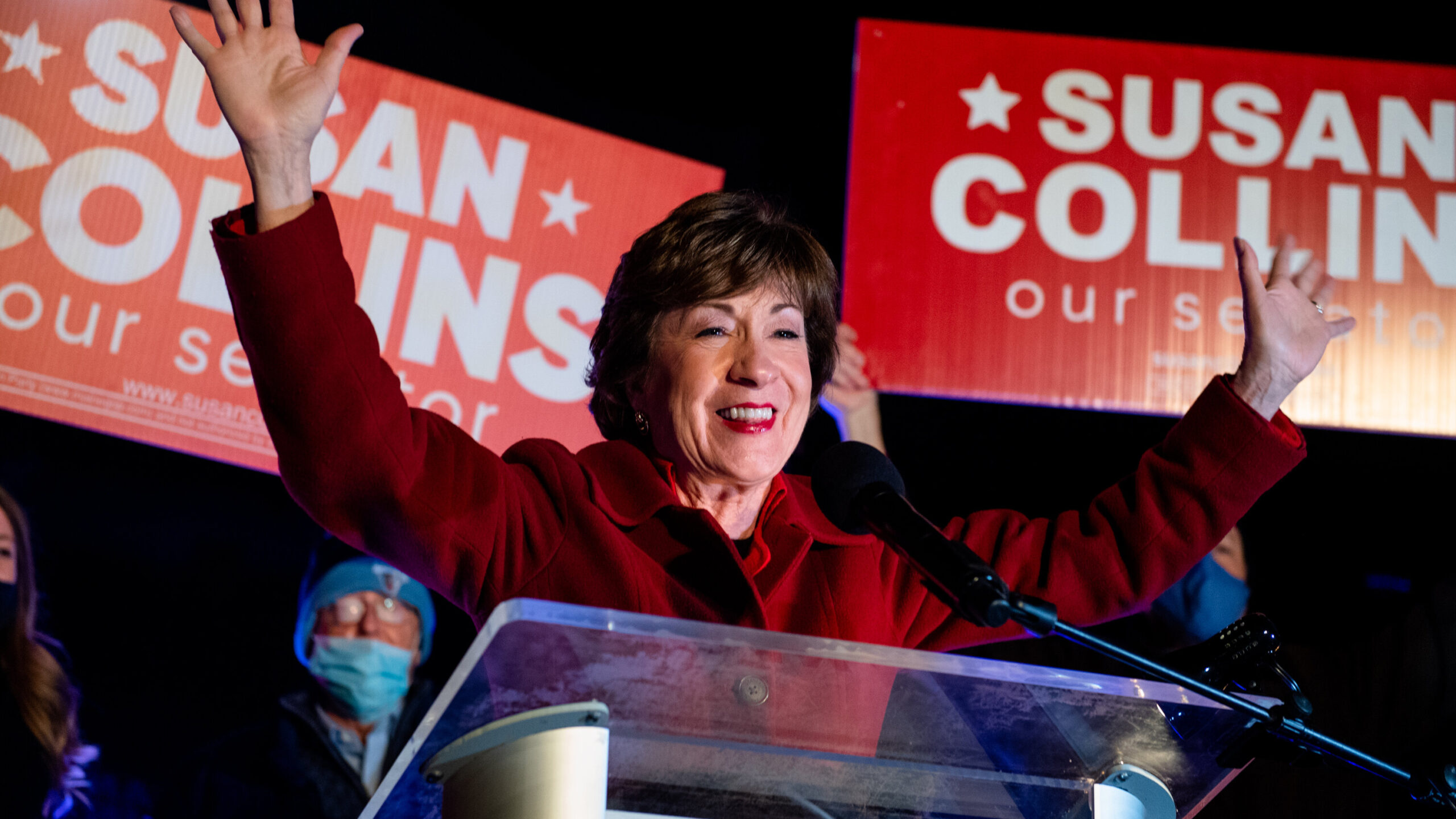
Susan Collins faces her toughest reelection yet against Troy Jackson after a chaotic Democratic candidate swap. Here’s why Maine is a genuine Senate toss-up.
Republican Sen. Susan Collins faces Democrat Troy Jackson, a former Maine Senate president, in a toss-up 2026 general election after Democrats’ original nominee, Graham Platner, was replaced through a special party nomination process. Recent polling shows Jackson with a slight edge.
For a senator who has survived six consecutive campaigns and just cast her 10,000th consecutive Senate vote, Susan Collins now faces what independent analysts are calling a genuine toss-up race — one of the clearest tests of whether Republicans can hold their Senate majority in November.
A Late, Chaotic Democratic Swap
The road to Collins’ current opponent was unusually turbulent. Maine’s Democratic field originally centered on a three-way primary between Gov. Janet Mills, oyster farmer and combat veteran Graham Platner, and former Maryland government official David Costello. Mills dropped out in April, leaving Platner as the grassroots-backed front-runner heading into the June 9 primary — a candidate whose anti-establishment profile and matched fundraising against Collins had national Democrats excited about their odds.
But Platner’s candidacy collapsed amid revelations that included past social media posts and a tattoo resembling a Nazi symbol. With the general election bearing down, the Maine Democratic Party activated an emergency special nomination process — built around county-level delegate meetings rather than a snap primary — to replace him. On July 25, that process produced Troy Jackson, a former Maine Senate president, as the party’s new standard-bearer with roughly 100 days left until Election Day.
Why the Race Is Genuinely Competitive
Despite the compressed timeline, early data suggests Jackson is not merely a placeholder candidate. A Pine Tree Poll conducted by the University of New Hampshire Survey Center showed Jackson with a three-point edge over Collins among likely general-election voters, and Fox News’ inaugural 2026 Power Rankings classify the race as a toss-up — one of roughly a dozen Senate contests that will determine which party controls the chamber.
Collins’ vulnerabilities are structural as much as political. Maine backed the Democratic presidential ticket by seven points in 2024, meaning Collins has long relied on ticket-splitting voters to survive in a state that leans against her party nationally. Democrats are also targeting her more directly than in past cycles, criticizing her comment that she doesn’t regret her 2018 vote to confirm Justice Brett Kavanaugh despite his later vote to overturn Roe v. Wade, and her continued support for Immigration and Customs Enforcement funding following a fatal shooting in Maine involving ICE agents earlier this month.
Collins, who chairs the powerful Senate Appropriations Committee, is leaning on 28 years of relationship-building with industries dependent on federal spending, along with a substantial outside-money advantage. In her campaign launch, Collins argued that “my experience, seniority and independence matter,” while Democrats have countered that “seniority without a backbone is just tenure.”
What It Means for Senate Control
Maine is one of two Senate seats Democrats are defending — or, in Collins’ case, one Republicans are defending — in a state won by the opposing party’s presidential nominee in 2024, making it a marquee Senate battleground alongside Georgia, North Carolina, and Alaska. Democrats need to net four seats nationally to reclaim the majority, and unseating Collins is widely viewed as central to that math given how few genuinely competitive Republican-held seats exist on the 2026 map.
The compressed Jackson campaign timeline is itself a variable worth watching: Collins has now defeated multiple well-funded Democratic challengers over her career, and whether Jackson can build statewide name recognition and a comparable small-dollar fundraising operation in roughly 14 weeks will likely determine whether Maine actually flips or simply stays close.
Discover more from The Economy
Subscribe to get the latest posts sent to your email.
Wealth Management
UK Wealth Tax Fears Trigger Record £13.9bn Investor Exodus Ahead of October Budget

There is no bank queue, no dramatic headline photo — just a steady, monthly bleed of capital out of UK equity funds that has now become the worst sustained withdrawal pattern investment platforms have recorded in years. According to fund-flow data from Calastone, UK investors pulled £1.6 billion out of stock market funds in July alone, making it the weakest month for UK equity fund flows since late 2025. Zoom out further and the picture sharpens: withdrawals over the trailing twelve months have reached a record £13.9 billion.
This is not a market-timing story. It is a policy-anticipation story, and it is unfolding in the run-up to one of the most closely watched fiscal events of Prime Minister Andy Burnham’s government: Chancellor John Healey’s first Budget, scheduled for October 28, 2026.
What Investors Are Actually Afraid Of
A Boring Money survey cited in UK business coverage found that capital gains tax is the single biggest concern among investors, cited by 76% of respondents, followed by fears of a possible wealth tax at 64%, land and stamp duty reform at 51%, and inheritance tax changes at 50%. Strikingly, only 7% of investors surveyed believe the Burnham government’s policies will improve their personal financial position, while half expect an outright negative effect.
This sentiment is not occurring in a vacuum. It follows a period in which prior changes to inheritance-tax treatment of pensions already unsettled long-term savers, and it comes as speculation mounts — fueled in part by public commentary from figures including US President Donald Trump, who has separately described the UK’s fiscal position in blunt terms — about the scale of revenue-raising measures Healey may need to close the country’s fiscal gap.
The Broader Economic Backdrop
The capital-flight story is unfolding against a genuinely mixed UK economic picture. On one hand, the Services PMI has returned to expansion territory at 52.1, with the Composite PMI reaching 52.2, and construction’s downturn has eased. On the other, UK job postings fell 11% during the first half of 2026 and remain roughly 32% below pre-pandemic levels, according to Indeed data — with private-sector employment now in its 22nd consecutive month of decline, according to PMI figures.
Housing tells a similarly split story. Britain’s largest residential developers issued eight profit warnings in the first half of 2026 — matching the number recorded at the start of the 2008 financial crisis — with Vistry among the worst affected as its first-half home sales fell 11% to roughly 6,100 units. That makes the government’s pledge to deliver 1.5 million new homes before the 2029 general election an increasingly difficult target, with knock-on effects for the SME contractors and material suppliers that depend on housebuilding activity.
One notable bright spot: small-business growth expectations tell a bleaker story than the headline PMI figures suggest. Novuna Business Finance research found business growth confidence in England has dropped to just 24% — the lowest reading in the survey’s 12-year history, with construction, retail, and hospitality recording the sharpest declines. Only the North West bucked the trend, with growth expectations rising modestly.
Where the Money Is Going
For SEO content strategists and wealth advisors serving cross-border clients, the practical question is not whether UK capital is leaving equity funds — the data already answers that — but where it is relocating. Historical patterns during periods of UK wealth-tax anxiety point toward two primary destinations that recur consistently in advisor conversations: Dubai’s zero personal income tax regime under DIFC structuring, and Singapore’s combination of political stability, low capital gains exposure, and its role as a base for family offices serving Asian and Gulf wealth simultaneously. Both jurisdictions have spent 2025 and 2026 actively courting exactly this demographic through streamlined golden-visa and family-office licensing regimes.
What to Watch Before October 28
Three signals will matter most between now and Budget day:
- Whether Calastone’s monthly outflow figures accelerate or stabilize in August and September — a stabilization would suggest markets have already priced in the worst-case Budget scenario; continued acceleration would suggest investors expect measures more severe than currently rumored.
- Any pre-Budget signaling from Chancellor Healey or Number 10 about the scope of capital gains, wealth, or inheritance tax changes — governments frequently use August recess speeches and September party conference season to test-float measures.
- Bank of England commentary on energy price volatility, given BOE Deputy Governor Pill’s warning that energy price volatility is likely to persist into 2027, a factor that will constrain the Chancellor’s room to maneuver on the spending side of the Budget.
The Bottom Line
Britain is experiencing a slow-motion, policy-anticipation capital exodus rather than a market crash — but the effect on long-term investment, housebuilding, and small-business confidence is proving just as corrosive. With Chancellor Healey’s October 28 Budget now the single most consequential date on the UK fiscal calendar, the £13.9 billion already gone may be only the opening chapter.
Discover more from The Economy
Subscribe to get the latest posts sent to your email.

Mandatory Lobbying Registers 2026: Corporate Risk Guide

Beyond $100 Oil: Why the Geopolitical Shock at Hormuz Marks a Structural Turning Point

Digitally Deliverable Services: 56% of Global Trade in 2026

AI Data Center Real Estate 2026: Power & Grid Battle Guide

Smart Glasses Privacy Crisis 2026: Regulation & Compliance

Refinance Options Amid the 2026 Global Debt Crisis and Shifting US Treasury Yields

Bitcoin Merchant Services: The BRICS De-Dollarization and Tokenized Cross-Border Payments

Best Online MBA Programs to Master Generative AI and Circular Economy Strategies

Top CRM Software for Global Trade and Cross-Border Tokenized Payments

How Generative AI is Reshaping Car Insurance Comparison Quotes

Mesothelioma Compensation in 2026: Navigating New Asbestos Regulations in Manufacturing

AI Liability & Corporate Negligence: When to Call a Personal Injury Attorney in 2026

Voice Phishing (Vishing) on the Rise: How AI is Forcing Banks to Rewrite Security Protocols

The Death of Generic AI: Why Industry-Specific LLMs (Legal, Architecture) Command Premium ROI

State Farm’s $5B Dividend 2026: Who Qualifies & Payout Dates

US-China Relations in Q3 2026: Trade Tariffs and Supply Chain Risks

Gold’s Wild 2026: From a Record $5,600 Peak to a 24% Crash and Back Toward $4,500

Oil Surges as Strait of Hormuz Traffic Collapses Again

The Rocket That Won’t Quit: Inside SpaceX’s Falcon 9 Launch Machine

Bank of England Set to Hold Rates Through Year-End, Reuters Poll Shows

The 2026 Crypto Regulatory Shift: What It Means for Institutional Investors

SpaceX Starship Flight 14: First Orbital Attempt & Starlink V3 Launch Explained

Retail Earnings Week: What Home Depot, Target & Walmart Reveal

AI-Powered Training: The Next Multi-Billion Dollar Ecosystem in Fitness

China’s Economy Has a Structural Problem: Factories Are Winning, Households Are Losing

Global Chip Selloff Deepens: What’s Driving the Aug. 19 Semiconductor Rout

Russia’s Black Sea Oil Exports Fall for a Fifth Straight Week

AI Chip Stocks 2026: The Best Semiconductor Investments Beyond Marvell
-

 Markets & Finance8 months ago
Top 15 Stocks for Investment in 2026 in PSX: Your Complete Guide to Pakistan’s Best Investment Opportunities
-

 Analysis7 months ago
Johor’s Investment Boom: The Hidden Costs Behind Malaysia’s Most Ambitious Economic Surge
-

 Analysis7 months ago
Top 10 Stocks for Investment in PSX for Quick Returns in 2026
-

 Analysis7 months ago
Brazil’s Rare Earth Race: US, EU, and China Compete for Critical Minerals as Tensions Rise
-

 Banks8 months ago
Best Investments in Pakistan 2026: Top 10 Low-Price Shares and Long-Term Picks for the PSX
-

 Investment8 months ago
Top 10 Mutual Fund Managers in Pakistan for Investment in 2026: A Comprehensive Guide for Optimal Returns
-

 Global Economy8 months ago
15 Most Lucrative Sectors for Investment in Pakistan: A 2025 Data-Driven Analysis
-

 Global Economy8 months ago
Pakistan’s Export Goldmine: 10 Game-Changing Markets Where Pakistani Businesses Are Winning Big in 2025