
Banks
BRICS+ Cross-Border Payments 2026: Interoperability Explained

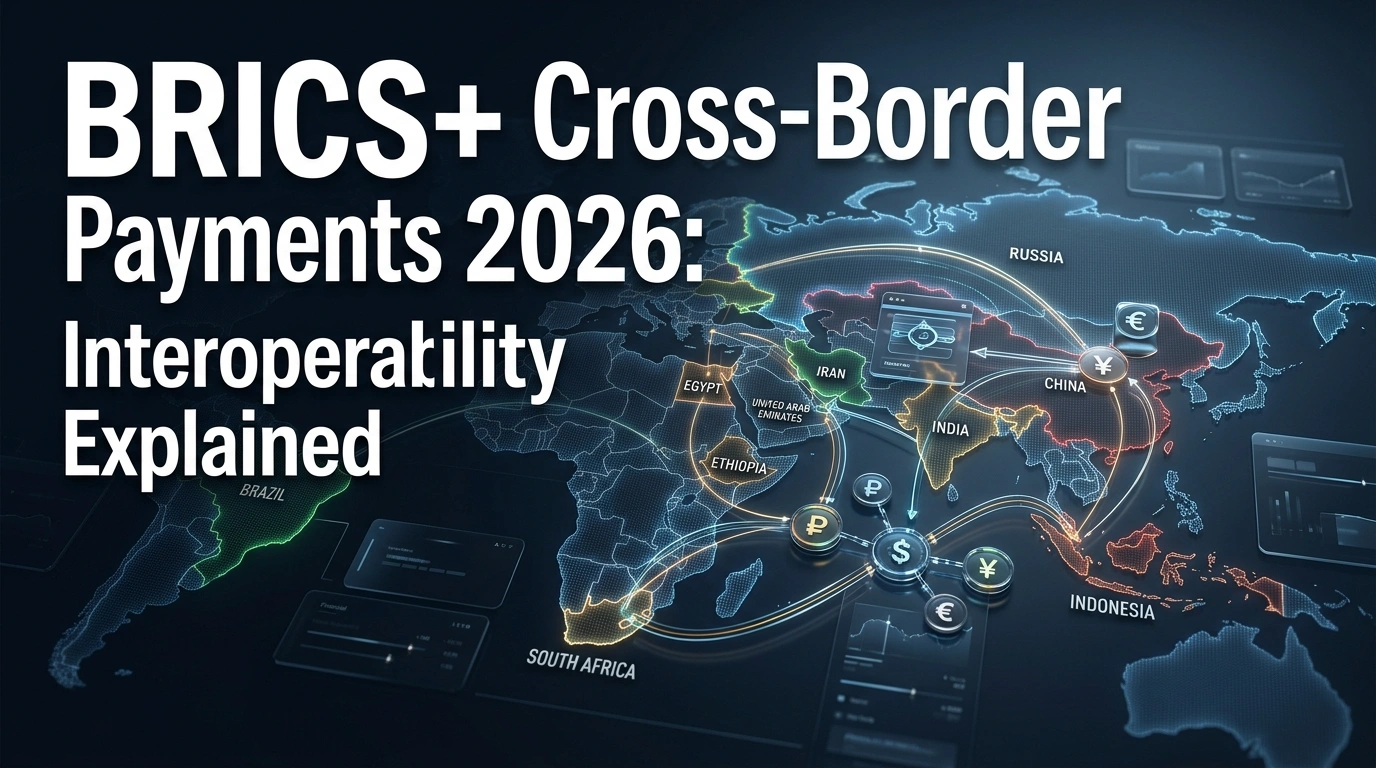
For two decades, the debate around BRICS and the US dollar centered on a single, headline-friendly but ultimately unrealistic question: would the bloc launch a common currency to rival the dollar? By 2026, that question has been decisively answered — India, holding the bloc’s 2026 chairship, has explicitly rejected a shared BRICS currency. But a quieter, more technically consequential shift has taken its place: the operational push toward interoperable national payment rails that let money move across borders in local currencies, without routing through the dollar or SWIFT.
Key Takeaways
- India’s 2026 BRICS chairship has formally ruled out a shared BRICS currency, with Commerce Minister Piyush Goyal and RBI Governor Sanjay Malhotra confirming the bloc’s focus has shifted to linking existing fast-payment systems and CBDCs instead.
- BRICS Pay began operational deployment in 2026, working to integrate China’s CIPS, India’s UPI, Brazil’s Pix, and Russia’s SPFS, with full implementation targeted around the BRICS summit in New Delhi.
- The dollar’s share of global reserves has fallen below 57%, though it still dominates foreign exchange turnover at roughly 88% — illustrating that de-dollarization is a gradual reserve-composition shift, not a currency collapse.
- UnionPay card transactions in Brazil rose more than 30% in the first half of 2026, and Argentina extended its currency swap line with China by five years, covering 130 billion yuan (~$19.1 billion) — the longest renewal in the swap’s history.
- A gold-backed settlement token — “The Unit,” 40% backed by physical gold and 60% by a basket of BRICS currencies — has moved from an October 2025 pilot into implementation-architecture and sandbox-testing phases in 2026, according to central bank officials involved in the project.
From Currency Union to Payment Interoperability: The 2026 Pivot
Earlier BRICS currency proposals failed for structural reasons that a shared payments approach elegantly sidesteps: member states operate under different inflation regimes, maintain incompatible capital controls, and pursue divergent monetary policies, making true monetary union politically and technically implausible. The 2026 approach instead prioritizes linking national digital infrastructure — China’s digital yuan, India’s digital rupee (e-rupi), and Russia’s digital ruble — through shared technical standards, while each currency remains under full domestic control.
RBI Governor Sanjay Malhotra has described the goal as connecting two types of infrastructure: central bank digital currencies (CBDCs) and fast payment systems (FPS) such as India’s UPI, Brazil’s Pix, and China’s digital yuan platform. The practical effect, if achieved, is that a payment initiated in one member country could settle almost instantly in another using local currencies — bypassing correspondent banking chains and the dollar-centered SWIFT messaging network entirely.
BRICS Pay: Architecture and Current Status
BRICS Pay is the operational umbrella for this integration effort, designed to link:
- China’s CIPS (Cross-Border Interbank Payment System)
- India’s UPI (Unified Payments Interface)
- Brazil’s Pix (the world’s most widely cited public real-time payment system)
- Russia’s SPFS (System for Transfer of Financial Messages, Russia’s SWIFT alternative)
According to reporting on the system’s 2026 rollout, BRICS Pay began operational deployment during the year, with full implementation targeted around the BRICS summit hosted by India. Reporting on this topic varies significantly in authority and should be read with appropriate skepticism: higher-authority sources (GIS Reports Online, the BRICS Council’s own analytical arm) describe integration efforts as progressing carefully and incrementally, while several lower-authority financial commentary sites describe more sweeping claims about the system’s completeness. The more conservative reading, consistent with the higher-authority sourcing, is that BRICS Pay in 2026 represents a genuine and accelerating technical integration effort that remains short of full multilateral deployment.
The Gold-Backed “Unit”: A Parallel Settlement Layer
Alongside BRICS Pay, central banks within the bloc have been developing a blockchain-based settlement token — commonly referred to as “The Unit” — structured with 40% backing in physical gold and 60% in a basket of BRICS member currencies. Officials involved in the project have described a completed pilot and a draft implementation framework moving toward wider sandbox testing, with the initiative explicitly designed to bridge currencies rather than replace them: an Indian bank could, in principle, convert rupees into the Unit and transmit value to a Brazilian counterparty, which would convert it back into reais without a dollar intermediary at any stage.
This structure matters for the interoperability thesis specifically because it solves a problem that a shared fiat currency cannot: it allows settlement without requiring any member state to cede monetary sovereignty, while still providing a common unit of account for cross-border netting.
The Numbers Behind the Shift
| Indicator | 2026 Data Point |
|---|---|
| Dollar share of global reserves | Below 57% |
| Dollar share of FX turnover | ~88% (still dominant) |
| UnionPay transaction growth in Brazil (H1 2026) | +30%+ |
| Argentina–China currency swap renewal | 5 years, 130 billion yuan (~$19.1B) |
| Gold backing of “The Unit” settlement token | 40% gold / 60% BRICS currency basket |
| Combined BRICS+ population share represented | ~45% of global population |
The gap between the reserve-share figure (below 57%) and the FX-turnover figure (88%) is the single most important number in this analysis: it demonstrates that de-dollarization in 2026 is proceeding meaningfully at the level of central bank reserve allocation, while the dollar retains overwhelming dominance in the actual mechanics of day-to-day currency trading. Businesses planning for “the end of dollar hegemony” in the near term are working from a mischaracterized premise; businesses planning for “gradually increasing local-currency settlement optionality” are working from the data.
Why This Forces Interoperability — Not Replacement
The 2025 Rio declaration formally advanced the BRICS Cross-Border Payments Initiative and payment-system interoperability specifically — not a euro-style monetary union — a framing that India’s 2026 chairship has reinforced. The practical driver is straightforward: the freezing of Russian foreign reserves following 2022 sanctions demonstrated to Global Majority countries the concentrated risk of dependence on dollar-based settlement infrastructure that a small number of Western institutions can restrict. Interoperability among existing national systems — rather than a new currency — offers a path to reducing that specific exposure without requiring any country to abandon monetary sovereignty or predictable domestic policy tools.
Implications for Businesses and Investors
- Trade finance desks serving BRICS-adjacent markets should begin tracking CIPS, UPI, Pix, and SPFS interoperability milestones directly, since settlement-corridor changes could shift the relative cost and speed of cross-border trade finance well before any headline “BRICS currency” event occurs.
- Multinational treasury functions operating in Brazil, India, Russia, or China should monitor local-currency settlement options as a genuine, if still developing, alternative to dollar-denominated trade finance — particularly for intra-bloc trade.
- Currency risk models should distinguish reserve-composition shifts from FX-turnover dominance. The 57%/88% gap above is the clearest evidence that dollar dominance in transactional finance is far stickier than dollar dominance in reserve holdings.
Frequently Asked Questions
Is BRICS launching a new currency to replace the US dollar?
No. India, holding the 2026 BRICS chairship, has explicitly rejected a shared BRICS currency; the bloc’s actual 2026 focus is on linking existing national payment systems and CBDCs for interoperability, not creating a common currency.
What is BRICS Pay?
BRICS Pay is a cross-border payment integration effort linking China’s CIPS, India’s UPI, Brazil’s Pix, and Russia’s SPFS, designed to allow local-currency settlement between member states without routing through SWIFT or the US dollar.
Is the US dollar losing its global dominance in 2026?
Partially and unevenly. The dollar’s share of global reserves has fallen below 57%, but it still accounts for roughly 88% of foreign exchange turnover, indicating a gradual shift in reserve composition rather than a collapse in transactional dominance.
Conclusion
The 2026 BRICS+ story is not the dramatic currency-replacement narrative that circulates in less rigorous financial commentary — it is a more consequential, if less headline-grabbing, infrastructure story. By prioritizing interoperability among existing national payment systems over a politically and technically implausible common currency, the bloc representing roughly $30 trillion in combined economic output and 45% of the global population is building the plumbing for a genuinely multipolar payments architecture — one that will reshape trade finance and settlement costs gradually, corridor by corridor, well before it meaningfully challenges the dollar’s transactional dominance.
Discover more from The Economy
Subscribe to get the latest posts sent to your email.


Key Takeaways
- Workers sent about $10.9 billion in July–September 2026, around 14% above a year earlier, according to the 9 October official-news report of SBP figures.
- September 2026 inflows were about $3.6 billion, up 12.7% year on year but down 1.9% from August.
- Remittances support household consumption and foreign-exchange availability without creating a new debt obligation.
- A remittance is not an export and cannot replace productivity gains, better tax collection or a sustainable import bill.
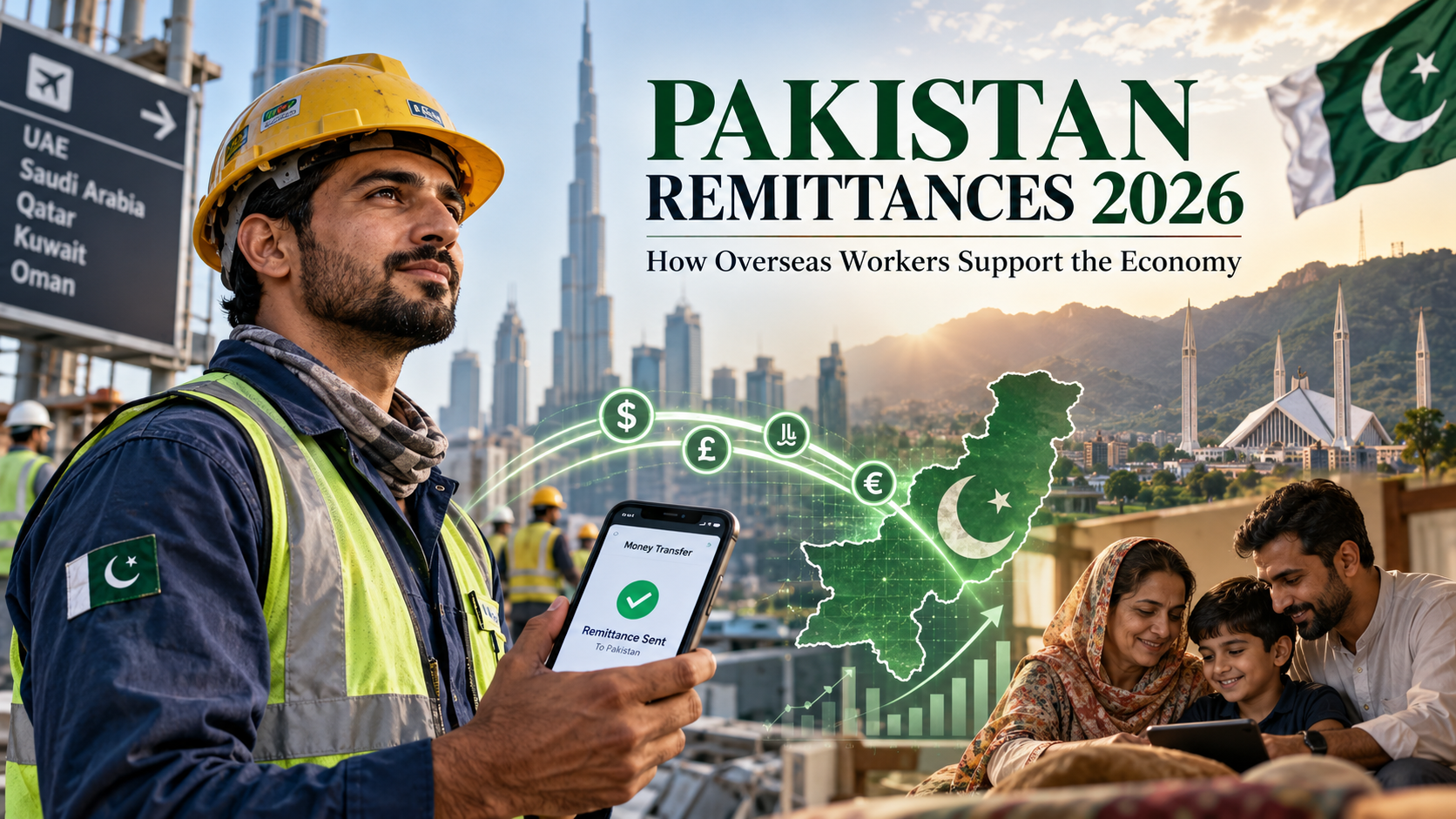
A worker in Jeddah transfers money to a family in Gujranwala. The family pays school fees, clears a medical bill and buys groceries. The transfer is personal, but millions of transactions like it have become central to Pakistan’s external finances. Pakistan remittances 2026 reached about $10.9 billion in the first quarter of FY2026–27, the latest reported State Bank data show. Associated Press of Pakistan’s 9 October 2026 coverage recorded a roughly 14% increase over the corresponding quarter.
The good news is a steadier supply of foreign currency and greater household spending power. The vulnerability is equally important: international employment, host-country growth, exchange rates and formal transfer costs remain outside any Pakistani family’s control. The goal should be to use remittance strength to buy time for productive reform, not treat it as a substitute for exports.
What is the latest Pakistan remittances 2026 picture?
The October 9 report citing State Bank figures put September remittances at about $3.6 billion, up 12.7% from September 2025 but down 1.9% from August 2026. Over the full first quarter, the inflow was around $10.9 billion, compared with roughly $9.54 billion a year earlier.
| Measure | Reported amount | Period |
|---|---|---|
| Remittances | About $3.6bn | September 2026 |
| Remittances | About $10.9bn | July–September 2026 |
| Prior-year comparison | About $9.54bn | July–September 2025 |
| Growth | About 14% | First-quarter year-on-year |
These are workers’ remittance flows as reported through formal channels. They are not a measure of every personal transfer, not a count of migrants and not an estimate of the income earned by Pakistanis abroad. Revisions and classification changes can alter subsequent tables.
Quarterly comparisons are more informative than a single month because religious holidays, working days and transfer campaigns can move payments across calendar boundaries. A decline from August to September is not, by itself, evidence that the trend has reversed.
How do the transfers help Pakistan’s foreign exchange position?
Remittances supply dollars, riyals, dirhams and other currencies that recipients generally exchange for rupees through banks or authorised payment channels. In balance-of-payments accounting, they support the current account and can offset part of the merchandise-trade gap. The PBS data put the July–September 2026 goods deficit at $10.768 billion. That does not mean remittances and the goods gap can simply be subtracted to calculate the current account: services, primary income and other transfers also matter.
The IMF’s October 2026 assessment said the current account was broadly balanced in FY26, supported by strong remittances, and reported gross reserves of about $21.5 billion at end-September 2026. This shows why policymakers value steady migrant inflows. Unlike a sovereign loan, the money arriving for households does not create a scheduled government repayment.
Yet the support has limits. If imports accelerate or global energy prices jump, even high remittance receipts may be insufficient to prevent pressure on the external account. A family transfer can strengthen the system without making an unsustainable import structure sustainable.
Which countries and families matter most?
In September 2026, the SBP figures reported by APP showed Saudi Arabia accounting for approximately $899.1 million and the United Arab Emirates $748.5 million. The United Kingdom contributed around $515.1 million and the United States $305.9 million. These are monthly corridor figures, not annual totals.
A father working in Riyadh may send money for rent and schooling. A nurse in the UAE may help a parent pay for medicine. A British-Pakistani family may transfer savings to relatives or support property maintenance. These transactions have very different household purposes. The macroeconomic total tends to hide that variation.
The highest social return may come when recipients can use transfers to keep children in school, buy productive tools, improve sanitation or escape high-cost debt. That does not mean recipients should be pressured to invest money they need for essentials. The priority is their financial security and informed choice.
Why do formal banking channels make such a difference?
A sender deciding between a licensed provider and an informal arrangement weighs the exchange rate, fee, speed and confidence that the money will arrive. Formal receipts improve the quality of the recorded balance-of-payments data and make disputes traceable. They can also provide a pathway into savings products and credit histories.
The State Bank’s external-sector data portal publishes country-wise remittance statistics, while its data-release calendar gives readers a way to check whether a recent month’s figures have arrived. Financial inclusion is more likely when a family can receive money in a low-cost account and spend it digitally without unnecessary charges.
An apparently zero-fee transfer is not always free. A poorer exchange rate can be a larger hidden cost than an upfront charge. Ask how many rupees the beneficiary will actually receive, compare that figure against another licensed channel, and keep confirmation records. Never transfer funds through an unverified agent merely because a messaging-app advertisement promises the best rate.
How much did overseas Pakistanis remit in September 2026?
Reported State Bank data put workers’ remittances at approximately $3.6 billion in September 2026, 12.7% higher than in September 2025 and 1.9% lower than in August 2026. Monthly transfers can fluctuate with holidays, exchange rates and payment timing.
Worked example: exchange-rate costs on a $500 transfer
Imagine two licensed providers accepting a $500 transfer. Provider A credits Rs275 per dollar after all fees, while Provider B credits Rs278 per dollar. The recipient gets Rs137,500 from A and Rs139,000 from B. The difference is Rs1,500, or about 1.1% of the smaller payout. These rates are invented solely for arithmetic illustration, not quoted market prices.
Families should compare the final deposit amount and delivery time, not just advertising. They should also consider refund policies and dispute channels. For a person sending money monthly, a seemingly small difference compounds over a year.
The second lesson is about currency exposure. If a family plans a large rupee-denominated payment next week, delaying the transfer to speculate on exchange rates may create a bigger problem than any hoped-for currency gain. Match the timing of remittances to household needs rather than attempt to trade currencies with living expenses.
Could the remittance boom become a policy trap?
Yes, if a government mistakes household sacrifices abroad for domestic export competitiveness. Strong inflows make it easier to finance essential imports and rebuild reserves. But they can also reduce urgency to address energy costs, slow industrial productivity and weak tax administration. The World Bank’s long-term Pakistan partnership framework stresses private investment, public resources for development and sustainable growth.
A better response is to make it easier for overseas workers to save or invest voluntarily with reliable safeguards while improving domestic opportunities. Transparent remittance products, consumer protection, lower fees and credible financial regulation matter more than publicity campaigns.
In the final analysis, the economy should be strong enough to offer attractive jobs at home. Remittances can be a lifeline now and a source of development finance later, but the ultimate economic achievement would be an economy less dependent on its citizens working abroad.
What This Means for You
Overseas worker: Compare the final rupee payout, transfer speed and complaint mechanism of licensed channels. Preserve receipts and do not share account passwords or verification codes.
Family receiving money: Make an essentials-first budget. Where possible, split money between immediate bills, emergency savings and optional investment; the mix depends on actual household needs.
Small business supported by a migrant relative: Put personal support and business capital in separate accounts, document whether the funding is a gift or a loan, and agree on expectations before investing it.
Economy watcher: Compare quarterly remittances with imports, services and current-account data. A large transfer total can coexist with fresh pressure on the rupee if the external financing need grows faster.
What to Watch Next
- 26 October 2026: The State Bank monetary-policy decision and any revision to its inflation assessment; verify any schedule change with the SBP.
- Early November 2026, exact release date to be confirmed: Pakistan Bureau of Statistics October inflation and merchandise-trade releases.
- Late October–November 2026, date not yet confirmed: Any IMF Executive Board announcement on the October staff-level agreement; staff agreement is not Board approval.
- Throughout FY2026–27: Updated SBP monthly balance-of-payments and remittance statistics; compare cumulative results rather than one month alone.
Frequently Asked Questions
How much did overseas Pakistanis remit in September 2026?
Reported State Bank data put workers’ remittances at approximately $3.6 billion in September 2026, 12.7% higher than in September 2025 and 1.9% lower than in August 2026. Monthly transfers can fluctuate with holidays, exchange rates and payment timing.
How much did Pakistan receive in remittances in the first quarter of FY27?
Pakistan received about $10.9 billion in workers’ remittances during July–September 2026, approximately 14% more than the roughly $9.54 billion received in the same quarter a year earlier, according to State Bank figures reported on 9 October 2026.
Do remittances increase Pakistan’s foreign exchange reserves?
They support the foreign-exchange market and current account by providing inward currency flows, but reserve levels also depend on imports, debt payments, central-bank market operations and other capital or financial flows. A remittance received by a bank does not automatically add the same dollar amount to the central bank’s reserves.
Which country sent the most remittances to Pakistan in September 2026?
Saudi Arabia was the largest of the reported named corridors for September 2026, at approximately $899.1 million, followed by the United Arab Emirates at about $748.5 million. Monthly ranks can change; use the State Bank’s country-wise series for historical comparison.
What is the safest way to send remittances to Pakistan?
Use a licensed bank or regulated money-transfer provider, verify the final rupee amount and fees, and keep receipts and transaction reference numbers. Avoid unlicensed agents and never provide account login credentials to someone claiming to speed up a transfer. Product suitability differs by country of residence.
The strength of overseas transfers deserves recognition, but the workers should not be asked to carry the economy indefinitely. Use the breathing space to build export capacity, reduce the cost of formal finance and create viable jobs at home.
Discover more from The Economy
Subscribe to get the latest posts sent to your email.

Infrastructure banks are judged most usefully not by the number of meetings they hold but by whether financed assets function, serve their intended communities and can be maintained without unsustainable obligations. That is a timely standard for assessing the Asian Infrastructure Investment Bank after its 2026 annual meeting.
The AIIB says its annual meeting took place in Doha on September 28–29 under the theme “Tomorrow’s Infrastructure: Impact and Innovation.” The agenda emphasized sustainable investment, cross-border connectivity, green finance, digital transformation and private capital. Those priorities define a development strategy; the harder work is demonstrating delivery.
What does AIIB actually do?
The Asian Infrastructure Investment Bank is a multilateral development bank that finances infrastructure and related development projects across its membership. Its business model differs from that of a conventional commercial bank: it can combine long-horizon lending, institutional safeguards and project preparation with capital mobilization. It still needs to assess repayment capacity and the environmental and social consequences of what it funds.
Projects can include electricity networks, transport, water and digital connectivity. The economic value depends on who gains access, how much service improves and whether user charges and public finances can support operations.
Green infrastructure needs a performance test
A solar project should be evaluated not only in installed megawatts but in delivered electricity, grid stability, curtailment and emissions performance. A public transport project should be examined through ridership, journey-time savings, safety and accessibility. Water infrastructure can be assessed through service reliability, water quality and reduction of leakage.
Labels such as “green” or “sustainable” are most informative when accompanied by credible baseline assumptions, public monitoring and independent evaluation. Without that, a project can appear successful on paper while leaving the underlying service problem largely untouched.
The investment gap is broader than lending
Many countries need new infrastructure but have limited fiscal space and large foreign-currency exposures. A long-term loan does not resolve the problem if the borrower has insufficient revenue or faces a sharp exchange-rate shock. AIIB and co-financiers therefore must think about project preparation, procurement quality, currency risk and maintenance funding at the outset.
Private capital may participate when risk is allocated sensibly. A toll road or grid investment should not rely on implausible demand assumptions simply to make a spreadsheet attractive. If public guarantees are provided, their potential cost should be disclosed rather than concealed outside the annual budget.
Why connectivity can produce wider benefits
An infrastructure asset has network effects. A border crossing may be far more useful when roads, customs processes and logistics providers on both sides work well. An electricity interconnector can create value when neighboring markets have complementary demand and supply. Digital infrastructure matters when affordable access leads to actual economic activity, not merely a fiber line on a map.
That means coordination among regulators and neighboring governments can be as important as concrete and cables. Project completion is a milestone; integration into a functioning network is the economic result.
What readers should demand from project announcements
Request the total financing package, implementation timeline, expected beneficiaries and the precise financing share provided by AIIB. Ask whether a sum is approved, committed or already disbursed. Look for environmental assessments, procurement records, completion reports and a plan for maintenance.
The bank’s 2026 meeting materials set out an ambitious decade-two agenda. Readers can judge the institution fairly by following projects over years rather than treating a single headline commitment as proof of impact.
Separating approval, disbursement and impact
Infrastructure financing has a sequence that is too often collapsed in news headlines. A project may be proposed, appraised, approved by a board, signed with a borrower, disbursed in installments, physically completed and later assessed for economic performance. An “approved $500 million project” is not necessarily $500 million already spent, and expenditure alone does not show improved household welfare. For an electricity investment, an evaluator might examine the number of additional reliable connections and hours of avoided outages after completion. Where performance falls short, credible institutions publish the findings and lessons rather than substituting future promises for evidence.
Frequently asked questions
What does AIIB stand for?
Asian Infrastructure Investment Bank, a multilateral institution focused on infrastructure and development finance.
Where was the 2026 AIIB annual meeting?
AIIB says it took place in Doha, Qatar, on September 28–29, 2026.
Is every AIIB project a green project?
No. Projects span sectors; environmental performance should be assessed individually using published criteria and results.
Discover more from The Economy
Subscribe to get the latest posts sent to your email.

Student-loan questions in October 2026 are about money due, deadlines and eligibility—not simply campaign promises. Federal Student Aid says a March 2026 court order ended the SAVE repayment plan, and loan servicers began sending individualized transition notices in July. Affected borrowers may have to choose among plans with different monthly payments and forgiveness conditions.
With congressional elections approaching, politicians may debate the policy, but today’s repayment obligations are governed by current rules and an individual’s servicer notice. The most useful article begins with that distinction and helps borrowers avoid an unwanted automatic placement. For primary-source background, consult Federal Student Aid SAVE transition FAQ; MOHELA SAVE Plan FAQ; Federal Student Aid repayment calculator. In a fast-moving topic, publication time and information cutoff matter: subsequent events may require updating the figures or legal status, not merely changing the date in the footer.
What changed for SAVE borrowers in 2026
Federal Student Aid states that a court order ended the SAVE Plan in March 2026 and that servicers began notifying affected borrowers on July 1. The agency instructs borrowers to work from the notice date set by their own servicer rather than relying on another person’s deadline. A borrower who has already received a 90-day notice may be close to or past the point at which an additional 30-day notice appears. Failing to choose a suitable plan can result in automatic placement into a fixed repayment option. Loan disbursement dates, employment and income influence eligibility for alternative plans.
Student-loan questions in October 2026 are about money due, deadlines and eligibility—not simply campaign promises.
Why the 2026 midterms do not suspend repayment
Elections can produce debate about loan policy but do not, by themselves, stop scheduled repayments or erase existing debt. A campaign proposal is not a final rule, and even legislation enacted later may contain effective dates or grandfathering provisions. Readers should separate five levels of evidence: a candidate’s statement, a bill introduced in Congress, a rule proposed by an agency, a measure signed into law, and an enforceable requirement communicated to borrowers. This distinction protects families from postponing necessary action based on a political headline. Our primary source for current deadlines is the official borrower FAQ, not a polling story.
Compare plans on total cost, not only the first bill
Income-based repayment may produce a lower required monthly amount than a fixed plan, but the long-run calculation depends on interest, time in repayment, expected earnings and eligibility for discharge. Federal Student Aid identifies repayment options including Income-Based Repayment, Pay As You Earn where eligible, Income-Contingent Repayment for certain borrowers and the newer Repayment Assistance Plan. Some plans are restricted by when loans were disbursed. A small monthly payment might extend repayment or allow a larger balance to remain for longer. Use the official loan simulator and record both the amount due now and the expected total repayment under plausible income paths.
Public Service Loan Forgiveness implications
For qualifying public-service employees, the number and type of qualifying payments can matter more than a superficial comparison of advertised rates. Federal Student Aid’s FAQ identifies which plans count toward PSLF and warns that certain automatic placements may not qualify. Employment certification, loan type and servicing records should be reviewed before changing the repayment arrangement. Never promise forgiveness based on a general description of someone’s occupation. Borrowers should keep dated copies of plan elections and confirmation emails, especially when switching servicers, consolidating loans or disputing payment-count errors.
What affected borrowers should do now
Sign in directly to StudentAid.gov and the assigned loan servicer. Identify the type and disbursement date of each federal loan, current repayment plan, outstanding notices and specific response deadline. Next, use the official repayment simulator to compare plans and assess any forgiveness goals. If the required payment becomes unaffordable, contact the servicer before the due date and ask about eligible options. Review autopay instructions and confirm any changed withdrawal amount. Avoid unsolicited debt-relief calls offering guaranteed forgiveness for an upfront fee. The factual priority is preventing missed deadlines, not forecasting which party will control Congress.
Worked example: how to interpret a difficult headline
Borrower A received a servicer transition notice early and has a deadline this month; Borrower B has not yet received a notice. The two borrowers should not infer that they share a deadline. A borrower pursuing PSLF should additionally verify that the intended plan generates qualifying payments. In each case, the correct comparison comes from the individual’s account, not a general headline saying every borrower must switch on the same day. This is a deliberately illustrative comparison unless explicit documented numbers are identified. It should not be mistaken for a real person’s financial circumstances, an unverified event, or a guaranteed forecast. Its purpose is to show how a reader can apply the underlying principle and identify which information still needs to be checked.
Three concepts that are often confused
| Concept | What it actually establishes |
|---|---|
| Political proposal | Expresses desired policy; does not alter current billing by itself. |
| Published federal guidance | Defines existing plan options and transition procedures. |
| Individual servicer notice | Specifies the account-specific deadline and next steps. |
These distinctions are more than technical niceties. They change the answer to the reader’s question. An estimate does not carry the same evidentiary weight as a final rule; an announcement does not have the same practical consequence as a completed transaction; and a provisional interpretation should not be presented as a confirmed event. Wherever a live source supplies a new fact, the editor should check whether the old text still describes the right stage of the process.
A reader’s verification workflow
Start by recording the precise claim and the date it was allegedly true. Open the primary announcement or filing rather than a social-media screenshot. Ask whether the source has an incentive to present only the most favorable interpretation, and corroborate material facts with reputable independent reporting where available. For numerical claims, note the denominator, timeframe and whether the number is a stock, a flow, a forecast or a realized result. For legal claims, note the court, agency, stage of proceedings and exact published document.
Next, separate information useful for immediate decisions from context that merely explains the headline. A person may need to act on a deadline even when the long-run political debate remains unresolved. Someone evaluating a security may need financing details, while a customer comparing technology products needs a tested specification and local warranty terms. The same headline can matter for different reasons; the article should therefore provide an actionable answer without implying that every reader faces the same circumstances.
Indicators and developments worth monitoring
- Official Federal Student Aid transition FAQ.
- Servicer messages and repayment-plan election deadlines.
- New enacted legislation or finalized Department of Education rules.
- Public Service Loan Forgiveness guidance and recertification changes.
Avoid treating these signals as a checklist that mechanically predicts the future. Some are leading indications and others are lagging measurements. A change becomes significant only after its magnitude, source and comparison period are understood. If two reputable sources disagree, explain the source of the difference—definitions, timing, jurisdiction, measurement or uncertainty—instead of selecting whichever number makes the strongest headline. That practice strengthens both reader trust and the article’s usefulness in search features that surface isolated paragraphs.
The specific information advantage of this article
An article about political promises cannot substitute for a borrower-specific payment decision. This coverage starts with the official SAVE termination and notice procedure, then explains why disbursement dates, forgiveness eligibility and the date on each servicer message change the practical answer for individual borrowers.
Frequently asked questions
Is SAVE still available in October 2026?
Federal Student Aid says the plan ended in March 2026; affected borrowers should choose another eligible plan. For individual decisions, consult the primary institution or product provider, and use the exact relevant date.
Is everyone facing the same deadline?
No. Deadlines depend on the servicer notice sent to each borrower. For individual decisions, consult the primary institution or product provider, and use the exact relevant date.
Will the midterm election cancel a loan bill?
No. Elections do not automatically cancel payment obligations. For individual decisions, consult the primary institution or product provider, and use the exact relevant date.
Can I compare alternative plans?
Use the Federal Student Aid loan simulator and verify eligibility, total costs and forgiveness considerations. For individual decisions, consult the primary institution or product provider, and use the exact relevant date.
Bottom line
Student-loan questions in October 2026 are about money due, deadlines and eligibility—not simply campaign promises. Federal Student Aid says a March 2026 court order ended the SAVE repayment plan, and loan servicers began sending individualized transition notices in July. Affected borrowers may have to choose among plans with different monthly payments and forgiveness conditions. With congressional elections approaching, politicians may debate the policy, but today’s repayment obligations are governed by current rules and an individual’s servicer notice. The most useful article begins with that distinction and helps borrowers avoid an unwanted automatic placement. The best next step is to identify which of the monitored developments could change this answer and use a current, authenticated record before acting. Clear distinctions between confirmed facts, estimates, proposals and contested claims are more valuable than dramatic certainty.
Discover more from The Economy
Subscribe to get the latest posts sent to your email.

AI Investment Boom 2026–2027: Can Pakistan Capture the Upside?

Global Economy 2026–2027: What Slower Growth Means for Pakistan

Why Global Inflation Is Rising Again in 2026, and What It Means for Pakistan

Raast Pakistan 2026: Digital Payments, Fintech

Pakistan Real Estate Tax 2026: What Buyers, Sellers and Investors Must Check

SME Finance Pakistan 2026: Why Small Businesses Still Struggle for Credit

Pakistan IMF Programme 2026: Why Bailouts Keep Returning

Agri-Tech Pakistan 2026: Where Farming Innovation Could Actually Pay

Pakistan Tax Net: Why Agriculture, Retail and Property Are So Hard to Tax

KSE-100 Index 2026: Is Pakistan’s Stock-Market Recovery Sustainable?

Pakistan IT Exports 2026: What Would It Take to Reach $10 Billion?

Pakistan AI Policy 2025: Can It Raise Productivity and Create Jobs?

Pakistan Remittances 2026: How Overseas Workers Support the Economy

Can Pakistan Reach $34 Billion in Exports? The Real Barriers and Fastest Fixes

Crude Oil & Petroleum Market Analysis: OPEC+ Decisions and Price Forecasts

World’s Largest Economies: Ranking the Top Global Powers

Pakistan Economy 2026: Inside the SBP’s Balancing Act

Asian Stock Markets 2026: Japan, China, Pakistan & More

Silver Price Today: Why the Xi-Trump AI Standoff Is Fueling a Safe-Haven Rally

SpaceX IPO 2026: History’s Biggest Stock Debut?

Oil Prices 2026: Inside the Hormuz Crisis That Won’t End

Algorithmic Dogfights: Why the U.S. and China Must Establish Rules of Engagement for Autonomous Air Power

Top US Convenience Store Chains: Store Counts, EV Charging, and Sales Trends

Who Is Shivon Zilis? The Neuralink Executive at the Center of the Musk–OpenAI Trial

Business Insurance: What Coverage You Actually Need and What It Costs in 2026

Global Economic Outlook 2026: 7 Forces Reshaping Markets, Trade and Business

Corporate America Faces a New Debt Test as US Borrowing Costs Surge

Is AI a Stock Bubble in 2026? What the Data Shows
-

 Markets & Finance10 months ago
Top 15 Stocks for Investment in 2026 in PSX: Your Complete Guide to Pakistan’s Best Investment Opportunities
-

 Analysis8 months ago
Johor’s Investment Boom: The Hidden Costs Behind Malaysia’s Most Ambitious Economic Surge
-

 Analysis8 months ago
Top 10 Stocks for Investment in PSX for Quick Returns in 2026
-

 Banks9 months ago
Best Investments in Pakistan 2026: Top 10 Low-Price Shares and Long-Term Picks for the PSX
-

 Analysis9 months ago
Brazil’s Rare Earth Race: US, EU, and China Compete for Critical Minerals as Tensions Rise
-

 Investment9 months ago
Top 10 Mutual Fund Managers in Pakistan for Investment in 2026: A Comprehensive Guide for Optimal Returns
-

 Global Economy10 months ago
15 Most Lucrative Sectors for Investment in Pakistan: A 2025 Data-Driven Analysis
-

 Global Economy10 months ago
Pakistan’s Export Goldmine: 10 Game-Changing Markets Where Pakistani Businesses Are Winning Big in 2025