
Banks
Top 5 Best Performing Islamic Banks in Pakistan

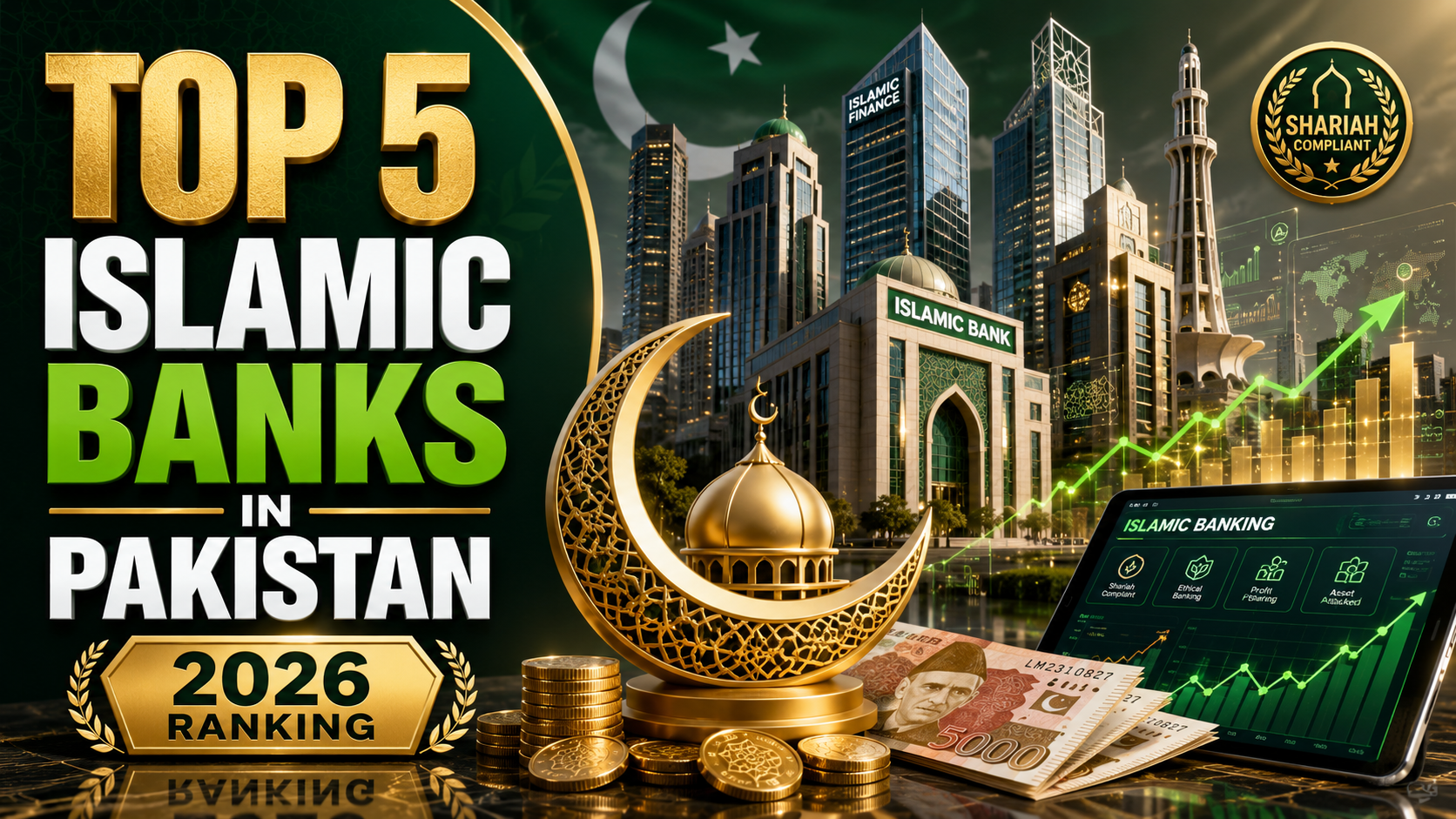
By March 2026, the architecture of domestic capital in South Asia has fundamentally shifted. Shariah-compliant deposits now capture over 26.5% of the total banking industry, an acceleration that has entirely rewritten the institutional hierarchy. For sovereign debt managers and equity analysts alike, identifying Pakistan’s best performing Islamic banks in 2026 is no longer a niche exercise in religious finance—it is the baseline for understanding domestic liquidity. The institutions dominating this sector are not merely capturing unbanked populations; they are actively stripping premium corporate clientele and high-net-worth capital away from conventional legacy lenders.
The transition from parallel financial system to systemic heavyweight has been engineered through aggressive digital acquisition and superior asset quality. While conventional competitors struggle with shrinking net interest margins in a cooling policy rate environment, the top tier of Islamic finance has successfully decoupled its profitability from traditional macroeconomic headwinds.
The Macroeconomic Reality Dictating the Shift
The domestic financial landscape in the first half of 2026 is defined by a distinct monetary pivot. The central bank policy rate, which averaged 12.3% in March 2025, has compressed to 10.5% by the first quarter of 2026 [1]. In a traditional banking model, this 180-basis-point drop would trigger a severe contraction in banking sector profitability. Yet, the leading Islamic financial institutions have neutralised this rate decline through sheer volume growth.
According to official central bank data, total assets within the Islamic banking sector expanded to PKR 12.68 trillion late last year, driven by intense consumer demand [2]. This capital migration is supported by an expanding physical footprint, with the industry network surpassing 6,770 branches. More critically, the return on equity (ROE) for these institutions has climbed above 45%, a metric that places them among the most profitable financial entities in emerging markets [3].
The State Bank of Pakistan’s regulatory framework has actively facilitated this, but the growth is fundamentally market-led. Corporate treasurers are increasingly moving operational accounts to Shariah-compliant windows to satisfy evolving board-level governance mandates, while retail depositors are drawn to aggressively priced digital savings products.
The Core Development: The Five Dominant Institutions
The hierarchy of the sector is now clearly defined by five institutions that have weaponised their balance sheets and technology stacks to secure market share. These banks have moved beyond basic asset growth, focusing heavily on trade finance, complex Sukuk structuring, and paperless transaction banking.
1. Meezan Bank As the undisputed apex predator of the sector, Meezan Bank commands a balance sheet that rivals the largest conventional lenders. In the quarter ending March 31, 2026, the institution reported a profit after tax of PKR 23.4 billion, reflecting a 6% year-on-year increase despite the lower policy rate environment [4]. Total assets sit at a commanding PKR 4.79 trillion. What separates Meezan from its peers is its unyielding asset quality; it maintains a non-performing financing ratio of just 2.0%, outperforming the industry average significantly, backed by a 151% coverage ratio [5]. Its Current and Savings Account (CASA) deposits constitute an extraordinary 93% of its portfolio, granting it the cheapest cost of funds in the country.
2. BankIslami Recently awarded the Euromoney title for Best Islamic Bank in Pakistan, BankIslami has executed a flawless turnaround and expansion strategy [6]. Under the operational direction of CEO Rizwan Ata, the bank grew its deposits by 7% through severe market fluctuations in late 2024 and 2025, reporting stellar fiscal health [7]. By deploying over 500 branches across 210 cities, BankIslami captured the lucrative SME financing market and retail savings space. Their ability to merge ethical banking mandates with aggressive commercial acquisition has made them the most compelling growth story of 2026.
3. Faysal Bank The completion of Faysal Bank’s transition from a conventional lender to a fully Shariah-compliant institution remains the largest successful conversion of its kind in global financial history. In 2026, the bank is reaping the structural rewards of this pivot. By offering highly competitive profit-sharing ratios on products like their Prestige and Platinum saving accounts—yielding up to 13% for high-yield clients—Faysal has retained its legacy corporate base while capturing billions in new Islamic deposits [8]. Their transition eliminated the operational drag of running dual systems, allowing them to underprice competitors on corporate lending.
4. Bank Alfalah Islamic Operating as the most lethal transaction bank in the Islamic space, Bank Alfalah Islamic has targeted the arteries of domestic commerce: trade finance and supply chain liquidity. Within a 12-month period, the institution aggressively expanded its trade client base from 359 to 541 corporate entities [9]. By expanding its supply chain finance network across critical industrial anchors, Alfalah has locked in the transaction flows of the country’s largest manufacturing conglomerates, ensuring a steady stream of low-cost, non-remunerative deposits.
5. Allied Aitebar Islamic Banking While legacy banks fight for physical deposits, Allied Aitebar has dominated the digital frontier. Recognised for its Shariah-compliant digital transformation, the bank has pioneered paperless trade, mobile banking vans for remote acquisition, and seamless business internet banking [10]. Their strategy deliberately targets the demographic dividend—young, tech-native professionals who demand mobile-first financial services but strictly prefer Islamic compliance.
The Analytical Layer: Structural Interpretation
The momentum behind these top five top Islamic financial institutions in Pakistan is not a temporary cyclical anomaly. It is the result of a structural repricing of risk and capital in the domestic market. Conventional banks are increasingly viewed as utility providers, whereas Islamic banks are operating as high-growth technology platforms with banking licenses.
Which are the best performing Islamic banks in Pakistan in 2026?
The best performing Islamic banks in Pakistan in 2026 are Meezan Bank, BankIslami, Faysal Bank, Bank Alfalah Islamic, and Allied Aitebar. These institutions lead the financial sector through superior asset quality, aggressive digital acquisition, high corporate trade volumes, and highly efficient Current and Savings Account (CASA) deposit ratios.
The operational efficiency of these institutions is staggering. The cost-to-income ratio for industry leaders like Meezan dropped to 32% by early 2026 [11]. This efficiency allows them to absorb macroeconomic shocks that would fracture the balance sheets of smaller conventional banks. Furthermore, fee and commission income—driven by debit card usage, trade-related activities, and home remittance flows—is growing at 36% year-on-year for the top tier [12]. They are no longer heavily reliant on government securities for yield; they are generating massive revenue from actual economic activity and consumer transactions.
The downstream consequences of this concentration of capital are profound for policymakers and equity markets. As these five institutions swallow domestic liquidity, the State Bank of Pakistan is forced to rapidly evolve its open market operations and liquidity management frameworks to accommodate Shariah-compliant instruments.
The immediate second-order effect is a fierce acceleration in the digital banking space. The dominance of physical Islamic branches has forced the regulator to license digital-only Shariah-compliant challengers. Entities like Raqami Islamic Digital Bank and the Islamic window of Mashreq Bank Pakistan, which commenced pilot operations in late 2025, saw their assets explode by 109% quarter-on-quarter to PKR 6.90 billion [13]. These digital entrants will force the top five to spend heavily on user interface and cloud infrastructure throughout the remainder of 2026 to defend their retail deposit bases.
For the SME sector, the implications are highly favourable. As these banks compete for yield outside of sovereign debt, they are pushing aggressively into middle-market lending. Corporate borrowers now have significant leverage to negotiate financing terms, as Islamic syndication desks, particularly those led by institutions like HBL Islamic—which dominated the Sukuk market with $349 million in recent deals—compete fiercely to deploy surplus liquidity [14].
Still, the narrative of invincible, uninterrupted growth requires rigorous scrutiny. Credit rating analysts and risk managers privately warn that the breakneck expansion of the Islamic financing portfolio—growing at nearly 2% quarter-on-quarter in a largely stagnant broader economy—carries latent risks.
The dissenting view argues that the current profitability of these institutions is temporarily inflated by a lack of alternative investment avenues for religious depositors, effectively giving these banks a captive audience and artificially cheap funding. If inflation spikes unexpectedly later in 2026, forcing a rapid reversal in the central bank’s policy rate, the heavily concentrated nature of Islamic banking assets could trigger sudden liquidity imbalances.
Furthermore, some structural economists point out that a significant portion of Islamic banking profitability is still tied to low-risk sovereign Sukuks and heavily collateralised corporate financing. They argue that until these top five institutions begin taking genuine equity-like risks in venture capital or uncollateralised micro-lending—the true theoretical intent of Mudarabah and Musharakah—their business models remain functionally identical to conventional banking, merely cloaked in different legal documentation. If the regulator begins to strictly enforce genuine risk-sharing capital requirements, the 45% ROE figures could compress violently.
The trajectory of domestic finance is no longer a debate between conventional and Shariah-compliant models. The capital has voted. The top five Islamic banks have engineered a permanent realignment of market power, transforming ethical compliance from a niche retail product into a ruthless corporate advantage.
They have insulated their balance sheets from policy rate compressions, digitized their acquisition funnels, and captured the transaction flows of the country’s largest industries. The defining financial narrative of the decade is not just that Islamic banks are competing with legacy institutions, but that they have fundamentally rendered them obsolete.
Discover more from The Economy
Subscribe to get the latest posts sent to your email.


Pakistan is running two demanding reform programs at once, and they don’t obviously fit together. On one track, the IMF is pressing for stricter fiscal controls, expanded tax collection, and continued tight monetary policy under its Extended Fund Facility. On the other, Pakistan’s own constitution now mandates the removal of “riba” — interest — from the economy entirely, with a deadline set for January 2028, following a constitutional amendment passed in October 2024, according to IMF Country Report 25/109.
The IMF’s side of the ledger
Pakistan’s economic recovery gained real momentum in the first half of FY26, with GDP growth averaging 3.8% year-on-year, driven by the auto, construction, and garment industries, even as flooding in July-August weighed on output, according to IMF staff reporting. Inflation, however, climbed to 7.3% year-on-year in March as higher global commodity prices passed through to domestic energy costs. Foreign reserves have been rebuilding steadily — from $14.5 billion at end-June 2025 to $16 billion by end-December — while the primary fiscal surplus is expected to reach 1.6% of GDP in FY26, in line with IMF targets.
In May 2026, the IMF Executive Board completed the third review of Pakistan’s Extended Fund Facility and second review of its Resilience and Sustainability Facility, unlocking roughly $1.1 billion and $220 million respectively and bringing total disbursements under the two programs to about $4.8 billion, according to the IMF’s official press release. The Fund explicitly credited Pakistan’s “strong implementation” for maintaining stability despite the disruption from the Middle East war.
The parallel Islamic finance transformation
Running alongside that fiscal program is a structural transformation few outside Pakistan are tracking closely: the State Bank of Pakistan is required to develop a full financial sector strategy detailing the legal, regulatory, and strategic path to a riba-free economy, addressing monetary policy implementation, public debt management, and bank supervision — with a strategy deadline the IMF set for end-June 2026, per the same country report. Parliament has already moved on a related front, approving the Virtual Assets Bill in March 2026 and formally establishing the Pakistan Virtual Assets Regulatory Authority.
Why the IMF is watching this transition warily
The IMF’s own language signals concern about execution risk: publishing the riba-free transition plan “will help align the expectations of market participants, investors, and regulators… and mitigate concerns about any possible cliff effect,” according to the country report language. That is diplomatic phrasing for a real structural risk — an abrupt, poorly sequenced transition away from conventional interest-based finance could destabilize a banking sector the IMF has spent years helping stabilize.
The tax reform Pakistan still owes
Beyond monetary policy, Pakistan has committed to finalizing a new audit manual and centralizing taxpayer audit selection by August 2026, accelerating its Retailer Tax Registration Scheme, and making its Tax Policy Office fully operational, according to ProPakistani’s summary of IMF commitments. The Federal Board of Revenue has continued missing collection targets, prompting the IMF to propose making FBR revenue goals a formal Quantitative Performance Criteria — a stricter enforcement mechanism than before.
Why this matters for Gulf and global investors
Pakistan’s dual reform track — IMF-style fiscal orthodoxy alongside a constitutionally mandated Islamic finance transition — is unusual among IMF program countries and is drawing renewed Gulf capital interest, visible in DIFC’s decision to bring its Dubai FinTech Summit to Pakistan for the first time in August 2026 (see our companion report). Investors assessing Pakistan’s banking sector need to model both trajectories simultaneously, not just the more familiar IMF fiscal metrics.
Discover more from The Economy
Subscribe to get the latest posts sent to your email.
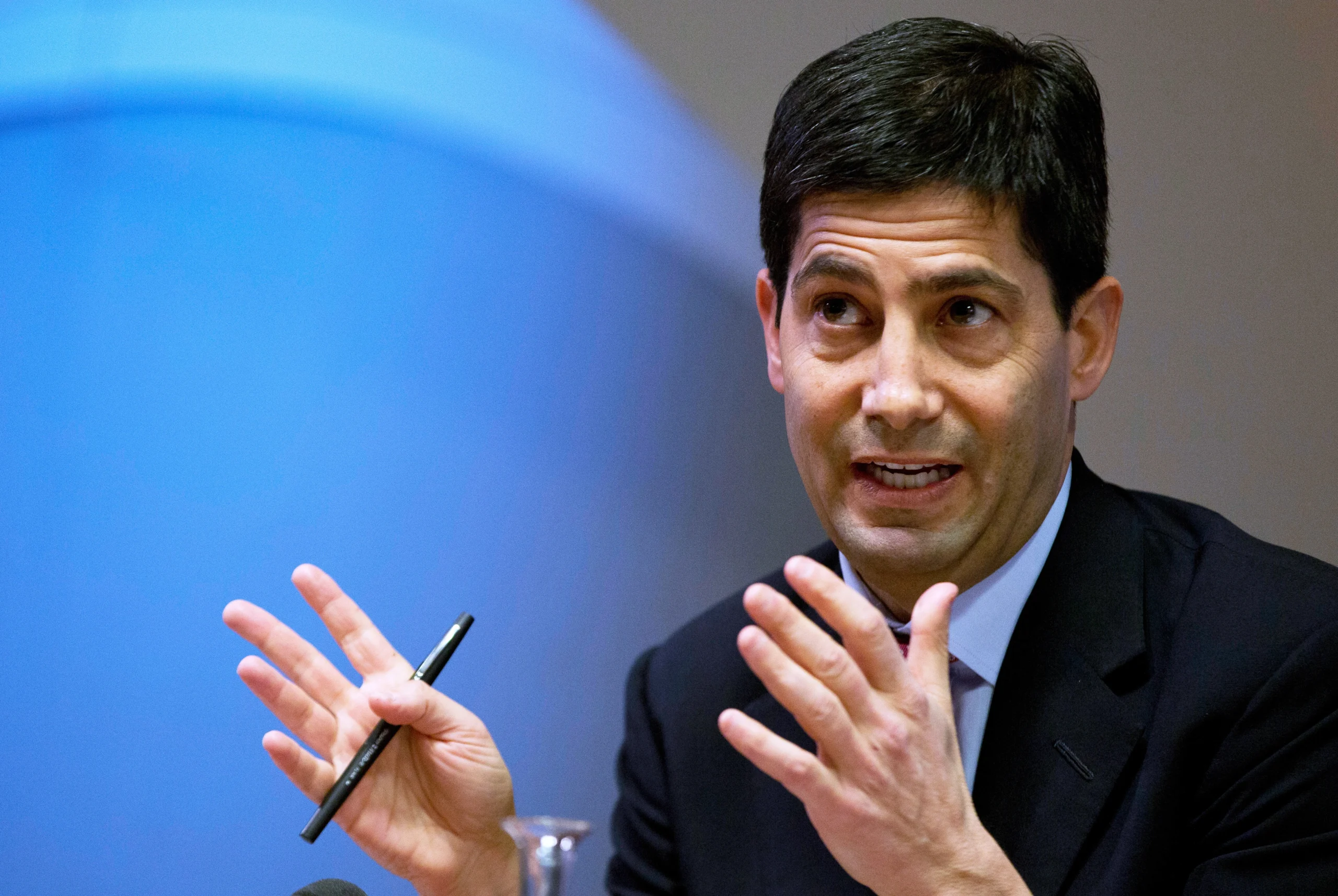
The Federal Reserve’s rate-setting committee held its benchmark borrowing rate steady on July 29, keeping it in a range of 3.5% to 3.75% — but the calm on the surface masked one of the most contested votes of the post-pandemic era. The Federal Open Market Committee split 9 to 3, with three members pushing to raise rates rather than hold, according to NPR’s coverage of the decision.
Chair Kevin Warsh, who took over the Eccles Building earlier this year after a nomination process that rattled bond markets, used his post-meeting press conference to make a point of not making a point. Rather than signal where rates are headed next, Warsh told reporters the Fed would judge market reaction “direct and unfiltered” instead of offering the rolling forecasts investors have come to expect, a stance detailed in CNBC’s meeting recap.
A rate hike was genuinely on the table
What made this meeting unusual wasn’t just the dissent — it was how close markets came to pricing in a hike rather than a cut. Fed funds futures tracked by CME Group put the odds of a rate increase at roughly 35% heading into the decision, up sharply from 26% a week earlier, according to CNBC’s markets analysis. That is a striking reversal from the rate-cutting cycle many investors had expected when Warsh’s nomination was first floated as a “productivity-led growth” pivot away from his predecessor’s caution.
The market reaction told its own story. The S&P 500 slid roughly 0.6% during Warsh’s press conference, the Dow shed more than 840 points intraday, and the 10-year Treasury yield rose to 4.657%, even as the Fed opted for a hold rather than a hike.
Why Warsh is playing it differently
Warsh’s approach reflects both economic and political calculus. Treasury yields have climbed since the Fed’s prior meeting despite the hold, a dynamic Warsh acknowledged directly. And unlike his predecessor, Warsh has been explicit that he intends to set policy independent of the White House’s preferences — even as he awaits a possible additional ally on the Board once a pending internal review concludes, according to CNBC’s analysis of the political backdrop.
Why this matters beyond Washington
A genuinely undecided Fed has knock-on effects well past US borrowers. Higher-for-longer Treasury yields pull global capital toward dollar assets, complicating rate paths in London, Ottawa, and emerging markets alike — a dynamic playing out in parallel with the UK’s own fiscal squeeze (see our companion report on the Autumn Budget) and China’s deflationary drag on global demand. For businesses and investors across the Gulf, Southeast Asia, and South Asia weighing dollar-denominated debt or dollar-pegged currencies, an unpredictable Fed chair is arguably a bigger variable than the rate level itself.
Discover more from The Economy
Subscribe to get the latest posts sent to your email.
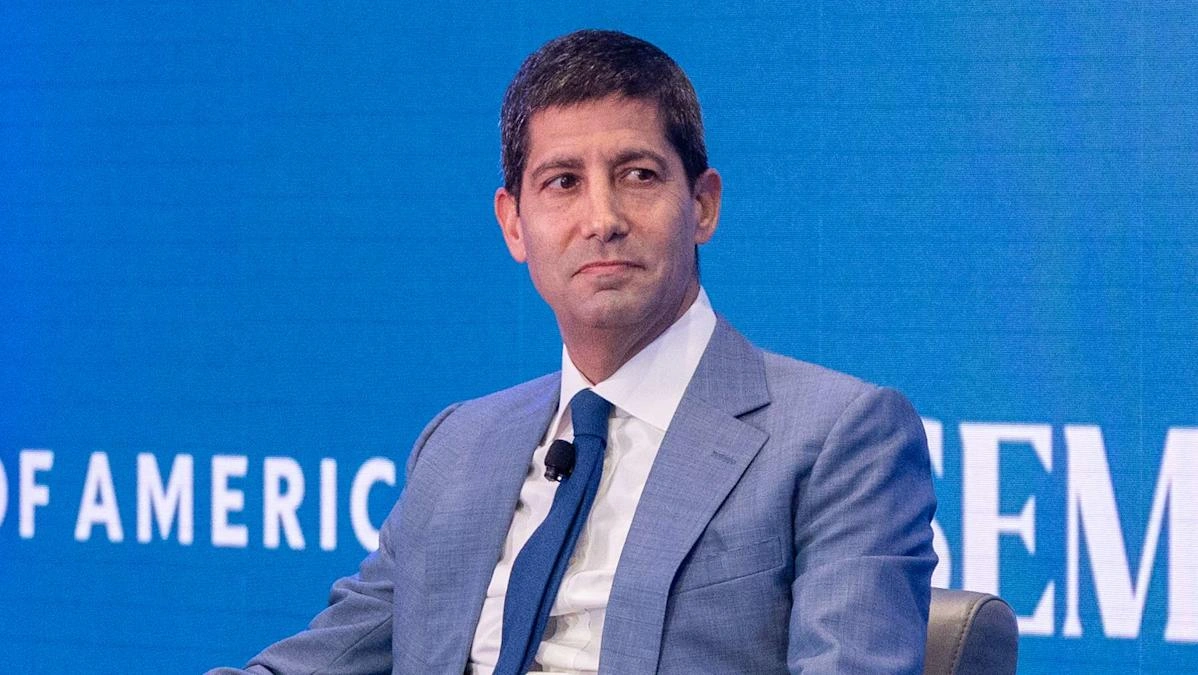
The Federal Reserve held its benchmark interest rate steady at 3.5%-3.75% on July 29, 2026, but the more consequential detail was the vote itself: 9-3, with three regional Federal Reserve Bank presidents — Cleveland’s Beth Hammack, Minneapolis’s Neel Kashkari, and Dallas’s Lorie Logan — dissenting in favor of a rate hike, according to CNBC’s coverage of the meeting. Inflation has remained above the Fed’s 2% target for more than five years, the underlying tension driving the split.
A New Chair, A Different Communication Style
The decision was the latest under Fed Chair Kevin Warsh, who took over after Jerome Powell’s term expired on May 15, 2026, according to iShares’ 2026 Fed outlook. Warsh has deliberately shortened the Fed’s post-meeting statements and pulled back on the kind of explicit forward guidance markets had grown accustomed to under his predecessors — he has reportedly dedicated one of five internal task forces specifically to rethinking how the Fed communicates, according to CNBC’s reporting. Warsh has publicly called inflation “a choice,” repeatedly emphasizing the importance of getting prices under control in recent congressional testimony.
At his post-meeting press conference, Warsh pushed back on characterizing the decision as a “pause,” instead describing it as “a rigorous review of the economic situation” and “a view of what our own homework is to try to resolve those questions in the period ahead,” according to a separate CNBC recap. Warsh has reportedly used the phrase “family fight” 13 times across five public appearances to acknowledge the committee’s internal divisions — an unusually candid framing for a sitting Fed Chair.
Why the Split Exists
Governor Christopher Waller has separately voiced concern that higher rates could become necessary without more inflation progress, even though he voted for the hold at this meeting. The full committee’s June projections penciled in one quarter-point increase by the end of 2026 — a notable shift from the rate-cutting path markets had priced in earlier in the year, according to the Fed’s own June 2026 Summary of Economic Projections, which explicitly flags that the federal funds rate outlook “is subject to considerable uncertainty” given how sensitive each participant’s view is to how inflation and employment data evolve from here.
Complicating Factors
Renewed U.S.-Iran tensions have already pushed mortgage rates near a one-year high independent of the Fed’s own decisions, since longer-term rates track Treasury yields and inflation expectations rather than the Fed funds rate directly, according to CNBC’s analysis. Separately, iShares had earlier projected that once a new Chair was confirmed, the Fed might seek one or two rate cuts to bring rates closer to a 3%-3.25% range — a path the July hold and hawkish dissents now put in serious doubt.
The next FOMC meeting is scheduled for September 15-16, 2026, and will include a fresh Summary of Economic Projections, according to Forbes’ Fed tracker — the next real test of whether Warsh’s committee can narrow its internal divide or whether the “family fight” framing becomes the defining feature of Fed policy through the rest of 2026.
Discover more from The Economy
Subscribe to get the latest posts sent to your email.

Pakistan Economy 2026: Why GDP Growth Isn’t Reaching Ordinary Households

Strait of Hormuz Deal 2026: Iran-Oman Talks, Oil Price Impact & What Happens Next

SpaceX Stock Lockup Expiration Explained: Why $123B in Shares Could Hit the Market

The Taxman Cometh from Beijing

Pakistan IMF Program 2026: Inside the Push Toward an Interest-Free Economy

Russia Oil Revenue 2026: How Sanctions on Rosneft and Lukoil Are Draining the War Chest

Canada US Trade War 2026: Inside Carney’s Push to Cut Ties With Trump’s Tariffs

Rachel Reeves’s £25 Billion Problem: What the Autumn Budget Gap Means for Britain

Inside the Fed’s Most Divided Vote in Years: Why Warsh Held the Line on Rates

Pakistan Passed Its Third IMF Review

The Fed Is Fractured — And a New Chair Just Made It Louder, Not Quieter

The UK Economy in 2026 Is Neither Recession Nor Recovery :Stagflaton

Indonesia’s $121 Billion Nickel Bet Is Facing a Battery Chemistry

Why Ultra-Wealthy Families Are Splitting Between Singapore and Dubai inmarkets 2026

Russia Bans Diesel Exports 2026: Global Fuel Market Impact Explained

Gold Price Forecast 2026: Fed’s July 29 Decision and Record Central Bank Buying Explained

Strait of Hormuz Blockade 2026: Oil Prices Surge 9% as US-Iran Conflict Reignites

Strait of Hormuz 2026: Why Markets Still Don’t Trust It’s Open

China Politburo July 2026: Stimulus Signals Explained

Pakistan Economy 2026: GDP Grows 3.7% as IMF Completes EFF Review Amid Middle East Risk

Down But Not Out: Inside the Slow Sinking of Russia’s War Economy

Apple vs OpenAI Lawsuit: The Economic Story Behind the Headline

Gulf Capital Retreat From Pakistan 2026: UAE Loan Freeze & What It Means

Indonesia Russian Oil Imports 2026: Why Jakarta Is Diversifying Crude Supply

Global Stock Market Selloff 2026: Stagflation Fears Return as Iran Conflict Reignites

The Yuan Now Settles 67% of Russian Oil Payments — Quiet De-Dollarization in Action

AI Capex Bubble 2026: The Hidden $662B Debt Nobody Reports

Pakistan’s Economic Survey FY26: Inflation Spike Insights
-

 Markets & Finance7 months ago
Top 15 Stocks for Investment in 2026 in PSX: Your Complete Guide to Pakistan’s Best Investment Opportunities
-

 Analysis5 months ago
Johor’s Investment Boom: The Hidden Costs Behind Malaysia’s Most Ambitious Economic Surge
-

 Analysis6 months ago
Top 10 Stocks for Investment in PSX for Quick Returns in 2026
-

 Analysis6 months ago
Brazil’s Rare Earth Race: US, EU, and China Compete for Critical Minerals as Tensions Rise
-

 Banks7 months ago
Best Investments in Pakistan 2026: Top 10 Low-Price Shares and Long-Term Picks for the PSX
-

 Investment7 months ago
Top 10 Mutual Fund Managers in Pakistan for Investment in 2026: A Comprehensive Guide for Optimal Returns
-

 Global Economy7 months ago
15 Most Lucrative Sectors for Investment in Pakistan: A 2025 Data-Driven Analysis
-

 Global Economy7 months ago
Pakistan’s Export Goldmine: 10 Game-Changing Markets Where Pakistani Businesses Are Winning Big in 2025