
Analysis
HSBC Global Market Access for Mainland Investors: The 2026 Shift

The shifting tectonic plates of global finance are rarely announced with a megaphone. Instead, they are revealed through quiet, bureaucratic approvals and the strategic repositioning of capital corridors. For years, domestic savers in the world’s second-largest economy have found themselves trapped in a low-yield environment, boxed in by a structural real estate slowdown and an erratic domestic equity market. Now, a critical valve is opening. The push to facilitate HSBC global market access for mainland investors represents one of the most consequential wealth transfers in recent memory. It’s a calculated gamble by both the bank and Beijing.
The macroeconomic reality driving this shift is stark. As of mid-2026, Chinese household deposits have swelled to record levels, yet the traditional engines of wealth creation—namely, Tier 1 property and domestic tech stocks—remain paralyzed by regulatory hangovers and demographic headwinds.
According to recent data published by the World Bank, China’s domestic consumption remains stubbornly tepid, forcing a vast pool of private capital to seek yield elsewhere. HSBC Bank (China) Company Limited has positioned itself at the vanguard of this exodus. By expanding its offshore wealth management offerings, the institution is essentially serving as a sanctioned bridge over the People’s Bank of China (PBOC)’s formidable capital control wall. That said, this is not an unregulated free-for-all; it is a highly choreographed release of pressure. Analysis from the Financial Times confirms that foreign exchange regulators are cautiously expanding quotas, terrified of sparking a destabilizing run on the renminbi while simultaneously recognizing that domestic capital desperately needs diversification.
The Architecture of Capital Flight: Legal and Managed
The core development hinges on a massive expansion of the Cross-boundary Wealth Management Connect (WMC) scheme and expanded allocations under the Qualified Domestic Institutional Investor (QDII) framework. HSBC has not merely launched new products; they’ve re-engineered their wealth distribution network across the Greater Bay Area (GBA).
Since the latest regulatory easing in March 2026, HSBC’s regional hubs in Shenzhen and Guangzhou have reported a surge in account activations. The bank’s strategy relies on a dual-track system. First, it targets high-net-worth individuals (HNWIs) with bespoke advisory services linked directly to offshore hubs in Hong Kong and Singapore. Second, it offers standardized, pre-approved mutual funds to the emerging mass-affluent class. Reporting by Reuters notes that outward bound investment quotas for major foreign banks have increased by 15% year-over-year, signaling tacit approval from the State Administration of Foreign Exchange (SAFE).
The numbers tell a compelling story about pent-up demand. In the first quarter of 2026 alone, retail flows into offshore fixed-income products through foreign bank channels in the GBA topped $12 billion. This isn’t speculative capital chasing high-risk tech unicorns in Silicon Valley. Instead, mainland money is aggressively targeting high-yield US Treasuries, Japanese dividend-paying equities, and European infrastructure funds. The priority is capital preservation and steady yield, a stark departure from the aggressive property speculation that defined the previous decade of Chinese wealth accumulation.
Offshore Asset Allocation for China: The Analytical View
To understand the magnitude of this shift, one must look beyond the immediate corporate victory for HSBC. This is a profound structural realignment of Chinese private wealth.
For decades, the social contract implicitly mandated that domestic wealth remain captive to fund domestic infrastructure and state-owned enterprises. The controlled facilitation of offshore asset allocation fundamentally alters this dynamic. By allowing a premier foreign institution to act as the primary conduit, Beijing is outsourcing the complex machinery of global portfolio management while retaining strict oversight of the spigot.
How are capital corridors structured?
Mainland Chinese investors access global markets through HSBC primarily via the Cross-boundary Wealth Management Connect and QDII programs. These frameworks allow eligible individuals to legally bypass strict capital controls, investing offshore yuan into approved mutual funds, fixed-income securities, and global equities.
This structure creates a fascinating paradox. The Chinese state is opening doors, but only to highly regulated, transparent rooms. The funds cannot be easily diverted into opaque offshore trusts or utilized for tax evasion. Every transaction is digitally tracked, cross-referenced against individual quotas, and monitored for sudden anomalies.
Global Implications and Downstream Effects
The second-order effects of this capital migration will inevitably ripple through global asset prices. If the current trajectory holds, the steady drip of mainland wealth into international markets could act as a structural pillar for Western fixed-income securities.
Consider the sheer scale of dormant capital. If even two percent of China’s estimated $18 trillion in household bank deposits finds its way into global markets over the next five years, it would rival the total assets under management of sovereign wealth funds. According to Bloomberg Intelligence, an influx of this magnitude has already begun compressing yields on prime European corporate debt, as Chinese investors prioritize blue-chip stability over emerging market volatility.
For global policymakers, this presents a dual-edged sword. On one hand, Western markets benefit from a fresh injection of deep liquidity. On the other hand, it increases the financial entanglement between the West and Beijing at a time of heightened geopolitical friction. Should diplomatic relations deteriorate sharply, these vast pools of cross-border investments could become weaponized, subject to sudden freezes or forced repatriations.
The Dissenting View: A Trap Door, Not an Open Door
The picture is more complicated than a simple narrative of financial liberalization. Skeptics argue that HSBC’s expanded mandate is built on a fragile regulatory foundation that could crack the moment domestic economic indicators flash red.
Some prominent voices in the financial community view this not as an opening, but as a temporary pressure release valve that will be slammed shut at the first sign of severe capital flight. Victor Shih, an expert on China’s political economy, has repeatedly warned that Beijing’s tolerance for capital outflows is highly conditional. “The PBOC is essentially running a beta test,” notes a recent policy paper from the Peterson Institute for International Economics. “If the domestic property market faces a deeper systemic shock, these wealth connect programs will be suspended overnight, leaving investors trapped in illiquid offshore structures.”
Furthermore, there is the persistent risk of localized regulatory arbitrage. While HSBC maintains rigorous compliance standards, the broader ecosystem of third-party wealth advisors operating on the fringes of the GBA may push the boundaries of what SAFE permits. If Beijing detects systemic abuse or widespread circumvention of individual QDII limits, the resulting crackdown would likely ensnare foreign institutions, severely damaging their operational standing on the mainland.
HSBC’s maneuver to channel Chinese domestic wealth into global markets is a definitive hallmark of the 2026 financial landscape. It represents a delicate equilibrium between an institution’s hunger for asset management fees and a sovereign state’s need to manage a profound domestic economic transition.
The success of this operation relies entirely on the continuation of a brittle truce between capital mobility and state control. If managed correctly, it promises a lucrative new era for global asset managers and a vital lifeline for Chinese savers. Yet, the underlying truth remains inescapable: in mainland China, the door to global finance is never truly unlocked; it is merely left ajar, held by a hand that can pull it shut without a moment’s notice.
Discover more from The Economy
Subscribe to get the latest posts sent to your email.


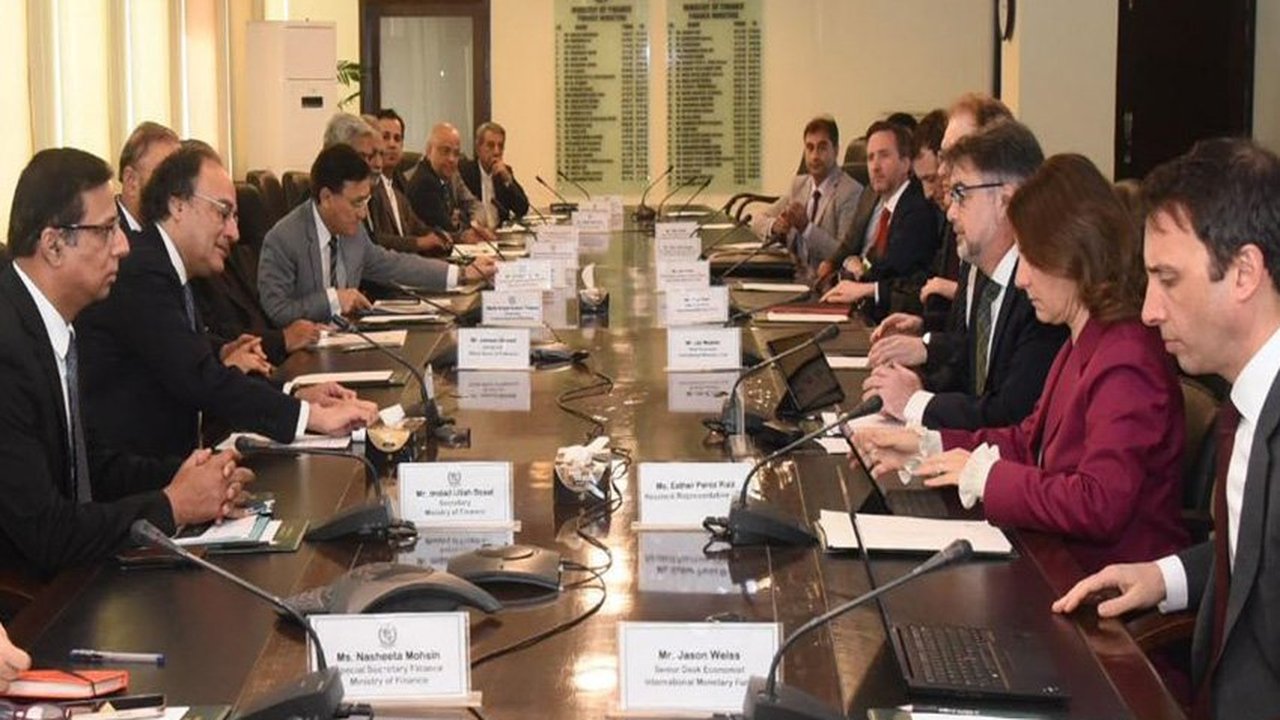
The IMF’s Executive Board completed Pakistan’s third review of its 37-month Extended Fund Facility (EFF) and second review of its Resilience and Sustainability Facility (RSF) on May 8, 2026, unlocking roughly $1.1 billion under the EFF and $220 million under the RSF, according to the IMF’s official statement. Total disbursements under both arrangements now stand at roughly $4.8 billion. Acting Chair Nigel Clarke credited Pakistan’s “strong program implementation” for supporting macroeconomic recovery and building resilience to shocks.
The Genuinely Good Numbers
By the IMF’s own account, the underlying data supports the assessment. GDP growth accelerated to an average of 3.8% year-on-year in the first half of FY26, driven by the auto, construction and garment industries, even accounting for flood disruption in July-August, according to the IMF’s staff report. Inflation, while ticking up to 7.3% year-on-year in March as commodity price pass-through hit domestic energy prices, remained within a broadly contained range, with core inflation at 7.6%. The current account was described as broadly balanced, and reserve rebuilding exceeded earlier projections — the State Bank of Pakistan projects reserves continuing to climb to roughly $18 billion by June 2026, according to analysis from the Islamabad Policy Research Institute.
The State Bank confirmed receipt of $1.3 billion from the IMF on May 12, 2026, according to CSS Prep’s policy analysis, which notes reserves had fallen to dangerously low levels in 2022-2023 before this recovery.
The External Risk the IMF Flagged Explicitly
The Fund’s own report is notably candid about downside exposure: under its April 2026 World Economic Outlook adverse scenario, the cumulative hit to Pakistan’s GDP from continued Middle East conflict could rise to around 1.5 percentage points by FY27, with inflation and the current account deficit each worsening by roughly 1.5-2.5 percentage points of GDP, according to the IMF’s staff country report. Given Pakistan’s reliance on imported energy, oil price volatility discussed in the IMF’s global outlook feeds directly into this specific country risk.
The Reform Question That Keeps Recurring
The structural policy conditions attached to this review read as familiar territory: sustaining fiscal consolidation, broadening the tax base, maintaining tight monetary policy to keep inflation within the State Bank’s target range, and advancing energy-sector reform — commitments the IMF’s own end-of-mission statement described as still “ongoing” rather than complete, per the IMF’s March 2026 mission statement.
A sharper framing comes from Pakistani policy analysts themselves: reforms that would genuinely break the IMF-program cycle — broadening the tax base to include agriculture and retail, ending energy subsidies, privatizing loss-making state-owned enterprises — impose concentrated, visible costs on politically organized interest groups, while the benefits of reversing those costs are diffuse and delayed, according to CSS Prep’s analysis. That political-economy imbalance, the analysis argues, consistently favors populist continuation of stabilization support over the structural reform that would end the need for it — a pattern this third review’s genuine macroeconomic progress doesn’t yet break.
Social Cost of the Adjustment
Pakistan’s poverty headcount rate rose to 25.3% in FY24, up sharply from 18.3% in FY22, driven by overlapping shocks from COVID, floods and inflation, according to the IMF’s staff report. The Benazir Income Support Programme (BISP) remains the primary social protection mechanism absorbing the distributional cost of IMF-mandated energy price increases and fiscal tightening — whether its scale is adequate remains, in the IMF’s own words, a live policy question rather than a settled one.
Discover more from The Economy
Subscribe to get the latest posts sent to your email.
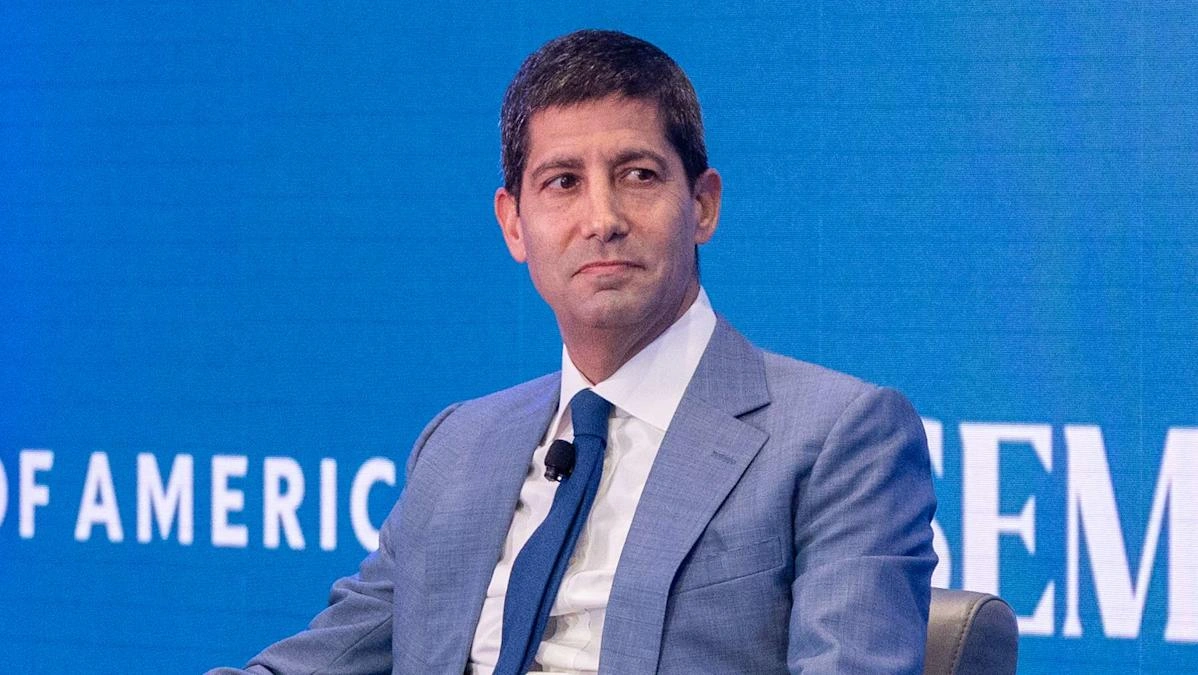
The Federal Reserve held its benchmark interest rate steady at 3.5%-3.75% on July 29, 2026, but the more consequential detail was the vote itself: 9-3, with three regional Federal Reserve Bank presidents — Cleveland’s Beth Hammack, Minneapolis’s Neel Kashkari, and Dallas’s Lorie Logan — dissenting in favor of a rate hike, according to CNBC’s coverage of the meeting. Inflation has remained above the Fed’s 2% target for more than five years, the underlying tension driving the split.
A New Chair, A Different Communication Style
The decision was the latest under Fed Chair Kevin Warsh, who took over after Jerome Powell’s term expired on May 15, 2026, according to iShares’ 2026 Fed outlook. Warsh has deliberately shortened the Fed’s post-meeting statements and pulled back on the kind of explicit forward guidance markets had grown accustomed to under his predecessors — he has reportedly dedicated one of five internal task forces specifically to rethinking how the Fed communicates, according to CNBC’s reporting. Warsh has publicly called inflation “a choice,” repeatedly emphasizing the importance of getting prices under control in recent congressional testimony.
At his post-meeting press conference, Warsh pushed back on characterizing the decision as a “pause,” instead describing it as “a rigorous review of the economic situation” and “a view of what our own homework is to try to resolve those questions in the period ahead,” according to a separate CNBC recap. Warsh has reportedly used the phrase “family fight” 13 times across five public appearances to acknowledge the committee’s internal divisions — an unusually candid framing for a sitting Fed Chair.
Why the Split Exists
Governor Christopher Waller has separately voiced concern that higher rates could become necessary without more inflation progress, even though he voted for the hold at this meeting. The full committee’s June projections penciled in one quarter-point increase by the end of 2026 — a notable shift from the rate-cutting path markets had priced in earlier in the year, according to the Fed’s own June 2026 Summary of Economic Projections, which explicitly flags that the federal funds rate outlook “is subject to considerable uncertainty” given how sensitive each participant’s view is to how inflation and employment data evolve from here.
Complicating Factors
Renewed U.S.-Iran tensions have already pushed mortgage rates near a one-year high independent of the Fed’s own decisions, since longer-term rates track Treasury yields and inflation expectations rather than the Fed funds rate directly, according to CNBC’s analysis. Separately, iShares had earlier projected that once a new Chair was confirmed, the Fed might seek one or two rate cuts to bring rates closer to a 3%-3.25% range — a path the July hold and hawkish dissents now put in serious doubt.
The next FOMC meeting is scheduled for September 15-16, 2026, and will include a fresh Summary of Economic Projections, according to Forbes’ Fed tracker — the next real test of whether Warsh’s committee can narrow its internal divide or whether the “family fight” framing becomes the defining feature of Fed policy through the rest of 2026.
Discover more from The Economy
Subscribe to get the latest posts sent to your email.

Four major UK forecasters — the OBR, the Bank of England-adjacent IFS, NIESR, and RSM UK — are converging on a similar diagnosis for 2026: an economy that’s avoiding outright recession but also not meaningfully growing, squeezed between resilient inflation and cautious business investment.
The Growth Numbers Are Converging Downward
RSM UK’s latest forecast puts 2026 GDP growth at just 1.0%, down from 1.4% in 2025, describing the pattern explicitly as “stagflation-lite” for a second consecutive year, with a modest recovery only expected in 2027 as inflation fades and rate cuts continue, according to RSM’s economic outlook. NIESR’s central forecast is slightly more optimistic at 1.4% GDP growth for 2026, describing the economy as beginning the year “closer to normal than at any other point this decade” despite heightened geopolitical stress, per NIESR’s winter 2026 outlook.
The Institute for Fiscal Studies frames the constraint more directly: consumption and business investment will likely stay muted as elevated uncertainty, still-restrictive monetary policy, and continued household saving all weigh on activity, with businesses “dissuaded from investing by squeezed margins and high financing costs,” according to IFS’s economic outlook.
Inflation Is Heading Back Up, Not Down
The most consequential shared theme across forecasters: inflation, which briefly dipped below 3% in early 2026, is expected to climb back toward 3.5% by year-end. RSM attributes this to a 13% rise in the energy price cap in July, higher motor fuel costs, and pass-through effects into food and goods prices, forecasting inflation to average 3.1% for 2026 overall, per RSM’s analysis. Notably, the report flags that the IMF has revised its UK inflation and growth forecasts more sharply than for any other developed economy, given Britain’s outsized reliance on gas for electricity pricing.
Bank of England Rate Path
Despite the inflation uptick, both NIESR and IFS still expect further Bank of England rate cuts through 2026. NIESR forecasts two further 25-basis-point cuts bringing Bank Rate to 3.25% by year-end — its estimate of the long-run neutral rate — following a cut to 3.75% in December 2025. IFS’s own forecast assumes Bank Rate reaches 3.5% in the first half of 2026. The divergence between continued rate cuts and rising inflation is the core tension defining UK monetary policy through the rest of the year.
Fiscal Headroom Is Nearly Gone
The Office for Budget Responsibility’s March 2026 outlook flags the tax-to-GDP ratio rising to a post-war high of 38% by 2030-31, with the November 2025 Budget having raised taxes by roughly £26 billion annually against OBR-assessed fiscal headroom of just £22 billion, according to NIESR’s reading of the same data. NIESR’s own forecast is notably more pessimistic than the OBR’s, projecting the current budget stays close to balance by 2029-30 with effectively no headroom at all — meaning public debt continues climbing toward 100% of GDP by decade’s end, sharply limiting the government’s room to respond to any future shock. RSM adds a domestic political risk on top: a Labour leadership contest raising the prospect of higher borrowing and renewed gilt yield pressure, with a short recession “not ruled out” if that risk materializes alongside global headwinds.
For UK-based investors, Deloitte notes the practical fallout includes a reduced cash ISA allowance for under-65s (down from £20,000 to £12,000) and a 2027 increase in tax on landlord property income — both tightening the traditional wealth-preservation toolkit just as broader growth conditions stay subdued, according to Deloitte’s TaxScape 2026 briefing.
Discover more from The Economy
Subscribe to get the latest posts sent to your email.

Pakistan Passed Its Third IMF Review

The Fed Is Fractured — And a New Chair Just Made It Louder, Not Quieter

The UK Economy in 2026 Is Neither Recession Nor Recovery :Stagflaton

Indonesia’s $121 Billion Nickel Bet Is Facing a Battery Chemistry

Why Ultra-Wealthy Families Are Splitting Between Singapore and Dubai inmarkets 2026

China Chose Political Control Over Fixing Its Deflation Trap in 2026

Oil Markets Are Oversupplied and Geopolitically Explosive at the Same Time

Russia’s Budget Deficit Blew Past Its Full-Year Target in Three Months

Malaysia’s Rare Earth Bet: Six Powers Are Negotiating for Kuantan at Once

Gulf Sovereign Capital Bypasses Pakistan Despite Record 2026 Spending Spree

Pakistan’s $10bn US Facility Request: Inside the New Gulf Capital Triangle

China Criticizes US Bill Targeting Russian Oil Buyers — Why It Matters

Nvidia’s H200 Chips Are Finally Reaching China — In Numbers Too Small to Matter Yet

Oil Prices Fall as Strait of Hormuz Reopens: 2026 Update

AI Bubble Warning 2026: Why BIS, IMF and Bank of England Fear a Market Crash

Russia Bans Diesel Exports 2026: Global Fuel Market Impact Explained

Gold Price Forecast 2026: Fed’s July 29 Decision and Record Central Bank Buying Explained

Strait of Hormuz Blockade 2026: Oil Prices Surge 9% as US-Iran Conflict Reignites

Strait of Hormuz 2026: Why Markets Still Don’t Trust It’s Open

Gulf Capital Retreat From Pakistan 2026: UAE Loan Freeze & What It Means

Down But Not Out: Inside the Slow Sinking of Russia’s War Economy

Pakistan Economy 2026: GDP Grows 3.7% as IMF Completes EFF Review Amid Middle East Risk

Pakistan IMF Deal 2026: Third Review Cleared, Budget 2026-27 and Inflation Outlook

China Politburo July 2026: Stimulus Signals Explained

Global Stock Market Selloff 2026: Stagflation Fears Return as Iran Conflict Reignites

The Yuan Now Settles 67% of Russian Oil Payments — Quiet De-Dollarization in Action

Strait of Hormuz Crisis 2026: How Trump’s Toll U-Turn Exposes Global Economic Risk

Pakistan’s Economic Survey FY26: Inflation Spike Insights
-

 Markets & Finance7 months ago
Top 15 Stocks for Investment in 2026 in PSX: Your Complete Guide to Pakistan’s Best Investment Opportunities
-

 Analysis5 months ago
Johor’s Investment Boom: The Hidden Costs Behind Malaysia’s Most Ambitious Economic Surge
-

 Analysis5 months ago
Top 10 Stocks for Investment in PSX for Quick Returns in 2026
-

 Analysis6 months ago
Brazil’s Rare Earth Race: US, EU, and China Compete for Critical Minerals as Tensions Rise
-

 Banks7 months ago
Best Investments in Pakistan 2026: Top 10 Low-Price Shares and Long-Term Picks for the PSX
-

 Investment7 months ago
Top 10 Mutual Fund Managers in Pakistan for Investment in 2026: A Comprehensive Guide for Optimal Returns
-

 Global Economy7 months ago
15 Most Lucrative Sectors for Investment in Pakistan: A 2025 Data-Driven Analysis
-

 Global Economy7 months ago
Pakistan’s Export Goldmine: 10 Game-Changing Markets Where Pakistani Businesses Are Winning Big in 2025