
Analysis
The Pragmatic Pivot: Etihad European Expansion Signals New Strategy

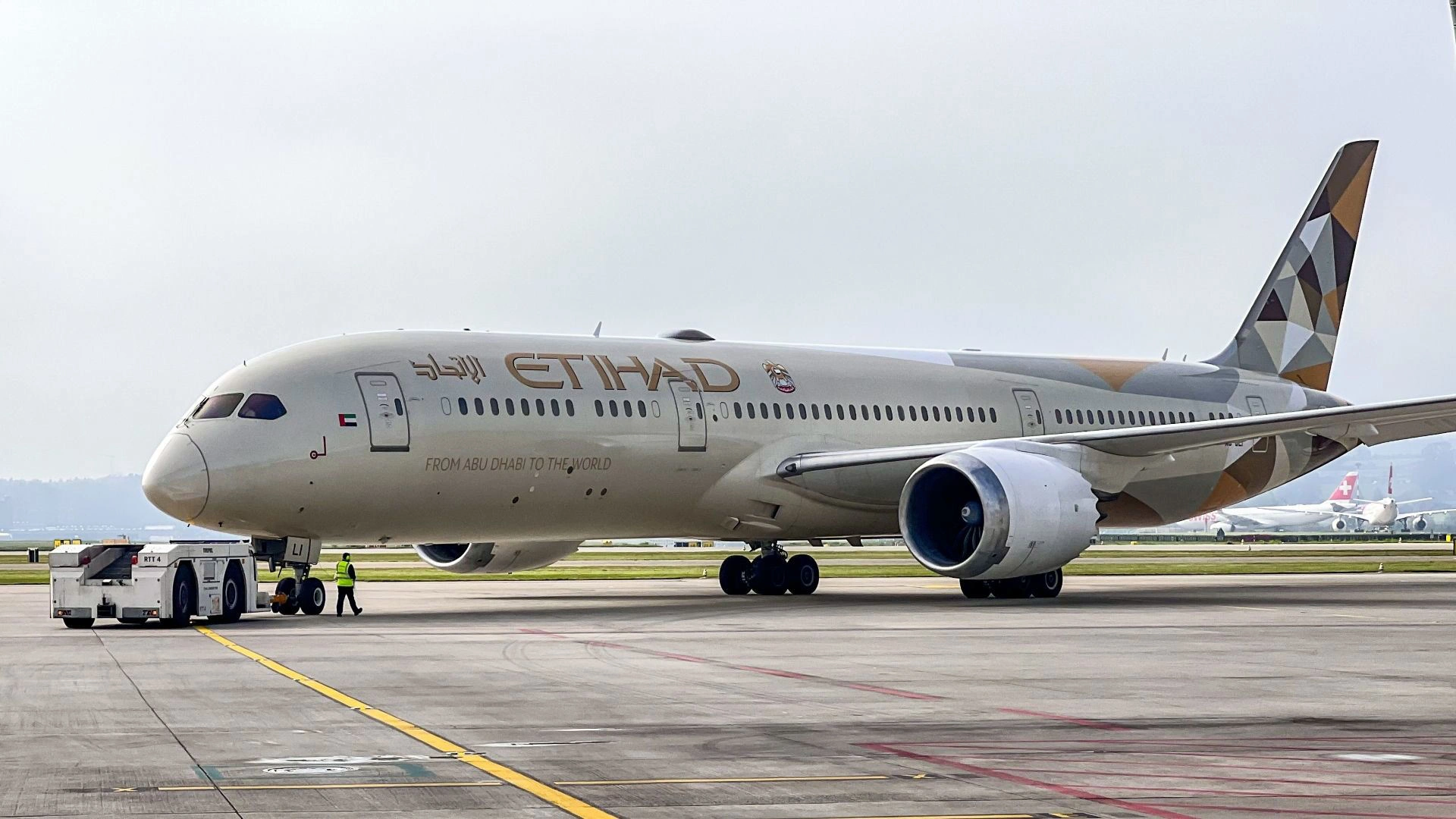
Antonoaldo Neves, Etihad Airways’ chief executive, took the helm with a singular, unsentimental mandate: strip away the vanity and chase the yield. The ghosts of the airline’s disastrous 2010s equity spending spree—a period defined by burning cash on doomed European carriers like Air Berlin and Alitalia—are finally exorcised. Today, from the polished concourses of the newly inaugurated Terminal A at Zayed International Airport, a quieter, deadlier calculus is taking shape. This week’s announcement of an Etihad European expansion—specifically adding Prague and Warsaw to its summer 2025 route map—is not merely about planting flags in foreign capitals. It is a calculated strike in the escalating air war over the global transit passenger.
The aviation landscape of the Arabian Gulf has fundamentally transformed since the pandemic. Abu Dhabi is no longer trying to outspend Dubai or out-fly Doha. Instead, it is playing a game of surgical precision.
Global passenger demand is currently testing the physical limits of airport infrastructure and aircraft leasing markets. According to the International Air Transport Association (IATA), Middle Eastern carriers posted a 10.8% year-on-year increase in international traffic midway through 2024. Yet, growth is bottlenecked by systemic delivery delays from both Boeing and Airbus, forcing airline executives to treat every available aircraft as an ultra-premium asset.
That said, Etihad remains remarkably unbothered by the macro-level chaos. Armed with a leaner fleet and a restructured balance sheet, the carrier is selectively targeting secondary European markets where legacy competitors are retreating or failing to meet surging point-to-point demand.
The Economics of Eastern Europe
Prague and Warsaw are not the glittering long-haul megahubs of London or Frankfurt. They are, however, formidable economic engines in their own right. By deploying Boeing 787 Dreamliners to these cities, Etihad is capturing a highly specific demographic. They are targeting affluent Eastern European tourists heading to Southeast Asia, alongside a rapidly growing cohort of corporate travellers facilitating trade between the Arabian Peninsula and the Visegrád Group.
Etihad new destinations are chosen through ruthless route profitability algorithms, not political prestige.
For years, passengers from Poland and the Czech Republic bound for Thailand, Vietnam, or the Maldives had to transit through Munich, Paris, or Amsterdam. This geographic inefficiency enriched Air France-KLM and the Lufthansa Group. Abu Dhabi is simply cutting out the middleman. By flying directly into these Eastern European capitals, Etihad captures the full fare premium while dramatically reducing the total travel time for the consumer.
The numbers justify the aggression. Passenger footfall between Eastern Europe and the United Arab Emirates has surged, driven by relaxed visa regimes and an influx of foreign direct investment. Reuters market data indicates that European outbound leisure travel has fully eclipsed 2019 levels, with premium cabin yields holding stubbornly high despite lingering inflationary pressures across the eurozone.
This is where the Neves strategy shines. He knows widebody aircraft are precious commodities in a supply-constrained world. You do not park a $250 million jet on the tarmac for nine hours at Heathrow if you can turn it around in two hours at Warsaw Chopin Airport. The asset utilisation rates on these mid-haul, six-hour European sectors are phenomenally efficient. They allow the aircraft to return to Abu Dhabi just in time to catch the midnight departure wave feeding traffic to Mumbai, Bangkok, and Sydney.
Reframing the Abu Dhabi Aviation Strategy
The obvious question requires a direct answer. Why is Etihad expanding its European network? Etihad is expanding its European network to capture underserved point-to-point premium leisure traffic and to feed its highly profitable Southeast Asian transit routes. This strategy bypasses congested Western European hubs while maximising the daily utilisation of its current widebody aircraft fleet.
That 43-word reality dictates every move the airline makes today.
The era of “The Residence”—the hyper-luxurious three-room suite in the sky that once defined the brand under former CEO James Hogan—is fading into aviation history. Today, the Abu Dhabi aviation strategy is defined by load factors, belly-hold cargo revenue, and operating margins.
The picture is more complicated when you look 130 kilometres up the road. Emirates, the colossus of Dubai, operates a fundamentally different model. Tim Clark built a machine designed to move the entire world through a single point using massive, high-density Airbus A380s. Qatar Airways, under the relentless drive of former chief Akbar Al Baker and his successor Badr Mohammed Al Meer, built an obsessive, high-frequency network that blankets the globe.
Etihad is choosing the middle path. It cannot match Emirates on pure volume, and it will not bleed cash to match Qatar on sheer connectivity.
What follows, however, is a masterclass in niche dominance. By targeting cities like Prague and Warsaw, Etihad avoids entering a financial bloodbath over landing slots at London Heathrow or Paris Charles de Gaulle. They are finding uncontested airspace. The Financial Times recently observed that mid-sized network carriers are currently posting the highest operating margins in the industry. They achieve this precisely because they are not forced to dump excess capacity on hyper-competitive trunk routes just to maintain market share.
Supply Chains and Sovereign Ambitions
This expansion ripples far beyond the departure gates of Eastern Europe. Downstream, the implications for European legacy carriers are severe.
Air France-KLM and the Lufthansa Group have historically relied on their Eastern European feeder networks to prop up the profitability of their long-haul Asian operations. When Middle East carriers Europe strategies shift toward these secondary cities, the European incumbents bleed high-yielding transit passengers. A Polish executive travelling to Singapore no longer needs to connect in Frankfurt; they can fly south to Abu Dhabi and connect east, often on newer aircraft and with superior service.
There is also the physical reality of the metal. The global aviation supply chain is severely fractured. Both Boeing and Airbus are missing delivery targets by months, and in some cases, years. Airlines are being forced to extend the leases of older, less fuel-efficient aircraft and cannibalise parts just to maintain their published schedules. Engine durability issues from manufacturers like Pratt & Whitney have grounded dozens of narrowbody jets globally.
In this hostile environment, launching two medium-haul destinations is a flex of operational reliability.
It signals to the market—and to the sovereign wealth funds backing the enterprise—that Etihad has secured the necessary lift to execute its “Journey 2030” growth mandate. The carrier plans to double its fleet to 150 aircraft and triple its passenger numbers to 33 million by the end of the decade. Adding routes is easy; flying them profitably when aircraft are scarce is the true test of management.
Every new European route also serves the broader geopolitical mandate of the UAE. Abu Dhabi is aggressively pivoting away from hydrocarbon dependency. Bloomberg Intelligence estimates that the broader tourism, logistics, and aviation sector now accounts for a rapidly growing percentage of the emirate’s non-oil GDP. Zayed International Airport capacity was built for exactly this moment. The glittering Terminal A, a $3 billion architectural marvel capable of handling 45 million passengers annually, needs humans to justify its existence. Prague and Warsaw are merely the latest tributaries feeding the river.
The Limits of the Desert Hub Model
Still, skepticism remains. The rapid scaling of Gulf carriers has historically triggered fierce protectionist backlash from European regulators and domestic airlines.
Can a region roughly the size of Scotland truly sustain three massive global aviation hubs operating within a 400-kilometre radius? Dissenting voices argue that the current yield environment is an anomaly, artificially inflated by post-pandemic revenge travel and constrained global capacity. Once Airbus and Boeing resolve their supply chain bottlenecks and flood the market with new jets, yields will inevitably soften.
“The Gulf carrier model is heavily reliant on a continuous, uninterrupted flow of global free trade and open borders,” notes a recent structural analysis by CAPA – Centre for Aviation. “As European states become increasingly protective of their environmental targets and domestic carriers, securing bilateral air rights for unlimited expansion will become exponentially more difficult.”
This is a structural vulnerability that cannot be ignored. European governments, spurred by Brussels, are imposing synthetic aviation fuel mandates and aggressive carbon taxes that disproportionately affect long-haul transit carriers. If Poland or the Czech Republic face pressure from the European Union to cap Gulf carrier frequencies on environmental grounds, the economics of these new routes collapse overnight. Lufthansa CEO Carsten Spohr has spent the better part of a decade lobbying for what he terms a “level playing field” against state-backed Gulf carriers.
Etihad’s smaller scale—its very advantage in agility—makes it susceptible to targeted price wars. If Emirates decides to drop a 500-seat A380 into Prague, or if Qatar Airways slashes fares out of Warsaw to protect its market share, Etihad lacks the immense financial shock absorbers of its neighbours to sustain a protracted war of attrition.
Closing the Loop on Legacy
The addition of Prague and Warsaw is a microcosm of modern aviation economics. It is not a story of flag-waving vanity, but of calculated, almost clinical efficiency. Etihad has learned the hardest lesson of the airline industry through bitter experience: prestige does not pay the fuel bill, and equity stakes in failing airlines do not buy loyalty.
By hunting in the geographic gaps left by European incumbents and avoiding the brutal crossfire of its larger Gulf neighbours, the airline is engineering a quiet, highly profitable resurrection. The battle for the global transit passenger is no longer being won solely on the flagship routes between London and Sydney. It is being fought, and won, in the margins.
Discover more from The Economy
Subscribe to get the latest posts sent to your email.


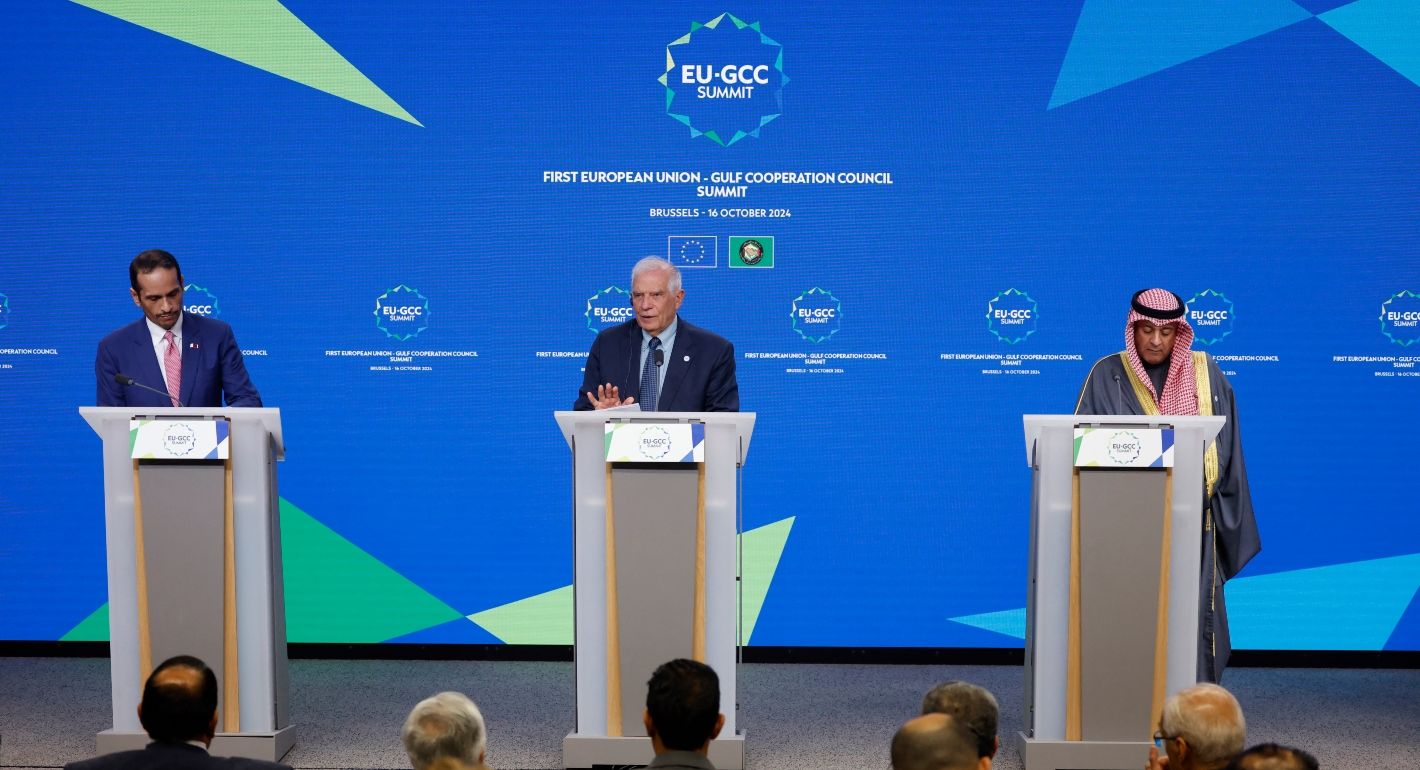
Gulf investors pulled over $1 billion from Pakistan’s bonds and equities in FY26. Here’s why the Gulf peace deal matters more than headlines suggest.
Pakistan’s economic commentary this year has largely stayed domestic — inflation, IMF reviews, remittances. The more revealing story sits in the balance-of-payments data: Gulf capital, historically one of Pakistan’s most reliable sources of portfolio investment, has gone into reverse at precisely the moment Islamabad is leaning on its Gulf relationships diplomatically.
The numbers
State Bank of Pakistan data show that from July 1, 2025 to June 19, 2026, equity market inflows totalled just $308 million while outflows exceeded $1 billion. Foreign direct investment declined by 28% over the first 11 months of FY26, domestic bonds saw a net outflow of $550 million, and total bond outflows for the year topped $2 billion. Pakistan’s external financing needs are steep: the country must pay over $26 billion in 2026–27, against an $35 billion trade deficit in the first 11 months of FY26.
Between July 2025 and June 2026, foreign outflows from Pakistan’s domestic bonds exceeded $2 billion, while equity market outflows topped $1 billion against just $308 million in inflows. Gulf states have been net sellers, with Bahrain withdrawing $30 million from Pakistani bonds in early FY27 alone, as the US-Israeli war with Iran raised regional risk premiums.
The pattern has continued into the new fiscal year. In the first ten days of FY27, Bahrain withdrew $30 million from Pakistan’s domestic bonds — $21 million from treasury bills and $9 million from Pakistan Investment Bonds — with no Gulf country recording any inflow during the period. Luxembourg was the only recorded foreign buyer, investing $4 million.
Why the peace deal matters disproportionately to Pakistan
Analysts quoted in Pakistani financial press note that Pakistan is not a party to the Gulf war but is now part of the peace framework, which raises the stakes for Islamabad if the deal collapses. Remittances from Gulf countries have so far held up, but bankers warn a prolonged conflict could eventually disrupt what remains the country’s largest source of foreign exchange, alongside stagnant exports and growth capped below 4%.
This sits against a wider regional backdrop: a new UNCTAD World Investment Report finds Gulf outbound investment grew through 2025, but warns that a prolonged conflict could redirect Gulf capital toward domestic reconstruction and strategic infrastructure, reducing the pool available for developing economies in Asia and Africa that increasingly depend on GCC financing — a dynamic that directly implicates Pakistan’s financing model.
The underserved angle
Most Pakistani business coverage frames this as an IMF-and-remittances story. The more precise framing is a capital-substitution risk: Pakistan has structurally relied on Gulf sovereign and institutional capital to plug its external financing gap, and that capital source is now competing for the same money regional reconstruction and Gulf domestic strategic infrastructure would need in a prolonged-conflict scenario. There is a live, underreported counter-current too — SBP data show net FDI actually rose from $54.46 million in April 2026 to $214.29 million in May, suggesting the bond-market flight and the FDI picture are not moving in lockstep.
Discover more from The Economy
Subscribe to get the latest posts sent to your email.
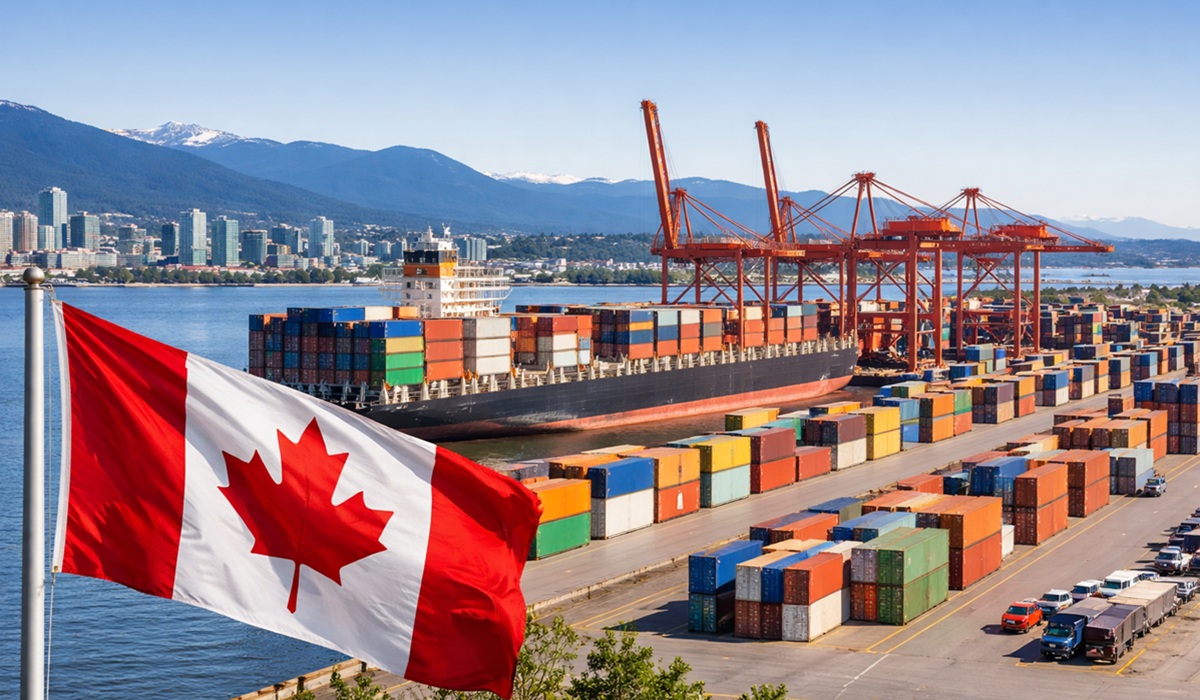
As US tariffs strain CUSMA, Canada is striking deals with China, Indonesia and the UAE. Here’s how Ottawa’s pivot away from the US is actually unfolding.
Every Canadian trade story in 2026 tends to lead with the same character: Washington. But the more consequential story may be what Ottawa is doing everywhere else. Facing sustained US tariff pressure and uncertainty over the CUSMA review, the Carney government has initiated a strategy to diversify Canada’s international trade, with a specific target of doubling exports to non-US markets by 2035.
Canada’s trade diversification strategy aims to double exports to non-US markets by 2035. In 2025–26 it produced a stabilisation deal with China on EVs and canola, a new trade agreement with Indonesia, a Foreign Investment Promotion and Protection Agreement with the UAE, and consultations with India, Thailand and Mercosur.
The deals nobody outside trade-law circles is tracking
Three moves stand out as substantively new rather than aspirational:
- China: during a visit to Beijing, Canada’s prime minister struck a deal establishing a tariff-rate quota for a set number of Chinese EVs — reverting to pre-2024 tariff levels — in exchange for reduced Chinese tariffs on Canadian canola, lobster and peas. This is a live trade-off between EV protectionism and agricultural market access.
- Indonesia: Canada signed a new trade agreement with Indonesia in 2025, opening a Southeast Asian market largely absent from Canadian export strategy until now.
- UAE: Ottawa launched trade-agreement negotiations and signed a new Foreign Investment Promotion and Protection Agreement with the United Arab Emirates, positioning the Gulf as a capital and market-access partner rather than just an energy counterpart.
Meanwhile, exporter confidence has ticked up but remains below its historical average, and diversification remains concentrated in a narrow set of commodities rather than being broad-based.
Why the gravity model is the real obstacle
Trade economists point to the Gravity Model of trade to explain why diversification is structurally hard: the US economy’s size, physical proximity, regulatory similarity and deeply integrated supply chains with Canada make full substitution unrealistic in the near term, even as China and India are flagged as the two most promising long-term markets given they will account for roughly 45% of global economic growth.
The underserved angle
Most coverage treats “Canada diversifying away from the US” as a single narrative. It is actually three distinct, sometimes contradictory tracks: a commodity-for-EV-tariff trade with China, a market-opening play in Southeast Asia via Indonesia, and a capital-and-investment play with the Gulf via the UAE. Each carries different risk profiles — geopolitical risk with China, execution risk with a new Indonesian relationship, and Gulf capital that is itself increasingly redirected toward domestic reconstruction needs amid regional conflict.
Discover more from The Economy
Subscribe to get the latest posts sent to your email.
Analysis of how the Federal Reserve, Bank of England and Bank of Japan could reshape global markets, inflation, currencies and economic growth in 2026.
Executive Summary
The world’s most influential central banks are entering one of the most consequential policy weeks of 2026. Investors are watching closely as the U.S. Federal Reserve, the Bank of England, and the Bank of Japan weigh the competing pressures of easing inflation, geopolitical uncertainty, elevated energy prices, and slowing global growth. Financial markets are also preparing for major corporate earnings and fresh GDP data from several advanced economies. �
Financial Times +1
Unlike the synchronized tightening cycle that dominated recent years, policymakers are increasingly responding to country-specific economic conditions. This divergence is expected to influence capital flows, exchange rates, bond yields, and investment decisions across both developed and emerging markets. �
McKinsey & Company +1
A New Monetary Landscape
Global inflation has moderated from its post-pandemic peaks, yet central banks remain cautious. Recent movements in energy markets and ongoing geopolitical tensions continue to threaten price stability, even as labor markets show signs of cooling. �
McKinsey & Company +1
For investors, the question is no longer whether interest rates have peaked, but how long they will remain elevated.
United States: The Federal Reserve Faces a Delicate Balance
Attention is centered on the Federal Reserve, where policymakers are expected to keep rates steady while evaluating the effects of inflation, consumer demand, and accelerating investment in artificial intelligence infrastructure. Markets are also monitoring whether AI-driven capital spending could contribute to future inflationary pressures. �
Investopedia +1
Bond investors remain sensitive to any shift in the Fed’s language, as Treasury yields continue to reflect expectations about future policy and inflation risks. �
MarketWatch
United Kingdom: Stability Before Growth
The Bank of England is expected to maintain a cautious stance amid moderating wage growth and relatively stable unemployment. However, policymakers continue to weigh external risks, including energy market volatility and global geopolitical developments. �
Financial Times
Businesses remain particularly attentive to borrowing costs, which continue to influence investment decisions across the UK economy.
Japan Ends an Era of Ultra-Loose Money
Japan is undergoing one of its most significant monetary transitions in decades. Rising wages and gradually strengthening inflation have encouraged the Bank of Japan to continue moving away from the ultra-accommodative policies that defined much of the past generation. �
Financial Times
This normalization has implications far beyond Japan, affecting global capital markets and currency dynamics.
Why Emerging Markets Are Watching Closely
Emerging economies including Pakistan, Indonesia, Malaysia, and others remain particularly exposed to decisions made by advanced economy central banks.
Higher U.S. interest rates typically strengthen the dollar, increase external financing costs, and place pressure on countries with significant foreign currency debt.
Conversely, a more stable interest rate environment could improve capital flows into emerging markets while easing exchange rate volatility.
AI Is Becoming a Monetary Policy Variable
One of the most important structural developments in 2026 is the rapid expansion of artificial intelligence infrastructure.
Major technology companies continue investing heavily in data centers, semiconductors, cloud computing, and digital infrastructure. These investments are supporting economic growth but are also creating new questions about inflation, productivity, and long-term financing needs. �
Investopedia +1
Investment Implications
Several themes are emerging:
Higher-for-longer interest rates remain possible.
Government bond markets are likely to remain volatile.
The U.S. dollar could remain relatively strong.
AI-related investment continues attracting capital.
Emerging markets may benefit if inflation continues to moderate.
Competitor Keyword Gap Analysis
Leading publications such as the Financial Times, Reuters, Bloomberg, and CNBC primarily emphasize immediate policy decisions. An opportunity exists to capture additional search traffic by targeting broader intent-based queries.
Key Takeaways
Central bank decisions this week are expected to shape global financial markets.
AI investment is becoming an increasingly important economic driver.
Bond markets remain sensitive to inflation expectations.
Emerging economies face both risks and opportunities from policy divergence.
Investors should monitor GDP releases, corporate earnings, and inflation indicators alongside interest rate announcements.
Frequently Asked Questions
Why are central bank meetings so important?
They influence borrowing costs, inflation expectations, currency values, and investment decisions worldwide.
How do interest rates affect stock markets?
Higher rates generally increase financing costs and can reduce company valuations, while lower rates often support economic activity and equity markets.
Why is AI influencing monetary policy discussions?
Large-scale investment in AI infrastructure is reshaping productivity, corporate spending, and long-term inflation expectations.
Discover more from The Economy
Subscribe to get the latest posts sent to your email.

Pakistan Gulf Investment Outflows 2026: Peace Deal Stakes Explained

Canada Trade Diversification 2026: China, Indonesia, UAE Deals Explained

US Forced-Labour Tariffs on 60 Countries: The Hidden Trade Shock of 2026

Global Central Banks 2026: Fed, BoE and BoJ Decisions Could Reshape Markets

Gulf Capital Retreat From Pakistan 2026: UAE Loan Freeze & What It Means

Pakistan’s Most Reliable Export Is Its People: Remittances Hit $41.6 Billion, Overtaking Total Exports

Indonesia’s Confidence Problem: Record Investment, a Sinking Rupiah, and a Widening Credibility Gap

Down But Not Out: Inside the Slow Sinking of Russia’s War Economy

China’s Growth Slips to a Four-Year Low: Why Beijing Still Won’t Pull the Stimulus Trigger

The Johor-Singapore Corridor: How Malaysia Became Southeast Asia’s AI Infrastructure Powerhouse

Canada’s Economy ‘On Pause’: Inside the CUSMA Deadline That Passed Without a Deal

Dubai’s Millionaire Magnet: How the UAE Turned Middle East Turmoil Into a Capital Safe-Haven Boom

Britain’s Sixth Prime Minister in a Decade: What Starmer’s Exit Means for Gilts, Sterling and Your Portfolio

Anthropic Offers Up to $600,000 Salary for Critical IPO Role as AI Giant Prepares for Wall Street Debut

Carry Trade Unwind 2026: How the Yen’s Snapback Triggered a Global Margin Call

AI Bubble Warning 2026: Why BIS, IMF and Bank of England Fear a Market Crash

BRICS De‑Dollarization Strategy Takes Shape with $15 Billion Local‑Currency Push

The AI Super Bubble Is Ready to Burst

Russia Bans Diesel Exports 2026: Global Fuel Market Impact Explained

Strait of Hormuz Blockade 2026: Oil Prices Surge 9% as US-Iran Conflict Reignites

Private Credit Warning: Most BDCs Turn Unprofitable in 2026, Reuters Finds

Bitcoin $150k Milestone Achieved as US Sovereign Crypto Pivot Looms

IMF Cuts Pakistan Growth Forecast, Raises Inflation to 8.4%
Gulf Capital Retreat From Pakistan 2026: UAE Loan Freeze & What It Means

India Economic Rise 2026: How the Subcontinent Toppled Japan

Strait of Hormuz 2026: Why Markets Still Don’t Trust It’s Open

China Housing Market Turnaround: White‑List Model Stabilises Prices

Chipmakers Just Lost 6.7% in Two Days: Inside the Great AI Trade Rotation
-

 Markets & Finance7 months ago
Top 15 Stocks for Investment in 2026 in PSX: Your Complete Guide to Pakistan’s Best Investment Opportunities
-

 Analysis5 months ago
Johor’s Investment Boom: The Hidden Costs Behind Malaysia’s Most Ambitious Economic Surge
-

 Analysis5 months ago
Top 10 Stocks for Investment in PSX for Quick Returns in 2026
-

 Analysis6 months ago
Brazil’s Rare Earth Race: US, EU, and China Compete for Critical Minerals as Tensions Rise
-

 Banks6 months ago
Best Investments in Pakistan 2026: Top 10 Low-Price Shares and Long-Term Picks for the PSX
-

 Investment7 months ago
Top 10 Mutual Fund Managers in Pakistan for Investment in 2026: A Comprehensive Guide for Optimal Returns
-

 Global Economy7 months ago
15 Most Lucrative Sectors for Investment in Pakistan: A 2025 Data-Driven Analysis
-

 Global Economy7 months ago
Pakistan’s Export Goldmine: 10 Game-Changing Markets Where Pakistani Businesses Are Winning Big in 2025