
Analysis
The End of the Expat Premium: Why Riyadh is Replacing Western Executives

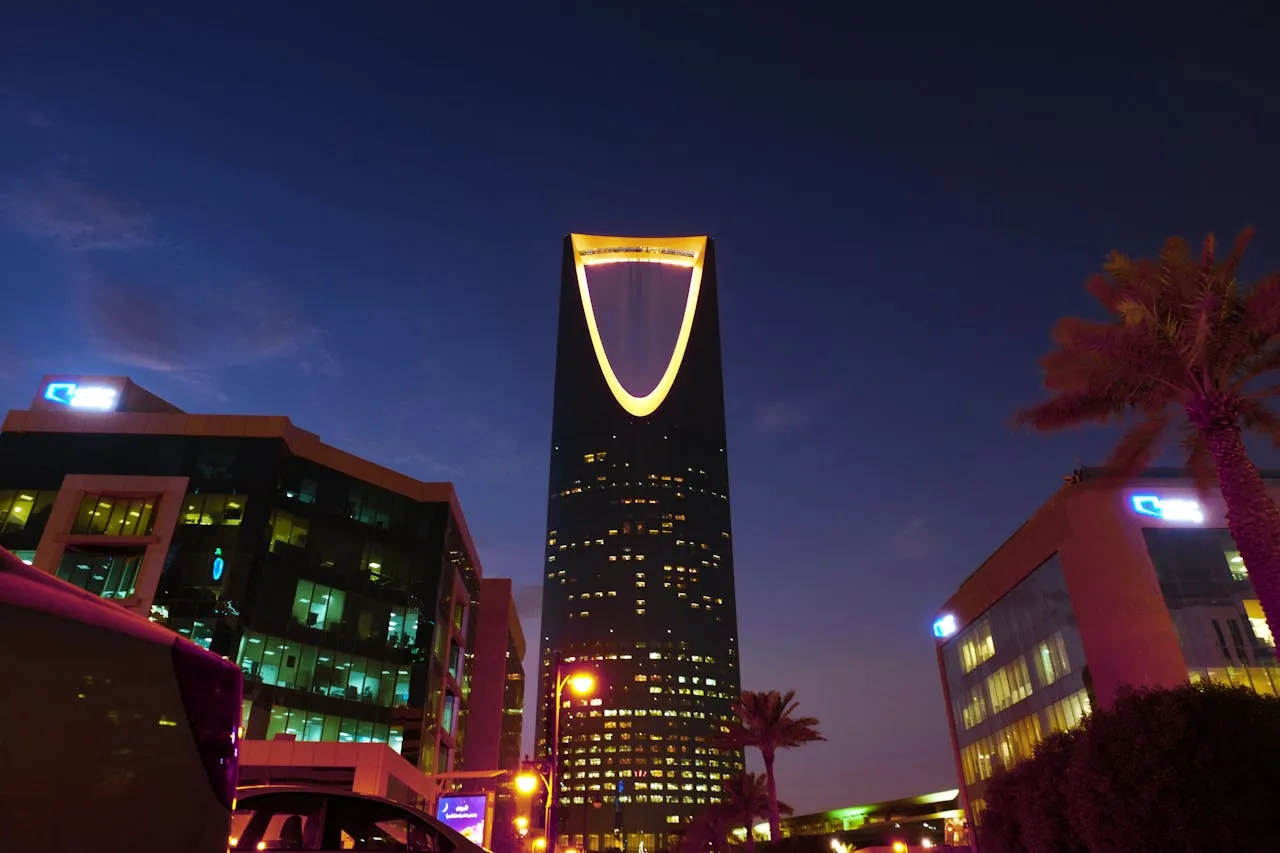
For decades, the executive lounges of Riyadh’s King Khalid International Airport were thick with the accents of London, New York, and Sydney. When Crown Prince Mohammed bin Salman first unveiled Vision 2030 in 2016, the kingdom aggressively imported foreign talent. Wall Street bankers, European architects, and American engineers were drafted to write the blueprints for an economic revolution. They commanded massive premiums, lived in gated expatriate compounds, and largely directed the kingdom’s sprawling gigaprojects. That era is quietly coming to a close. A sweeping, unannounced transition is unfolding inside the kingdom’s boardrooms. Western expatriates who designed the initial phases of Saudi Arabia’s economic transformation are systematically being rotated out. In their place, a new generation of Saudi nationals is taking the helm, marking a definitive shift from the era of imported ideation to a new reality of domestic execution.
This transition is not merely a bureaucratic reshuffle. It represents a fundamental maturation of the Public Investment Fund (PIF), the financial engine driving the kingdom’s post-oil transition. Currently managing approximately $925 billion in assets, the PIF is among the most consequential pools of capital on the planet. Its decisions dictate the flow of global private equity, sports franchising, and infrastructure development. When the fund shifts its operational philosophy, the tremors are felt from Mayfair to Manhattan. Early on, the fund relied almost entirely on imported expertise to stand up entities like NEOM, the Red Sea Project, and Qiddiya. These were blank-slate concepts that required external validation and international project management frameworks. Today, the macroeconomic landscape has shifted. Oil revenues are being carefully managed, domestic education initiatives are yielding highly qualified graduates, and the government is intently focused on preventing capital flight. Retaining high executive salaries within the domestic economy has become an unspoken policy priority.
The Core Development: Saudization at the Top
The rise of Saudi wealth fund local CEOs is the most visible manifestation of a policy known broadly as Saudization, but elevated now to the C-suite. In the early days of Vision 2030, foreign executives were hired to do the impossible: draft the master plans for cities that did not yet exist and industries the kingdom had never operated. Today, the mandate has shifted from blue-sky conceptualisation to hard, grinding project delivery. Under the direction of PIF Governor Yasir Al-Rumayyan, the fund’s sprawling portfolio of subsidiary companies is undergoing a quiet leadership purge. Expatriate chief executives, chief financial officers, and project directors are finding their contracts are no longer being renewed.
Instead, leadership roles are being handed to Saudi nationals who have spent the last six years shadowing these foreign experts. This is the promised dividend of knowledge transfer. The PIF has systematically built an internal pipeline of domestic talent, sending young Saudis to top-tier Western institutions and placing them in intense apprenticeship roles within the gigaprojects. Now, they are being handed the keys. This rotation is most evident in the real estate, tourism, and entertainment sectors—the very pillars of the diversification strategy.
The financial logic is equally compelling. Expatriate compensation packages in Saudi Arabia have historically included astronomical base salaries, housing allowances, private schooling for children, and frequent flights home. By promoting from within the domestic talent pool, the PIF sharply reduces operational overhead at a time when the kingdom is carefully monitoring its expenditure. Recent data reflects this structural success; the Saudi unemployment rate reached a record low of 4.4% in late 2023, a figure driven entirely by private sector and quasi-government hiring. Replacing foreign leadership is the ultimate capstone to this labour market transformation.
The Analytical Layer: Knowledge Transfer or Financial Prudence?
Why is the Saudi wealth fund replacing foreign CEOs? The Saudi wealth fund is replacing foreign executives with local CEOs to accelerate its nationalisation agenda, known as Saudization. This transition aims to retain capital domestically, ensure cultural alignment in mega-project execution, and demonstrate that the initial phase of foreign knowledge transfer has successfully built local leadership capacity.
Yet, the picture is more complicated than a simple victory lap for domestic education. This pivot coincides with a broader recalibration of Vision 2030 itself. The kingdom is actively scaling back some of its most ambitious gigaprojects, notably the linear city known as The Line within NEOM. Facing immense capital requirements and a tighter global borrowing environment, Riyadh is prioritising projects that can deliver immediate economic returns before the end of the decade.
Foreign executives were hired to dream big; local executives are being installed to manage budgets and deliver results. This requires a distinctly different skill set. A Saudi CEO, deeply embedded in the local cultural and political matrix, is arguably better positioned to navigate the complex inter-agency negotiations required to actually lay concrete and install infrastructure. They understand the tribal and bureaucratic nuances of land acquisition, utility integration, and local supply chain management in ways a parachute-executive from London simply cannot.
Still, this transition marks a permanent shift in how the PIF engages with the global market. The era of the “expat premium”—where Western consultants could charge triple their home-market rates simply for moving to Riyadh—is over. The PIF has acquired the intellectual property it needed. It has observed how international firms structure project finance, design master plans, and execute marketing campaigns. Having absorbed that IP, the fund is now internalising it. This represents a classic sovereign wealth fund evolution, mirroring the trajectory of Singapore’s Temasek in the late 1990s, where an initial reliance on foreign expertise gradually gave way to confident, deeply capable domestic leadership.
Implications: Second-Order Effects on Global Markets
The downstream consequences of PIF leadership changes are severe for the global executive search industry. Firms like Korn Ferry, Heidrick & Struggles, and Egon Zehnder have built highly lucrative Middle East practices entirely around sourcing Western talent for Gulf gigaprojects. That revenue stream is now drying up. The mandate given to headhunters today is highly specific: find Saudi nationals, preferably those already working in senior roles in London or New York, and bring them home. This reverse brain-drain is rapidly deepening the talent pool in Riyadh, but it leaves global advisory firms scrambling to justify their retainers.
For foreign contractors and multinational businesses operating in the kingdom, the implications are equally profound. Pitching a project to a Western CEO in Riyadh often meant speaking a shared corporate language, relying on familiar Western business metrics and cultural shorthand. Pitching to a new generation of Saudi leadership requires a different approach. These new local CEOs are heavily focused on domestic value creation. They do not just want to buy a product or a service; they demand to know how a foreign contractor will build local manufacturing capacity, hire Saudi graduates, and leave tangible assets behind.
This domestic focus aligns closely with recent macroeconomic guidance. The International Monetary Fund recently urged careful calibration of investment spending in Saudi Arabia to prevent economy-wide overheating. By replacing highly paid expats with local executives, the PIF is exercising a form of fiscal calibration. The capital that would have been remitted to bank accounts in Switzerland or the US is now being spent on real estate, luxury goods, and services within Riyadh and Jeddah. This velocity of money is crucial for sustaining the kingdom’s non-oil GDP growth, which has become the primary metric by which the success of Vision 2030 is judged.
Counterargument: The Execution Risk of Early Independence
What follows, however, is a period of undeniable execution risk. Detractors and global risk analysts argue that the kingdom is pushing its Saudization in gigaprojects too fast. The sheer scale of Vision 2030 is unprecedented in modern economic history. Building multiple smart cities, global transit hubs, and entirely new tourism coastlines simultaneously strains the capacity of even the most established global project management firms. Handing the reins of these multi-billion-dollar entities to a relatively untested cohort of local executives carries a distinct peril.
The opposing view suggests that while young Saudi executives possess elite academic credentials, they lack the decades of cyclical, battle-tested experience required to navigate major project distress. When a supply chain collapses or a global credit crunch threatens funding, the institutional memory of a seasoned foreign executive—someone who survived the 2008 financial crisis or the 2014 oil price crash—is invaluable. A recent World Bank analysis of Gulf economies highlighted that while human capital is rapidly improving, the gap in senior managerial experience remains a structural vulnerability.
If these local CEOs stumble, the delays will not just be embarrassing; they will be structurally damaging to the Saudi economy. The government has staked its domestic legitimacy and international credibility on hitting the 2030 deadlines. Alienating the global talent pool prematurely could leave the gigaprojects isolated if they hit severe technical or financial roadblocks. If the PIF finds it needs to quietly re-hire Western crisis managers in three years to rescue stalled developments, the cost of this early independence will have been remarkably high.
The Final Reckoning
The transition away from foreign management is the ultimate stress test of the Saudi economic experiment. It answers a question that economists have asked since 2016: Was Vision 2030 simply a vanity project built by foreign mercenaries, or was it the genuine genesis of a modernised Saudi state? By handing control of its most prized assets to its own citizens, Riyadh is betting entirely on the latter.
This move signals to global markets that the kingdom views its incubation period as complete. The blueprints are drawn, the foundational capital is deployed, and the era of the highly paid expatriate visionary is firmly in the rearview mirror. Whether this newly minted class of local executives can actually build the cities they have inherited remains the defining economic question of the Middle East.
Discover more from The Economy
Subscribe to get the latest posts sent to your email.


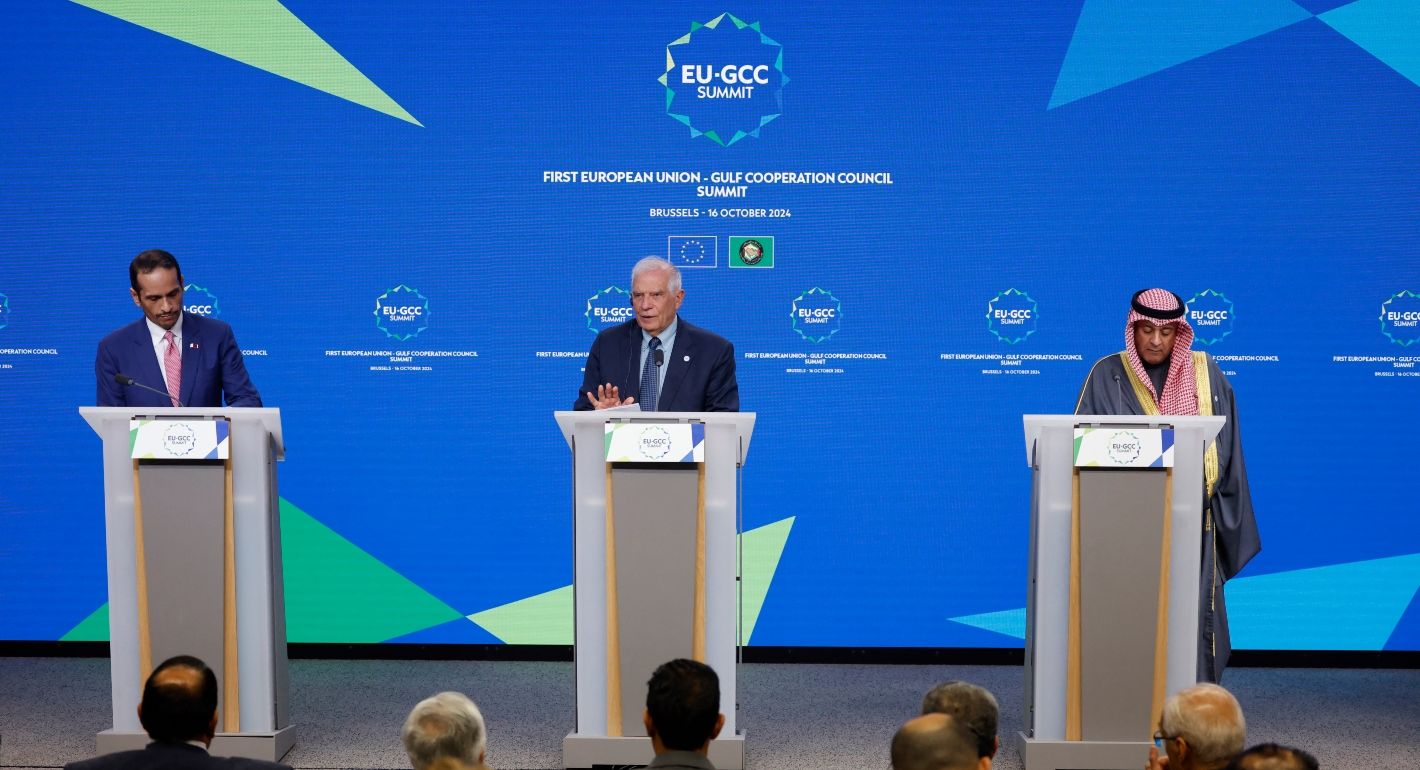
Gulf investors pulled over $1 billion from Pakistan’s bonds and equities in FY26. Here’s why the Gulf peace deal matters more than headlines suggest.
Pakistan’s economic commentary this year has largely stayed domestic — inflation, IMF reviews, remittances. The more revealing story sits in the balance-of-payments data: Gulf capital, historically one of Pakistan’s most reliable sources of portfolio investment, has gone into reverse at precisely the moment Islamabad is leaning on its Gulf relationships diplomatically.
The numbers
State Bank of Pakistan data show that from July 1, 2025 to June 19, 2026, equity market inflows totalled just $308 million while outflows exceeded $1 billion. Foreign direct investment declined by 28% over the first 11 months of FY26, domestic bonds saw a net outflow of $550 million, and total bond outflows for the year topped $2 billion. Pakistan’s external financing needs are steep: the country must pay over $26 billion in 2026–27, against an $35 billion trade deficit in the first 11 months of FY26.
Between July 2025 and June 2026, foreign outflows from Pakistan’s domestic bonds exceeded $2 billion, while equity market outflows topped $1 billion against just $308 million in inflows. Gulf states have been net sellers, with Bahrain withdrawing $30 million from Pakistani bonds in early FY27 alone, as the US-Israeli war with Iran raised regional risk premiums.
The pattern has continued into the new fiscal year. In the first ten days of FY27, Bahrain withdrew $30 million from Pakistan’s domestic bonds — $21 million from treasury bills and $9 million from Pakistan Investment Bonds — with no Gulf country recording any inflow during the period. Luxembourg was the only recorded foreign buyer, investing $4 million.
Why the peace deal matters disproportionately to Pakistan
Analysts quoted in Pakistani financial press note that Pakistan is not a party to the Gulf war but is now part of the peace framework, which raises the stakes for Islamabad if the deal collapses. Remittances from Gulf countries have so far held up, but bankers warn a prolonged conflict could eventually disrupt what remains the country’s largest source of foreign exchange, alongside stagnant exports and growth capped below 4%.
This sits against a wider regional backdrop: a new UNCTAD World Investment Report finds Gulf outbound investment grew through 2025, but warns that a prolonged conflict could redirect Gulf capital toward domestic reconstruction and strategic infrastructure, reducing the pool available for developing economies in Asia and Africa that increasingly depend on GCC financing — a dynamic that directly implicates Pakistan’s financing model.
The underserved angle
Most Pakistani business coverage frames this as an IMF-and-remittances story. The more precise framing is a capital-substitution risk: Pakistan has structurally relied on Gulf sovereign and institutional capital to plug its external financing gap, and that capital source is now competing for the same money regional reconstruction and Gulf domestic strategic infrastructure would need in a prolonged-conflict scenario. There is a live, underreported counter-current too — SBP data show net FDI actually rose from $54.46 million in April 2026 to $214.29 million in May, suggesting the bond-market flight and the FDI picture are not moving in lockstep.
Discover more from The Economy
Subscribe to get the latest posts sent to your email.
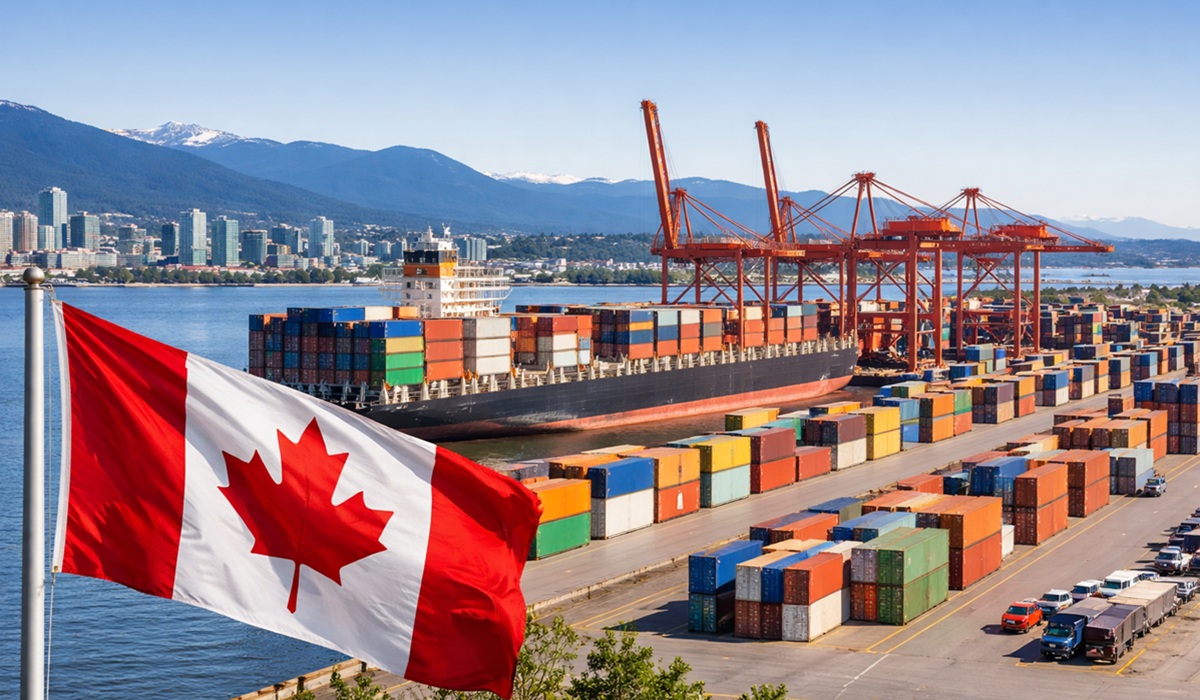
As US tariffs strain CUSMA, Canada is striking deals with China, Indonesia and the UAE. Here’s how Ottawa’s pivot away from the US is actually unfolding.
Every Canadian trade story in 2026 tends to lead with the same character: Washington. But the more consequential story may be what Ottawa is doing everywhere else. Facing sustained US tariff pressure and uncertainty over the CUSMA review, the Carney government has initiated a strategy to diversify Canada’s international trade, with a specific target of doubling exports to non-US markets by 2035.
Canada’s trade diversification strategy aims to double exports to non-US markets by 2035. In 2025–26 it produced a stabilisation deal with China on EVs and canola, a new trade agreement with Indonesia, a Foreign Investment Promotion and Protection Agreement with the UAE, and consultations with India, Thailand and Mercosur.
The deals nobody outside trade-law circles is tracking
Three moves stand out as substantively new rather than aspirational:
- China: during a visit to Beijing, Canada’s prime minister struck a deal establishing a tariff-rate quota for a set number of Chinese EVs — reverting to pre-2024 tariff levels — in exchange for reduced Chinese tariffs on Canadian canola, lobster and peas. This is a live trade-off between EV protectionism and agricultural market access.
- Indonesia: Canada signed a new trade agreement with Indonesia in 2025, opening a Southeast Asian market largely absent from Canadian export strategy until now.
- UAE: Ottawa launched trade-agreement negotiations and signed a new Foreign Investment Promotion and Protection Agreement with the United Arab Emirates, positioning the Gulf as a capital and market-access partner rather than just an energy counterpart.
Meanwhile, exporter confidence has ticked up but remains below its historical average, and diversification remains concentrated in a narrow set of commodities rather than being broad-based.
Why the gravity model is the real obstacle
Trade economists point to the Gravity Model of trade to explain why diversification is structurally hard: the US economy’s size, physical proximity, regulatory similarity and deeply integrated supply chains with Canada make full substitution unrealistic in the near term, even as China and India are flagged as the two most promising long-term markets given they will account for roughly 45% of global economic growth.
The underserved angle
Most coverage treats “Canada diversifying away from the US” as a single narrative. It is actually three distinct, sometimes contradictory tracks: a commodity-for-EV-tariff trade with China, a market-opening play in Southeast Asia via Indonesia, and a capital-and-investment play with the Gulf via the UAE. Each carries different risk profiles — geopolitical risk with China, execution risk with a new Indonesian relationship, and Gulf capital that is itself increasingly redirected toward domestic reconstruction needs amid regional conflict.
Discover more from The Economy
Subscribe to get the latest posts sent to your email.
Analysis of how the Federal Reserve, Bank of England and Bank of Japan could reshape global markets, inflation, currencies and economic growth in 2026.
Executive Summary
The world’s most influential central banks are entering one of the most consequential policy weeks of 2026. Investors are watching closely as the U.S. Federal Reserve, the Bank of England, and the Bank of Japan weigh the competing pressures of easing inflation, geopolitical uncertainty, elevated energy prices, and slowing global growth. Financial markets are also preparing for major corporate earnings and fresh GDP data from several advanced economies. �
Financial Times +1
Unlike the synchronized tightening cycle that dominated recent years, policymakers are increasingly responding to country-specific economic conditions. This divergence is expected to influence capital flows, exchange rates, bond yields, and investment decisions across both developed and emerging markets. �
McKinsey & Company +1
A New Monetary Landscape
Global inflation has moderated from its post-pandemic peaks, yet central banks remain cautious. Recent movements in energy markets and ongoing geopolitical tensions continue to threaten price stability, even as labor markets show signs of cooling. �
McKinsey & Company +1
For investors, the question is no longer whether interest rates have peaked, but how long they will remain elevated.
United States: The Federal Reserve Faces a Delicate Balance
Attention is centered on the Federal Reserve, where policymakers are expected to keep rates steady while evaluating the effects of inflation, consumer demand, and accelerating investment in artificial intelligence infrastructure. Markets are also monitoring whether AI-driven capital spending could contribute to future inflationary pressures. �
Investopedia +1
Bond investors remain sensitive to any shift in the Fed’s language, as Treasury yields continue to reflect expectations about future policy and inflation risks. �
MarketWatch
United Kingdom: Stability Before Growth
The Bank of England is expected to maintain a cautious stance amid moderating wage growth and relatively stable unemployment. However, policymakers continue to weigh external risks, including energy market volatility and global geopolitical developments. �
Financial Times
Businesses remain particularly attentive to borrowing costs, which continue to influence investment decisions across the UK economy.
Japan Ends an Era of Ultra-Loose Money
Japan is undergoing one of its most significant monetary transitions in decades. Rising wages and gradually strengthening inflation have encouraged the Bank of Japan to continue moving away from the ultra-accommodative policies that defined much of the past generation. �
Financial Times
This normalization has implications far beyond Japan, affecting global capital markets and currency dynamics.
Why Emerging Markets Are Watching Closely
Emerging economies including Pakistan, Indonesia, Malaysia, and others remain particularly exposed to decisions made by advanced economy central banks.
Higher U.S. interest rates typically strengthen the dollar, increase external financing costs, and place pressure on countries with significant foreign currency debt.
Conversely, a more stable interest rate environment could improve capital flows into emerging markets while easing exchange rate volatility.
AI Is Becoming a Monetary Policy Variable
One of the most important structural developments in 2026 is the rapid expansion of artificial intelligence infrastructure.
Major technology companies continue investing heavily in data centers, semiconductors, cloud computing, and digital infrastructure. These investments are supporting economic growth but are also creating new questions about inflation, productivity, and long-term financing needs. �
Investopedia +1
Investment Implications
Several themes are emerging:
Higher-for-longer interest rates remain possible.
Government bond markets are likely to remain volatile.
The U.S. dollar could remain relatively strong.
AI-related investment continues attracting capital.
Emerging markets may benefit if inflation continues to moderate.
Competitor Keyword Gap Analysis
Leading publications such as the Financial Times, Reuters, Bloomberg, and CNBC primarily emphasize immediate policy decisions. An opportunity exists to capture additional search traffic by targeting broader intent-based queries.
Key Takeaways
Central bank decisions this week are expected to shape global financial markets.
AI investment is becoming an increasingly important economic driver.
Bond markets remain sensitive to inflation expectations.
Emerging economies face both risks and opportunities from policy divergence.
Investors should monitor GDP releases, corporate earnings, and inflation indicators alongside interest rate announcements.
Frequently Asked Questions
Why are central bank meetings so important?
They influence borrowing costs, inflation expectations, currency values, and investment decisions worldwide.
How do interest rates affect stock markets?
Higher rates generally increase financing costs and can reduce company valuations, while lower rates often support economic activity and equity markets.
Why is AI influencing monetary policy discussions?
Large-scale investment in AI infrastructure is reshaping productivity, corporate spending, and long-term inflation expectations.
Discover more from The Economy
Subscribe to get the latest posts sent to your email.

Pakistan Gulf Investment Outflows 2026: Peace Deal Stakes Explained

Canada Trade Diversification 2026: China, Indonesia, UAE Deals Explained

US Forced-Labour Tariffs on 60 Countries: The Hidden Trade Shock of 2026

Global Central Banks 2026: Fed, BoE and BoJ Decisions Could Reshape Markets

Gulf Capital Retreat From Pakistan 2026: UAE Loan Freeze & What It Means

Pakistan’s Most Reliable Export Is Its People: Remittances Hit $41.6 Billion, Overtaking Total Exports

Indonesia’s Confidence Problem: Record Investment, a Sinking Rupiah, and a Widening Credibility Gap

Down But Not Out: Inside the Slow Sinking of Russia’s War Economy

China’s Growth Slips to a Four-Year Low: Why Beijing Still Won’t Pull the Stimulus Trigger

The Johor-Singapore Corridor: How Malaysia Became Southeast Asia’s AI Infrastructure Powerhouse

Canada’s Economy ‘On Pause’: Inside the CUSMA Deadline That Passed Without a Deal

Dubai’s Millionaire Magnet: How the UAE Turned Middle East Turmoil Into a Capital Safe-Haven Boom

Britain’s Sixth Prime Minister in a Decade: What Starmer’s Exit Means for Gilts, Sterling and Your Portfolio

Anthropic Offers Up to $600,000 Salary for Critical IPO Role as AI Giant Prepares for Wall Street Debut

Carry Trade Unwind 2026: How the Yen’s Snapback Triggered a Global Margin Call

AI Bubble Warning 2026: Why BIS, IMF and Bank of England Fear a Market Crash

BRICS De‑Dollarization Strategy Takes Shape with $15 Billion Local‑Currency Push

The AI Super Bubble Is Ready to Burst

Russia Bans Diesel Exports 2026: Global Fuel Market Impact Explained

Strait of Hormuz Blockade 2026: Oil Prices Surge 9% as US-Iran Conflict Reignites

Private Credit Warning: Most BDCs Turn Unprofitable in 2026, Reuters Finds

Bitcoin $150k Milestone Achieved as US Sovereign Crypto Pivot Looms

IMF Cuts Pakistan Growth Forecast, Raises Inflation to 8.4%
Gulf Capital Retreat From Pakistan 2026: UAE Loan Freeze & What It Means

India Economic Rise 2026: How the Subcontinent Toppled Japan

Strait of Hormuz 2026: Why Markets Still Don’t Trust It’s Open

China Housing Market Turnaround: White‑List Model Stabilises Prices

Chipmakers Just Lost 6.7% in Two Days: Inside the Great AI Trade Rotation
-

 Markets & Finance7 months ago
Top 15 Stocks for Investment in 2026 in PSX: Your Complete Guide to Pakistan’s Best Investment Opportunities
-

 Analysis5 months ago
Johor’s Investment Boom: The Hidden Costs Behind Malaysia’s Most Ambitious Economic Surge
-

 Analysis5 months ago
Top 10 Stocks for Investment in PSX for Quick Returns in 2026
-

 Analysis6 months ago
Brazil’s Rare Earth Race: US, EU, and China Compete for Critical Minerals as Tensions Rise
-

 Banks6 months ago
Best Investments in Pakistan 2026: Top 10 Low-Price Shares and Long-Term Picks for the PSX
-

 Investment7 months ago
Top 10 Mutual Fund Managers in Pakistan for Investment in 2026: A Comprehensive Guide for Optimal Returns
-

 Global Economy7 months ago
15 Most Lucrative Sectors for Investment in Pakistan: A 2025 Data-Driven Analysis
-

 Global Economy7 months ago
Pakistan’s Export Goldmine: 10 Game-Changing Markets Where Pakistani Businesses Are Winning Big in 2025