
Analysis
Bangladesh’s Bank Resolution Act 2026: Doors Re-Opened for Ex-Owners — Reform Reversal or Pragmatic Bailout?

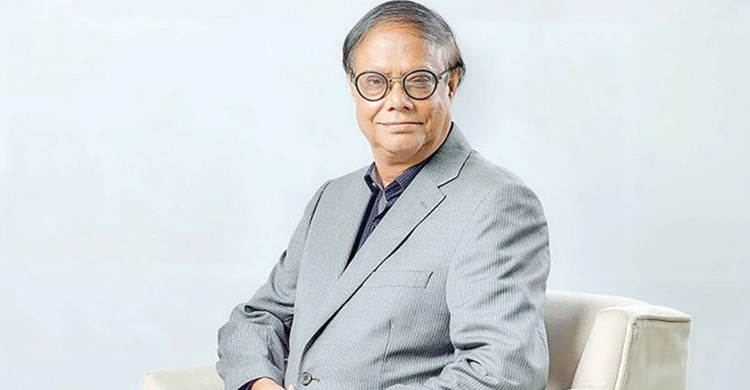
In April 2026, as Dhaka’s political calendar accelerates toward general elections and the IMF watches every legislative move from Washington, Bangladesh’s newly elected BNP-led parliament has quietly detonated a grenade in the middle of a still-fragile banking reform. The Bank Resolution Act 2026, enacted on Friday, April 11, paves a wide — some would say suspiciously wide — road for former bank owners to reclaim institutions they drove into distress. The question hardening in the minds of depositors, reform economists, and international creditors alike is brutally simple: is this pragmatic crisis management, or the most elegant act of regulatory impunity Bangladesh has ever legislated?
What the Bank Resolution Act 2026 Actually Says — and What It Doesn’t
Let’s start with the architecture of the law, because the devil lives in its fine print.
Under the Bank Resolution Act 2026, former directors or owners of banks that are merging or listed for mergers can pay just 7.5 percent upfront of the amount injected by the government or Bangladesh Bank to reclaim their institutions. The remaining 92.5 percent is repayable within two years at 10 percent simple interest. The Daily Star Before any approval is granted, Bangladesh Bank must conduct due diligence and seek government clearance. Even after approval, the central bank will closely monitor the merged entity for two years, with a special committee reviewing compliance — and failure to meet conditions could lead to cancellation of approval and further regulatory action. The Daily Star
On paper, the safeguards sound serious. In practice, economists who have spent years watching Bangladesh’s banking politics are not reassured. Zahid Hussain, former lead economist at the World Bank’s Dhaka office and a member of the interim government’s banking reform task force, warned that the amendment destroys the credibility of the reform process, saying that “a clear roadmap has been provided for former owners to re-occupy banks that were distressed due to their own mismanagement and the siphoning of funds.” The Business Standard
The numbers Hussain cites are staggering in their implication. He estimated that for the five merged banks, the total required payment would be roughly Tk 35,000 crore — and expressed concern that the terms are so lenient that former owners could easily pay the initial 7.5 percent and borrow the remainder from the banking sector itself. The Business Standard That is not a bailout mechanism. That is a round-trip ticket funded by the very system that was looted.
The Sommilito Islami Bank Merger: A Reform That May Never Have Happened
To understand what is now at stake with the Bank Resolution Act 2026, you must first understand what the 2025 Ordinance was attempting to accomplish — and why it mattered beyond Bangladesh’s borders.
As part of its reform drive, in May 2025, the interim administration had approved the Bank Resolution Ordinance 2025 to merge five troubled Shariah-based private banks into a state-run entity titled Sommilito Islami Bank. The five institutions — First Security Islami Bank, Social Islami Bank, Union Bank, Global Islami Bank, and Exim Bank — had collectively become symbols of politically directed lending and governance failure. The Daily Star
The boards of four of the banks were dominated by the controversial S Alam Group, led by its Chairman Mohammed Saiful Alam, while Exim Bank was long controlled by Nassa Group Chairman Md Nazrul Islam Mazumder. The Daily Star The S Alam Group banks return 2026 scenario — which the new Act explicitly enables — is not abstract; these are the same ownership structures whose related-party lending created the crisis in the first place.
The Shariah banks merger reversal risk is now real enough that even Bangladesh Bank’s own officials are alarmed. Bangladesh Bank officials told The Daily Star that concerns remain over how these banks will be managed if former owners return, whether depositors will be able to recover their money, and that if a bank is returned to its previous owners, it cannot easily be taken back again. “This raises doubts about whether they would be able to run the banks properly and ensure full legal and regulatory compliance,” one official said, adding that the return of previous owners could hinder the ongoing merger process. The Daily Star
That is a central bank quietly sounding an alarm about a law passed by its own government. Read that again.
The Macroeconomic Context: A Sector Already on Life Support
No assessment of the Bank Resolution Act 2026 can be divorced from the catastrophic baseline it is operating against. The World Bank’s Bangladesh Development Update released in 2025 documented a sector in acute distress. Banking sector-wide non-performing loans reached 24.1 percent by March 2025, significantly above the South Asian average of 7.9 percent. The capital-to-risk-weighted asset ratio fell to 6.3 percent, well below the regulatory minimum of 10 percent. World Bank
These are not technical footnotes. A CRAR of 6.3 percent — against a required 10 percent minimum, and a Basel III-compliant effective floor closer to 12.5 percent when capital conservation buffers are included — means Bangladesh’s banking system is operating with a structural capital hole that is visible from space.
The IMF’s 2025 Article IV Consultation, concluded on January 26, 2026, was characteristically blunt. Directors highlighted the urgent need for a credible banking sector reform strategy consistent with international standards to restore banking sector stability. Such a strategy should include estimates of undercapitalization, define fiscal support, and outline legally robust restructuring and resolution plans. They also cautioned against unsecured liquidity injections into weak banks. International Monetary Fund The ink on that consultation was barely dry when parliament passed the Bank Resolution Act 2026 — a law whose principal mechanism is, functionally, a structured return of capital to distressed institutions controlled by their original owners.
The IMF’s language about “prolonged reliance on forbearance measures” was not accidental. Fund staff specifically stated that “any approach to dealing with weak banks should ensure healthy balance sheets, sustained profitability, and adequate liquidity without prolonged reliance on forbearance measures.” International Monetary Fund What the new Act provides — a 7.5 percent entry ticket and 10 percent simple interest on a two-year repayment — is, by any global standard, forbearance in a legislative costume.
The International Standard: What the BRRD, FDIC, and India’s IBC Actually Require
To appreciate why the Bank Resolution Act 2026 troubles international observers, compare it against the frameworks Bangladesh has nominally aligned itself with.
The European Union’s Bank Recovery and Resolution Directive (BRRD) operates on a “no creditor worse off” principle, with resolution authorities empowered to impose losses on shareholders and unsecured creditors before any public money is committed. Critically, the BRRD explicitly prohibits the return of equity to former shareholders whose mismanagement contributed to resolution proceedings. The message is structural: resolution is not a waiting room for rehabilitation. It is a point of no return.
The US Federal Deposit Insurance Corporation (FDIC) model is similarly unambiguous. When an institution enters FDIC resolution, former owners lose their equity entirely. The FDIC then sells assets, transfers deposits, or establishes bridge banks — without reopening a window for the people who broke the bank in the first place. The concept of a former owners Bangladesh Bank Resolution Act mechanism — paying back a fraction upfront and recovering control — would be legally inconceivable under FDIC rules.
India’s Insolvency and Bankruptcy Code (IBC), enacted in 2016, went further: its Section 29A specifically bars promoters who have defaulted from participating in resolution plans for their own companies. After years of politically connected promoters recycling distressed assets back to themselves, India drew an explicit legislative line. Bangladesh, in April 2026, appears to be drawing that line in the opposite direction.
The Chambers and Partners Banking Regulation 2026 Guide for Bangladesh acknowledges that the regulatory agenda of Bangladesh Bank for 2025 and 2026 is “exceptionally dynamic, driven by a national push for enhanced governance, financial sector stability, and compliance with IMF programme conditions.” Chambers and Partners The Bank Resolution Act 2026 as enacted tests whether that dynamism is substantive or cosmetic.
The Government’s Defence: Fiscal Pragmatism or Political Convenience?
Finance Minister Amir Khosru Mahmud Chowdhury presented the Act in parliament as a “market solution” — a phrase that in emerging market contexts tends to arrive dressed as economic logic and leave as political cover. The minister described the government as having already invested approximately Tk 80,000 crore into weak banks and potentially needing another Tk 1 lakh crore — a financial burden he called unsustainable. “This new arrangement places the obligation of recapitalisation and liability settlement on the applicants, reducing the pressure on the government and the Deposit Insurance Fund,” he stated. The Business Standard
This argument has a kernel of validity that cannot be entirely dismissed. A sovereign that has already pumped the equivalent of several GDP percentage points into failing banks and faces the prospect of doubling down — during a period when, as the IMF notes, Bangladesh’s debt service-to-revenue ratio exceeds 100 percent — has a legitimate interest in finding private recapitalization. The question is not whether to seek private capital. It is from whom, and on what terms.
The Act’s critics, including Zahid Hussain, argue the answer currently provided is: the same people who caused the crisis, on terms lenient enough to enable regulatory arbitrage. Hussain warned that the provision undermines past reform efforts, noting: “If, under this law, the previous owners return and reclaim their organisations, the integrity of the new structure created after the merger could be lost. In that case, all merger-related work would effectively become meaningless.” The Daily Star
He is right. And the S&P Global Islamic Banking Outlook 2026 context makes this more acute: Islamic finance institutions globally are under increased scrutiny for governance standards, with rating agencies increasingly marking down Shariah-compliant lenders in frontier markets where board independence and related-party transaction controls are weak. The Som milito Islami Bank ex-owners returning to manage the merged entity would face an uphill battle establishing the governance credibility that international Islamic finance counterparties — Gulf investors, sukuk markets, multilateral development banks — now routinely require.
The Post-Hasina Governance Test: Is Bangladesh Building Institutions or Recycling Networks?
The deepest concern about the Bank Resolution Act 2026 is not technical. It is political economy.
Bangladesh’s post-August 2024 moment — the political transition that followed the uprising ending Sheikh Hasina’s government — was described by reformers and development partners as a generational opportunity to rebuild institutional integrity. Finance Adviser Dr. Salehuddin Ahmed himself described the inherited banking system as one hollowed out by “rampant embezzlement, unchecked corruption, and politically driven loan rescheduling.” BBF Digital
The three-year reform roadmap — backed by the IMF, World Bank, and Asian Development Bank — committed Bangladesh to asset quality reviews, risk-based supervision, the Distressed Asset Management Act, and legally robust restructuring frameworks. The overarching goal was to “ensure banks are financially sound and to end the long-standing practice of granting regulatory forbearance to weaker institutions.” The Daily Star
The Bank Resolution Act 2026 as enacted is not a clean break from that narrative. It is, at minimum, an asterisk — and at worst, a structural loophole that future actors will exploit regardless of what due diligence and monitoring clauses say on paper. Bangladesh Bank officials themselves acknowledge the asymmetry: once a bank is returned to former owners, recovering it is legally and operationally far harder than the two-year monitoring clause implies.
The former owners Bangladesh Bank Resolution Act pathway, combined with the ex-owners reclaim banks Bangladesh mechanism at 7.5 percent upfront, sets a precedent that future distressed bank owners will study carefully. The message it sends to the market — domestic and international — is that Bangladesh Bank resolution is a negotiated exit, not a structural consequence. That signal will outlive any monitoring committee.
What a Credible Reform Would Look Like
This article does not argue for leaving the five merged Shariah banks in permanent regulatory limbo. Merger uncertainty damages depositors. Extended state management creates moral hazard in the other direction. Bangladesh does need a resolution pathway.
But a credible pathway, consistent with the BRRD model and India’s IBC experience, would require: mandatory and independent forensic audits of all related-party transactions before any return of ownership is considered; an open competitive bidding process for new strategic investors — not a preferential window for former owners; full equity writedowns for shareholders whose mismanagement contributed to resolution triggers; enhanced personal liability provisions backed by asset freezes, not merely regulatory monitoring; and independent board composition certified by Bangladesh Bank before any operational handback.
The IMF, in its January 2026 Article IV, called for “swift action to operationalize new legal frameworks that facilitate orderly bank restructuring while safeguarding small depositors” alongside “robust asset quality reviews for all large and systemic banks, bank restructuring aimed at forward-looking viability, strengthened risk-based supervision, and enhanced governance and transparency.” International Monetary Fund The Bank Resolution Act 2026 addresses the first clause and largely bypasses the rest.
The Verdict: Alarming Precedent, Redeemable Only by Enforcement
Bangladesh’s Bank Resolution Act 2026 is not beyond redemption. The due diligence requirement, BB monitoring provisions, and cancellation clauses are meaningful — if enforced with the independence the law’s critics doubt Bangladesh Bank can summon under a newly elected government whose political networks overlap uncomfortably with the very ownership groups seeking re-entry.
The Tk 35,000 crore question is not whether former owners can write the initial cheque. It is whether Bangladesh’s regulatory institutions have the spine to cancel approvals when compliance conditions are not met, to withstand political pressure during the two-year supervision window, and to protect the 17 million depositors whose savings are concentrated in institutions whose balance sheets remain deeply impaired.
For international investors, IMF programme managers, and World Bank country teams watching from Washington and Jakarta, the Bank Resolution Act 2026 is a stress test of post-crisis institutional credibility. Bangladesh passed the legislative test of enacting a resolution framework in 2025. It now faces the harder test: proving that the framework means what it says, even when the politically connected come knocking.
History suggests that in emerging markets, that second test is the one that matters — and the one most frequently failed.
Discover more from The Economy
Subscribe to get the latest posts sent to your email.


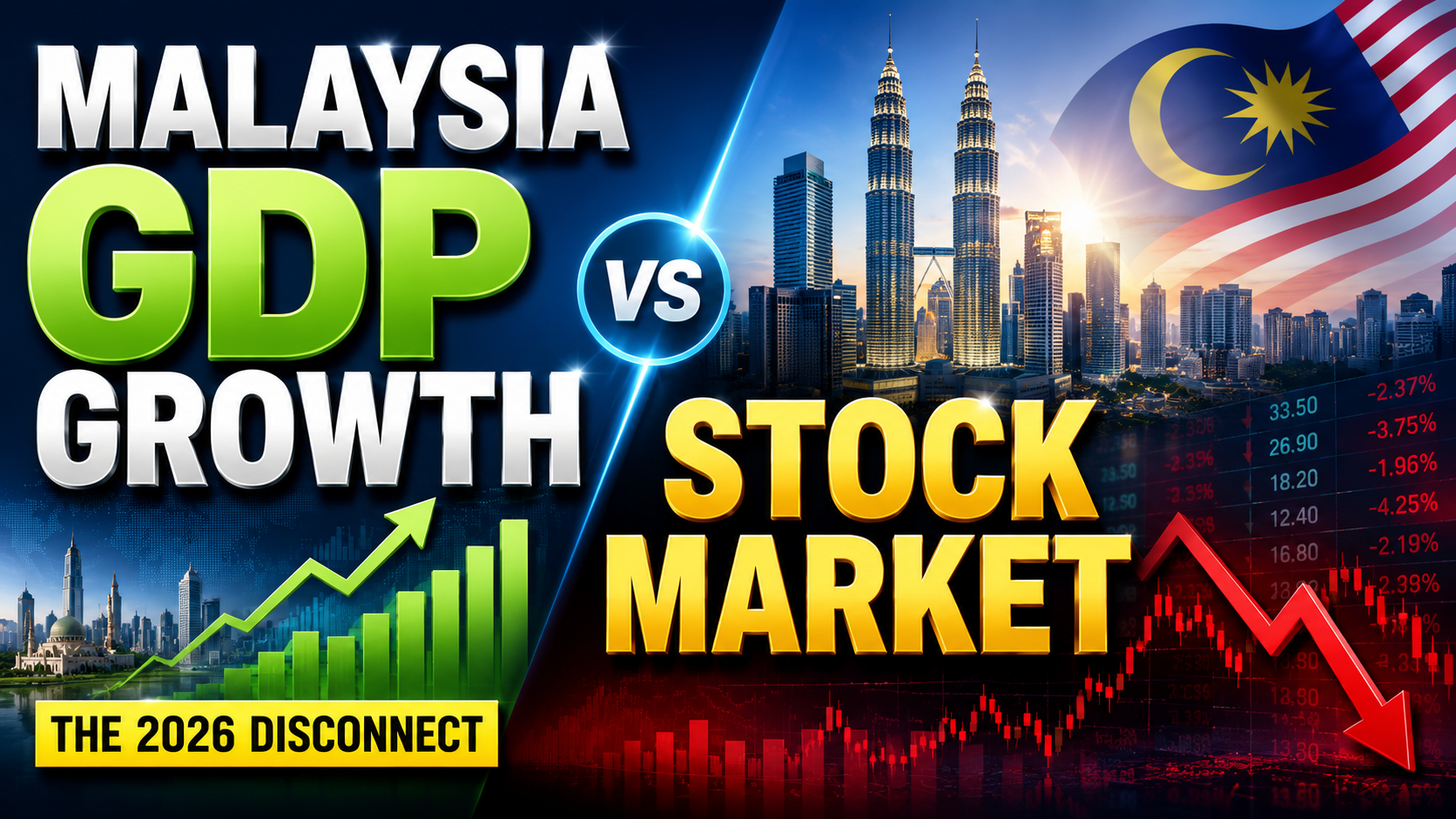
Malaysia posted its biggest trade surplus on record and second-quarter GDP growth of 5.8% in 2026, yet its stock market has stubbornly refused to rally — a disconnect that is puzzling investors even as the country climbs global competitiveness rankings and hosts record investor turnout at its largest retail investing event.
Record Growth Meets a Muted Market
Malaysia’s economy expanded 5.8% year-on-year in the second quarter of 2026, underpinning what former senior investment banker Ian Yoong Kah Yin describes as one of the most competitive economies globally, buoyed by the country’s largest-ever trade surplus, according to reporting in The Star. Yet with the exception of the semiconductor and plantation sectors, Yoong notes that many shares on Bursa Malaysia remain undervalued relative to that underlying strength — a gap he summarised memorably: “It’s like we held a party and no one came.”
The disconnect comes even as Hong Leong Investment Bank upgraded Malaysia’s full-year 2026 growth forecast to 4.7% from 4.5%, citing stronger-than-expected performance in the electrical and electronics sector alongside resilient domestic demand, according to BusinessToday. Household loans grew 5.2% year-on-year and credit card spending rose 10.2%, signalling that consumer demand remains a genuine pillar of growth rather than a statistical artefact of export strength alone.
A Competitiveness Ranking Jump — and a Retail Investing Boom
Malaysia’s underlying reform story has been validated externally. The country climbed eight places to rank 15th among 70 economies in the 2026 IMD World Competitiveness Ranking, its best showing in recent years, following an 11-place jump the year before, according to The Star. Economists attribute the climb to policy reforms improving government and business efficiency, streamlined investment approvals, accelerated digitalisation, and stronger fiscal management.
Retail investor enthusiasm, meanwhile, appears robust even if institutional capital has been slower to follow. INVEST Fair 2026, Malaysia’s largest retail investment event, drew an expected 20,000 visitors across more than 70 hours of programming at Kuala Lumpur’s Mid Valley Exhibition Centre in July, according to event coverage on TradingView. Separately, a survey of more than 3,500 active users by digital wealth platform Versa found that 70% of respondents would prioritise investing over debt repayment or emergency savings if they received a sudden windfall, according to The Star — evidence of a pronounced retail “investment reflex” even amid broader questions about household financial resilience.
Fixed Income Is Where the Real Money Is Flowing
While equities lag, Malaysia’s fixed income market tells a different story. Employees Provident Fund chief investment officer Mohamad Hafiz Kassim told the Sasana Symposium 2026 that Malaysia is “punching above its weight” on global fixed income indexes, drawing outsized capital allocation given interest rate and yield differentials between Malaysian Government Securities and US Treasuries — a dynamic occurring even as the ringgit has remained notably stable, according to The Star. Speakers at the same event pointed to the broader global shift toward passive investing as a structural tailwind Malaysia is well-positioned to capture with continued policy follow-through.
What Explains the Equity Gap
Analysts point to several possible explanations for the growth-market disconnect: persistent foreign investor caution tied to regional and Middle East-driven geopolitical risk, a valuation overhang from prior years, and sector concentration that leaves broad indices under-exposed to the semiconductor and technology names actually capturing AI-linked investment flows. Whatever the cause, the gap represents either an opportunity for value-focused investors or a warning sign that Malaysia’s headline growth figures are not yet translating into corporate earnings momentum broad enough to move the market.
What to Watch
The second half of 2026 will test whether Malaysia’s fixed income strength and competitiveness gains eventually pull equity valuations upward, or whether the stock market’s caution proves to be the more accurate signal about underlying corporate health. Continued data centre and semiconductor investment, alongside any further IMD-style competitiveness validation, will be key catalysts to track.
Discover more from The Economy
Subscribe to get the latest posts sent to your email.
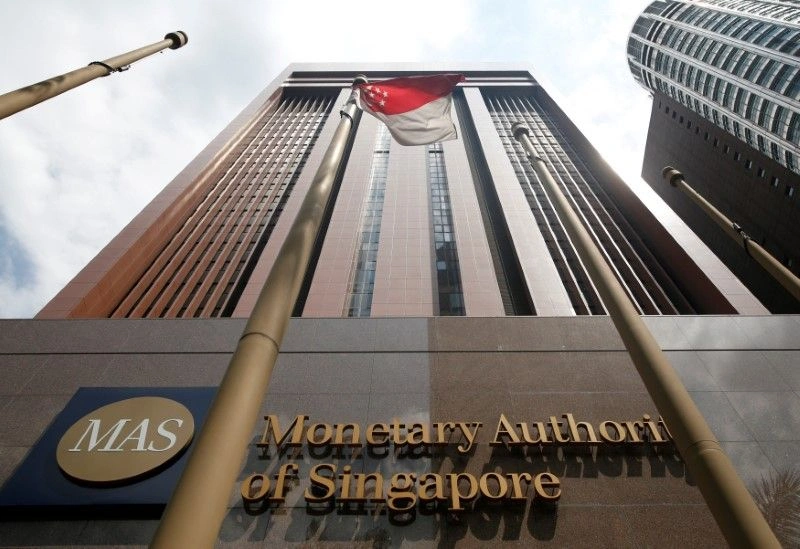
The Monetary Authority of Singapore nudged its exchange-rate-based policy stance slightly tighter in its July review, a modest but notable shift after the city-state’s economy grew a stronger-than-expected 5.7% year-on-year in the second quarter, powered by an AI-driven manufacturing boom that is increasingly reshaping the country’s growth mix.
Growth Beats Expectations Again
Singapore’s economy expanded 5.7% year-on-year in the second quarter of 2026, according to advance estimates from the Ministry of Trade and Industry released 14 July, moderating only slightly from an upwardly revised 6.3% in the first quarter, according to MAS’s own July policy statement. On a quarter-on-quarter seasonally adjusted basis, GDP rose 1.1%, continuing an unbroken run of above-trend expansion. Manufacturing has been the standout performer, posting 12.2% year-on-year growth in the second quarter — up from 8.0% in the first — driven by the electronics and precision engineering clusters riding the global AI capital expenditure wave, according to data reported by Indiplomacy.
The strength has prompted a wave of forecast upgrades. UOB Global Economics and Markets Research lifted its 2026 GDP growth forecast to 4.8% from 4%, while S&P Global Market Intelligence matched that upgrade, and Nomura flagged upside risk to its own 4.6% forecast, according to Xinhua — all comfortably above the Ministry of Trade and Industry’s official 2.0–4.0% guidance range.
MAS Leans Against Rising Core Inflation
The growth surprise has not been without cost. MAS Core Inflation, which excludes accommodation and private transport costs, rose to 1.5% year-on-year in the second quarter, up from 1.2% in the January–February period before the Middle East conflict began, according to the central bank’s own policy statement. Fuel-price surges have pushed up point-to-point transport and non-cooked food inflation, while retail goods prices have climbed on higher import costs and a tobacco tax increase.
In response, MAS increased the slope of the Singapore dollar nominal effective exchange rate (S$NEER) policy band slightly in its July review — a modest tightening move that builds on an April 2026 tightening step, according to the bank’s Macroeconomic Review. Singapore uses its exchange rate, rather than interest rates, as its primary monetary policy tool, managing the currency’s path within an undisclosed band against a basket of trading partner currencies.
The Positive Output Gap Is Widening
Perhaps the most telling technical signal in MAS’s July statement is its acknowledgment that Singapore’s positive output gap — the extent to which the economy is running above its estimated potential — is now forecast to widen further in 2026, rather than narrow as previously expected. That reflects both the stronger-than-anticipated first-half growth data and MAS’s expectation that GDP will be sustained at elevated levels near-term, powered by continued AI-related capital expenditure, a robust construction pipeline, and steady credit-driven expansion in the financial sector.
Singapore’s central bank, MAS, slightly tightened its S$NEER exchange-rate policy band in July 2026 after GDP grew 5.7% year-on-year in Q2, driven by AI-linked manufacturing growth of 12.2%. Core inflation rose to 1.5%, prompting the modest policy shift even as growth forecasts were upgraded to as high as 4.8%.
Why This Matters Beyond Singapore
As a bellwether for Asian trade and technology cycles, Singapore’s data offers one of the clearest real-time signals of how durable the global AI infrastructure buildout has become, even as broader Asian growth forecasts have been trimmed elsewhere in the region due to Middle East-driven energy costs. For global investors, the combination of resilient growth and rising core inflation puts MAS in a position other regional central banks may soon face: managing an AI-driven boom that is proving inflationary in ways that are only loosely connected to traditional demand-side overheating.
What to Watch
MAS’s next scheduled policy review will be closely watched for whether the central bank continues its gradual tightening path or judges that easing global energy costs — following the partial reopening of the Strait of Hormuz — have done enough of the disinflationary work on their own. Singapore’s full second-quarter economic survey, due after the advance estimate, will offer a fuller sectoral breakdown of where the AI-driven strength is concentrated.
Discover more from The Economy
Subscribe to get the latest posts sent to your email.
Indonesia has taken its first concrete legislative step toward building a financial centre intended to compete with Singapore, Hong Kong, and Dubai, as President Prabowo Subianto pushes an ambitious plan to draw foreign capital into Southeast Asia’s largest economy and lift growth toward 8% by the end of his term in 2029.
Parliament Passes Enabling Legislation
Indonesia’s parliament passed the enabling legislation for the new financial hub, laying its legal foundation, according to reporting by the South China Morning Post. The milestone marks the most tangible progress yet on a project analysts say is projected to attract billions of dollars in investment — though they caution that crucial details on tax incentives, investor eligibility requirements, and regulatory safeguards still need to be finalised before the centre can credibly compete with established regional players.
The ambition is unmistakable: a financial centre capable of pulling capital away from Singapore’s deep, established markets, Hong Kong’s China-gateway status, and Dubai’s fast-growing wealth-management ecosystem is a tall order, and observers note that persuading global institutional investors to relocate meaningful operations to a new jurisdiction is a multi-year undertaking that has only just begun in earnest.
Indonesia’s parliament passed enabling legislation in July 2026 for a new financial hub designed to rival Singapore, Hong Kong, and Dubai, as President Prabowo Subianto targets 8% GDP growth by 2029. Singapore remains Indonesia’s top foreign investor at $8.8 billion in H1 2026, ahead of Hong Kong and China.
A Broader Investment Story Already Taking Shape
The financial-hub push arrives alongside signs that Indonesia is already deepening its role as a regional investment destination. Singapore remained Indonesia’s largest foreign investor in the first half of 2026, contributing $8.8 billion, followed by Hong Kong at $7.8 billion, China at $3.9 billion, Japan at $1.9 billion, and the United States at $1.7 billion, according to investment data reported by the New Straits Times. Malaysia ranked fifth, contributing $700 million in the second quarter alone, as Indonesia’s total realised investment reached Rp511.8 trillion.
Indonesian Investment Minister Rosan Roeslani has pointed to regulatory reform — including Government Regulation No. 28, introduced last October, which he said has provided greater licensing certainty — as a key driver of investor interest, while explicitly acknowledging that neighbouring economies are reforming in parallel, requiring Indonesia to keep pace.
Growth Outlook Holds Steady Amid Regional Headwinds
The financial-hub push comes as Indonesia’s broader macroeconomic backdrop remains comparatively resilient. The Asian Development Bank’s July 2026 outlook kept Indonesia’s growth forecast unchanged at 5.2% for both 2026 and 2027, even as the bank lowered its overall developing Asia and Pacific growth projection to 4.9% amid Middle East-driven energy cost pressures. That stability stands in contrast to Malaysia, whose 2026 growth forecast was revised only marginally higher to 2%, according to the same ADB report — even as Maybank Investment Banking Group separately upgraded its own Malaysia forecast more aggressively, to 4.9%, citing strong regional investor interest at July’s Invest ASEAN conference in Singapore, which drew 200 institutional investors managing a combined $23 trillion in assets.
Rice Diplomacy as a Parallel Economic Thread
Indonesia’s regional economic engagement extends beyond high finance. State logistics agency Bulog is continuing negotiations with Malaysia and Singapore over proposed rice export deals, with pricing and commercial terms still under discussion as of mid-July, according to The Star. The talks illustrate the breadth of Indonesia’s economic diplomacy push across ASEAN even as its flagship financial-hub ambitions dominate headlines.
What It Means for Global Investors
For asset managers and multinationals weighing where to locate Southeast Asian operations, Indonesia’s financial-hub legislation is a signal of intent rather than an immediate call to relocate. The real test will come as tax-incentive structures, licensing rules, and investor-protection frameworks are finalised over the coming months — details that will determine whether Jakarta can credibly compete with Singapore’s decades-long regulatory head start, or whether the hub instead becomes a complementary gateway focused on domestic Indonesian capital markets and Belt-and-Road-adjacent regional flows.
Discover more from The Economy
Subscribe to get the latest posts sent to your email.

Nvidia’s H200 Chips Are Finally Reaching China — In Numbers Too Small to Matter Yet

Oil Prices Fall as Strait of Hormuz Reopens: 2026 Update

Malaysia GDP Growth vs Stock Market: The 2026 Disconnect

Singapore MAS Tightens Policy as GDP Growth Hits 5.7%

Fed Holds Rates Under Warsh as Trump Rolls Out New Tariffs

Indonesia Financial Hub 2026: Can It Rival Singapore, Dubai?

Russia Fuel Shortages 2026: Inside a Cracking War Economy

China Politburo July 2026: Stimulus Signals Explained

Andy Burnham, UK Gilts and Mortgages: July 2026 Explainer

Pakistan’s 2026 Monsoon Floods Threaten Fragile Economic Recovery as Inflation Nears 9%

Pakistan Gulf Investment Outflows 2026: Peace Deal Stakes Explained

Canada Trade Diversification 2026: China, Indonesia, UAE Deals Explained

US Forced-Labour Tariffs on 60 Countries: The Hidden Trade Shock of 2026

Global Central Banks 2026: Fed, BoE and BoJ Decisions Could Reshape Markets

Carry Trade Unwind 2026: How the Yen’s Snapback Triggered a Global Margin Call

AI Bubble Warning 2026: Why BIS, IMF and Bank of England Fear a Market Crash

BRICS De‑Dollarization Strategy Takes Shape with $15 Billion Local‑Currency Push

The AI Super Bubble Is Ready to Burst

Russia Bans Diesel Exports 2026: Global Fuel Market Impact Explained

Strait of Hormuz Blockade 2026: Oil Prices Surge 9% as US-Iran Conflict Reignites

Gold Price Forecast 2026: Fed’s July 29 Decision and Record Central Bank Buying Explained

Private Credit Warning: Most BDCs Turn Unprofitable in 2026, Reuters Finds

Bitcoin $150k Milestone Achieved as US Sovereign Crypto Pivot Looms

IMF Cuts Pakistan Growth Forecast, Raises Inflation to 8.4%

Gulf Capital Retreat From Pakistan 2026: UAE Loan Freeze & What It Means

India Economic Rise 2026: How the Subcontinent Toppled Japan

Strait of Hormuz 2026: Why Markets Still Don’t Trust It’s Open

China Housing Market Turnaround: White‑List Model Stabilises Prices
-

 Markets & Finance7 months ago
Top 15 Stocks for Investment in 2026 in PSX: Your Complete Guide to Pakistan’s Best Investment Opportunities
-

 Analysis5 months ago
Johor’s Investment Boom: The Hidden Costs Behind Malaysia’s Most Ambitious Economic Surge
-

 Analysis5 months ago
Top 10 Stocks for Investment in PSX for Quick Returns in 2026
-

 Analysis6 months ago
Brazil’s Rare Earth Race: US, EU, and China Compete for Critical Minerals as Tensions Rise
-

 Banks6 months ago
Best Investments in Pakistan 2026: Top 10 Low-Price Shares and Long-Term Picks for the PSX
-

 Investment7 months ago
Top 10 Mutual Fund Managers in Pakistan for Investment in 2026: A Comprehensive Guide for Optimal Returns
-

 Global Economy7 months ago
15 Most Lucrative Sectors for Investment in Pakistan: A 2025 Data-Driven Analysis
-

 Global Economy7 months ago
Pakistan’s Export Goldmine: 10 Game-Changing Markets Where Pakistani Businesses Are Winning Big in 2025