
Analysis
The Great Tariff Pivot: How the 2026 Trade Clash is Reshaping the Global Economic Order

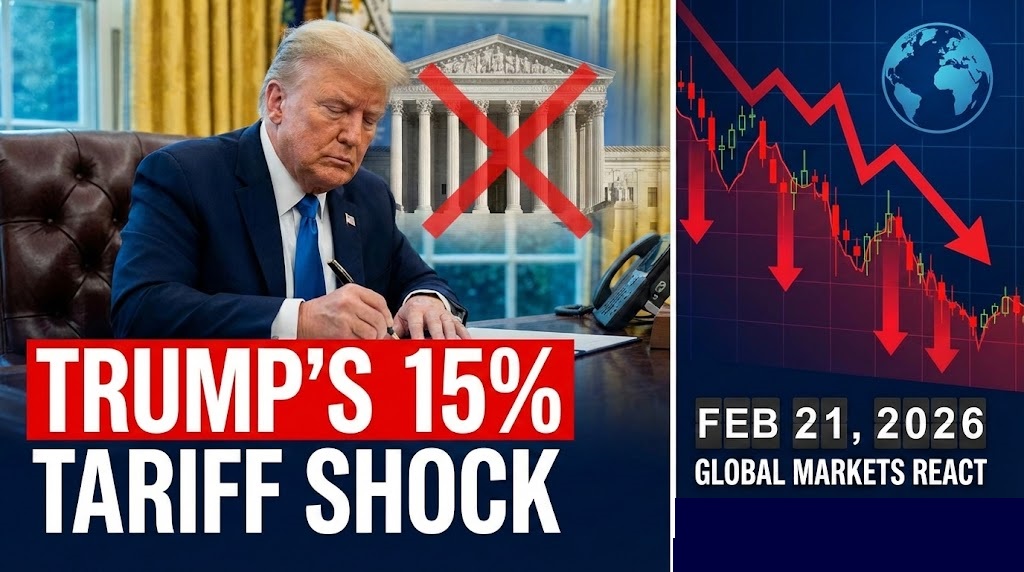
For a fleeting moment on Friday morning, corporate America let out a collective sigh of relief. The highest court in the land had just dismantled the cornerstone of the administration’s sweeping trade agenda, sending equity markets into a celebratory climb. But in the modern era of executive trade policy, relief is a highly perishable commodity.
By Saturday morning, the narrative had violently fractured. The Trump tariff hike 2026 was officially underway, replacing a permanent, legally fraught tax with a temporary, legally untested one. Over a frantic 48-hour window, global markets experienced severe fiscal whiplash as the administration executed a US global tariff increase from 10% to 15%, pivoting from the ashes of one statute to the obscure remnants of another.
To understand the profound impact of Trump tariffs on global economy dynamics, one must look beyond the immediate headlines. This is not merely a story about import taxes; it is a profound constitutional tug-of-war over the power of the purse, the mechanics of global supply chains, and a 150-day ticking clock that will define the geopolitical landscape ahead of the midterm elections.
The 6-3 Bombshell: The Supreme Court Ruling Against Trump Tariffs
The catalyst for this weekend’s economic tremor was a landmark decision handed down on February 20, 2026. In a definitive 6-3 decision authored by Chief Justice John Roberts, the Supreme Court ruling against Trump tariffs struck down the administration’s reliance on the International Emergency Economic Powers Act (IEEPA) of 1977.
For over a year, IEEPA had been the sledgehammer of the “America First” trade doctrine, justifying baseline tariffs of up to 50% on nearly all US trading partners by classifying persistent trade deficits as a “national emergency.” However, the Court—relying heavily on the major questions doctrine—ruled unequivocally that Congress never intended to delegate broad taxing authority to the executive branch under an emergency sanctions law.
The economic fallout of this ruling is staggering. According to estimates cited by the Tax Foundation, the administration had illegally collected an estimated $160 billion in tariff revenue. The Supreme Court did not address the logistical nightmare of refunding these billions, leaving the US Court of International Trade to untangle what Justice Brett Kavanaugh, in his dissent, accurately warned would be a “mess.”
For a few hours, Wall Street celebrated the erasure of what amounted to the largest consumer tax increase in a generation. Shares of legacy automakers, retailers, and consumer goods conglomerates surged. But the celebration ignored a fundamental reality of Washington: executive power, once exercised, rarely retreats without a fight.
The Section 122 Pivot and the Truth Social Escalation
Faced with the largest judicial defeat of his renewed tenure, President Trump immediately sought alternative statutory armor. On Friday evening, he signed an executive order invoking Section 122 of the Trade Act of 1974 to impose a 10% global tariff.
But by Saturday morning, the administration decided that 10% was insufficient. Taking to social media, Trump calls court decision anti-American—labeling the 6-3 ruling “ridiculous” and “poorly written”—and immediately escalated the stakes. He announced a US global tariff increase from 10% to 15%, the absolute maximum allowed under Section 122.
This obscure, never-before-used provision allows the president to impose a temporary import surcharge to deal with “large and serious United States balance-of-payments deficits.” However, trade scholars at the Peterson Institute for International Economics point out a glaring vulnerability: Section 122 was drafted during the collapse of the Bretton Woods system to protect fixed exchange rates. Because the United States has operated on a floating exchange rate since 1973, many economists argue the legal predicate for a “balance-of-payments crisis” simply does not exist.
More importantly, Section 122 comes with a strict expiration date. The 15% tariff can only last for 150 days unless Congress explicitly votes to extend it. This sets up a massive fiscal cliff in late August 2026, dropping this economic grenade squarely into the lap of the midterm election cycle.
The Impact of Trump Tariffs on Global Economy and Markets
The immediate impact of Trump tariffs on global economy metrics has been a cocktail of volatility and defensive posturing. The Trump tariff hike 2026 fundamentally shifts the burden from a permanent structural tax to a short-term, high-intensity shock.
- Market Volatility: While traditional equities initially rallied on the Supreme Court news, the Saturday escalation triggered a defensive retreat in futures markets. Notably, Bitcoin and other crypto assets slipped over the weekend as investors rotated into traditional safe havens like gold and short-term Treasuries, spooked by the unpredictability of the executive branch’s trade mechanisms, as tracked by The Wall Street Journal.
- Supply Chain Paralysis: A 150-day tariff of 15% acts as a freeze on global logistics. Importers cannot easily alter supply chains in a five-month window. Instead, businesses are forced to absorb the cost, halt overseas orders, or pass the 15% surcharge directly to consumers, risking a localized inflation spike just as the Federal Reserve has struggled to maintain its 2% target.
- Geopolitical Friction: International trading partners, who cautiously welcomed Friday’s court ruling, are now bracing for the August cliff. As analysts at Chatham House note, the European Union, the UK, and Asian manufacturing hubs are preparing retaliatory measures should the US attempt to migrate these temporary Section 122 tariffs into permanent Section 301 tariffs (which require a lengthy investigation into “unfair” trade practices).
Visualizing the Trade War: Tariff Authority Breakdown
To understand the legal gymnastics of the past 48 hours, one must look at the varying statutes the executive branch has weaponized to bypass Congressional taxation.
| Tariff Authority | Status as of Feb 21, 2026 | Max Rate Applied | Duration / Limits | Key Distinctions |
| IEEPA (1977) | Struck Down by Supreme Court | Up to 50% | Indefinite | Required a declared “national emergency.” The Court ruled it unconstitutional for tariff implementation. |
| Section 122 (1974) | Active via Executive Order | 15% | 150 Days | Intended for balance-of-payments deficits. Extension requires an act of Congress. |
| Section 232 (1962) | Active | Variable (25% Steel) | Indefinite | Justified under “national security.” Unaffected by the recent Supreme Court ruling. |
| Section 301 (1974) | Under Investigation | Variable | Indefinite | Targets “unfair” trade practices. Requires formal review by the USTR. Likely the administration’s next pivot. |
Export to Sheets
Economic Projections: The 150-Day Cliff
What happens when the 150-day clock strikes zero in late August 2026? This is the multi-trillion-dollar question dominating trading desks from Wall Street to the City of London.
The strategy is clear: the administration is using the temporary 15% Section 122 tariff as a fiscal bridge. During these five months, the US Trade Representative (USTR) will likely fast-track investigations under Section 301, a far more legally insulated statute that permits permanent tariffs against countries engaged in “unjustifiable” trade practices.
However, cramming a comprehensive Section 301 investigation into 150 days is administratively Herculean. If the administration fails to formalize new, legally sound tariffs before Section 122 expires, they will face a hostile Congress entirely unwilling to vote for a tariff extension just weeks before the November midterms. According to researchers at the Brookings Institution, passing a tariff extension through a divided legislature under these circumstances has a statistical probability nearing zero.
This leaves the global economy in a state of suspended animation. Corporations are effectively paying a 15% premium to access the American consumer market, with no guarantee of whether that toll will vanish in August or become a permanent fixture of a deglobalized world.
Conclusion: The New Reality of Weaponized Trade
The events of February 20-21, 2026, will be studied in economic textbooks for decades. We witnessed the judicial system successfully rein in executive overreach, only to watch the executive branch instantly exploit a 50-year-old legislative loophole to achieve the exact same economic end.
The Supreme Court ruling against Trump tariffs was a victory for constitutional purists, but it offered little practical solace to the global supply chain. The resulting US global tariff increase from 10% to 15% ensures that the era of weaponized trade policy is far from over—it has merely changed its legal letterhead. As the 150-day countdown begins, businesses and consumers alike are left bracing for the impact of a profoundly uncertain summer.
Discover more from The Economy
Subscribe to get the latest posts sent to your email.


The oil giant has started its first commercial carbon capture project, committed $20 billion through 2030, and set its sights on 100 million tonnes of annual storage capacity. The engineering may be the easy part.
The pipes began moving carbon dioxide in July 2025. In Donaldsonville, Louisiana — a town more associated with fertiliser plants than climate ambitions — ExxonMobil quietly activated the first commercial operation of what it intends to become the largest carbon capture and storage (CCS) business ever assembled. The customer was CF Industries, a nitrogen producer looking to cut its emissions by up to 50 percent at a single site. The scale, for now, is modest. The implications are not.
What ExxonMobil is attempting along the U.S. Gulf Coast is something no oil company has tried at this magnitude: converting decades of pipeline, geology, and subsurface engineering expertise into a revenue-generating service business — one that gets paid to dispose of other industries’ carbon dioxide. The ambition is enormous. The obstacles are equally so.
The Macro Backdrop: Why Carbon Capture Is Having Its Moment
Carbon capture and storage has been a fixture of climate policy discussions since the 1970s, perpetually promising more than it delivered. That began to change when the U.S. Inflation Reduction Act of 2022 restructured the economics of the industry with its 45Q tax credit — offering $85 per tonne for CO2 directly air-captured and $60 per tonne for point-source capture. Suddenly, projects that had struggled to close financing found the numbers working. Mordor Intelligence
The IEA now estimates that operational capture capacity worldwide could reach 430 million tonnes by 2030, with over 474 projects announced globally targeting 812 million tonnes per annum of capacity — a figure that would have seemed fantastical five years ago. The global CCS market, valued at roughly $7.85 billion in 2025, is forecast to more than double to $22.69 billion by 2035, expanding at a compound annual growth rate exceeding 11 percent. Persistence Market ResearchResearch Nester
ExxonMobil is betting it can claim the commanding position in that market before the competition arrives.
1: The ExxonMobil Carbon Capture Business — What It Actually Is
The term “carbon capture business” can sound vaguely abstract. What ExxonMobil is constructing is concrete, literal, and industrial: a network of CO2 pipelines, injection wells, and geologic storage sites stretching across Texas, Louisiana, and Mississippi, operated as a third-party service that heavy emitters — steel mills, ammonia plants, gas processors — pay to access.
The company claims to have cumulatively captured more CO2 than any other corporation — 120 million metric tons — accounting for approximately 40 percent of all anthropogenic CO2 ever commercially captured. That history of operating CO2 pipelines, built originally for enhanced oil recovery rather than climate remediation, is now being redeployed for a different purpose. ExxonMobil
The first commercial CCS operation with CF Industries went live in mid-2025. Three more projects are scheduled to activate in 2026: a natural gas gathering facility in Louisiana called NG3, and industrial partnerships with Linde and Nucor. ExxonMobil is also targeting a final investment decision on its first Low Carbon Data Center by late 2026 — a project that would pair natural gas power generation with carbon capture to supply data centres with low-carbon electricity. ExxonMobil
The target ExxonMobil has set itself is 30 million tonnes per annum (MTA) of CCS capacity under contract by 2030. It currently has roughly 9 MTA signed with third parties. The company estimates that its U.S. Gulf Coast network can ultimately remove up to 100 MTA of captured CO2 — more than seven times what it has committed to so far. That 100 MTA figure, if ever realised, would make the Gulf Coast hub the largest single carbon disposal system in human history. ExxonMobil
To get there, ExxonMobil is pursuing up to $30 billion in lower-emission investments from 2025 through 2030, with approximately 65 percent directed toward reducing the emissions of other companies — a telling reorientation of capital toward a service business model rather than commodity production. ExxonMobil
2: Why ExxonMobil’s Carbon Capture Strategy Is More Than Climate Theatre
Is ExxonMobil’s carbon capture target realistic by 2030?
ExxonMobil’s 30 MTA target for 2030 is ambitious but not implausible. The company currently holds approximately 9 MTA under contract with third-party customers, has operationalised its first commercial project, and has three more starting in 2026. Reaching 30 MTA would require roughly tripling contracted volumes over four years — achievable if policy support remains intact and permitting timelines hold.
What makes ExxonMobil’s positioning distinct from a conventional oil major diversification story is the structural logic underlying it. Heavy industry — cement, steel, chemicals, fertilisers — produces roughly a third of global CO2 emissions. Electrification alone cannot decarbonise these sectors at scale; the process heat and chemical reactions involved produce CO2 as an unavoidable byproduct. The IEA estimates that CCUS could contribute to 25 percent of emissions reductions in iron and steel, 63 percent in cement, and over 80 percent in fuel transformation by 2050. BCC Research
That leaves heavy industry facing a structural need for a disposal service — precisely what ExxonMobil is now selling.
The data centre angle adds another dimension. AI-driven computing demand has sent power consumption soaring, and hyperscalers are increasingly desperate for low-carbon electricity sources that renewables alone cannot reliably supply at scale. An integrated system pairing natural gas generation with CCS — what ExxonMobil calls its Low Carbon Data Center concept — addresses that need in a way that does not require grid-scale battery storage or new transmission infrastructure. It’s an elegant proposition, if the economics close.
The picture is more complicated when you look at the cost structure. Capture costs for high-purity industrial CO2 streams, such as natural gas processing, run approximately $15 to $25 per tonne in North America. That’s manageable — often below the 45Q credit value. But for dilute streams from power and cement plants, costs escalate sharply. The U.S. Department of Energy has set a target of lowering carbon capture costs to under $40 per tonne by 2025 and $30 per tonne by 2035 — goals that represent genuine engineering progress but have not yet been universally met in commercial deployment. Coherent Market InsightsBCC Research
ExxonMobil’s competitive moat, at least for now, rests on infrastructure. It already owns the largest CO2 pipeline network in the United States. Building that from scratch would cost multiples of what it costs to expand the existing system. New entrants face not just capital barriers but years of permitting, right-of-way negotiations, and regulatory approvals for Class VI injection wells — the EPA-regulated deep wells required for permanent CO2 storage.
3: The Implications — Markets, Policy, and the Shape of a New Industry
If ExxonMobil succeeds, the consequences ripple far beyond its own balance sheet.
For heavy industrial companies — the steelmakers, fertiliser producers, and petrochemical firms that have quietly struggled to articulate credible decarbonisation strategies — a commercially available, third-party CCS service changes the calculus. Rather than owning and operating capture infrastructure themselves, they can treat CO2 disposal as an operating cost, analogous to waste management. Louisiana alone has already seen approximately $61 billion invested into new emissions reduction projects, with CCS serving as the anchor technology attracting industrial relocations. ExxonMobil
That investment dynamic has regional implications. States with favourable geology — deep saline aquifers, depleted reservoirs, existing pipeline corridors — stand to become hubs for low-carbon industrial activity, much as port access shaped industrial geography in the 19th century. The U.S. Gulf Coast, Texas, and the North Sea already hold significant advantages.
For financial markets, the emergence of a CCS service revenue stream raises a question that hasn’t been asked before: how do you value it? ExxonMobil’s own projections suggest its new low-carbon businesses could reach $13 billion in earnings by 2040 as lower-emissions markets mature. That’s a number large enough to move the needle on a company of Exxon’s scale — but only if contracted volumes, tax credits, and carbon markets all develop as anticipated. Each variable carries meaningful uncertainty. ExxonMobil
The policy dependency is where the picture gets sharply conditional. The 45Q credit is the economic backbone of U.S. CCS economics. Any legislative modification — a reduction in credit value, a tightening of eligibility criteria, or simple regulatory delay in well permitting — restructures project economics overnight. ExxonMobil has been explicit that further expansion beyond 2030 hinges on supportive regulation, timely permitting, and broader market formation — language that is technically accurate and simultaneously a signal that the 100 MTA aspiration is contingent, not committed. spglobal
The data centre bet deserves particular attention. If the final investment decision expected in late 2026 leads to construction, it would mark the first time an oil major has entered the power-and-compute market as a principal, not a fuel supplier. That’s either visionary or a distraction, depending on whether AI demand growth continues to outpace low-carbon power supply — a question the entire energy industry is grappling with simultaneously.
4: The Counterargument — Scale, Credibility, and the Climate Accounting Problem
Not everyone finds ExxonMobil’s carbon capture ambitions convincing.
The IEA itself, before moderating its language, published analysis accusing the fossil fuel industry of maintaining “an illusion that implausibly large amounts of carbon capture are the solution.” The agency’s point wasn’t that CCS is worthless — it’s that using CCS to justify continued oil and gas expansion conflates two separate questions: whether CCS can help decarbonise hard-to-abate industries (it can) and whether it justifies not accelerating the energy transition (it doesn’t).
A scientific review of ExxonMobil’s 2025 climate report found that the company misrepresents conclusions from both the IPCC and IEA by denying the importance of a fossil fuel phaseout and instead framing CCS as the essential solution to climate targets — a framing the review notes is inconsistent with the actual recommendations of both institutions. Union of Concerned Scientists
The IPCC’s 2023 Synthesis Report acknowledges pathways that include CCS but stipulates that all such pathways also require steep and immediate emissions reductions. ExxonMobil’s corporate narrative, critics argue, uses the legitimate role of CCS to defer the harder structural question — whether the business model of a company producing and selling fossil fuels at record volumes is compatible with 1.5°C targets, regardless of how much CO2 it buries.
CEO Darren Woods has pushed back with characteristic directness. His argument — that EV sceptics were once told the same thing about implausible scale, and that “there is no solution set out there today that is at the scale to solve the problem” — is not entirely wrong. Scale takes time. But the parallel is imperfect: solar and wind costs declined by 90 percent over a decade of deployment; CCS costs have proven stickier and more dependent on policy than on learning curves.
There’s also the Scope 3 omission. ExxonMobil’s net-zero commitments cover Scope 1 and Scope 2 emissions from its own operations. They do not extend to the CO2 released when its customers burn the oil and gas it sells — which accounts for the overwhelming majority of the company’s climate footprint. Burying a few hundred million tonnes of industrial CO2 while producing billions of barrels of oil is arithmetically coherent but climatically insufficient by any serious net-zero accounting.
Closing: A Bet Worth Watching
ExxonMobil is not pretending to be a renewable energy company. Its Low Carbon Solutions strategy is explicitly a service business grafted onto a hydrocarbons core — a bet that the world will need to remove CO2 from heavy industry long before it stops burning fossil fuels, and that the company with the infrastructure, geological knowledge, and financial durability to build a capture network at scale will command pricing power in a market that barely exists today.
That bet may well prove correct. The 45Q credit structure, the intractable emissions profile of steel and cement and chemicals, and the sheer inertia of the global energy system all support a future in which someone has to manage industrial carbon at scale. ExxonMobil has the pipes, the wells, the geology, and the balance sheet to be that someone.
Yet “realistic” and “sufficient” are different standards. The world’s largest carbon capture business, if ExxonMobil builds it, will still capture a fraction of the emissions the company’s products release when burned. The Gulf Coast network is a genuine industrial innovation. It is not a climate strategy.
What it is, perhaps most accurately, is a preview of the climate economy the world is likely to get — not the one its models prescribed.
Discover more from The Economy
Subscribe to get the latest posts sent to your email.
The queue outside Singapore’s private banking system has, until now, been invisible. For the ultra-wealthy arriving in the city-state with capital to place and patience they won’t spend, the wait has mattered enormously. On Monday, 25 May 2026, Chia Der Jiun, managing director of the Monetary Authority of Singapore, told an audience at the UBS Asian Investment Conference that private banks must cut account-opening times for wealthy clients to within one month — down from a current median of roughly six weeks, and considerably longer for the most complex cases. The regulator didn’t merely advise. It issued a circular to all financial institutions the same day.
Setting the Scene: A Wealth Hub Under Pressure
The directive arrives at a moment of genuine tension for one of Asia’s most prized financial addresses. Singapore’s private wealth industry has grown at a pace that rivals any jurisdiction on earth. By the end of 2024, the city-state’s total assets under management had reached approximately SGD 6.7 trillion, representing 12% year-on-year growth, with roughly 77% of those assets originating from outside Singapore’s borders. The number of single-family offices had surpassed 2,000 by late 2024, up from just 400 in 2020. Capital from mainland China, India, and Southeast Asia continues flowing in, often alongside the physical relocation of the families that own it.
Yet behind those figures sits an uncomfortable reality. Following Singapore’s largest-ever money laundering scandal — a S$3 billion case that resulted in the conviction of 10 Chinese nationals and, in July 2025, in fines totalling S$27.45 million across nine financial institutions — banks across the city-state began applying due diligence checks of a scope and duration that industry insiders say went well beyond what regulators actually required. The result was measurable and damaging: wealthy clients left. Some didn’t come back. Others never arrived.
Singapore’s financial establishment watched as account-opening timelines bloated, family office applications stalled, and the city-state’s reputation for efficient administration — one of its core competitive assets — began to fray.
Singapore Private Banking Account Opening: A New One-Month Mandate
The mechanics of the MAS’s new directive are precise. The regulator wants Singapore private banking account opening procedures for wealthy clients completed within one calendar month, not the six weeks that had become the industry norm, nor the year that some family offices once waited simply for their tax incentive applications to be processed. Chia Der Jiun, who delivered the announcement at the UBS Asian Investment Conference in Singapore, framed the move as a “risk-appropriate” approach — designed to ensure banks avoid unnecessary and excessive checks on clients’ sources of wealth while maintaining high standards. The Edge Singapore
The circular issued on 25 May gives financial institutions more detailed guidance on this calibrated approach. The industry will also develop case studies and training materials for bankers and compliance professionals — a signal that the problem isn’t purely structural, but cultural. Banks, spooked after the 2023 scandal, had defaulted to over-caution. Every application became a potential liability. Every wealthy client, a possible source of reputational risk.
That caution carried real commercial consequences. Research published earlier this year found that nearly 90% of banks operating in Singapore lost clients in 2024 due to slow or inefficient onboarding — the highest rate among all major financial hubs, outpacing both the United Kingdom and the United States. Only 1% of Singapore’s banks had successfully automated the majority of their KYC and onboarding workflows. The rest were relying on manual processes that made every wealthy client application a slow, expensive exercise.
The timing of the MAS intervention reflects a frank acknowledgement that the compliance overcorrection had gone too far. Speaking earlier at a separate engagement, Minister Chee Hong Tat, who serves as both Singapore’s National Development Minister and deputy chairman of the MAS, described the country’s approach to risk plainly: Singapore takes a “risk-proportionate approach, and not a zero-risk approach” — because excessive caution forfeits new opportunities. itiger
For banks, the immediate challenge is operational. Reducing an account-opening timeline from six weeks to four — without compromising anti-money laundering standards that the MAS has spent years fortifying — requires either additional staff, smarter technology, or a fundamental redesign of compliance workflows. The new circular appears designed to give institutions permission to streamline, and expectation, not just encouragement, to do so. Regulators rarely issue circulars they don’t intend to follow up on.
Why Singapore’s Compliance Pendulum Swung Too Hard — And What It Cost
To understand why the MAS felt compelled to intervene, it helps to trace the arc of events that produced the problem. The 2023 money laundering case was, by any measure, a watershed. Authorities seized more than S$3 billion in assets — prime real estate, luxury vehicles, gold bars, cryptocurrency — from a network of ten Chinese nationals who had used Singapore’s financial system to launder proceeds from overseas criminal operations, including illegal online gambling. In its aftermath, banks didn’t simply tighten controls. Many effectively froze. Compliance functions that were already expanded after enforcement actions tied to the 1MDB scandal added layers of documentation and review that slowed every application, regardless of client profile.
How long does it take to open a private bank account in Singapore in 2026?
As of May 2026, the median timeline for opening a private banking account in Singapore is approximately six weeks, with complex cases taking significantly longer. The MAS has now directed banks to complete standard account-opening procedures within one month, applying a risk-calibrated process that avoids excessive documentation requirements for clients whose wealth sources are transparent and well-substantiated.
The picture is more complicated than it first appears. The nine institutions fined S$27.45 million in July 2025 — including UBS, Citibank, UOB, DBS, Julius Baer, and others — weren’t penalised for being too lenient. They were penalised for inconsistency: poor implementation of the controls they already had in place. The lesson was subtle and easily missed: the core problem wasn’t too little compliance infrastructure. It was compliance infrastructure that had lost its sense of purpose.
What followed was institutional overcorrection on a considerable scale. Compliance teams, uncertain about what the regulator actually expected, defaulted to maximum friction. The rational response to ambiguity in a heavily regulated industry is always to do more, never less. The new MAS guidance — particularly the case studies and training modules the authority has promised — is an attempt to replace that ambiguity with operational clarity, giving compliance officers a framework they can apply with confidence rather than anxiety.
The commercial consequences were concrete. Standard Chartered, whose Singapore operations draw heavily on Chinese wealth flows, reported that the string of money-laundering investigations had prompted closer inspection of sources of wealth and led to delays in account openings — with some clients considering Gulf states, where setting up accounts can be materially less complex. The bank had already committed $1.5 billion over five years to expanding its Asian wealth management operation. That investment was being undermined, at least in part, by process drag. Yahoo Finance
Singapore vs. Dubai: The Real Stakes in Asia’s Wealth Hub Race
The competitive dimension of this directive is impossible to separate from the policy one. Singapore’s most pressing rival for Asia’s mobile capital isn’t Hong Kong alone — it’s Dubai. The UAE has invested heavily in private wealth infrastructure, including legal frameworks designed explicitly for wealthy family structures and an onboarding reputation that relationship managers across Asia describe, with barely concealed envy, as genuinely frictionless. For clients accustomed to opening Gulf accounts within days, a six-week wait in Singapore — however explicable in context — became a persuasive argument for taking their business elsewhere.
Industry gatherings in late 2025 and early 2026 reflected an anxiety that rarely appeared in official statements. Singapore retains a structural long-term advantage as a wealth centre, but competition from Dubai and a reviving Hong Kong is measurably intensifying. Talent is a parallel concern. Employment pass complexity has been a recurring grievance in Singapore’s private banking community, while Dubai’s relative accessibility — for both clients and the bankers who serve them — has drawn notice at senior management level.
The MAS directive addresses the most tractable of these problems: processing speed. It doesn’t resolve talent bottlenecks or employment pass friction. But it removes the most visible and most easily articulated grievance among wealthy clients weighing Singapore as a booking centre. For a city-state whose wealth management AUM reached approximately SGD 6.7 trillion by the end of 2024, with the overwhelming majority of assets originating abroad, protecting inflows is a strategic necessity, not a preference.
The downstream implications for Singapore’s domestic banks are equally significant. DBS, OCBC, and UOB have all built private banking operations whose earnings depend directly on the city-state’s wealth hub status. DBS’s multi-family office vehicle crossed SGD 1 billion in AUM in September 2025, with its leadership targeting a doubling to SGD 2 billion by end-2026. Faster onboarding doesn’t just improve client experience — it accelerates the start of fee-earning relationships, a meaningful driver for any institution competing on wealth management margin.
The MAS circular’s second-order effect may ultimately prove more valuable than its first. By signalling that Singapore’s compliance culture is shifting from fear-driven excess to precision-driven adequacy, the regulator is attempting to reframe the city-state’s offer to global wealth managers. That reframing matters in a business built on relationships, discretion, and long-term trust — not just regulatory tables.
The Case for Caution: Why Speed Has Its Costs
Not everyone in Singapore’s financial community greets the push for faster account openings without qualification.
The 2023 scandal exposed something important about the limits of expedited onboarding: motivated actors can pass surface-level due diligence checks. The ten individuals convicted had used multiple passports, operated through shell companies, and in several instances built credible-looking business profiles over years. They weren’t obvious risks. They were, in the language of AML professionals, designed to pass. Whether a one-month standard creates meaningfully more risk than a six-week one is a question that compliance professionals answer differently, depending on what they’ve seen.
Critics of the calibration argument point out that the institutions fined by MAS in July 2025 weren’t penalised for working too quickly — they were penalised for missing things they should have caught regardless of timeline. Compressing the processing window doesn’t fix the underlying detection problem; it simply reduces the time available to make mistakes that were already being made.
There’s also the less comfortable observation that efficient onboarding is desirable to bad actors as well as good ones. The industry’s most seasoned compliance professionals know this tension intimately: streamlined processes reduce friction across the board. The new MAS framework, which speaks of “risk-appropriate” rather than simply “faster” procedures, acknowledges this. Its success will depend on whether individual banks interpret the guidance as a calibration instrument — a tool for distinguishing necessary scrutiny from unnecessary delay — or as a commercial green light to cut corners under regulatory cover.
The MAS appears to be betting on the former.
A Bet on Calibration, Not Permissiveness
The directive issued on 25 May 2026 is, in its essence, a wager on precision over bluntness. Singapore made one substantial overcorrection after 2023 — not the initial tightening, which was warranted by the scale of what had been allowed to occur, but the subsequent retreat into defensive excess that pushed legitimate wealth toward the exit and kept it there. The MAS is now attempting to recalibrate: not to the permissive norms that allowed a S$3 billion scandal to develop undetected, but to a standard of precision that is both commercially sustainable and genuinely protective.
What that requires is not a relaxation of standards. It requires shared clarity about what those standards actually demand in practice. Compliance officers, relationship managers, and the private banks that employ them will spend the months ahead working through whether the new circular delivers that clarity or merely adds another layer of interpretation for already-stretched teams to navigate.
Asia’s capital is patient in the long run, but impatient in the short one.
In high finance, the most dangerous thing is rarely being too strict or too lenient. It’s not knowing, with confidence, which one you are.
Discover more from The Economy
Subscribe to get the latest posts sent to your email.
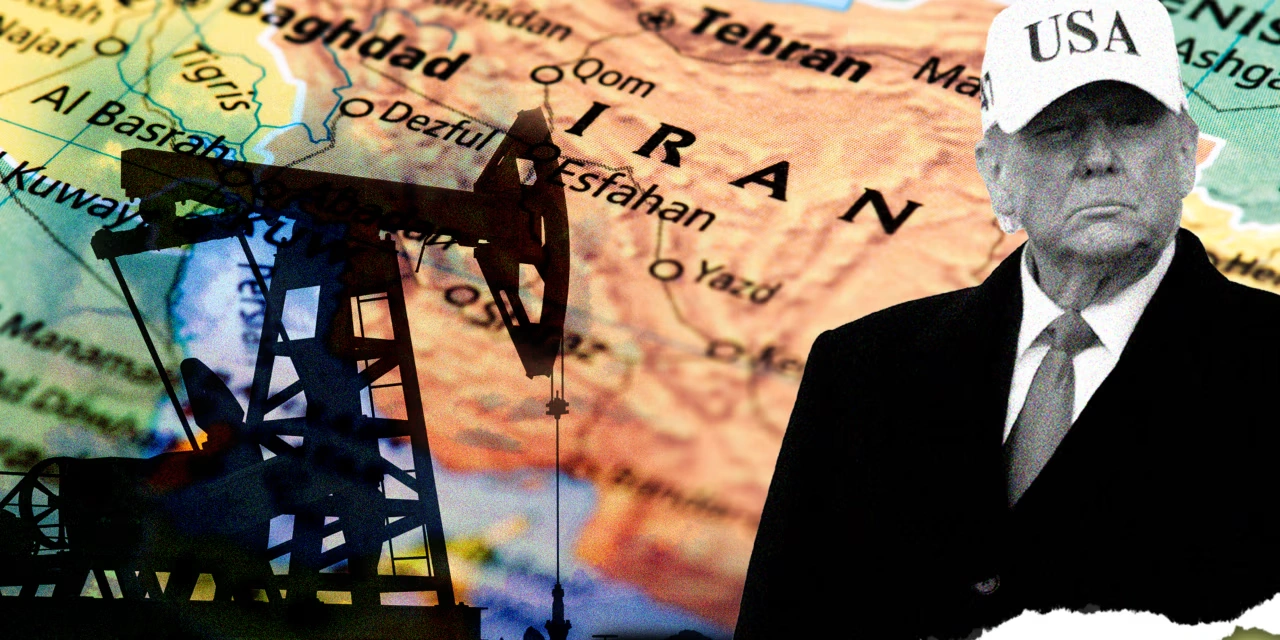
Brent crude fell more than five percent on Sunday to below $99 a barrel — its steepest single-session drop in weeks — as U.S. officials confirmed that a framework agreement with Iran is, in their words, “95% there.” The move came after three months of brutal market turbulence triggered by the February 28 conflict between the U.S., Israel, and Iran that effectively shuttered the Strait of Hormuz, the world’s most consequential oil chokepoint. Markets are pricing in what was, until recently, unthinkable: a diplomatic endgame. Yet the final five percent may prove the hardest stretch of all.
The world’s oil supply chain has not faced a shock of this magnitude since the 1973 Arab embargo. Cumulative supply losses from Gulf producers have already exceeded one billion barrels since the conflict began, with more than 14 million barrels per day effectively shut in — an unprecedented disruption — though the supply-demand gap has remained smaller than feared because the market was already in surplus heading into the crisis, and producers including Saudi Arabia and the UAE have successfully redirected some exports to terminals loading outside the Strait. IEA
About 20% of all global oil supplies transit the Strait of Hormuz, which has remained effectively closed to normal oil flows since the war began on February 28. The diplomatic window now opening is therefore not merely a headline event. It is a structural turning point for energy markets, inflation trajectories, and the fiscal arithmetic of governments from Tokyo to Nairobi. CNN
1 — The Core Development: A Deal Takes Shape, Tentatively
Oil prices drop sharply as U.S.-Iran peace framework nears completion
The proximate cause of Sunday’s selloff was a series of disclosures by senior Trump administration officials confirming that a memorandum of understanding with Iran was within striking distance. A senior official confirmed a “No Dust, No Dollars” policy was guiding the negotiations, adding that Iran had “agreed in principle to the framework, and we are 95% there.” The same official said the U.S. had reached agreement on the nuclear stockpile and the Strait of Hormuz, but that negotiators were still haggling over specific language — a process that could take another five to seven days. Fox News
Global crude benchmark Brent fell as much as 5.2% to $98.12 a barrel, while West Texas Intermediate was near $92. Trump said in social-media posts he wouldn’t “rush” into a deal, which “isn’t even fully negotiated yet,” and that any final approval may take several days according to senior U.S. officials. Fortune
The figure that should stop energy traders cold is this: North Sea Dated has swung from a high of $144 per barrel to below $100 before rebounding, with prices around $110 at the time of the IEA’s May report — a range of volatility that has no modern peacetime precedent. Sunday’s move pushed Brent back toward the lower end of that corridor. IEA
Iran’s posture has been characteristically contradictory. Iranian President Masoud Pezeshkian insisted publicly that Tehran is “not seeking nuclear weapons,” while Secretary of State Marco Rubio reiterated that preventing Tehran from ever obtaining a nuclear weapon remains Washington’s primary objective. Meanwhile, Iran’s Tasnim news agency said the draft agreement could still collapse because the U.S. was obstructing key clauses — including a demand that Tehran’s frozen assets be unfrozen. Fox NewsFortune
The market, it seems, is choosing to hear the hopeful signal and discount the noise. That is a bet.
2 — Analytical Layer: Why the “5%” Gap Is the Whole Story
What happens to crude oil if the Strait of Hormuz reopens?
Diplomatic frameworks are not oil supply. The distinction matters enormously. Even assuming a ceasefire is signed this week, the physical reopening of the Strait — the de-mining, the insurance re-underwriting, the resumption of tanker scheduling — will take weeks, not days. Yet energy markets trade on expectation, and Sunday’s move reflects a forward-pricing of relief that may arrive unevenly and incompletely.
What would a U.S.-Iran deal mean for global oil prices?
A full reopening of the Strait of Hormuz would likely push Brent below $90 a barrel within weeks, given the surplus conditions that preceded the conflict. The IEA noted that the current supply-demand gap is significantly smaller than the raw disruption numbers suggest, because producers and consumers have adapted — but the war-risk premium embedded in prices remains substantial, and it would deflate rapidly once tanker traffic normalizes.
The five percent of the deal still unresolved is not bureaucratic fine print. It covers two of the most loaded issues in modern geopolitics: Iran’s enriched uranium stockpile, and who controls transit through Hormuz. The U.S. side said it may be willing to make “significant accommodations” on sanctions relief if Iran makes equivalent concessions on enriched uranium, but also confirmed that Tehran’s system “does not move fast enough” to finalise anything within 24 hours. Fox News
Trump’s public messaging has been characteristically bifurcated. He has signalled openness while simultaneously leaving military options visible on the table — a pressure tactic that has compressed the negotiating timeline but also injected the kind of uncertainty that keeps traders nervous. Prices tumbled earlier this week after Trump called off imminent strikes on Iran to allow more negotiations, with Brent losing more than 5% on the week and WTI shedding more than 8%. CNBC
Still, the direction of travel is unmistakable. What remains unclear is the speed.
3 — Implications & Second-Order Effects
Energy markets, inflation, and the downstream consequences of a Hormuz reopening
The most immediate beneficiaries of lower crude would be consumers in oil-importing economies who have spent three months absorbing a supply shock transmitted through petrol prices, airline tickets, freight costs, and heating bills. Since the war started, wholesale gas prices have surged more than 50% for consumers, with the nationwide U.S. average approaching $4.54 per gallon — within 50 cents of its all-time high. A deal that restores Hormuz flows would not reverse those increases overnight, but it would halt the upward spiral and give central banks room to reassess. NBC News
For OPEC+ members, the calculus is more complex. Saudi Arabia and the UAE have both lost revenue from Hormuz restrictions and gained it from higher prices. A return to $80-per-barrel oil would benefit consumers globally but squeeze the fiscal arithmetic of Gulf states that built their 2026 budgets around triple-digit crude. Riyadh’s break-even price — the oil level required to balance its national budget — sits above $80 per barrel by most estimates, meaning any sharp reversion in prices would force difficult spending choices.
The second-order effects extend well beyond energy. Myanmar, for example, imports 90% of its fuel and fertilizer through Hormuz-dependent supply chains, and the disruption has sent input costs for farmers soaring. In sub-Saharan Africa, nations that were already running primary deficits before the conflict have seen their import bills balloon. If the deal holds, the relief for frontier-market economies could be disproportionately large relative to the price move itself. CNN
Bond markets have also responded. Government bond yields dropped toward their lowest levels of recent weeks as the ceasefire signals intensified — a signal that investors are betting that lower energy costs will ease inflation expectations and, in turn, reduce pressure on central banks to maintain restrictive monetary policy.
4 — Competing Perspectives: Why Sceptics Aren’t Convinced
The market’s relief trade is understandable. It may also be premature.
Iran’s state media has repeatedly signalled that the gap between a framework and a finalised agreement is wider than U.S. officials acknowledge. Iran’s Tasnim news agency specifically warned that the draft agreement could collapse because the U.S. was obstructing key clauses, including demands around unfreezing Iranian assets. This is not merely negotiating bluster. Tehran’s internal politics are fractured: hardliners who view nuclear enrichment as a sovereignty issue are not simply going to defer to a president who says the country isn’t seeking a bomb. Fortune
The precedent from the 2015 Joint Comprehensive Plan of Action (JCPOA) is instructive and sobering. That agreement took years to negotiate and was unilaterally abandoned by the Trump administration in 2018 — a historical fact that Iranian negotiators have not forgotten and are almost certainly factoring into their demands for more durable legal guarantees. The administration’s “No Dust, No Dollars” framing gives Washington rhetorical clarity but leaves little room for the face-saving ambiguity that successful diplomatic settlements typically require.
There is also a military dimension that markets are currently discounting. Iran’s Al-Fiqar military group threatened that if the enemy attacks the Strait of Hormuz, Tehran would “break the naval blockade and may withdraw from the Non-Proliferation of Nuclear Weapons treaty” — a threat that, if executed, would represent a categorical escalation with no obvious off-ramp. Fox News
John Evans, analyst at PVM Oil, captured the fragility of the current price move when he observed earlier this month that “the crude build in the EIA Inventory Report has chased down the prices, and the move is accelerated by what appears to be a cooling of animosity in the US/Iran nuclear negotiations.” Cooling, not resolution. The markets are trading the cooling. The resolution is still being written.
CLOSING
Three months of war, a billion barrels of lost supply, and an oil price that at one point touched $144 a barrel — the scale of the disruption the Hormuz closure has inflicted on the global economy is only now being tallied. A diplomatic framework that is “95% complete” is not a ceasefire. It is an aspiration with a deadline and a hundred unresolved clauses. The remaining five percent contains all the intractable questions: how much enriched uranium Iran gets to keep, who governs the Strait it spent three months closing, and whether any agreement reached under duress can survive the political pressures on both sides.
Energy markets will continue to front-run each diplomatic signal — that is their nature. But investors, policymakers, and the consumers quietly paying $4.50 for a gallon of petrol deserve a reminder that in Middle East diplomacy, the hardest percentage is always the last.
Discover more from The Economy
Subscribe to get the latest posts sent to your email.
-

 Markets & Finance5 months ago
Top 15 Stocks for Investment in 2026 in PSX: Your Complete Guide to Pakistan’s Best Investment Opportunities
-

 Analysis3 months ago
Top 10 Stocks for Investment in PSX for Quick Returns in 2026
-

 Analysis4 months ago
Brazil’s Rare Earth Race: US, EU, and China Compete for Critical Minerals as Tensions Rise
-

 Banks4 months ago
Best Investments in Pakistan 2026: Top 10 Low-Price Shares and Long-Term Picks for the PSX
-

 Investment4 months ago
Top 10 Mutual Fund Managers in Pakistan for Investment in 2026: A Comprehensive Guide for Optimal Returns
-

 Global Economy5 months ago
15 Most Lucrative Sectors for Investment in Pakistan: A 2025 Data-Driven Analysis
-

 Analysis3 months ago
Johor’s Investment Boom: The Hidden Costs Behind Malaysia’s Most Ambitious Economic Surge
-

 Global Economy5 months ago
Pakistan’s Export Goldmine: 10 Game-Changing Markets Where Pakistani Businesses Are Winning Big in 2025