
Analysis
7 Ways Tech Startups Are Revolutionizing Pakistan’s Financial Ecosystem in 2026

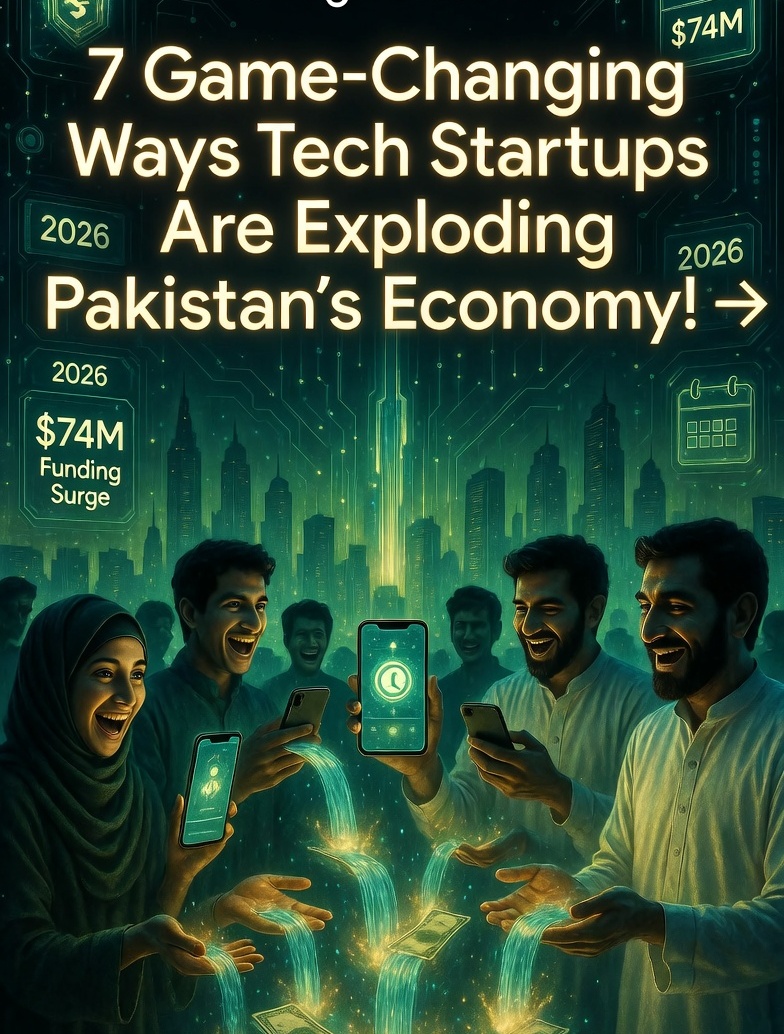
Let’s Explore how Pakistan’s fintech startups are transforming financial inclusion, payments, SME lending, and digital banking in 2026—with real data, key players, and policy insights driving the country’s $4B startup ecosystem.
Picture Amna, a small-scale textile vendor in Faisalabad’s crowded bazaar. Three years ago, she kept her earnings in a tin box under the shop counter—unbanked, invisible to the formal economy, and locked out of credit. Today, she processes supplier invoices digitally, accesses working capital within 24 hours, and tracks her cash flow on a smartphone app. Amna didn’t walk into a bank branch. A startup came to her.
This is the quiet revolution reshaping Pakistan’s financial landscape. With VC-backed startups now collectively valued at around $4 billion—up 3.6 times since 2020—Pakistan’s growth rate outpaces larger ecosystems including India, New York, and Dubai, positioning it among emerging “New Frontier” tech markets Profit by Pakistan Today. Yet for all the momentum, no unicorn has emerged yet, the funding gap at growth stages remains acute, and roughly 85% of transactions still move in cash. The gap between potential and reality is precisely where startups are doing their most consequential work.
Here are seven ways Pakistan’s tech startups are rewriting the rules of finance in 2026—and why global investors and policymakers should be paying close attention.
1. Expanding Financial Inclusion Beyond Urban Walls
Pakistan’s financial exclusion problem is, at its core, a distribution problem. Traditional banks have concentrated their branch networks in major cities, leaving vast swathes of rural Punjab, interior Sindh, and Balochistan underserved. Pakistan aims to increase adult financial inclusion to 75% by 2028, up from 64% currently, with 143 million broadband and 193 million cellular subscribers forming the digital infrastructure to get there. Invest2Innovate
Startups are filling this gap with mobile-first models that don’t require a bank branch, a credit history, or even a formal ID in some pilots. Easypaisa—Pakistan’s largest mobile wallet—has evolved from simple bill payments into a comprehensive financial super-app covering government disbursements, QR payments, and international remittances. JazzCash serves tens of millions of users across peri-urban and rural markets. Meanwhile, newer entrants like Paymo are targeting digital-native youth with social banking features designed for Gen Z’s financial behaviours.
The economics here are compelling on a global scale. Bangladesh’s bKash built a $2 billion enterprise on mobile financial services for an underserved population—a playbook Pakistan’s ecosystem is now iterating and improving upon. The difference is that Pakistan’s startups are layering artificial intelligence and embedded finance on top of basic wallet infrastructure, building toward something more sophisticated than simple cash transfers.
2. Reinventing B2B Payments and Supply Chain Finance
If consumer fintech is the visible face of Pakistan’s digital finance revolution, B2B infrastructure is its beating engine. Haball is perhaps the most striking example. The Karachi-based fintech has raised a $52 million Pre-Series A round led by Zayn VC and backed by Meezan Bank, scaled its platform to handle over $3 billion in payments, and disbursed more than $110 million in financing to thousands of SMEs and multinational clients. Daftarkhwan
What Haball is doing—digitizing the order-to-cash cycle across Pakistan’s vast informal supply chains—addresses a structural inefficiency that has cost the economy billions in idle working capital and reconciliation errors. By automating invoicing, digitizing trade flows, and embedding Shariah-compliant financing into the transaction itself, Haball turns every payment into a data point for underwriting the next loan.
The implications extend well beyond individual deals. Pakistan’s informal sector accounts for over 40% of GDP, and much of that informality is driven by opaque supply chains and the friction of cash. When startups digitize these flows, they don’t just solve a payments problem—they bring entire economic layers into visibility, taxation, and formal credit assessment for the first time.
3. Accelerating Digital Remittances and Cross-Border Finance
Remittances are Pakistan’s economic lifeline. At roughly $30 billion annually, they outpace foreign direct investment and are equivalent to nearly 8% of GDP. Yet the infrastructure carrying this money has historically been dominated by expensive incumbents—hawala networks and legacy wire services that extract 5–7% in transfer fees from workers sending money home from the Gulf, UK, and North America.
Startups are beginning to disrupt this. Platforms like SadaPay are digitizing international remittances, reducing friction and cost for Pakistani diaspora communities. Invest2Innovate The company’s trajectory also illustrates the ecosystem’s volatility—SadaPay faced staff reductions following its acquisition by Turkish fintech Papara, underscoring how consolidation is beginning to reshape the competitive landscape even in early-stage markets.
Pakistan’s Raast instant payment system, launched by the State Bank of Pakistan and inspired by India’s Unified Payments Interface, is now the backbone connecting digital remittance platforms to beneficiary accounts in real time. The combination of a robust central rails infrastructure and agile startup players building on top of it creates the conditions for the kind of remittance cost compression India achieved within five years of launching UPI—a development that could redirect hundreds of millions of dollars in annual transfer fees back into Pakistani household budgets.
4. Unlocking Capital for Small and Medium Enterprises
SMEs account for roughly 90% of businesses in Pakistan and contribute around 40% of GDP, yet they receive less than 10% of total bank credit. The reasons are well-documented: lack of collateral, informal accounting, no credit history, and risk-averse bank lending desks that simply aren’t calibrated for small-ticket loans. This is where Pakistan’s credit-tech and embedded finance startups are making their most economically significant interventions.
Startups like CreditBook provide micro-loans to SMEs and individuals excluded from traditional banking, while Abhi innovates payroll financing, NayaPay supports SME financial management, and Mahana Wealth promotes saving among the underserved. Invest2Innovate Abhi, founded in 2021, has now raised $57.8 million for its financial wellness platform—making it one of the best-capitalised fintech startups in the country.
The pivot toward hybrid financing models is itself a structural innovation. Pakistan’s startups raised approximately $74.2 million in reported funding in 2025, almost double the funds mobilised in 2024, with the increase driven by hybrid financing—combinations of equity and debt—replacing the previous equity-only funding approach. Business Recorder This mirrors what development finance institutions have long advocated: blended finance structures that reduce first-loss risk and unlock private capital at scale. When applied at the SME lending level, the same logic holds.
5. Building Regulatory Infrastructure That Enables—Not Just Constrains—Innovation
A startup ecosystem is only as strong as the regulatory framework it operates within. Pakistan has not always been known for nimble financial regulation, but the State Bank of Pakistan has been quietly constructing an architecture that is beginning to attract serious attention.
The SBP’s regulatory sandbox, launched to allow fintechs to test innovations under controlled conditions without full licensing requirements, has been central to this shift. SBP’s frameworks have created a supportive environment, positioning Pakistan as a promising fintech market. Invest2Innovate The central bank’s digital banking licensing framework, which has drawn applications from a growing cohort of neobank candidates, represents a further commitment to structured innovation rather than arbitrary prohibition.
Globally, the contrast with peer markets is instructive. Bangladesh’s fintech growth was turbocharged by its own regulatory openness to mobile financial services—a decade ago, a decision considered brave at the time. Nigeria’s central bank took a more restrictive path and watched significant fintech capital flow to Ghana and Kenya instead. Pakistan’s regulators appear to have absorbed these lessons, even if implementation speed remains a work in progress. One of the most notable structural shifts in 2026 is the rise of hybrid financing models and growing interest from bilateral and multilateral development finance institutions in supporting Pakistan’s startup ecosystem. Startup
6. Driving Islamic Fintech as a Global Differentiator
Pakistan is home to 230+ million Muslims, and its financial system has a constitutional obligation to move toward interest-free models. This is not merely a regulatory constraint—it is a market opportunity of extraordinary scale that global Islamic finance players have barely begun to exploit at the retail level.
Haball’s Shariah-compliant supply chain financing is one marker of this trend. But the opportunity extends much further: Murabaha-structured digital lending, Musharaka-based equity crowdfunding, and Sukuk tokenization on blockchain rails are all adjacent spaces where Pakistani startups have structural advantages that competitors in secular financial systems simply don’t possess.
Islamic fintech, AI-driven credit systems, open banking, and cross-border payments are identified as the four major growth frontiers for Pakistan’s fintech ecosystem. Startup With the global Islamic finance industry valued at over $3 trillion and growing at 10–12% annually, Pakistani startups that develop credible, scalable models in this space are building for an export market as much as a domestic one—positioning Pakistan as a potential hub for Islamic fintech products serving markets from Indonesia to Morocco.
7. Creating Jobs, Skills, and a Self-Sustaining Innovation Flywheel
Economic ecosystems don’t grow linearly—they compound. The most durable contribution Pakistan’s tech startup sector is making to its financial ecosystem isn’t any single product or funding round. It is the accumulation of human capital: engineers, product managers, compliance specialists, data scientists, and founders gaining experience that will seed the next generation of ventures.
There are now 170+ VC-backed startups across Pakistan, with 13 “Colts” generating $25–100 million in annual revenue and 17 breakouts having raised between $15 million and $100 million. Startup Each of these companies is a training ground. When engineers leave Haball or NayaPay to start their own ventures, they carry institutional knowledge—of regulatory navigation, of underwriting logic, of enterprise sales in a cash-heavy economy—that accelerates their next company’s time to product-market fit.
Funding to female-founded or co-founded startups nearly doubled, rising from $5.5 million in 2024 to $10.1 million in 2025 Business Recorder, though the average deal size for women-led ventures remains smaller, signalling that inclusion in the ecosystem is widening even as capital parity remains elusive. This trajectory matters: research from McKinsey and the IFC consistently shows that more diverse founding teams produce more resilient companies and broader economic multipliers.
The Road Ahead: From Momentum to Transformation
Pakistan’s fintech story in 2026 is one of real but fragile progress. The country’s $4 billion ecosystem could scale rapidly over the next five to seven years with deeper growth capital and large exits—but the funding gap at later stages remains the primary bottleneck, with no company yet earning more than $100 million in annual revenue or reaching unicorn status. Profit by Pakistan Today
The comparison with India is both inspiring and sobering. India’s fintech ecosystem generated over $9 billion in venture funding in 2021 alone, supported by a government that treated UPI as strategic infrastructure and built policy frameworks that pulled private capital in behind. Pakistan’s policymakers have the blueprint. What they lack is the same scale of conviction in execution.
For international investors—particularly development finance institutions, Gulf sovereign wealth funds, and impact-oriented funds looking at frontier markets—Pakistan represents a rare combination: a massive underserved population, a young and mobile-connected demographic pyramid, a regulatory environment trending toward openness, and startup teams with demonstrably world-class technical ambition. The risk is real. So is the asymmetry.
A Call to Action
For policymakers: Accelerate the implementation of open banking frameworks and extend the SBP’s digital banking licensing to include regionally focused neobanks targeting rural communities. Treat financial infrastructure—Raast, digital identity, data-sharing rails—as public goods requiring sustained government investment, not one-time pilot programmes.
For investors: The window for early growth-stage capital in Pakistan’s fintech sector is open and underappreciated. The startups that survive the current funding gap will emerge stronger, leaner, and with defensible market positions. Patient capital with local ecosystem partnerships is the model that will generate both returns and development impact.
For entrepreneurs: The infrastructure is improving. The regulatory environment is becoming more navigable. The market is enormous, largely untapped, and increasingly digital. Pakistan’s first fintech unicorn is not a question of whether—it is a question of when, and who.
Amna in Faisalabad is already there. The rest of Pakistan’s financial system is catching up to her.
Sources and data cited from: Pakistan Tech Report, Dealroom.co & inDrive, January 2026; invest2innovate (i2i) 2025 Ecosystem Report; i2i Fintech Landscape Report; Tracxn Pakistan FinTech Data, January 2026; Daftarkhwan: Top Pakistani Startups 2026; Startup.pk VC Ecosystem Report; World Bank Financial Inclusion Data.
Discover more from The Economy
Subscribe to get the latest posts sent to your email.



Key Takeaways
- Rolex’s secondary market rose approximately 7.9% year-over-year as of 2026 (per WatchCharts data) — trailing Patek Philippe (+16.2%) and Tudor (+11.4%) but still outperforming Audemars Piguet (+3.4%).
- Rolex raised U.S. retail prices 4–9% in January 2026 (steel models ~5.6%, gold models ~8.7%), narrowing the historical gap between retail and pre-owned pricing.
- Not every model appreciates: steel sports references (Submariner, GMT-Master II, Daytona) have held value far better than two-tone or widely available dress references like the standard Datejust.
- The Lady-Datejust posted the sharpest 2026 gain among tracked collections — up 22.73%, from roughly $9,269 to $11,376 — driven by demand for smaller, “everyday luxury” watches.
- Gold’s rise past $2,400/oz has directly lifted the investment case for Rolex’s precious-metal references (Day-Date, Sky-Dweller, Yacht-Master).
The Model-by-Model Picture
| Category | 2026 Trend |
|---|---|
| Lady-Datejust | +22.73% (strongest performer among tracked collections) |
| Steel sports models (Submariner, GMT-Master II) | Held value well; corrected from 2022 peak but stabilized above retail |
| Daytona | Corrected from highs above $50,000 to the mid-$30,000s; still among the most sought-after references |
| Two-tone/widely available Datejust | Flat to negative — “holds value” is an overstatement for this category |
| Gold references (Day-Date, Sky-Dweller) | Lifted by gold’s rise above $2,400/oz |
Why the “Rolex Always Appreciates” Myth Is Fading
The pandemic-era boom pushed some references — the Daytona above all — to speculative highs disconnected from historical norms. Since the March 2022 peak, steel sports models have compressed meaningfully, and dealers who bought inventory near the top have in some cases faced 20–40% markdowns on liquidation. The lesson for 2026 buyers: Rolex as a category is not a monolith. Value retention depends heavily on specific reference, condition, and whether the piece comes with box and papers (“full set”).
What’s Actually Driving 2026 Strength
- Retail price increases raise the floor. When a new Submariner retails at $10,050 (up from $9,500), a pre-owned example at $11,000–$12,000 suddenly represents a smaller premium — narrowing the gap without secondary prices actually moving.
- Supply discipline remains Rolex’s core lever. The brand has never confirmed production numbers, and secondary-market premiums remain entirely a function of Rolex’s own manufacturing decisions — a risk factor as much as a support.
- Certified Pre-Owned rollout. Rolex’s now fully rolled-out CPO program has changed how buyers transact in the used market, adding a layer of brand-verified legitimacy that supports pricing.
The Case for Rolex as a Portfolio Diversifier
Financial advisors increasingly frame luxury watches not as a replacement for equities or bonds, but as a tangible, historically low-correlation diversifier — one that carries its own risks (illiquidity, condition-dependent pricing, no yield) but has demonstrated multi-decade resilience for specific references.
Is Rolex a good investment in 2026?
It depends heavily on the specific reference. Steel sports models like the Submariner and Daytona have held or grown in value; two-tone and widely available dress models generally have not. Overall, Rolex’s secondary market rose about 7.9% year-over-year in 2026, trailing Patek Philippe but ahead of Audemars Piguet.
Discover more from The Economy
Subscribe to get the latest posts sent to your email.

Navigating Mortgage and Loan Refinancing in a High-Yield Environment
Global public debt crossing critical thresholds has kept central bank policies volatile, resulting in fluctuating US Treasury yields throughout 2026. For homeowners and commercial property holders burdened by previous high-interest borrowing cycles, finding optimal refinance windows has become a high-stakes financial puzzle. Stalled disinflation and stubborn employment numbers mean rate cuts are incremental, requiring borrowers to act with precision.
Timing your mortgage or commercial loan refinance in this environment requires a deep understanding of yield curve movements and lender risk appetites.
Decoding 2026 Refinance Dynamics
The 10-Year Treasury Yield Benchmark
Mortgage rates continue to track closely with the 10-year US Treasury yield. When macroeconomic anxiety spikes debt issuance, yields rise, tightening consumer borrowing capacity. Savvy borrowers monitor weekly Treasury auctions to lock in rates during brief dip windows.
Hybrid ARMs and Alternative Structures
With fixed rates remaining elevated, 7/1 and 10/1 adjustable-rate mortgages (ARMs) have surged in popularity. These products offer lower initial monthly payments, giving borrowers breathing room until central bank easing cycles fully materialize.
| Loan Product | Current Rate Range | Best For | Key Risk Factor |
| 30-Year Fixed Mortgage | 6.2% – 6.8% | Long-term predictability | Higher initial monthly outlay |
| 7/1 Hybrid ARM | 5.5% – 5.9% | Short-term ownership / flipping | Rate reset risk after year 7 |
| Commercial Refinance | 7.0% – 8.2% | Corporate asset restructuring | Strict DSCR lender covenants |
Actionable Steps for Successful Refinancing
To maximize your chances of securing favorable refinance terms in a volatile market, follow a disciplined preparation strategy.
Boost Your Credit Score Immediately: Lenders in 2026 are applying stringent credit tiering; a 20-point increase can drop your APR by a crucial quarter-point.
Shop Regional Credit Unions: Smaller financial institutions often offer portfolio loans with more flexible underwriting than major national banks.
Calculate the Break-Even Point: Ensure your total closing costs are recouped through monthly savings within 24 months of closing.
“Market Strategist View: Refinancing in 2026 is an exercise in opportunistic timing. Borrowers must maintain immaculate financial profiles ready to strike the moment Treasury yields dip.”
Mastering the complexities of today’s debt environment ensures you can successfully lower your debt service costs and protect your long-term financial stability.
Discover more from The Economy
Subscribe to get the latest posts sent to your email.

The days of pulling generic auto insurance quotes based purely on your zip code and age are officially over. In 2026, insurance comparison engines are powered entirely by generative AI and real-time telematics. These platforms digest thousands of live data points—ranging from your driving smoothness via connected vehicle sensors to real-time traffic congestion patterns—to generate hyper-personalized premiums instantly.
For consumers, this evolution represents both a massive opportunity for savings and a hidden trap for penalty pricing. Understanding how AI algorithms evaluate risk is essential for anyone looking to lower their monthly auto insurance premiums.
How AI Comparison Engines Evaluate Your Risk Profile
Behavioral Telematics and Connected Cars
Modern cars stream performance data directly to insurance aggregators. Generative AI models analyze braking sharpness, acceleration curves, cornering G-forces, and phone distraction metrics. Drivers who maintain smooth, defensive habits are rewarded with dynamic rate cuts of up to 40% compared to traditional rating tiers.
Predictive Traffic and Weather Modeling
AI tools now cross-reference your daily commute route with predictive weather and accident probability models. If your standard parking location or driving corridor has a statistically higher incidence of uninsured motorist claims, your quotes will reflect that hyper-local risk assessment.
| Comparison Factor | Traditional Rating Model | 2026 Generative AI Model | Impact on Premium |
| Mileage & Usage | Annual estimated odometer reading | GPS tracking & live trip duration | High (up to 35% savings) |
| Driving Behavior | MVR driving record & accidents | Real-time braking, speed, & G-force | Critical (determines tier) |
| Vehicle Tech | Make, model, and safety rating | ADAS calibration & repair cost data | Moderate |
Strategies to Lower Your AI-Driven Insurance Quote
To outsmart the algorithm and secure the lowest possible premium in 2026, drivers must proactively manage their digital footprint on insurance platforms.
Opt-In for Telematics Trial Periods: Many insurers offer immediate 15% discounts just for installing their driving app; let it track safe habits for 30 days to lock in permanent savings.
Scrub Unverified Public Records: Ensure your motor vehicle report is free of clerical errors that AI risk models misinterpret as reckless behavior.
Compare AI Aggregators: Use platforms that integrate multi-carrier API feeds rather than single-brand comparison sites to find the best risk-adjusted rate.
“Industry Note: AI-driven pricing rewards transparency and precision. Drivers who actively manage their telematics data consistently out-save those relying on legacy quote calculators.”
Embracing AI comparison tools allows savvy policyholders to customize coverage limits precisely to their driving habits, eliminating wasted premium spend while ensuring robust protection.
Discover more from The Economy
Subscribe to get the latest posts sent to your email.

The Global South: Debt, Climate Finance and Investment in 2026

Energy Security Is the New Economic Security

Can Global Tourism Survive Geopolitical Shocks?

Global Maritime Hegemony: How China Secured Over 81% of All New Shipbuilding Orders

The Coming Battle Over AI, Jobs and Wages

Why Developing Economies Face a Sharper Inflation Problem

The New Geography of Trade: Are Supply Chains Coming Home?

Is AI Saving Global Growth or Creating the Next Bubble?

Global Banking Trends 2026: Digital Banks, AI and Compliance

Gold vs US Dollar vs Bitcoin in 2026: Inflation Hedge Compared

How Global Interest Rates Affect Savings, Loans and Investments

How to Invest During High Inflation: A Global Guide

Best Global Stocks to Watch in 2026: Four Sectors to Research

Pakistan’s 2027 Growth Strategy: Exports, AI, Energy and Jobs

Crude Oil & Petroleum Market Analysis: OPEC+ Decisions and Price Forecasts

World’s Largest Economies: Ranking the Top Global Powers

Silver Price Today: Why the Xi-Trump AI Standoff Is Fueling a Safe-Haven Rally

Top US Convenience Store Chains: Store Counts, EV Charging, and Sales Trends

Algorithmic Dogfights: Why the U.S. and China Must Establish Rules of Engagement for Autonomous Air Power

Who Is Shivon Zilis? The Neuralink Executive at the Center of the Musk–OpenAI Trial

Corporate America Faces a New Debt Test as US Borrowing Costs Surge

Business Insurance: What Coverage You Actually Need and What It Costs in 2026

Global Economic Outlook 2026: 7 Forces Reshaping Markets, Trade and Business

Social Security Extra $90 Deposit: Who Qualifies for the October 2026 Medicare Rebate?

Gold Falls 3.7% as Yields Surge: Is Gold Still a Safe Haven in 2026?

US 10-Year Yield Hits 5.24%: What the Historic Bond Market Sell off Means for Mortgages and Investors

Stock Market Today: Dow, S&P 500, and Nasdaq Retreat as Treasury Yields

MAS Allocates S$1.45 Billion to Five Asset Managers in Third EQDP Batch: Total Deployment Reaches S$5.4 Billion
-

 Markets & Finance10 months ago
Top 15 Stocks for Investment in 2026 in PSX: Your Complete Guide to Pakistan’s Best Investment Opportunities
-

 Analysis8 months ago
Johor’s Investment Boom: The Hidden Costs Behind Malaysia’s Most Ambitious Economic Surge
-

 Analysis8 months ago
Top 10 Stocks for Investment in PSX for Quick Returns in 2026
-

 Banks9 months ago
Best Investments in Pakistan 2026: Top 10 Low-Price Shares and Long-Term Picks for the PSX
-

 Analysis9 months ago
Brazil’s Rare Earth Race: US, EU, and China Compete for Critical Minerals as Tensions Rise
-

 Investment10 months ago
Top 10 Mutual Fund Managers in Pakistan for Investment in 2026: A Comprehensive Guide for Optimal Returns
-

 Global Economy10 months ago
15 Most Lucrative Sectors for Investment in Pakistan: A 2025 Data-Driven Analysis
-

 Global Economy10 months ago
Pakistan’s Export Goldmine: 10 Game-Changing Markets Where Pakistani Businesses Are Winning Big in 2025